Baby Acne vs Milia

Acne-like spots in early infancy; newborn facial pustules and true infantile acne are different patterns. Milia are tiny, firm white bumps that sit just under the surface of the skin, most often around the eyes. Each one is a small pocket of trapped keratin with no opening, which is why squeezing does nothing and why a professional can remove one in seconds.

Research updated 2026-10-23
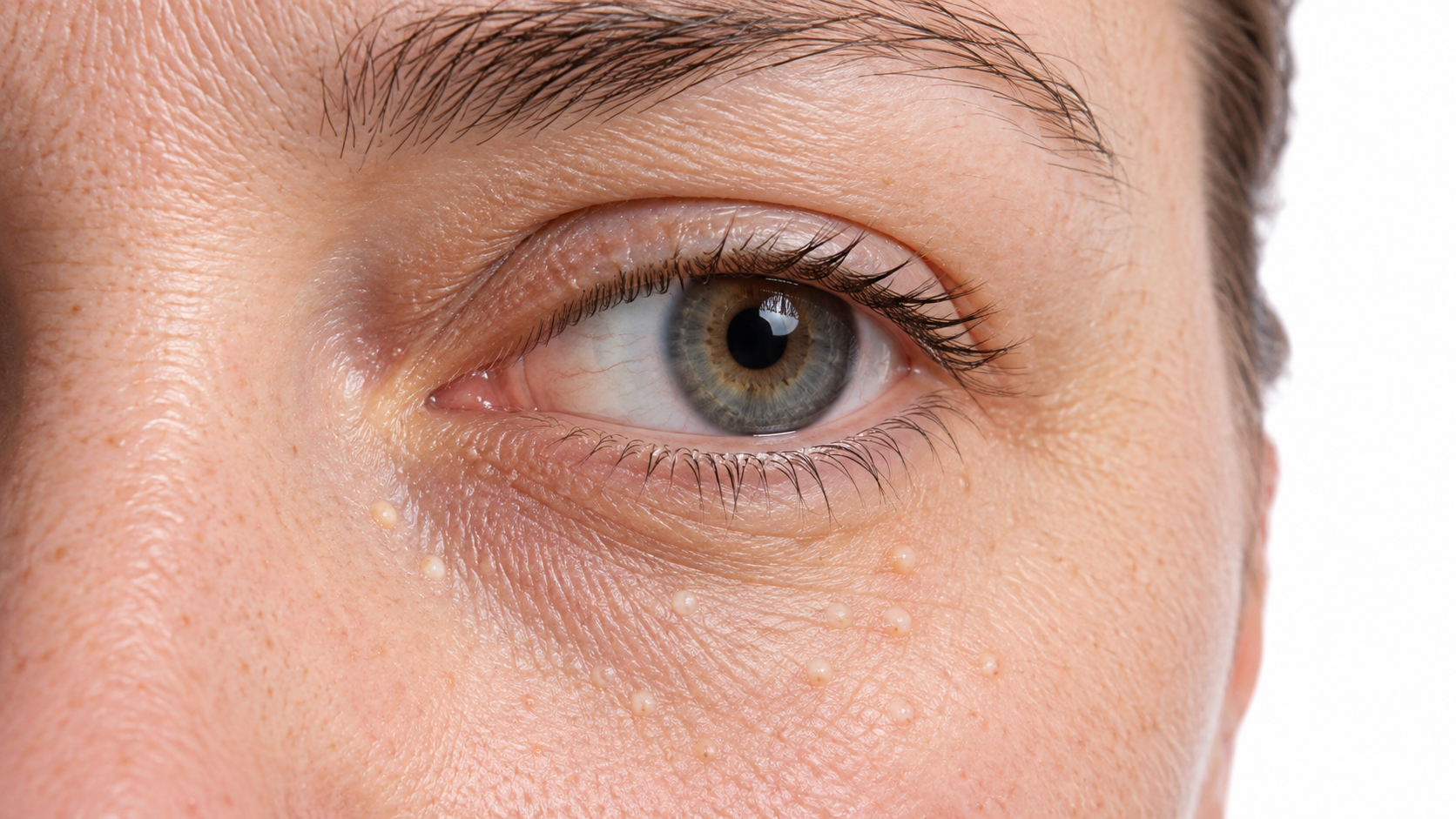
Baby AcneAI-generated educational illustration of Milia: 1. Milia Header — Light Skin; Lighter skin. Not a clinical photograph.

Key differences

The same eight facts on every condition comparison.

Usual age
First weeks to months of life
Any age; common in newborns
Where
Cheeks and face
Around eyes and cheeks
Main sign
Small red bumps or pustules
Tiny firm white bumps
Itch or pain
No
No
Contagious
No
No
Long term
Usually clears on its own
Newborn milia clear; adult milia often stay
Scars
Rarely
No
Who gets it
Newborns and infants
Newborns; adults with rich creams or sun damage

What is it?

Baby Acne
Milia
What is it?
  • What it is
    Acne-like spots in early infancy; newborn facial pustules and true infantile acne are different patterns.
  • They are tiny cysts.
    Milia contain keratin just beneath the skin surface.
  • They look like white bumps.
    They are firm and pearly, often on the eyelids or cheeks.
  • They are harmless.
    Milia are different from acne whiteheads.
  • Unusual bumps need a check.
    Inflamed, widespread or persistent bumps may need assessment.

What it looks like

Baby Acne

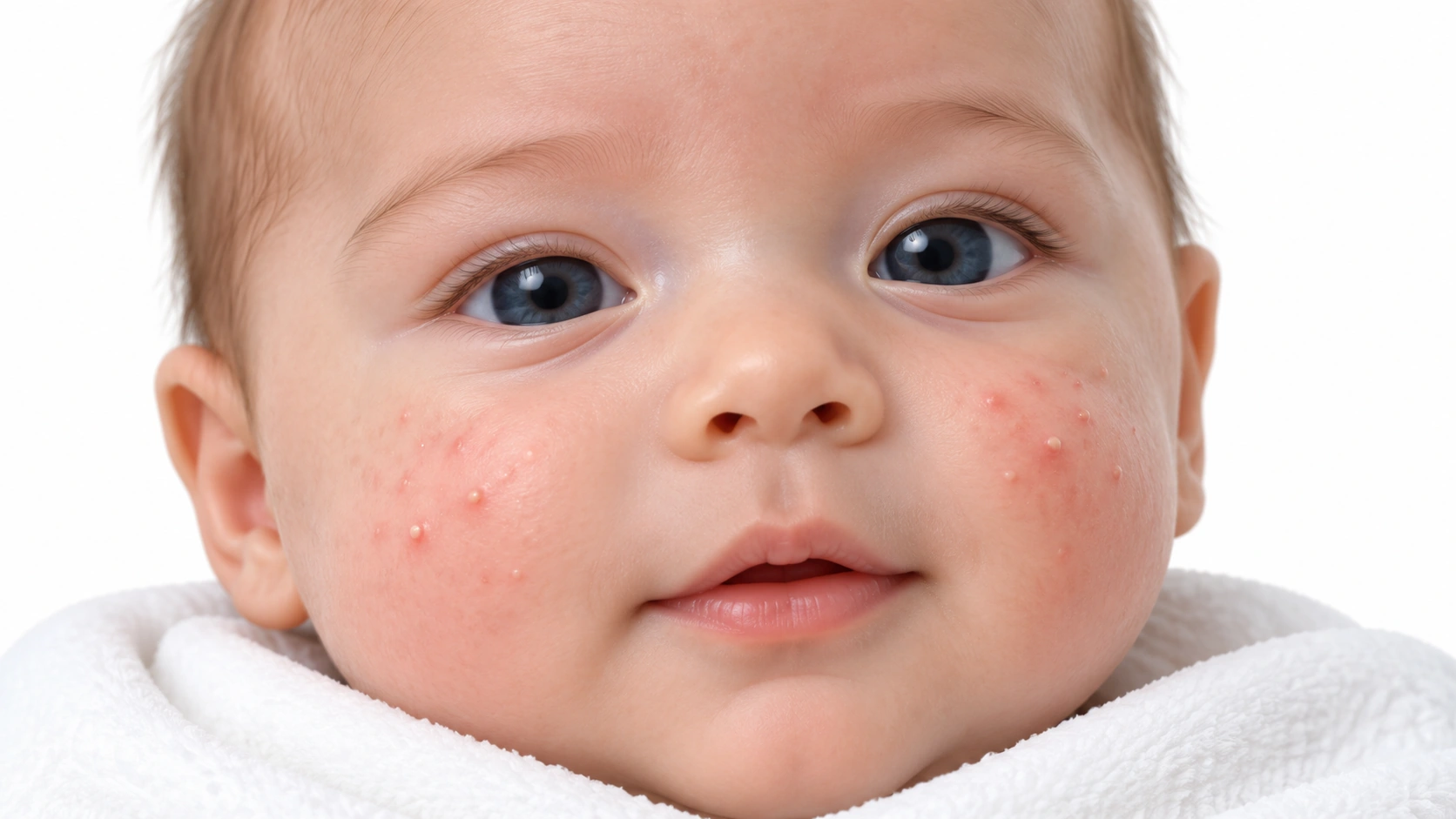
A baby's face with small red bumps and pale-tipped pimples on the cheeks.

Baby Acne Scattered pink bumps and pale-tipped pimples appear on both cheeks.

Milia

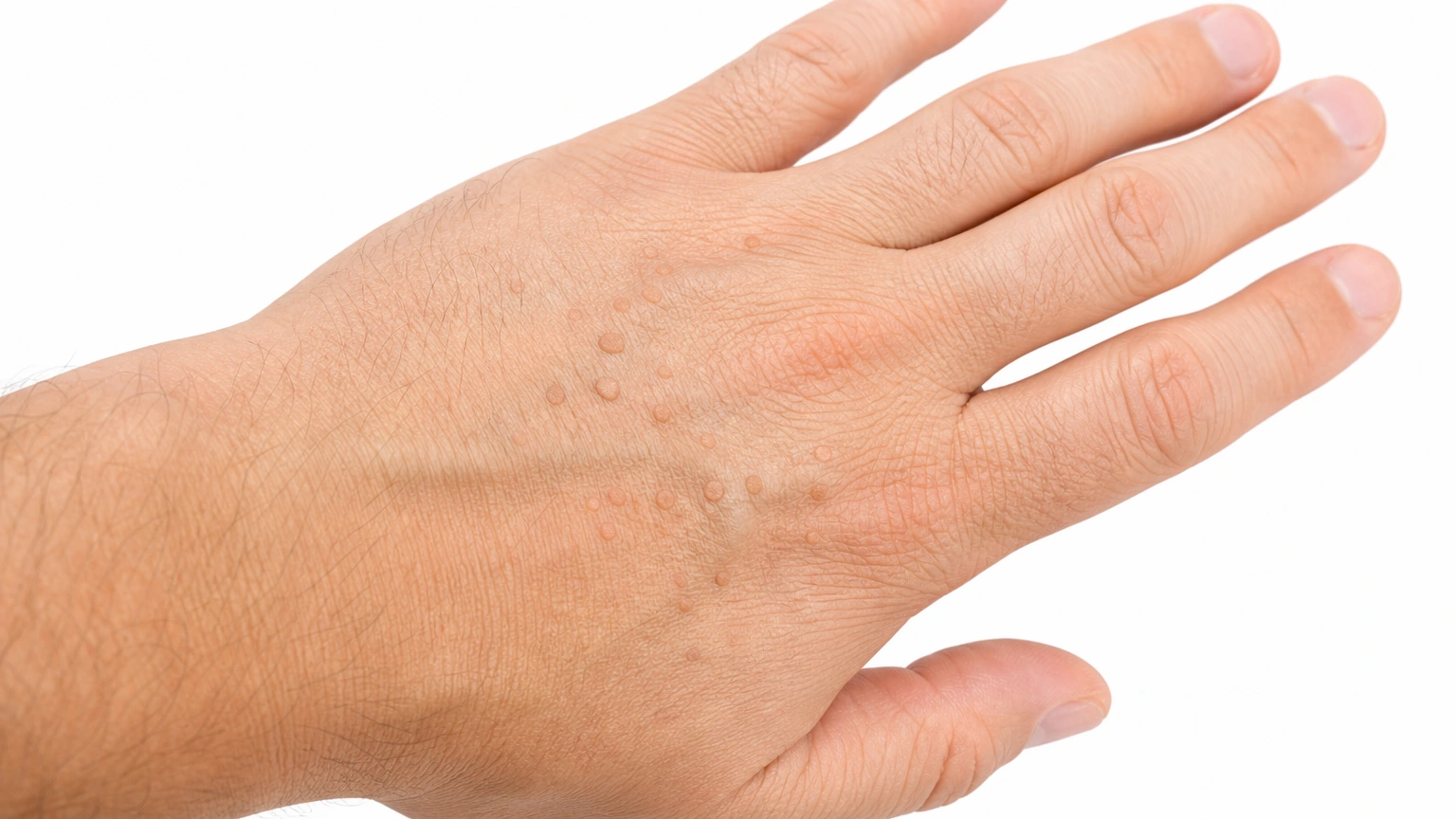
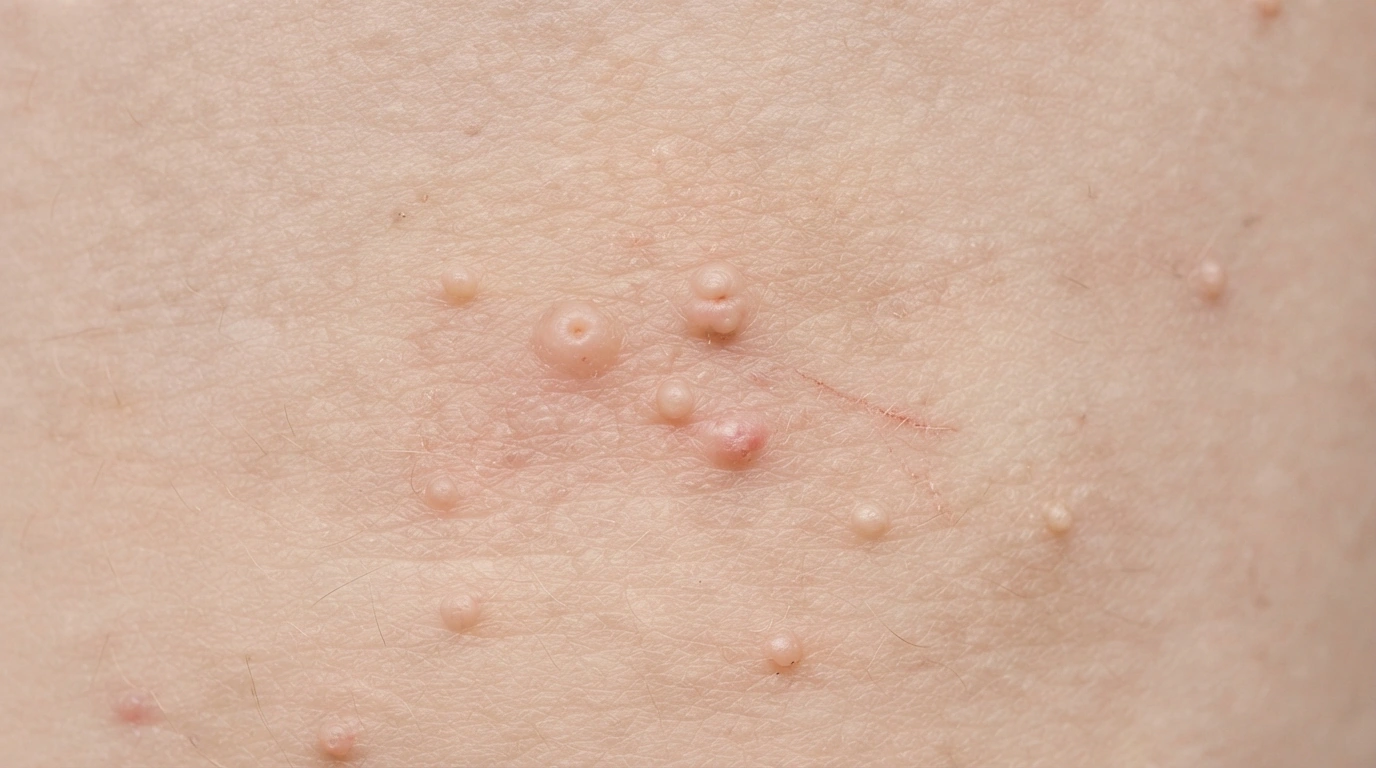
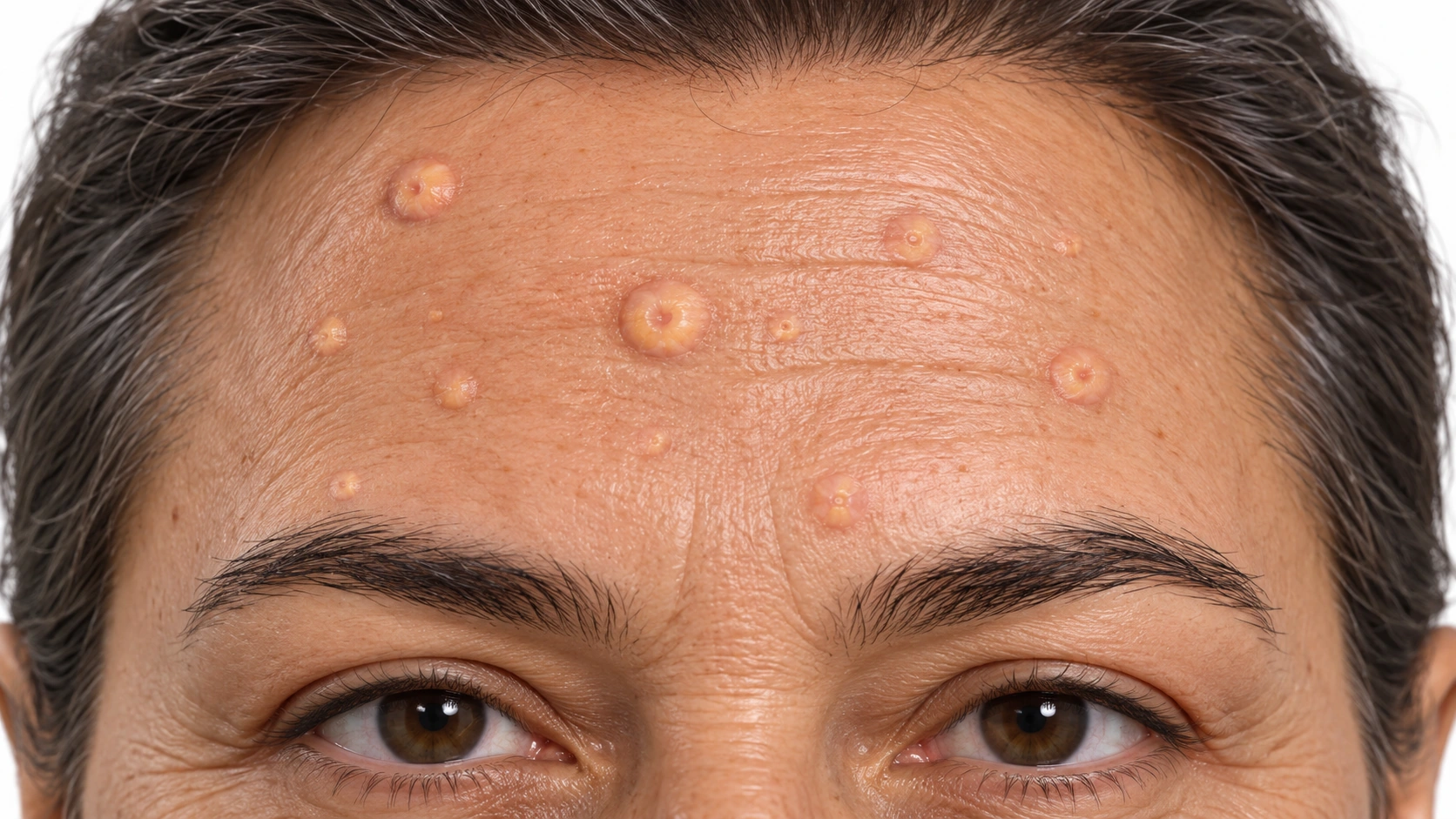
Milia: Tiny white bumps; Around the eyes.

Primary milia Form on their own, often around the eyes.

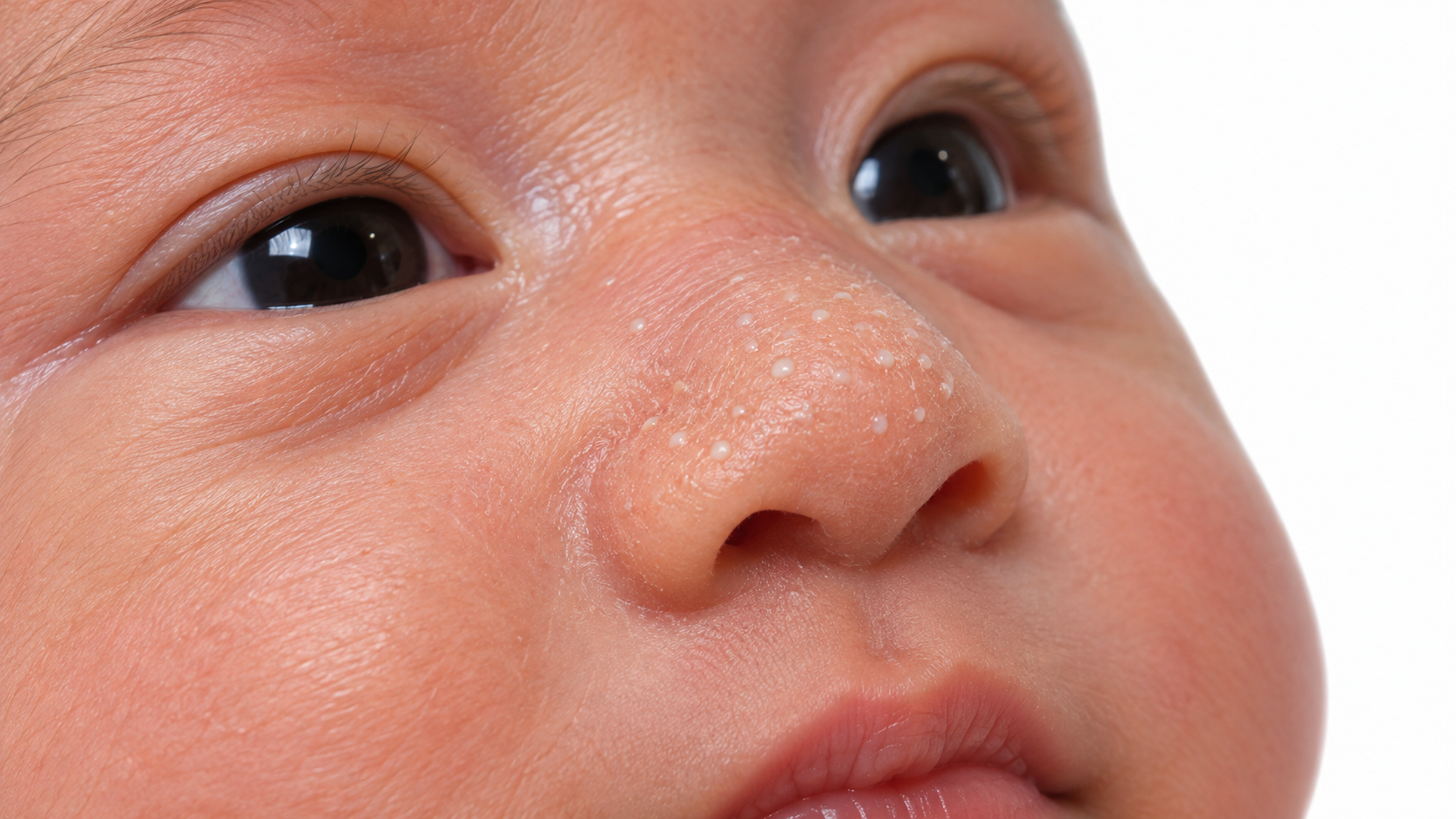
Tiny white bumps cluster across the nose and cheeks.

Newborn milia Tiny white bumps cluster across the nose and cheeks.

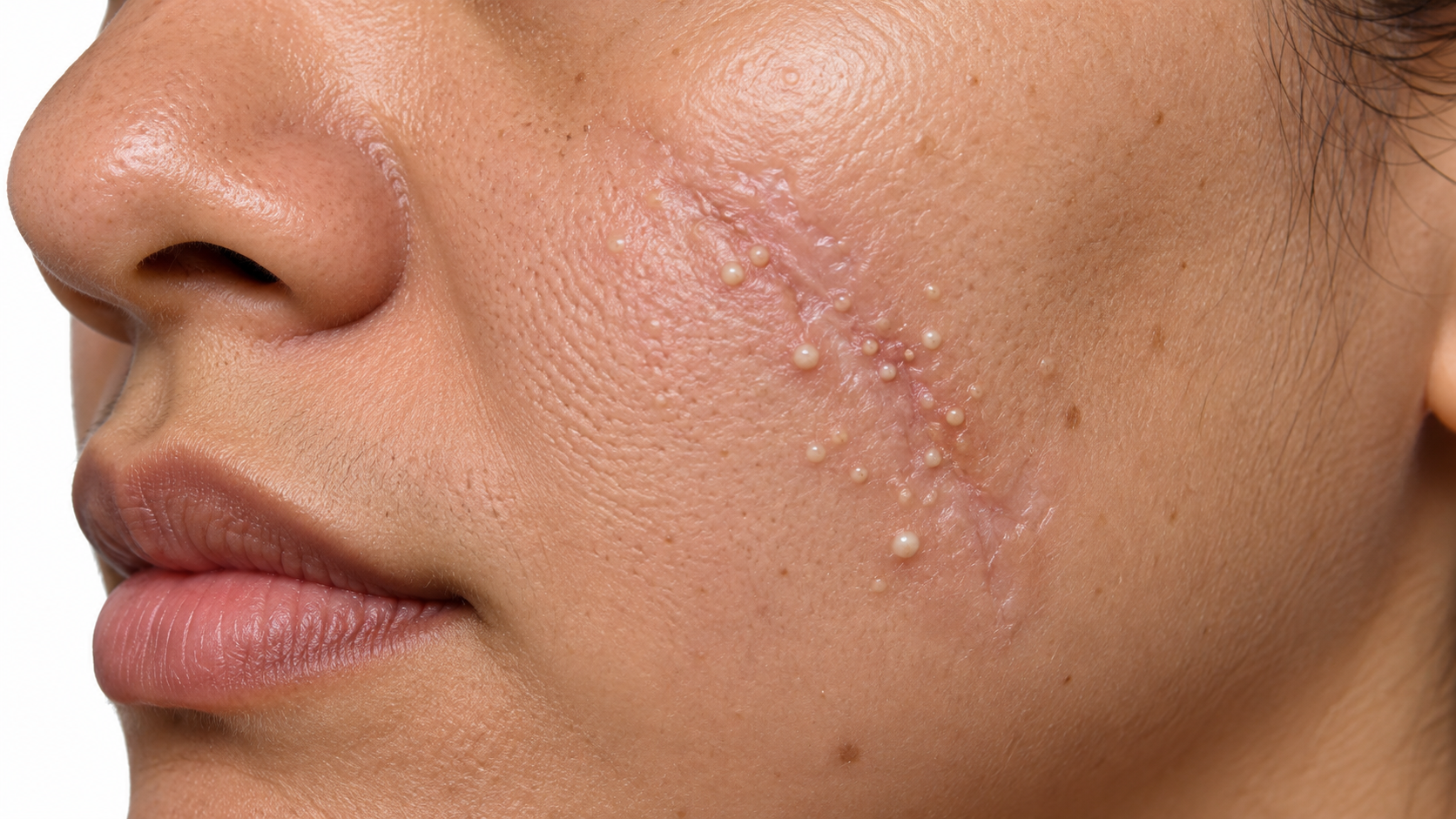
Milia: Secondary.

Secondary milia Form after burns, blisters or heavy creams.

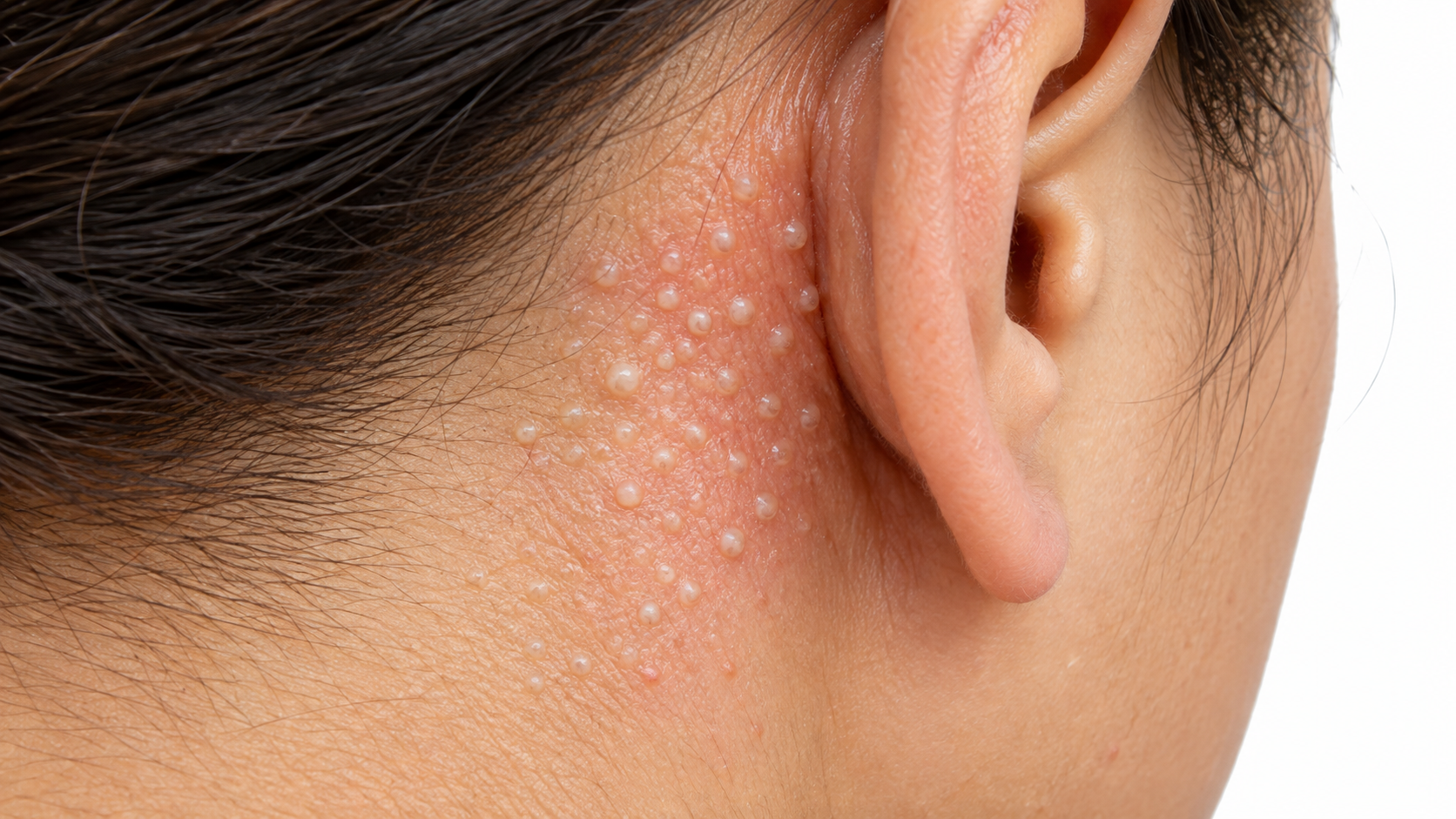
Milia: Milia en plaque.

Milia en plaque Many milia on a raised patch; rare.

Skin tones
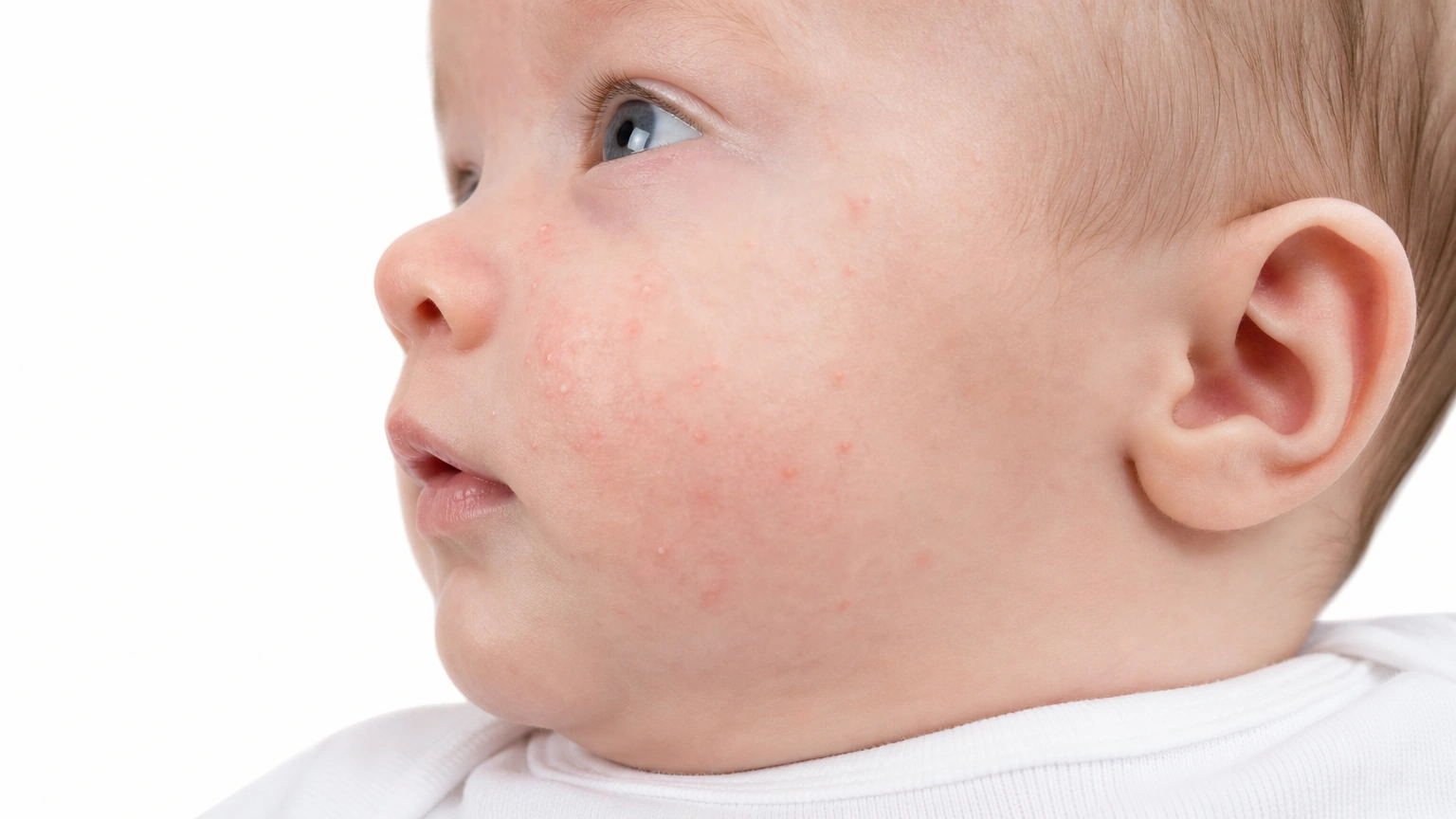
small superficial acne-like bumps on an infant’s left cheek, with the face turned to the infant’s right on light skin.
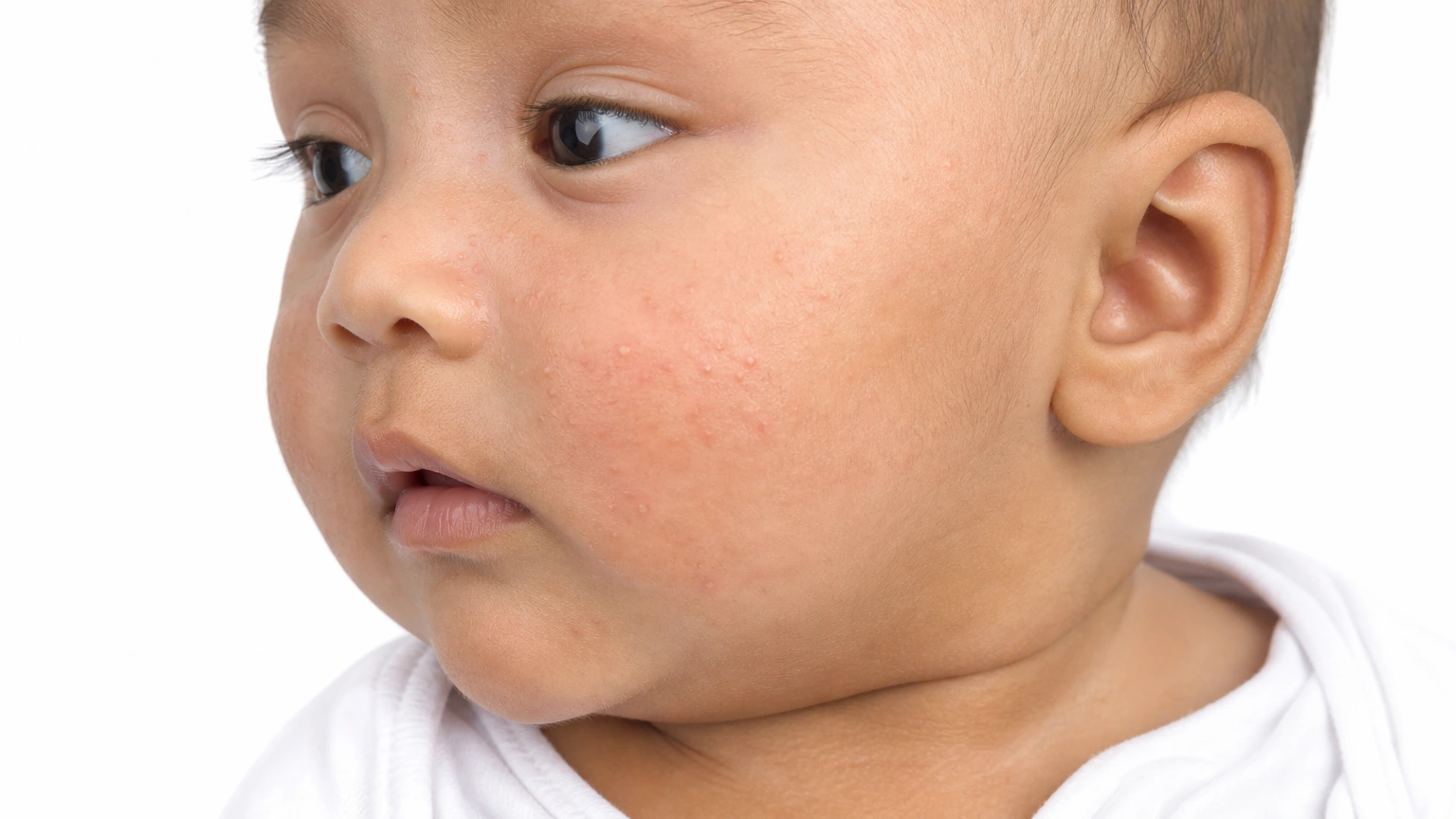
small superficial acne-like bumps on an infant’s left cheek, with the face turned to the infant’s right on medium skin.
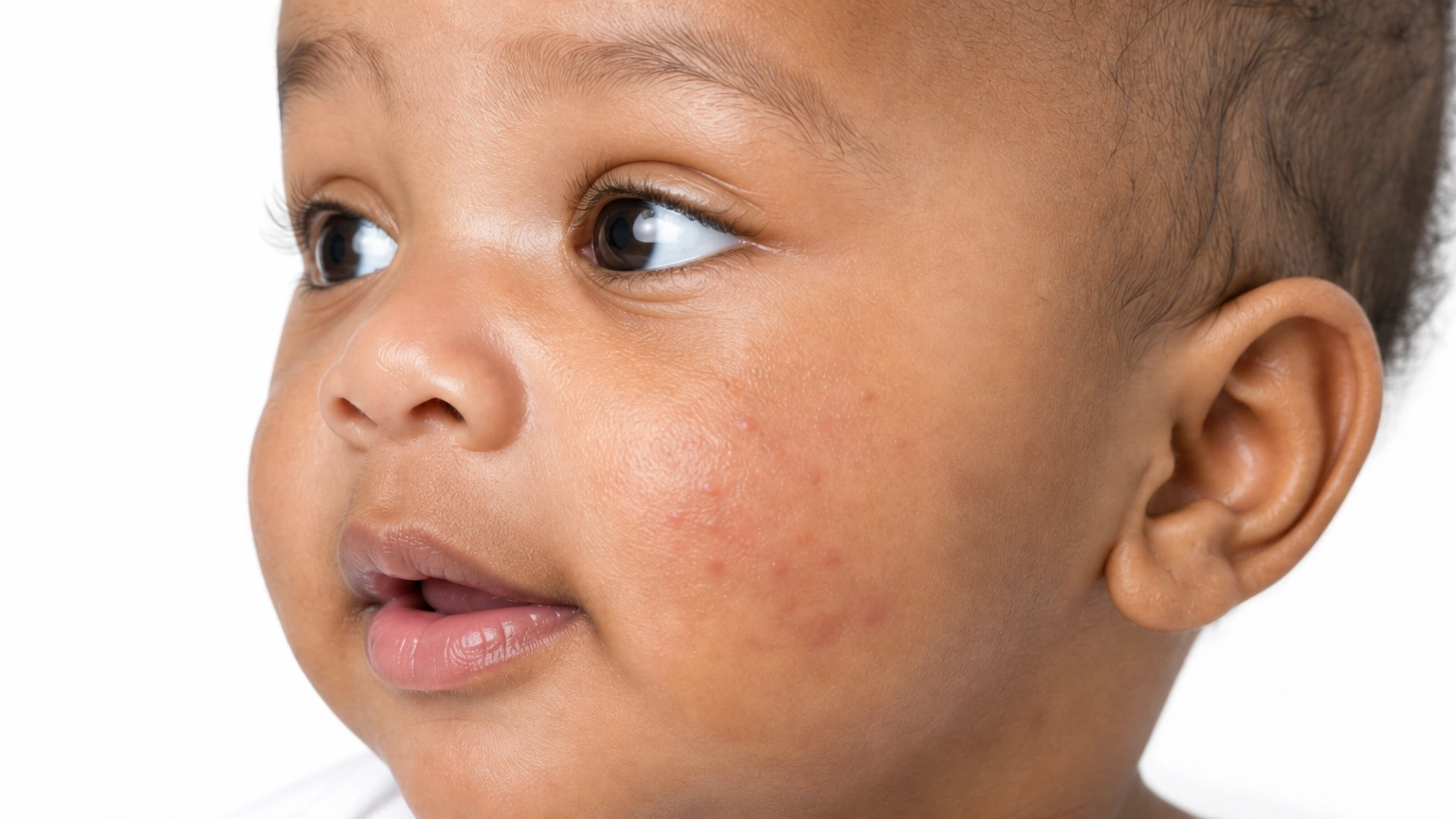
small superficial acne-like bumps on an infant’s left cheek, with the face turned to the infant’s right on brown skin.
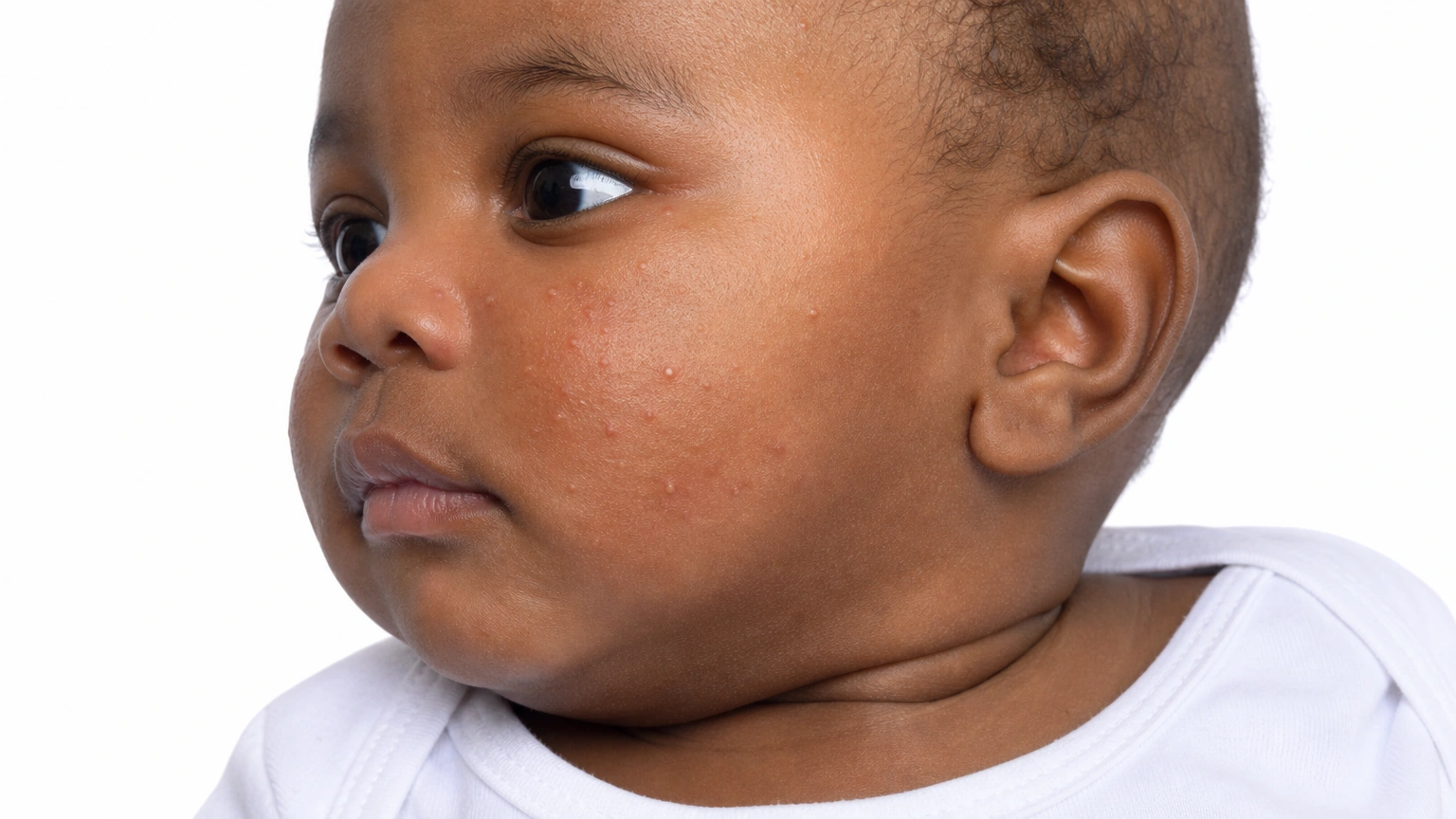
small superficial acne-like bumps on an infant’s left cheek, with the face turned to the infant’s right on deep skin.
Milia: 1. Milia Header — Light Skin; Lighter skin.
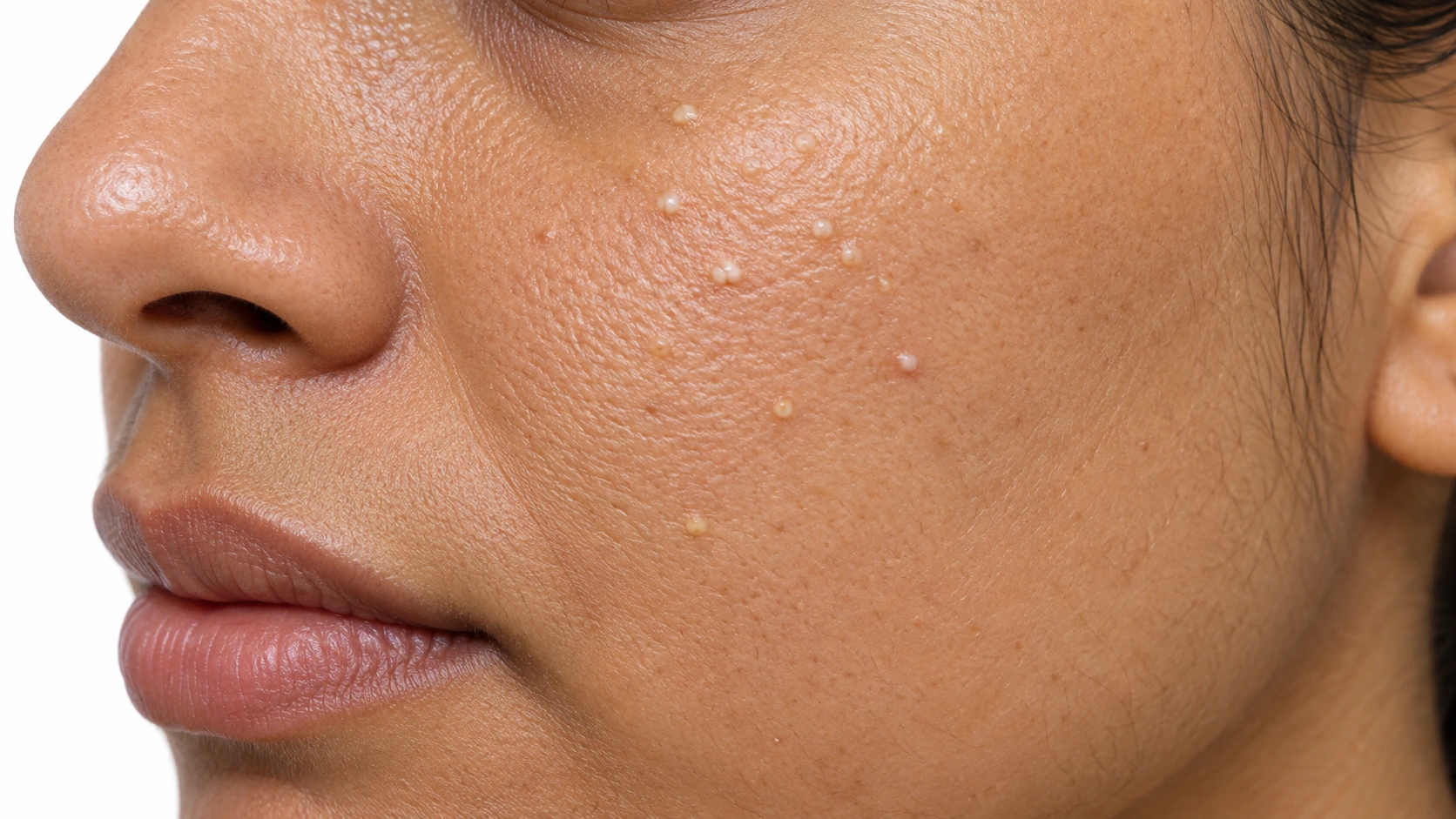
Milia: 2. Milia Header — Medium Skin; Medium skin.
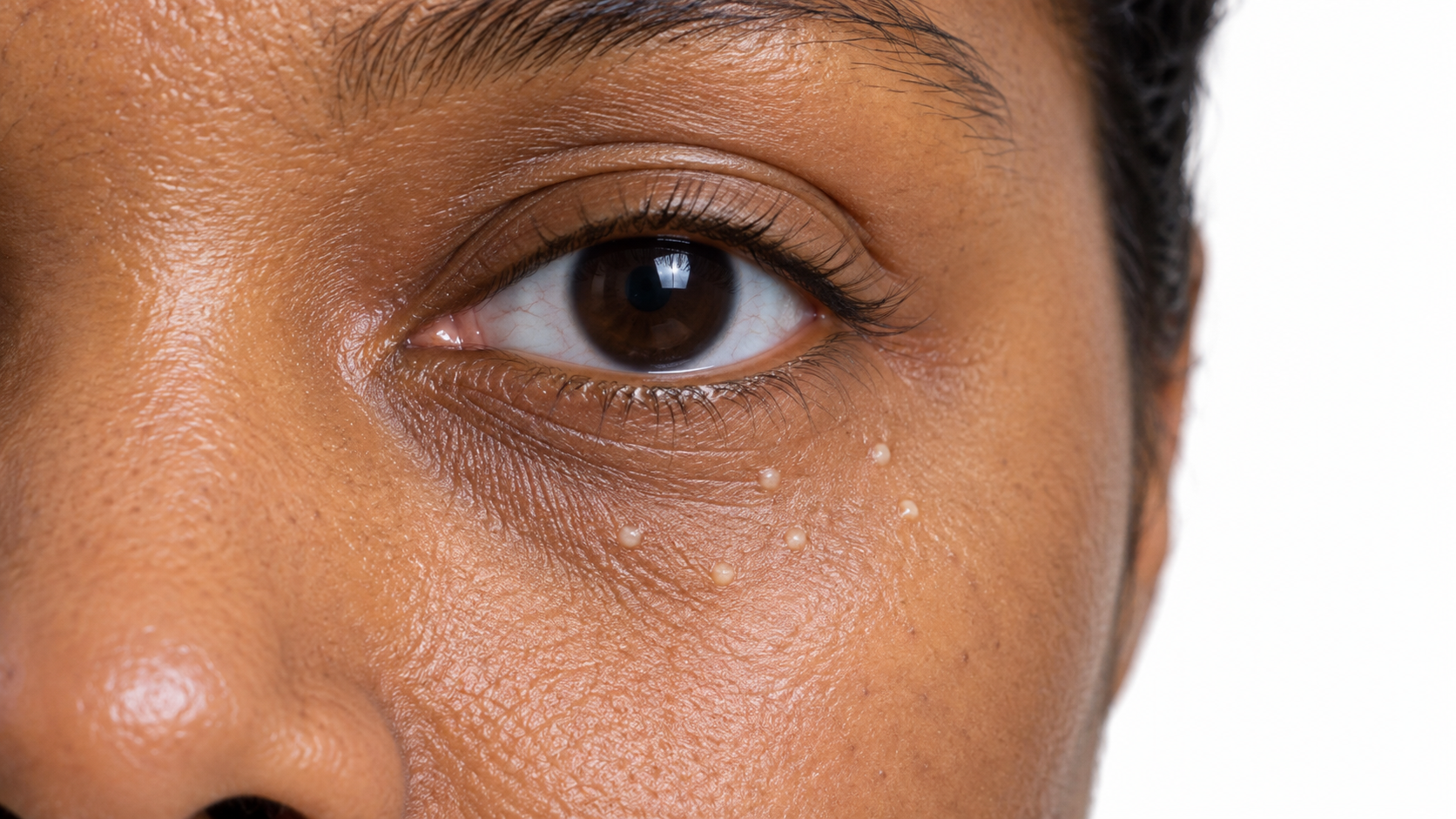
Milia: 3. Milia Header — Brown Skin; Brown skin.
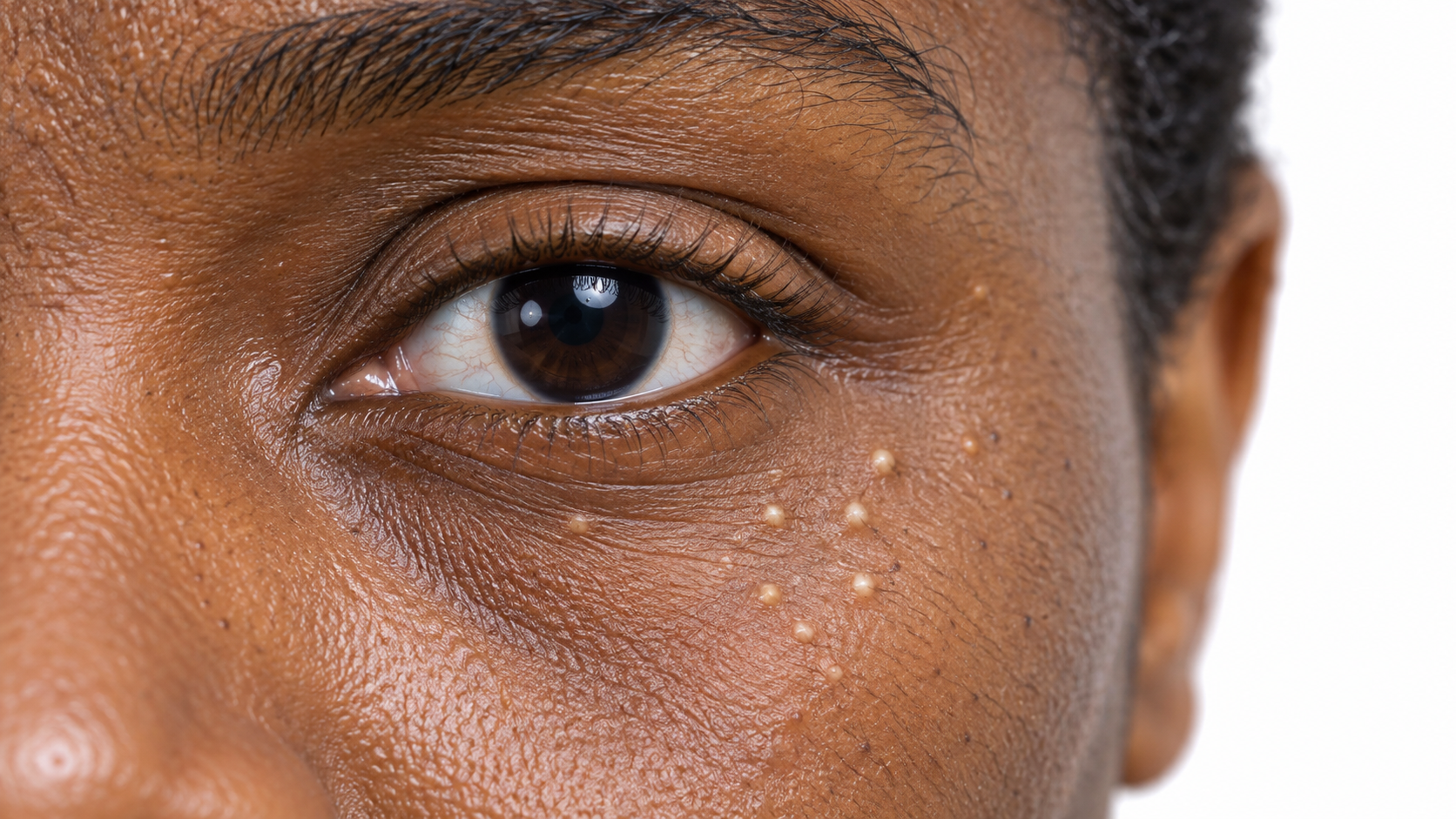
Milia: 4. Milia Header — Deep Skin; Darker skin.
Diagram
Milia mechanism diagram. A tiny cyst forms: A thin lining encloses a small space. Keratin collects inside: Trapped skin protein fills the cyst. A pale bump becomes visible: The firm bump sits just below the surface.
In the skin

Early-life changes in follicles and hormone activity can produce acne lesions. Other newborn facial rashes have different mechanisms and should not automatically be called acne.

Milia are tiny cysts that trap keratin, a normal skin protein, just beneath the surface. The enclosed keratin makes a firm pale bump rather than an inflamed acne spot.

When it usually starts

010203040506070+

Baby Acne. Appears in early infancy; persistent or severe lesions need a clinician to distinguish the cause.

Milia. Can occur at any age and are especially common in newborns.

Causes and triggers

Causes

Early-life follicular and hormone effects can produce acne; not every newborn facial rash is acne.

Milia form when keratin, a skin protein, gets trapped in a tiny pocket just under the surface. They can appear on their own or after skin damage.

Risk factors
Early infancy
Newborns, Sun-damaged skin, Blistering skin conditions
Trigger
● Baby Acne
● Milia
Greasy skin products
Can contribute
Not listed
Heavy creams around the eyes
Not listed
Possible
Burns or blisters
Not listed
Strong link
Laser or peel treatments
Not listed
Possible
Long-term steroid creams
Not listed
Possible

Daily Care

Baby Acne
Milia
Daily care

Habits that help

  • Wash the face gently with water or a mild baby cleanser
    Use your hands and pat dry rather than rubbing with a cloth.
  • Keep the routine simple
    Most early newborn acne needs little more than gentle care.
  • Remove milk or drool gently
    Repeated rubbing and fragranced wipes can irritate the face.
  • Arrange review for persistent, deep or scarring spots
    Acne starting later in infancy may need assessment rather than being assumed to be newborn acne.
  • Discuss paediatric assessment
    Persistent comedones, deep lesions or scarring need an age-specific treatment plan.

Avoid

  • Avoid: Squeezing spots or scrubbing the skin
    This can injure delicate infant skin.
  • Avoid: Adult acne products, essential oils and greasy face oils
    Use medicines only if a clinician recommends them for the baby’s age and diagnosis.

Habits that help

  • A lighter product around the eyes
    Low cost, low risk, uncertain benefit.
  • Daily sunscreen
    Keeps any mark after extraction from darkening.
  • Professional extraction
    A tiny nick lifts the pearl out whole.
  • A gentle chemical exfoliant
    Salicylic or low-strength glycolic acid keeps ducts clearer.
  • Treating the cause in secondary milia
    Stops new ones forming; extraction alone does not.

Avoid

  • Avoid: Squeezing them
    No opening — pressure only bruises and marks the skin.
  • Avoid: Picking with fingernails
    Risks infection, a scar or a dark mark.
  • Avoid: Using a needle on yourself at home
    Unsterile and hard to aim near the eye.
  • Avoid: Scrubs, brushes and grainy exfoliants
    Abrading the surface cannot reach the sac.
  • Avoid: Pore strips and extraction tools
    Nothing to grip — there is no opening.
  • Avoid: Repeated injury to the same area
    Each healing episode can seal off another fragment.
  • Avoid: Aggressive resurfacing
    Deep peels, dermabrasion and ablative lasers are triggers.
  • Avoid: Heavy occlusive balms in one spot
    Worth changing if milia keep forming there.
  • Avoid: Waiting for cleansers to fix it
    Cleansing cannot reach a sealed sac.

Treatment differences

Evidence labels come from each condition’s own treatment list.

Treatment
● Baby Acne
● Milia
Treatment approach

Many newborn acne-like eruptions need observation and gentle care only. Persistent, deep or scarring acne needs an age-specific plan; do not use adult acne medicines without advice.

—
Over-the-counter
None listed
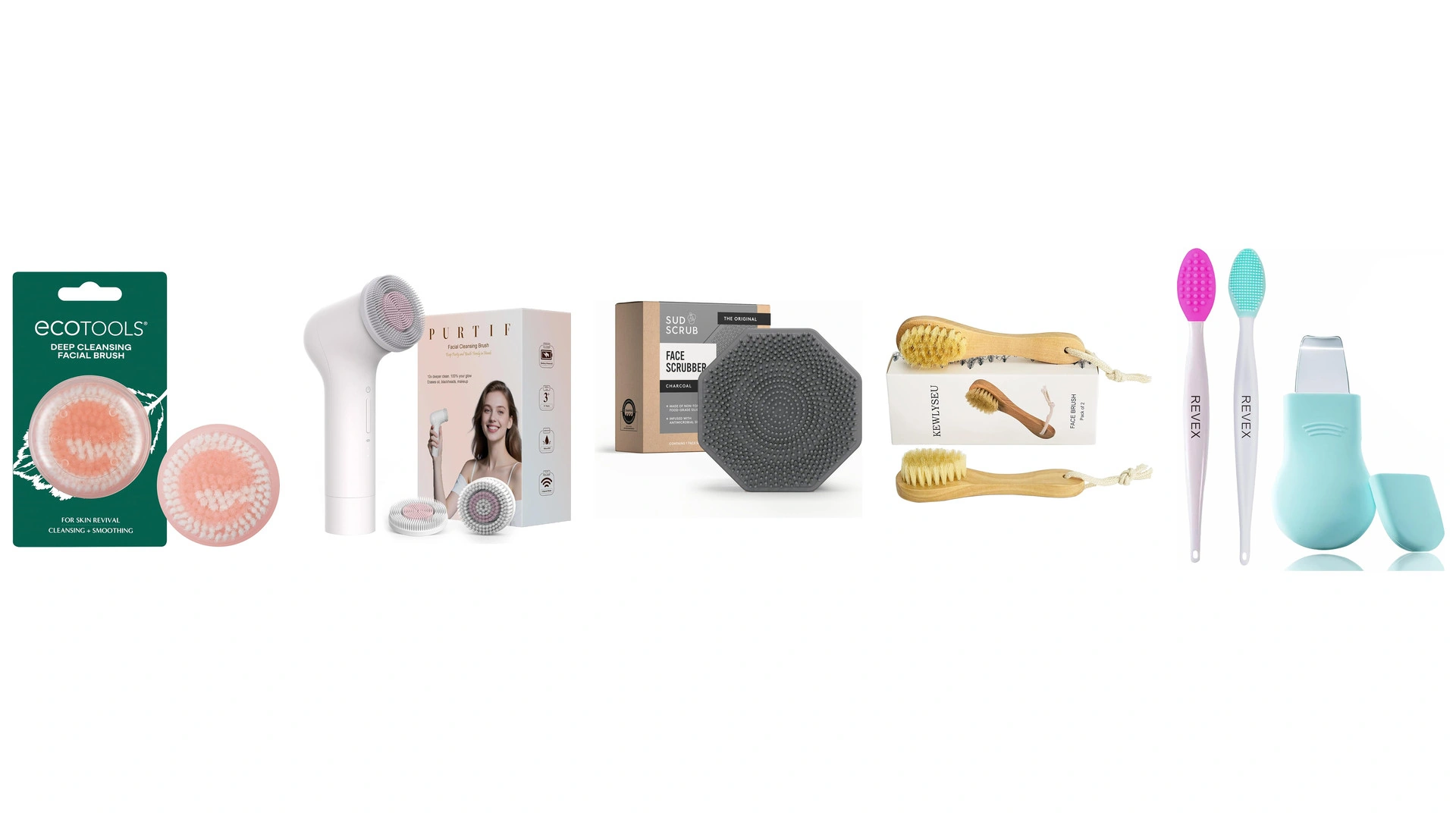
Existing Dermapedia illustration of scrubs, brushes and pore strips.

Scrubs, brushes and pore strips

Avoid

These are what most people try first, and they cannot work. A scrub abrades the surface, and the sac sits under an intact surface. A pore strip needs an opening to grip, and a milium has none. What scrubbing does achieve is irritation, which is not neutral here, because repeated injury to one area can seal off new ducts.

A lighter cream around the eyes

A lighter cream around the eyes

Listed

Thick eye creams and balms get blamed for milia constantly. The evidence is weak and plenty of people get milia while using nothing at all, so this is not a reliable fix and it will not clear the bumps already there. If you keep getting them in the exact spot where a heavy product sits, switching to something lighter costs nothing and is worth trying.

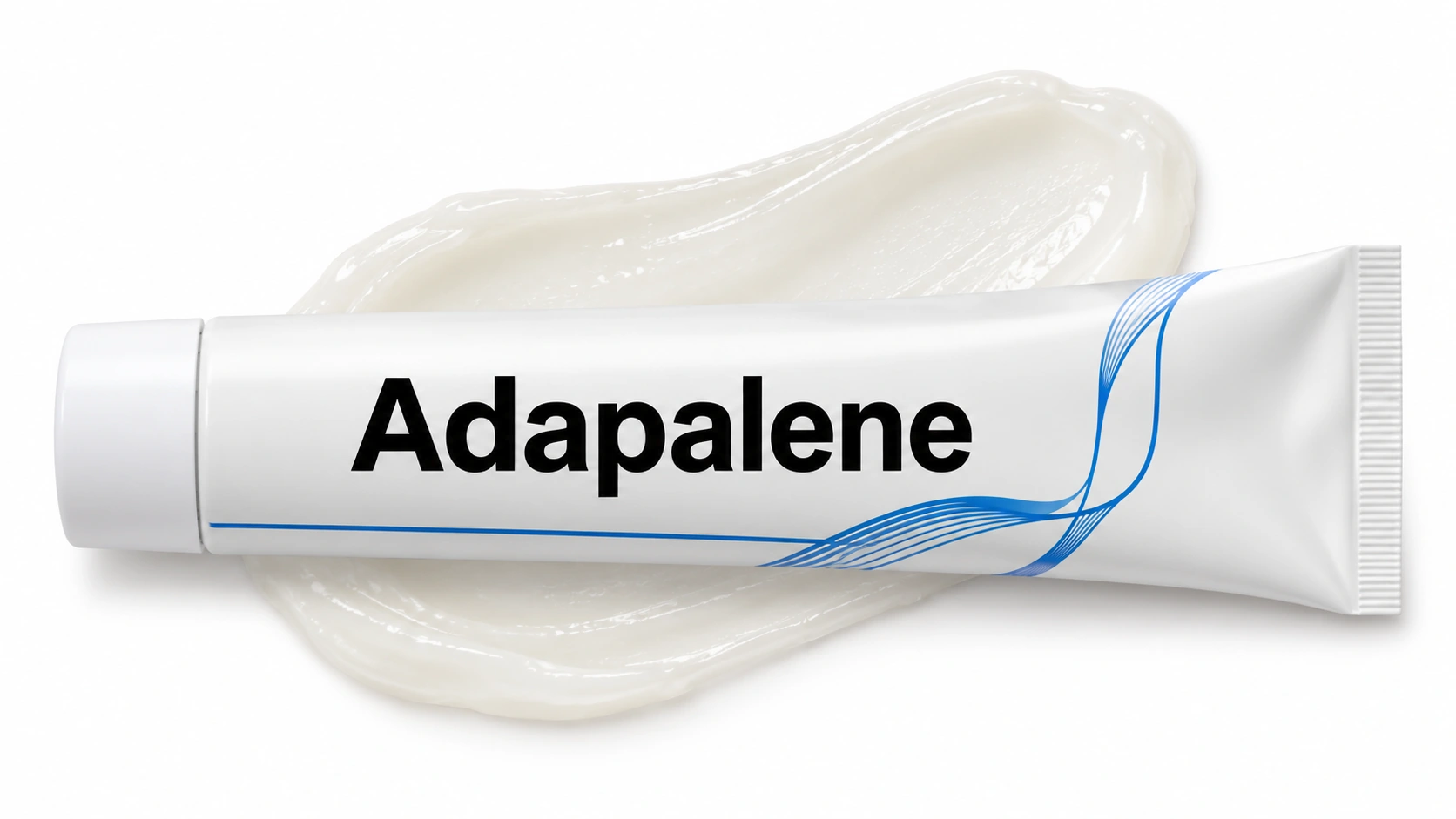
Five adapalene gel 0.1% tubes and boxes lined up on white, including Differin, Effaclar, PanOxyl and Neutrogena

Adapalene

Limited evidence

The over-the-counter retinoid, used at night. It speeds up how the duct lining sheds, which over two to three months lowers how many new milia form. It will not open or empty the ones you already have, because nothing applied to intact skin can reach a sealed sac. Start a few nights a week, and keep it off the eyelids themselves. Ask your doctor about it if you are pregnant or trying to become pregnant.

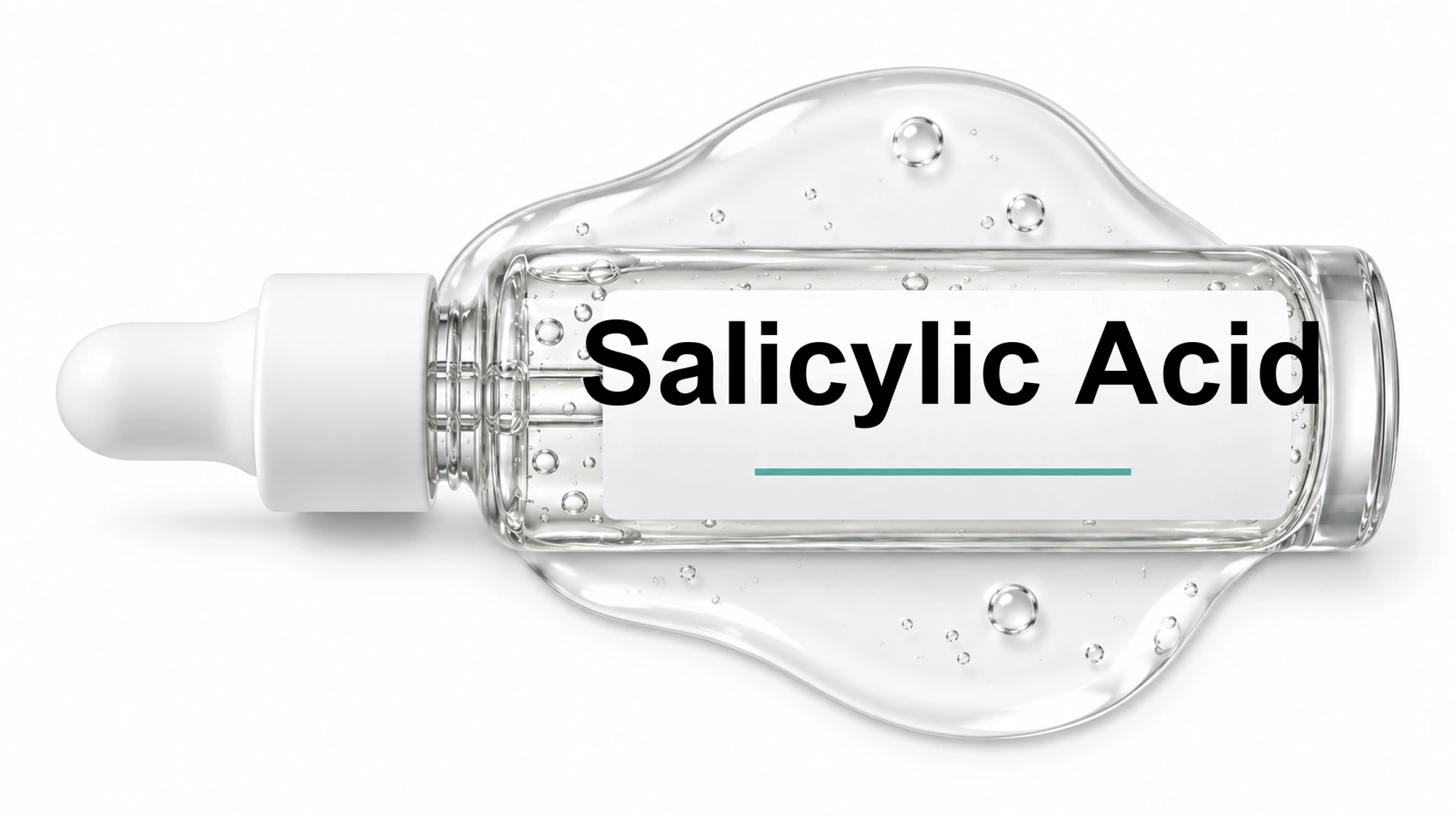
Paula's Choice 2% BHA exfoliant, La Roche-Posay Effaclar cleanser and a CeraVe psoriasis cream pump

Salicylic Acid

Limited evidence

A gentle leave-on exfoliant that helps keep small ducts clear, which is prevention rather than treatment. It does nothing to a milium that has already sealed over. Low strength, a few times a week, and not on eyelid skin, which is thin and irritates easily.

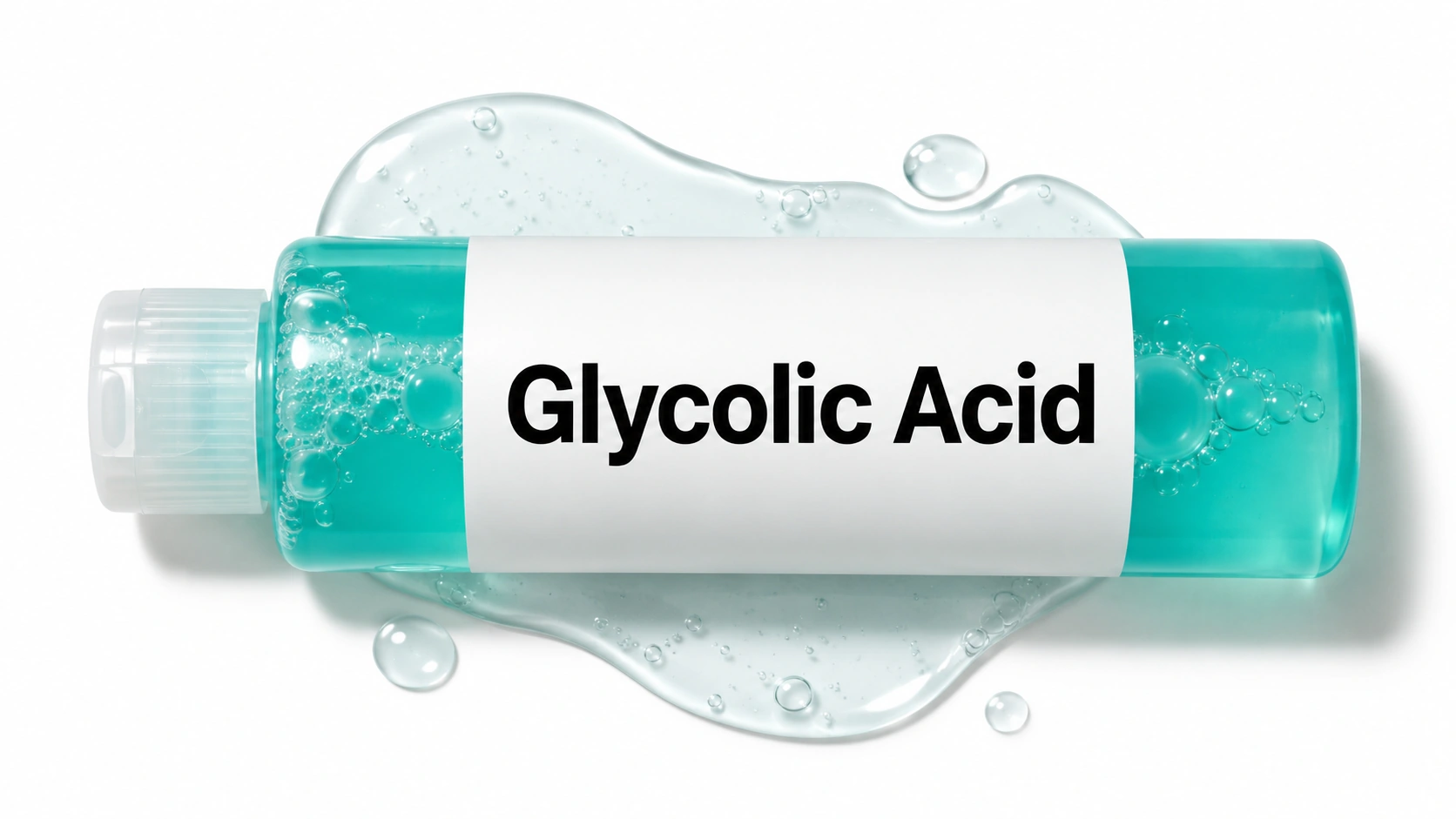
Four glycolic acid toner and liquid bottles lined up on white, one with its box

Glycolic Acid

Limited evidence

Keeps the surface layer shedding evenly, on the same prevention logic as salicylic acid. Low strength only. Strong glycolic peels are the opposite of helpful here — deep peeling is one of the recognized causes of milia in the first place.

Prescription topicals
None listed
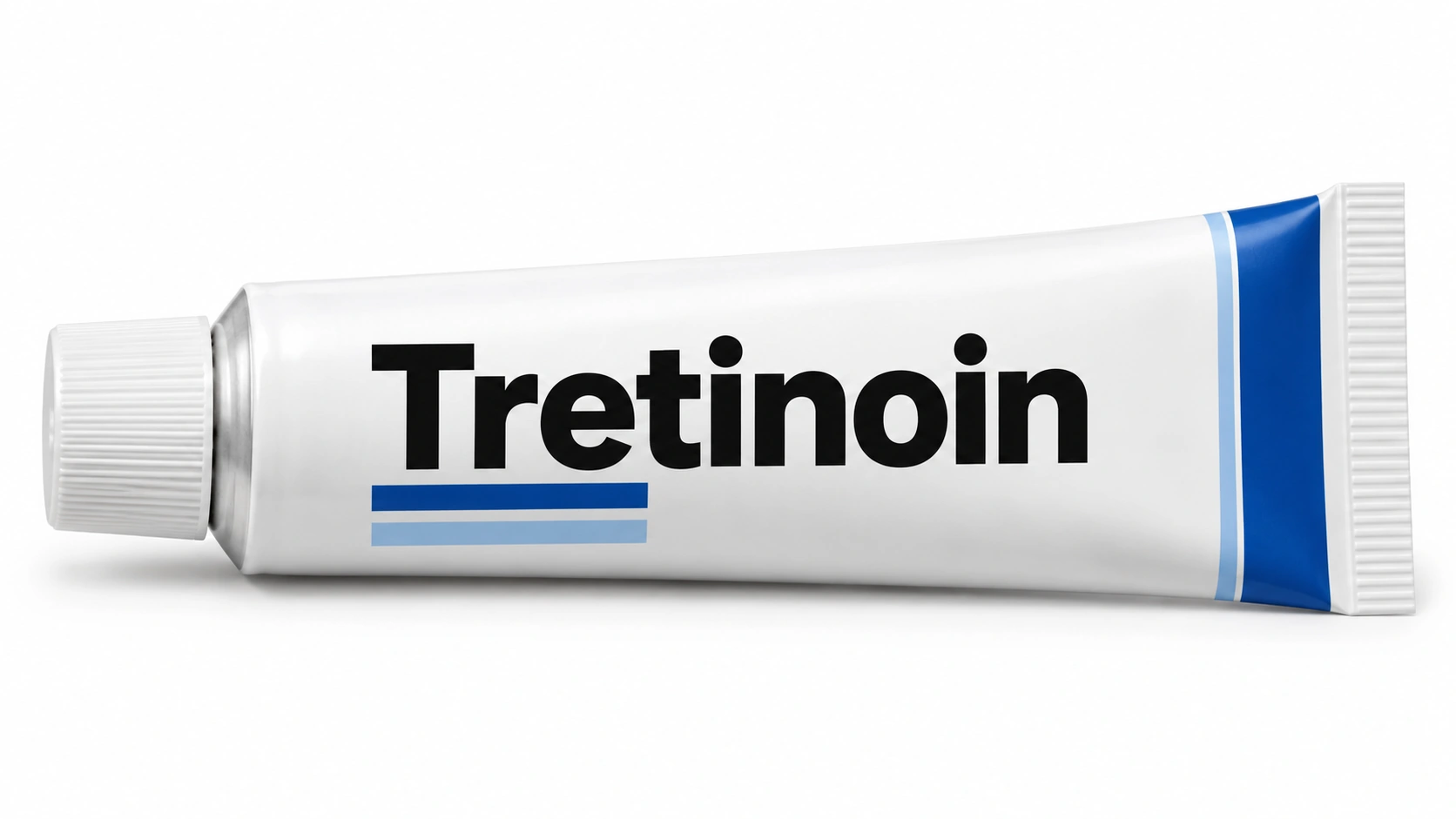
Tretinoin — Header Image

Tretinoin

Limited evidence

The prescription-strength version of the same idea as adapalene, used at night when there are many milia or they keep coming back. Over two to three months it reduces how many new ones form. It does not clear the existing bumps, and it is used carefully near the eyes. Ask your doctor about it if you are pregnant or trying to become pregnant.

Procedures
None listed
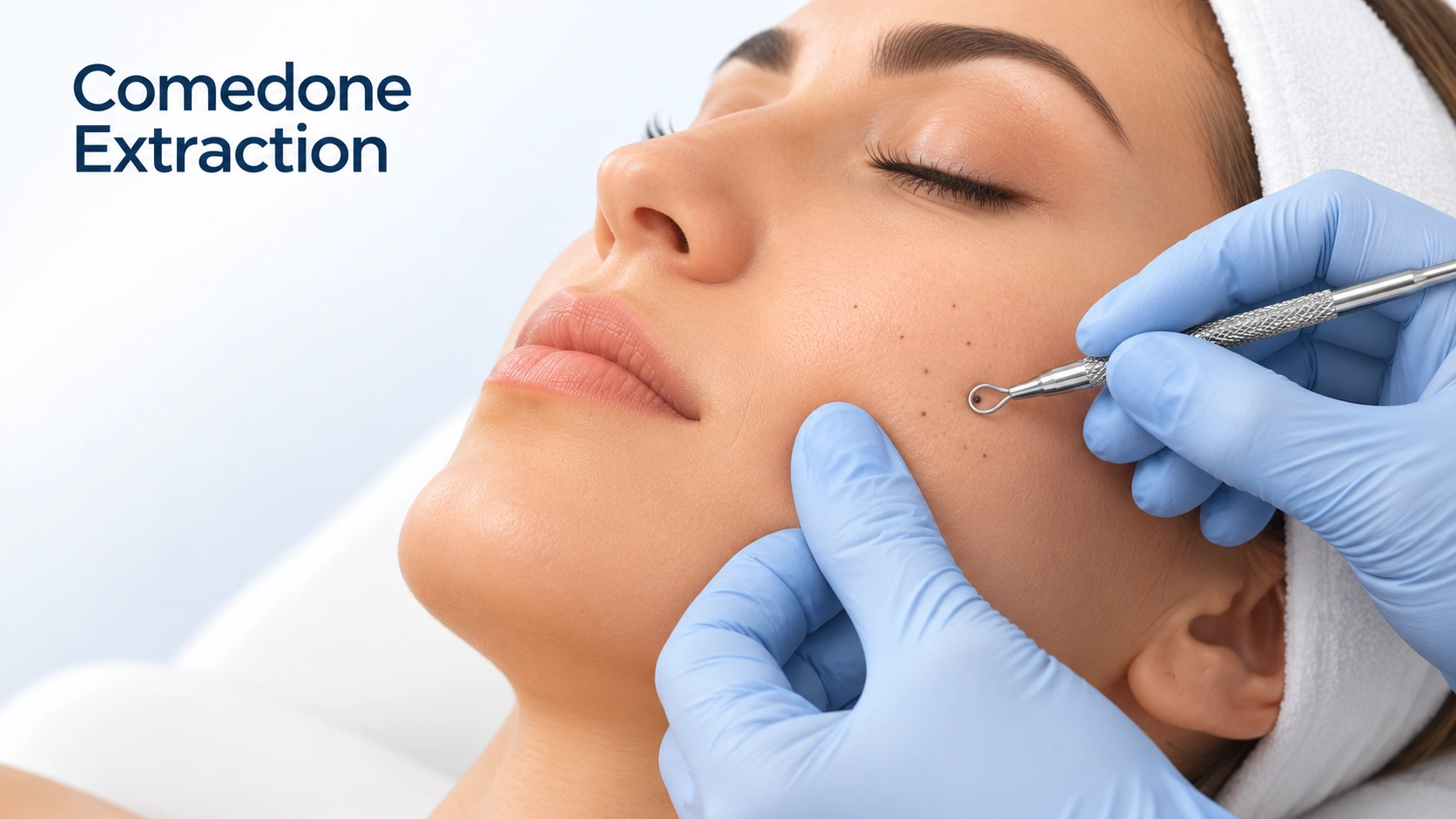
Editorial illustration for Comedone Extraction, based on the entry’s treatment or equipment reference.

Comedone Extraction

Moderate evidence

The definitive treatment, and the only thing that actually empties a milium. The roof is nicked with a sterile blade or needle and light pressure lifts the keratin pearl out whole, in about ten seconds a bump. The one that is removed does not come back in that spot. Done once, properly, it heals in a few days; repeated digging at the same place is what leaves marks.

Editorial illustration for Electrodesiccation and Curettage, based on the entry’s treatment or equipment reference.

Electrodesiccation and Curettage

Limited evidence

A fine heated needle used to destroy the sac, usually kept for milia that are numerous, very small, or sitting somewhere awkward for a blade. It works. It is also more likely than a simple nick to leave a small mark, so it is not the first choice for one or two bumps on an eyelid.

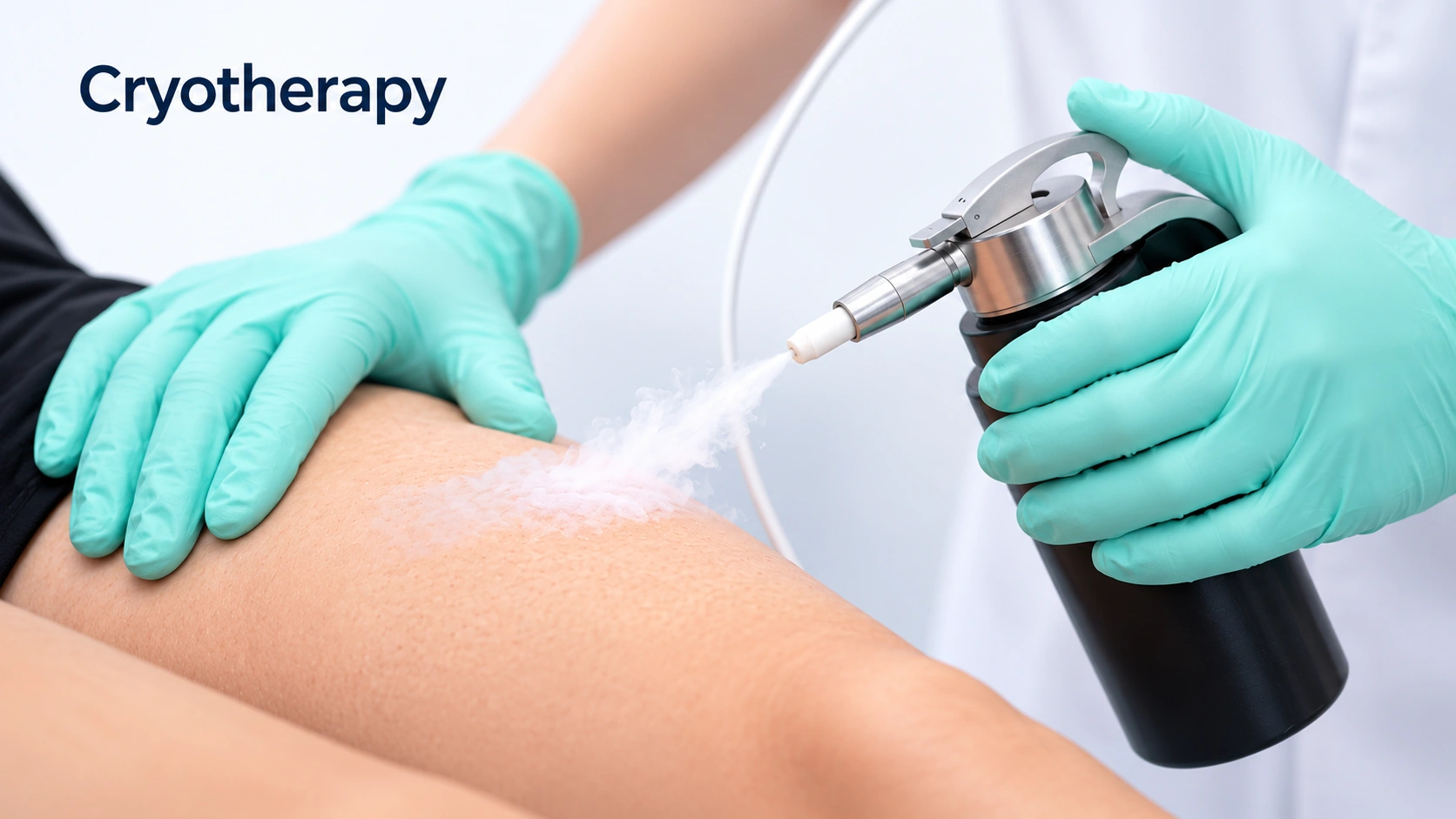
Editorial illustration for Cryotherapy, based on the entry’s treatment or equipment reference.

Cryotherapy

Limited evidence

Freezing is sometimes offered for milia. It is less precise than extraction, more uncomfortable, and on deeper skin tones it carries a real risk of leaving a pale or dark mark where the bump was. There is little reason to choose it over opening the sac and lifting the contents out.

Outlook

Long term

Newborn acne-like spots often settle without treatment. Persistent spots, blackheads, deep lumps or scarring need assessment because infantile acne can follow a different course.

The course depends almost entirely on age: in a newborn the bumps clear themselves, and in an adult they sit still. Milia that follow an injury or procedure appear one to two months after the skin healed and often clear over several months, though they can be extracted sooner.

Complications

Possible complications

Severe true infantile acne can scar; acne in an unusual age group may need further evaluation.

  • Gone from that spot for good
More details

Gone from that spot for good
An emptied milium does not return there. New ones can form nearby — a new bump, not a recurrence.

When to get help

When to get help

Have persistent, deep or scarring lesions assessed. A fever or an unwell young infant needs urgent care.

Ask a clinician about persistent or troublesome bumps, especially near the eyes. Avoid trying to pierce or extract them yourself.

Common questions

Baby Acne:What is Baby Acne?

Acne-like spots in early infancy; newborn facial pustules and true infantile acne are different patterns.

Baby Acne:What can I do day to day?

Gently wash with water or a mild baby cleanser. Avoid picking, oils and adult acne products.

Baby Acne:When should I get medical advice?

Have persistent, deep or scarring lesions assessed. A fever or an unwell young infant needs urgent care.

Milia:Why will they not pop?

Because there is no pore. A milium is a sealed sac of keratin under intact skin, so nothing has a route out. Pressure sends the contents sideways into the tissue, which is how bruising and dark marks happen. Open the roof first and it comes out.

Milia:Can I get rid of them at home?

You can reduce how many new ones form, with a retinoid at night over two to three months. You cannot reliably remove the ones you have, and please do not try with a needle - eyelid skin is thin, the aim is difficult, and the usual result is a mark that outlasts the bump.

Milia:Does extraction hurt or leave a scar?

A brief scratch rather than real pain; most people need no anesthetic. One small nick and light pressure heals in a few days without a scar. Repeated digging at the same spot is what leaves marks.

Milia:Will they come back?

The one removed does not return. New ones can form elsewhere, especially if you are prone to them or something is triggering them — a blistering condition, a resurfacing procedure, steroid cream. That is a new bump, not a recurrence.

Milia:My newborn has white bumps on the nose. What should I do?

Nothing. Newborn milia are common and clear within a few weeks as the ducts finish maturing. No creams, no rubbing, no special washing. If they are still there after a couple of months, or the baby has widespread bumps with fragile or blistering skin, have them looked at.

Milia:I got them after a laser treatment. Is that normal?

Yes. Milia are a recognized consequence of laser resurfacing, dermabrasion and deep peels, usually a month or two after the skin heals. They often settle over several months, and can be extracted any time if they bother you.

Sources

Sources and further reading

  1. Acne in children
  2. DermNet
Dermapedia on YouTube