Does xanthelasma always mean high cholesterol?
No. About half of people with xanthelasma have normal cholesterol readings. It is still worth a blood test, because the other half do not.
Xanthelasma is a soft yellow patch of cholesterol sitting under the skin of the eyelid. It is flat or slightly raised, wider than it is tall, and it usually starts at the inner corner near the nose. Milia are tiny white keratin cysts. They are round, hard, and about the size of a pinhead. Yellow and flat means xanthelasma, white and beady means milia. Only one of the two is a reason to have your cholesterol checked.
| The difference | Xanthelasma | Milia |
|---|---|---|
| What it is | Cholesterol stored in the skin | A tiny cyst full of keratin |
| What it looks like | A flat yellow patch | A firm white bead |
| How it feels | Soft and velvety | Hard |
| What it does over time | Slowly spreads | Often clears on its own |
| Treatment | Acid, laser, freezing or surgery | A pinpoint nick and gentle pressure |
Side by side
Xanthelasma
Cholesterol stored in the skin
Fat-carrying cells collect in the dermis and build up into a soft plaque. The yellow colour is the cholesterol itself.
Milia
A tiny cyst full of keratin
Keratin is the protein that makes up the surface of your skin. A small amount gets sealed into a closed pocket, with no opening for it to come out of.
Xanthelasma
A flat yellow patch
Cream to butter-yellow, with a soft edge that blends into the skin. It often looks like a smear or a streak rather than a bump.
Milia
A firm white bead
Round, dome-shaped, bright white or pale cream, with a clean edge. It looks like a grain of sand under the skin.
Xanthelasma
A few millimetres to a centimetre
It spreads sideways over months and can join up into a longer band along the lid.
Milia
One to two millimetres
Pinhead-sized, and it stays that size.
Xanthelasma
The inner corner of the eyelid
Usually the upper lid nearest the nose, and it is often on both eyes and both lids in a matching pattern.
Milia
Anywhere on the lid, and the face
Under the eyes and on the lids, then the nose, cheeks and forehead. Scattered rather than symmetrical.
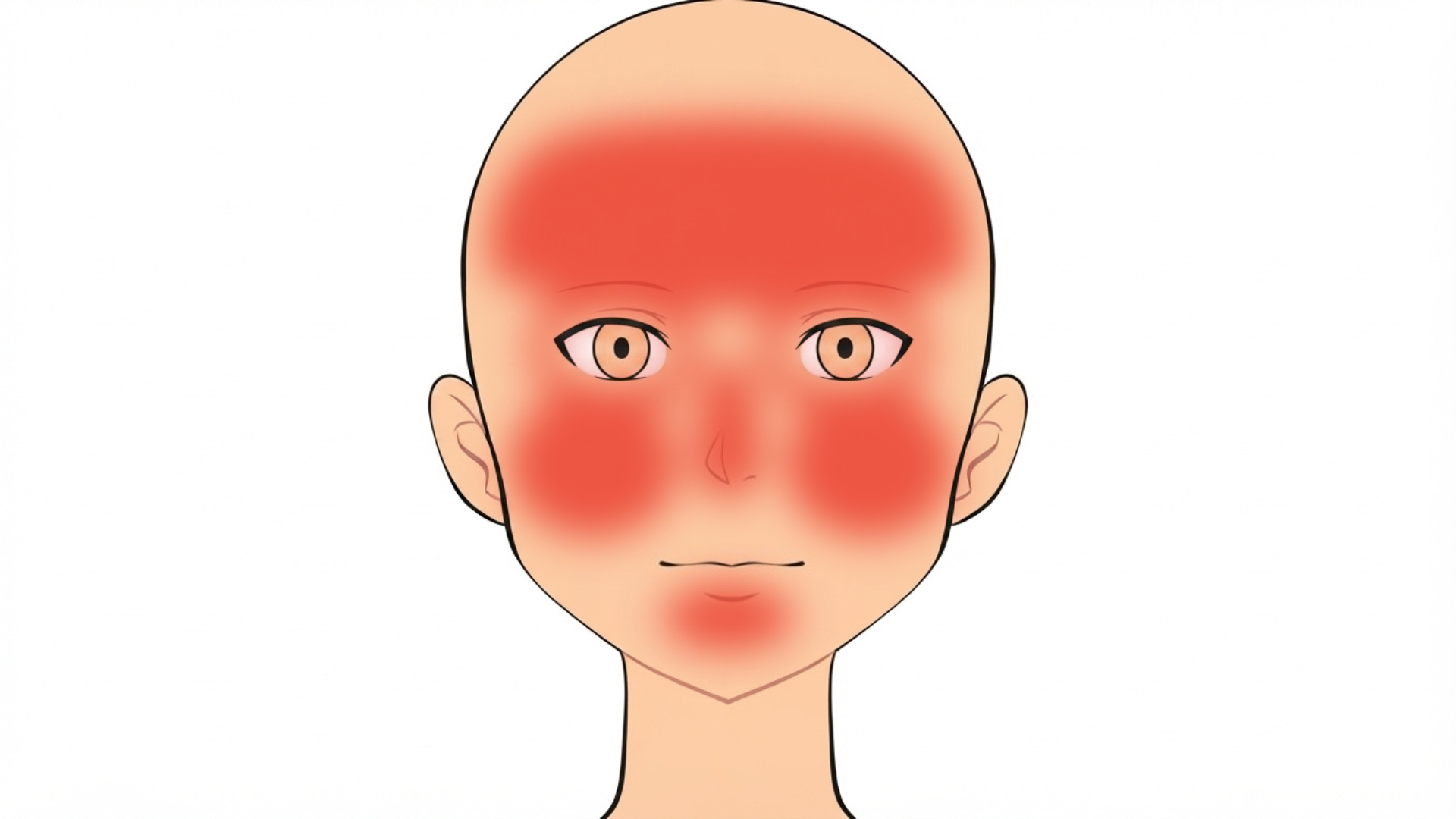
Milia turn up most often on the eyelids, under the eyes, and on the cheeks, nose and forehead. In newborns they sit across the nose, chin and cheeks, and sometimes on the gums or the roof of the mouth. They are firm and white, and they do not come to a head.
Xanthelasma
Soft and velvety
Press it and it gives, like a small pad under the skin. There is no hard core.
Milia
Hard
A solid bead that does not squash. Nothing comes out however hard you press, because it is sealed.
Xanthelasma
Slowly spreads
Xanthelasma does not resolve on its own. Most get slowly bigger, and new patches appear on the other lids.
Milia
Often clears on its own
Milia in babies clear within weeks. In adults they often sit quietly for months, and some stay for years.
Xanthelasma
Acid, laser, freezing or surgery
Trichloroacetic acid, laser, liquid nitrogen or a small excision all work, and eyelid skin heals well. Recurrence is common whichever method is used.
Milia
A pinpoint nick and gentle pressure
A clinician opens the surface with a sterile needle and lifts the keratin out. It takes seconds per bump and heals over in about a week.
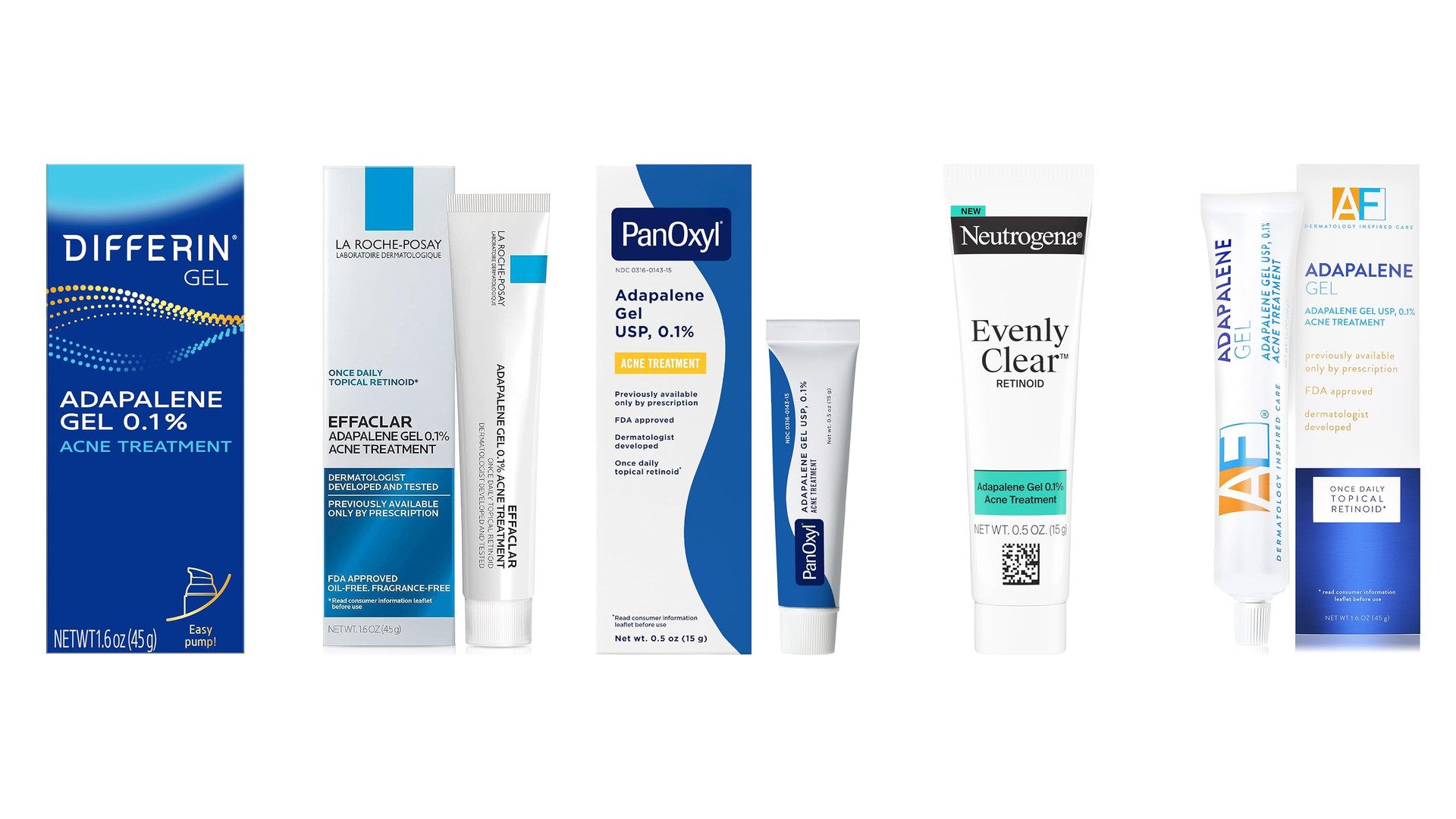
The over-the-counter retinoid, used at night. It speeds up how the duct lining sheds, which over two to three months lowers how many new milia form. It will not open or empty the ones you already have, because nothing applied to intact skin can reach a sealed sac. Start a few nights a week, and keep it off the eyelids themselves. Ask your doctor about it if you are pregnant or trying to become pregnant.

A gentle leave-on exfoliant that helps keep small ducts clear, which is prevention rather than treatment. It does nothing to a milium that has already sealed over. Low strength, a few times a week, and not on eyelid skin, which is thin and irritates easily.
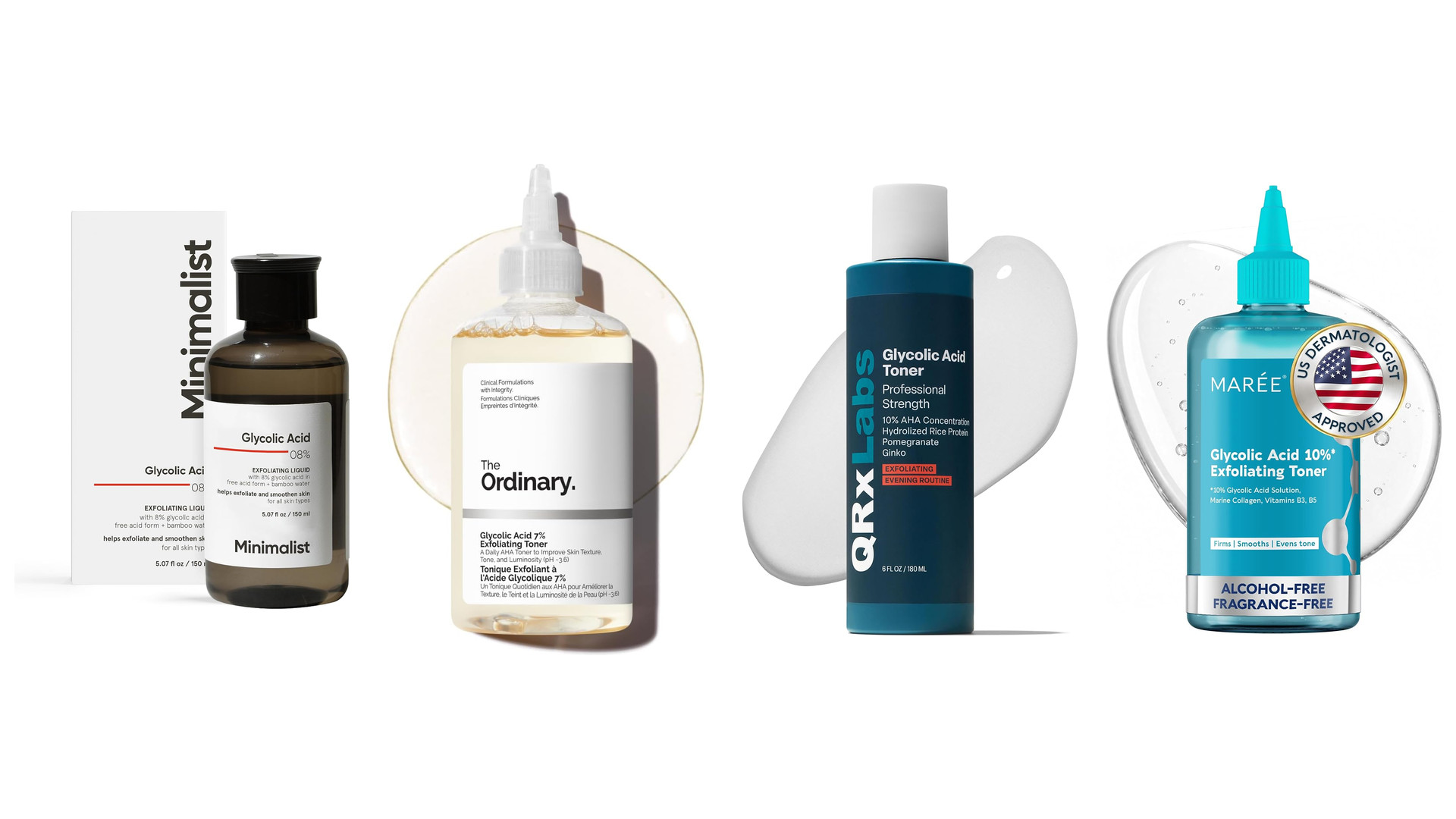
Keeps the surface layer shedding evenly, on the same prevention logic as salicylic acid. Low strength only. Strong glycolic peels are the opposite of helpful here — deep peeling is one of the recognized causes of milia in the first place.
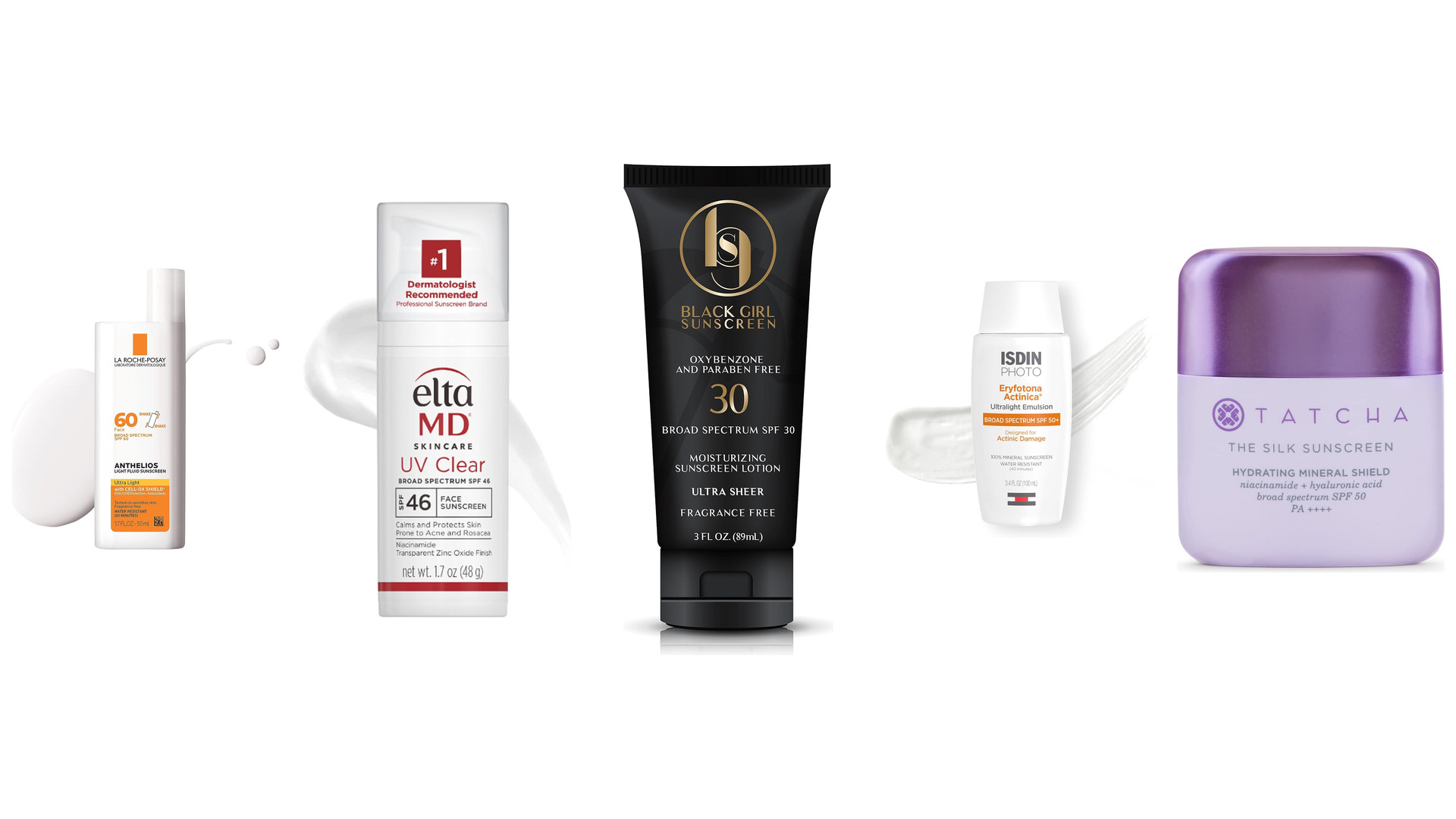
Not a milia treatment, and it will not stop new ones forming. It is here for what is left behind: a mark from an extraction or from picking darkens and lasts longer with sun on it, and that matters more on deeper skin tones. The useful window is the few weeks after a bump has been removed.

Thick eye creams and balms get blamed for milia constantly. The evidence is weak and plenty of people get milia while using nothing at all, so this is not a reliable fix and it will not clear the bumps already there. If you keep getting them in the exact spot where a heavy product sits, switching to something lighter costs nothing and is worth trying.

These are what most people try first, and they cannot work. A scrub abrades the surface, and the sac sits under an intact surface. A pore strip needs an opening to grip, and a milium has none. What scrubbing does achieve is irritation, which is not neutral here, because repeated injury to one area can seal off new ducts.

The definitive treatment, and the only thing that actually empties a milium. The roof is nicked with a sterile blade or needle and light pressure lifts the keratin pearl out whole, in about ten seconds a bump. The one that is removed does not come back in that spot. Done once, properly, it heals in a few days; repeated digging at the same place is what leaves marks.
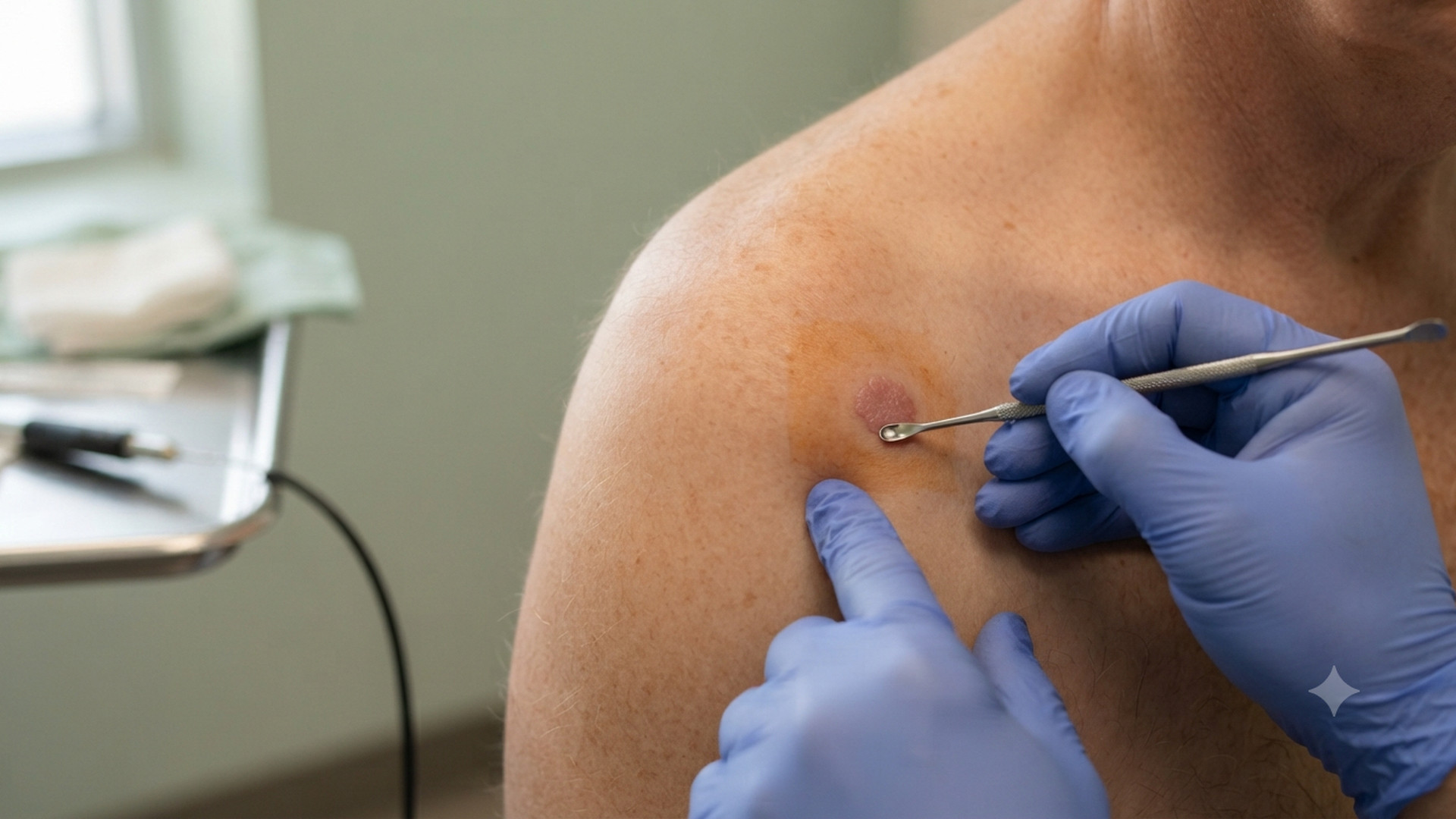
A fine heated needle used to destroy the sac, usually kept for milia that are numerous, very small, or sitting somewhere awkward for a blade. It works. It is also more likely than a simple nick to leave a small mark, so it is not the first choice for one or two bumps on an eyelid.
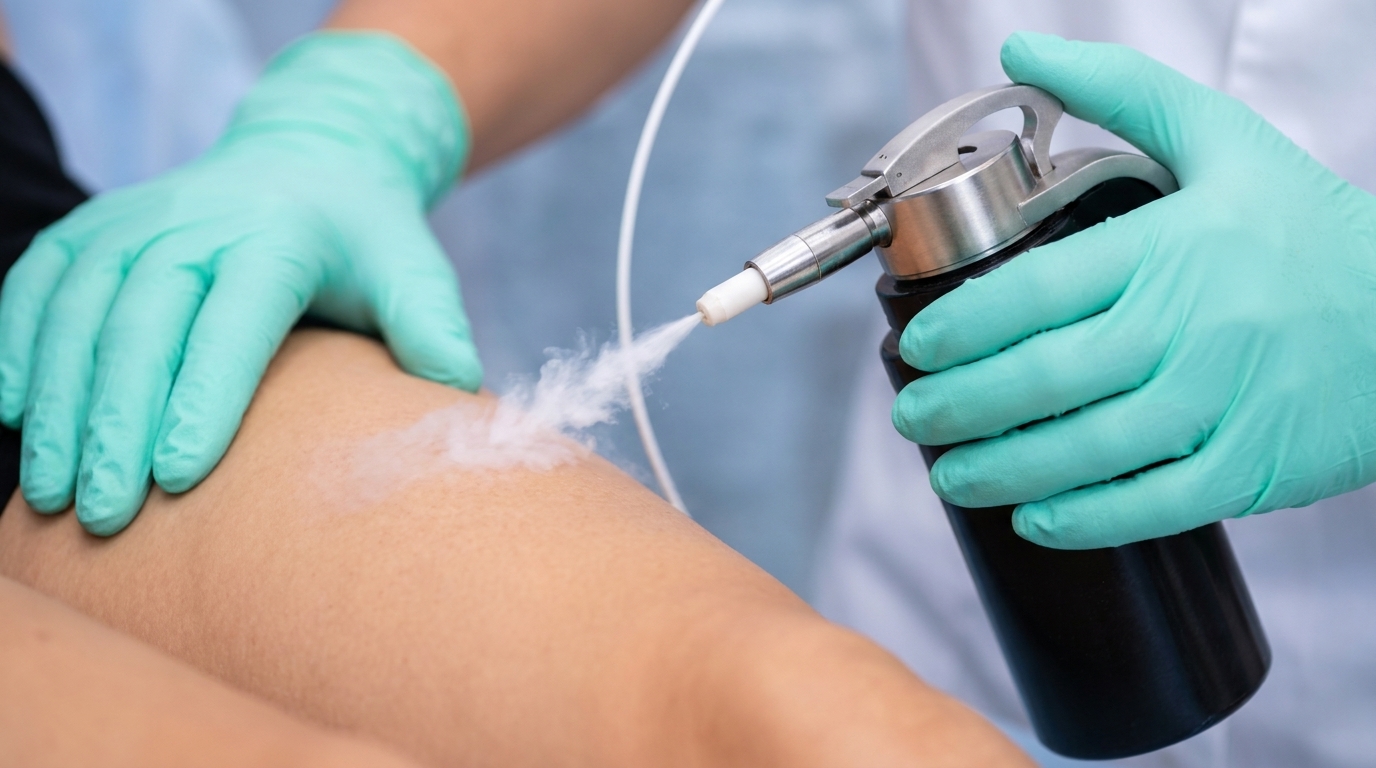
Freezing is sometimes offered for milia. It is less precise than extraction, more uncomfortable, and on deeper skin tones it carries a real risk of leaving a pale or dark mark where the bump was. There is little reason to choose it over opening the sac and lifting the contents out.
The prescription-strength version of the same idea as adapalene, used at night when there are many milia or they keep coming back. Over two to three months it reduces how many new ones form. It does not clear the existing bumps, and it is used carefully near the eyes. Ask your doctor about it if you are pregnant or trying to become pregnant.
Xanthelasma
Get a cholesterol blood test
Xanthelasma is harmless in itself, but it can be the first outward sign of a lipid problem. Anyone who develops it should have their cholesterol checked, especially under the age of 40.
Milia
Only if you want them gone
Milia are harmless and mean nothing about your health. Worth checking if a crop appears on skin that was burned, blistered or scarred.
Xanthelasma
Xanthelasma is a patch. It is wider than it is high, with edges that fade rather than stop. Look at it in the mirror and you see an area of colour, not a bump.
Xanthelasma
About half of people with xanthelasma have normal cholesterol. So it does not confirm high cholesterol on its own, and plenty of people with it have perfectly ordinary blood results.
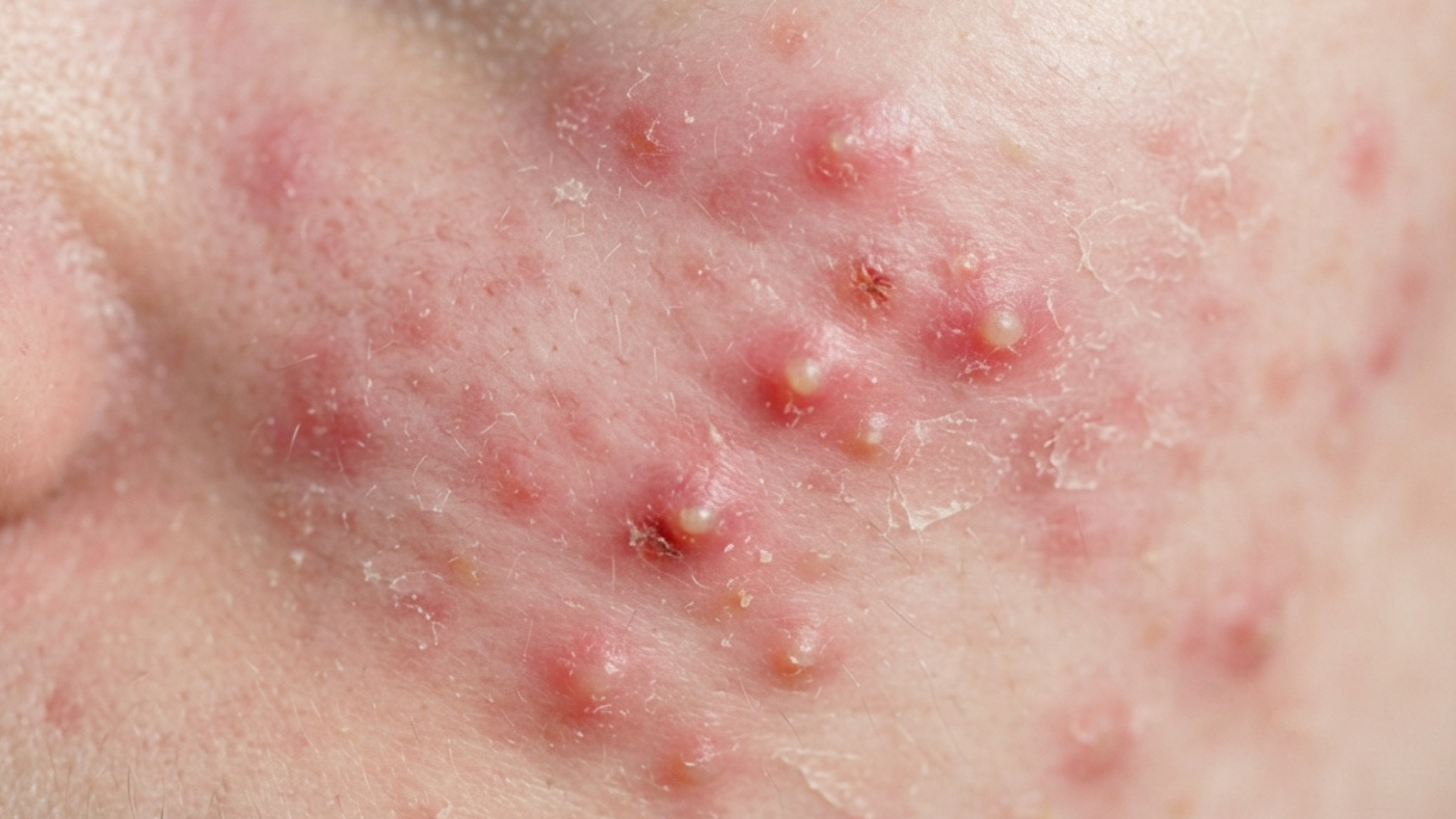
The closed comedone — a whitehead — is what milia get mistaken for most. Both are small pale bumps in the same places. A whitehead is a blocked pore, so it has an opening you can find, it holds oil and skin cells rather than a firm pearl, it can turn red and sore, and it comes and goes over days. A milium is sealed, has no opening, sits unchanged for months and never becomes inflamed. That is also why acne treatments do very little for milia.
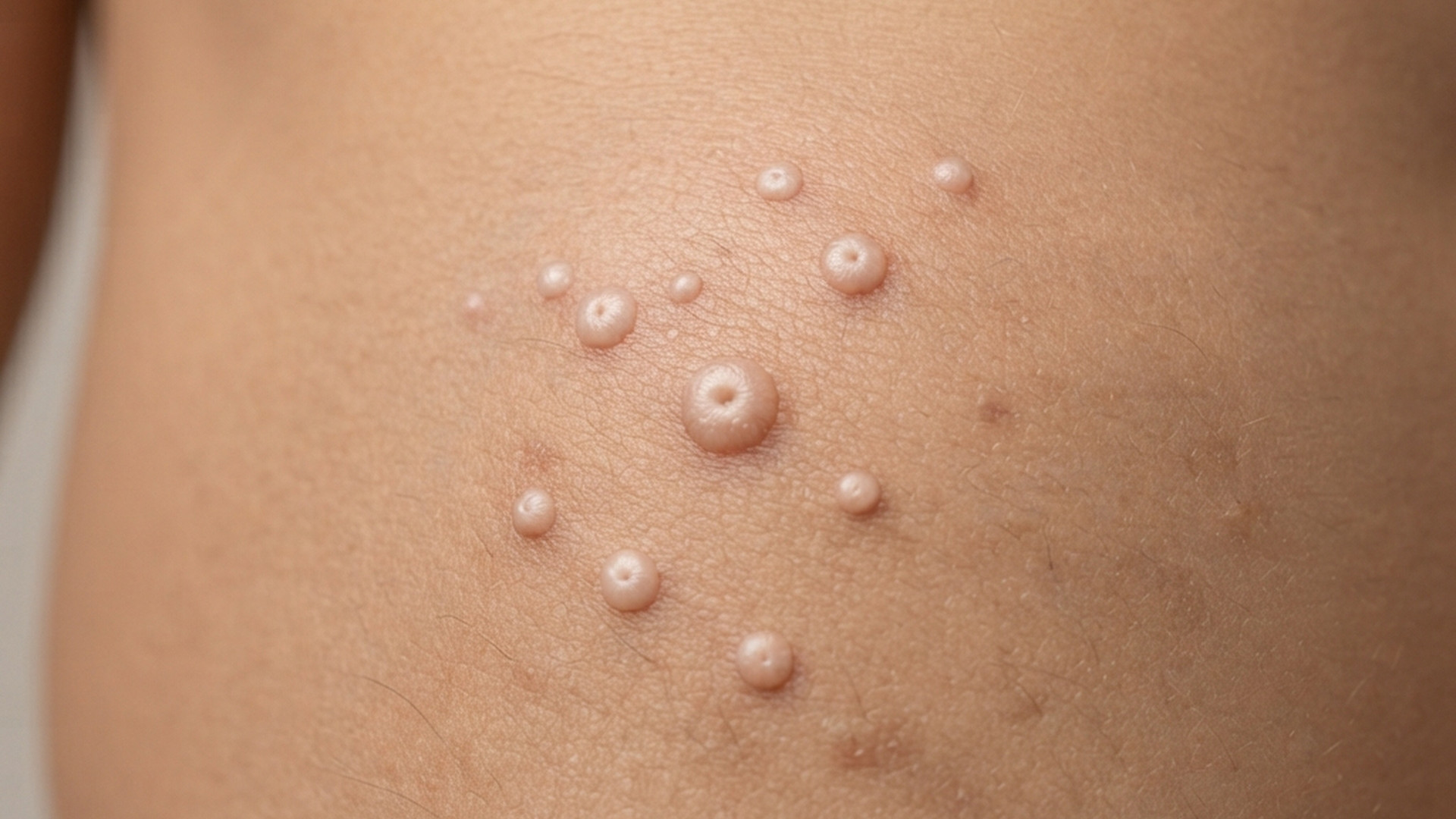
Both are small, firm, dome-shaped and pale. Molluscum bumps are usually a little larger, most have a tiny dimple in the middle, they turn up in clusters that spread over weeks, and they are common in children and in skin folds. Milia do not spread, do not dimple and cannot be passed on. Molluscum is a virus and clears on its own eventually; a milium sits still until someone removes it.
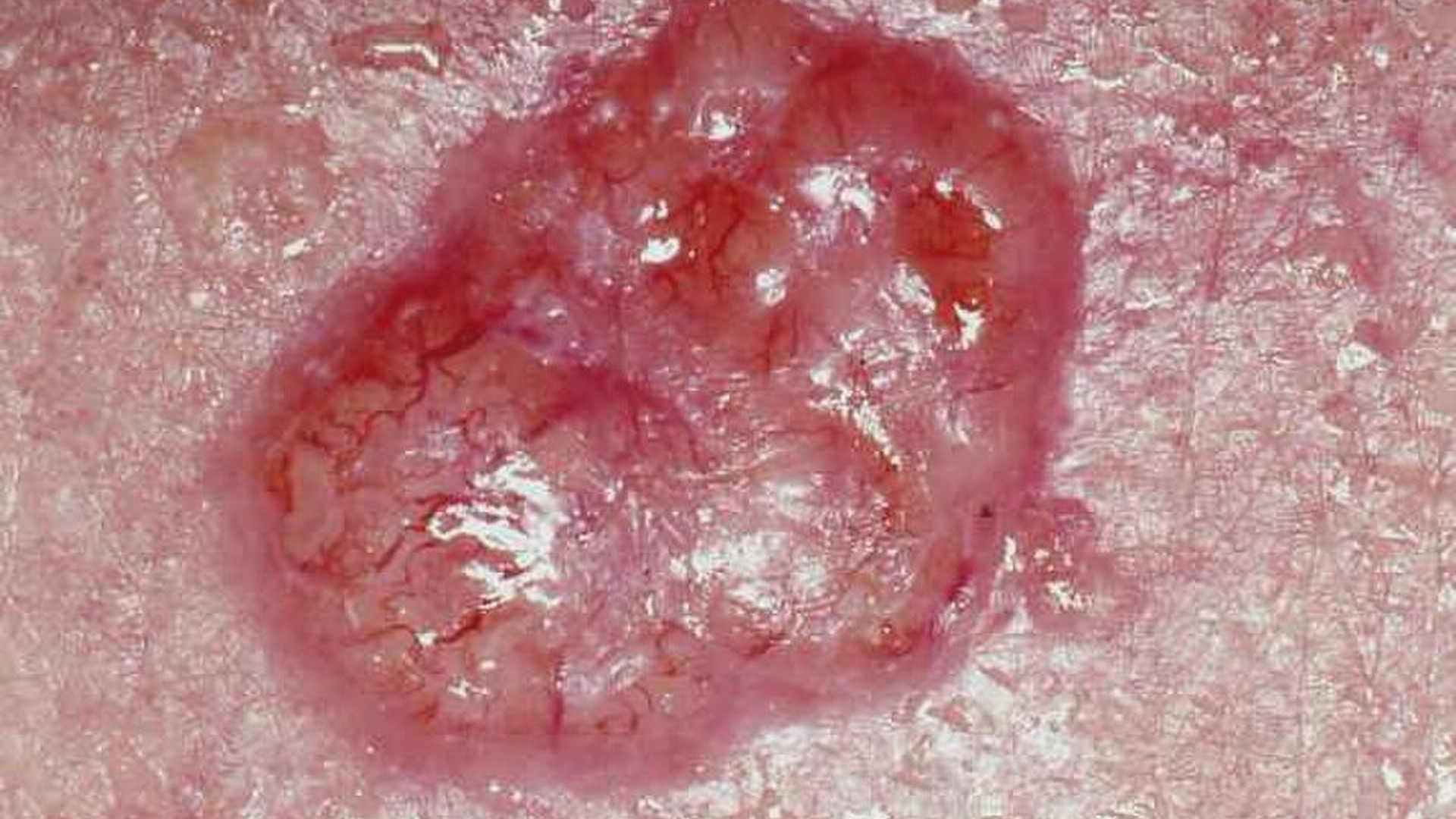
Worth knowing about, because an early basal cell skin cancer can look like a small pearly bump on the face, which is exactly what a milium looks like. The difference is behavior. A basal cell grows slowly month by month, often has fine blood vessels visible over its surface, and may crust, bleed or refuse to heal. A milium is one to two millimetres, stays that size and never bleeds. A single bump that is growing or bleeding should be looked at.
Common questions
No. About half of people with xanthelasma have normal cholesterol readings. It is still worth a blood test, because the other half do not.
Colour and shape. Xanthelasma is a soft yellow patch that spreads sideways. Milia are hard white beads you can count.
Usually not. Lowering cholesterol matters for your heart, but an established patch rarely fades on its own. Most people treat the skin separately.
Yes. Trichloroacetic acid, laser, liquid nitrogen and small surgical excision are all used, and eyelid skin heals well. It can come back afterwards.
No. It sits in the skin of the lid and does not affect vision or the eye itself.
For xanthelasma, the process that laid down the cholesterol is still running. For milia, the same skin that trapped keratin once can trap it again, though new ones tend to appear in different spots.