Bed Bug Bites vs Flea Bites
Skin reactions after bed bugs feed, often during sleep. Itchy reactions to flea feeding, often related to an infested pet or environment.
Key differences
The same eight facts on every condition comparison.
What is it?
- What it is
Skin reactions after bed bugs feed, often during sleep.
- What it is
Itchy reactions to flea feeding, often related to an infested pet or environment.
What it looks like
Bed Bug Bites
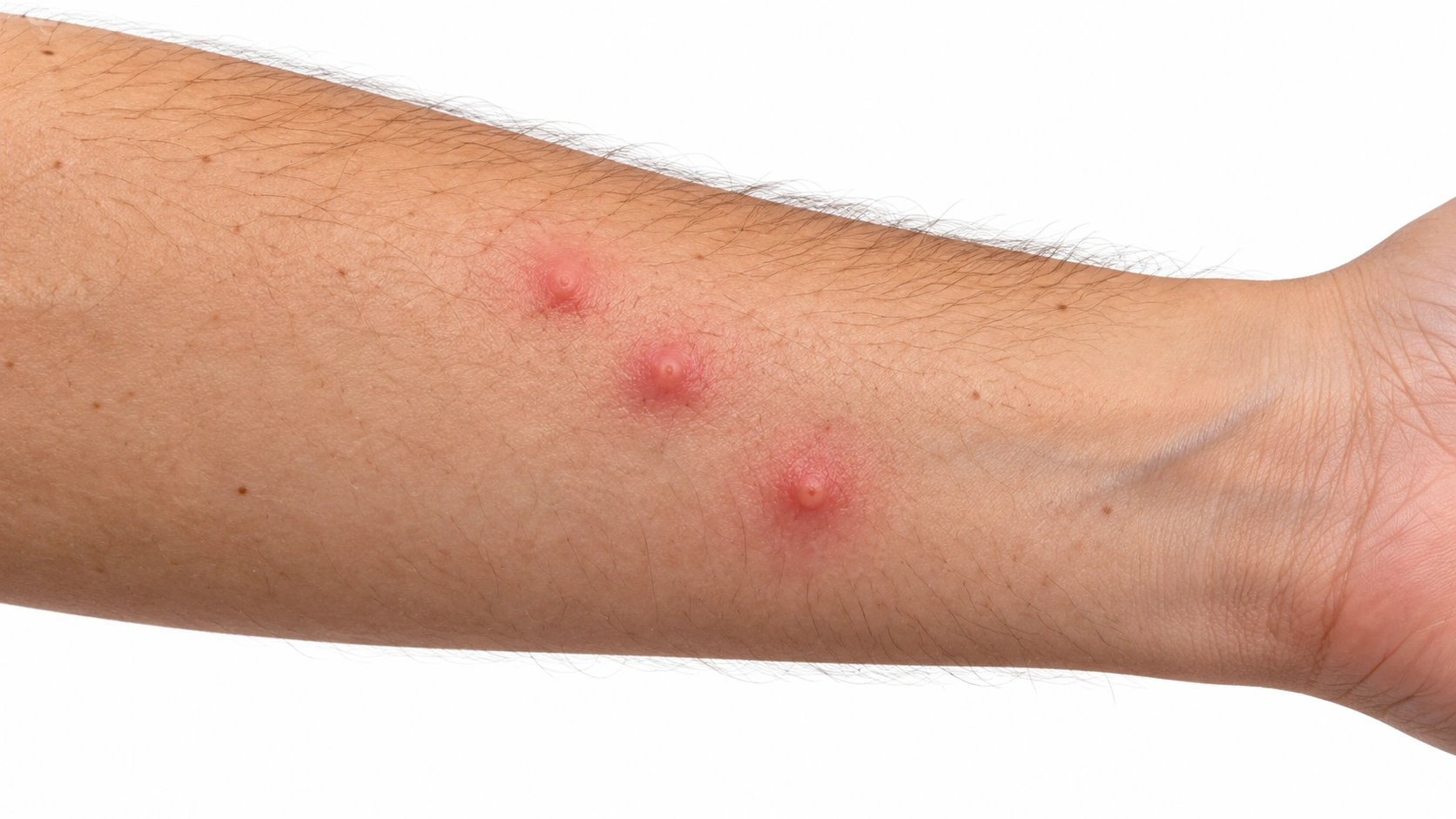
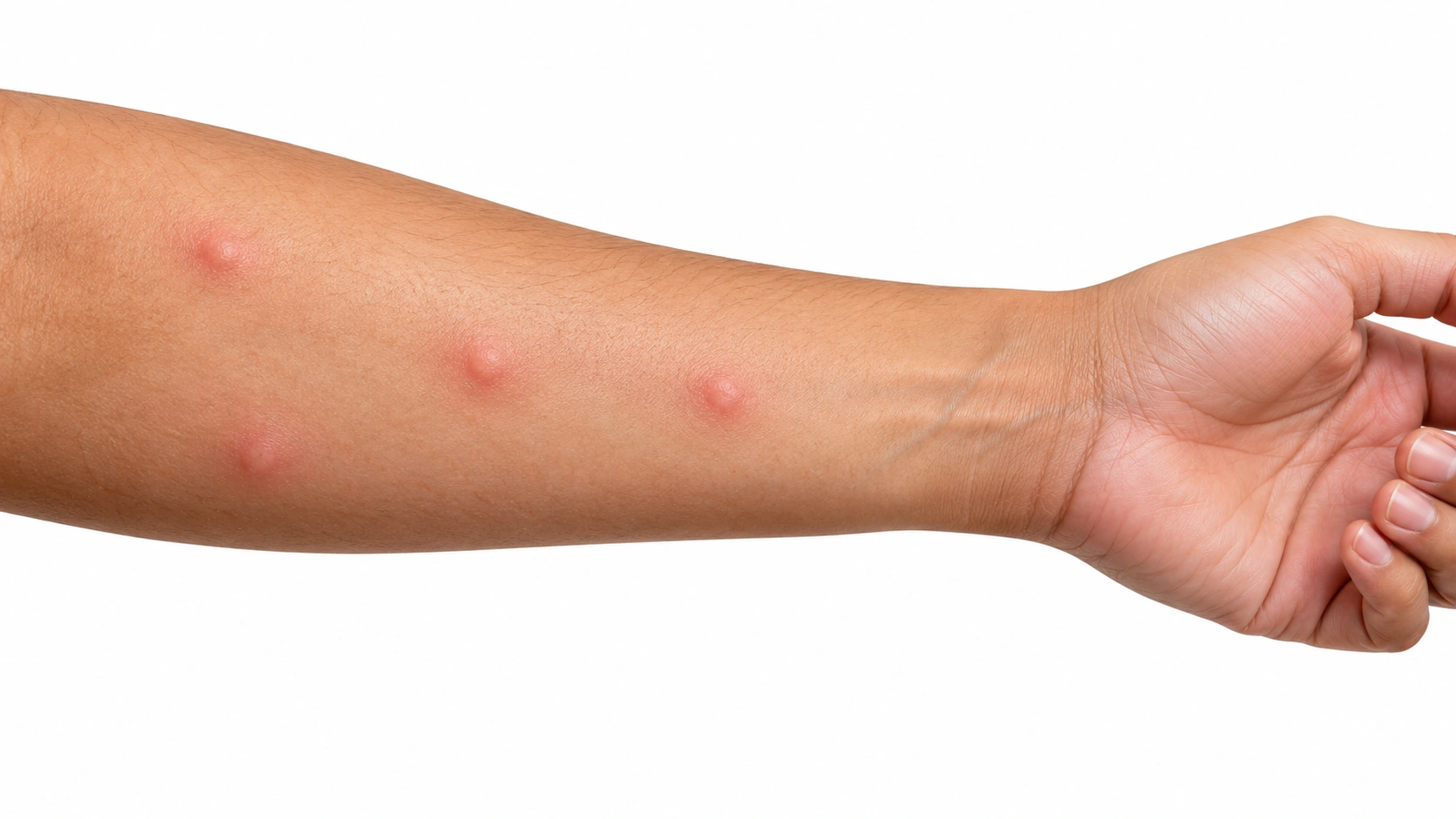
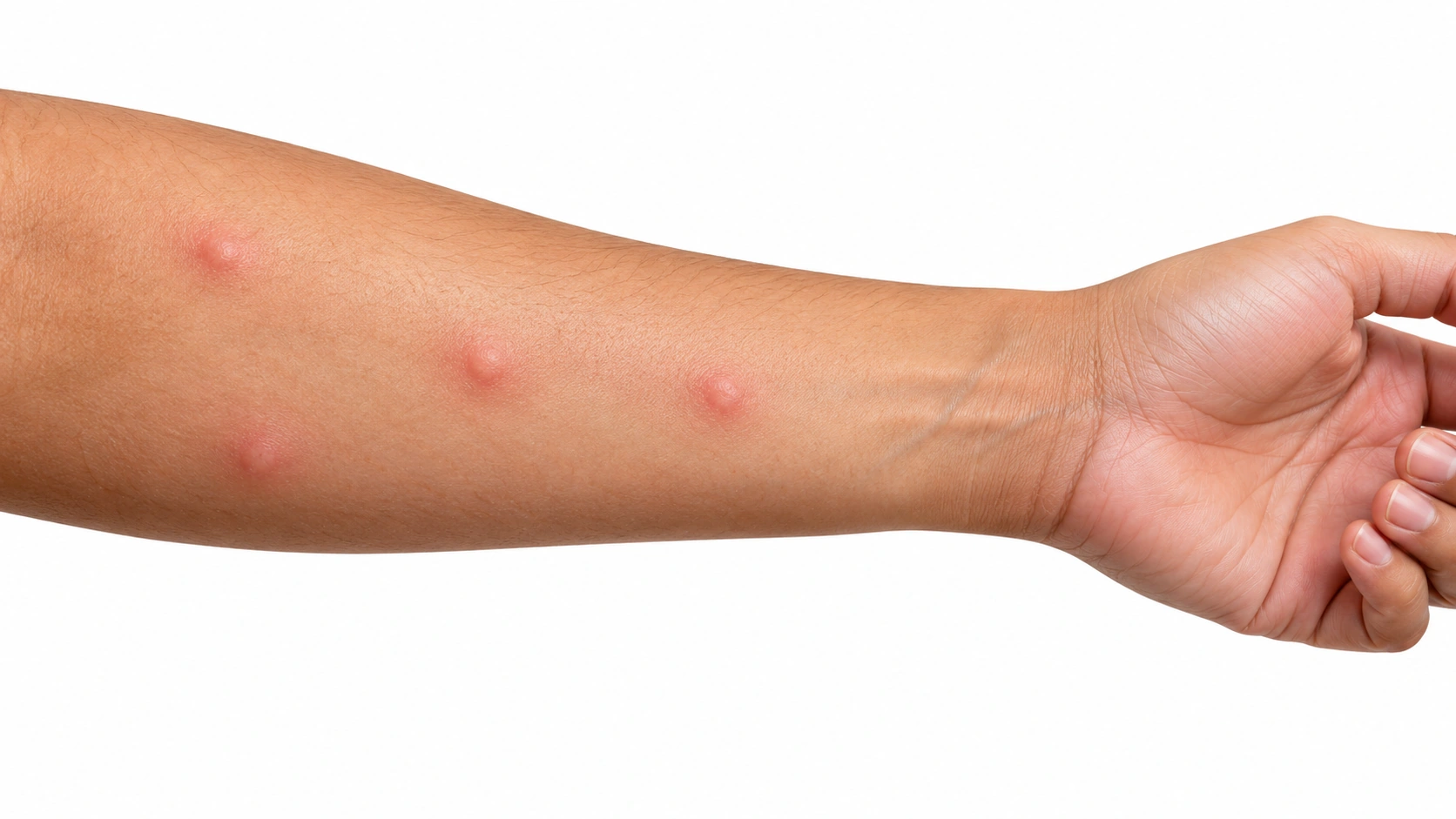
Bed Bug Bites Several red bumps are arranged close together along the forearm.
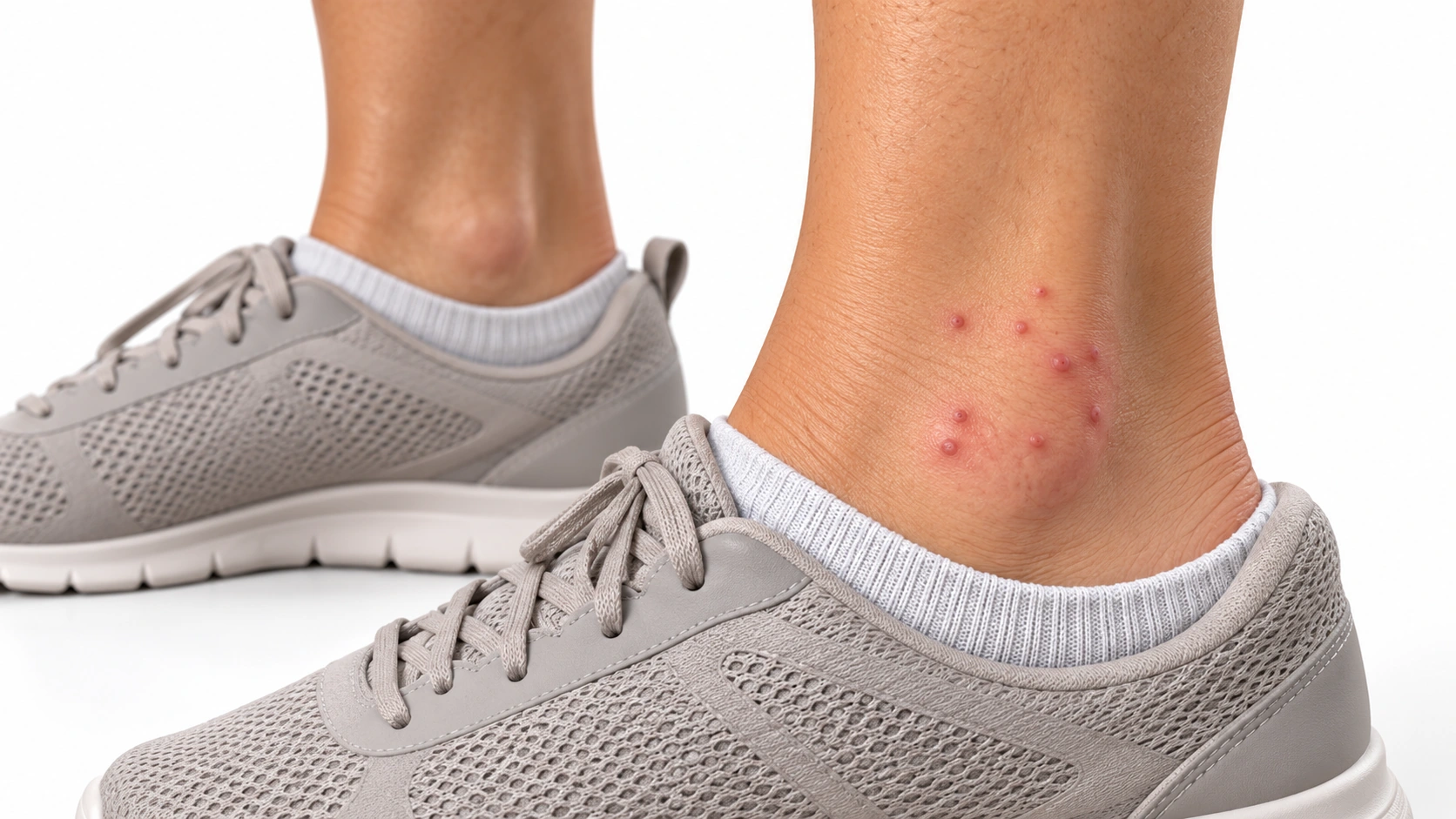
Flea Bites
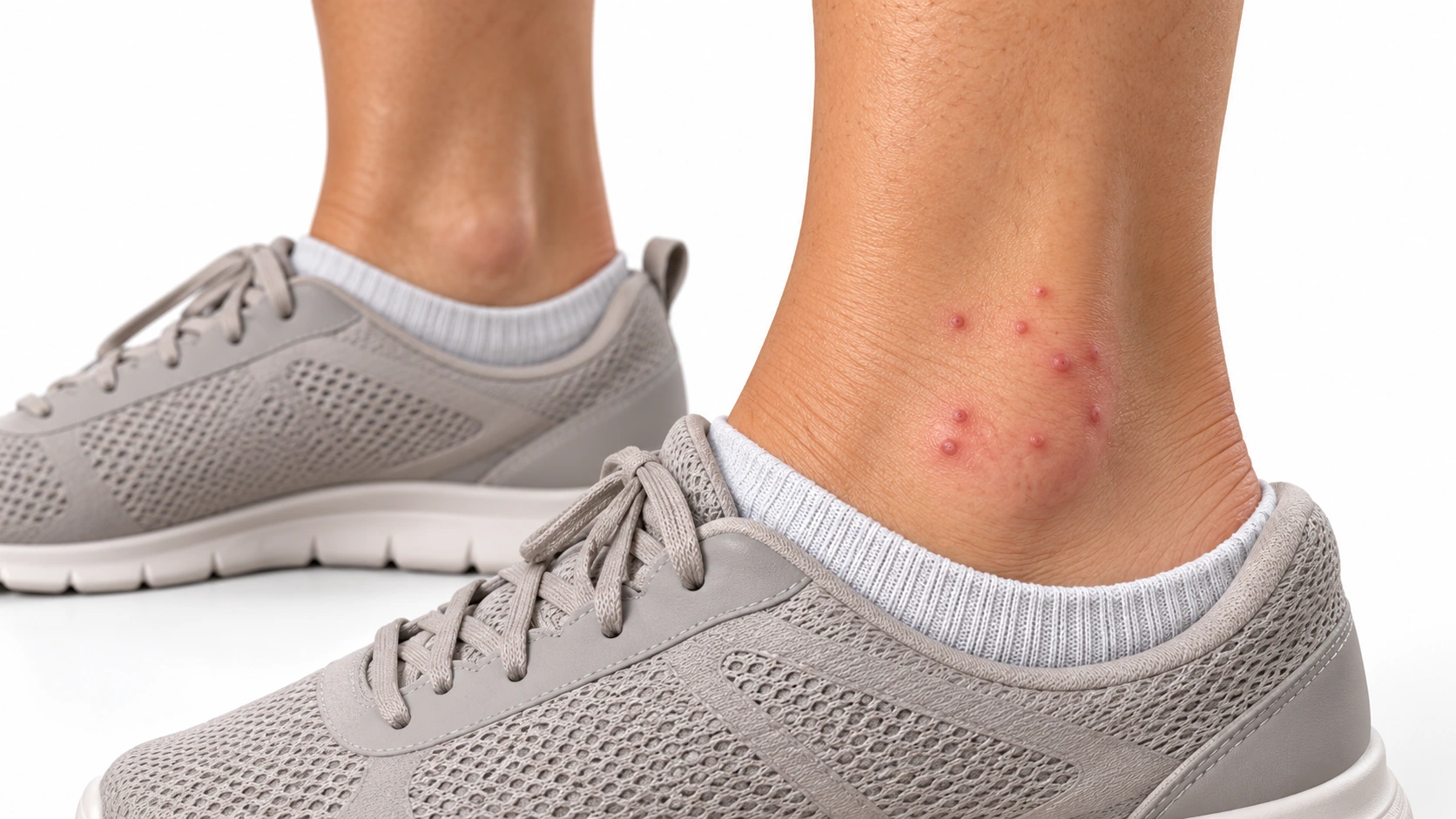
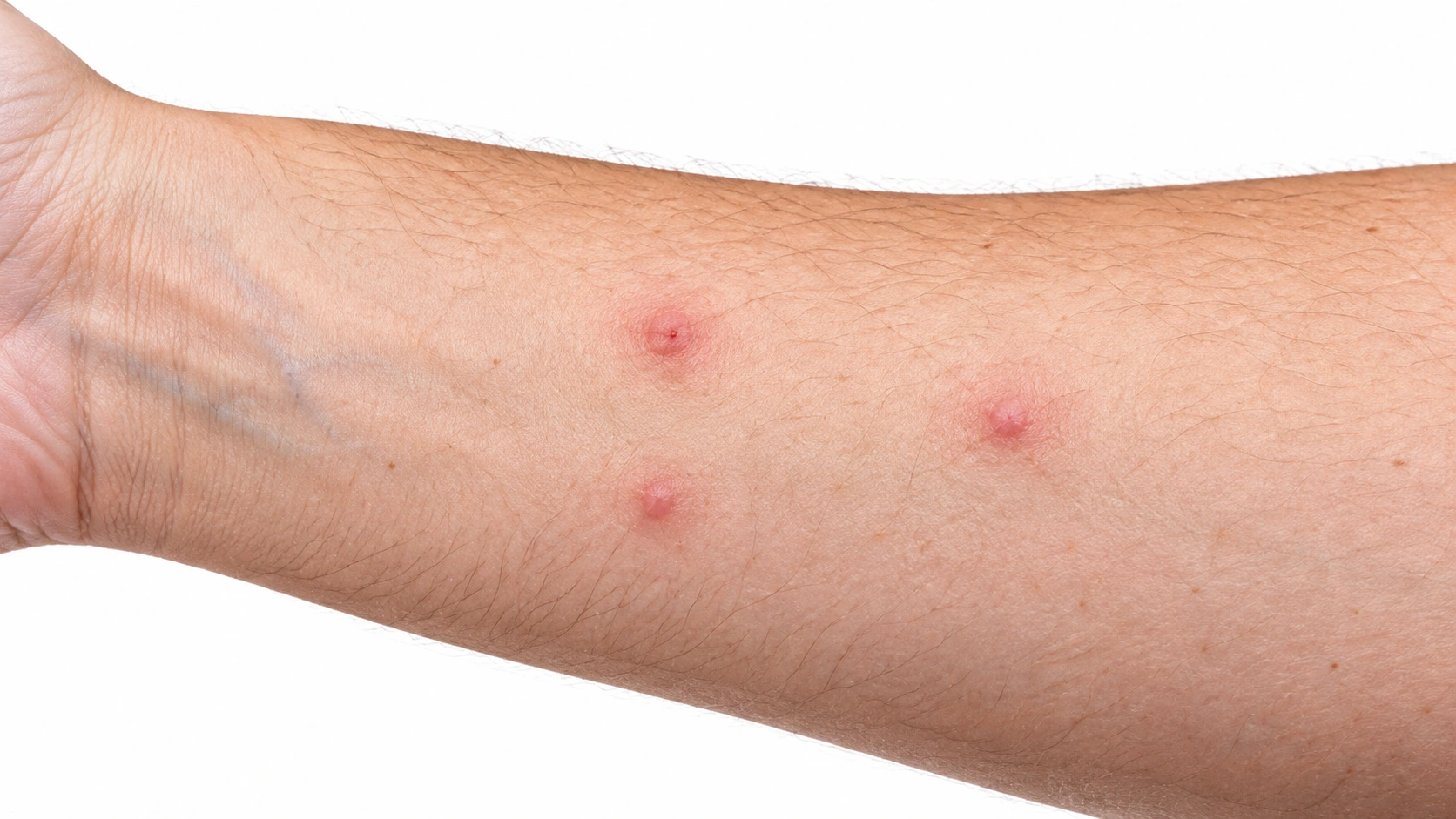
Flea Bites A cluster of red spots appears just above the shoe line.
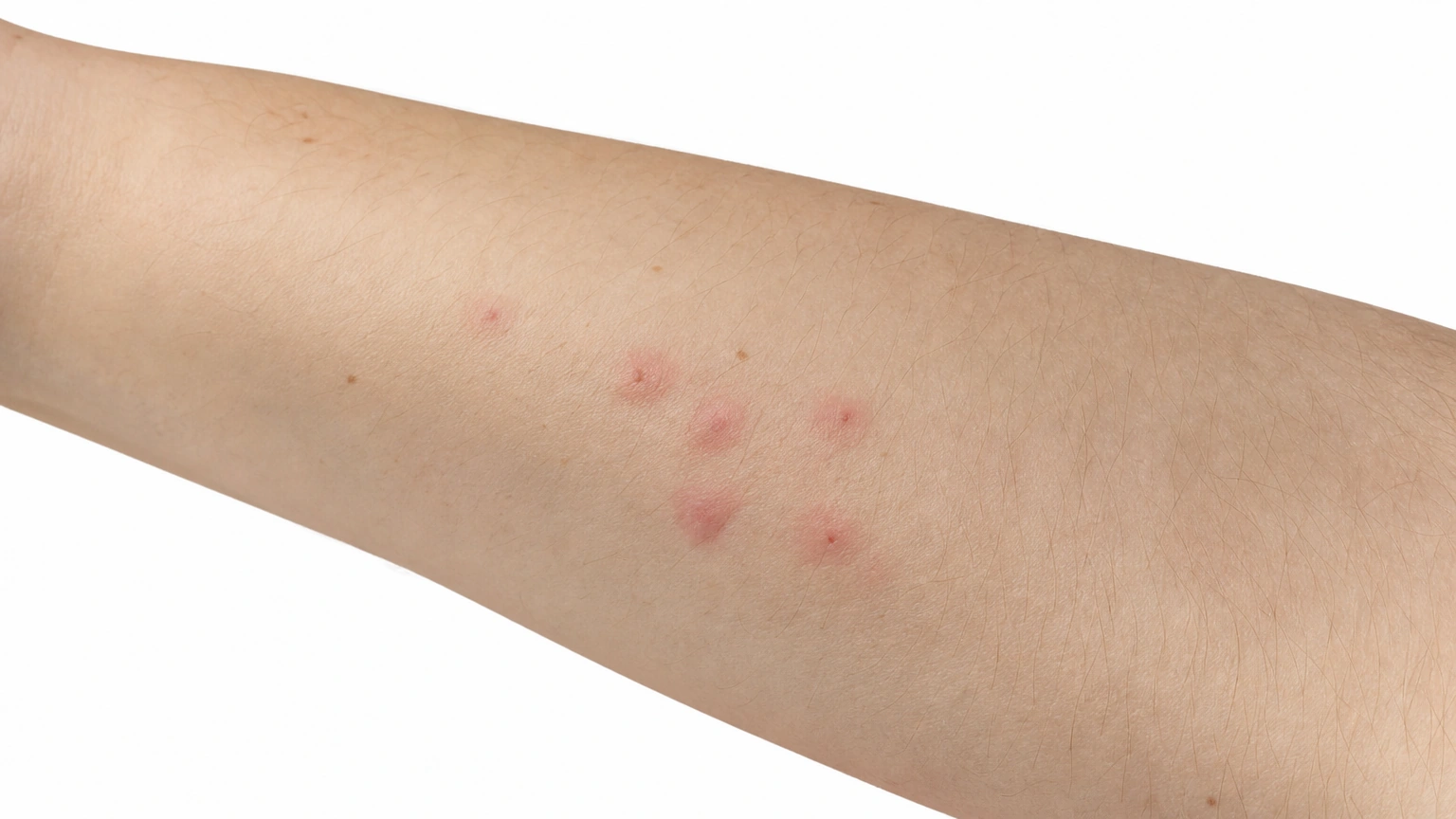
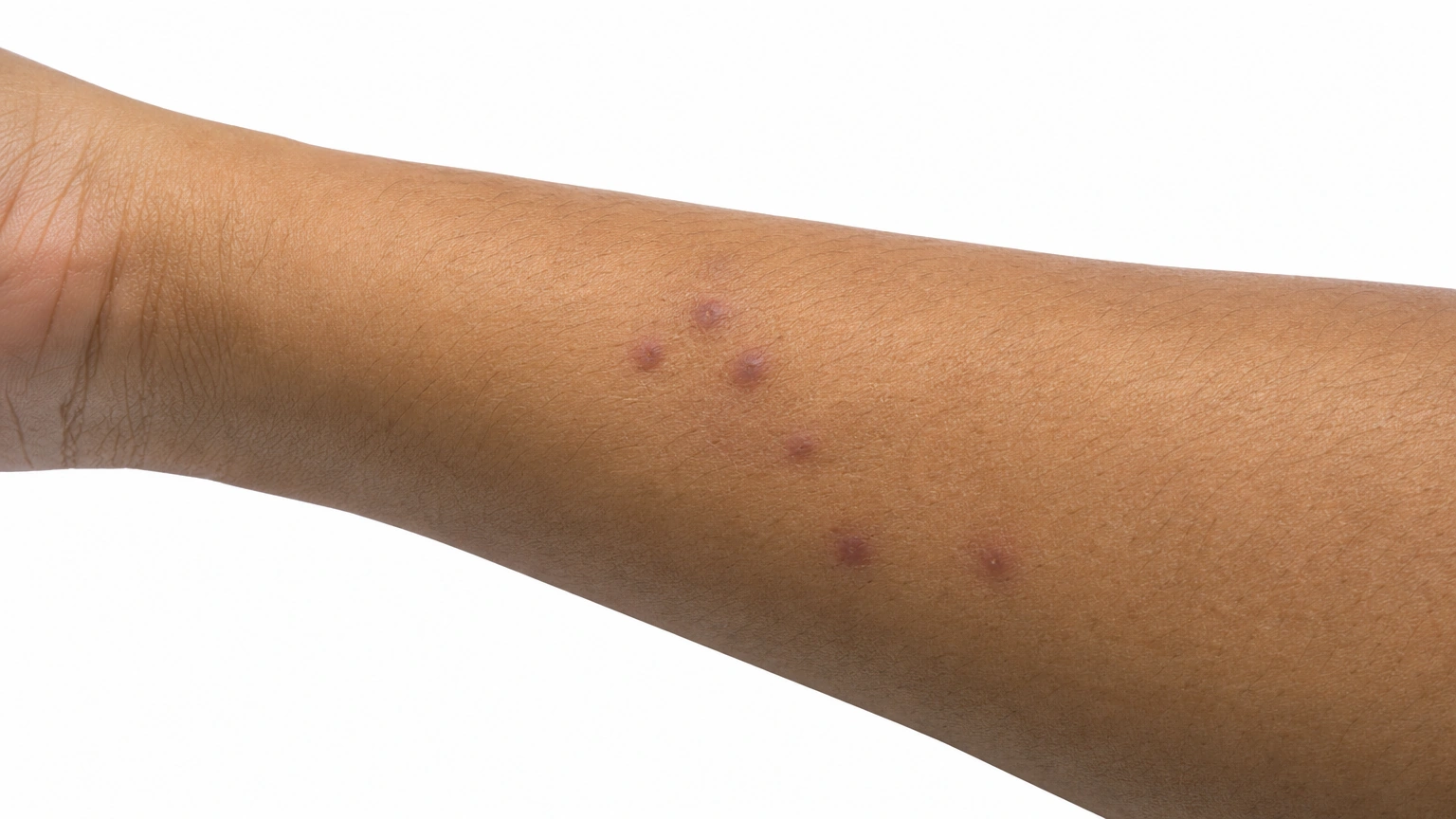
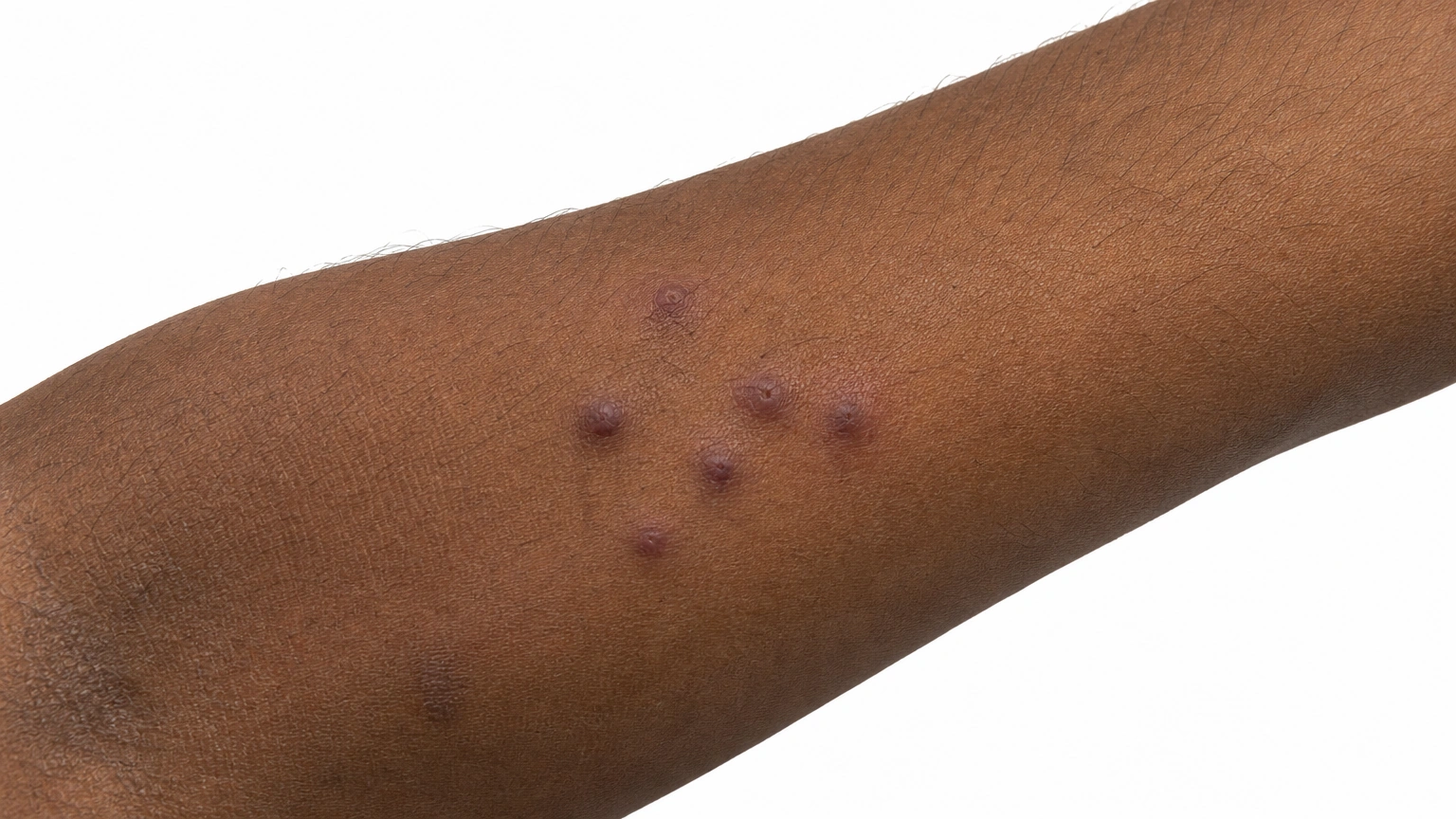
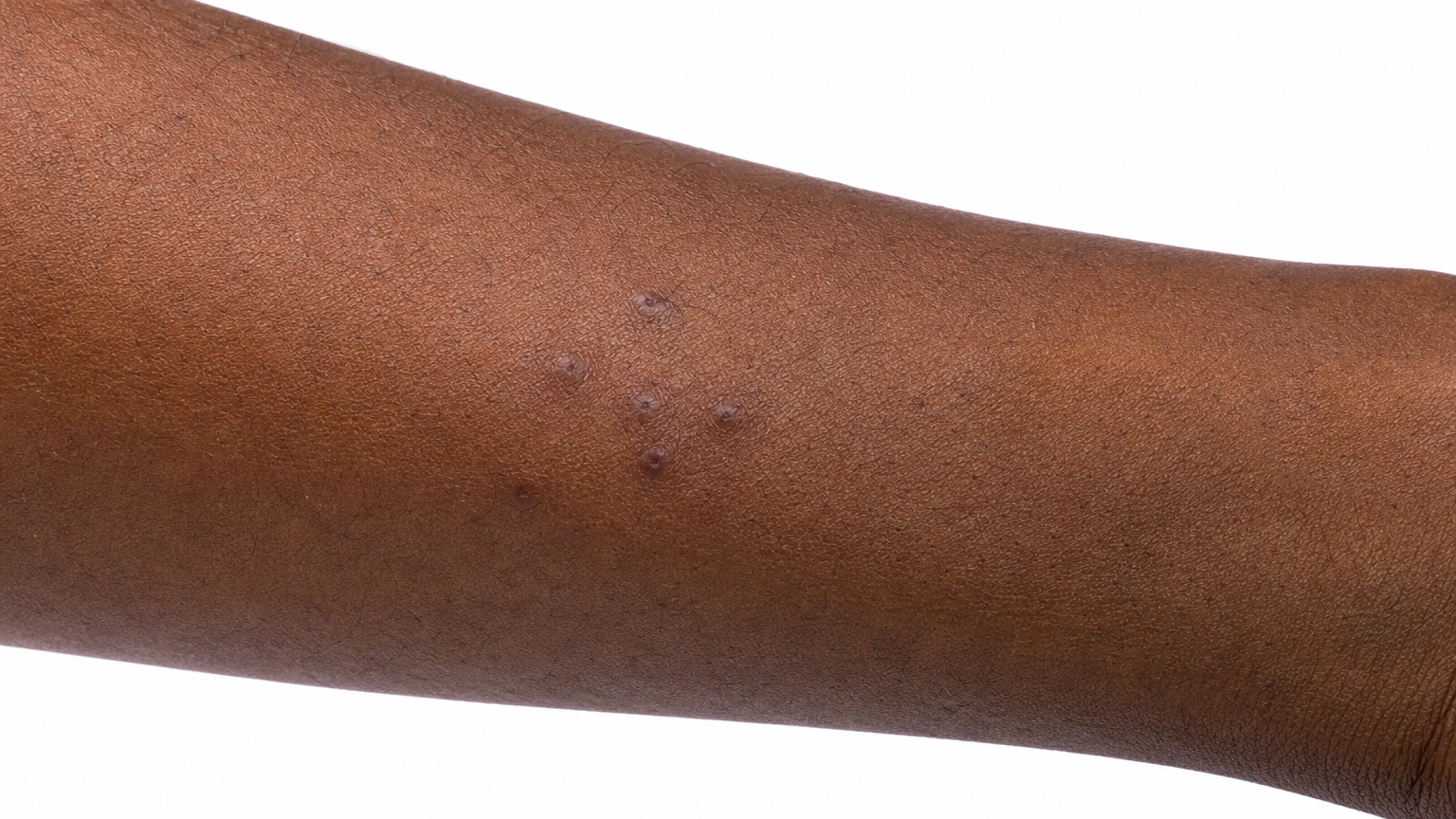
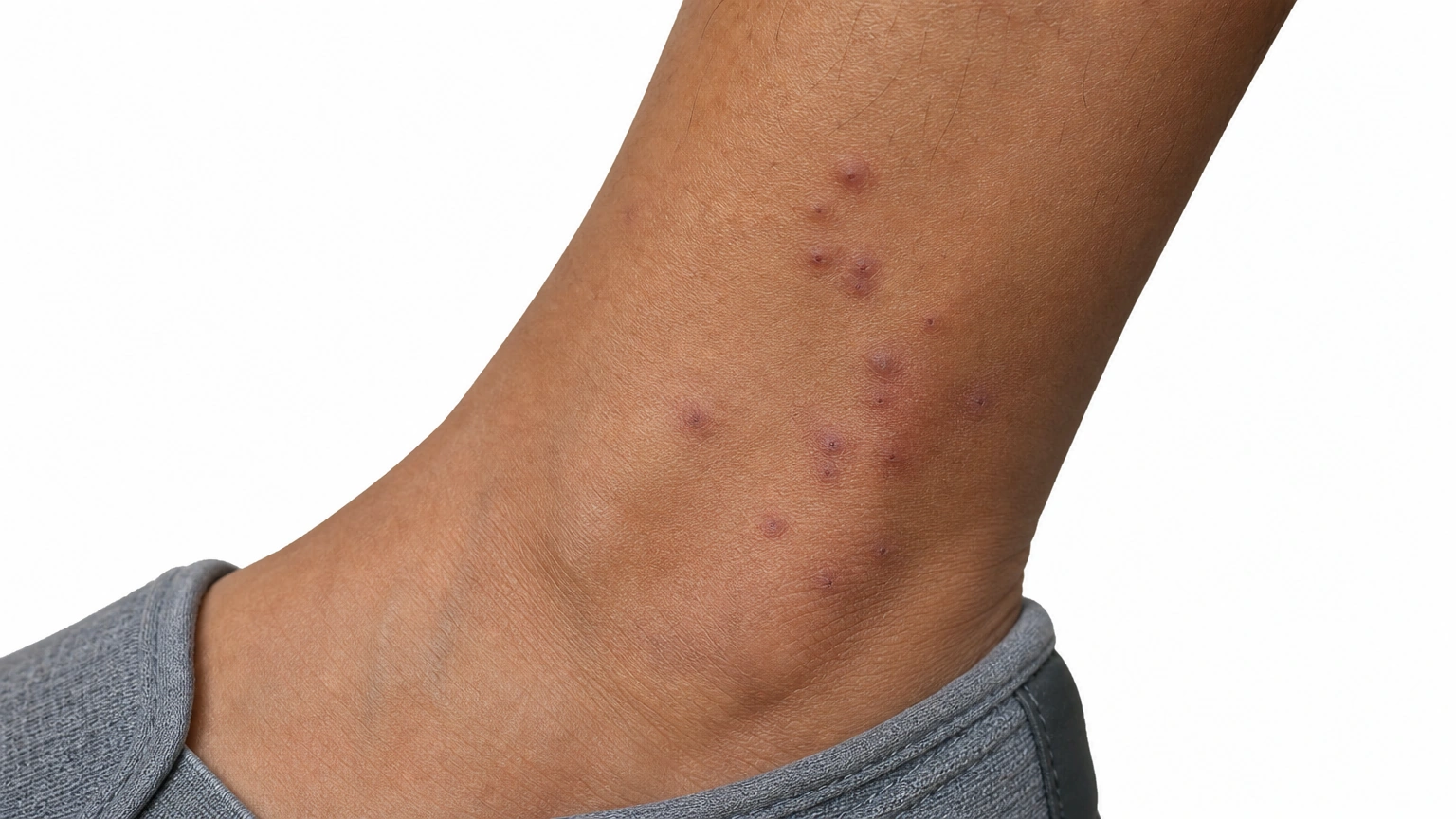
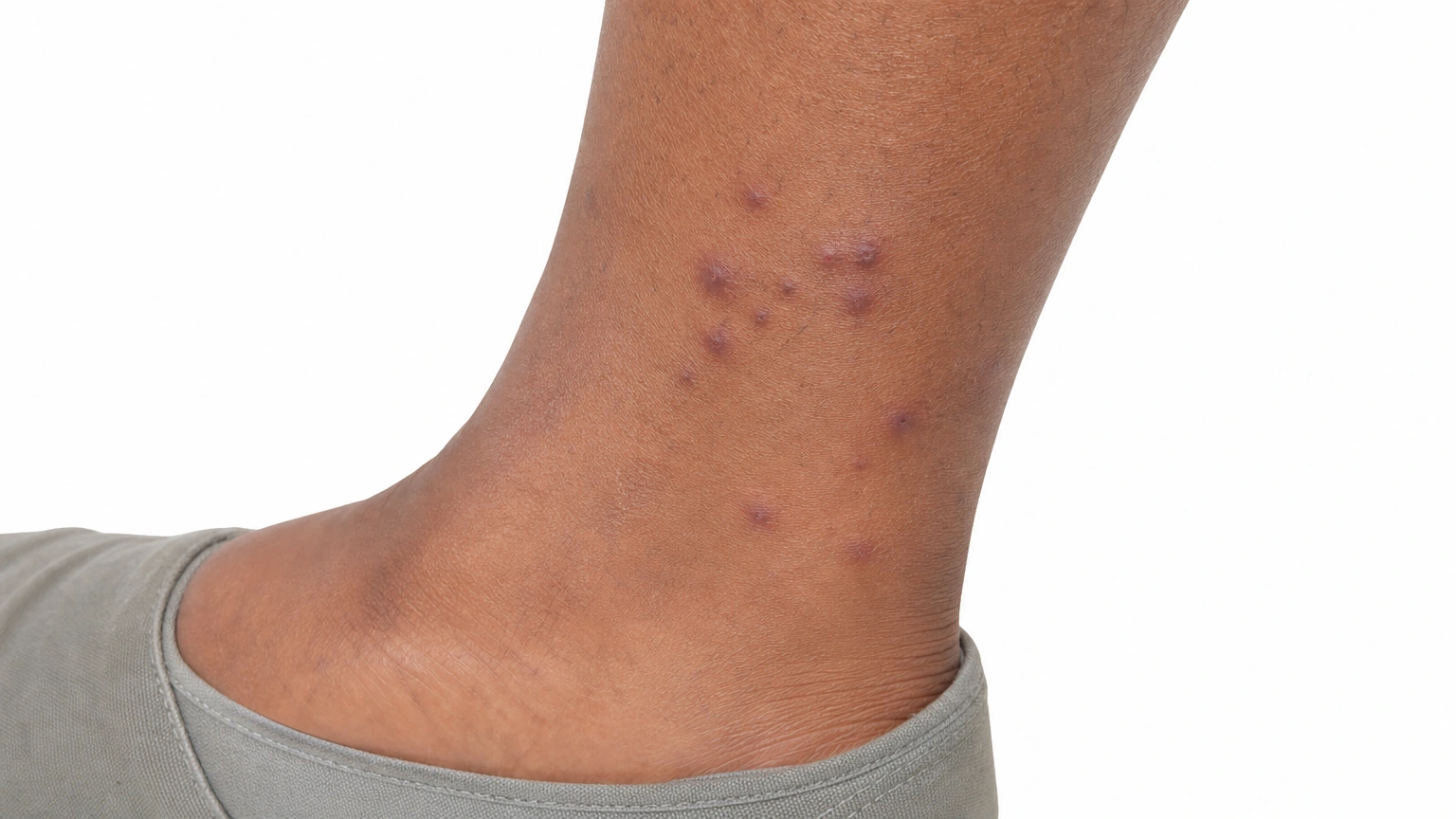
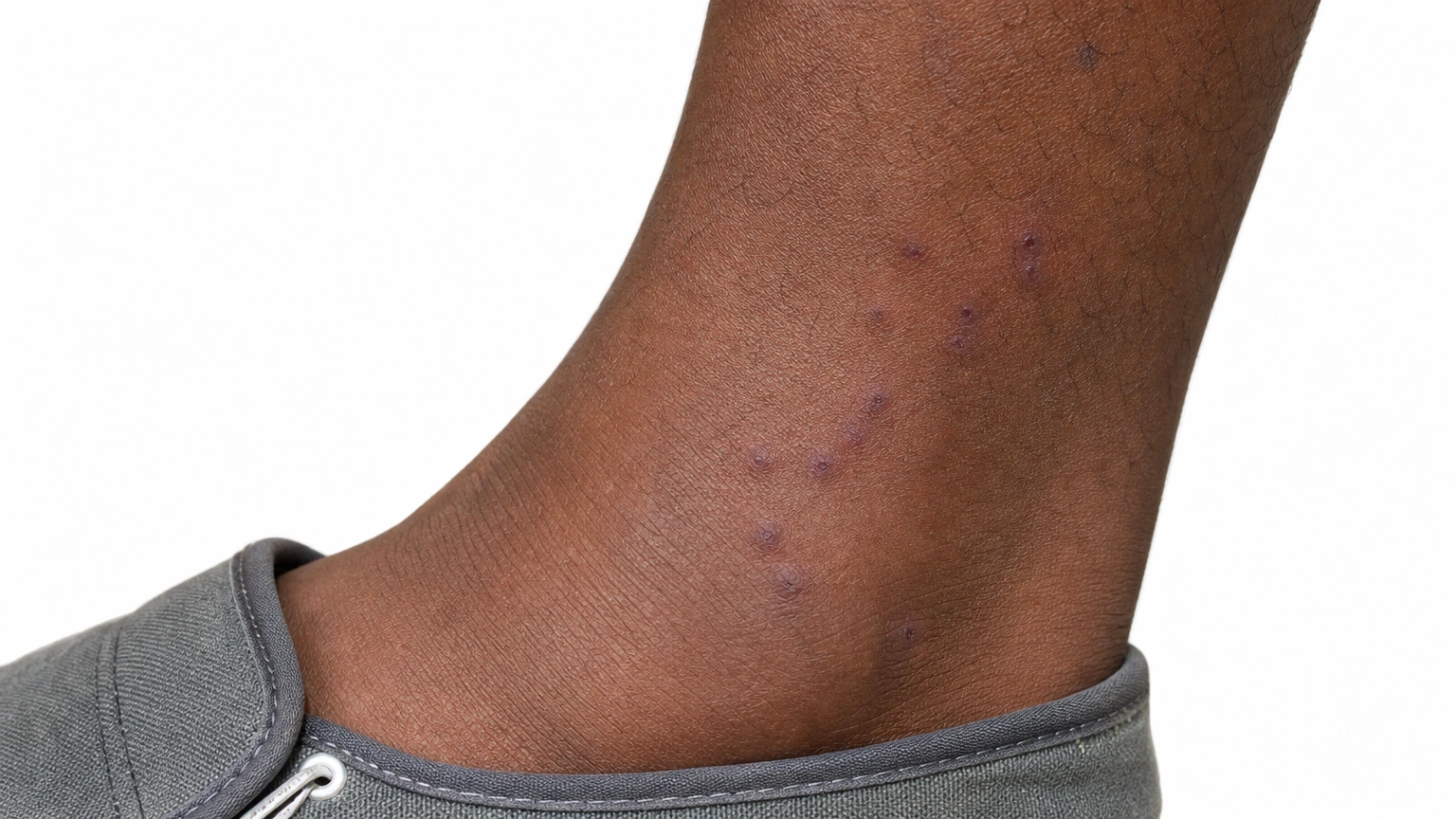
The immune system reacts to substances introduced during a bed bug's feeding. The local inflammatory response produces itchy bumps, but their appearance alone cannot identify the insect.
Flea feeding introduces substances that provoke a local immune response. The inflammatory reaction produces itchy bumps around affected skin sites.
When it usually starts
Bed Bug Bites. Can affect any age after exposure.
Flea Bites. Can affect any age after exposure.
Causes and triggers
An inflammatory reaction to arthropod feeding or saliva produces itchy lesions.
An inflammatory reaction to arthropod feeding or saliva produces itchy lesions.
Daily Care
Habits that help
- Wash bites gently and keep the skin clean
Use soap and water without scrubbing open areas. - Use a cool clean compress for itch and swelling
Keep the skin cool and avoid ice directly on the surface. - Keep nails short and protect scratched areas
A clean dressing can reduce further rubbing over broken skin. - Reduce repeat exposure to the biting insect
Protective clothing and an appropriate repellent may help, depending on the insect and setting. - Arrange effective pest control rather than treating bites alone
Launder and heat-dry suitable bedding and clothing, and avoid moving infested items into other rooms. - Age-appropriate itch treatment
A pharmacist can advise a short suitable topical steroid or antihistamine; infection needs separate assessment.
Avoid
- Avoid: Scratching, squeezing or cutting bites
These can cause infection and longer-lasting marks. - Avoid: Applying household insecticides to the skin
Use only products intended for human skin and follow the label.
Habits that help
- Wash bites gently and keep the skin clean
Use soap and water without scrubbing open areas. - Use a cool clean compress for itch and swelling
Keep the skin cool and avoid ice directly on the surface. - Keep nails short and protect scratched areas
A clean dressing can reduce further rubbing over broken skin. - Reduce repeat exposure to the biting insect
Protective clothing and an appropriate repellent may help, depending on the insect and setting. - Treat the home and pets together with veterinary advice
Wash pet bedding and vacuum; never apply pet flea products to people. - Age-appropriate itch treatment
A pharmacist can advise a short suitable topical steroid or antihistamine; infection needs separate assessment.
Avoid
- Avoid: Scratching, squeezing or cutting bites
These can cause infection and longer-lasting marks. - Avoid: Applying household insecticides to the skin
Use only products intended for human skin and follow the label.
Treatment differences
Treat the infestation as well as the skin symptoms. A pharmacist can advise suitable itch relief; infection from scratching needs assessment, and household insecticide must not be applied to skin.
Address fleas in pets and the environment with appropriate professional or veterinary advice. Suitable itch relief may help the skin; pet flea products must not be applied to people.
Outlook
Existing bites gradually settle, but new bites continue if the infestation remains. Effective pest control is essential; scratching can prolong marks or cause infection.
Existing reactions fade once bites stop, but new bumps can continue while fleas remain in pets or the environment. Treating the source is important; scratching can leave marks or infection.
Complications
Scratching can cause infection; some exposures carry disease risks depending on geography.
Scratching can cause infection; some exposures carry disease risks depending on geography.
When to get help
Breathing trouble or faintness needs emergency care. Seek assessment for fever, spreading pain or an expanding rash.
Breathing trouble or faintness needs emergency care. Seek assessment for fever, spreading pain or an expanding rash.
Common questions
Bed Bug Bites:What is Bed Bug Bites?
Skin reactions after bed bugs feed, often during sleep.
Bed Bug Bites:What can I do day to day?
Arrange environmental inspection and effective pest control; skin treatment alone does not remove an infestation.
Bed Bug Bites:When should I get medical advice?
Breathing trouble or faintness needs emergency care. Seek assessment for fever, spreading pain or an expanding rash.
Flea Bites:What is Flea Bites?
Itchy reactions to flea feeding, often related to an infested pet or environment.
Flea Bites:What can I do day to day?
Treat the environment and obtain veterinary advice for affected pets; use cool compresses for itch.
Flea Bites:When should I get medical advice?
Breathing trouble or faintness needs emergency care. Seek assessment for fever, spreading pain or an expanding rash.
Sources
Sources and further reading
Keep exploring.

Bed Bug Bites vs Hives
Bed Bug Bites vs Mosquito Bites

Scabies vs Bed Bug Bites
Flea Bites vs Mosquito Bites
Scabies vs Flea Bites
Hives vs Insect Bites

Hot Tub Folliculitis vs Insect Bites
1726 nm Laser vs Blue Light Therapy
1726 nm Laser vs Chemical Peel
1726 nm Laser vs Comedone Extraction
1726 nm Laser vs Cortisone Injection