Razor Burn vs Ingrown Hairs
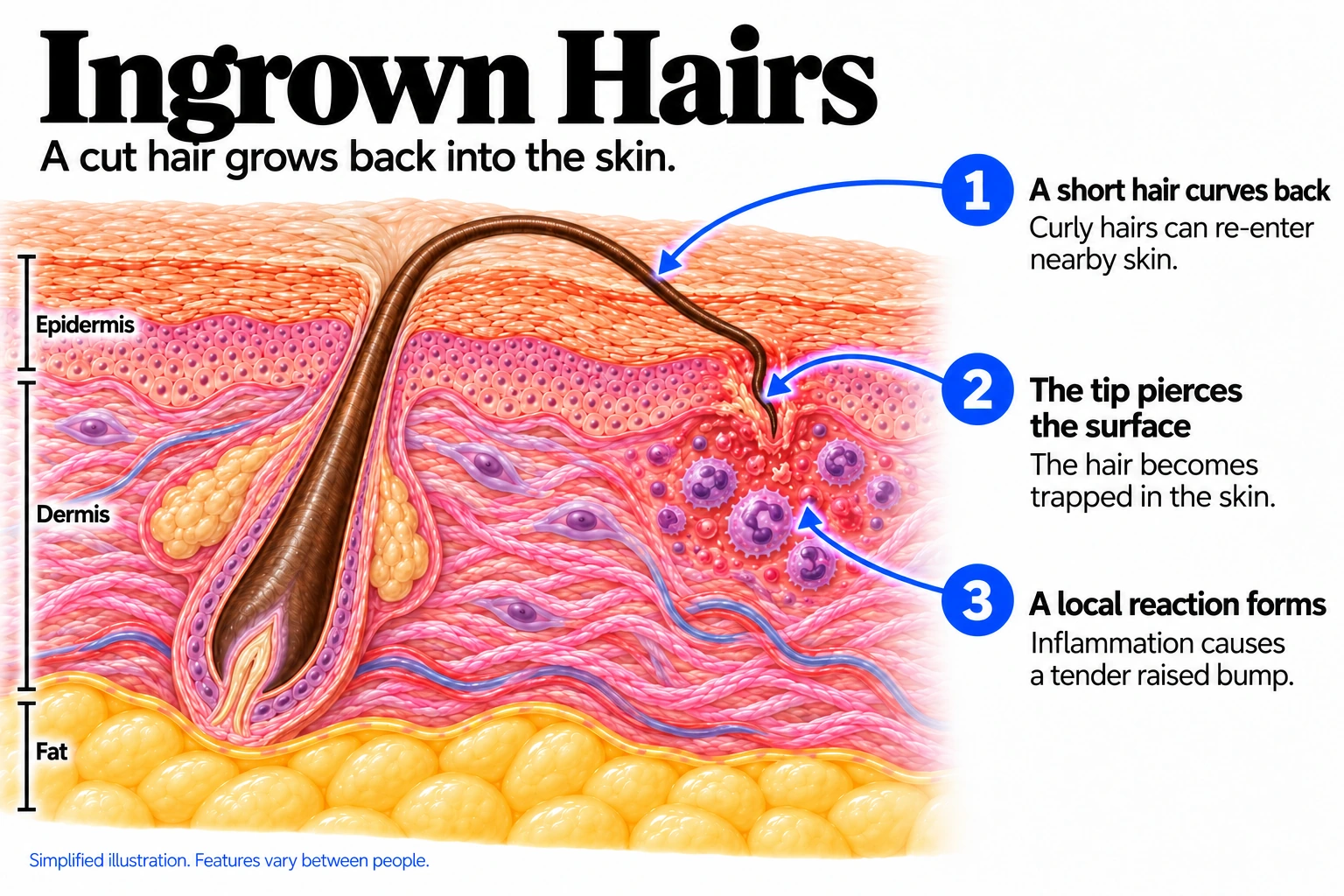
Irritation caused by shaving; it differs from ingrown-hair razor bumps. An ingrown hair is a hair that curls back into the skin instead of growing out of it, leaving a tender bump. It is most common and most stubborn in coarse, tightly curled hair, where it has a name of its own: pseudofolliculitis barbae, better known as razor bumps.
Key differences
The same eight facts on every condition comparison.
What is it?
- What it is
Irritation caused by shaving; it differs from ingrown-hair razor bumps.
- A hair grows back into skin.
A curved or sharply cut hair pierces the skin or follicle wall. - The skin reacts to it.
The body treats the embedded hair as foreign material. - Curly hair is more prone.
Coarse, curved hair increases risk, but any hair type can be affected. - Deep lumps need assessment.
Painful lumps, drainage or scarring may signal infection or another disorder.
What it looks like
Razor Burn
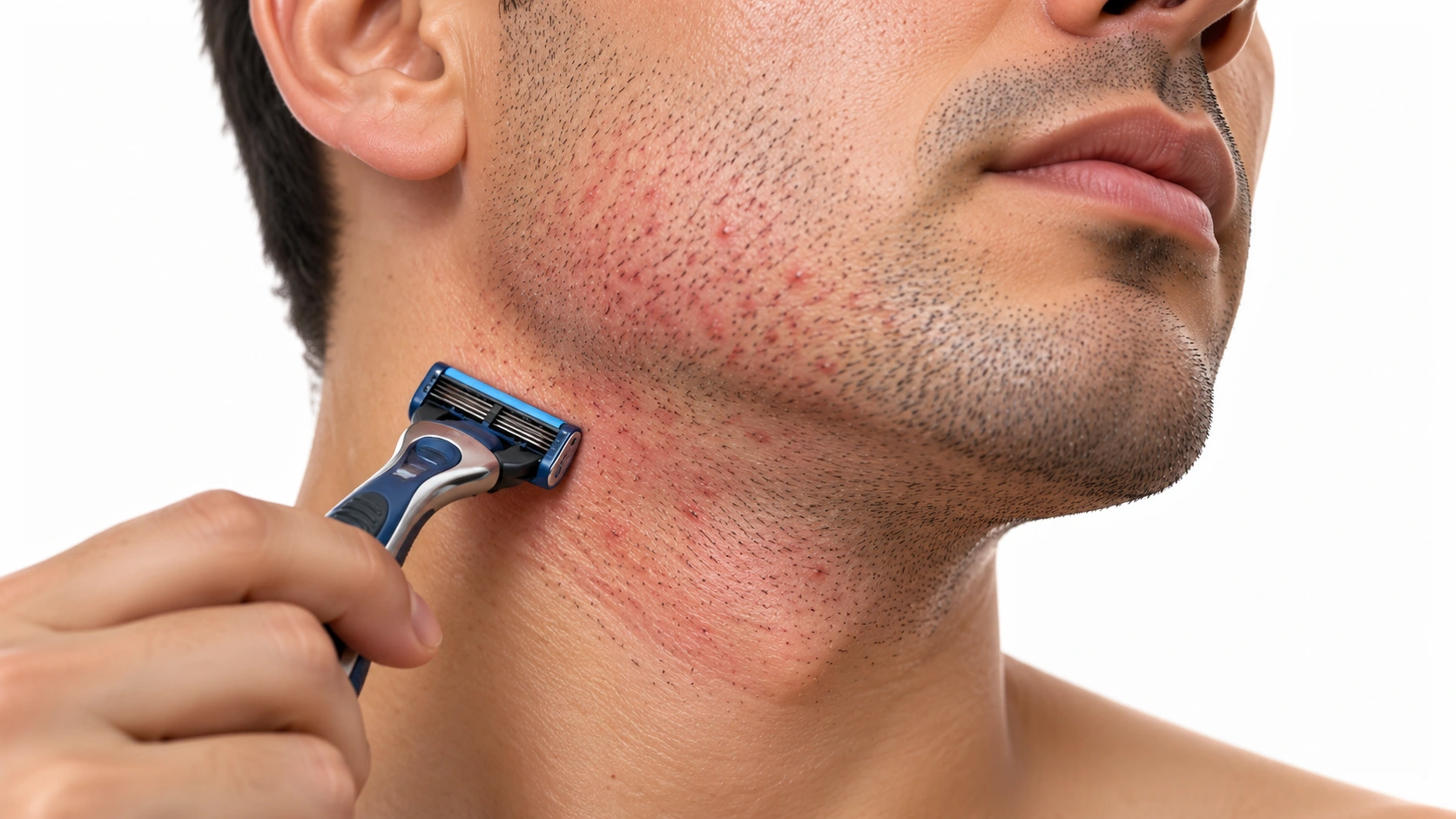
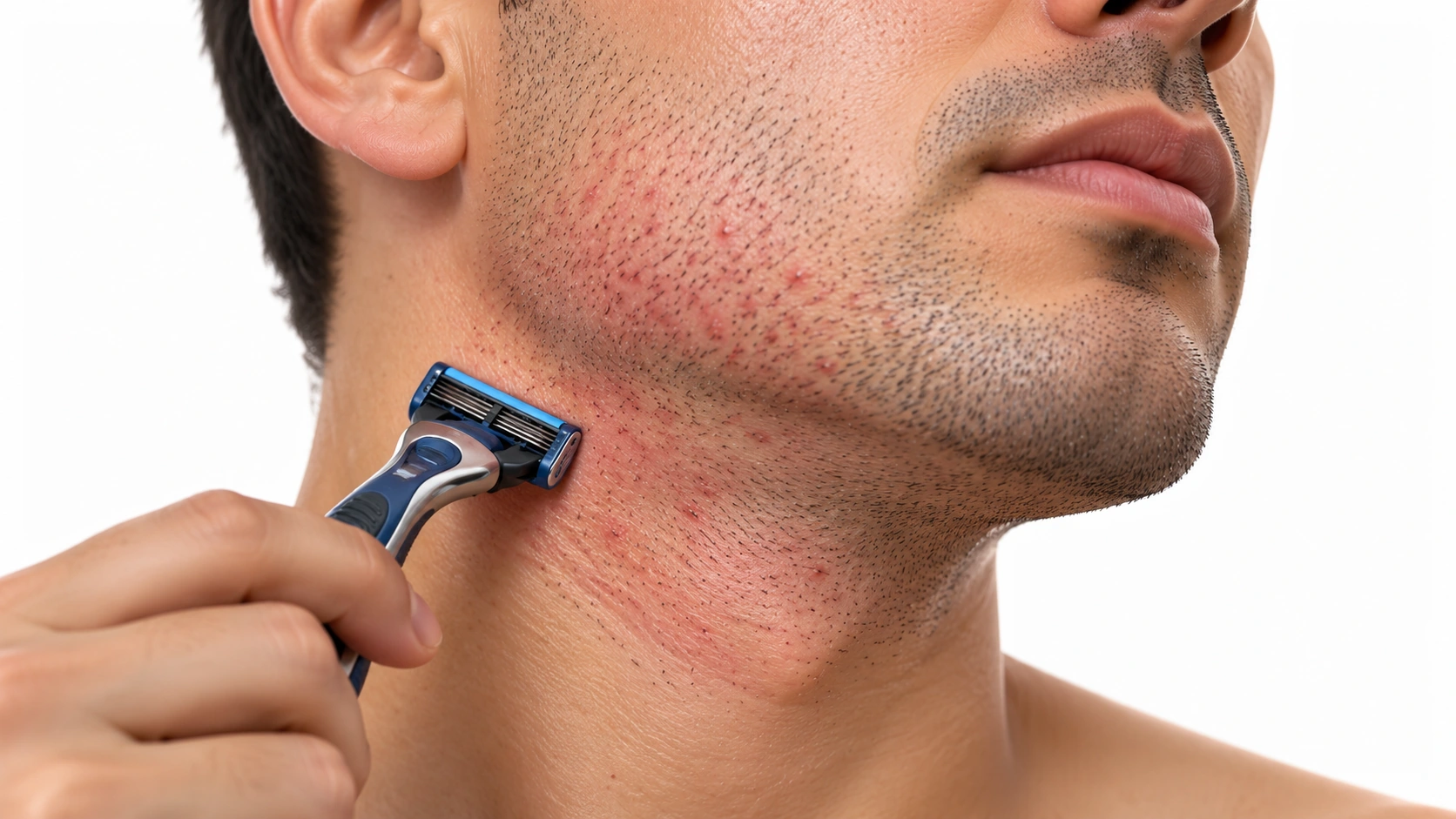
Razor Burn A razor is shown beside a red patch along the beard line and neck.
Ingrown Hairs
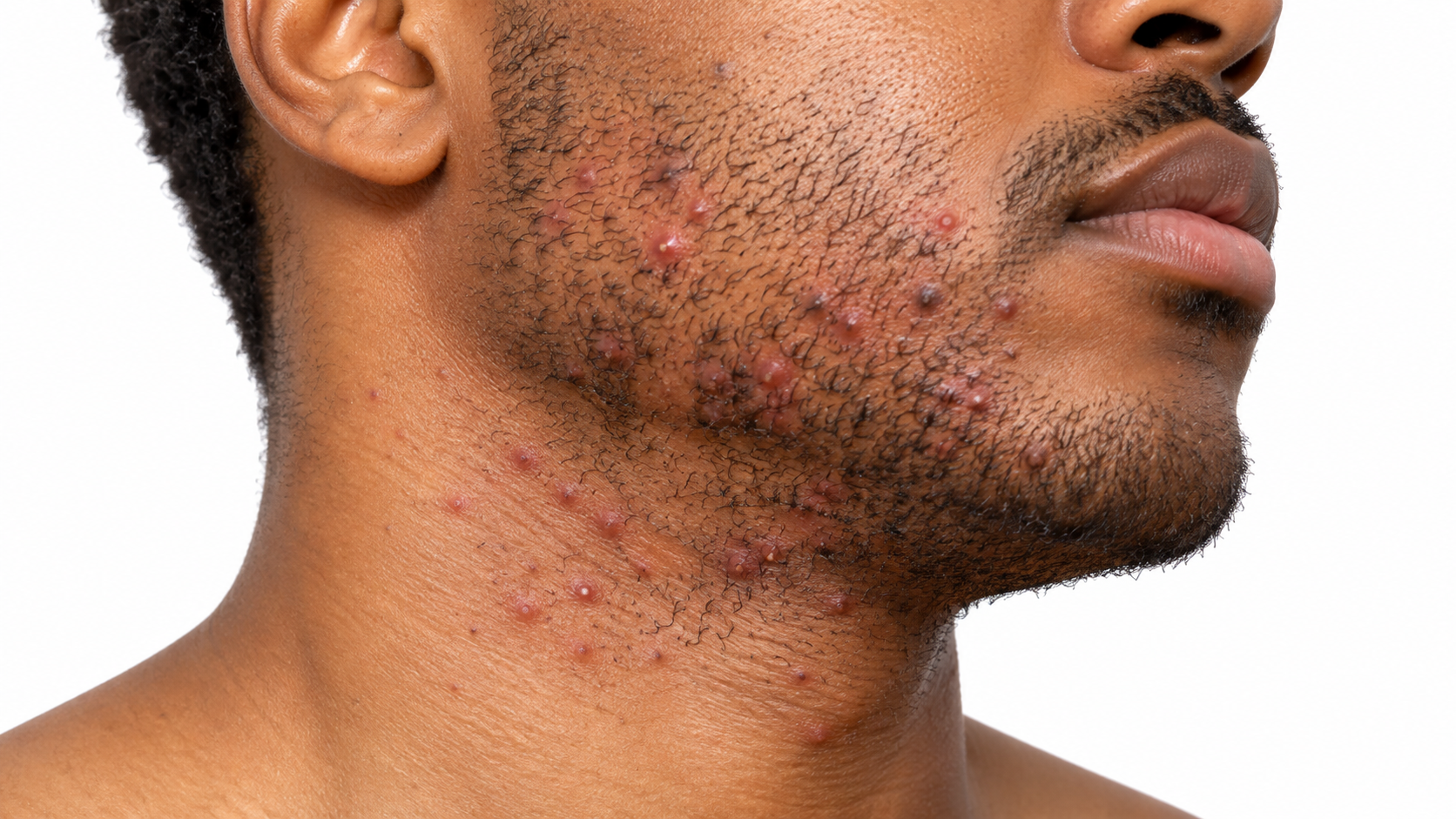
Razor bumps Pseudofolliculitis barbae in the beard area.
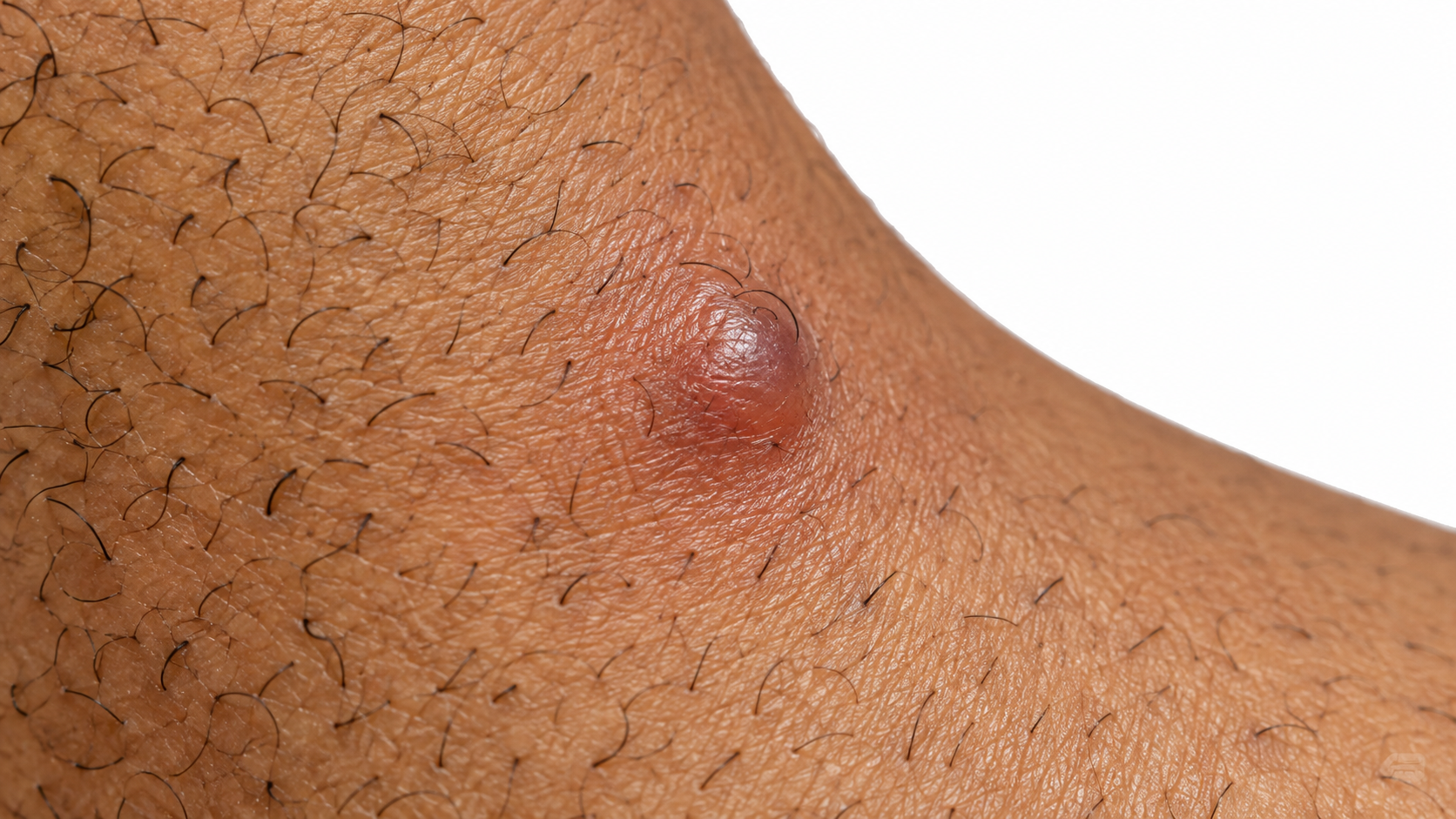
Bikini-line ingrown hairs Bumps after shaving or waxing.
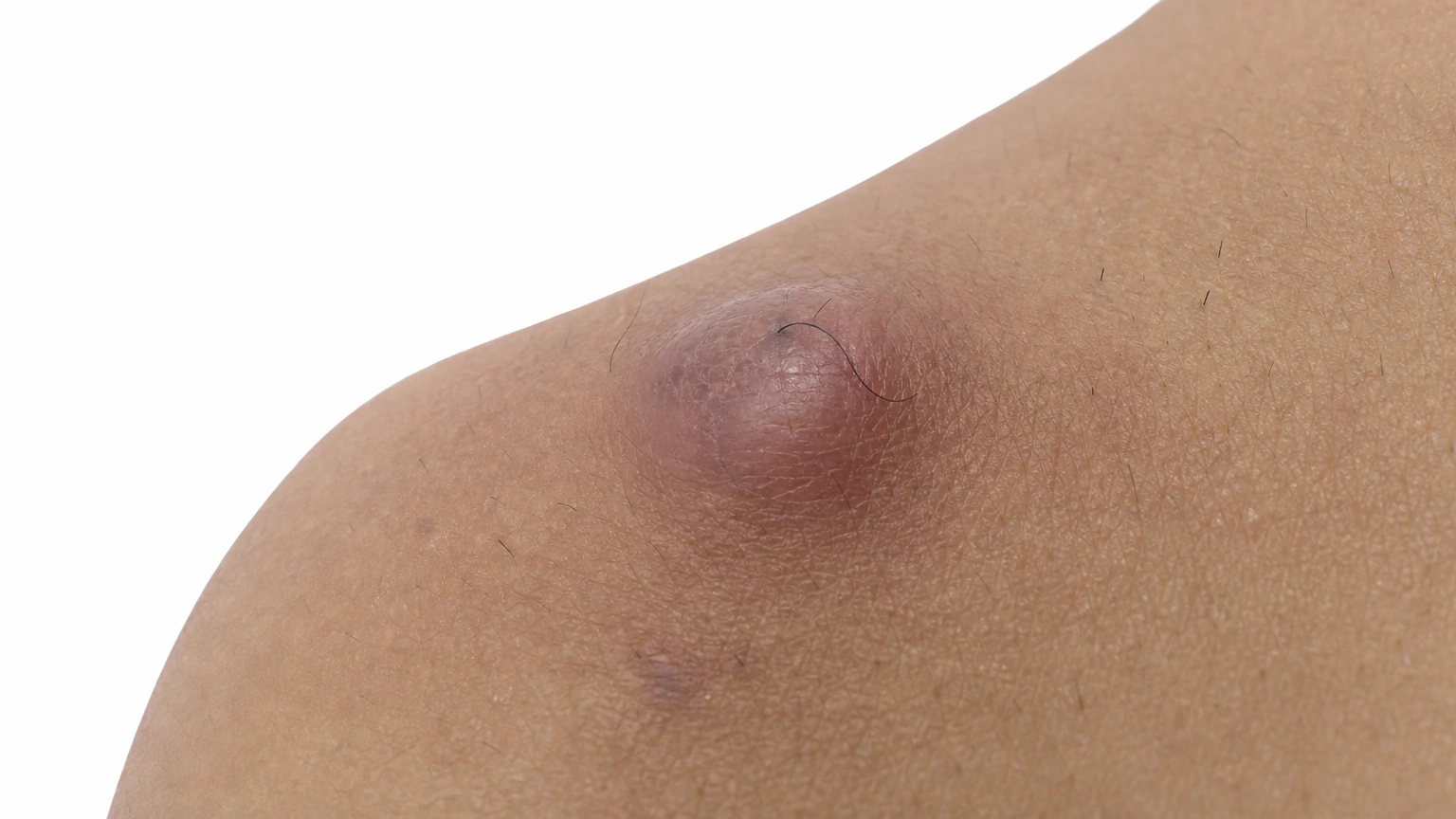
Ingrown-hair cyst A deeper, larger lump.
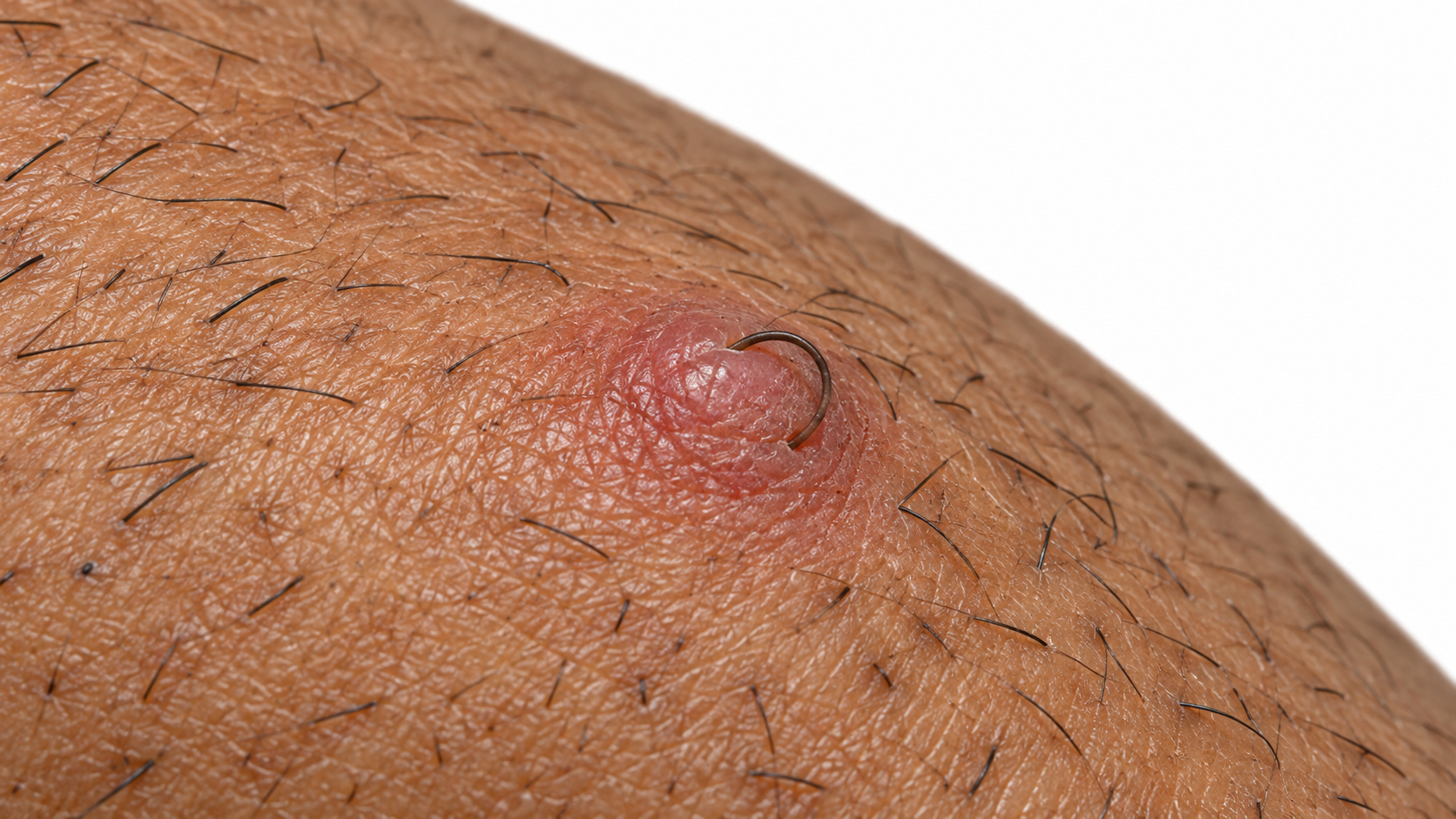
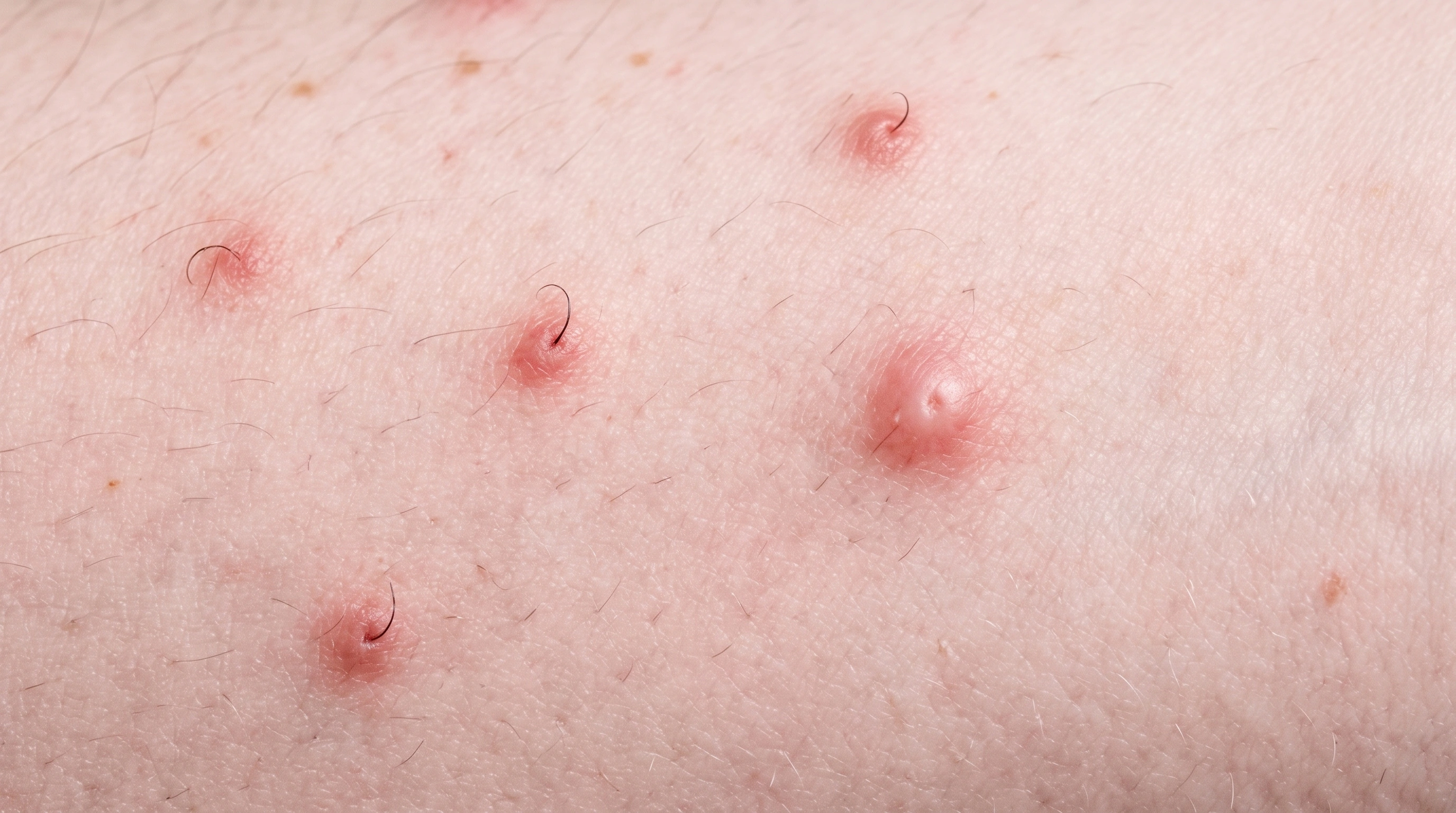
Individual ingrown hair A hair visible under the skin.
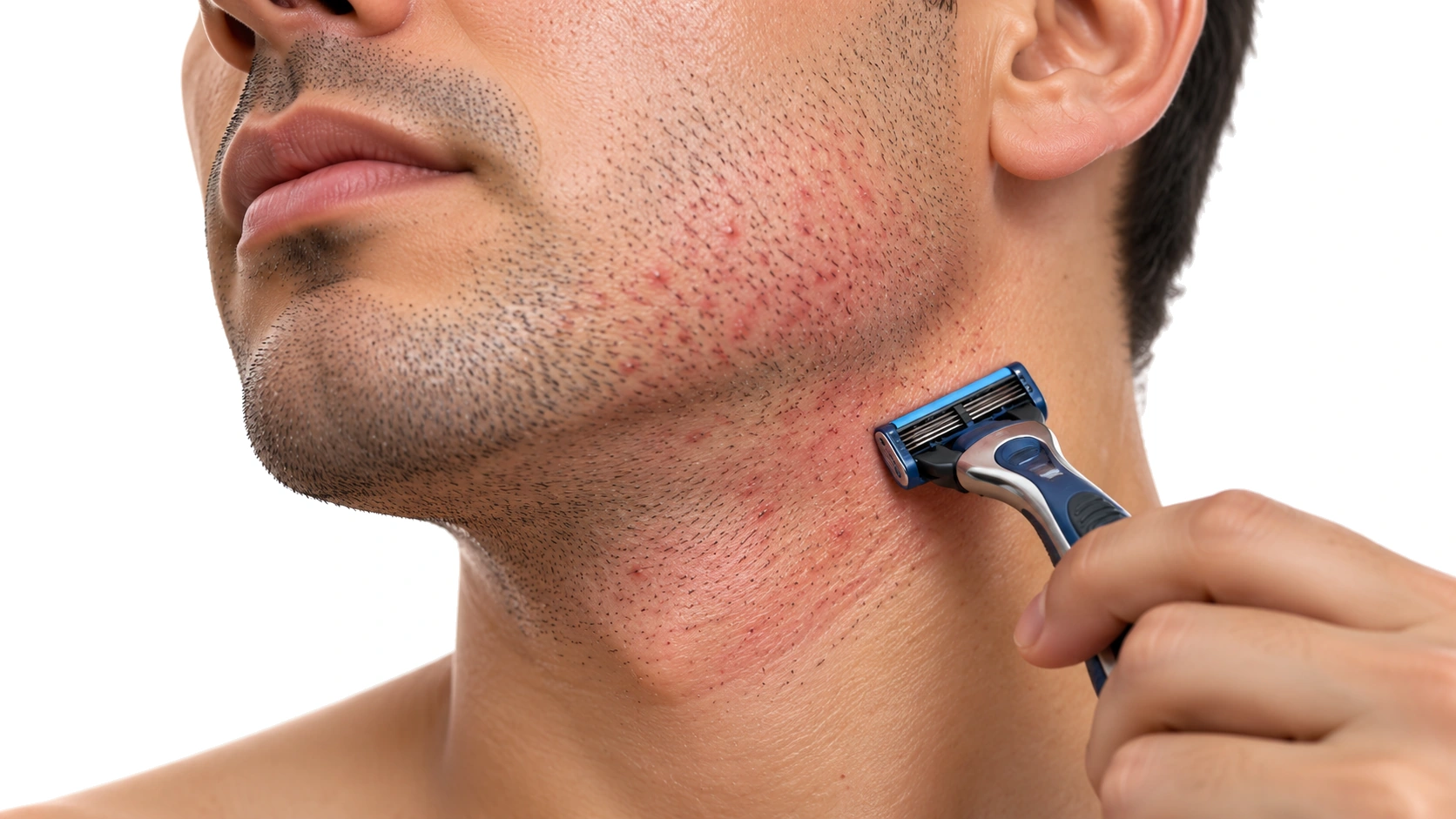
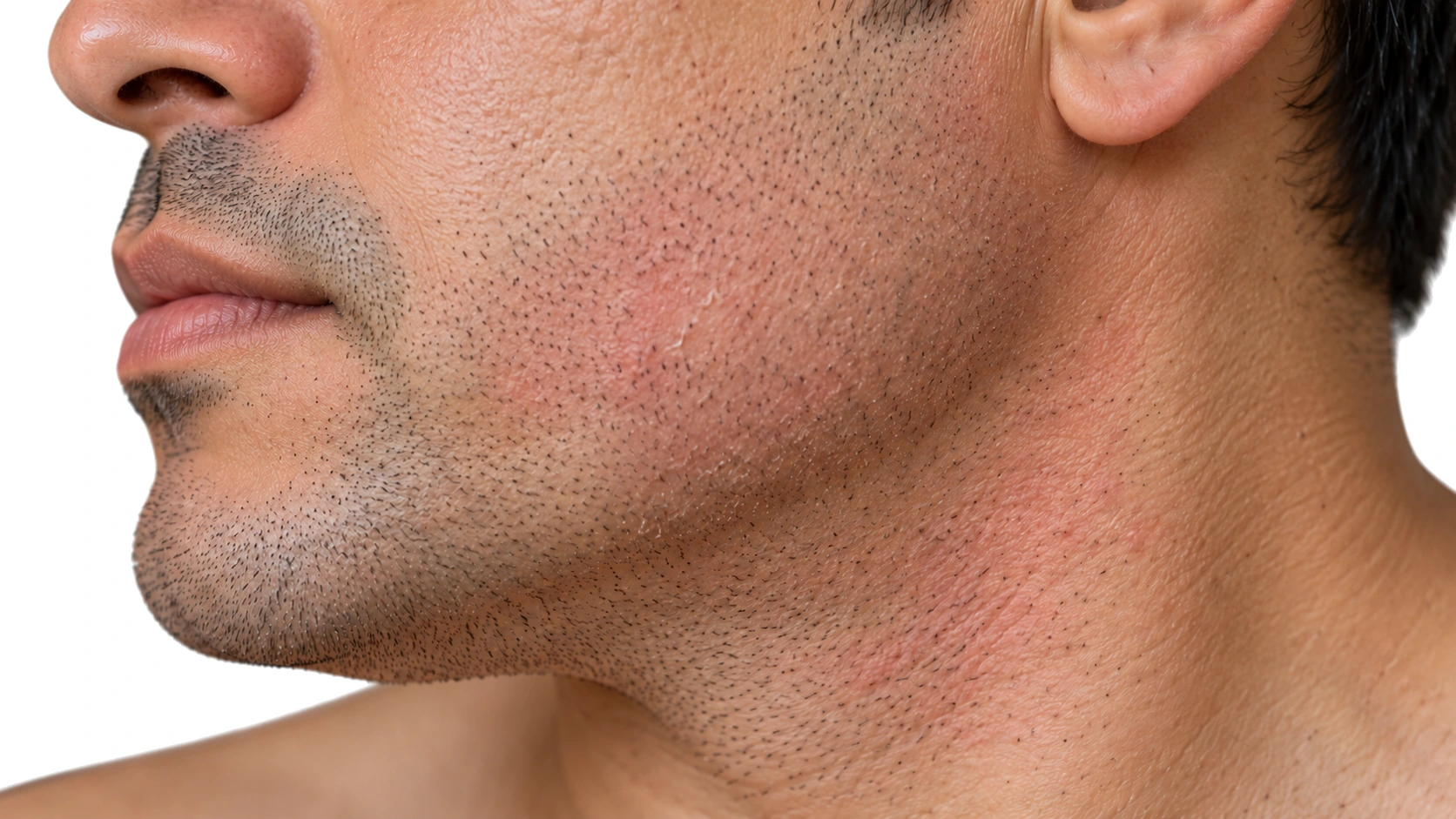
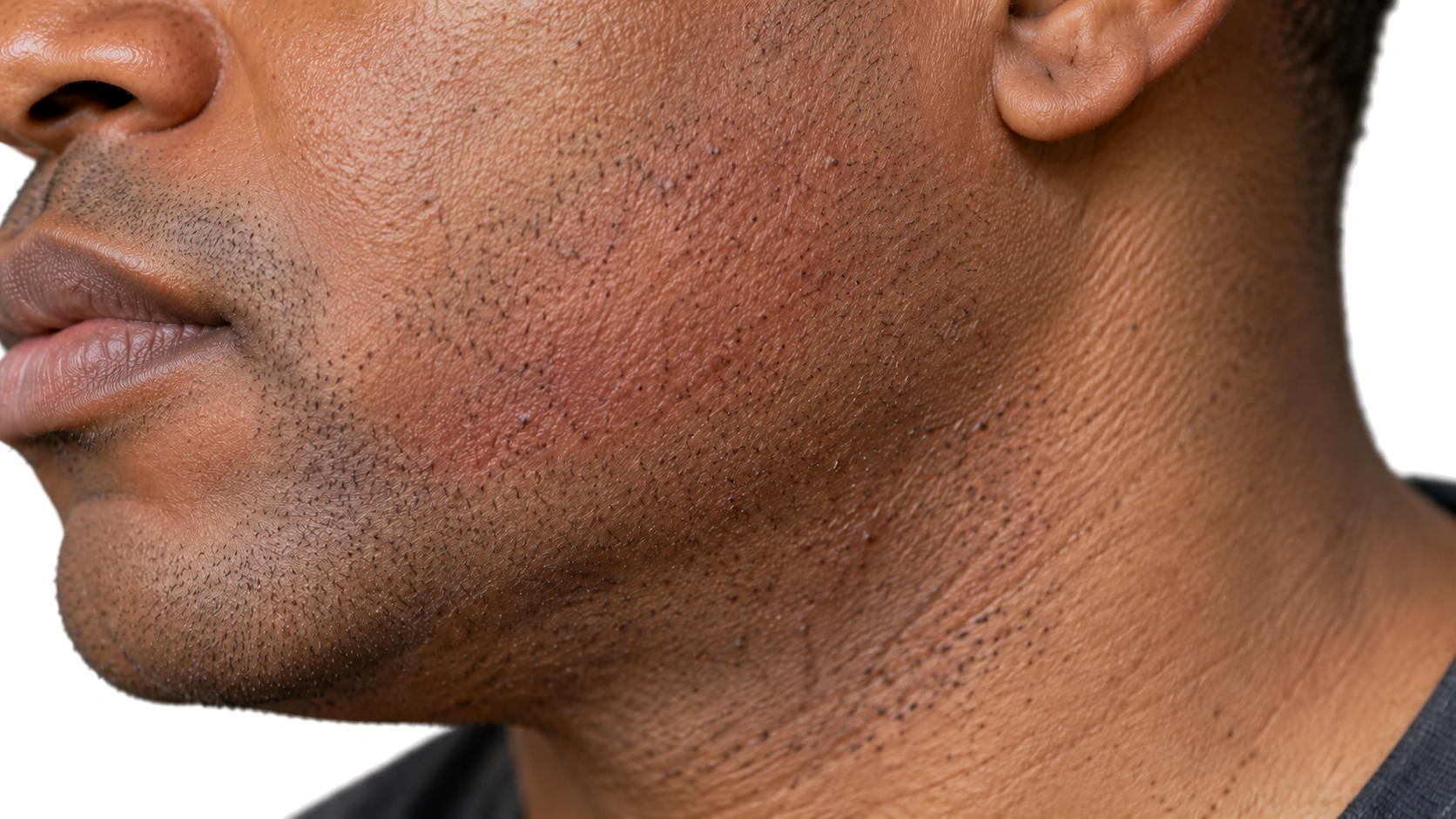
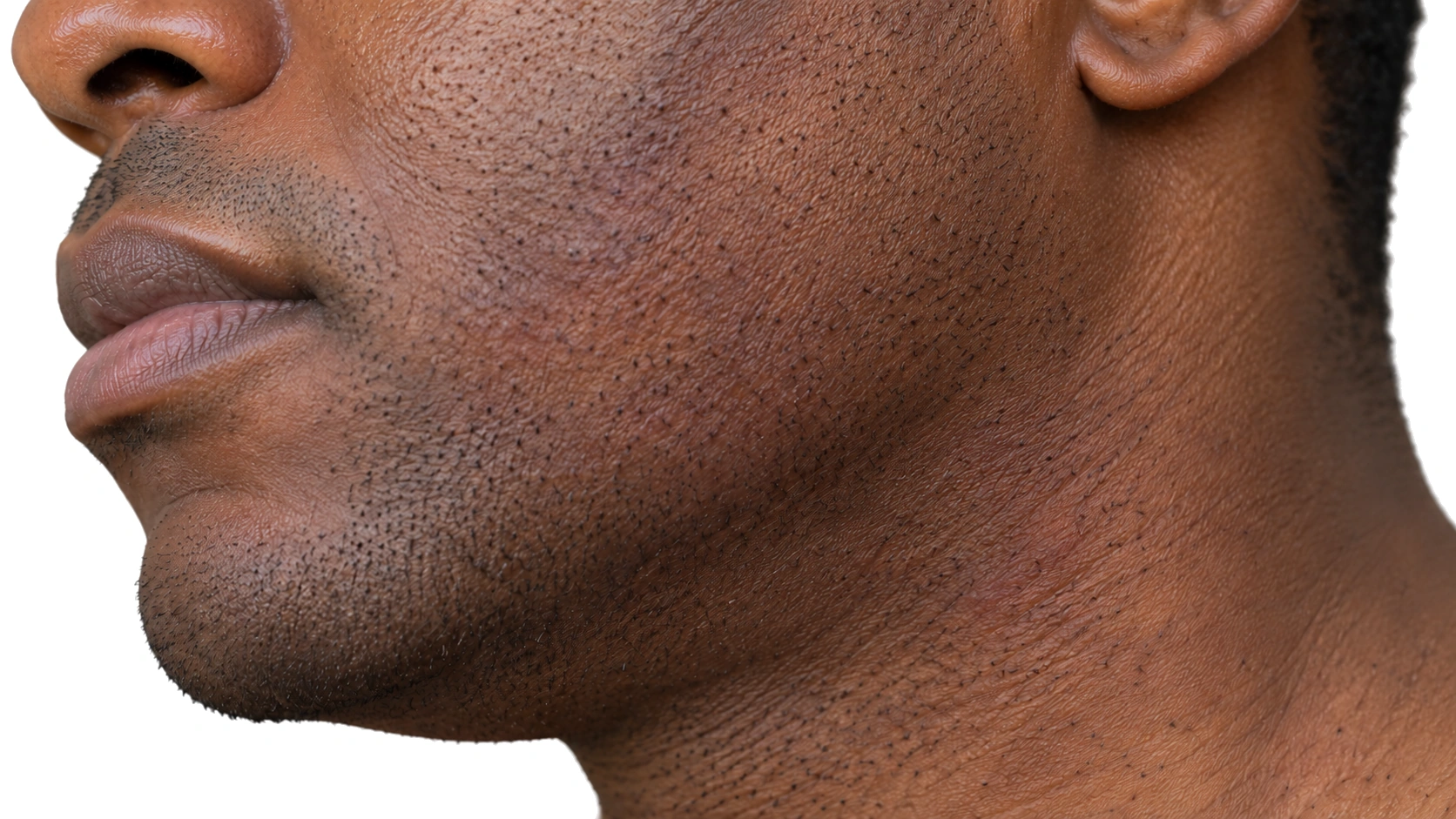
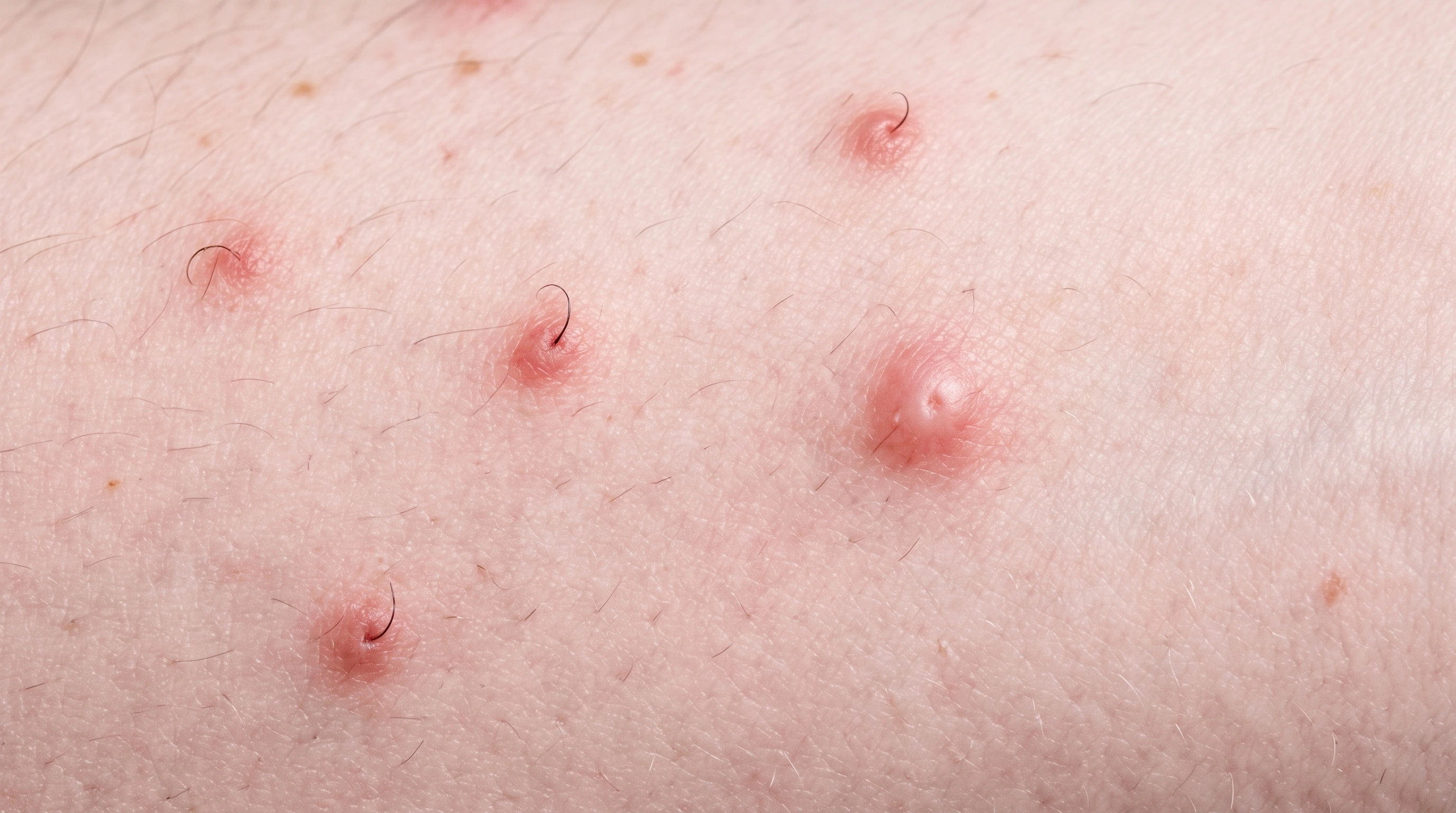
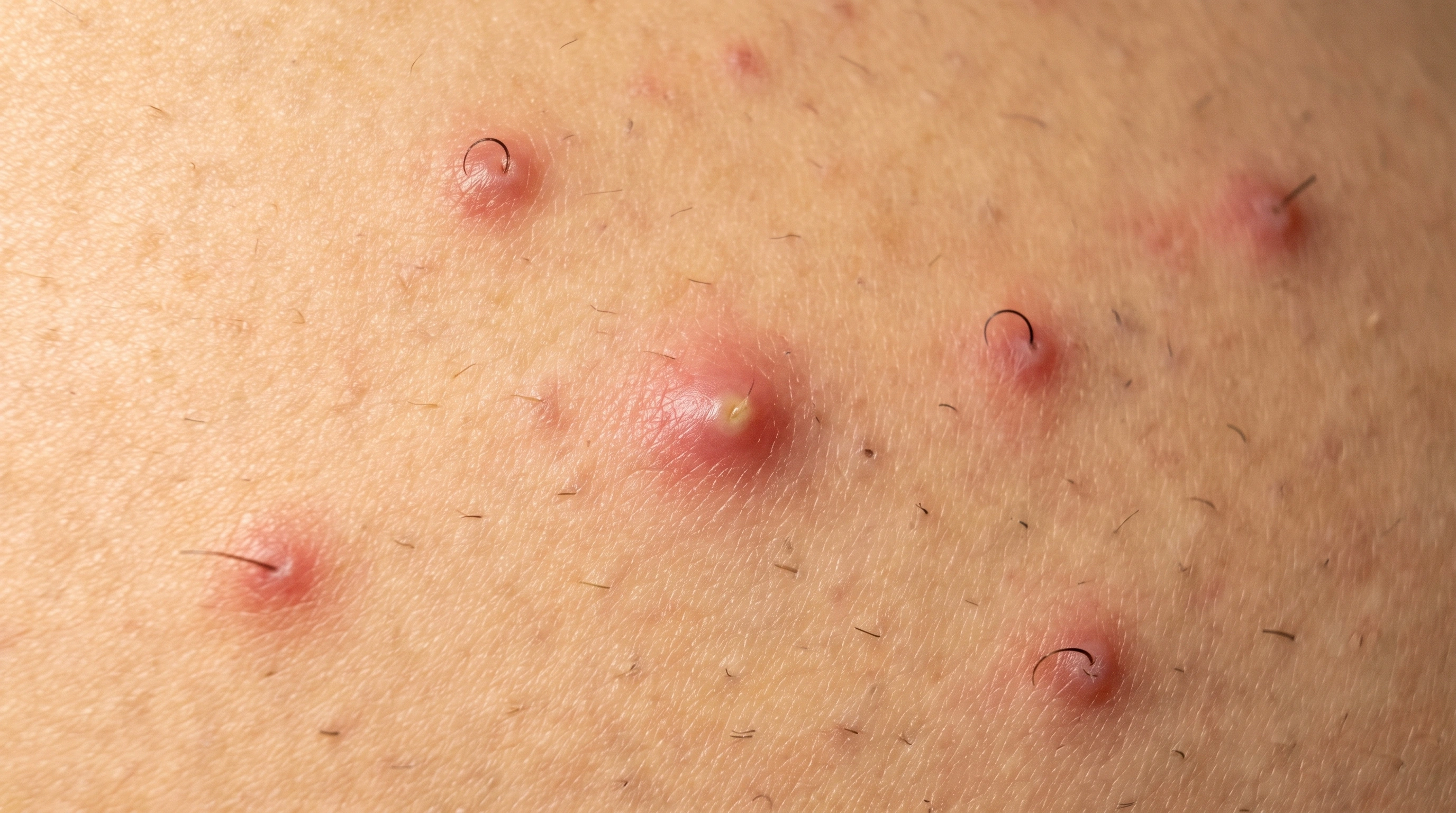
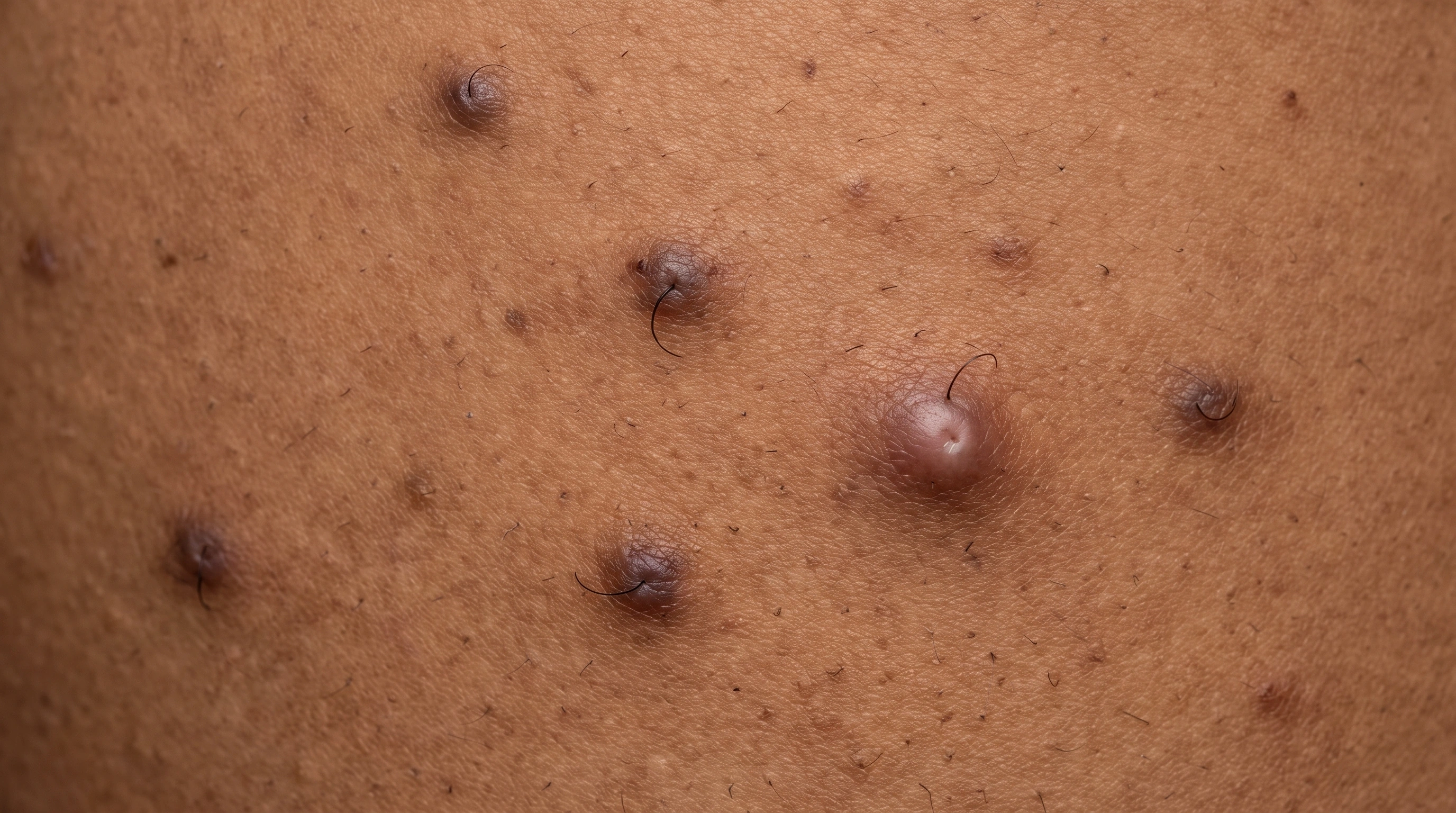
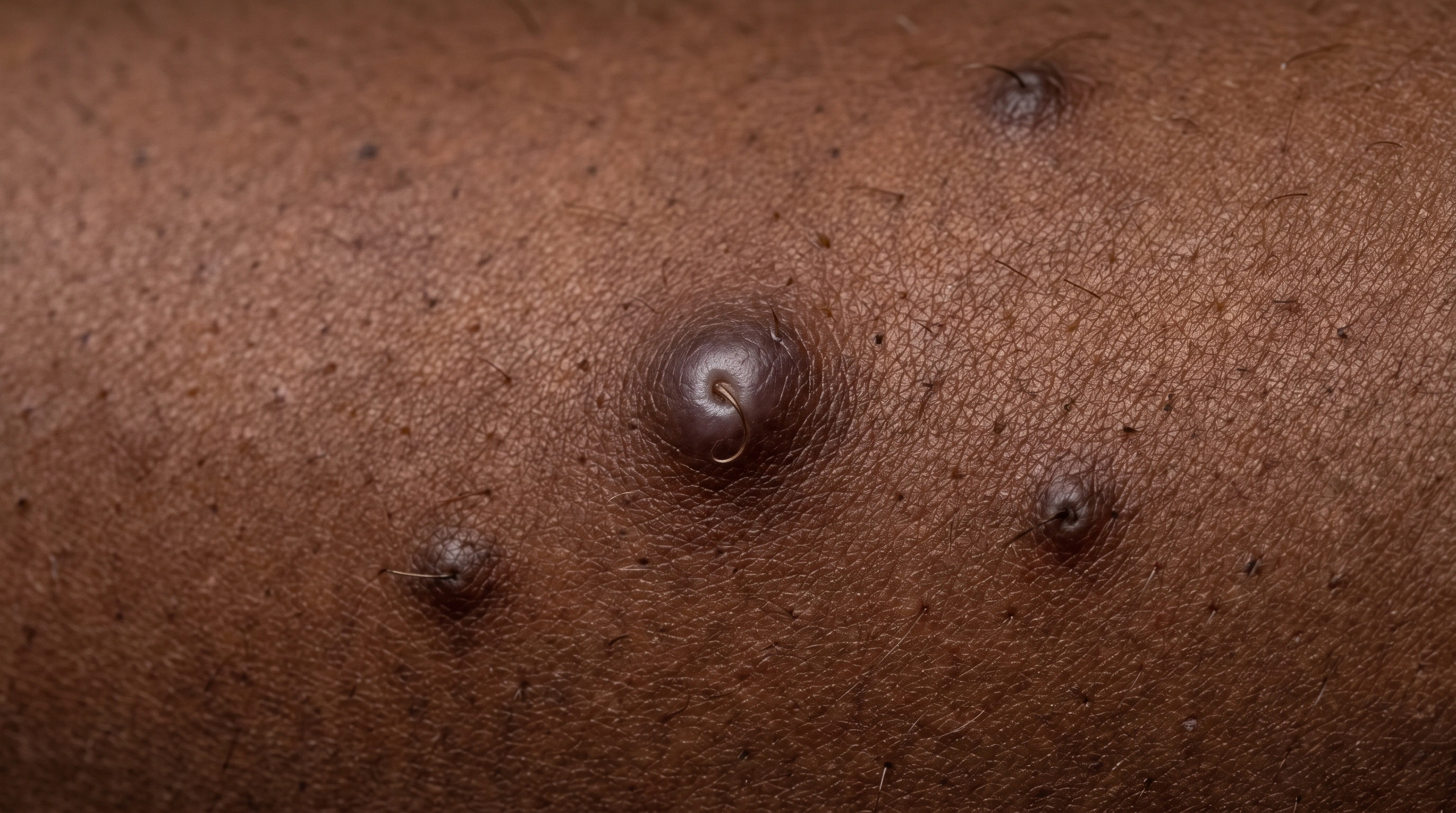
Shaving friction and irritating products damage the surface barrier. This causes inflammation without requiring an ingrown hair or an infection.
A hair curves back into nearby skin instead of continuing outward. The trapped hair triggers a local inflammatory reaction that can form a tender raised bump.
When it usually starts
Razor Burn. Can occur at different ages with a relevant exposure or barrier change.
Ingrown Hairs. Usually begins after shaving or other hair removal, particularly after puberty.
Causes and triggers
Blade friction and shaving products injure the skin barrier.
Ingrown hairs happen when a cut or broken hair curls back into the skin. The body treats the hair as a foreign object and becomes inflamed.
Tightly curled hair is inherited and is the biggest single risk.
Daily Care
Habits that help
- Pause shaving until the skin is comfortable
Repeated passes over sore skin prolong irritation. - Use a cool damp compress after irritation
Pat dry and apply a bland fragrance-free moisturizer if tolerated. - Soften hair and lubricate before the next shave
Use clean equipment and shave with the direction of hair growth. - Use light pressure and as few passes as possible
A guarded trimmer may be easier on repeatedly irritated skin.
Avoid
- Avoid: Dry shaving, blunt blades and close repeated strokes
These increase friction and small skin injuries. - Avoid: Picking bumps or using alcohol-heavy aftershave
Seek advice if redness spreads, pus develops or symptoms persist.
Habits that help
- Stop shaving for three to four weeks
The most effective single treatment. - Clippers or a guarded trimmer
A millimeter of stubble keeps the tip out. - A single-blade or safety razor
Cuts at the surface. - Shave with the grain
Do not stretch, press or repeat. - Shave less often
Every second or third day, never over bumps. - Soften first, then lubricate
Warm water, then gel. - An electric foil or rotary shaver
Cuts above the skin. - Sun protection
Protect healing skin from sunlight to limit darkening of marks. - A chemical depilatory cream
Leaves a soft, feathered end. - Eflornithine cream
Prescription, slows facial hair regrowth.
Avoid
- Avoid: Shaving as close as possible
The tip ends below the skin surface. - Avoid: Multi-blade cartridge razors
Later blades cut below the surface. - Avoid: Stretching the skin taut while shaving
The cut hair vanishes as skin relaxes. - Avoid: Shaving against the grain
A closer cut, a sharper tip. - Avoid: Going over the same patch repeatedly
Bumps come from the later passes. - Avoid: Shaving every day, or over bumps
Inflamed skin needs time to settle. - Avoid: Dry shaving, or shaving with bar soap
The blade drags and irritates. - Avoid: A dull or dirty blade
Tugs the hair and leaves a worse tip. - Avoid: Waxing, tweezing and epilating
The regrowing hair has to reopen its way out. - Avoid: Digging a hair out with a needle
Turns a bump into a wound. - Avoid: Picking and squeezing
The same damage, more often. - Avoid: Gritty scrubs and stiff brushes
Inflammation, and the hair stays put. - Avoid: Alcohol-heavy aftershaves
Sting broken skin, add irritation. - Avoid: Tight collars, straps and underwear
Friction pushes hairs back in. - Avoid: Sun on healing marks
Makes marks deeper and slower to fade.
Treatment differences
Pause shaving while the skin settles and use gentle care. Repeated painful or pus-filled bumps may represent ingrown hairs or infection and need a different treatment plan.
Outlook
Simple shaving irritation usually settles within a few days after shaving pauses. Repeated friction can restart it; persistent pus-filled bumps or spreading redness needs assessment for another problem.
A single ingrown hair follows a short, predictable course; the long-term picture depends on what happens to it. Stop removing the hair and this condition stops - beards grown out for three to four weeks usually clear almost completely. Established scarring does not reverse, which is the argument for changing course early.
Complications
Persistent inflammation can leave pigment changes and may require a specific diagnosis.
- Dark marks that outlast the bumps
- Raised and keloid scars
- Bumps at the nape of the neck
More details
Dark marks that outlast the bumps
Every inflamed bump can leave a flat darker patch behind, and those patches routinely take several months to fade. They are the most common thing people are left with, and on deeper skin tones they are the most noticeable. They will not clear while new bumps keep forming, so stopping the bumps does more for them than anything applied on top. Daily sunscreen helps, because sun makes them deeper and slower to go.
Raised and keloid scars
Where bumps keep forming in the same place and are shaved over or picked, the skin can build firm raised scars, and in some people keloids that grow beyond the original bump. They form most readily along the jawline, the front of the neck and the nape, and more readily on deeper skin tones. Once a keloid is there it is difficult to treat, so changing the shaving early is worth much more than anything applied later.
Bumps at the nape of the neck
Firm bumps along the hairline at the back of the head are a separate problem called acne keloidalis nuchae. They can thicken into keloid-like scars and leave permanent bald patches, and it is far more common in people with tightly curled hair. It needs treating earlier and harder than bumps anywhere else, because that scarring does not reverse. Bumps in this spot are a reason to book rather than wait.
When to get help
Seek care for pus, spreading pain or repeated follicular bumps suggesting infection or ingrown hairs.
Seek care for recurring painful bumps, scarring or pus. A large painful swelling or spreading redness may need treatment for infection.
Common questions
Razor Burn:What is Razor Burn?
Irritation caused by shaving; it differs from ingrown-hair razor bumps.
Razor Burn:What can I do day to day?
Pause shaving while irritated, use a bland moisturizer and avoid harsh aftershaves.
Razor Burn:When should I get medical advice?
Seek care for pus, spreading pain or repeated follicular bumps suggesting infection or ingrown hairs.
Ingrown Hairs:Can I just pull the hair out?
Not out - free it. If a loop of hair crosses the bump, a sterilized needle can lift it from underneath and leave the hair rooted in the follicle. Pulling the whole hair out means the next one grows back through inflamed skin, which often makes another bump in the same place. Never dig for a hair you cannot see. That is how bumps become scars.
Ingrown Hairs:Will laser hair removal work if I have deep skin tone?
Yes. The concern comes from older devices. The standard choice now for deeper skin tones is a long-pulsed 1064 nm Nd:YAG laser, which reaches the hair with less risk to surrounding pigment. It takes a series of sessions, reduces rather than eliminates hair, and touch-ups are common. Ask what wavelength they use, how often they treat skin like yours, and have a test patch.
Ingrown Hairs:Do I have to stop shaving forever?
No. Most people go back to shaving once the bumps clear, as long as it is different from what caused the problem - usually a single blade or trimmer, with the grain, less often, without stretching the skin. If close shaving is unavoidable and bumps keep returning, laser lets you have both.
Ingrown Hairs:Why do I get them on my neck but not my cheeks?
The hair on the neck grows in swirls and changes direction over short distances, so a stroke with the grain in one spot is against it an inch away. The skin there is softer and easier to pull taut. The neck and under the jaw are the classic sites.
Ingrown Hairs:How long do the dark marks take to fade?
Longer than anyone wants. A mark from one bump commonly takes several months. Years of repeated bumps take longer, and nothing fades while new bumps keep forming. Two things speed it up: stopping the new bumps, and daily sunscreen.
Ingrown Hairs:Is this acne?
No, though they look similar and sometimes occur together. Acne begins with a clogged oil gland and features blackheads and whiteheads. This begins with a hair growing back into the skin, appears in shaved areas, and follows the shaving schedule. Some acne treatments help, but not the cause.
Sources
Sources and further reading
Keep exploring.
Ingrown Hairs
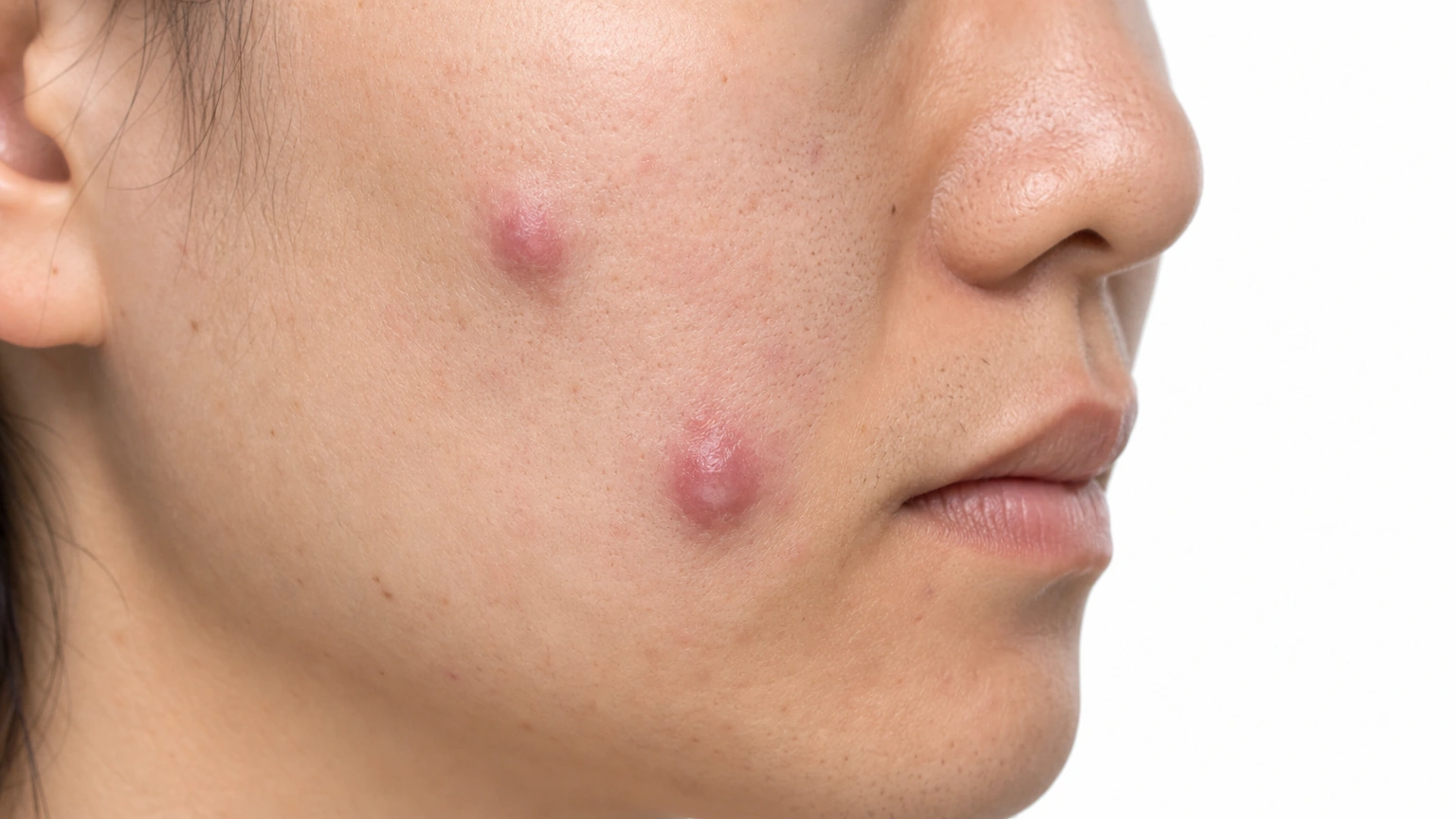
Acne Nodules vs Ingrown Hairs

Acne vs Ingrown Hairs

Folliculitis vs Ingrown Hairs
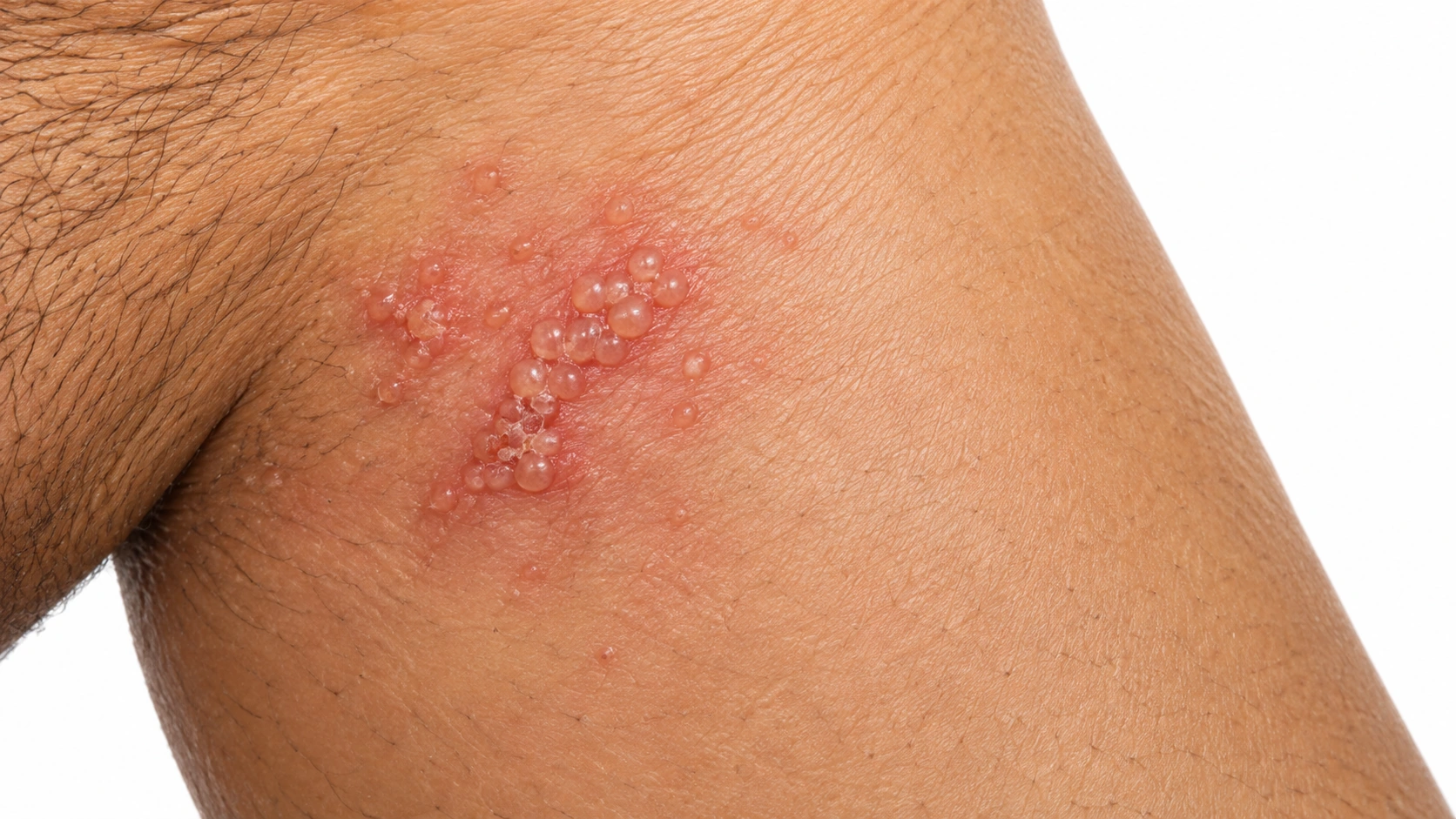
Genital Herpes vs Ingrown Hairs
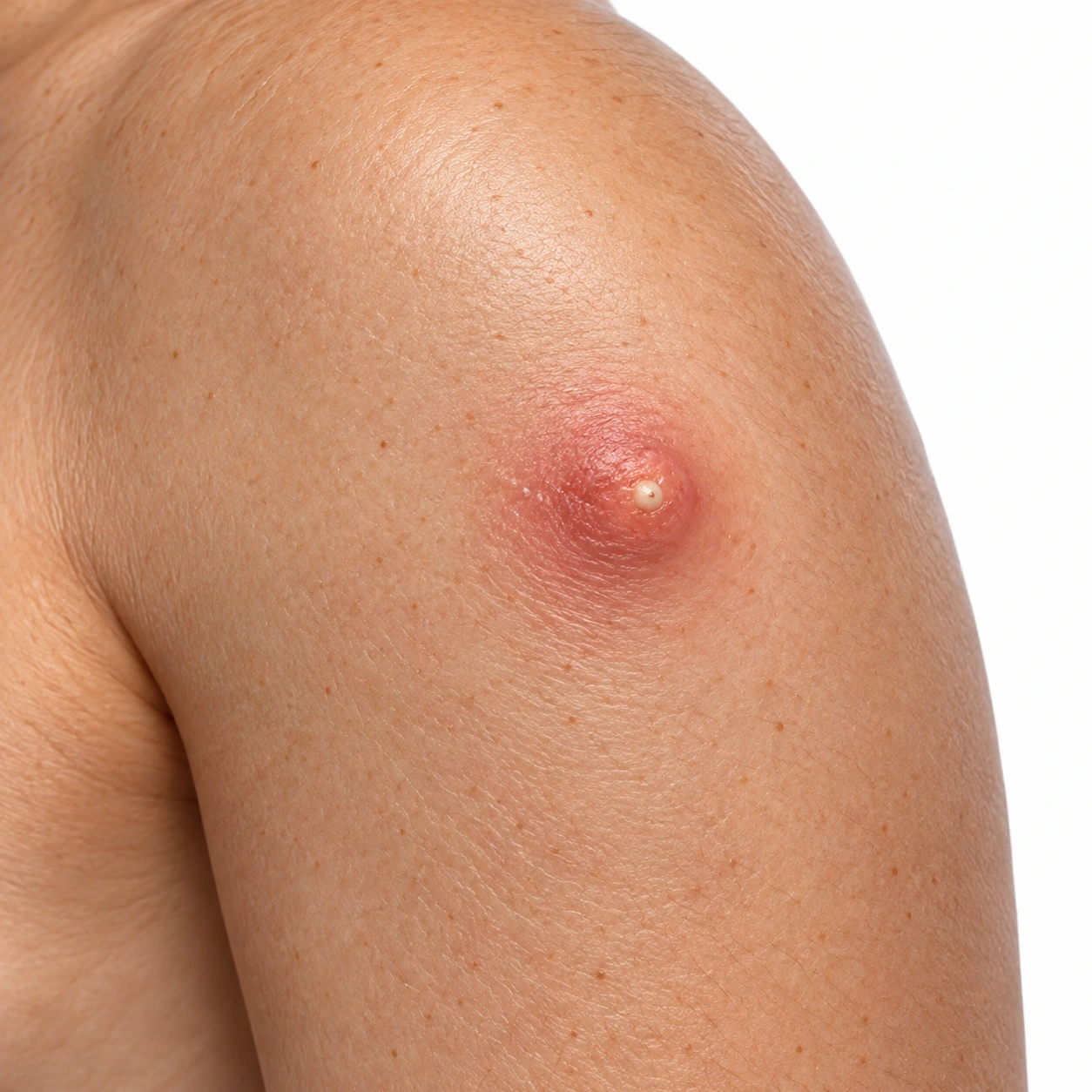
Ingrown Hairs vs Boils
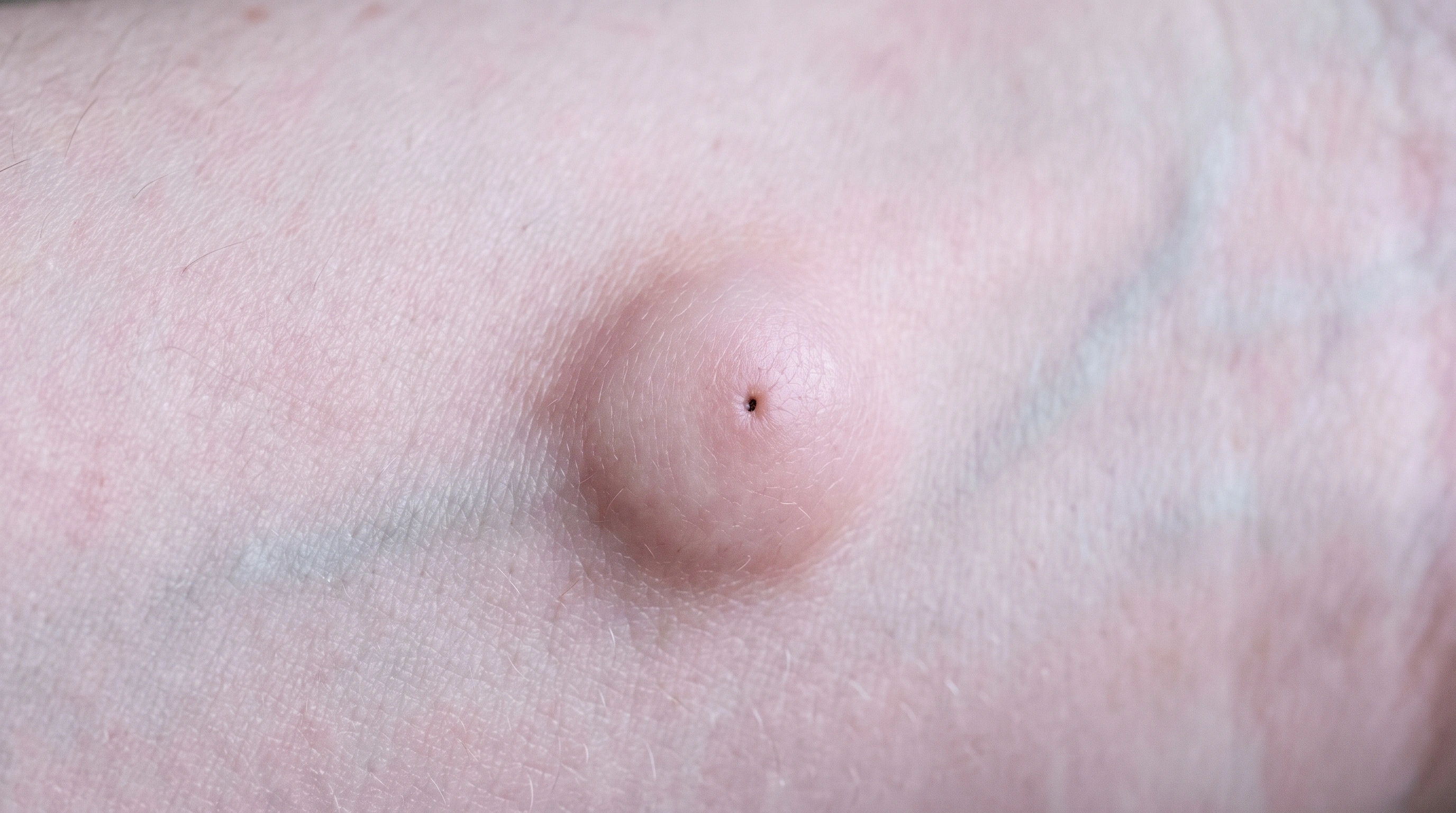
Ingrown Hairs vs Epidermal Inclusion Cyst
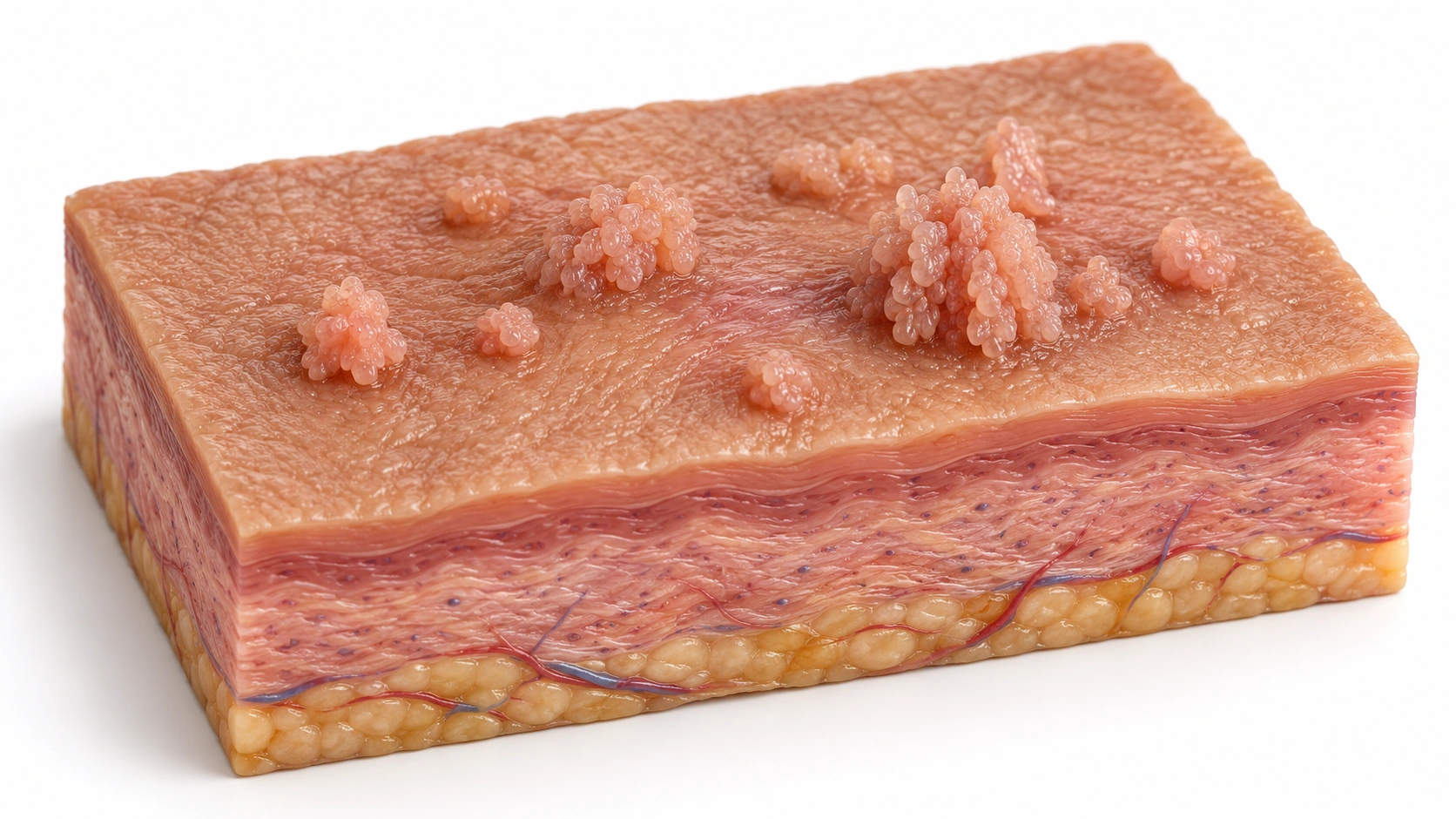
Ingrown Hairs vs Genital Warts
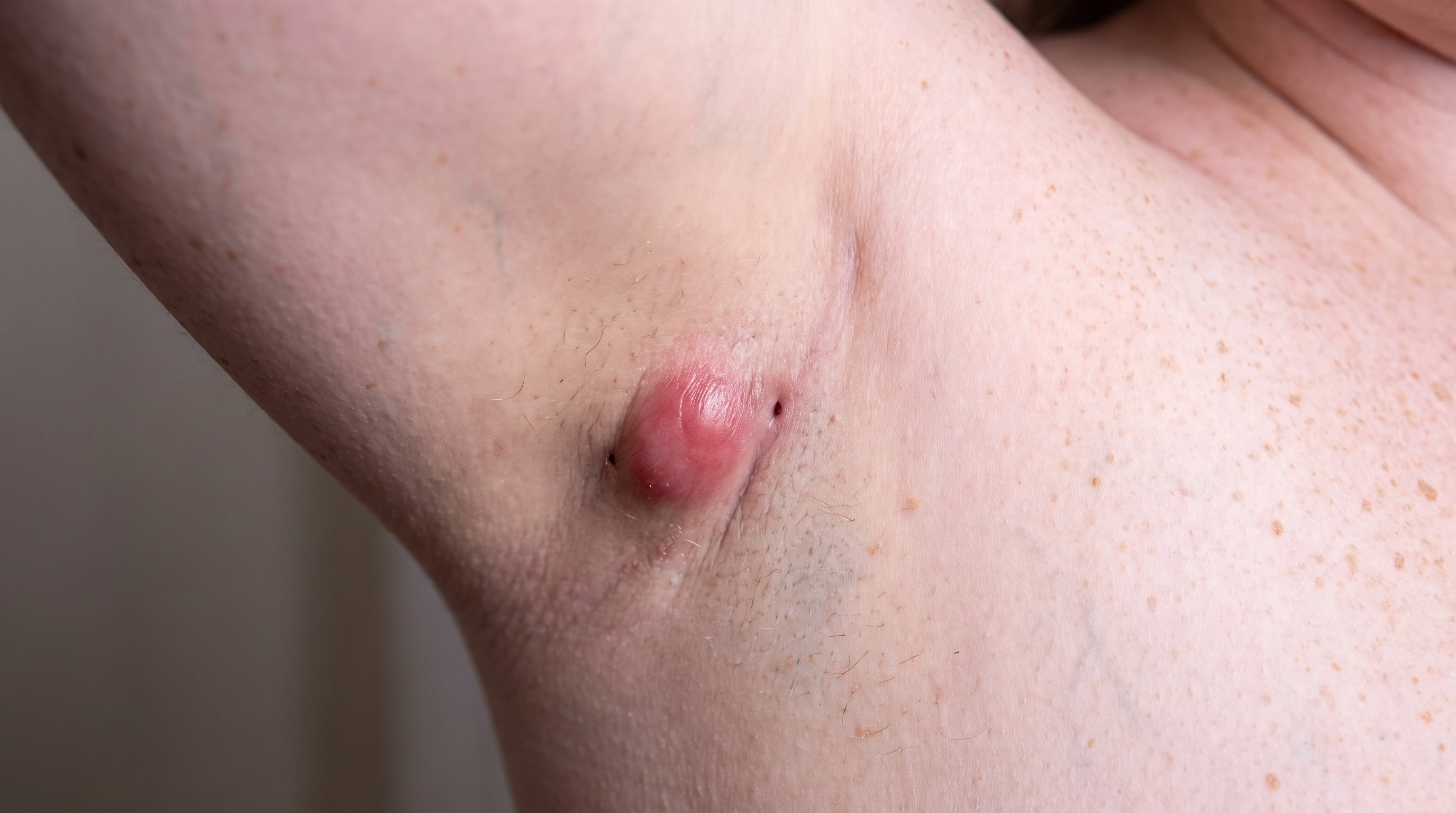
Ingrown Hairs vs Hidradenitis Suppurativa
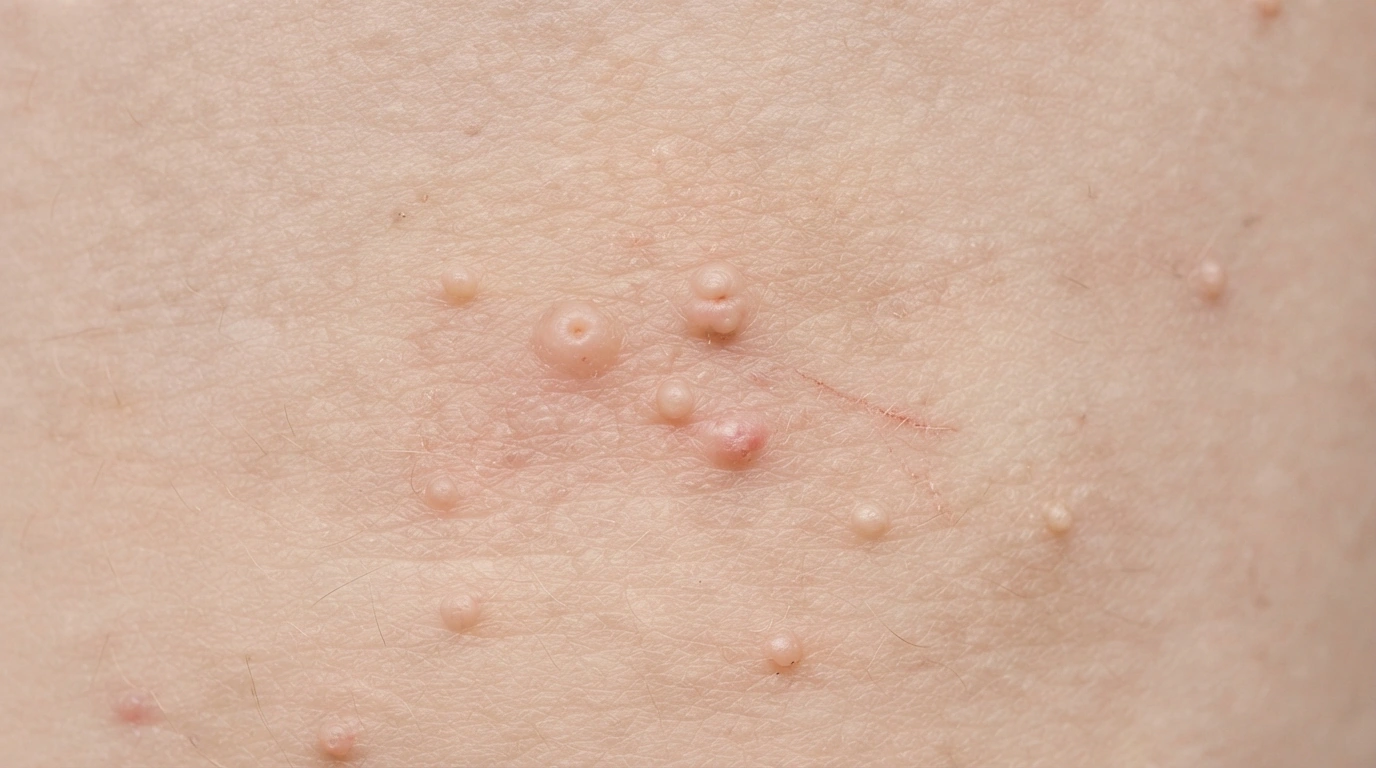
Ingrown Hairs vs Molluscum Contagiosum
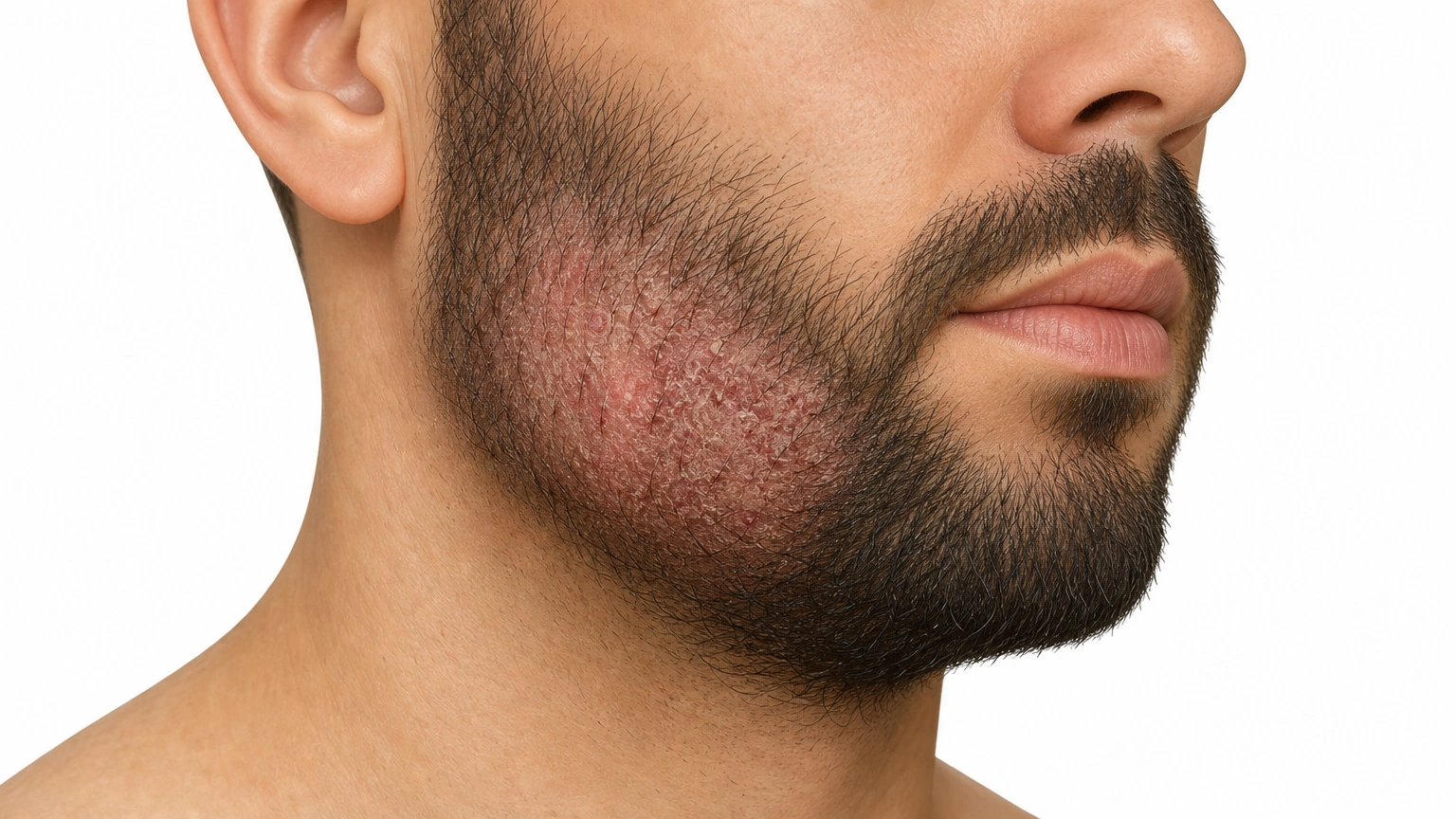
Tinea Barbae vs Ingrown Hairs