Ingrown Hairs vs Epidermal Inclusion Cyst

An ingrown hair is a hair that curls back into the skin instead of growing out of it, leaving a tender bump. It is most common and most stubborn in coarse, tightly curled hair, where it has a name of its own: pseudofolliculitis barbae, better known as razor bumps. An epidermoid cyst is a firm lump under the skin, lined with the same cells as the skin surface and slowly filling with keratin. It is harmless and often sits quietly for years. The trouble starts when the wall ruptures, which is why squeezing one is the worst thing you can do to it.

Reviewed by Dr. Schwarz, Board-Certified Dermatologist · Research updated 2026-10-23
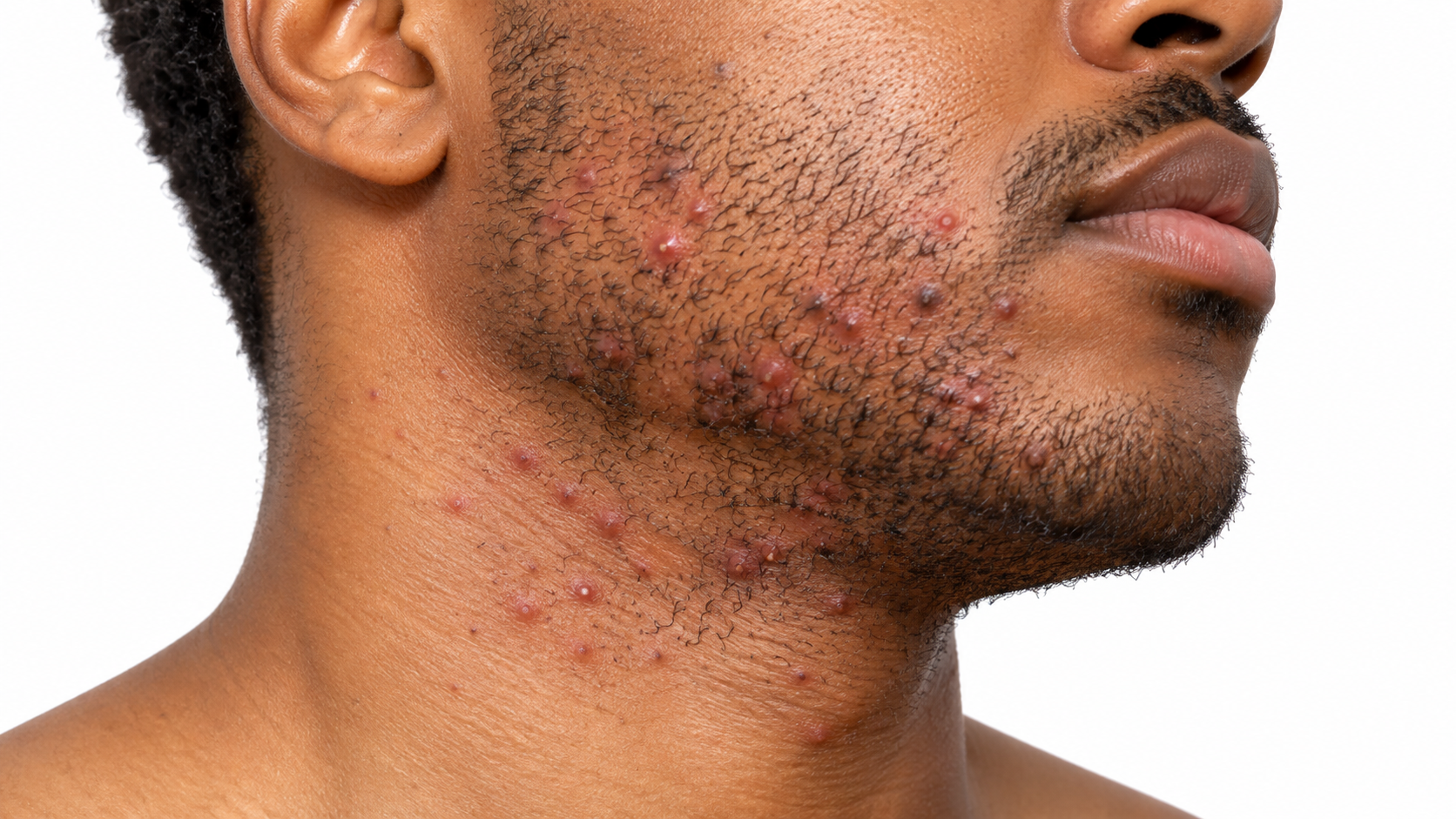
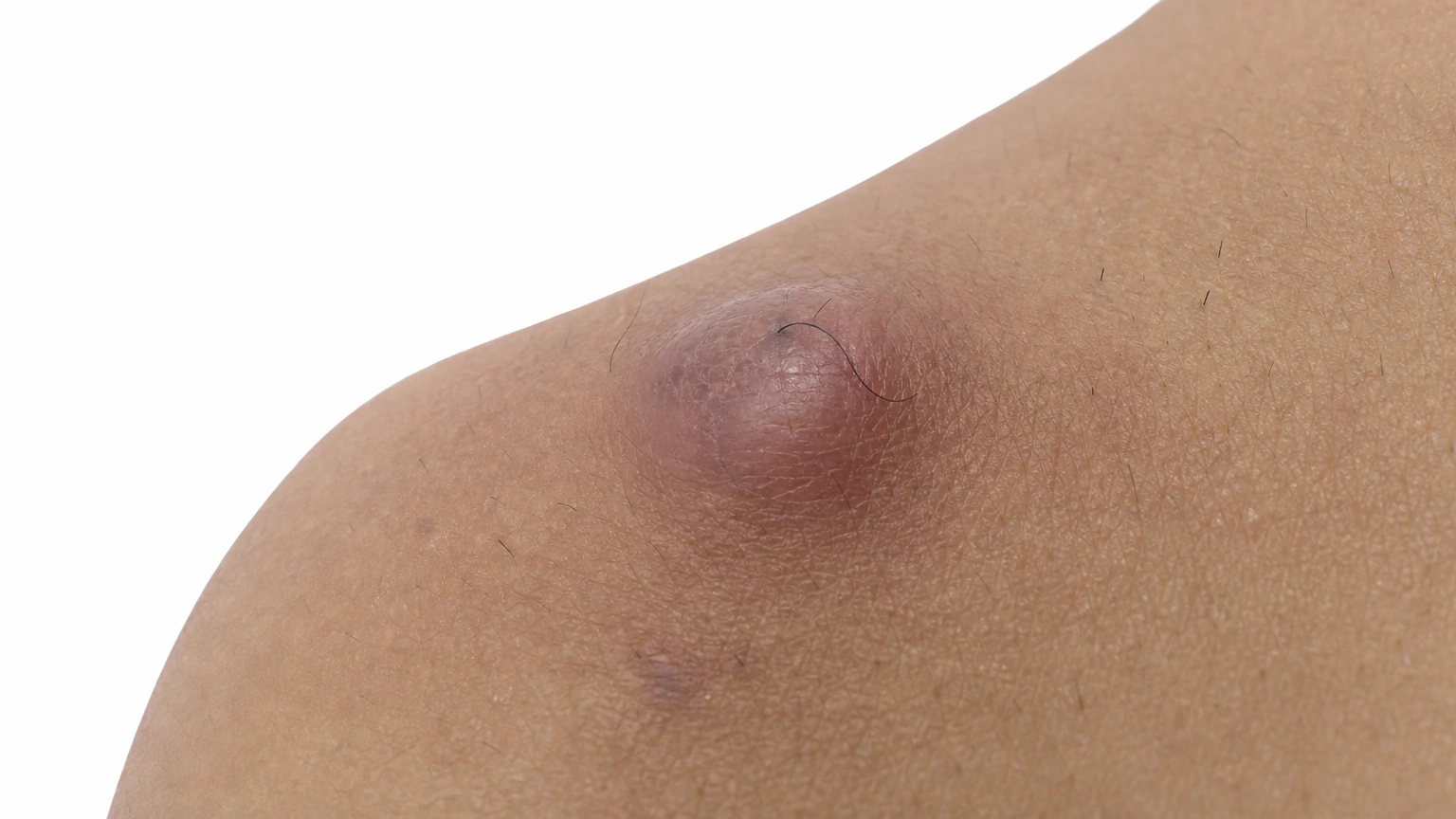
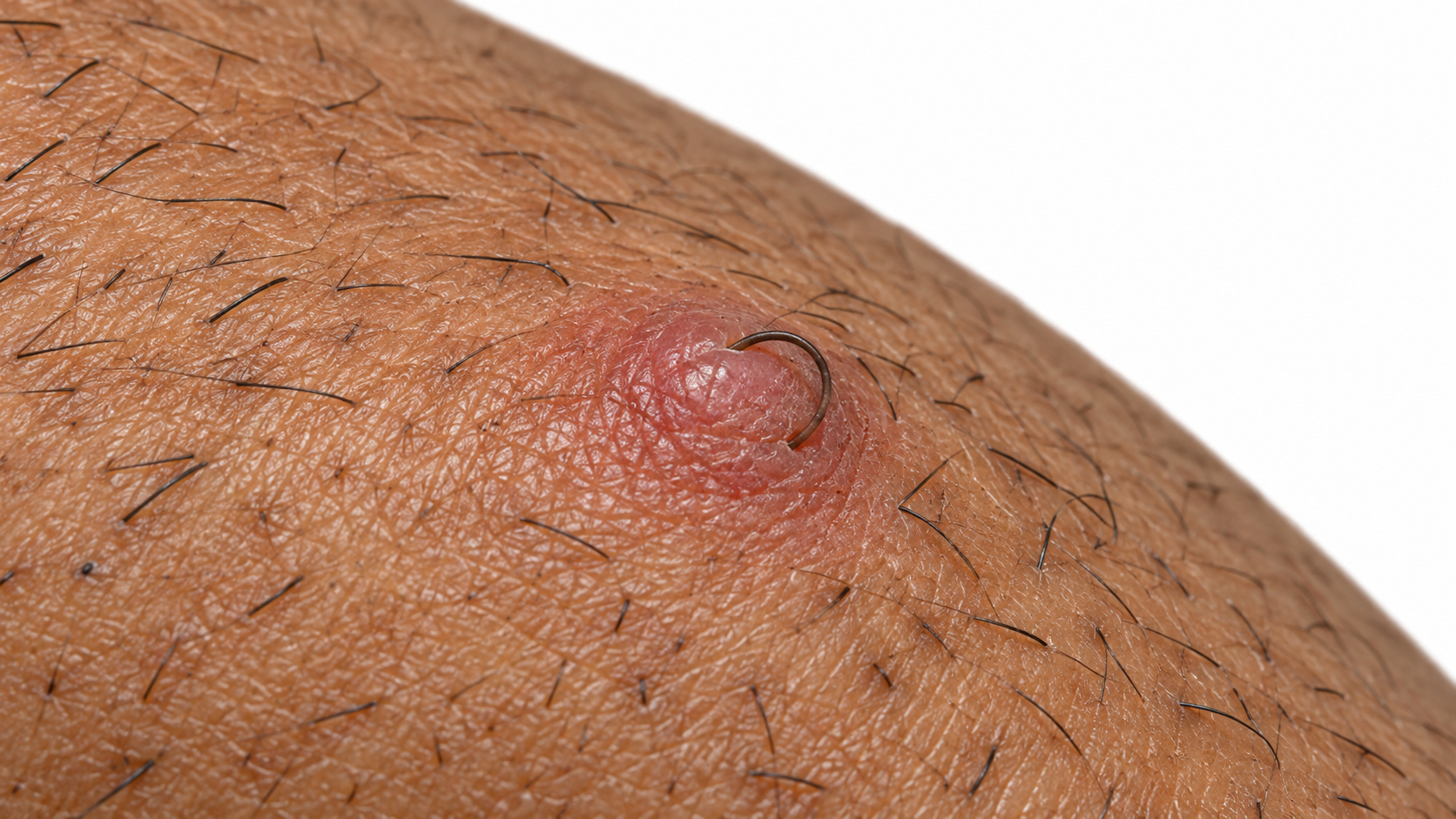
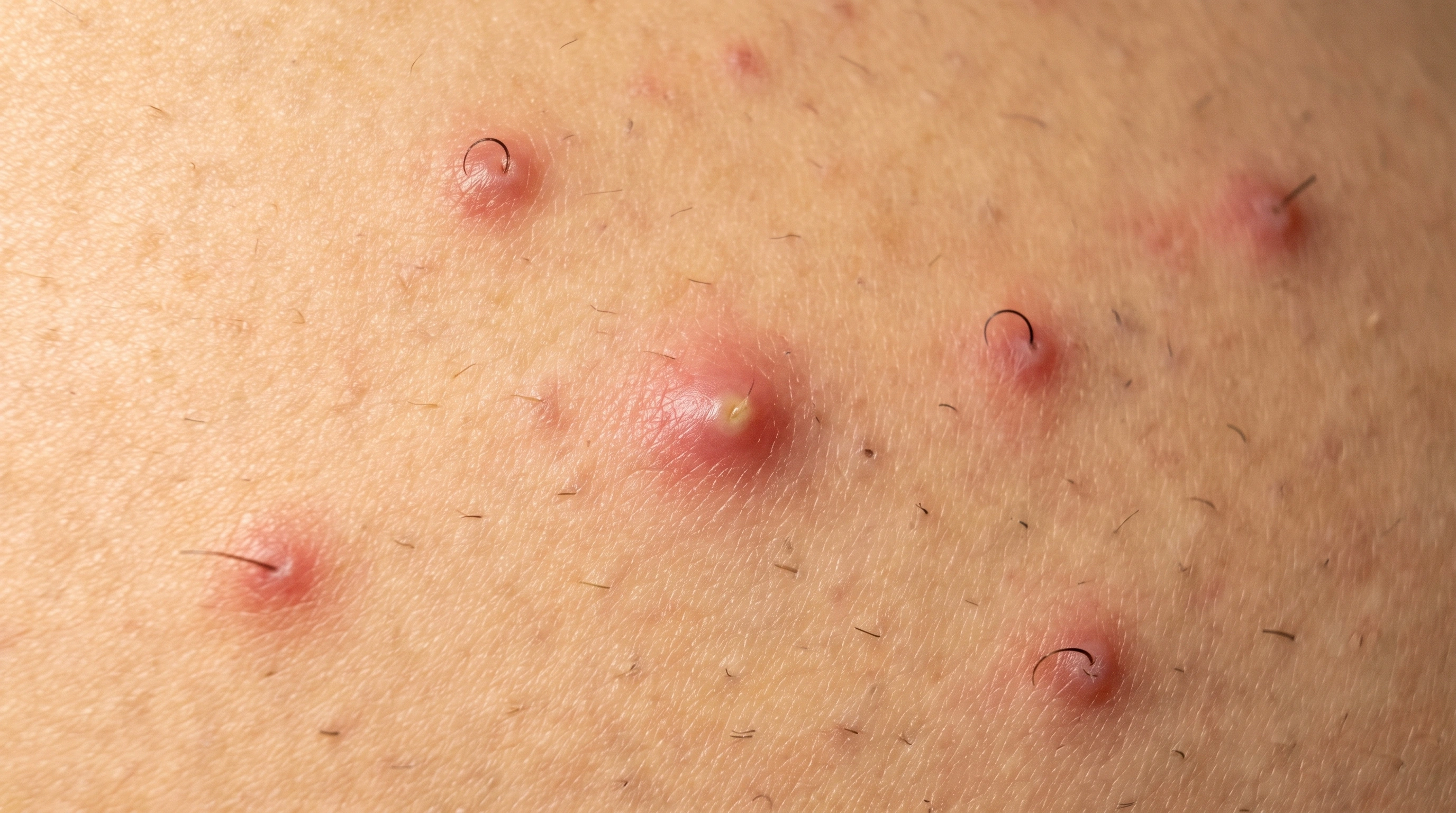
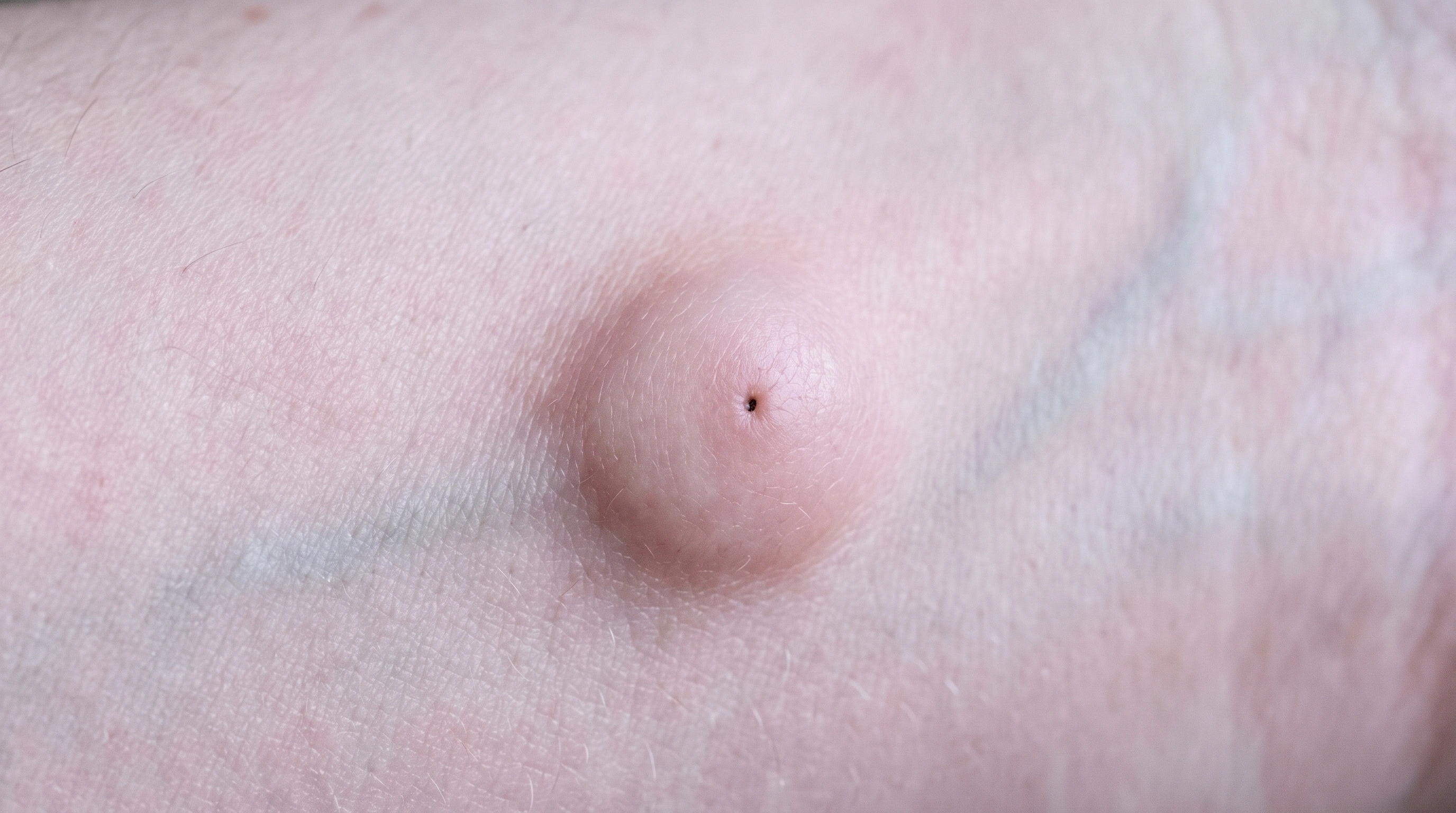
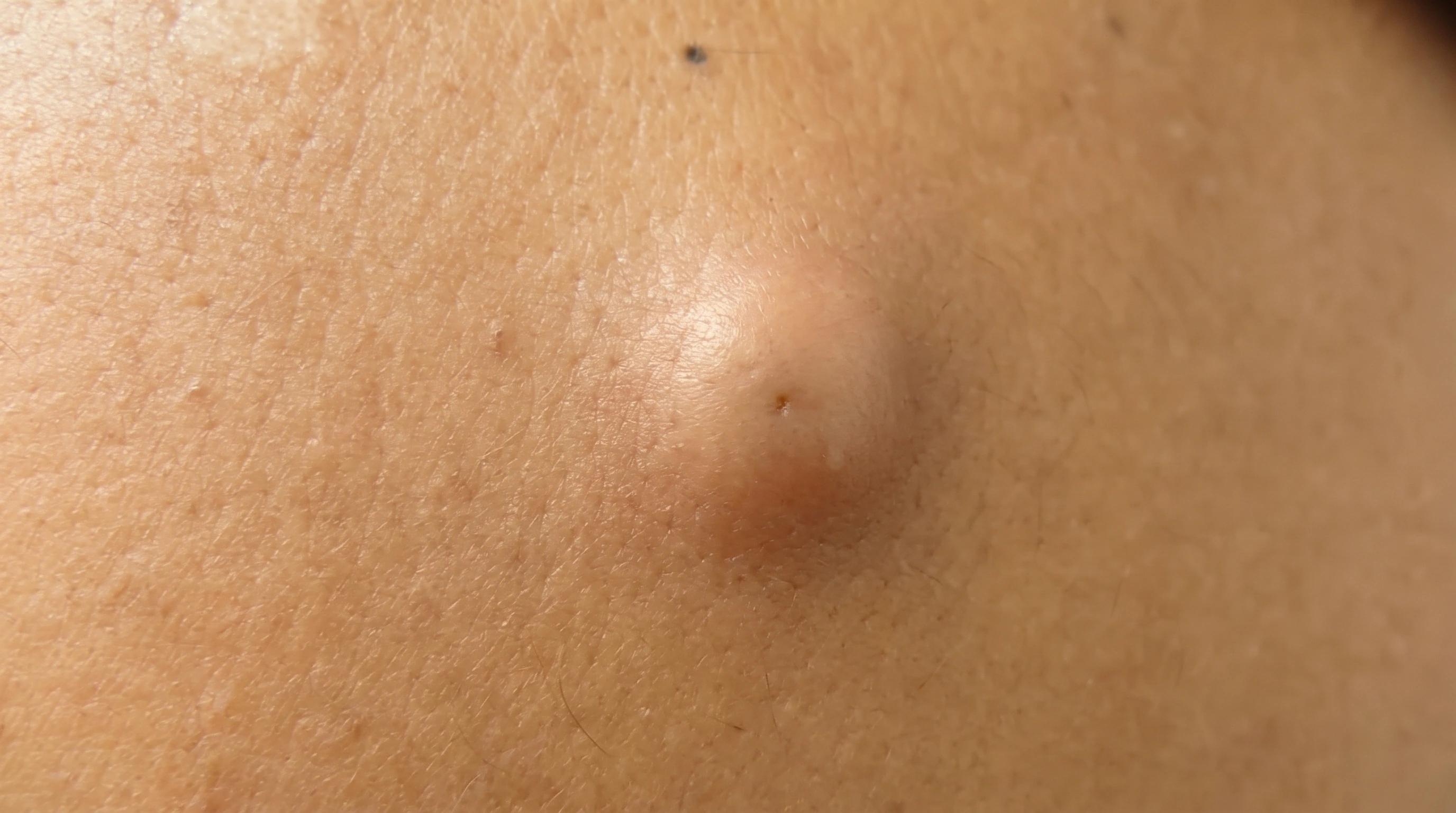
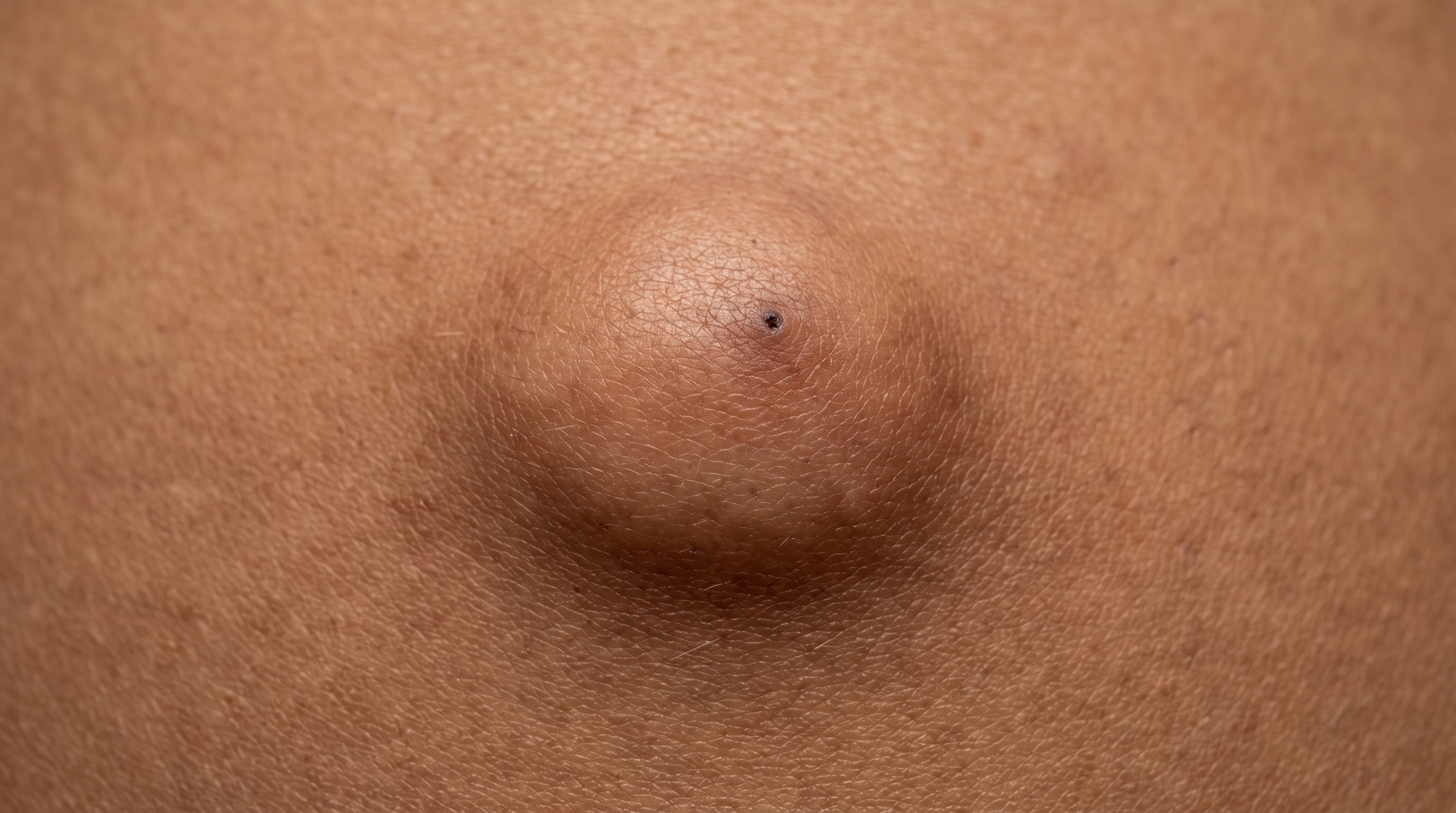
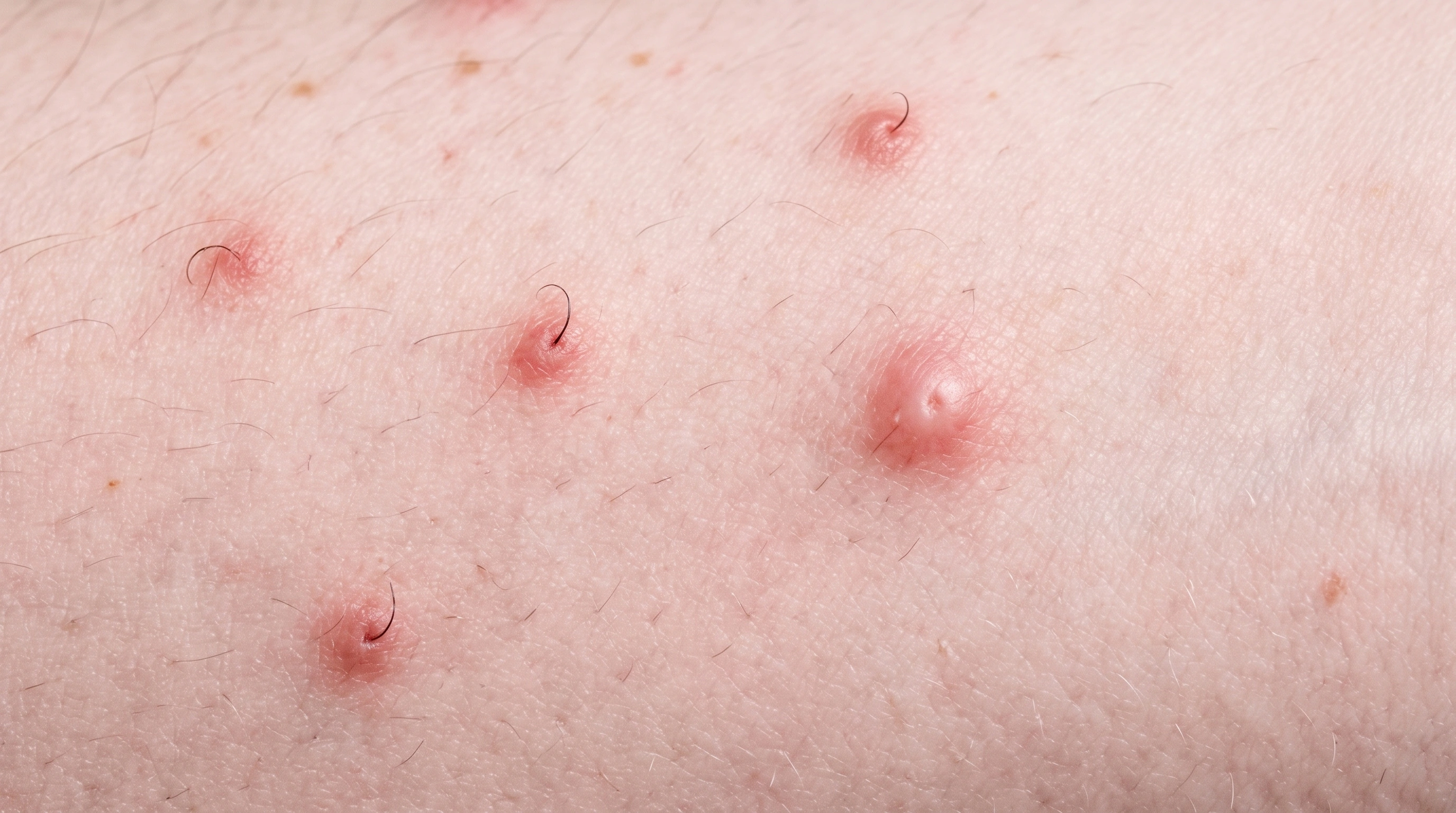
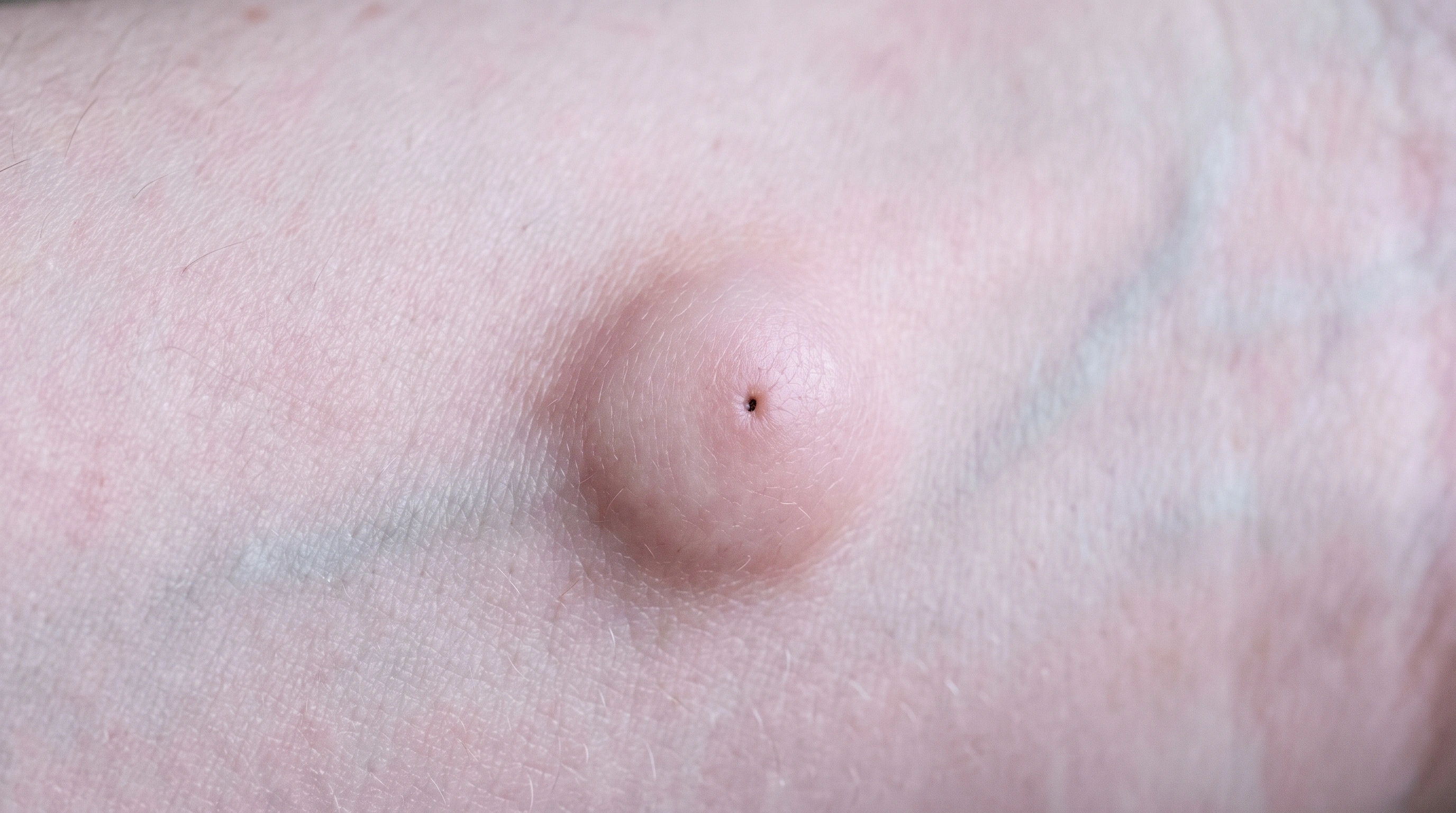
A few firm pink bumps scattered under the jaw and along the upper neck on light skin, with a dark loop of hair visible over one of them.A smooth, dome-shaped lump about two centimetres across on the upper back on pale skin, with a tiny dark pore at its center and faintly pink skin over it.

Key differences

The same eight facts on every condition comparison.

Usual age
After puberty
Adults
Where
Beard, legs, armpits, bikini line
Face, neck, trunk
Main sign
Tender bumps at shaved hairs
Firm, movable lump with a pore
Itch or pain
Tender, itchy
Painless unless inflamed
Contagious
No
No
Long term
Recur with shaving
Stays until the sac is removed
Scars
Dark marks and keloids possible
Removal leaves a scar
Who gets it
Coarse, curly hair; shavers
Adults; more in men

What is it?

Ingrown Hairs
Epidermal Inclusion Cyst
What is it?

A hair grows back into skin.
A curved or sharply cut hair pierces the skin or follicle wall.

The skin reacts to it.
The body treats the embedded hair as foreign material.

Curly hair is more prone.
Coarse, curved hair increases risk, but any hair type can be affected.

Deep lumps need assessment.
Painful lumps, drainage or scarring may signal infection or another disorder.

It is a keratin-filled sac.
The cyst is a usually benign sac lined by skin-like cells and filled with keratin.

It grows slowly.
It often appears as a slowly growing lump with a central opening.

"Sebaceous cyst" is a misnomer.
It is commonly called a sebaceous cyst, but its contents are not simply trapped oil.

Unusual lumps need examining.
A new, changing, hard, fixed or uncertain lump should be checked rather than assumed to be a cyst.

What it looks like

Ingrown Hairs

Ingrown Hairs: Bumps after shaving; Razor bumps.

Razor bumps Pseudofolliculitis barbae in the beard area.

Representative image of an ingrown hair bump in a skin fold.

Bikini-line ingrown hairs Bumps after shaving or waxing.

A firm raised skin lump with a curled hair, representing an ingrown-hair cyst.

Ingrown-hair cyst A deeper, larger lump.

Ingrown Hairs: Trapped hair.

Individual ingrown hair A hair visible under the skin.

Epidermal Inclusion Cyst

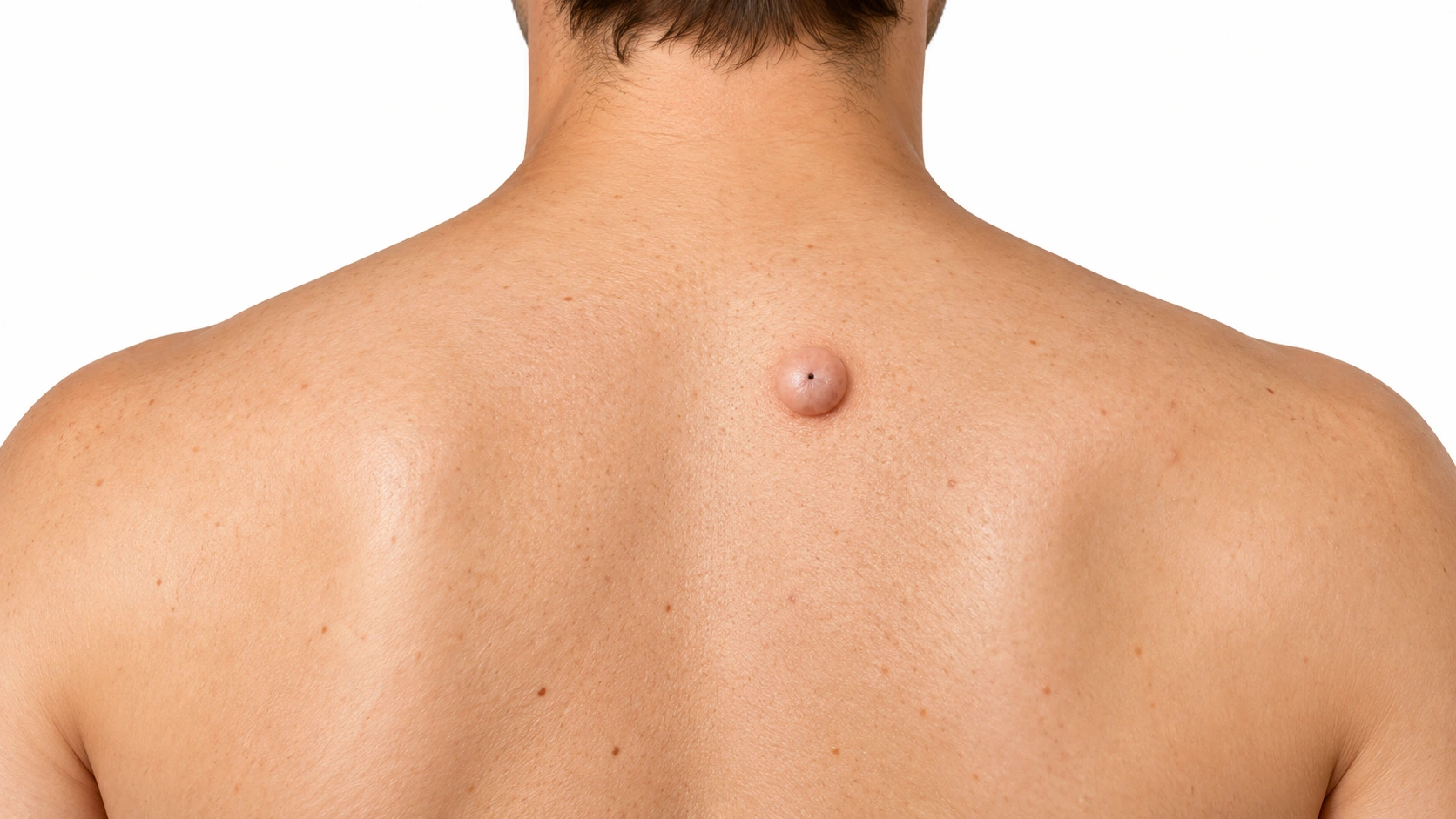
Representative image of quiet cyst. It illustrates a visible feature or experience and is not a diagnostic reference.

Round lump Smooth and movable under skin.

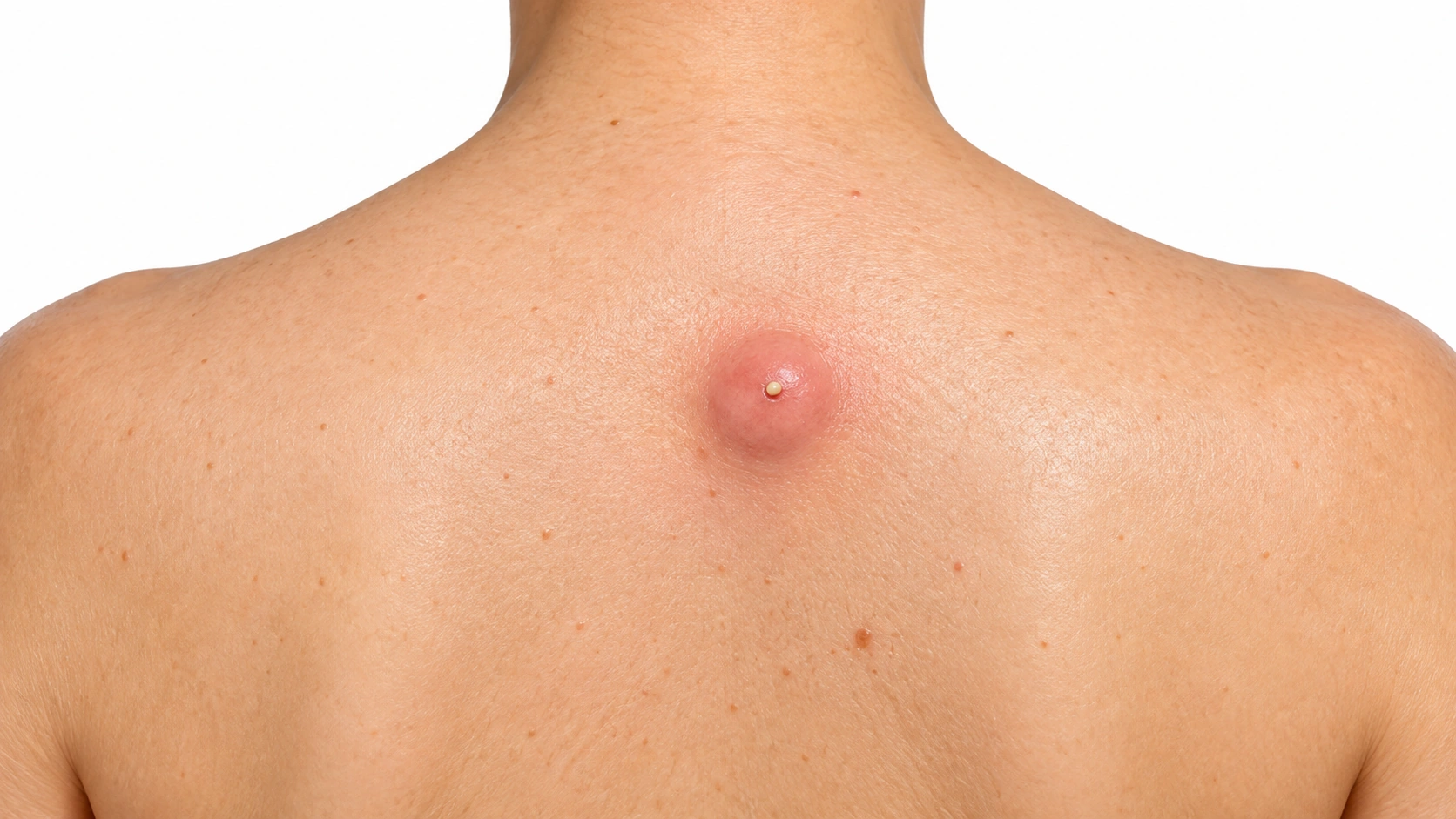
Representative image of cyst punctum. It is not a diagnostic reference or an exact depiction of every subtype, stage or location.

Central opening A small dark pore on top.

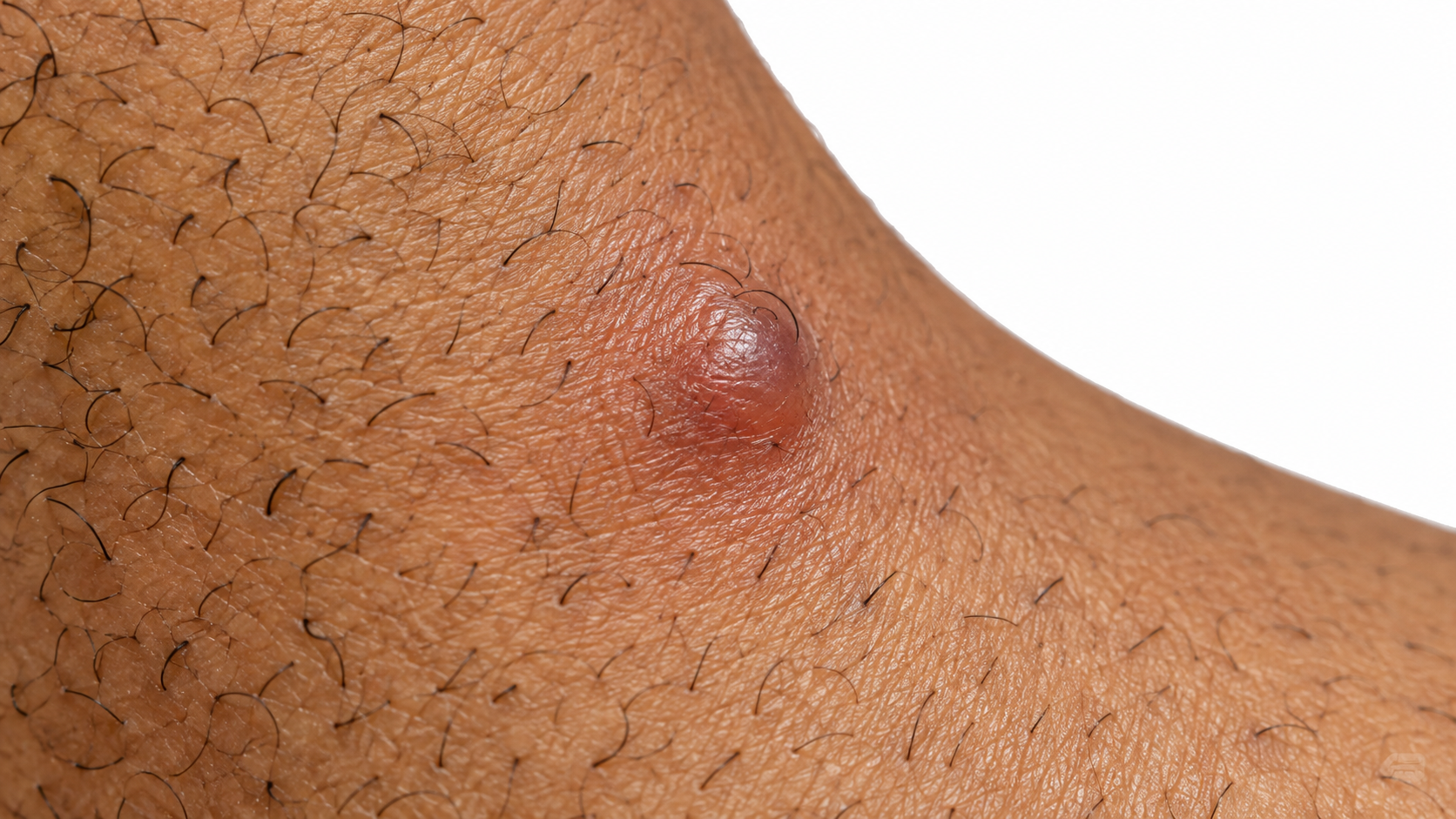
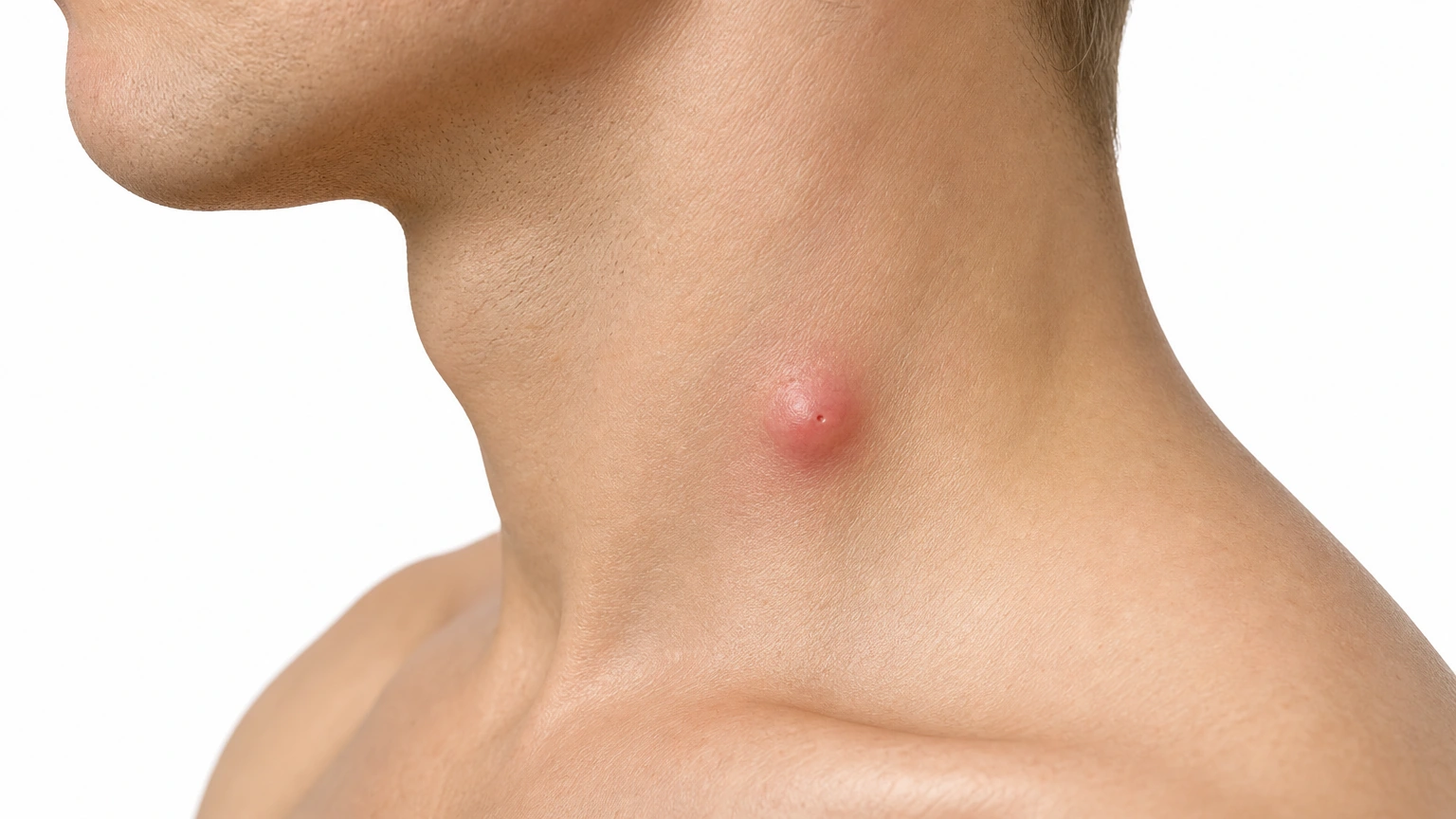
A small red swollen dome-shaped cyst with a tiny central punctum on the side of the neck.

Inflamed cyst Red, swollen and tender.

Skin tones
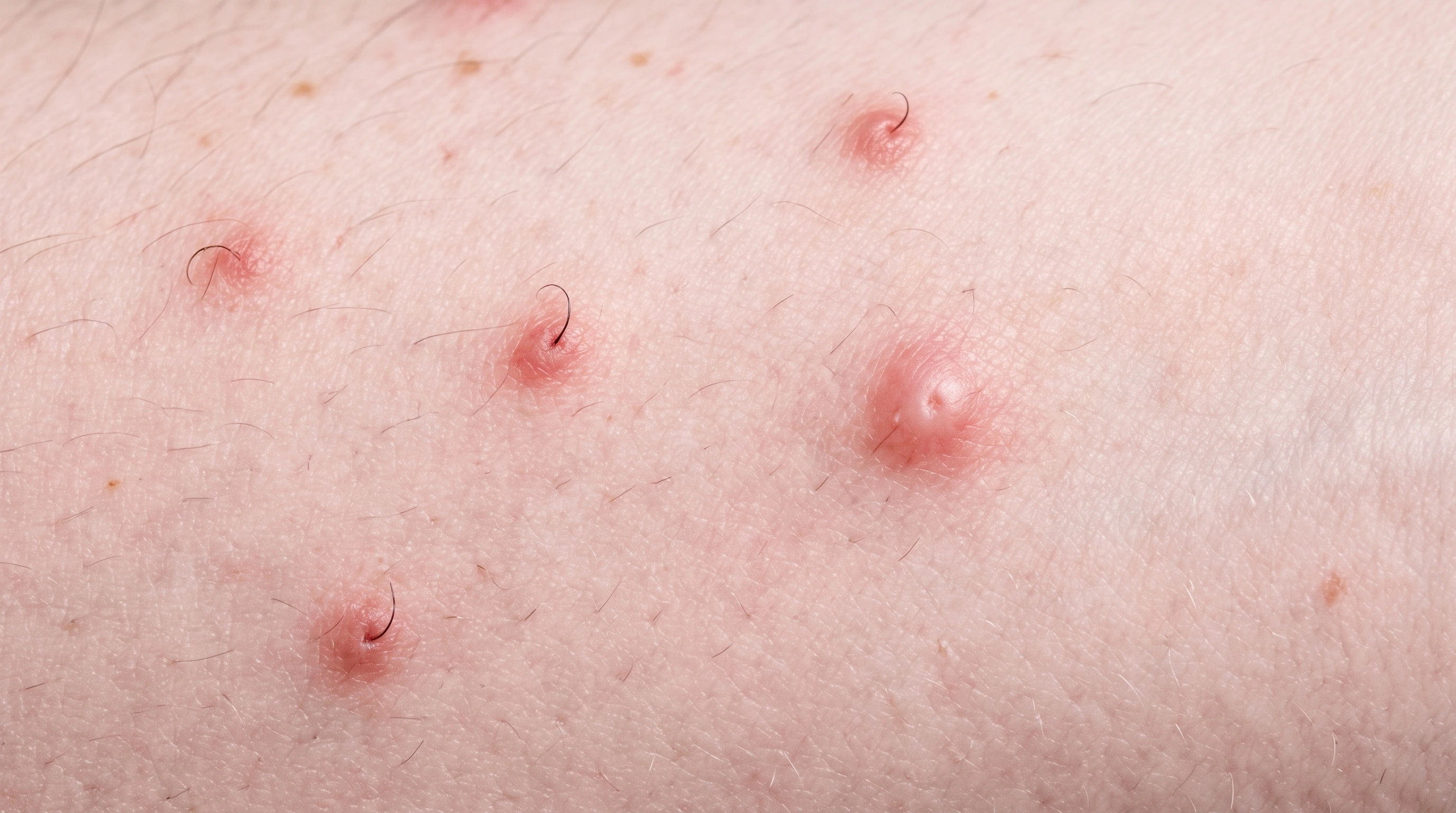
A few firm pink bumps scattered under the jaw and along the upper neck on light skin, with a dark loop of hair visible over one of them.
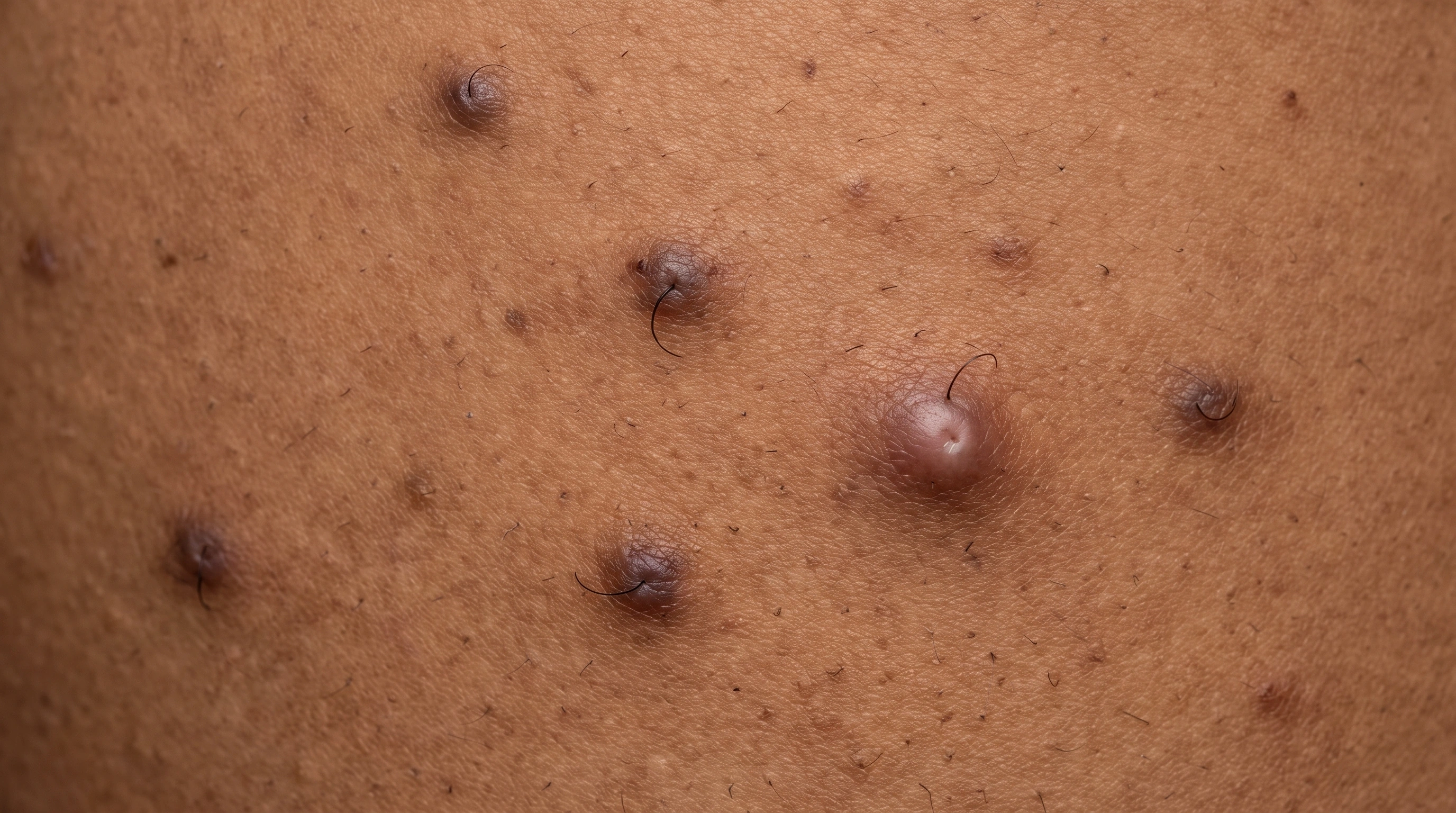
Firm bumps grouped under the jaw and along the upper neck on medium olive-toned skin. The bumps read dusky pink to tan rather than red, and a dark loop of hair is visible over one of them.
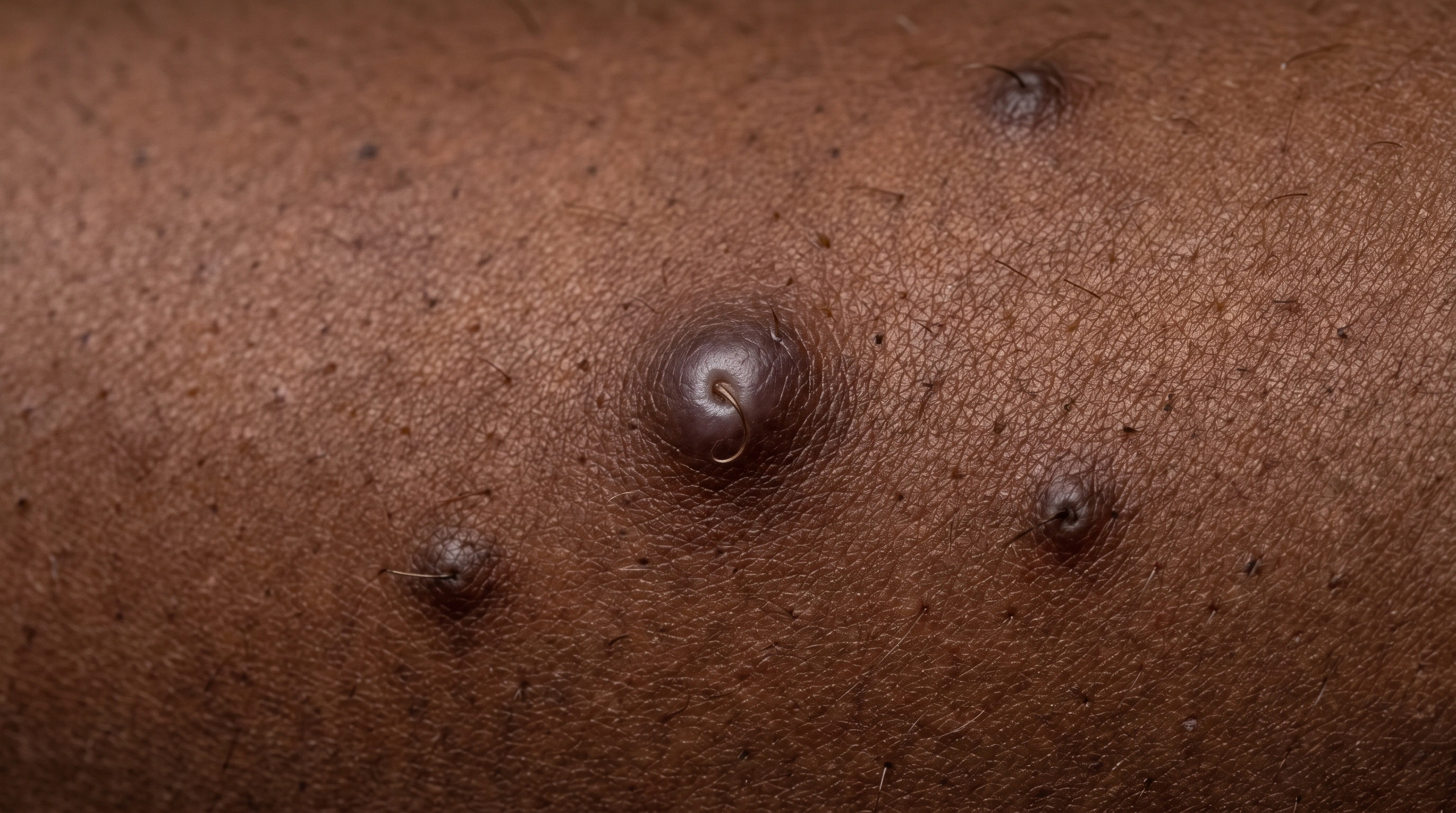
Firm bumps crowded under the jaw and along the upper neck on brown skin. The bumps look brown to violet rather than red, and a dark loop of hair is visible over one of them.
Firm bumps crowded under the jaw and along the upper neck on deep brown skin. The bumps read brown to violet rather than red, with mottled darker marks between them and one firm raised scar along the jaw.
A smooth, dome-shaped lump about two centimetres across on the upper back on pale skin, with a tiny dark pore at its center and faintly pink skin over it.
A smooth, dome-shaped lump on the upper back on medium olive skin, with only a faint central pore and skin over it the same color as the skin around it.
A smooth, dome-shaped lump on the upper back on mid-brown skin, with a small central pore and skin over it very slightly darker than the skin around it.
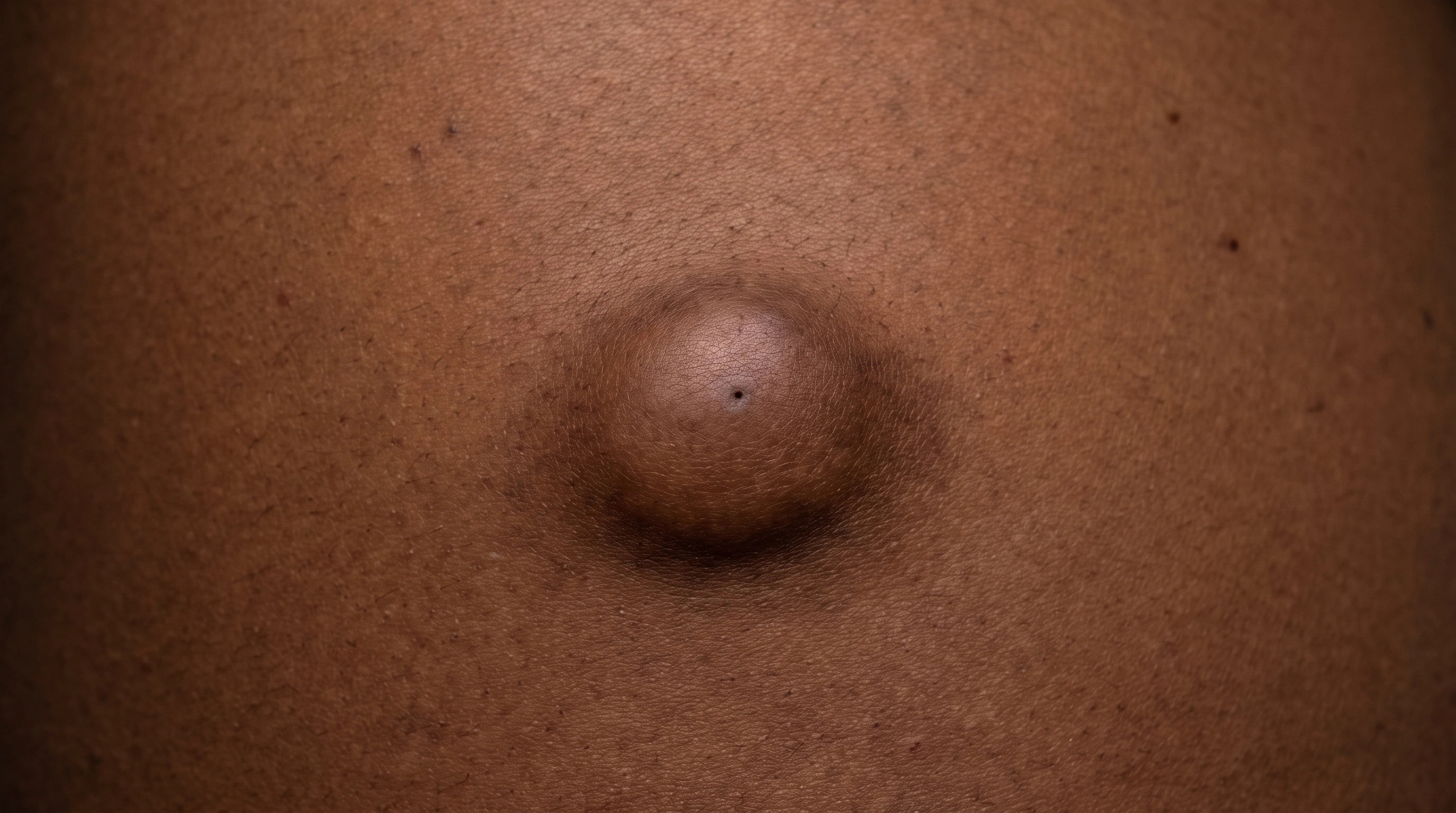
A smooth, dome-shaped lump on the upper back on deep brown skin, with a small dark central pore and even-toned skin over it.
Diagram
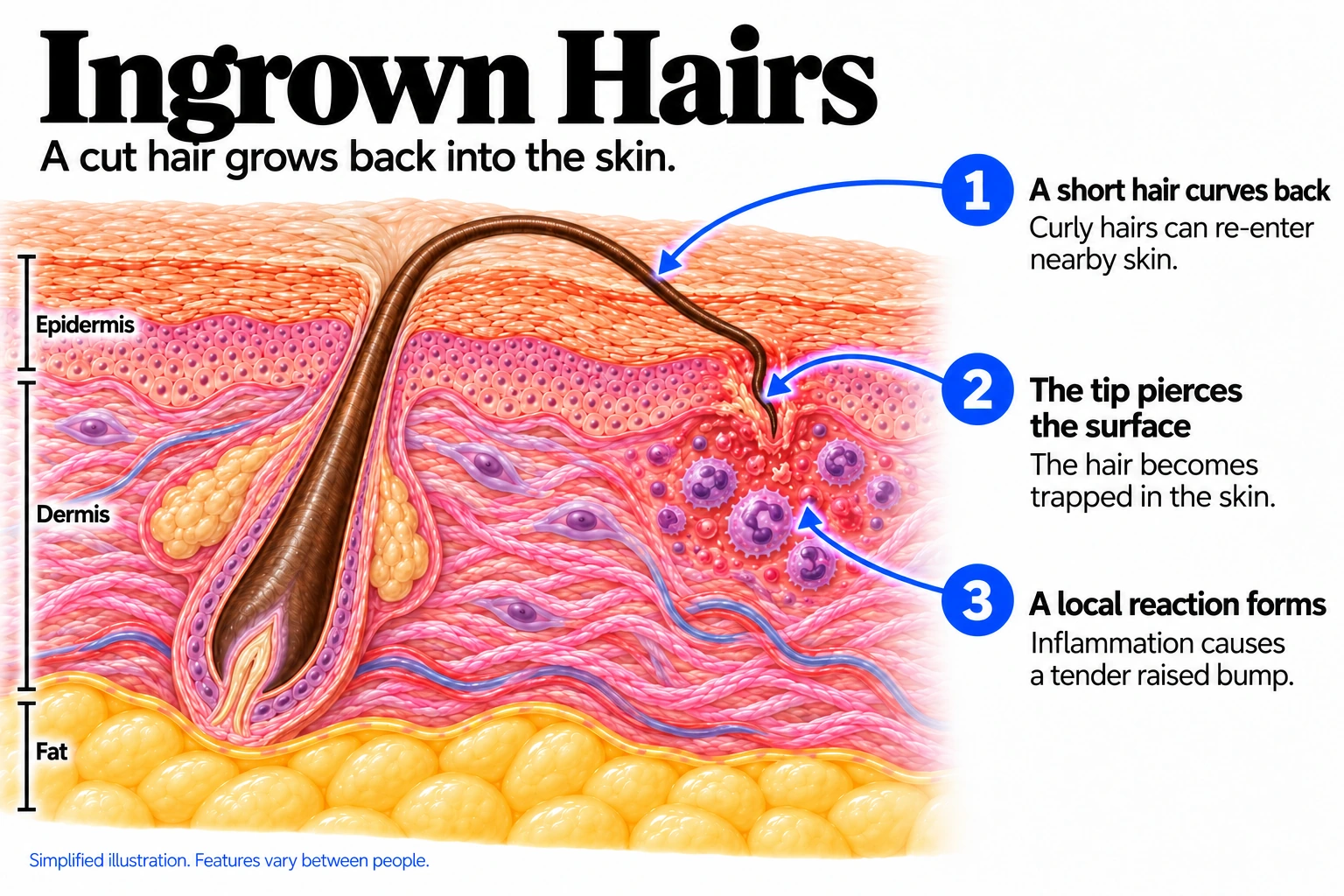
Ingrown Hairs mechanism diagram. A short hair curves back: Curly hairs can re-enter nearby skin. The tip pierces the surface: The hair becomes trapped in the skin. A local reaction forms: Inflammation causes a tender raised bump.
Epidermal Inclusion Cyst mechanism diagram. A lining forms: Skin-like cells line a sac beneath the surface. Keratin collects: The lining sheds skin protein into the sac. Rupture can inflame it: Escaped keratin irritates surrounding tissue.
In the skin

A hair curves back into nearby skin instead of continuing outward. The trapped hair triggers a local inflammatory reaction that can form a tender raised bump.

A sac lined by skin-like cells forms beneath the surface and fills with shed keratin. If the lining ruptures, escaped keratin can provoke inflammation in the surrounding tissue.

Where it shows up

Shaved or plucked areas
Variable sites, often face, neck or trunk

When it usually starts

010203040506070+

Ingrown Hairs. Usually begins after shaving or other hair removal, particularly after puberty.

Epidermal Inclusion Cyst. Most often develops in adults, though it can occur at other ages.

Causes and triggers

Causes

Ingrown hairs happen when a cut or broken hair curls back into the skin. The body treats the hair as a foreign object and becomes inflamed.

An epidermal inclusion cyst forms when surface skin cells get trapped under the skin and keep making keratin.

Family tendency

Tightly curled hair is inherited and is the biggest single risk.

Risk factors
Curly or coarse hair, Frequent shaving, Waxing and plucking
Acne, Skin injury, Adults aged 20 to 40
Trigger
● Ingrown Hairs
● Epidermal Inclusion Cyst
Close shaving
Well established
Not listed
Shaving against the grain
Strong link
Not listed
Dull razors
Strong link
Not listed
Tight clothing
Possible
Not listed
Blocked hair follicles
Not listed
Strong link
Skin injury or surgery
Not listed
Strong link
Squeezing the cyst
Not listed
Well established

Daily Care

Ingrown Hairs
Epidermal Inclusion Cyst
Daily care

Habits that help

  • Stop shaving for three to four weeks
    The most effective single treatment.
  • Clippers or a guarded trimmer
    A millimeter of stubble keeps the tip out.
  • A single-blade or safety razor
    Cuts at the surface.
  • Shave with the grain
    Do not stretch, press or repeat.
  • Shave less often
    Every second or third day, never over bumps.
  • Soften first, then lubricate
    Warm water, then gel.
  • An electric foil or rotary shaver
    Cuts above the skin.
  • Sun protection
    Protect healing skin from sunlight to limit darkening of marks.
  • A chemical depilatory cream
    Leaves a soft, feathered end.
  • Eflornithine cream
    Prescription, slows facial hair regrowth.

Avoid

  • Avoid: Shaving as close as possible
    The tip ends below the skin surface.
  • Avoid: Multi-blade cartridge razors
    Later blades cut below the surface.
  • Avoid: Stretching the skin taut while shaving
    The cut hair vanishes as skin relaxes.
  • Avoid: Shaving against the grain
    A closer cut, a sharper tip.
  • Avoid: Going over the same patch repeatedly
    Bumps come from the later passes.
  • Avoid: Shaving every day, or over bumps
    Inflamed skin needs time to settle.
  • Avoid: Dry shaving, or shaving with bar soap
    The blade drags and irritates.
  • Avoid: A dull or dirty blade
    Tugs the hair and leaves a worse tip.
  • Avoid: Waxing, tweezing and epilating
    The regrowing hair has to reopen its way out.
  • Avoid: Digging a hair out with a needle
    Turns a bump into a wound.
  • Avoid: Picking and squeezing
    The same damage, more often.
  • Avoid: Gritty scrubs and stiff brushes
    Inflammation, and the hair stays put.
  • Avoid: Alcohol-heavy aftershaves
    Sting broken skin, add irritation.
  • Avoid: Tight collars, straps and underwear
    Friction pushes hairs back in.
  • Avoid: Sun on healing marks
    Makes marks deeper and slower to fade.

Habits that help

  • Warm compresses
    Ease discomfort and help it come to a head.
  • Reduce friction over it
    Adjust a strap, move a backpack.
  • Treat underlying acne
    Fewer new cysts where heavy acne is controlled.

Avoid

  • Avoid: Squeezing it
    Pressure tears the sac from inside.
  • Avoid: Picking at the central dot
    Widens the opening, invites bacteria.
  • Avoid: Lancing it at home
    Infection risk, a scar, and the lining stays.
  • Avoid: Friction and pressure over it
    Straps and waistbands set a stable cyst flaring.
  • Avoid: Shaving over it
    A nick is a straight route to inflammation.
  • Avoid: Drawing salves and home remedies
    Nothing surface-applied dissolves a sac.
  • Avoid: Waiting for a flare to remove it
    The sac tears instead of lifting out.
  • Avoid: Having only the contents drained
    The lining stays, so it refills.
  • Avoid: Repeated flares over years
    Each lays down scar tissue that tethers the sac.
  • Avoid: A midline lump on a baby
    Identify it first - a few connect to deeper structures.

Treatment differences

Evidence labels come from each condition’s own treatment list.

Treatment
● Ingrown Hairs
● Epidermal Inclusion Cyst
Filter by type
Ingrown hair pattern

Select one or more.

All types
Over-the-counter
Illustration: Generic topical cream tube and white cream.

Depilatory cream

Limited evidence

A chemical hair remover dissolves the hair rather than cutting it, leaving a soft feathered end that does not spear the skin. Used every few days instead of shaving it genuinely reduces bumps. The trade-off is real: it smells strong and it irritates or burns some people, so test a small patch and never use it on skin that already has active bumps.

Existing reference image of Microneedling vs Microdermabrasion — At Home.

Exfoliating scrubs and brushes

Limited evidence

Gritty scrubs and stiff brushes are sold for this and they are the wrong tool. Scrubbing does not free a hair that is already through the follicle wall, and it adds inflammation to skin that has too much. If you want exfoliation here, use a gentle glycolic or salicylic acid instead.

Five adapalene gel 0.1% tubes and boxes lined up on white, including Differin, Effaclar, PanOxyl and Neutrogena

Adapalene

Limited evidence

A retinoid gel used at night on the shaved area. It thins the plug over the follicle opening so a growing hair is more likely to find its way out, and it slowly evens the dark marks left by old bumps. It takes six to twelve weeks and it does not stop a hair curving back in, so it works alongside a change of razor rather than instead of one.

Four glycolic acid toner and liquid bottles lined up on white, one with its box

Glycolic Acid

Limited evidence

A leave-on lotion or toner used two or three times a week keeps the follicle openings clear, which is the point where a curved hair gets stuck. It also helps the flat dark marks fade. Use it on days you do not shave, because acid on freshly shaved skin stings and adds irritation.

Paula's Choice 2% BHA exfoliant, La Roche-Posay Effaclar cleanser and a CeraVe psoriasis cream pump

Salicylic Acid

Limited evidence

Does much the same job as glycolic acid and suits oilier skin and the bikini line better, because it gets into the follicle itself. Two or three times a week is enough. It is not an exfoliating scrub, and it will not free a hair that is already trapped.

Three acne wash tubes on white: Differin Deep Cleanser, CeraVe Acne Foaming Cream Cleanser and PanOxyl

Benzoyl Peroxide

Limited evidence

Worth adding when the bumps carry pinpoints of pus, because bacteria have joined in on top of the trapped hair. A wash or a low-strength gel on the shaved area is enough. It does nothing about the hair itself, and it bleaches towels and collars, so keep the strength low and the expectations modest.

Five azelaic acid tubes and bottles on white, most marked 10 percent, from Peach Slices, Paula's Choice, Facetheory, The Ordinary and Naturium

Azelaic Acid

Limited evidence

Aimed at the marks rather than the bumps. It calms inflammation and slowly lifts the flat dark patches left along the jaw and neck, and it is gentle enough for skin that is shaved regularly. It works over months, not weeks, and only once new bumps have stopped forming.

None listed
Prescription topicals

Eflornithine

Moderate evidence

Eflornithine cream. A prescription cream that slows facial hair regrowth, so there is less hair to cut and shaving can be done less often. It is used twice a day on the face and neck alongside your usual hair removal, not instead of it. It does not remove hair, and the effect fades within weeks of stopping.

Tretinoin — Header Image

Tretinoin

Limited evidence

The prescription-strength version of the retinoid approach, used at night on the beard and neck. It keeps follicle openings clear and does more for the dark marks than anything else on a shelf. It makes skin drier and more easily irritated by a razor for the first month or two, so build up slowly and shave more gently while you do.

A white metal tube lying at an angle on a white background, white ribbed cap to the left, labeled Clindamycin in black lettering with a teal swoosh curving beneath the word.

Clindamycin

Limited evidence

An antibiotic lotion, usually prescribed with benzoyl peroxide, for when a lot of the bumps have gone pustular. It settles the infected ones faster than benzoyl peroxide alone. It is a short course rather than a permanent fix, because the trapped hair, not the bacteria, is what starts each bump.

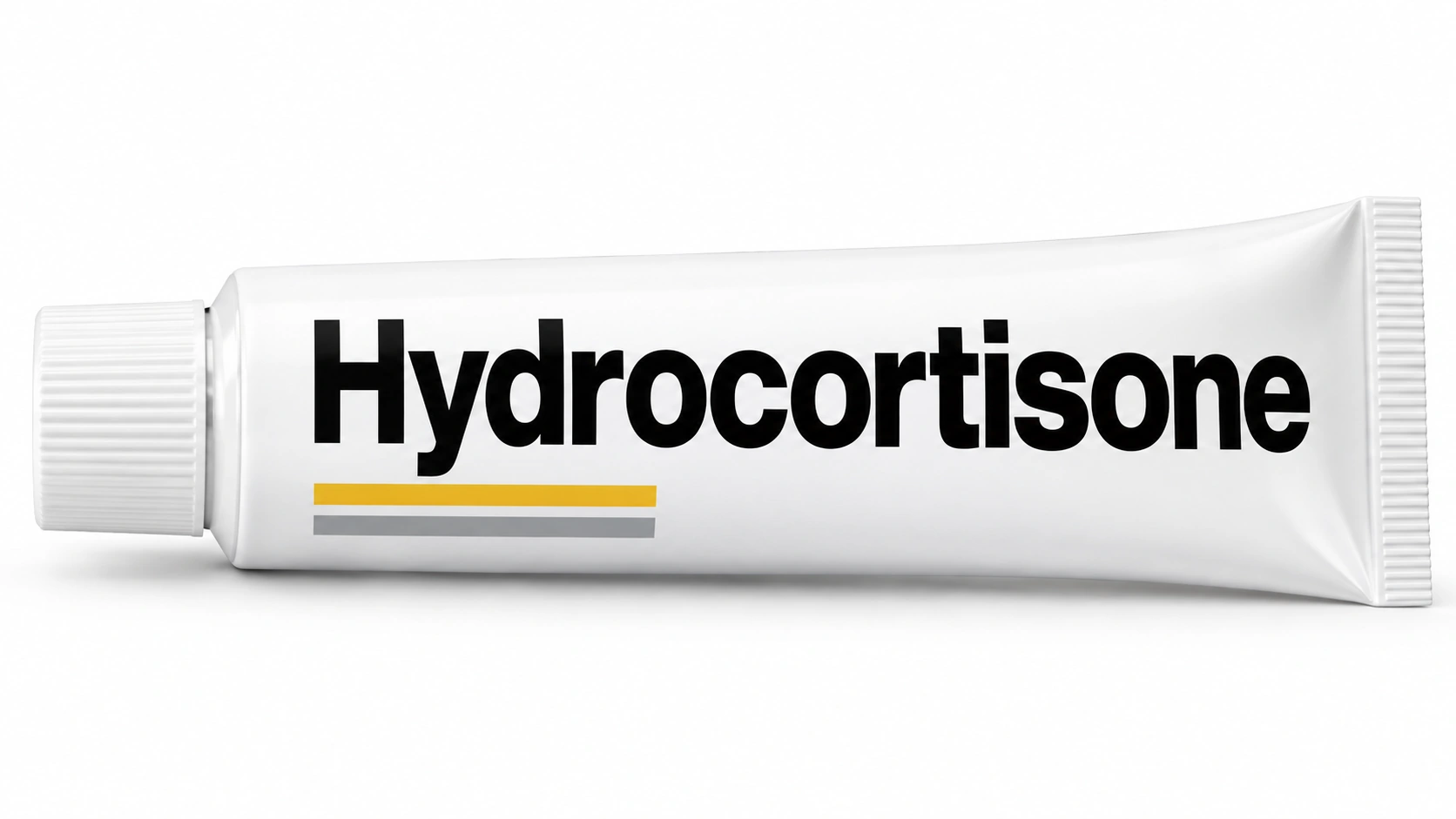
A plain white ointment tube lying on its side, labeled Hydrocortisone with a blue swoosh

Hydrocortisone

Limited evidence

A low-strength steroid cream calms a badly inflamed patch quickly and takes the soreness out of it. It is a short course of days, prescribed for a specific flare, not something to keep using. Facial and neck skin thins with repeated steroid use, and it does nothing about the hair that caused the bump.

None listed
Injections
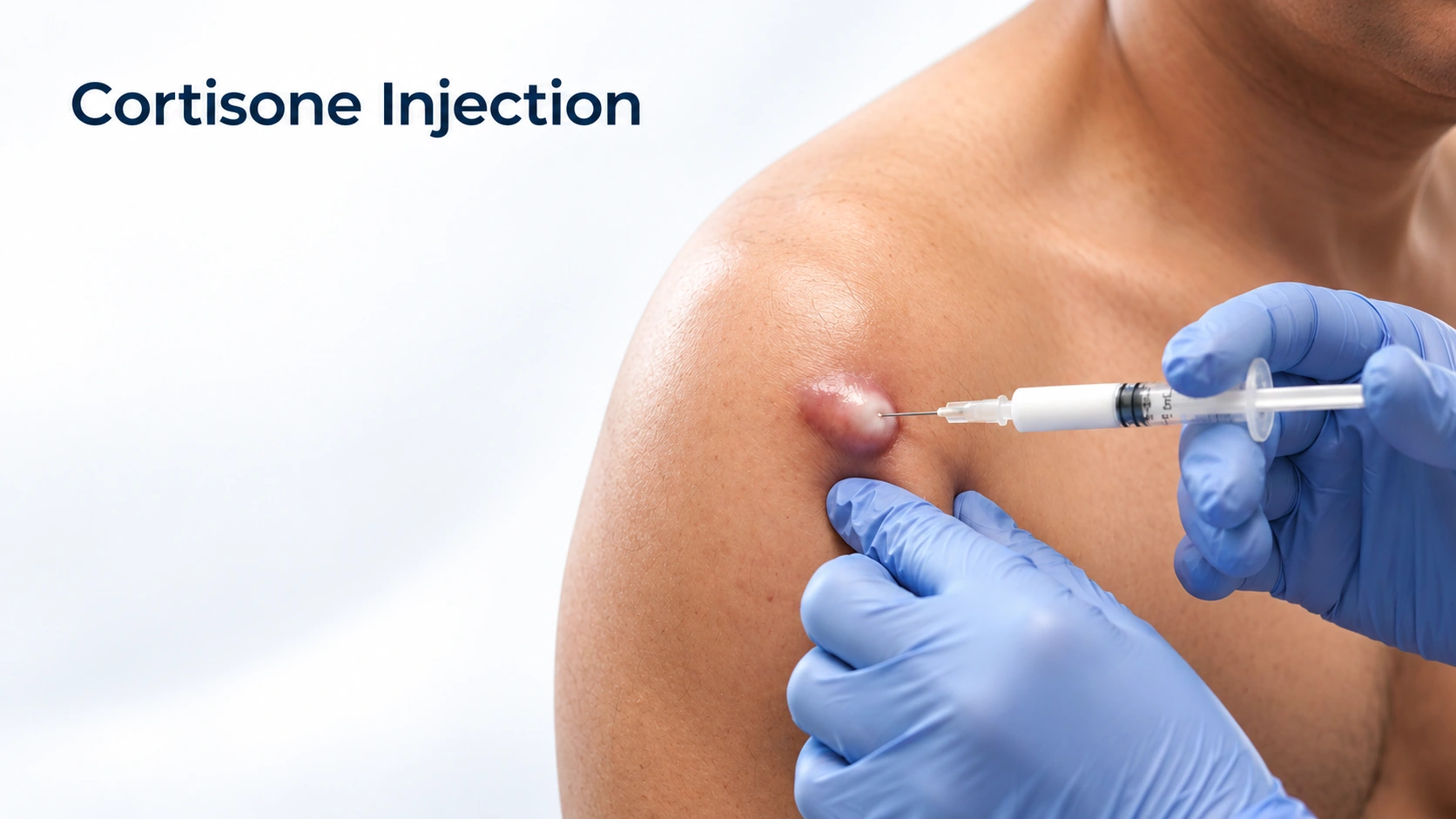
Editorial illustration for Cortisone Injection, based on the entry’s treatment or equipment reference.

Cortisone Injection

Limited evidence

A steroid injected directly into a firm raised or keloid scar left by old bumps. It flattens and softens the scar over a series of visits a few weeks apart. It treats what is already there and does nothing to prevent the next one, and repeated injections can leave a pale or dented patch.

Editorial illustration for Cortisone Injection, based on the entry’s treatment or equipment reference.

Cortisone Injection

Limited evidence

A small injection of steroid into an inflamed cyst early in a flare, which settles the swelling and pain over a few days. It is for the flare, not the cyst — the sac and its lining are still there afterwards. It works best in the first day or two, before the lump has come to a head.

Procedures
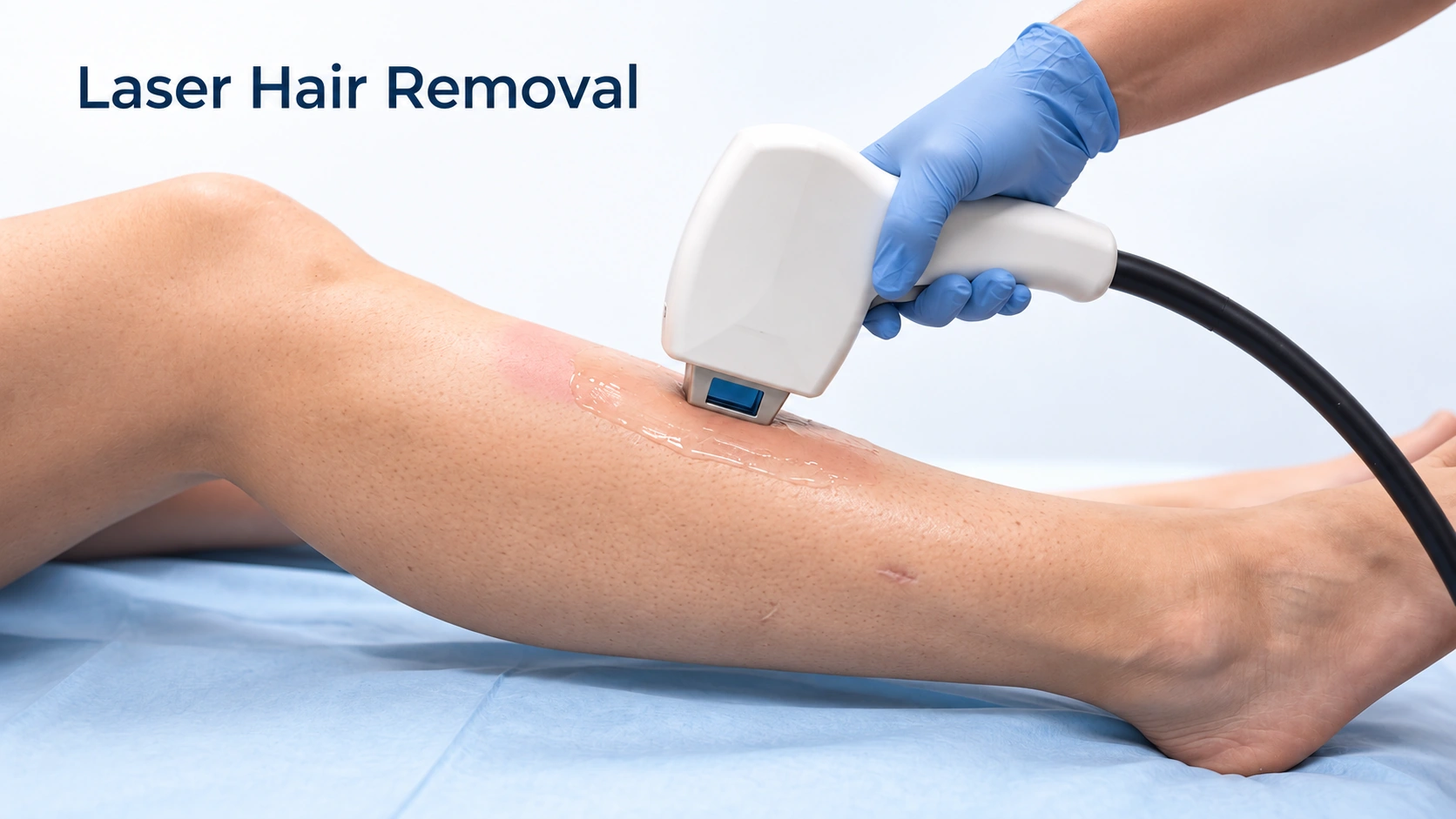
Editorial illustration for Laser Hair Removal, based on the entry’s treatment or equipment reference.

Laser Hair Removal

Strong evidence

The most durable treatment there is for this, because it reduces the number of hairs that can become ingrown at all. It usually takes a series of sessions and it thins rather than eliminates hair for most people, with occasional touch-ups. It is the option to ask about when scarring is starting or when a job requires close shaving.

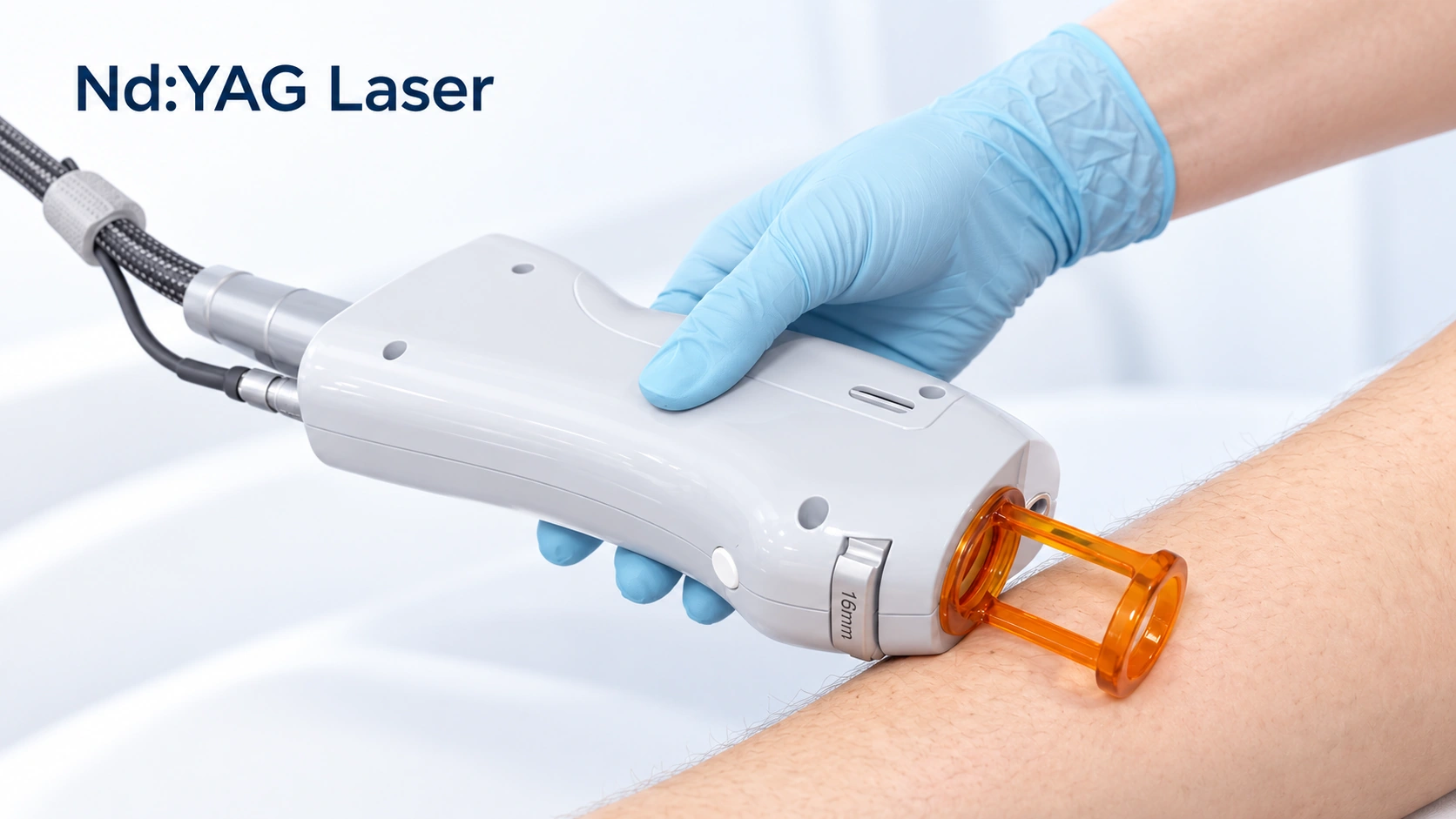
Editorial illustration for Nd:YAG Laser, based on the entry’s treatment or equipment reference.

Nd:YAG Laser

Strong evidence

The specific device used for hair removal on deeper skin tones, at a wavelength of 1064 nm. It passes more safely through pigment in the skin to reach the hair, and it is used routinely for razor bumps. Ask what wavelength a clinic uses, ask how often they treat skin like yours, and have a test patch first, because settings and cooling matter more than the marketing.

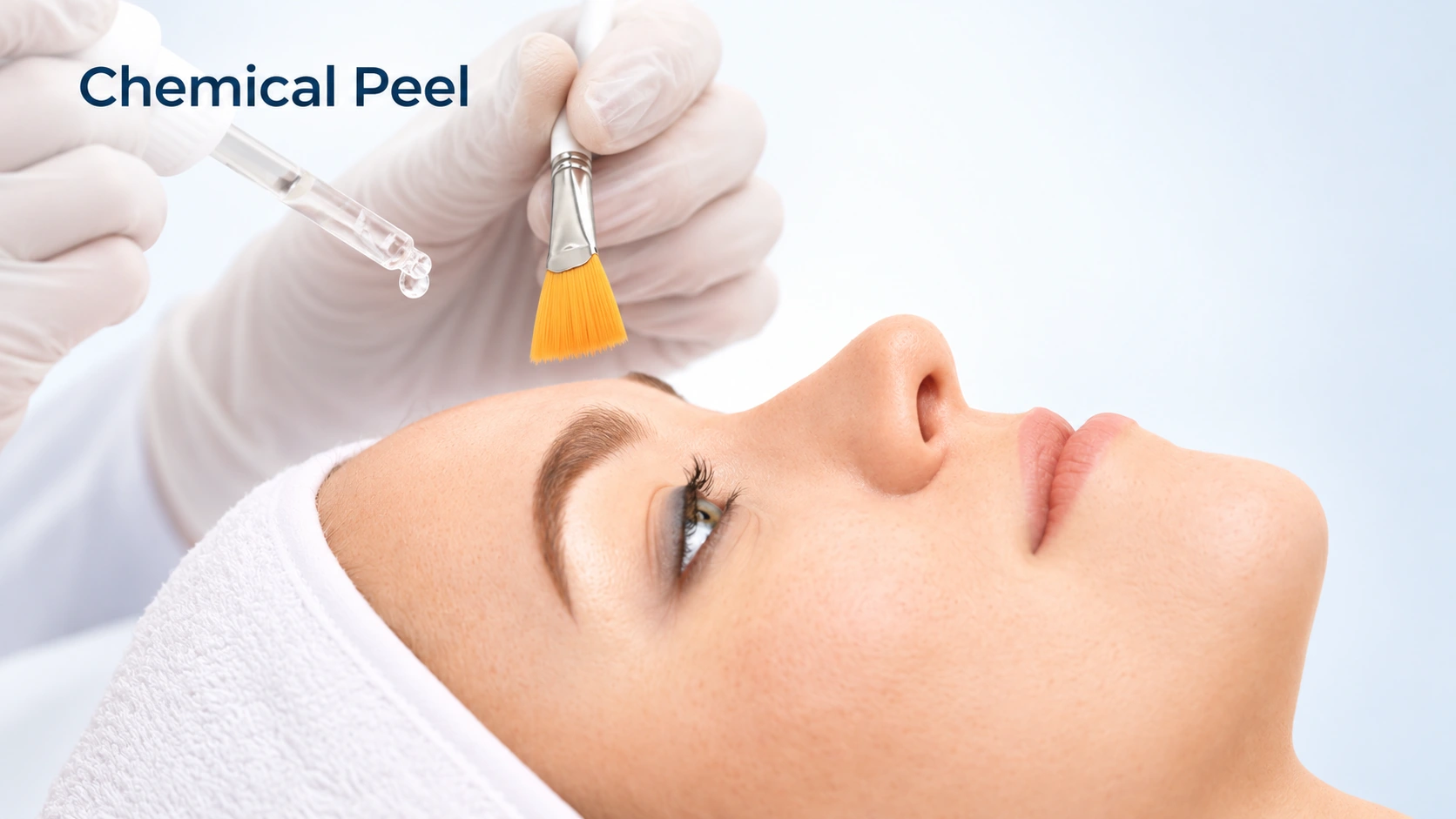
Editorial illustration for Chemical Peel, based on the entry’s treatment or equipment reference.

Chemical Peel

Limited evidence

A course of light salicylic or glycolic peels aimed at the mottled dark marks across the beard and neck once the bumps have stopped. On deeper skin tones it has to be done cautiously and by someone who treats them regularly, because too strong a peel causes exactly the darkening you are trying to clear. It does nothing for the bumps themselves.

Editorial illustration for Electrolysis, based on the entry’s treatment or equipment reference.

Electrolysis

Limited evidence

Destroys hairs one follicle at a time with a fine probe, so it can permanently clear a small stubborn patch. It is slow and uncomfortable over a beard-sized area, which is why laser is the usual choice here. It is worth considering for a few repeatedly troublesome spots rather than a whole neck.

Editorial illustration for Cyst Removal, based on the entry’s treatment or equipment reference.

Cyst Removal

Strong evidence

The only thing that ends a cyst, because it takes out the sac wall as well as the contents. It is a single minor procedure under local anesthetic, done through a small cut that is usually placed along a natural skin crease. Done on a quiet cyst it lifts out whole and leaves a thin line; done on an inflamed one it tears, fragments get left behind, and it is more likely to come back.

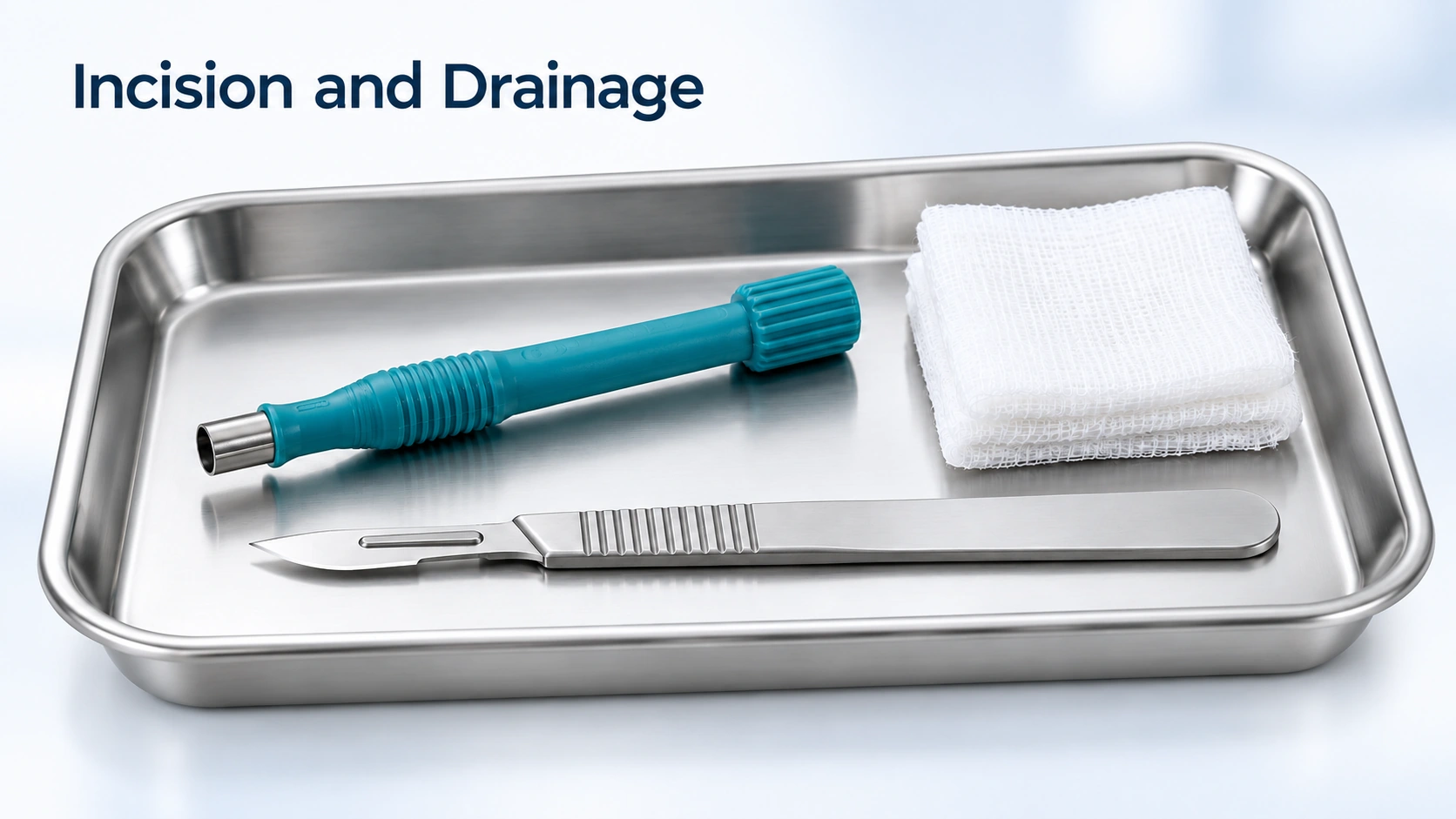
Editorial illustration for Incision and Drainage, based on the entry’s treatment or equipment reference.

Incision and Drainage

Moderate evidence

Incision and drainage. A small cut to let out the contents of a large, painful, inflamed cyst. The relief is immediate and it is exactly the right thing to do for an abscess. It is not a cure: the lining stays behind and keeps making keratin, so it usually refills over weeks to months. The usual plan is to settle things this way, then remove the sac properly a month or two later.

Outlook

Long term

A single ingrown hair follows a short, predictable course; the long-term picture depends on what happens to it. Stop removing the hair and this condition stops - beards grown out for three to four weeks usually clear almost completely. Established scarring does not reverse, which is the argument for changing course early.

Left alone, a cyst sits quietly for years, punctuated by flares. The pattern matters more than any single episode - a cyst that has never flared can come out whenever it suits you, while one that has flared twice is on a trajectory. Plan removal during a quiet spell.

Complications

Possible complications
  • Dark marks that outlast the bumps
  • Raised and keloid scars
  • Bumps at the nape of the neck
More details

Dark marks that outlast the bumps
Every inflamed bump can leave a flat darker patch behind, and those patches routinely take several months to fade. They are the most common thing people are left with, and on deeper skin tones they are the most noticeable. They will not clear while new bumps keep forming, so stopping the bumps does more for them than anything applied on top. Daily sunscreen helps, because sun makes them deeper and slower to go.

Raised and keloid scars
Where bumps keep forming in the same place and are shaved over or picked, the skin can build firm raised scars, and in some people keloids that grow beyond the original bump. They form most readily along the jawline, the front of the neck and the nape, and more readily on deeper skin tones. Once a keloid is there it is difficult to treat, so changing the shaving early is worth much more than anything applied later.

Bumps at the nape of the neck
Firm bumps along the hairline at the back of the head are a separate problem called acne keloidalis nuchae. They can thicken into keloid-like scars and leave permanent bald patches, and it is far more common in people with tightly curled hair. It needs treating earlier and harder than bumps anywhere else, because that scarring does not reverse. Bumps in this spot are a reason to book rather than wait.

  • Rupture and a painful flare
  • Infection or an abscess
  • Scars and keloids from repeat flares
More details

Rupture and a painful flare
The wall tears and keratin spills into the tissue around it, and the immune system attacks it. The lump becomes hot, swollen and painful over a day or two, and feels bigger and firmer than it did. Most of these are not infections. Squeezing is the single most common reason it happens, so leaving a quiet cyst alone is the best prevention there is.

Infection or an abscess
Sometimes bacteria do get in, and the cyst becomes a genuine abscess. It looks much like an ordinary flare, so the things that point to infection are spreading discoloration, pus, fever and feeling unwell. This is the version where antibiotics belong, and a large abscess usually needs draining as well. A hot, inflamed cyst around the nose, eyes or upper lip is treated more cautiously than one anywhere else.

Scars and keloids from repeat flares
Every rupture and every emergency drainage lays down its own scar, and after a few episodes the area is tethered and marked before anyone has operated. Raised, thickened scars and keloids are more likely on the chest, shoulders, upper back and jawline, and more likely on deeper skin tones. A planned removal on a quiet cyst usually leaves a thin line along a natural skin crease, which is the argument for doing it sooner.

When to get help

When to get help

Seek care for recurring painful bumps, scarring or pus. A large painful swelling or spreading redness may need treatment for infection.

Seek assessment if a lump is growing, recurrently inflamed or uncertain. Rapidly increasing pain, redness, drainage or fever may require prompt treatment.

Common questions

Ingrown Hairs:Can I just pull the hair out?

Not out - free it. If a loop of hair crosses the bump, a sterilized needle can lift it from underneath and leave the hair rooted in the follicle. Pulling the whole hair out means the next one grows back through inflamed skin, which often makes another bump in the same place. Never dig for a hair you cannot see. That is how bumps become scars.

Ingrown Hairs:Will laser hair removal work if I have deep skin tone?

Yes. The concern comes from older devices. The standard choice now for deeper skin tones is a long-pulsed 1064 nm Nd:YAG laser, which reaches the hair with less risk to surrounding pigment. It takes a series of sessions, reduces rather than eliminates hair, and touch-ups are common. Ask what wavelength they use, how often they treat skin like yours, and have a test patch.

Ingrown Hairs:Do I have to stop shaving forever?

No. Most people go back to shaving once the bumps clear, as long as it is different from what caused the problem - usually a single blade or trimmer, with the grain, less often, without stretching the skin. If close shaving is unavoidable and bumps keep returning, laser lets you have both.

Ingrown Hairs:Why do I get them on my neck but not my cheeks?

The hair on the neck grows in swirls and changes direction over short distances, so a stroke with the grain in one spot is against it an inch away. The skin there is softer and easier to pull taut. The neck and under the jaw are the classic sites.

Ingrown Hairs:How long do the dark marks take to fade?

Longer than anyone wants. A mark from one bump commonly takes several months. Years of repeated bumps take longer, and nothing fades while new bumps keep forming. Two things speed it up: stopping the new bumps, and daily sunscreen.

Ingrown Hairs:Is this acne?

No, though they look similar and sometimes occur together. Acne begins with a clogged oil gland and features blackheads and whiteheads. This begins with a hair growing back into the skin, appears in shaved areas, and follows the shaving schedule. Some acne treatments help, but not the cause.

Epidermal Inclusion Cyst:Is it dangerous?

Epidermoid cysts are benign. They do not spread and do not turn into cancer. Cancers arising inside a cyst are described but genuinely rare. Have it examined if it grows rapidly, feels hard and fixed rather than mobile, bleeds, or has a sore over it that will not heal - those suggest the lump may not be a cyst.

Epidermal Inclusion Cyst:Why does it smell?

The contents are keratin and broken-down skin cells, sealed in for a long time, and skin bacteria break that material down. The smell comes from the contents, not from infection.

Epidermal Inclusion Cyst:Can I just have it drained?

You can, and for a large, painful, inflamed cyst that is the right thing for relief. But draining empties the contents and leaves the lining, and the lining makes keratin, so it refills over weeks to months. Removing the whole sac is what ends it.

Epidermal Inclusion Cyst:Why will my doctor not remove it while it is inflamed?

Because the result is worse. Inflamed tissue is swollen and fragile, so the sac tears instead of lifting out whole, fragments get left behind, the cyst is more likely to come back, and the scar is wider. Settle the flare first, then remove it a month or two later.

Epidermal Inclusion Cyst:Will it come back after surgery?

Not if the whole lining comes out, which is the goal. Recurrence happens when a fragment is left behind, more likely if the cyst was inflamed or heavily scarred from previous flares. New cysts can form elsewhere - that is a new cyst, not the old one.

Epidermal Inclusion Cyst:Can I stop getting them?

Not reliably, because most people who get one have no identifiable cause. You can reduce flares - do not squeeze them, take pressure and friction off them, and treat significant acne if cysts keep appearing where it was. If you are getting a lot from a young age, mention it, because a few people have an inherited reason.
Sources

Sources and further reading

  1. DermNet
  2. DermNet
Dermapedia on YouTube