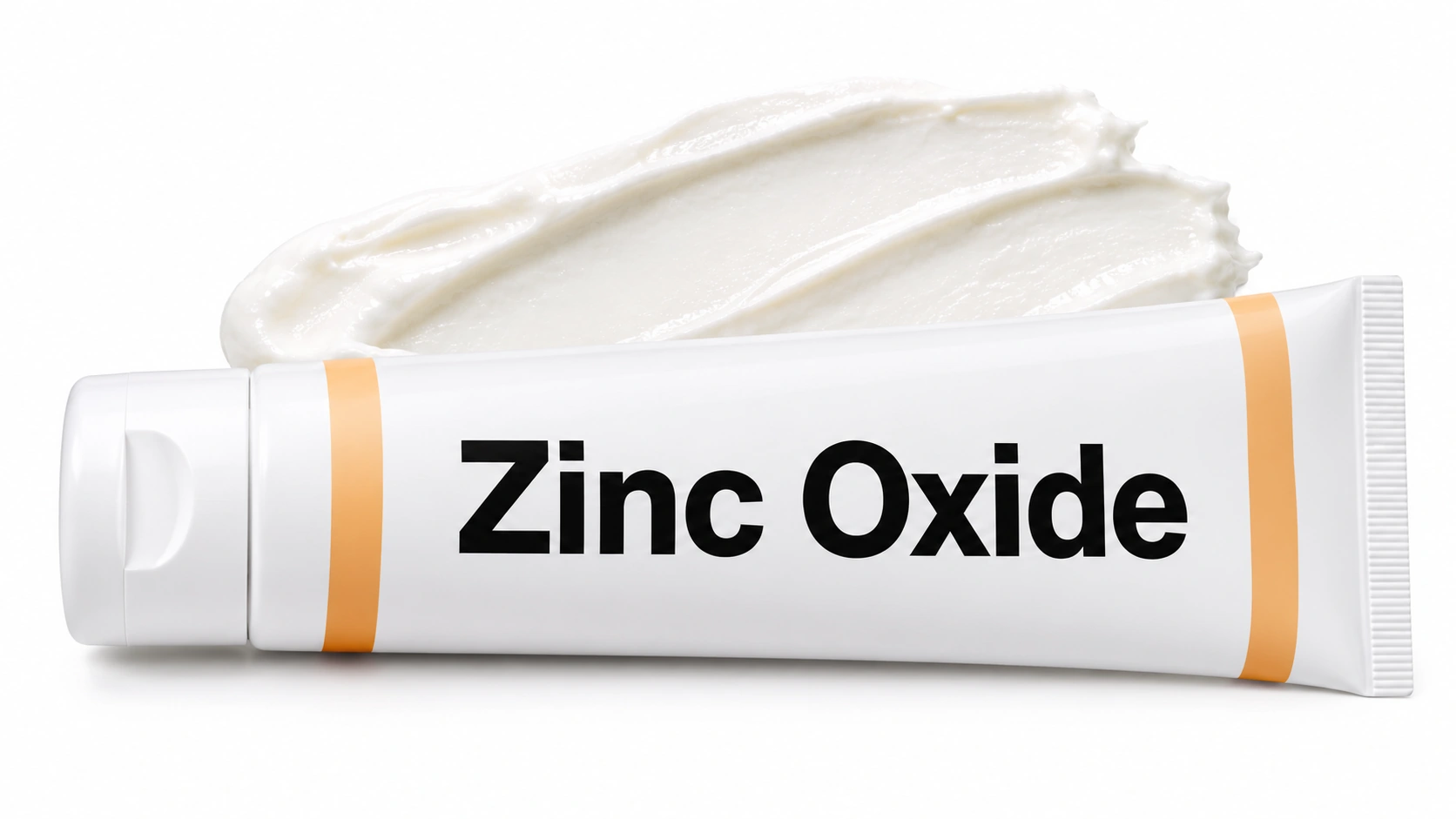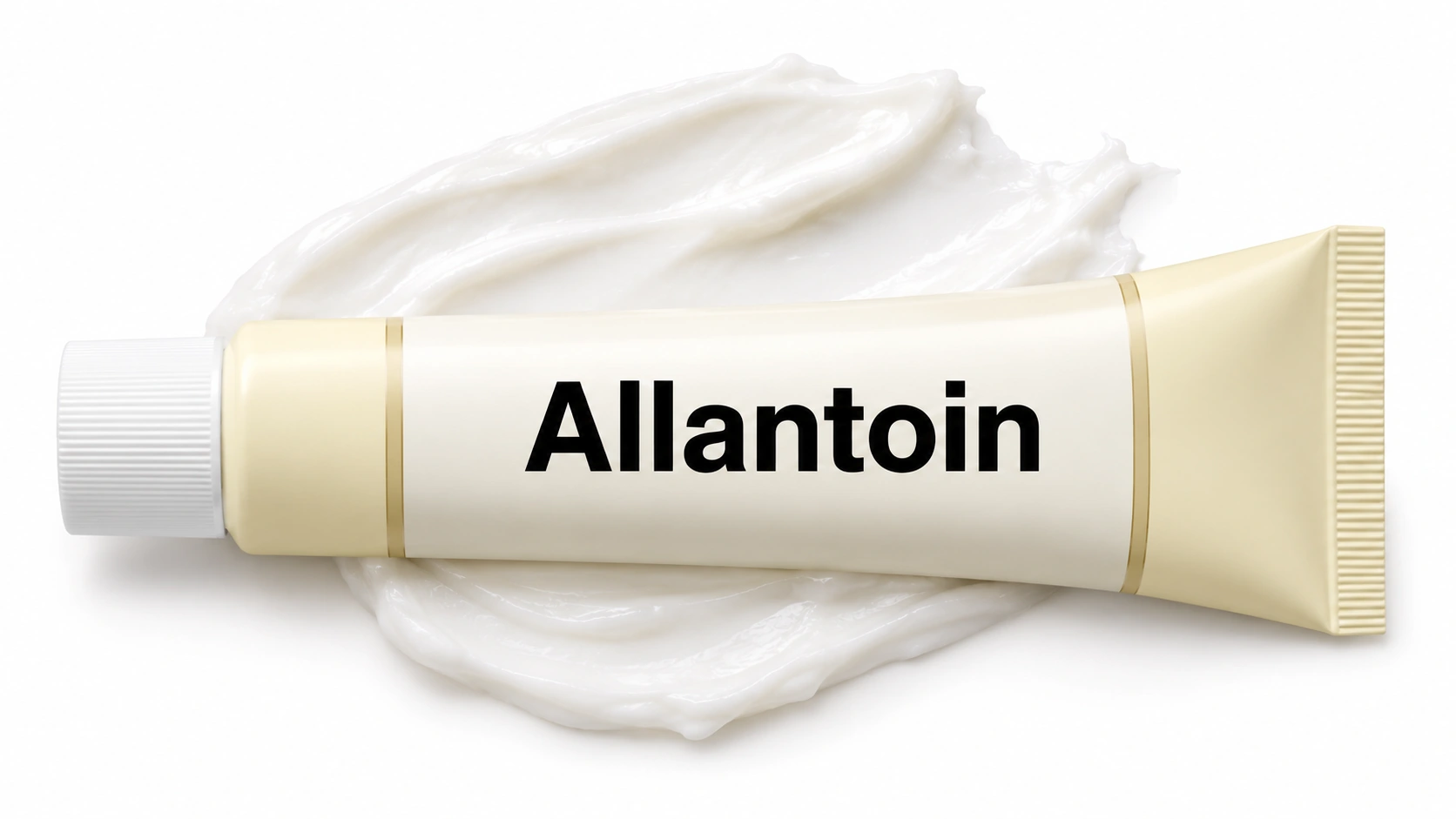
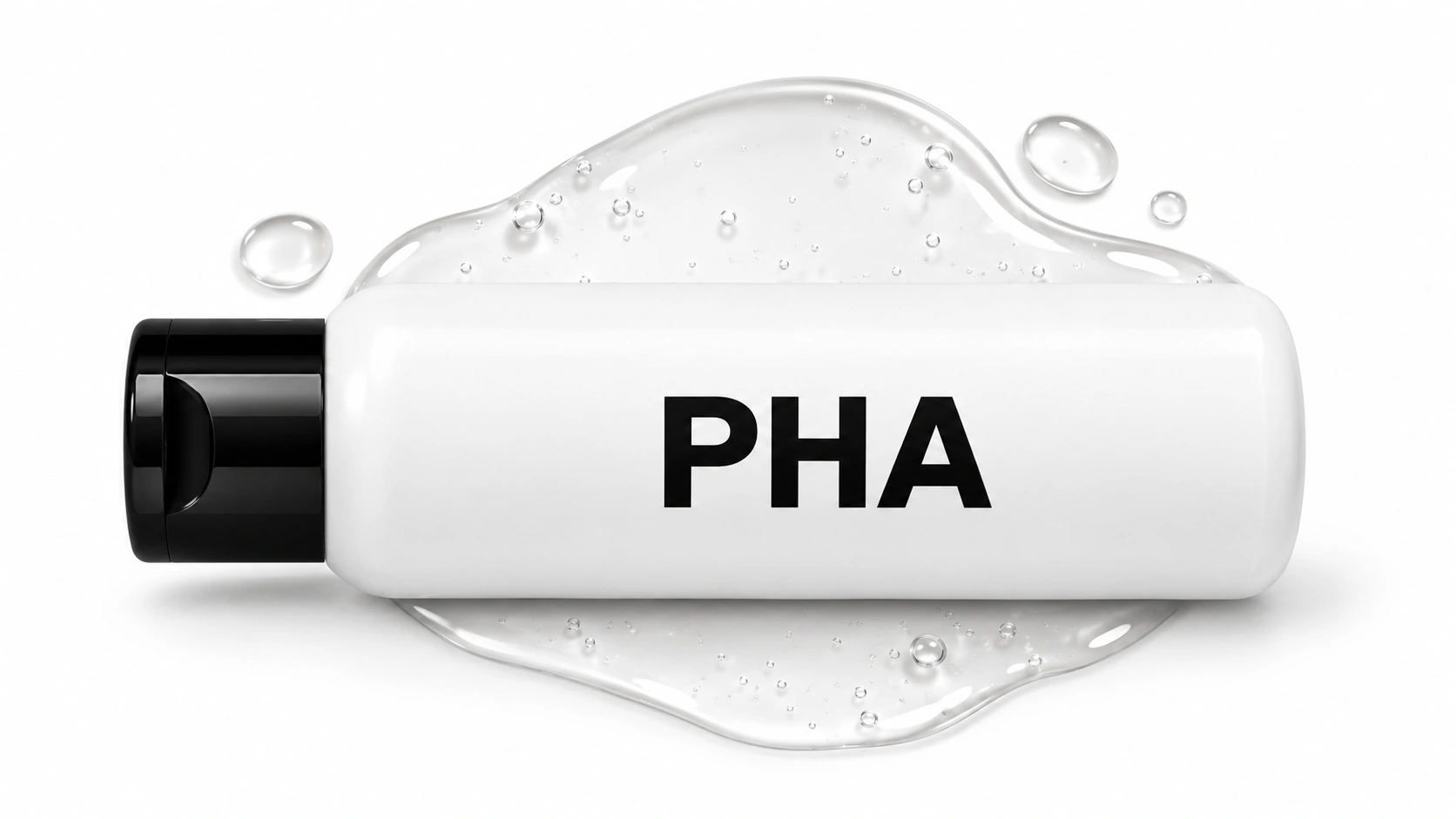
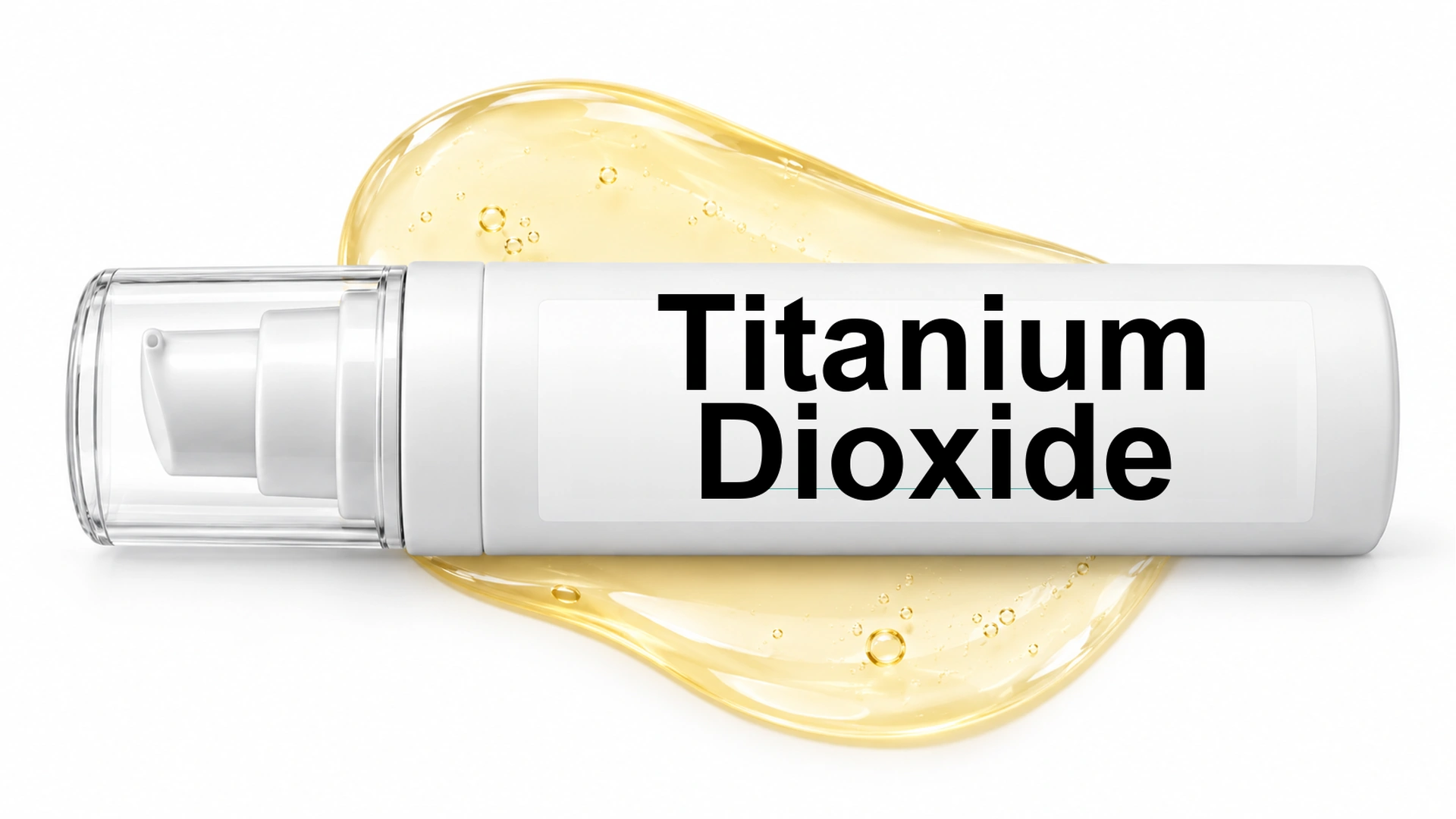
Polyhydroxy Acids vs Titanium Dioxide

Polyhydroxy Acids: Offers exfoliation through ingredients such as gluconolactone and lactobionic acid. Titanium Dioxide: Provides UV protection in tested sunscreen formulas, often with other filters.
Research updated 2026-10-25
Five PHA toner and serum bottles lined up on white with clear liquid swatches beside themFive mineral sunscreens on white, including CeraVe, Malin+Goetz, Blue Lizard SPF 50 and La Roche-Posay Anthelios

Which one is right for you?

Choose Polyhydroxy Acids if…

Choose for mild exfoliation when stronger acids are uncomfortable; tolerance still varies.

  • Sensitive skin that stings with AHAs
  • Mild dullness or texture
  • Gentle exfoliation

Choose Titanium Dioxide if…

Choose a comfortable tested broad-spectrum sunscreen; check its UVA coverage.

  • Sensitive or reactive skin
  • You prefer a mineral filter
  • Melasma-prone skin
Fine together

Can you use both?

Use PHAs, then mineral sunscreen as the last morning step.

At a glance

● Polyhydroxy Acids
● Titanium Dioxide
Type
Polyhydroxy acid (PHA) family
Mineral UV filter
What it does
Offers exfoliation through ingredients such as gluconolactone and lactobionic acid.
Provides UV protection in tested sunscreen formulas, often with other filters.
Best for
Acne; Dull Skin; Sensitive Skin
Sunburn; Sensitive Skin; Melasma
Studied concentrations
14% gluconolactone in an acne trial; newer studies test mixed-acid formulas.
Select a broad-spectrum SPF product; percentage alone does not establish UVA coverage.
When to use
Start on a few evenings weekly; increase only if comfortable.
Each morning and before sun exposure.
Time to results
Often 8–12 weeks in small cosmetic studies; results may be subtle
Protection with correct application; prevention continues over time
Irritation
Can still sting or cause a rash; sensitive skin does not guarantee tolerance.
Can leave a white cast; avoid inhaling powder or spray products.
Sensitive skin
Choose a simple formula and test a small area first. Avoid actively inflamed or broken skin unless the product is specifically directed for it.
Choose a simple formula and test a small area first. Individual tolerance matters more than an ingredient’s reputation for being gentle.
Available
Cosmetic or OTC products; some high-strength procedures are separate treatments.
Prescription or cosmetic status depends on the active, formula and country; check the label.

What it helps

Compare uses by strength of evidence. Evidence level describes confidence in a benefit, not its size.


Evidence level
Polyhydroxy Acids
Titanium Dioxide
Strong evidenceMost established uses
—
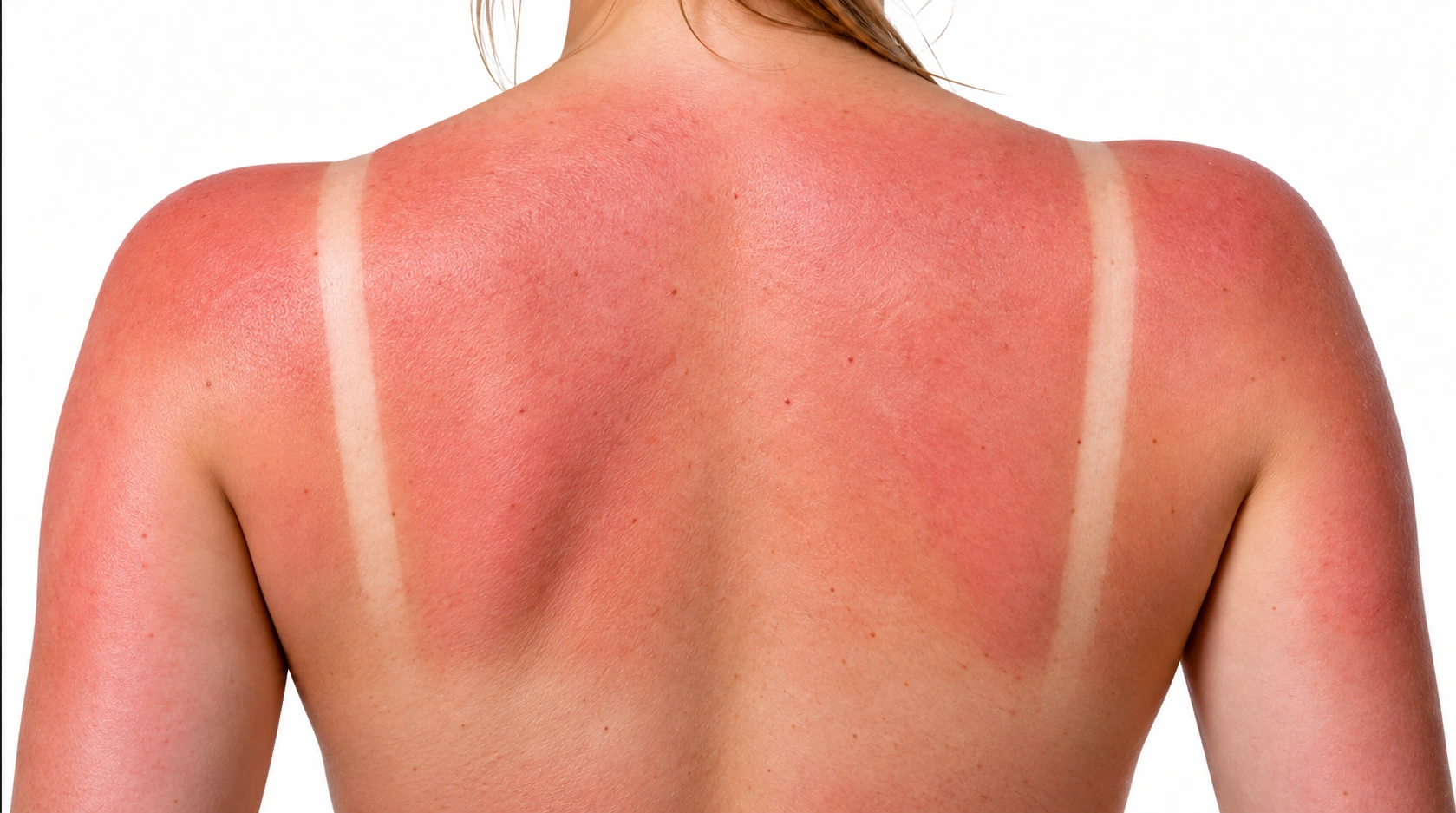
Sunburn: 1. Sunburn Header — Light Skin; Lighter skin.

Sunburn

A tested sunscreen helps prevent sunburn when used as directed.
Moderate evidenceSome supportive research
—
Flat tan patches with soft irregular edges across the forehead and upper cheek of an adult with light skin, the surface completely smooth.

Melasma

Broad-spectrum sunscreen supports pigment care; filter powder alone does not.
Limited evidenceEarly or small studies
Inflamed acne on light skin. The spots sit in a patch of pink, and the ring of redness around each one is easy to see. A few have a yellow-white head, and the skin between them is dry and flaking.

Acne

One controlled trial found fewer lesions with 14% gluconolactone.
Dull Skin on light skin.

Dull Skin

Small studies of PHA formulas suggest smoother surface texture.
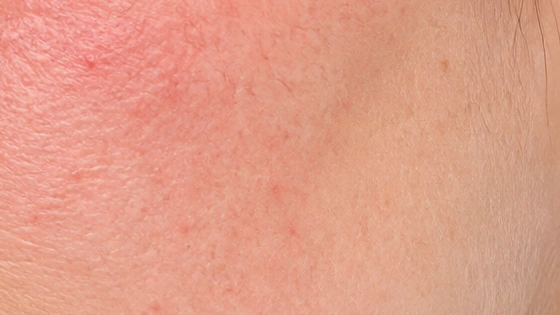
Sensitive Skin on light skin.

Sensitive Skin

Some tested formulas were well tolerated; this is not proof that all PHAs suit reactive skin.
Sensitive Skin on light skin.

Sensitive Skin

Some mineral formulas are comfortable, but the whole product determines tolerance.
Insufficient evidence
The front of one shin on pale skin. The surface is pink with fine white flaking and a few shallow cracks, and the skin around it is even in tone.

Dry Skin

The reviewed sources do not establish this ingredient as a treatment for this concern.
Flat tan patches with soft irregular edges across the forehead and upper cheek of an adult with light skin, the surface completely smooth.

Melasma

The reviewed sources do not establish this ingredient as a treatment for this concern.
Acne scarring on light skin. Small sharply cut pits and broad shallow dips across a cheek, several sitting inside faint flat pink marks, with no active spots.

Acne Scarring

The reviewed sources do not establish this ingredient as a treatment for this concern.
Inflamed acne on light skin. The spots sit in a patch of pink, and the ring of redness around each one is easy to see. A few have a yellow-white head, and the skin between them is dry and flaking.

Acne

The reviewed sources do not establish this ingredient as a treatment for this concern.
How it works

Polyhydroxy Acids

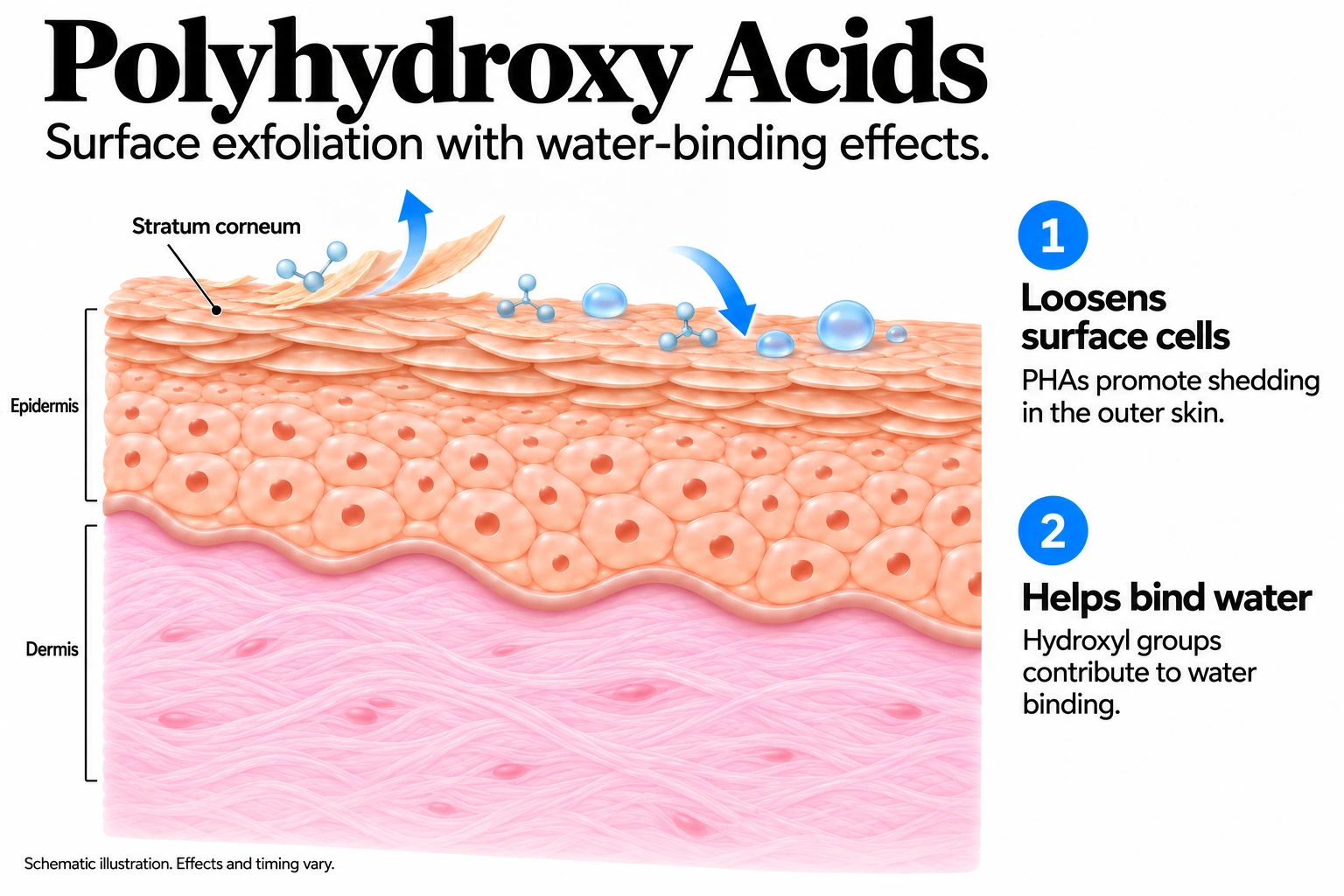
Polyhydroxy Acids mechanism diagram. Loosens surface cells: PHAs promote shedding in the outer skin. Helps bind water: Hydroxyl groups contribute to water binding.
Open full-size diagram
Diagram explanation and sources

Loosens surface cells: PHAs promote shedding in the outer skin. Helps bind water: Hydroxyl groups contribute to water binding.

Schematic illustration; not a measurement of skin penetration. Effects vary with ingredient identity and formulation.
Source 1 · Source 2 · Source 3

Titanium Dioxide

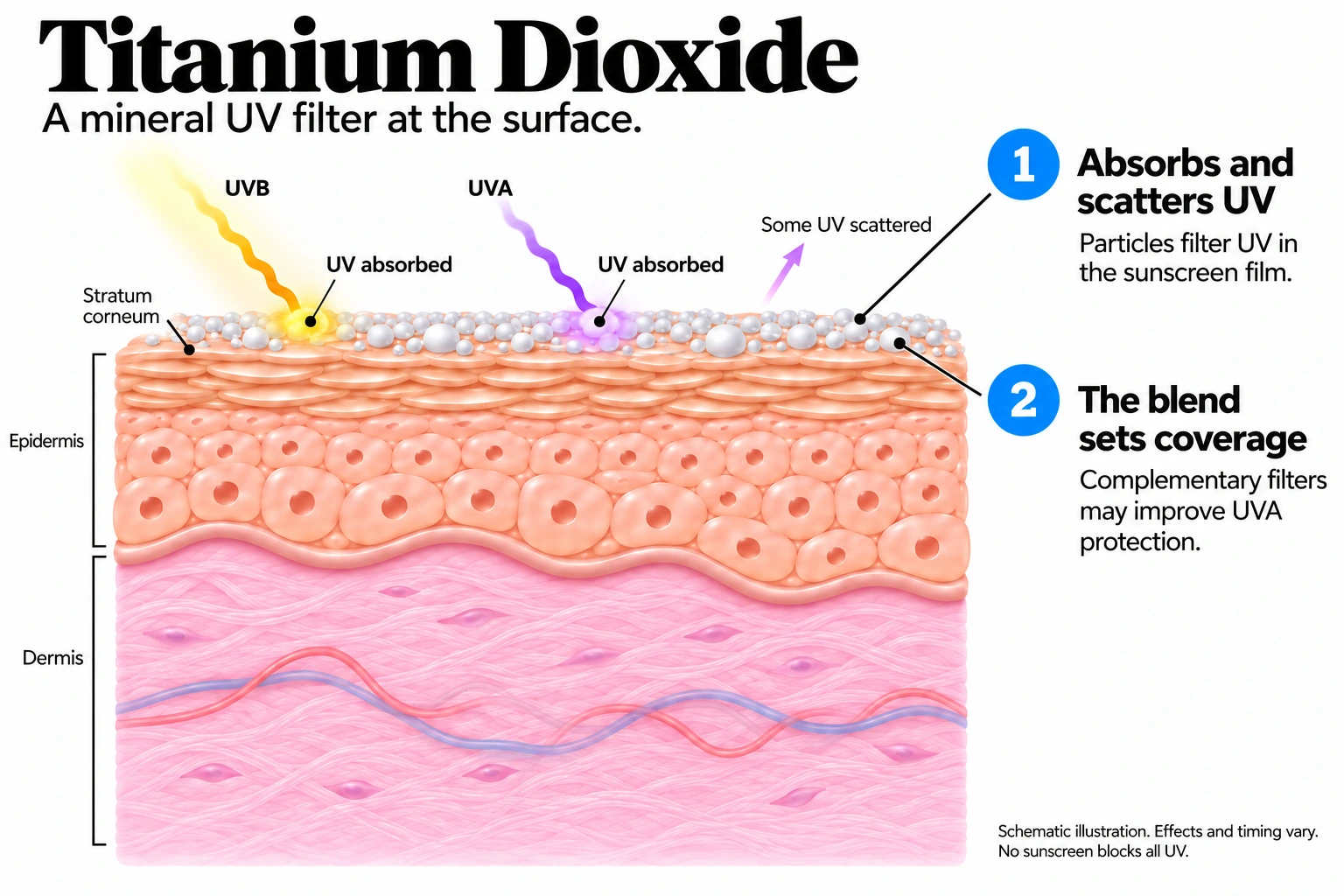
Titanium Dioxide mechanism diagram. Absorbs and scatters UV: Particles filter UV in the sunscreen film. The blend sets coverage: Complementary filters may improve UVA protection.
Open full-size diagram
Diagram explanation and sources

Absorbs and scatters UV: Particles filter UV in the sunscreen film. The blend sets coverage: Complementary filters may improve UVA protection.

Schematic illustration; not a measurement of skin penetration. Effects vary with ingredient identity and formulation.

Source 1 · Source 2 · Source 3 · Source 4

Using both in one routine

Built from where each one usually sits in a routine. Introduce one at a time.

Morning
Step 1
Cleanser
Step 2
Polyhydroxy AcidsMorning or night
Step 3
Moisturizer
Step 4
Titanium DioxideMorning
Night
Step 1
Cleanser
Step 2
Polyhydroxy AcidsMorning or night
Step 3
Moisturizer

Strengths and forms

Concentrations

PHA is a family name, not one ingredient or one standard strength. A clinical acne trial used 14% gluconolactone; that result cannot be transferred directly to lactobionic acid or mixed-PHA products.

14%

Studied gluconolactone lotion

An older controlled acne trial tested this specific formula. It does not establish the best percentage for all PHA skincare.

Choosing a strength: Check which PHA is listed, whether the product stays on or washes off, and whether it also contains other exfoliating acids.

Higher strengths: A PHA product can still irritate, particularly when combined with other acids. A high total-acid percentage is not a validated benefit rating.

Formula matters: The individual acid, acidity and base formula matter. A blended-acid percentage does not reveal the amount of each PHA.

U.S. sunscreen products may use titanium dioxide up to 25%. The filter percentage is not the product’s SPF or a guarantee of broad-spectrum protection.

25%

U.S. sunscreen ceiling

A permitted maximum, not a target dose or proof that the product provides adequate UVA protection.

Choosing a strength: Choose the finished sunscreen by its tested broad-spectrum and SPF labeling, texture and ability to apply enough.

Higher strengths: A higher filter percentage does not reliably predict stronger protection or better tolerance.

Formula matters: Particle properties, dispersion and other filters affect the finished product. Titanium dioxide in makeup or a moisturizer is not automatically a sunscreen.

Forms
Toner · Serum · Cleanser
Mineral sunscreen · Tinted sunscreen · Powder

When you’ll see results

Approximate windows, not promises.

● Polyhydroxy Acids
● Titanium Dioxide
First few weeks

First few weeksAssess tolerance and texture; immediate softness can come from the base formula.

First few weeksProtection starts with correct application; it does not require a weeks-long course.

4–8 weeks

4–8 weeksSubtle changes may appear in some tested products; evidence varies.

4–8 weeksConsistency matters; this is prevention, not a spot-clearing treatment.

8–12 weeks

8–12 weeksCompare photographs in the same lighting and reassess benefit.

8–12 weeksContinue correct application and reapplication.

3–6 months

3–6 monthsPhotoaging trials often need several months; expect modest rather than dramatic change.

3–6 monthsMonitor tolerance and sun exposure; a changing spot needs assessment.

6–12 months

6–12 monthsLong-term evidence is limited for many cosmetic actives; continue only if useful.

6–12 monthsPhotoaging prevention is a long-term benefit, not a promise of wrinkle reversal.

Safety and sensitive skin

Common reactions

Can still sting or cause a rash; sensitive skin does not guarantee tolerance.

Can leave a white cast; avoid inhaling powder or spray products.

When to stop

Stop for persistent burning, swelling, blistering or a new rash. Seek urgent care for breathing difficulty or a severe allergic reaction.

Stop for persistent burning, swelling, blistering or a new rash. Seek urgent care for breathing difficulty or a severe allergic reaction.

Sensitive or inflamed skin

Choose a simple formula and test a small area first. Avoid actively inflamed or broken skin unless the product is specifically directed for it.

Choose a simple formula and test a small area first. Individual tolerance matters more than an ingredient’s reputation for being gentle.

Important limits

Do not use a cosmetic product as a substitute for diagnosis of an unexplained, changing or persistent skin problem.

Do not use a cosmetic product as a substitute for diagnosis of an unexplained, changing or persistent skin problem.

Pregnancy

Low-strength leave-on acids are generally considered acceptable; ask the clinician managing your pregnancy.

Mineral sunscreens are generally considered acceptable in pregnancy.

How it works

In the skin

On the skin. The finished product delivers polyhydroxy acids in a particular vehicle.

Entering skin. No single molecular mass. The 500 Da guideline cannot be applied to this whole ingredient family or mixture.

Conversion. No activation step is established as necessary for its intended topical role.

Skin response. PHA ingredients promote surface exfoliation and may also bind water; individual acids and formulas differ.

Additional effects. Proposed pathways do not establish a measured depth of delivery or clinical benefit beyond the studies cited.

On the skin. The finished product delivers titanium dioxide in a particular vehicle.

Entering skin. Formula-unit mass is not particle size. These mineral particles act in the surface sunscreen film; the 500 Da guideline does not predict particle penetration.

Conversion. No activation step is established as necessary for its intended topical role.

Skin response. Particles absorb and scatter UV in the surface film; particle coating, size and the filter blend affect performance.

Additional effects. Proposed pathways do not establish a measured depth of delivery or clinical benefit beyond the studies cited.

Getting in
No single molecular mass. The 500 Da guideline cannot be applied to this whole ingredient family or mixture.
Formula-unit mass is not particle size. These mineral particles act in the surface sunscreen film; the 500 Da guideline does not predict particle penetration.

Product examples

Polyhydroxy Acids
  • Isntree Hyper Acid 4 AHA BHA PHA LHA 30 Serum
  • NeoStrata Ultra Moisturizing Face Cream
  • Gold Bond Ultimate Pedi Smooth Foot Cream
Titanium Dioxide
  • Peter Thomas Roth Max Mineral Tinted Sunscreen — A tinted mineral sunscreen in one universal shade. It works on light-to-medium skin and fails the deep-skin buyers it claims to serve.
  • Revision Skincare Intellishade Original — A tinted moisturizer with SPF 45 at a dermatology-office price. One universal shade, which is the catch.
  • La Roche-Posay Anthelios Mineral Ultra-Light Face Sunscreen — La Roche-Posay's fully mineral face sunscreen — titanium dioxide and zinc oxide, no chemical filters, in a fluid that absorbs unusually well.

Common questions

Polyhydroxy Acids:What should I choose polyhydroxy acids for?

Choose for mild exfoliation when stronger acids are uncomfortable; tolerance still varies.

Polyhydroxy Acids:How strong is the evidence?

A 150-person trial tested 14% gluconolactone for acne. Evidence from that molecule or a mixed-acid serum does not establish identical effects for all PHAs.

Titanium Dioxide:What should I choose titanium dioxide for?

Choose a comfortable tested broad-spectrum sunscreen; check its UVA coverage.

Titanium Dioxide:How strong is the evidence?

Penetration experiments depend on the particles, model and skin condition; the cited study used minipigs. The formula-unit mass is not nanoparticle size and does not predict entry through skin.

Sources
Sources and further reading

  1. A comparative study of gluconolactone versus benzoyl peroxide in the treatment of acne. (1992)
  2. Efficacy and safety of a new peeling formulated with a pool of PHAs for the treatment of all skin types, even sensitive. (2023)
  3. FDA alpha-hydroxy acid sun-sensitivity guidance
  4. Lack of significant dermal penetration of titanium dioxide from sunscreen formulations containing nano- and submicron-size TiO2 particles. (2010)
  5. Sunscreen and prevention of skin aging: a randomized trial. (2013)
  6. Near-visible light and UV photoprotection in the treatment of melasma: a double-blind randomized trial. (2014)
  7. FDA sunscreen application guidance
  8. FDA sunscreen monograph M020: permitted concentrations
  9. FDA sunscreen regulatory updates, including 2026 orders
Dermapedia on YouTube