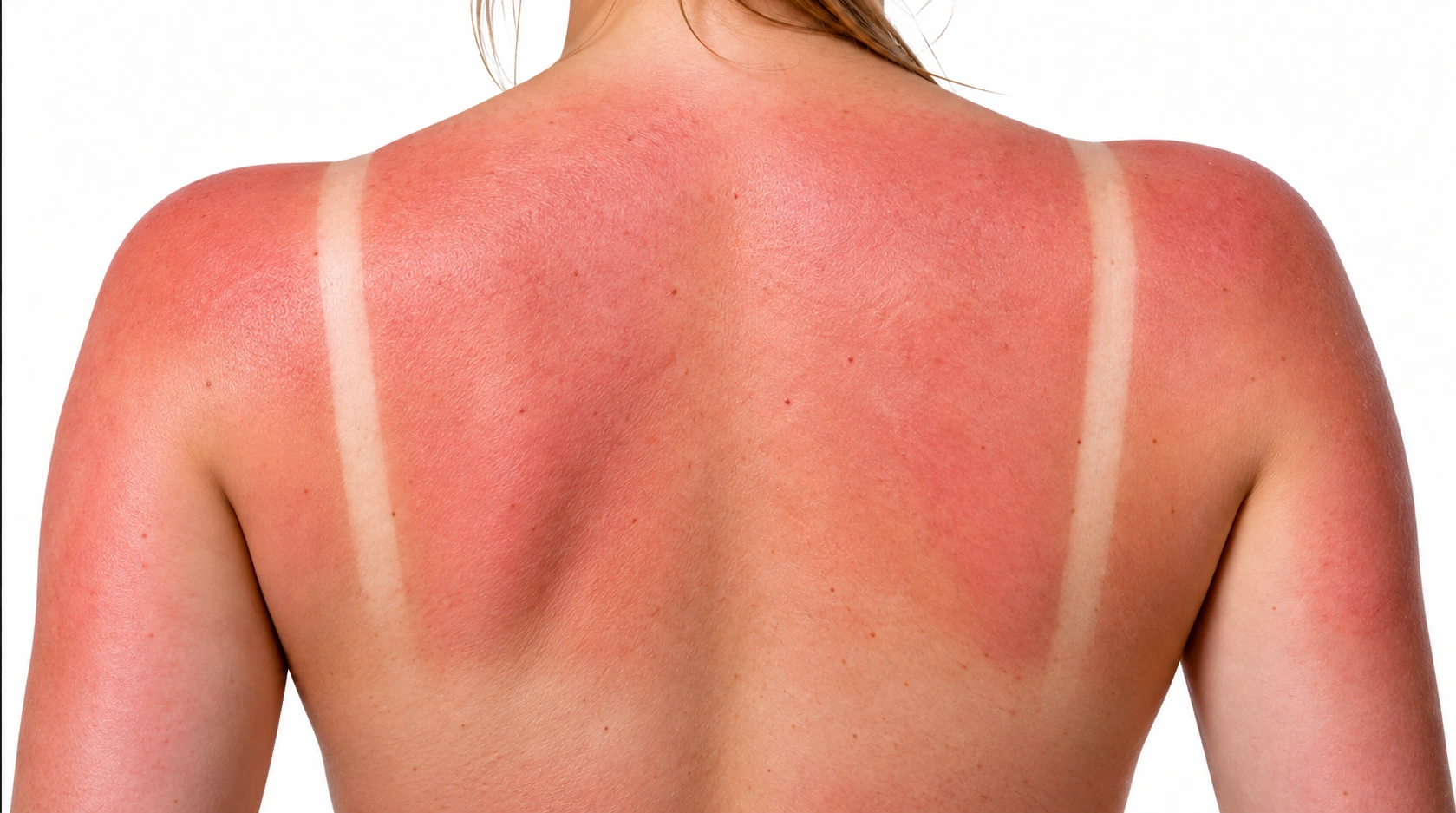
Sunburn
Tested sunscreen formulas help prevent UV sunburn when applied correctly.
Oxybenzone: Adds UV absorption to some sunscreen formulas. Titanium Dioxide: Provides UV protection in tested sunscreen formulas, often with other filters.

Choose by sunscreen performance and tolerance; other filter options are available.
Choose a comfortable tested broad-spectrum sunscreen; check its UVA coverage.
Can you use both?
Chemical and mineral filters are often combined in one sunscreen. Use a finished product rather than mixing your own.
Compare uses by strength of evidence. Evidence level describes confidence in a benefit, not its size.


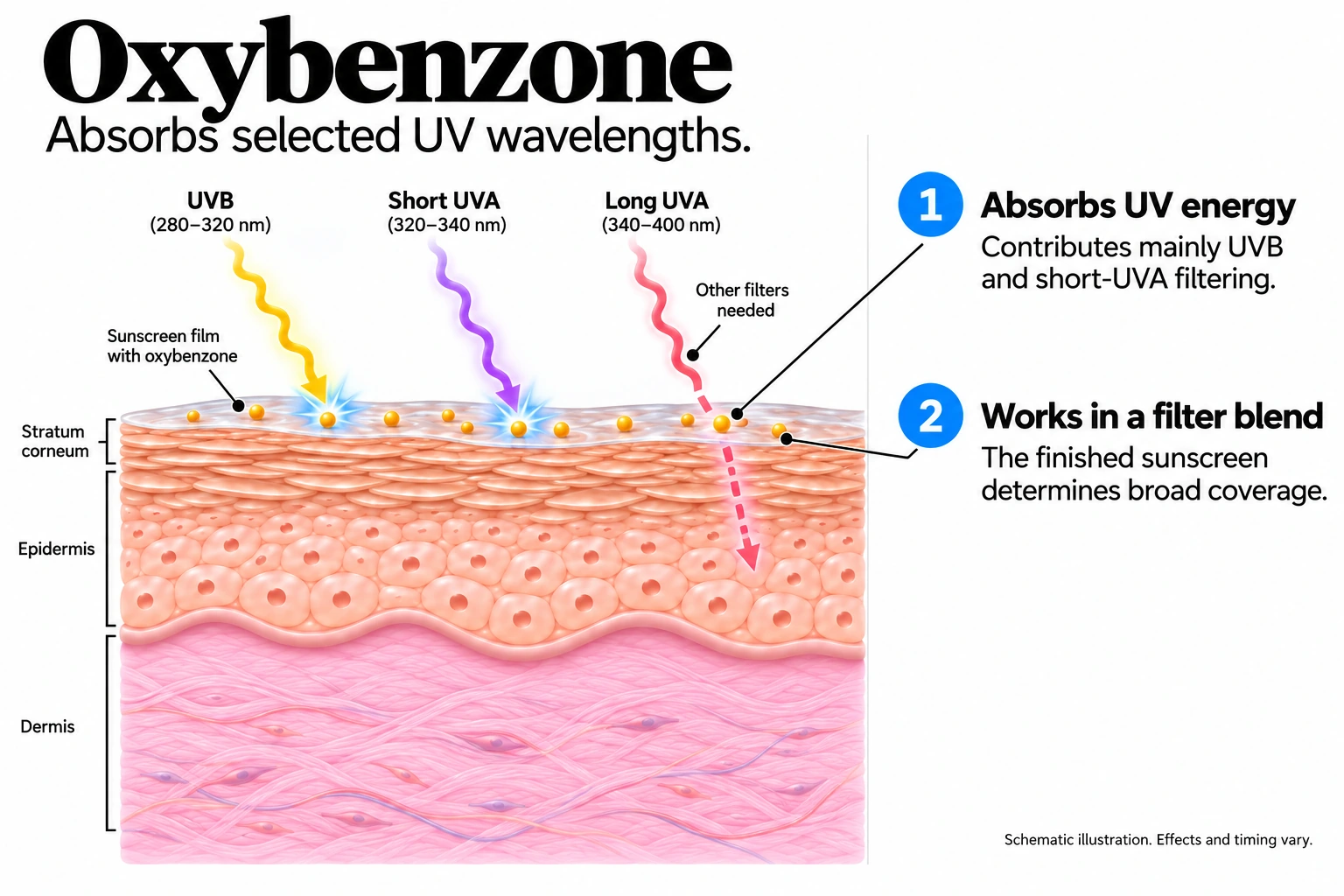
Absorbs UV energy: Contributes mainly UVB and short-UVA filtering. Works in a filter blend: The finished sunscreen determines broad coverage.
Schematic illustration; not a measurement of skin penetration. Effects vary with ingredient identity and formulation.
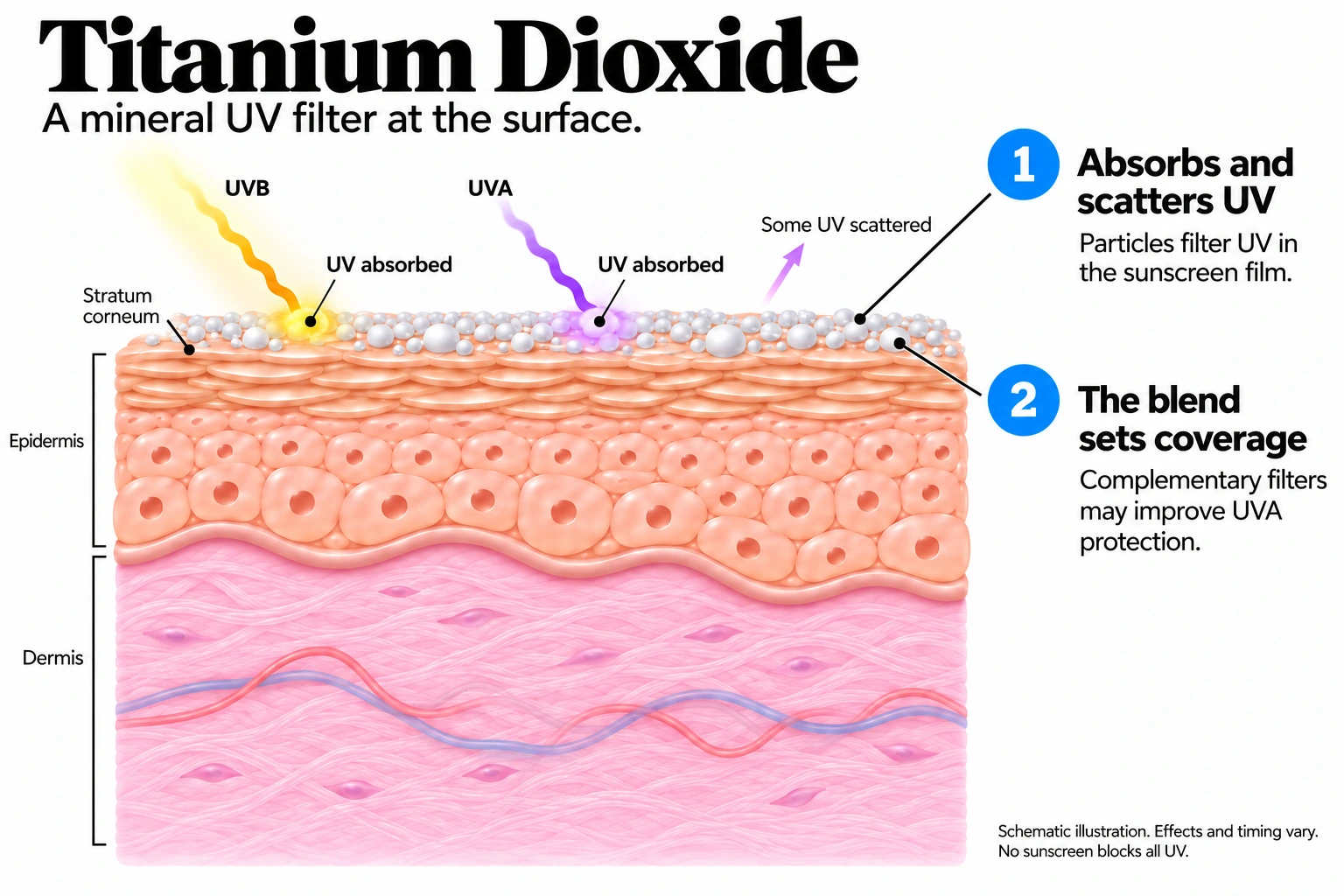
Absorbs and scatters UV: Particles filter UV in the sunscreen film. The blend sets coverage: Complementary filters may improve UVA protection.
Schematic illustration; not a measurement of skin penetration. Effects vary with ingredient identity and formulation.
Built from where each one usually sits in a routine. Introduce one at a time.
Oxybenzone is a sunscreen filter with a U.S. monograph maximum of 6%. Restrictions and availability vary by location; percentage alone cannot rank sunscreen performance.
6%
U.S. sunscreen ceiling
A permitted maximum in the U.S. monograph, not a required concentration or an SPF rating.
Choosing a strength: Choose a tested broad-spectrum sunscreen you can use consistently, with a filter system permitted where it is sold.
Higher strengths: More oxybenzone is not automatically more useful protection or better tolerance.
Formula matters: The finished filter combination and tested label matter. If a product causes a suspected allergy, choose an alternative and seek advice.
U.S. sunscreen products may use titanium dioxide up to 25%. The filter percentage is not the product’s SPF or a guarantee of broad-spectrum protection.
25%
U.S. sunscreen ceiling
A permitted maximum, not a target dose or proof that the product provides adequate UVA protection.
Choosing a strength: Choose the finished sunscreen by its tested broad-spectrum and SPF labeling, texture and ability to apply enough.
Higher strengths: A higher filter percentage does not reliably predict stronger protection or better tolerance.
Formula matters: Particle properties, dispersion and other filters affect the finished product. Titanium dioxide in makeup or a moisturizer is not automatically a sunscreen.
Approximate windows, not promises.
First few weeksProtection starts with correct application; it does not require a weeks-long course.
First few weeksProtection starts with correct application; it does not require a weeks-long course.
4–8 weeksConsistency matters; this is prevention, not a spot-clearing treatment.
4–8 weeksConsistency matters; this is prevention, not a spot-clearing treatment.
8–12 weeksContinue correct application and reapplication.
8–12 weeksContinue correct application and reapplication.
3–6 monthsMonitor tolerance and sun exposure; a changing spot needs assessment.
3–6 monthsMonitor tolerance and sun exposure; a changing spot needs assessment.
6–12 monthsPhotoaging prevention is a long-term benefit, not a promise of wrinkle reversal.
6–12 monthsPhotoaging prevention is a long-term benefit, not a promise of wrinkle reversal.
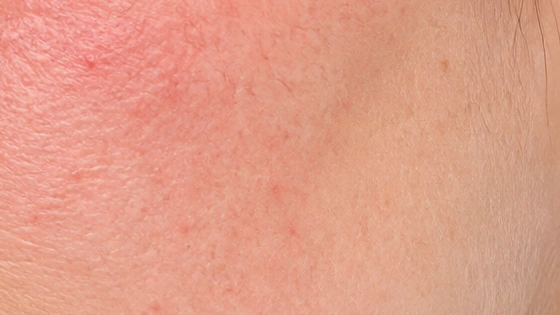
Can cause contact or photoallergic reactions in some people.
Can leave a white cast; avoid inhaling powder or spray products.
Stop for persistent burning, swelling, blistering or a new rash. Seek urgent care for breathing difficulty or a severe allergic reaction.
Stop for persistent burning, swelling, blistering or a new rash. Seek urgent care for breathing difficulty or a severe allergic reaction.
Choose a simple formula and test a small area first. Individual tolerance matters more than an ingredient’s reputation for being gentle.
Choose a simple formula and test a small area first. Individual tolerance matters more than an ingredient’s reputation for being gentle.
Do not use a cosmetic product as a substitute for diagnosis of an unexplained, changing or persistent skin problem.
Do not use a cosmetic product as a substitute for diagnosis of an unexplained, changing or persistent skin problem.
This is the filter most people choose to avoid in pregnancy, because it is the most absorbed and its hormone questions are unresolved. Mineral filters are the usual alternative. Ask the doctor managing your pregnancy, who knows your full picture.
Mineral sunscreens are generally considered acceptable in pregnancy.
On the skin. The finished product delivers oxybenzone in a particular vehicle.
Entering skin. Below 500 Da, but sunscreen works in its surface film. Human studies show some absorption; size alone does not establish absorption, harm or protection.
Conversion. No activation step is established as necessary for its intended topical role.
Skin response. Absorbs UV energy in the sunscreen film; the full filter blend sets the coverage.
Additional effects. Proposed pathways do not establish a measured depth of delivery or clinical benefit beyond the studies cited.
On the skin. The finished product delivers titanium dioxide in a particular vehicle.
Entering skin. Formula-unit mass is not particle size. These mineral particles act in the surface sunscreen film; the 500 Da guideline does not predict particle penetration.
Conversion. No activation step is established as necessary for its intended topical role.
Skin response. Particles absorb and scatter UV in the surface film; particle coating, size and the filter blend affect performance.
Additional effects. Proposed pathways do not establish a measured depth of delivery or clinical benefit beyond the studies cited.
Choose by sunscreen performance and tolerance; other filter options are available.
An FDA trial measured systemic absorption from tested formulas and did not establish that this exposure caused harm. Long-term sunscreen benefits cannot be assigned to oxybenzone alone; availability varies by location.
Choose a comfortable tested broad-spectrum sunscreen; check its UVA coverage.
Penetration experiments depend on the particles, model and skin condition; the cited study used minipigs. The formula-unit mass is not nanoparticle size and does not predict entry through skin.
Sources