Plaque Psoriasis vs Guttate Psoriasis

The common psoriasis pattern with persistent well-defined thick scaly plaques. A sudden crop of small drop-like psoriasis spots, often after a throat infection.

Research updated 2026-10-23
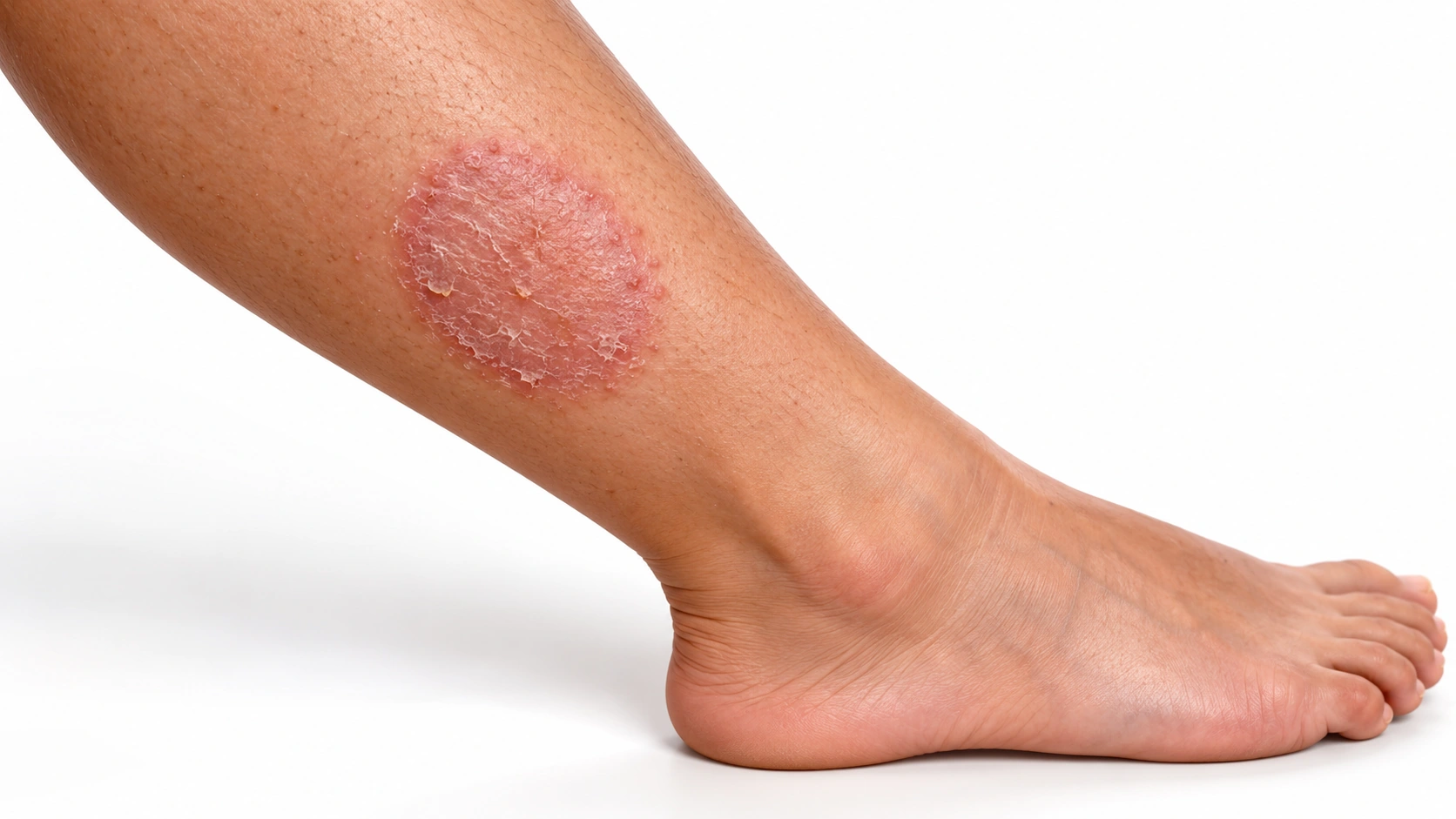
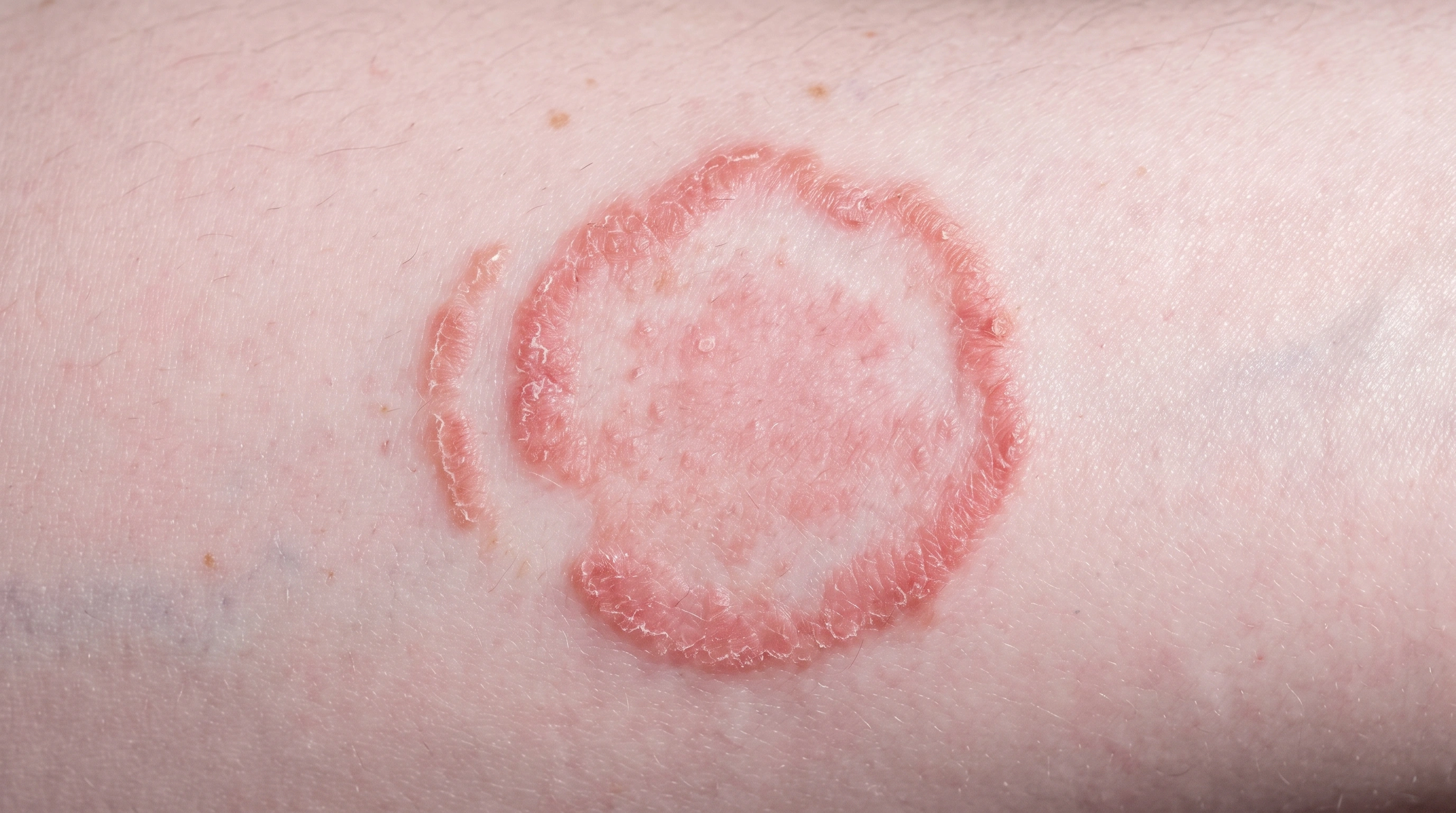
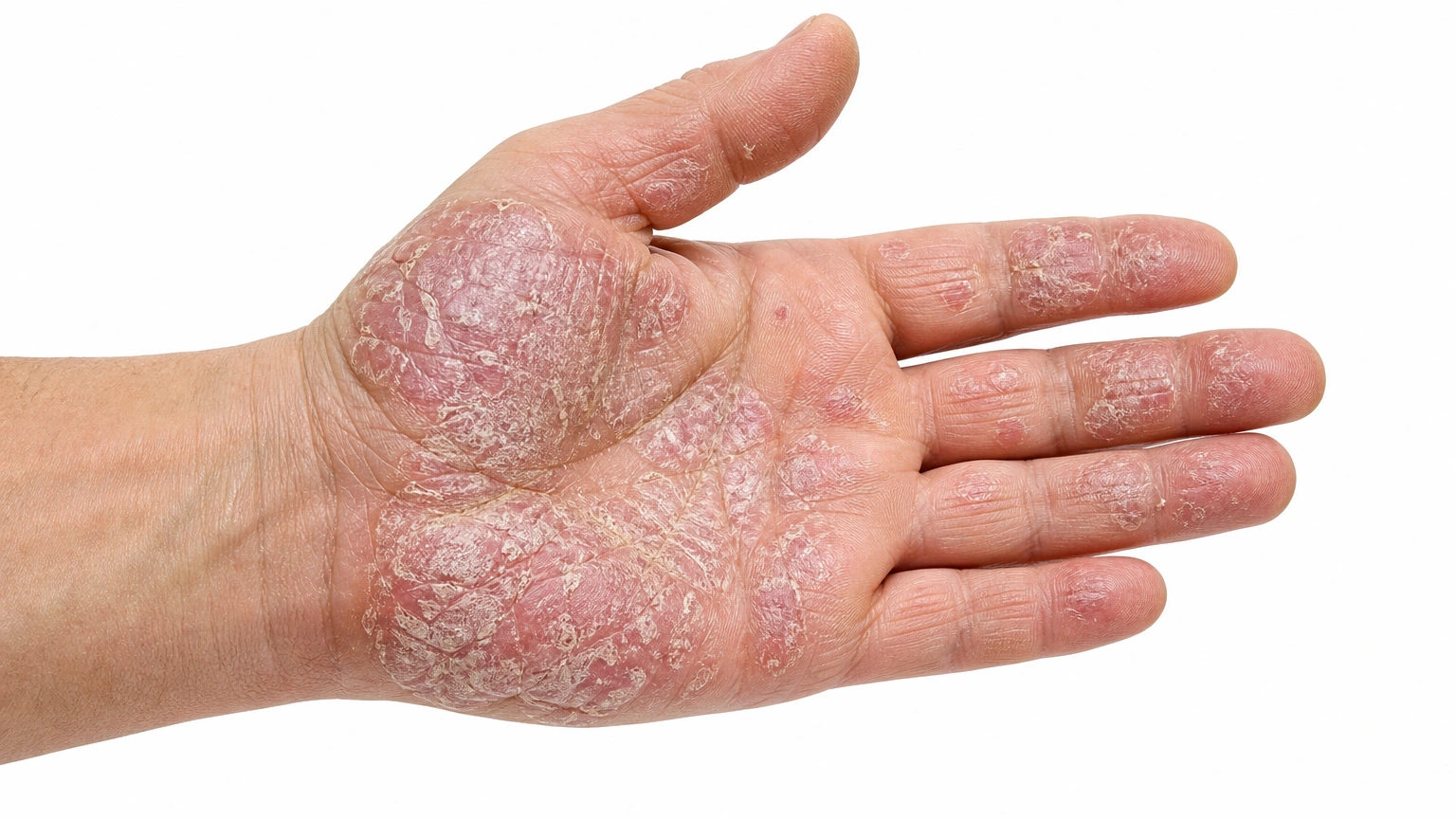
Plaque Psoriasis on light skin.Guttate Psoriasis

Key differences

The same eight facts on every condition comparison.
Usual age
15 to 35, or 50 to 60
Children and young adults
Where
Elbows, knees, scalp, lower back
Trunk and limbs
Main sign
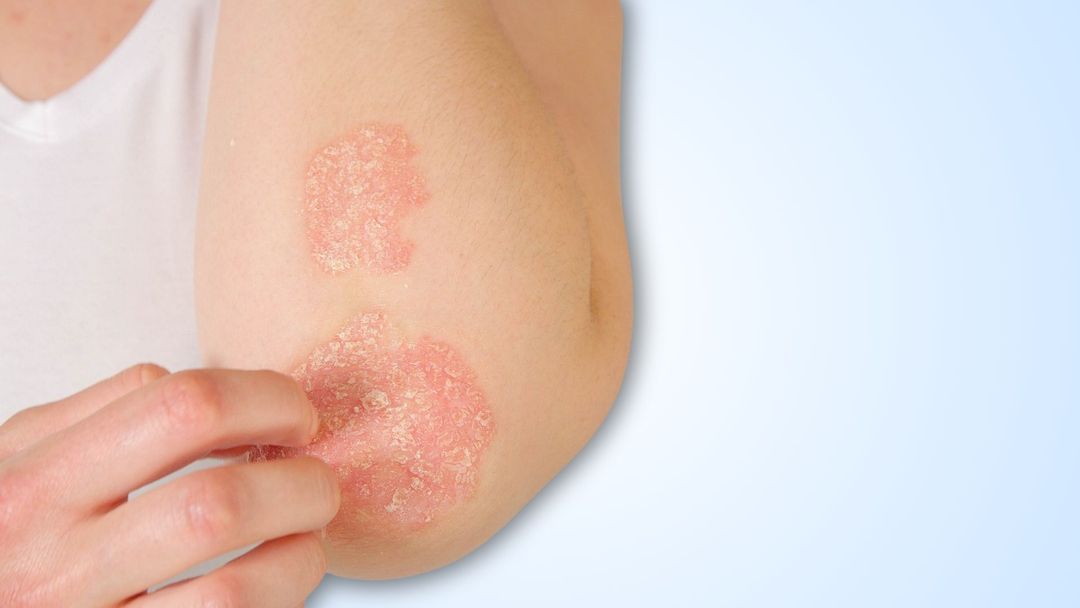
Thick plaques with silvery scale
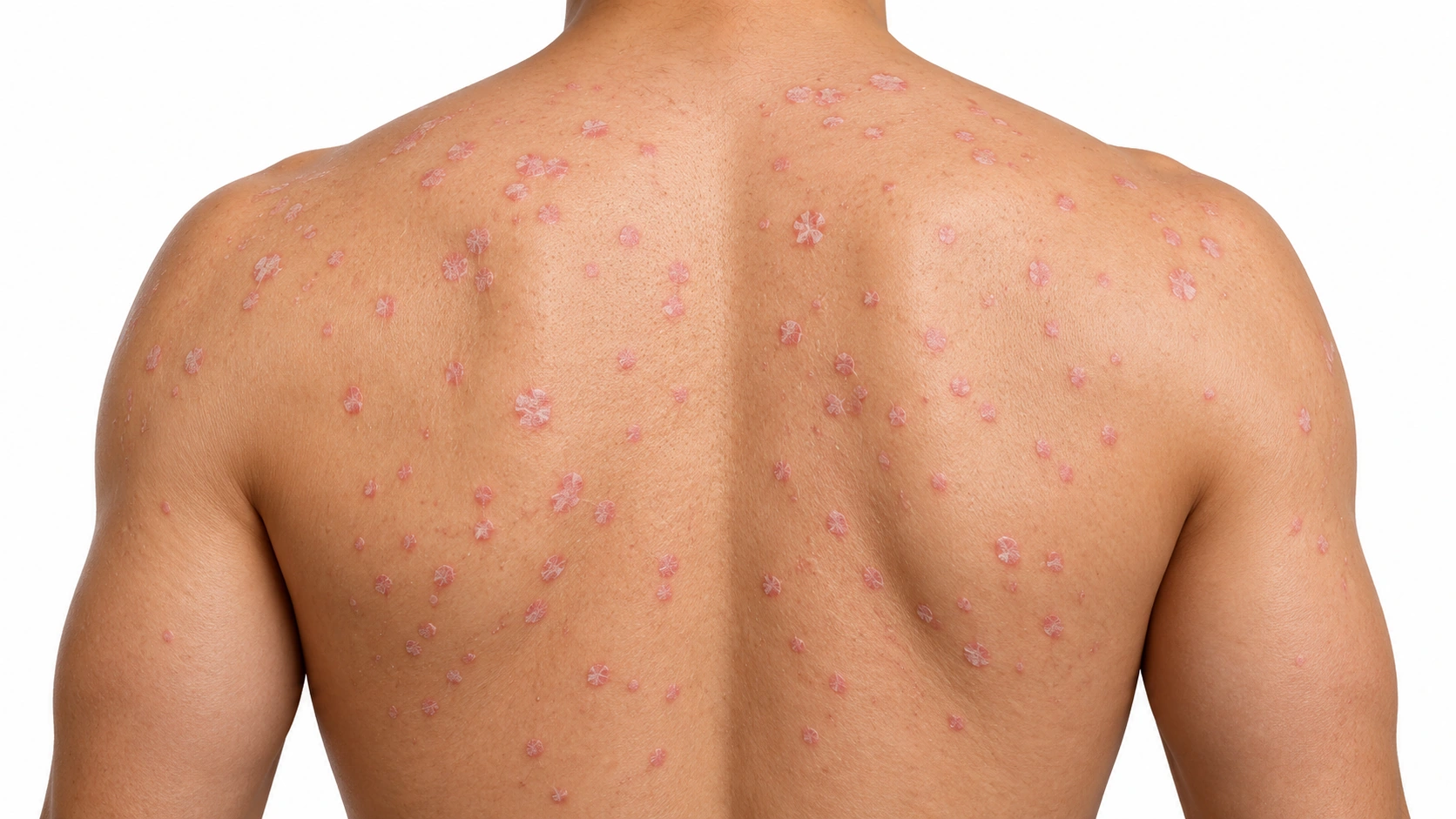
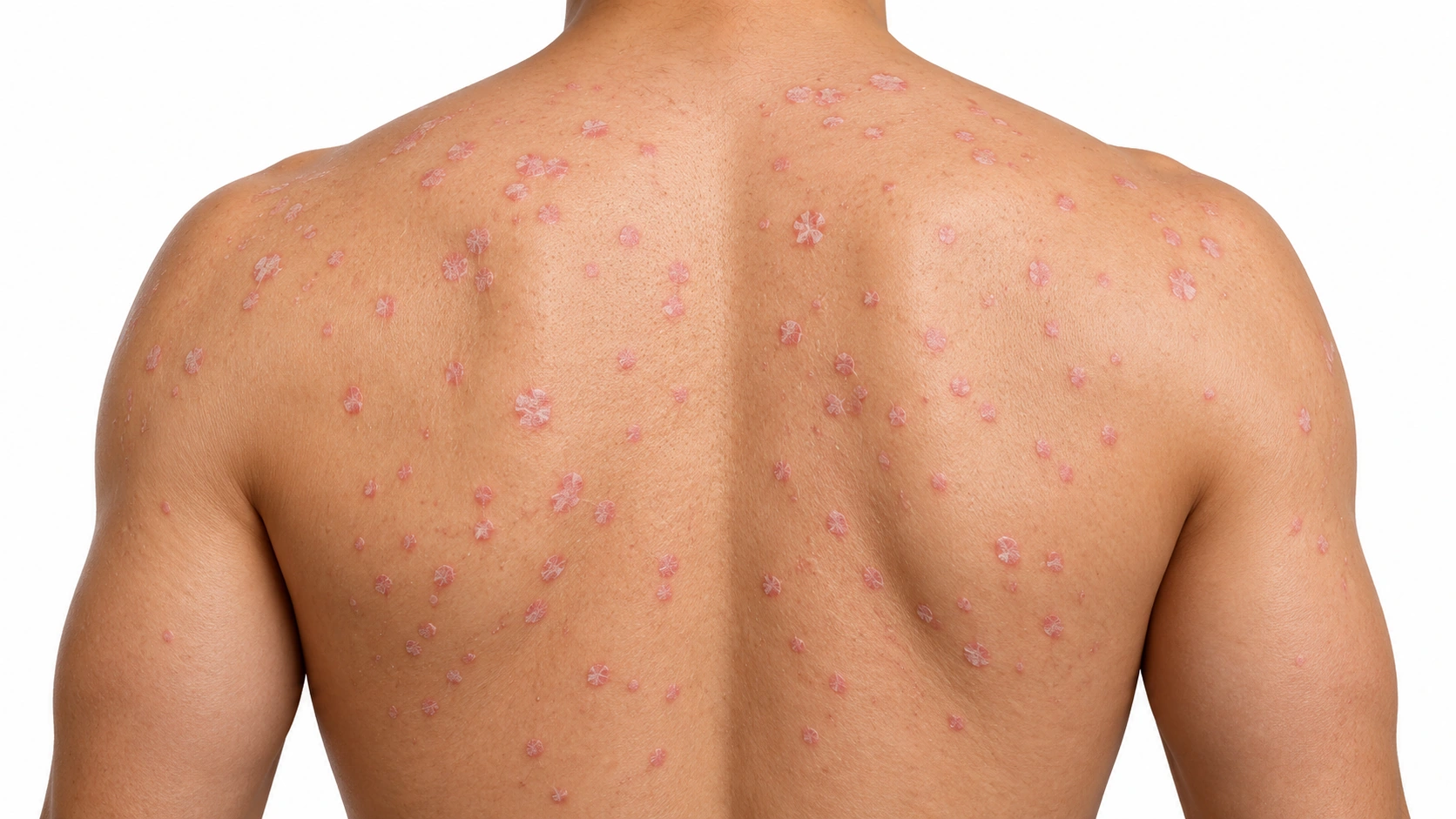
Many small, drop-shaped scaly spots
Itch or pain
Often itchy
Mildly itchy
Contagious
No
No
Long term
Lifelong, flares
Often clears in months; can recur
Scars
No
No
Who gets it
Anyone; runs in families
After strep throat

What is it?

Plaque Psoriasis
Guttate Psoriasis
What is it?
  • What it is
    The common psoriasis pattern with persistent well-defined thick scaly plaques.
  • What it is
    A sudden crop of small drop-like psoriasis spots, often after a throat infection.

What it looks like

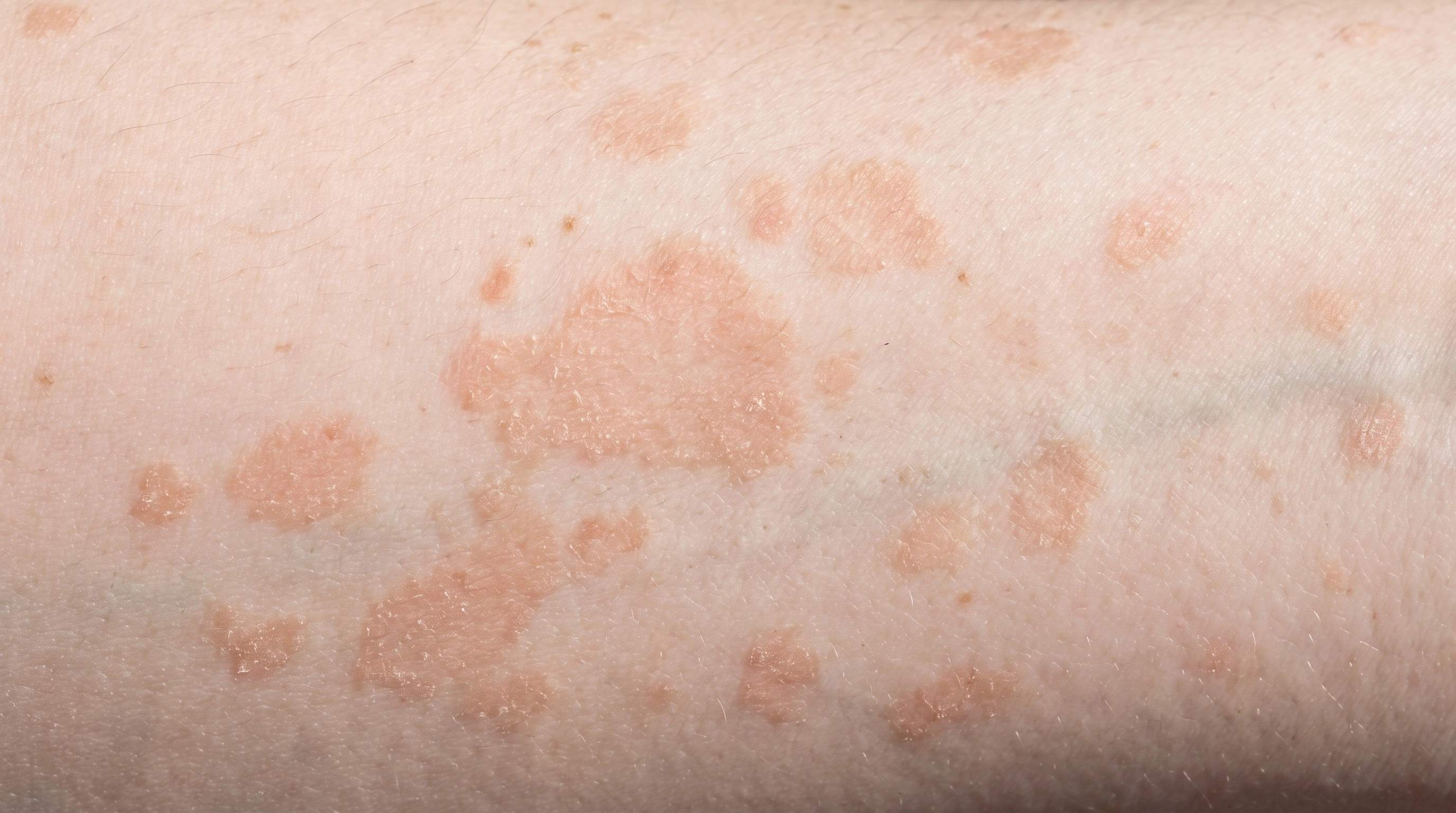
Plaque Psoriasis

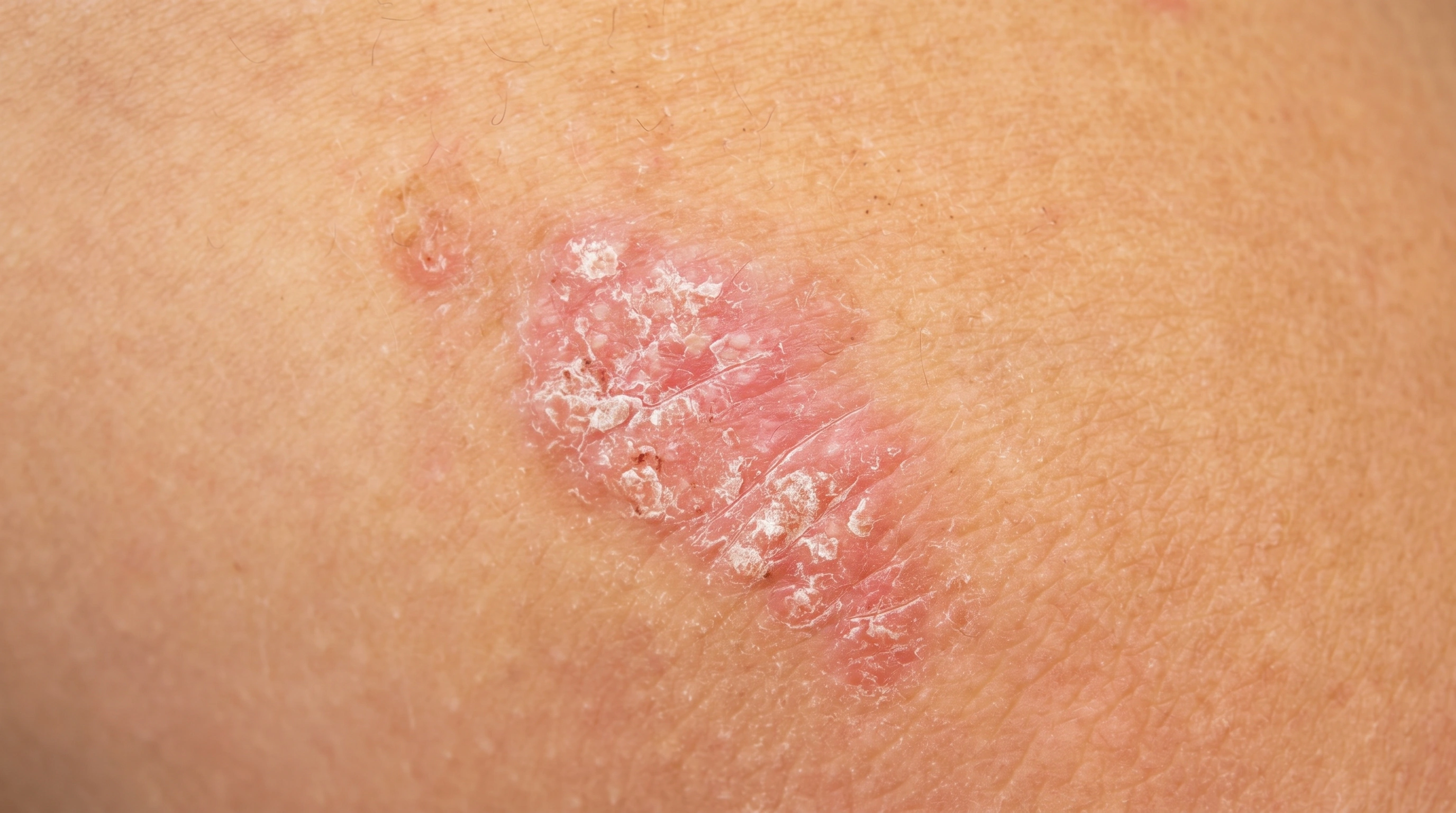
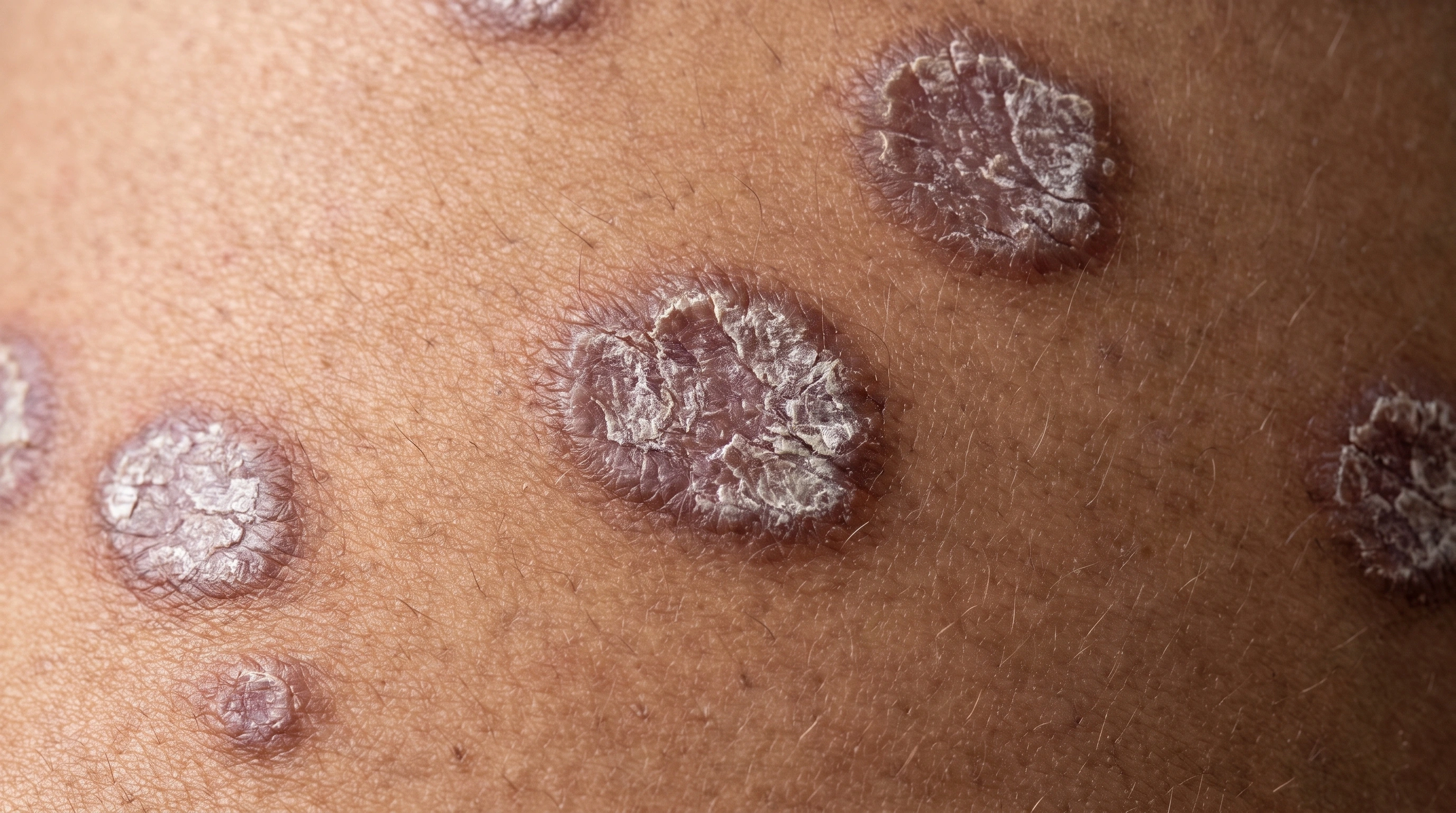
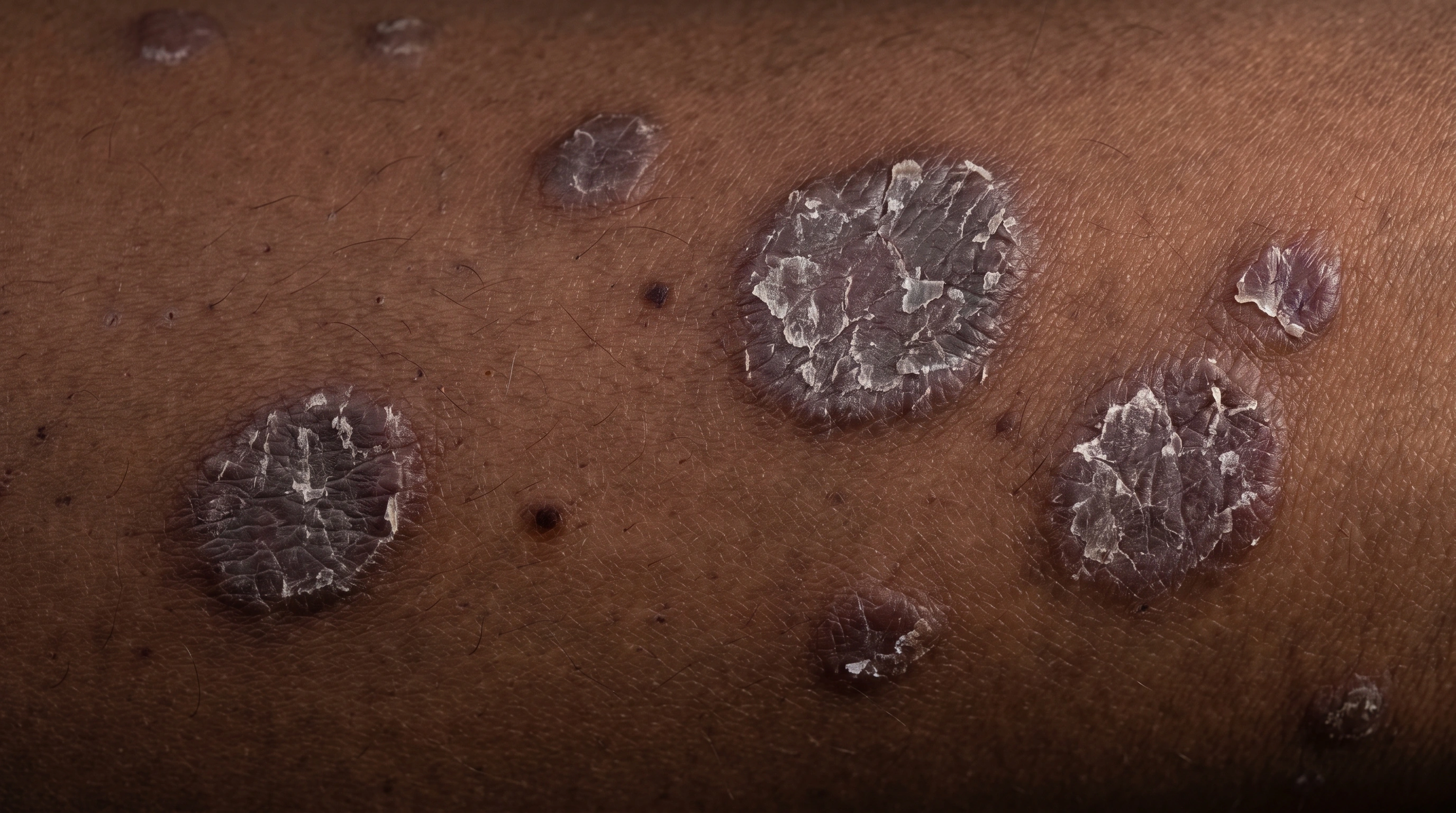
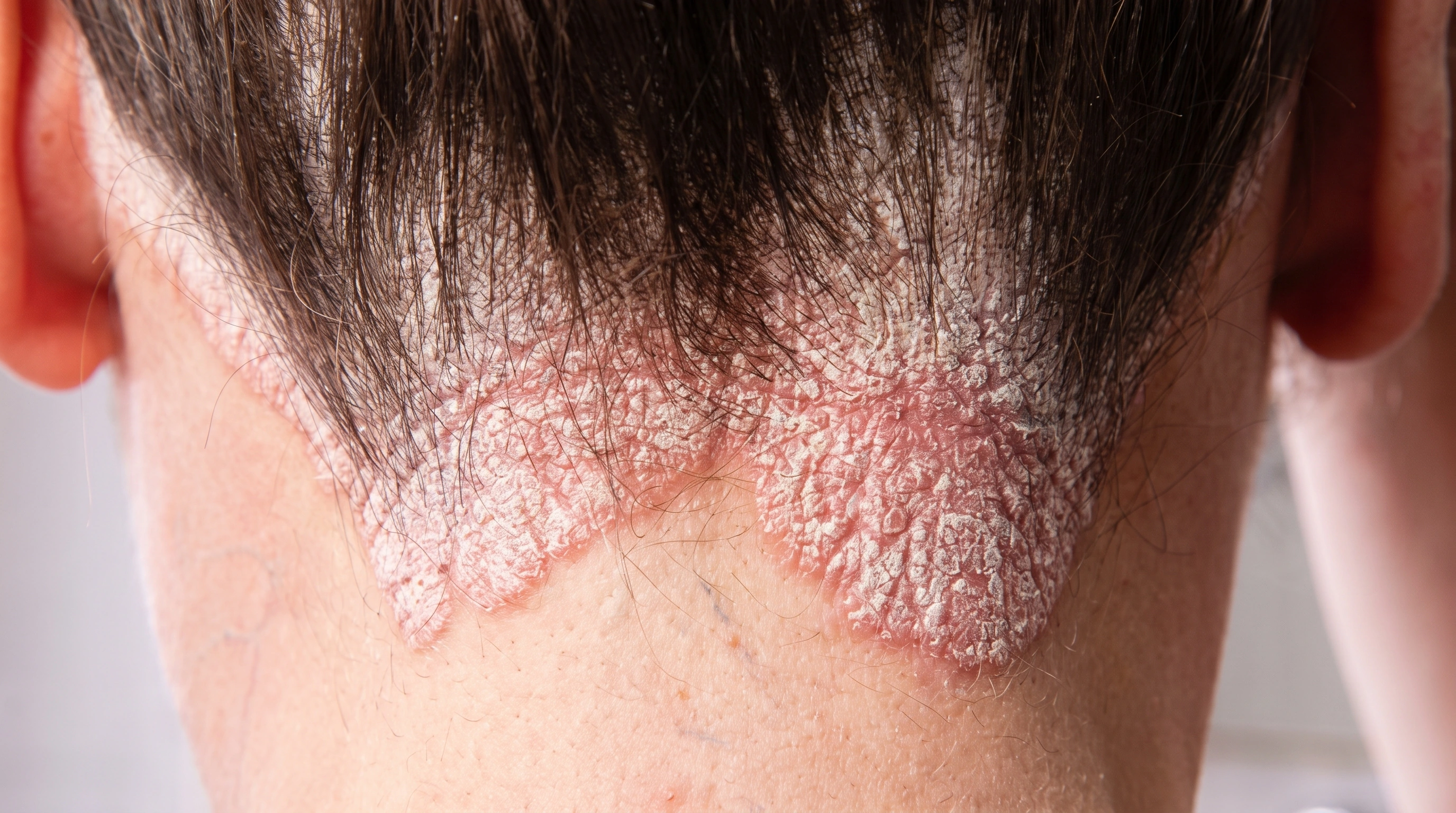
An elbow area with two rounded red plaques covered in white scale.

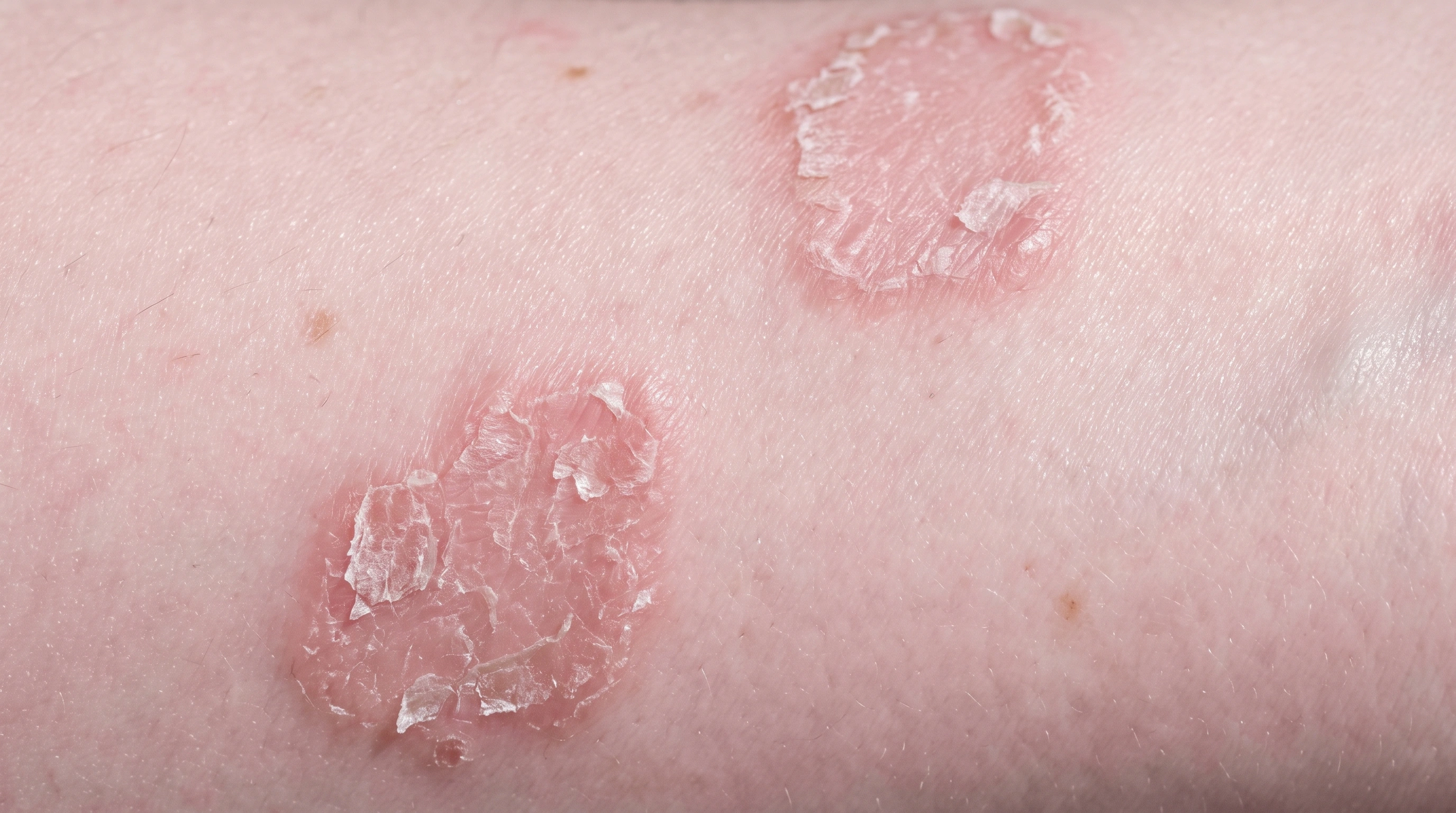
Plaque Psoriasis Two distinct pink plaques have a dry, scaly surface.

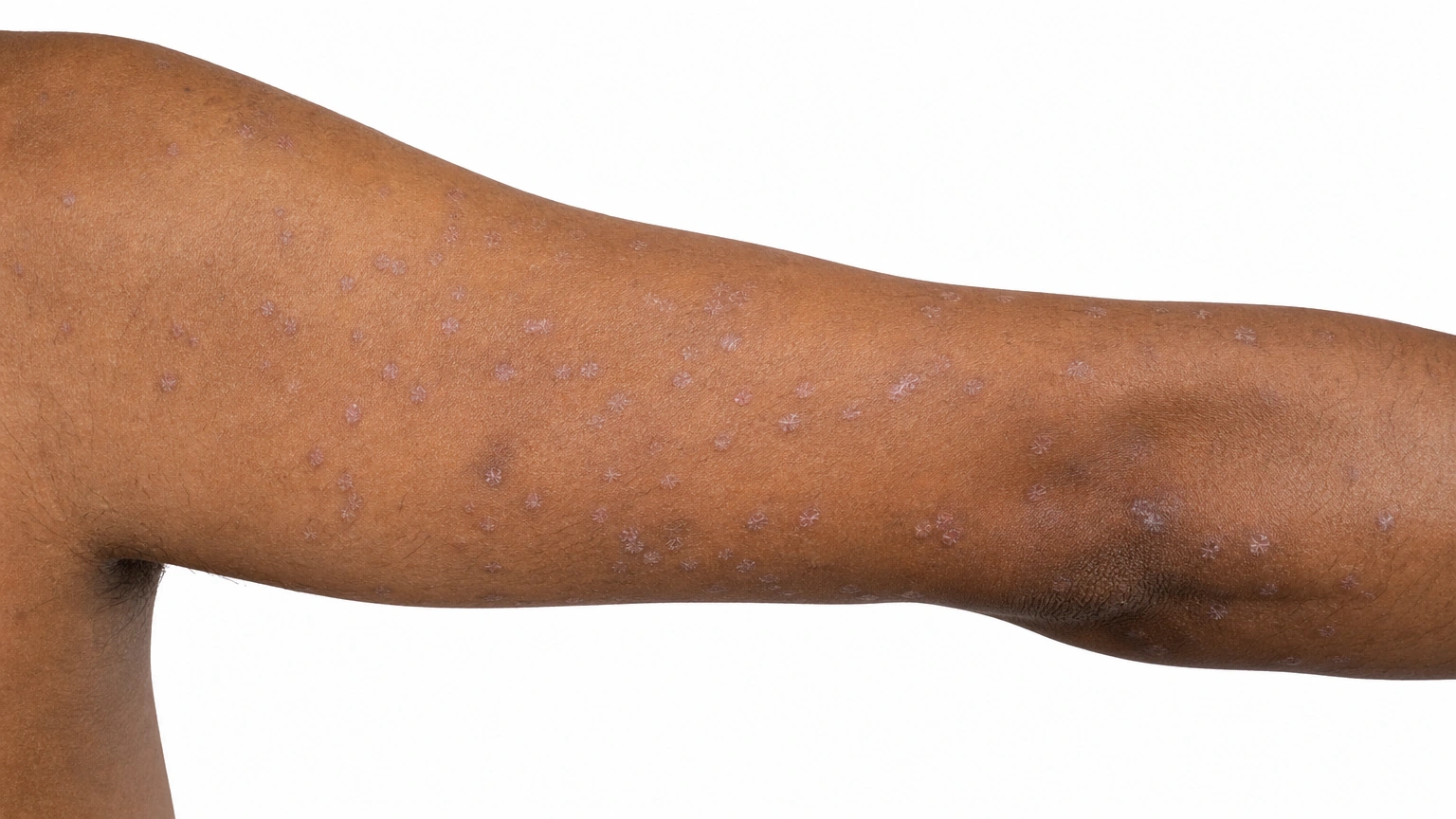
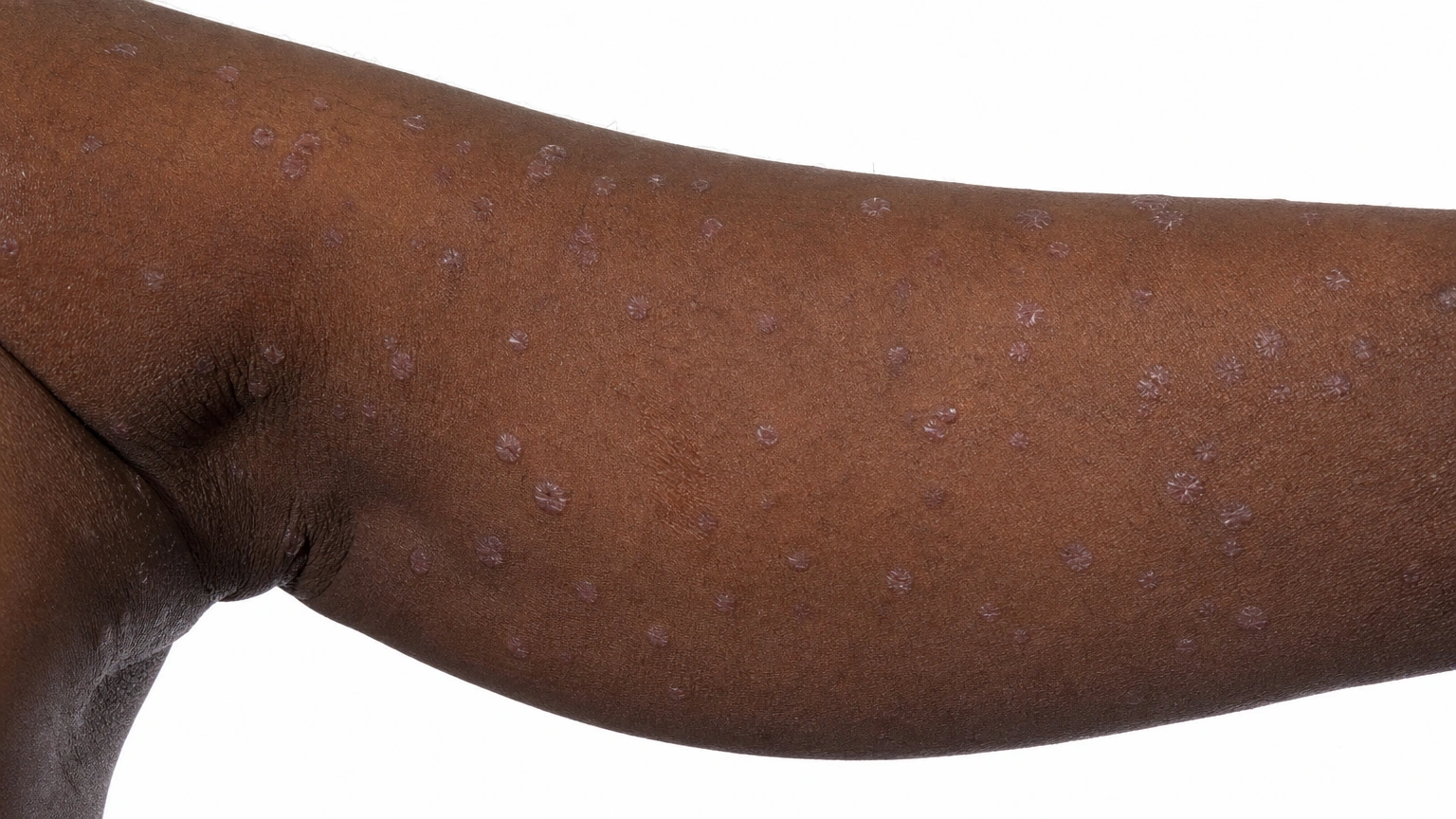
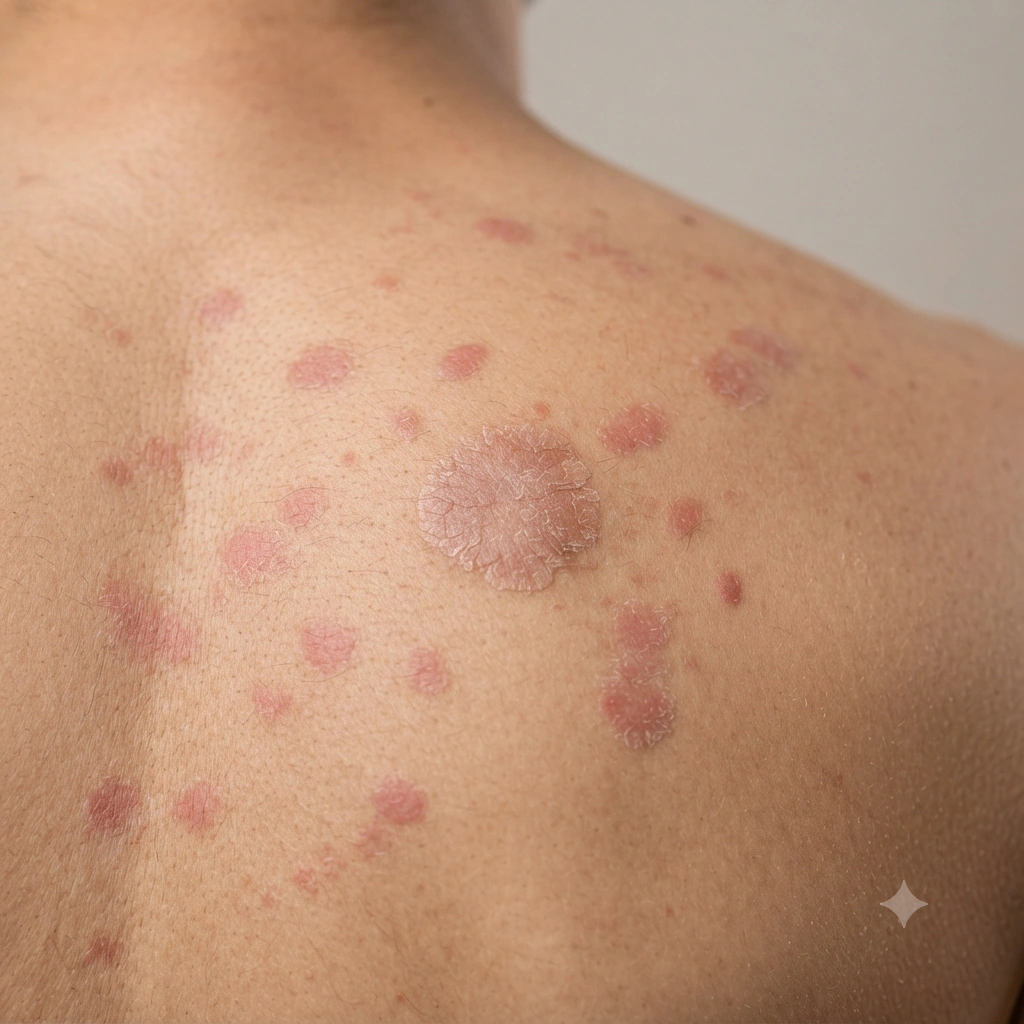
Guttate Psoriasis

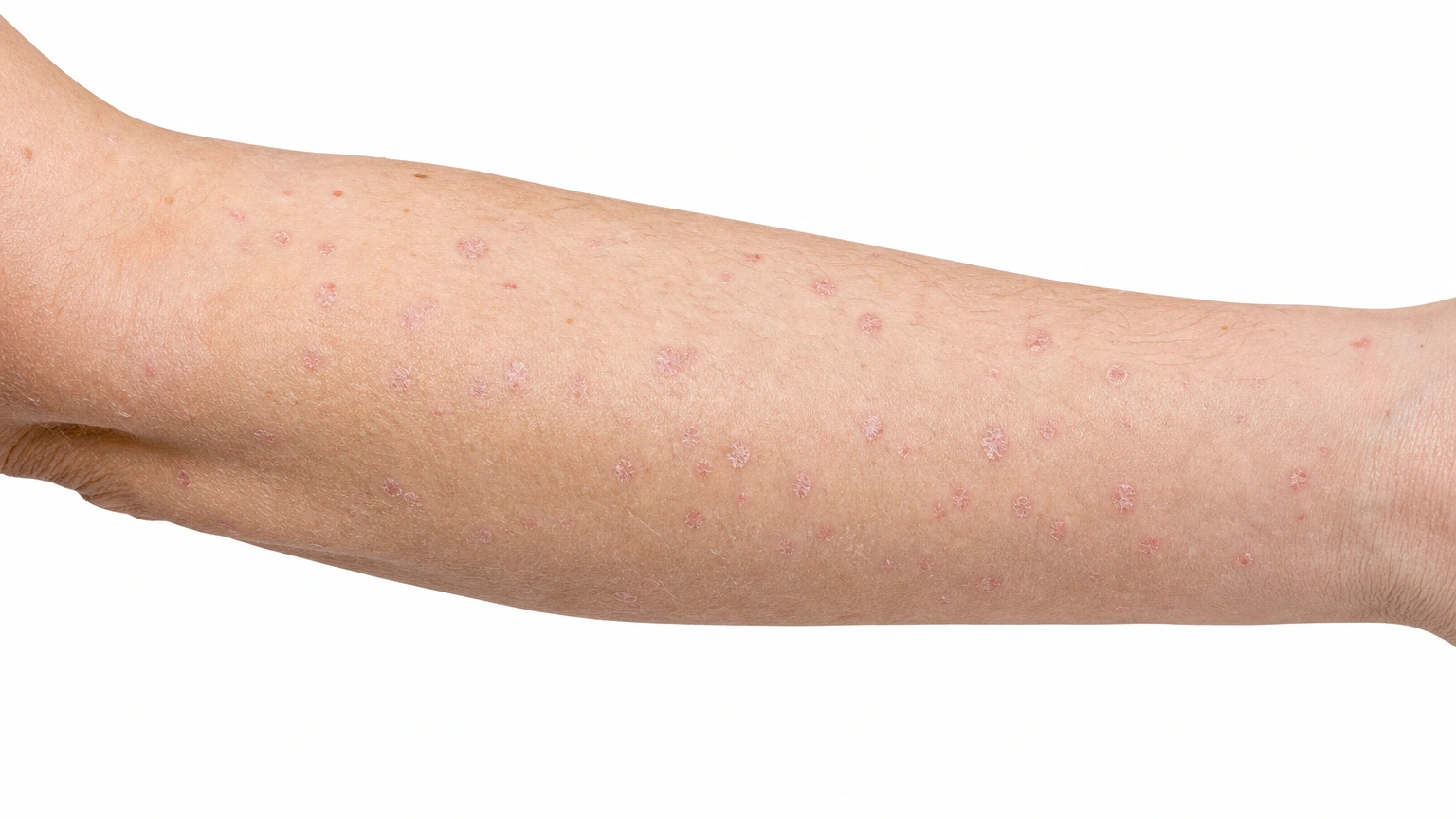
A back covered with small scattered pink scaly patches.

Guttate Psoriasis Many separate pink spots with surface scale are spread across the back.
Skin tones
Plaque Psoriasis on light skin.
Photo needed: Plaque Psoriasis — medium skin
Photo needed: Plaque Psoriasis — brown skin
Photo needed: Plaque Psoriasis — deep skin
Guttate Psoriasis on light skin.
Guttate Psoriasis on medium skin.
Guttate Psoriasis on brown skin.
Guttate Psoriasis on deep skin.
In the skin

Immune signals speed up the production of skin cells. The cells accumulate in thickened, inflamed plaques with surface scale.

Immune inflammation accelerates skin-cell production and shedding. Small, scattered scaly patches develop; the rash itself is not contagious.

When it usually starts

010203040506070+

Plaque Psoriasis. Can start at any age, with different patterns at different life stages.

Guttate Psoriasis. Most often starts in children or young adults after an infection.

Causes and triggers

Causes

Immune inflammation speeds skin-cell turnover; psoriasis is not contagious.

Immune inflammation speeds skin-cell turnover; psoriasis is not contagious.

Risk factors
Family tendency, Immune susceptibility
Recent streptococcal infection, Family tendency
Trigger
● Plaque Psoriasis
● Guttate Psoriasis
Skin injury
Can contribute
Can contribute
Stress
Can contribute
Not listed
Infection
Can contribute
Not listed
Streptococcal infection
Not listed
Can contribute

Daily Care

Plaque Psoriasis
Guttate Psoriasis
Daily care

Habits that help

  • Moisturize regularly with a plain fragrance-free product
    Apply after washing and when skin feels dry or tight.
  • Keep washing gentle and water lukewarm
    Use a non-soap cleanser and pat dry rather than rubbing.
  • Protect sore skin from friction and minor injury
    Comfortable clothing and gentle handling reduce avoidable irritation.
  • Keep a manageable record of flares and symptoms
    Note new medicines, infections or joint symptoms to discuss at review.
  • Follow the plaque psoriasis care plan
    Use bland moisturizer, avoid rubbing and follow a site-appropriate treatment plan.
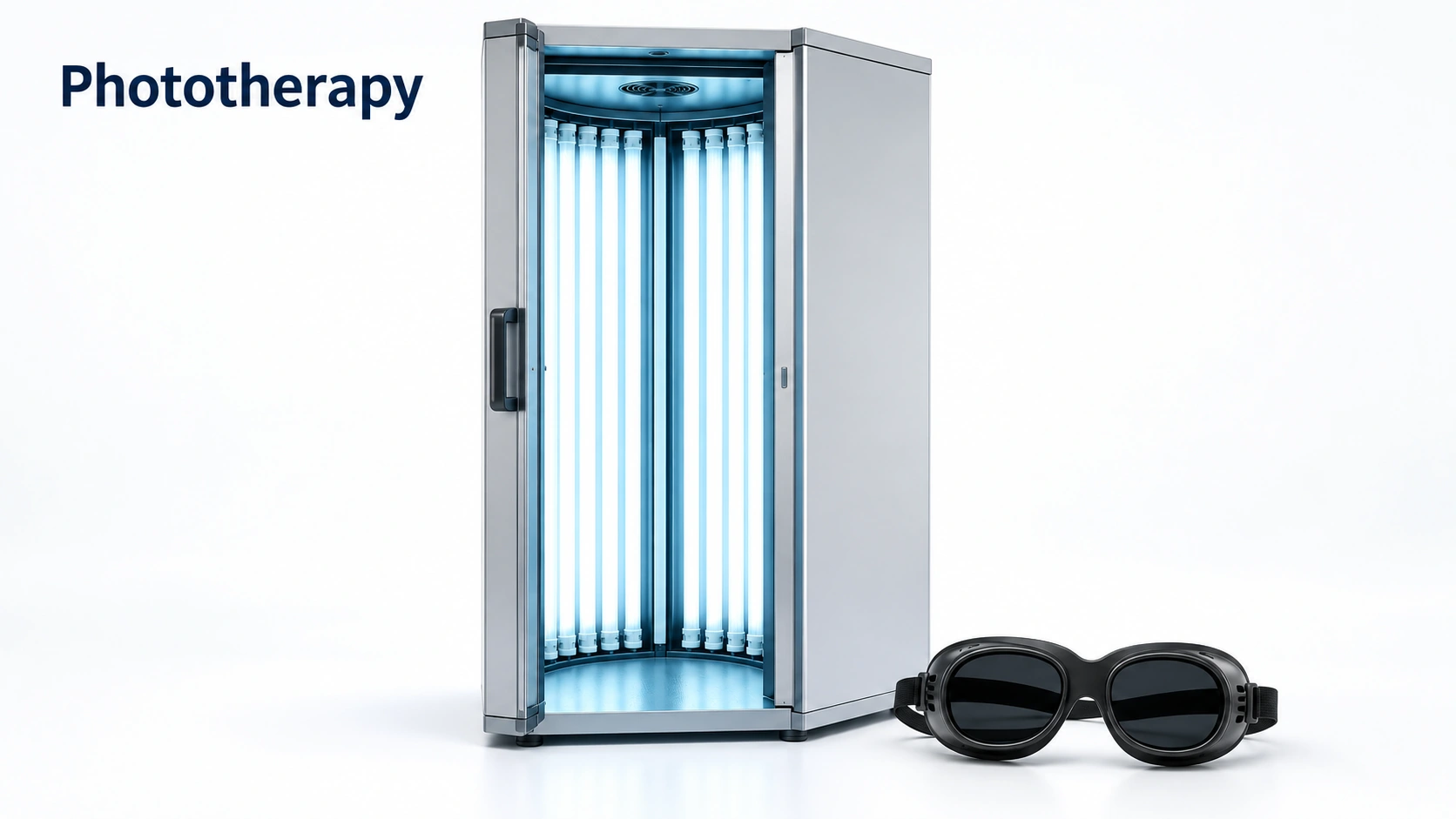
  • Discuss phototherapy or systemic-treatment assessment
    More extensive or disabling psoriasis may need supervised light treatment or prescription systemic therapy.

Avoid

  • Avoid: Picking scale or scratching plaques
    Injury can worsen psoriasis and create breaks in the skin.
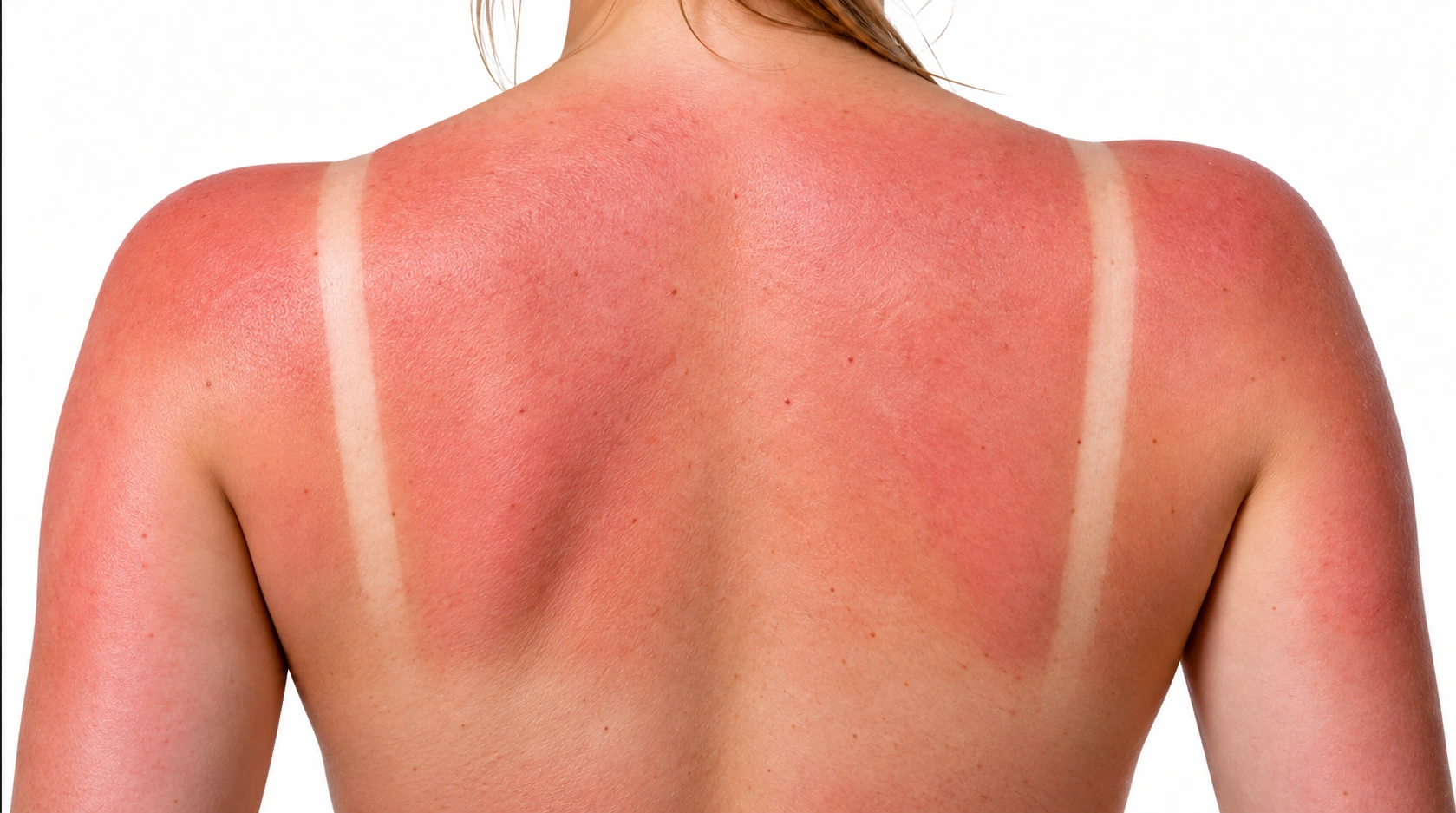
  • Avoid: Unsupervised tanning or harsh home exfoliation
    Sunburn and irritation can trigger worsening; prescribed phototherapy is different from tanning.

Habits that help

  • Moisturize regularly with a plain fragrance-free product
    Apply after washing and when skin feels dry or tight.
  • Keep washing gentle and water lukewarm
    Use a non-soap cleanser and pat dry rather than rubbing.
  • Protect sore skin from friction and minor injury
    Comfortable clothing and gentle handling reduce avoidable irritation.
  • Keep a manageable record of flares and symptoms
    Note new medicines, infections or joint symptoms to discuss at review.
  • Report a recent sore throat or signs of infection
    Assessment may be needed; skin moisturization does not treat an active throat infection.
  • Follow the guttate psoriasis care plan
    Use bland moisturizer, avoid rubbing and follow a site-appropriate treatment plan.

Avoid

  • Avoid: Picking scale or scratching plaques
    Injury can worsen psoriasis and create breaks in the skin.
  • Avoid: Unsupervised tanning or harsh home exfoliation
    Sunburn and irritation can trigger worsening; prescribed phototherapy is different from tanning.

Treatment differences

Evidence labels come from each condition’s own treatment list.

Treatment
● Plaque Psoriasis
● Guttate Psoriasis
Prescription topicals

Topical corticosteroid and vitamin D treatment

Listed

Common options for localised plaques; selection depends on site and thickness.

None listed

Outlook

Long term

Plaque psoriasis often alternates between flares and quieter periods. Treatment can achieve good control, but maintenance is commonly needed and the tendency to psoriasis remains.

Many episodes clear within about 3–4 months. It can recur, and some people later develop persistent plaque psoriasis; follow-up is useful if spots do not settle.

Complications

Possible complications

Psoriasis can accompany inflammatory joint disease. Report persistent joint stiffness or swelling.

Psoriasis can accompany inflammatory joint disease. Report persistent joint stiffness or swelling.

When to get help

When to get help

Seek care for painful cracks, widespread flares, joint symptoms or uncertain diagnosis.

Arrange assessment for a first widespread eruption or a recent sore throat; antibiotics treat confirmed infection rather than reliably clearing the rash.

Common questions

Plaque Psoriasis:What is Plaque Psoriasis?

The common psoriasis pattern with persistent well-defined thick scaly plaques.

Plaque Psoriasis:What can I do day to day?

Use bland moisturizer, avoid rubbing and follow a site-appropriate treatment plan.

Plaque Psoriasis:When should I get medical advice?

Seek care for painful cracks, widespread flares, joint symptoms or uncertain diagnosis.

Guttate Psoriasis:What is Guttate Psoriasis?

A sudden crop of small drop-like psoriasis spots, often after a throat infection.

Guttate Psoriasis:What can I do day to day?

Use bland moisturizer, avoid rubbing and follow a site-appropriate treatment plan.

Guttate Psoriasis:When should I get medical advice?

Arrange assessment for a first widespread eruption or a recent sore throat; antibiotics treat confirmed infection rather than reliably clearing the rash.

Sources
Sources and further reading

  1. Psoriasis
  2. Guttate psoriasis
Dermapedia on YouTube