
Genital Warts vs Skin Tags

Growths caused by genital human papillomavirus, or HPV. Skin tags are soft, harmless growths that hang from the skin on a narrow stalk, usually where skin rubs against skin. They are extremely common, they are not contagious, and removing them is a choice rather than a medical need.

Research updated 2026-10-23
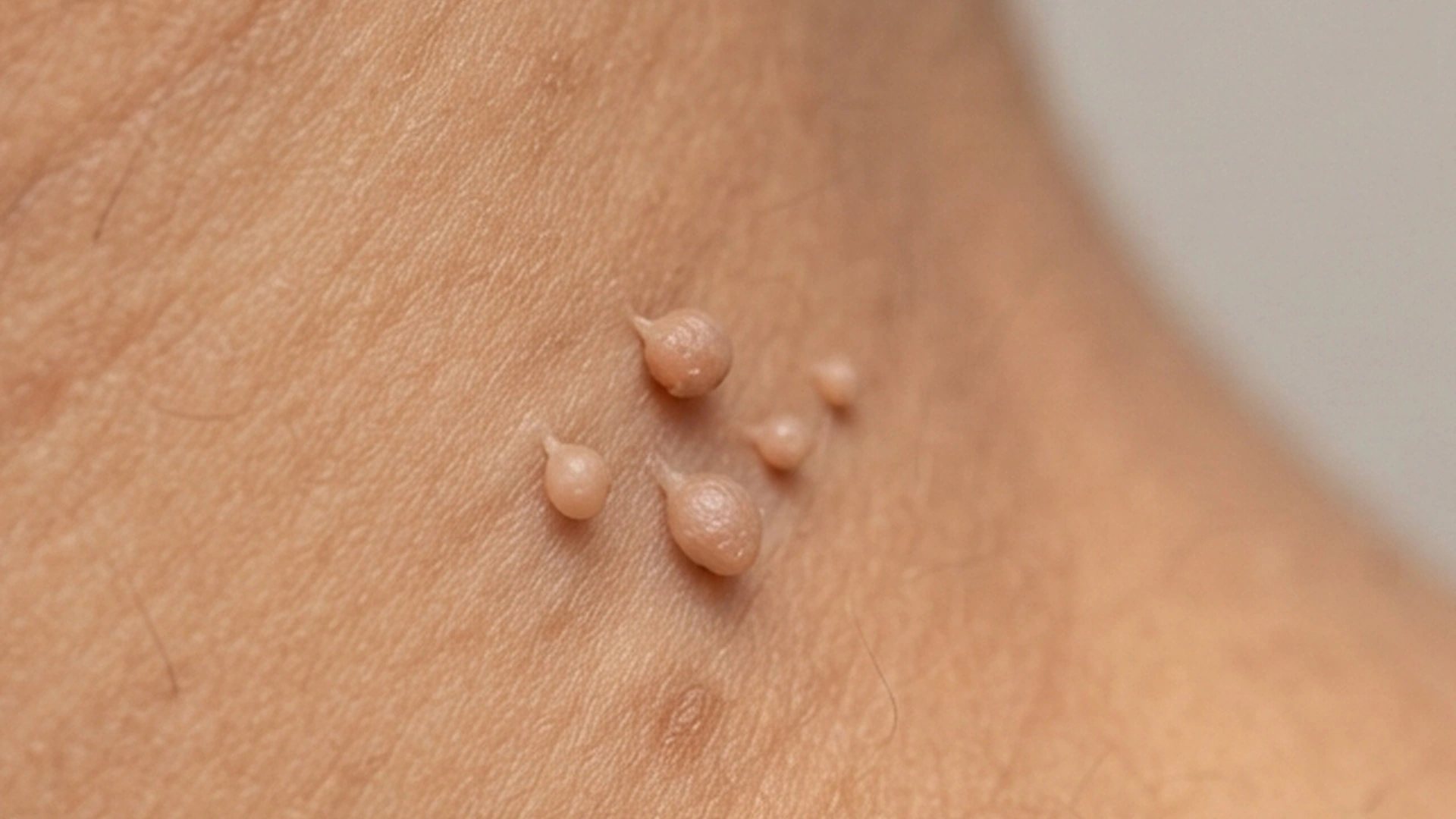
Genital Warts, representative educational image.A small soft hanging skin growth on light skin.

Key differences

The same eight facts on every condition comparison.

Usual age
Teens and adults
Adults
Where
Genital and perianal skin
Neck, armpits, groin, eyelids
Main sign
Soft, skin-colored or cauliflower-like growths
Soft hanging flap
Itch or pain
Usually painless
Neither unless snagged
Contagious
Yes
No
Long term
Can clear; can recur
Stays until removed
Scars
No
No
Who gets it
Sexually active people
Adults; weight gain, pregnancy

What is it?

Genital Warts
Skin Tags
What is it?
  • What it is
    Growths caused by genital human papillomavirus, or HPV.
  • They are soft, benign growths.
    Skin tags often hang from a small stalk in skin folds.
  • They are common.
    They become more common with age and can be skin-colored or darker.
  • Removal is optional.
    Once the diagnosis is clear, removal is a personal choice.
  • Changing growths need a check.
    A changing, irregular, painful, bleeding or pigmented growth deserves assessment.

What it looks like

Genital Warts

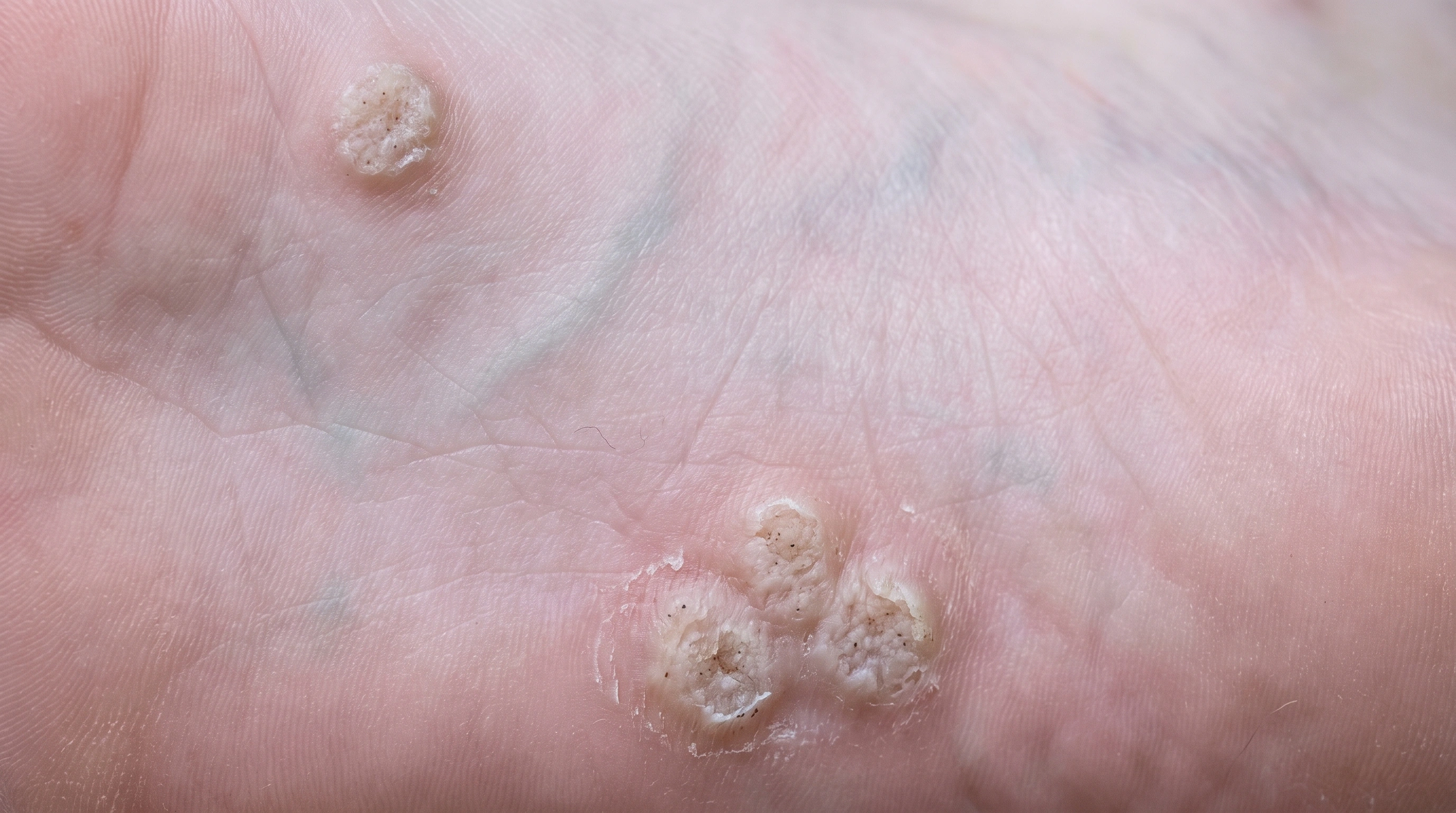
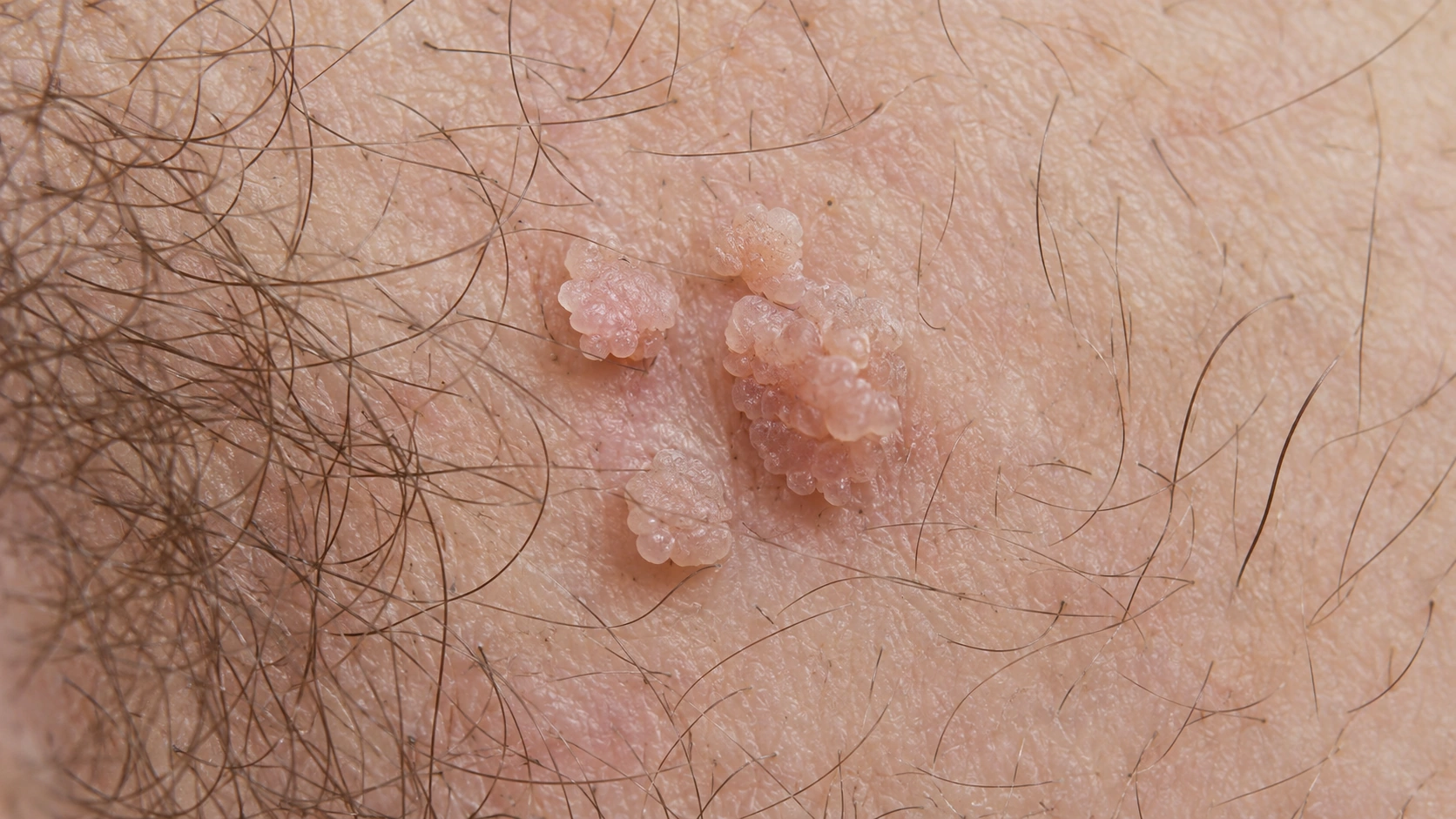
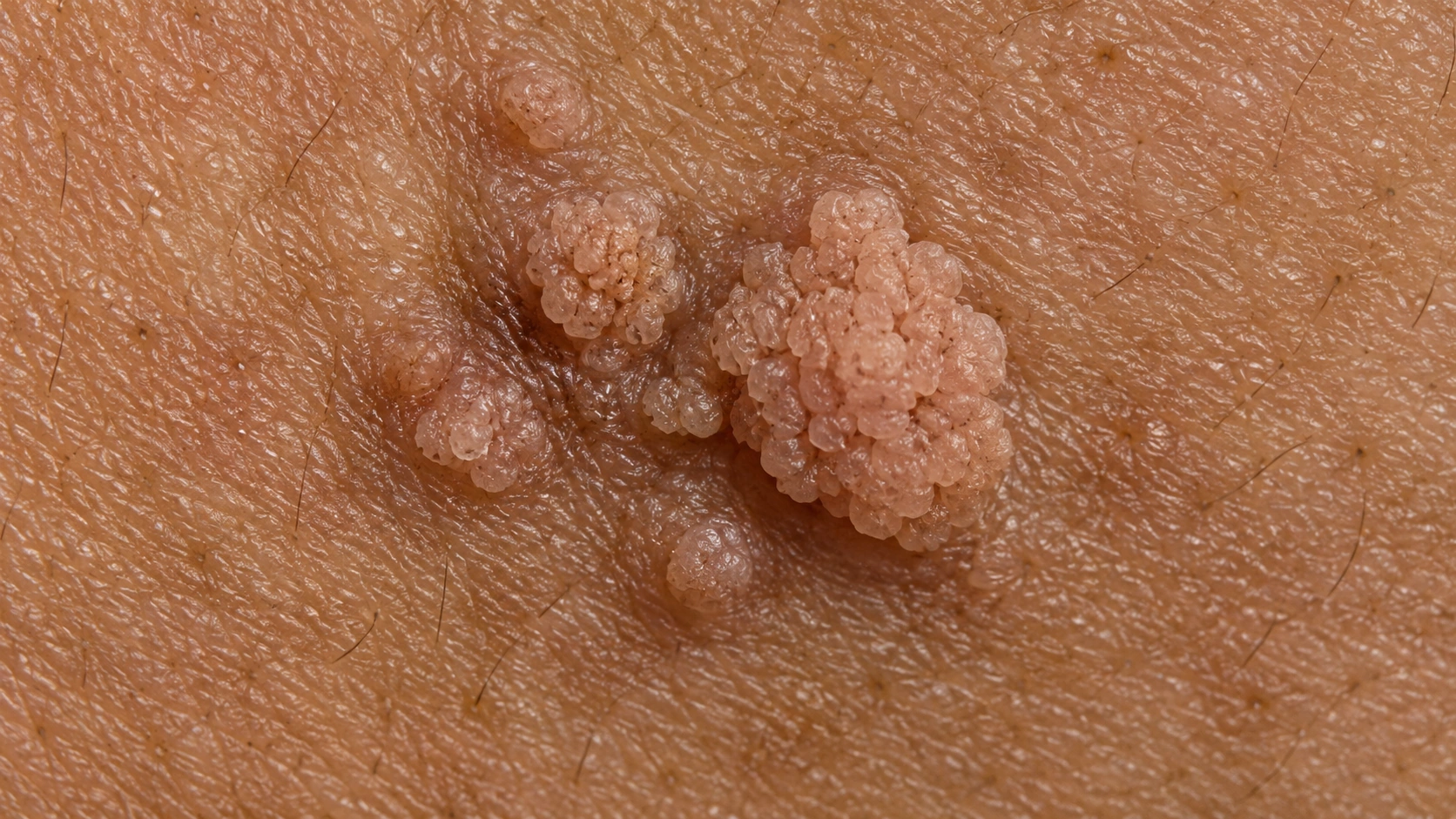
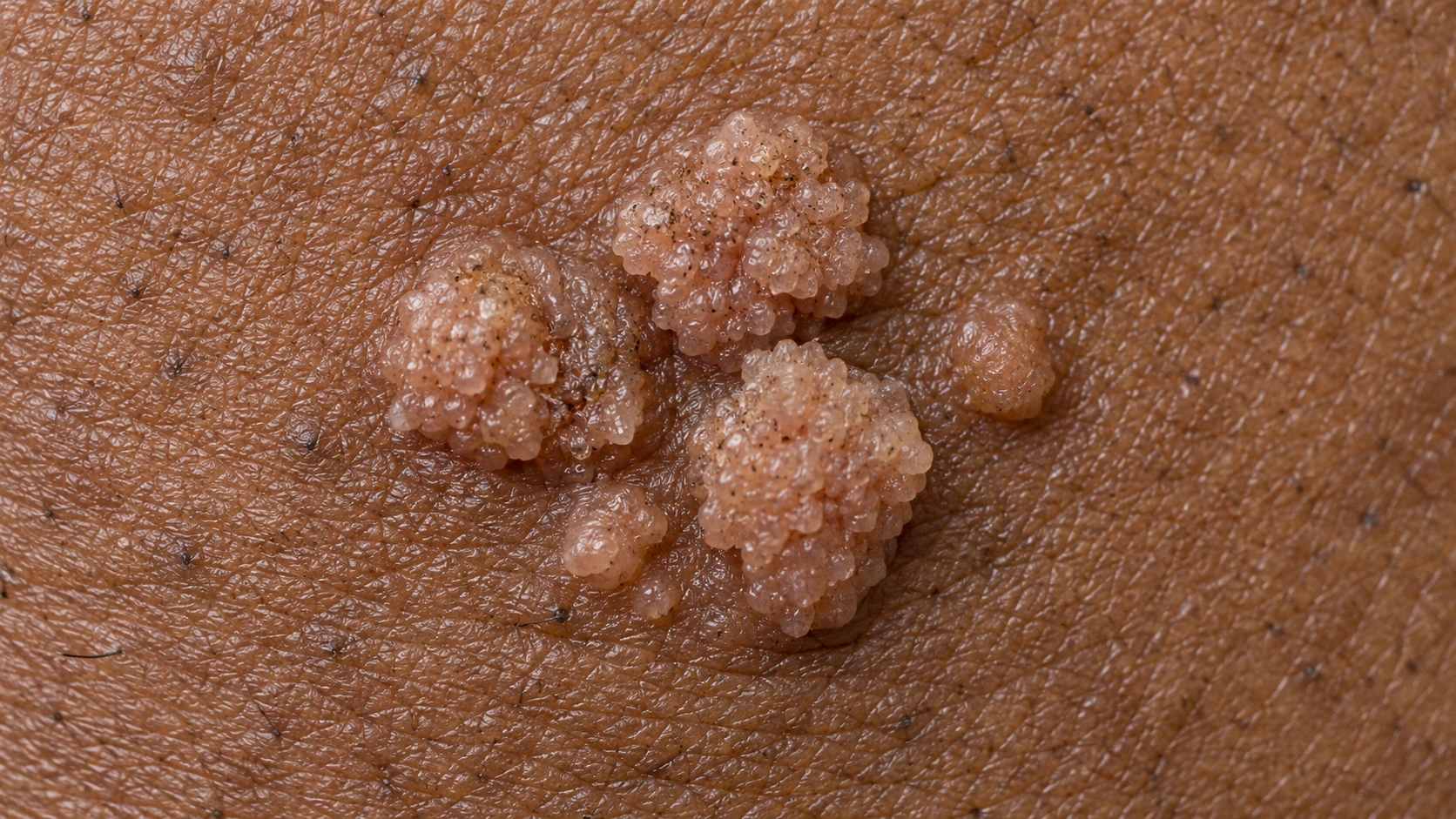
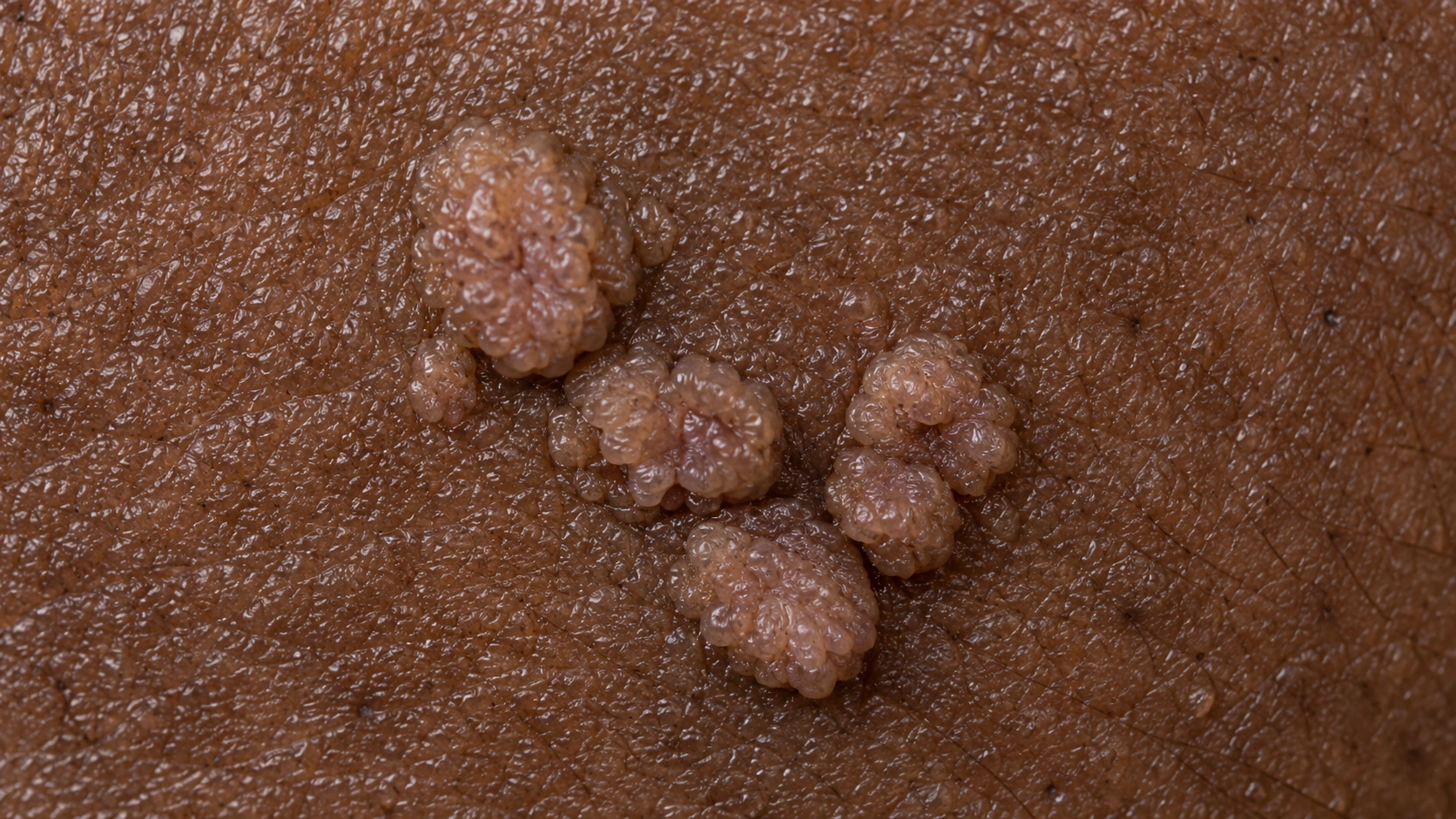
A skin cross-section model with clustered pink projections and smaller raised bumps.

Genital Warts The skin model shows grouped bumps with a rough, folded surface.

Skin Tags

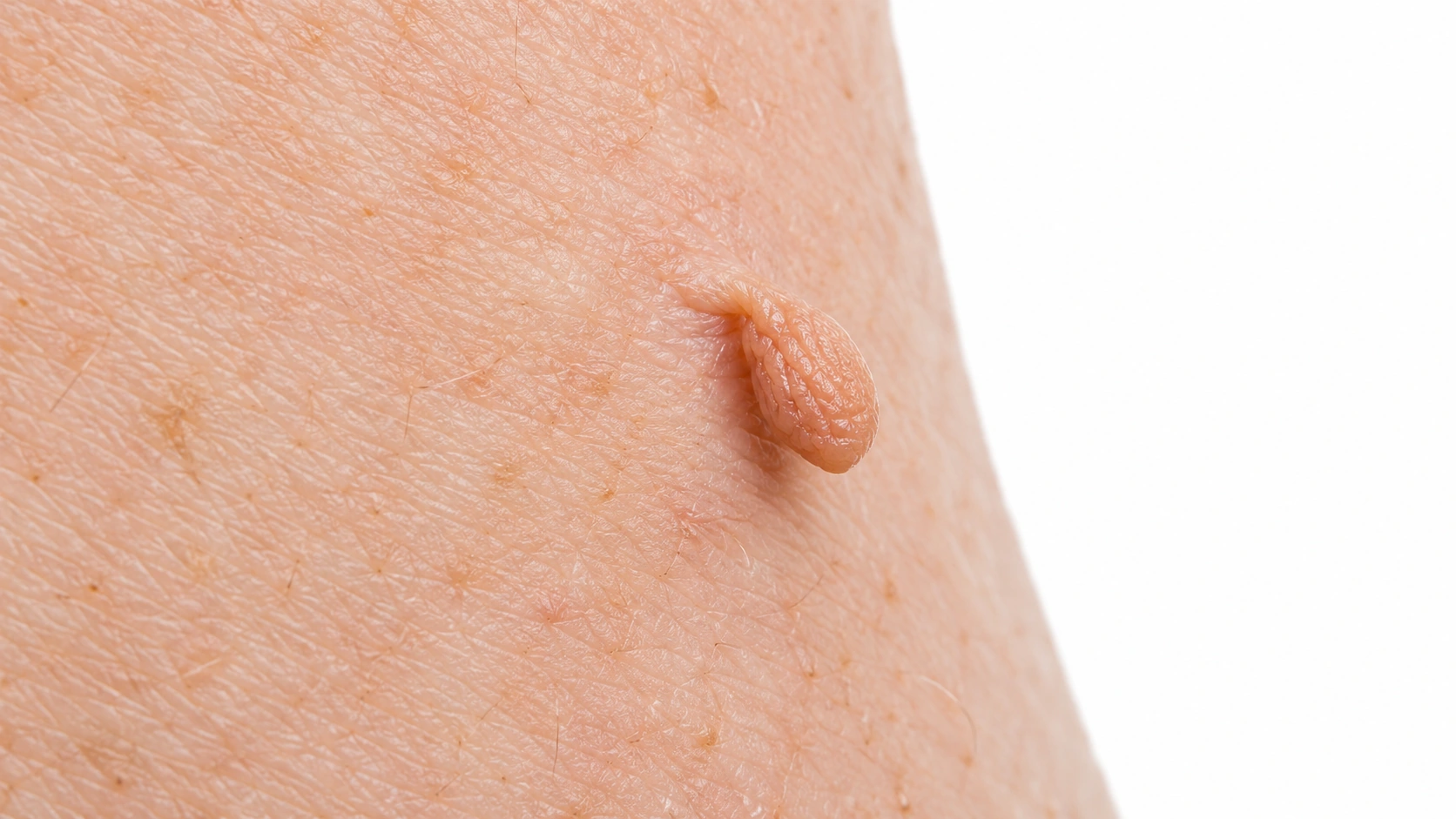
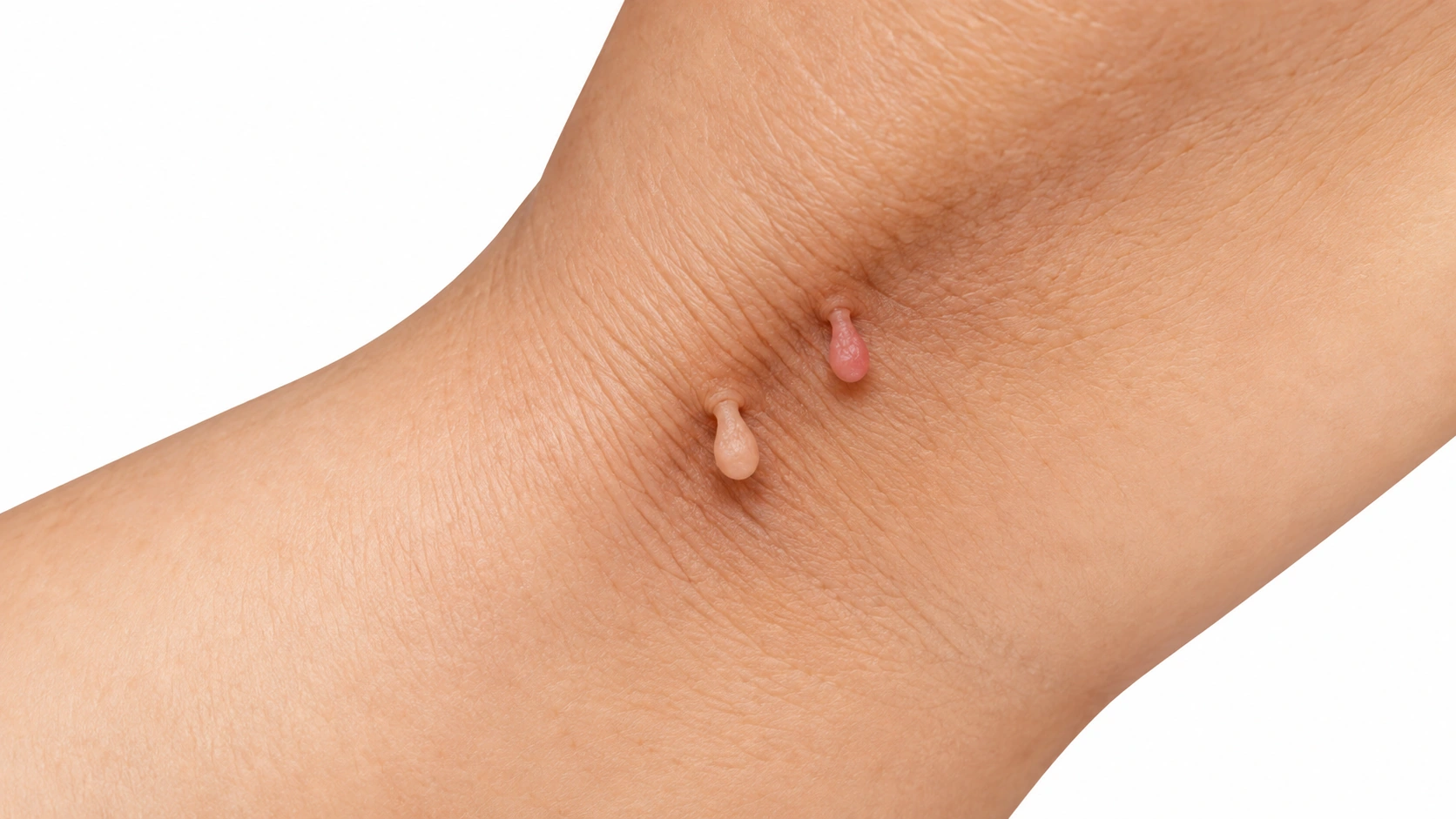
Representative image of skin tag closeup. This is a general visible-feature example, not an exact depiction of every subtype, stage or location, or a diagnostic reference.

Soft hanging growth On a thin stalk.

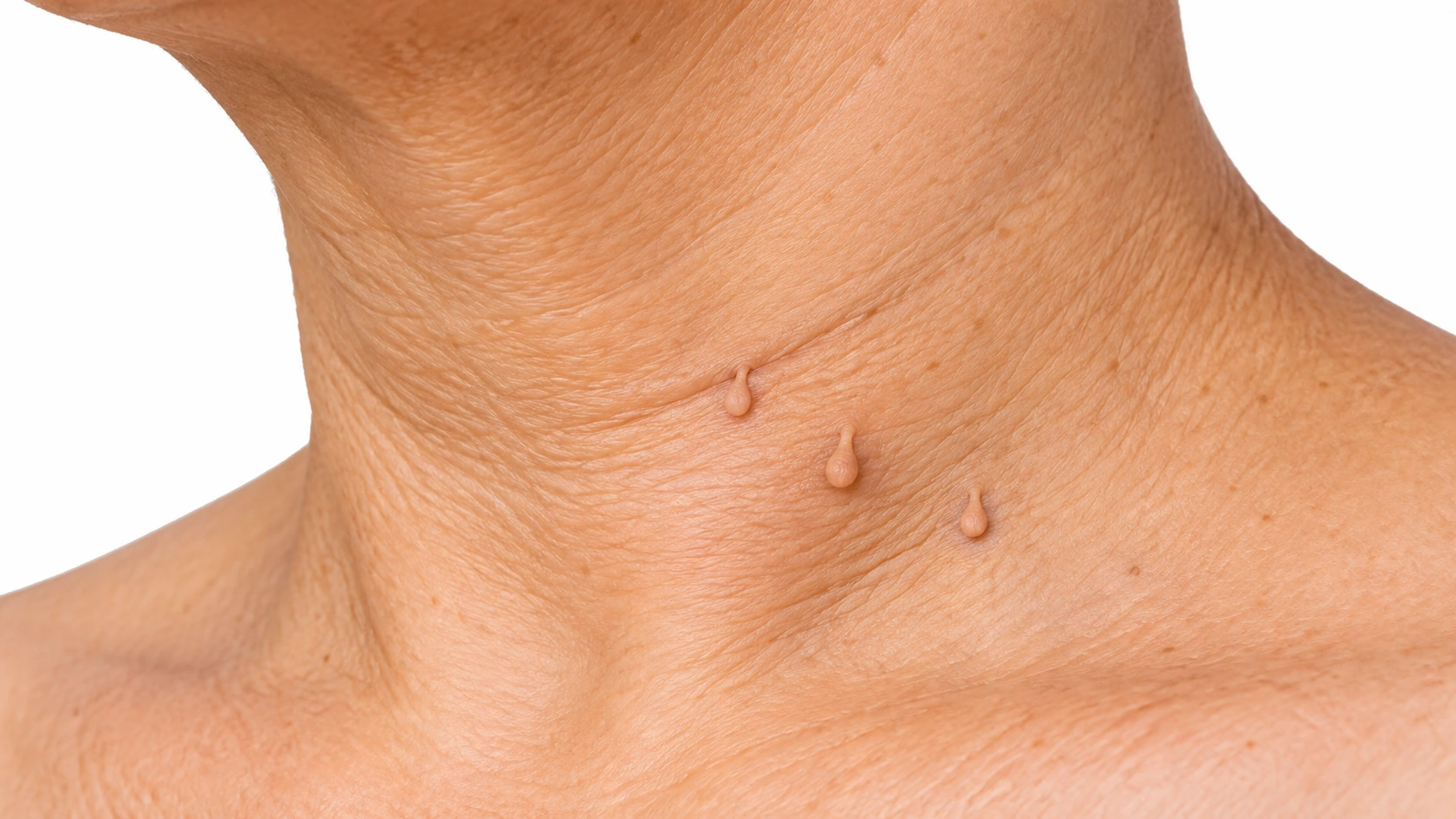
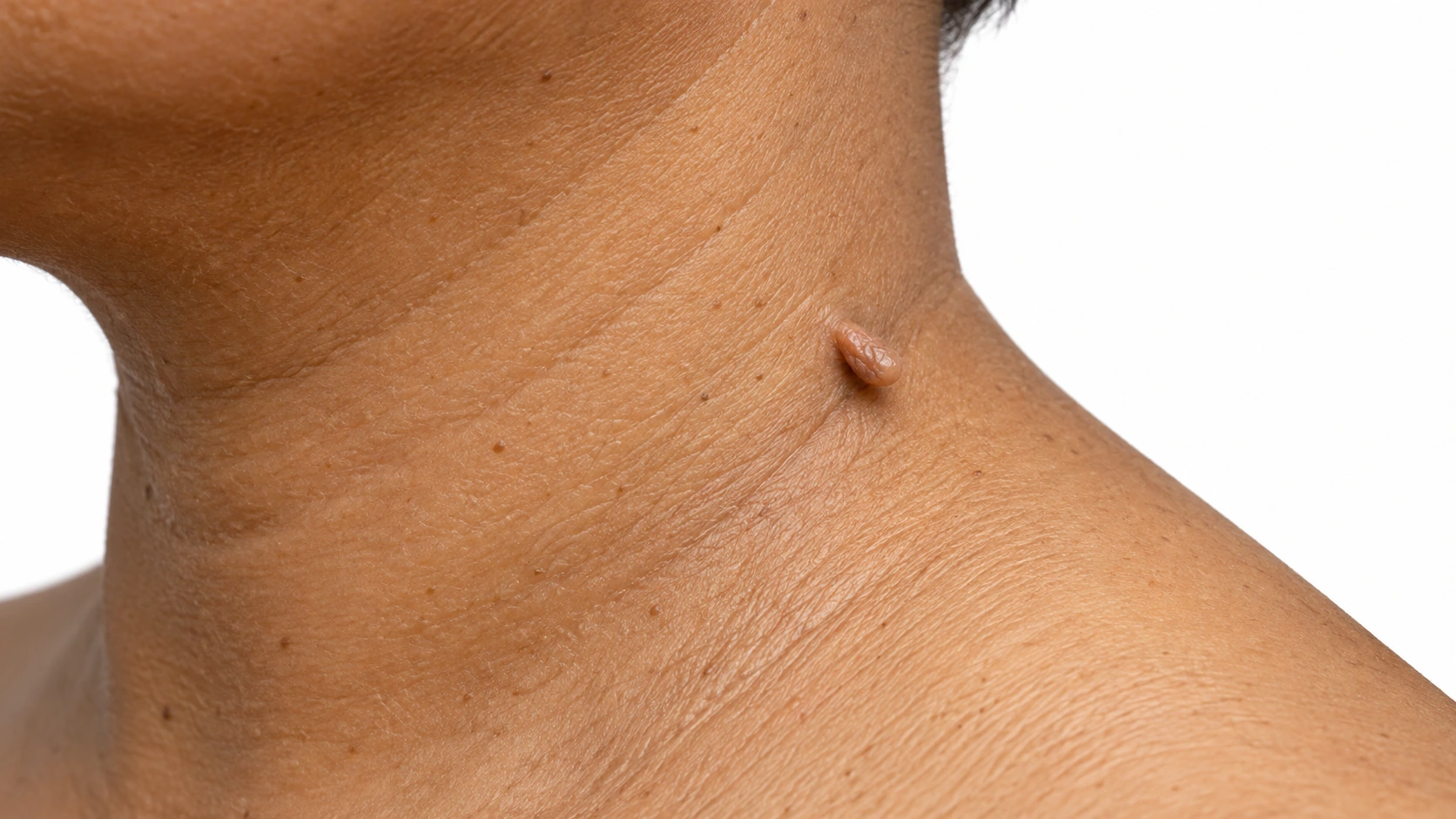
Representative image of skin tag neck. It illustrates a visible feature or experience and is not a diagnostic reference.

Neck A very common site.

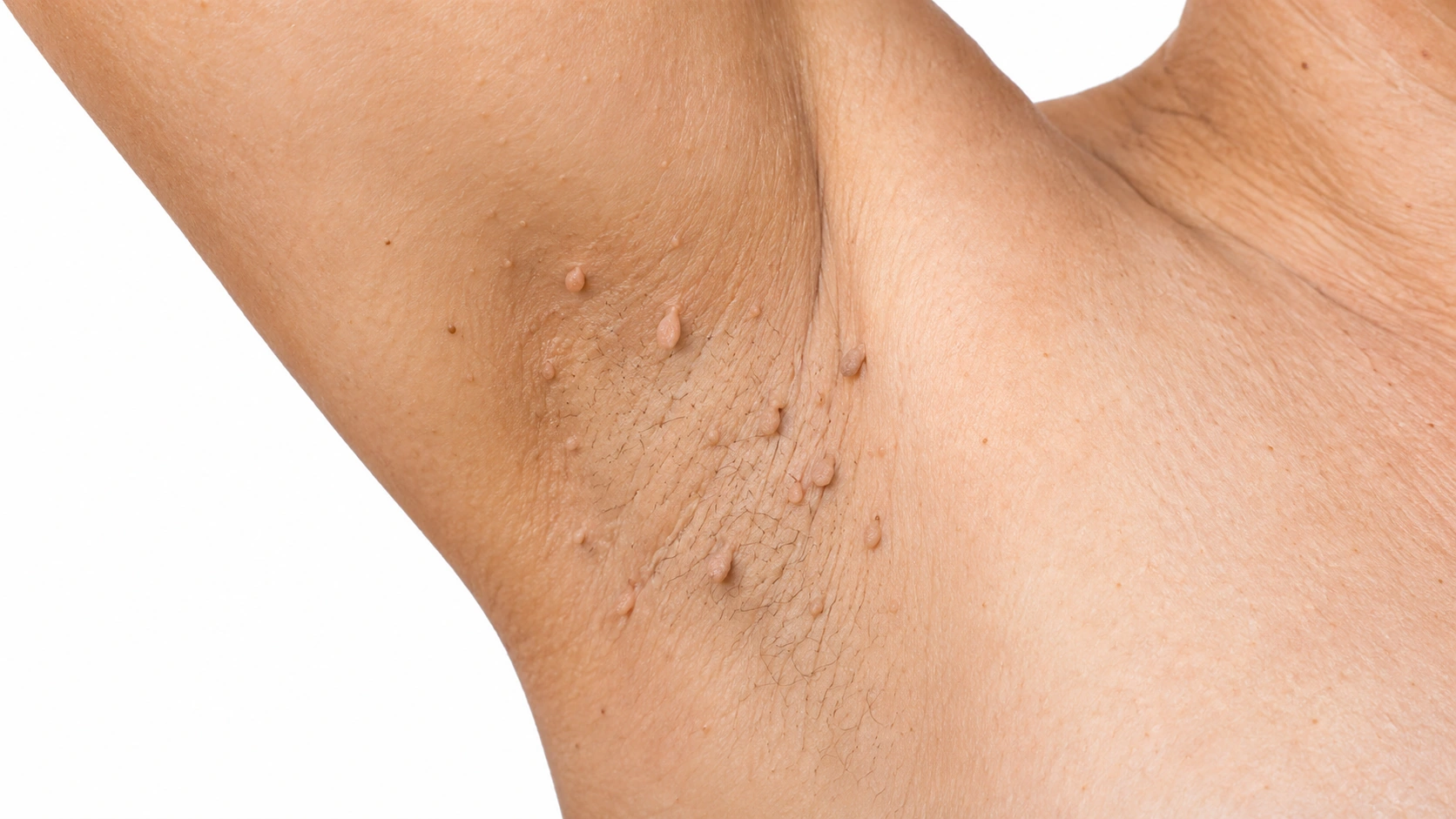
Skin tags in the armpit.

Armpit Where skin rubs together.

Skin tones
Genital Warts, representative educational image.
A small soft hanging skin growth on light skin.
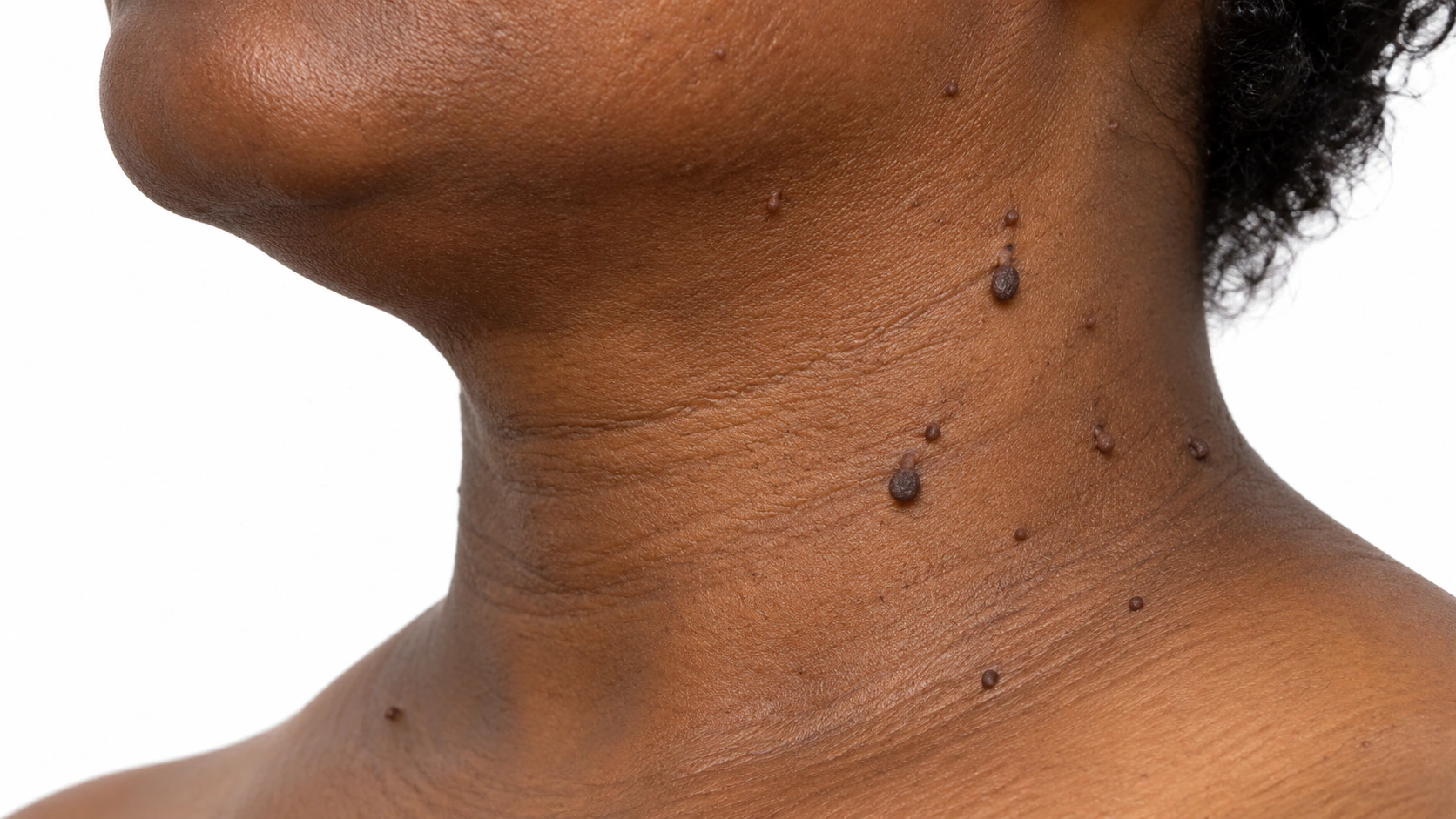
Soft hanging growth on a medium-toned neck.
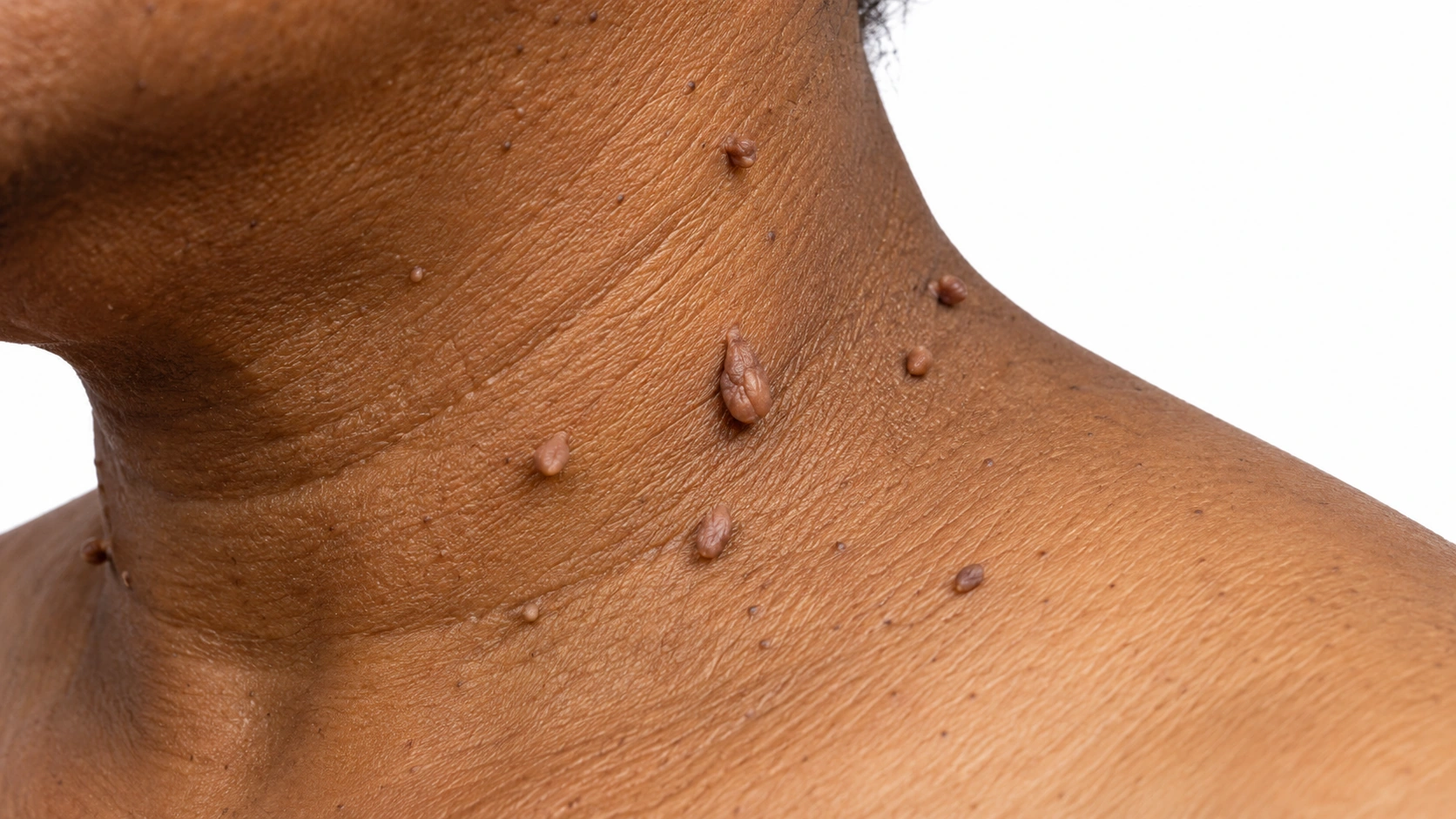
soft, stalked skin tags on a brown-skinned neck.
small soft stalked growths on a deep brown neck, representing skin tags.
Diagram
Skin Tags mechanism diagram. A small fold projects outward: The growth is covered by ordinary skin. Soft tissue forms the center: Loose collagen and small vessels fill the tag. A narrow stalk connects it: The exact cause is not fully understood.
In the skin

Human papillomavirus reaches surface skin cells through close skin contact. Infected cells grow locally to produce visible warts.

A skin tag is a soft projection of ordinary skin with loose connective tissue and small vessels inside. It often hangs from a narrow stalk, and its exact cause is not fully understood.

When it usually starts

010203040506070+

Genital Warts. Often recognised after sexual activity begins; timing cannot identify when infection was acquired.

Skin Tags. Become more common in adult life and with age; they may also appear during pregnancy.

Causes and triggers

Causes

HPV infects surface cells through close skin contact.

Skin tags form where skin rubs against skin or clothing. Extra collagen and blood vessels grow into a small, soft flap.

Family tendency

They tend to run in families.

Risk factors
Sexual skin contact, Immune suppression
Obesity, Type 2 diabetes, Pregnancy, Age over 40
Trigger
● Genital Warts
● Skin Tags
HPV exposure
Can contribute
Not listed
Friction in skin folds
Not listed
Strong link
Rubbing from jewelry or clothing
Not listed
Strong link

Daily Care

Genital Warts
Skin Tags
Daily care

Habits that help

  • Wash gently and pat the skin dry
    Avoid fragranced washes on irritated genital skin.
  • Use only a treatment intended for the diagnosed genital warts
    Follow the clinician’s application plan to protect nearby normal skin.
  • Discuss partner communication, vaccination and routine screening
    HPV vaccination and appropriate sexual health care may still be relevant after warts appear.
  • Use condoms or barriers to reduce transmission risk
    They reduce risk but cannot cover every area of affected genital skin.

Avoid

  • Avoid: Picking, shaving over or cutting off warts
    Injury can spread the virus or lead to bleeding and infection.
  • Avoid: Ordinary wart acids or home freezing on genital skin
    These products can cause serious burns on delicate areas.

Habits that help

  • Reducing friction where you can
    Softer collars, a better bra, move the necklace.
  • Shaving around them rather than over them
    An electric trimmer avoids the weekly bleed.
  • Keeping folds dry
    Dry well after showering, wear breathable fabric.
  • Weight management where it is relevant
    Less friction, better insulin resistance.
  • Discuss new growths or skin changes during pregnancy
    Hormonal change produces new tags; some settle after.
  • Discuss metabolic health and sustainable weight goals when relevant
    Both go with developing more tags.

Avoid

  • Avoid: Tight collars, straps and waistbands
    Rubbing in one line is the worst aggravator.
  • Avoid: Shaving over them
    The usual cause of bleeding.
  • Avoid: Jewelry that catches
    Chains snag tags and twist them.
  • Avoid: Repeated friction in skin folds
    More folds and sweat, more friction.
  • Avoid: Humidity and sweat
    Damp skin in a fold rubs more.
  • Avoid: Pulling or picking at them
    Bleeds more than expected, risks infection.
  • Avoid: Home removal bands and freezing kits
    Where most needless scarring comes from.
  • Avoid: Treating an unexamined growth
    You never learn what it was.
  • Avoid: Home removal bands and kits
    Avoid home removal of unexamined growths; it can cause injury and scarring.

Treatment differences

Evidence labels come from each condition’s own treatment list.

Treatment
● Genital Warts
● Skin Tags
Over-the-counter
None listed
Five dark glass tea tree essential oil bottles with glass droppers and one green box on white

Tea Tree Oil

Limited evidence

Tea tree oil, apple cider vinegar and garlic are the usual home remedies, and where they appear to work at all it is by burning the skin. That is a poor trade on a growth that was never dangerous, particularly on a neck or a face, and the mark left behind is often more noticeable than the tag. There is no evidence any of them dissolves a tag.
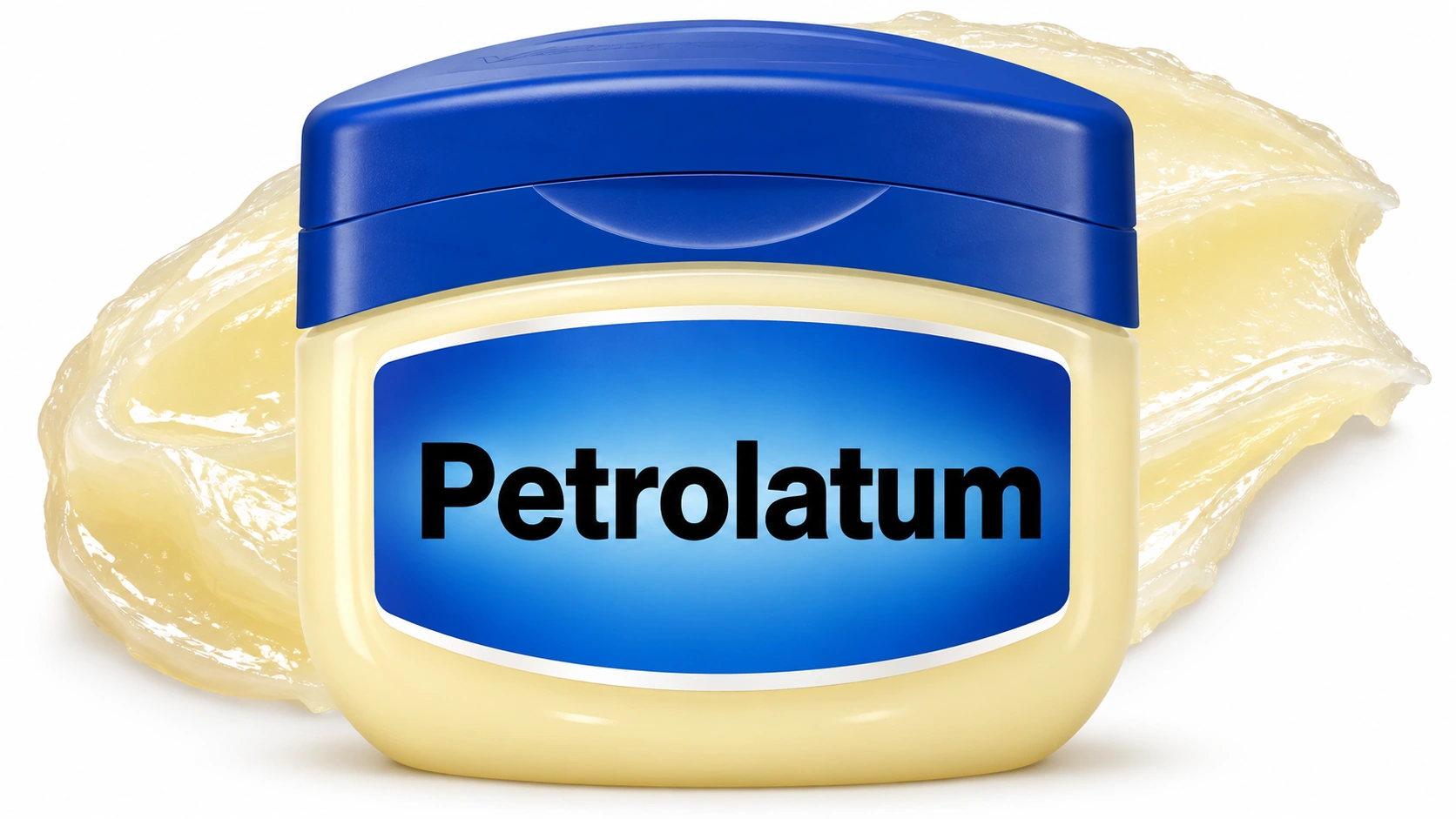
Four ointments on white: CeraVe Healing Ointment, a Vaseline jar, a petroleum jelly tube and Aquaphor

Petrolatum

Listed

This is aftercare rather than treatment. A dab of plain petroleum jelly and a small dressing over the spot left after a tag is removed keeps the scab soft and gives the neatest healing. It does nothing to a tag that is still there, and it will not shrink one.

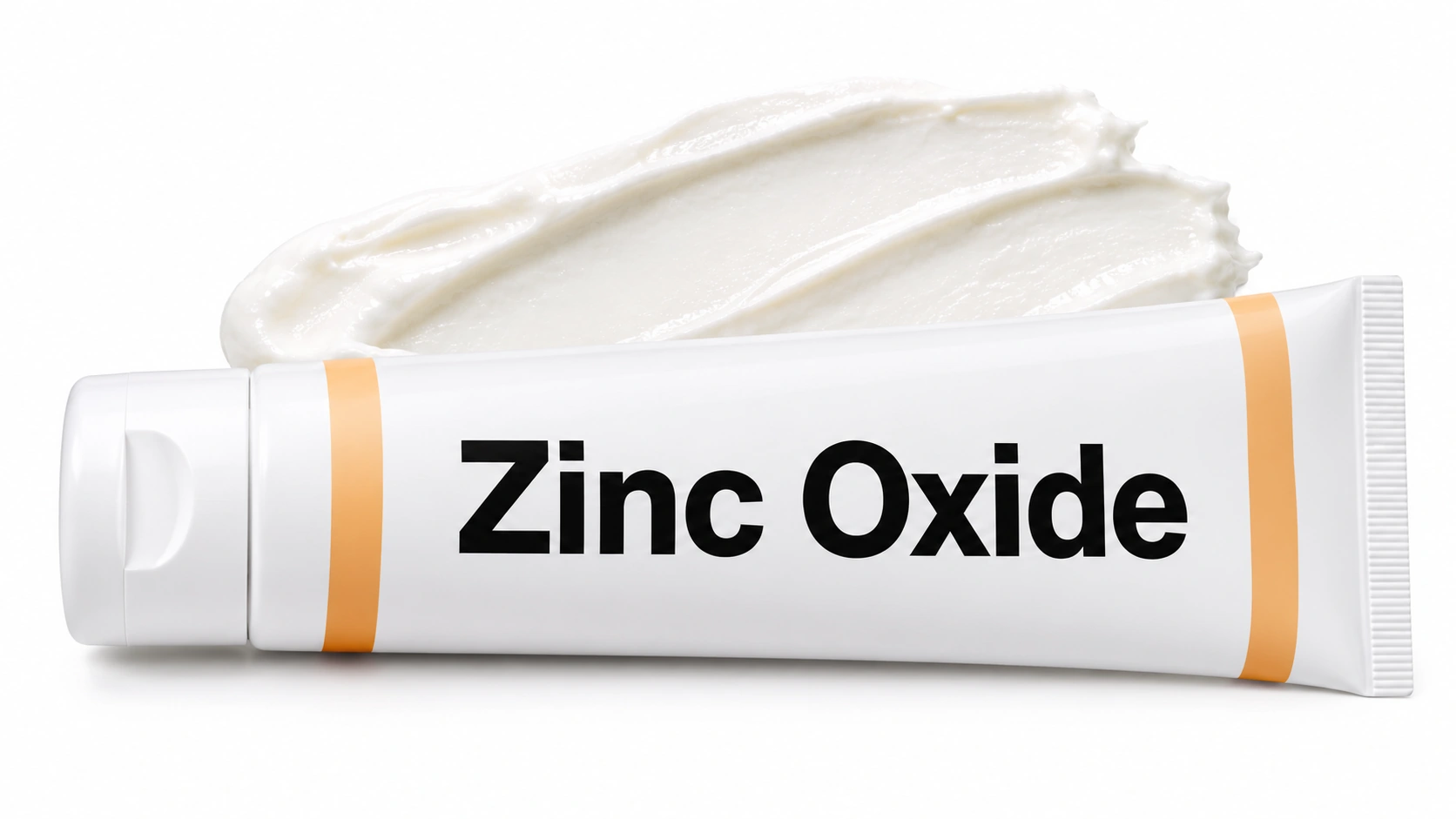
Four mineral sunscreens on white: Native SPF 30, Thinksport SPF 50, Colorescience Flex and EltaMD UV Clear

Zinc Oxide

Listed

Daily mineral sunscreen over a healed spot on the neck or eyelid stops the temporary mark from deepening and helps it fade faster. It matters most on deeper skin tones, where a dark mark can otherwise last many months. It has no effect on whether new tags form.

Prescription topicals

Clinician-selected wart medicine

Listed

Options depend on exact site, pregnancy and lesion type; ordinary hand-wart acids are unsuitable.

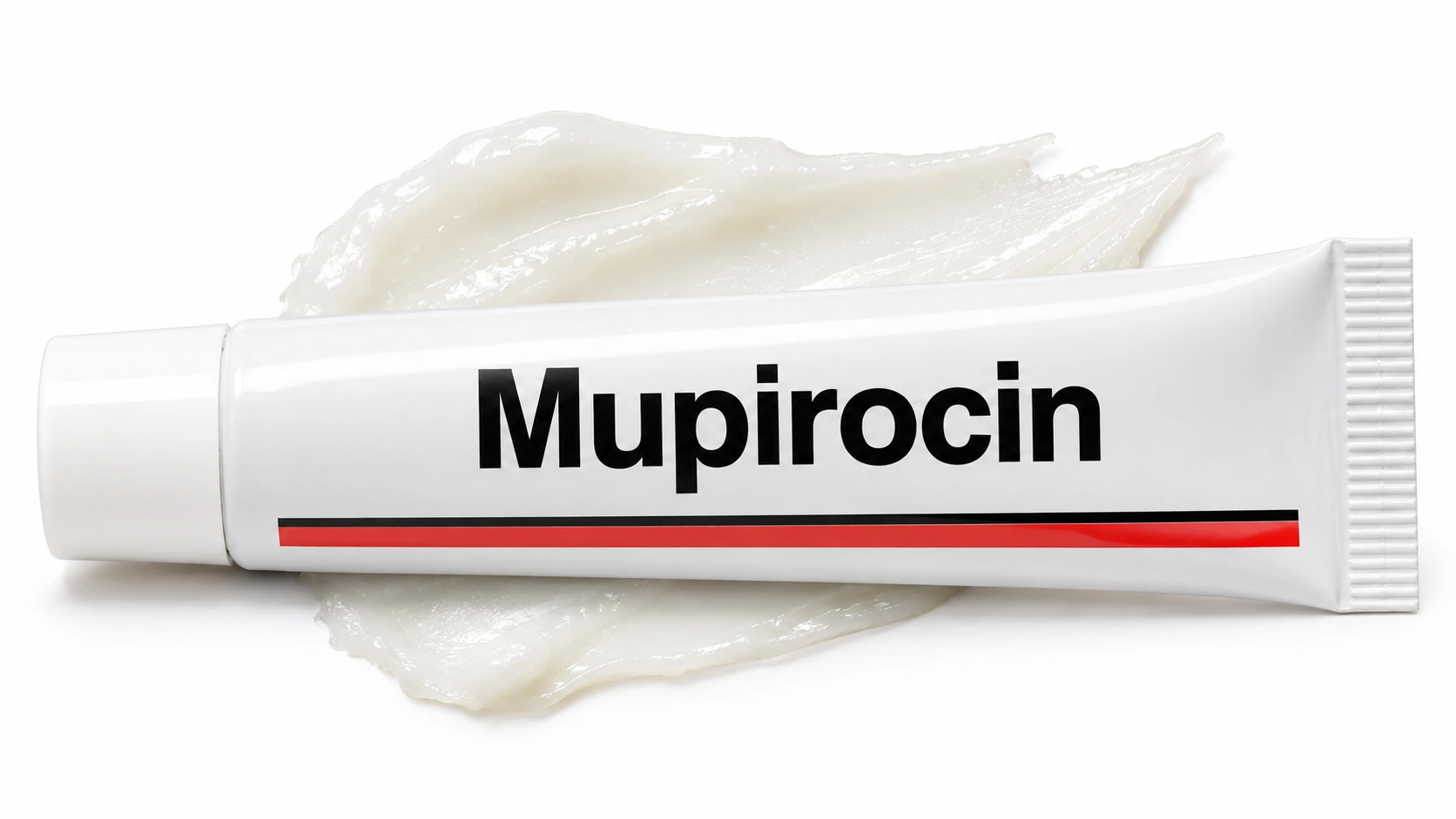
Mupirocin — Header Image

Mupirocin

Listed

An antibiotic ointment for the small number of tags that get infected after being nicked or snagged — hot, swollen, oozing. It treats the infection on the surface and does nothing to the tag itself. If the redness is spreading into the surrounding skin, antibiotic tablets are needed instead.

Procedures
None listed
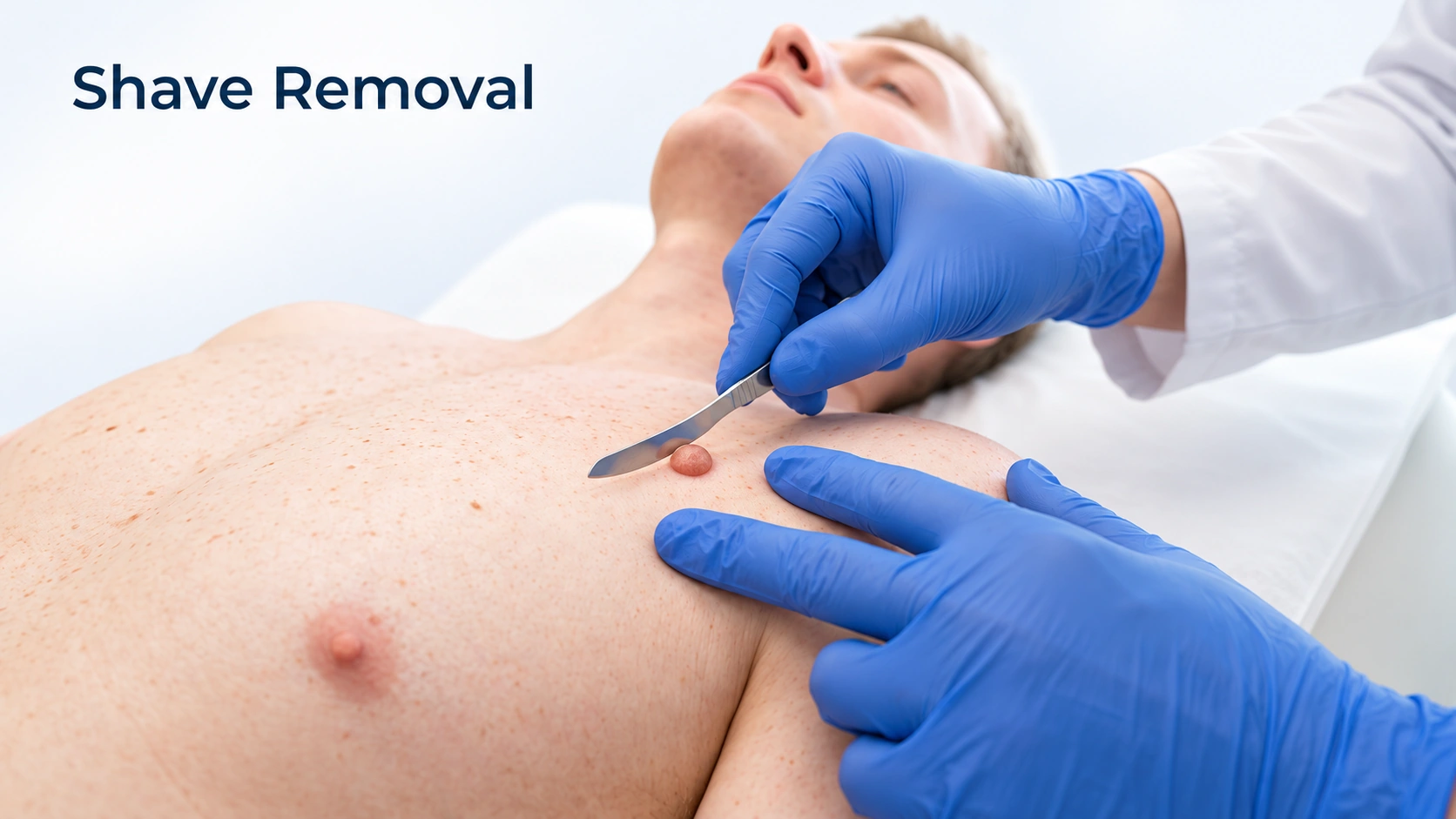
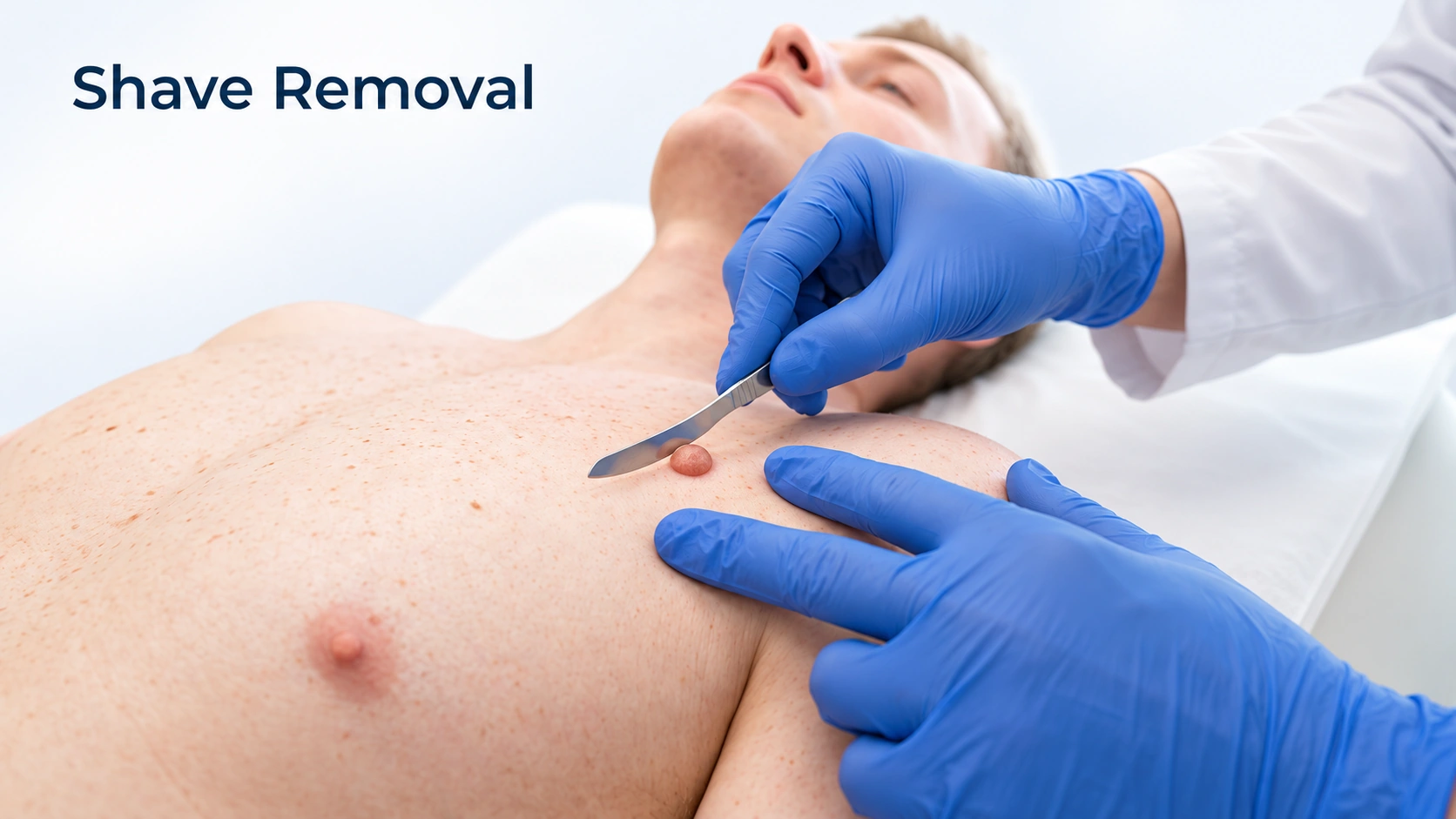
Editorial illustration for Shave Removal, based on the entry’s treatment or equipment reference.

Shave Removal

Moderate evidence

The usual method: the base is numbed and the tag is snipped or shaved off at the stalk with sterile scissors or a blade in a couple of seconds. It gives the most control over the mark left behind, which is why it is preferred on the face and neck and on deeper skin tones. It also leaves tissue that can be sent to the laboratory if there is any doubt about the growth.

Editorial illustration for Electrodesiccation and Curettage, based on the entry’s treatment or equipment reference.

Electrodesiccation and Curettage

Moderate evidence

A fine electric tip burns through the stalk and seals it at the same time, so there is no bleeding. It suits several small tags in one session and very small ones on the eyelids. It destroys the growth, so it is not used on anything that needs examining first.

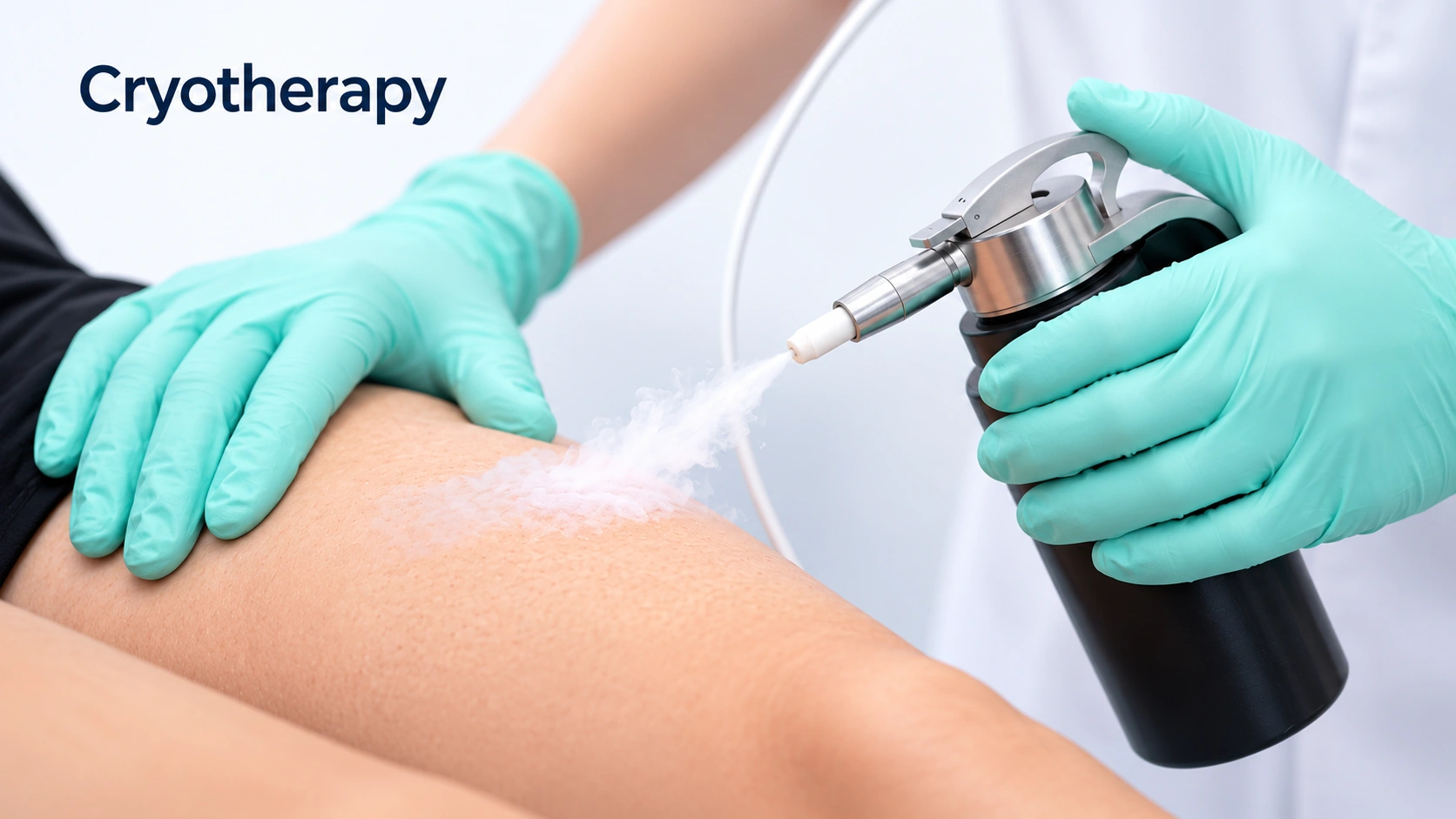
Editorial illustration for Cryotherapy, based on the entry’s treatment or equipment reference.

Cryotherapy

Moderate evidence

A few seconds of liquid nitrogen freezes the tag so it drops off over a week or so, and it is quick when there are many. It is less predictable with pigment, because the pigment-producing cells are sensitive to cold, so it is used more cautiously on deeper skin tones and near the eyes. It destroys the tag, so nothing can be examined afterward.

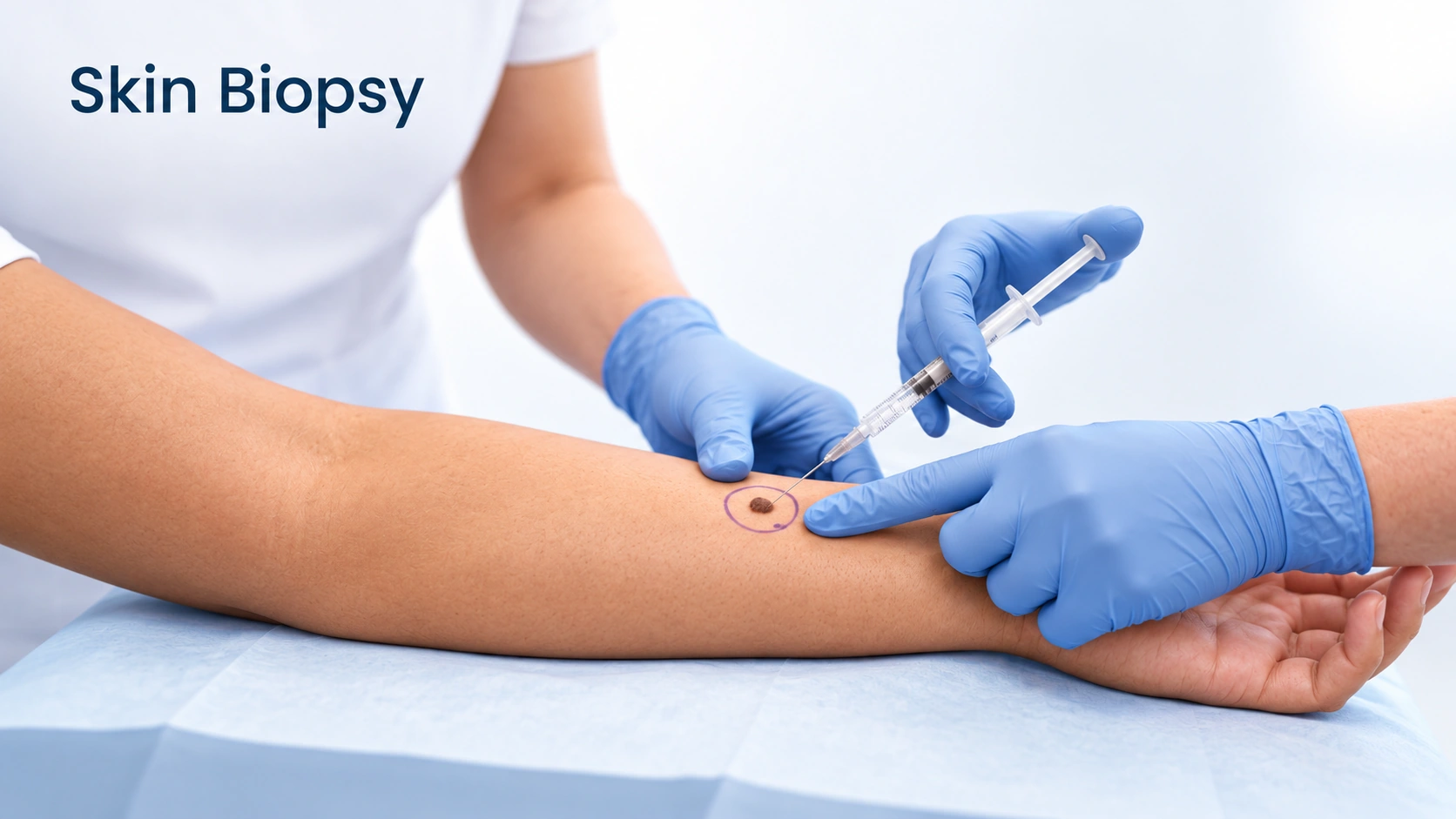
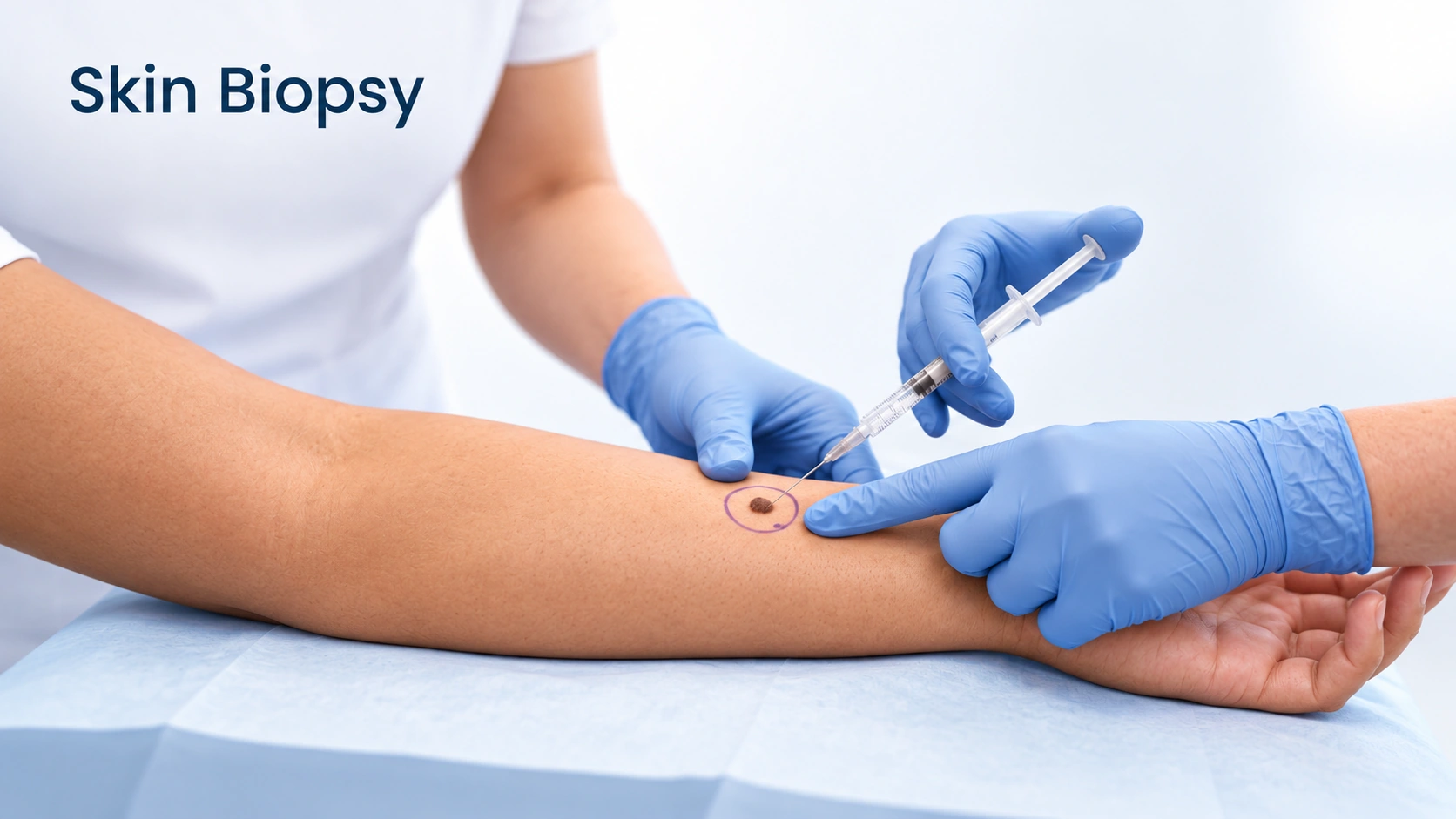
Editorial illustration for Skin Biopsy, based on the entry’s treatment or equipment reference.

Skin Biopsy

Listed

When a growth is firm, broad-based, ulcerated, bleeding on its own or simply different from your others, it is removed and sent for examination under a microscope rather than discarded. When it is being taken off anyway, that costs almost nothing, and it is the only way to be certain a growth was what it looked like.

Outlook

Long term

Warts may clear on their own or with treatment, but recurrence is common. Removing visible warts does not guarantee that the underlying HPV infection has cleared.

Skin tags follow a slow, undramatic course, and most people notice them only when one catches. Removing one changes nothing about what caused it.

Complications

Possible complications

Wart treatment removes visible lesions but may not clear HPV. Appropriate screening and vaccination still matter.

  • The usual reason people act
More details

The usual reason people act
A tag snagged by jewelry, a razor, a collar or a seatbelt can bleed and stay sore for a few days, then settle. A tag that twists on its stalk loses its blood supply, turns red, purple or black, and is tender. It dries up and drops off within one to two weeks, leaving nothing. Have a dark growth confirmed.

When to get help

When to get help

Have new genital growths examined, especially if bleeding, ulcerated, pigmented or rapidly changing.

Have an uncertain, bleeding or changing growth checked. Avoid home cutting, tying or caustic removal, especially near the eyes or genitals.

Common questions

Genital Warts:What is Genital Warts?

Growths caused by genital human papillomavirus, or HPV.

Genital Warts:What can I do day to day?

Avoid picking and home wart acids on genital skin. Discuss sexual health testing and vaccination.

Genital Warts:When should I get medical advice?

Have new genital growths examined, especially if bleeding, ulcerated, pigmented or rapidly changing.

Skin Tags:Can I just cut it off myself?

Please do not. It bleeds more than you expect, it hurts more than you expect, the tools at home are not sterile, and you lose the chance to have it examined if it turns out not to be a skin tag. Removal in clinic takes seconds.

Skin Tags:Will more grow back if I have them removed?

Not the same one. New tags can appear in the same area over time, because removal does not change the friction, genetics or hormones that produced the first one. Not the tag growing back.

Skin Tags:Does having skin tags mean something is wrong with my health?

Usually not. They are extremely common and most people who have them are healthy. A lot of them is associated with insulin resistance and type 2 diabetes across large groups, so developing many new ones, especially with darkened velvety skin in the folds, is a fair reason to check blood sugar. A prompt, not a diagnosis.

Skin Tags:One of mine has turned black. Is that dangerous?

Most often the tag has twisted on its stalk and lost its blood supply. It is tender for a few days, then dries up and falls off, leaving nothing. Still get it looked at, because a growth turning dark is also how other things present.

Skin Tags:Will insurance pay for removal?

Usually not, because it is normally considered cosmetic. The exception tends to be a tag that repeatedly catches, bleeds or becomes inflamed. Ask the clinic before you book so the cost is not a surprise.

Skin Tags:Are the ones I got during pregnancy permanent?

Some shrink or disappear in the months after delivery and some stay. Wait several months before deciding on removal, and ask the doctor managing your pregnancy before having anything done meanwhile.

Sources

Sources and further reading

  1. Anogenital wart
  2. DermNet
Dermapedia on YouTube