Skin Tags vs Seborrheic Keratosis

Skin tags are soft, harmless growths that hang from the skin on a narrow stalk, usually where skin rubs against skin. They are extremely common, they are not contagious, and removing them is a choice rather than a medical need. A seborrheic keratosis is a common, harmless growth that looks stuck onto the skin, like a piece of wax or a small barnacle. They are not cancer and they do not become cancer. The reason to see a doctor is to be sure that is what you are looking at.

Reviewed by Dr. Schwarz, Board-Certified Dermatologist · Research updated 2026-10-23
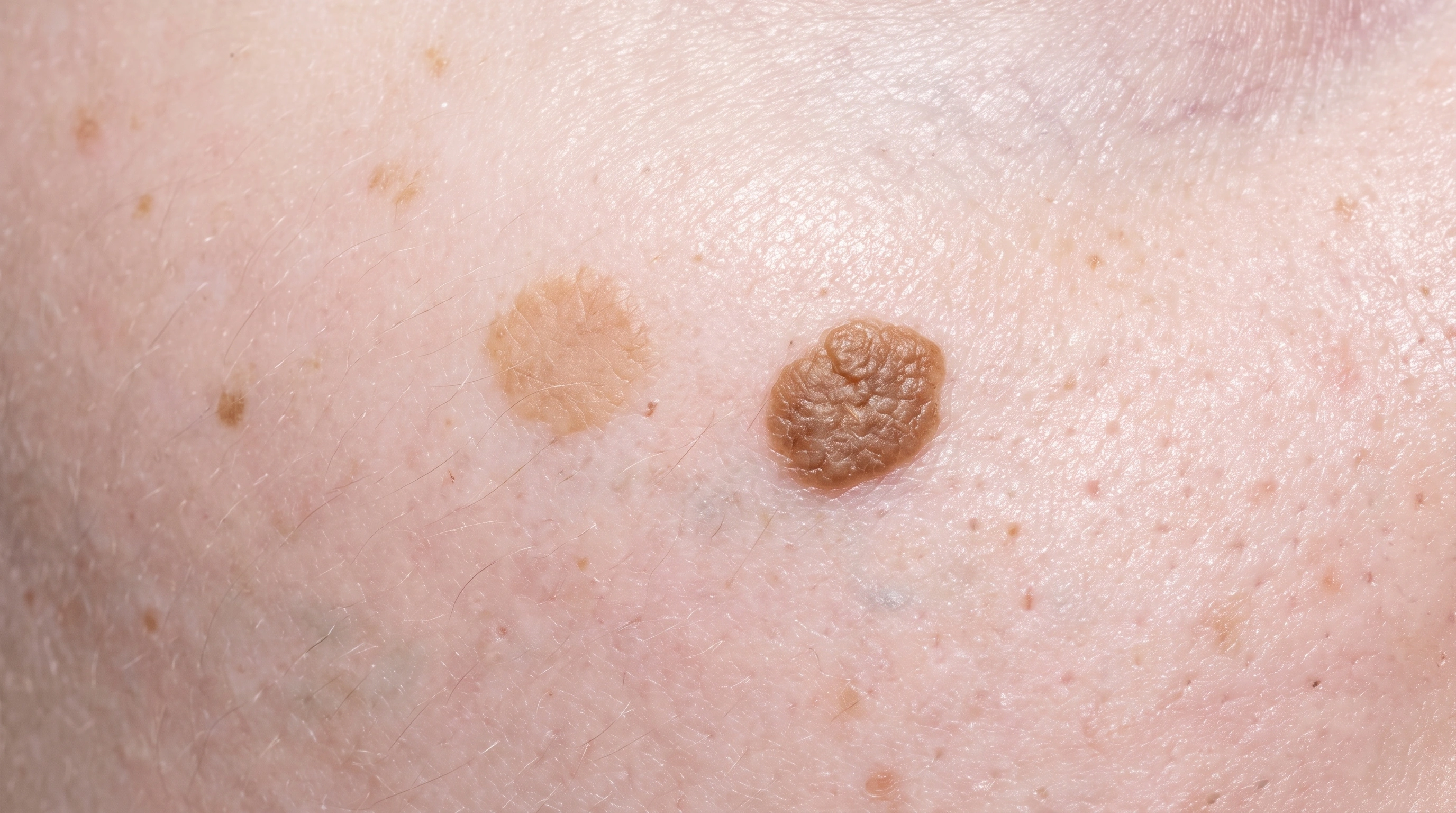
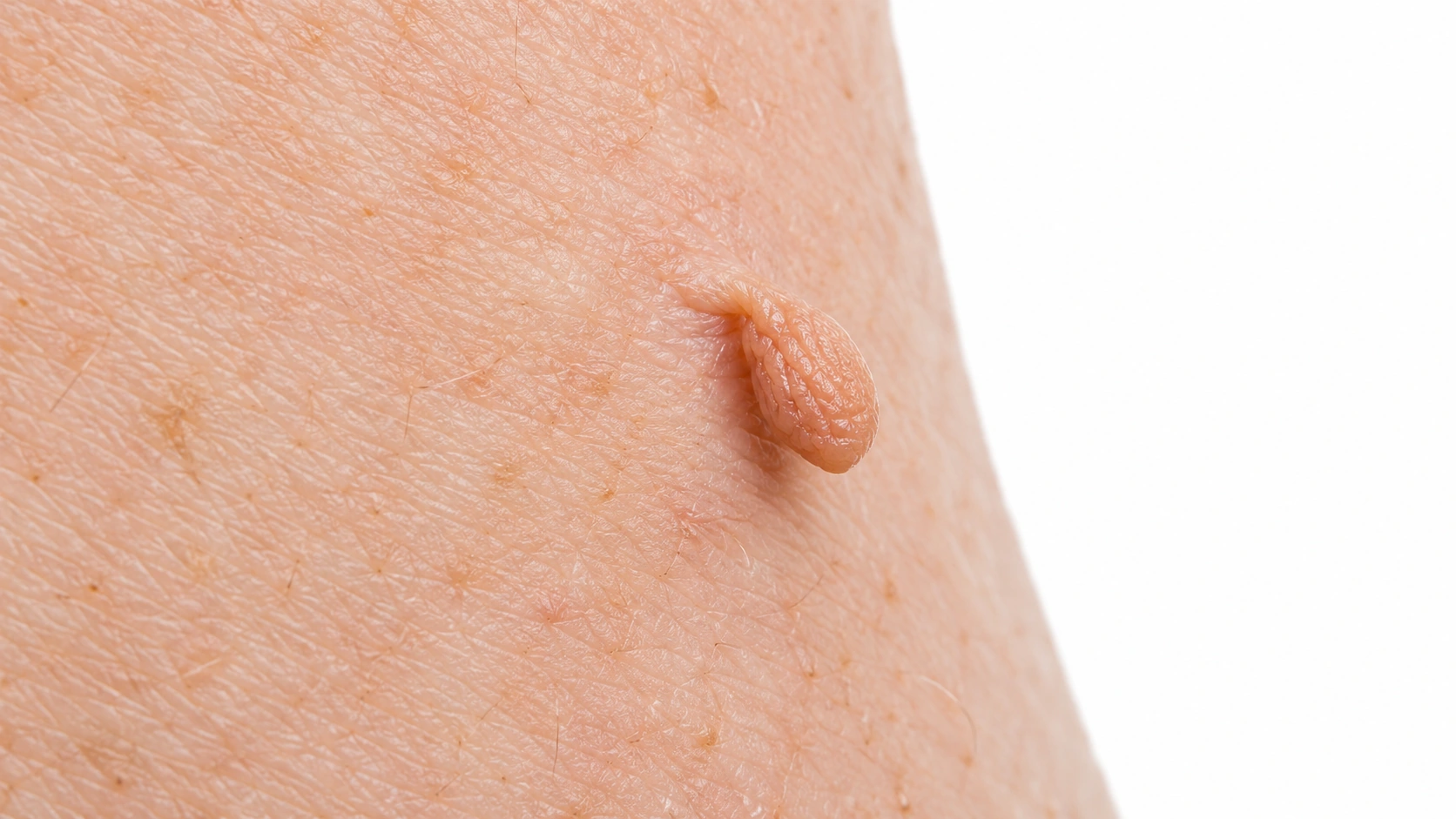
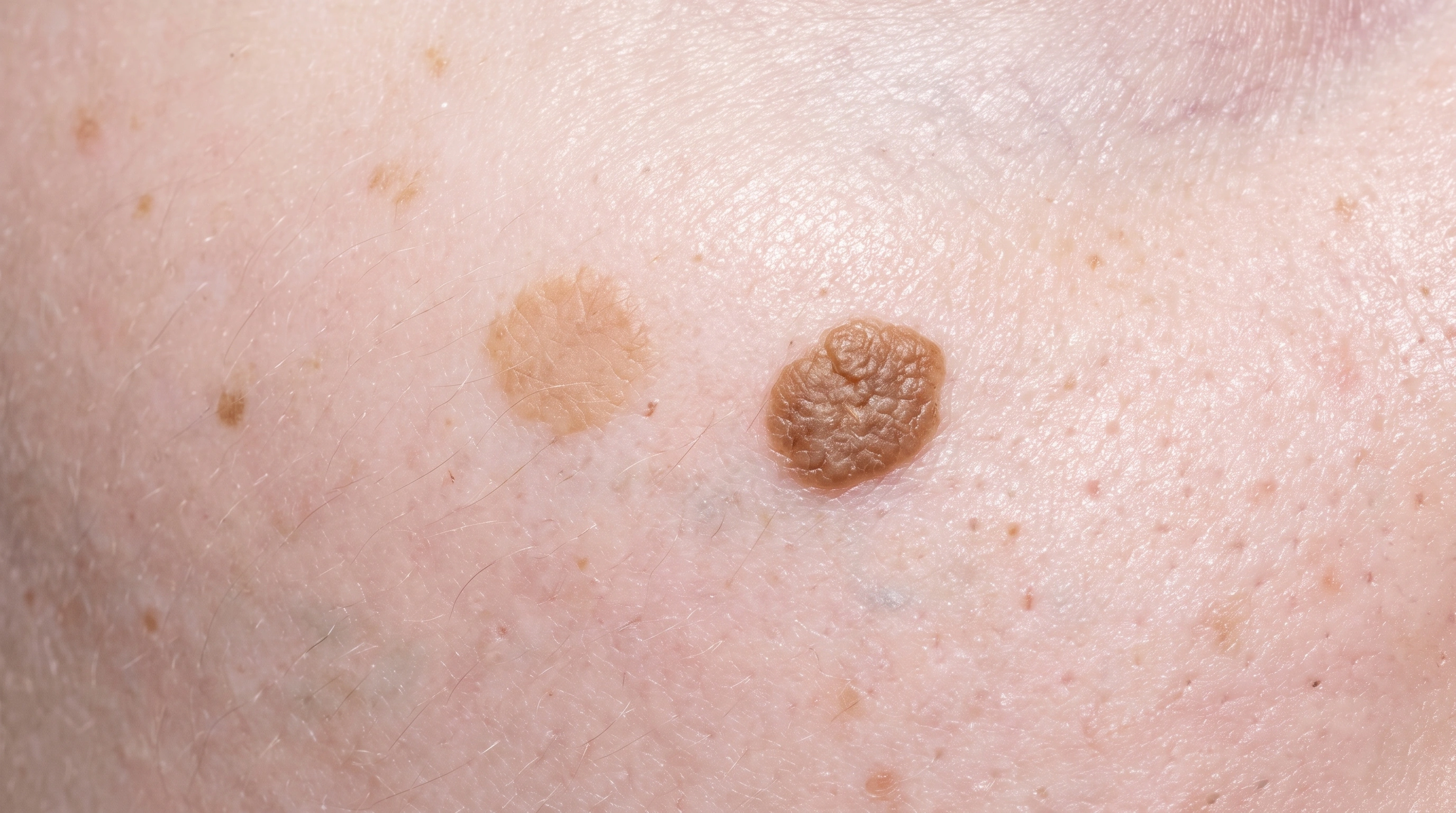
A small soft hanging skin growth on light skin.Two growths on the upper back on fair skin. One is a flat light tan patch and the other is a raised mid-brown growth with a rough waxy surface and a sharply defined edge.

Key differences

The same eight facts on every condition comparison.

Usual age
Adults
40 and over
Where
Neck, armpits, groin, eyelids
Back, chest, face
Main sign
Soft hanging flap
Waxy stuck-on growth
Itch or pain
Neither unless snagged
Sometimes itchy
Contagious
No
No
Long term
Stays until removed
Stays; more appear
Scars
No
No
Who gets it
Adults; weight gain, pregnancy
Most people over 50

What is it?

Skin Tags
Seborrheic Keratosis
What is it?

They are soft, benign growths.
Skin tags often hang from a small stalk in skin folds.

They are common.
They become more common with age and can be skin-colored or darker.

Removal is optional.
Once the diagnosis is clear, removal is a personal choice.

Changing growths need a check.
A changing, irregular, painful, bleeding or pigmented growth deserves assessment.

It is a benign growth.
Surface skin cells form a waxy, warty or stuck-on growth.

Color varies.
It can be tan, brown, gray or almost black.

It is not a precancer.
These growths become more common with age.

Uncertain lesions are tested.
Tissue is examined before any destructive treatment if the appearance is unclear.

What it looks like

Skin Tags

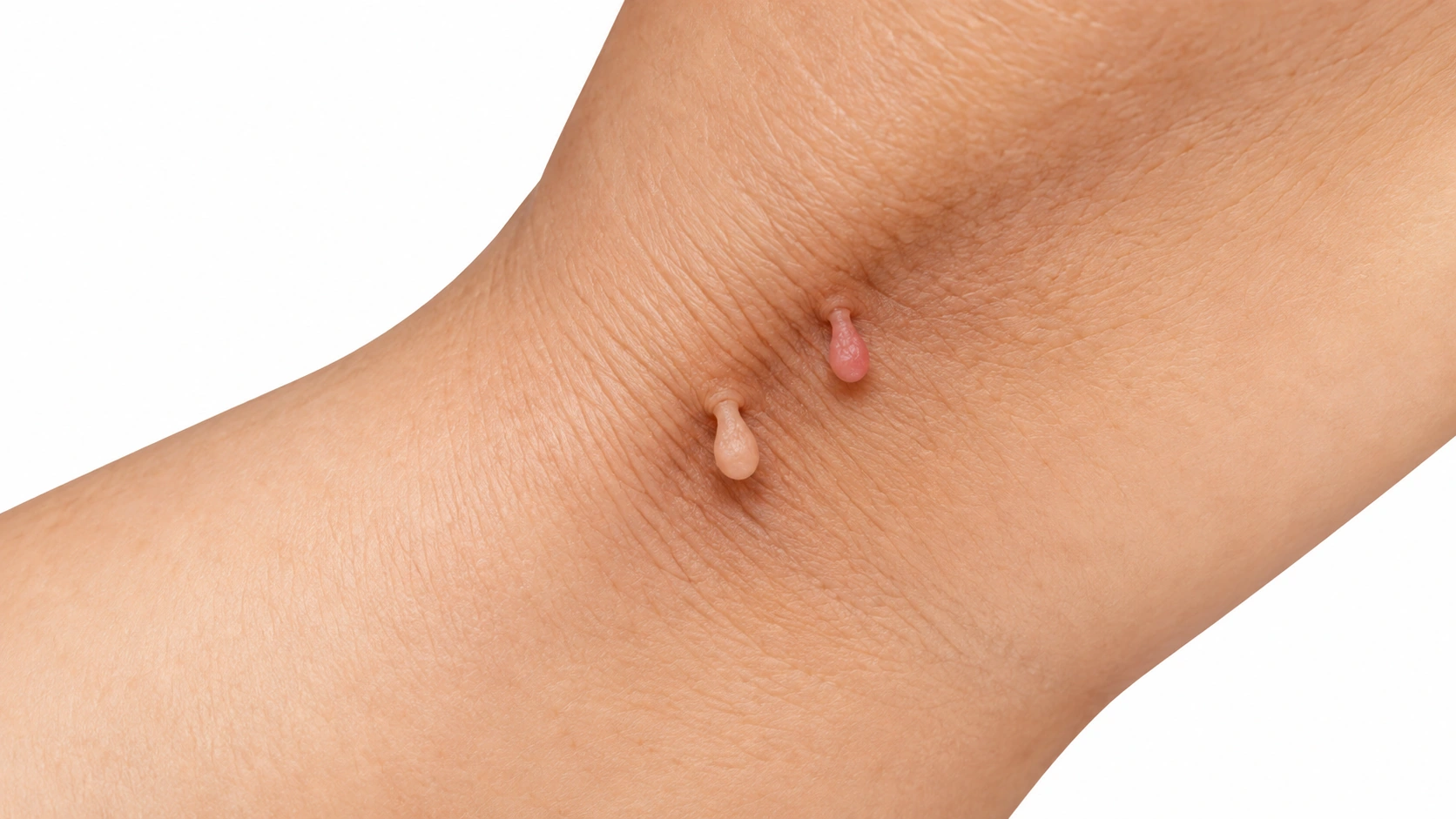
Representative image of skin tag closeup. This is a general visible-feature example, not an exact depiction of every subtype, stage or location, or a diagnostic reference.

Soft hanging growth On a thin stalk.

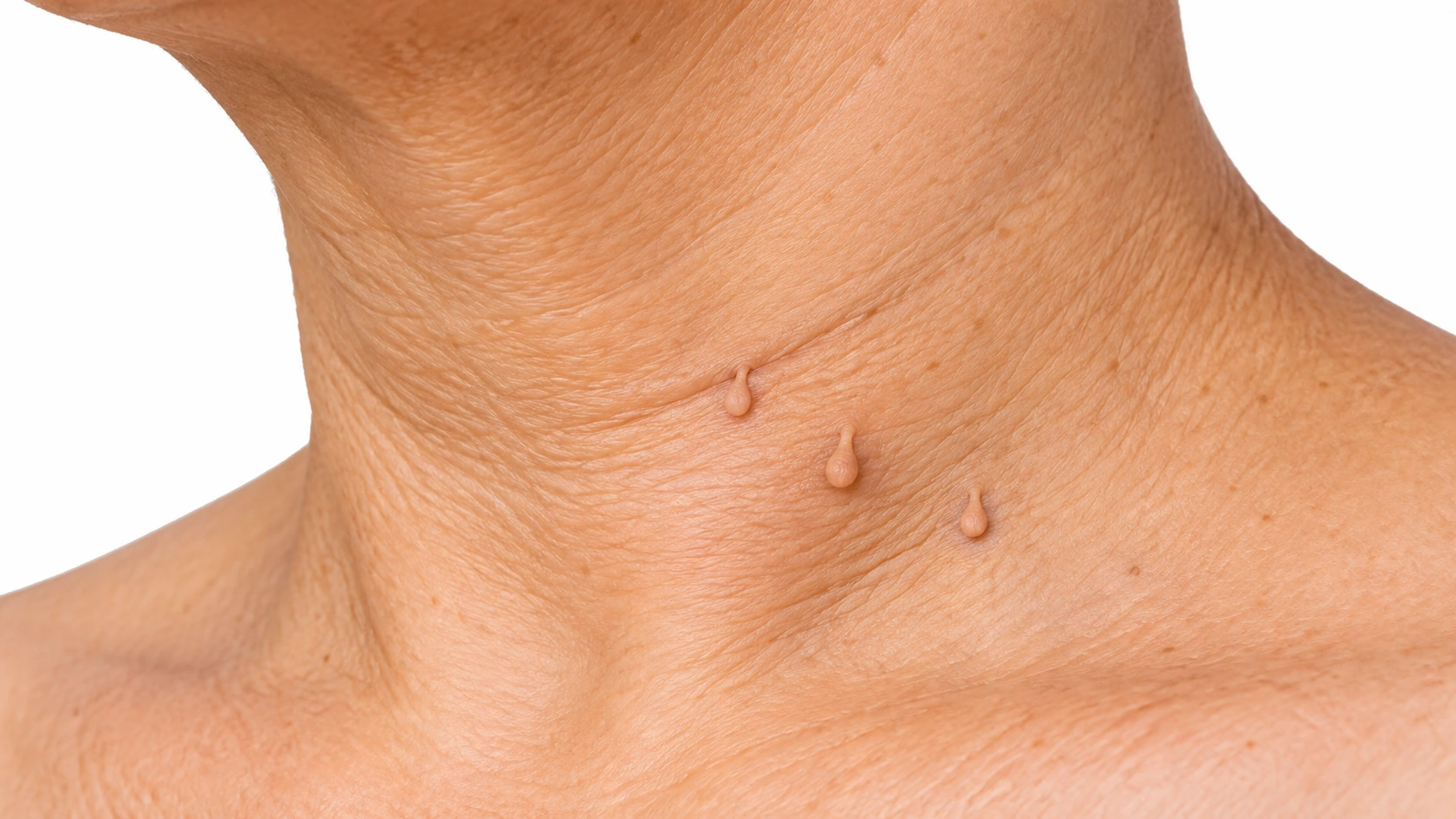
Representative image of skin tag neck. It illustrates a visible feature or experience and is not a diagnostic reference.

Neck A very common site.

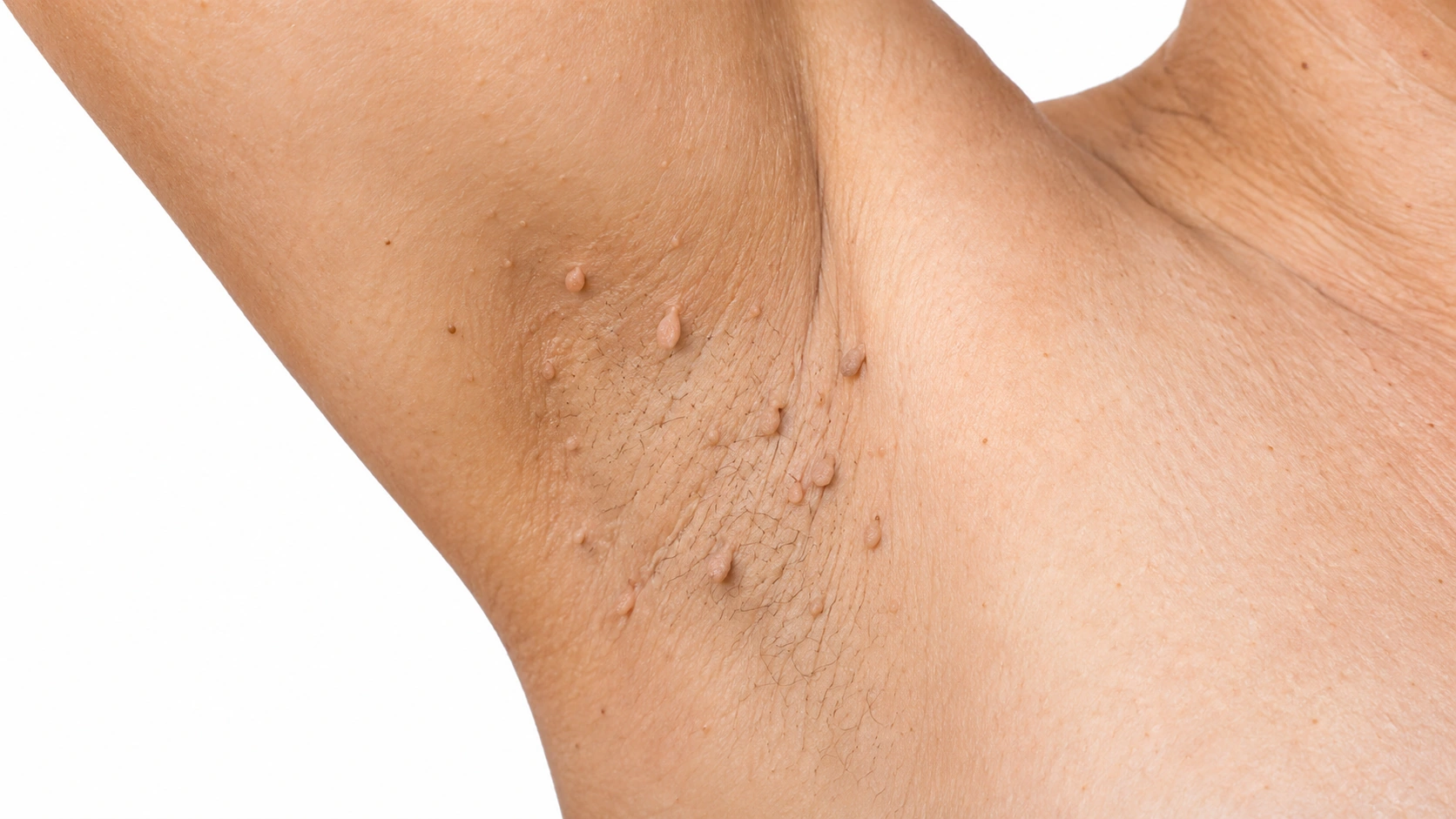
Skin tags in the armpit.

Armpit Where skin rubs together.

Seborrheic Keratosis

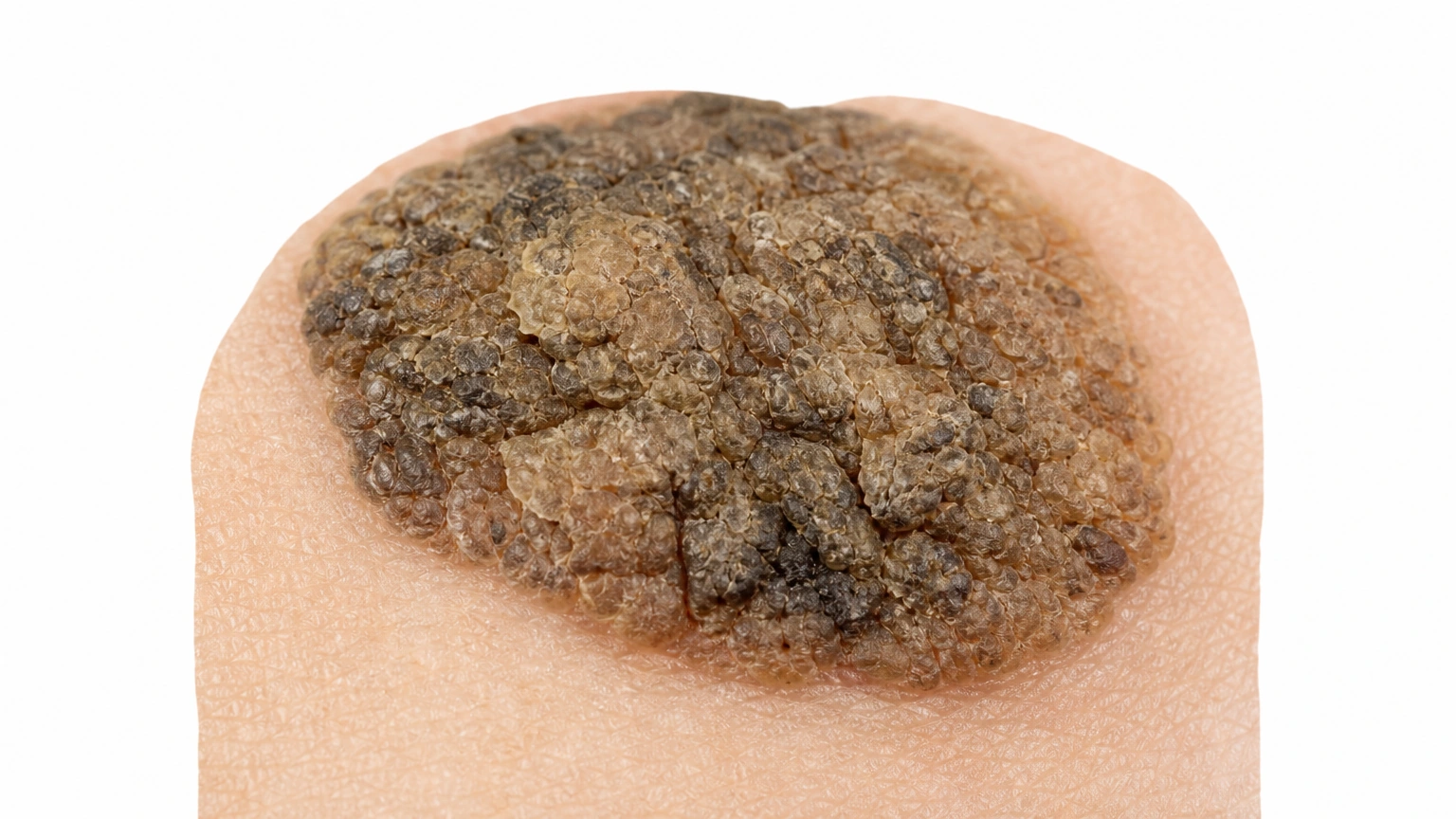
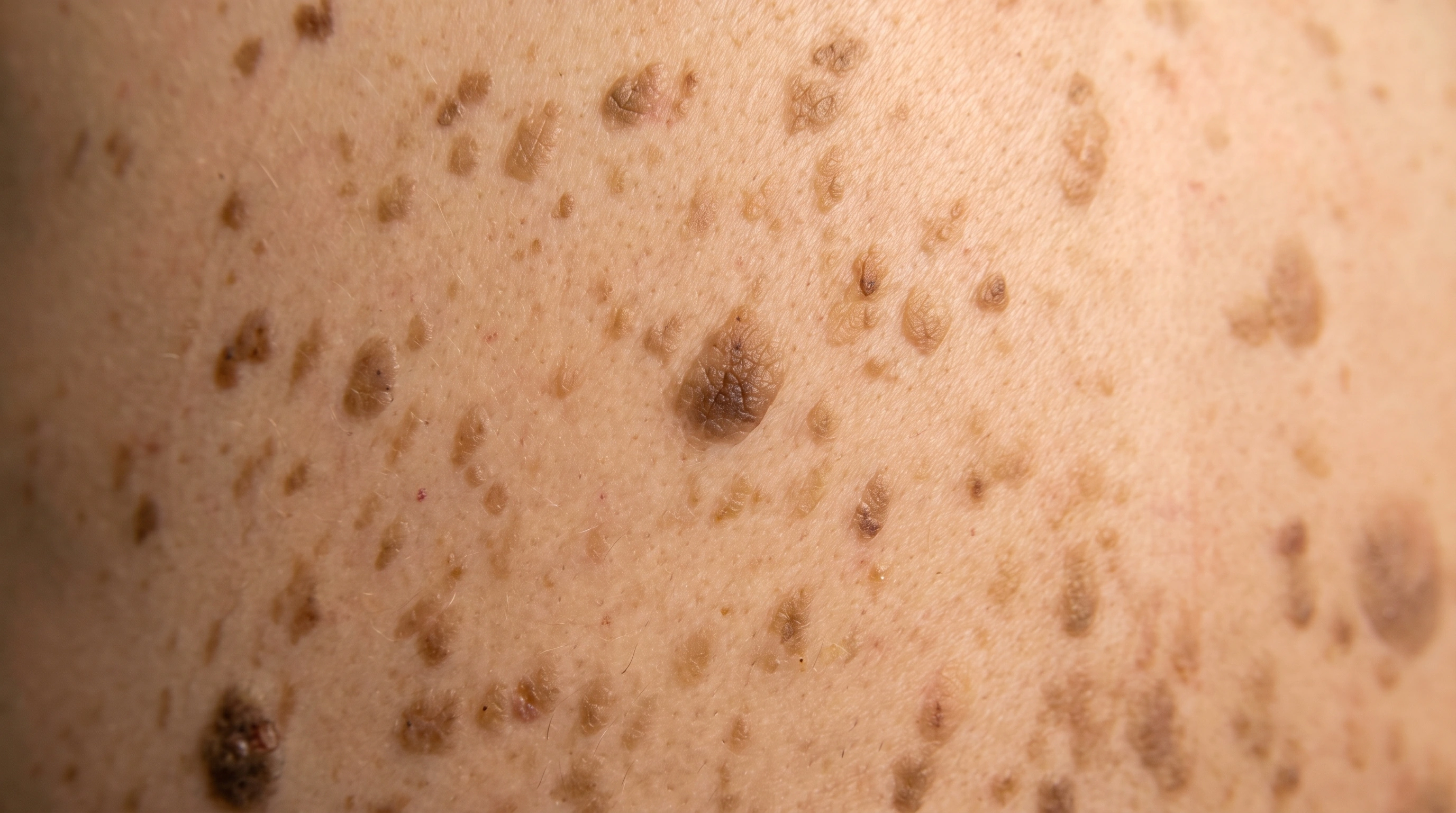
Close view of a rough hyperkeratotic brown stuck-on lesion, representing seborrheic keratosis.

Classic seborrheic keratosis Raised, waxy, stuck-on growth.

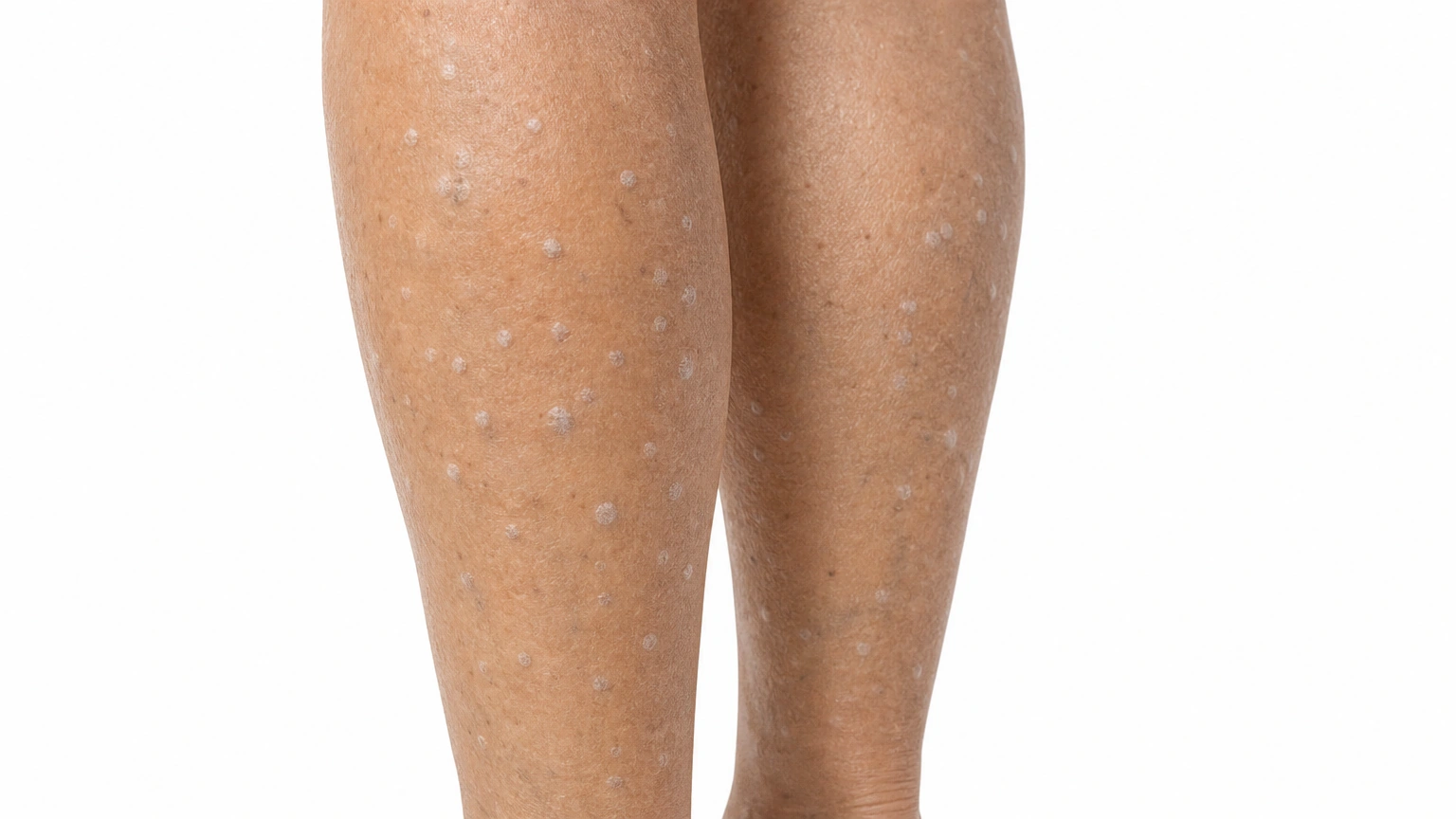
Multiple small gray-white raised bumps on the lower legs, representing stucco keratoses.

Stucco keratosis Small white-gray bumps on the legs.

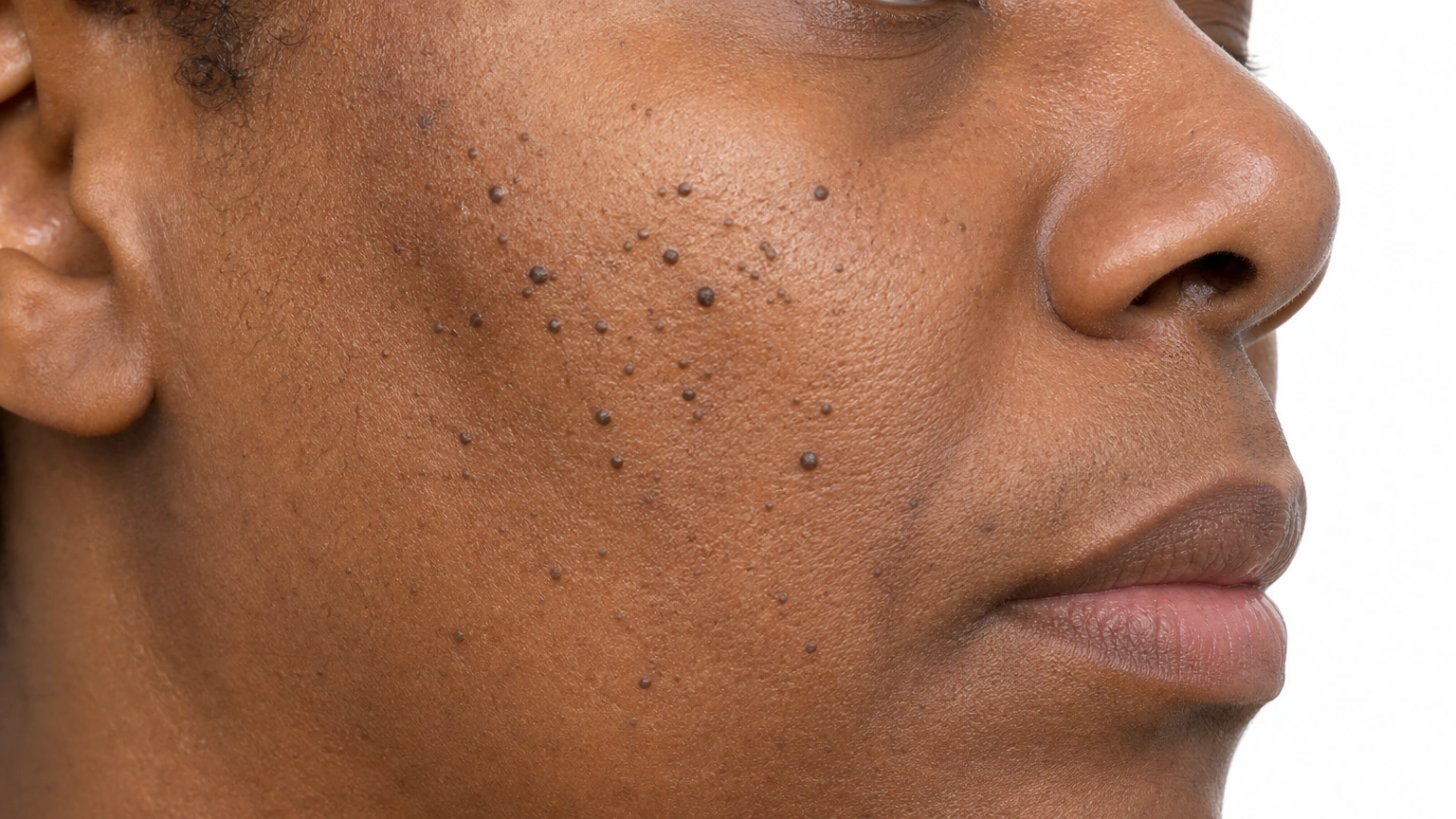
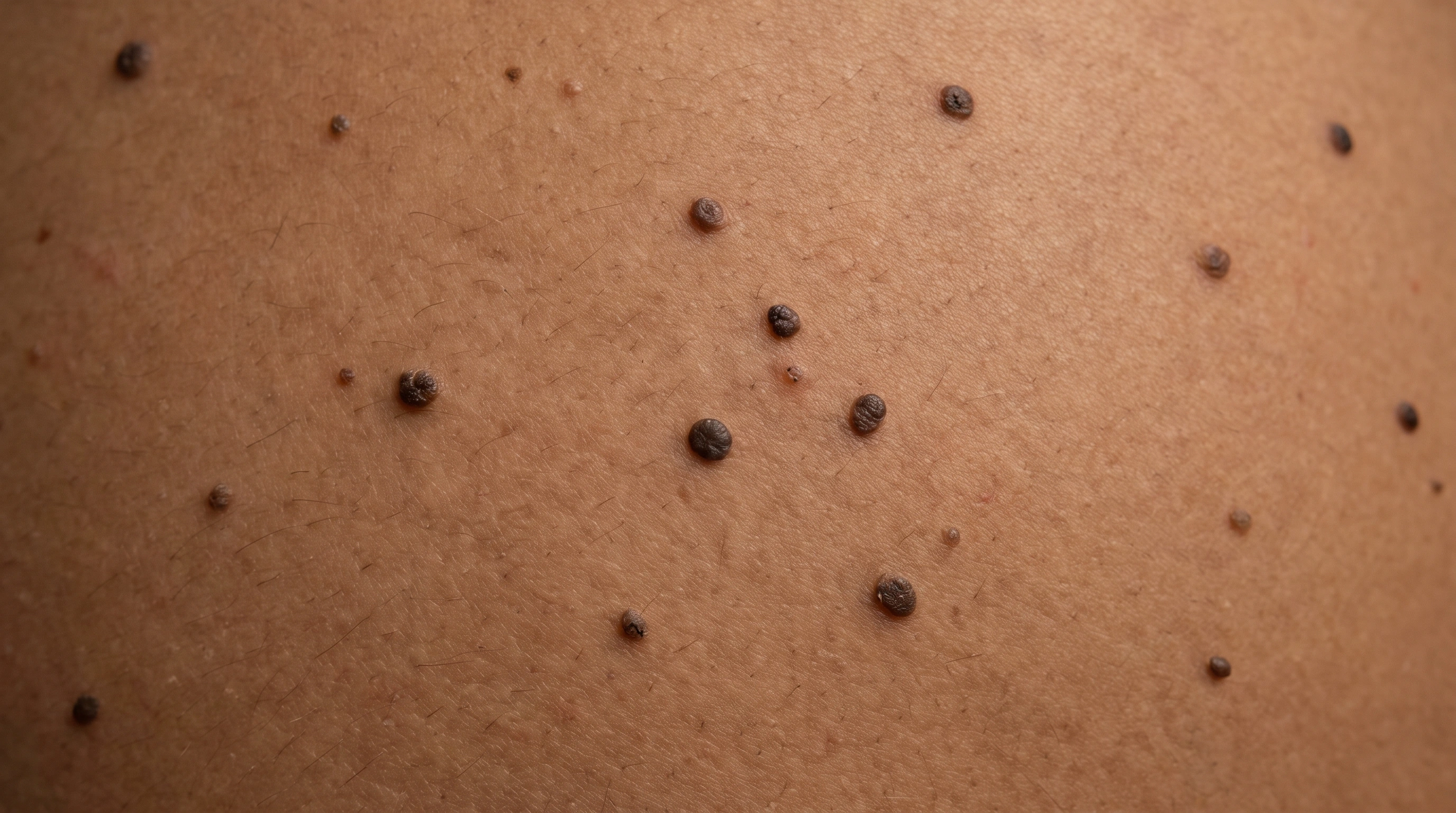
Small dark raised papules on brown cheek skin, representing dermatosis papulosa nigra.

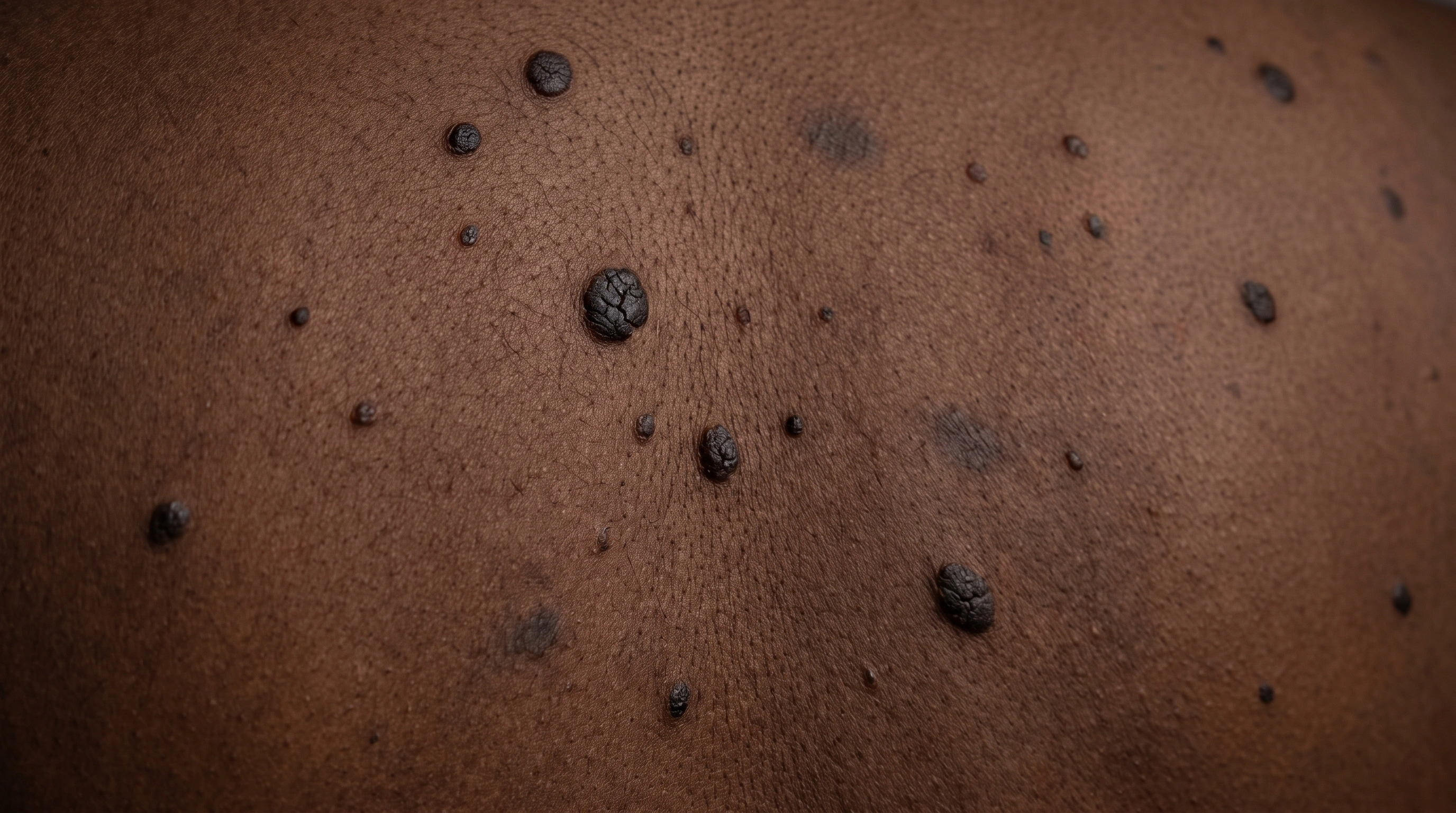
Dermatosis papulosa nigra Small dark bumps on the face.

Skin tones
A small soft hanging skin growth on light skin.
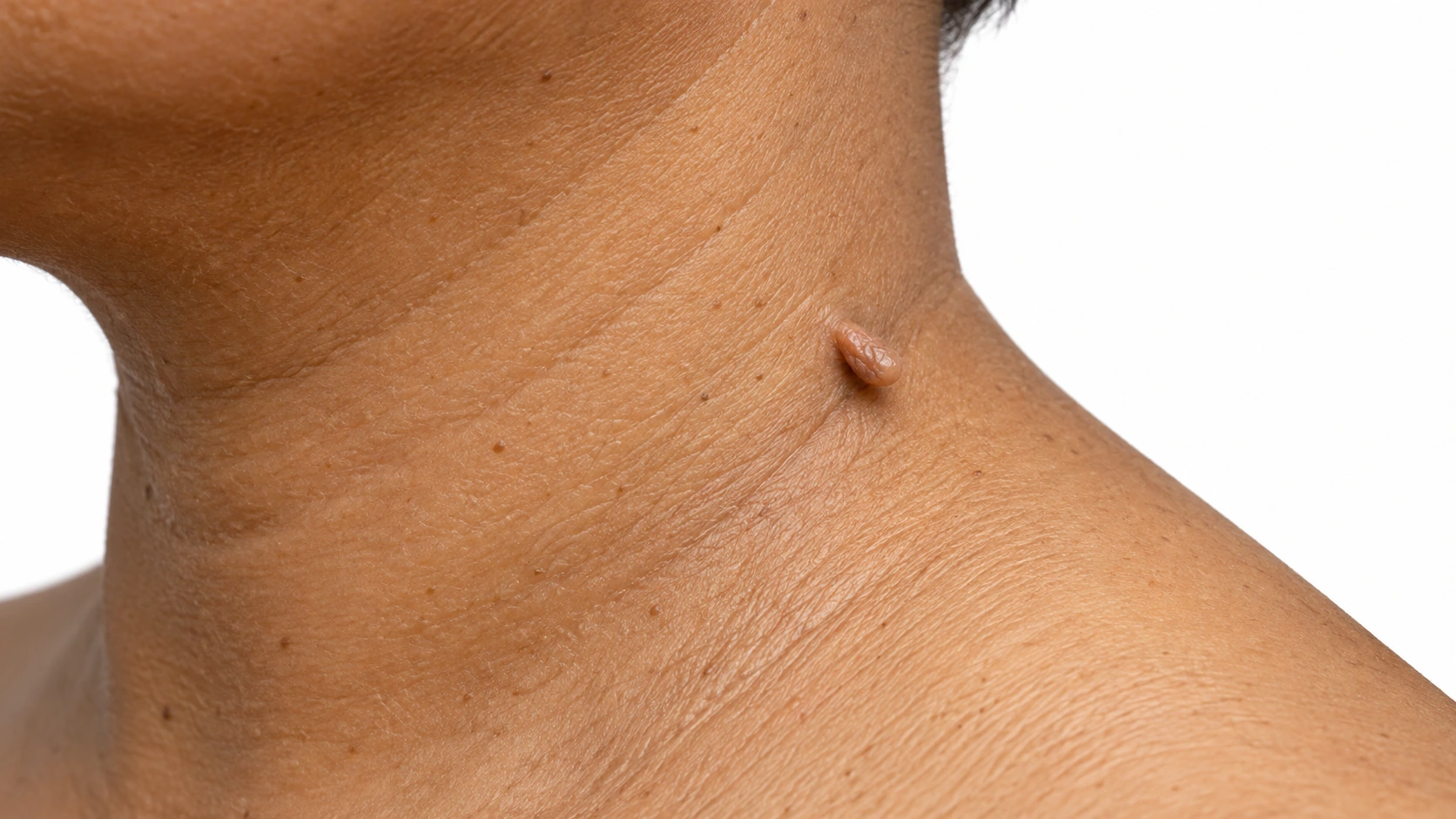
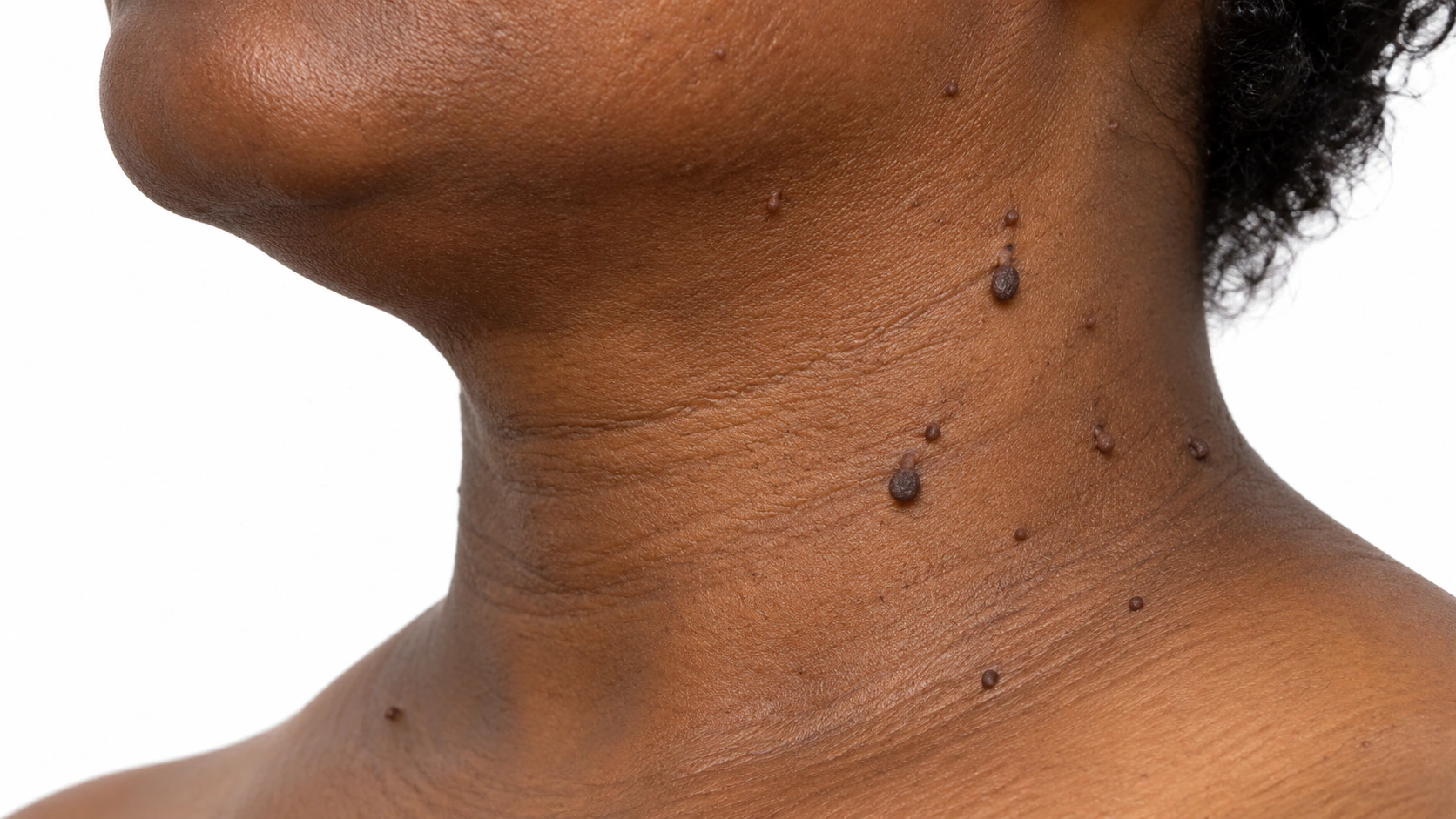
Soft hanging growth on a medium-toned neck.
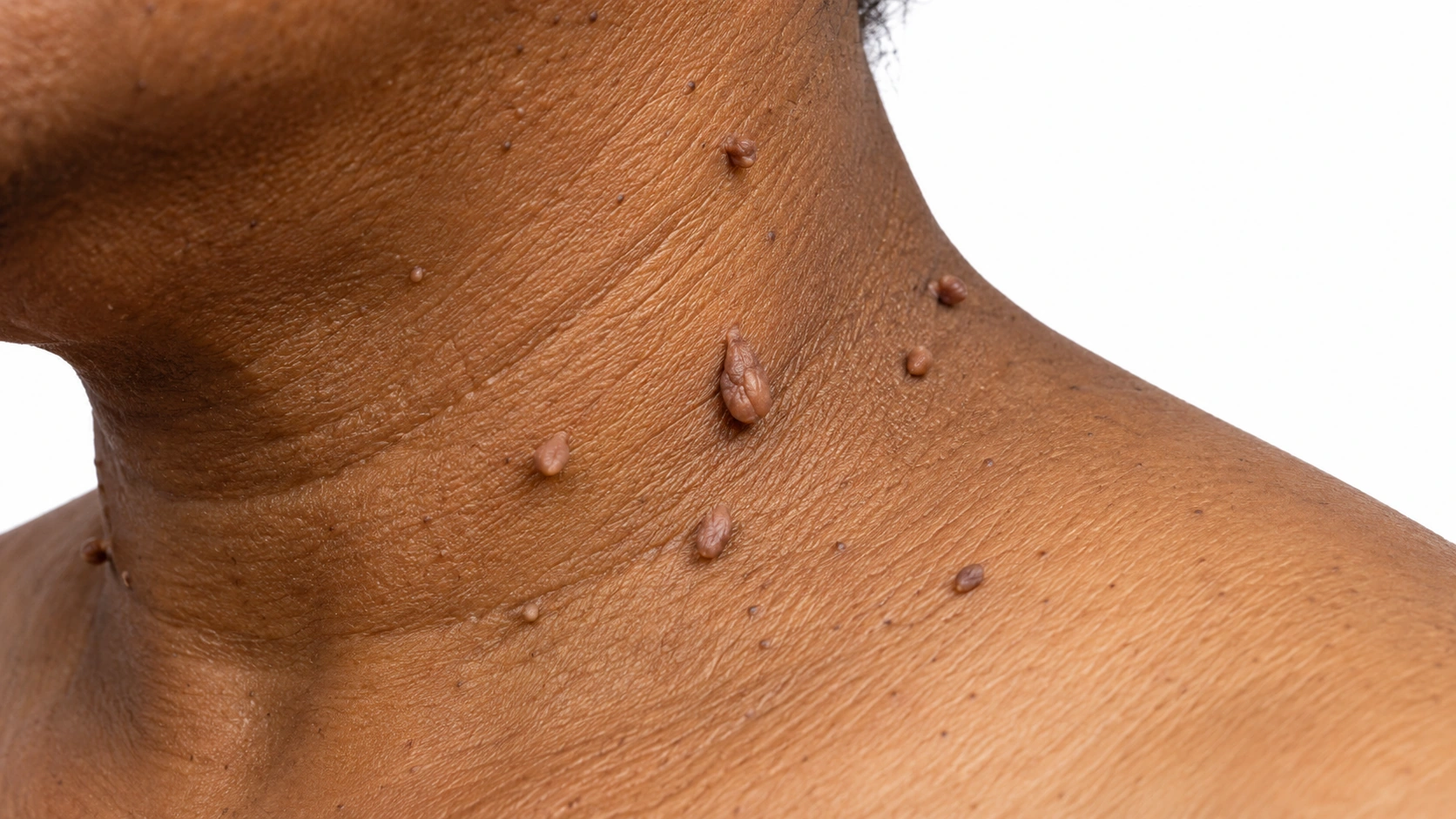
soft, stalked skin tags on a brown-skinned neck.
small soft stalked growths on a deep brown neck, representing skin tags.
Two growths on the upper back on fair skin. One is a flat light tan patch and the other is a raised mid-brown growth with a rough waxy surface and a sharply defined edge.
A raised brown growth on the chest on medium olive skin. Its color is only slightly deeper than the surrounding skin, but the rough waxy surface and the sharply drawn edge are clearly visible.
Several small, dark brown to black raised growths scattered over the cheek and temple on brown skin, ranging from one to three millimetres across, on otherwise even-toned skin.
A cluster of black raised growths along the side of the neck on deep brown skin, each with a sharply defined edge, with two flat darker marks nearby where earlier growths were treated.
Diagram
Skin Tags mechanism diagram. A small fold projects outward: The growth is covered by ordinary skin. Soft tissue forms the center: Loose collagen and small vessels fill the tag. A narrow stalk connects it: The exact cause is not fully understood.
Seborrheic Keratosis mechanism diagram. A stuck-on plaque appears: The surface can look waxy or rough. Keratin collects in the growth: Tiny keratin-filled spaces may form. Surface cells grow locally: A benign epidermal growth develops.
In the skin

A skin tag is a soft projection of ordinary skin with loose connective tissue and small vessels inside. It often hangs from a narrow stalk, and its exact cause is not fully understood.

A benign overgrowth of surface skin cells creates a localized plaque. Keratin and sometimes pigment collect in the growth, giving it a waxy, rough or stuck-on appearance.

Where it shows up

Neck and skin folds
Variable sites, often trunk or face

When it usually starts

010203040506070+

Skin Tags. Become more common in adult life and with age; they may also appear during pregnancy.

Seborrheic Keratosis. Usually appears in adult life and becomes increasingly common with age.

Causes and triggers

Causes

Skin tags form where skin rubs against skin or clothing. Extra collagen and blood vessels grow into a small, soft flap.

Seborrheic keratoses are harmless growths of skin cells that become more common with age.

Family tendency

They tend to run in families.

They often run in families.

Risk factors
Obesity, Type 2 diabetes, Pregnancy, Age over 40
Age over 50, Family history, Sun exposure
Trigger
● Skin Tags
● Seborrheic Keratosis
Friction in skin folds
Strong link
Not listed
Rubbing from jewelry or clothing
Strong link
Not listed
Aging
Not listed
Well established
Sun exposure
Not listed
Possible

Daily Care

Skin Tags
Seborrheic Keratosis
Daily care

Habits that help

  • Reducing friction where you can
    Softer collars, a better bra, move the necklace.
  • Shaving around them rather than over them
    An electric trimmer avoids the weekly bleed.
  • Keeping folds dry
    Dry well after showering, wear breathable fabric.
  • Weight management where it is relevant
    Less friction, better insulin resistance.
  • Discuss new growths or skin changes during pregnancy
    Hormonal change produces new tags; some settle after.
  • Discuss metabolic health and sustainable weight goals when relevant
    Both go with developing more tags.

Avoid

  • Avoid: Tight collars, straps and waistbands
    Rubbing in one line is the worst aggravator.
  • Avoid: Shaving over them
    The usual cause of bleeding.
  • Avoid: Jewelry that catches
    Chains snag tags and twist them.
  • Avoid: Repeated friction in skin folds
    More folds and sweat, more friction.
  • Avoid: Humidity and sweat
    Damp skin in a fold rubs more.
  • Avoid: Pulling or picking at them
    Bleeds more than expected, risks infection.
  • Avoid: Home removal bands and freezing kits
    Where most needless scarring comes from.
  • Avoid: Treating an unexamined growth
    You never learn what it was.
  • Avoid: Home removal bands and kits
    Avoid home removal of unexamined growths; it can cause injury and scarring.

Habits that help

  • Watch for change, not for existence
    Growing, darkening, bleeding or newly itchy.
  • Then leave it alone
    Avoid picking or rubbing a growth confirmed as benign.
  • Curettage or shave removal
    Precise, and it yields tissue to examine.
  • Daily sunscreen on treated areas
    Keeps the mark from deepening.
  • Discuss how age affects monitoring and recovery
    The biggest driver of how many you get.
  • Tell the clinician about your family history
    Why one person has one growth and another fifty.

Avoid

  • Avoid: Sun exposure
    Adds to the count, and darkens marks after removal.
  • Avoid: Assuming a dark growth is benign
    Melanoma is mistaken for one.
  • Avoid: Picking or peeling one off
    They bleed, inflame, and mark.
  • Avoid: Friction from clothing
    Straps, waistbands and belts irritate growths.
  • Avoid: Shaving over them
    The usual cause of sudden bleeding.
  • Avoid: Home freezing kits and acid pens
    They scar something nobody examined.
  • Avoid: A sudden crop of many new ones
    Many at once should be assessed.
  • Avoid: Removal without a diagnosis
    Destroyed tissue cannot be analyzed.
  • Avoid: Home freezing and acid kits
    Do not freeze or burn unexamined growths at home; tissue may need examination.

Treatment differences

Evidence labels come from each condition’s own treatment list.

Treatment
● Skin Tags
● Seborrheic Keratosis
Over-the-counter
Five dark glass tea tree essential oil bottles with glass droppers and one green box on white

Tea Tree Oil

Limited evidence

Tea tree oil, apple cider vinegar and garlic are the usual home remedies, and where they appear to work at all it is by burning the skin. That is a poor trade on a growth that was never dangerous, particularly on a neck or a face, and the mark left behind is often more noticeable than the tag. There is no evidence any of them dissolves a tag.

Four ointments on white: CeraVe Healing Ointment, a Vaseline jar, a petroleum jelly tube and Aquaphor

Petrolatum

Listed

This is aftercare rather than treatment. A dab of plain petroleum jelly and a small dressing over the spot left after a tag is removed keeps the scab soft and gives the neatest healing. It does nothing to a tag that is still there, and it will not shrink one.

Four mineral sunscreens on white: Native SPF 30, Thinksport SPF 50, Colorescience Flex and EltaMD UV Clear

Zinc Oxide

Listed

Daily mineral sunscreen over a healed spot on the neck or eyelid stops the temporary mark from deepening and helps it fade faster. It matters most on deeper skin tones, where a dark mark can otherwise last many months. It has no effect on whether new tags form.

Four ointments on white: CeraVe Healing Ointment, a Vaseline jar, a petroleum jelly tube and Aquaphor

Petrolatum

Listed

This is aftercare, not treatment. A thin layer of plain petroleum jelly over a treated spot keeps the scab soft and gives the neatest healing, under a small dressing rather than an adhesive strip. It does nothing to a growth that is still there.

Four mineral sunscreens on white: Native SPF 30, Thinksport SPF 50, Colorescience Flex and EltaMD UV Clear

Zinc Oxide

Listed

Daily mineral sunscreen over a spot that has just been treated stops the temporary mark from darkening and helps it fade faster, which matters most on the face, chest and hands. It will not remove a growth or stop new ones forming. Sun is only one of several things that drive these, and age and family history matter more.

Five white jars of 40% urea cream lined up, several also listing 2% salicylic acid

Urea

Limited evidence

A strong urea cream can soften and flatten the rough white growths that scatter over the lower legs, called stucco keratoses, if the roughness is what bothers you. It smooths the surface rather than removing the growth, and it has to be used continuously. It does nothing for thick, dark, stuck-on growths elsewhere.

Paula's Choice 2% BHA exfoliant, La Roche-Posay Effaclar cleanser and a CeraVe psoriasis cream pump

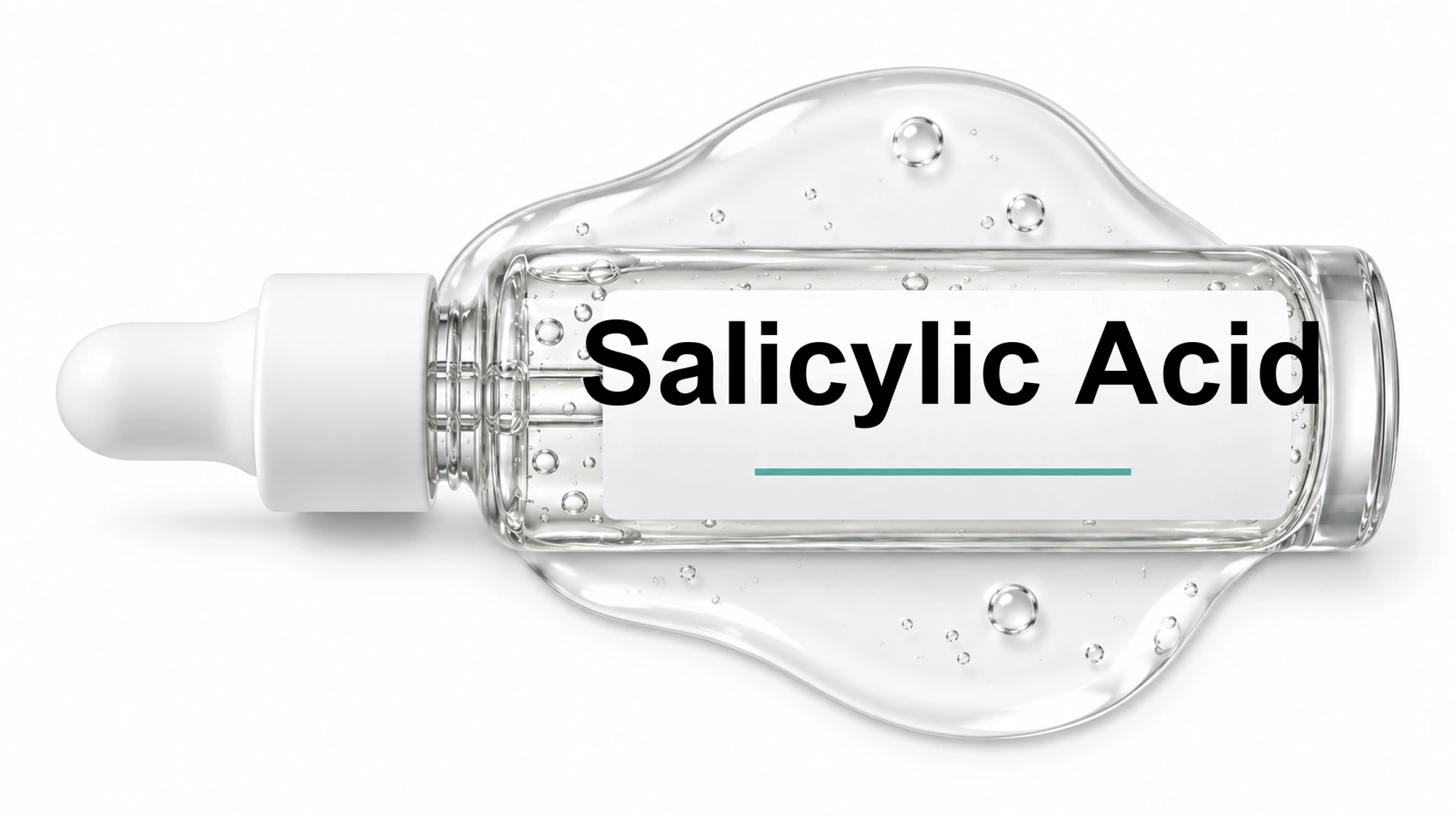
Salicylic Acid

Limited evidence

Wart treatments are often tried on these because the surface looks similar. Salicylic acid can thin the rough top layer, but it does not clear the growth, and it irritates the normal skin around it. The bigger problem is that it is usually being used on something nobody has examined.

Prescription topicals
Mupirocin — Header Image

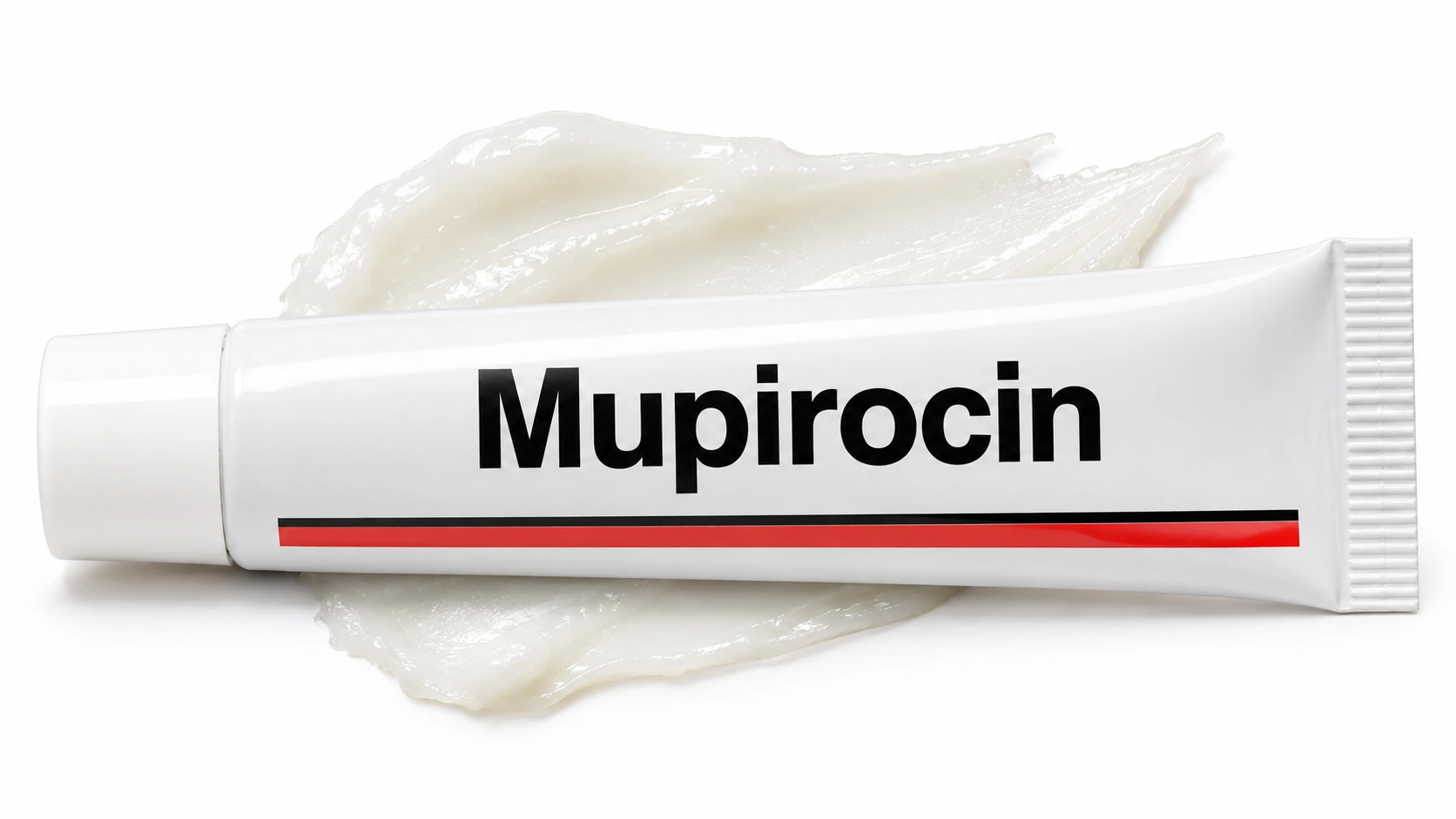
Mupirocin

Listed

An antibiotic ointment for the small number of tags that get infected after being nicked or snagged — hot, swollen, oozing. It treats the infection on the surface and does nothing to the tag itself. If the redness is spreading into the surrounding skin, antibiotic tablets are needed instead.

Eskata

Moderate evidence

A high-strength peroxide solution applied in clinic was approved for raised growths on the face and body. It cleared some growths, often needed repeat visits, and commonly caused stinging, crusting and pigment change. It was withdrawn from sale in the United States, so in practice removal is done by hand rather than with a liquid.

Procedures
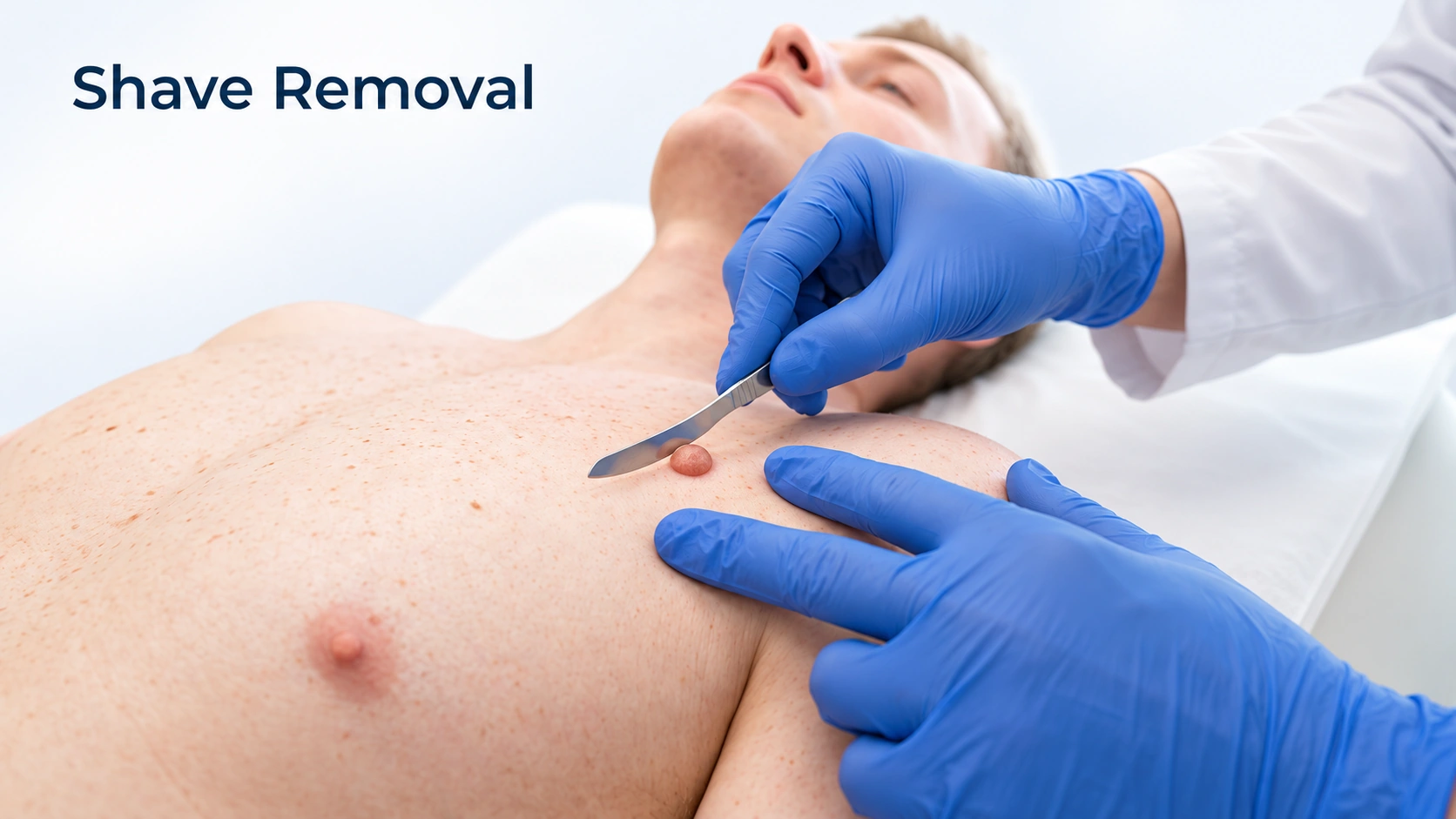
Editorial illustration for Shave Removal, based on the entry’s treatment or equipment reference.

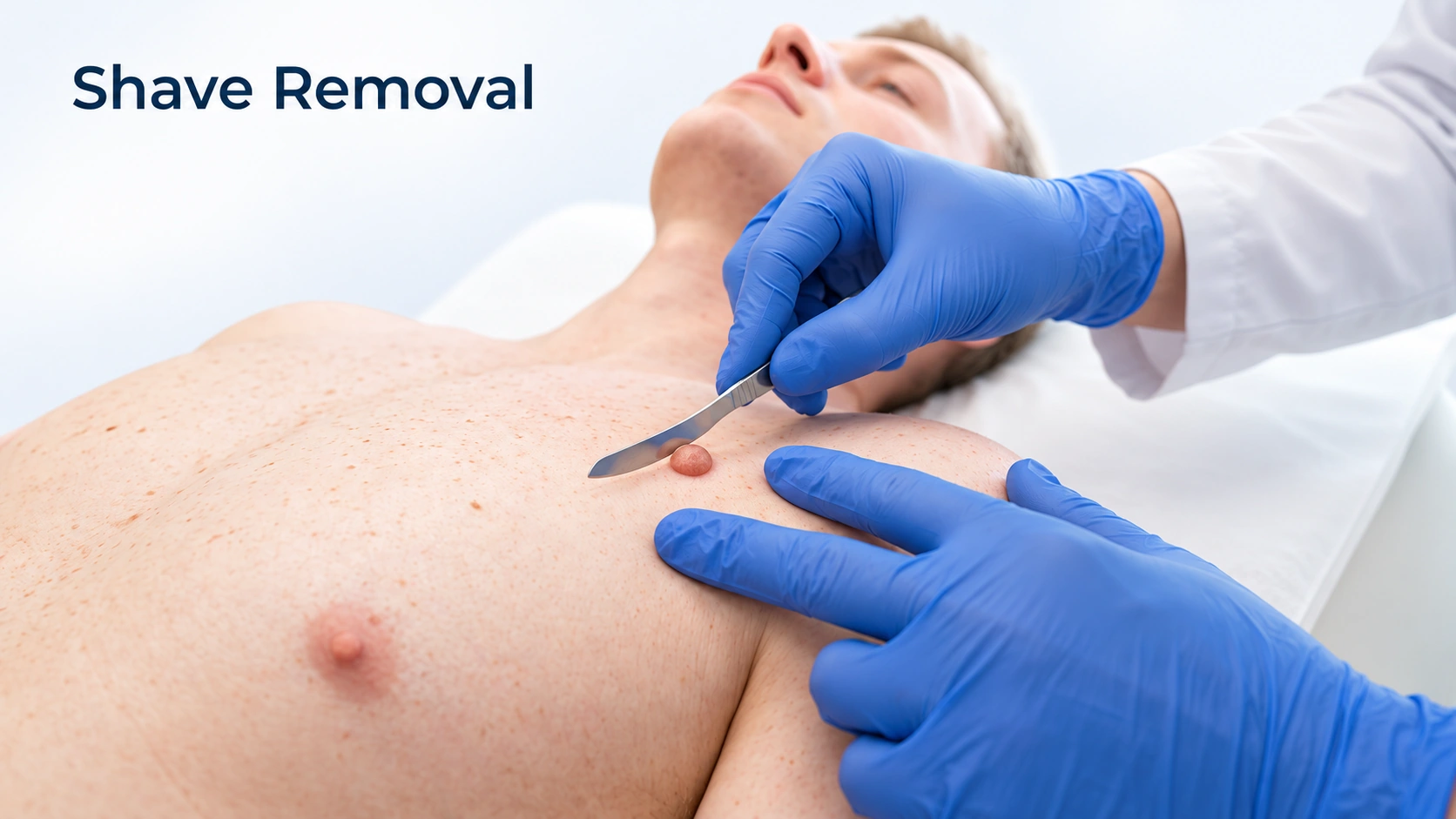
Shave Removal

Moderate evidence

The usual method: the base is numbed and the tag is snipped or shaved off at the stalk with sterile scissors or a blade in a couple of seconds. It gives the most control over the mark left behind, which is why it is preferred on the face and neck and on deeper skin tones. It also leaves tissue that can be sent to the laboratory if there is any doubt about the growth.

Editorial illustration for Electrodesiccation and Curettage, based on the entry’s treatment or equipment reference.

Electrodesiccation and Curettage

Moderate evidence

A fine electric tip burns through the stalk and seals it at the same time, so there is no bleeding. It suits several small tags in one session and very small ones on the eyelids. It destroys the growth, so it is not used on anything that needs examining first.

Editorial illustration for Cryotherapy, based on the entry’s treatment or equipment reference.

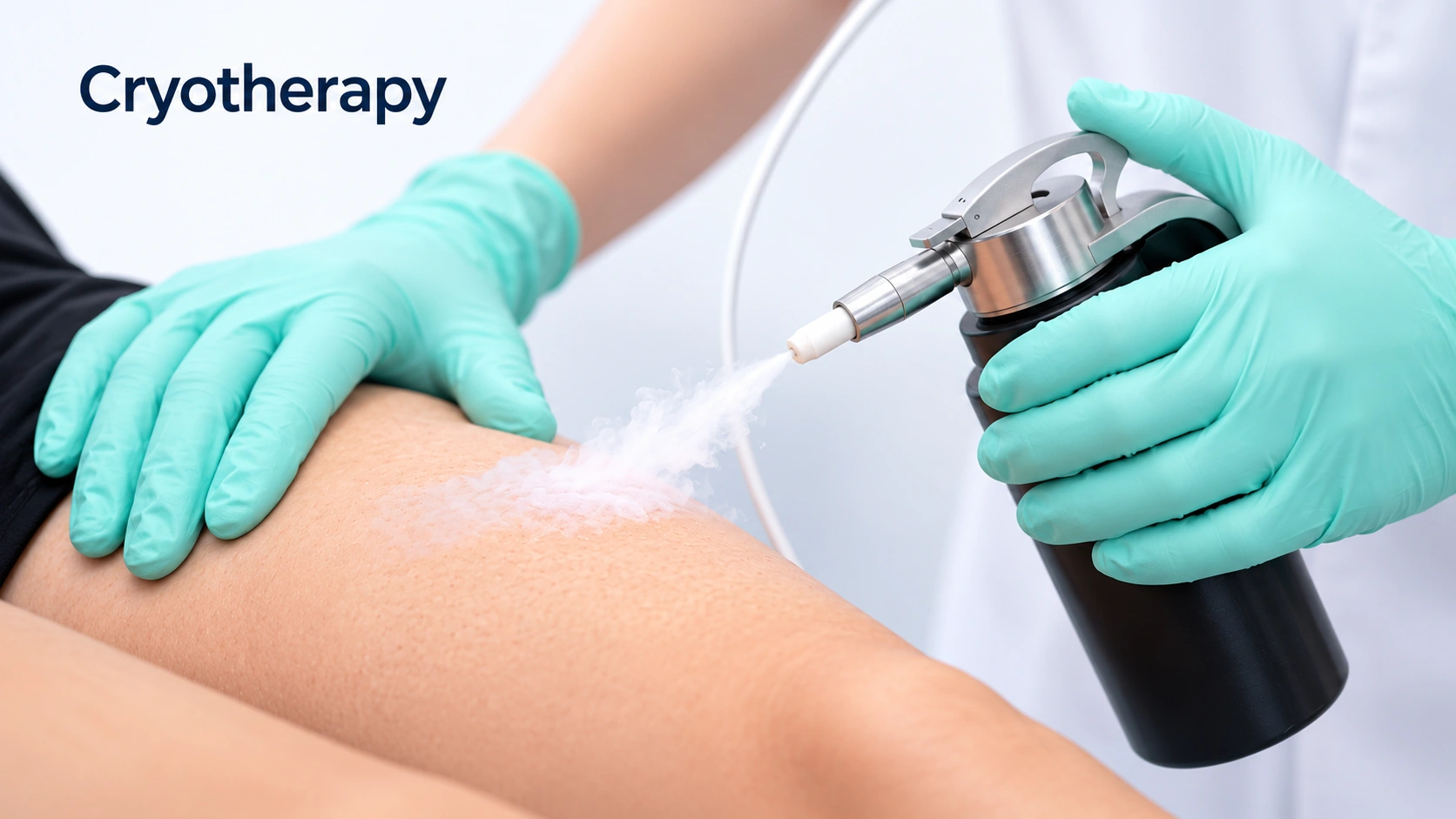
Cryotherapy

Moderate evidence

A few seconds of liquid nitrogen freezes the tag so it drops off over a week or so, and it is quick when there are many. It is less predictable with pigment, because the pigment-producing cells are sensitive to cold, so it is used more cautiously on deeper skin tones and near the eyes. It destroys the tag, so nothing can be examined afterward.

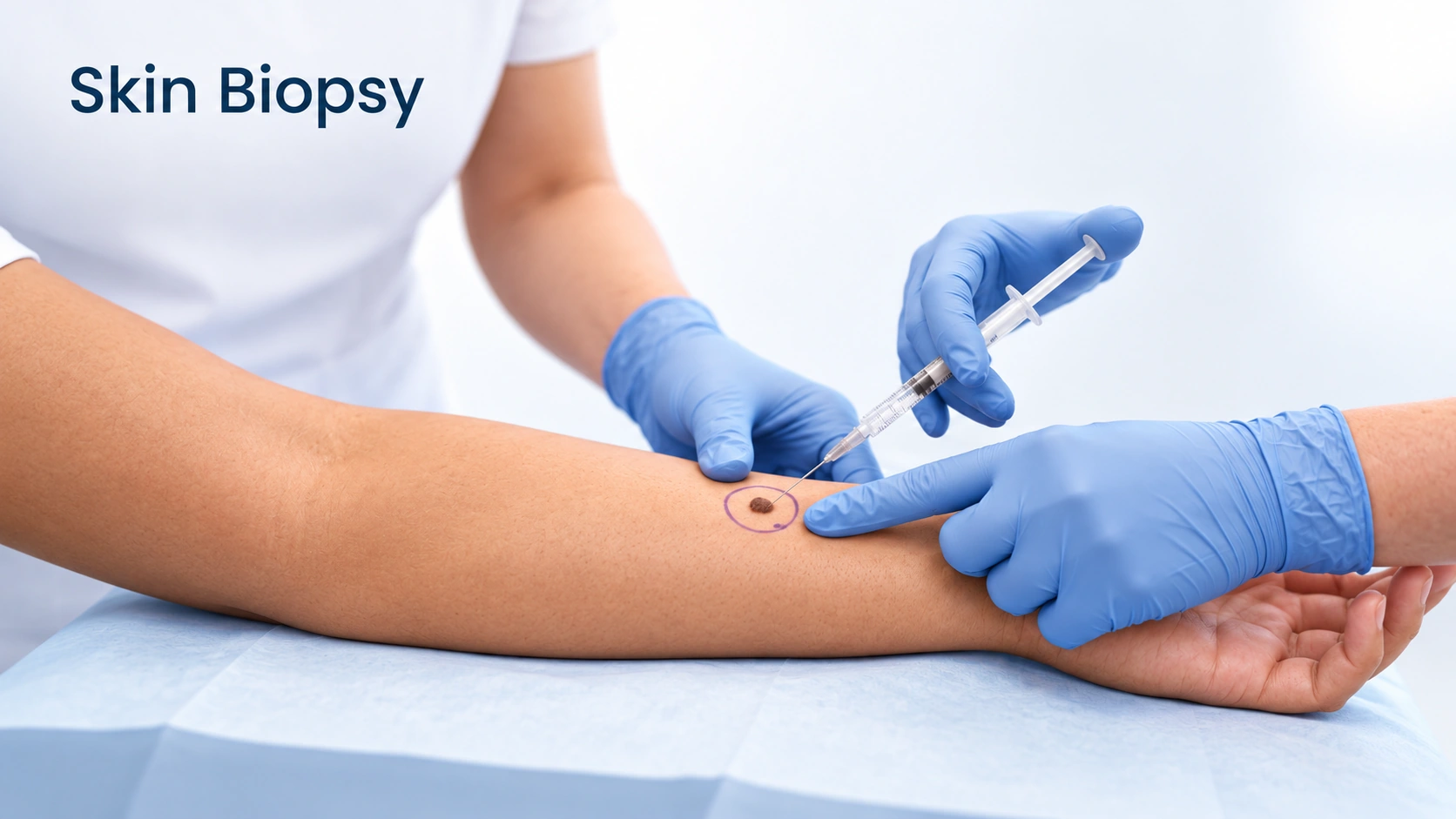
Editorial illustration for Skin Biopsy, based on the entry’s treatment or equipment reference.

Skin Biopsy

Listed

When a growth is firm, broad-based, ulcerated, bleeding on its own or simply different from your others, it is removed and sent for examination under a microscope rather than discarded. When it is being taken off anyway, that costs almost nothing, and it is the only way to be certain a growth was what it looked like.

Editorial illustration for Shave Removal, based on the entry’s treatment or equipment reference.

Shave Removal

Moderate evidence

The growth is numbed and shaved off level with the skin in a few seconds. It is the method of choice when there is any question about what a growth is, because it produces tissue that can be sent to the laboratory. It leaves a flat mark that fades over months, and it does not stop new growths appearing elsewhere.

Editorial illustration for Electrodesiccation and Curettage, based on the entry’s treatment or equipment reference.

Electrodesiccation and Curettage

Moderate evidence

The growth is scraped off with a small curette and the base sealed with a fine electric tip. It is controlled and shallow, which is why it is often preferred for small facial growths and for the dark facial growths common on deeper skin tones. Scraping first still gives tissue that can be examined if there is doubt.

Editorial illustration for Cryotherapy, based on the entry’s treatment or equipment reference.

Cryotherapy

Moderate evidence

A few seconds of liquid nitrogen makes flatter growths blister and lift off over a week or two, and it is the quickest way to treat several at once. It destroys the growth, so nothing can be examined afterward, which is why it is not used on anything with a question attached. It is used cautiously on the face and on deeper skin tones, because the pigment cells are sensitive to cold and it can leave a pale spot.

Editorial illustration for Skin Biopsy, based on the entry’s treatment or equipment reference.

Skin Biopsy

Listed

When a growth is changing, bleeding on its own, or simply looks unlike your others, part or all of it is taken after numbing and examined under a microscope. It is the only way to be certain, and the threshold for doing it is deliberately low, because the cost of a small biopsy is trivial next to missing a melanoma. An irritated growth is one of the commonest reasons a benign growth ends up being sampled.

Editorial illustration for Fractional CO2 Laser, based on the entry’s treatment or equipment reference.

Fractional CO2 Laser

Limited evidence

An ablative laser can vaporise a growth precisely and is sometimes used when several need treating on the face. Like freezing, it destroys the tissue, so it is only for growths already confirmed as harmless. It is the most expensive of the options and it is not better than a curette for a single growth.

Outlook

Long term

Skin tags follow a slow, undramatic course, and most people notice them only when one catches. Removing one changes nothing about what caused it.

Seborrheic keratoses appear slowly, change slowly, then stay. Two departures deserve attention: one growth that starts changing - growing, darkening, bleeding on its own, or itching persistently - and a sudden crop of many new ones over weeks to months.

Complications

Possible complications
  • The usual reason people act
More details

The usual reason people act
A tag snagged by jewelry, a razor, a collar or a seatbelt can bleed and stay sore for a few days, then settle. A tag that twists on its stalk loses its blood supply, turns red, purple or black, and is tender. It dries up and drops off within one to two weeks, leaving nothing. Have a dark growth confirmed.

  • Catching on clothing makes it flare
More details

Catching on clothing makes it flare
A growth caught by clothing, a strap or a waistband can turn red, swollen, itchy, crusted or sore, and can bleed. That is an irritated seborrheic keratosis. It settles, but it looks alarming and often prompts removal or a sample.

When to get help

When to get help

Have an uncertain, bleeding or changing growth checked. Avoid home cutting, tying or caustic removal, especially near the eyes or genitals.

Have a new, changing, bleeding or uncertain growth assessed; skin cancer can sometimes resemble a harmless stuck-on growth.

Common questions

Skin Tags:Can I just cut it off myself?

Please do not. It bleeds more than you expect, it hurts more than you expect, the tools at home are not sterile, and you lose the chance to have it examined if it turns out not to be a skin tag. Removal in clinic takes seconds.

Skin Tags:Will more grow back if I have them removed?

Not the same one. New tags can appear in the same area over time, because removal does not change the friction, genetics or hormones that produced the first one. Not the tag growing back.

Skin Tags:Does having skin tags mean something is wrong with my health?

Usually not. They are extremely common and most people who have them are healthy. A lot of them is associated with insulin resistance and type 2 diabetes across large groups, so developing many new ones, especially with darkened velvety skin in the folds, is a fair reason to check blood sugar. A prompt, not a diagnosis.

Skin Tags:One of mine has turned black. Is that dangerous?

Most often the tag has twisted on its stalk and lost its blood supply. It is tender for a few days, then dries up and falls off, leaving nothing. Still get it looked at, because a growth turning dark is also how other things present.

Skin Tags:Will insurance pay for removal?

Usually not, because it is normally considered cosmetic. The exception tends to be a tag that repeatedly catches, bleeds or becomes inflamed. Ask the clinic before you book so the cost is not a surprise.

Skin Tags:Are the ones I got during pregnancy permanent?

Some shrink or disappear in the months after delivery and some stay. Wait several months before deciding on removal, and ask the doctor managing your pregnancy before having anything done meanwhile.

Seborrheic Keratosis:Could this be melanoma?

It could be, which is why it should be looked at rather than diagnosed at home. Melanoma is sometimes mistaken for a seborrheic keratosis, and a dermatoscope resolves most of these in seconds. The concerning features are change in size, shape or color, bleeding without being knocked, an irregular edge, and a growth unlike your others. Book rather than watch.

Seborrheic Keratosis:Why am I suddenly getting so many?

Age and family history account for nearly all of it. They accumulate steadily from the forties onward, and someone whose parents had many will develop many. A genuinely sudden crop over weeks to months, especially with itching, is different and worth examining.

Seborrheic Keratosis:Does removing one stop more from appearing?

No. Removal deals with that growth, not the age and inherited tendency behind it, so new ones can keep appearing elsewhere. That is expected, not a failed removal.

Seborrheic Keratosis:Will removal leave a mark?

Often, at least for a while. A flat spot darker or paler than nearby skin is common, and dark marks usually fade over months. Pale marks can be permanent and are more noticeable on deeper skin tones, so ask about the method and do a test spot before treating a large area. Daily sunscreen on the treated spot makes a real difference.

Seborrheic Keratosis:Mine got red and itchy and started bleeding. What happened?

Most likely it caught on clothing, a strap or a razor and became an irritated seborrheic keratosis. They look far worse than they are and they settle. Still have it looked at - an irritated growth is one of the harder ones to be sure about by appearance, and a growth that bled with nothing catching it is a different question.

Seborrheic Keratosis:Can I have them all removed?

As many as you and your doctor think sensible, usually in sessions rather than all at once. It is normally considered cosmetic, so ask about cost first. On the face, and particularly on deeper skin tones, start with a small test area and see how it heals.
Sources

Sources and further reading

  1. DermNet
  2. DermNet
Dermapedia on YouTube