Dry Skin vs Contact Dermatitis

Dry skin is skin that has lost the oils and water it needs to stay soft and sealed. It looks dull or flaky, feels tight, and often itches. Most of it improves within a couple of weeks with a change in washing habits and a good moisturizer, though stubborn cases sometimes point to another condition underneath. Contact dermatitis is a rash caused by something that touched the skin. It comes in two forms - irritation from a substance that would bother anyone given enough exposure, and an allergic reaction to something only some people react to. Both clear once the cause is found and removed.

Reviewed by Dr. Schwarz, Board-Certified Dermatologist · Research updated 2026-10-23
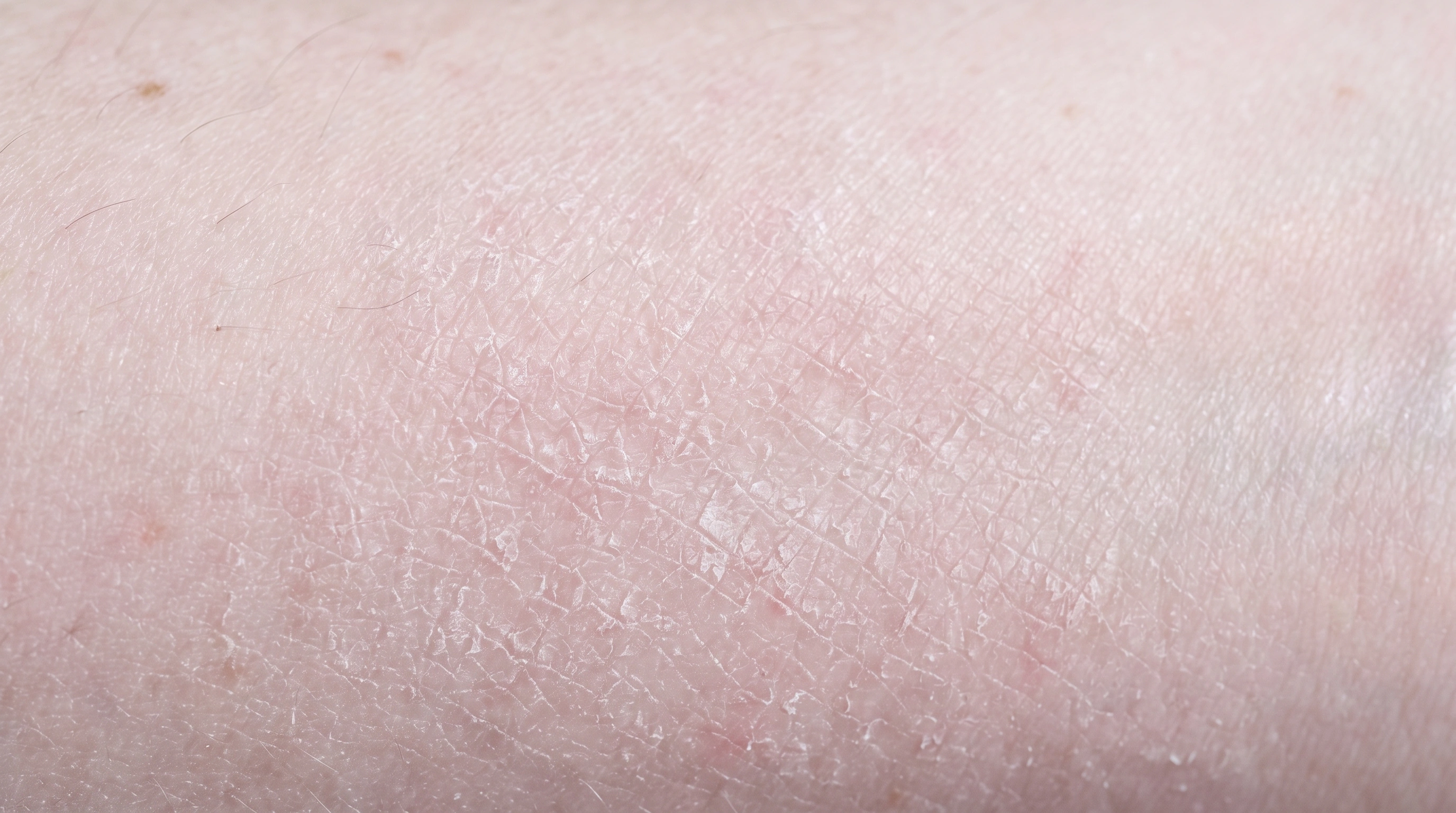
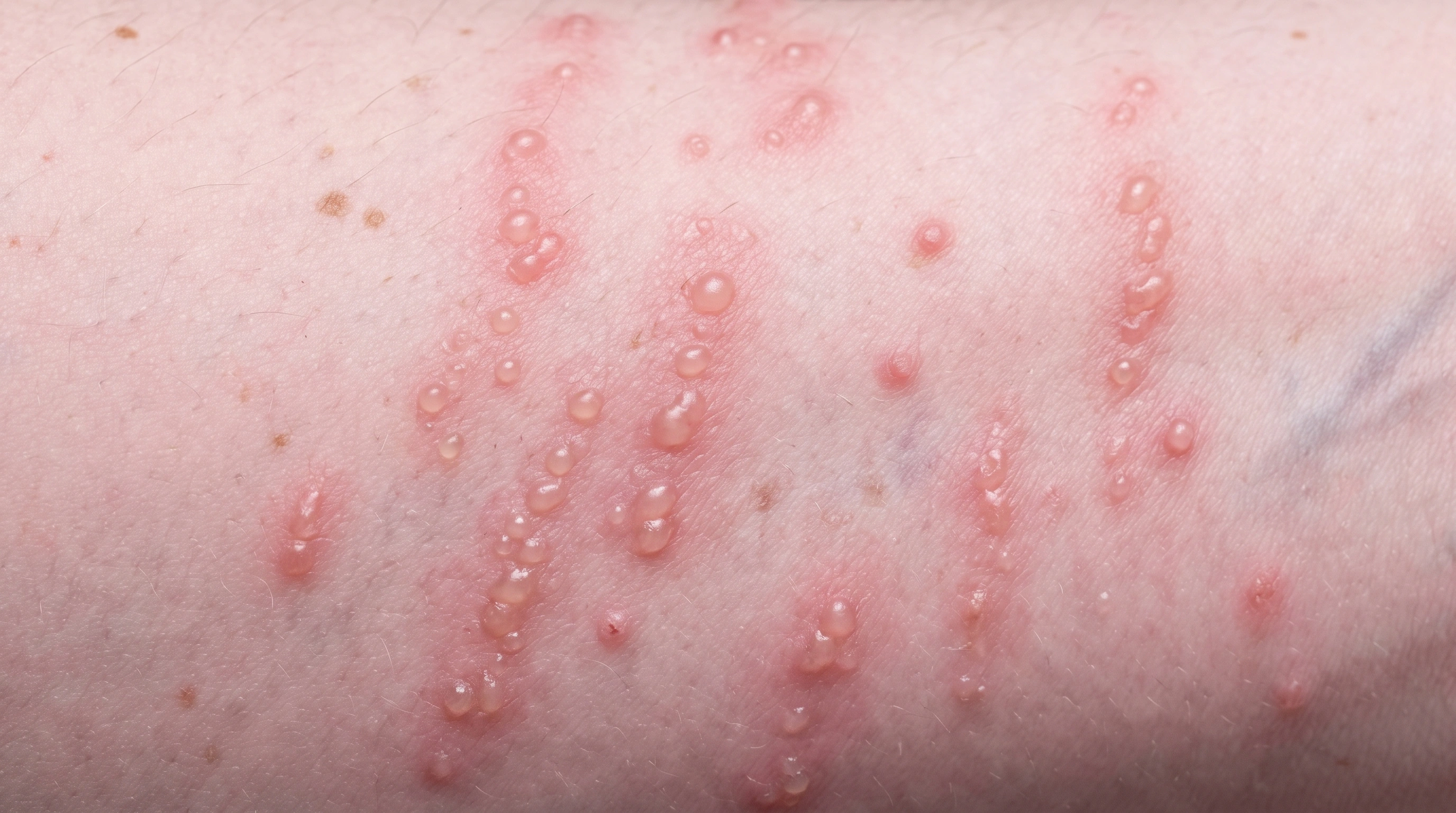
The front of one shin on pale skin. The surface is pink with fine white flaking and a few shallow cracks, and the skin around it is even in tone.The back of one hand and the wrist on pale skin. A bright pink, slightly swollen patch with tiny blisters covers the back of the hand and stops at a straight line across the wrist.

Key differences

The same eight facts on every condition comparison.

Usual age
Any age; more in older adults
Any age
Where
Arms, lower legs, hands
Where something touched
Main sign
Rough, flaky, tight skin
Red, itchy or burning rash
Itch or pain
Often itchy
Itchy or burning
Contagious
No
No
Long term
Improves in weeks with moisturizer
Clears once the cause stops
Scars
No
No
Who gets it
Older adults, winter, hot showers
Anyone; wet-work jobs

What is it?

Dry Skin
Contact Dermatitis
What is it?

The skin lacks hydration.
Xerosis means the outer skin cannot hold adequate water.

The barrier holds moisture.
Natural water-binding substances and lipids help retain water; when disrupted, skin feels tight, rough, flaky or itchy.

It is not about drinking water.
Dry skin is not simply proof that someone is drinking too little.

Moisturizers work two ways.
Humectants such as glycerin attract water, while occlusives such as petrolatum reduce evaporation.

It is eczema from contact.
A substance touching the skin provokes the rash.

There are two types.
Irritant dermatitis damages the barrier directly; allergic dermatitis is a delayed immune reaction.

Patch testing finds allergies.
It differs from skin-prick testing.

The exposure is part of treatment.
Identifying what touched the skin guides care.

What it looks like

Dry Skin

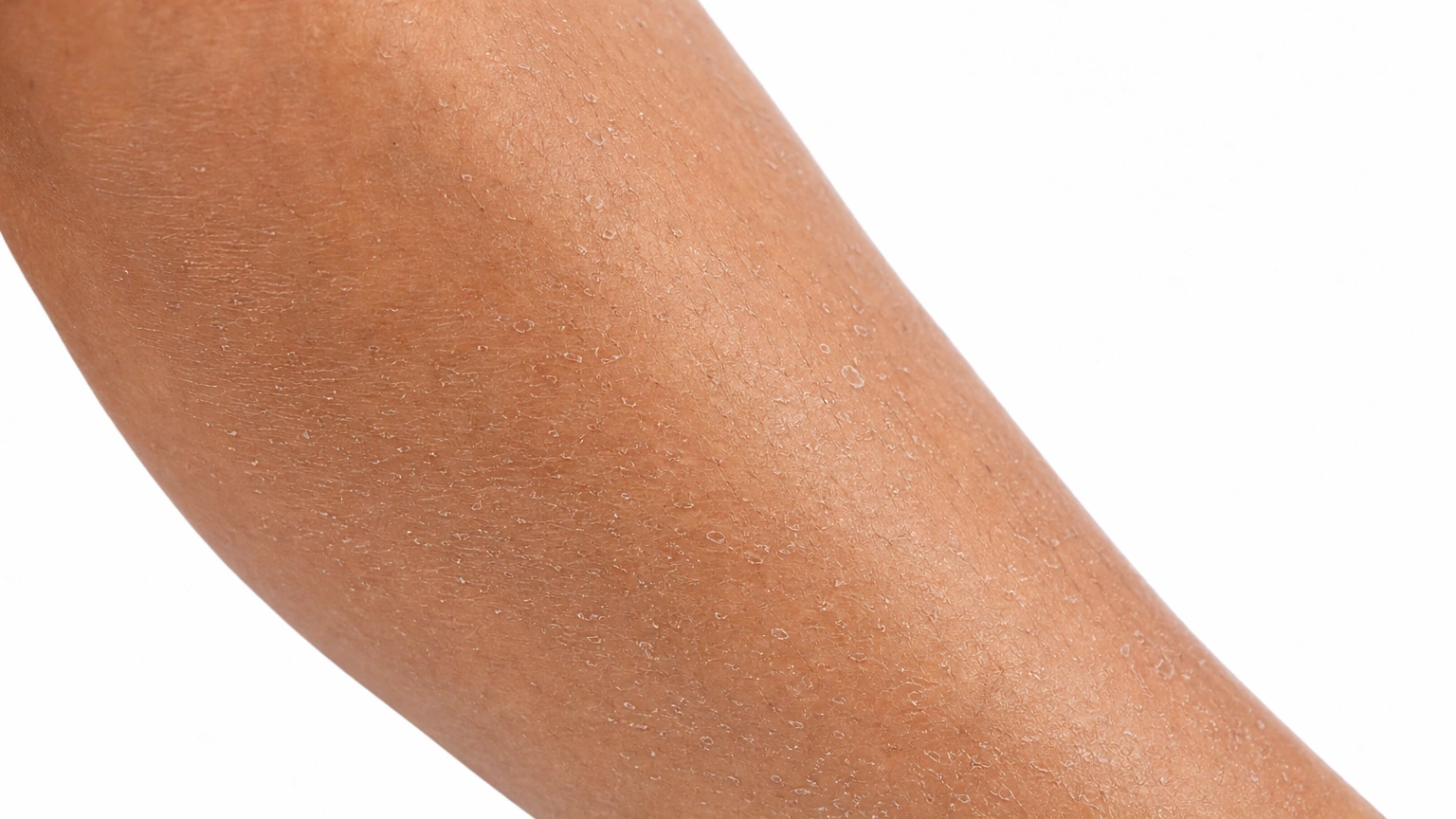
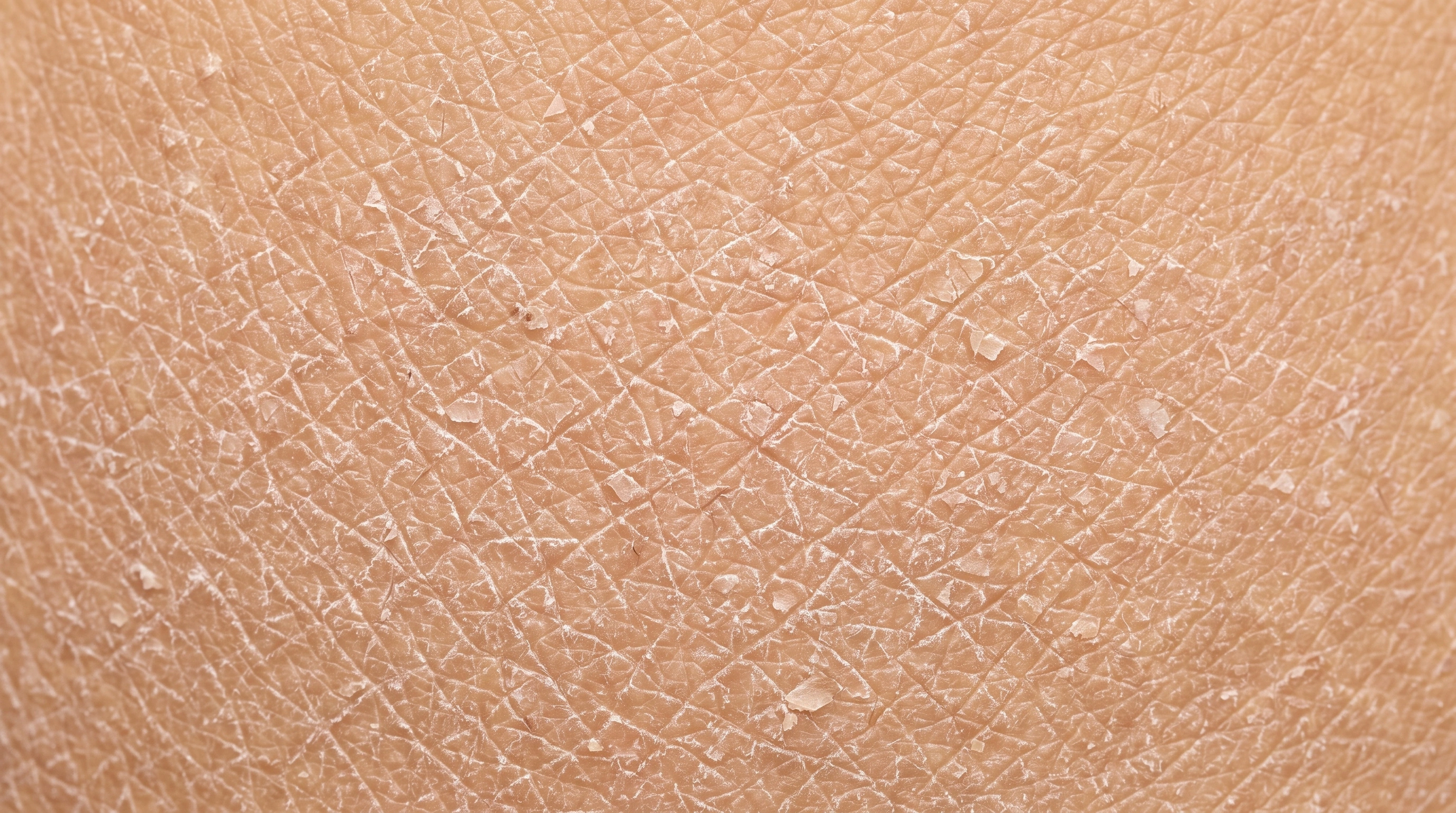
Fine dry white flakes on the skin of the lower leg.

Flaky skin Fine white flakes.

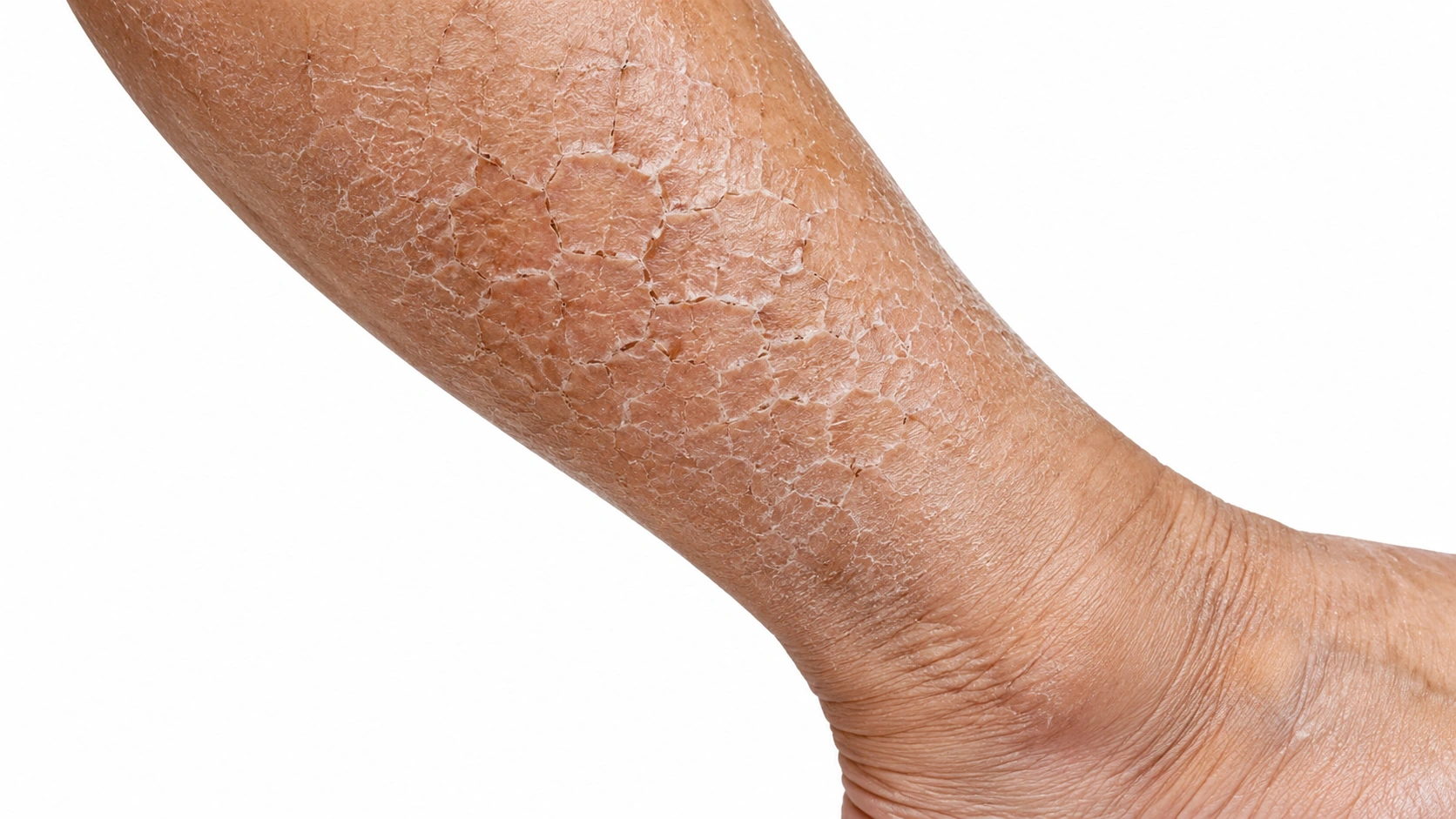
Cracked crazy-paving pattern on the lower leg.

Cracked skin Crazy-paving cracks.

Rough dry skin and mild redness on the backs of both hands.

Rough hands Dry, tight, chapped skin.

Contact Dermatitis

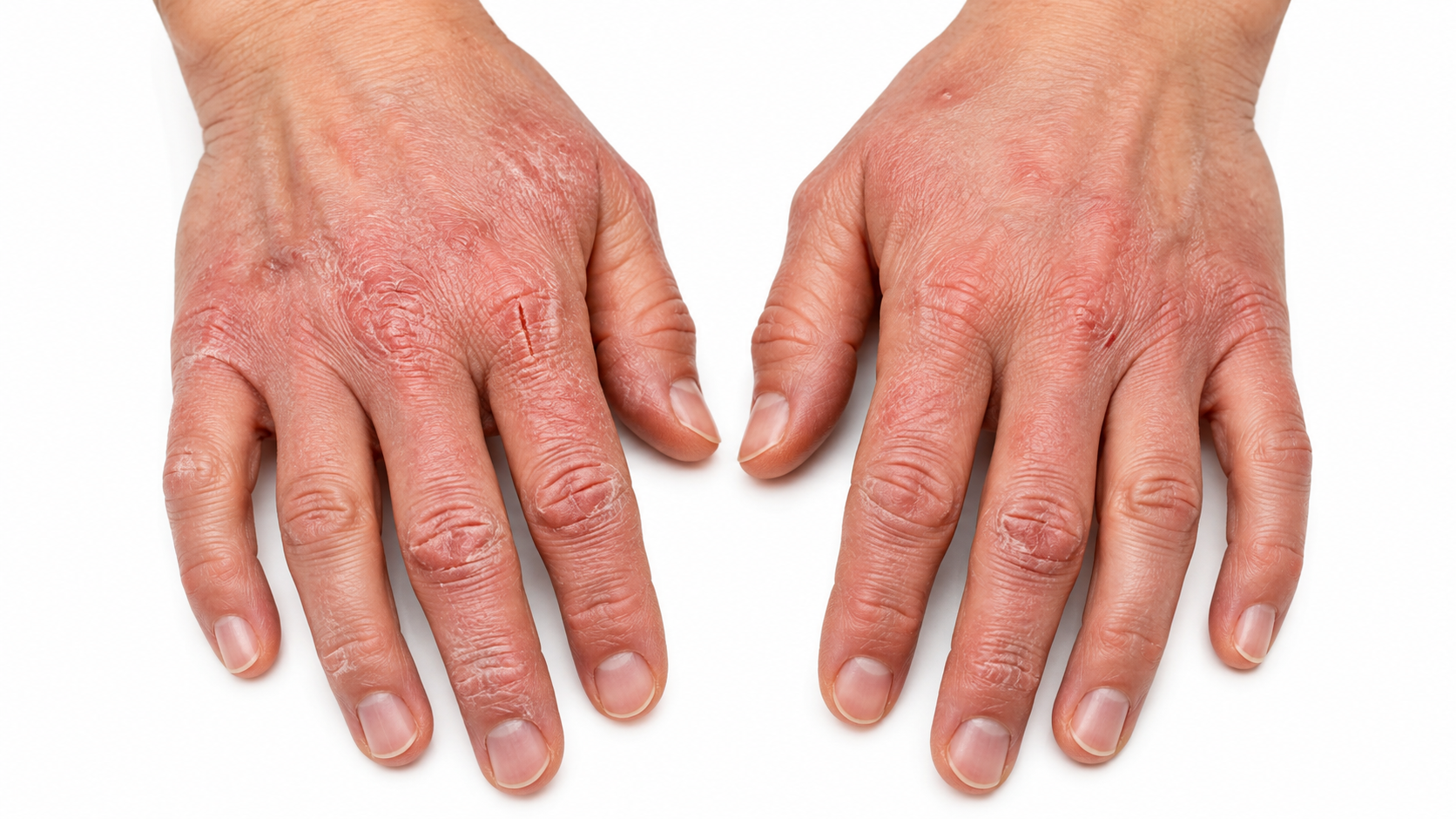
Contact Dermatitis: Dry, cracked hands; Irritant.

Irritant contact dermatitis Damage from soaps, solvents or water; most common.

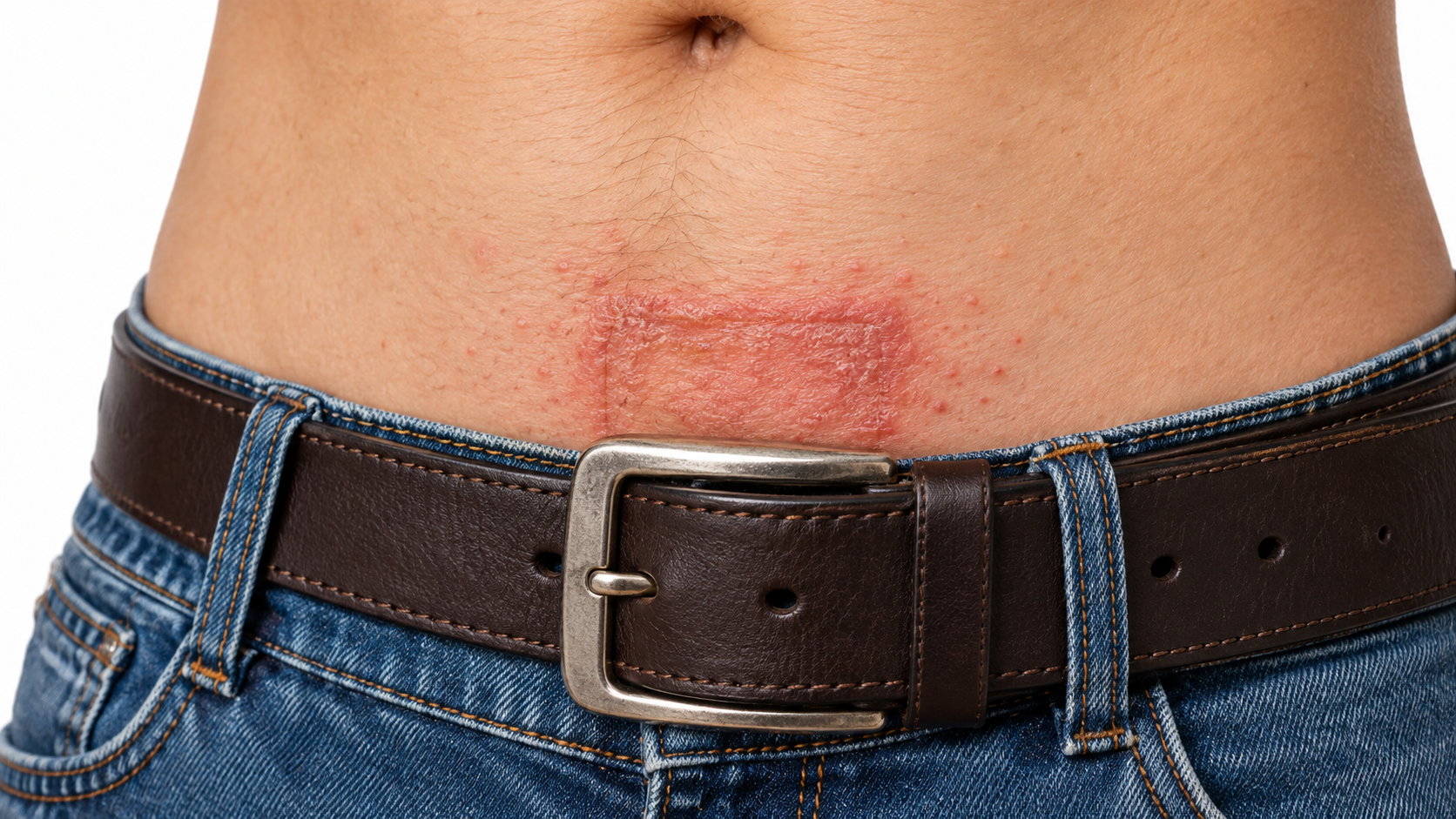
Contact Dermatitis: Allergic.

Allergic contact dermatitis Immune reaction to nickel, fragrance, plants and more.

Skin tones
The front of one shin on pale skin. The surface is pink with fine white flaking and a few shallow cracks, and the skin around it is even in tone.
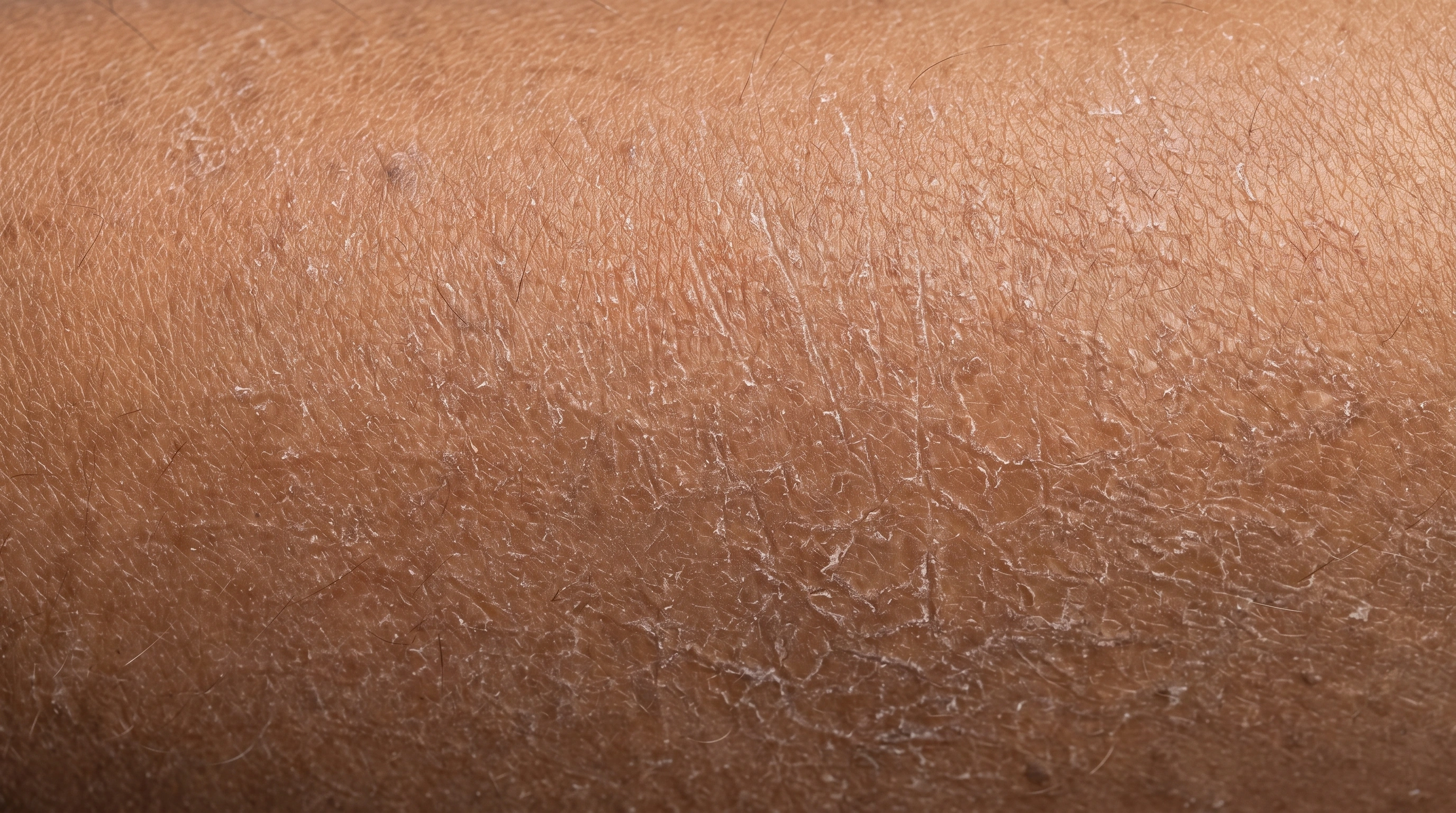
The front of one shin on medium olive skin. The surface has a dull, dusty gray cast with fine scale over an even skin tone.
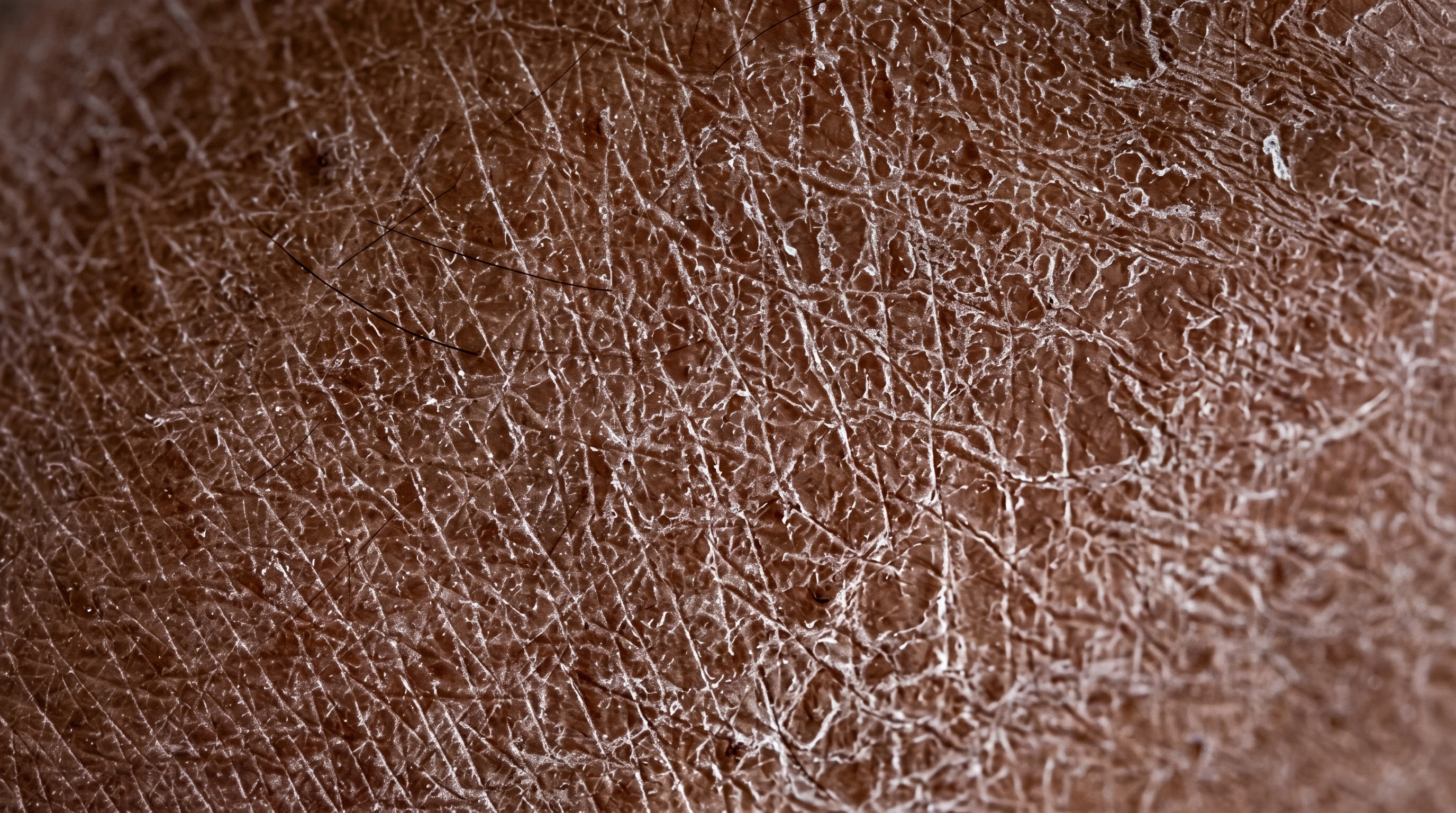
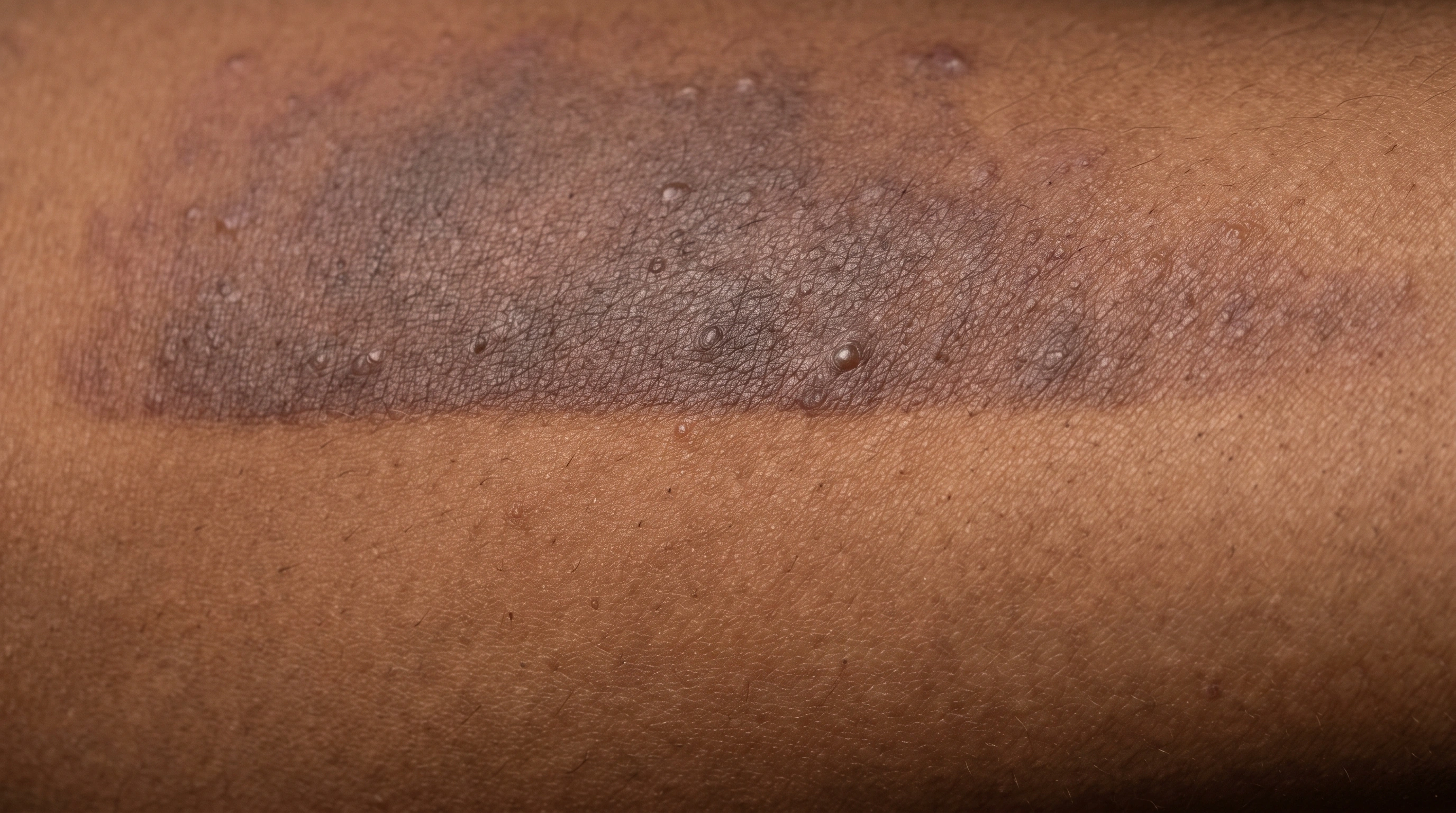
The front of one shin on mid-brown skin, covered in a gray-white ashy cast with fine pale scale that stands out sharply against the surrounding even-toned skin.
The front of one shin on deep brown skin with a gray-white ashy cast and fine scale, and flat darker brown marks where the skin has been scratched.
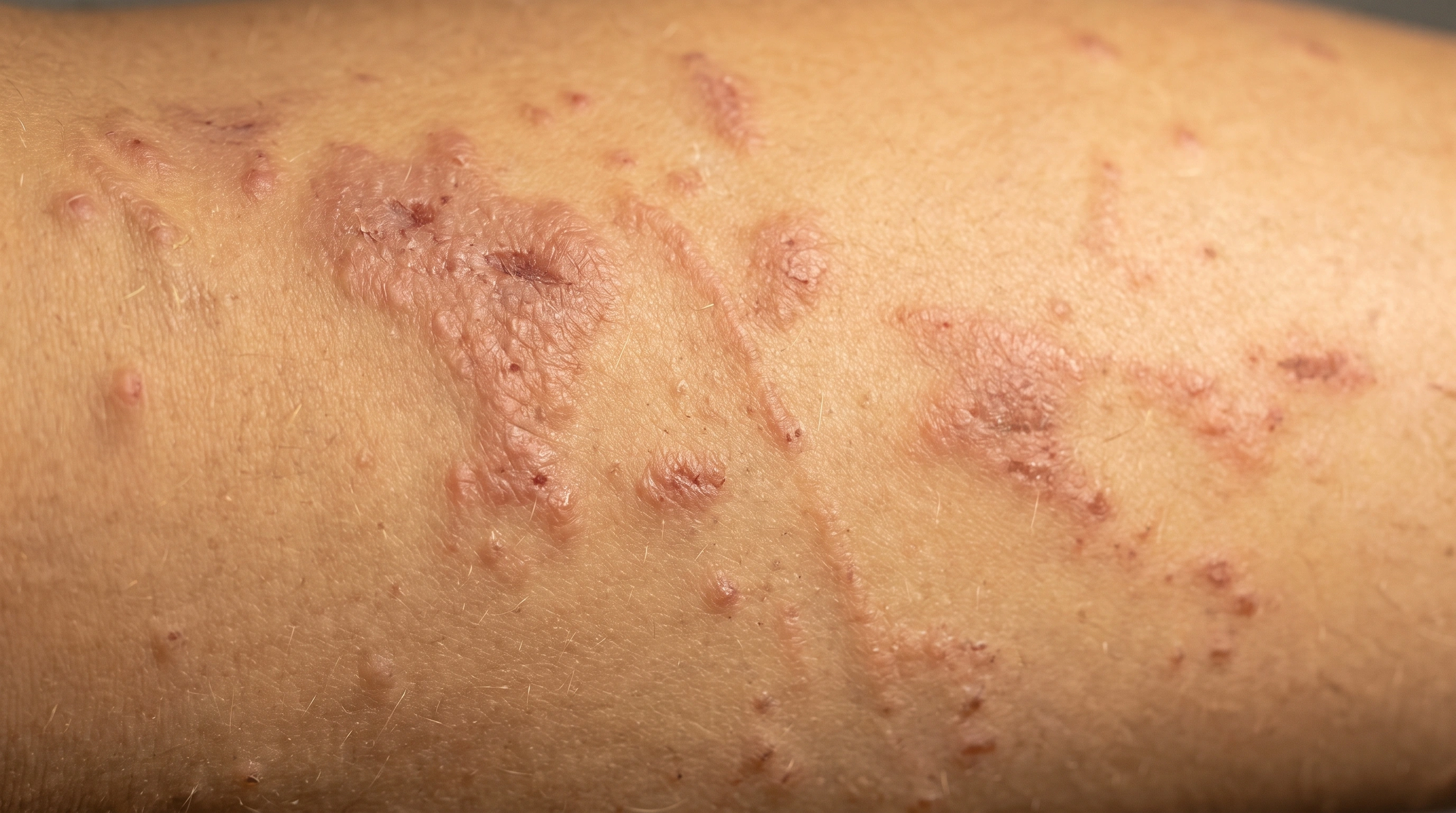
The back of one hand and the wrist on pale skin. A bright pink, slightly swollen patch with tiny blisters covers the back of the hand and stops at a straight line across the wrist.
The back of one hand and the wrist on medium olive skin. A dusky pink-brown, slightly swollen and scaly patch covers the back of the hand and stops at a straight line across the wrist.
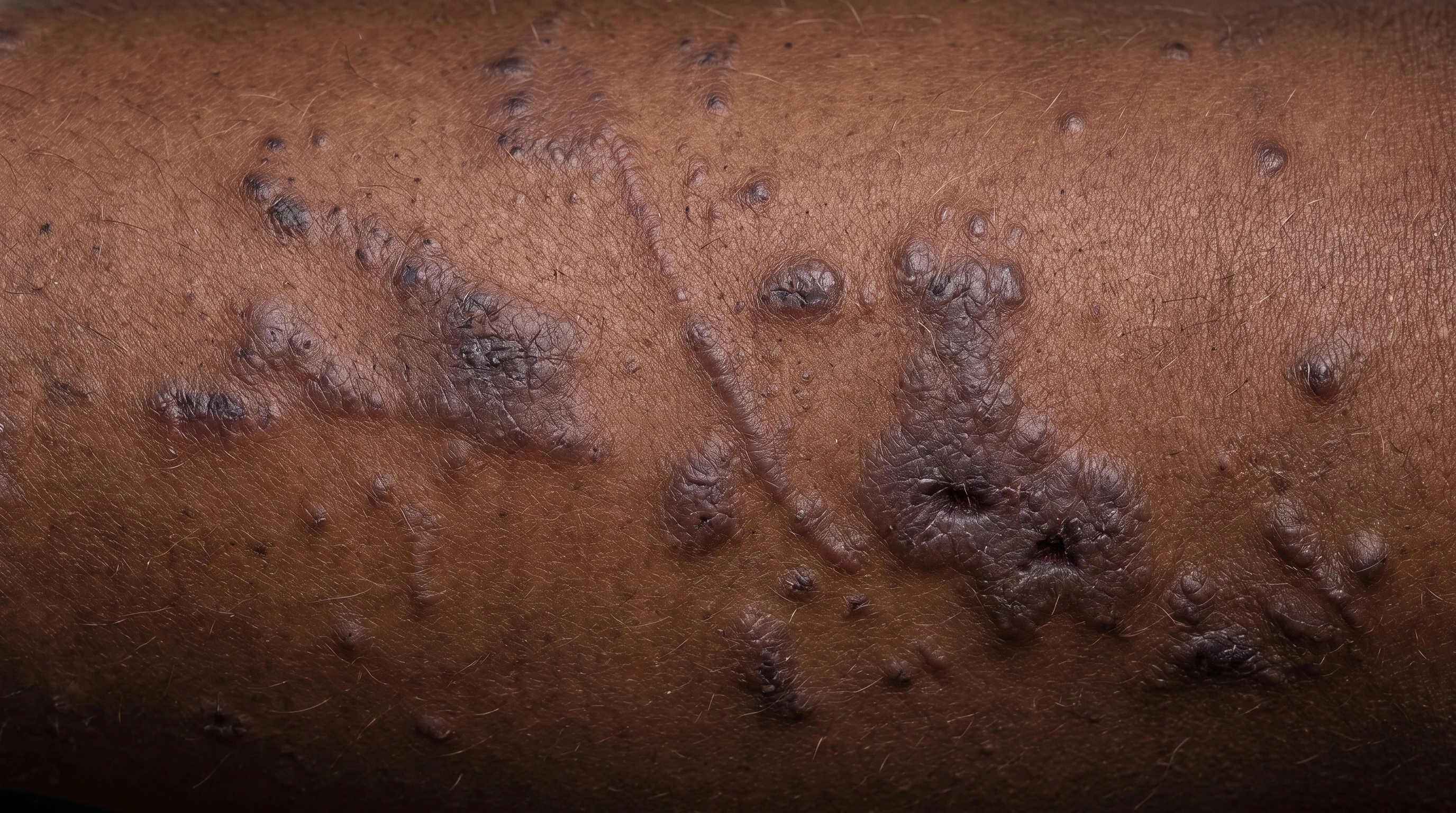
The back of one hand and the wrist on mid-brown skin. A violet-brown, swollen, slightly scaly patch covers the back of the hand and stops at a straight line across the wrist, with no red color in it.
The back of one hand and the wrist on deep brown skin. A dark violet-brown, swollen, scaly patch covers the back of the hand and stops at a straight line across the wrist, with no red color anywhere in it.
Diagram
Dry Skin mechanism diagram. Less moisture is retained: The outer layer loses its flexibility. The barrier becomes less effective: Changes in skin fats allow more water loss. Flaking and cracks appear: Dry surface cells shed unevenly.
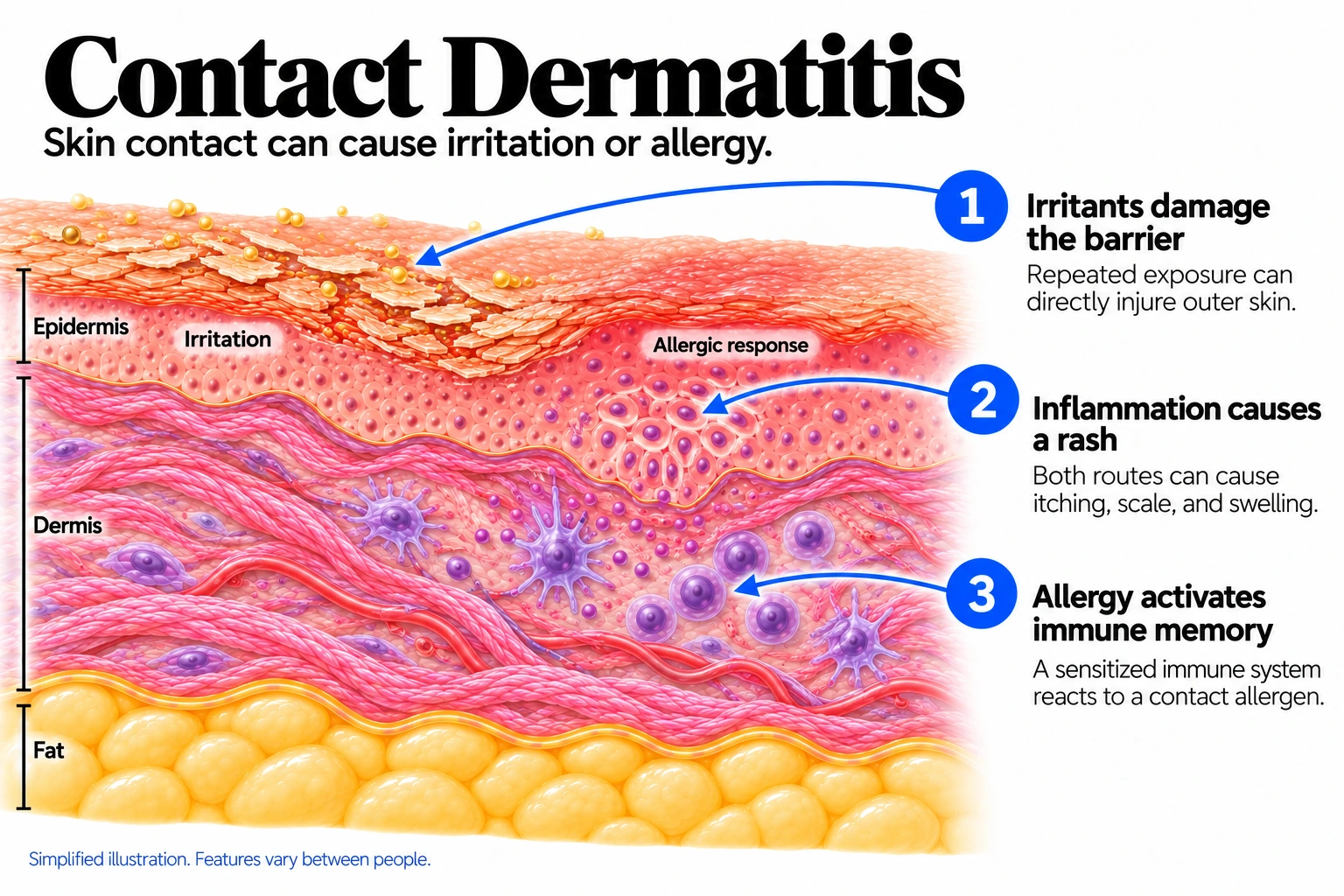
Contact Dermatitis mechanism diagram. Irritants damage the barrier: Repeated exposure can directly injure outer skin. Inflammation causes a rash: Both routes can cause itching, scale, and swelling. Allergy activates immune memory: A sensitized immune system reacts to a contact allergen.
In the skin

The outer skin does not retain enough water when its barrier becomes less effective. Changes in skin fats and moisture reduce flexibility and can lead to roughness, flaking or cracks.

Skin contact can cause inflammation through direct irritation or a delayed allergic reaction. These are different routes to a rash that may itch, swell, blister or scale.

Where it shows up

Arms, legs and hands
Where the skin meets a trigger

When it usually starts

010203040506070+

Dry Skin. Can occur at any age and becomes more common in older adults.

Contact Dermatitis. Can begin at any age after irritation or sensitization to a contacting substance.

Causes and triggers

Causes

Dry skin happens when the skin loses water faster than it can hold it, usually because its outer barrier is weakened.

Contact dermatitis happens when something touching the skin either damages it directly or sets off an allergic reaction. The rash shows up where the contact happened.

Family tendency

Some people inherit a weaker barrier, often linked to eczema.

People with eczema or a family history of allergies react more easily.

Risk factors
Age over 60, Eczema, Diabetes and thyroid disease, Wet work
Eczema, Wet work, Healthcare, cleaning and hairdressing jobs, Frequent handwashing
Trigger
● Dry Skin
● Contact Dermatitis
Cold, dry air
Well established
Not listed
Hot showers
Well established
Not listed
Harsh soaps
Well established
Not listed
Indoor heating
Strong link
Not listed
Nickel
Not listed
Well established
Fragrance
Not listed
Well established
Poison ivy
Not listed
Well established
Hair dye
Not listed
Strong link
Harsh soaps and solvents
Not listed
Well established
Preservatives in skincare
Not listed
Strong link

Daily Care

Dry Skin
Contact Dermatitis
Daily care

Habits that help

  • Moisturize on damp skin
    Within three minutes of the shower.
  • Cream or ointment, not lotion
    Lotions are mostly water.
  • A gentle, fragrance-free cleanser
    Only where it is needed.
  • Shorter, cooler showers
    Five to ten minutes, warm not hot, once a day.
  • Ointment under gloves overnight
    Apply a plain ointment and use comfortable gloves to protect dry hands overnight.
  • A humidifier in the bedroom
    Works on the air, not the skin.
  • Wear gloves
    For washing up, cleaning and cold weather.
  • Take an oatmeal bath
    Modest relief for itch, gentle on broken skin.
  • Cold rather than hot for itch
    A cool compress settles itch; a hot shower worsens it.
  • Keep nails short
    Limits damage while the barrier rebuilds.

Avoid

  • Avoid: Long, hot showers and baths
    Heat dissolves skin oils.
  • Avoid: Bar soap and foaming cleansers
    Squeaky skin means the oils went.
  • Avoid: Washing the whole body every day
    Water alone suffices for limbs and trunk.
  • Avoid: Indoor heating and air conditioning
    Dry air pulls water out.
  • Avoid: Wind and cold air on exposed skin
    Faces, hands and lips go fastest.
  • Avoid: Scrubs, loofahs and brushes
    Strips the barrier holding water in.
  • Avoid: Alcohol-based toners and witch hazel
    They remove the little oil left.
  • Avoid: Strong actives on dry skin
    Retinoids, acids and benzoyl peroxide increase water loss.
  • Avoid: Fragranced products on cracked skin
    Cracks let fragrance deeper.
  • Avoid: Scratching and rubbing
    Damages the layer holding water in.
  • Avoid: Wool and rough fabrics
    An irritant on skin that lost its cushion.
  • Avoid: Waiting to moisturize
    Cream on damp skin traps water already there.
  • Avoid: Stopping as soon as it looks better
    The barrier rebuilds slower than flaking clears.

Habits that help

  • Find the cause and stop it
    Photograph it and list what touches it.
  • Learn the ingredient names
    One molecule hides in dozens of products.
  • Switch to fragrance-free products
    A meaningful label, unlike unscented.
  • A thick, plain moisturizer, applied often
    Barrier repair is half the treatment.
  • The right gloves, worn the right way
    Vinyl or nitrile, cotton liner, off when done.
  • Lukewarm water and a non-foaming wash
    Dry gently, moisturize straight after.
  • Barrier protection for nickel
    Clear polish short term, titanium or steel long term.
  • Cool compresses
    Gently apply a cool, damp cloth to soothe weeping or irritated skin.
  • Patch testing
    The only way to name an allergen.

Avoid

  • Avoid: Carrying on using the product
    Why most rashes last months.
  • Avoid: Frequent handwashing and hand sanitizer
    Water, detergent and alcohol strip broken skin.
  • Avoid: Occlusive gloves worn for hours
    Trapped sweat swells skin.
  • Avoid: Hot water and scrubbing
    Both strip barrier fats.
  • Avoid: Scratching
    Lets more trigger in and thickens the skin.
  • Avoid: Adding more products to soothe it
    Fragrance and botanicals cause a second reaction.
  • Avoid: Numbing and anti-itch creams
    Names ending in -caine often cause allergy.
  • Avoid: Wet wipes and moist toilet tissue
    The preservatives are known allergens.
  • Avoid: Sweat under metal
    Nickel releases faster in sweat - buckles and jewelry flare.
  • Avoid: Sunlight, for some substances
    Some ingredients only react after sunlight changes them.
  • Avoid: An allergen hiding in another product
    Nail polish on eyelids, hair dye on the neck.
  • Avoid: Stopping treatment when it looks better
    Allergic reactions take two to four weeks.
  • Avoid: Anti-itch creams ending in -caine
    Numbing ingredients such as benzocaine are another frequent cause of allergic contact dermatitis. The relief is brief, and a rash that gets worse the more cream you use is a classic story. If an anti-itch product seems to be making things worse, stop it and mention it to your doctor.

Treatment differences

Evidence labels come from each condition’s own treatment list.

Treatment
● Dry Skin
● Contact Dermatitis
Over-the-counter
A thick, fragrance-free cream

A thick, fragrance-free cream

Moderate evidence

A cream or ointment from a tub, not a lotion from a pump — lotions are mostly water and evaporate. Put it on damp skin within three minutes of the shower, and again before bed. Timing matters more than which one you buy, and several of the most effective are inexpensive drugstore creams. Give any of them two weeks before deciding.

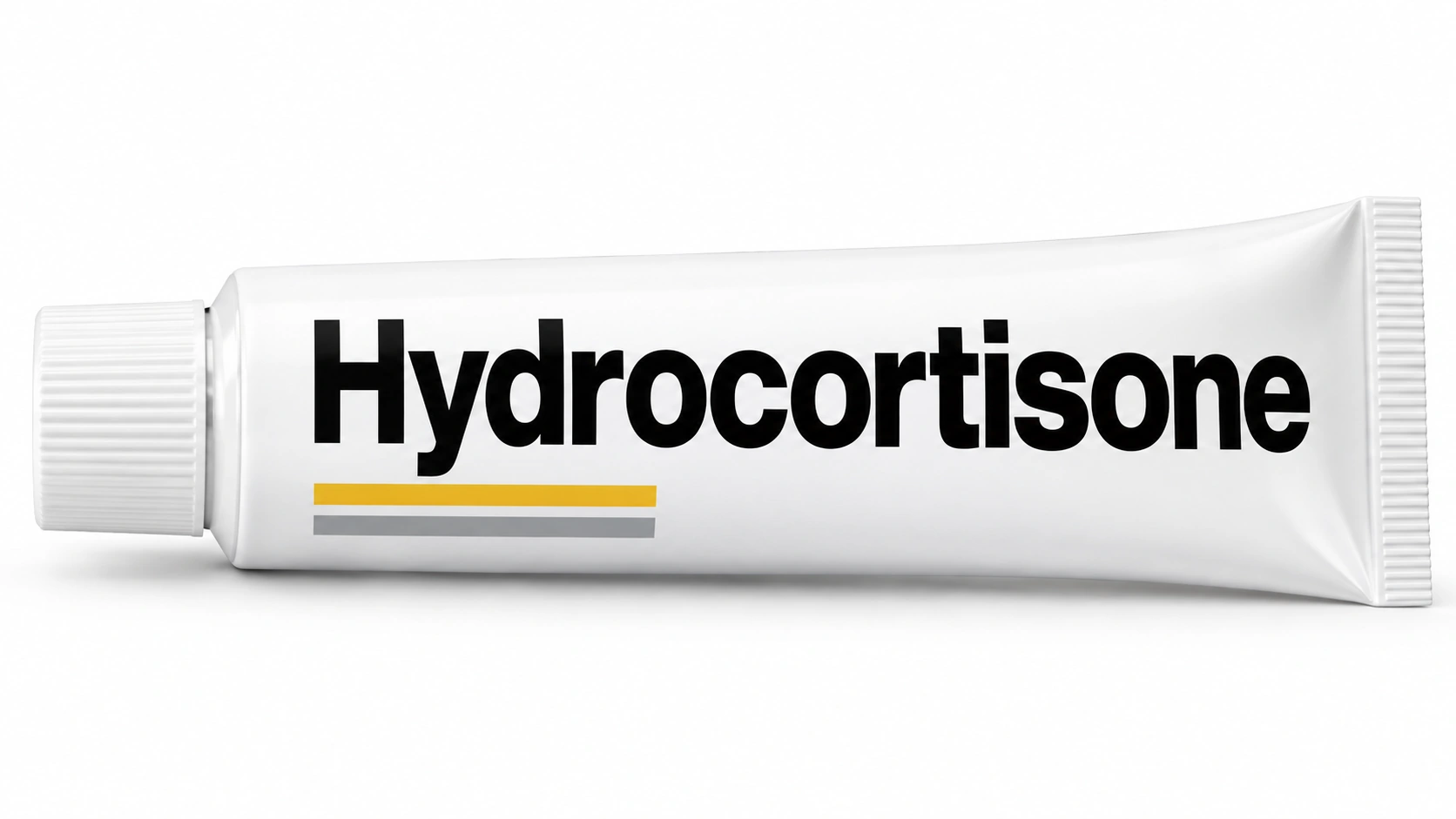
A plain white ointment tube lying on its side, labeled Hydrocortisone with a blue swoosh.

Hydrocortisone 1%

Limited evidence

A few days of over-the-counter steroid cream can break the itch-scratch cycle when dry skin has turned red and itchy and moisturizer alone is not holding it. Use it twice a day for no more than a week, on the itchy patches only, with the moisturizer continuing around it. If you need it repeatedly, that is a reason to be seen rather than to keep buying it.

Five white jars of 40% urea cream lined up, several also listing 2% salicylic acid

Urea

Strong evidence

The best choice for thick, scaly skin on heels, shins and elbows, because it softens and dissolves the scale as well as holding water. Ten to twenty percent for general dryness, forty percent for hard heel skin. It is the alternative to scrubbing, which removes the barrier along with the flakes. It stings on cracked or broken skin, so heal the cracks first.

Four ointments on white: CeraVe Healing Ointment, a Vaseline jar, a petroleum jelly tube and Aquaphor

Petrolatum

Moderate evidence

The most effective sealer there is, cutting water loss from the outer layer by more than any other single ingredient. It works best as the last step over a cream, and under cotton gloves or socks overnight it does more for cracked hands and heels in three nights than a cream does in three weeks. It is greasy, which is the only real objection to it.

Four ceramide moisturizers lined up on white: two tubes, a CeraVe tub and a blue jar

Ceramides

Moderate evidence

Ceramides are part of the fatty glue that dry skin has lost, so a cream containing them replaces the actual missing material rather than just covering it. They are the ingredient with the most evidence behind them for rebuilding the barrier over weeks, and they are the reason certain inexpensive drugstore creams are recommended so often. They are slow rather than dramatic, and they belong in your everyday cream.

Five moisturizer bottles containing glycerin lined up on white, including a bottle of pure vegetable glycerin

Glycerin

Moderate evidence

Pulls water into the outer layer and holds it there, which is why almost every good moisturizer has it high on the list. It works best paired with something that seals, such as petrolatum or dimethicone, because water drawn in with nothing over the top simply leaves again. In very dry indoor air, glycerin alone is not enough.

Five lactic acid serums lined up on white, from The Ordinary, Glytone, Paula's Choice and Prequel

Lactic Acid

Moderate evidence

Loosens stuck-together flakes chemically and draws water in at the same time, so it suits rough, bumpy dryness on the arms and legs. It is gentler than urea on large areas but stings more on cracks and on freshly shaved skin. Use it two or three times a week alongside a plain cream, not instead of one.

Five colloidal oatmeal eczema products lined up on white: tubes, a jar and a pump lotion

Colloidal Oatmeal

Moderate evidence

A lukewarm oatmeal bath gives modest but genuine relief from the itch, and it is gentle enough for broken and cracked skin, which most itch treatments are not. Ten to fifteen minutes, then straight into a cream on damp skin. It settles the itch for a few hours; it does not repair the barrier that caused it.

Three cream tubes on white: Nurture Valley Barrier Cream, Secura Dimethicone Protectant and Medline Remedy Moisturize

Dimethicone

Limited evidence

A silicone that forms a breathable seal over the skin, so it holds water in without the greasiness of petrolatum. That makes it the practical option for hands during the day and for anywhere clothes have to go straight back on. It seals but replaces nothing, so it works best in a cream that also contains ceramides or glycerin.

Five hyaluronic acid serums lined up on white, pump bottles and dropper bottles with their boxes

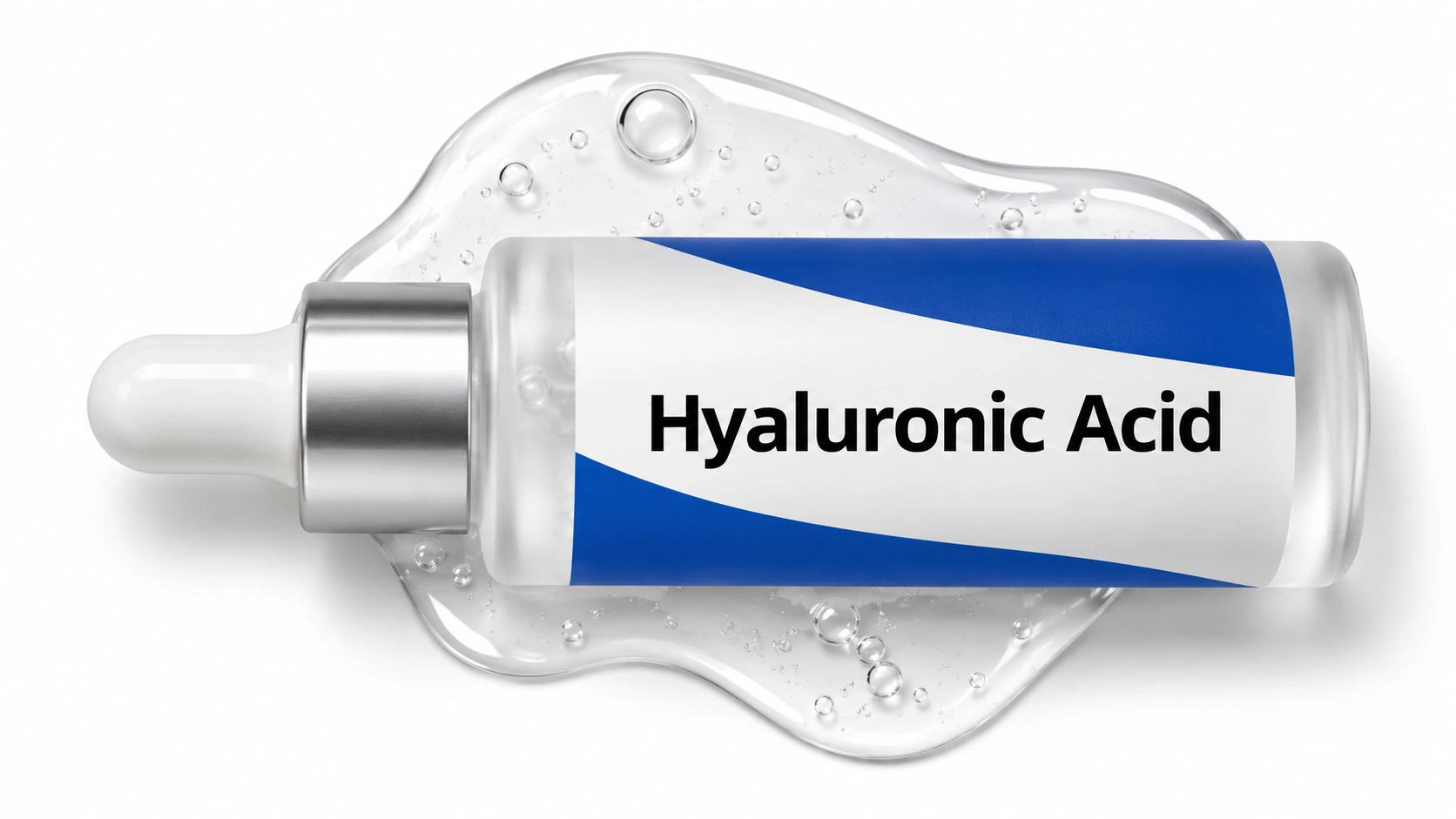
Hyaluronic Acid

Limited evidence

Holds a great deal of water, which makes skin look plumper straight away, but it seals nothing. In dry indoor air or a cold winter it can pull water up out of the deeper skin and let it evaporate, leaving the surface tighter than before. It is only useful here applied to damp skin with a cream over the top.

Five squalane oils with two boxes on white, from Timeless, Good Molecules, Natural Outcome, Pure'am and The Ordinary

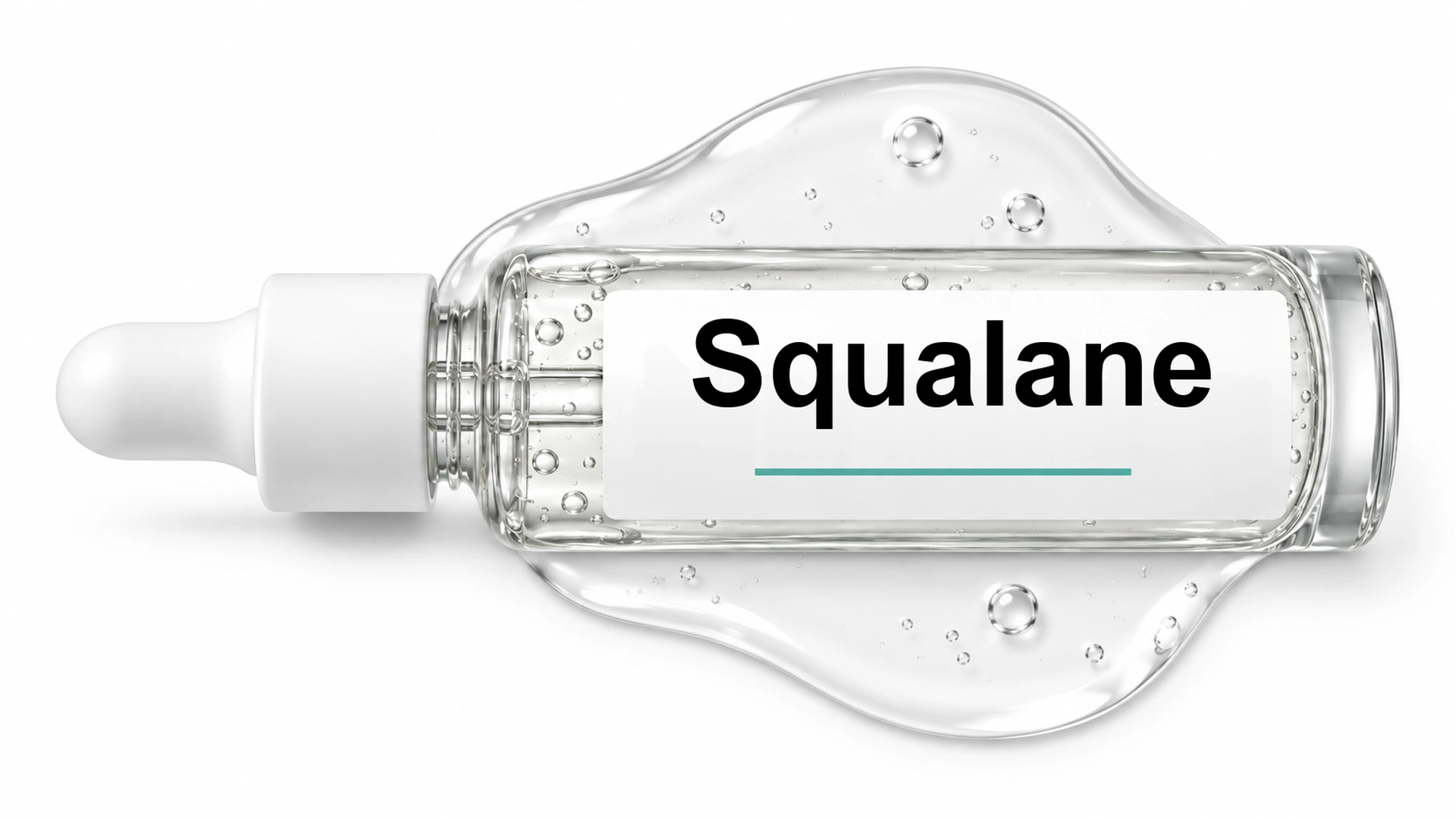
Squalane

Limited evidence

A light oil that is close to one the skin makes itself, so it sits comfortably on the face and rarely causes spots. It softens and adds a little seal. It replaces very little of what dry skin has actually lost, so it works as a finishing layer over a ceramide cream rather than as the moisturizer itself.

Five tubs of body cream on white, including Karité shea butter, CeraVe, Nivea, Vaseline Radiant and Palmer's

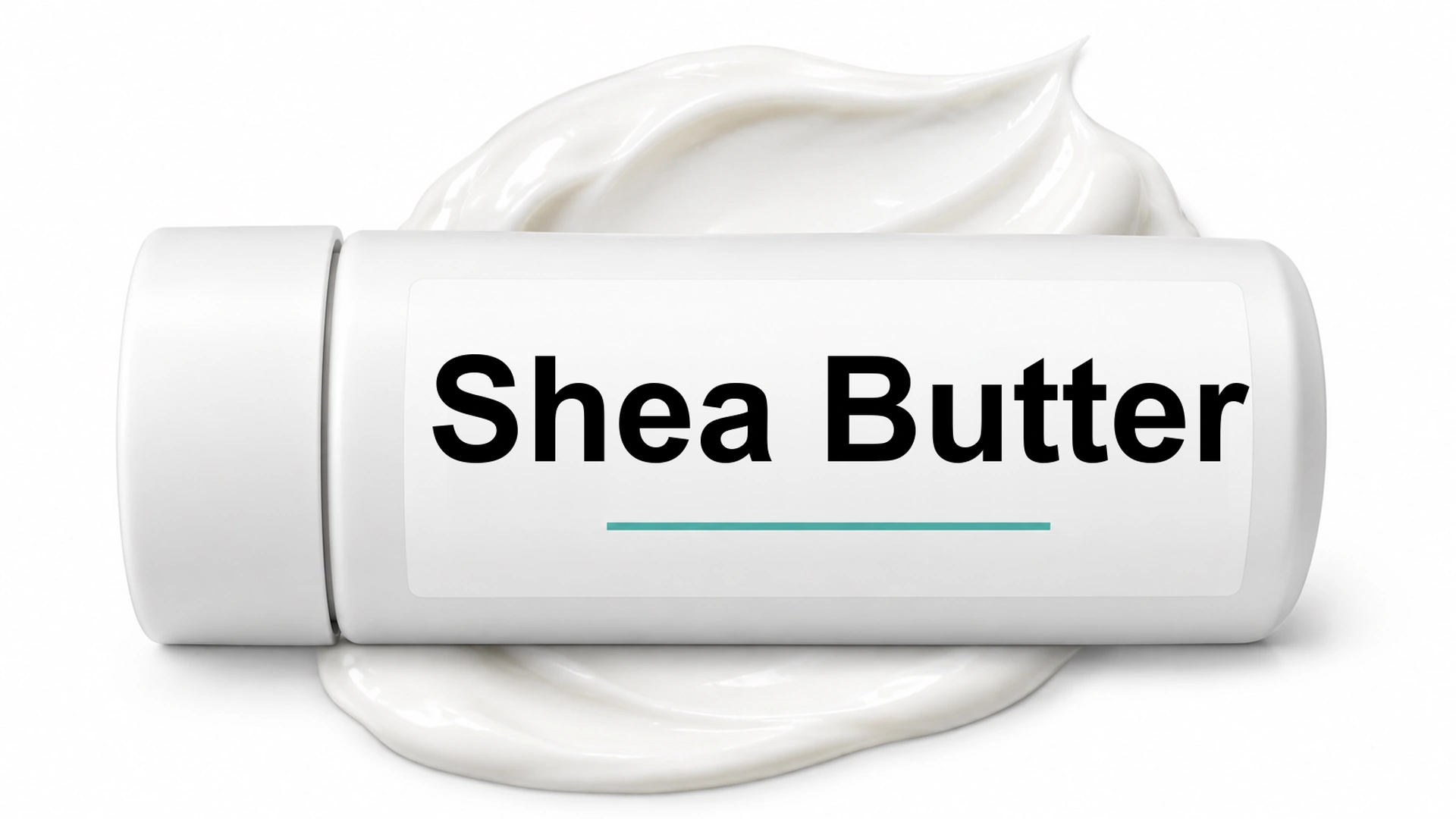
Shea Butter

Limited evidence

Rich and pleasant on ashy shins and elbows, and thick enough to stay where it is put. It seals reasonably well and replaces some fatty acids, but it does not contain the ceramides the barrier is short of. Unrefined versions carry a natural scent that can irritate cracked skin, so a fragrance-free formulation is the safer pick.

Five coconut oil bottles and a jar on white, most labeled fractionated or organic virgin coconut oil

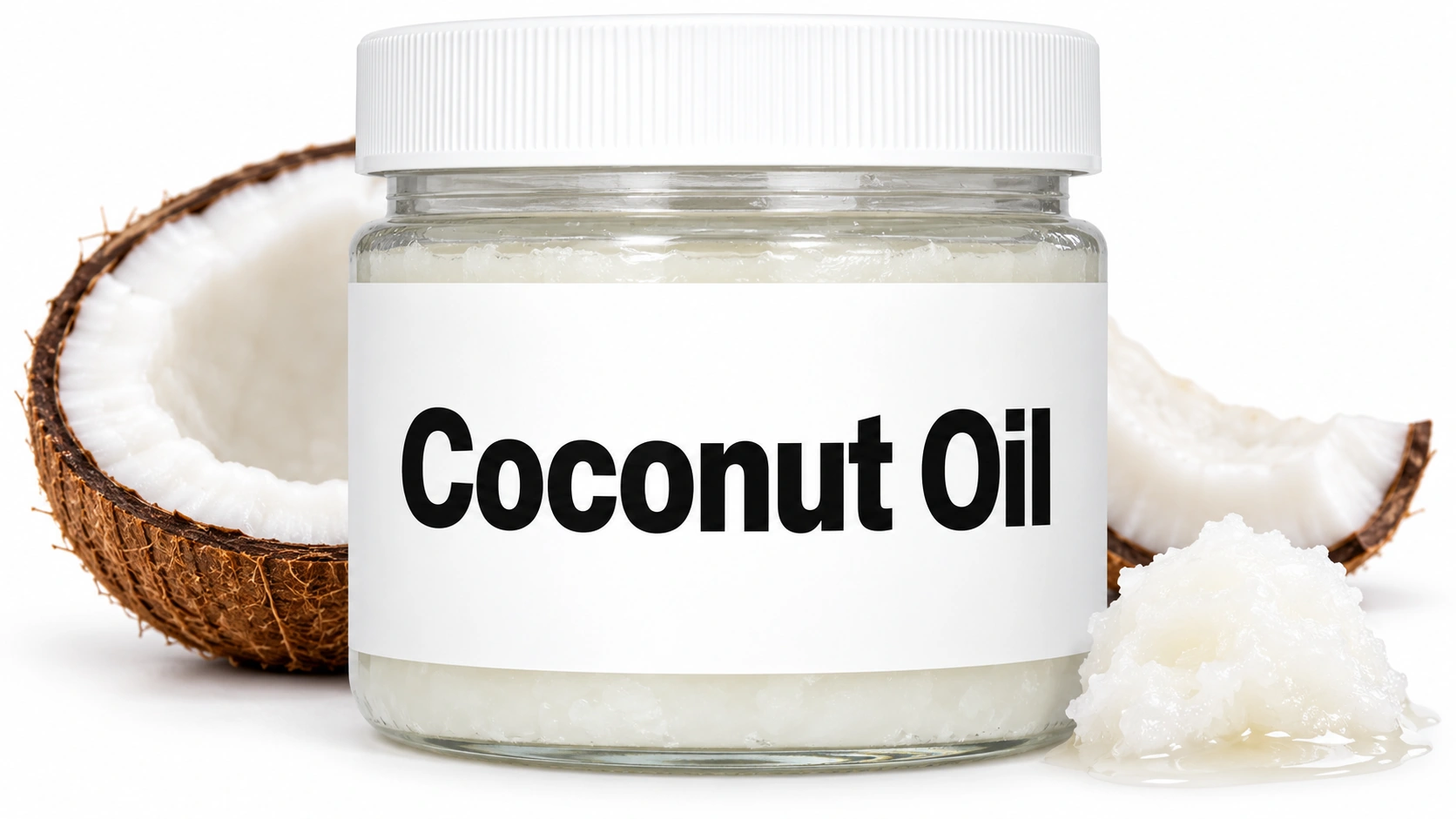
Coconut Oil

Limited evidence

It seals reasonably and it feels good, and that is most of what it does. It replaces very little of what the skin lost, it clogs pores in some people, and on the face and back it can cause spots. If you like it, use it over a cream rather than instead of one — it is a lid, not a repair.

A plain white ointment tube lying on its side, labeled Hydrocortisone with a blue swoosh.

Hydrocortisone 1%

Limited evidence

The mildest topical steroid, and enough for a small patch on the body once the contact has stopped. Use it twice a day for one to two weeks rather than dabbing it on now and then. It is often too weak for the hands or feet, and on the face or eyelids it should be short-term and worth asking about first.

Four ointments on white: CeraVe Healing Ointment, a Vaseline jar, a petroleum jelly tube and Aquaphor

Petrolatum

Moderate evidence

Plain petroleum jelly, or any thick fragrance-free ointment, rebuilds the barrier that irritation broke. Barrier repair is genuinely half the treatment in irritant hand dermatitis, and it works because it has no fragrance, preservative or botanical in it to start a second reaction. Apply after every hand wash, not once a day.

Five colloidal oatmeal eczema products lined up on white: tubes, a jar and a pump lotion

Colloidal Oatmeal

Limited evidence

An oatmeal bath can take the edge off the itch of a widespread reaction, in cool rather than hot water. It is comfort only. Pick a plain one, because an itch product with fragrance or botanicals in it is a common way people acquire a second allergy on top of the first.

Illustration: Generic oral tablet bottle and tablets.

Antihistamine tablets

Limited evidence

Contact dermatitis is not driven by histamine, so antihistamines do very little for the rash itself. A sedating one at night can help you sleep through the itching instead of scratching, which is worth something. The non-drowsy daytime ones sold for hay fever will not make much difference here.

Illustration: Generic ointment jar and translucent ointment.

OTC antibiotic ointments

Avoid

Worth naming because they are so often reached for. Neomycin and bacitracin are among the most common contact allergens there are, so an ointment used on an itchy rash can become the reason the rash will not go. Unless the skin is genuinely infected, plain petroleum jelly does the same job with none of the risk.

Prescription topicals
Representative medication packaging labelled Triamcinolone, lying sideways on a white background.

Triamcinolone Acetonide

Moderate evidence

A mid-strength steroid ointment for dry skin that has tipped into inflammation — the red-cracked plates of asteatotic eczema on the shins, or thickened patches that are being scratched nightly. Two weeks usually settles it, and the moisturizer carries on underneath and afterward. It is not for plain dryness, and it is not for open cracks or anything that might be infected.

16:9 hero for Desonide. Never cropped: the tone strip and the corner logo depend on the full frame.

Desonide

Moderate evidence

A gentler steroid used where the skin is thin or the person is small — the face, the eyelids, the neck, the folds, and children. It suits a child whose dry skin is itchy enough to wake them, alongside a heavy ointment. Short courses only, and the aim is always to get back to moisturizer alone.

Mupirocin — Header Image

Mupirocin

Limited evidence

An antibiotic ointment for a single cracked fingertip or heel that has become yellow-crusted and sore. It treats the infection sitting in the crack, not the dryness that opened it, so the cream and the ointment both continue. If redness is spreading up the limb, this is not enough and antibiotic tablets are needed instead.

Representative medication packaging labelled Triamcinolone, lying sideways on a white background.

Triamcinolone Acetonide

Moderate evidence

A mid-strength steroid cream or ointment, the usual prescription for contact dermatitis on the body, arms or legs. Two weeks of it will clear most reactions once the contact has stopped. It is too strong for the eyelids and the folds, and it is a treatment for the inflammation, not for the cause.

16:9 hero for Desonide. Never cropped: the tone strip and the corner logo depend on the full frame.

Desonide

Limited evidence

A mild steroid stronger than over-the-counter hydrocortisone but gentle enough for the face and eyelids in short courses. It is the usual first prescription when a reaction has landed above the neck. Use it for the days it is prescribed for, not as something kept in the drawer.

Clobetasol — Header Image

Clobetasol

Moderate evidence

Clobetasol Propionate. A potent steroid ointment for hands and feet, where the skin is thick enough that milder creams barely register. It is used in short bursts of two to three weeks with breaks in between, not continuously. Nothing above the neck, and remember that hand dermatitis takes six weeks or more to settle even when the steroid is doing its job.

Protopic — Header Image

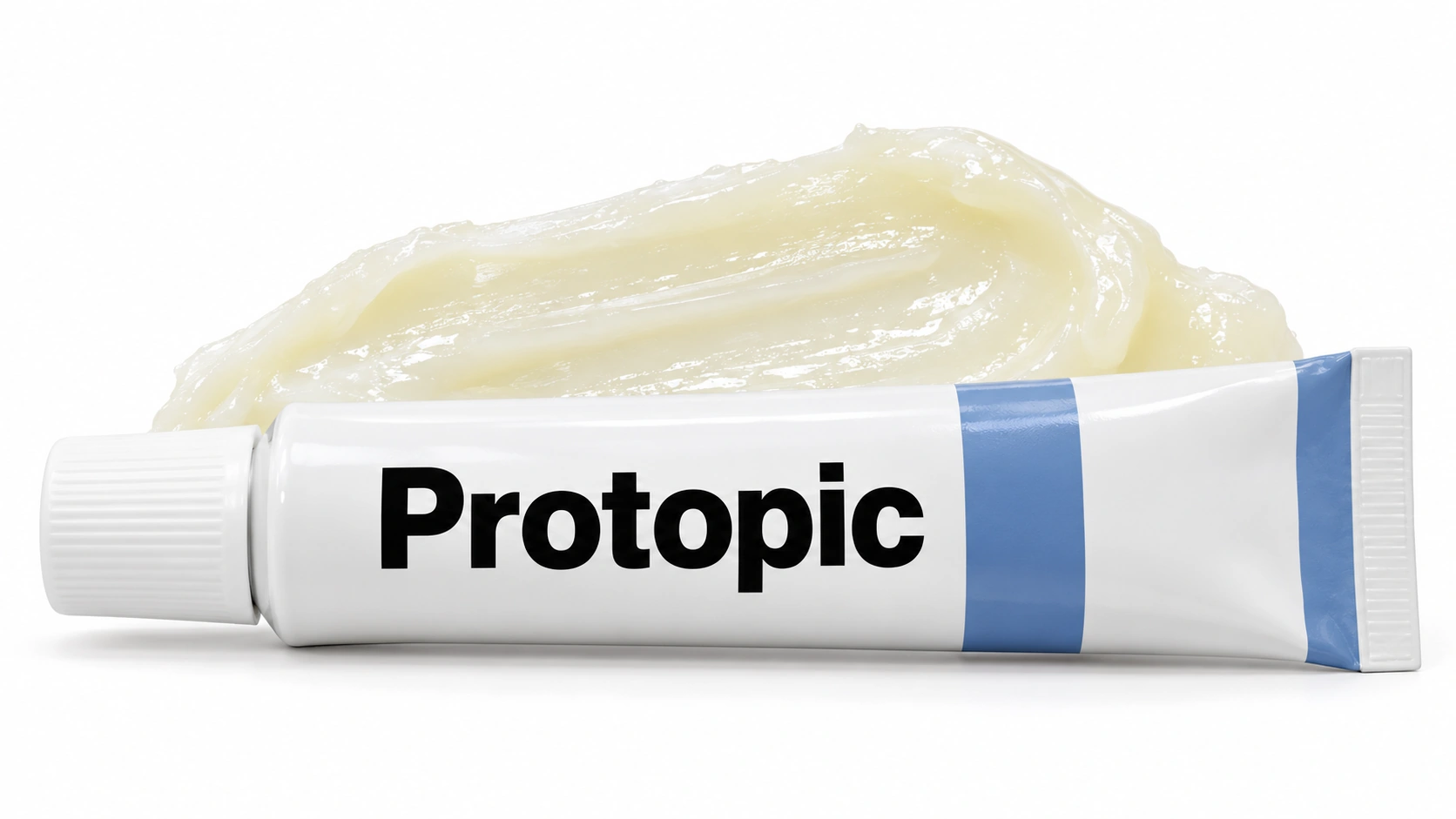
Protopic

Moderate evidence

A non-steroid ointment for the eyelids, face and skin folds, where repeated steroid use thins the skin. It calms the same immune reaction without that risk, which makes it useful for eyelid dermatitis that keeps returning while the trigger is being tracked down. It stings for the first few days, and that usually passes.

16:9 hero for Elidel. Never cropped: the tone strip and the corner logo depend on the full frame.

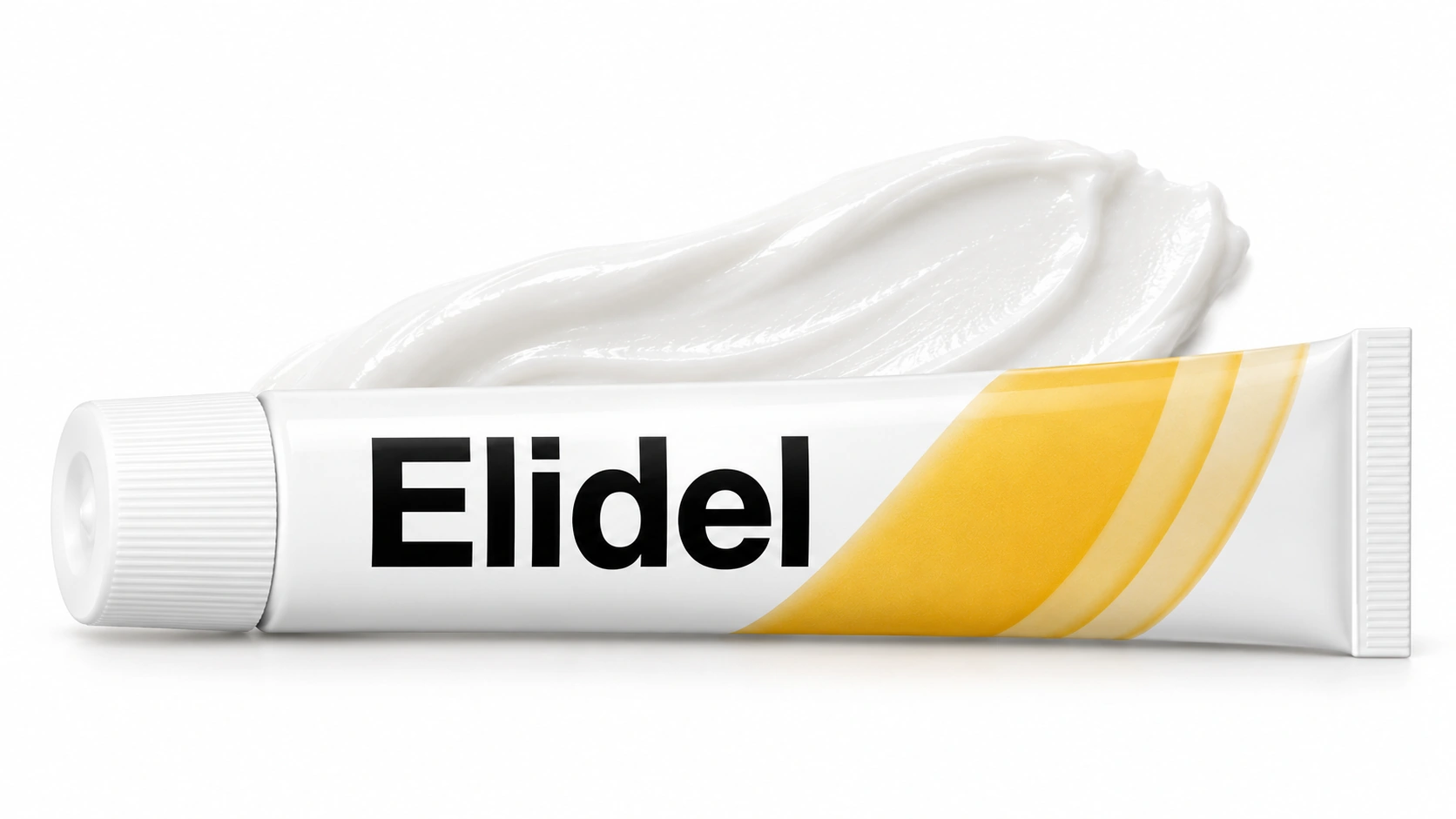
Elidel

Limited evidence

A gentler alternative to tacrolimus for the face and eyelids, and easier to tolerate for people who cannot get past the initial burning. It is not strong enough for hand dermatitis. Like tacrolimus, it buys comfort while the actual trigger is being identified.

Prescription pills
None listed
Prednisone — Header Image

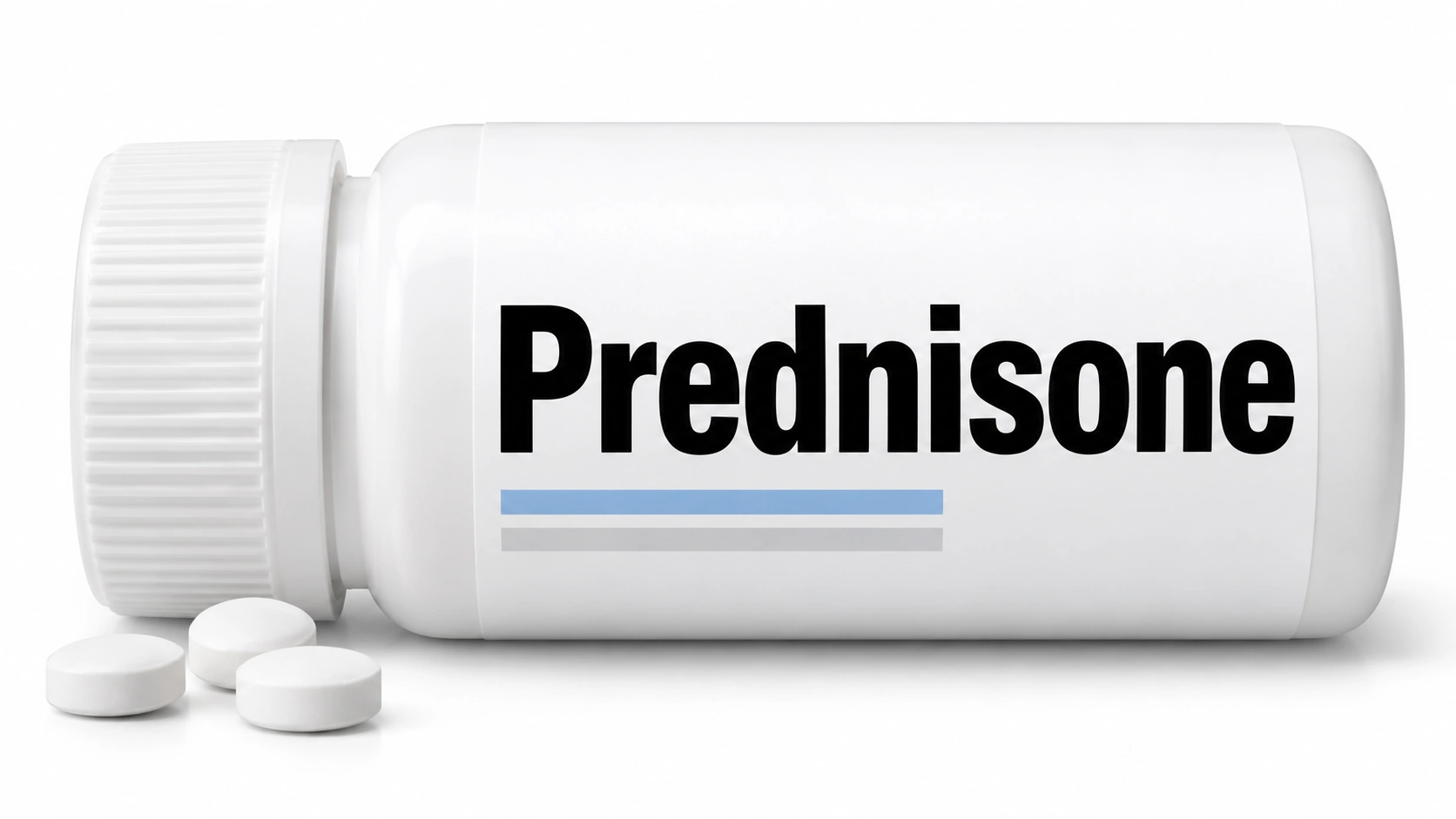
Prednisone

Moderate evidence

Steroid tablets for a widespread, blistering reaction, most often poison ivy covering large areas or a rash on the face that is closing an eye. The course has to run two to three weeks with a taper; the short packs are the usual reason the rash rebounds a few days after finishing. It is for the big reactions only, not for a patch on one arm.

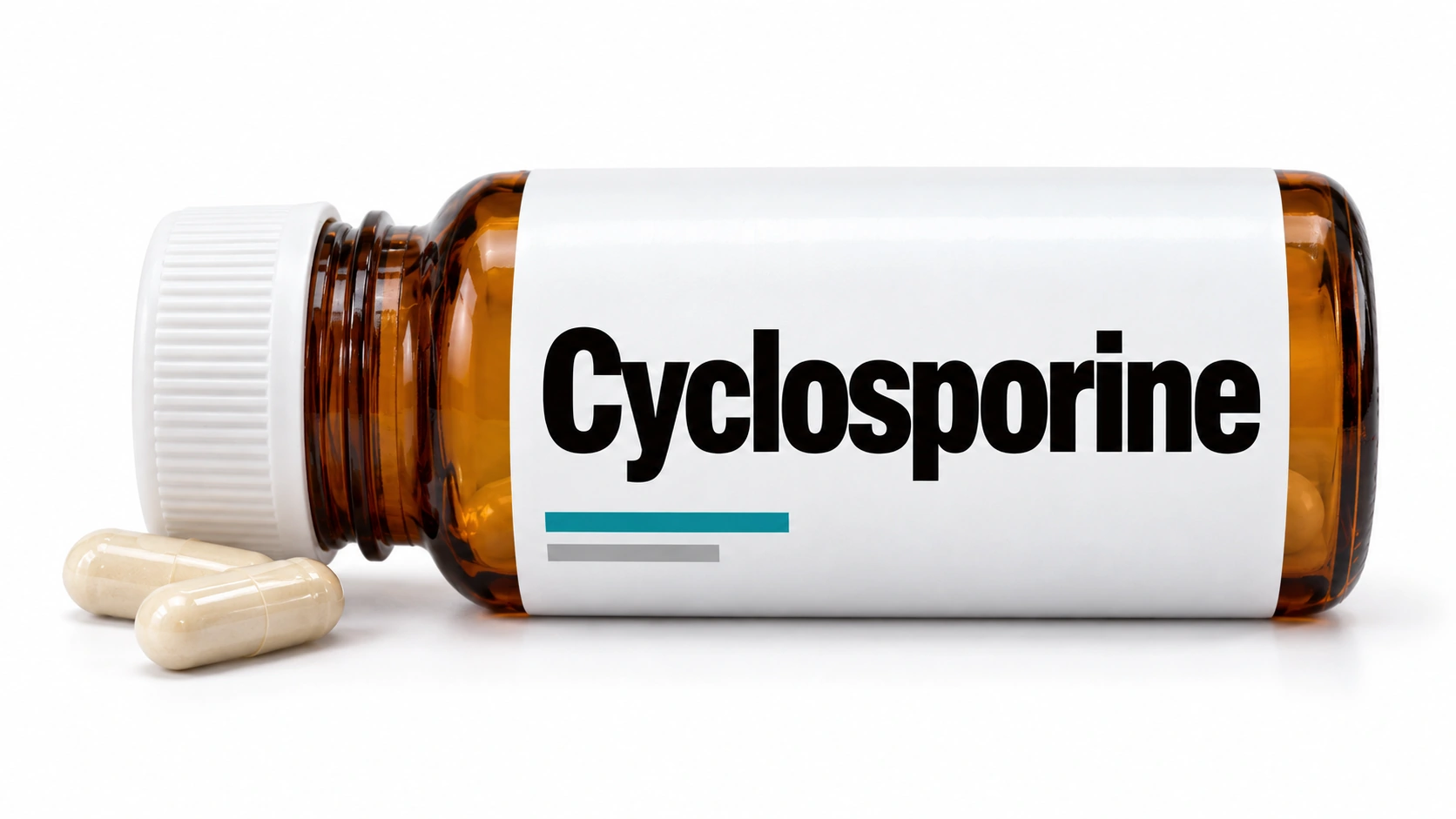
An amber pill bottle labeled Cyclosporine tipped over with white tablets spilling out

Cyclosporine

Limited evidence

A short specialist course for severe hand dermatitis that has not responded to strong steroids and proper avoidance. It works quickly and reliably, which is exactly why it is used for a few months rather than long term — blood pressure and kidney function have to be watched throughout. It is a bridge, not an answer.

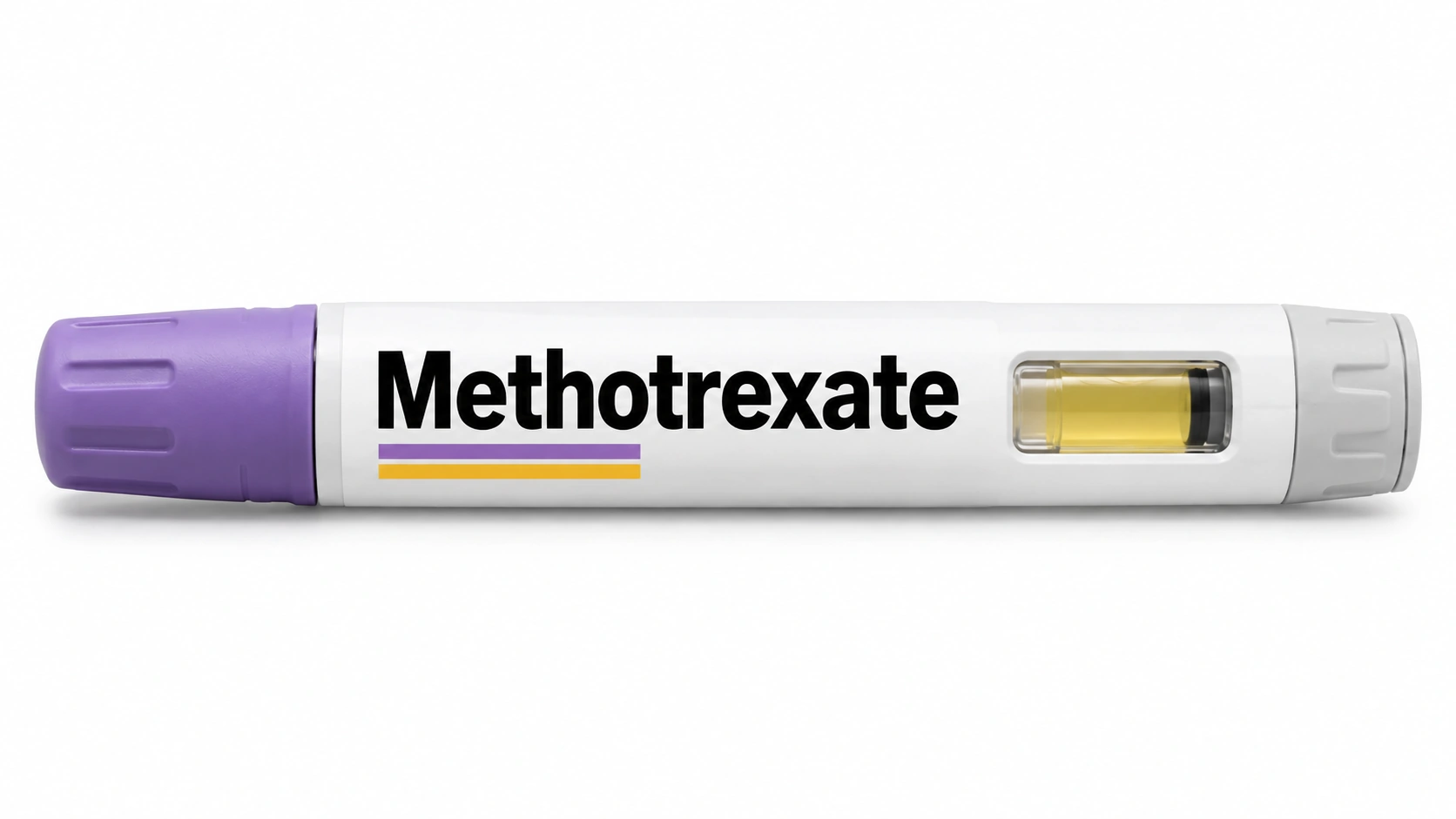
16:9 hero for Methotrexate. Never cropped: the tone strip and the corner logo depend on the full frame.

Methotrexate

Limited evidence

A weekly tablet sometimes used for chronic hand dermatitis when avoidance and creams have genuinely failed. The evidence in contact dermatitis specifically is thin, mostly borrowed from eczema. It needs regular blood tests, and it is a specialist decision rather than a next step.

Antibiotic tablets for infection

Antibiotic tablets for infection

Listed

Used only when bacteria have moved into the broken skin — spreading warmth and pain, pus, or fever. They treat the infection sitting on top and do nothing to the dermatitis underneath, so the steroid and the avoidance carry on alongside them.

Injections
None listed
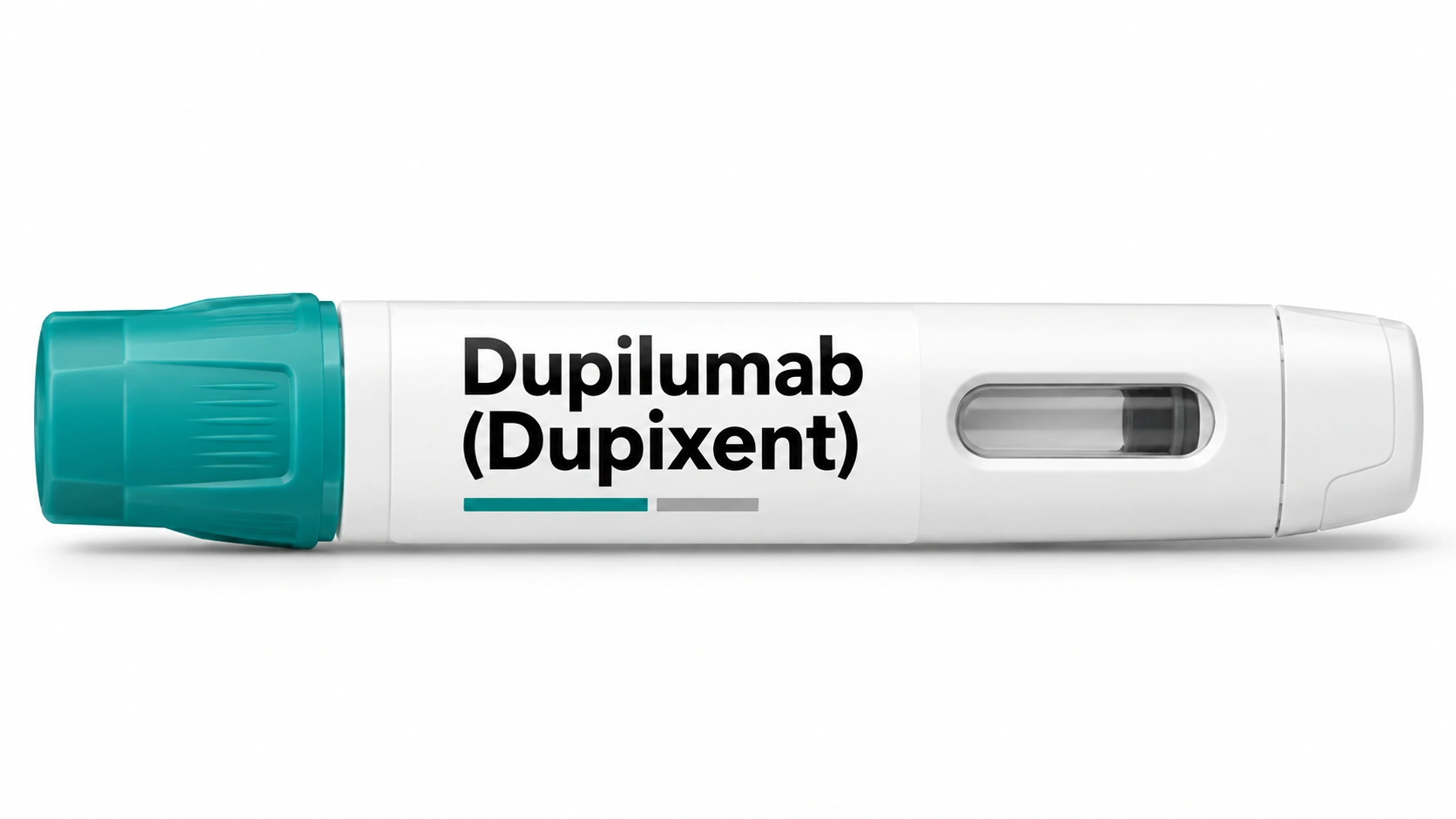
A white and green autoinjector pen labeled Dupixent lying on a plain pale background

Dupixent

Limited evidence

An injected biologic increasingly asked about for chronic hand dermatitis. Reports are encouraging for the eczema-like cases, but it is not approved for allergic contact dermatitis and some allergens appear not to respond to it. It does not replace finding and removing the trigger, and it is a specialist conversation.

Outlook

Long term

Dry skin slides predictably if nothing changes, and reverses predictably once it does. Most people notice a difference within days, flaking settles in one to two weeks, and cracks on hands and heels take several weeks. The pattern is seasonal - maintenance, not a course.

Timing is the best clue to which form you have. The rash is temporary; the allergy is not - sensitization is generally lifelong, so avoidance is permanent. Once the substance is named and avoided, most people stay clear.

Complications

Possible complications
  • The surface breaks up
  • Needs treatment
More details

The surface breaks up
The skin breaks into a fine network of cracks. On the shins this can become the red-bordered, cracked-porcelain pattern of asteatotic eczema. Cracks here can be deep and painful.

Needs treatment
A crack breaks the skin. Yellow crust, spreading redness, warmth, swelling or pus mean a bacterial infection needing treatment.

  • Infection in the broken skin
  • Chronic hand dermatitis
  • Time off work
More details

Infection in the broken skin
Weeping, cracked or scratched skin gives bacteria an opening, most often on the hands. The signs are honey-colored crusts, pus, increasing pain, or redness and warmth spreading outward. It is common and it is treatable, but it needs antibiotics rather than more steroid cream, so it is worth being seen rather than waiting it out.

Chronic hand dermatitis
When the exposure carries on, hand dermatitis stops settling between flares. The skin thickens, the normal lines deepen, and painful cracks open across the fingertips and knuckles that catch on everything and are slow to close. It is the reason contact dermatitis is a leading work-related skin problem, and it is largely preventable by naming the cause early instead of treating the rash for months.

Time off work
Hand dermatitis is one of the leading work-related health problems, and for people in wet or chemical work it can mean weeks of light duties, a change of role, or leaving a trade. It is also the part most often left out of the conversation. Naming the cause early, and getting the right gloves and routine in place, is what keeps the job.

When to get help

When to get help

Seek help if dryness persists despite moisturizers, itch disrupts sleep or the skin cracks and becomes infected. Sudden widespread dryness may need assessment for another cause.

Seek help for persistent or recurrent rash; patch testing may identify contact allergy. Pain, spreading warmth, pus or fever require prompt assessment.

Common questions

Dry Skin:Will drinking more water help my dry skin?

Not in any way you will notice, unless you are genuinely dehydrated. The water content of the outer layer depends on how well it seals itself, not on how much you drink. Fix the seal - shorter warm showers, a gentle cleanser, a cream on damp skin.

Dry Skin:What is the best moisturizer?

No single best one, and the ones with most evidence are usually inexpensive. Look for a fragrance-free cream in a tub with ceramides and glycerin, plus petrolatum or dimethicone. Applying it to damp skin twice a day for two weeks matters more than which one.

Dry Skin:Why is my skin itchy at night?

Several things line up in the evening. Body temperature rises, a warm shower has just stripped the skin, nothing distracts you, and scratching in your sleep goes unchecked. Moisturizing before bed, a cool bedroom and a humidifier all help.

Dry Skin:Is dry skin the same as eczema?

No, though they overlap. Dry skin is a state the skin is in. Eczema is a condition where the skin is inherently leaky and inflamed, with itchy, poorly defined patches that come and go, usually from childhood and often with asthma or hay fever. Dry skin that keeps turning red or weeping in the same places is worth a look.

Dry Skin:Should I be exfoliating the flakes off?

Not with a scrub. Scrubbing removes the barrier with the flakes and the dryness returns worse. For thick scale on heels, shins or elbows, a cream with urea or lactic acid softens it.

Dry Skin:Can dry skin be a sign of something serious?

Usually not. But an underactive thyroid, kidney disease, diabetes and some medicines cause it, and generalized itch without a rash occasionally reflects a problem elsewhere. Worth checking is dryness or itch that starts suddenly in an adult, covers the body, disturbs sleep, or comes with fatigue or weight change.

Contact Dermatitis:How do I figure out what caused it?

Start with location and shape, not a list of products. Photograph the rash, note where its edges are, and look for an object or habit that matches that outline. An allergic reaction shows up one to three days after contact, so look at what happened two days before, not that morning. Include things you have used for years - those are the likeliest candidates, not the least. If a few weeks of attention does not settle it, patch testing ends the guessing.

Contact Dermatitis:How long does it take to clear up?

An irritant reaction improves within days of contact stopping. An allergic reaction takes two to four weeks to settle even with treatment, because the immune cells doing the damage take that long to stand down. Hands are slowest, often six weeks or more, because the skin there is used and washed constantly. Judging it at day three tells you very little.

Contact Dermatitis:Is it contagious?

No. This is your own skin reacting to a substance, not an infection. You cannot pass it on by touch. If two people in a household get the same rash, they were both exposed to the same thing.

Contact Dermatitis:Will the allergy ever go away?

Generally no. Once your immune system has learned a substance, that memory is permanent, and tiny amounts can trigger a reaction years later. In practice it is less grim than it sounds - people who know their allergen and avoid it stay clear indefinitely, and the avoidance is usually narrower than they feared.

Contact Dermatitis:Why did this appear on my eyelids when I never put anything there?

Eyelid skin is the thinnest on your body, so it reacts to amounts the rest of your skin ignores. Nail polish, hair products, face creams and airborne particles reach the eyelids from your hands or from your scalp. When a rash is on the eyelids alone, the cause is usually somewhere else.

Contact Dermatitis:Can I just use hydrocortisone from the pharmacy?

For a small, mild patch on the body, often yes, alongside stopping the contact. Over-the-counter hydrocortisone is a mild strength and rarely clears thicker skin on hands or feet. On the face and eyelids keep it short-term, and ask first. It treats the inflammation, not the cause - if the rash returns each time you stop, find the trigger.
Sources

Sources and further reading

  1. DermNet
  2. DermNet
Dermapedia on YouTube