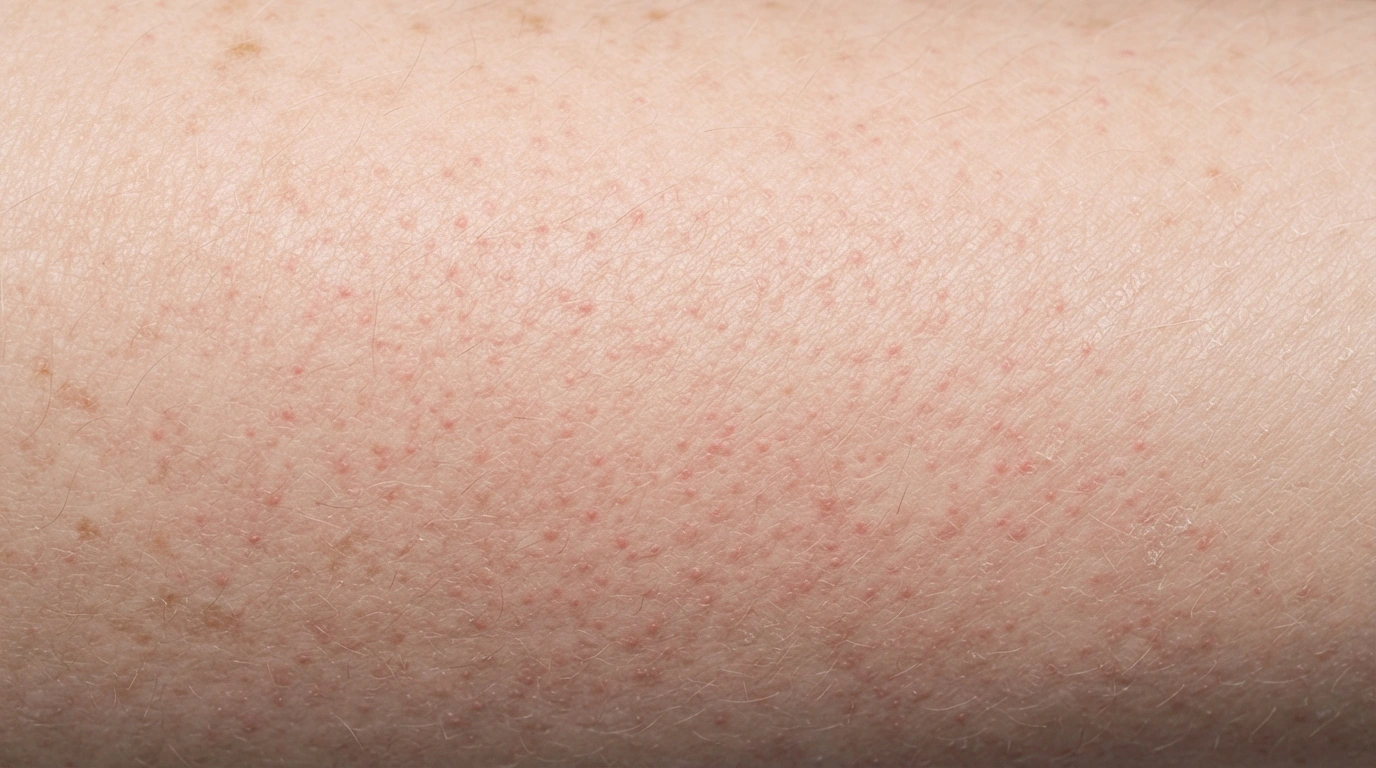
Wrinkles and Fine Lines vs Dehydration Lines
Wrinkles are creases that form as the skin's supporting framework thins and as repeated movement folds the same spot over and over. A small number of treatments have strong evidence behind them, many popular ones have very little, and nothing available returns skin to how it was. A descriptive term for fine surface lines accentuated by skin dryness.
Key differences
The same eight facts on every condition comparison.
What is it?
- Several causes work together.
Aging, facial movement, ultraviolet exposure and changes in supporting tissue all shape skin contour. - Fine lines and deep folds differ.
Fine lines show more with dryness; deeper folds also reflect volume and structural change beneath the skin. - It is usually cosmetic.
Wrinkles are a cosmetic concern rather than a disease. - Treatment follows assessment.
A clinician looks at movement, texture, pigment, volume and skin health, and checks any new or changing spot separately.
- What it is
A descriptive term for fine surface lines accentuated by skin dryness.
What it looks like
Wrinkles and Fine Lines

Dynamic wrinkles Appear with movement, like frowning.
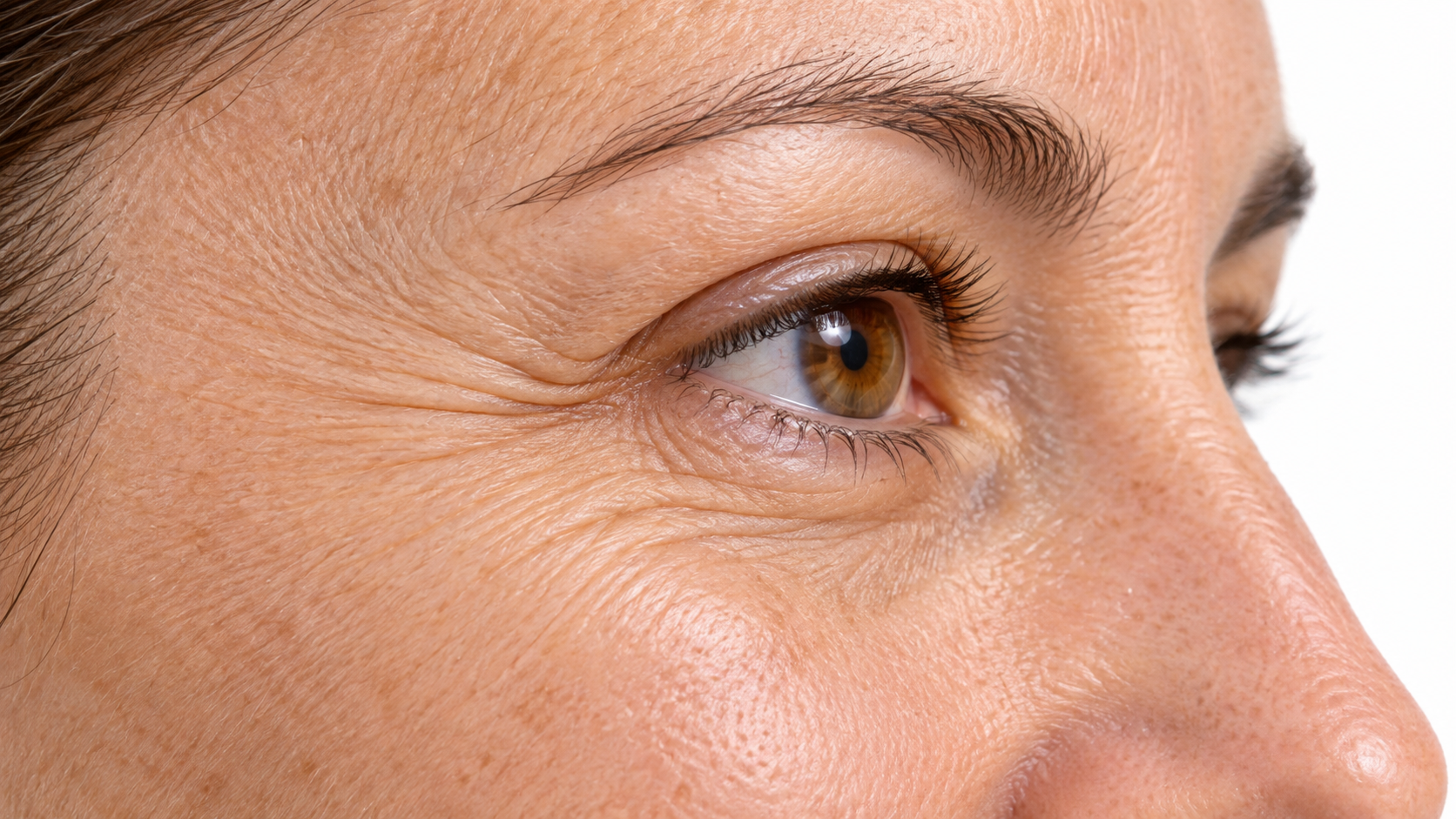
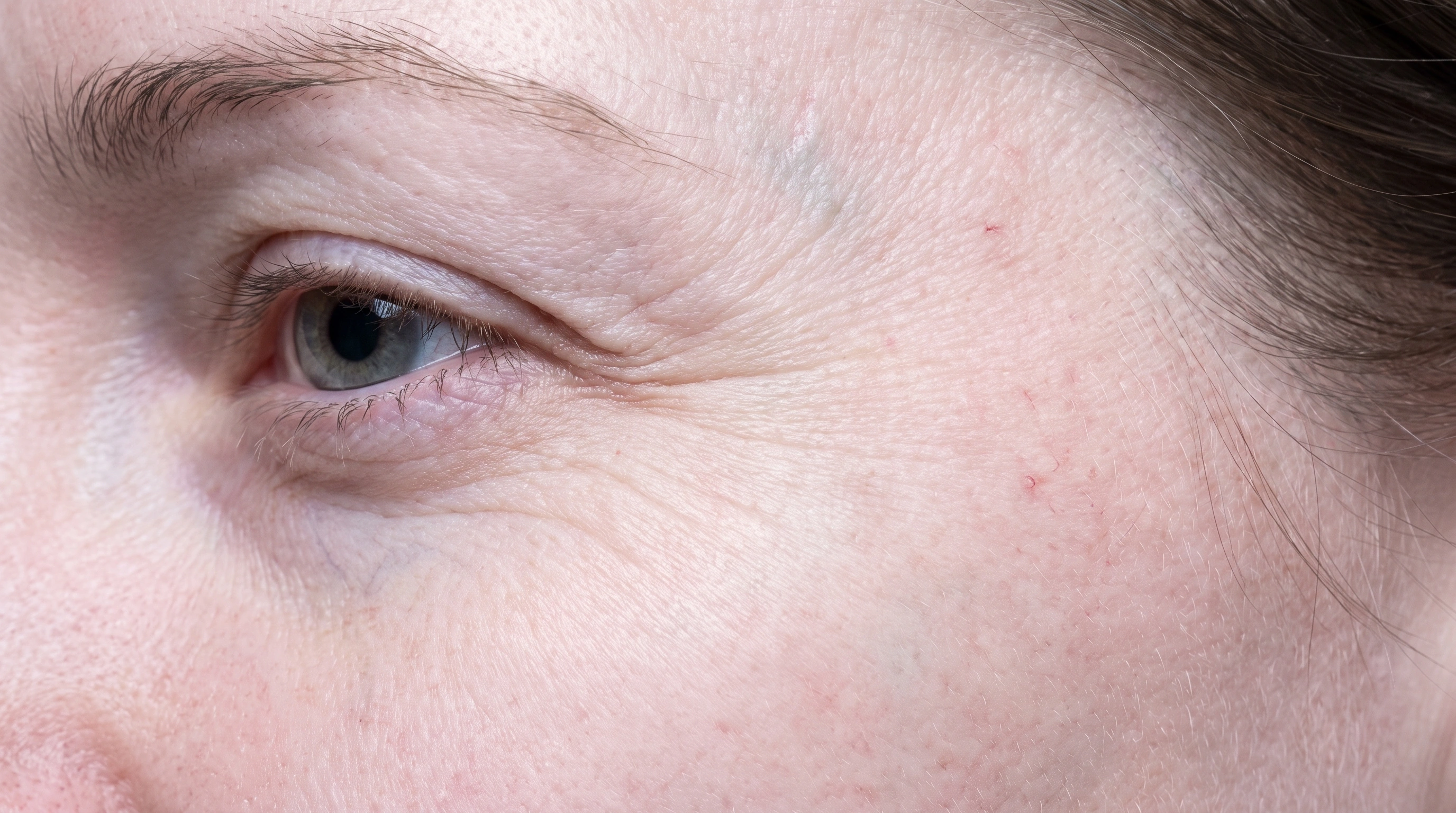
Crow’s feet Fine lines fan outward from the outer eye during expression.
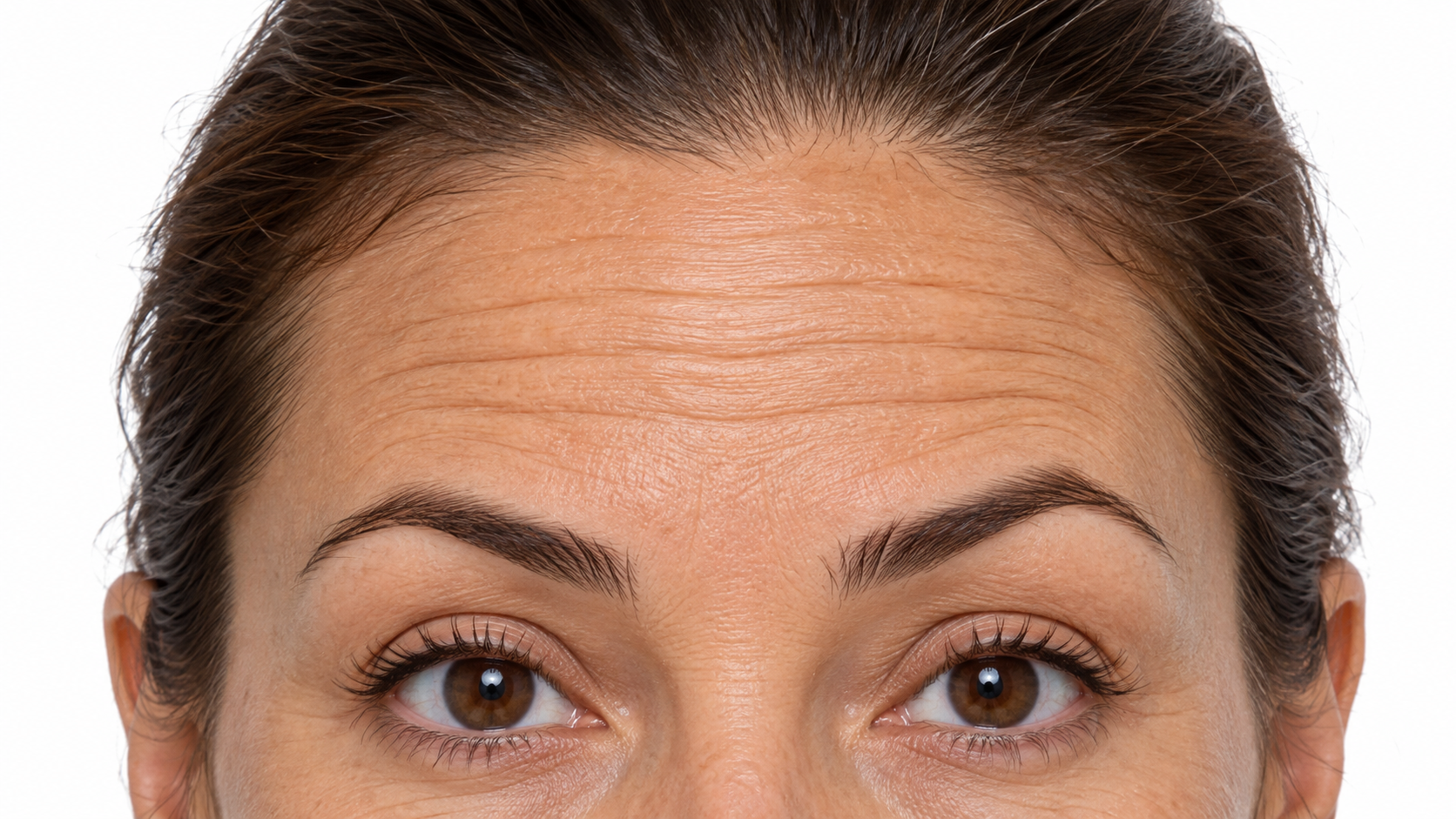
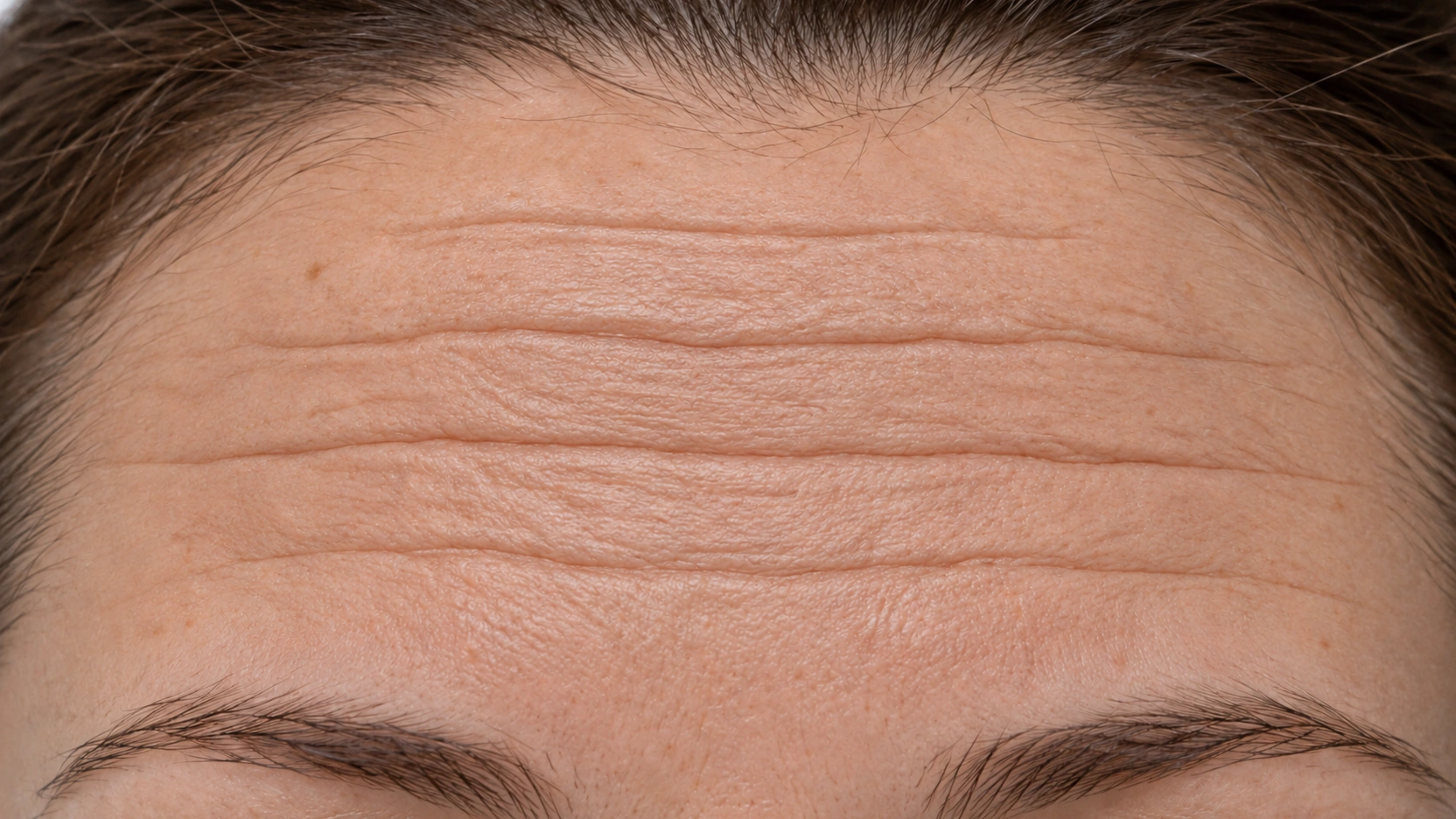
Forehead movement Horizontal folds appear as the eyebrows rise.
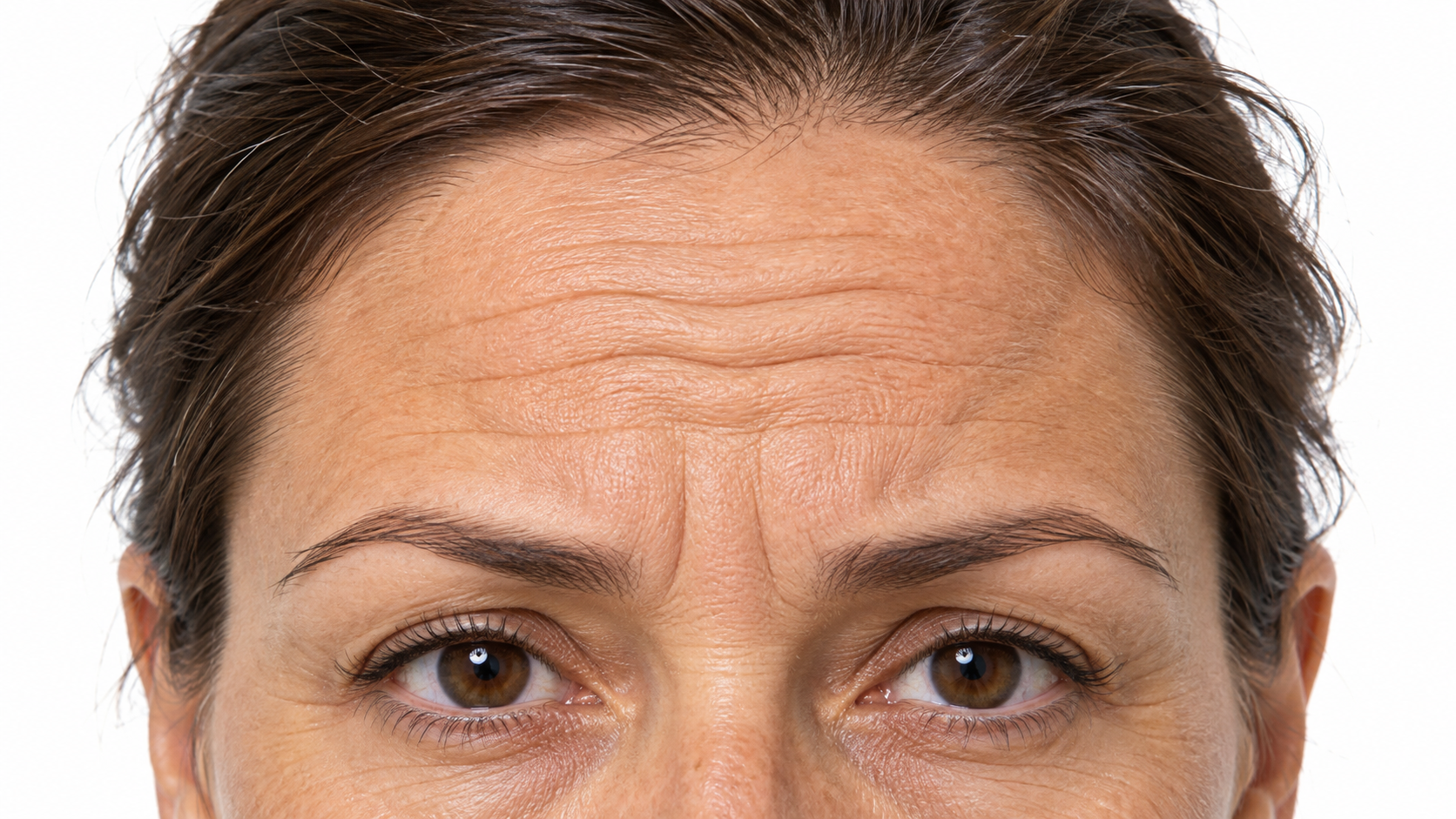
Static wrinkles Visible even when the face is still.
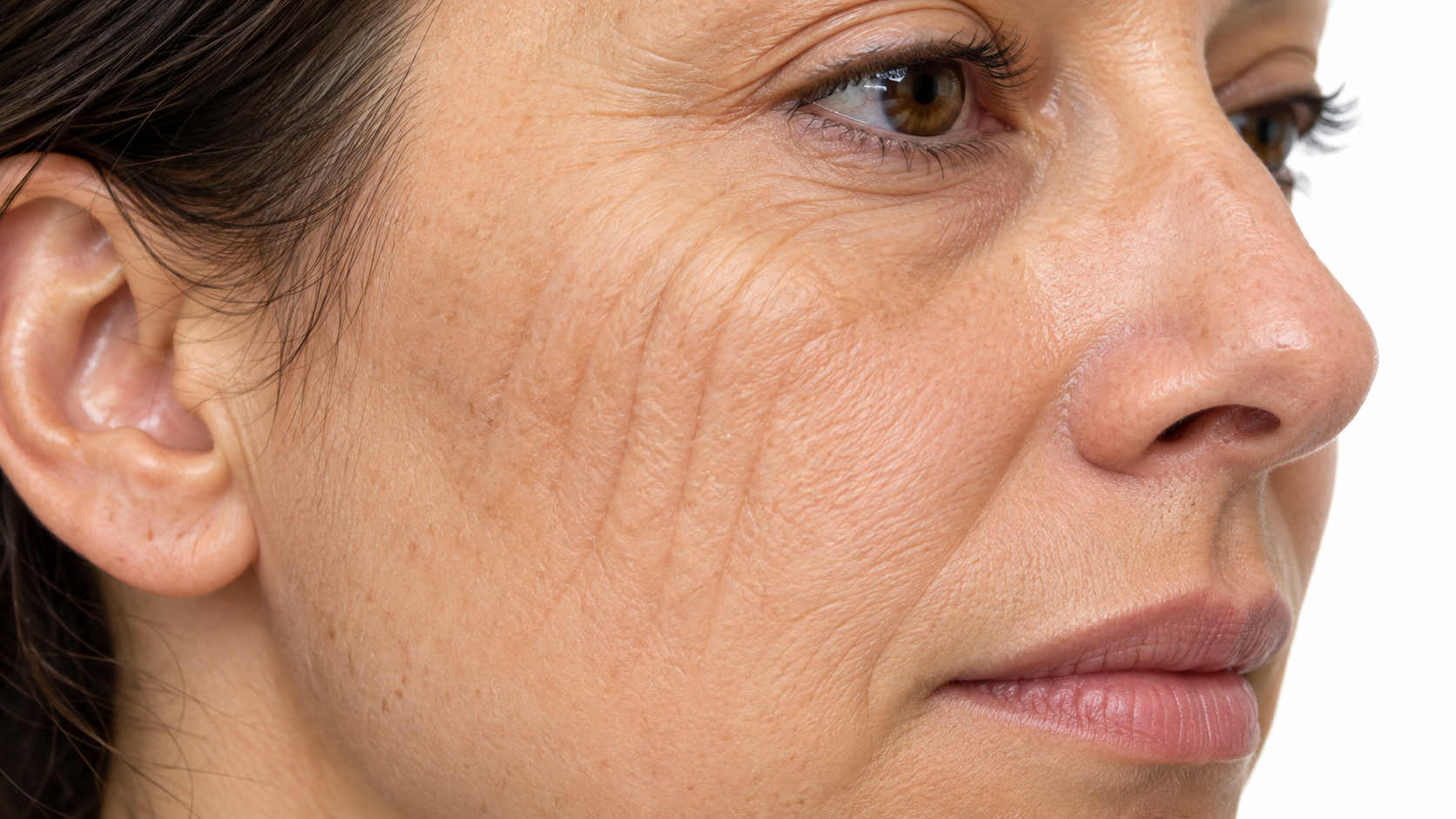
Sleep lines From pressing the face into a pillow.
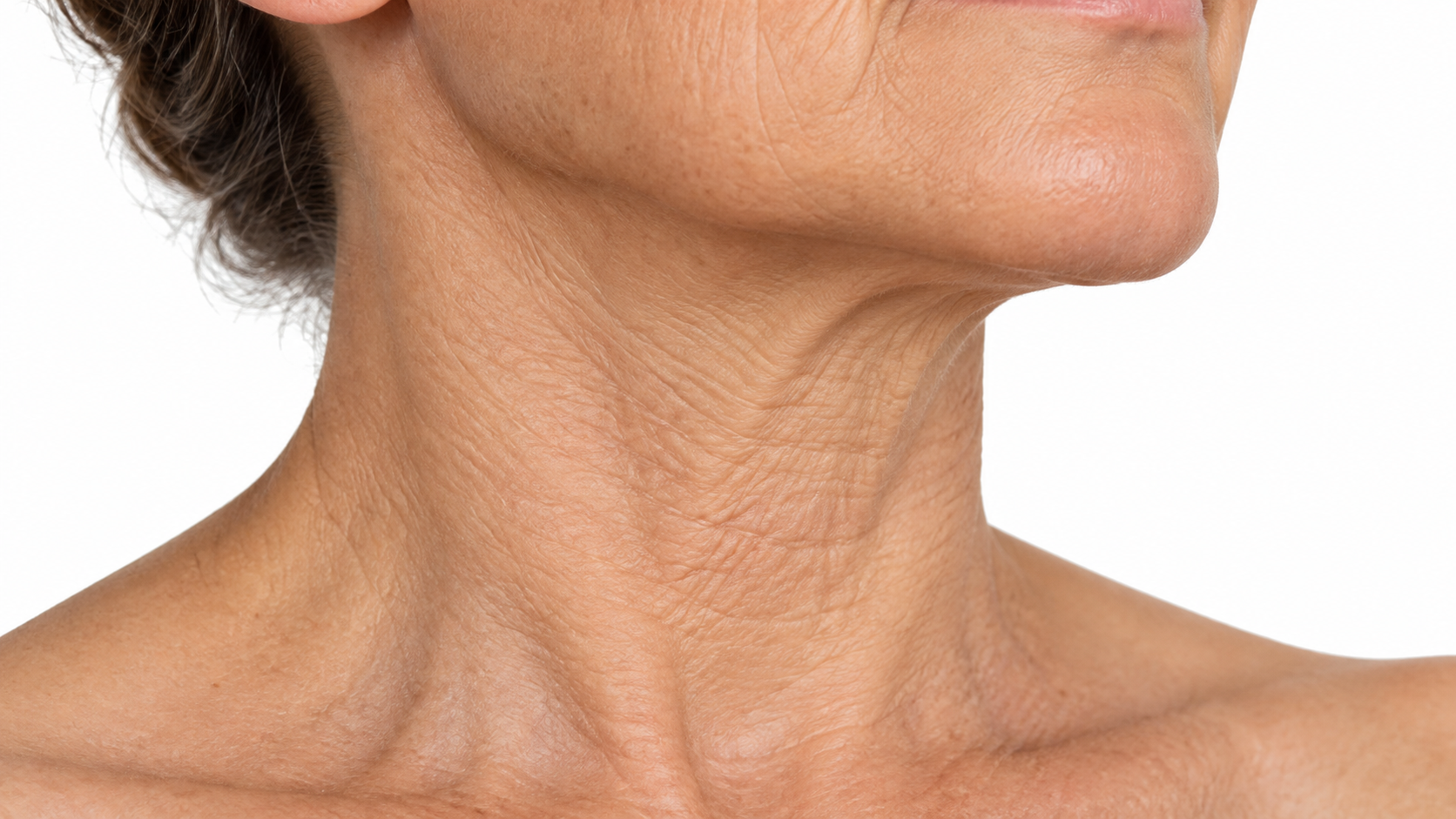
Sun-related fine lines Fine crisscross lines on sun-exposed skin.
Dehydration Lines
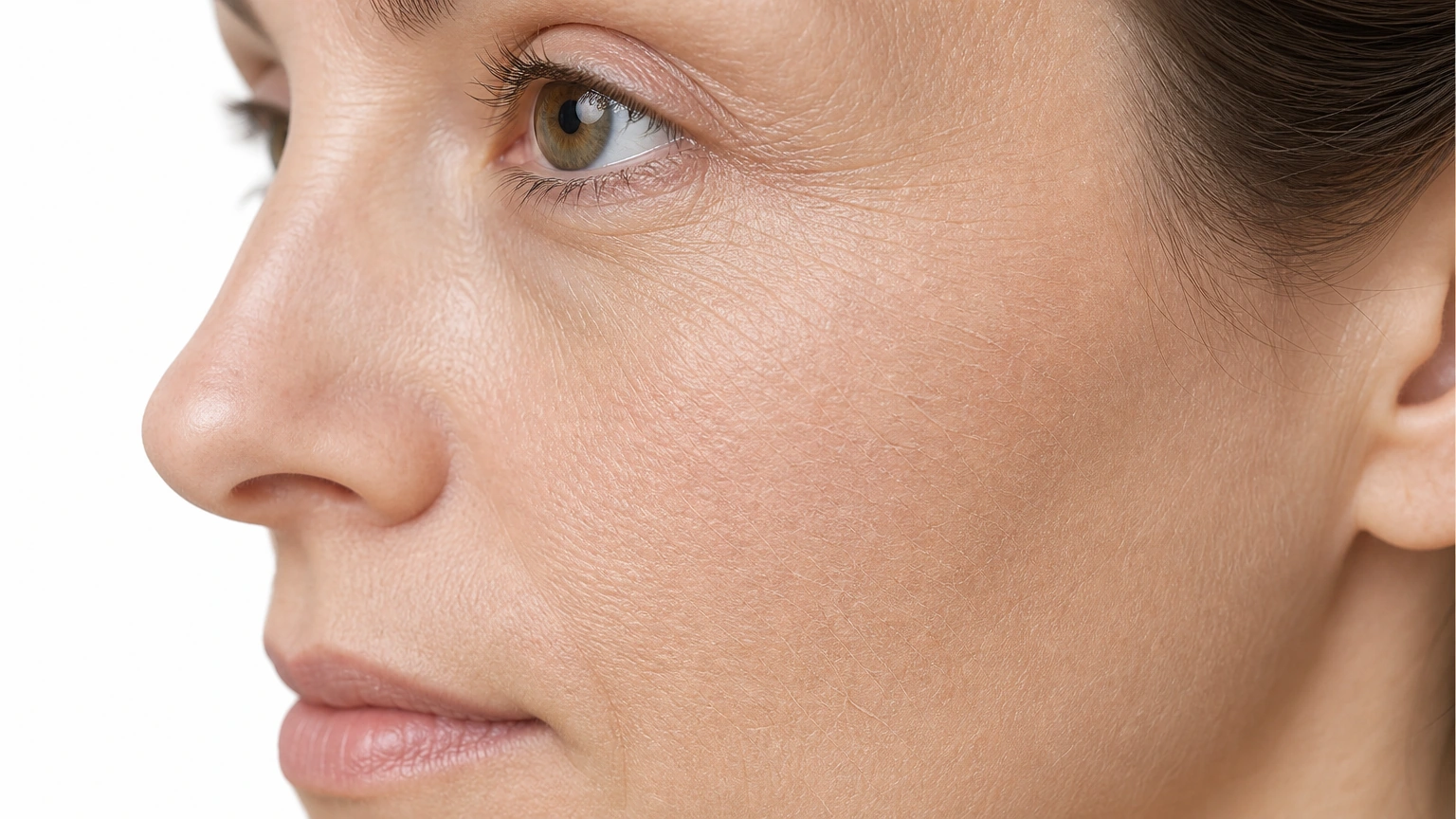
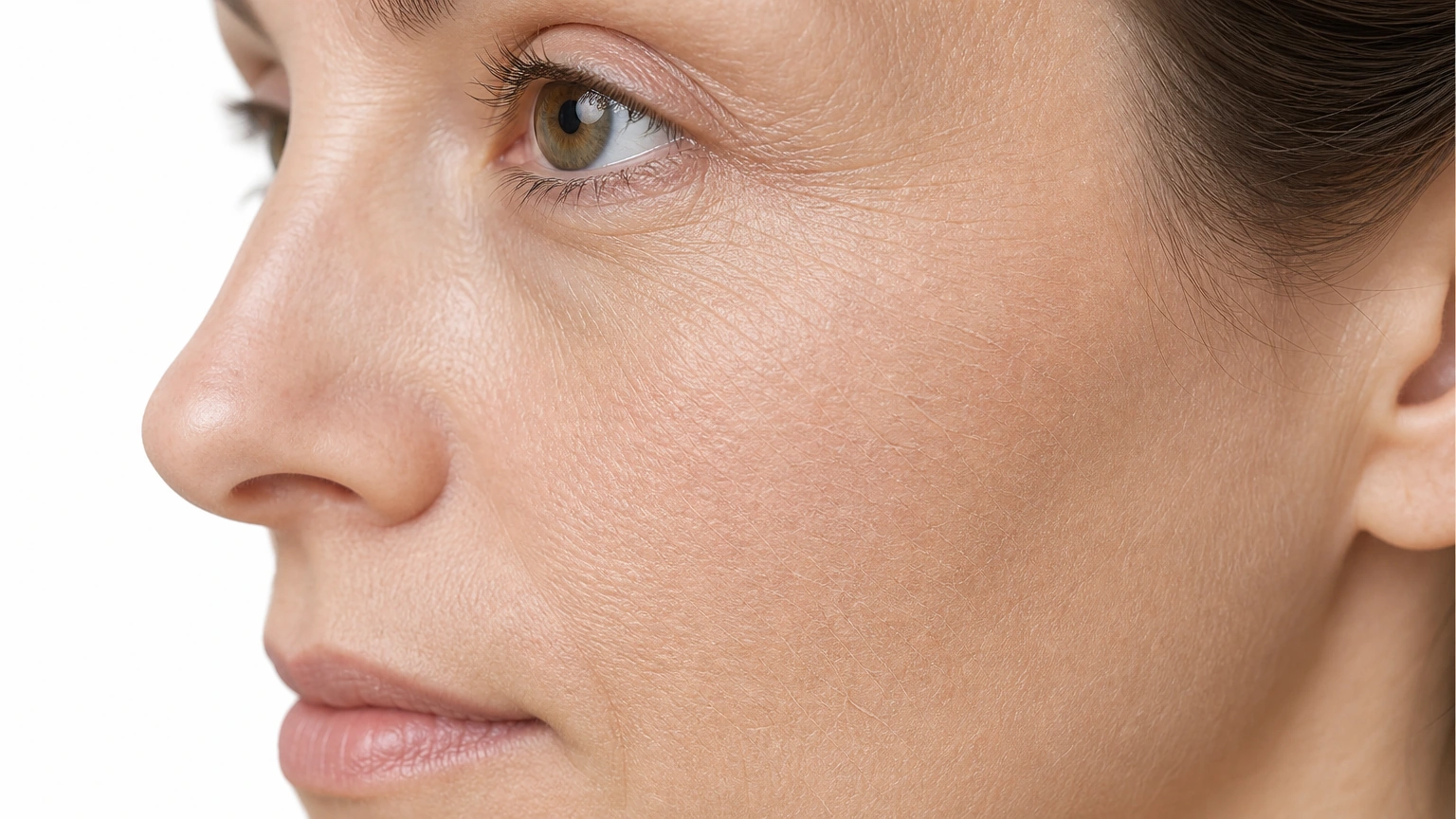
Dehydration Lines A close side view highlights delicate lines under the eye and across the upper cheek.
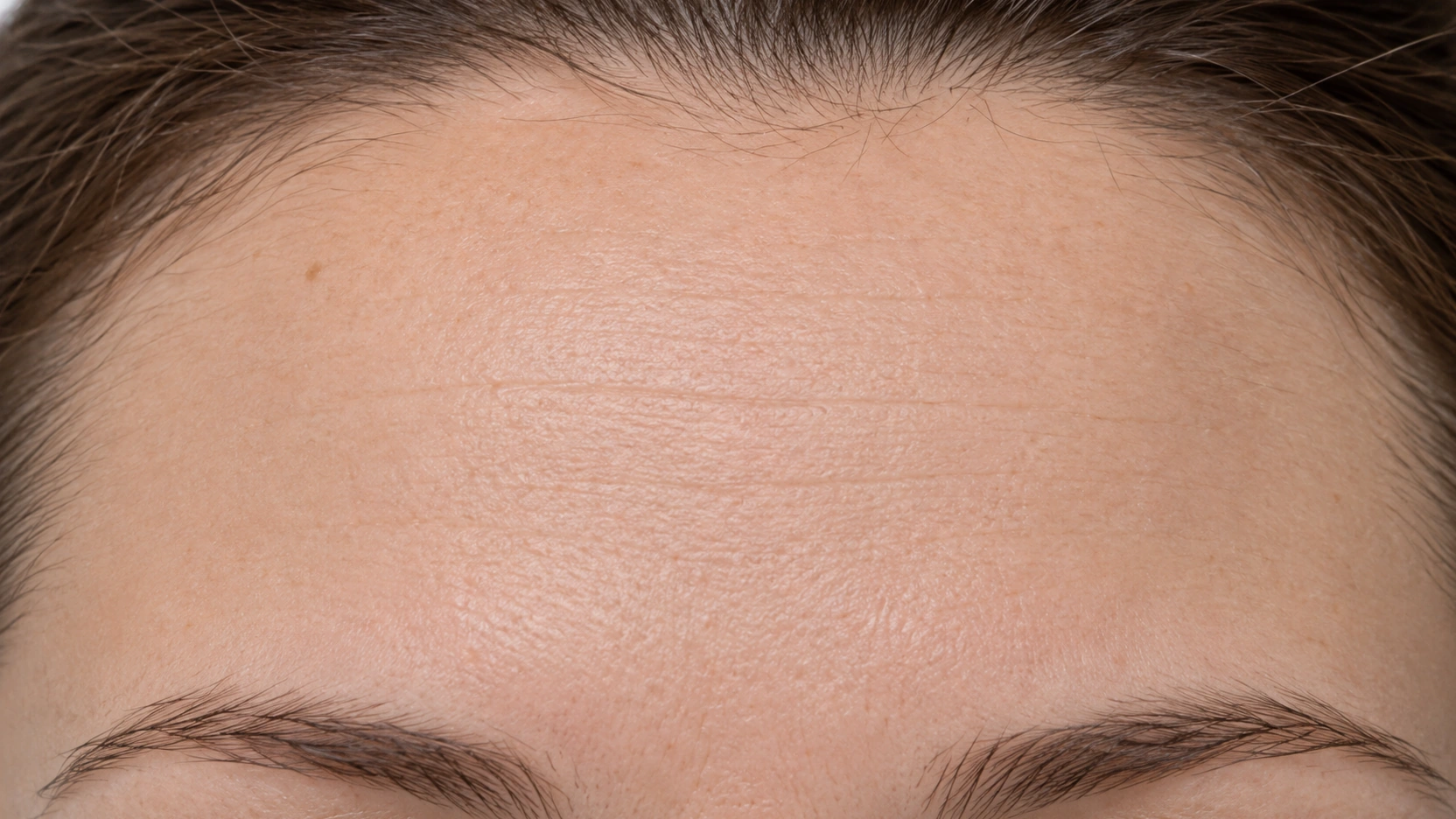
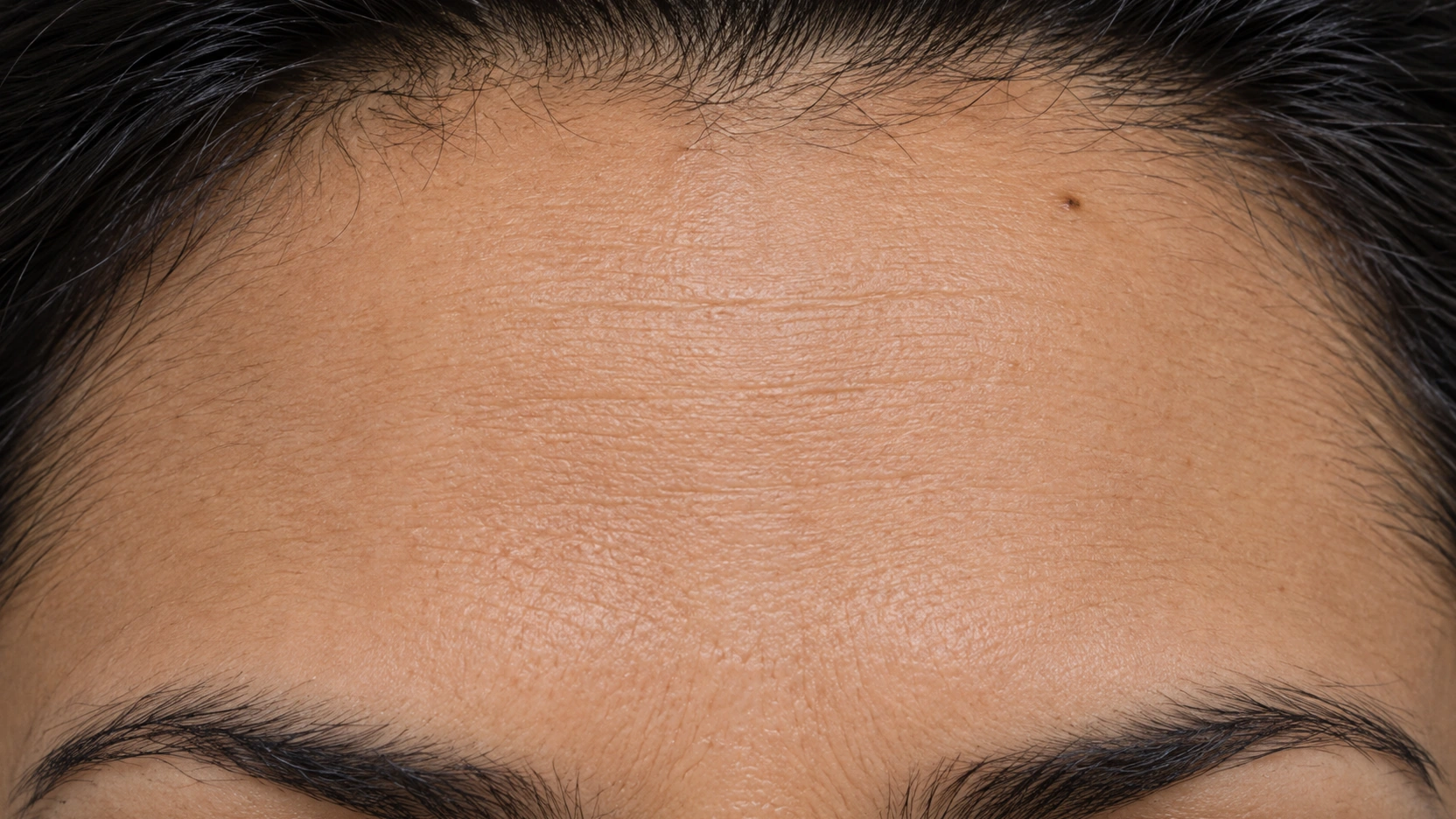
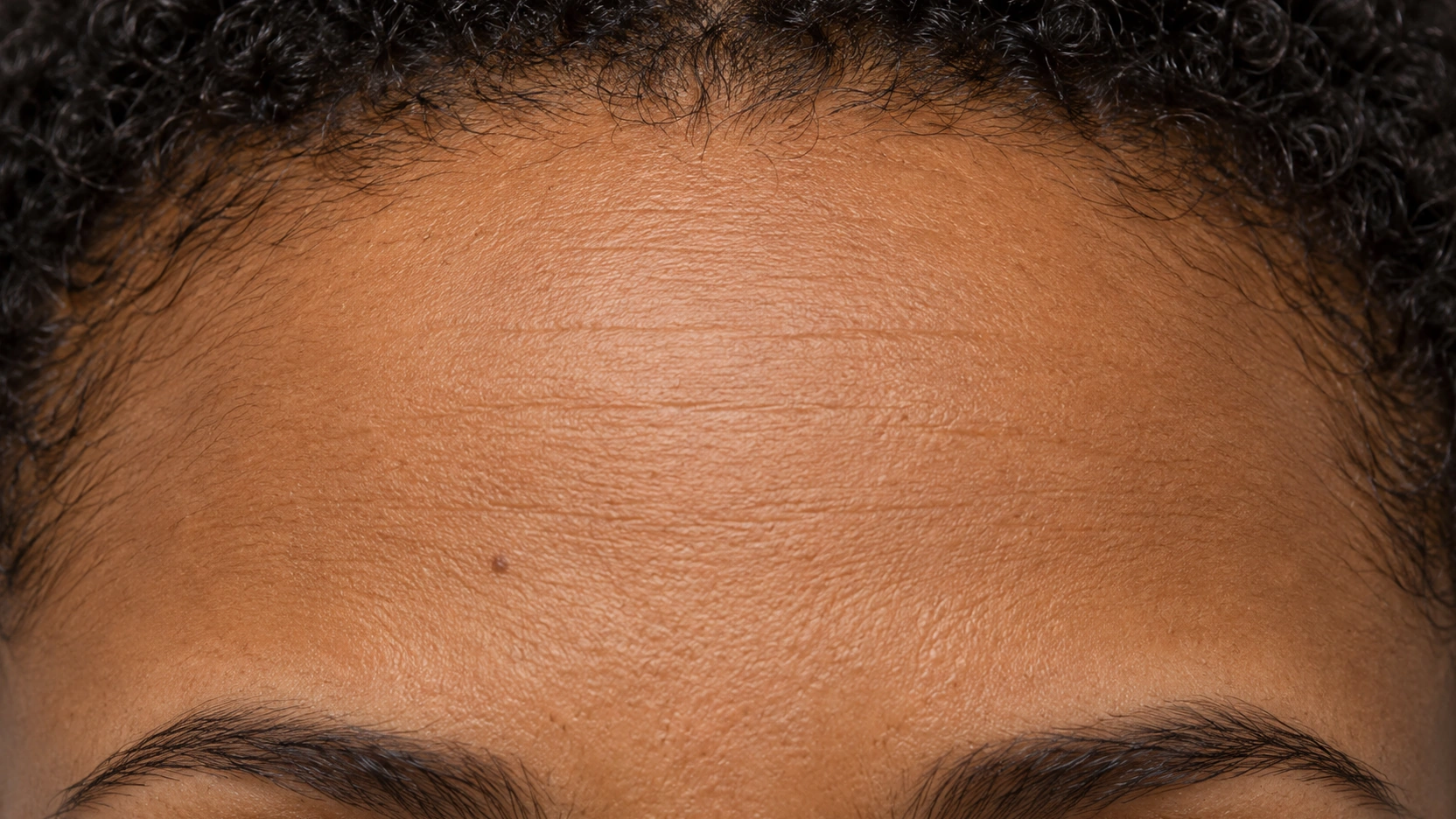
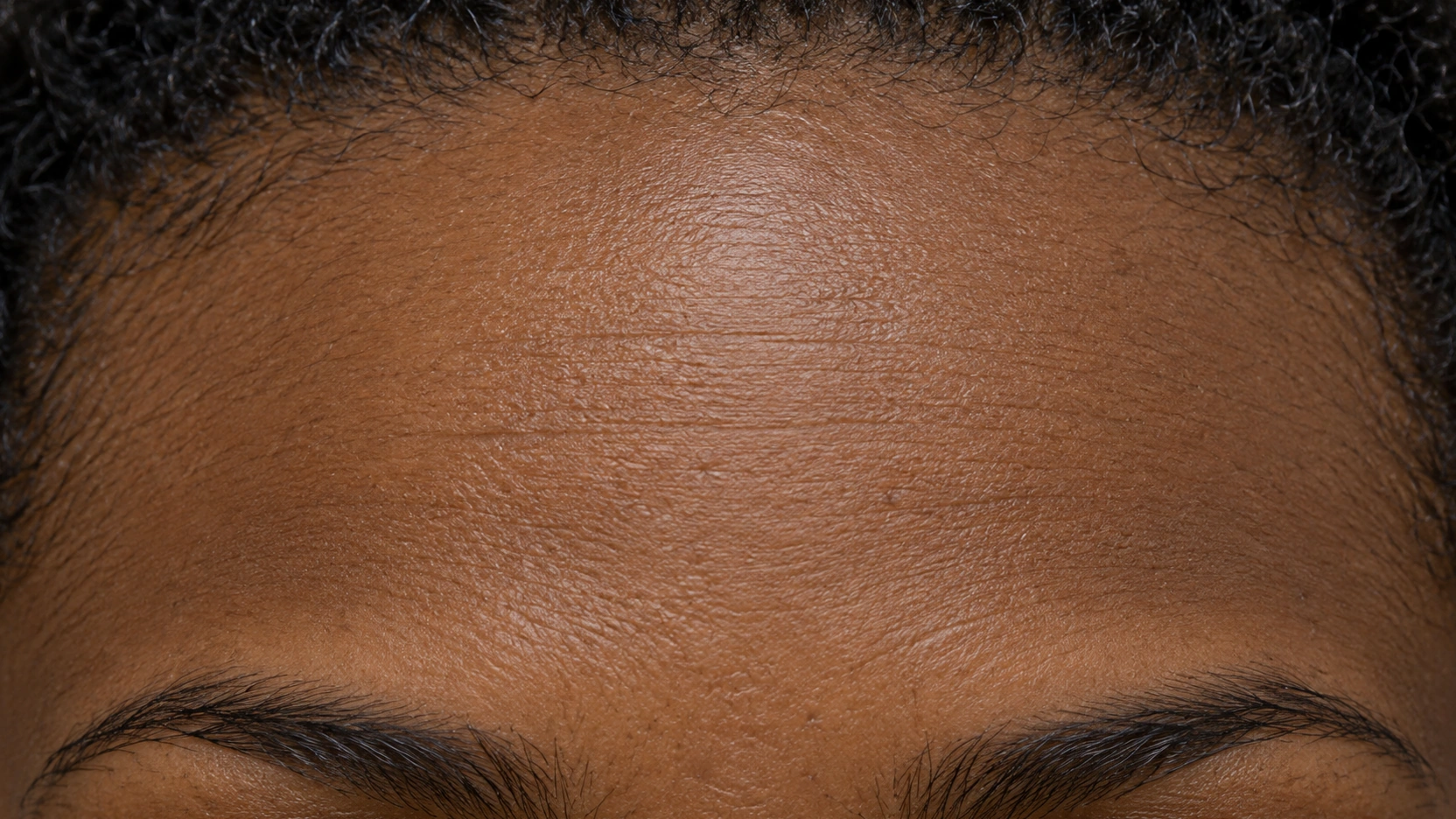
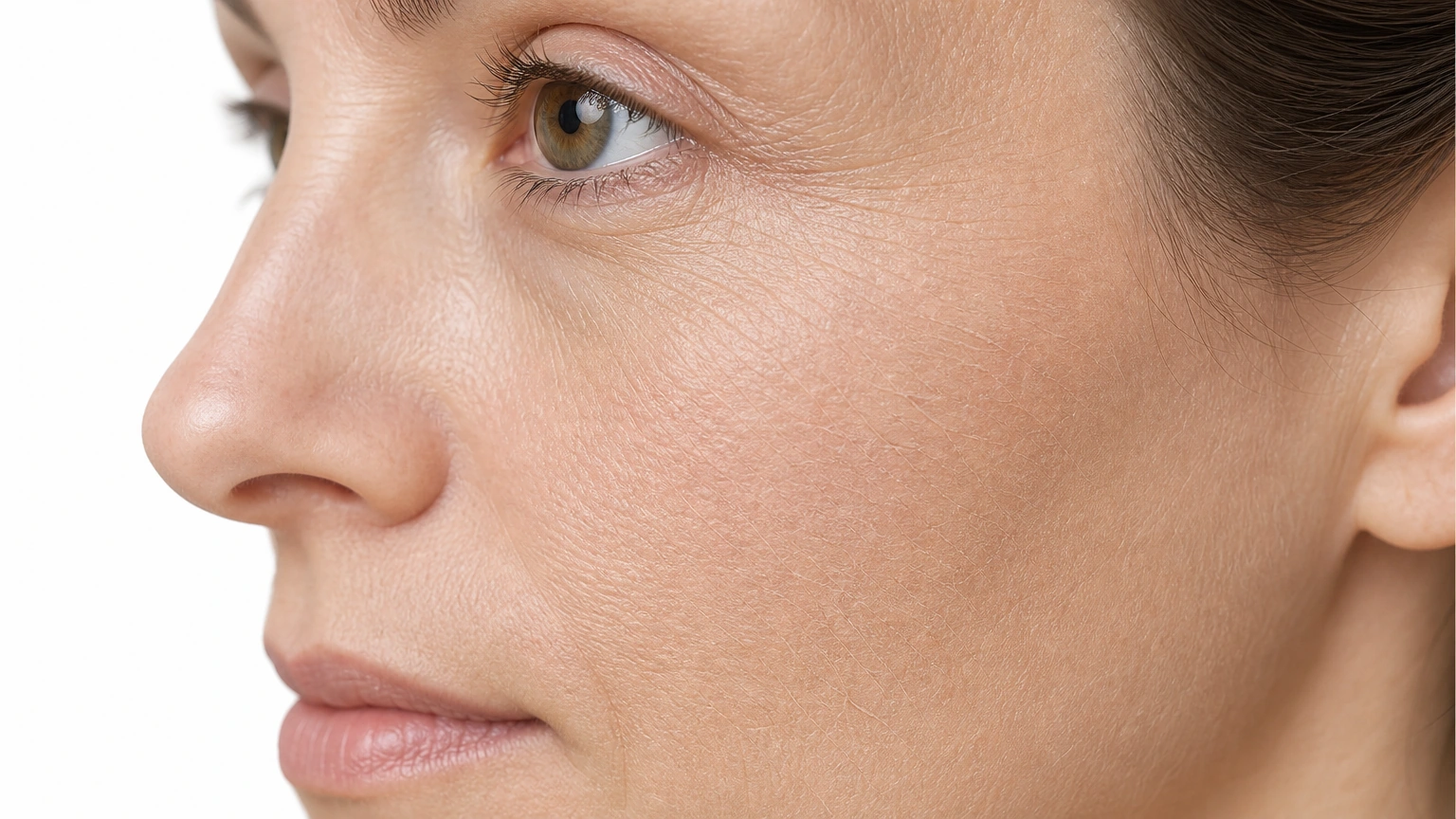
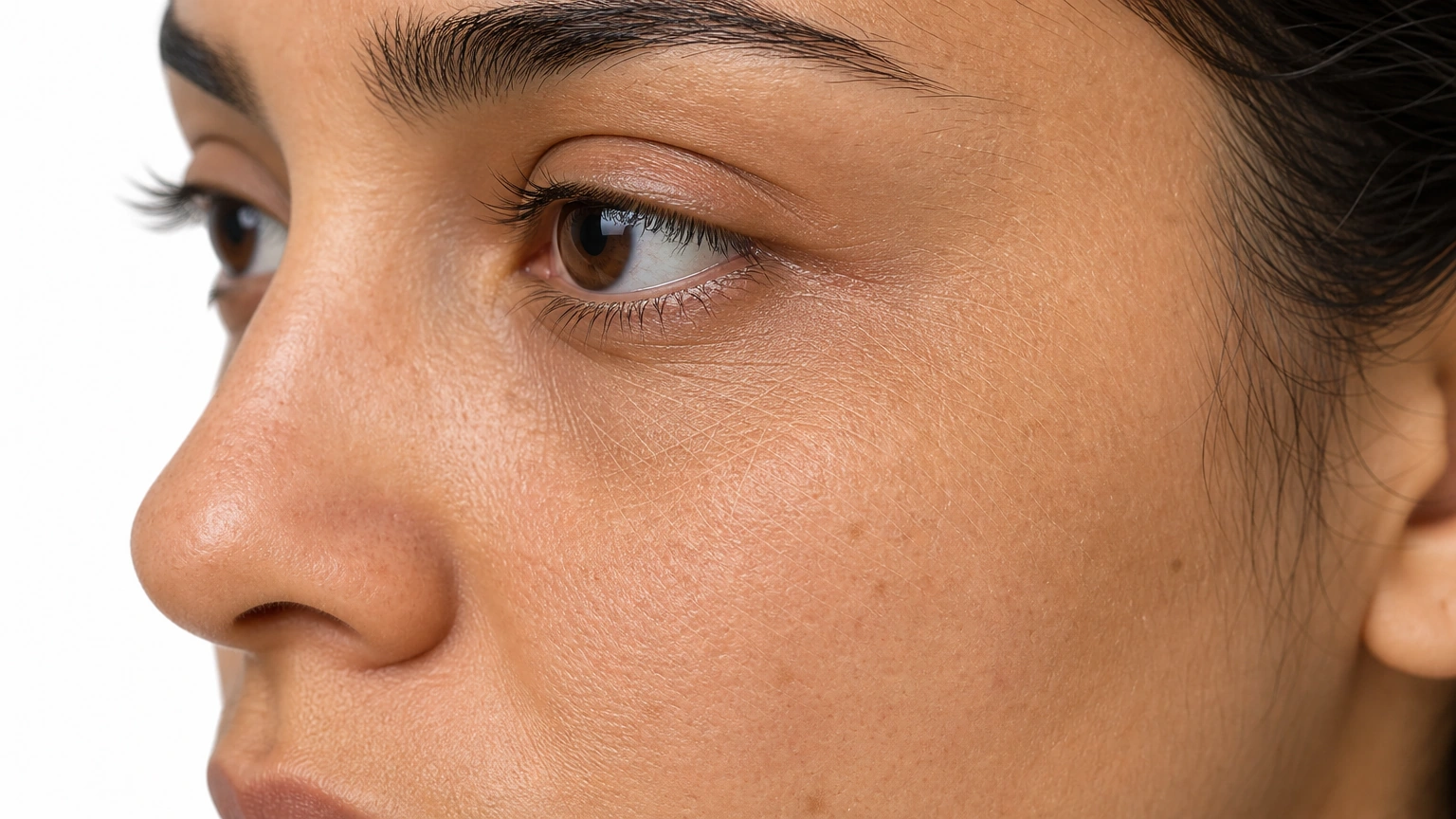
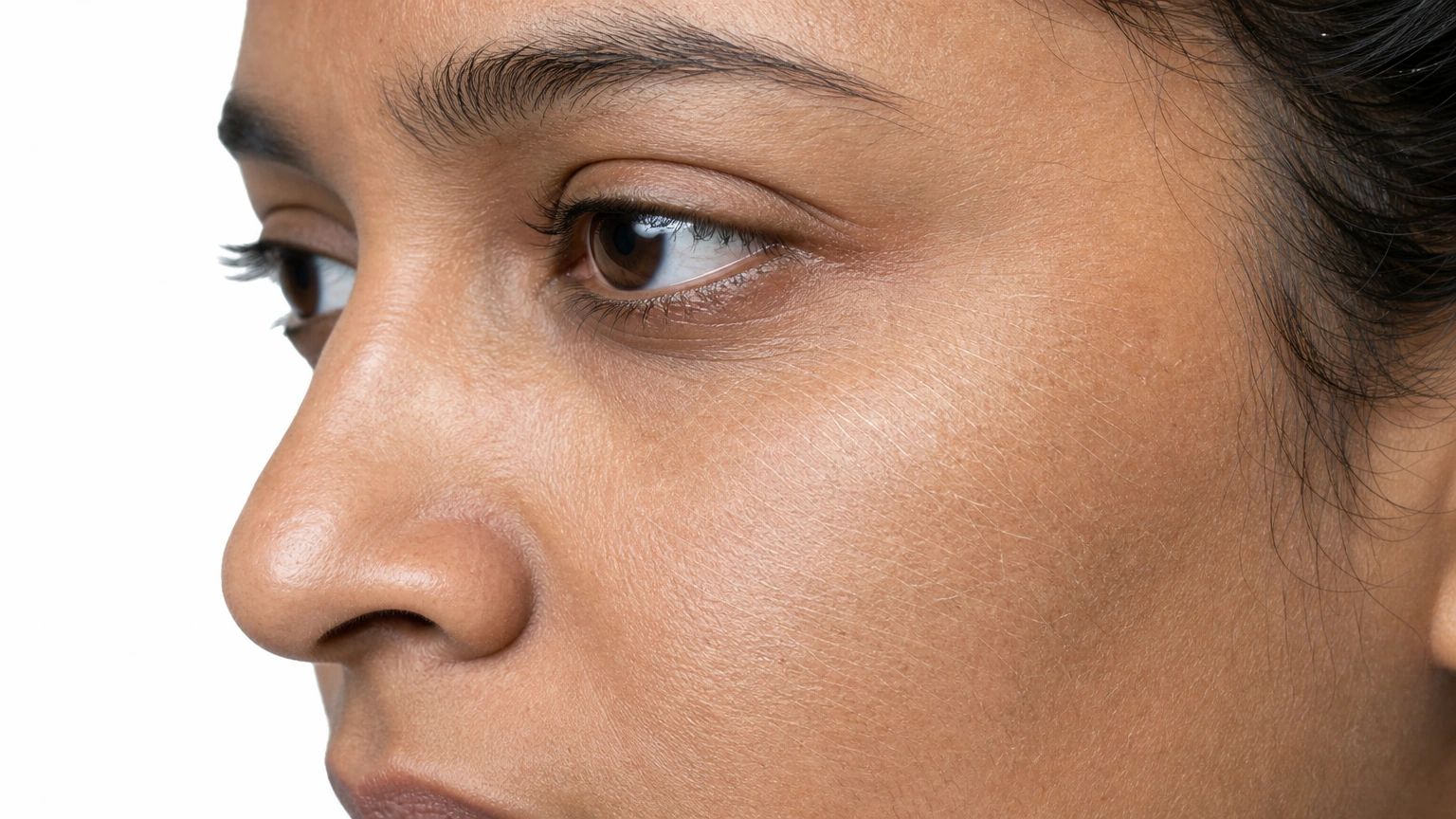


Age and sun exposure change the collagen and elastic fibers that support the skin. Repeated folding and changes in deeper support make surface creases more visible.
Reduced hydration in the outer skin makes fine surface texture more visible. These shallow lines reflect moisture changes rather than necessarily indicating permanent loss of deeper support.
When it usually starts
Wrinkles and Fine Lines. Gradually become more visible with adult aging and cumulative sun exposure.
Dehydration Lines. Can appear whenever skin becomes dry.
Causes and triggers
Wrinkles form as the skin loses collagen and elastic fibers. Natural aging and sun damage are the two main causes, with sun damage responsible for most visible early aging.
Reduced surface hydration makes fine texture more visible.
Skin type and how quickly collagen declines are partly inherited.
Daily Care
Habits that help
- Daily broad-spectrum sunscreen
The best-supported thing here, and it prevents rather than repairs. - Stopping smoking
Removes one of the largest ongoing sources of collagen damage. - Gentle skin care
Use a gentle cleanser and avoid scrubs that leave skin dry or irritated. - Moisturizing
Moisturizer temporarily softens the look of fine lines by hydrating the outer skin. - Collagen-stimulating injectables
Gradual volume improvement, building over months. - Peptide creams
Low-risk addition, not a substitute for a retinoid. - Red light therapy
Small improvements with repeated use, depending on the device's output. - Growth factor and exosome products
Heavily marketed, limited independent evidence in humans. - Oral collagen supplements
Small reported improvements, mostly in manufacturer-funded trials.
Avoid
- Avoid: Unprotected sun exposure
The dominant factor, and ordinary daily exposure builds damage, not only burns. - Avoid: Tanning beds
A concentrated dose of collagen-damaging wavelengths, plus a skin cancer risk. - Avoid: Skipping sunscreen
The neck, chest and hands get the same exposure and none of the attention. - Avoid: Smoking
Damages collagen and elastin, restricts blood flow, repeats the same pursing movement. - Avoid: Squinting
Folds the same lines at the outer eye all day. - Avoid: Sleeping face-down or on one side
Years of pressure crease the cheek in one place. - Avoid: Rapid or repeated large weight loss
Stretched skin does not fully retract, especially after middle age. - Avoid: Heavy alcohol use
Dehydrating short term, linked to more visible facial aging long term. - Avoid: Air pollution
Linked to more visible aging, on reasonable rather than strong evidence. - Avoid: Over-exfoliating
Chronic irritation does not build collagen, and it leaves dark marks on deeper skin tones. - Avoid: Very low body fat maintained over years
Facial fat pads are part of the support structure. - Avoid: A high-sugar diet
Real chemistry, minor factor.
Habits that help
- Apply fragrance-free moisturizer after washing
Use it while the skin is slightly damp to help retain water. - Keep showers short and lukewarm
Hot water and long washing can worsen surface dryness. - Use a mild cleanser without abrasive tools
Cleanse only as much as needed and pat dry gently. - Use broad-spectrum SPF 30 or higher outdoors
Choose a moisturizing formula if sunscreen tends to sting or dry the skin. - Follow the dehydration lines care plan
Use sunscreen, gentle moisturizer and avoid smoking. Choose procedures only after an individual assessment.
Avoid
- Avoid: Repeated exfoliation to remove dry flakes
Pause irritating acids, scrubs and other products until the skin is comfortable. - Avoid: Expecting extra water alone to repair dry skin
Drink normally to stay hydrated; barrier care and the cause of dryness also matter.
Treatment differences
Moisturizer and a less irritating routine can improve lines related to surface dryness. Persistent lines may reflect established wrinkles rather than dehydration and need a different assessment.
Outlook
Wrinkles usually deepen gradually with aging and ultraviolet exposure. Sun protection helps limit further damage, and cosmetic treatment may soften their appearance. Results vary, repeat treatment may be needed, and treatment does not stop the aging process.
Fine lines related to surface dryness can soften as hydration and the skin barrier improve. Established wrinkles may remain; worsening irritation is a reason to simplify the routine.
Complications
Lines themselves are usually a cosmetic change. Sun-related ageing reflects cumulative ultraviolet exposure, so a new rough, growing or non-healing spot needs separate assessment.
Persistent irritation may indicate eczema or contact dermatitis.
When to get help
A consultation can help choose suitable treatment. A new rough, bleeding or changing spot should be assessed separately rather than treated as aging skin.
Seek medical assessment for sudden, painful or one-sided change rather than assuming it is ageing.
Common questions
Wrinkles and Fine Lines:At what age should I start treating wrinkles?
Sunscreen as early as possible — nearly all the value is in prevention, and damage accumulates from childhood. A retinoid is reasonable from the twenties or thirties, because it takes months to work. There is no age at which starting stops being worthwhile.
Wrinkles and Fine Lines:Does anything actually work, or is it all marketing?
Some of it works. Daily sunscreen has good long-term trial evidence for reducing visible aging, prescription tretinoin has repeated evidence for improving fine lines, and botulinum toxin works reliably on lines caused by movement. Lasers, peels and fillers produce real changes. What is oversold is the middle of the market — serums promising results comparable to procedures.
Wrinkles and Fine Lines:Is tretinoin worth the irritation?
For most people yes, but only if you start slowly enough to keep using it. The common failure is applying it nightly from day one, peeling for two weeks, and stopping. Two or three nights a week, moisturizer underneath, building up over a couple of months, gets far more people to the six-month mark where the results are.
Wrinkles and Fine Lines:If I stop having botulinum toxin injections, will my wrinkles be worse than before?
No. The muscle returns to its previous strength over about three to four months and the lines return to where they would have been. They can feel worse because you got used to them being softer. There is some evidence long-term use leaves the underlying line slightly less deep.
Wrinkles and Fine Lines:Do collagen supplements work?
There are trials reporting small improvements in skin hydration and elasticity, mostly funded by companies selling collagen. If there is a real effect, it is small. They are not a substitute for sunscreen or a retinoid.
Wrinkles and Fine Lines:What is the difference between fine lines and wrinkles?
Mostly depth and cause. Fine lines are shallow surface creases, often more visible when skin is dry, and they respond well to moisturizers, retinoids and resurfacing. Wrinkles are deeper folds involving the dermis, and the deepest are really folds from lost volume underneath — which is why creams do so much for one and so little for the other.
Dehydration Lines:What is Dehydration Lines?
A descriptive term for fine surface lines accentuated by skin dryness.
Dehydration Lines:What can I do day to day?
Use sunscreen, gentle moisturizer and avoid smoking. Choose procedures only after an individual assessment.
Dehydration Lines:When should I get medical advice?
Seek medical assessment for sudden, painful or one-sided change rather than assuming it is ageing.
Sources
Sources and further reading
Keep exploring.
Wrinkles and Fine Lines

Nasolabial Folds vs Wrinkles and Fine Lines
Wrinkles and Fine Lines vs Skin Laxity
Tretinoin
Contact Dermatitis
Dry Skin
Eczema

Acne Scarring vs Enlarged Pores
Acne Scarring vs Keloids

Acne Scarring vs Post-Inflammatory Hyperpigmentation
Acne Scarring vs Post-Inflammatory Redness