Acne Scarring vs Enlarged Pores

Acne scarring is the permanent change in the surface of the skin left behind after inflamed acne heals. It is a texture problem rather than a color one, and the flat brown or pink marks people often call scars are something else entirely. Visible follicular openings that appear larger because of oil, anatomy or reduced surrounding support.

Research updated 2026-10-23
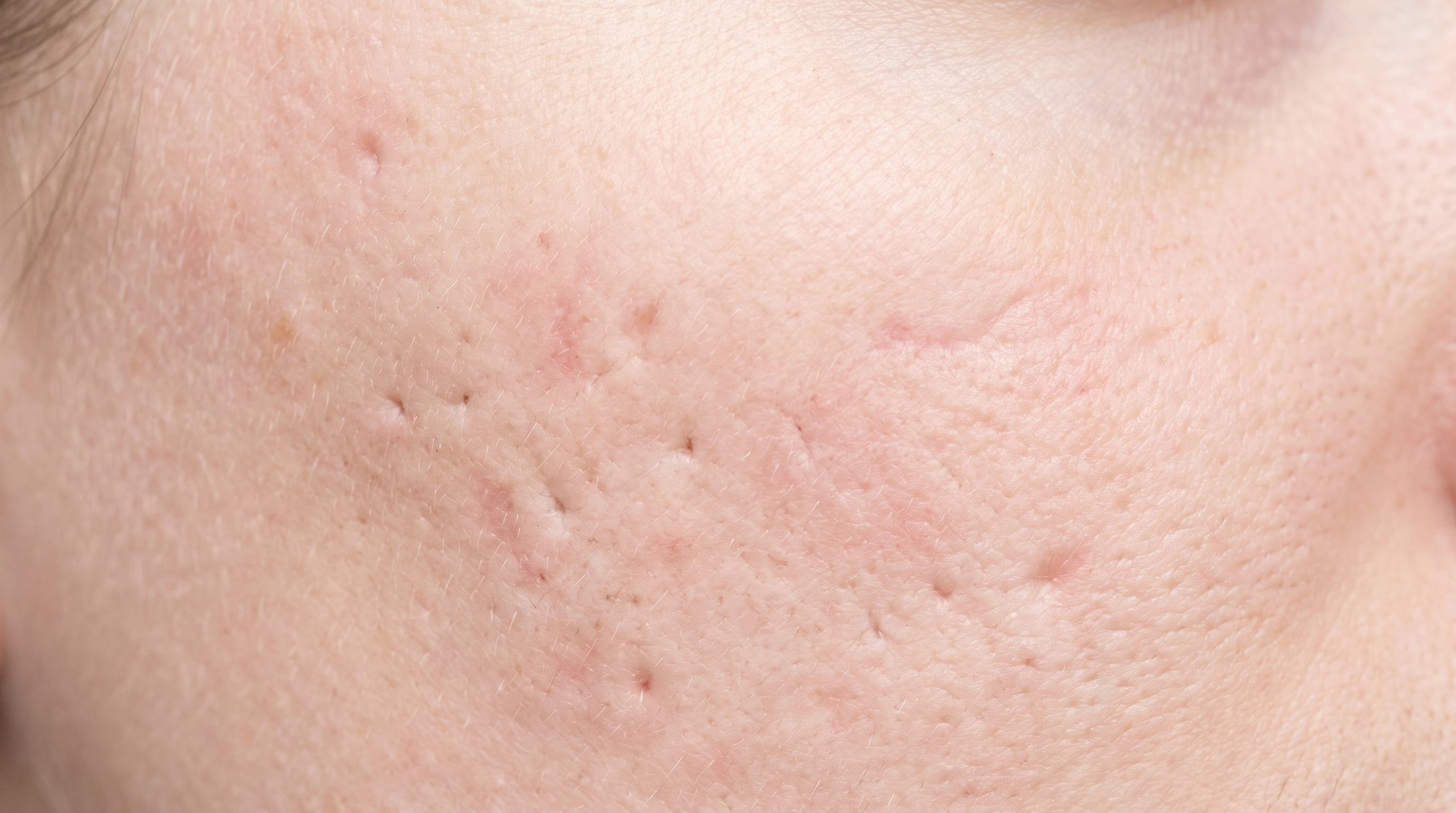
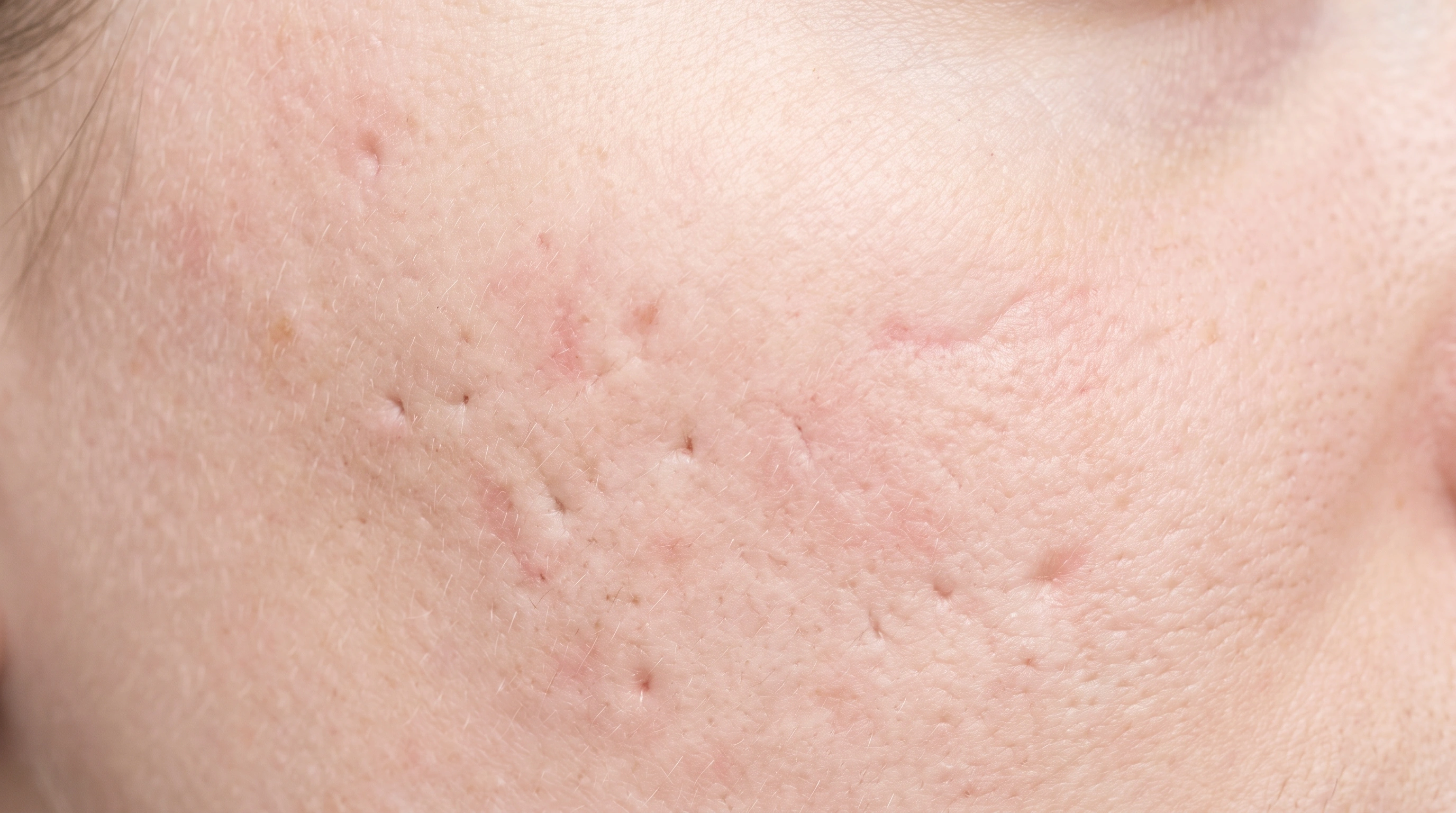
Acne scarring on light skin. Small sharply cut pits and broad shallow dips across a cheek, several sitting inside faint flat pink marks, with no active spots.AI-generated representative illustration of Enlarged Pores. Not a clinical photograph.

Key differences

The same eight facts on every condition comparison.

Usual age
After inflamed acne
After puberty
Where
Face, chest, back
Nose, forehead, cheeks
Main sign
Dents or raised marks in the skin
Visible pore openings
Itch or pain
No
No
Contagious
No
No
Long term
Permanent without treatment
Can look smaller, can't be closed
Scars
Is a scar
No
Who gets it
People who had deep acne
Oily skin, ageing

What is it?

Acne Scarring
Enlarged Pores
What is it?
  • It follows inflammatory acne.
    Inflammation can damage tissue around a follicle.
  • Scars can be sunken or raised.
    Lost support causes depressions; excess tissue causes raised scars.
  • Several types often coexist.
    Lighting also changes how visible depressions look.
  • Marks and scars differ.
    Pigment or redness can fade separately from true contour change.
  • What it is
    Visible follicular openings that appear larger because of oil, anatomy or reduced surrounding support.

What it looks like

Acne Scarring

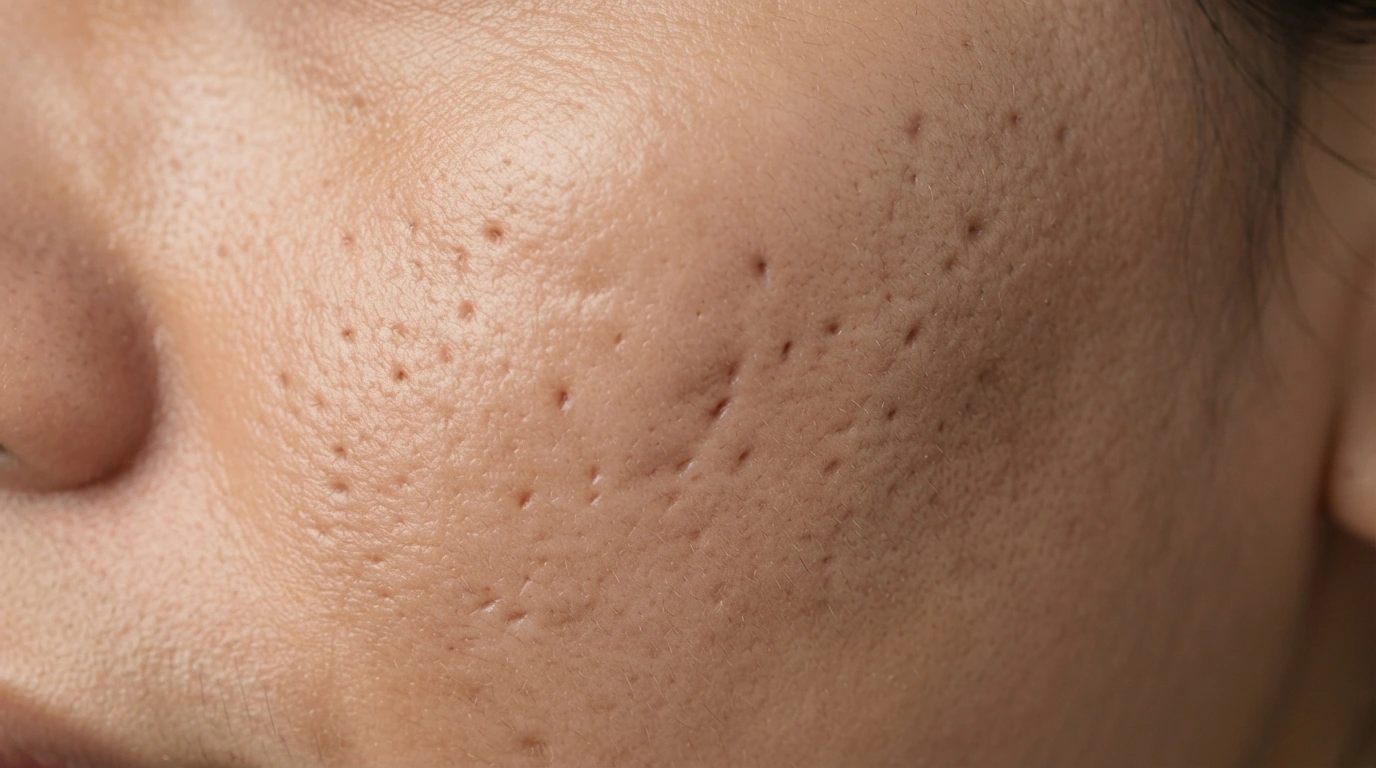
Close-up of a cheek with small, sharply cut pits. Some are narrow, like pinpricks, others are wider with steep edges and a flat floor, and each one casts a small shadow in side lighting.

Ice-pick scars Narrow, deep pits.

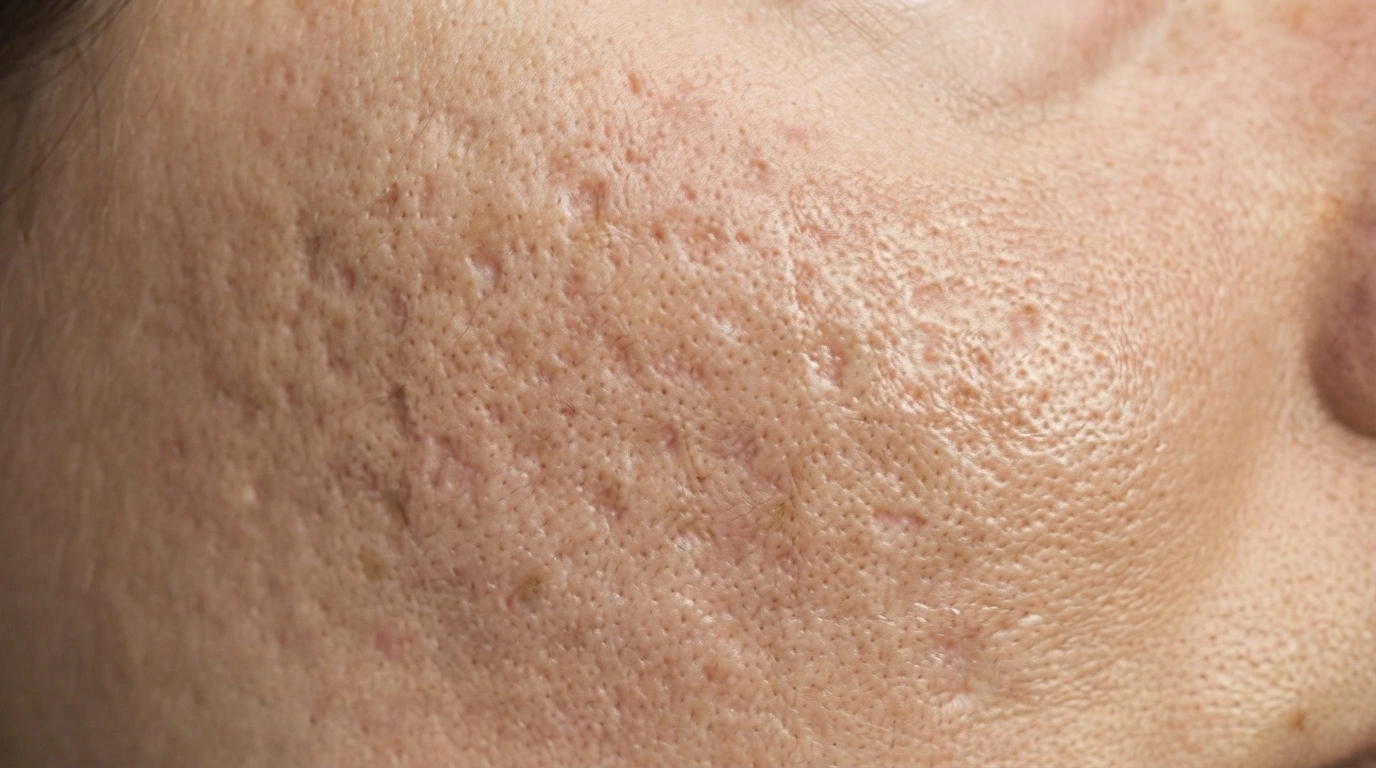
Boxcar acne scars on the cheek.

Boxcar scars Wide with sharp edges.

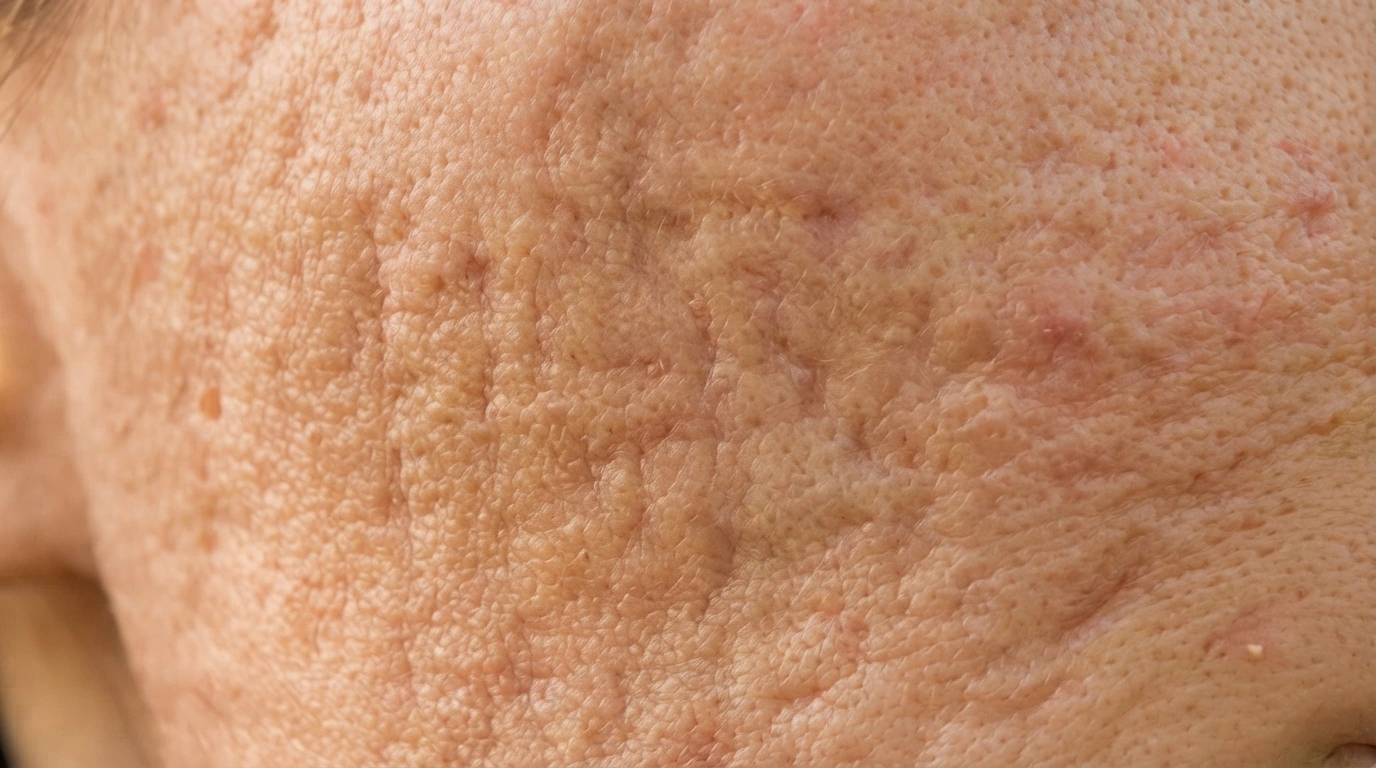
Close-up of a cheek with broad, shallow dips and no sharp edges, giving the surface a gently rippled, uneven look in side lighting.

Rolling scars Wave-like dips with soft edges.

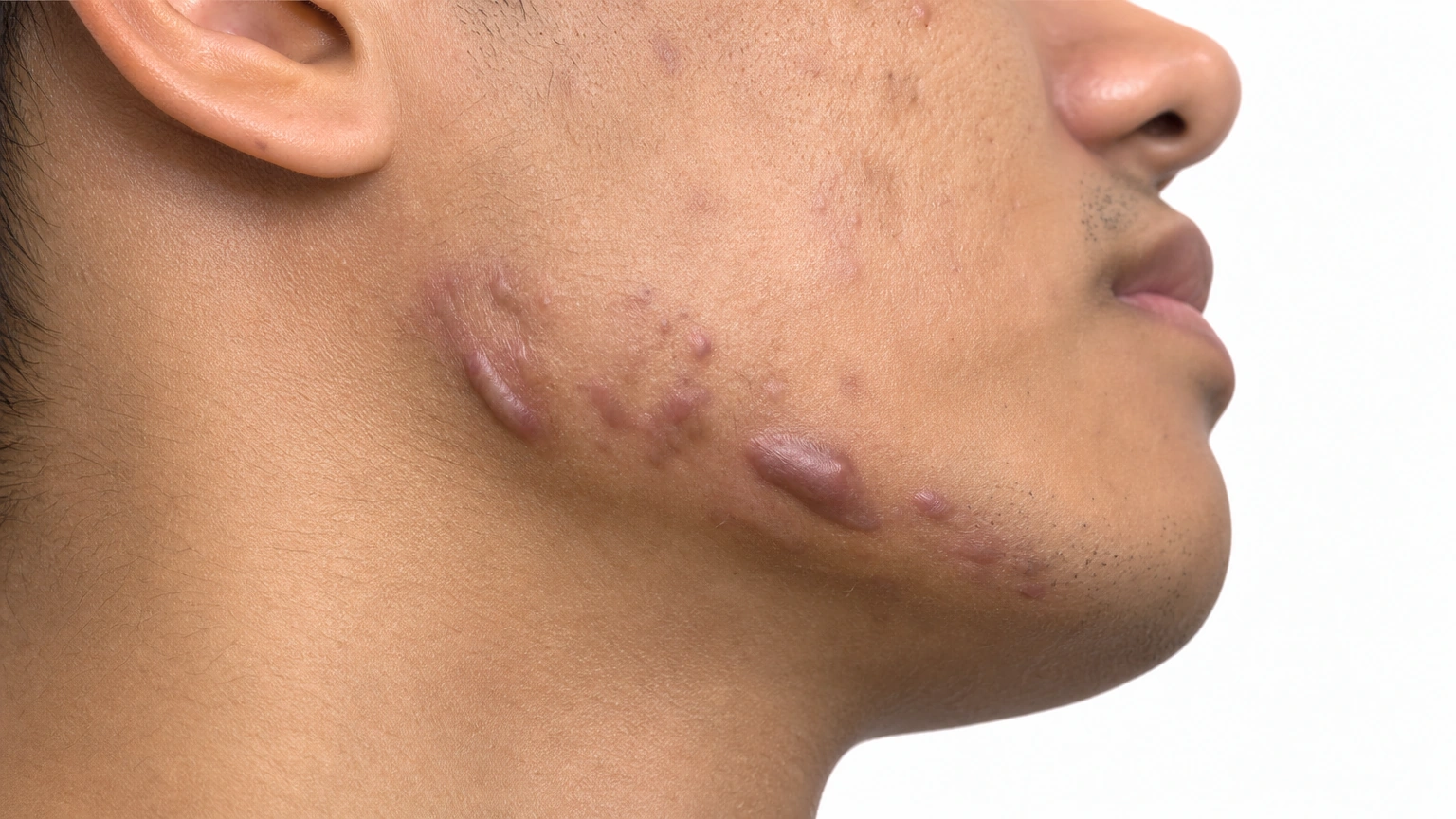
Raised firm pink-purple scars along the jawline, representing hypertrophic or keloid acne scars.

Hypertrophic and keloid scars Raised scars.

Enlarged Pores

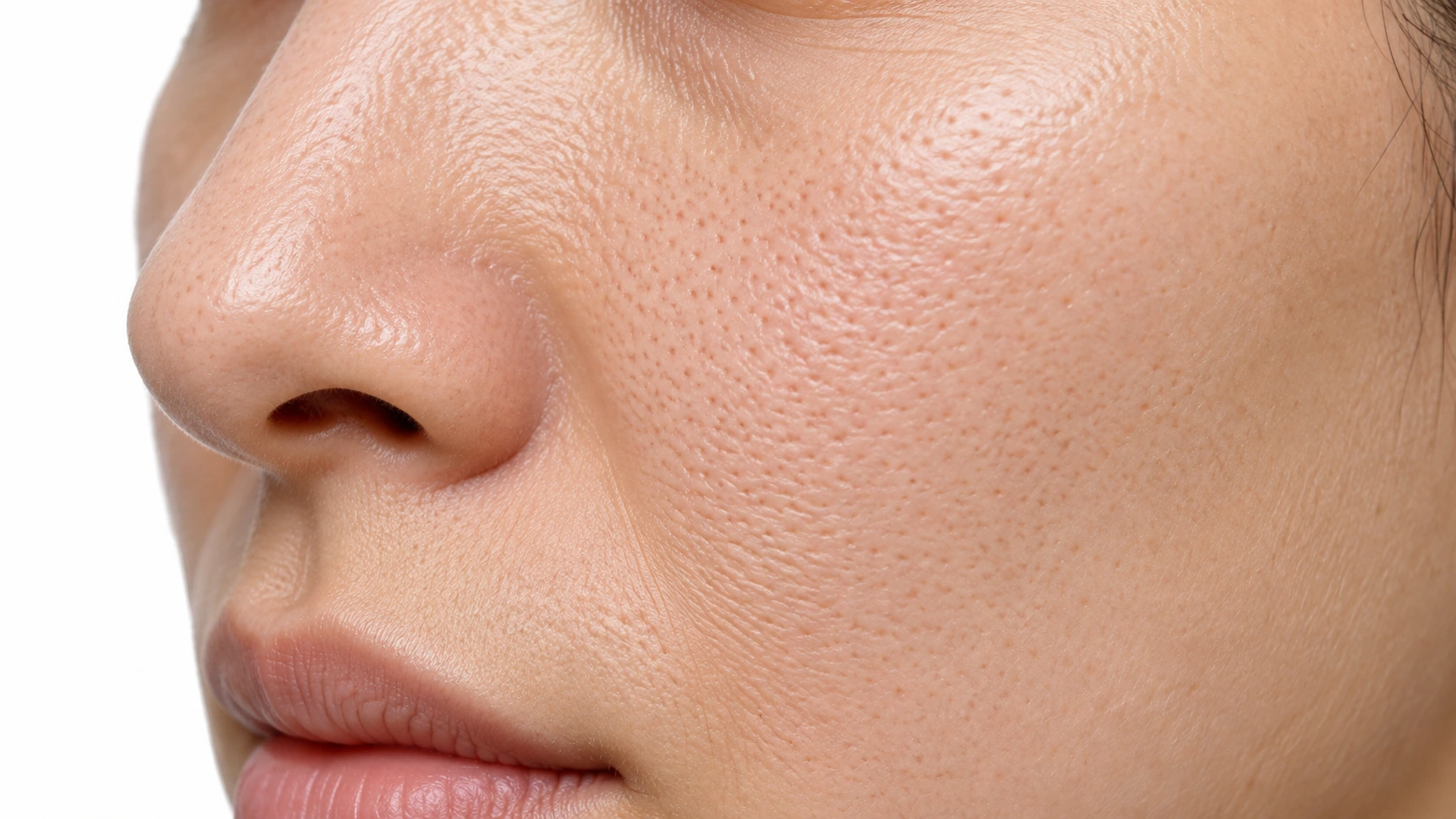
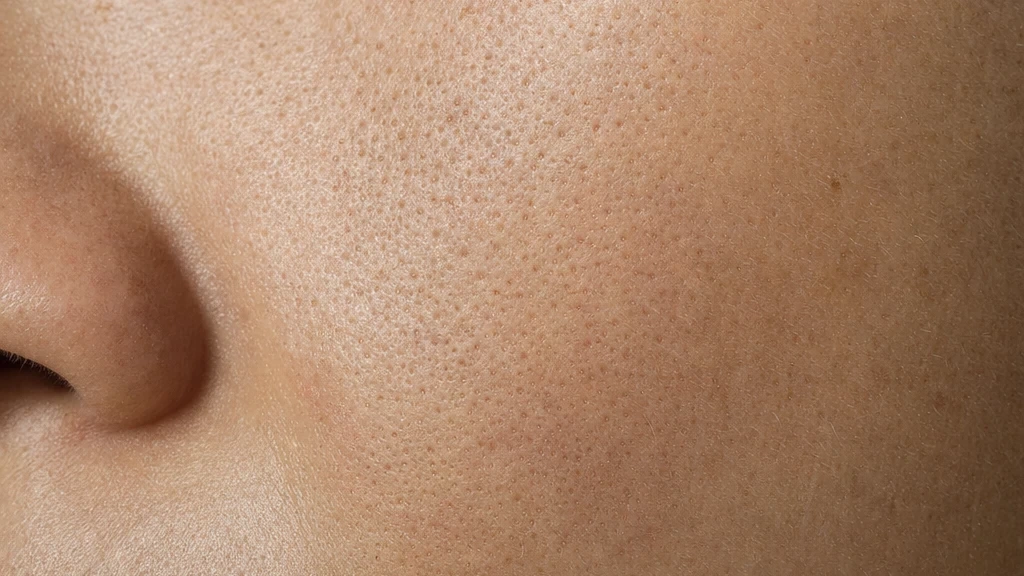
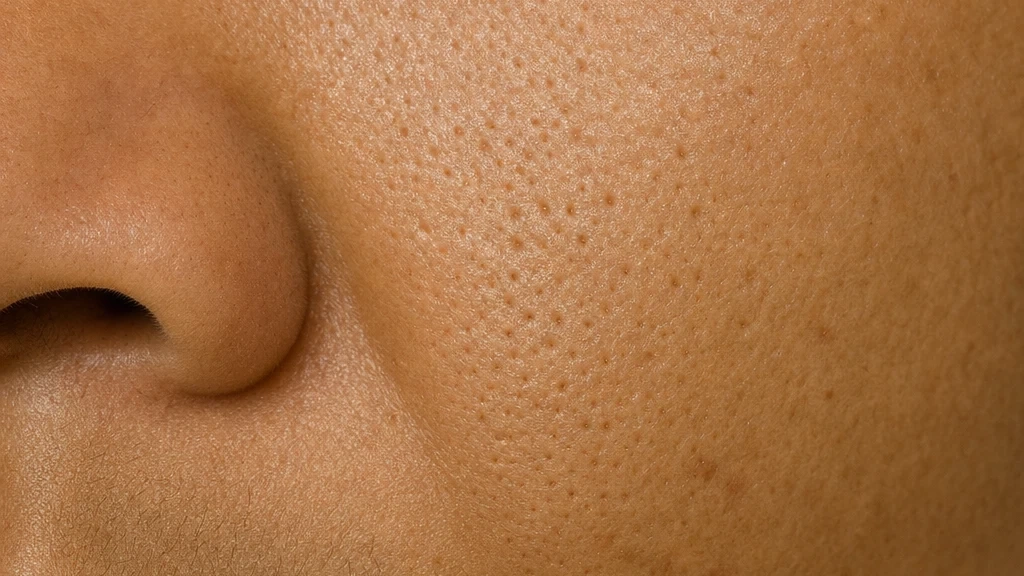
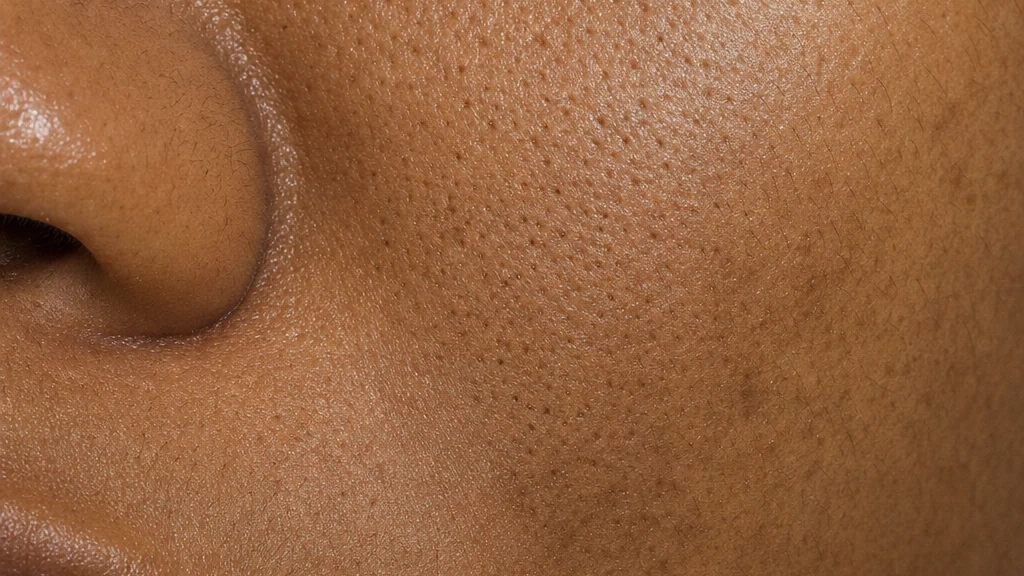
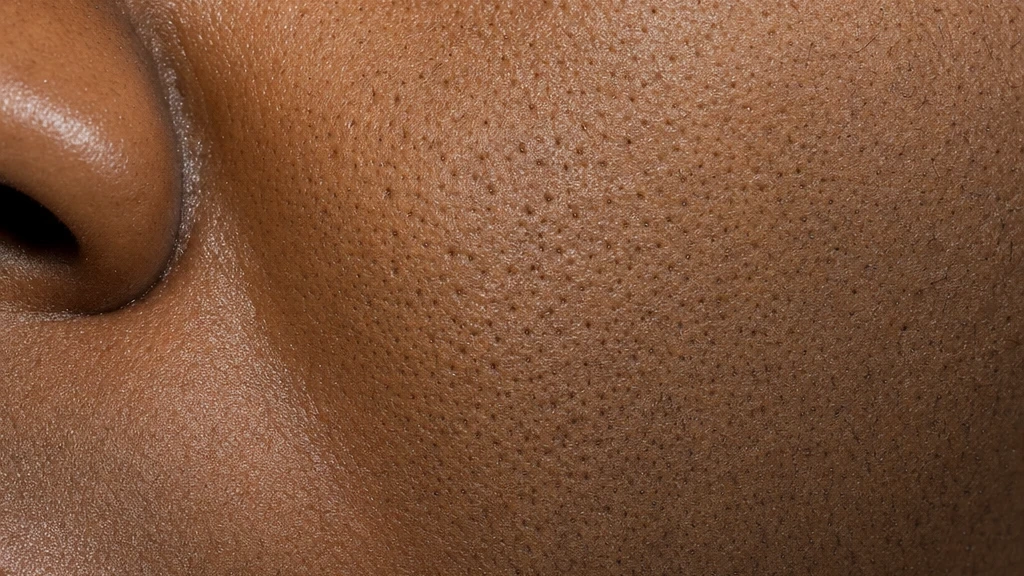
A close-up of the nose and cheek with prominent round pore openings.

Enlarged Pores Closely spaced pores give the cheek a textured appearance.

Skin tones
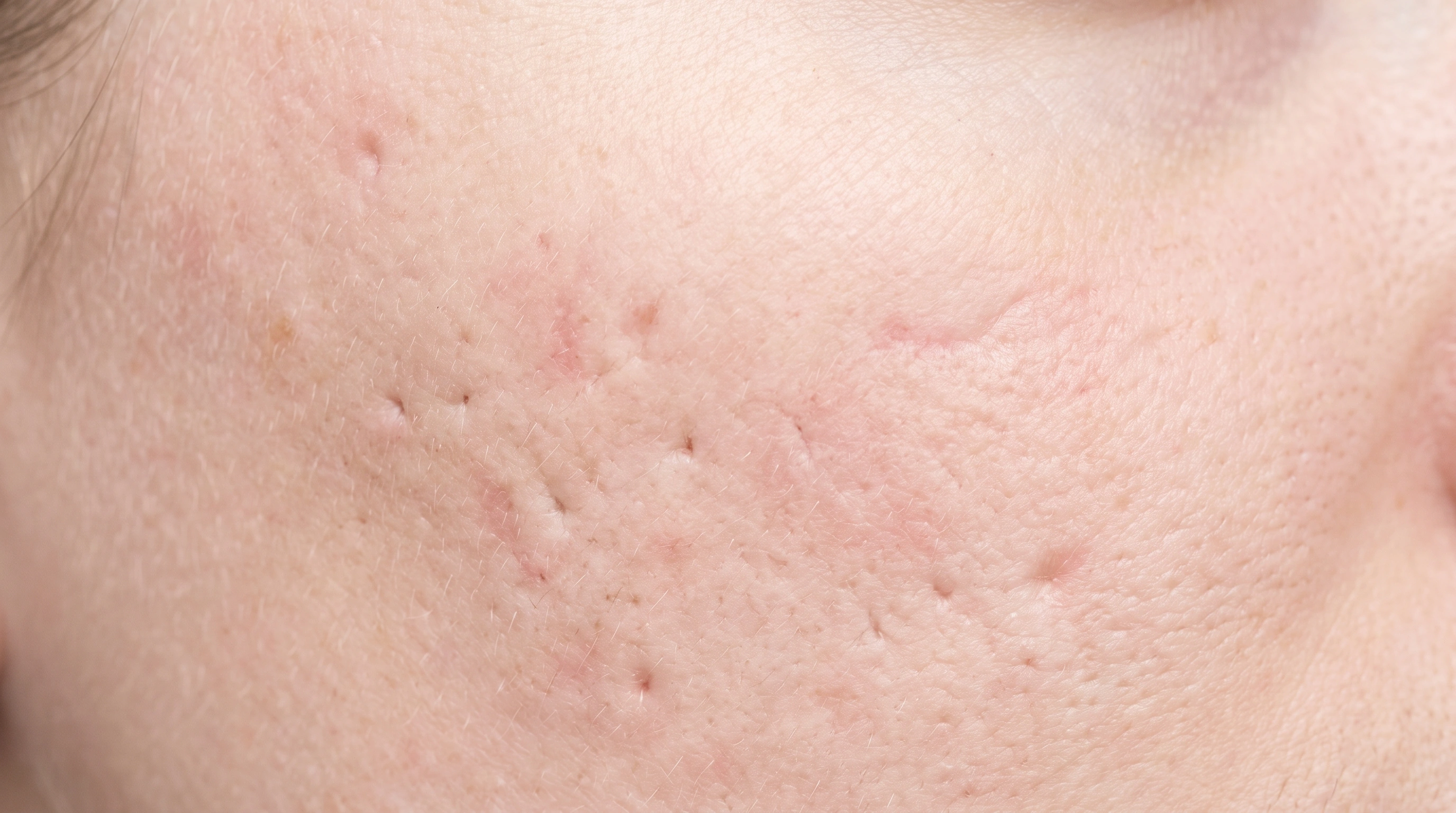
Acne scarring on light skin. Small sharply cut pits and broad shallow dips across a cheek, several sitting inside faint flat pink marks, with no active spots.
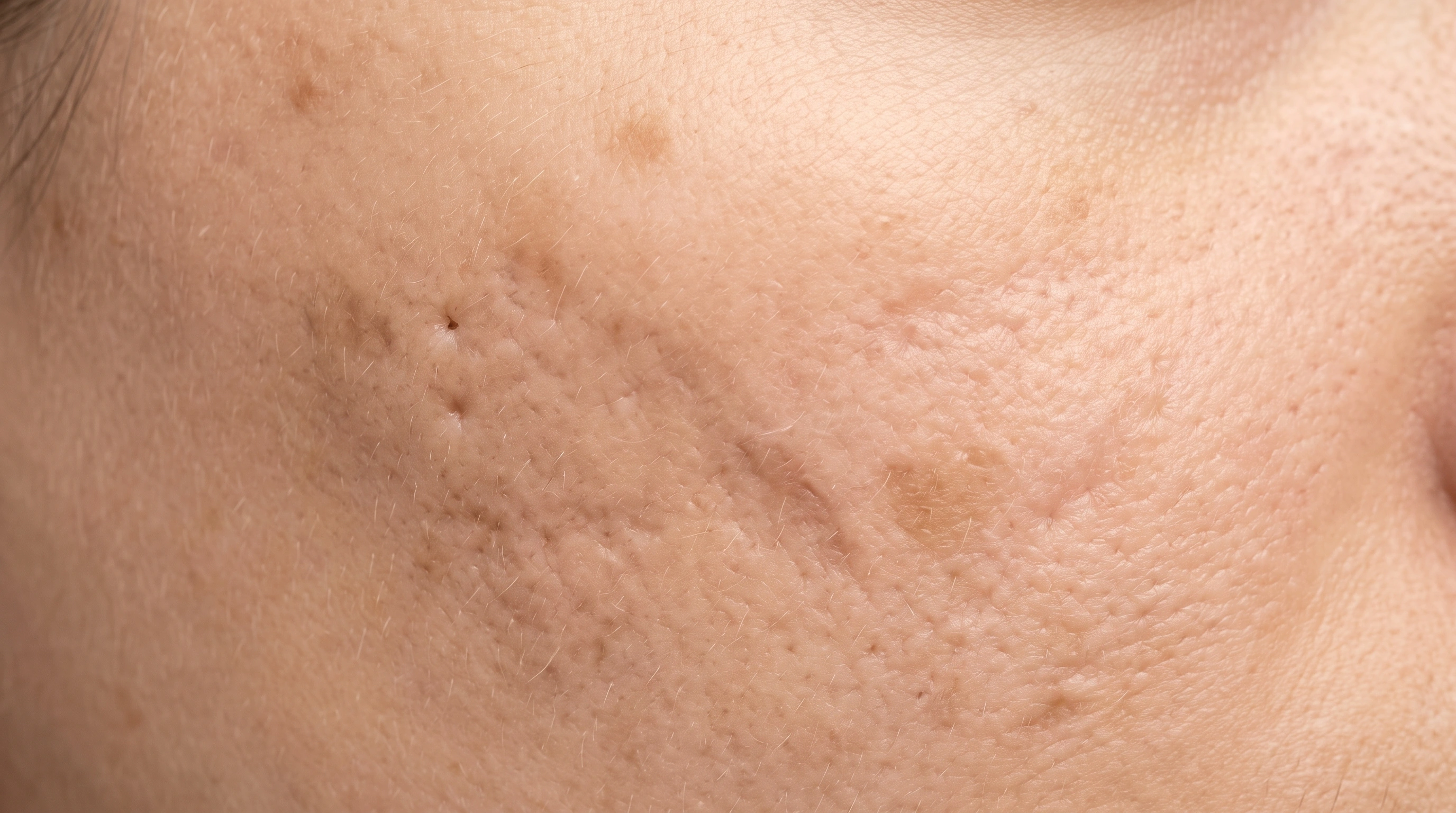
Acne scarring on medium skin. Shallow dips and small pits across a cheek, with flat light brown marks lying over and around several of them.
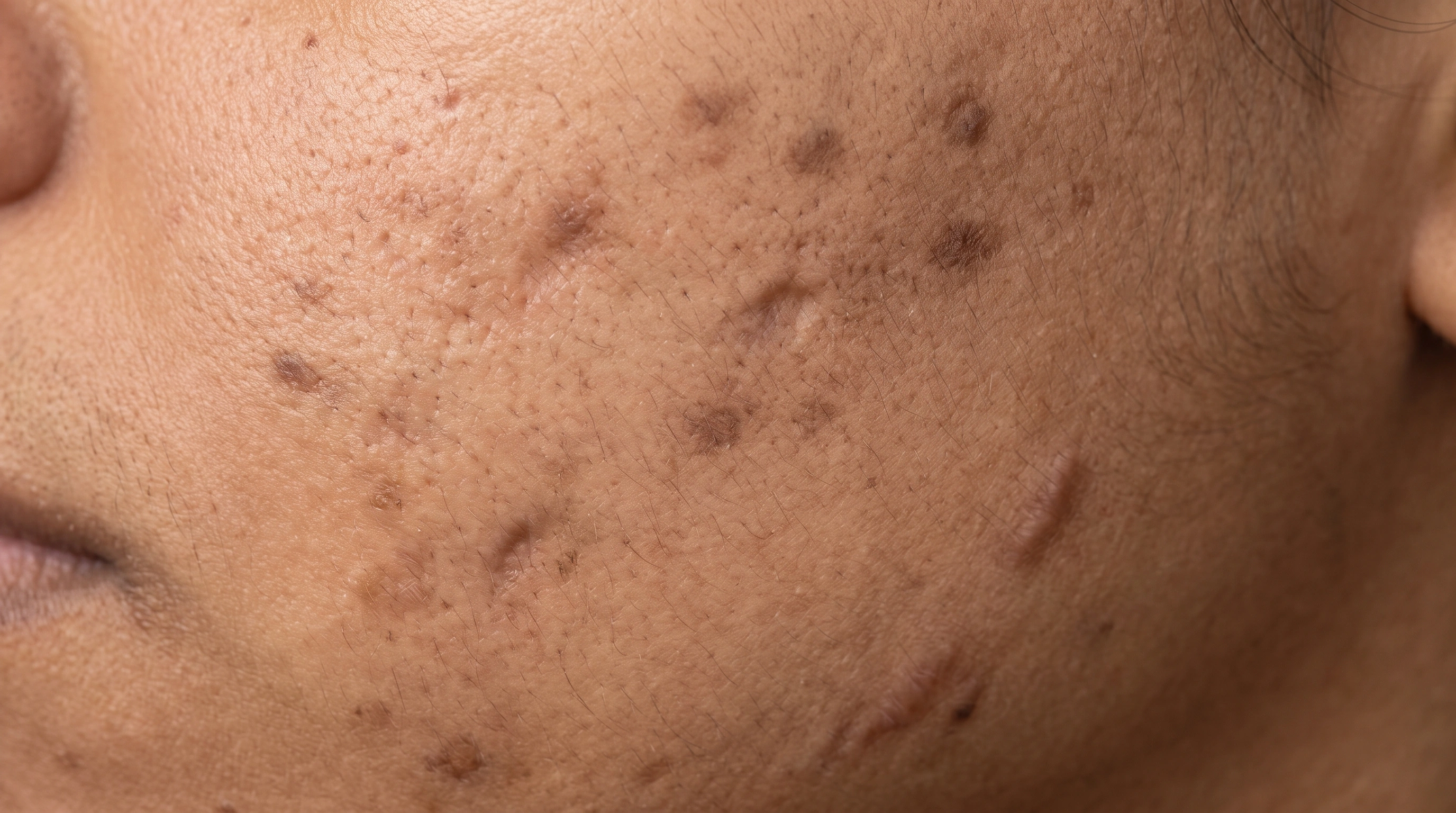
Acne scarring on brown skin. Flat dark brown marks cover much of a cheek and jaw, with shallow dips and one or two firm raised scars along the jawline showing through them.
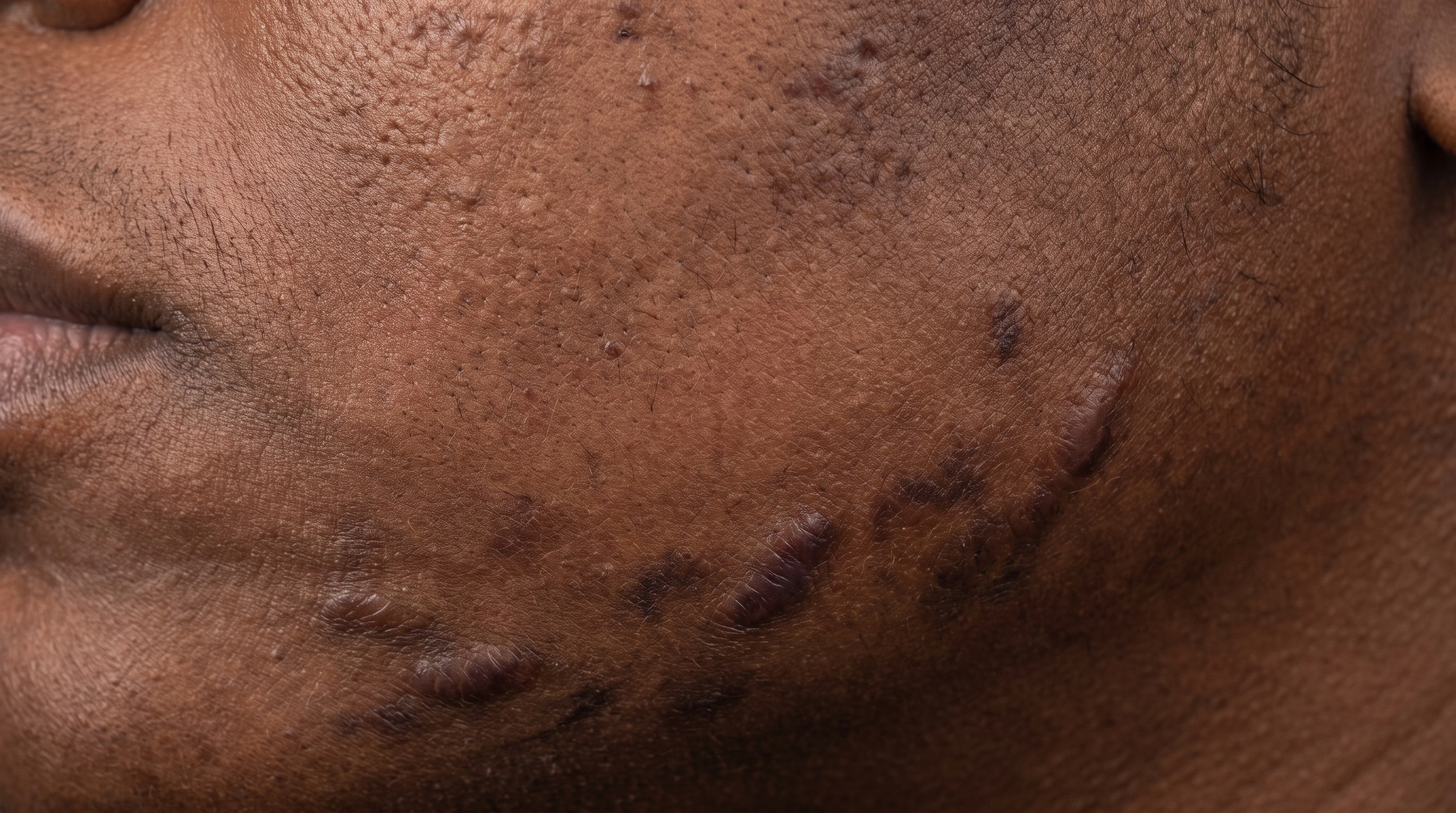
Acne scarring on deep skin. Firm raised scars sit along a jawline with flat dark marks around them, and the whole area reads darker rather than red.
Enlarged Pores on light skin.
Enlarged Pores on medium skin.
Enlarged Pores on brown skin.
Enlarged Pores on deep skin.
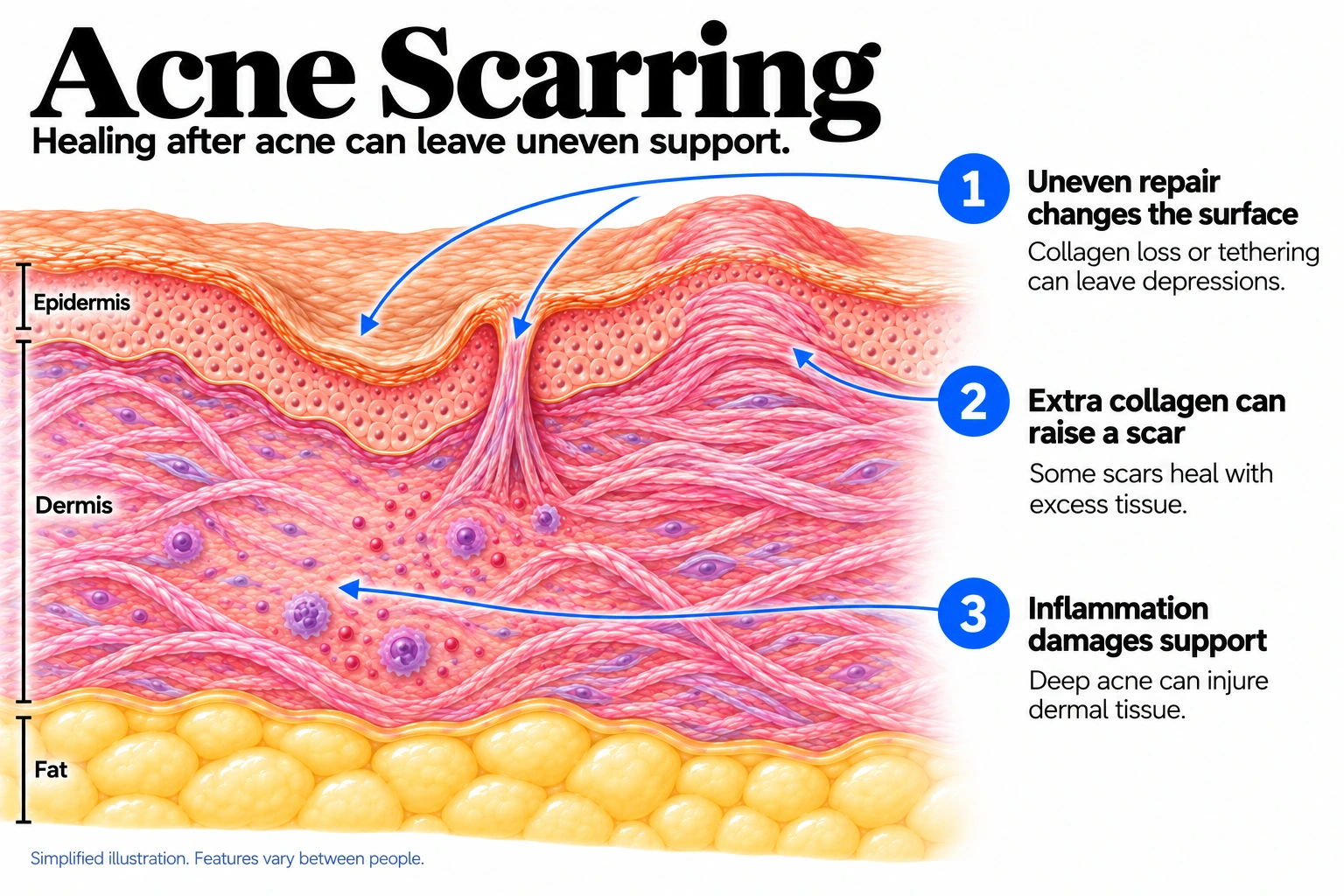
Diagram
Acne Scarring mechanism diagram. Uneven repair changes the surface: Collagen loss or tethering can leave depressions. Extra collagen can raise a scar: Some scars heal with excess tissue. Inflammation damages support: Deep acne can injure dermal tissue.
In the skin

Deep acne inflammation can damage the supporting tissue in the dermis. Healing may leave too little collagen, tethered tissue or excess collagen, producing indented or raised scars.

Follicle size, sebum and the elasticity of surrounding skin affect how large pores look. Aging and sun-related changes can make the openings more noticeable.

When it usually starts

010203040506070+

Acne Scarring. Develops after inflamed acne, often beginning in adolescence or young adulthood.

Enlarged Pores. Often becomes more apparent after puberty.

Causes and triggers

Causes

Acne scars form when deep, inflamed breakouts destroy collagen as they heal. Most scars are indented, from collagen loss.

Sebum, follicle size, ageing and sun-related loss of elasticity can contribute.

Family tendency

The tendency to scar runs in families.

Risk factors
Severe or cystic acne, Delayed acne treatment, Family history of scarring
Oil production, Family tendency, Hormone-related changes
Trigger
● Acne Scarring
● Enlarged Pores
Picking and squeezing
Well established
Not listed
Untreated deep acne
Well established
Not listed
Pore-clogging products
Not listed
Can contribute

Daily Care

Acne Scarring
Enlarged Pores
Daily care

Habits that help

  • Daily sunscreen
    Keeps redness and pigment around a scar from deepening.
  • Treat the acne first
    Nothing holds if new spots keep arriving.
  • Subcision
    Cuts the fibrous bands tethering a rolling scar.
  • TCA CROSS
    A drop of strong acid heals an icepick scar narrower.
  • Silicone gel or sheets
    Cheap, slow, months of daily use.
  • Give each treatment months
    Collagen remodels for a year afterward.

Avoid

  • Avoid: Picking and squeezing
    Ruptures the pore wall, spreading inflammation into healthy skin.
  • Avoid: Home extraction tools
    Same damage as fingers, more force.
  • Avoid: Scrubbing and stacking actives
    Adds inflammation and pushes people off treatment.
  • Avoid: Sun exposure on a healing scar
    Darkens the mark and slows settling.
  • Avoid: Picking scabs
    Reopens the wound and deepens the mark.
  • Avoid: Assuming flat marks are scars
    Sends you away from what stops the next one.
  • Avoid: Deep spots left untreated
    Every extra week inflamed damages more tissue.
  • Avoid: Waiting to see a doctor
    Risk rises every year acne goes untreated.
  • Avoid: Aggressive treatment too early
    Lasers or peels on active acne add marks.
  • Avoid: Stopping acne treatment early
    Acne that returns starts it over.

Habits that help

  • Cleanse gently up to twice daily and after sweating
    Use a mild cleanser rather than washing until skin feels tight.
  • Use a light non-comedogenic moisturizer
    Oily skin can still become dry or irritated from treatment.
  • Choose non-comedogenic broad-spectrum SPF 30 or higher
    Protect exposed skin without adding a product that clogs pores.
  • Blot excess oil gently if needed
    Press with blotting paper rather than rubbing or repeatedly washing.

Avoid

  • Avoid: Repeated squeezing, pore vacuuming or harsh pore strips
    Normal filaments refill; aggressive extraction can cause inflammation and marks.
  • Avoid: Alcohol-heavy toners and scrubs that sting
    Drying the skin aggressively does not permanently close pores.

Treatment differences

Evidence labels come from each condition’s own treatment list.

Treatment
● Acne Scarring
● Enlarged Pores
Filter by type
Scar type

Select one or more.

All types
Over-the-counter
Silicone gel or sheets

Silicone gel or sheets

Limited evidence

The best-evidenced thing you can buy for scars, and only for raised and keloid ones. It has to be worn most of the day, every day, for two to three months before it is worth judging. It does nothing at all for an indented scar.

Six retinol products lined up, including SkinCeuticals Retinol 0.5, Murad, CeraVe, First Aid Beauty, RoC and Replenix

Retinol

Limited evidence

Used nightly over months it gradually improves surface texture and the tone around a scar, and it keeps treating the acne that would cause the next one. It will not lift an established dent. Think of it as the background treatment that procedures are done on top of.

Vitamin E

Avoid

The most commonly recommended scar remedy there is. It has been studied properly for exactly this and did not help, and it causes an itchy rash in a fair number of people. Silicone is the option with real evidence behind it, and only on raised scars.

None listed
Prescription topicals
Tretinoin — Header Image

Tretinoin

Limited evidence

The prescription retinoid, stronger than retinol, used nightly over months. It improves surface texture and the marks around scars, and it keeps the acne that makes new scars under control. It does not fill an indented scar, and it is usually paused before resurfacing procedures.

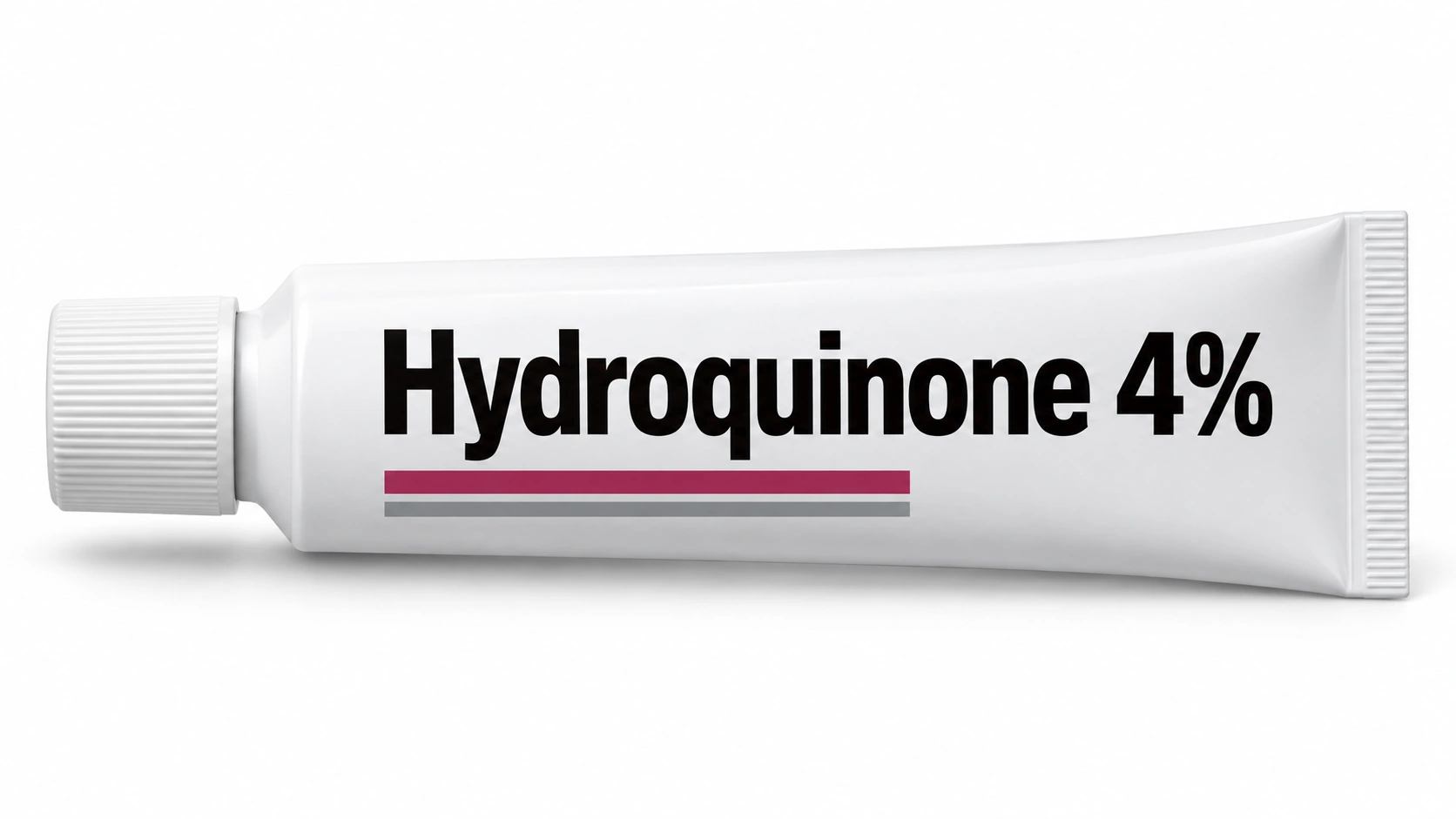
Hydroquinone 4% — Header Image

Hydroquinone 4%

Limited evidence

Aimed at the flat dark marks sitting alongside the scarring, not at the scar itself. Clearing the pigment first makes it much easier to see how much true texture is there, which is why it usually comes before any texture treatment. It is used in courses rather than indefinitely.

Retinoid assessment

Listed

May help acne-related pore appearance in suitable patients; avoid retinoids during pregnancy.

Prescription pills
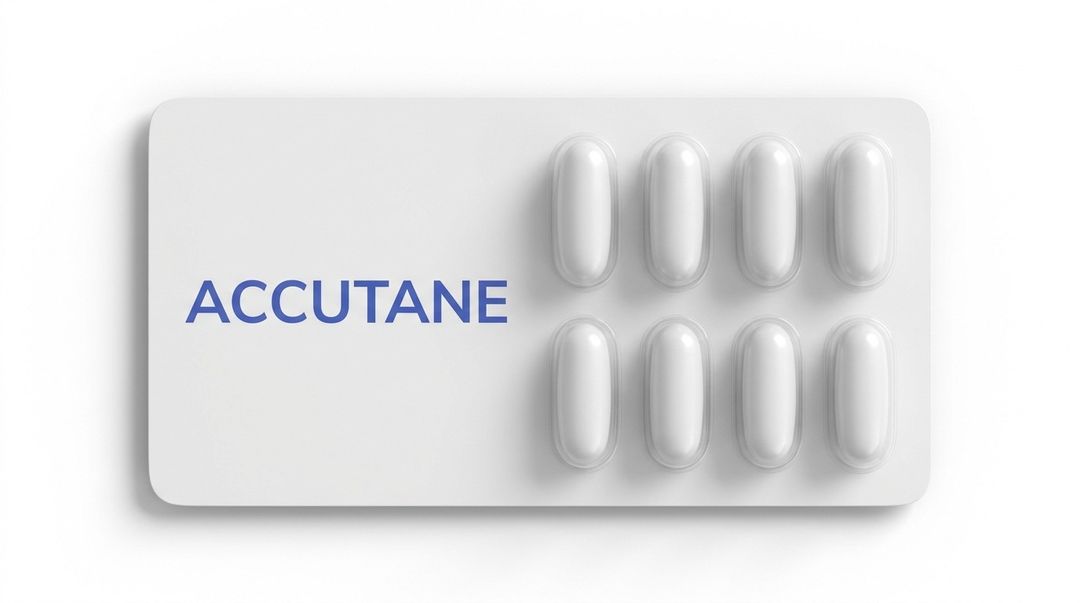
A white blister pack photographed flat on a white background, holding eight white oblong capsules in two rows of four under clear domes. ACCUTANE is printed in blue capitals on the empty left half of the foil.

Accutane

Listed

This prevents scars rather than treating them, and on this page that is the most valuable thing on the list. It is the most reliable way to shut down the deep, inflamed acne that is still making new scars, and no texture treatment holds while spots keep arriving. Resurfacing is usually delayed for a period after the course ends — that timing is a conversation with your prescriber.

None listed
Injections
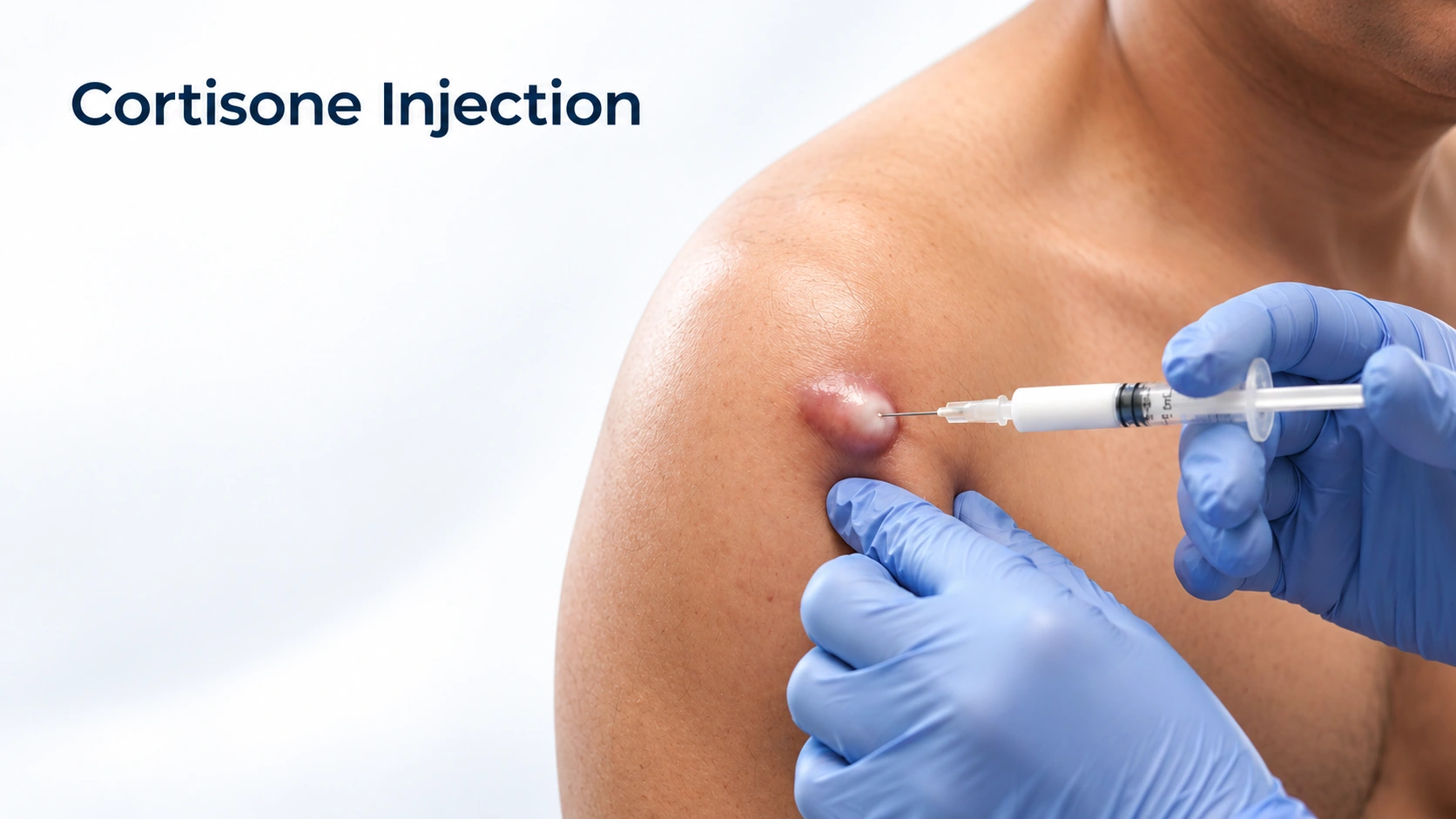
Editorial illustration for Cortisone Injection, based on the entry’s treatment or equipment reference.

Cortisone Injection

Moderate evidence

The mainstay for raised and keloid scars. Steroid injected into the scar flattens and softens it, usually over a series of injections four to six weeks apart. It does nothing for indented scars, and too much in one place can leave a dip or thinned, pale skin.

None listed
Procedures
Editorial illustration for Fractional CO2 Laser, based on the entry’s treatment or equipment reference.

Fractional CO2 Laser

Moderate evidence

The most effective single option for indented scarring, and the one with the most downtime — about a week of raw, swollen skin and months of strict sun avoidance afterwards. It does most for boxcar and rolling scars; icepick scars need something aimed at them separately. Settings are dialled back on deeper skin tones because of the pigment risk.

RF Microneedling

Moderate evidence

Morpheus8. Needles carry heat below the surface, so it builds more collagen than needling alone while doing less to the top layer. That lower surface injury is why it is often the first choice for boxcar and rolling scars on deeper skin tones. Usually three or four sessions about a month apart, with the result still building for a year.

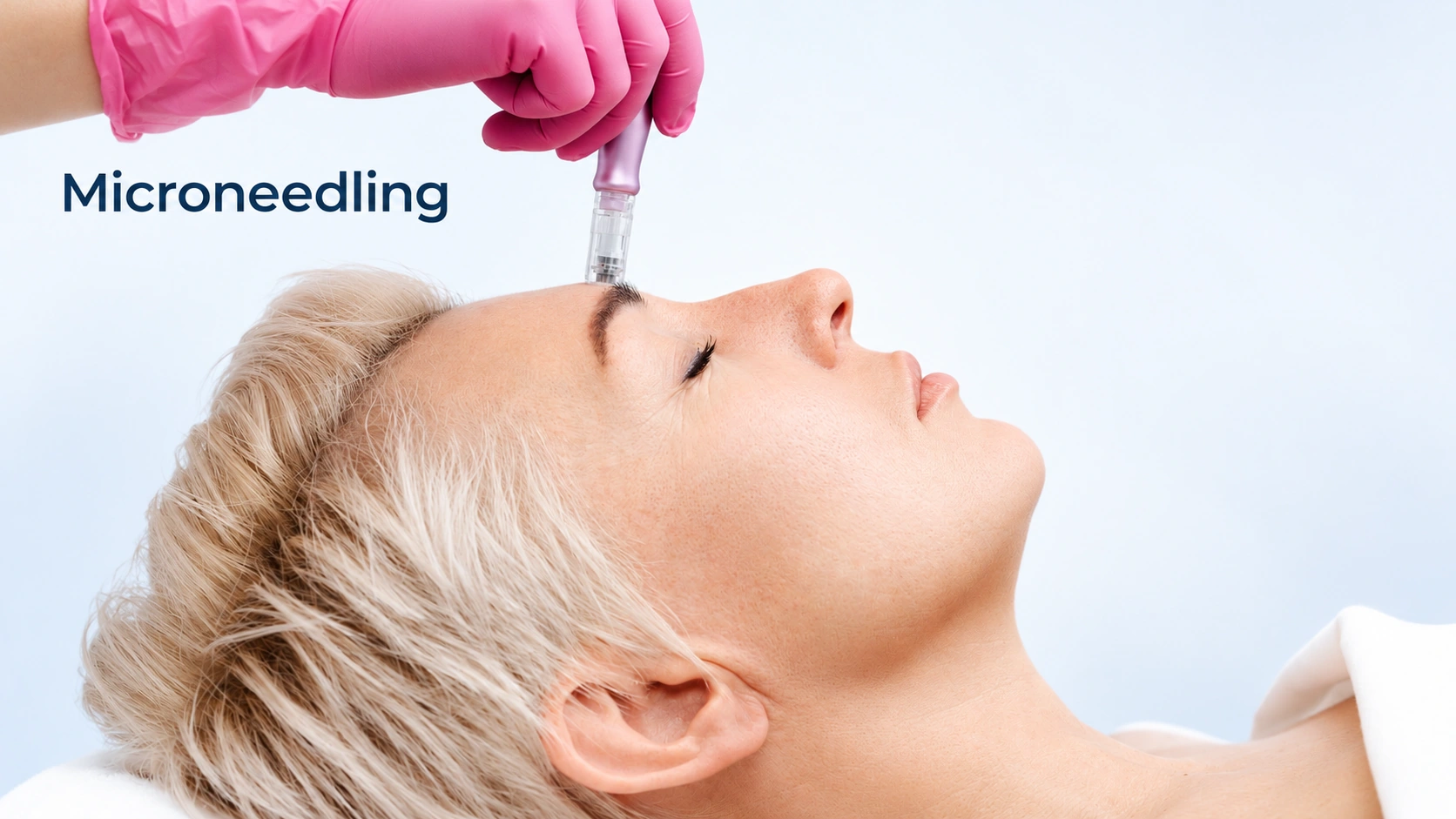
Editorial illustration for Microneedling, based on the entry’s treatment or equipment reference.

Microneedling

Moderate evidence

Fine needles injure the skin just enough to trigger new collagen. It does most for rolling and shallow boxcar scars, and very little for icepick ones. It is the gentlest of the resurfacing options, which also makes it the slowest — expect four to six sessions and judge it at a year, not at a month.

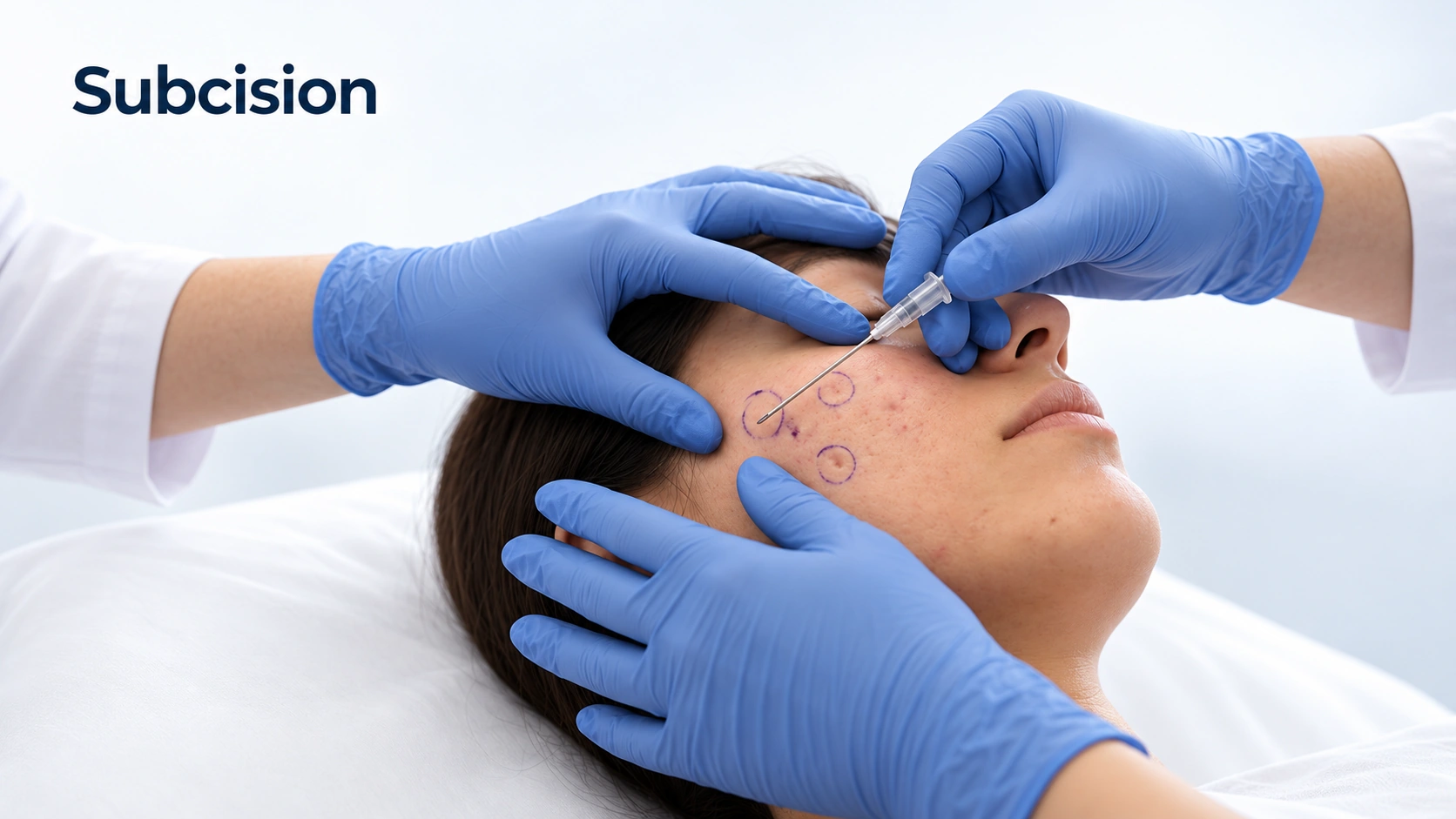
Editorial illustration for Subcision, based on the entry’s treatment or equipment reference.

Subcision

Moderate evidence

A needle is passed under a rolling scar to cut the fibrous bands tethering it down, so the floor lifts. It is aimed at rolling scars specifically and does nothing for icepick or boxcar ones. Bruising for a week or two is normal, and it is often done in the same visit as needling or filler.

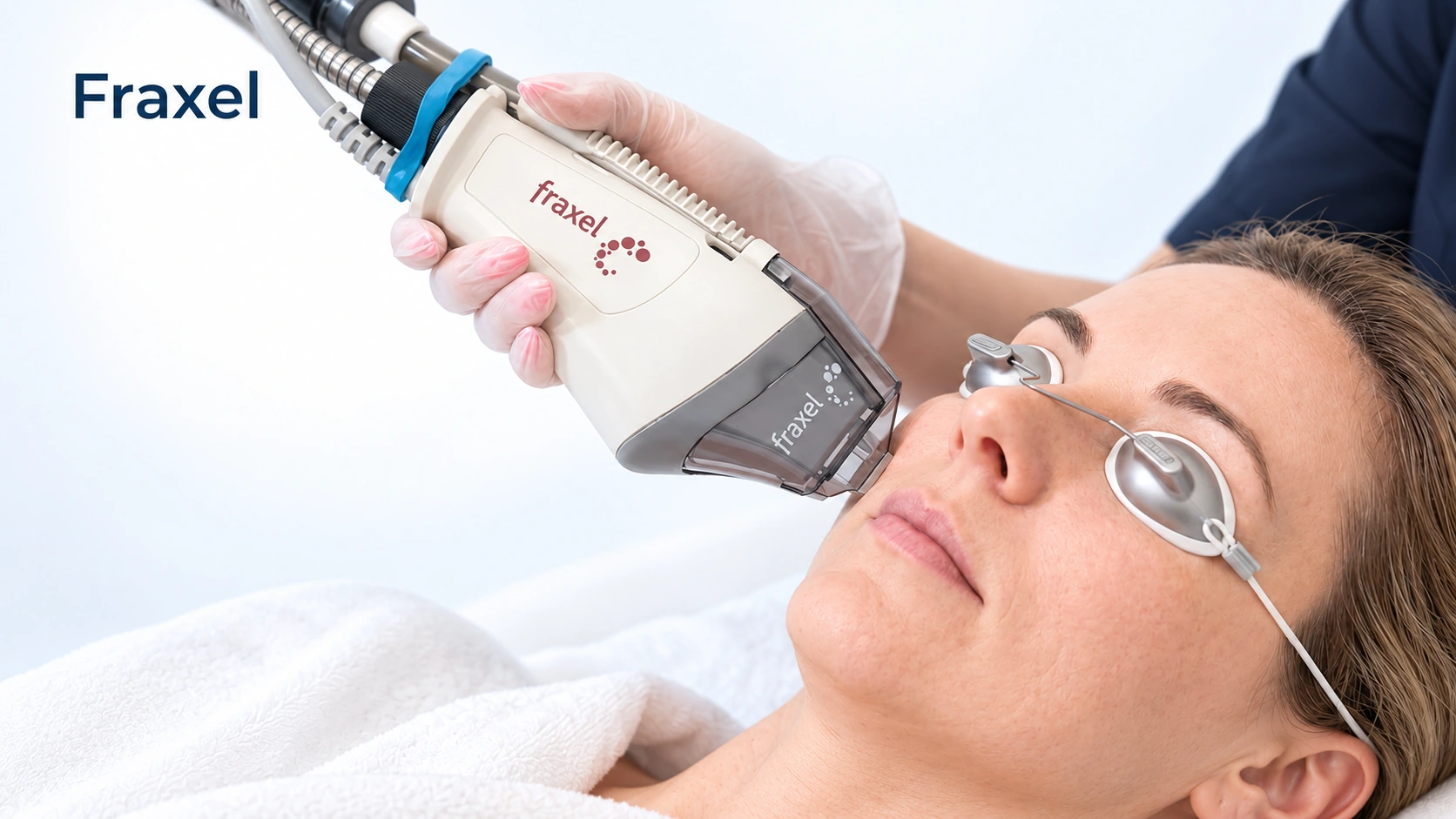
Editorial illustration for Fraxel, based on the entry’s treatment or equipment reference.

Fraxel

Moderate evidence

Fraxel. Resurfaces without removing the surface, so recovery is a few days of redness and swelling rather than a week of raw skin. It gives less improvement per session than CO2 and needs more sessions to get there. It is the sensible middle option when the downtime of ablative laser is not workable.

Editorial illustration for TCA Peel, based on the entry’s treatment or equipment reference.

TCA Peel

Moderate evidence

TCA Peel and TCA CROSS. In the CROSS technique a single drop of strong acid is placed into the opening of an icepick scar so it heals narrower. It is one of very few things that reaches a scar this deep and this narrow. Several rounds are usual, and acid outside the pit can leave a mark, so the result depends heavily on who is doing it.

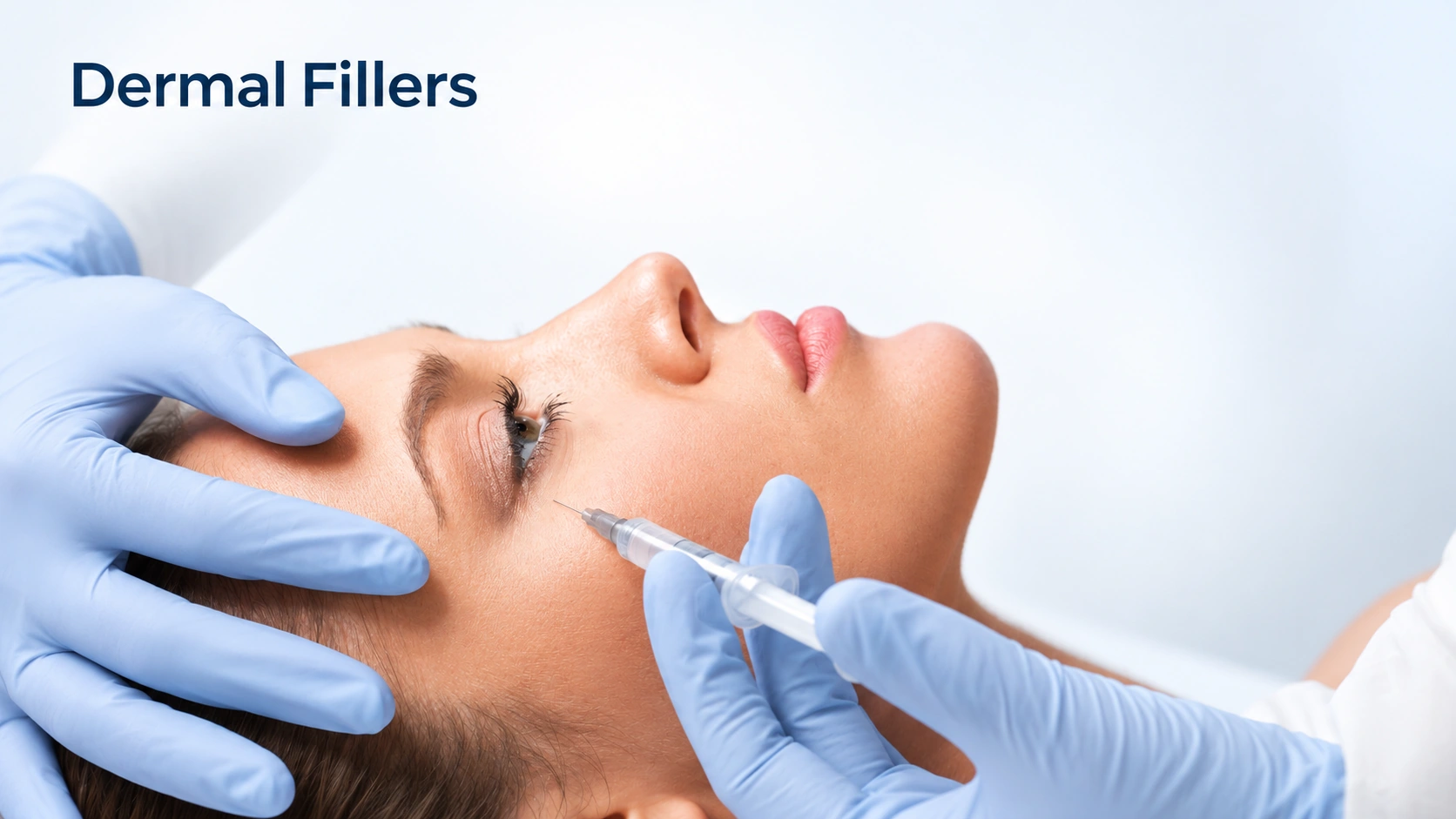
Editorial illustration for Dermal Fillers, based on the entry’s treatment or equipment reference.

Dermal Fillers

Moderate evidence

Filler placed under a shallow rolling or boxcar scar lifts the floor of it straight away, which makes it the only option here with a same-day result. It is temporary, lasting months to a couple of years depending on the product. It works best as a top-up alongside collagen-building treatment, not instead of it.

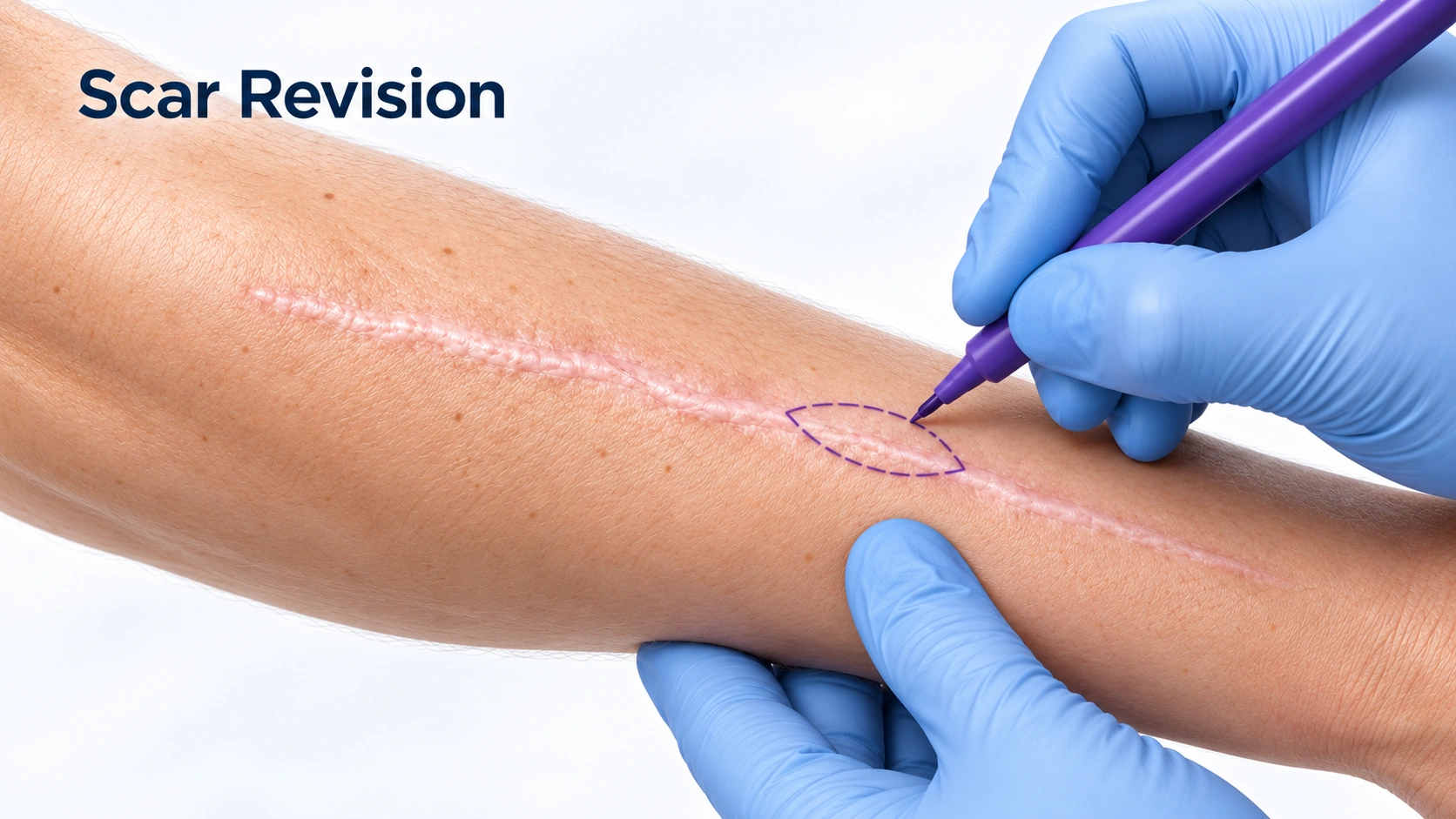
Editorial illustration for Scar Revision, based on the entry’s treatment or equipment reference.

Scar Revision

Limited evidence

A single deep, narrow scar is cut out and closed, or punched out and grafted, trading a pit for a fine line that resurfacing can then blend. It suits a handful of stubborn icepick or deep boxcar scars, not a whole cheek. It is normally done before laser rather than instead of it.

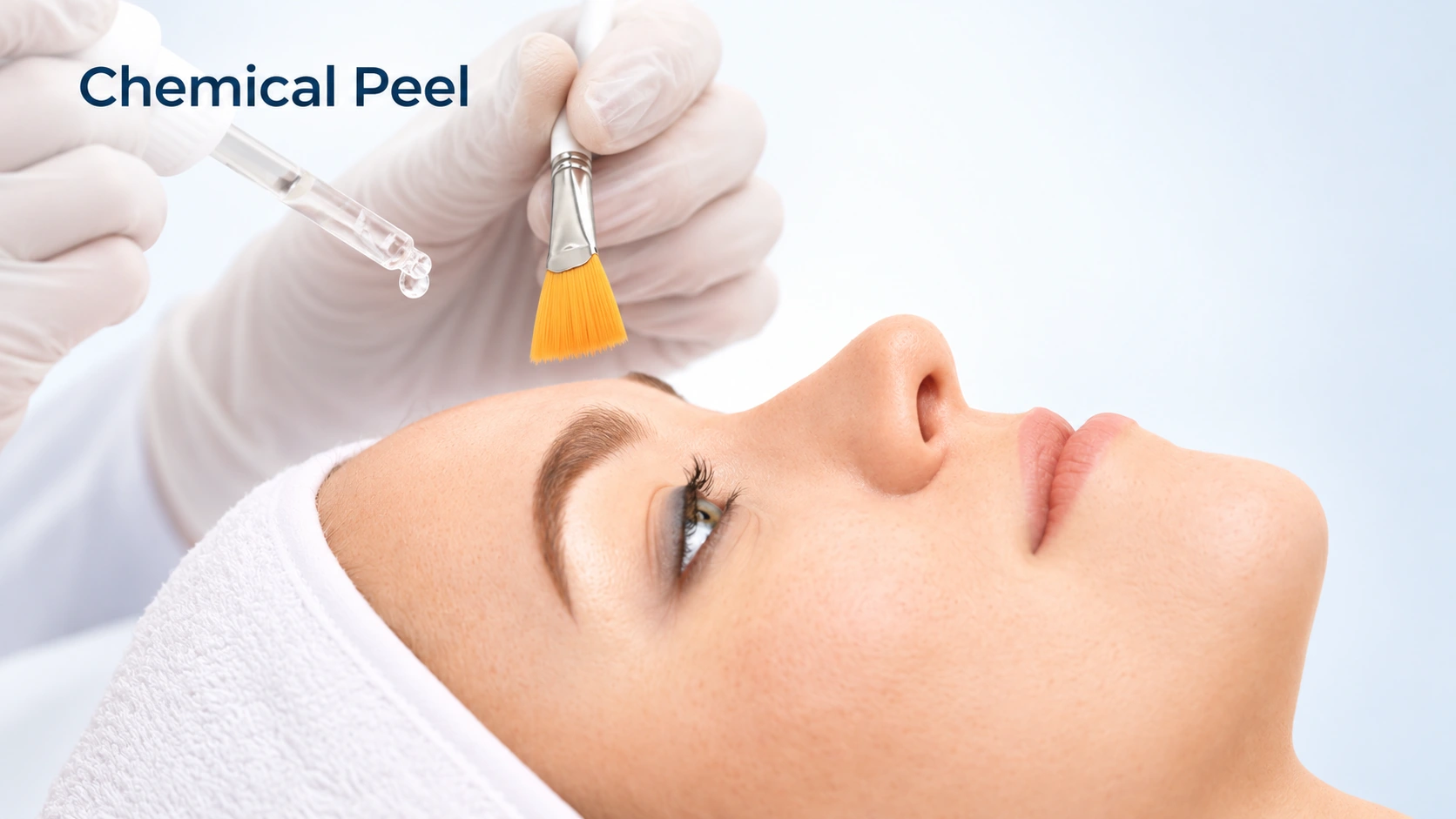
Editorial illustration for Chemical Peel, based on the entry’s treatment or equipment reference.

Chemical Peel

Limited evidence

Repeated medium-depth peels smooth the edges of shallow scars and even out the tone around them. The effect on texture is modest next to laser or needling. On this page peels earn their place mostly for the flat marks sitting alongside the scars rather than for the scars themselves.

V-Beam

Limited evidence

Targets the blood vessels rather than the texture, so it calms the redness in and around a fresh scar and helps flatten raised ones. It will not lift a dent. It is most useful in the first year, when the color is what makes a scar stand out.

Editorial illustration for Microdermabrasion, based on the entry’s treatment or equipment reference.

Microdermabrasion

Limited evidence

Polishes the very top layer of skin, which is nowhere near deep enough to reach the collagen that makes a scar. It can leave skin looking brighter for a few days. It is widely sold for acne scarring and it does not change acne scarring.

None listed

Outlook

Long term

Scars appear as the acne settles and look their worst in the first few months. Some of that fades over the first year. Treatment improves the picture after that, but it does not reset it.

Pores are normal openings and cannot be permanently closed. Their appearance can improve with management of oil, plugging or sun damage, but natural pore size remains part of skin anatomy.

Complications

Possible complications
  • Keloid scars
  • Dark marks after treatment
  • Confidence and mood
More details

Keloid scars
A raised scar that grows beyond the spot that caused it, into skin that was never involved. They form most often on the chest, shoulders, upper back and jawline, and they are more common on deeper skin tones. They rarely settle on their own and can keep growing slowly for years, so they are worth treating early rather than watching.

Dark marks after treatment
Lasers, deep peels and aggressive needling all inflame the skin, and skin with reactive pigment cells answers inflammation by making more pigment. The result can be darker than what you started with, and it can take a year to settle. Conservative settings, a test patch and a provider who treats deeper skin tones regularly all lower the risk.

Confidence and mood
Scarring is permanent, visible, and usually arrives at the end of years of dealing with acne, and the effect on confidence and mood is well documented. It does not track with how bad the scarring looks to anyone else. It is a reason to be seen rather than to wait, because most scars can be made considerably less noticeable.

Oiliness and visible pores can coexist with acne, but are not themselves proof of disease.

When to get help

When to get help

Seek care early for acne that is leaving scars. Have active breakouts controlled before choosing scar procedures.

Seek advice for painful acne or a new isolated lesion rather than treating it as a normal pore.

Common questions

Acne Scarring:Can acne scars be removed completely?

No, and anyone saying otherwise is overselling. Most scars can be made much less visible, often hard to see in ordinary light, and a good plan usually combines two or three treatments.

Acne Scarring:How do I tell a scar from a mark?

Touch it, and look at it in side lighting. A scar has texture - you can feel a dent or a raised lump, and it casts a shadow. A mark is flat and differs only in color, and flat marks fade on their own.

Acne Scarring:Will my scars fade over time?

Redness fades over six to twelve months, so scars look better at a year than at three months. The dent does not fill in. Raised scars often flatten over one to two years; keloids generally do not.

Acne Scarring:When can I start treating my scars?

Once the acne is controlled and the skin is calm, usually a few months of stable treatment. If you have taken isotretinoin, most dermatologists wait a period after finishing before resurfacing - ask the doctor who prescribed it.

Acne Scarring:Which treatment is best for my scars?

It depends on the shape. Icepick scars respond to TCA CROSS and punch excision, rolling scars to subcision and needling, boxcar scars to laser resurfacing and radiofrequency needling, raised scars to steroid injections and silicone. Most people have a mixture, so most plans combine treatments.

Acne Scarring:Why does picking cause scars?

Squeezing forces the pore's contents sideways through its wall into surrounding skin instead of out through the surface. That spreads inflammation into tissue that was never involved - the exact injury the body repairs with a scar.

Enlarged Pores:What is Enlarged Pores?

Visible follicular openings that appear larger because of oil, anatomy or reduced surrounding support.

Enlarged Pores:What can I do day to day?

Clean gently, avoid squeezing and use non-comedogenic moisturizer and sunscreen.

Enlarged Pores:When should I get medical advice?

Seek advice for painful acne or a new isolated lesion rather than treating it as a normal pore.

Sources

Sources and further reading

  1. DermNet
  2. Enlarged pores
Dermapedia on YouTube