




Wrinkles and Fine Lines vs Sagging Skin

Wrinkles are creases that form as the skin's supporting framework thins and as repeated movement folds the same spot over and over. A small number of treatments have strong evidence behind them, many popular ones have very little, and nothing available returns skin to how it was. Skin laxity associated with reduced support and elasticity.

Research updated 2026-10-23
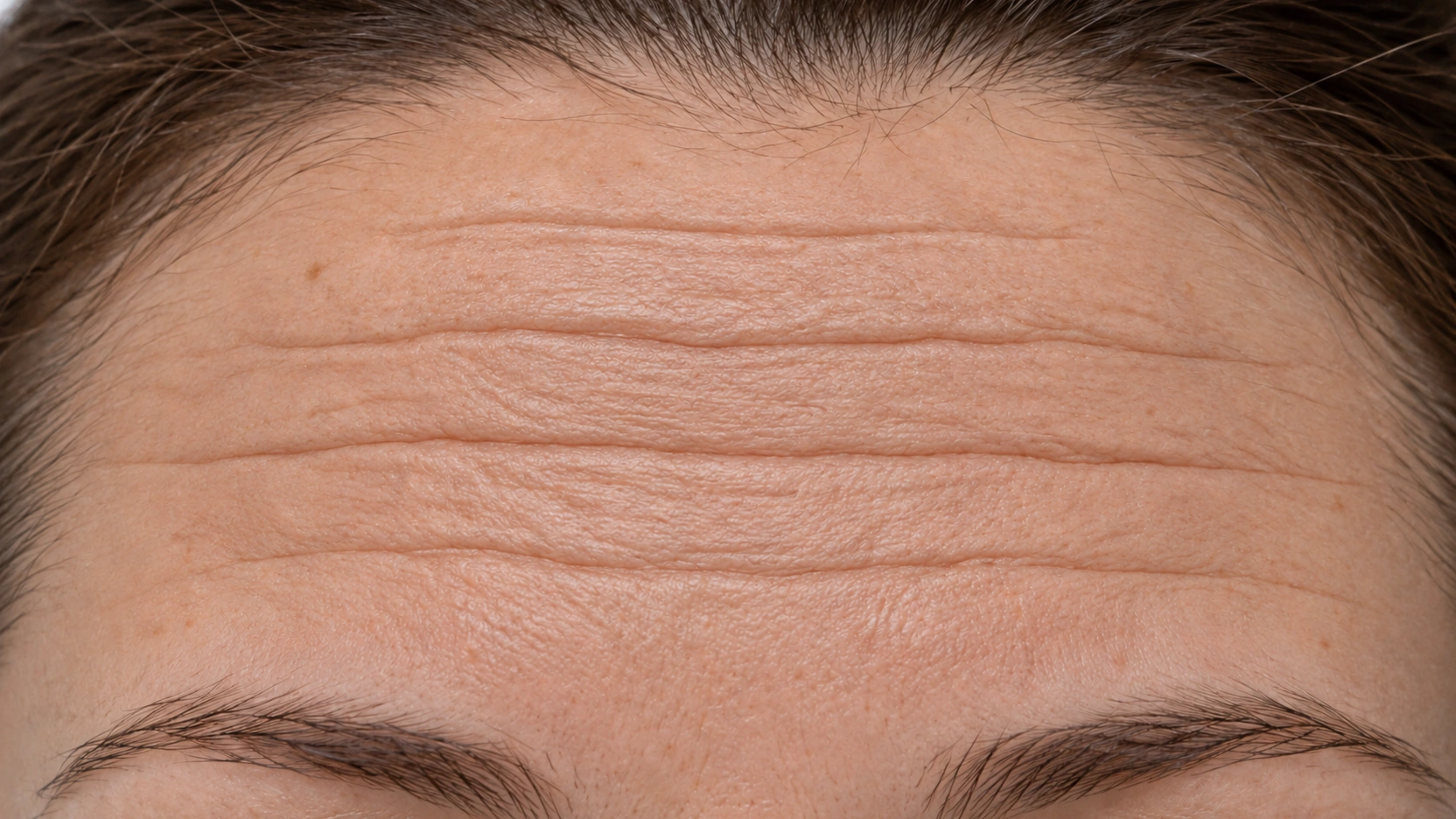
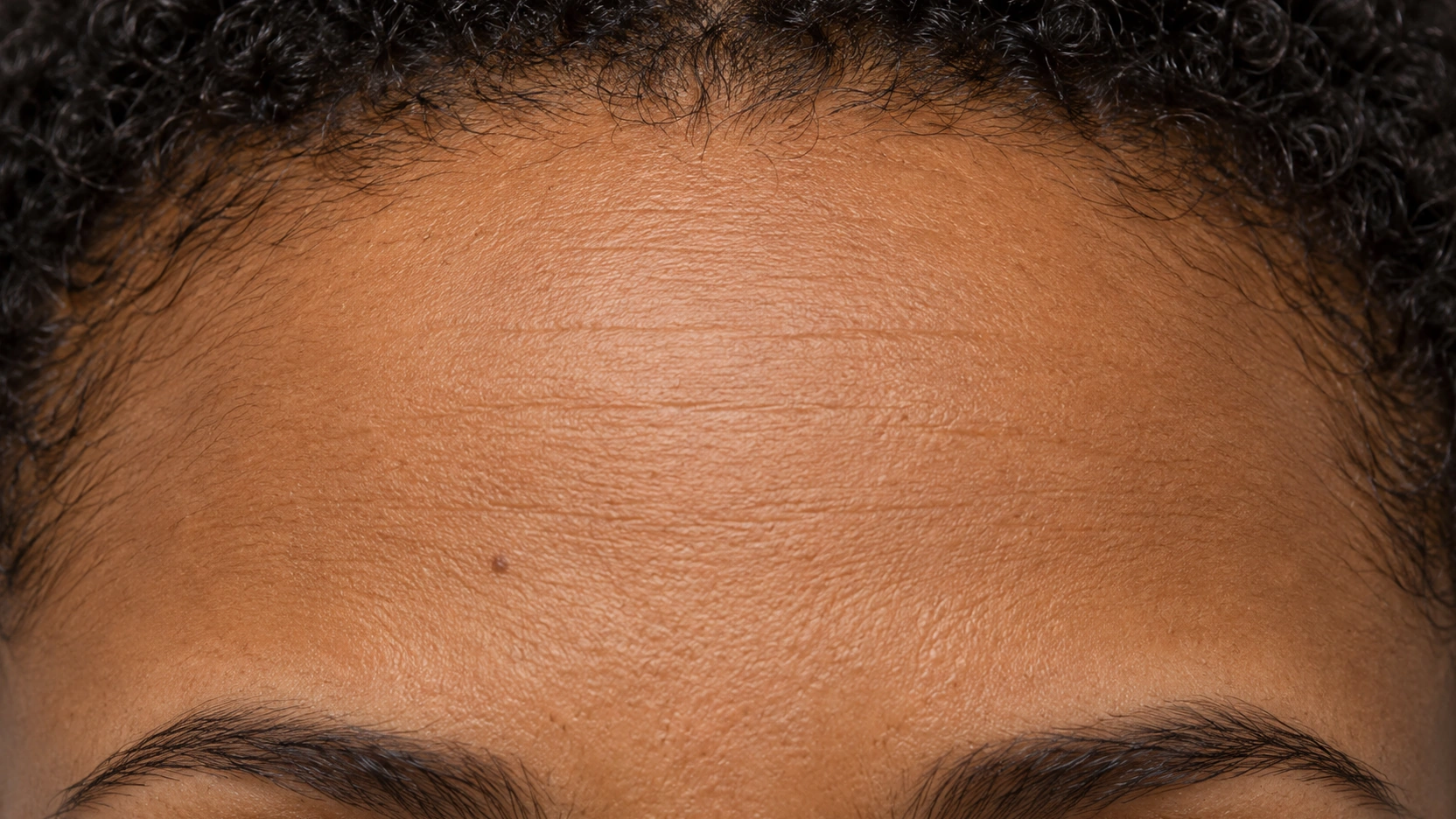
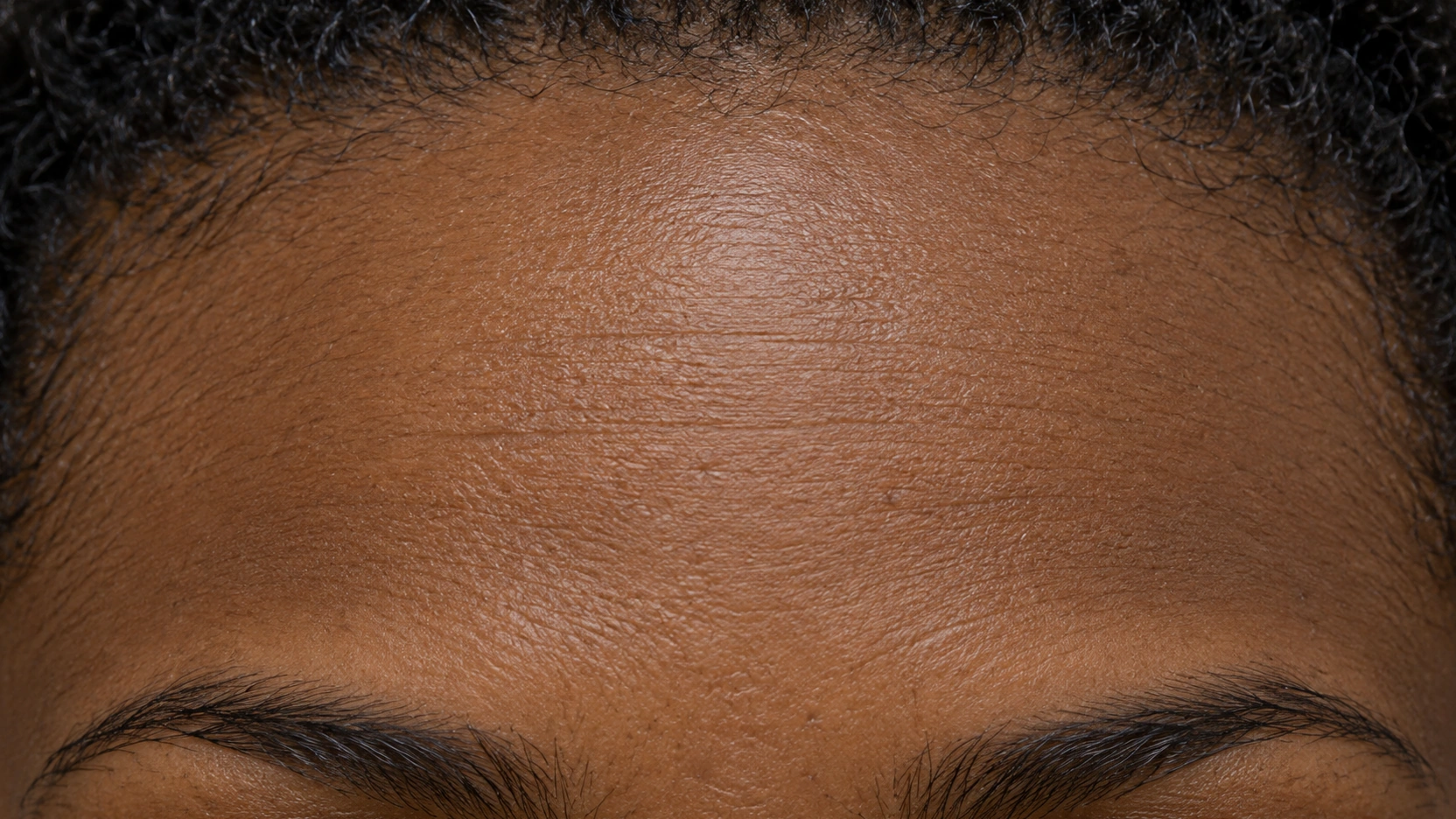
A relaxed forehead with pronounced deep horizontal furrows.AI-generated representative illustration of Sagging Skin. Not a clinical photograph.

Key differences

The same eight facts on every condition comparison.

Usual age
30 and over
40 and over
Where
Around eyes, forehead, mouth
Jawline, neck, cheeks
Main sign
Fine lines, then deeper creases
Loose, drooping skin
Itch or pain
Neither
Neither
Contagious
No
No
Long term
Gradually deepen
Slowly progresses
Scars
No
No
Who gets it
Everyone; faster with sun and smoking
Everyone with age

What is it?

Wrinkles and Fine Lines
Sagging Skin
What is it?
  • Several causes work together.
    Aging, facial movement, ultraviolet exposure and changes in supporting tissue all shape skin contour.
  • Fine lines and deep folds differ.
    Fine lines show more with dryness; deeper folds also reflect volume and structural change beneath the skin.
  • It is usually cosmetic.
    Wrinkles are a cosmetic concern rather than a disease.
  • Treatment follows assessment.
    A clinician looks at movement, texture, pigment, volume and skin health, and checks any new or changing spot separately.
  • What it is
    Skin laxity associated with reduced support and elasticity.

What it looks like

Wrinkles and Fine Lines

Wrinkles and Fine Lines: Dynamic.

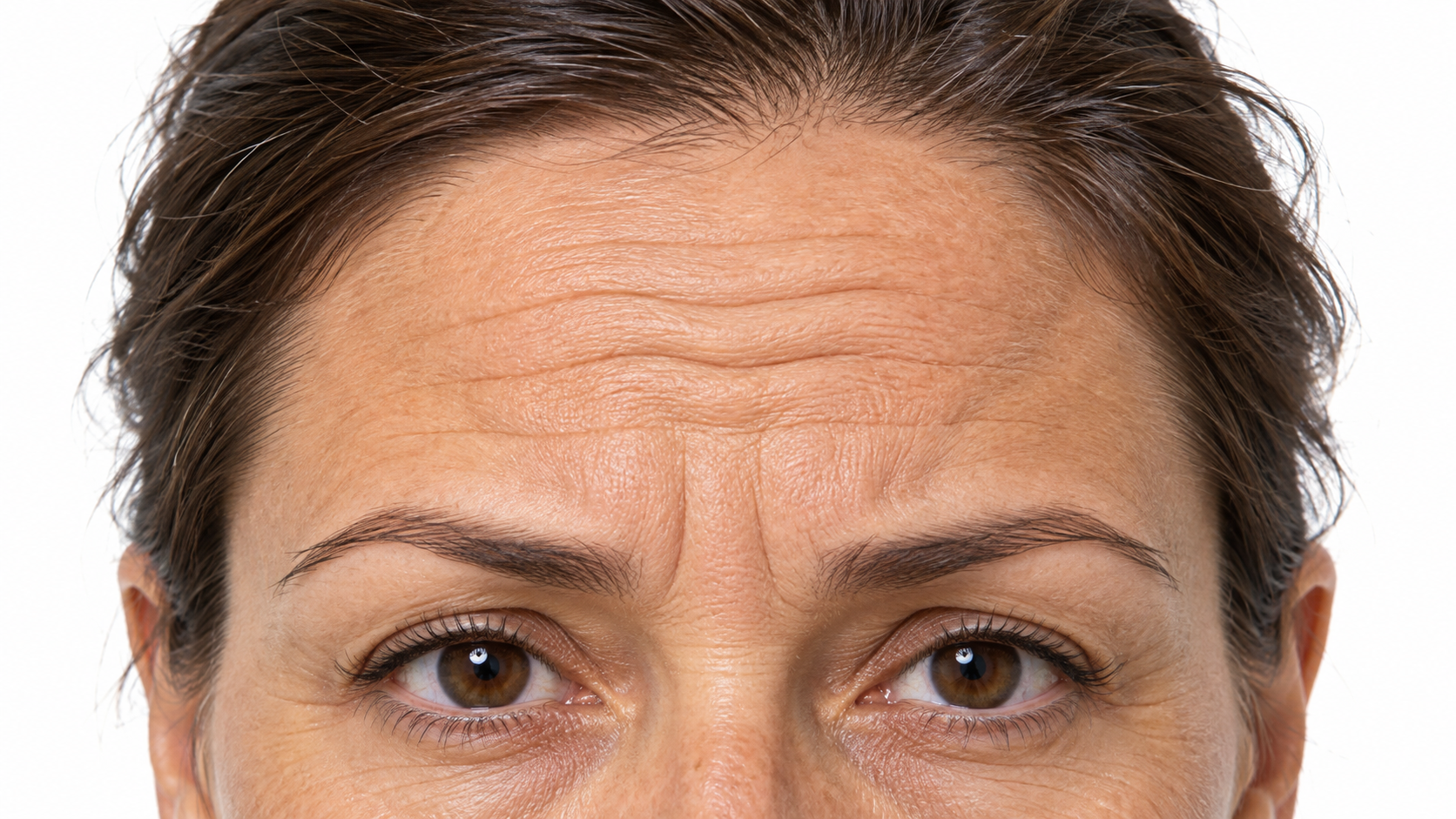
Dynamic wrinkles Appear with movement, like frowning.

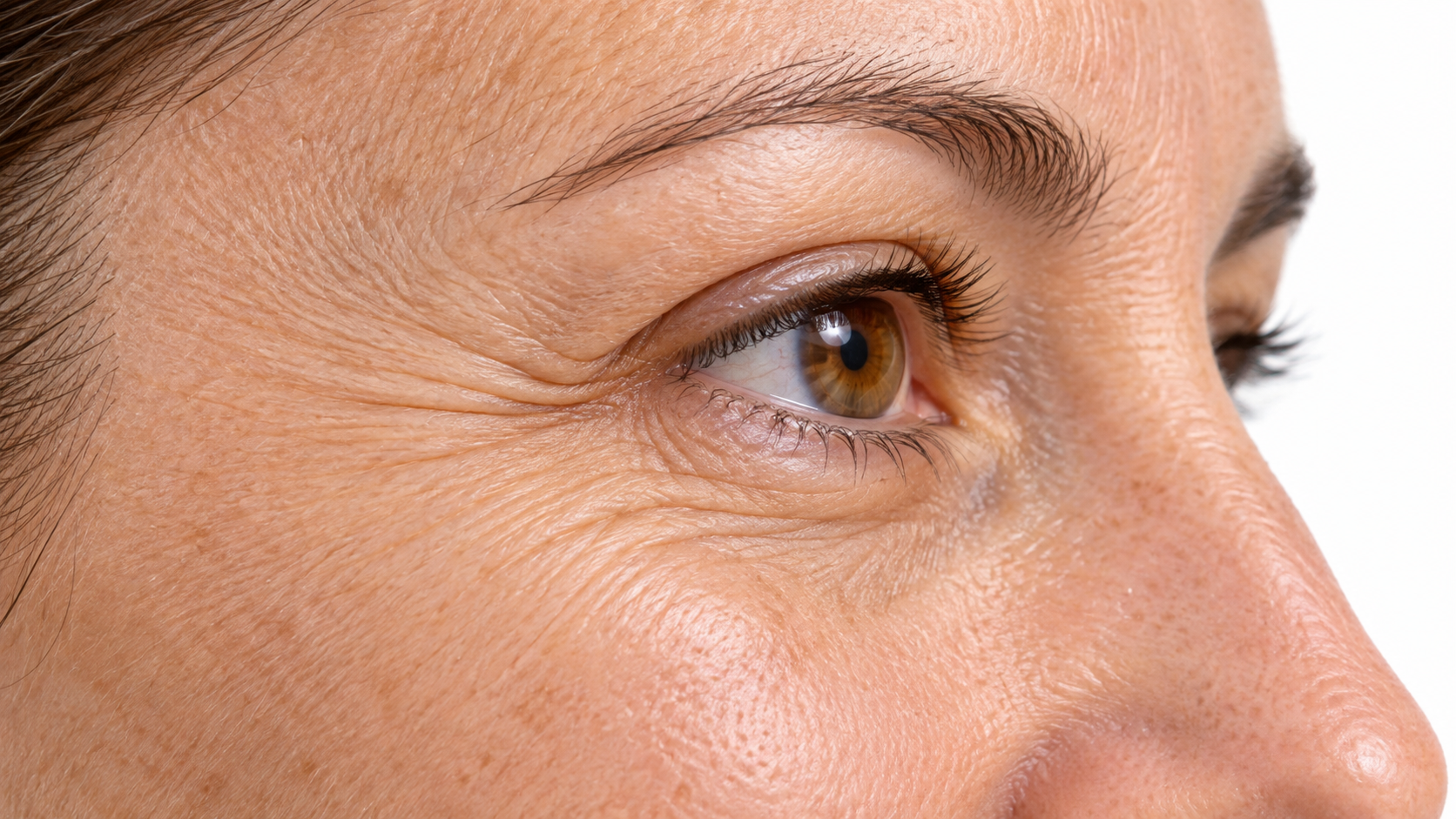
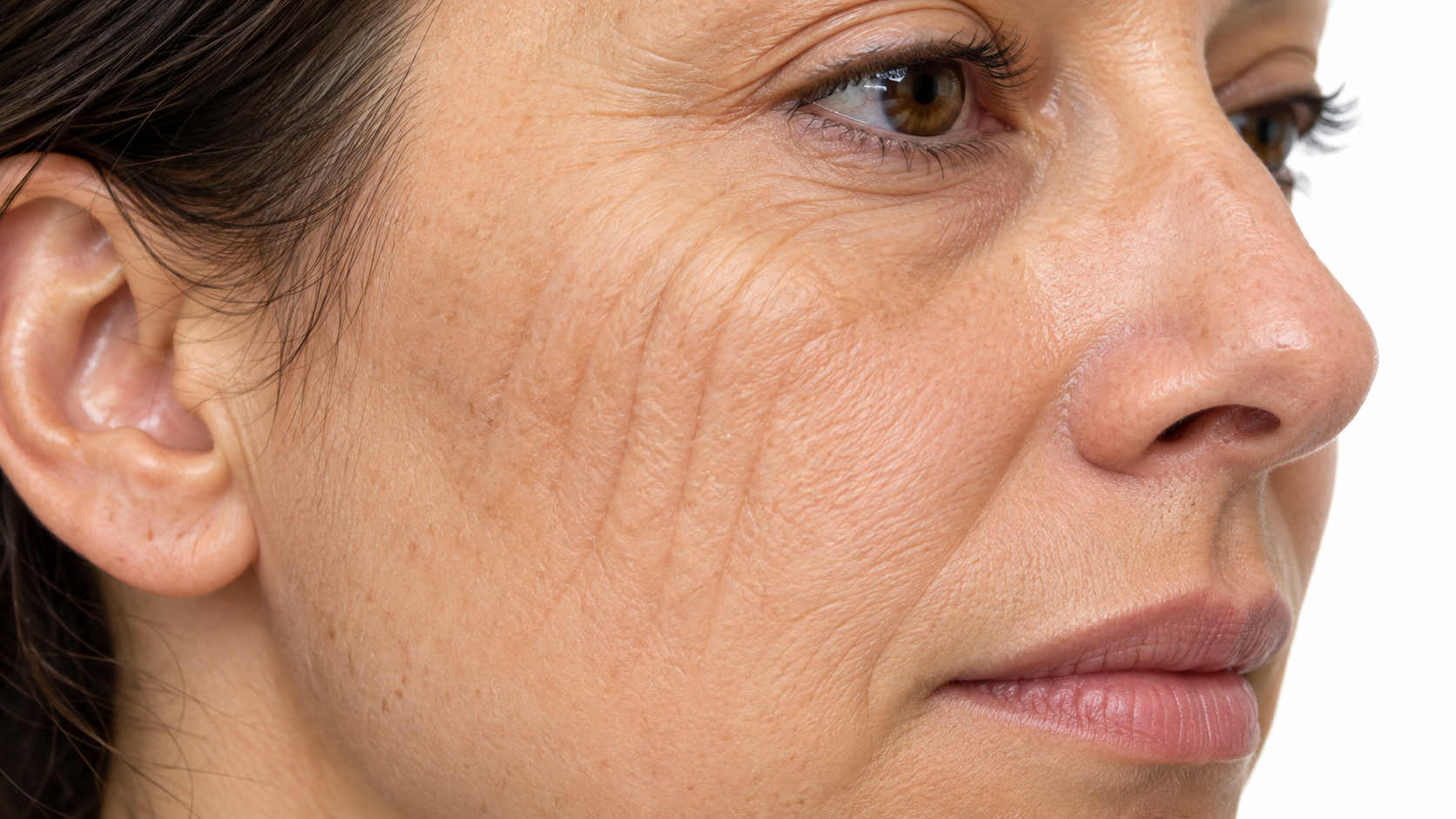
Fine lines fan outward from the outer eye during expression.

Crow’s feet Fine lines fan outward from the outer eye during expression.

Horizontal folds appear as the eyebrows rise.

Forehead movement Horizontal folds appear as the eyebrows rise.

Wrinkles and Fine Lines: Static.

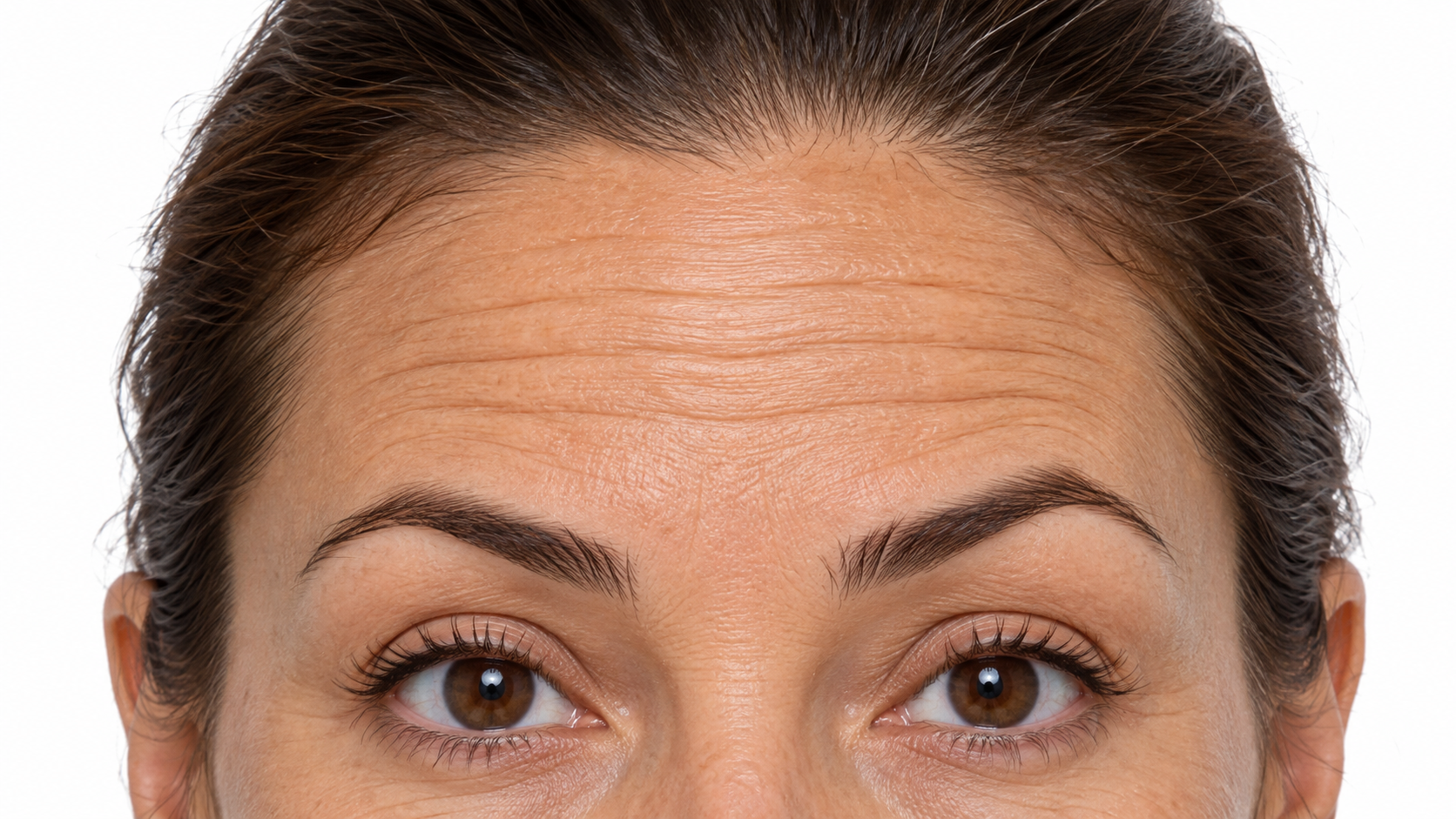
Static wrinkles Visible even when the face is still.

Wrinkles and Fine Lines: Sleep lines.

Sleep lines From pressing the face into a pillow.

Wrinkles and Fine Lines: Sun damage.

Sun-related fine lines Fine crisscross lines on sun-exposed skin.

Sagging Skin

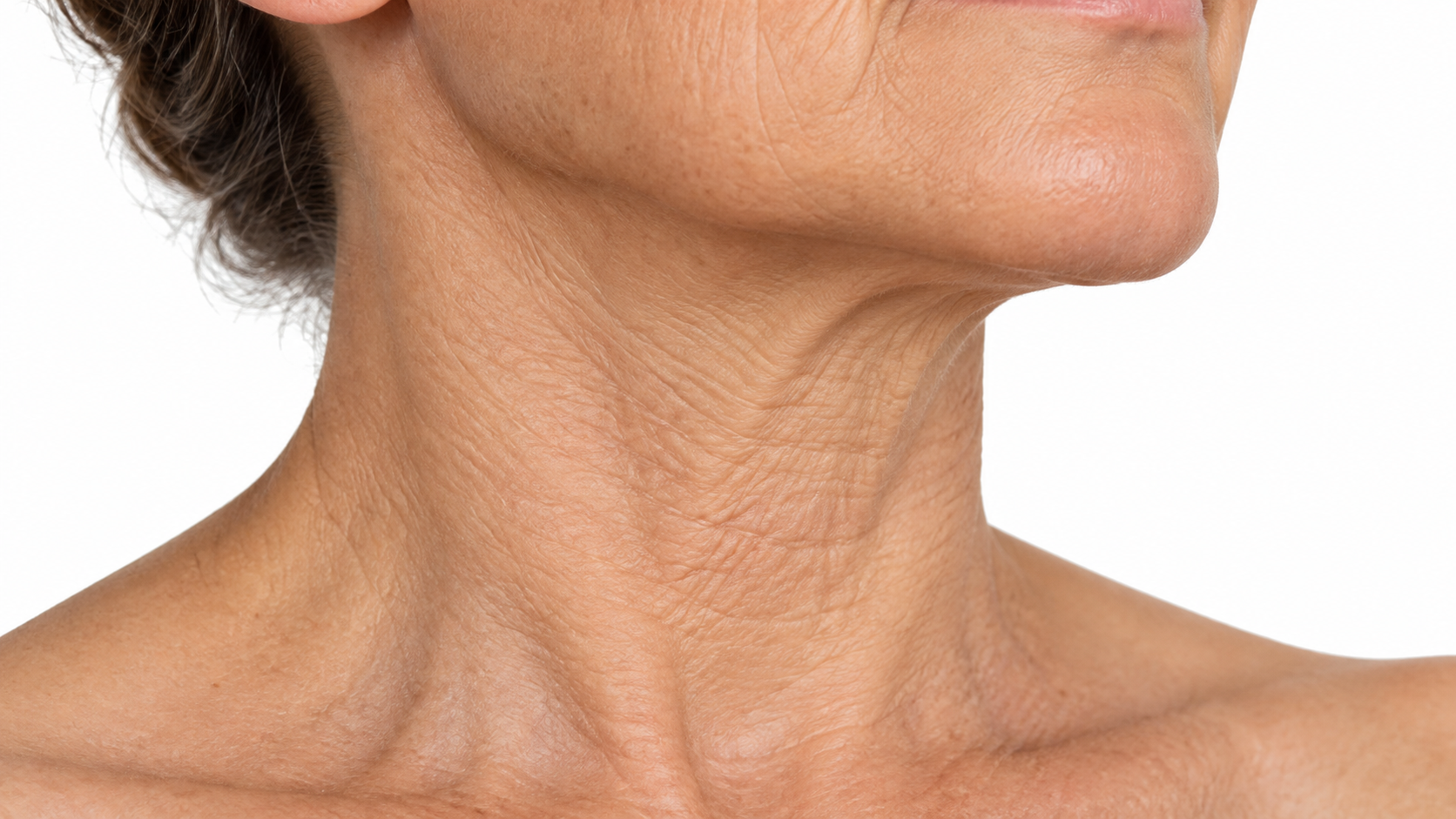
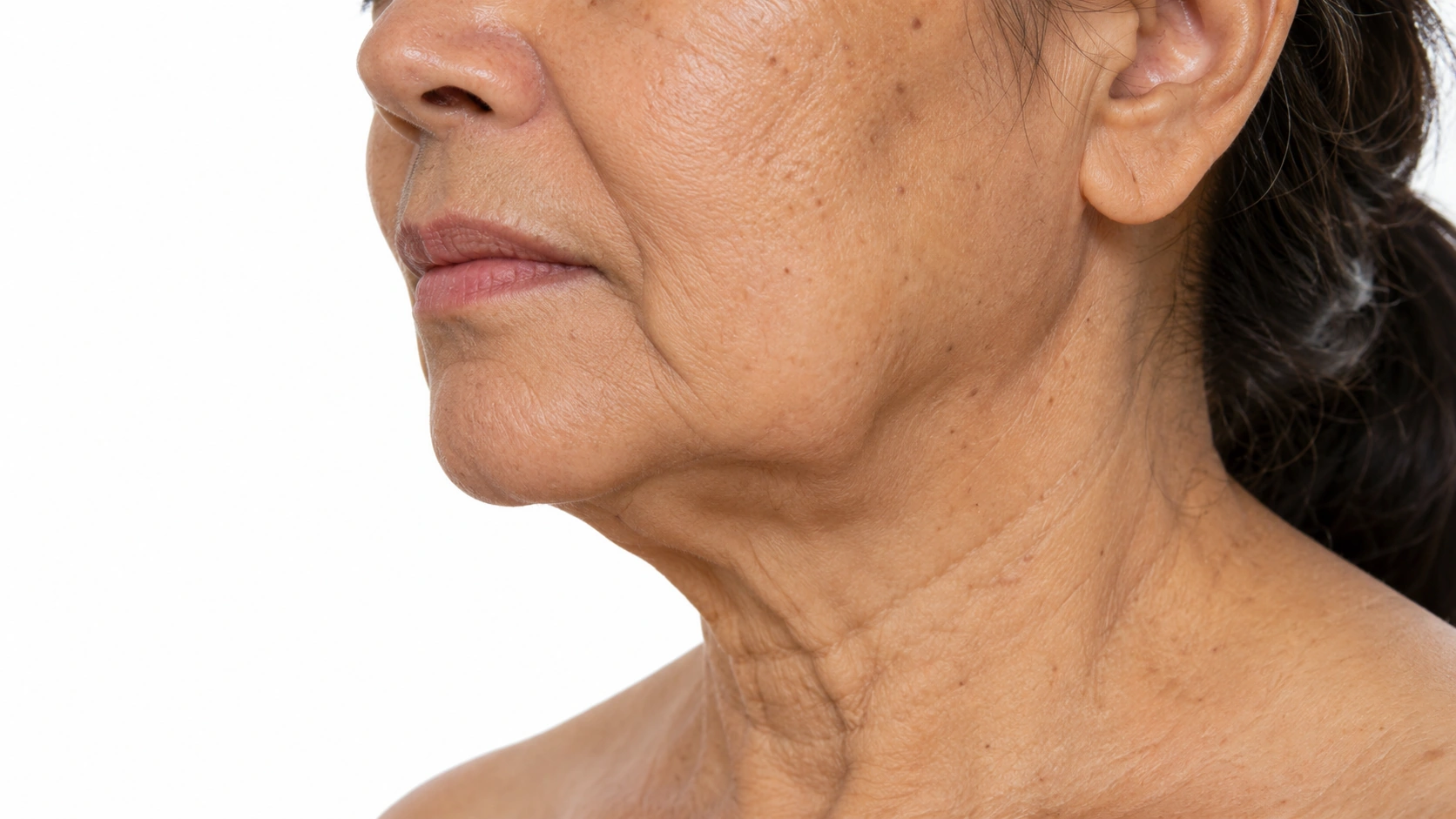
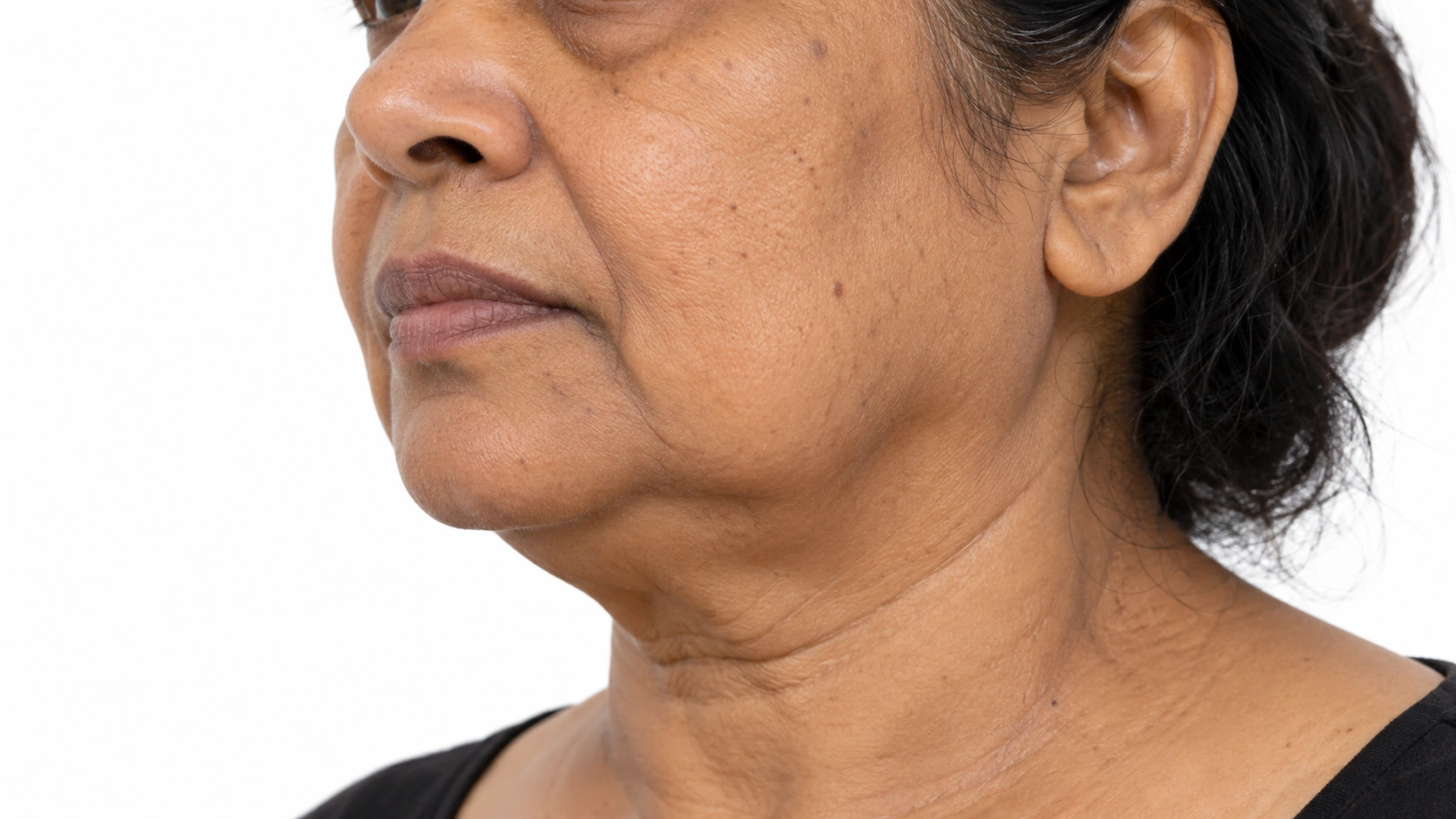
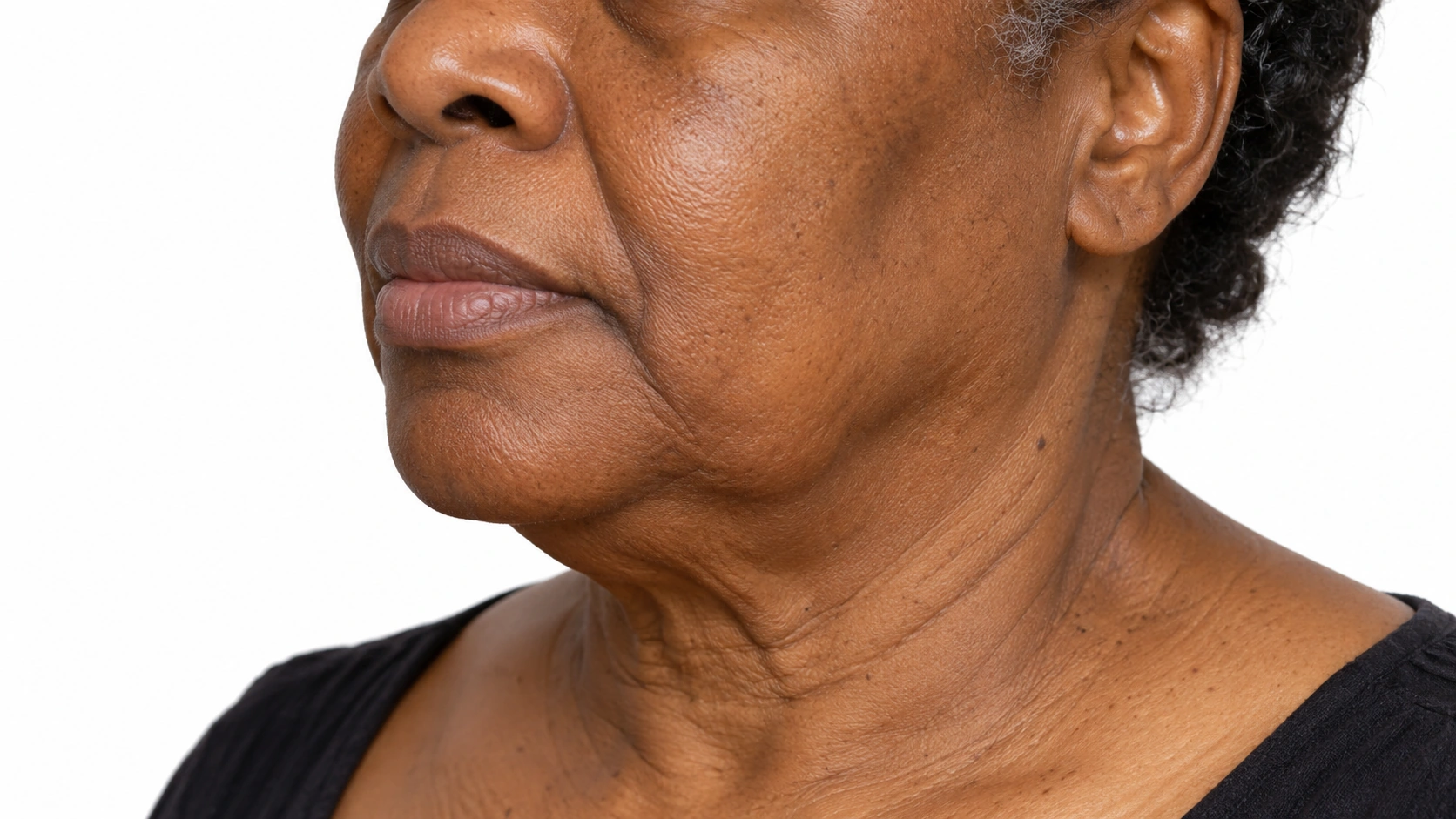
A face in profile with loose skin along the lower jaw and upper neck.

Sagging Skin A side view shows folds beneath the jawline and across the neck.

Skin tones
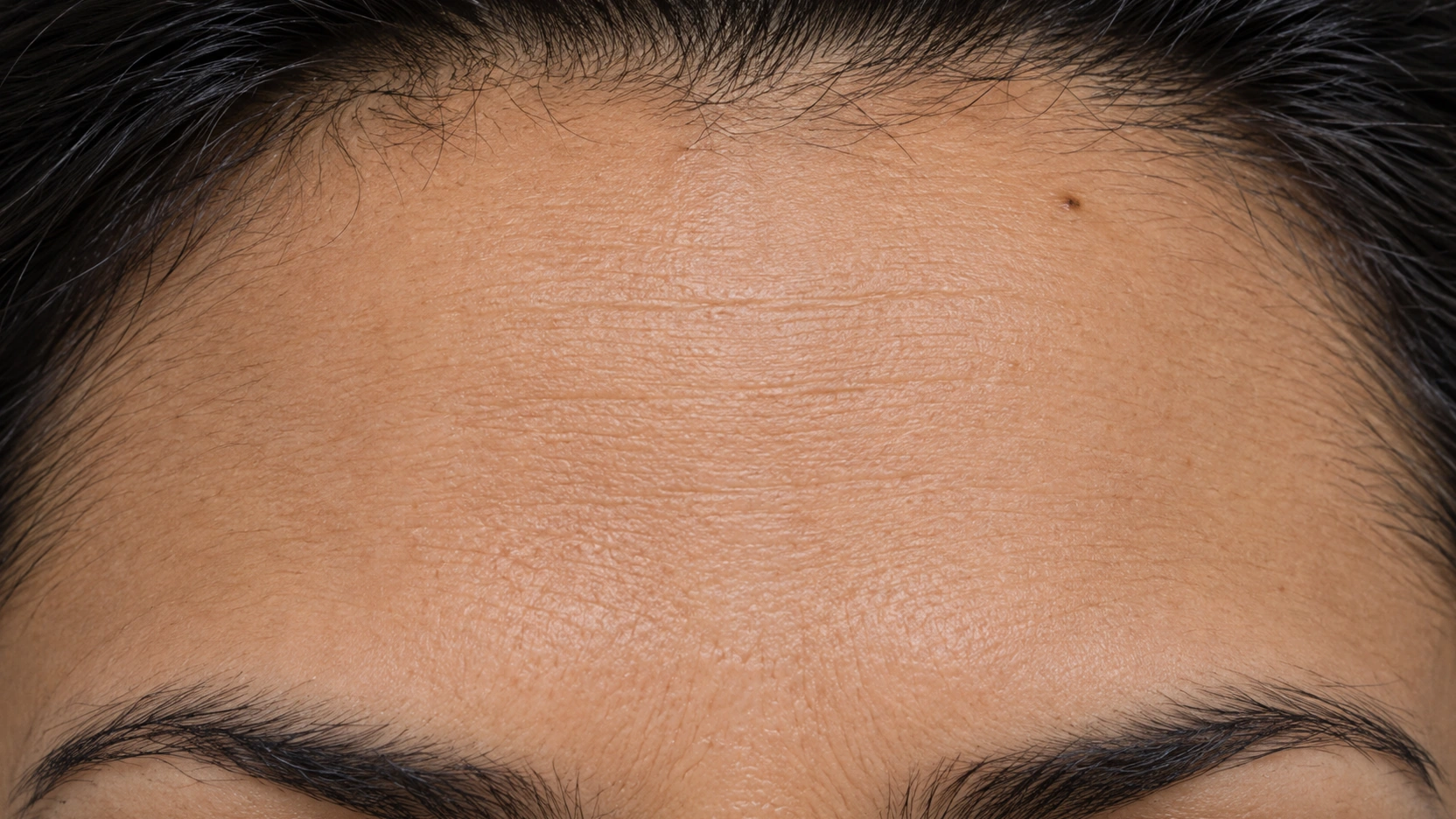
A relaxed forehead with faint shallow horizontal fine lines.
Sagging Skin on light skin.
Sagging Skin, representative educational image.
Diagram
Wrinkles and Fine Lines mechanism diagram. Surface lines form: Repeated movement folds the skin. Support fibers change: Age and sun exposure alter collagen and elastin. Less support deepens folds: Changes below the surface can make lines more visible.
In the skin

Age and sun exposure change the collagen and elastic fibers that support the skin. Repeated folding and changes in deeper support make surface creases more visible.

Aging and sun-related injury alter collagen and elastic support in the skin. Changes in deeper fat, bone and connective tissue also affect contour and laxity.

When it usually starts

010203040506070+

Wrinkles and Fine Lines. Gradually become more visible with adult aging and cumulative sun exposure.

Sagging Skin. Usually becomes more noticeable during adult ageing; facial anatomy creates wide variation.

Causes and triggers

Causes

Wrinkles form as the skin loses collagen and elastic fibers. Natural aging and sun damage are the two main causes, with sun damage responsible for most visible early aging.

Intrinsic ageing and sun-related damage alter structural support.

Family tendency

Skin type and how quickly collagen declines are partly inherited.

Risk factors
Age, Fair skin, Smoking, Repeated facial expressions
Ageing, Family anatomy, Cumulative sun exposure
Trigger
● Wrinkles and Fine Lines
● Sagging Skin
Unprotected sun exposure
Well established
Not listed
Smoking
Well established
Can contribute
Tanning beds
Well established
Not listed
Pollution
Possible
Not listed
Poor sleep
Possible
Not listed
Sun exposure
Not listed
Can contribute

Daily Care

Wrinkles and Fine Lines
Sagging Skin
Daily care

Habits that help

  • Daily broad-spectrum sunscreen
    The best-supported thing here, and it prevents rather than repairs.
  • Stopping smoking
    Removes one of the largest ongoing sources of collagen damage.
  • Gentle skin care
    Use a gentle cleanser and avoid scrubs that leave skin dry or irritated.
  • Moisturizing
    Moisturizer temporarily softens the look of fine lines by hydrating the outer skin.
  • Collagen-stimulating injectables
    Gradual volume improvement, building over months.
  • Peptide creams
    Low-risk addition, not a substitute for a retinoid.
  • Red light therapy
    Small improvements with repeated use, depending on the device's output.
  • Growth factor and exosome products
    Heavily marketed, limited independent evidence in humans.
  • Oral collagen supplements
    Small reported improvements, mostly in manufacturer-funded trials.

Avoid

  • Avoid: Unprotected sun exposure
    The dominant factor, and ordinary daily exposure builds damage, not only burns.
  • Avoid: Tanning beds
    A concentrated dose of collagen-damaging wavelengths, plus a skin cancer risk.
  • Avoid: Skipping sunscreen
    The neck, chest and hands get the same exposure and none of the attention.
  • Avoid: Smoking
    Damages collagen and elastin, restricts blood flow, repeats the same pursing movement.
  • Avoid: Squinting
    Folds the same lines at the outer eye all day.
  • Avoid: Sleeping face-down or on one side
    Years of pressure crease the cheek in one place.
  • Avoid: Rapid or repeated large weight loss
    Stretched skin does not fully retract, especially after middle age.
  • Avoid: Heavy alcohol use
    Dehydrating short term, linked to more visible facial aging long term.
  • Avoid: Air pollution
    Linked to more visible aging, on reasonable rather than strong evidence.
  • Avoid: Over-exfoliating
    Chronic irritation does not build collagen, and it leaves dark marks on deeper skin tones.
  • Avoid: Very low body fat maintained over years
    Facial fat pads are part of the support structure.
  • Avoid: A high-sugar diet
    Real chemistry, minor factor.

Habits that help

  • Protect exposed skin with broad-spectrum SPF 30 or higher
    Use shade, a hat and protective clothing as well as sunscreen.
  • Use a gentle cleanser and a moisturizer that does not sting
    Regular moisturization improves comfort and the appearance of surface dryness.
  • Introduce stronger skin products gradually
    Stop products that leave the skin persistently sore, raw or peeling.
  • Keep expectations realistic about skin care
    Moisturizers can soften dry surface lines but cannot replace lost volume or reshape deeper structures.
  • Follow the sagging skin care plan
    Use sunscreen, gentle moisturizer and avoid smoking. Choose procedures only after an individual assessment.
  • Discuss laxity-treatment assessment
    Energy devices or surgery may be considered depending on severity; benefits and risks vary.

Avoid

  • Avoid: Smoking and tanning beds
    Both contribute to skin damage; tanning also increases skin cancer risk.
  • Avoid: Aggressive home peels or unregulated injections
    These can cause burns, infection, scarring or serious injury.

Treatment differences

Evidence labels come from each condition’s own treatment list.

Treatment
● Wrinkles and Fine Lines
● Sagging Skin
Filter by type
Wrinkle type

Select one or more.

All types
Treatment approach
—

Treatment is optional and depends on the degree and location of laxity. Selected energy-based procedures or surgery may be considered after discussing realistic benefit, recovery and risks.

Over-the-counter
Illustration of collagen supplement tub and scoop of powder.

Oral collagen supplements

Limited evidence

Trials report small improvements in hydration and elasticity, and most were funded by companies selling collagen. Any real effect is a small one. They are not harmful, and they are not a substitute for sunscreen or a retinoid.

Six retinol products lined up, including SkinCeuticals Retinol 0.5, Murad, CeraVe, First Aid Beauty, RoC and Replenix

Retinol

Moderate evidence

The over-the-counter version of the best-evidenced wrinkle treatment. Skin converts it to the active form, so it is weaker and slower than prescription tretinoin, and it takes six months rather than three. That trade is worth it for people who cannot tolerate tretinoin or do not want a prescription. Start two nights a week and build up. Generally avoided in pregnancy — ask your doctor.

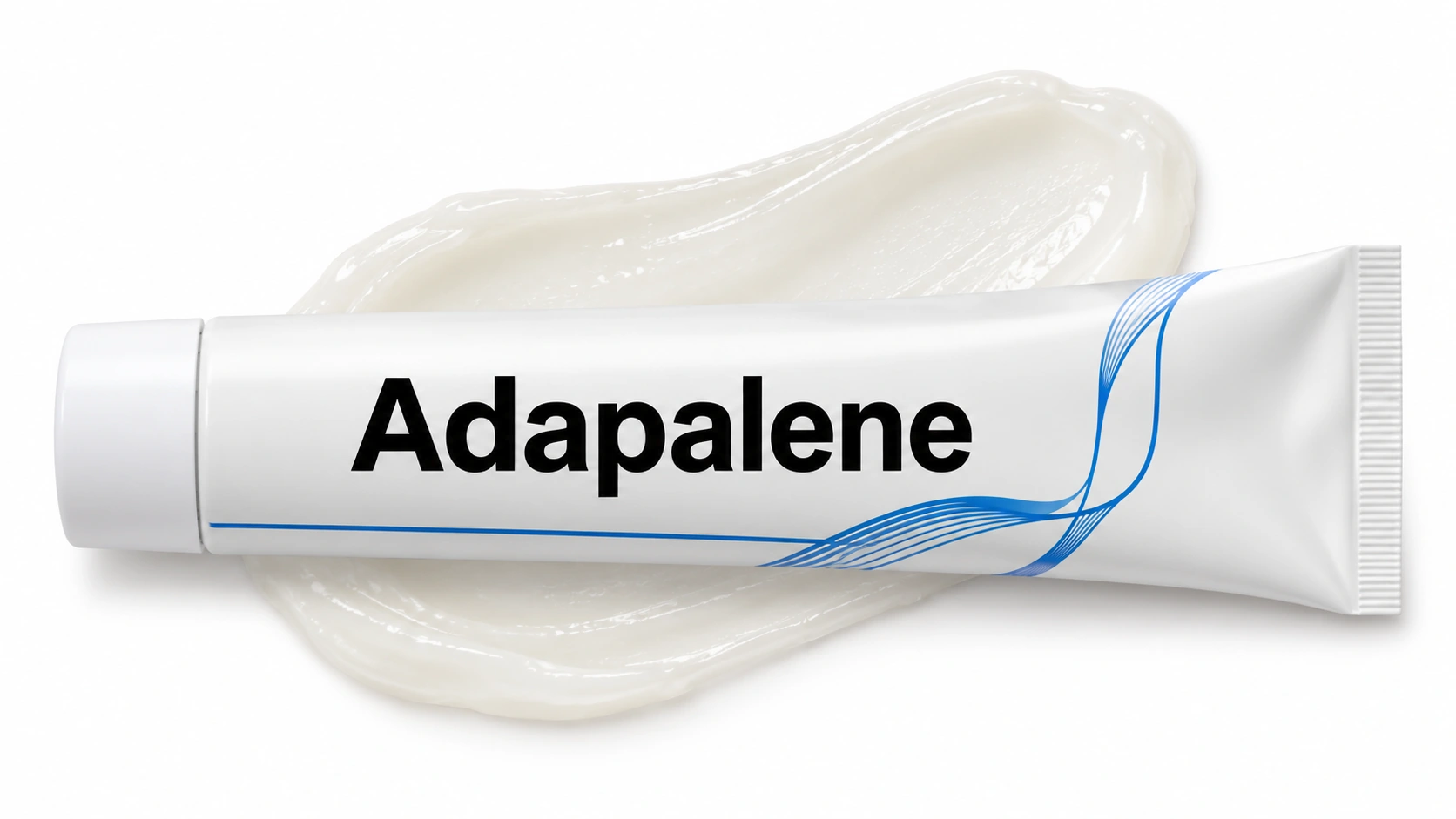
Five adapalene gel 0.1% tubes and boxes lined up on white, including Differin, Effaclar, PanOxyl and Neutrogena

Adapalene

Moderate evidence

A retinoid sold over the counter for acne, and the cheapest way into this class of ingredient. It is better studied for acne than for wrinkles, but it improves fine lines and texture and is often less irritating than tretinoin. Expect less than a prescription retinoid gives. Generally avoided in pregnancy — ask your doctor.

Four retinaldehyde products with two boxes on white, from Paula's Choice, Medik8, Naturium and Prequel

Retinaldehyde

Limited evidence

One conversion step closer to the active form than retinol, so it works somewhat faster while still being better tolerated than tretinoin. A sensible middle option for fine lines and texture if retinol has been too slow and tretinoin too irritating. It is less widely sold and usually more expensive. Generally avoided in pregnancy — ask your doctor.

Vitamin C

Limited evidence

Used in the morning under sunscreen, it limits some of the day's ultraviolet damage and supports collagen production. The effect on fine lines is modest and slow, and it does nothing for folds or sagging. It oxidises, so a serum that has turned dark orange is no longer doing much.

Four glycolic acid toner and liquid bottles lined up on white, one with its box

Glycolic Acid

Limited evidence

Regular low-strength use smooths surface texture and softens fine lines, and it helps the dull, uneven look that goes with them. It reaches the outer layers only, so deeper creases and folds are untouched. Used on the same nights as a retinoid it usually causes more irritation than either is worth, so alternate them.

Five bakuchiol serums on white, including a dropper bottle with purple flowers, COSRX, Paula's Choice, Herbivore and LAUEF

Bakuchiol

Limited evidence

Marketed as a natural retinol alternative, and a few small studies show modest improvement in fine lines with less irritation. It is not a retinoid and the evidence is nowhere near retinol's. A reasonable choice for someone who cannot tolerate any retinoid, not a swap for one.

Six niacinamide products on white, including The Ordinary 10% + Zinc 1%, Paula's Choice Booster and EltaMD UV Clear

Niacinamide

Limited evidence

Well tolerated, cheap, and it helps the barrier and the uneven tone that sits alongside lines. Its direct effect on wrinkles is small. It is most useful here as the thing that lets you keep using a retinoid, rather than as a treatment in its own right.

Four peptide serum bottles on white: two droppers, a pink glass bottle and a white pump bottle

Peptides

Limited evidence

Short protein fragments meant to signal the skin to build collagen. Some small studies show a modest improvement in fine lines, and they are low-risk and easy to tolerate. They are a reasonable addition to a routine and not a substitute for a retinoid, which is far better evidenced.

Five growth factor serums lined up on white, including MUMUK, DRMTLGY, PEPFACTOR, E.G.F. and Allies of Skin

Growth Factors

Limited evidence

Among the most heavily marketed and most expensive serums in this category, often sold alongside exosomes. Independent human evidence for wrinkle improvement is limited, and most trials are funded by the companies selling them. If the budget is fixed, sunscreen and a retinoid come first.

None listed
Prescription topicals
Tretinoin — Header Image

Tretinoin

Strong evidence

The best-evidenced cream for wrinkles, with repeated trials showing improvement in fine lines, texture and pigment over three to six months. It works by signalling the skin to build its own collagen, so it thickens the dermis rather than thinning it. The usual failure is going nightly from day one, peeling for two weeks and stopping — two or three nights a week with moisturizer underneath gets far more people to six months. Generally avoided in pregnancy — ask your doctor.

Tazarotene — Header Image

Tazarotene

Strong evidence

A stronger prescription retinoid with good evidence for fine lines and mottled pigment. It is more irritating than tretinoin, so it suits skin that has already got used to a retinoid and wants more. It is usually applied less often at first for the same reason. Generally avoided in pregnancy — ask your doctor.

None listed
Procedures

Botox

Strong evidence

Botox. The reliable treatment for lines caused by movement — frown lines, forehead lines and crow's feet. It relaxes the muscle that folds the crease, so the line softens over about two weeks and returns as the effect wears off at three to four months. It does nothing for lines that are already there at rest, and nothing for sagging.

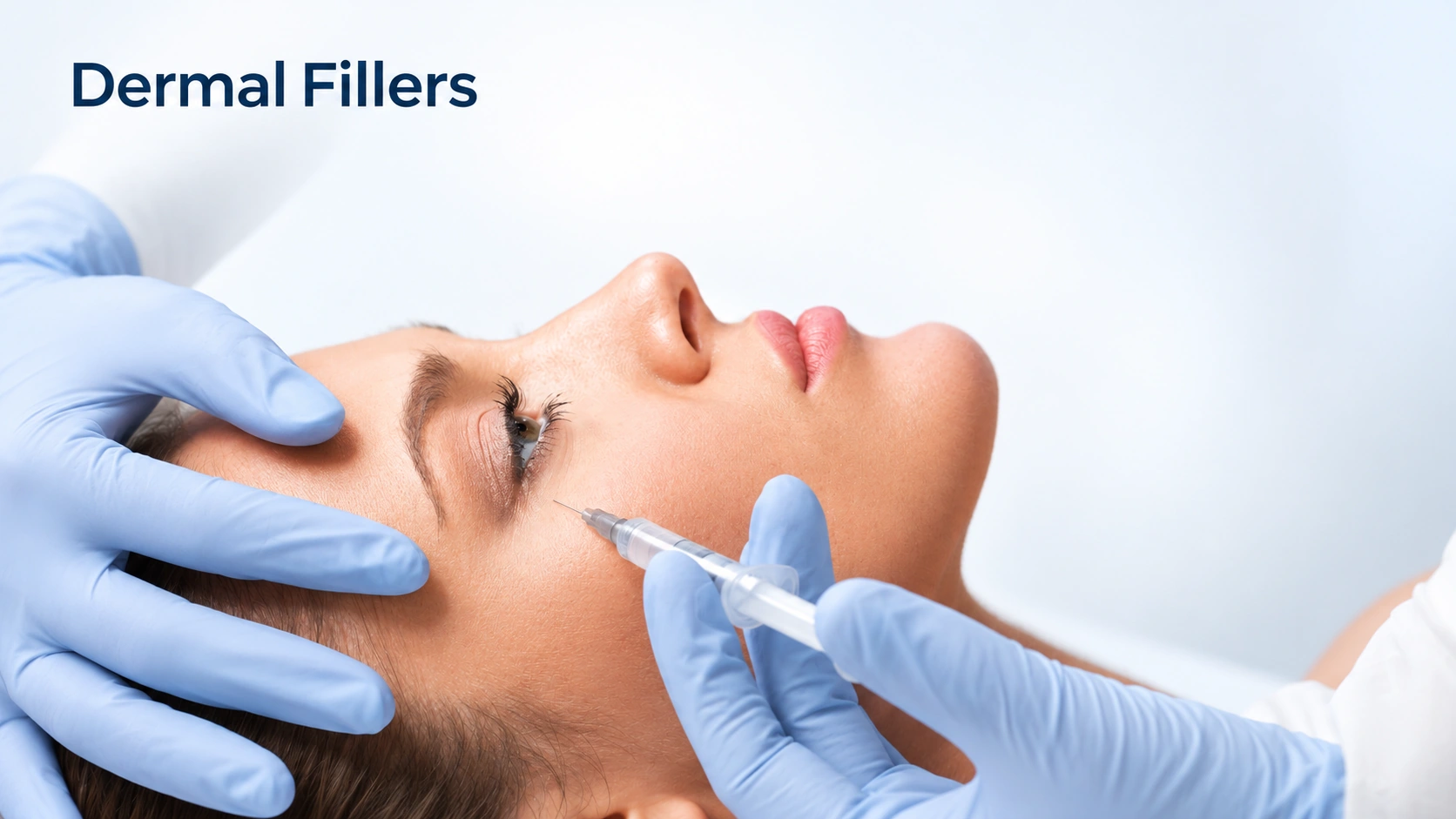
Editorial illustration for Dermal Fillers, based on the entry’s treatment or equipment reference.

Dermal Fillers

Strong evidence

Hyaluronic acid gel that replaces volume that has been lost, so it suits folds and hollows — the lines from the nose to the mouth, flattened cheeks, under-eye hollowing. It is the wrong tool for surface lines. Results last roughly six to eighteen months, and the gel can be dissolved if the result is not right.

Editorial illustration for Fractional CO2 Laser, based on the entry’s treatment or equipment reference.

Fractional CO2 Laser

Moderate evidence

The strongest result available from a device for fine lines, texture and sun damage, particularly around the mouth and eyes. One treatment usually does it, and the trade is a week or more of raw, red, peeling skin. The pigment risk is significantly higher on deeper skin tones, so settings are lowered, a test spot is done first, and the provider's experience with your skin matters.

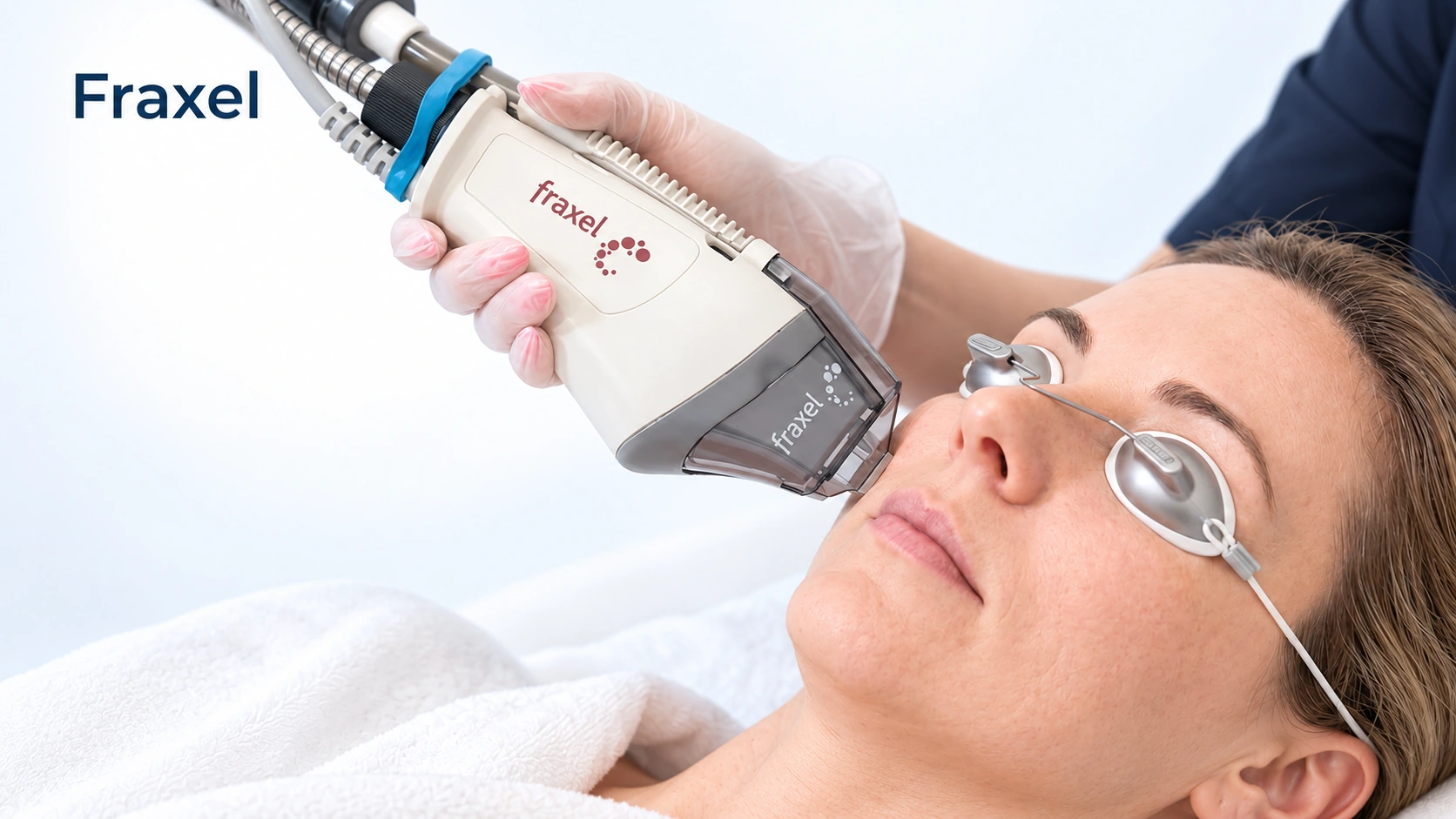
Editorial illustration for Fraxel, based on the entry’s treatment or equipment reference.

Fraxel

Moderate evidence

Fraxel. Heats columns in the dermis without removing the surface, so it improves fine lines, texture and pigment with a few days of redness and swelling instead of a week of raw skin. It takes three to five sessions to match a fraction of what one ablative treatment does. It is the more sensible starting point on deeper skin tones.

Editorial illustration for TCA Peel, based on the entry’s treatment or equipment reference.

TCA Peel

Moderate evidence

A medium-depth peel with good evidence for fine lines, rough texture and sun-related pigment, done in a clinic with about a week of peeling afterwards. The deeper it goes the more it does and the more it risks. On deeper skin tones the strength is kept low and a test area is done first, because dark marks afterwards are common at higher strengths.

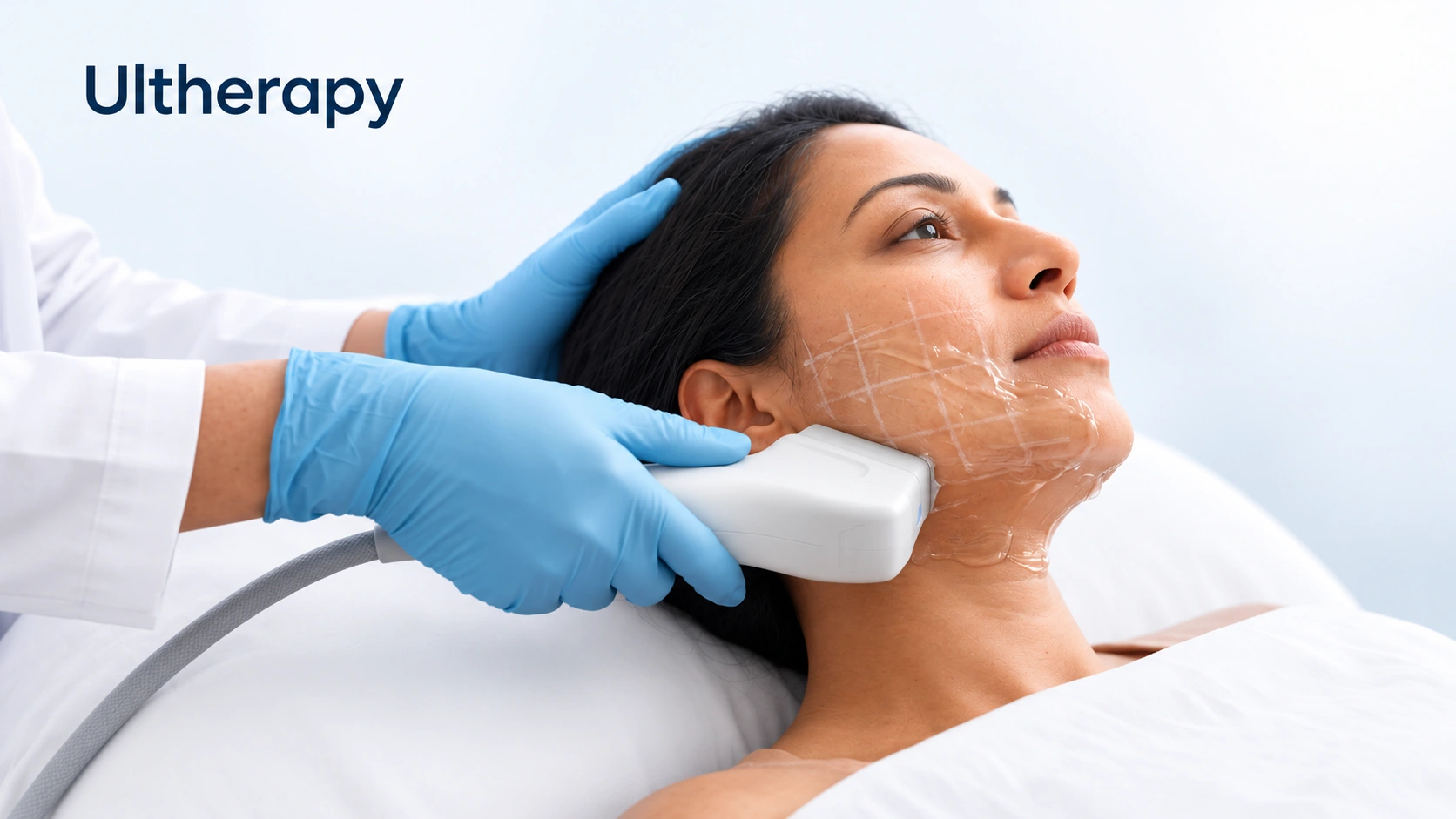
Editorial illustration for Ultherapy, based on the entry’s treatment or equipment reference.

Ultherapy

Moderate evidence

Focused ultrasound heats a deep layer to tighten it, aimed at the jaw, neck and brow rather than at lines. The change is modest and takes three to six months to show, and it is nothing like a surgical lift. It can be uncomfortable, and results vary enough that it is worth seeing a provider's own before-and-after photographs.

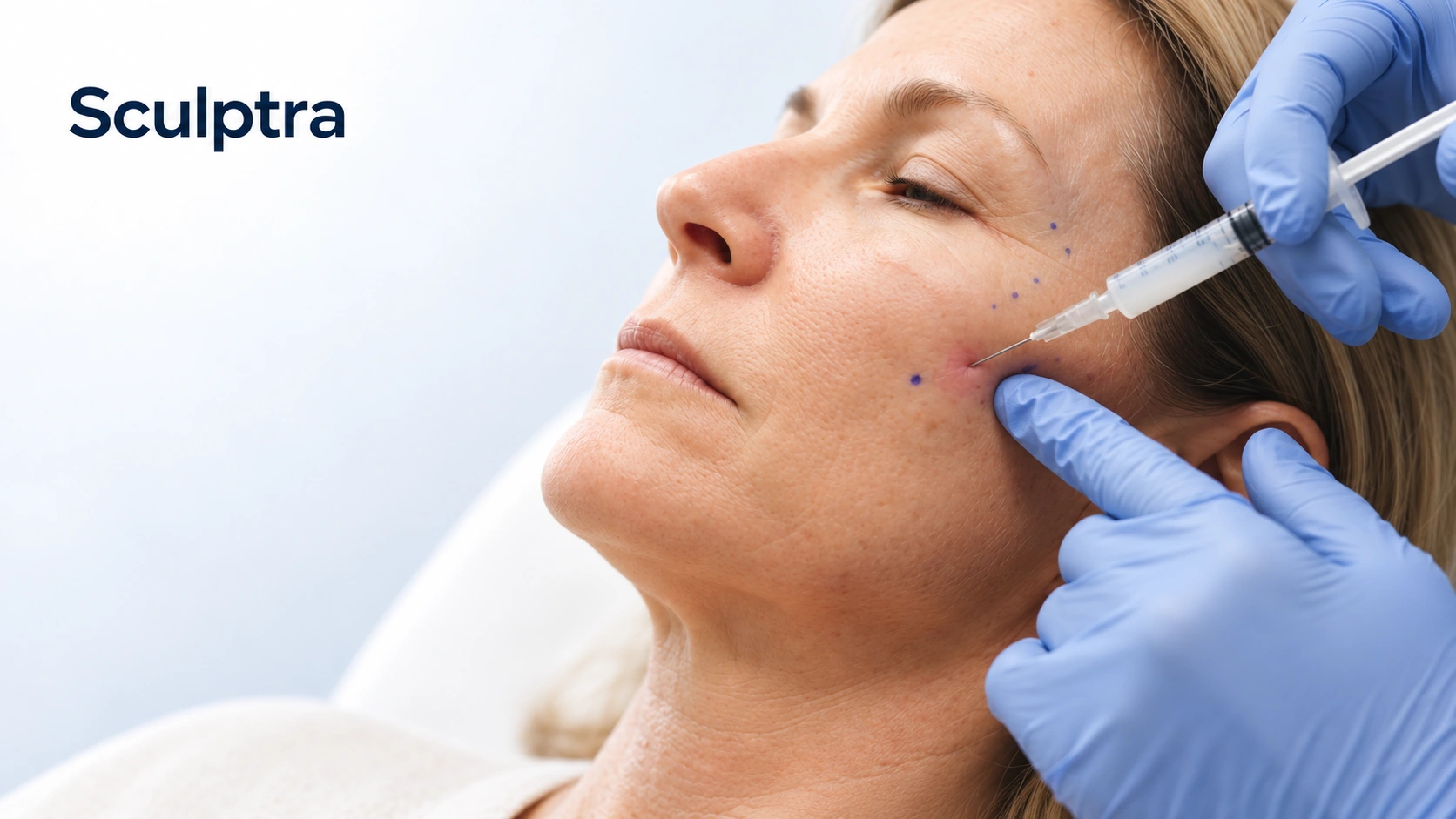
Editorial illustration for Sculptra, based on the entry’s treatment or equipment reference.

Sculptra

Moderate evidence

A collagen-stimulating injectable given as a course, usually three sessions. Nothing looks different straight away; volume builds gradually over several months and lasts around two years. It suits overall thinning and flatness rather than a single line, and it cannot be dissolved, so it is a slower and less reversible decision than filler.

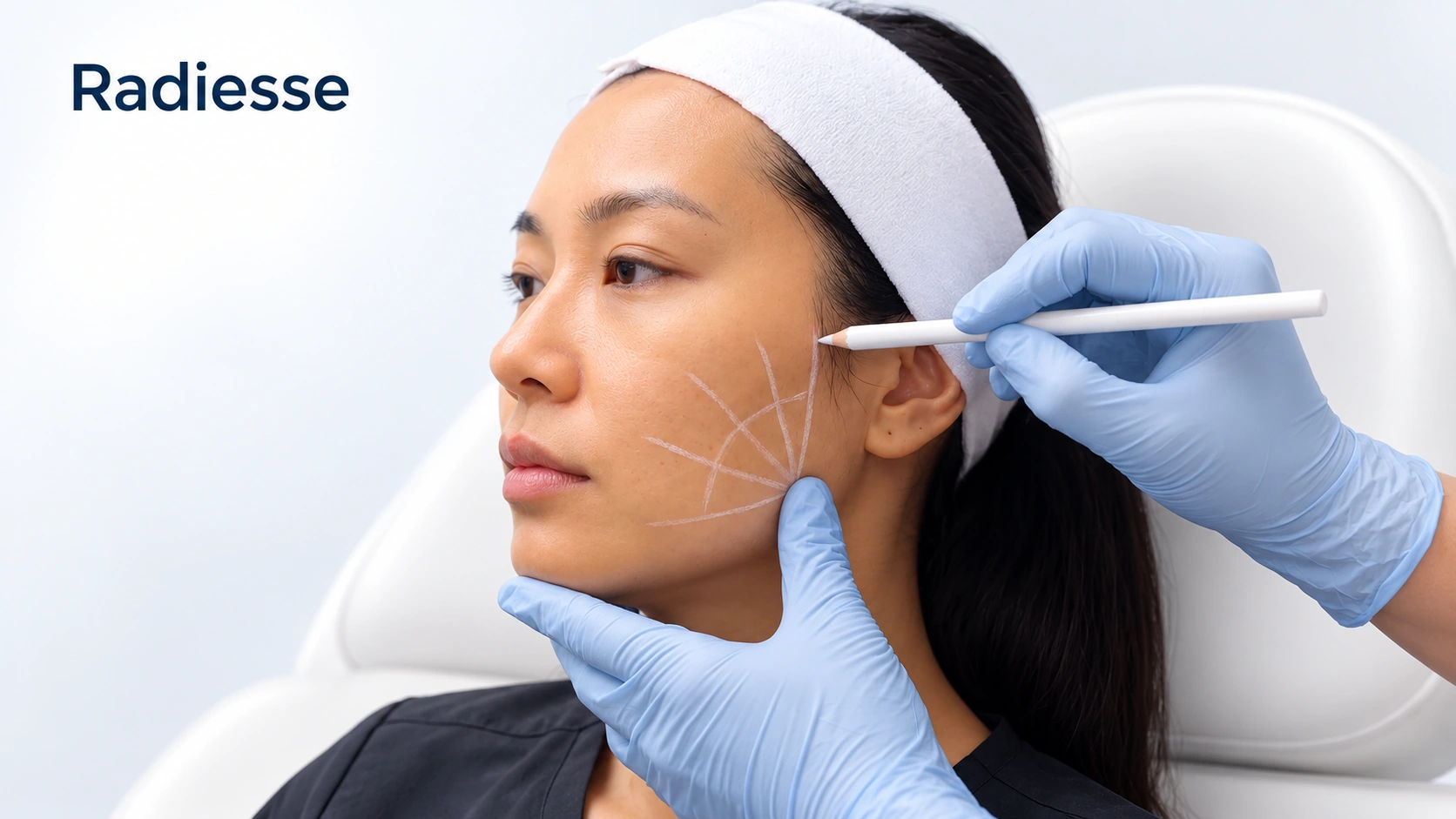
Editorial illustration for Radiesse, based on the entry’s treatment or equipment reference.

Radiesse

Moderate evidence

A thicker injectable that both fills immediately and stimulates collagen over the following months, used mainly along the jaw and in the cheeks and hands. It is firmer than hyaluronic acid filler, so it is not used in delicate areas like under the eyes, and it cannot be dissolved.

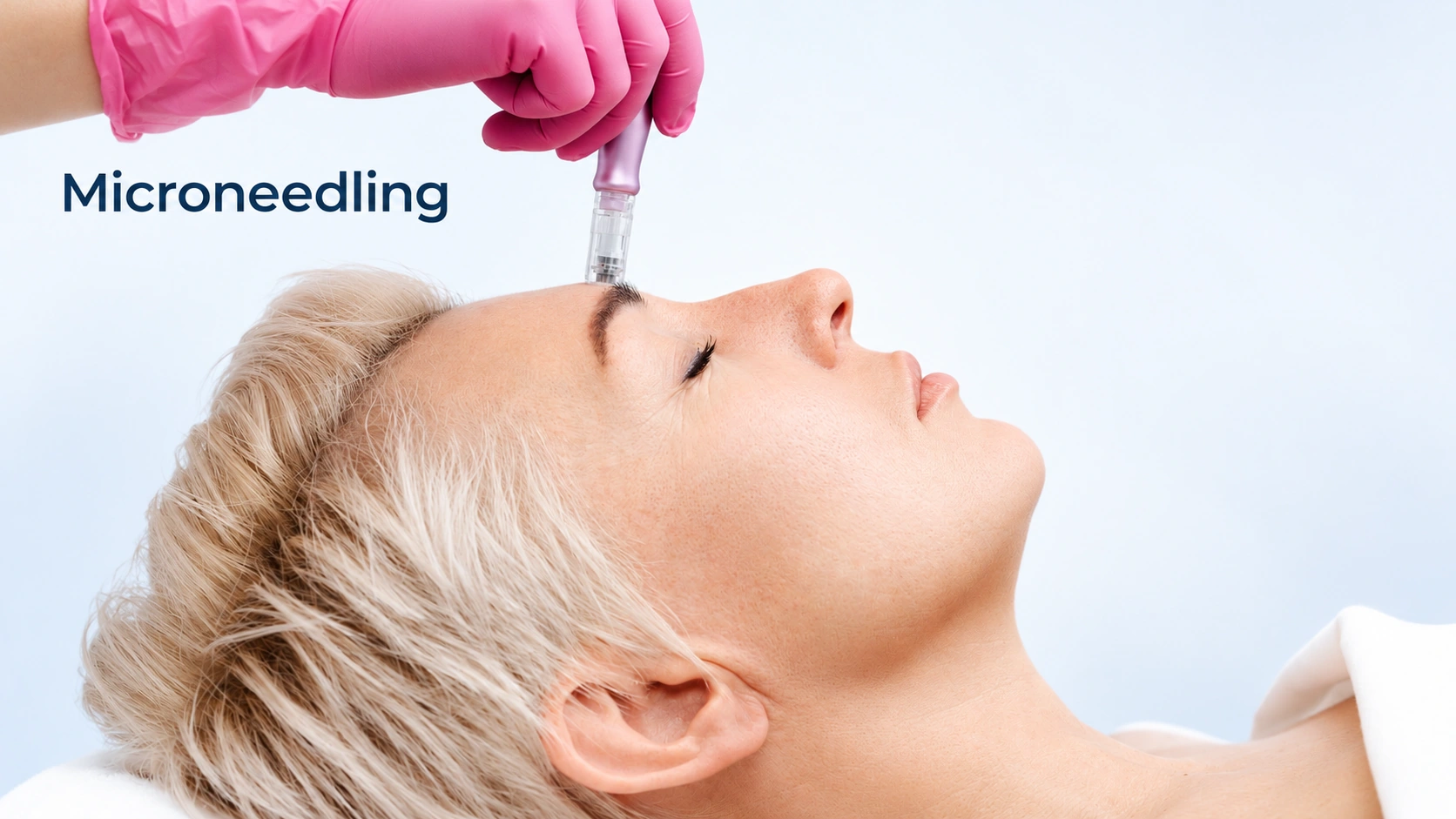
Editorial illustration for Microneedling, based on the entry’s treatment or equipment reference.

Microneedling

Limited evidence

Fine needles make controlled injuries that prompt the skin to lay down collagen. Improvement in fine lines and texture is modest and builds over three to six sessions. Its advantage here is a lower risk of pigment problems on deeper skin tones than lasers or deep peels carry, which makes it a common first choice.

RF Microneedling

Limited evidence

Morpheus8. Microneedling with radiofrequency heat delivered at the needle tips, aimed at the deeper dermis. It does more for early laxity along the jaw and lower face than plain microneedling does, over three or so sessions. The heat is not carried by pigment, so it is comparatively safe on deeper skin tones, and the result is well short of surgery.

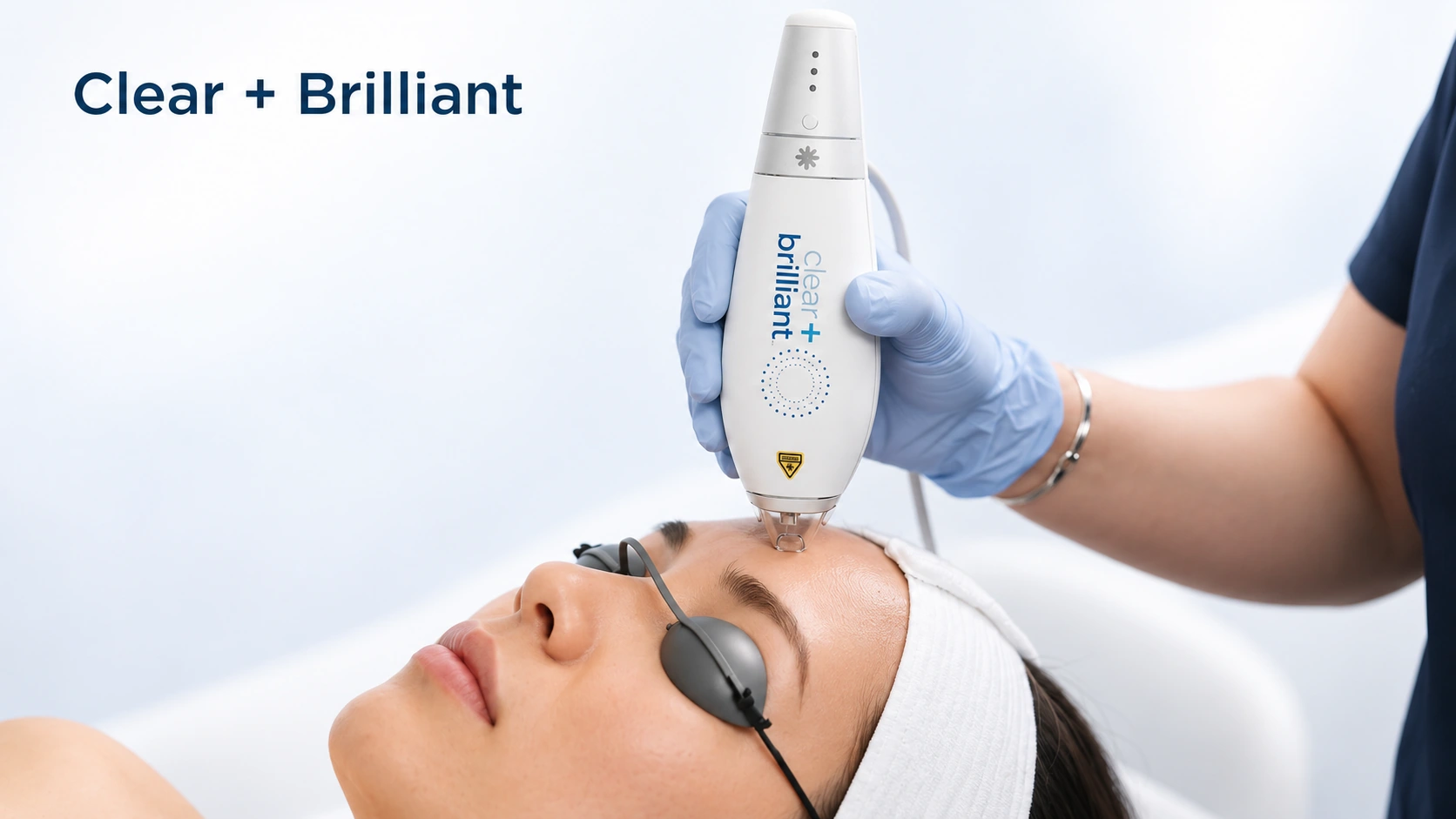
Editorial illustration for Clear + Brilliant, based on the entry’s treatment or equipment reference.

Clear + Brilliant

Limited evidence

A gentle fractional laser, sometimes called a baby Fraxel, with a day or two of redness. It gives a real but small improvement in fine lines and glow and needs a series to show anything. It is a maintenance treatment rather than a way to change established wrinkles.

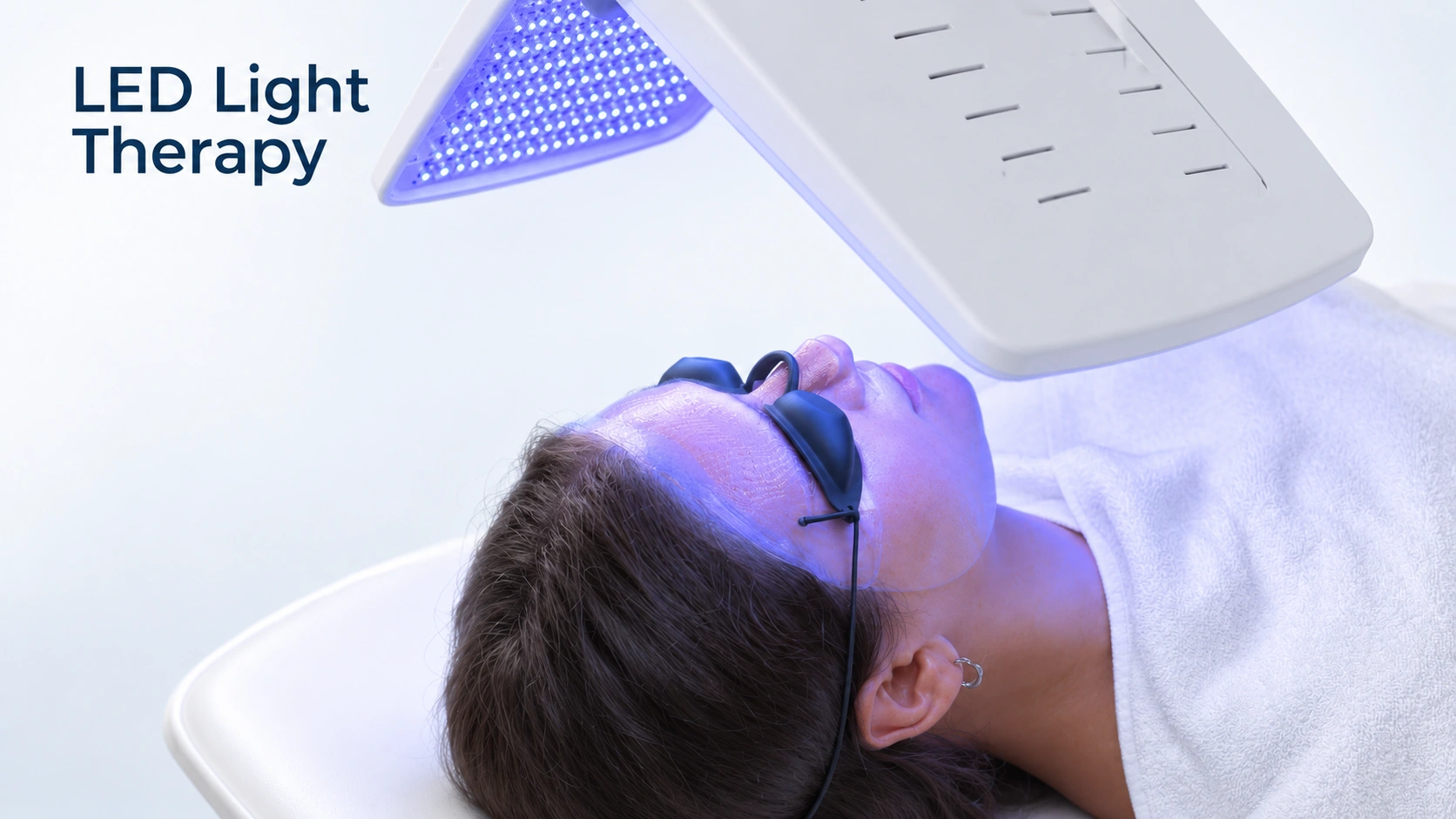
Editorial illustration for LED Light Therapy, based on the entry’s treatment or equipment reference.

LED Light Therapy

Limited evidence

Red light produces small improvements in fine lines with frequent, repeated use over months. How much depends heavily on the actual output of the device, and many home masks are far weaker than the ones used in studies. It is low-risk and slow, and it is an add-on rather than a treatment.

Editorial illustration for Microdermabrasion, based on the entry’s treatment or equipment reference.

Microdermabrasion

Limited evidence

Sands off the outer dead layer, so skin feels smoother and looks brighter for a few days. It does not reach the dermis, which is where wrinkles are, so it does not change them. Pleasant, safe on most skin, and frequently sold as an anti-aging treatment when it is not one.

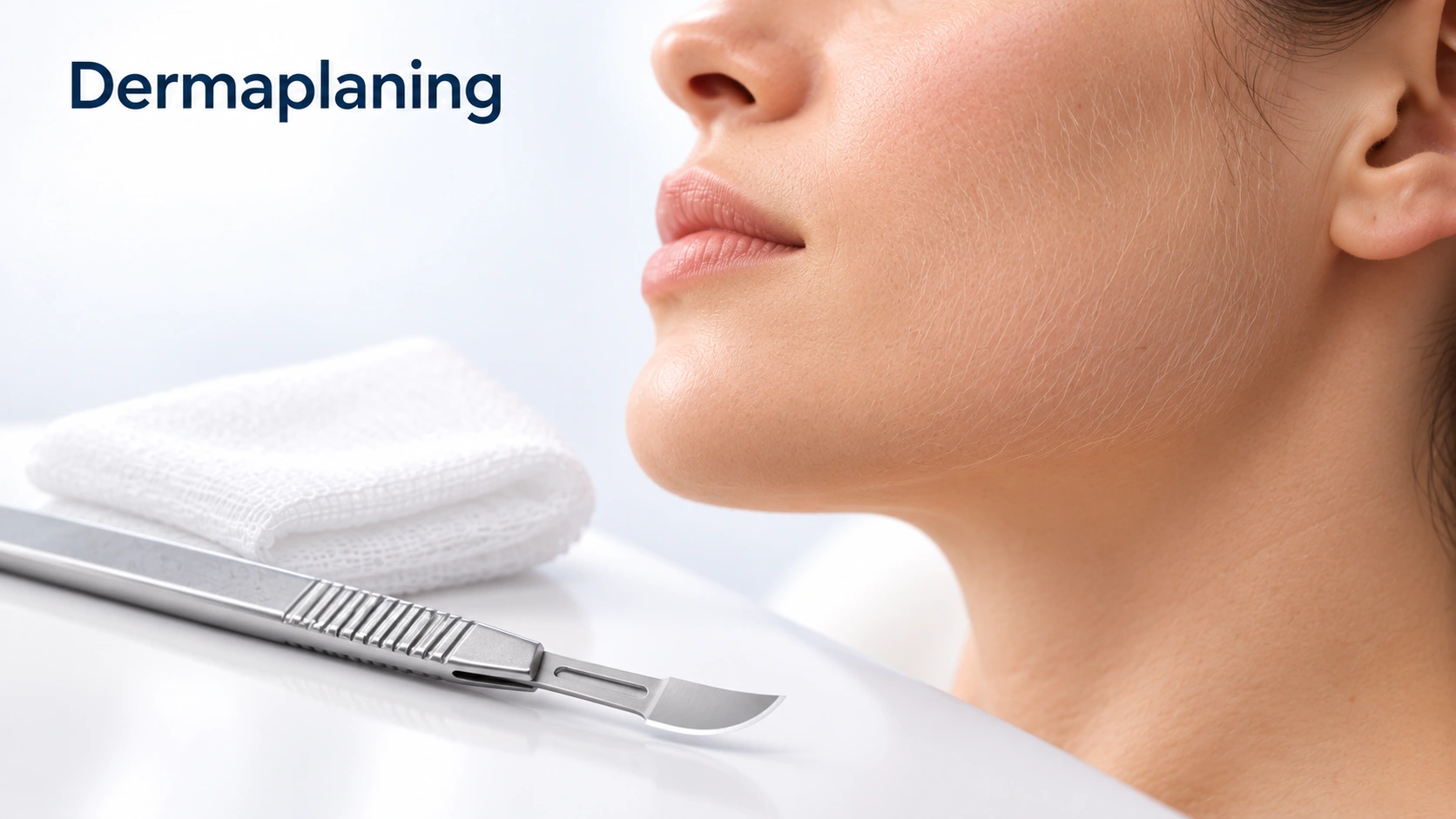
Editorial illustration for Dermaplaning, based on the entry’s treatment or equipment reference.

Dermaplaning

Limited evidence

A blade scrapes off surface dead skin and fine hair, so makeup sits better and skin looks smoother for a week or two. There is no evidence it affects wrinkles, and it does not make hair grow back thicker. It is a finish, not a treatment.

None listed

Outlook

Long term

Wrinkles usually deepen gradually with aging and ultraviolet exposure. Sun protection helps limit further damage, and cosmetic treatment may soften their appearance. Results vary, repeat treatment may be needed, and treatment does not stop the aging process.

Skin laxity generally increases with age and changes in supporting tissues. Cosmetic treatment may improve selected areas, but results vary and aging continues.

Complications

Possible complications

Lines themselves are usually a cosmetic change. Sun-related ageing reflects cumulative ultraviolet exposure, so a new rough, growing or non-healing spot needs separate assessment.

These are usually cosmetic structural changes rather than signs of disease.

When to get help

When to get help

A consultation can help choose suitable treatment. A new rough, bleeding or changing spot should be assessed separately rather than treated as aging skin.

Seek medical assessment for sudden, painful or one-sided change rather than assuming it is ageing.

Common questions

Wrinkles and Fine Lines:At what age should I start treating wrinkles?

Sunscreen as early as possible — nearly all the value is in prevention, and damage accumulates from childhood. A retinoid is reasonable from the twenties or thirties, because it takes months to work. There is no age at which starting stops being worthwhile.

Wrinkles and Fine Lines:Does anything actually work, or is it all marketing?

Some of it works. Daily sunscreen has good long-term trial evidence for reducing visible aging, prescription tretinoin has repeated evidence for improving fine lines, and botulinum toxin works reliably on lines caused by movement. Lasers, peels and fillers produce real changes. What is oversold is the middle of the market — serums promising results comparable to procedures.

Wrinkles and Fine Lines:Is tretinoin worth the irritation?

For most people yes, but only if you start slowly enough to keep using it. The common failure is applying it nightly from day one, peeling for two weeks, and stopping. Two or three nights a week, moisturizer underneath, building up over a couple of months, gets far more people to the six-month mark where the results are.

Wrinkles and Fine Lines:If I stop having botulinum toxin injections, will my wrinkles be worse than before?

No. The muscle returns to its previous strength over about three to four months and the lines return to where they would have been. They can feel worse because you got used to them being softer. There is some evidence long-term use leaves the underlying line slightly less deep.

Wrinkles and Fine Lines:Do collagen supplements work?

There are trials reporting small improvements in skin hydration and elasticity, mostly funded by companies selling collagen. If there is a real effect, it is small. They are not a substitute for sunscreen or a retinoid.
Wrinkles and Fine Lines:What is the difference between fine lines and wrinkles?

Mostly depth and cause. Fine lines are shallow surface creases, often more visible when skin is dry, and they respond well to moisturizers, retinoids and resurfacing. Wrinkles are deeper folds involving the dermis, and the deepest are really folds from lost volume underneath — which is why creams do so much for one and so little for the other.

Sagging Skin:What is Sagging Skin?

Skin laxity associated with reduced support and elasticity.

Sagging Skin:What can I do day to day?

Use sunscreen, gentle moisturizer and avoid smoking. Choose procedures only after an individual assessment.

Sagging Skin:When should I get medical advice?

Seek medical assessment for sudden, painful or one-sided change rather than assuming it is ageing.

Sources

Sources and further reading

  1. DermNet
  2. Skin ageing
Dermapedia on YouTube