Stretch Marks vs Atrophic Scars

Stretch marks are narrow bands of scarred skin that form when skin is stretched faster than it can adapt and the fibers underneath tear. They start red or purple, fade to pale over several years, and can be made less noticeable - but no treatment removes them. Depressed scars caused by loss or altered organisation of supporting tissue.

Research updated 2026-10-23
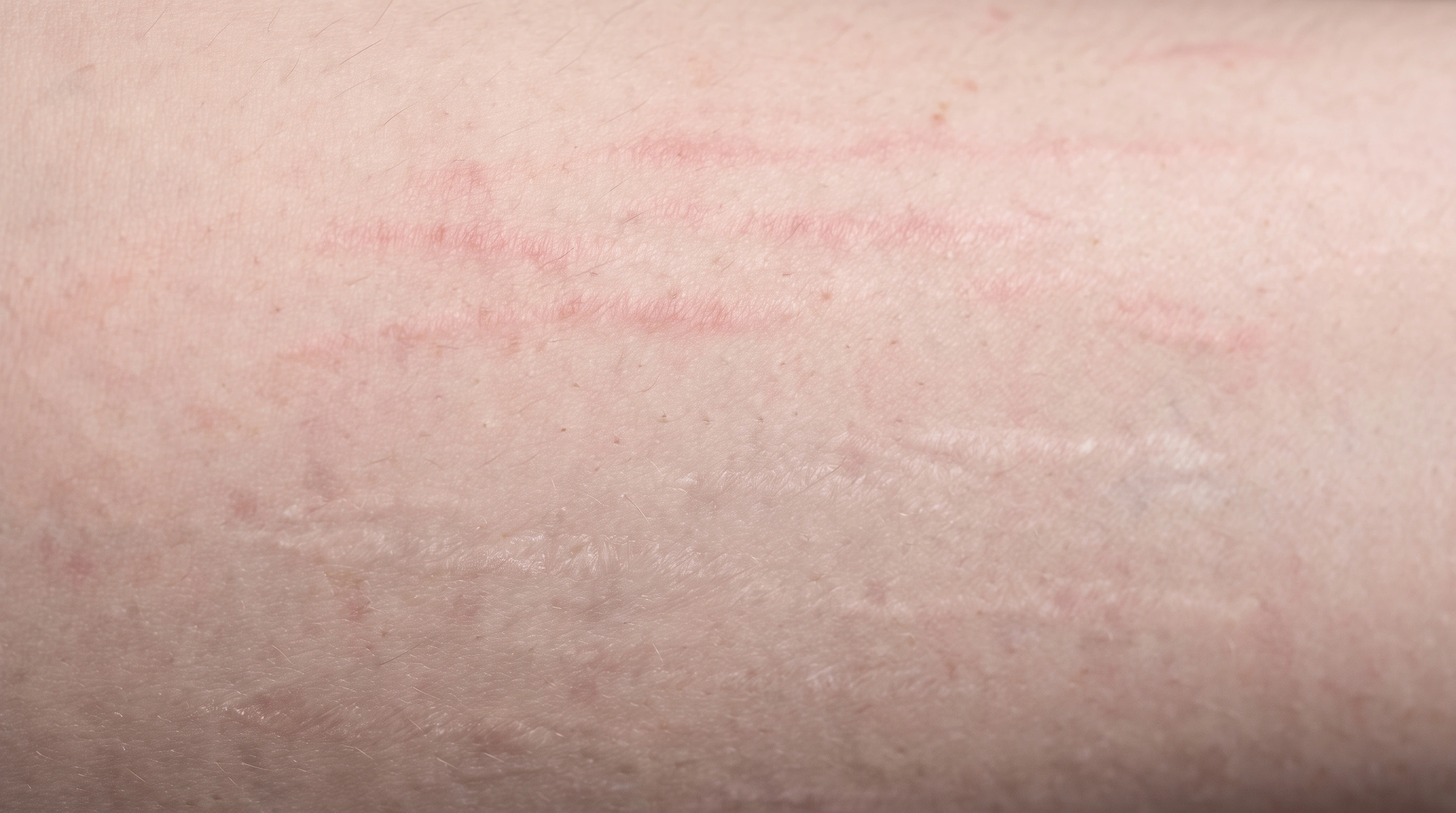
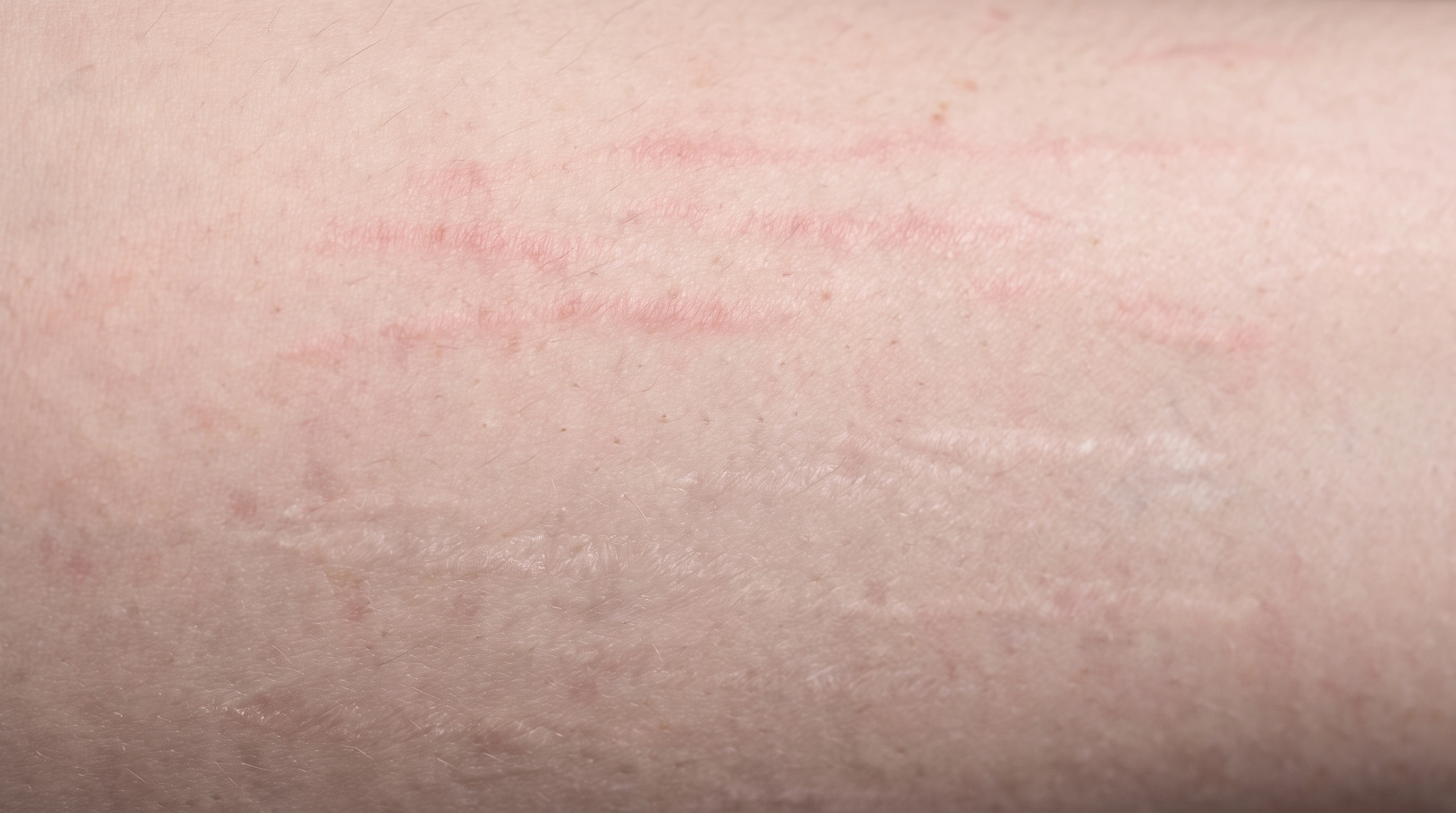
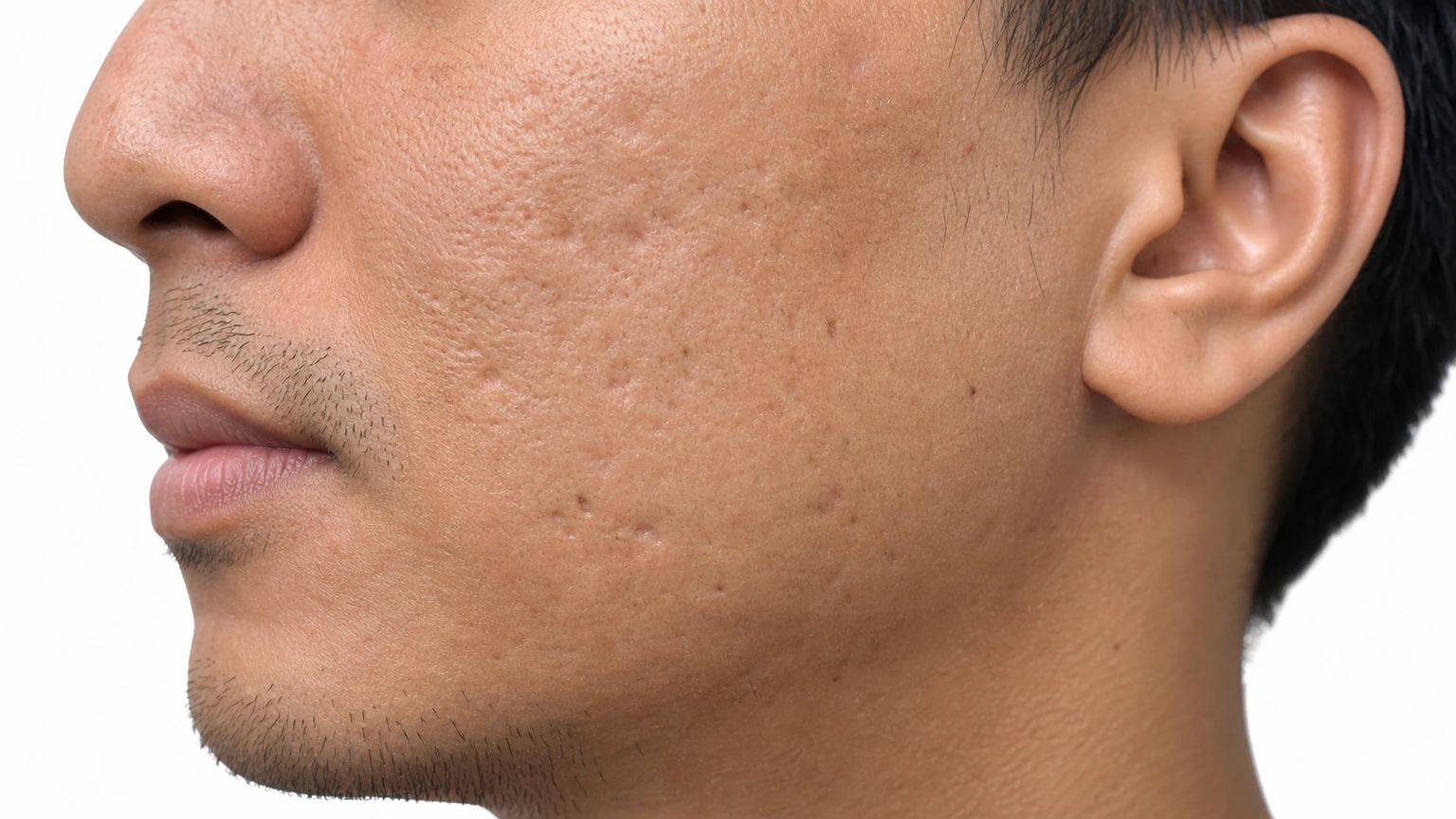
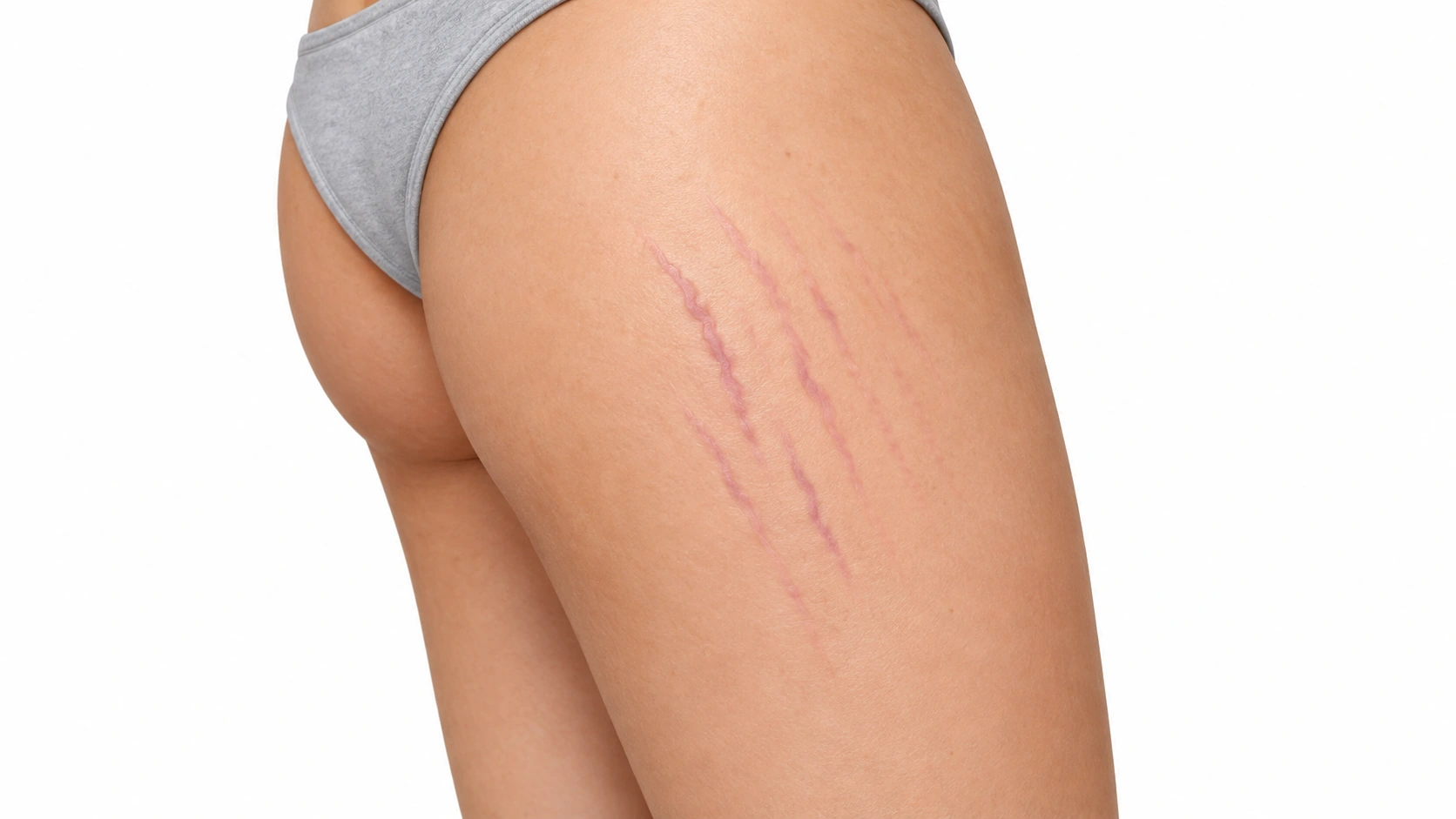
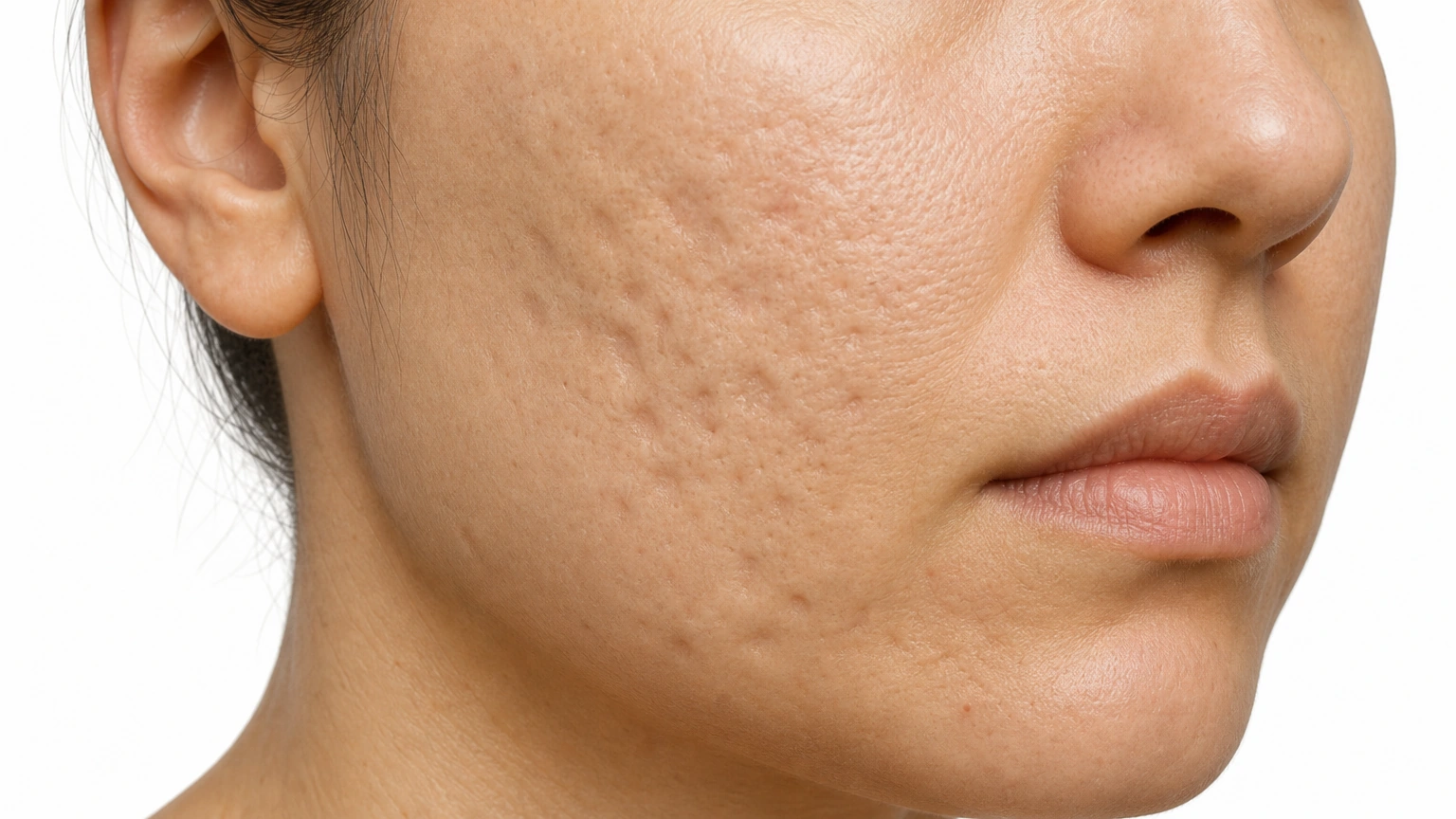
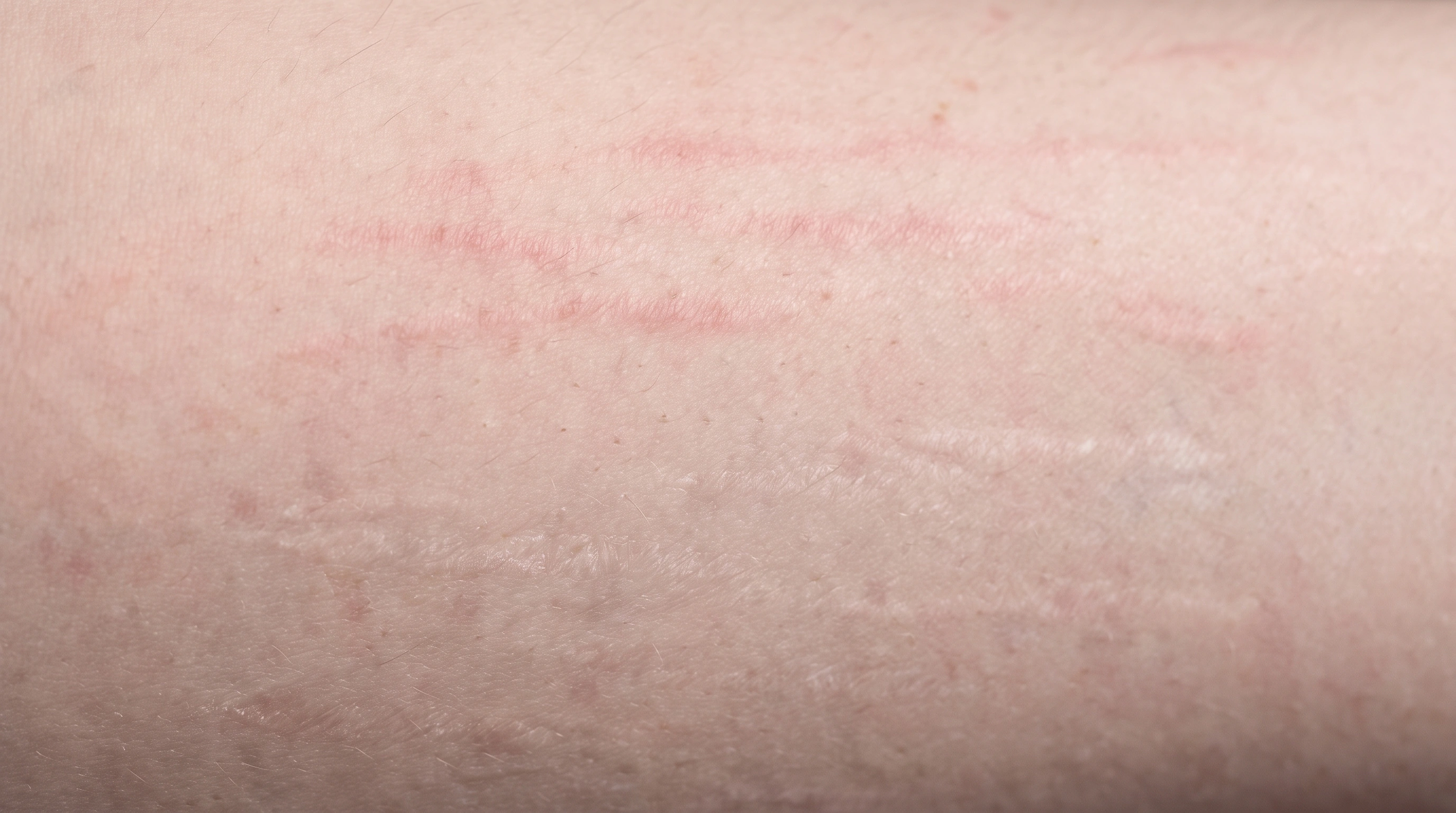
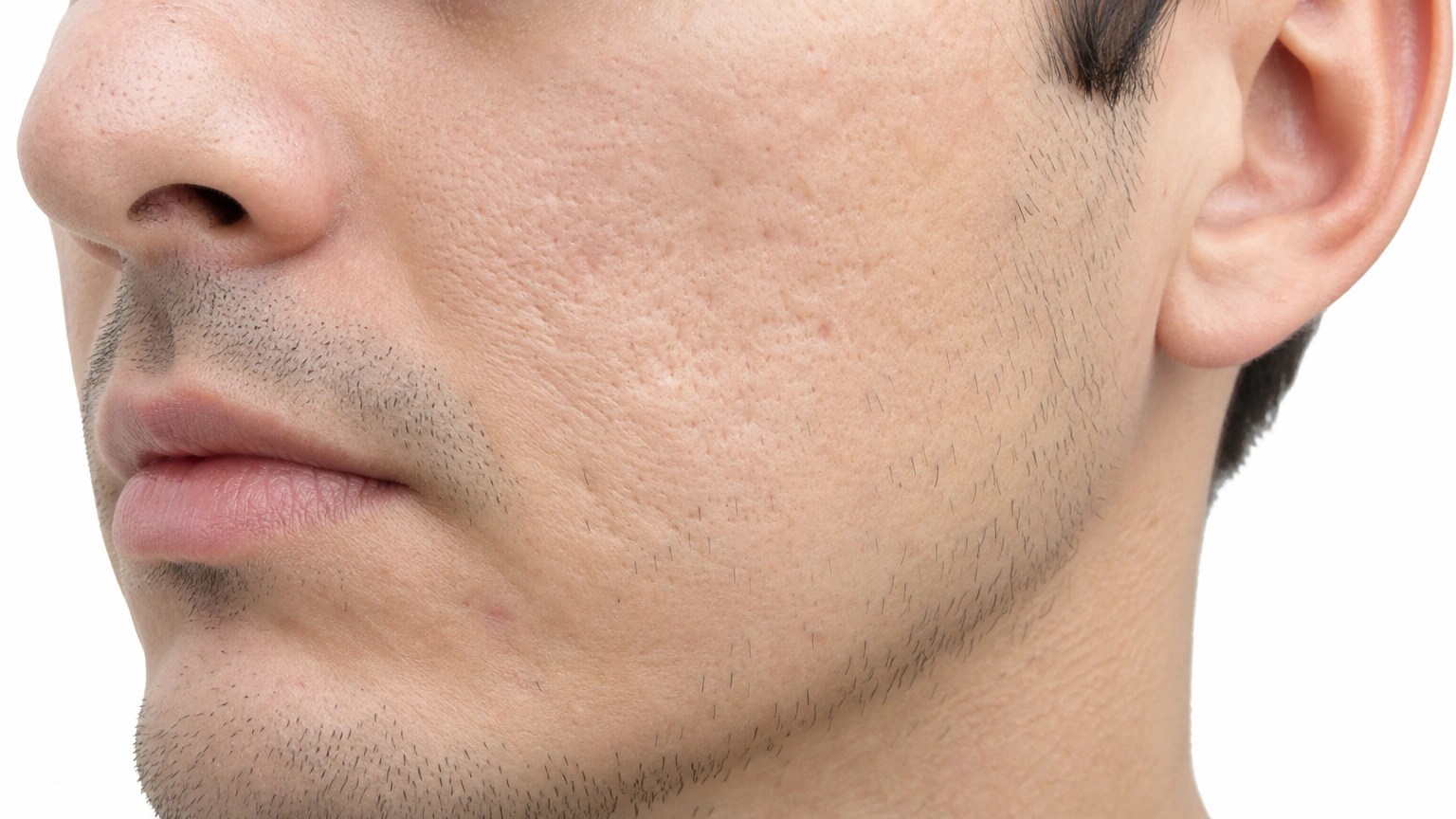
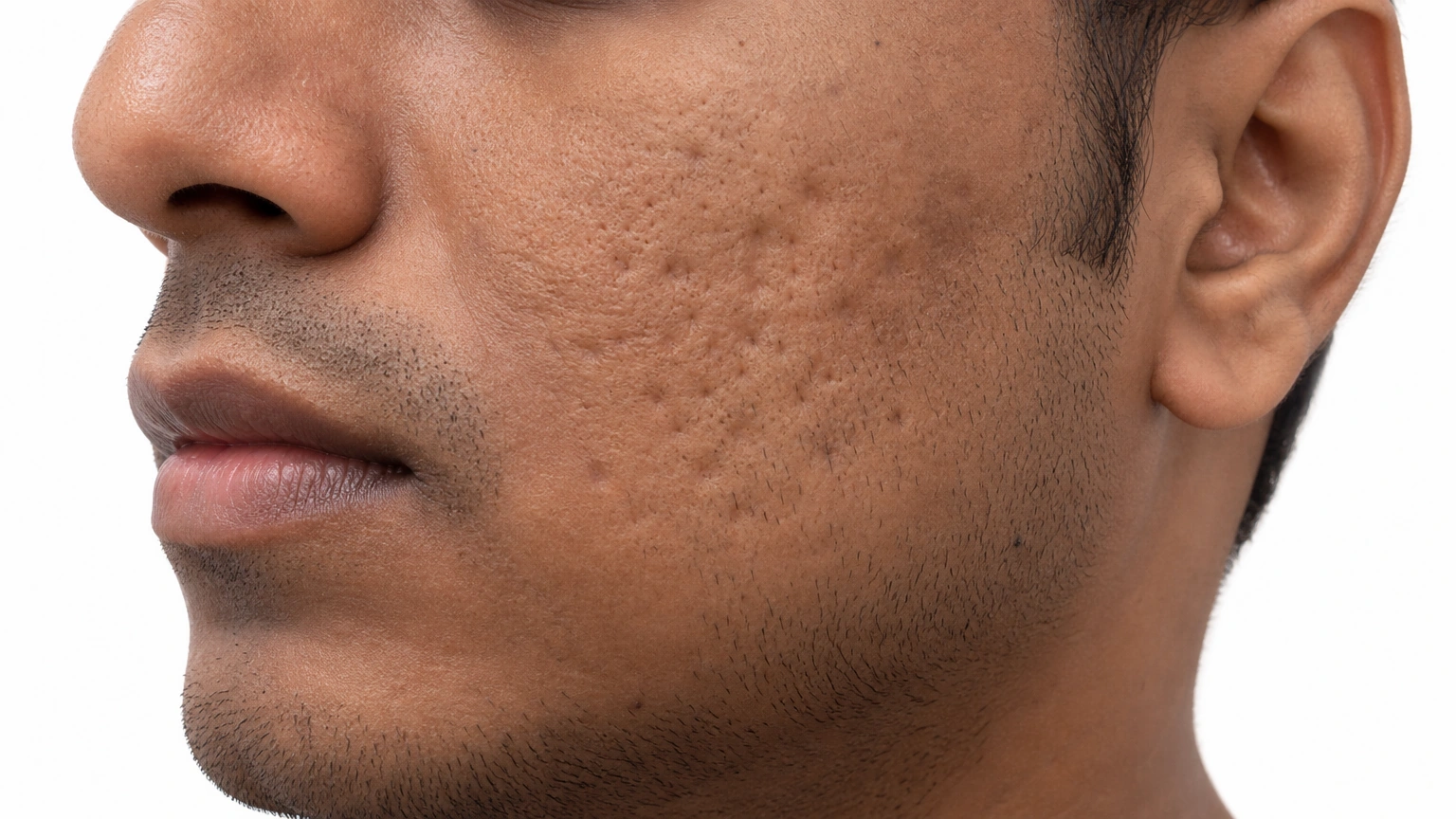
Two areas of fair skin side by side on a hip. New pink-red bands sit above, and older flat silvery-white bands below, with only a small difference in color between the pale marks and the skin around them.healed indented acne scars on the left cheek, in a view turned to the person’s right on medium skin.

Key differences

The same eight facts on every condition comparison.

Usual age
Teens and pregnancy
After the injury or acne
Where
Belly, thighs, hips, breasts
Where acne, injury or infection was
Main sign
Streaks, red then pale
Sunken dents in the skin
Itch or pain
Sometimes itchy when new
No
Contagious
No
No
Long term
Permanent, fade over years
Permanent without treatment
Scars
Yes, a form of scar
Is a scar
Who gets it
Growth spurts, pregnancy, weight change
After acne, chickenpox or injury

What is it?

Stretch Marks
Atrophic Scars
What is it?
  • They are changes in the dermis.
    Stretch marks form when skin stretches or changes rapidly.
  • They change color over time.
    New marks may be red, purple or brown; older marks fade paler.
  • Texture may remain.
    Older marks become less noticeable, though their texture can persist.
  • Sudden widespread marks need review.
    They can signal steroid exposure or hormonal disease.
  • What it is
    Depressed scars caused by loss or altered organisation of supporting tissue.

What it looks like

Stretch Marks

Representative image of red stretch marks. It illustrates a visible feature or experience and is not a diagnostic reference.

Striae rubrae New, red to purple marks.

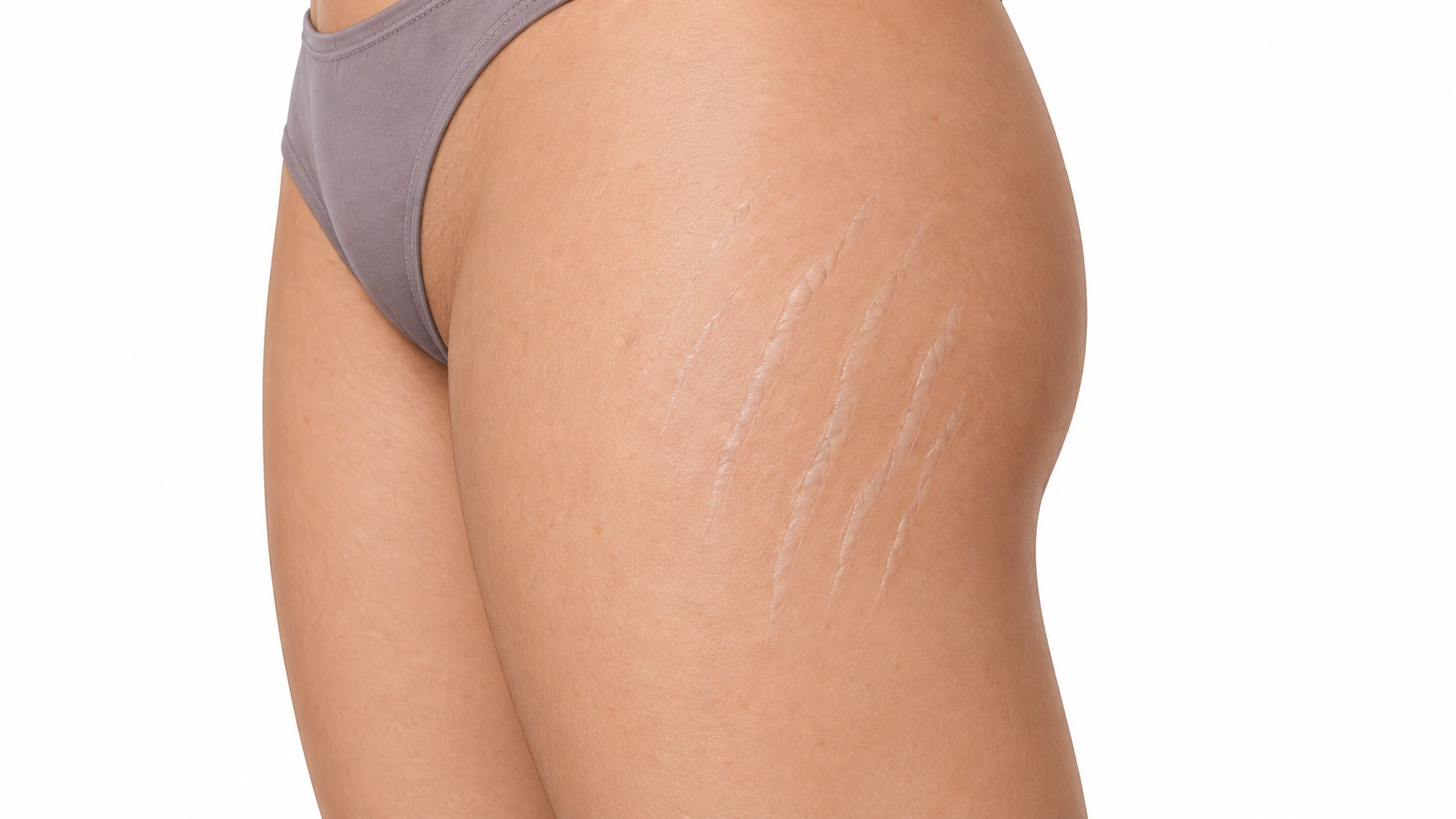
Representative image of white stretch marks. It illustrates a visible feature or experience and is not a diagnostic reference.

Striae albae Older, white to silver marks.

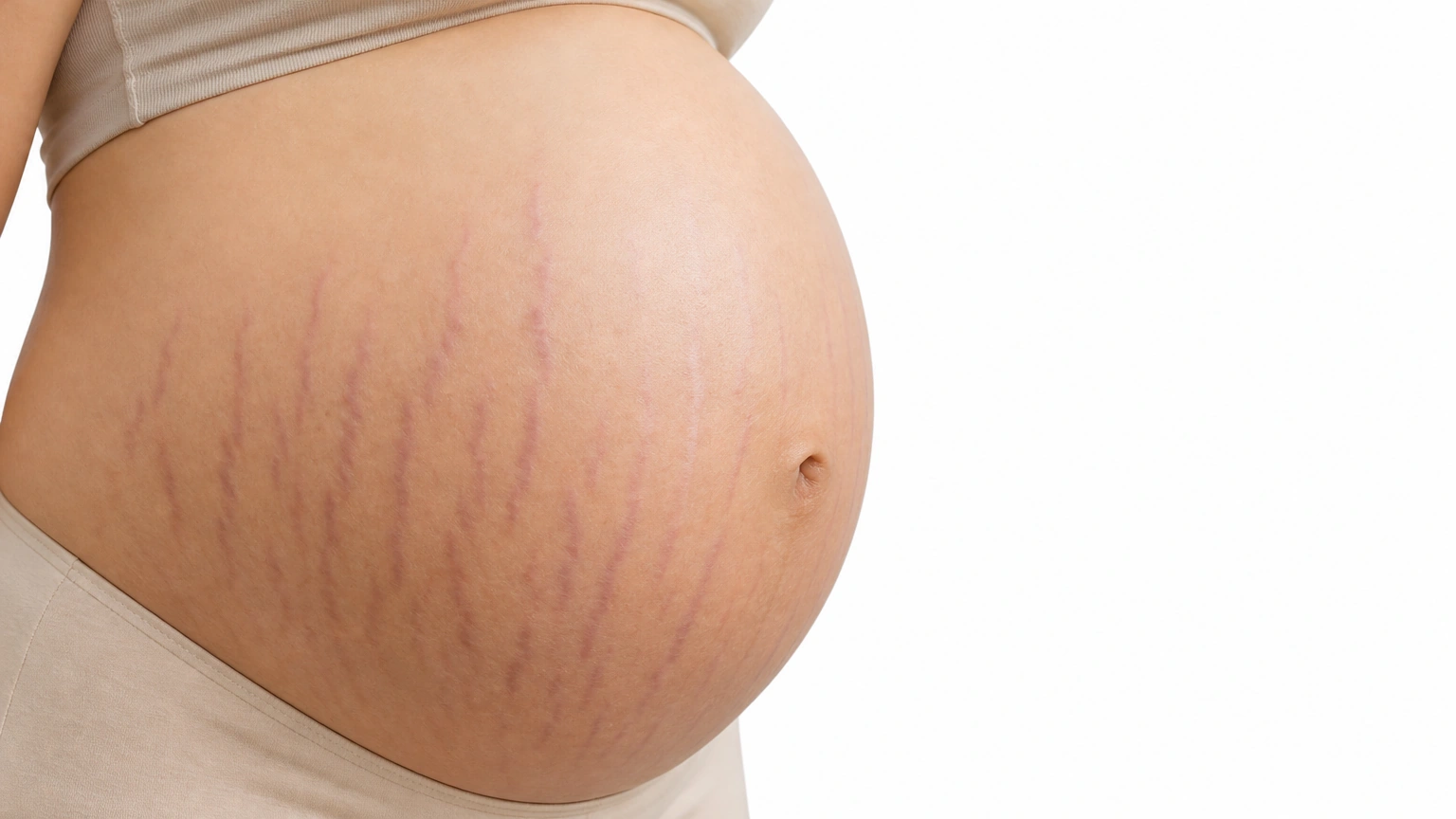
Purple linear stretch marks across a pregnant abdomen, representing striae gravidarum.

Striae gravidarum From pregnancy.

Atrophic Scars

A cheek with multiple small pits and broader shallow indentations.

Atrophic Scars Shallow depressions create an uneven surface across the cheek.

Skin tones
Two areas of fair skin side by side on a hip. New pink-red bands sit above, and older flat silvery-white bands below, with only a small difference in color between the pale marks and the skin around them.
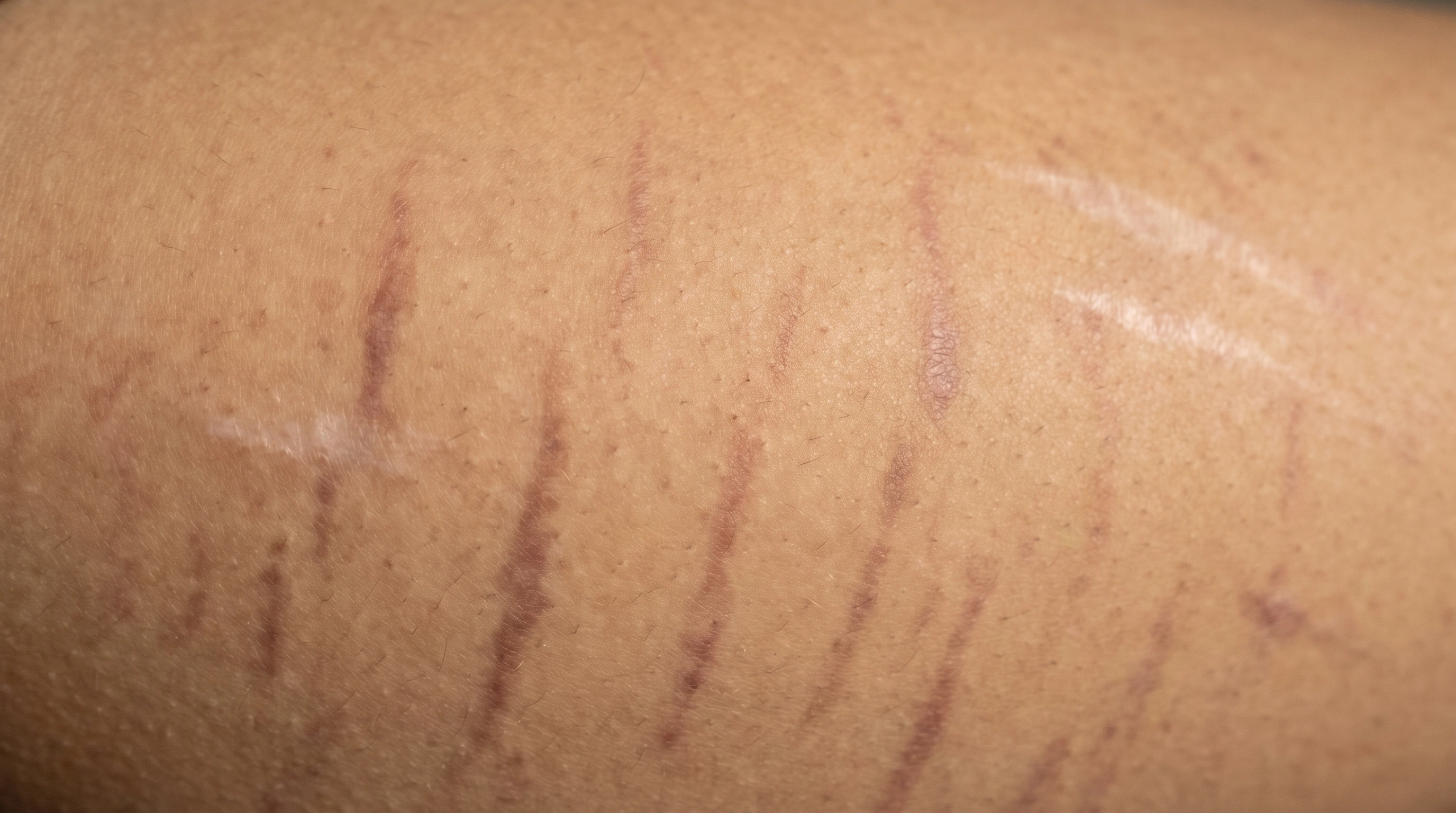
Reddish-brown parallel bands across an olive-skinned outer thigh, with two older pale bands among them that are clearly lighter than the skin around them.
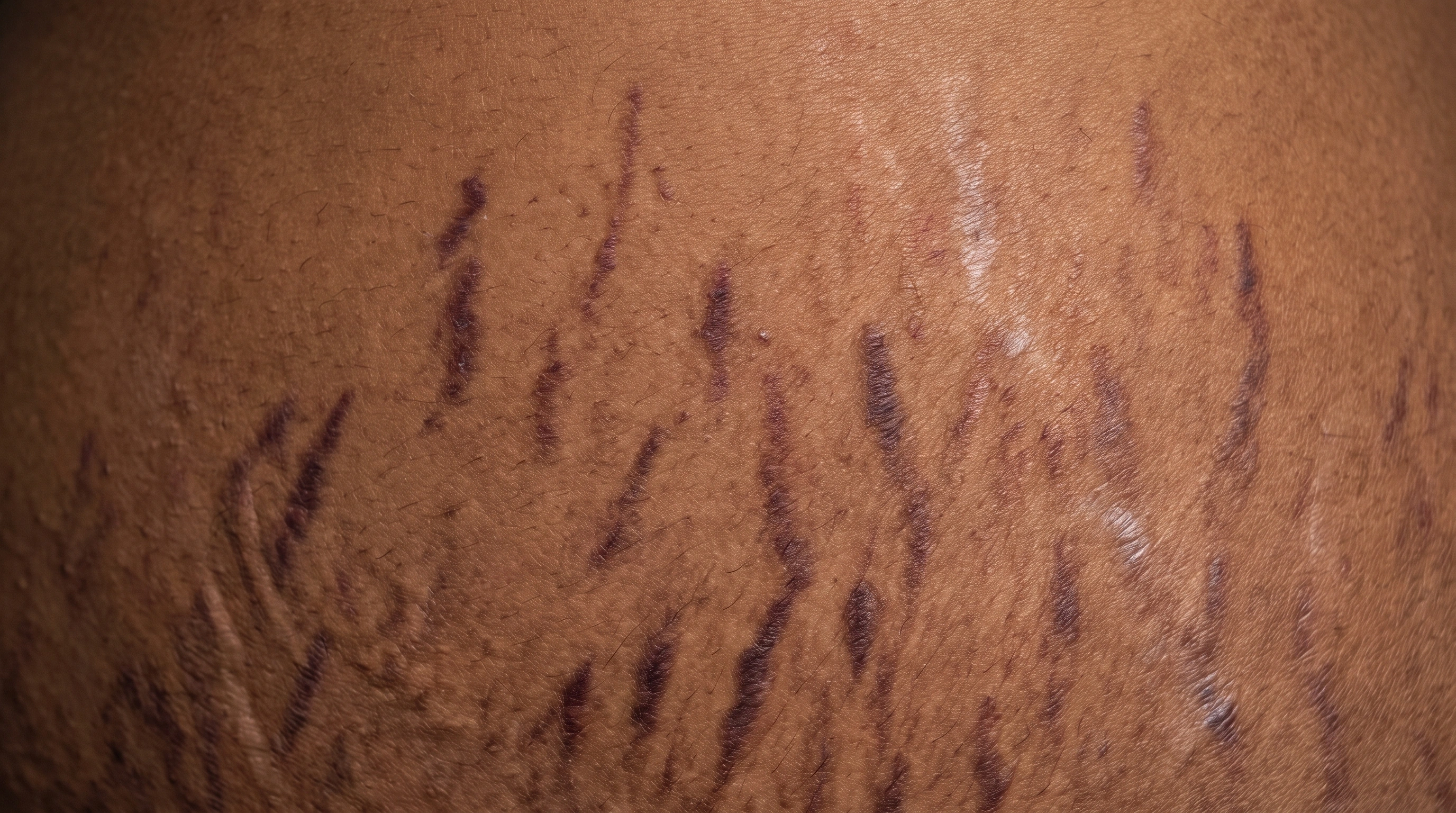
Stretch marks on brown skin.
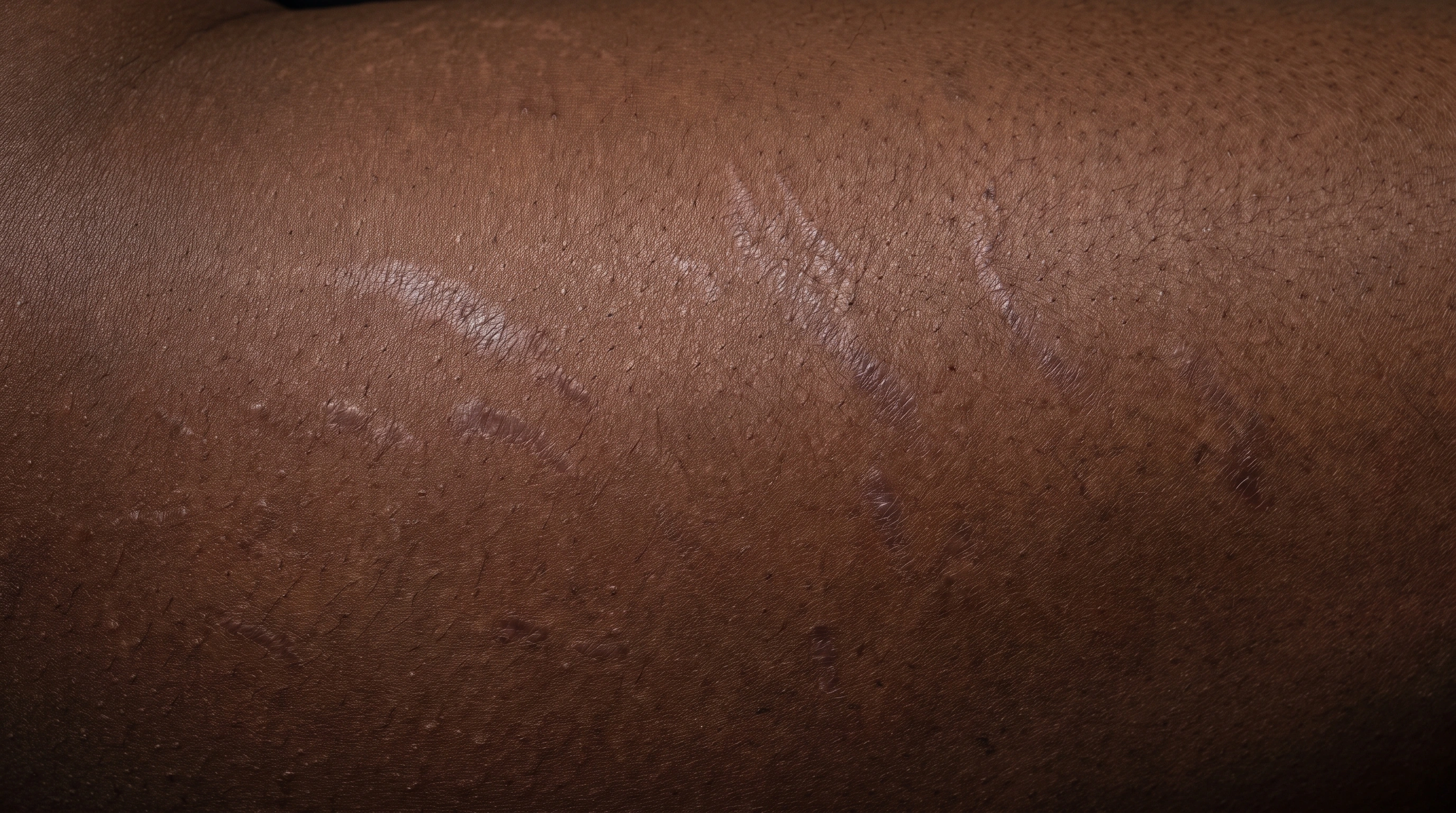
Pale, flat, silvery bands running down the hip and outer thigh of deep brown skin, standing out sharply against the surrounding skin, with a fine crinkled surface inside each band.
healed indented acne scars on the left cheek, in a view turned to the person’s right on light skin.
healed indented acne scars on the left cheek, in a view turned to the person’s right on medium skin.
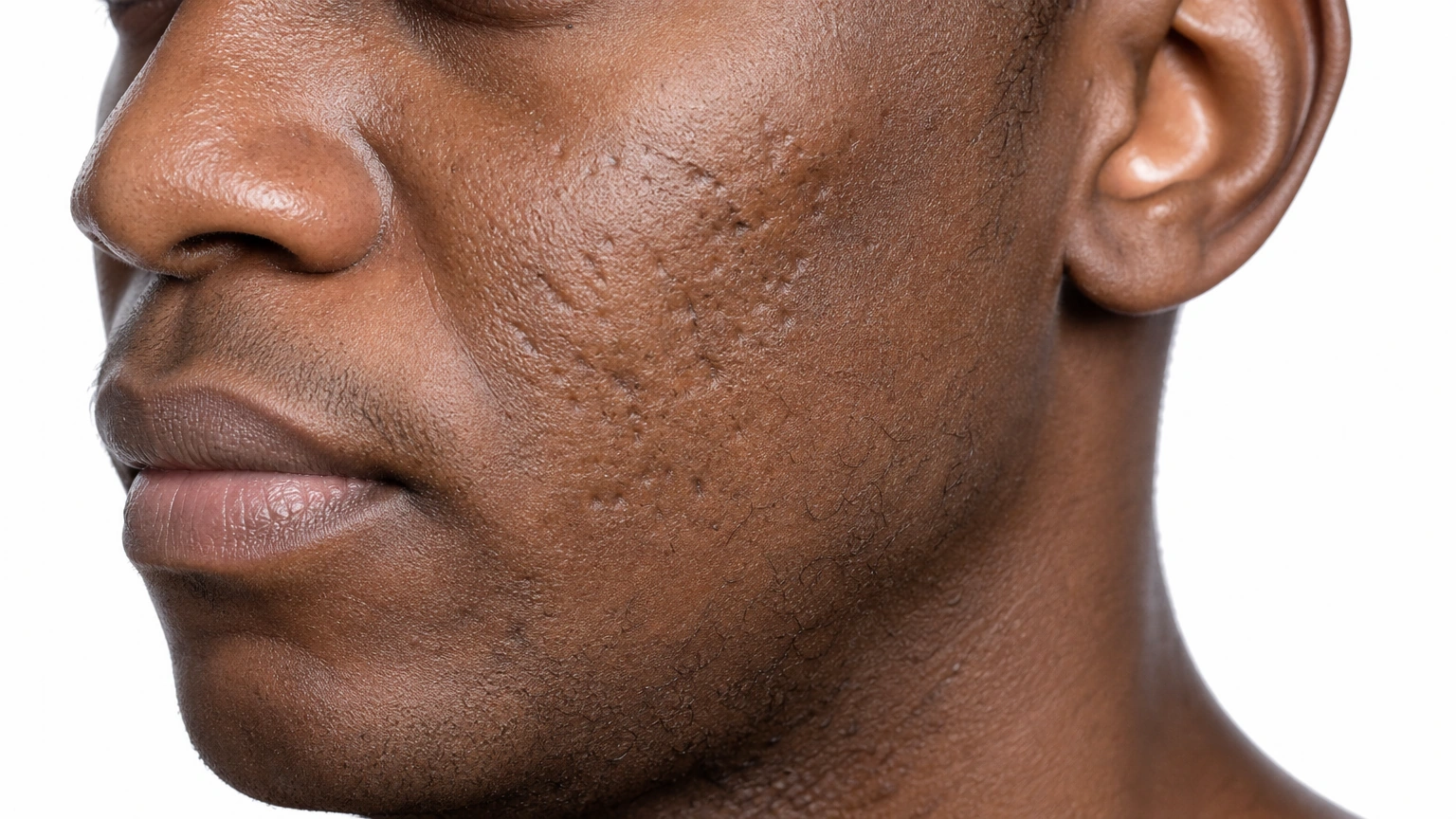
healed indented acne scars on the left cheek, in a view turned to the person’s right on brown skin.
healed indented acne scars on the left cheek, in a view turned to the person’s right on deep skin.
Diagram
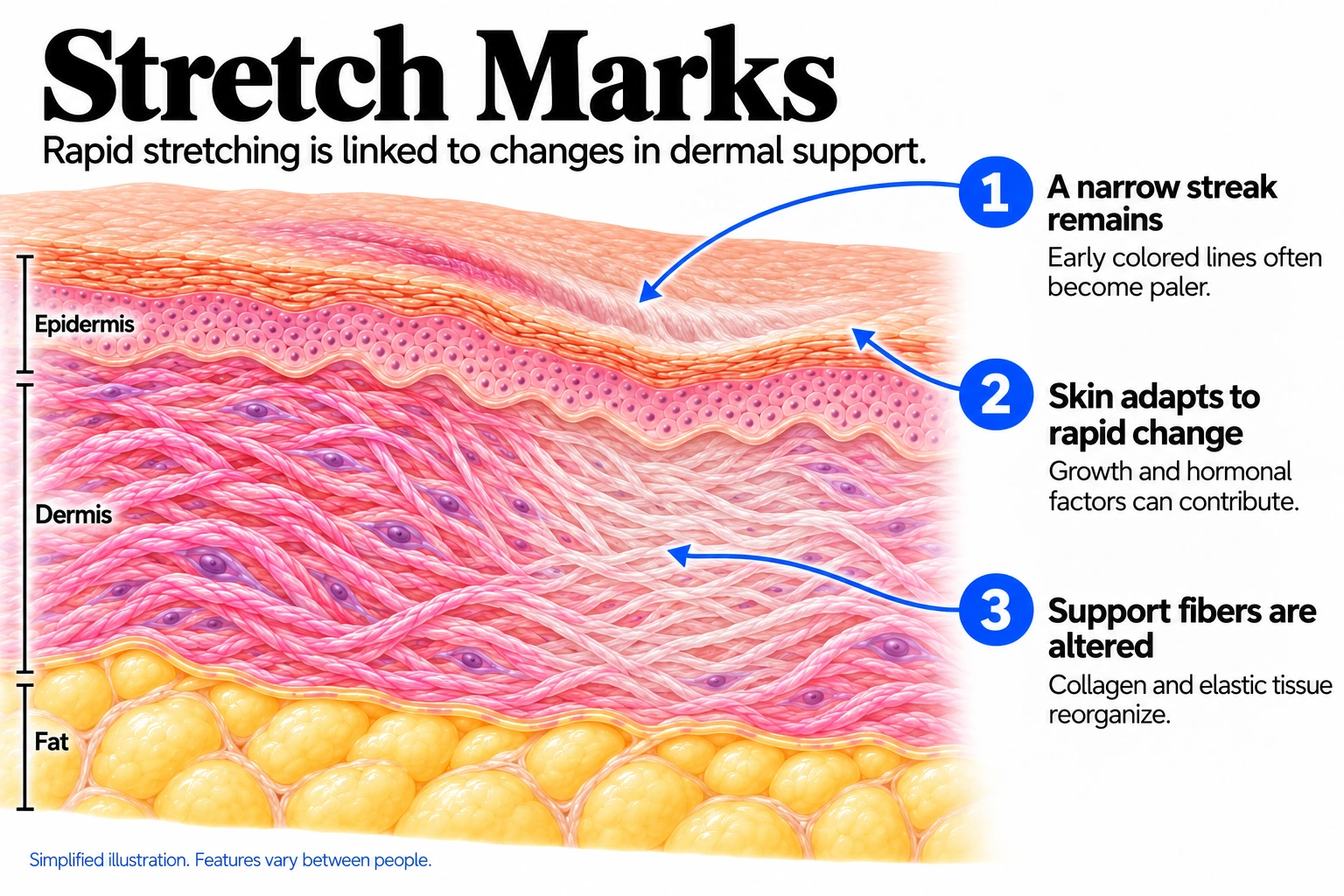
Stretch Marks mechanism diagram. A narrow streak remains: Early colored lines often become paler. Skin adapts to rapid change: Growth and hormonal factors can contribute. Support fibers are altered: Collagen and elastic tissue reorganize.
In the skin

Rapid tissue changes and hormonal factors can alter collagen and elastic fibers in the dermis. The affected skin forms narrow streaks that often become paler as they mature.

Inflammation or injury damages tissue in the dermis. Healing leaves too little structural support, allowing the skin surface to form a depression.

When it usually starts

010203040506070+

Stretch Marks. Often develop during adolescent growth, pregnancy or other rapid body changes.

Atrophic Scars. Develops after relevant injury, inflammation or tissue change; age depends on the cause.

Causes and triggers

Causes

Stretch marks form when skin stretches faster than it can adapt, tearing the collagen and elastic fibers in the dermis.

Healing leaves insufficient dermal support after inflammation or injury.

Family tendency

They run in families.

Risk factors
Pregnancy, Teen growth spurts, Rapid weight change, Steroid medicines
Prior skin inflammation or injury, Individual healing tendency
Trigger
● Stretch Marks
● Atrophic Scars
Rapid weight gain
Well established
Not listed
Pregnancy
Well established
Not listed
Fast muscle growth
Strong link
Not listed
No established short-term flare trigger
Not listed
Not a typical trigger

Daily Care

Stretch Marks
Atrophic Scars
Daily care

Habits that help

  • Gradual weight and muscle change
    Slower change gives skin time to adapt.
  • Plain moisturizer on itchy new marks
    Settles the itch that drives scratching.
  • Sunscreen over new and mature marks
    Stops new marks darkening and old ones gaining contrast.
  • Self-tanner or camouflage makeup
    Cuts how visible mature marks are on the day.
  • Treating an underlying cause
    Dealing with a steroid medicine or high cortisol stops new marks.
  • Excimer light or narrowband ultraviolet B
    Temporarily brings color back so white marks blend.
  • Arrange assessment for unexplained wide purple stretch marks or cortisol symptoms
    Cushing syndrome causes wide purple marks on the trunk.
  • Discuss realistic treatment expectations while stretch marks are new
    The red stage is when treatment does the most.
  • Discuss evidence and costs before buying stretch-mark treatments
    Those months had the most to offer.

Avoid

  • Avoid: Fast weight gain
    Skin adapts to gradual change, not sudden.
  • Avoid: Crash dieting and rapid weight loss
    Every large swing is another chance.
  • Avoid: Rapid muscle gain
    Common on the shoulders, chest and upper arms in young men.
  • Avoid: Scratching itchy new marks
    More inflammation in already inflamed skin.
  • Avoid: Sun exposure on new marks
    It drives longer-lasting color change, especially on deeper skin tones.
  • Avoid: Tanning, in the sun or in a bed
    Mature marks do not tan, so the contrast rises.

Habits that help

  • Use broad-spectrum SPF 30 or higher on healed exposed skin
    Sun protection helps limit persistent color changes around scars.
  • Keep healed skin comfortable with gentle cleansing and moisturizer
    These measures support the skin barrier but cannot reliably lift established depressions.
  • Control active acne or inflammation before elective scar procedures
    Ongoing lesions can create new scars even while older ones are being treated.
  • Use photographs in consistent light to track change
    Scars change slowly; compare over months rather than repeatedly inspecting each day.
  • Discuss scar-type assessment
    A dermatologist may combine resurfacing or focal procedures based on depth and scar shape.

Avoid

  • Avoid: Picking new spots, crusts or healing wounds
    Repeated injury increases the chance of further marks and scarring.
  • Avoid: Home needling, deep peels or cutting scar tissue
    These can worsen scarring or cause infection, especially before a wound has fully healed.

Treatment differences

Evidence labels come from each condition’s own treatment list.

Treatment
● Stretch Marks
● Atrophic Scars
Filter by type
Stretch mark stage

Select one or more.

All types
Treatment approach
—

Treatment is optional and depends on scar depth and shape. A dermatologist may combine resurfacing or focal procedures; the goal is improvement rather than complete removal.

Over-the-counter
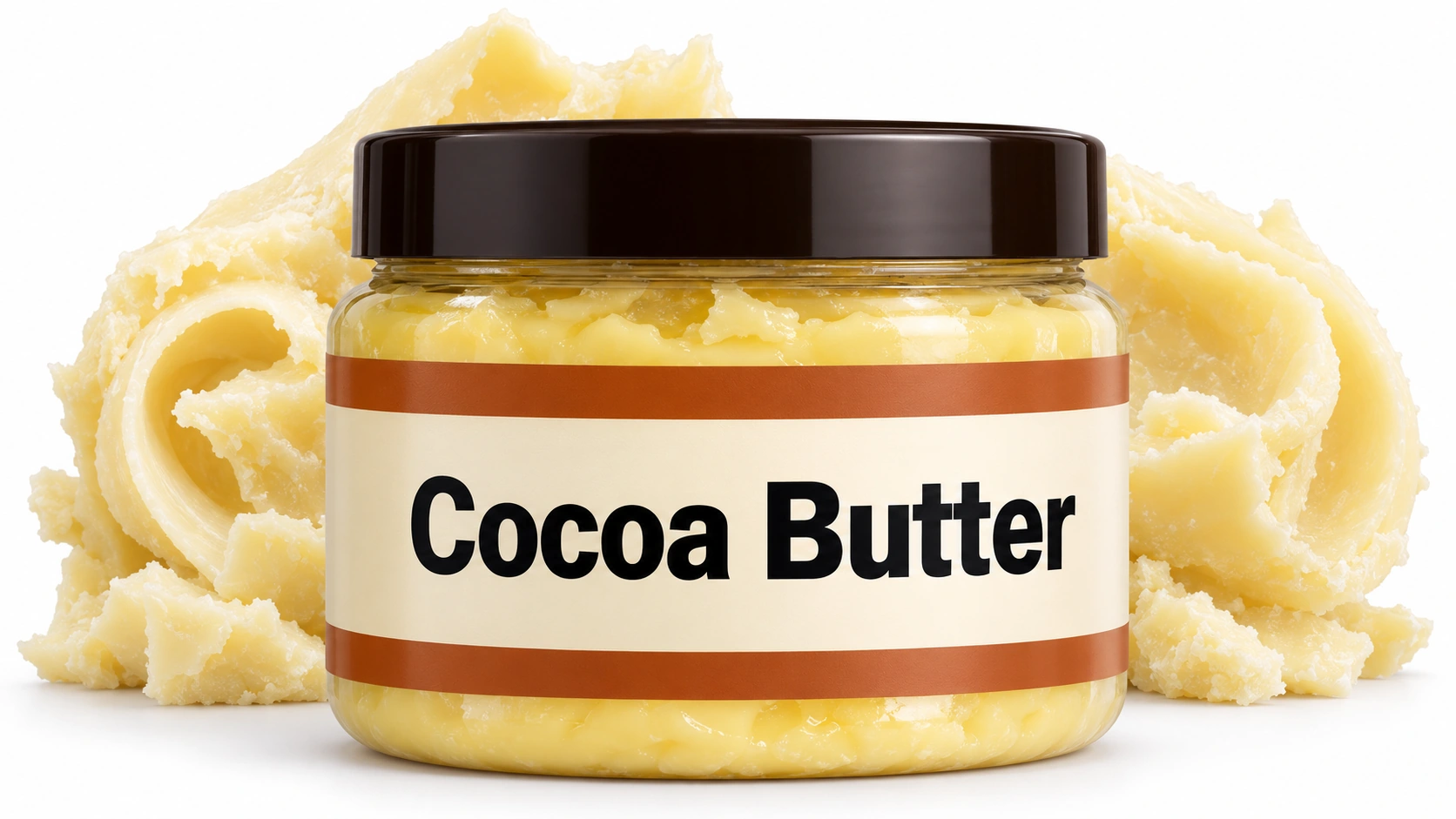
Existing illustration of Cocoa butter.

Cocoa butter and oils

Limited evidence

Cocoa butter has been tested in randomized trials against a plain placebo cream and did not show a clear benefit for preventing stretch marks. Olive oil and the bio oils sold alongside it are in the same position. They are pleasant to use and they soften itchy skin, and that is the honest reason to buy one.
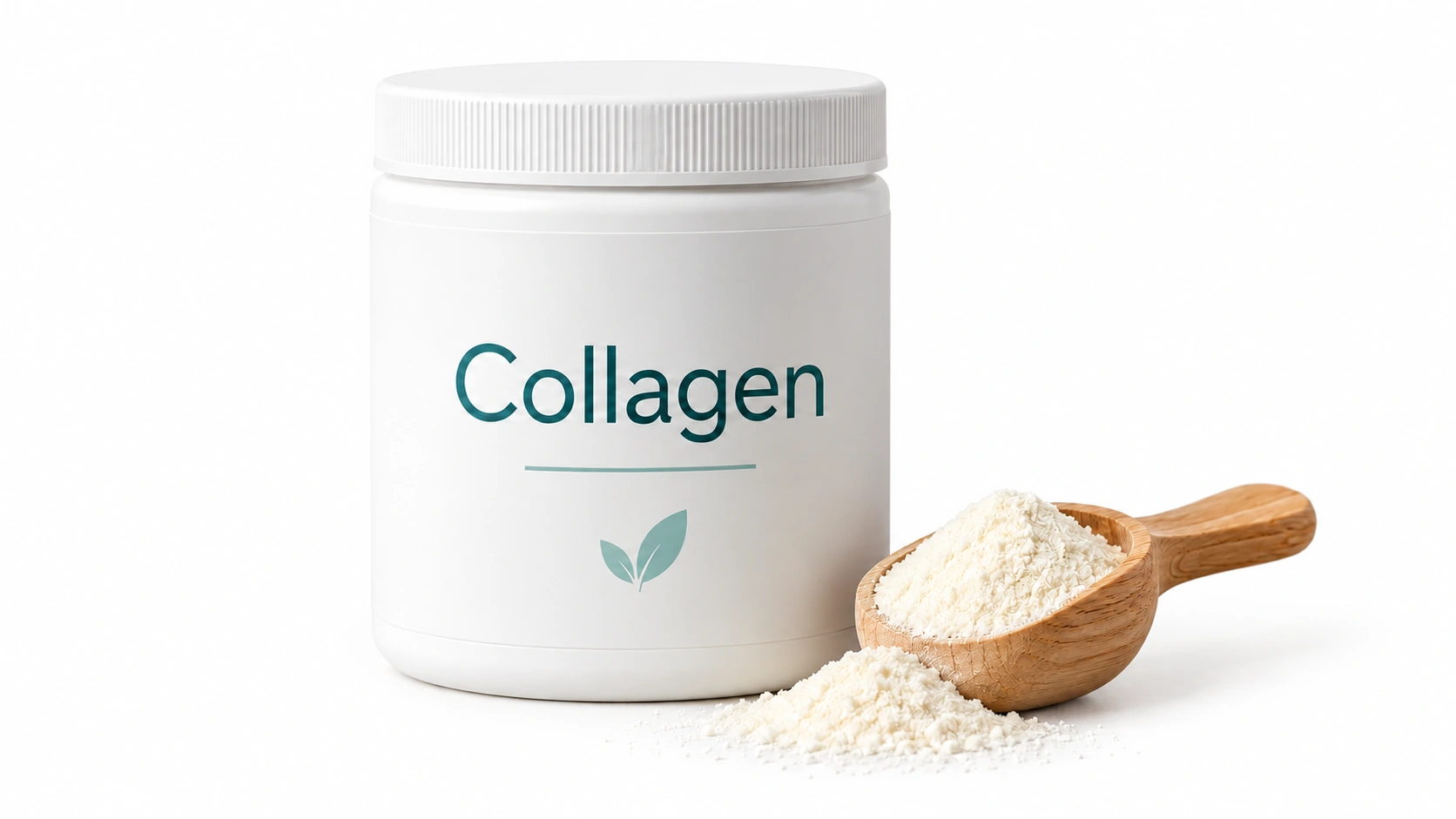
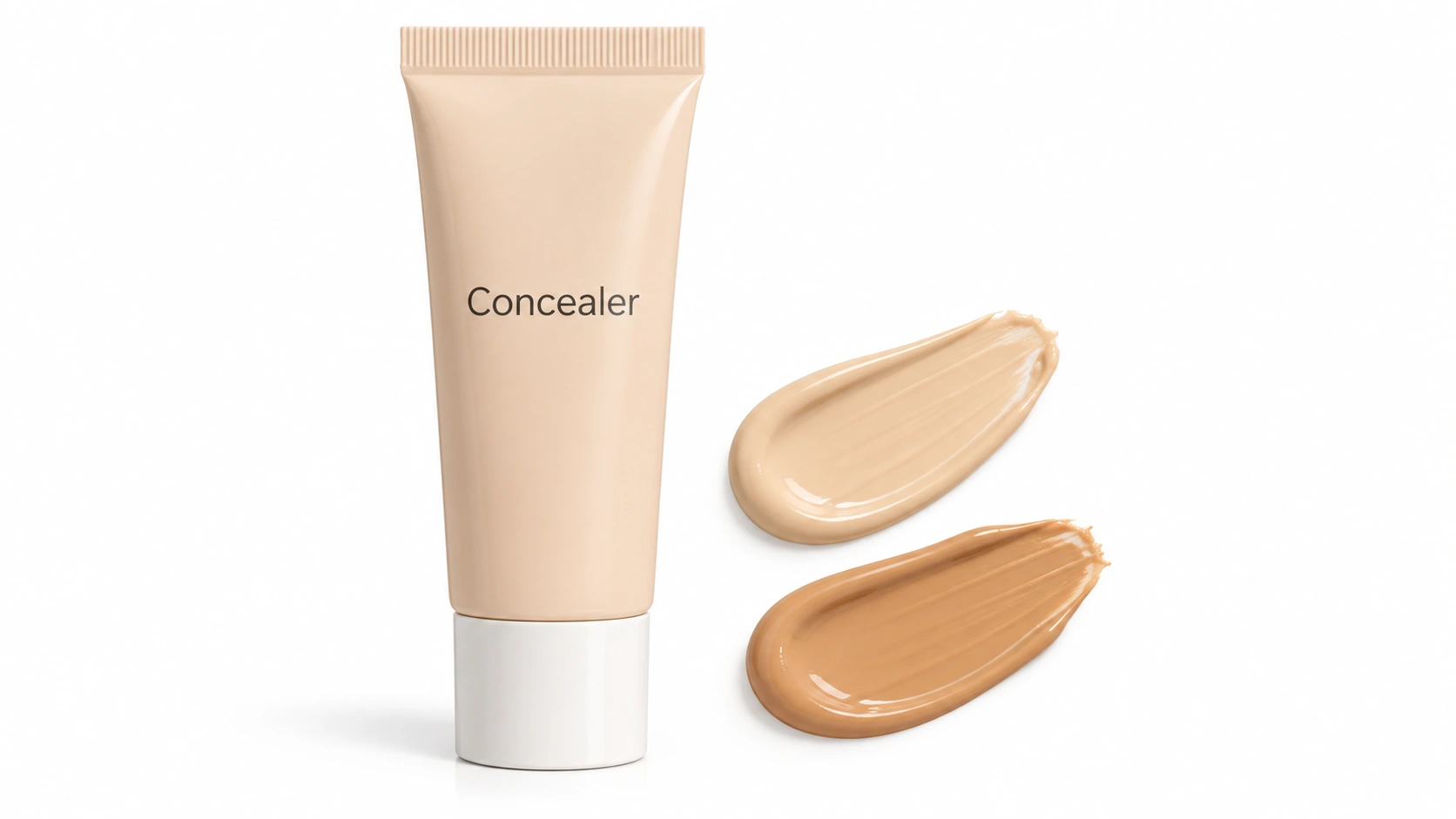
Illustration of collagen supplement tub and scoop of powder.

Collagen supplements

Limited evidence

Neither collagen supplements nor drinking more water has been shown to prevent stretch marks. The tearing happens in the supportive layer during a rapid stretch under hormonal influence, and nothing taken by mouth has been shown to change that. Family history is doing most of the work here, and no supplement changes it.

Existing illustration of Camouflage makeup.

Self-tanner and camouflage makeup

Listed

Applied over the marks themselves rather than around them, self-tanner brings pale marks closer to the surrounding color and substantially reduces how visible they are on a given day. Camouflage makeup does the same for a single occasion. Neither changes the scar, and both need repeating, but for mature marks they do more for appearance than most of the creams sold for the purpose.

Six retinol products lined up, including SkinCeuticals Retinol 0.5, Murad, CeraVe, First Aid Beauty, RoC and Replenix

Retinol

Limited evidence

The over-the-counter version of tretinoin, and weaker. It is a reasonable thing to try on red marks if a prescription is not an option, used nightly over months, but the evidence sits behind tretinoin and the results are smaller. It has nothing to offer white marks, and it is not used in pregnancy.

Cica

Limited evidence

Of the massaged preparations sold for prevention in pregnancy, the ones containing centella asiatica or hyaluronic acid have the only supportive evidence, and it is limited and low quality. That is a long way from the claims on the packaging. Low risk, uncertain benefit, reasonable to try and not to rely on.

None listed
Prescription topicals
Tretinoin — Header Image

Tretinoin

Moderate evidence

The one cream with real evidence behind it, and only on marks that are still red or purple. Used nightly over months it can make new marks narrower and less obvious by prompting collagen while the skin is still remodeling. It irritates, so it is built up slowly. It must not be used in pregnancy or while breastfeeding, which rules out the most common cause of stretch marks.

None listed
Procedures
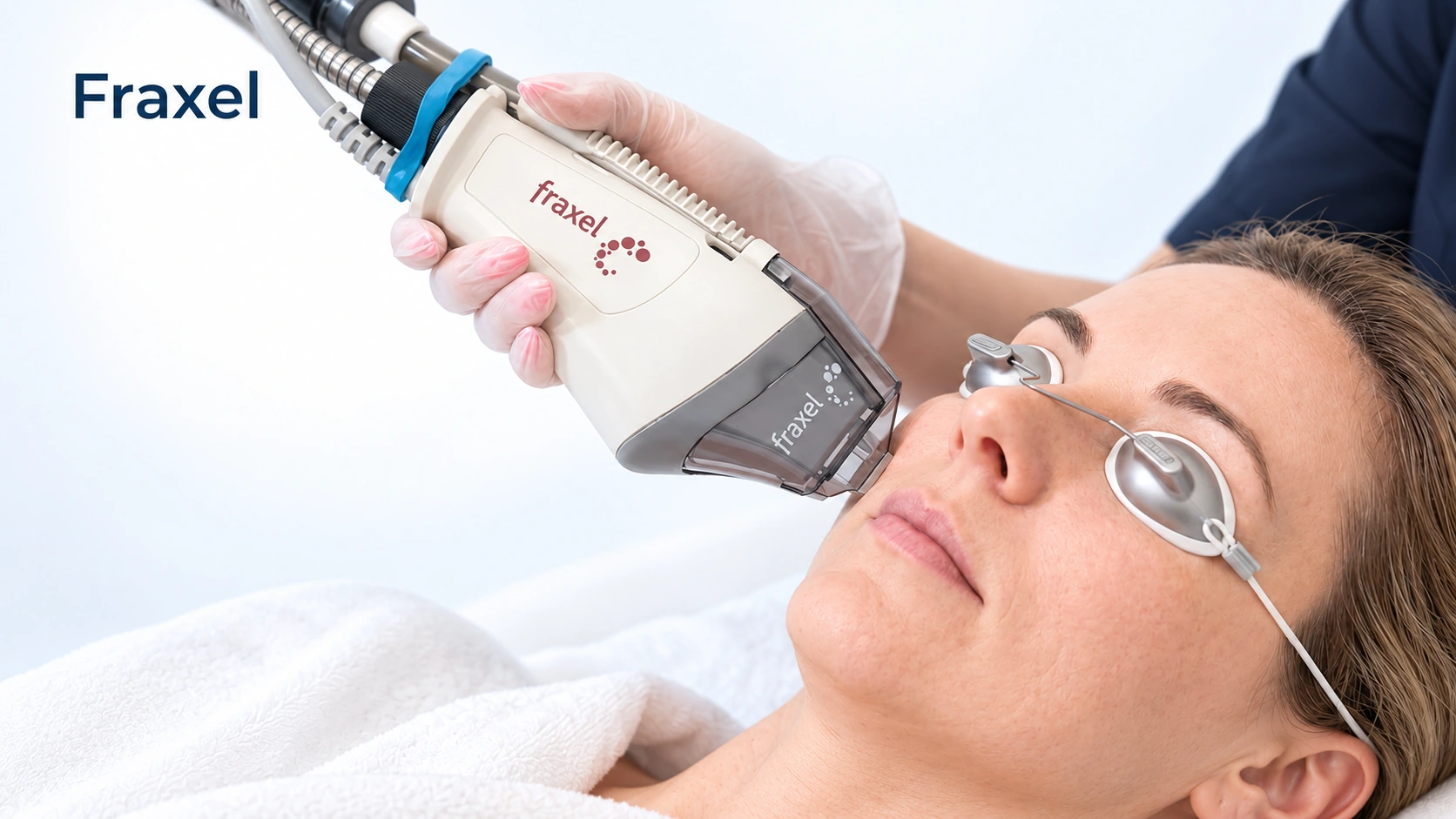
Editorial illustration for Fraxel, based on the entry’s treatment or equipment reference.

Fraxel

Moderate evidence

Fraxel. The best-evidenced device for mature white marks, and useful on red ones too. It puts columns of controlled heat into the supportive layer to force a fresh round of collagen remodeling, over three to six sessions spaced weeks apart. Expect partial improvement in texture and how noticeable they are, not removal. On deeper skin tones it is used at conservative settings after a test patch, because of the pigment risk.

Editorial illustration for Microneedling, based on the entry’s treatment or equipment reference.

Microneedling

Moderate evidence

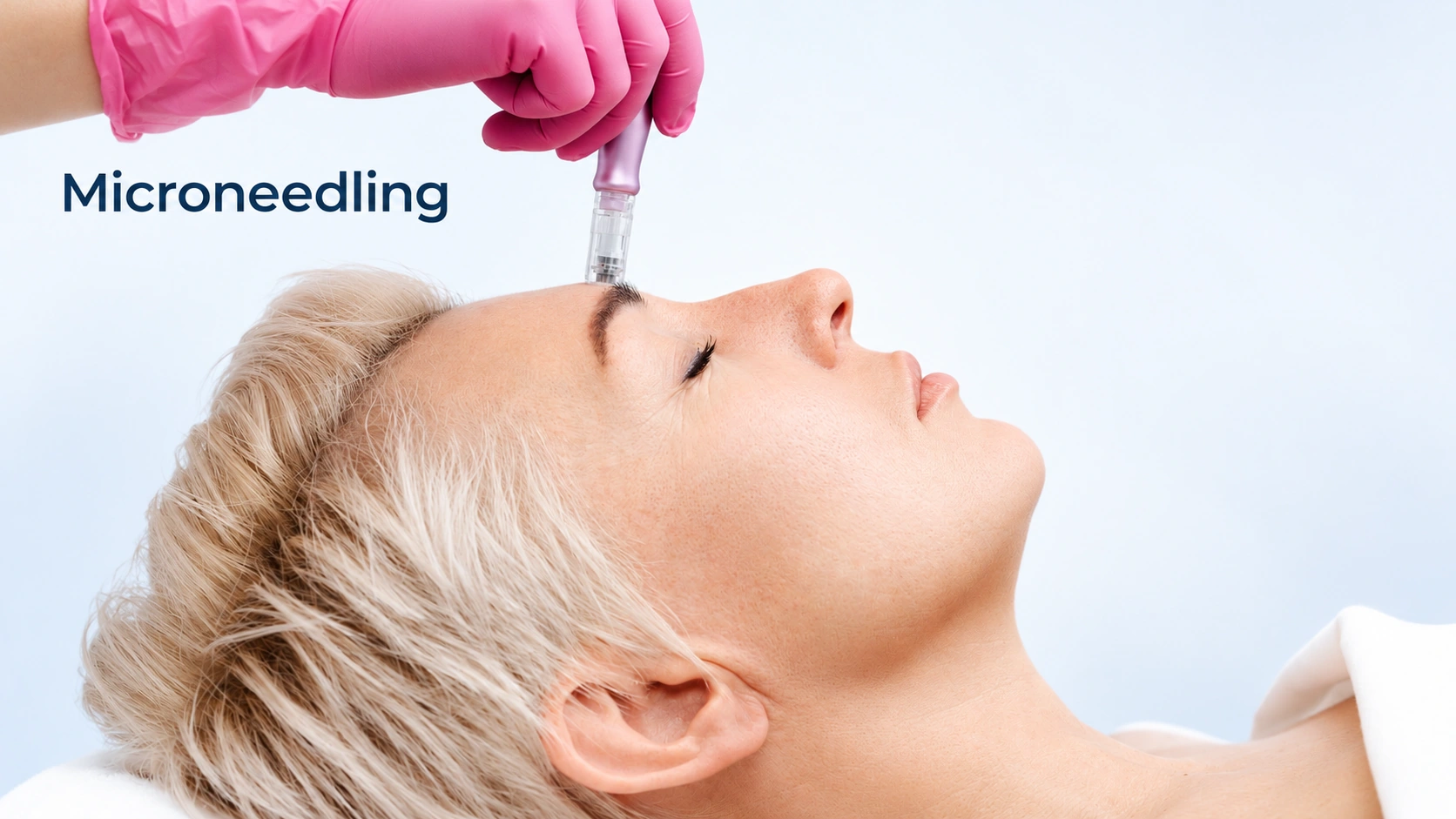
Fine needles make controlled micro-injuries that prompt new collagen in the scarred layer. Improvement is modest and needs a course of sessions, but it carries a lower risk of leaving dark marks than lasers do, which makes it the more sensible first device on deeper skin tones. It works on both red and white marks.

Editorial illustration for Fractional CO2 Laser, based on the entry’s treatment or equipment reference.

Fractional CO2 Laser

Moderate evidence

An ablative laser that removes columns of skin rather than only heating them, so downtime is longer and the response can be larger. It is the highest-risk option on this page for post-inflammatory hyperpigmentation and for thickened scars on the chest, shoulders and upper back, which is why it is not a first choice on deeper skin tones.

V-Beam

Limited evidence

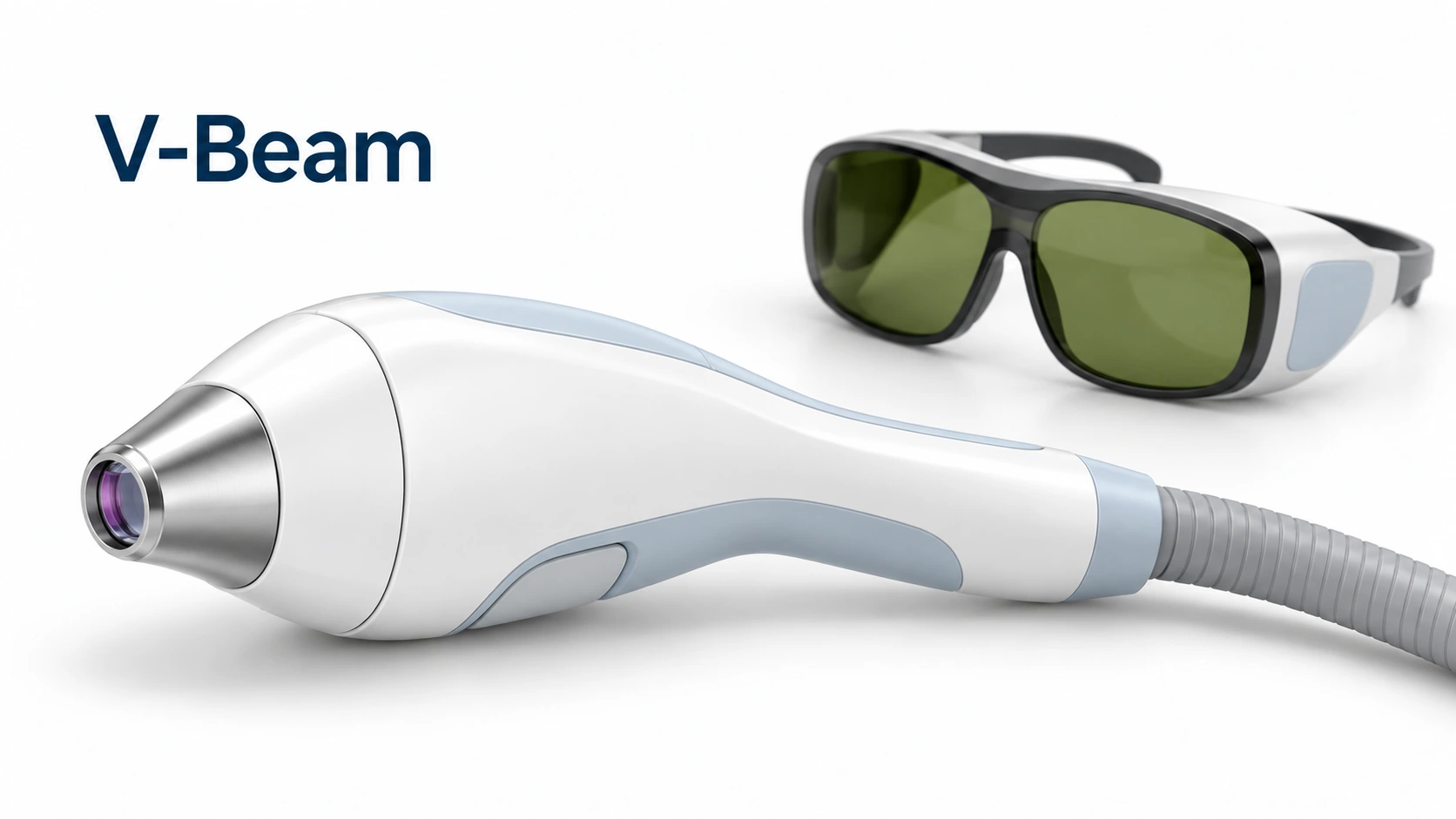
Targets the widened blood vessels that make new marks red or purple, so it is for the early stage only and does nothing for white ones. It can take the color down over a few sessions. On deeper skin tones it carries a real risk of leaving dark marks behind, so it is used cautiously and after a test patch, if at all.

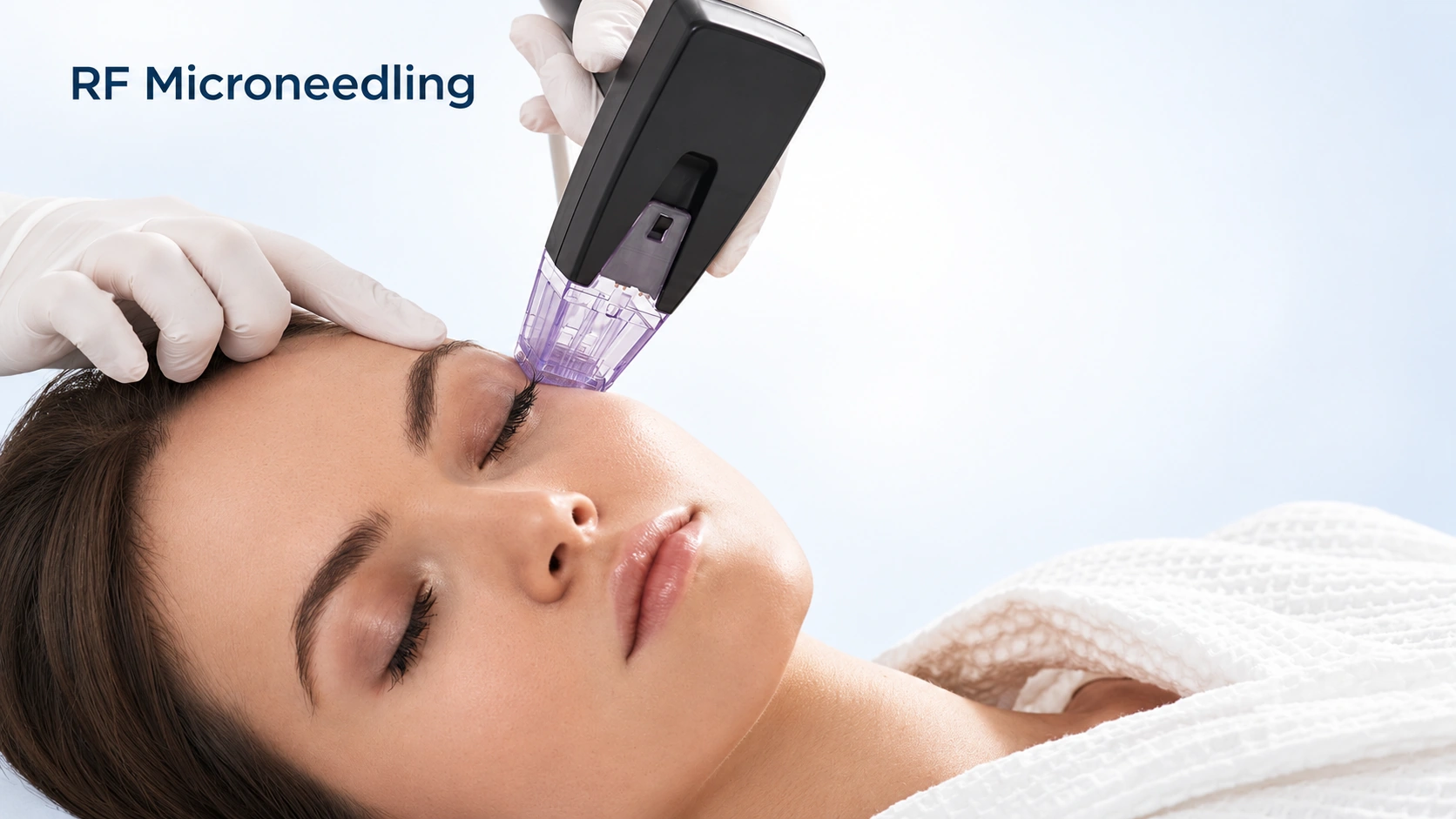
RF Microneedling

Limited evidence

Morpheus8. Microneedling with radiofrequency heat delivered at the needle tips, which reaches deeper into the scarred layer. Reported results are modest improvements in texture and firmness over a course of sessions. Because the energy is not aimed at pigment, it is another option worth discussing on deeper skin tones.

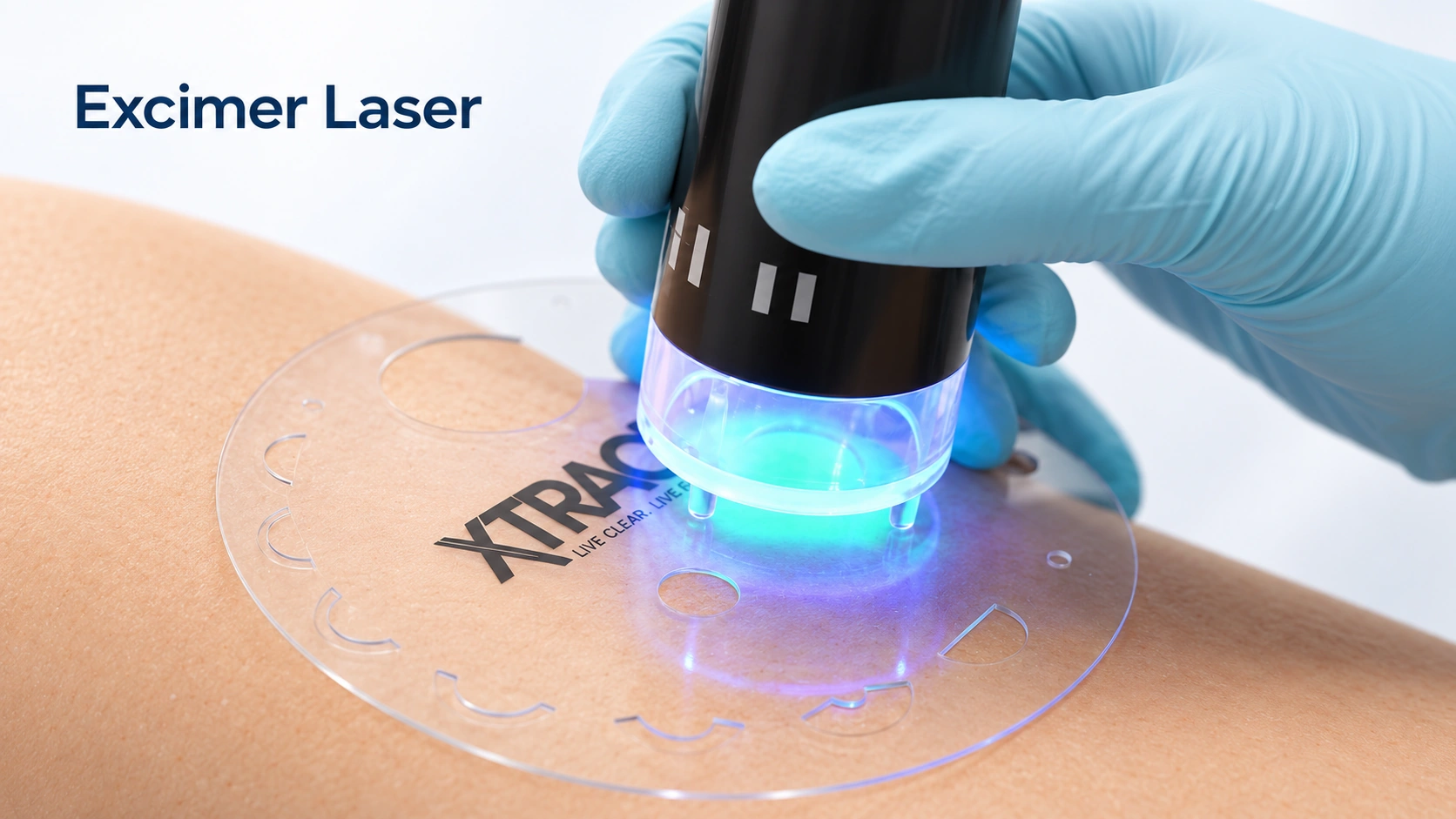
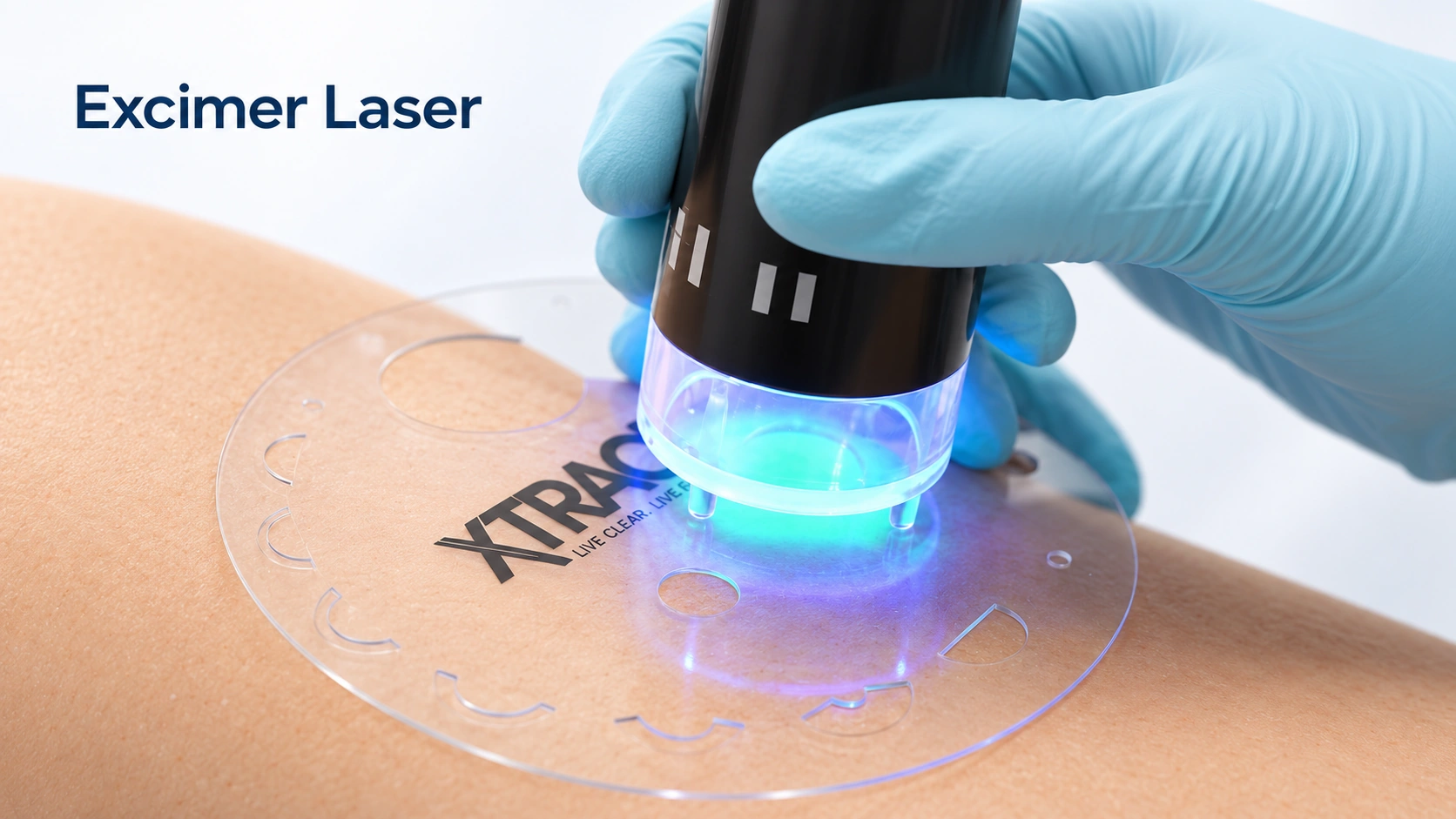
Editorial illustration for Excimer Laser, based on the entry’s treatment or equipment reference.

Excimer Laser

Limited evidence

Targeted ultraviolet light used to bring color back into white marks so they blend with the skin around them. It changes the color difference, not the scar, and the effect fades over months unless it is repeated. Narrowband ultraviolet B is used the same way. It is a cosmetic option rather than a repair.

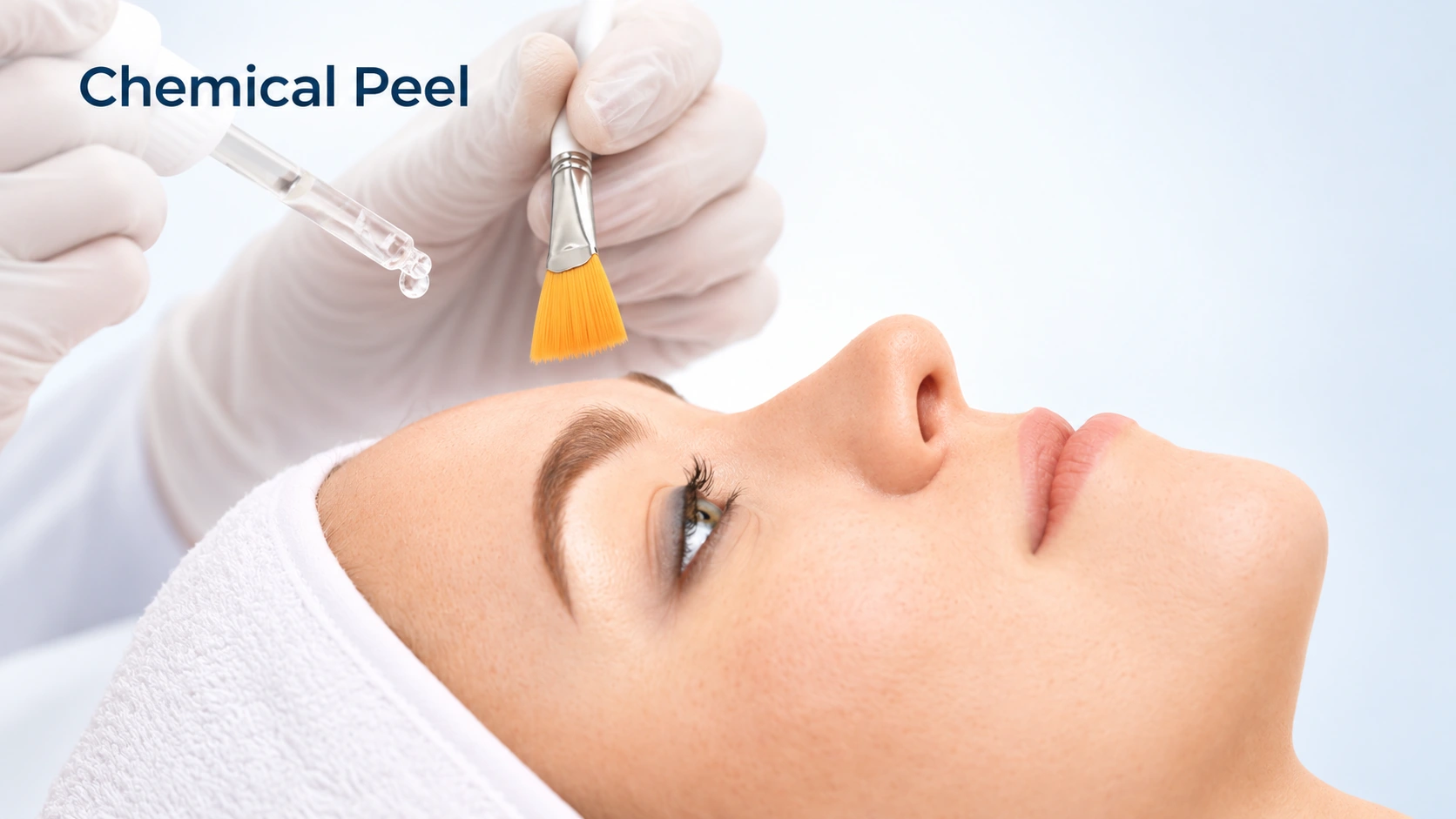
Editorial illustration for Chemical Peel, based on the entry’s treatment or equipment reference.

Chemical Peel

Limited evidence

Medium-depth peels have some evidence for modest improvement in mature marks, mostly when used alongside another treatment rather than on their own. Because they work by controlled injury, the same pigment cautions apply on deeper skin tones, and a test patch is worth insisting on.

Editorial illustration for Microdermabrasion, based on the entry’s treatment or equipment reference.

Microdermabrasion

Limited evidence

It polishes the surface layer, and the tear that made the stretch mark is well below that. It is commonly sold as a stretch mark treatment and the published results are minimal. If a clinic is offering this as their answer, it is worth asking what else they do.

None listed

Outlook

Long term

New stretch marks often become paler and less noticeable over time, but mature marks usually remain. Treatment may improve their appearance, especially while marks are newer, but results vary and complete removal is unlikely.

Depressed scars generally persist, although their appearance may soften over time. Procedures can improve selected scars, but complete removal is unlikely and results depend on scar type.

Complications

Possible complications
  • The scar itself is fixed
More details

The scar itself is fixed
Little further change. They keep becoming less noticeable as contrast drops, but the scar is fixed. Stretch marks do not become dangerous and do not need treatment.

Scars can affect confidence; symptoms and treatment options depend on scar type.

When to get help

When to get help

Seek assessment for sudden extensive marks without an obvious growth or weight change, especially with steroid exposure or other hormonal symptoms.

Have a new growing, bleeding or ulcerated scar-like lesion examined before cosmetic treatment.

Common questions

Stretch Marks:Will my stretch marks ever go away completely?

No. They are scars, and the change in the dermis is permanent. What does happen reliably is fading - the red or purple drains out over one to three years and the marks go pale. Most people stop seeing them long before they would call them gone.

Stretch Marks:Can I prevent them in pregnancy?

Not dependably. Family history is the strongest predictor and you cannot change it. Steady weight gain rather than bursts may help. The creams and oils sold for prevention have weak evidence, and cocoa butter was tested without clear benefit. A plain moisturizer is comfort, not prevention.

Stretch Marks:Does anything work on white stretch marks?

Some things give modest improvement. Fractional non-ablative laser has the most evidence; microneedling has reasonable evidence with lower pigment risk on deeper skin tones; light-based treatment temporarily brings color back so marks blend. All need several sessions and all give partial results.

Stretch Marks:Why do I have them when I am not overweight?

Body size is only one factor. Growth spurts, rapid muscle gain, pregnancy and hormone changes cause marks at any size, and genetics decides how susceptible your skin is. Marks across the shoulders and upper back in a fit young man are common.

Stretch Marks:Are the creams sold for stretch marks worth buying?

For comfort and itching, a plain moisturizer is worth it and need not be expensive. For removing or preventing marks, the evidence does not support the prices. Prescription tretinoin is the one topical with real evidence; it only works while marks are red, and not in pregnancy.

Stretch Marks:Should I get laser treatment, and how much improvement should I expect?

Reasonable if they bother you, with realistic numbers. Published results describe partial improvement in color and texture over several sessions, not clearance. Ask the provider what percentage improvement they expect for your marks, how many sessions that assumes, and to see their before-and-after photographs on skin like yours.

Atrophic Scars:What is Atrophic Scars?

Depressed scars caused by loss or altered organisation of supporting tissue.

Atrophic Scars:What can I do day to day?

Protect from sun, avoid picking and control active inflammation before elective scar procedures.

Atrophic Scars:When should I get medical advice?

Have a new growing, bleeding or ulcerated scar-like lesion examined before cosmetic treatment.

Sources

Sources and further reading

  1. DermNet
  2. Acne scarring
Dermapedia on YouTube