Rosacea vs Post-Inflammatory Redness

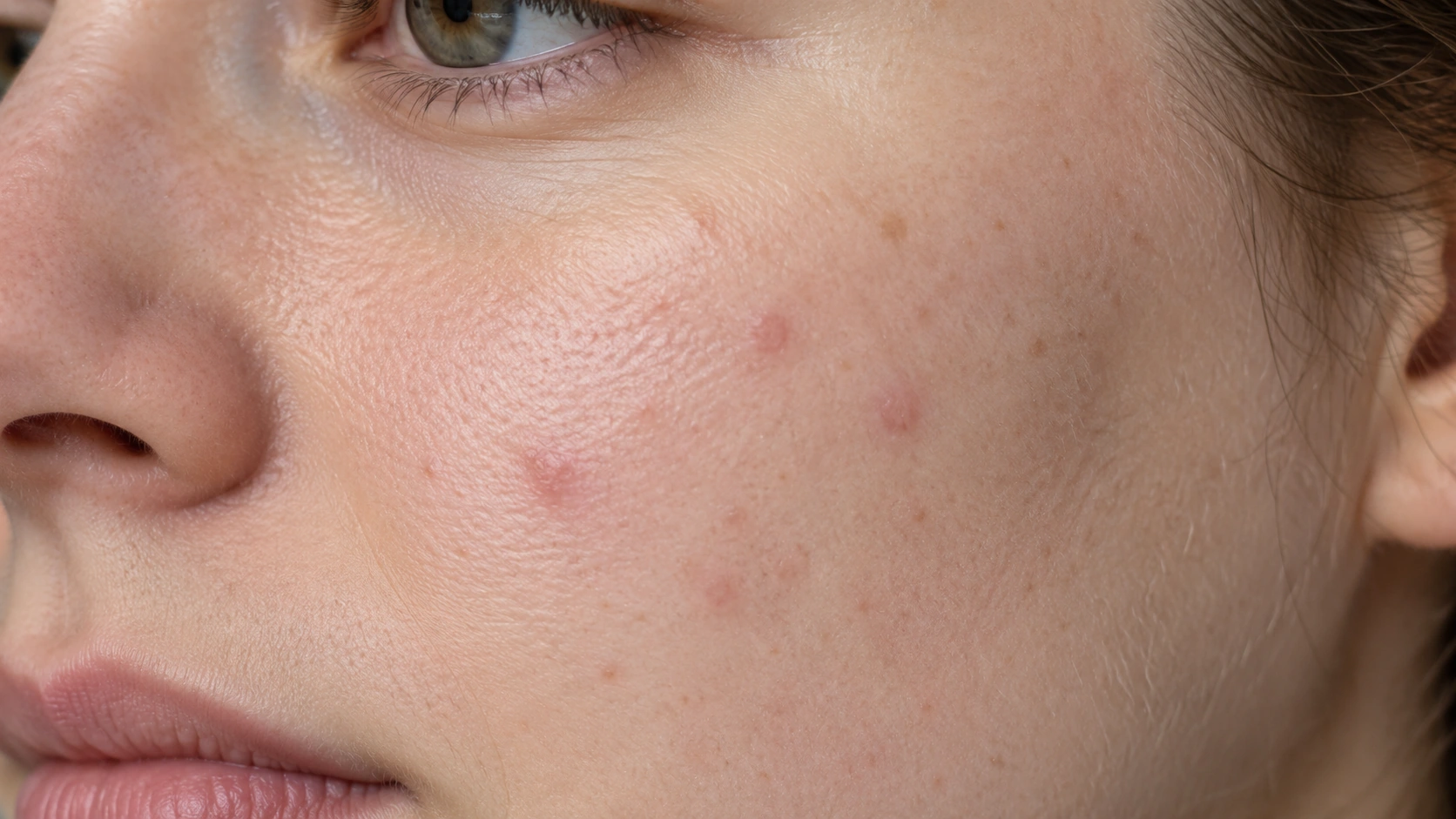
Post-inflammatory redness is the flat pink or red mark left behind after a spot heals. It comes from widened blood vessels rather than pigment, it is not a scar, and it usually fades on its own.

Research updated 2026-10-23
Redness and fine superficial vessels across a light-skinned cheek and nose.Post-Inflammatory Redness.

Key differences

The same eight facts on every condition comparison.

Usual age
30 to 60
Teens and adults
Where
Cheeks, nose, chin, forehead
Where acne was
Main sign
Flushing and lasting redness
Flat pink or red mark
Itch or pain
Burning or stinging
Neither
Contagious
No
No
Long term
Long-term, flares
Fades over months
Scars
Rarely
No
Who gets it
Adults, often fair skin
Lighter skin tones most

What is it?

Rosacea
Post-Inflammatory Redness
What is it?

It is a facial inflammatory condition.
It affects the central face through inflammatory and blood-vessel processes.

It is not ordinary acne.
Its bumps can resemble acne lesions.

It takes several forms.
Flushing, redness, bumps, thickening or eye symptoms can occur.

Eyes need specific review.
Facial creams do not treat eye symptoms.

Overview
A long-term inflammatory condition that mainly affects the center of the face. It can cause flushing, lasting color changes, sensitive skin, and acne-like bumps.

It is lingering redness.
Red or purple color remains after inflammation settles.

Blood vessels are involved.
Changes in superficial vessels and healing tissue are responsible.

It is a description.
It does not explain every persistent red mark.

Color differs from texture.
A flat mark is different from an indented or raised scar.

What it looks like

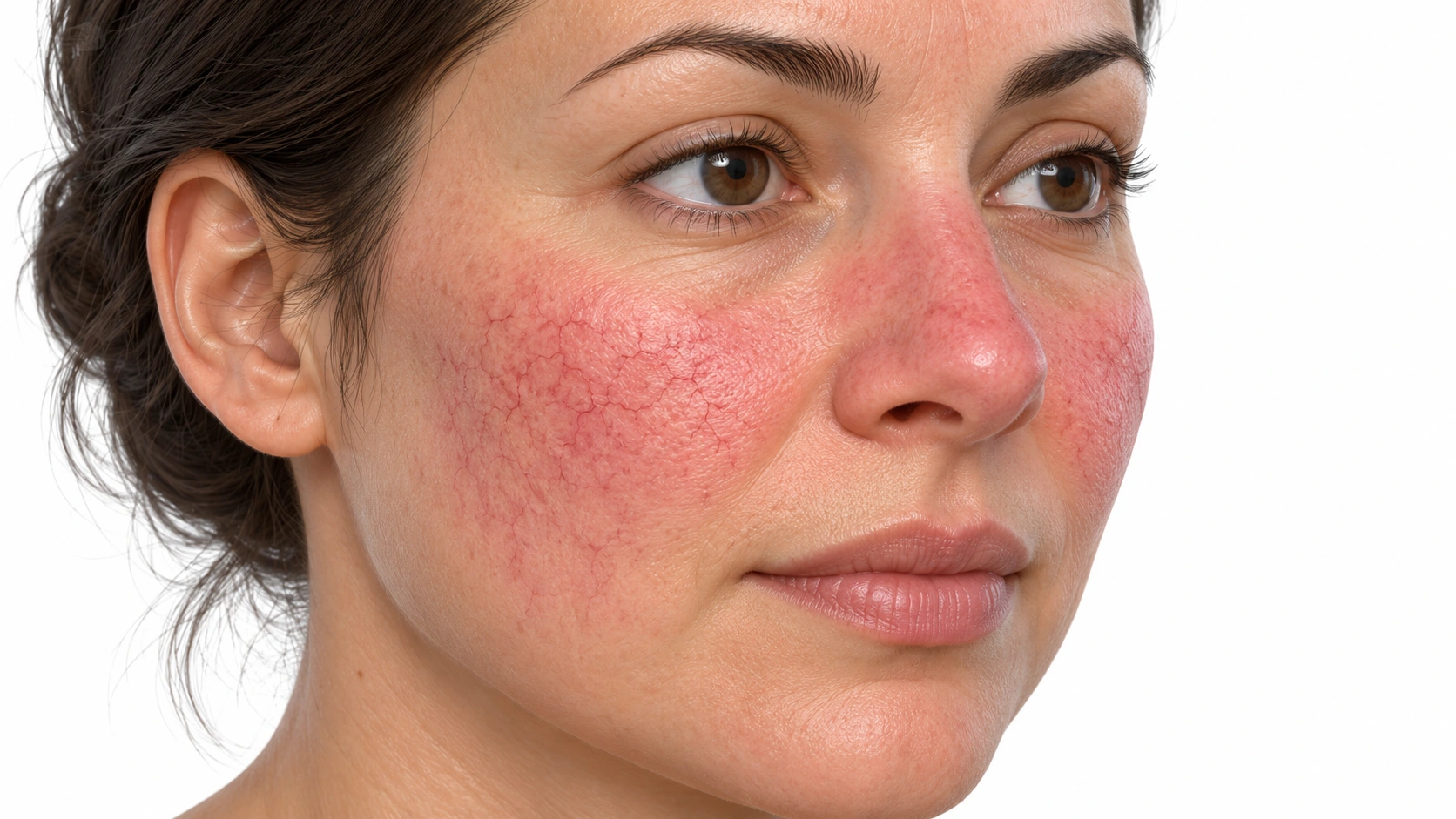
Rosacea

Generated illustration of Type 1 Rosacea.

Erythematotelangiectatic rosacea Type 1 · Redness, flushing and visible vessels

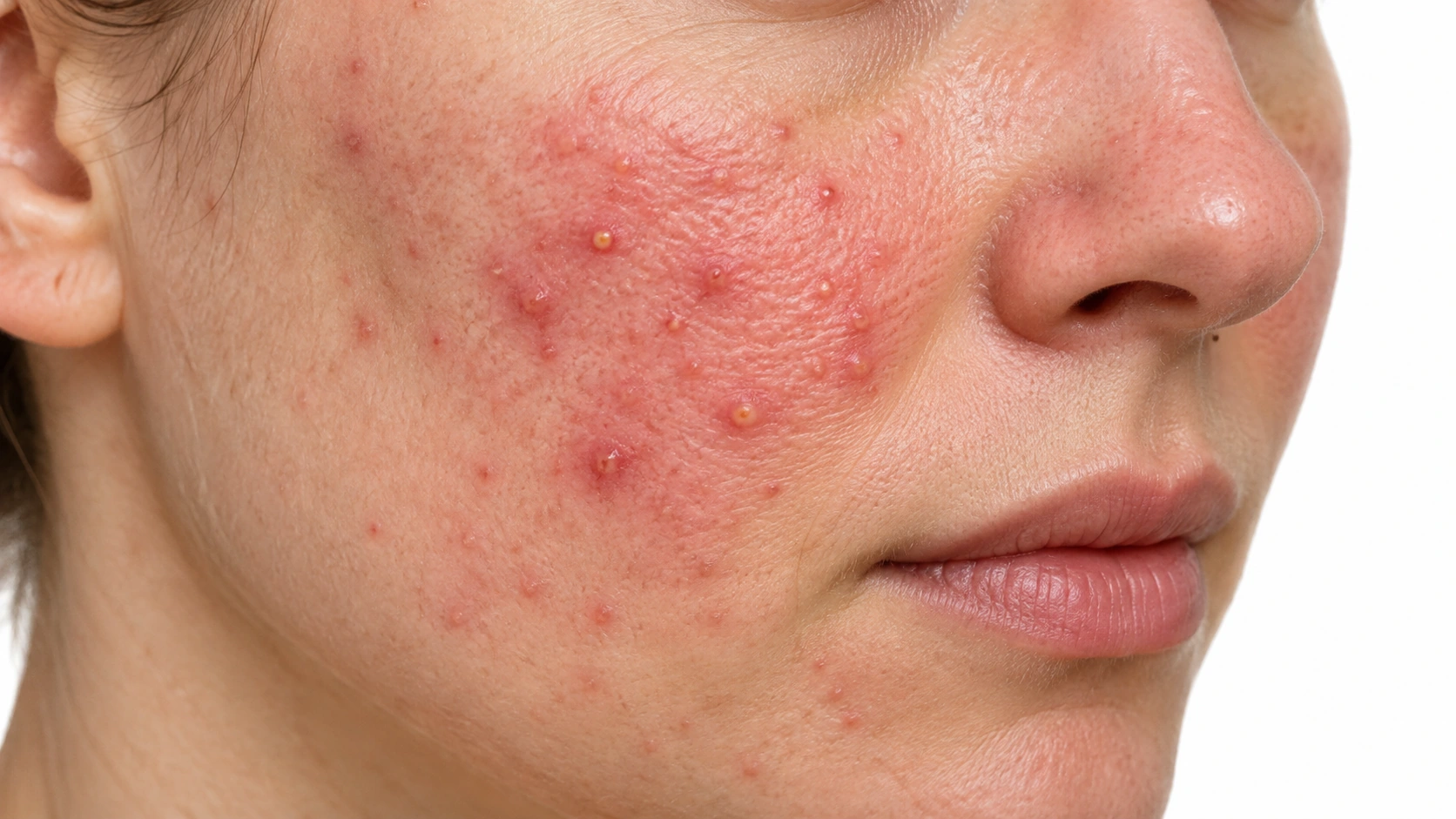
Red bumps and pustules on the cheeks from rosacea.

Papulopustular rosacea Type 2 · Bumps and pimples

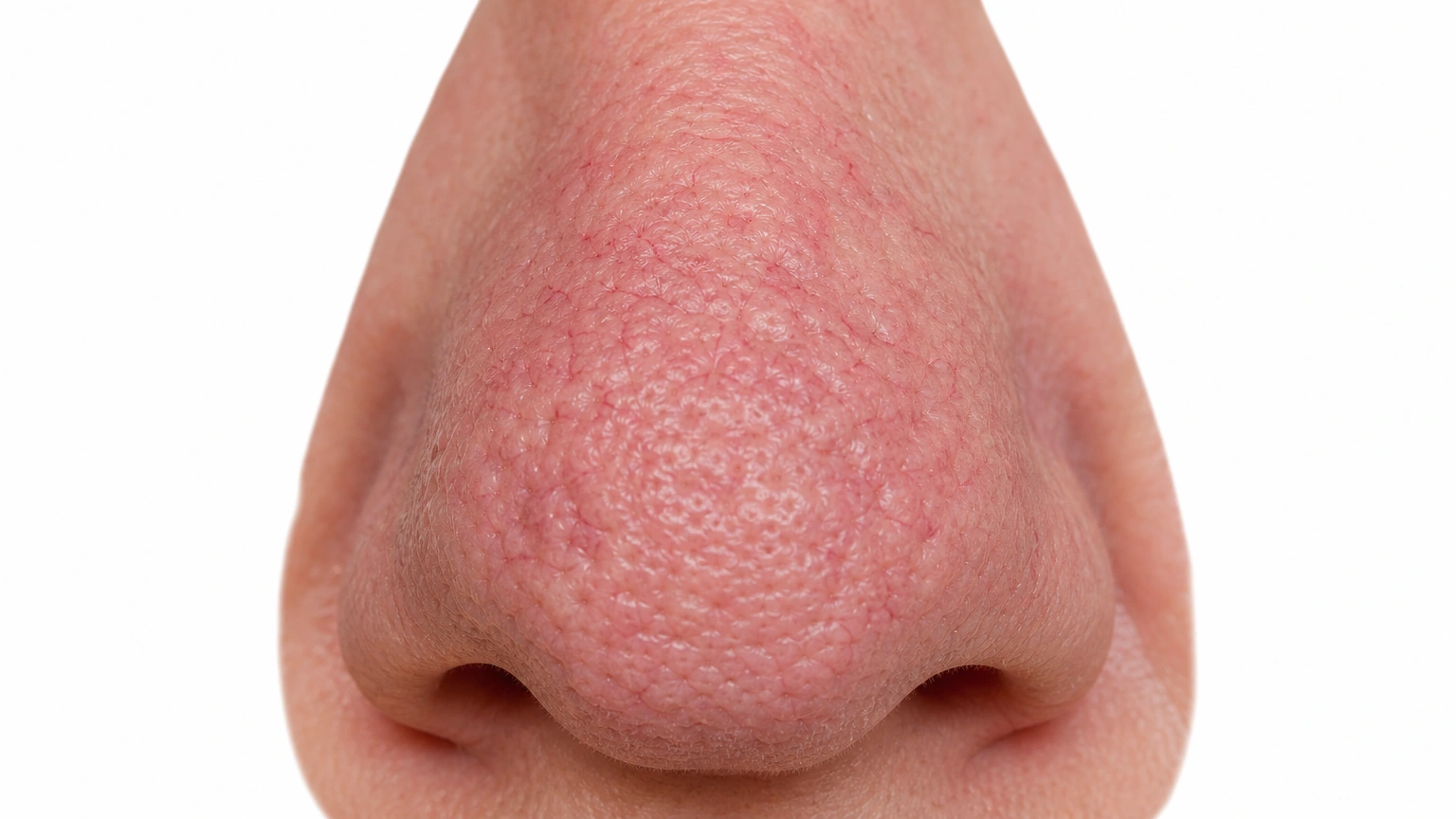
Thickened pink bumpy nasal skin with prominent pores, representing phymatous rosacea.

Phymatous rosacea Type 3 · Thickened skin

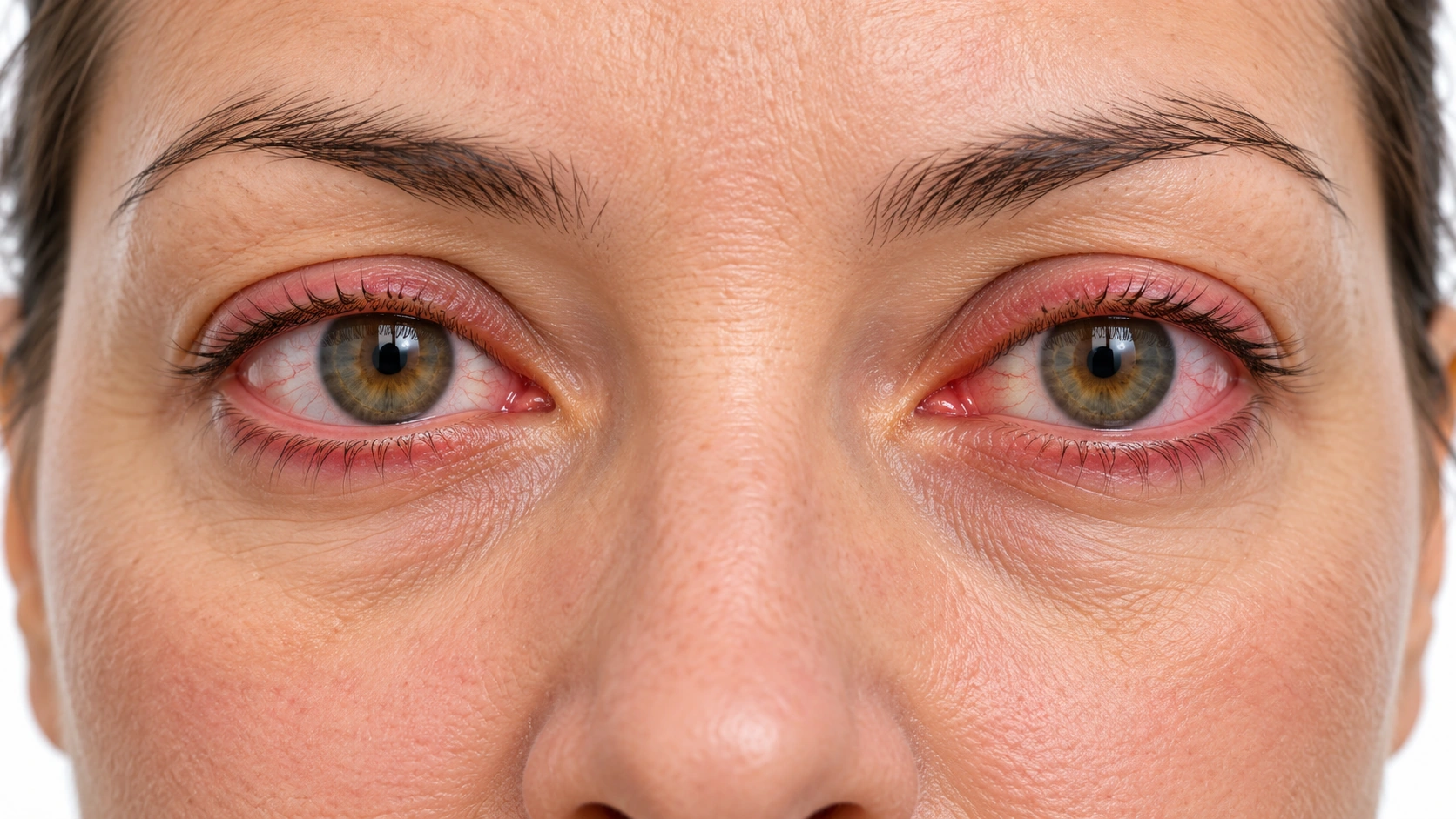
Generated illustration of Ocular Rosacea.

Ocular rosacea Type 4 · Eye involvement

Post-Inflammatory Redness

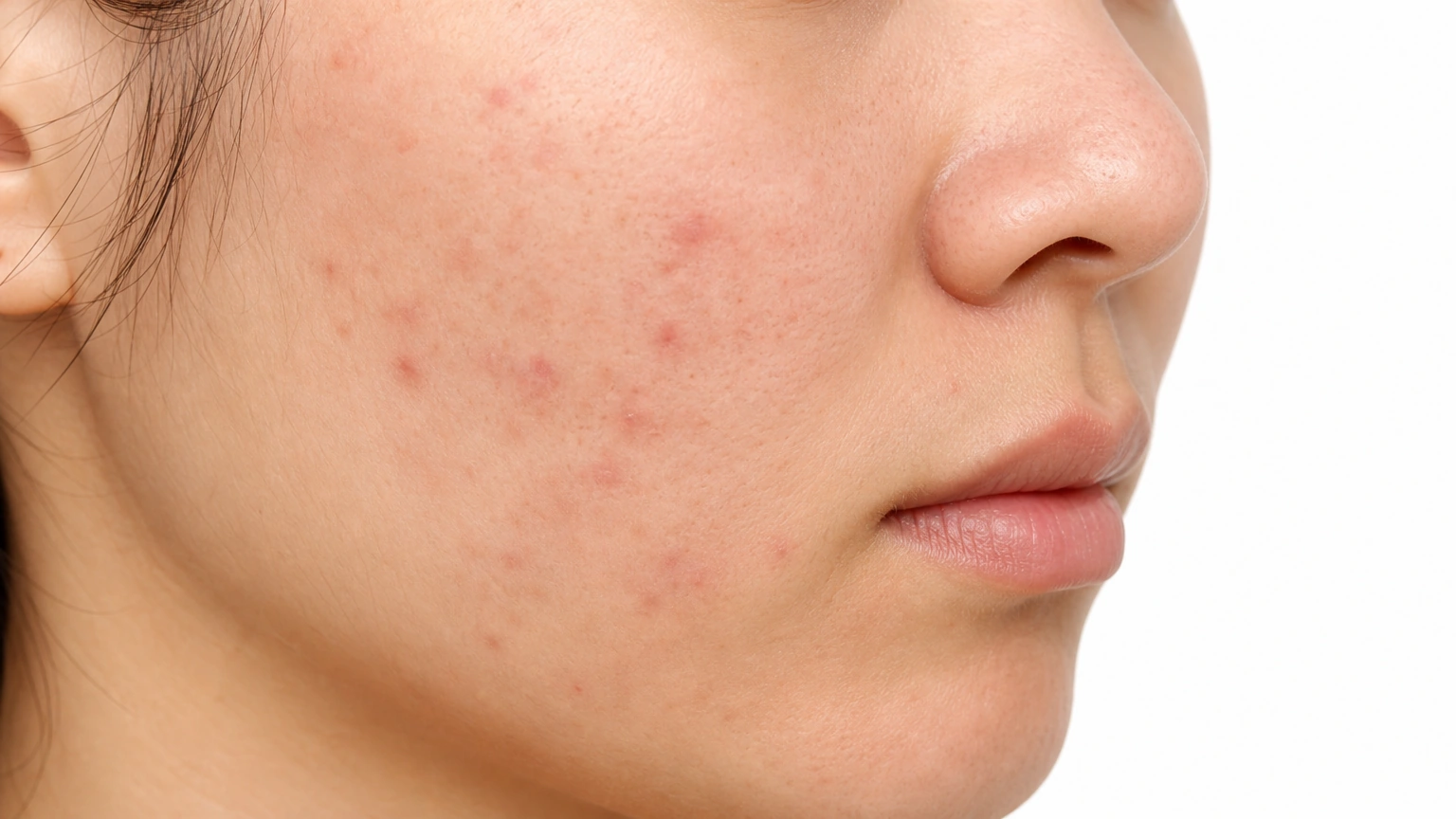
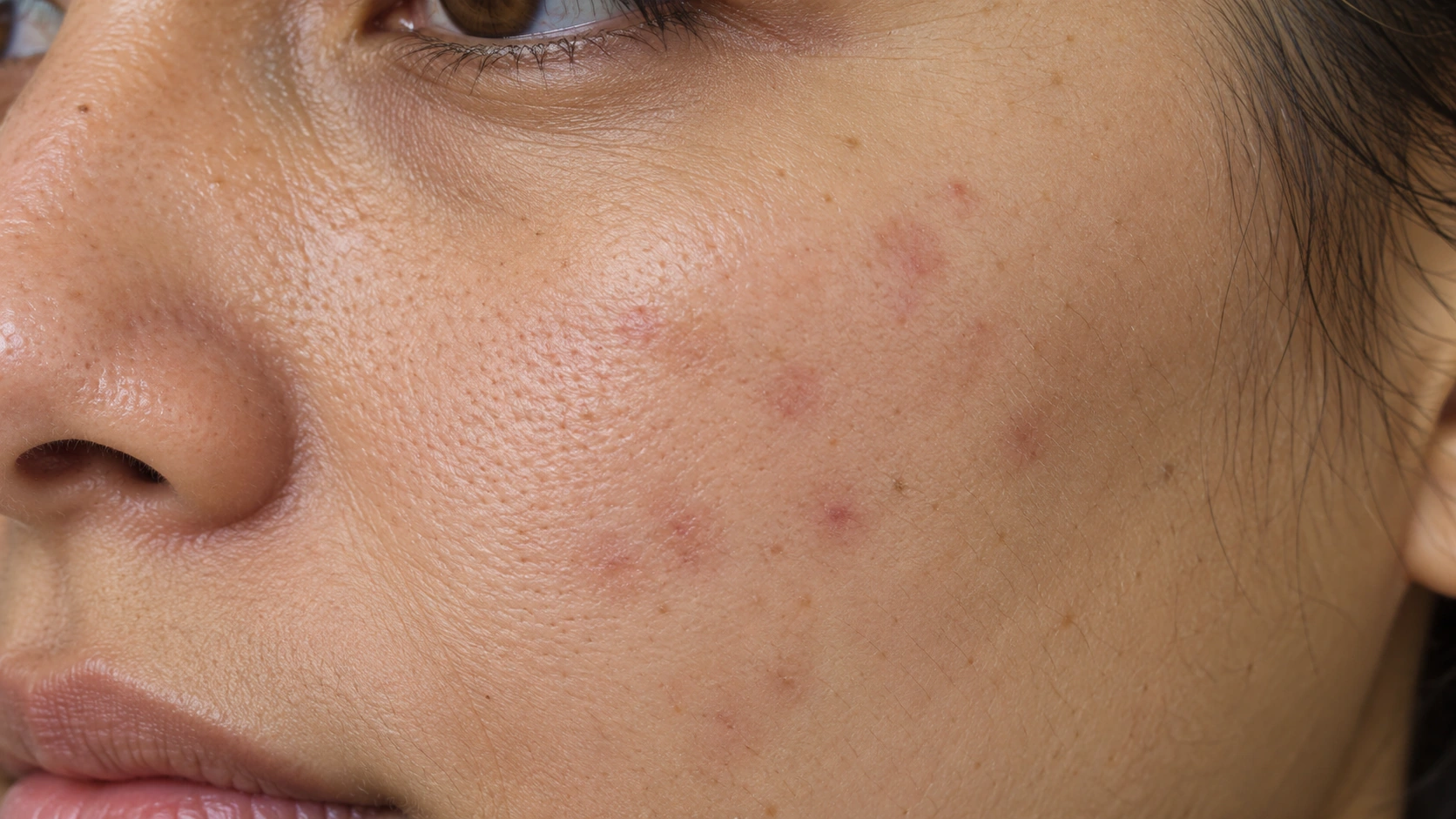
Flat pink-red residual marks across the cheek after acne.

Flat red marks Left after pimples heal.

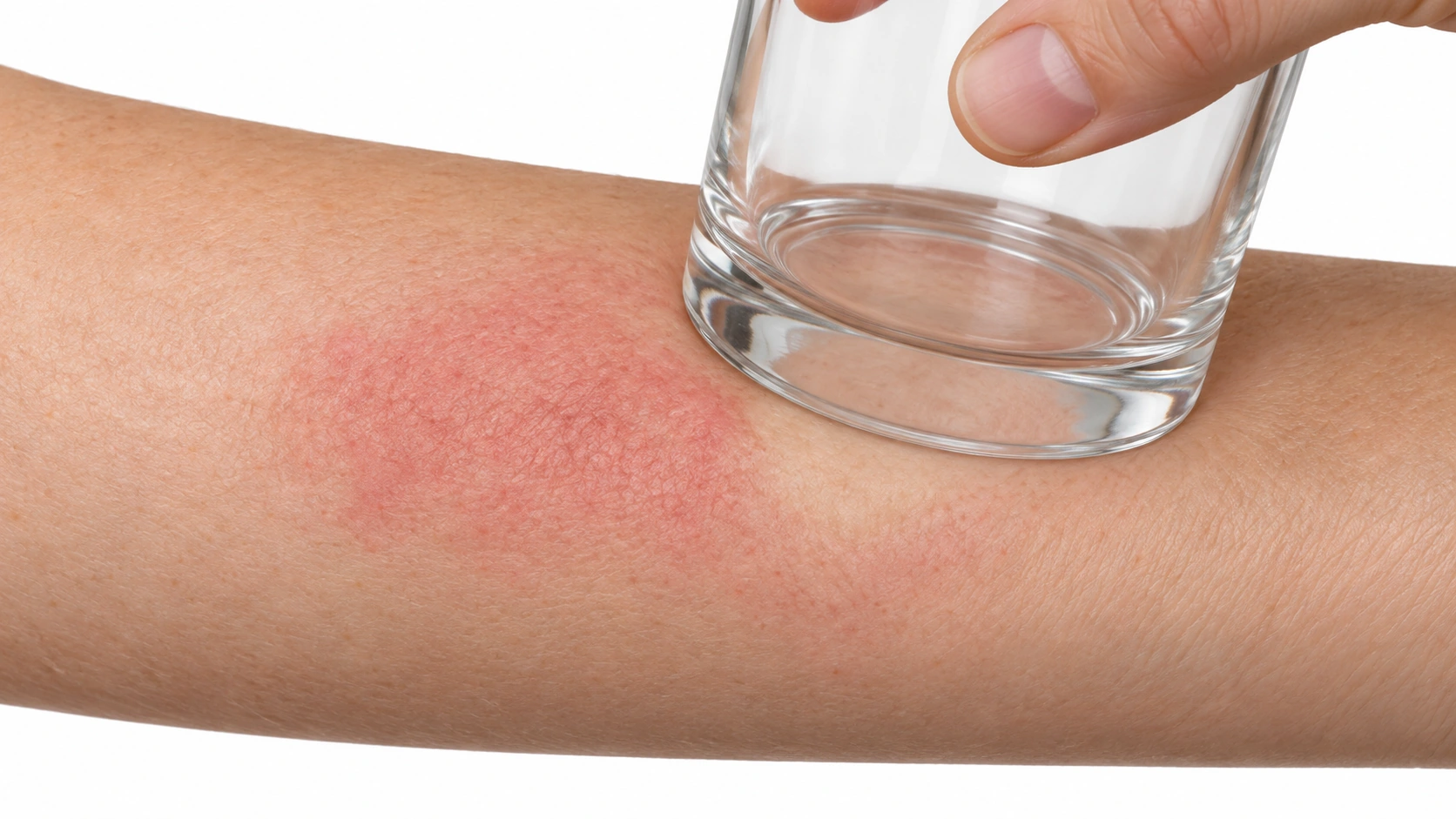
Red mark fading under pressure from a clear glass.

Blanches with pressure Fades when pressed.

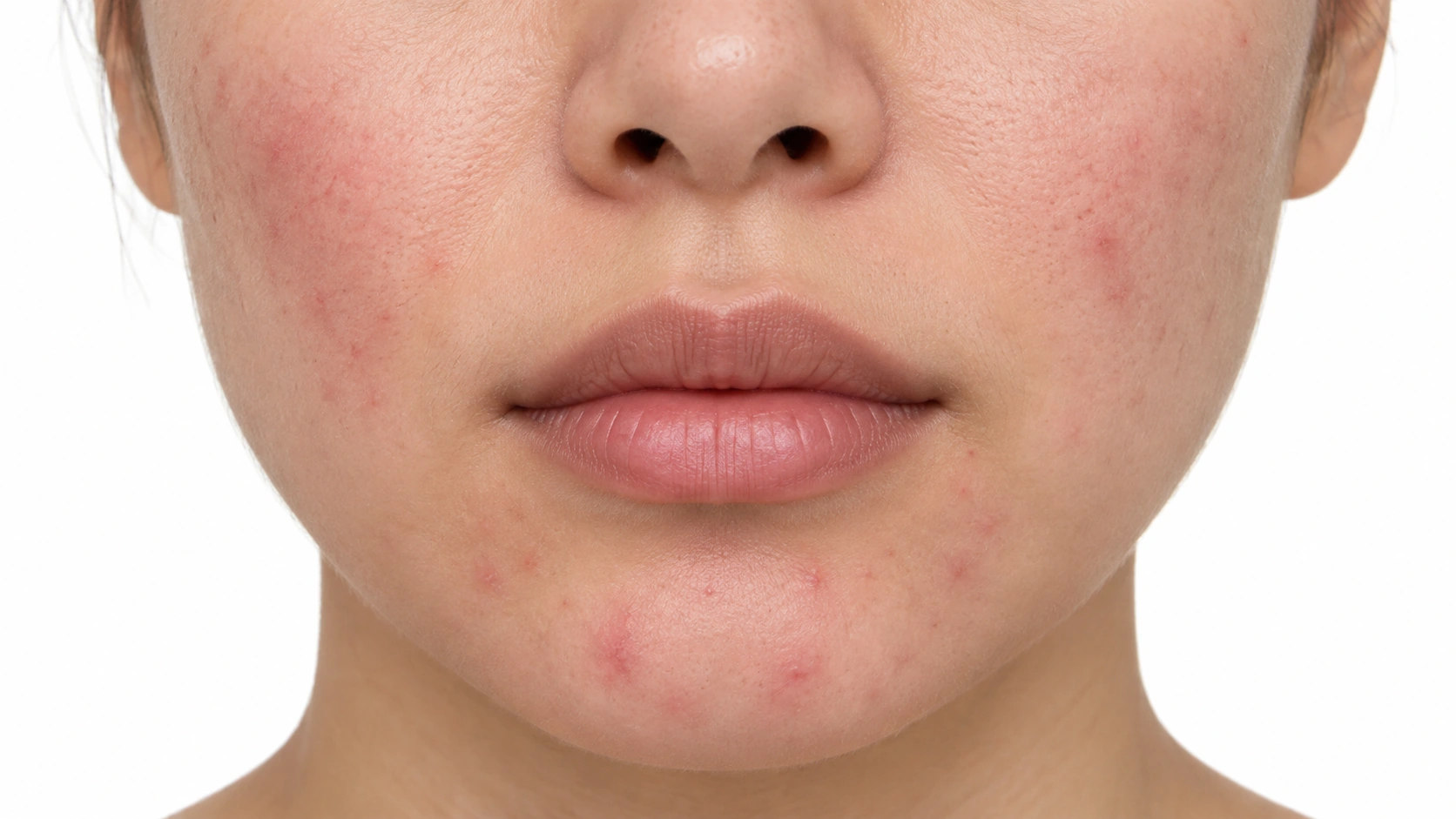
Red marks scattered on the chin.

Cheeks and chin Common acne areas.

Skin tones
Redness and fine superficial vessels across a light-skinned cheek and nose.
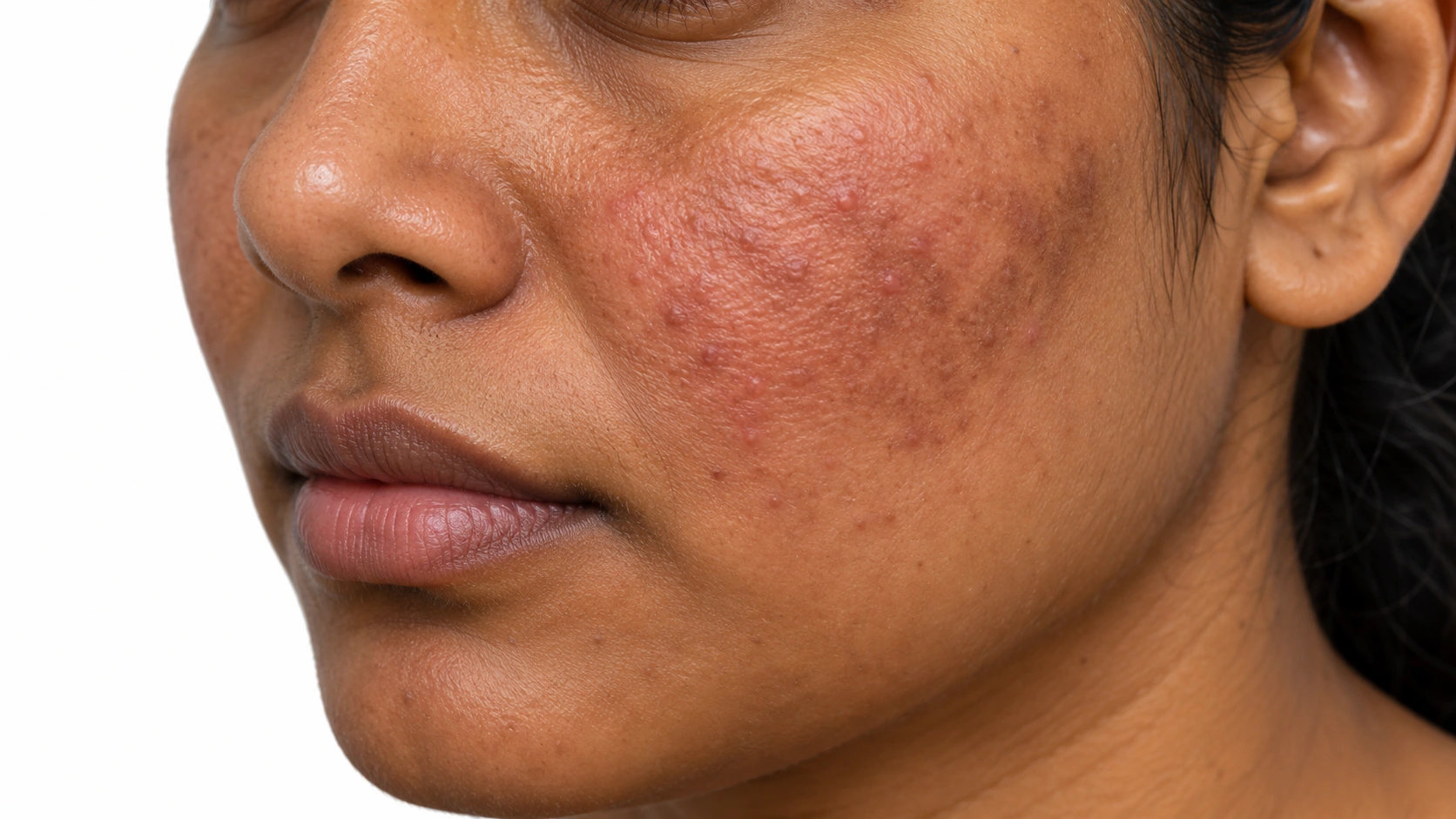
Cheek redness with small bumps on medium skin.
cheek redness, small bumps and fine superficial vessels on brown skin, representing rosacea.
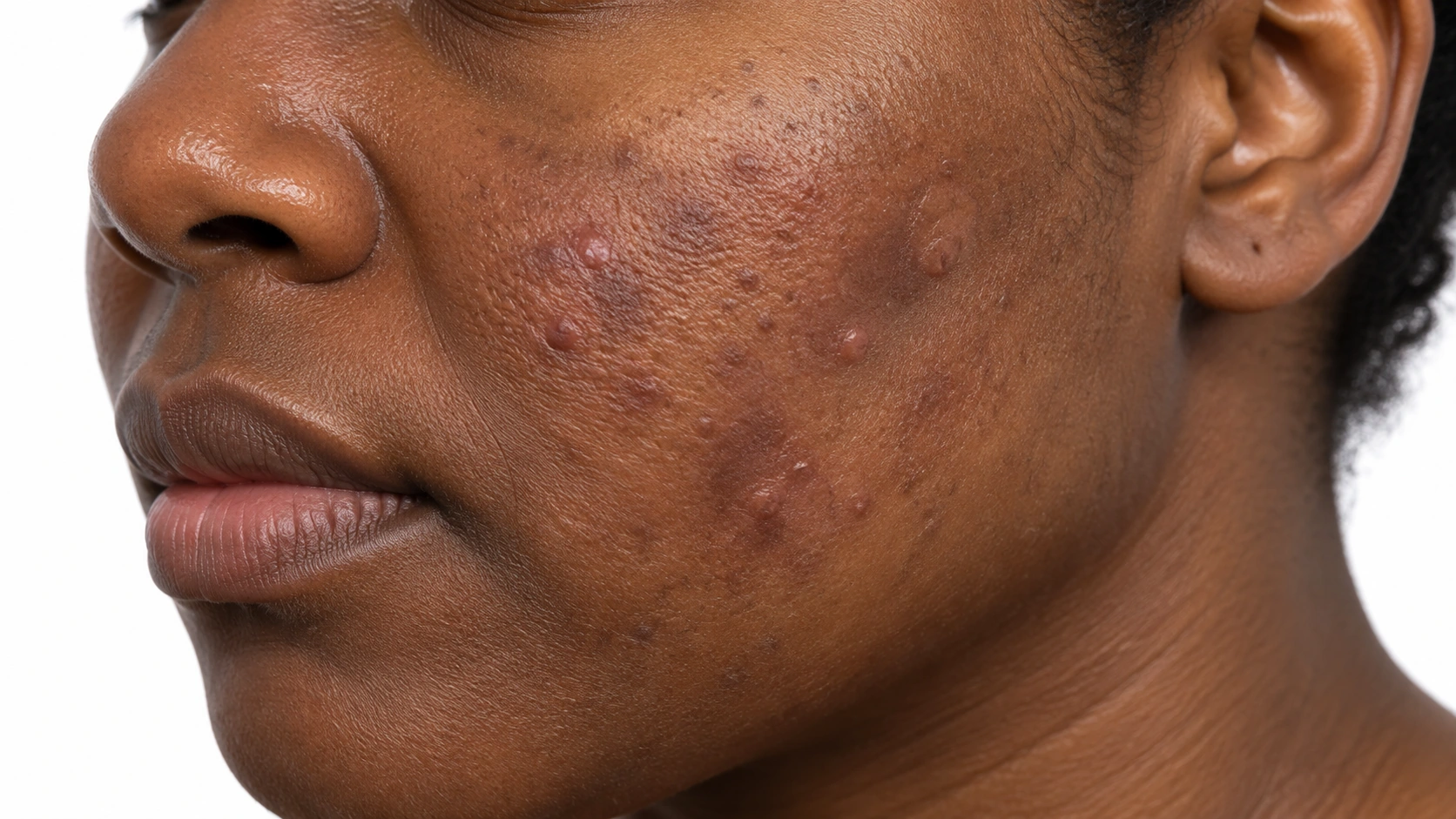
dusky cheek patches and small bumps on deep brown skin, representing rosacea.
Post-Inflammatory Redness.
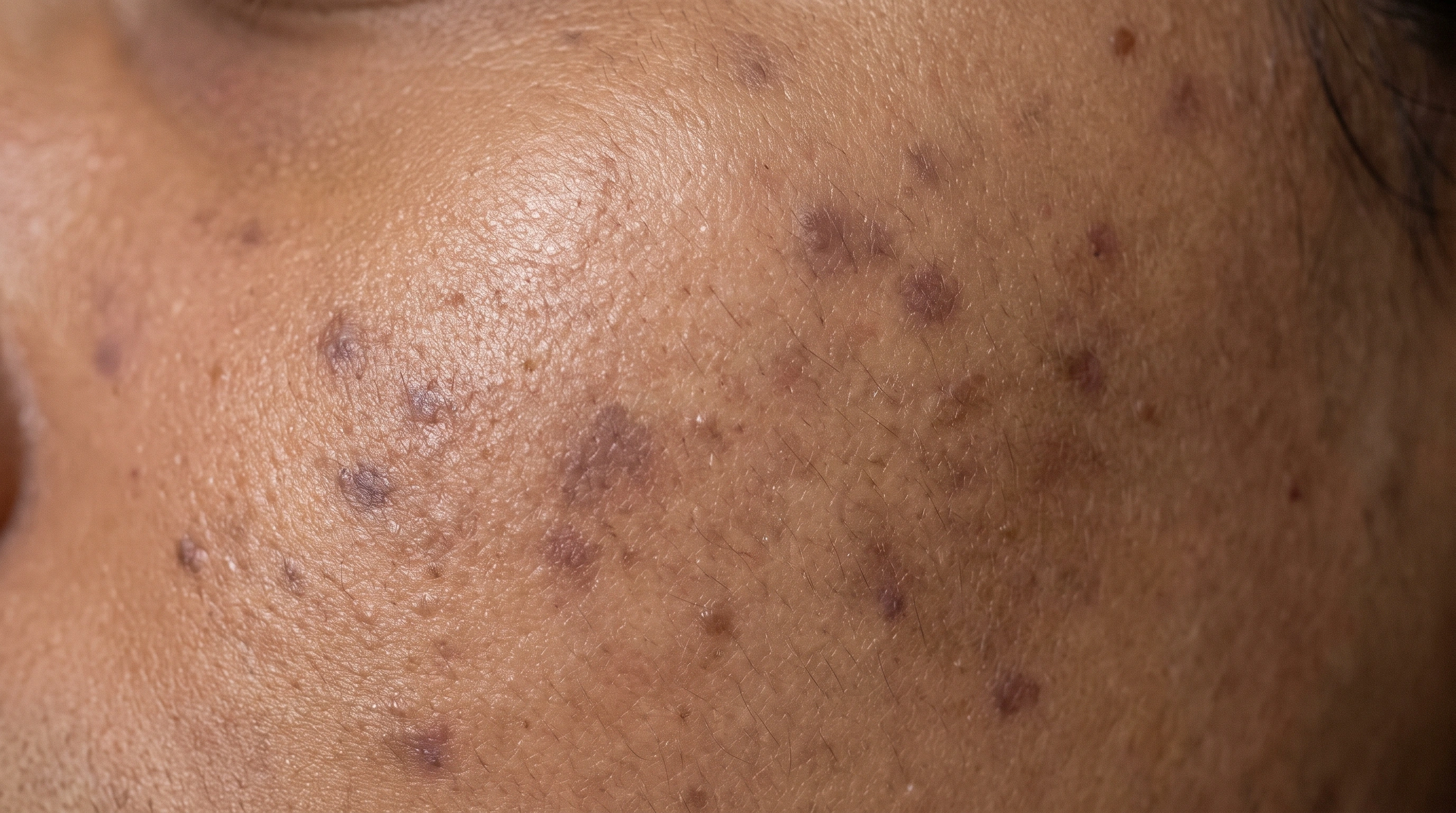
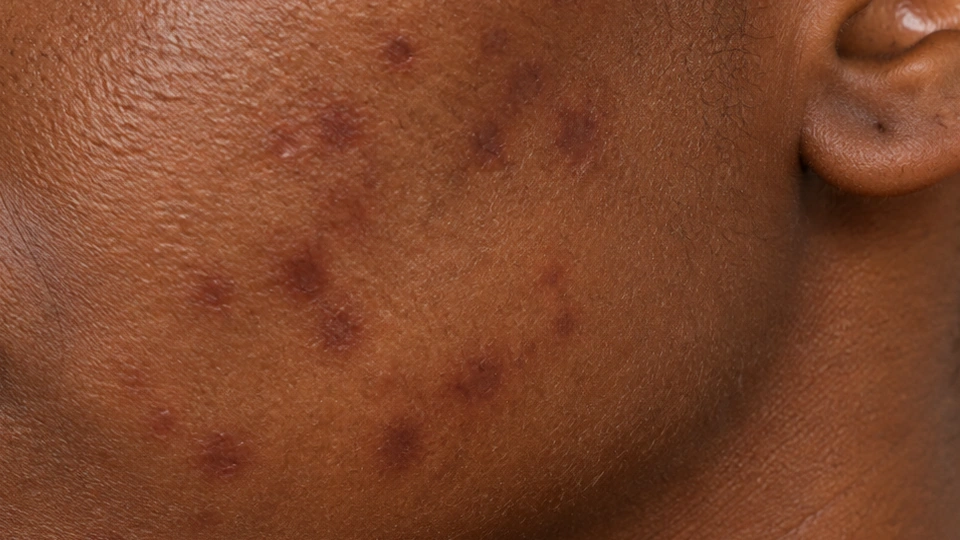
A cheek on medium brown skin with two kinds of mark side by side: flat brown marks where some spots healed and duskier violet-red marks where others did, all level with the surrounding skin.
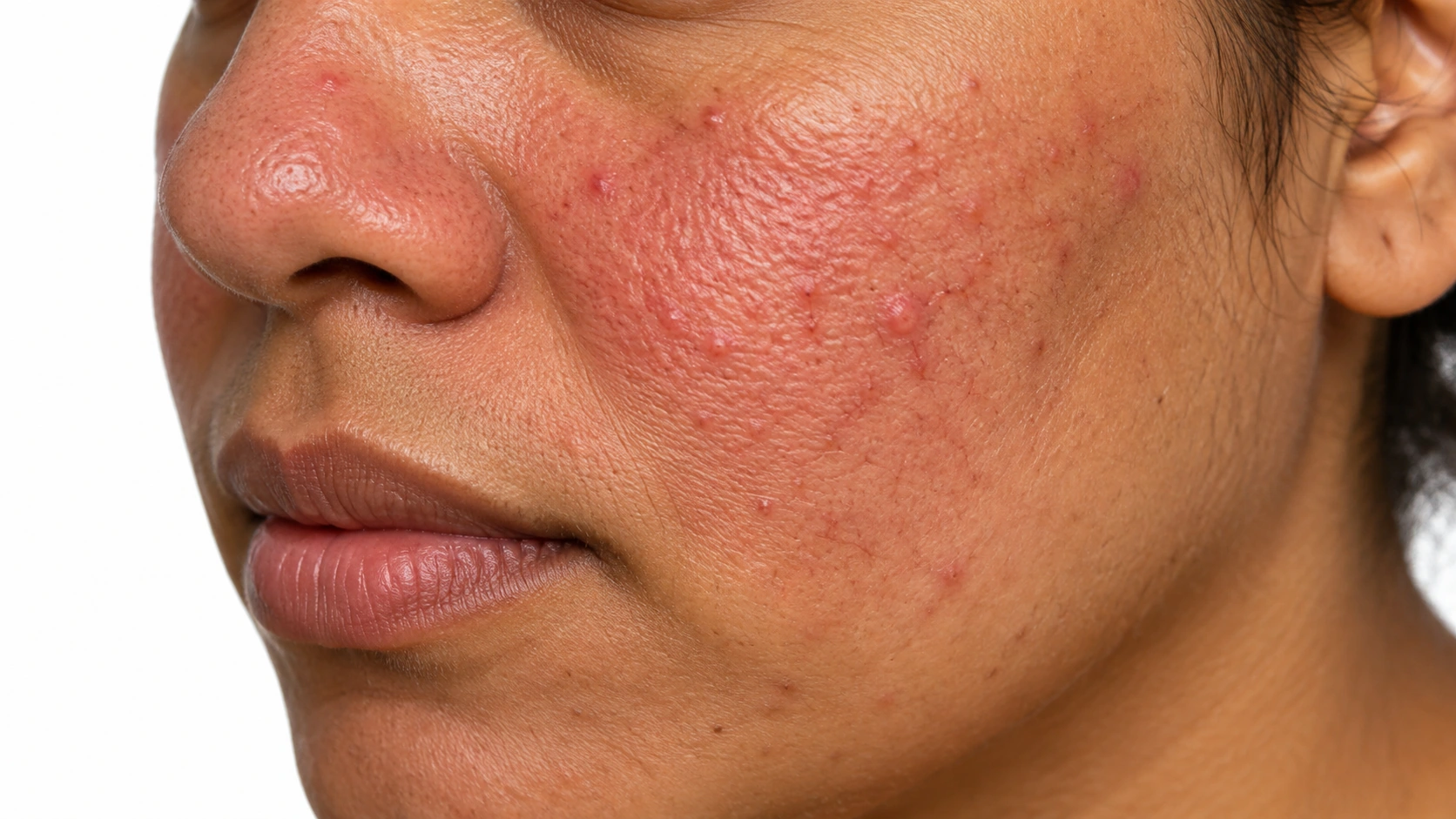
flat red-brown residual marks on deep brown cheek skin.
Diagram
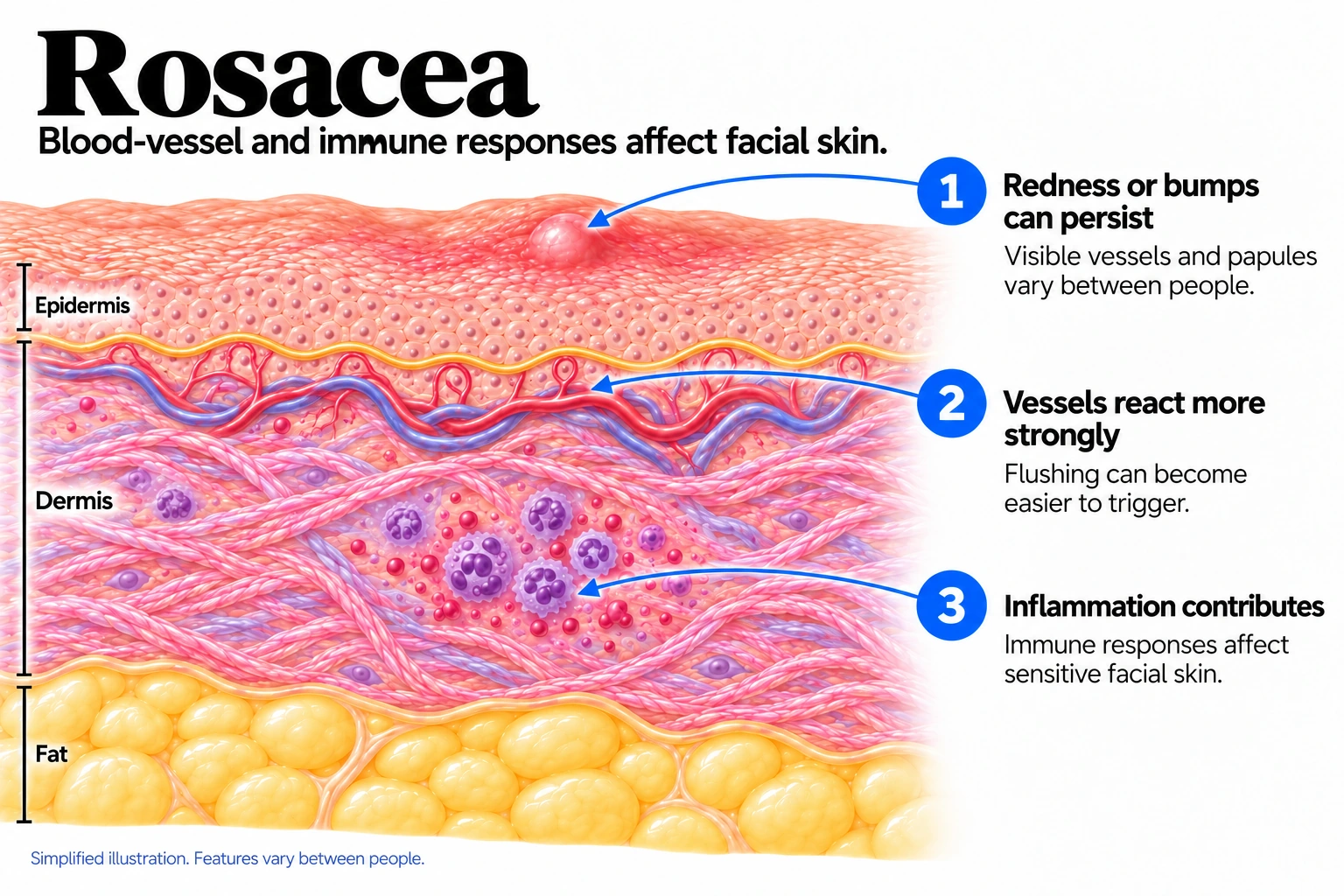
Rosacea mechanism diagram. Redness or bumps can persist: Visible vessels and papules vary between people. Vessels react more strongly: Flushing can become easier to trigger. Inflammation contributes: Immune responses affect sensitive facial skin.
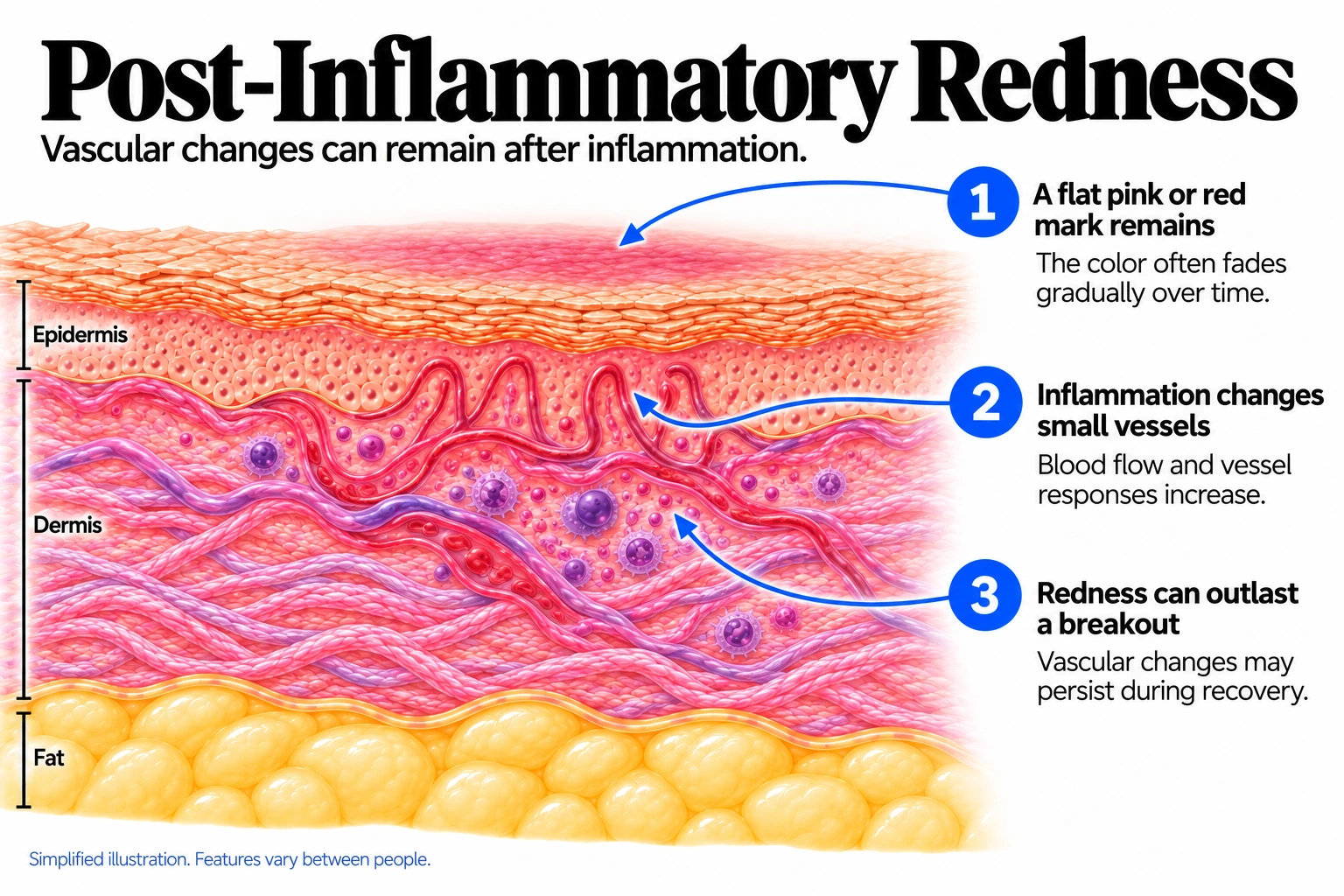
Post-Inflammatory Redness mechanism diagram. A flat pink or red mark remains: The color often fades gradually over time. Inflammation changes small vessels: Blood flow and vessel responses increase. Redness can outlast a breakout: Vascular changes may persist during recovery.
In the skin

Rosacea involves inflammatory activity and unusually reactive blood vessels in facial skin. These changes can produce flushing, persistent color changes, visible vessels or bumps, with different features in different people.

Inflammation changes blood flow and the behavior of small vessels near the skin surface. These vascular changes can remain after a breakout or rash has settled, leaving a flat pink or red mark.

Where it shows up

Central face
Sites of previous inflammation

When it usually starts

010203040506070+

Rosacea. Rosacea Usually 30–60 Usually begins in adulthood, often between ages 30 and 60. Starting ages can vary.

Post-Inflammatory Redness. Can follow inflammatory acne, a rash or skin injury at any age.

Causes and triggers

Causes

Rosacea involves overactive blood vessels and immune signals in the facial skin. Demodex mites, which live on everyone's skin, may also play a part.

Inflammation, sensitive skin, and changes in blood-vessel responses play a part. The skin barrier may be affected too. The exact cause is not fully understood.

Post-inflammatory redness happens when small blood vessels widen during inflammation and stay that way for a while after the spot heals.

Family tendency

It often runs in families and is more common in people with fair skin, though it occurs in all skin tones.

Rosacea can run in families. Several inherited factors may contribute; there is no single gene that explains every case.

Risk factors
Fair skin, Ages 30 to 60, Family history, Female sex, Adulthood, Fair, sun-sensitive skin
Lighter skin, Inflamed acne, Picking at spots
Trigger
● Rosacea
● Post-Inflammatory Redness
Sun exposure
Common trigger
Strong link
Heat and hot drinks
Well established
Not listed
Alcohol, especially red wine
Well established
Not listed
Spicy food
Strong link
Not listed
Stress
Common trigger
Not listed
Exercise
Possible
Not listed
Hormonal changes
Not a typical trigger
Not listed
Pore-clogging products
Not a typical trigger
Not listed
Heat and sweating
Common trigger
Not listed
Alcohol
Common trigger
Not listed
Spicy foods
Common trigger
Not listed
Harsh skin care
Common trigger
Not listed
Picking or squeezing pimples
Not listed
Well established
Harsh scrubs
Not listed
Possible

Daily Care

Rosacea
Post-Inflammatory Redness
Daily care

Habits that help

  • Keep a short trigger diary
    Two or three weeks of notes finds them.
  • Cool it down early
    A cold drink, a damp cloth or a fan interrupts a flush.
  • Daily sunscreen
    The single most important habit here — mineral, SPF 30 or higher.
  • A gentle cleanser and lukewarm water
    Non-foaming, twice a day at most, patted dry.
  • A bland moisturizer
    Ceramides and glycerin, no fragrance. A treatment in itself.
  • Simplify before you strengthen
    Most routines improve by removing products.
  • Warm compresses
    For eyelid symptoms, use clinician-advised warm compresses and gentle lid cleaning.
  • Treat the eyes
    Warm compresses, gentle lid cleaning, preservative-free artificial tears.
  • Ask the prescriber about medicines associated with flushing
    Ask the prescriber about alternatives.

Avoid

  • Avoid: Sun exposure
    The most consistent trigger of all.
  • Avoid: Heat
    Hot showers, saunas, hot cars and hot rooms.
  • Avoid: Hot drinks
    The temperature more than the caffeine.
  • Avoid: Spicy food
    Capsaicin hits the nerve receptors behind flushing.
  • Avoid: Hard exercise
    Not a reason to stop — cool the room, take breaks.
  • Avoid: Stress and embarrassment
    Both trigger flushing directly.
  • Avoid: Hot flashes around menopause
    Repeated flushing makes rosacea more visible.
  • Avoid: Alcohol
    Red wine gets named most, but any alcohol flushes the face.
  • Avoid: Cold, wind, and low humidity
    Dry cold damages the barrier and causes rebound redness.
  • Avoid: Harsh skincare
    Toners, witch hazel, menthol, fragrance.
  • Avoid: Physical exfoliation and facial brushes
    Scrubbing makes skin redder and more reactive.
  • Avoid: Too many active ingredients at once
    Layered acids, retinoids and vitamin C look like a flare.
  • Avoid: Skipping moisturizer
    A weak barrier is part of the disease, and unsupported skin stings.
  • Avoid: Scrubs, brushes and strong acids
    Avoid abrasive scrubs and strong acids that worsen stinging and redness.
  • Avoid: Stopping treatment when the skin clears
    Bumps usually return within a few months.
  • Avoid: Steroid creams
    A steroid cream calms rosacea for a few days, then makes it worse. The redness and bumps come back stronger when you stop, so it is easy to keep reapplying and end up in a cycle. Used for weeks, steroids on the face thin the skin, bring out visible vessels and can cause a rosacea-like rash of their own. If one has been prescribed for your face, ask about coming off it rather than stopping suddenly.

Habits that help

  • Leave spots alone while they heal
    Not picking beats most products here.
  • Keep the routine gentle
    Every extra product is a chance to inflame settling skin.
  • Green-tinted color corrector
    Cancels red better than skin-toned concealer.
  • Daily sunscreen
    Keeps the fading you have earned.
  • Take photographs monthly
    Same light every four weeks is the only reliable check.
  • Treat the acne properly
    The highest-value step, usually skipped.
  • Continue comfortable exercise; temporary redness can look brighter afterwards
    Temporary redness after activity does not mean permanent damage. Continue comfortable exercise and cool down gently.

Avoid

  • Avoid: Picking and squeezing
    The biggest avoidable cause. Spreads the mark wider.
  • Avoid: Sun without protection
    Widens vessels and keeps skin inflamed, stalling the fading.
  • Avoid: Scrubbing and harsh actives
    Irritation is inflammation, which is step one.
  • Avoid: Heat and hot showers
    Flush the skin and make marks look worse for an hour.
  • Avoid: Alcohol and spicy food
    Flush the skin briefly. No lasting harm.
  • Avoid: Pigment-lightening products
    Do nothing for a red mark, and often irritate.
  • Avoid: Judging it in a mirror daily
    Drives product changes, and changes end up irritating.
  • Avoid: Leaving acne untreated
    Every new spot writes a new mark.

Treatment differences

Evidence labels come from each condition’s own treatment list.

Treatment
● Rosacea
● Post-Inflammatory Redness
Filter by type
Rosacea features

Select one or more.

All types
Over-the-counter
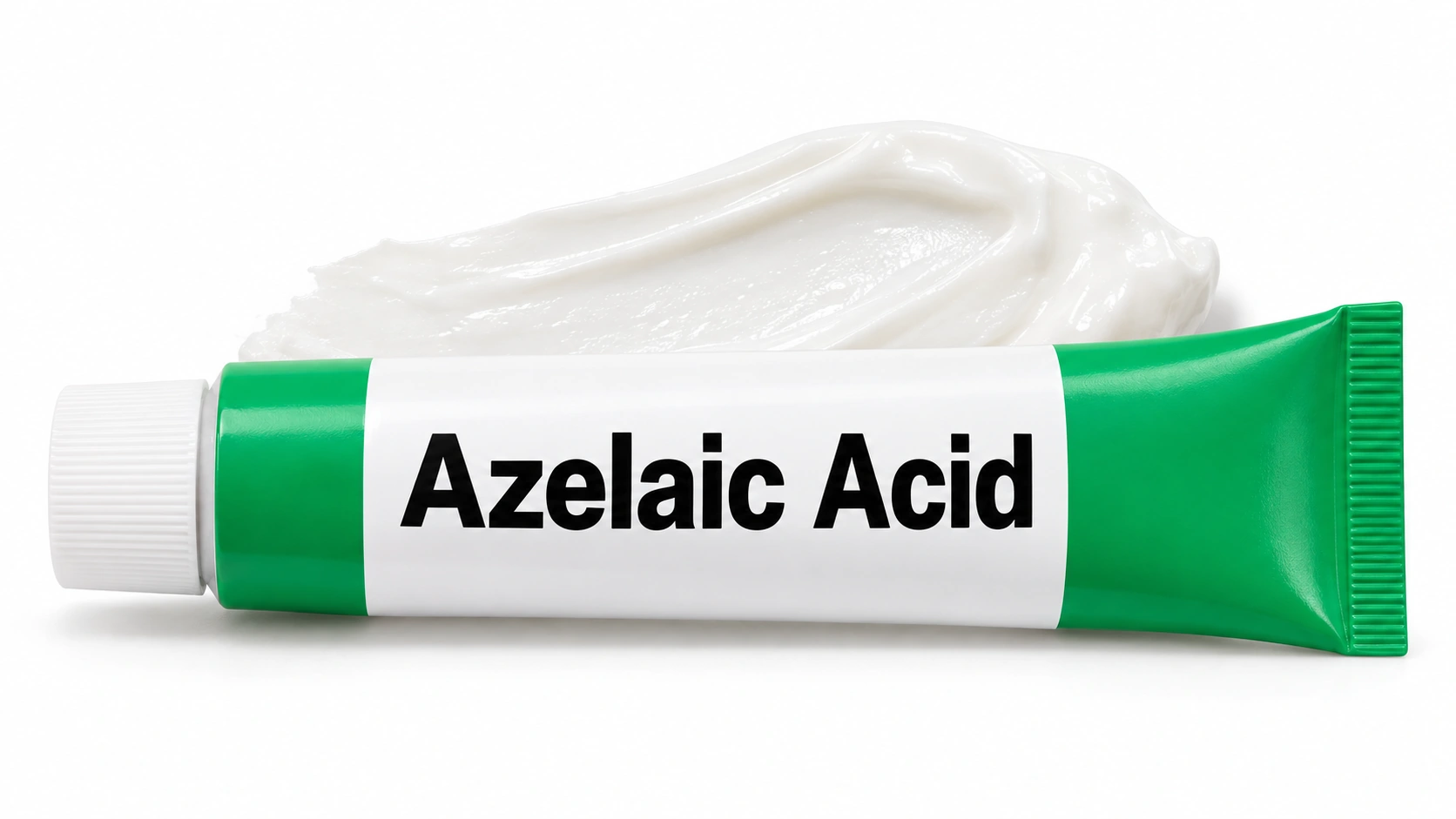
Five azelaic acid tubes and bottles on white, most marked 10 percent, from Peach Slices, Paula's Choice, Facetheory, The Ordinary and Naturium

Azelaic Acid

Strong evidence

The one over-the-counter active with real evidence behind it in rosacea. At 10 percent it reduces the bumps and some of the redness, and it is better tolerated by reactive skin than acids or retinoids. Start every other night over moisturizer. The 15 percent prescription gel works better if this is not enough.

Six niacinamide products on white, including The Ordinary 10% + Zinc 1%, Paula's Choice Booster and EltaMD UV Clear

Niacinamide

Limited evidence

A mild anti-inflammatory that also helps the barrier hold water, which is the part of rosacea it is most useful for. Some people find it takes the edge off redness and stinging. It will not clear bumps and it does nothing for visible vessels, so treat it as support rather than treatment.

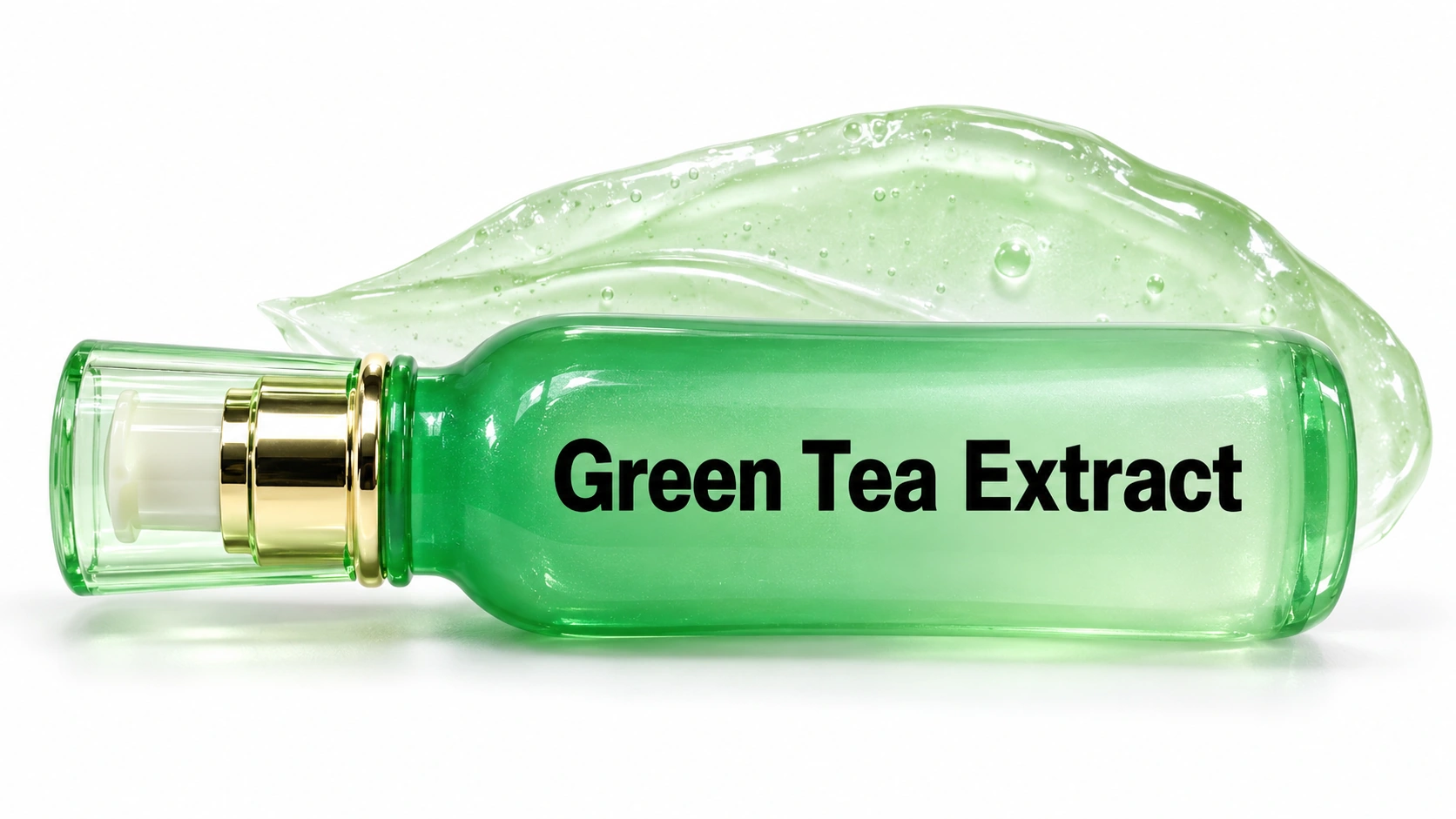
Five green tea serum bottles lined up on white with pale green gel swatches behind them

Green Tea Extract

Limited evidence

Sold widely for facial redness on the strength of small studies. It is soothing, it is unlikely to irritate, and some people like how their skin feels on it. There is no good evidence it changes flushing, bumps or visible vessels, so do not let it delay a prescription that would.

Five azelaic acid tubes and bottles on white, most marked 10 percent, from Peach Slices, Paula's Choice, Facetheory, The Ordinary and Naturium

Azelaic Acid

Limited evidence

One of the few over-the-counter ingredients that acts on redness rather than pigment, calming inflammation while also treating the acne behind it. It is gentle enough to use twice a day for the many months this takes. Expect it to take the heat out of the marks gradually rather than clear them.

Six niacinamide products on white, including The Ordinary 10% + Zinc 1%, Paula's Choice Booster and EltaMD UV Clear

Niacinamide

Limited evidence

Supports the skin barrier and takes the edge off general redness, which helps skin that is settling after acne. Its effect on an individual red mark is small. It is worth including because it almost never irritates, and irritation is the main way people prolong these marks.

Illustration: Generic topical cream tube and white cream.

Pigment-lightening products

Limited evidence

Vitamin C, hydroquinone, kojic acid, arbutin and cysteamine all act on pigment, and a red mark has no extra pigment in it. They do not change the color, and they frequently irritate the skin, which is inflammation and stretches the mark out further. If you have brown marks as well, those are the ones these products are for.

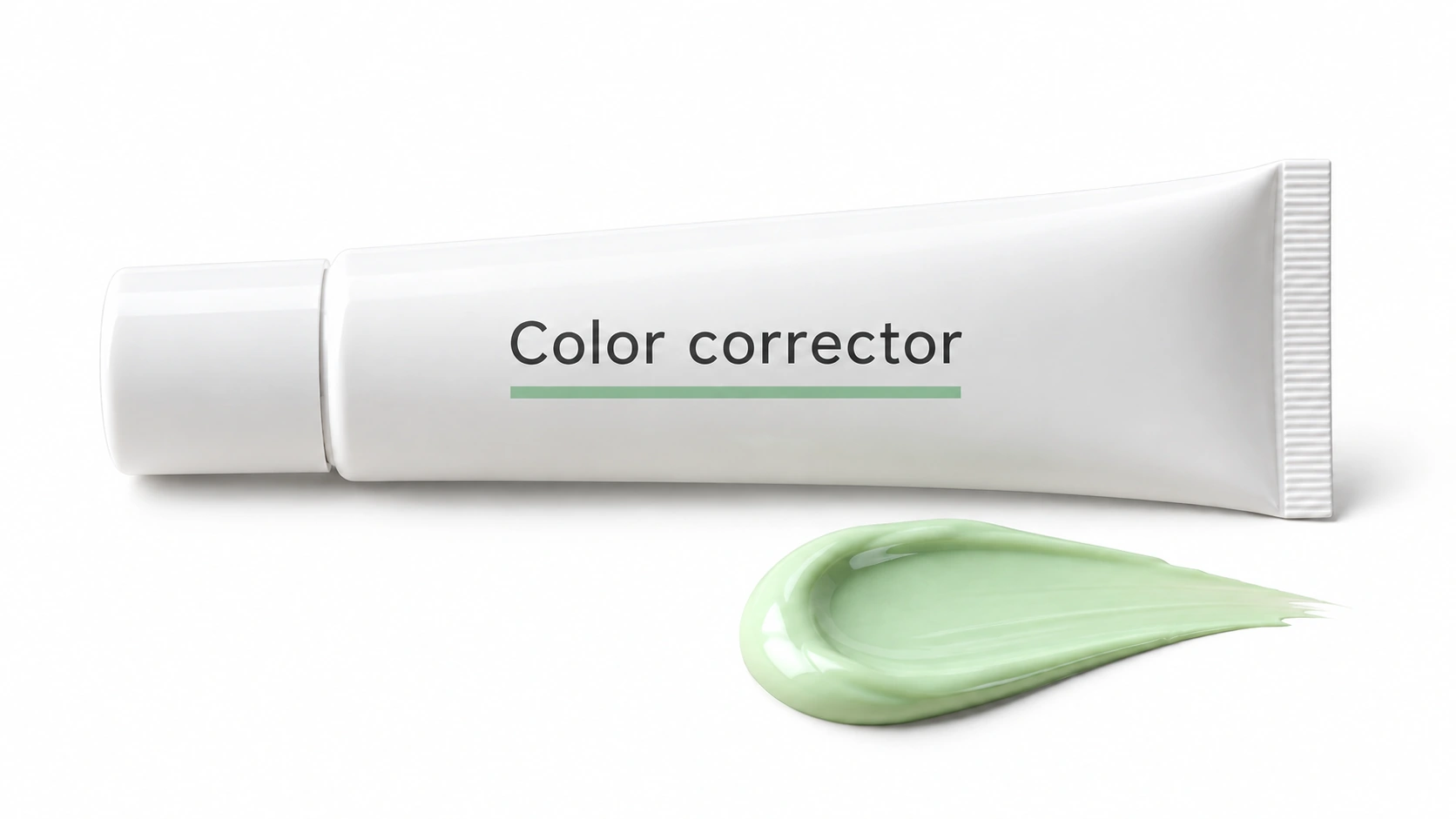
Existing Dermapedia illustration of green-tinted color corrector.

Green-tinted color corrector

Listed

Green sits opposite red, so a thin layer of green-tinted base cancels these marks far better than a skin-toned concealer, which tends to look thick and still pink. It changes nothing underneath and it is not a treatment. It is a genuinely useful option for the months in the middle, when the marks are fading but not gone.

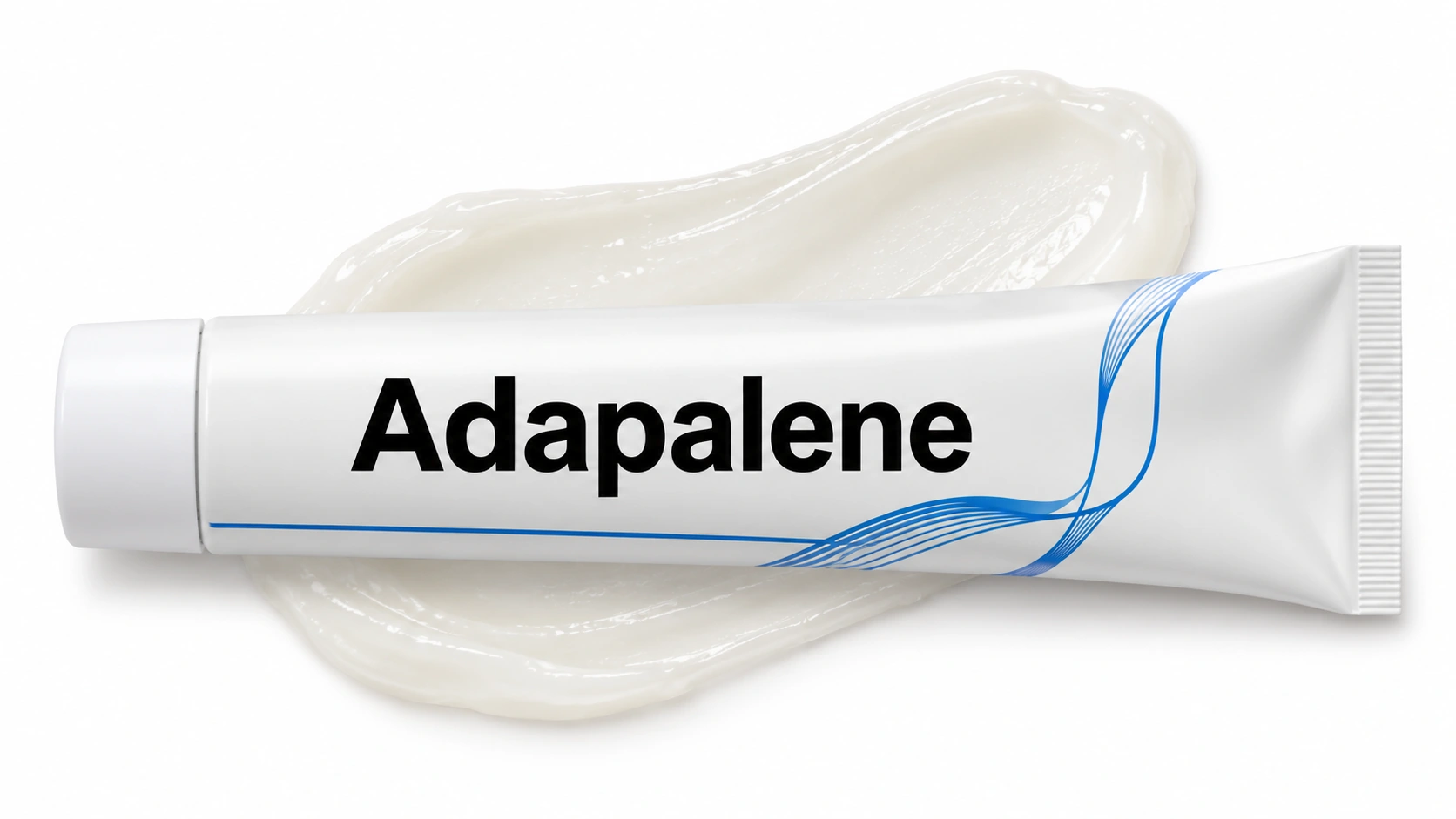
Five adapalene gel 0.1% tubes and boxes lined up on white, including Differin, Effaclar, PanOxyl and Neutrogena

Adapalene

Limited evidence

The only over-the-counter retinoid strong enough to genuinely control inflamed acne, which is what stops new marks being written. It also speeds up turnover and evens out overall tone. Start three nights a week and build up, because the red, flaky phase is inflammation and will make the marks you have look worse for a few weeks.

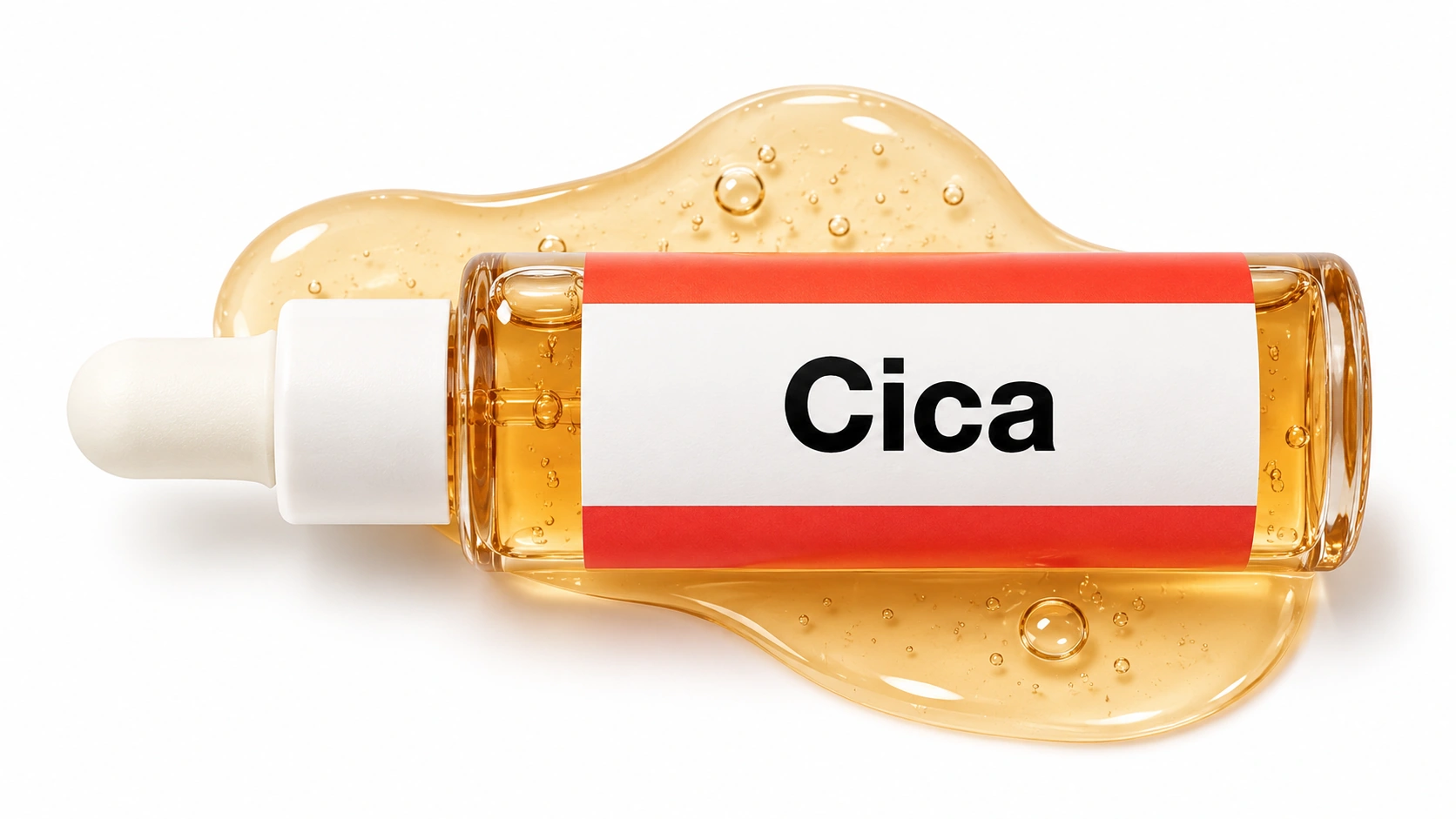
Cica

Limited evidence

A soothing ingredient used to calm skin that is red and reactive after acne or a procedure. It makes a routine more comfortable and is unlikely to cause trouble. It does nothing to the widened vessels themselves, so treat it as comfort rather than treatment.

Prescription topicals
Soolantra — Header Image

Soolantra

Strong evidence

Often the best single treatment for the bumps and pus-filled spots, because it works on the Demodex mites and on the inflammation at the same time. Once a night, a pea-sized amount for the whole face. It usually beats metronidazole head to head, and it does nothing at all for flushing or visible vessels.

Finacea — Header Image

Finacea

Strong evidence

A prescription-strength gel or foam for the bumps, and one of the better options if your skin is too reactive for other creams. It also helps the marks rosacea leaves behind on deeper skin tones. Expect stinging for the first week or two, which usually settles if you apply it over moisturizer.

MetroGel — Header Image

MetroGel

Strong evidence

The longest-established prescription cream for rosacea bumps, used once or twice a day, and generally very well tolerated. It is a reasonable first choice and a common maintenance treatment once things are controlled. Newer options often work a little better, and none of them touch the redness itself.

An illustrative minocycline foam can beside a small foam mound.

Minocycline foam

Strong evidence

An antibiotic put on the skin rather than swallowed, for the bumps. It suits people who would rather not take tablets, or who cannot. It is newer and usually more expensive than the older creams, and like them it does nothing for flushing or vessels.

Mirvaso — Header Image

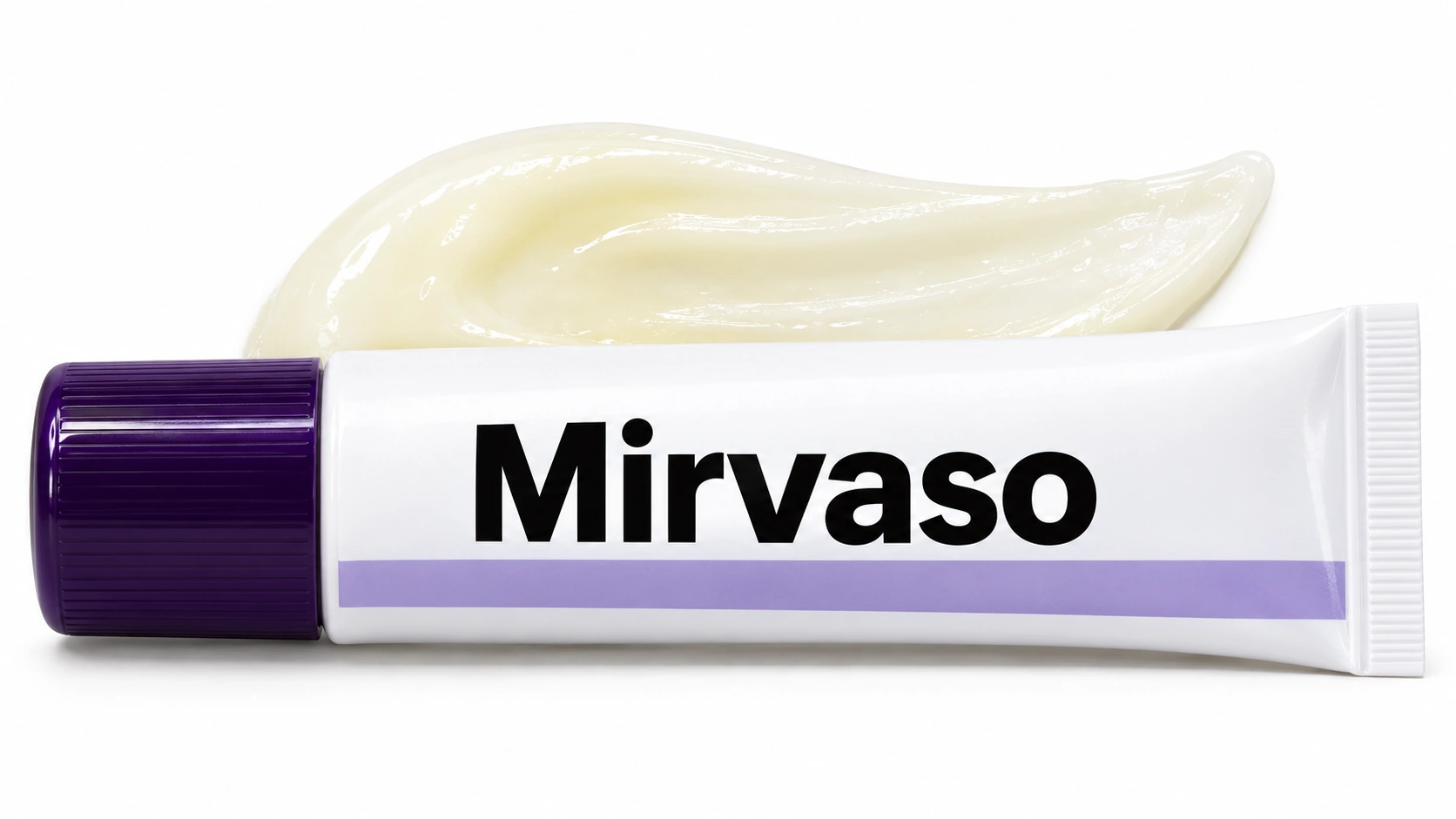
Mirvaso

Strong evidence

A gel that narrows facial vessels and takes the redness down for several hours at a time. It treats nothing — it borrows time, and everything comes back when it wears off. Some people get rebound redness worse than they started with, so test a small area before you use it on the whole face and before any event that matters.

Cream — stock illustration

Rhofade

Strong evidence

The same idea as brimonidine, using a different vessel-narrowing drug, applied once each morning. Rebound redness is reported less often with it, which is why some people move across after a poor experience. It still only lasts the day, and it does not stop rosacea progressing.

Finacea — Header Image

Finacea

Limited evidence

The prescription strength of the same ingredient, and one of the few topicals that is used for both acne and facial redness. It is a sensible choice when the over-the-counter version helped but not enough, or when rosacea and these marks are hard to separate. It stings for the first week or two in most people and then settles.

Mirvaso — Header Image

Mirvaso

Limited evidence

Squeezes the small vessels shut for several hours, so it makes redness disappear temporarily. It is a rosacea product, and it is a poor fit for distinct round marks. When it wears off the redness can come back stronger than it started, so it is not something to reach for while these marks fade on their own.

Tretinoin — Header Image

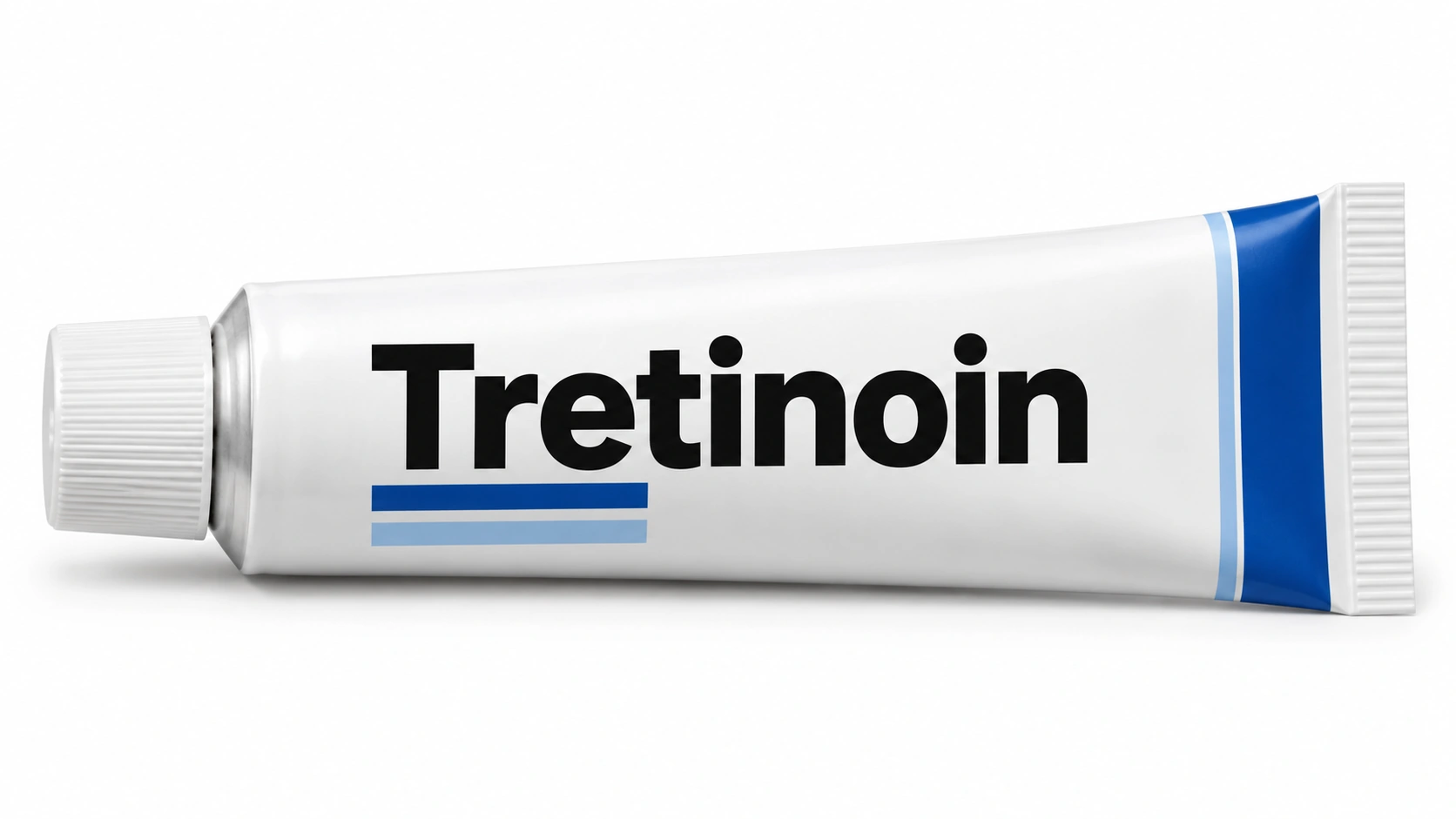
Tretinoin

Limited evidence

Prescription strength retinoid, used here mainly to stop new inflamed spots, with the useful side effect of evening out overall tone as the skin turns over faster. It does not target the vessels directly. The first six to eight weeks are red and flaky, so it is worth knowing that the marks will look worse before they look better.

Prescription pills
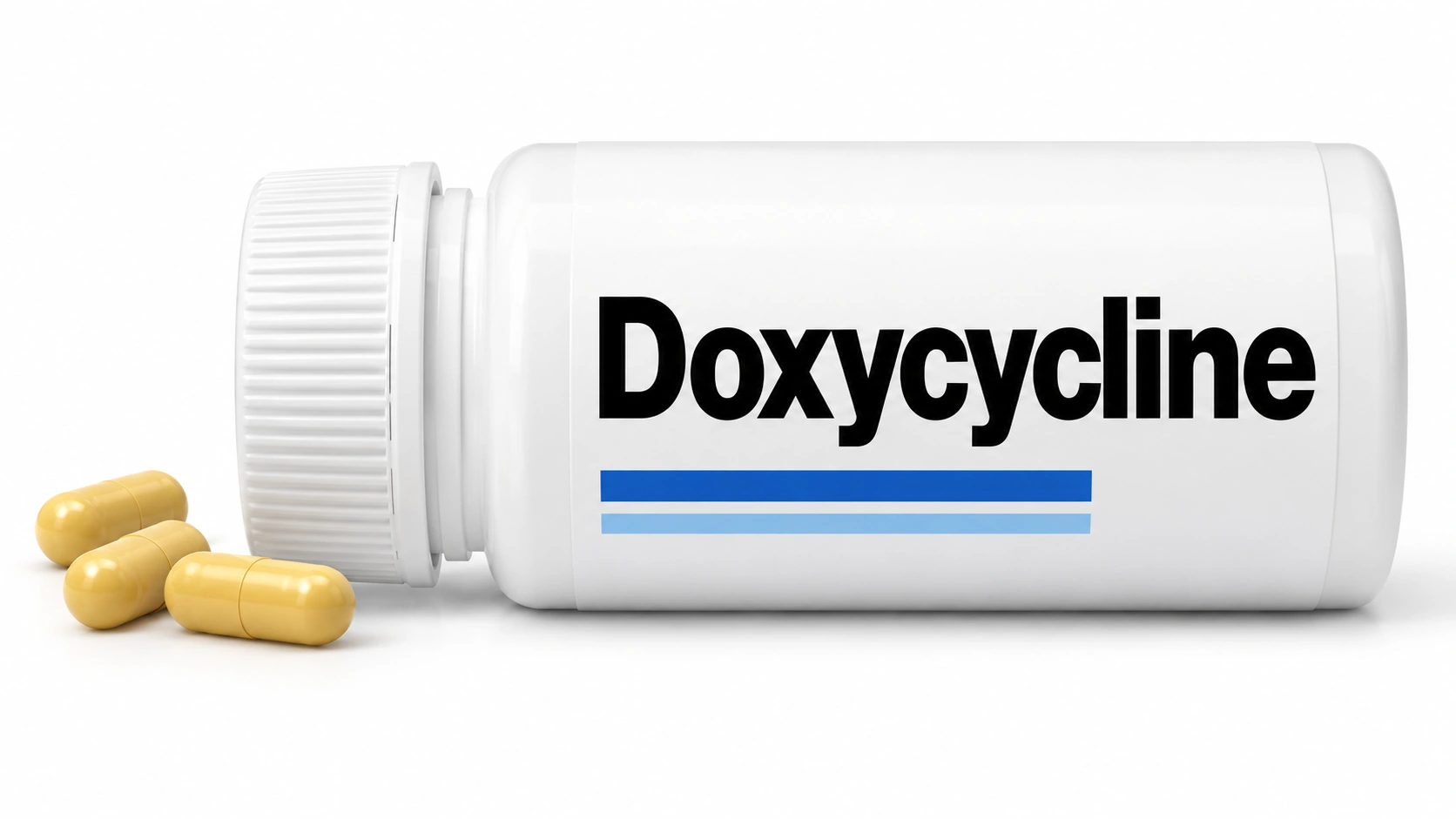
An amber prescription bottle lying on its side on a white background with a plain white label reading Doxycycline, and six small round white tablets spilled out in front of it.

Doxycycline

Strong evidence

Low-dose Doxycycline. A 40 mg dose taken once a day, deliberately too low to act as an antibiotic — it is used purely for its anti-inflammatory effect, which means it does not drive antibiotic resistance. This is the usual next step for moderate to severe bumps when creams alone are not holding them, and it also helps ocular rosacea. It is normally stepped down to a cream once things settle.

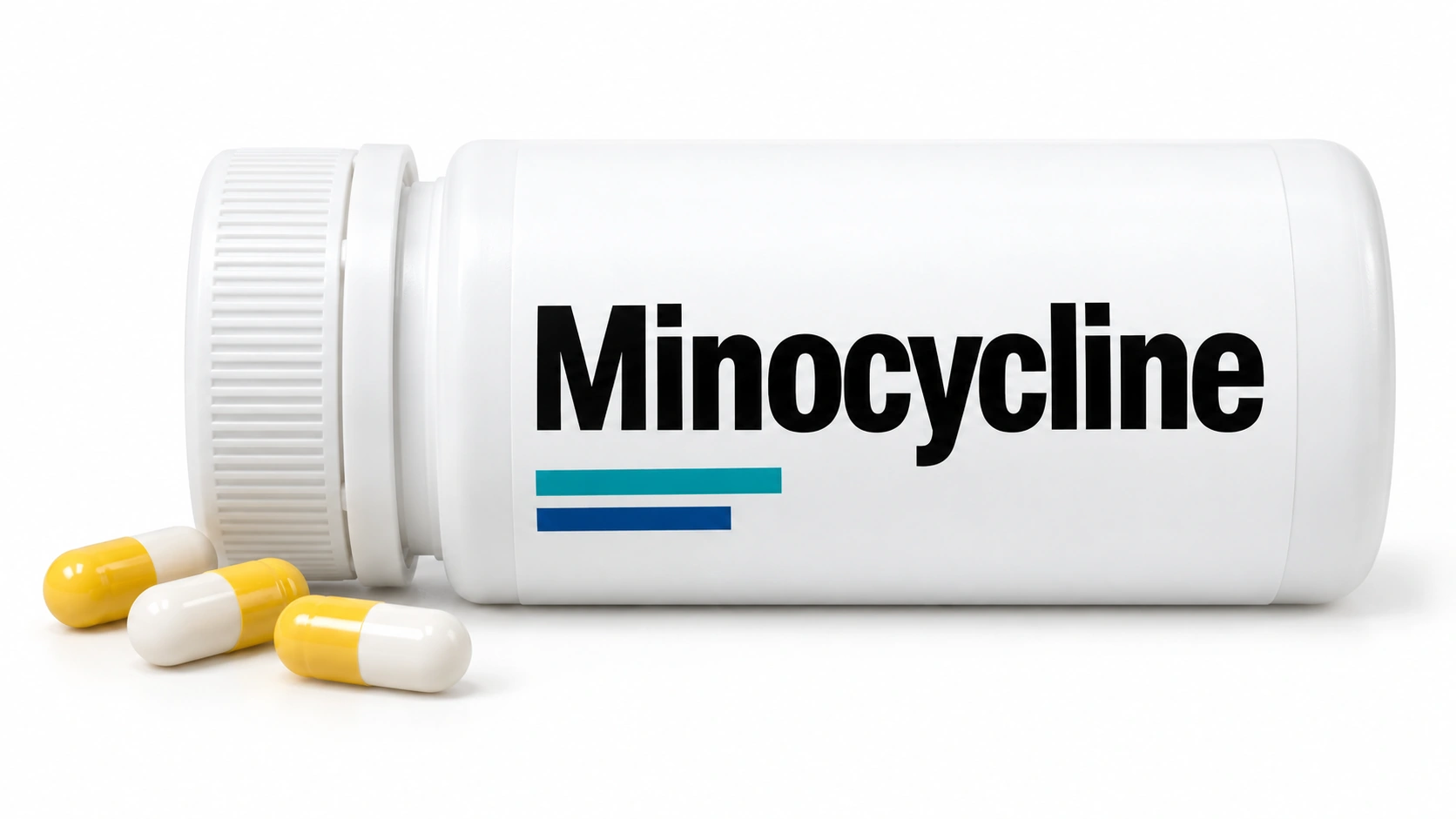
16:9 hero for Minocycline. Never cropped: the tone strip and the corner logo depend on the full frame.

Minocycline

Moderate evidence

An alternative tablet for the bumps when doxycycline does not suit or has not worked. It is used at full antibiotic doses, so it is generally kept for shorter courses. It can cause dizziness, and rarely a blue-gray discoloration of the skin with long use, so it is not the first tablet reached for.

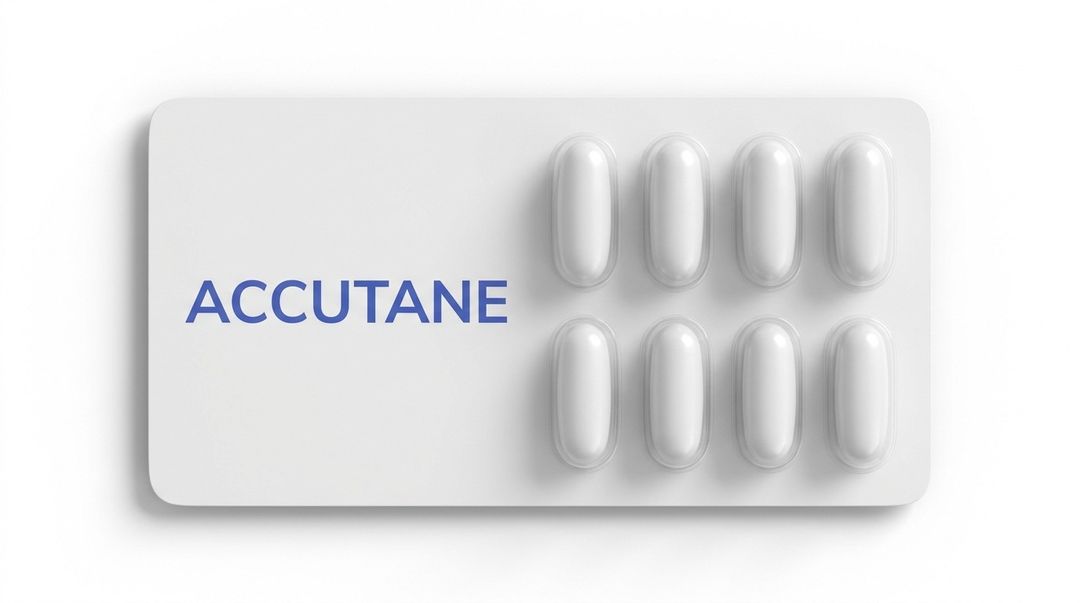
A white blister pack photographed flat on a white background, holding eight white oblong capsules in two rows of four under clear domes. ACCUTANE is printed in blue capitals on the empty left half of the foil.

Accutane

Moderate evidence

Accutane at a low dose. Low-dose isotretinoin under specialist care, for severe bumps that tablets and creams have not controlled, or for early skin thickening. It works well, and it is not a cure — rosacea usually returns after the course. It requires strict pregnancy prevention and monitoring, so it is a considered decision rather than a routine step.

Beta blockers for flushing

Beta blockers for flushing

Listed

Low doses of propranolol or carvedilol are sometimes tried when flushing is the dominant problem and nothing else has touched it. The evidence is small studies rather than trials, and they lower blood pressure and slow the heart, so they do not suit everyone. Worth asking about only after triggers, laser and light have been addressed.

None listed
Procedures

V-Beam

Moderate evidence

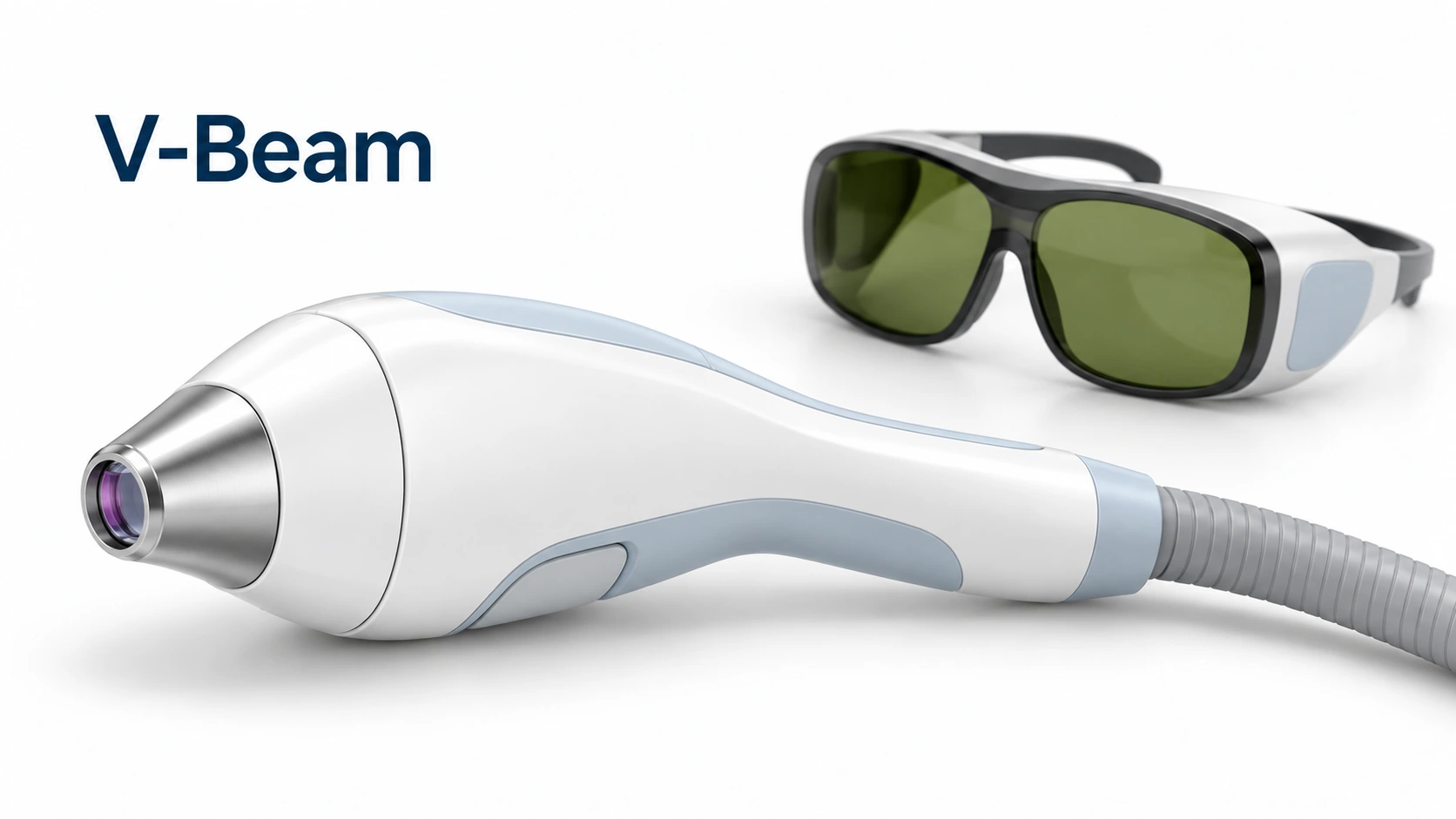
The treatment of choice for visible thread veins and settled background redness — the parts of rosacea that creams and tablets do not touch. It targets the blood in the vessel and closes it. Expect a course of about three sessions rather than one, expect bruising for a few days at stronger settings, and expect occasional top-ups, because rosacea carries on making new vessels.

IPL

Moderate evidence

IPL. Light rather than laser, and about as effective as pulsed dye laser for diffuse redness across the cheeks, with less bruising. It is often the better choice when the problem is a general flush rather than a few distinct threads. It needs an experienced practitioner and a test patch on deeper skin tones, because the wrong settings can cause lasting pigment change.

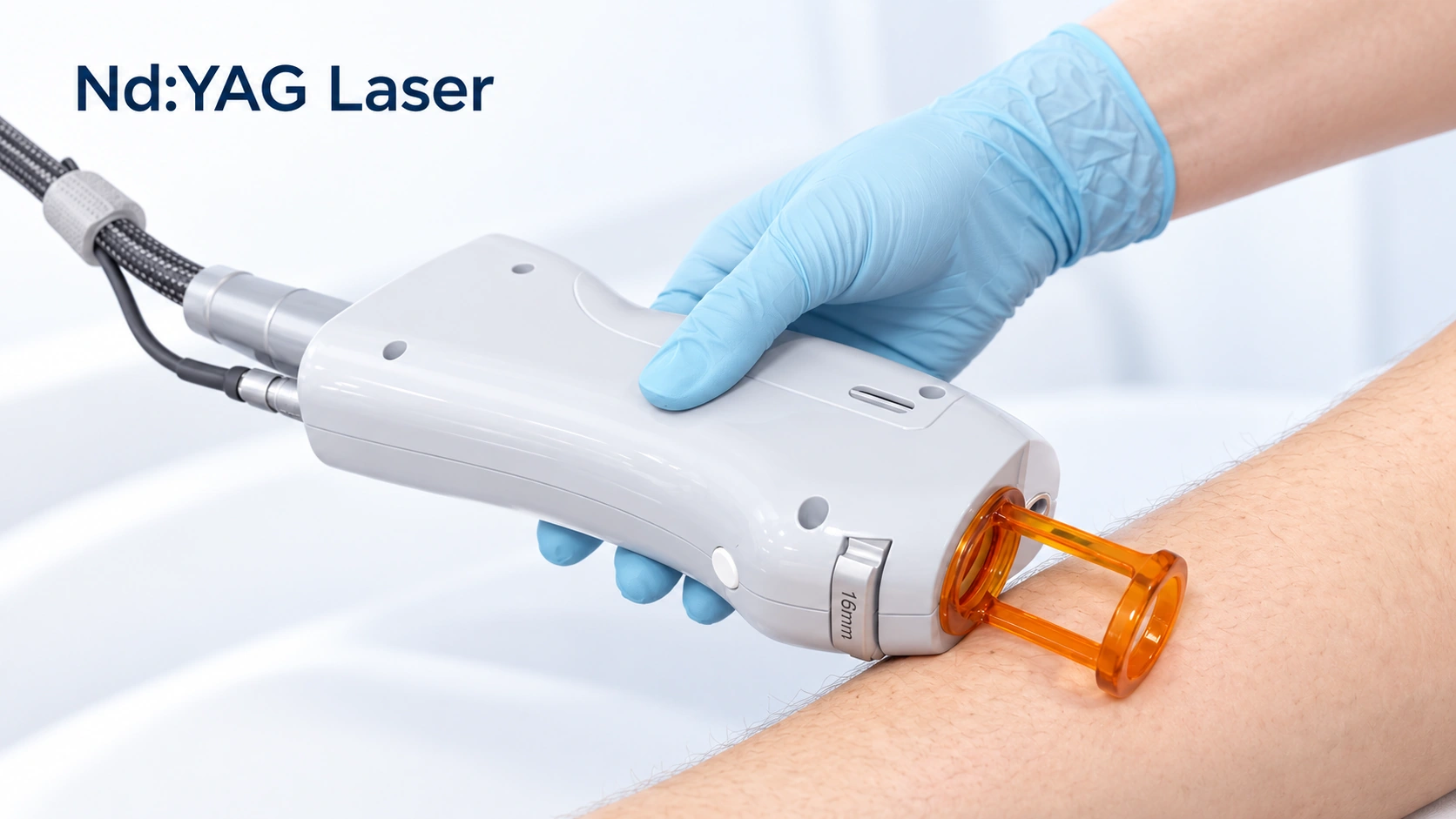
Editorial illustration for Nd:YAG Laser, based on the entry’s treatment or equipment reference.

Nd:YAG Laser

Limited evidence

A longer wavelength that reaches deeper, larger vessels — the thicker blue-red threads beside the nose that pulsed dye laser sometimes leaves behind. It is also the device more often chosen for deeper skin tones, because it passes over surface pigment more safely. It is less useful for general background redness.

Editorial illustration for Fractional CO2 Laser, based on the entry’s treatment or equipment reference.

Fractional CO2 Laser

Limited evidence

Used to reshape a nose that has thickened, by removing the excess tissue layer by layer. This is the answer for rhinophyma, since creams and tablets do not reverse it. It is a real procedure with real downtime of a couple of weeks, and results are strongly dependent on who does it.

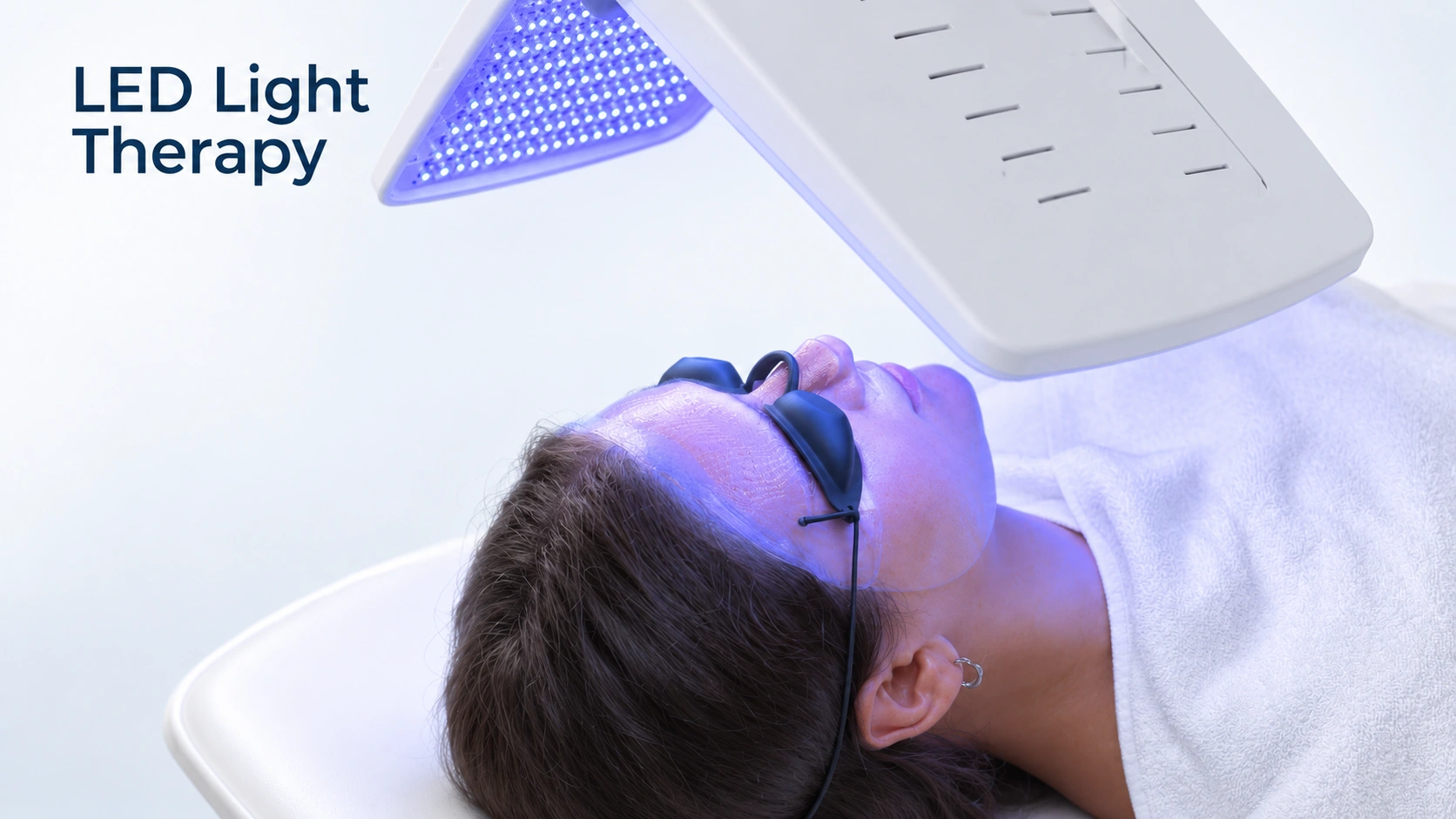
Editorial illustration for LED Light Therapy, based on the entry’s treatment or equipment reference.

LED Light Therapy

Limited evidence

Asked about constantly, usually as a home device. Red and near-infrared light is mildly anti-inflammatory and it is very unlikely to do harm. There is no good evidence it clears rosacea bumps or removes vessels, so it is a pleasant addition rather than a substitute for the treatments that do.

Botox

Limited evidence

Botox. Very small amounts injected into the surface of the skin, not the muscle, to reduce flushing and background redness. Early studies are encouraging and dermatologists do use it for stubborn flushing. It is off-label for rosacea, it is not usually covered, and it wears off in a few months.

V-Beam

Moderate evidence

The most direct treatment there is, because it is absorbed by the blood inside the widened vessels and collapses them. Usually two to four sessions, and it works best on marks that have stopped improving on their own. Most people never need it, and it is normally kept for marks that have not moved after a year.

IPL

Moderate evidence

IPL. Broad-spectrum light that also targets blood in the vessels, and it covers a whole cheek quickly, which suits scattered marks. It is less precise than a pulsed dye laser and usually needs more sessions. Because the same light is absorbed by pigment, it needs real care on medium and deeper skin tones.

Editorial illustration for Nd:YAG Laser, based on the entry’s treatment or equipment reference.

Nd:YAG Laser

Limited evidence

Reaches deeper vessels and passes through surface pigment more safely, which is why it is often the vascular laser chosen for deeper skin tones. Results on these marks are less predictable than with a pulsed dye laser. A test patch first is the sensible way to find out whether it suits your skin.

Editorial illustration for LED Light Therapy, based on the entry’s treatment or equipment reference.

LED Light Therapy

Limited evidence

Red and blue light panels are marketed for redness, and the light is nowhere near strong enough to affect the vessels causing these marks. Blue light has some effect on acne bacteria, so any benefit here is indirect at best. It is safe and pleasant, and it is not a reason to delay treating the acne properly.

Outlook

Long term

Rosacea runs in flares and quiet spells. The outlook is good - it does not scar, it is not dangerous, and treatment controls most of it. It does not go away, so the goal is long-term control on the lightest treatment that holds it.

Red marks look worse after exercise, a hot shower or alcohol, because the same vessels fill more. That is not the mark getting worse. Underneath, the fading follows a steady arc.

Complications

Possible complications
  • Rhinophyma — thickening of the nose
  • Ocular rosacea
  • Lasting redness and visible vessels
More details

Rhinophyma — thickening of the nose
Over years, the skin of the nose can thicken, enlarge and take on a bumpy, uneven surface. It develops slowly and only in a minority of people, and it is far more common in men. Creams and tablets do not reverse it once it is established, which is the strongest practical reason to treat rosacea early. It has nothing to do with drinking, despite an old and persistent belief that it does.

Ocular rosacea
Rosacea in the eyes causes gritty, dry, burning, watery or red eyes, crusting along the lash line and repeated styes. It affects a large share of people with rosacea, it can turn up before any skin changes, and it does not track with how bad the face looks. It is the part most often missed, and it needs treating in its own right, so mention your eyes even if nobody asks.

Lasting redness and visible vessels
Left to run for years, the redness stops fading between flushes and becomes the background color of the cheeks and nose, with fine vessels showing as permanent red threads. Creams do very little for this stage. Laser and light treatment work well on it, but preventing it is far easier than removing it, which is the practical argument for treating rosacea early.

These marks follow inflammation such as acne and can coexist with pigment changes or scars. Persistent raised, painful or actively inflamed lesions may represent ongoing disease rather than a settled mark.

When to get help

When to get help

Seek help for repeated flushing, lasting facial changes, products that repeatedly sting, or persistent gritty eyes and eyelid irritation.

Tell the clinician about dry or gritty eyes and sore lids, even when facial symptoms seem mild.

Seek care for persistent or worsening redness, ongoing acne or an uncertain diagnosis. Pain, warmth or fresh pustules suggest active inflammation rather than a residual mark.

Common questions

Rosacea:Will rosacea ever go away?

For most people it persists. It responds well to treatment, and many people keep it almost entirely controlled for years on light maintenance. The goal is control rather than cure, and treating early prevents the parts that become permanent.

Rosacea:Is rosacea caused by what I eat or drink?

No. Food and drink trigger flushing in someone who already has rosacea; they do not cause it. Hot drinks, alcohol and spicy food are reported most. Your triggers are personal - a couple of weeks of notes tells you more than any generic list. Cutting out foods that are not triggering you achieves nothing.

Rosacea:Can I use retinoids or vitamin C on rosacea skin?

Sometimes, carefully. Both irritate, and a weakened barrier means many people cannot tolerate them at usual strengths. If you try, add one at a time, two or three nights a week over moisturizer, and stop if it stings. Never start one during a flare.

Rosacea:Will laser get rid of the redness permanently?

Laser and intense pulsed light are the only treatments that meaningfully remove visible vessels and reduce established redness, and results last a long time. Not permanently - rosacea continues and new vessels form, so most people need occasional maintenance sessions. Expect a series rather than one. On deeper skin tones, ask for an experienced practitioner and a test patch.

Rosacea:Is my flushing rosacea or menopause?

It can be both, and they feed each other. Hot flashes cause repeated flushing, and repeated flushing makes rosacea more visible. Rosacea flushing stays on the central face with bumps, visible vessels and sensitivity, while hot flashes involve the whole body, sweating and a sudden onset. Mention both to your doctor - managing one usually helps the other.

Rosacea:Can I wear makeup?

Yes, and worth doing if it helps. Green-tinted primers and color-correcting products neutralize redness well, and mineral foundations are generally well tolerated. What matters more than the brand is how you take it off - a gentle cream or micellar remover, not scrubbing or a wipe.

Post-Inflammatory Redness:How long do these take to fade?

Three to six months for most, up to a year for stubborn ones, particularly on the cheeks. That assumes no new spots and daily sun protection. A mark that has not moved after a year is worth a look.

Post-Inflammatory Redness:Is this a scar?

Only if you can feel it. Scars have texture — a dent or a raised lump — and do not resolve. These marks are flat, go pale when you press them, and fade. Most people who think they have acne scars have these.

Post-Inflammatory Redness:Why are my marks red when my friend's are brown?

Skin tone, mostly. Lighter skin lets widened vessels show through as pink or red. Skin with more pigment answers the same inflammation with extra pigment — a flat brown mark. Some people get both.

Post-Inflammatory Redness:Will a brightening cream help?

No. Those products act on pigment, and a red mark has none extra. They tend to irritate instead, which can prolong the mark. If you have brown marks too, that is what brightening products are for.

Post-Inflammatory Redness:Why do they look worse after a hot shower or the gym?

The vessels causing the color fill more when skin flushes. It settles within an hour, and it means nothing about healing.

Post-Inflammatory Redness:Can a laser get rid of them faster?

Sometimes. Vascular lasers and intense pulsed light target the blood in the vessels and can speed things up over a few sessions. Most people do not need them; they are best kept for marks that have not improved after a year. Settings must match your skin tone.

Sources

Sources and further reading

  1. DermNet: Rosacea
  2. AAD: Rosacea treatment
  3. DermNet
Dermapedia on YouTube