Permethrin or pyrethrin lice treatment
ListedUse an appropriate labelled formulation and address recent contacts; do not apply to eyes.
An infestation of coarse body hair by crab lice, usually spread through close contact. Scabies is an intensely itchy rash caused by a tiny mite that burrows into the top layer of skin. It spreads through prolonged skin-to-skin contact, it has nothing to do with cleanliness, and it clears with prescription treatment when everyone in the household is treated at the same time.
The same eight facts on every condition comparison.
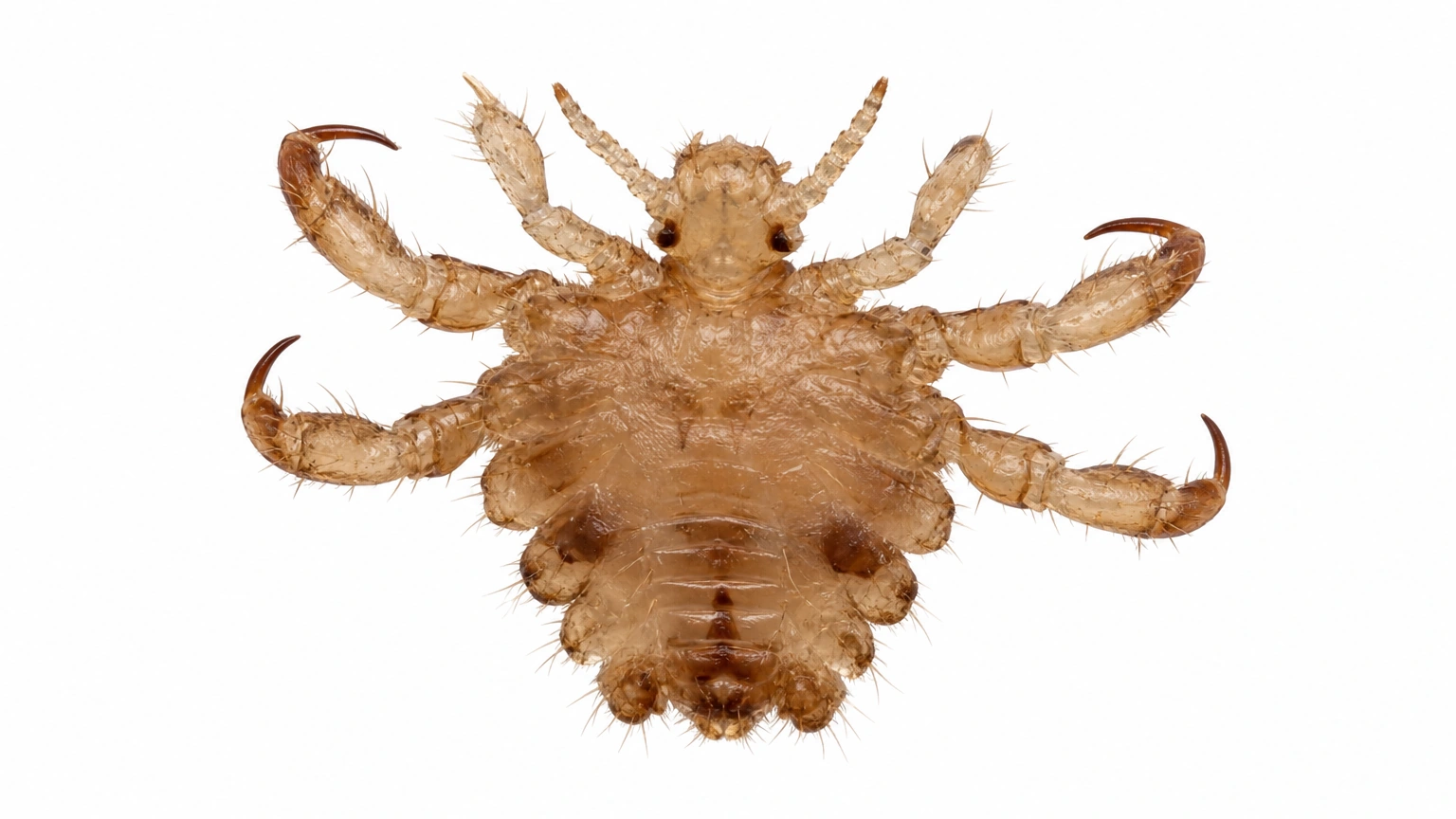
Pubic Lice The insect's broad body and prominent grasping claws are shown in detail.
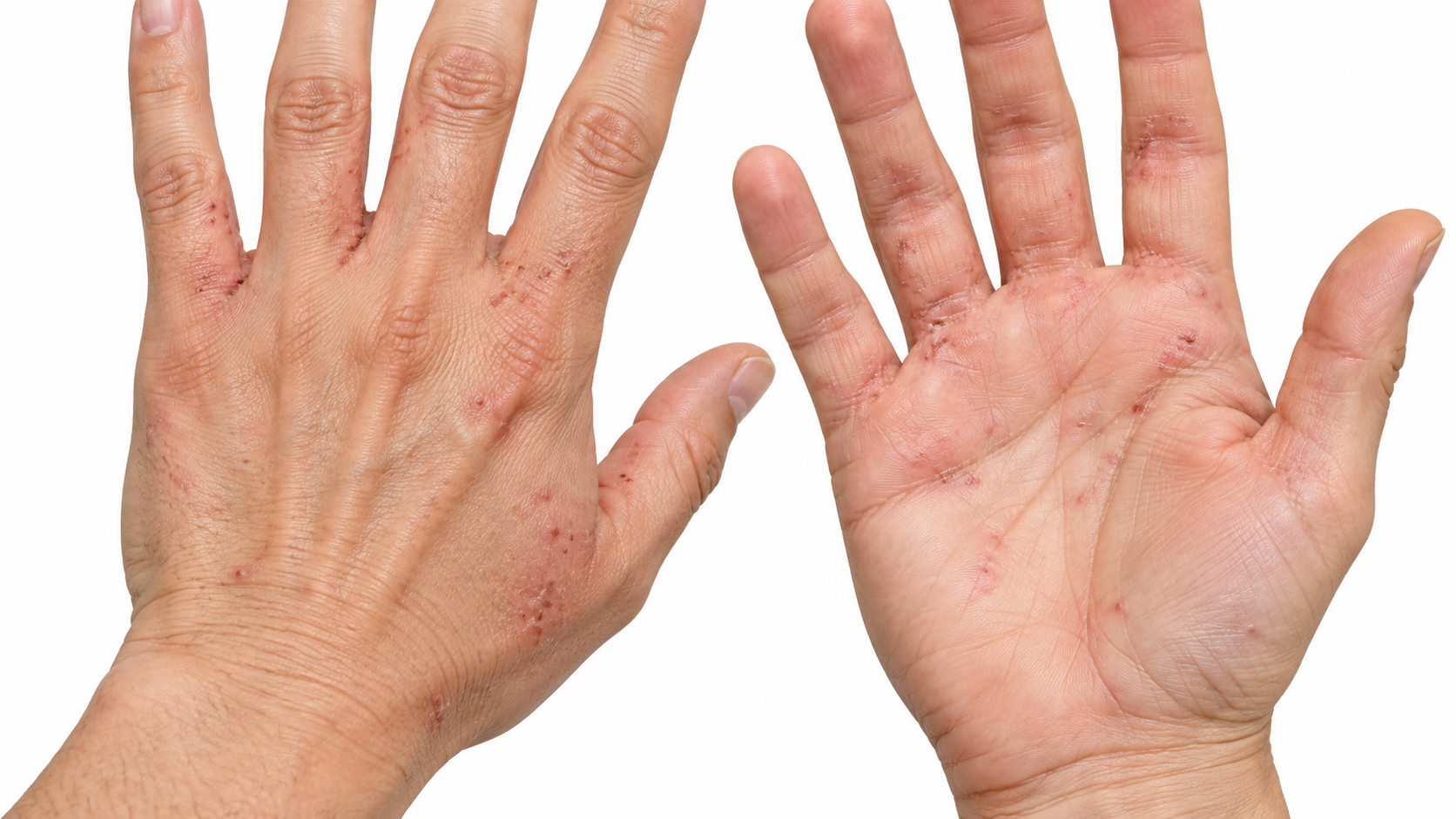
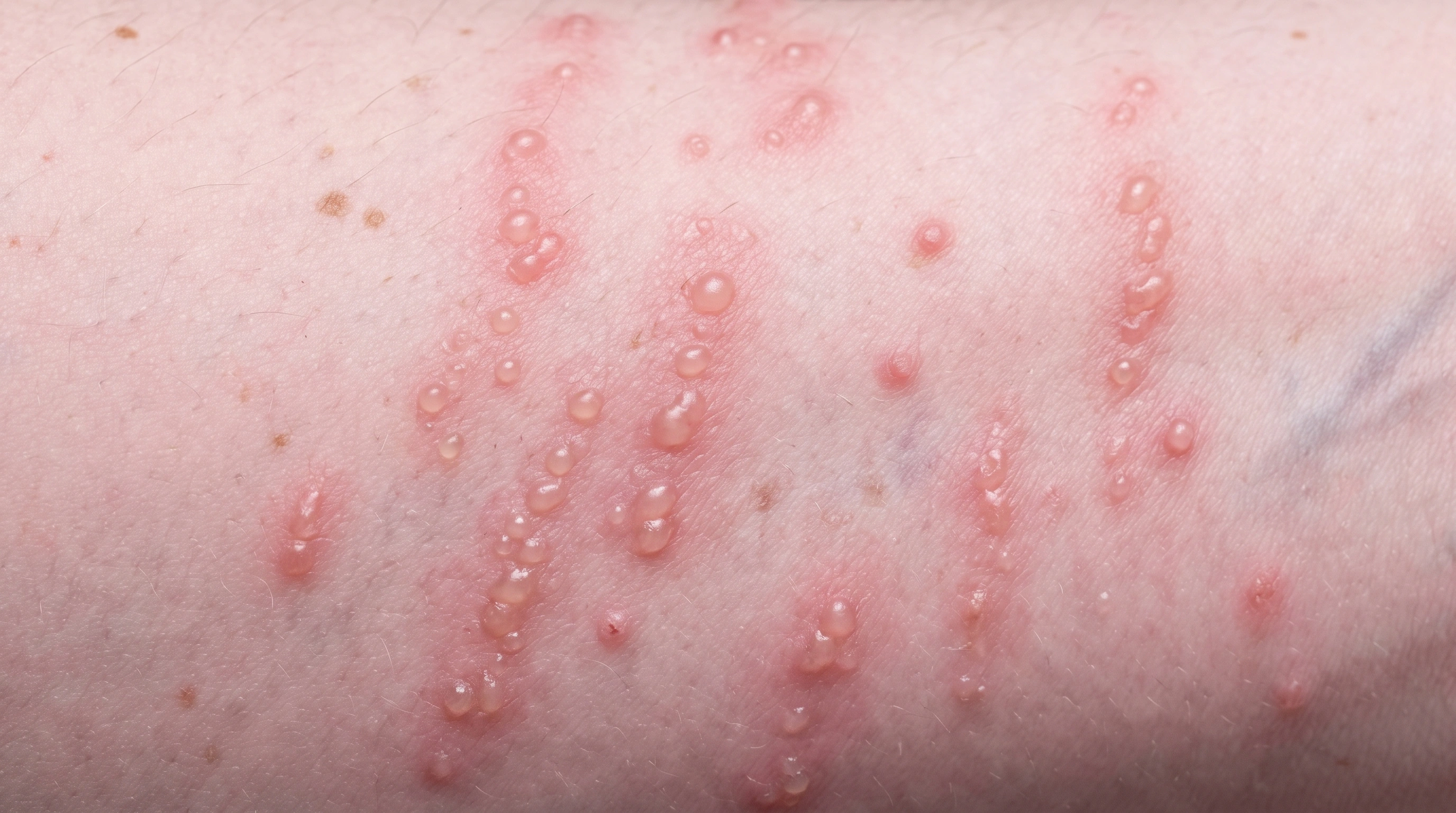
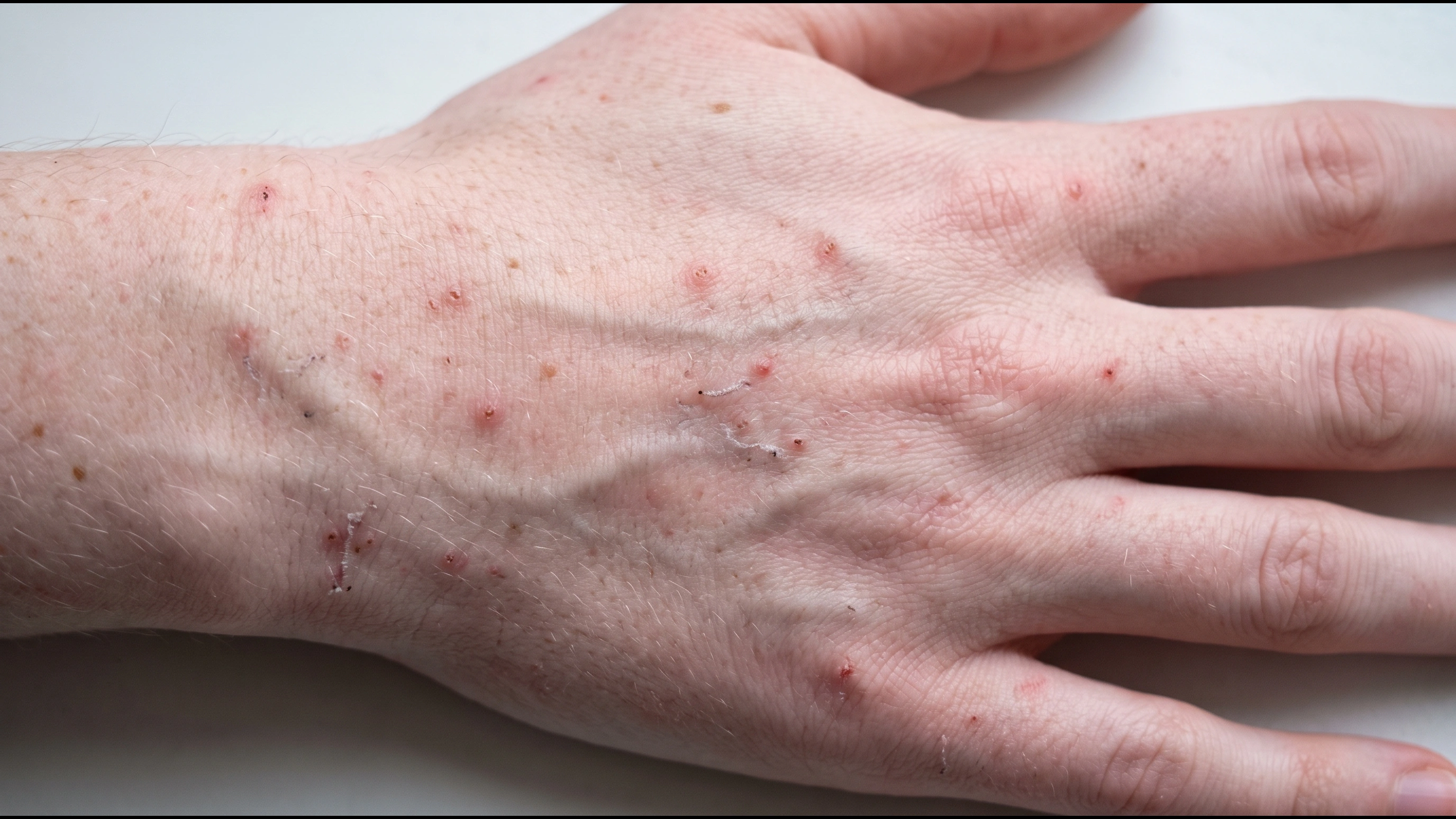
Classic scabies Itchy bumps and burrows with few mites.
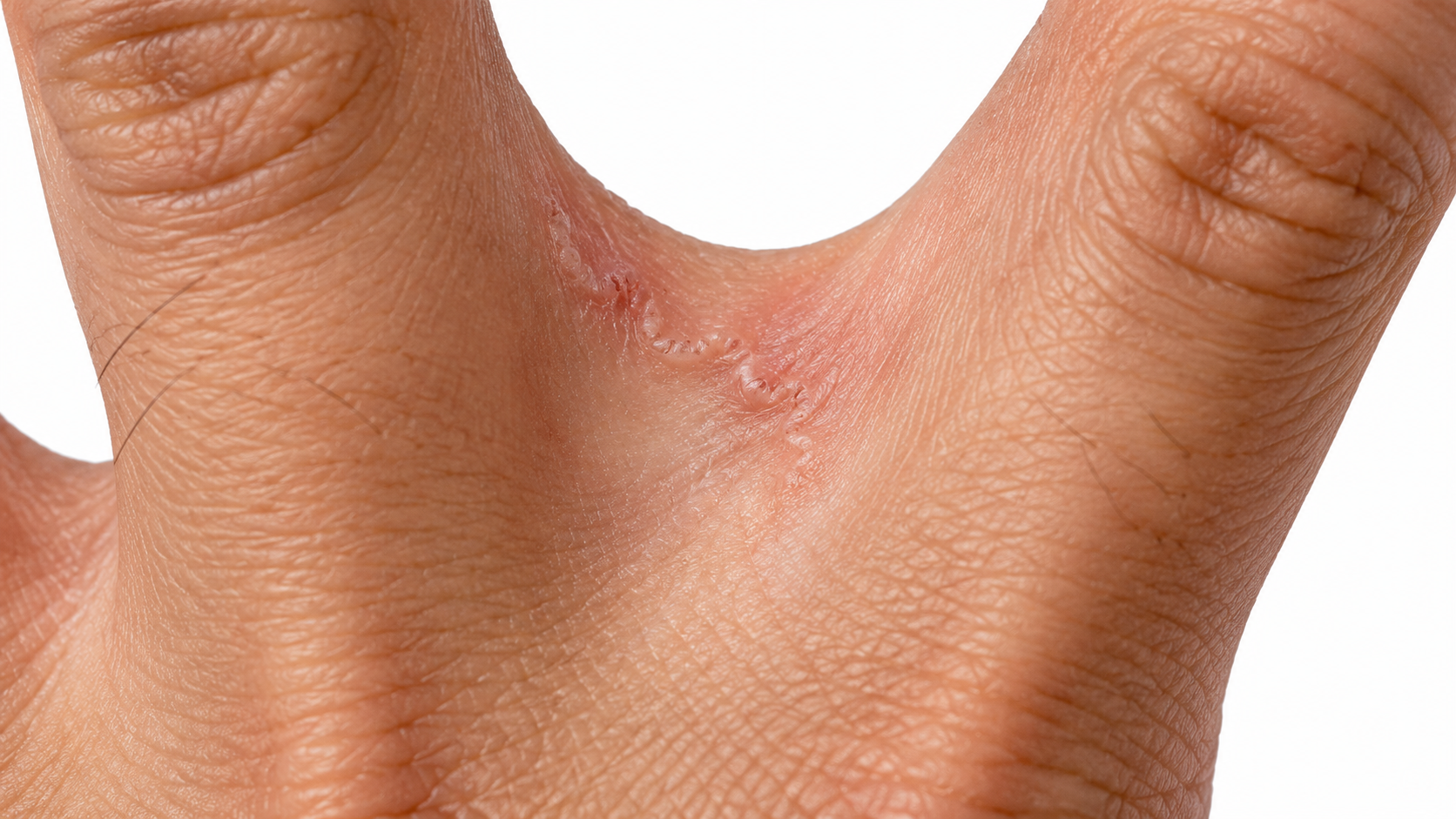
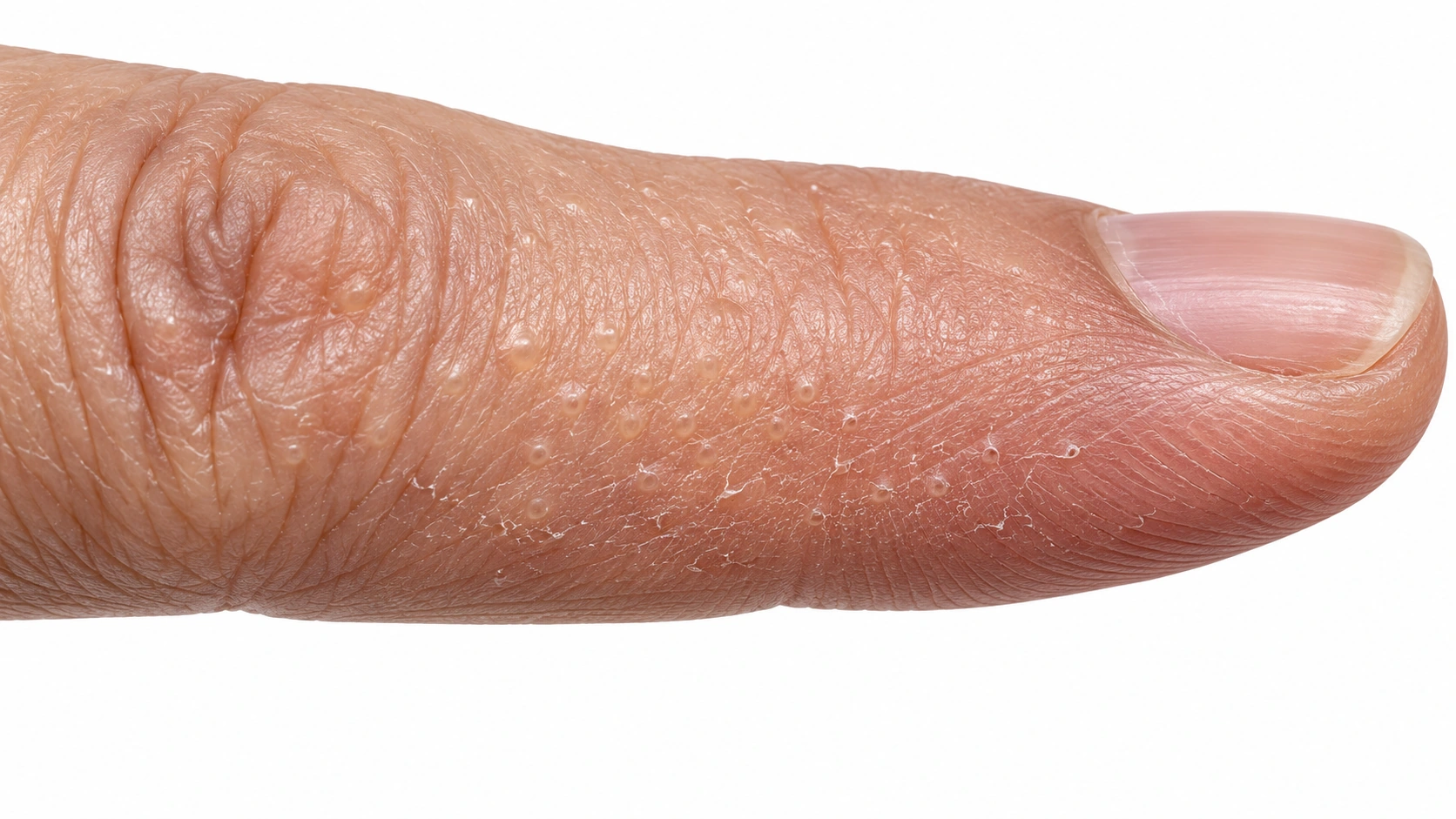
Burrows between fingers A thin, winding track is visible in the finger web.
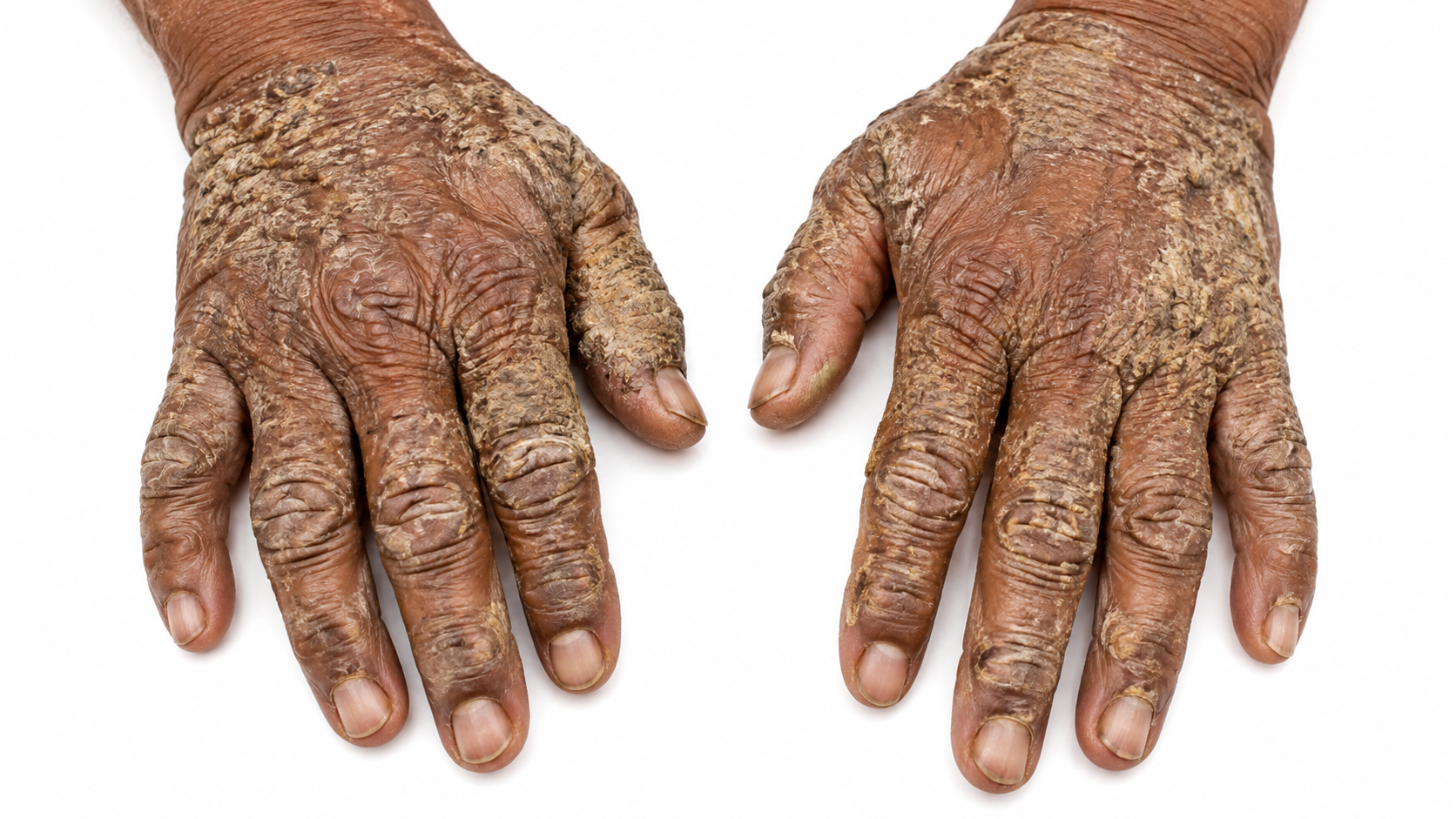
Crusted scabies Thick gray crusts with huge numbers of mites.
Nodular scabies Firm itchy lumps that can last for months.
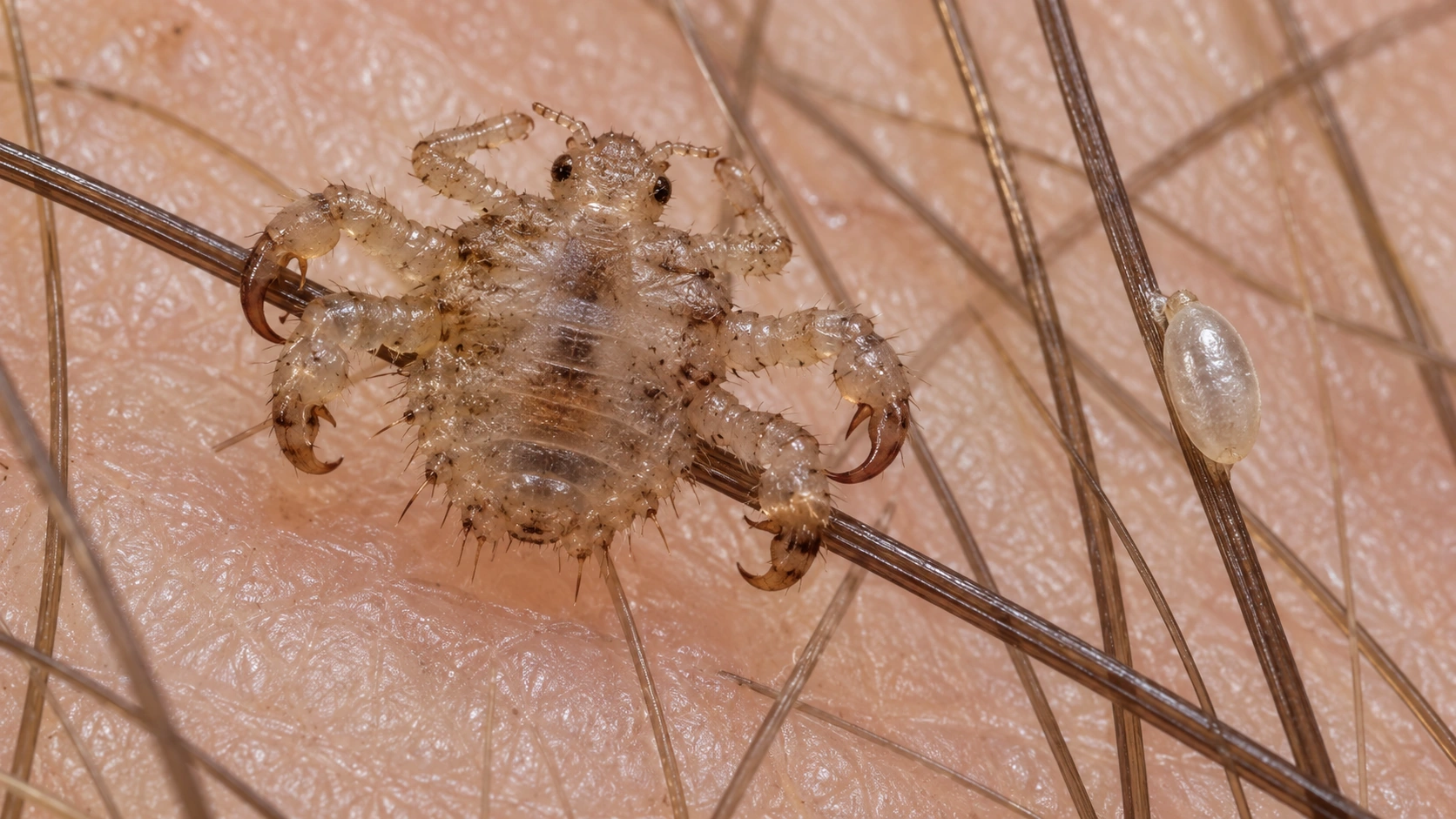
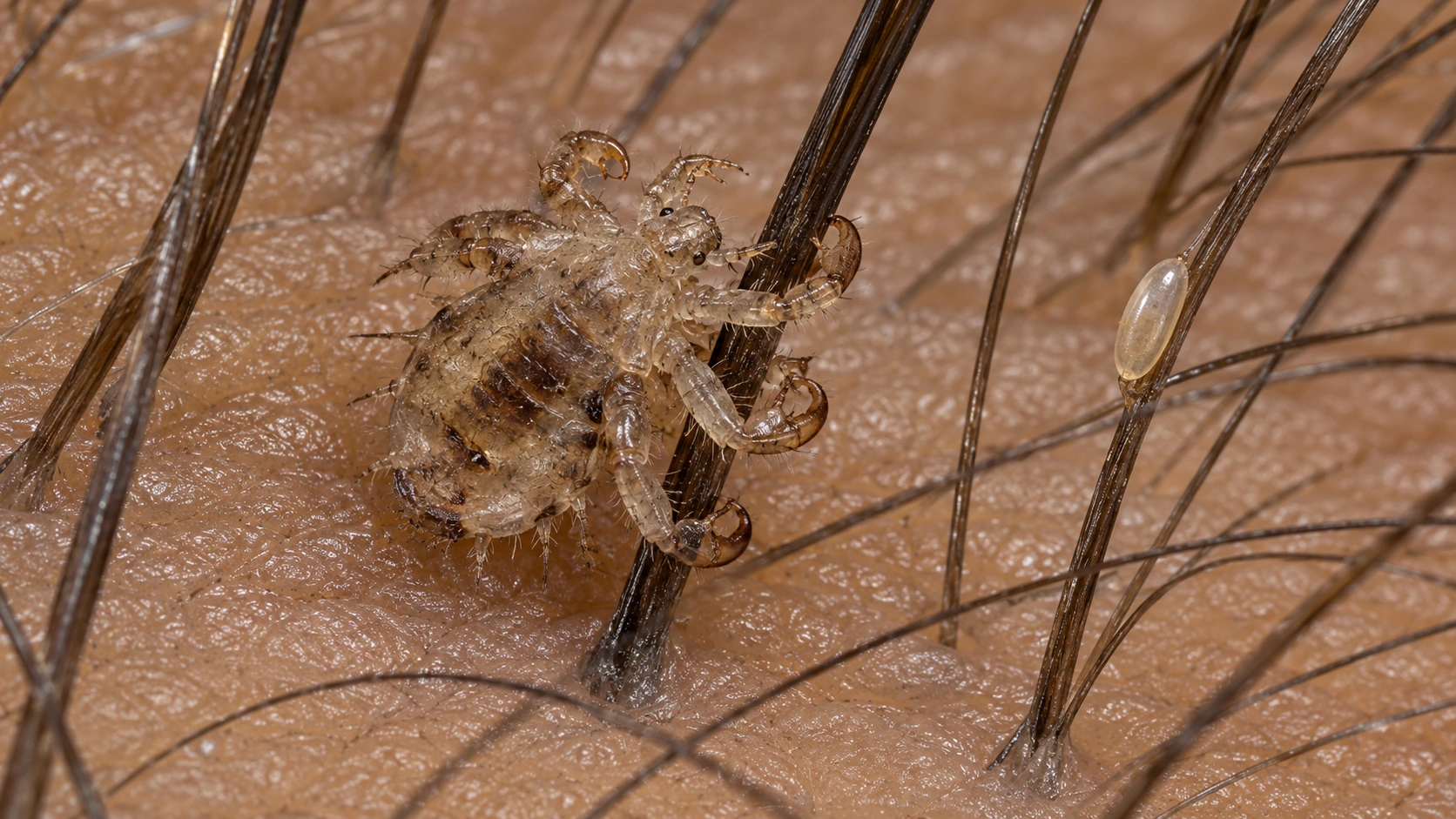
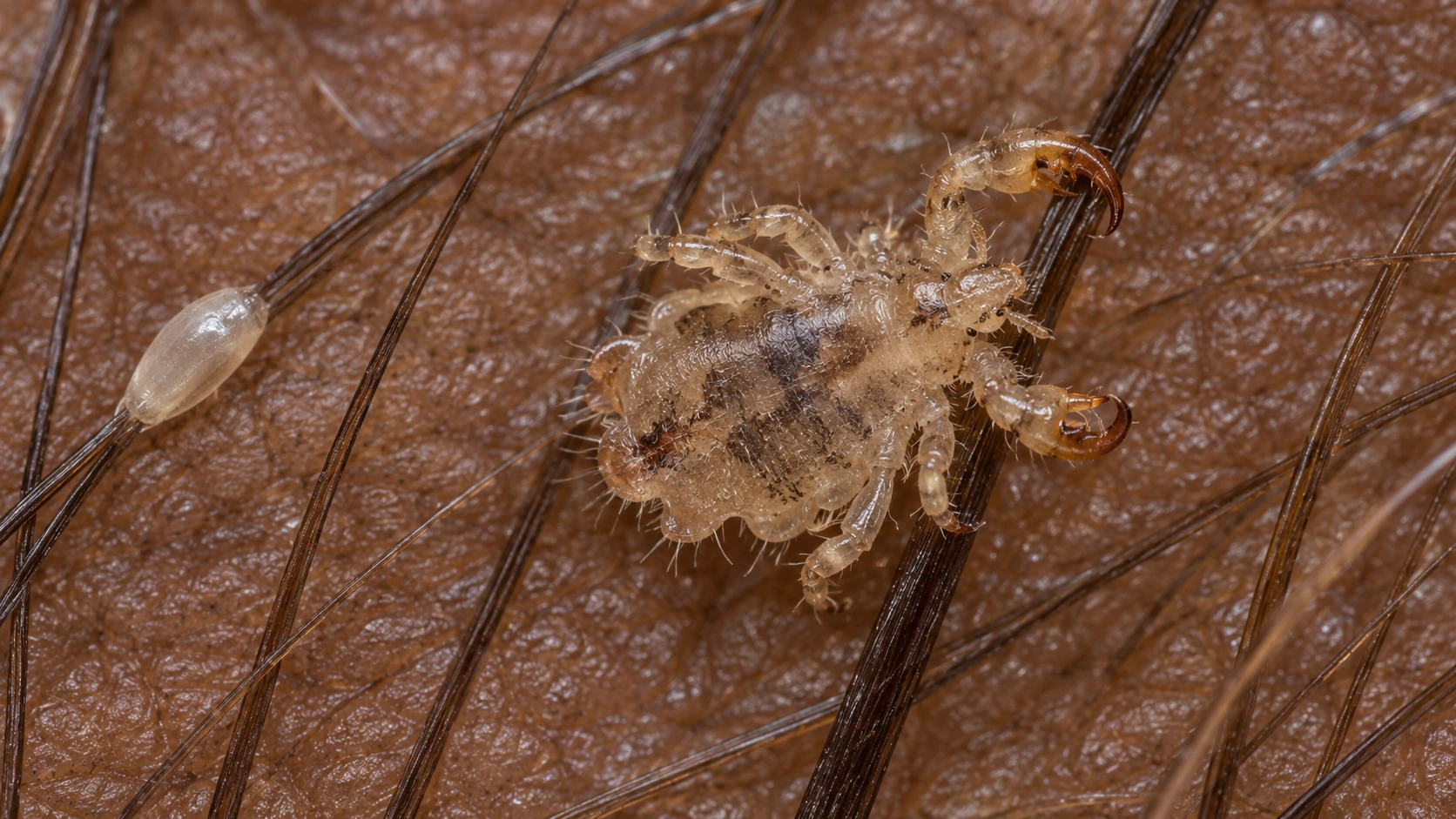
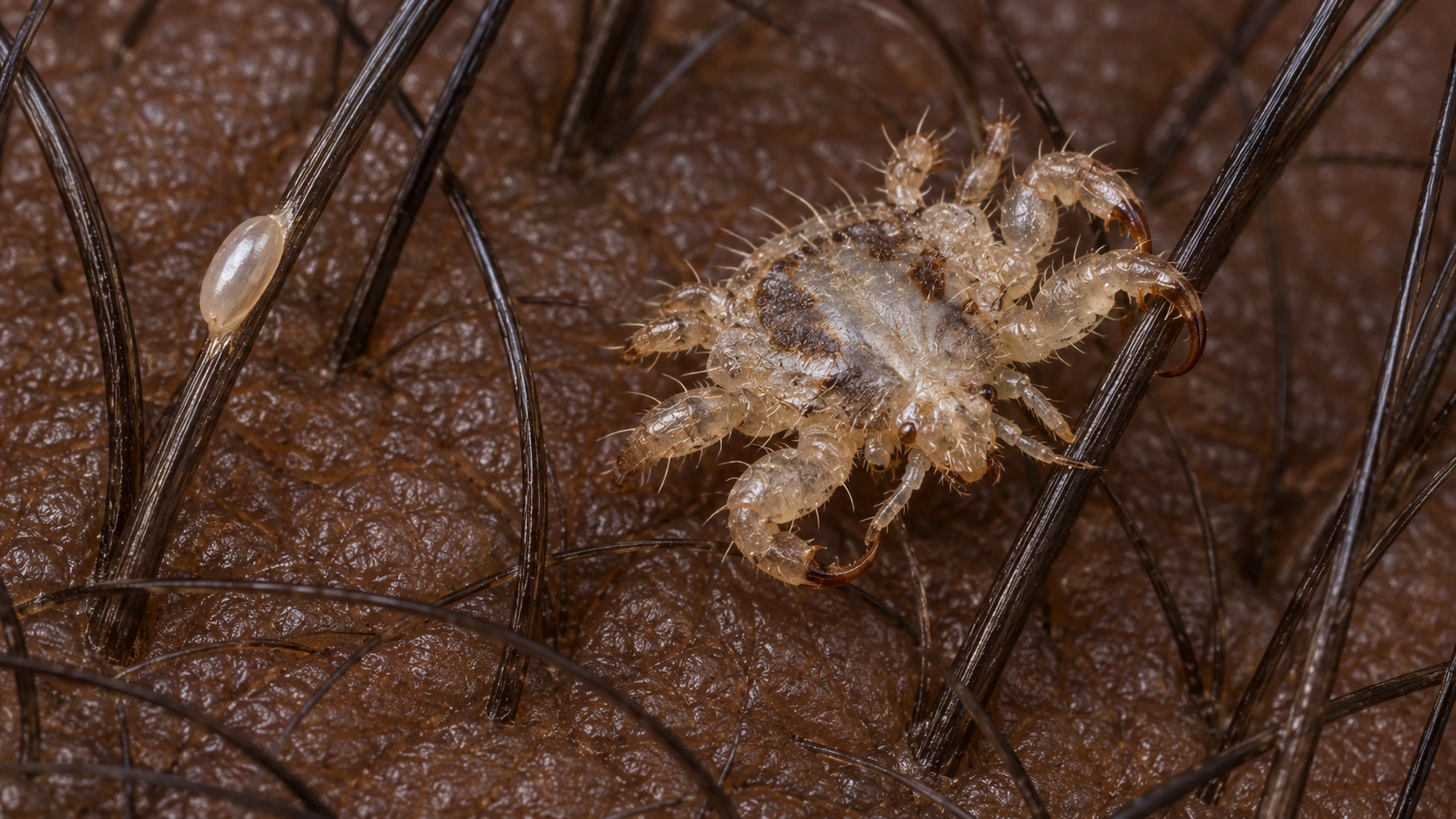
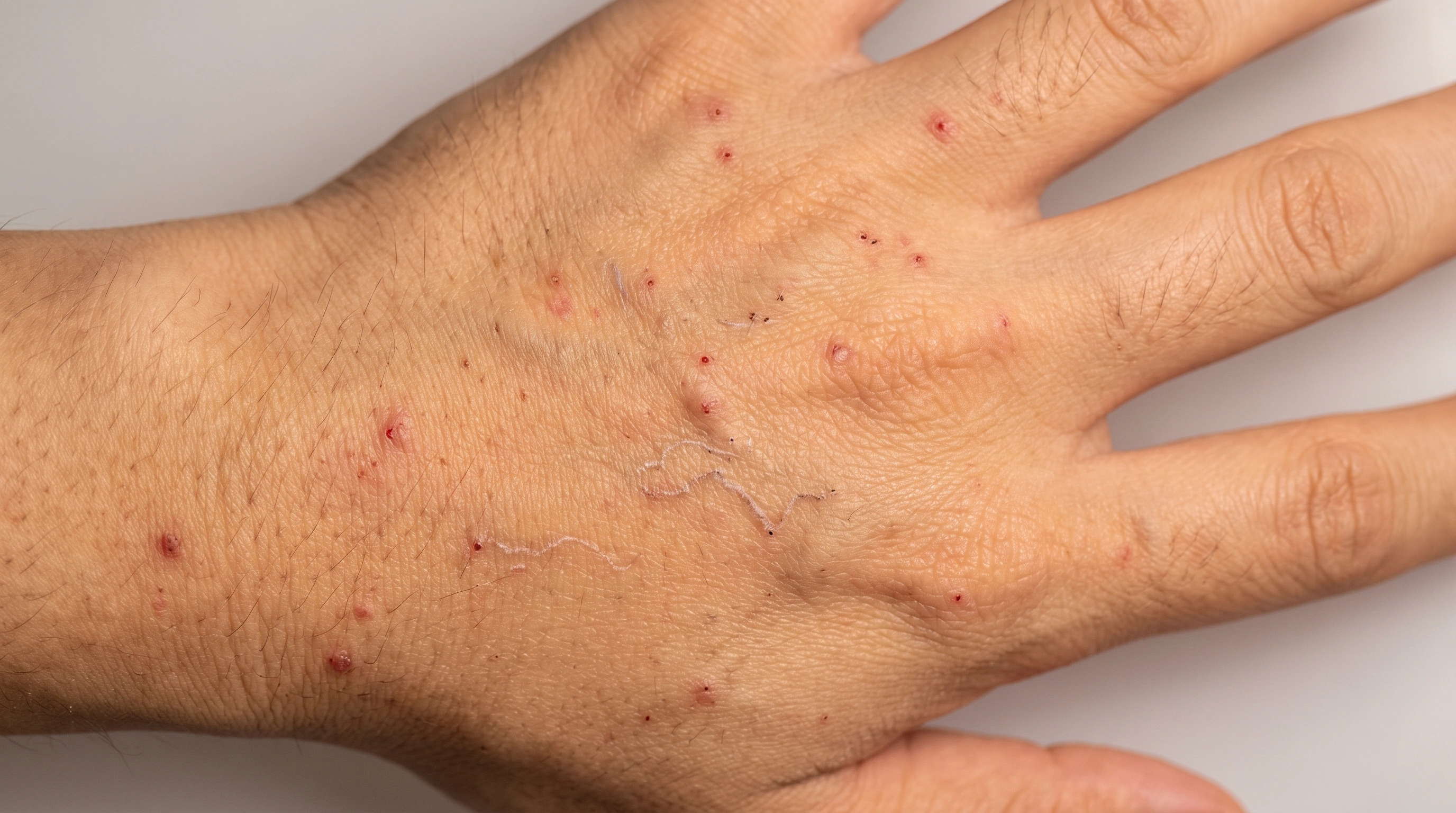
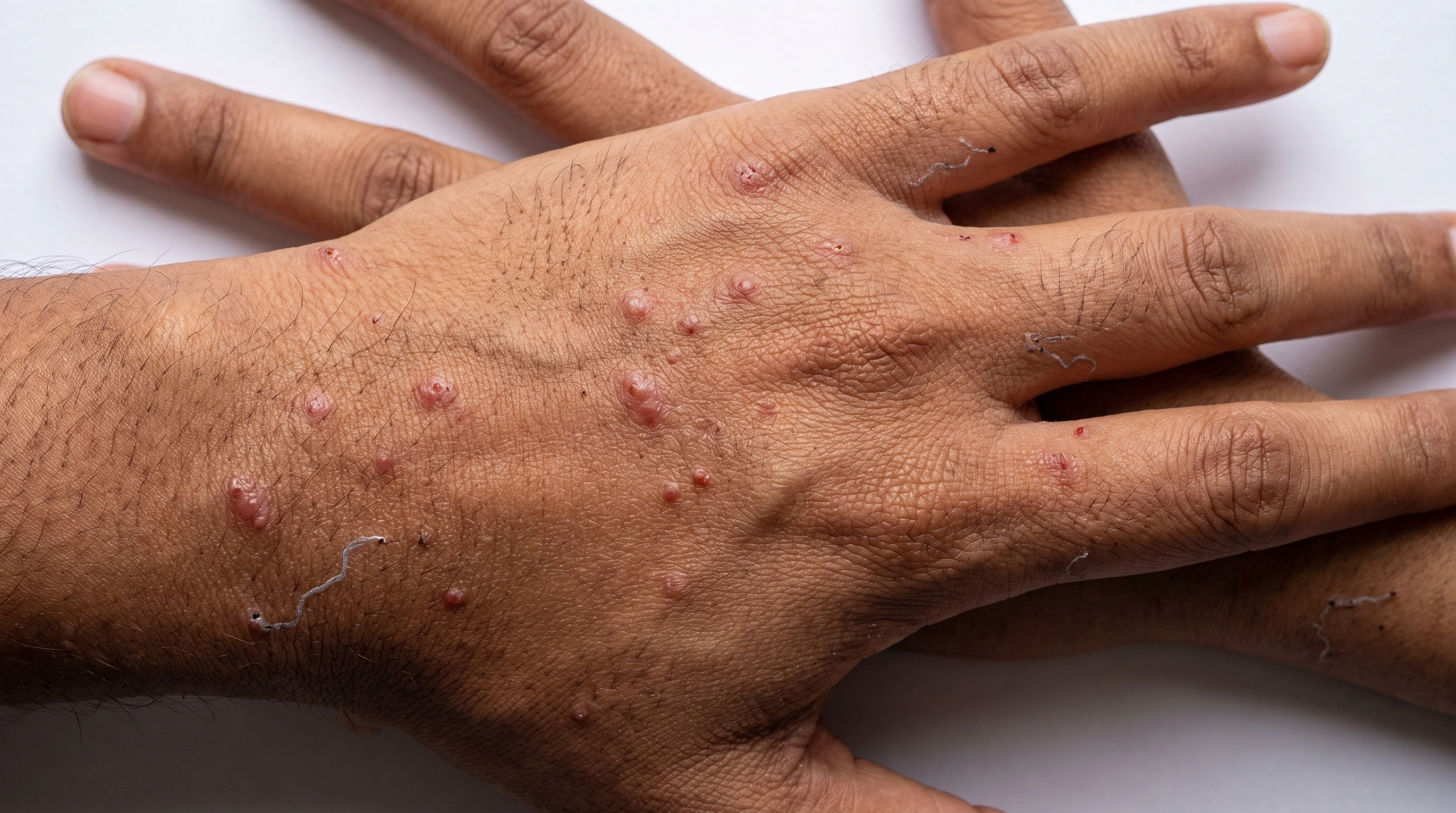
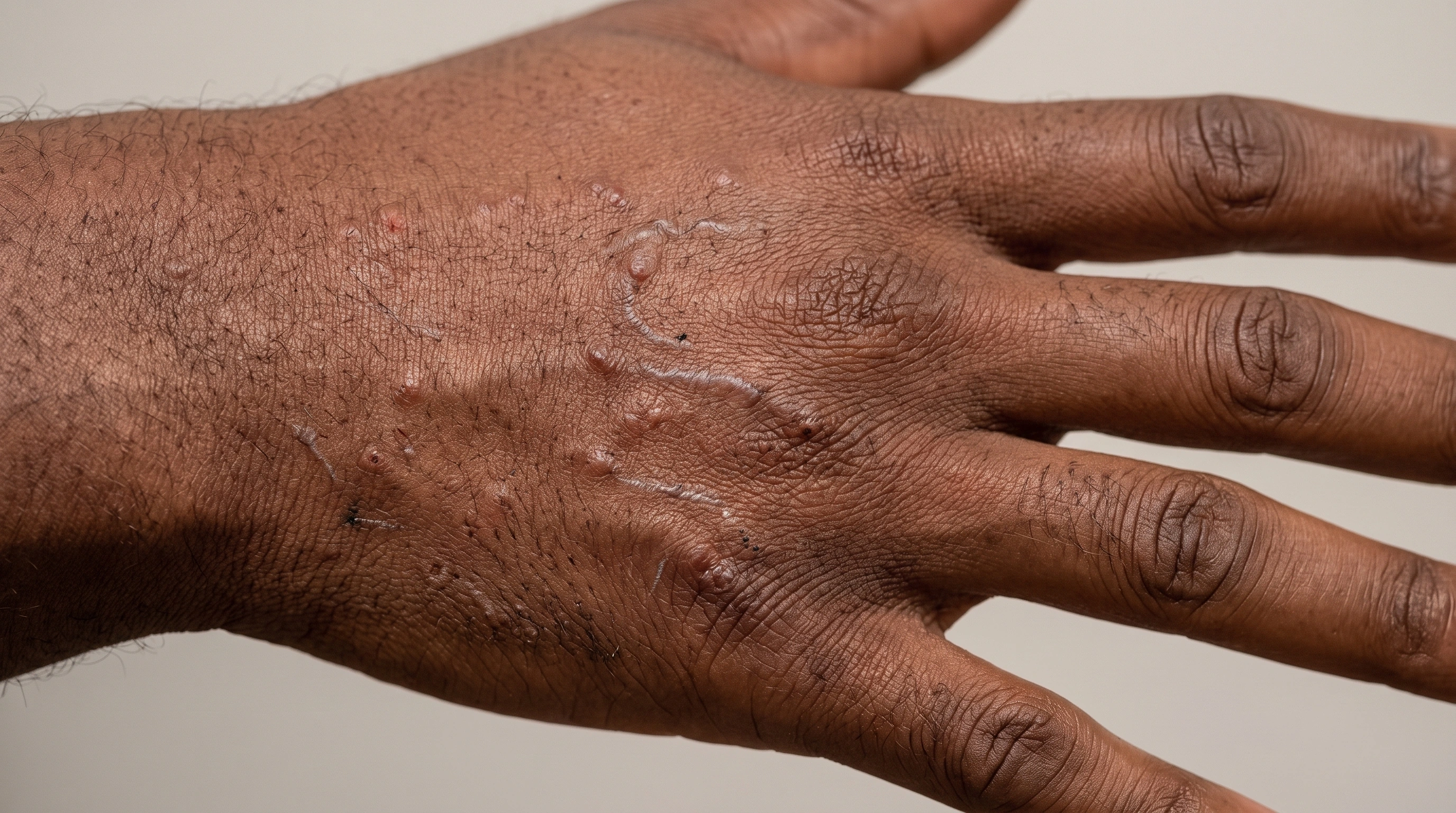

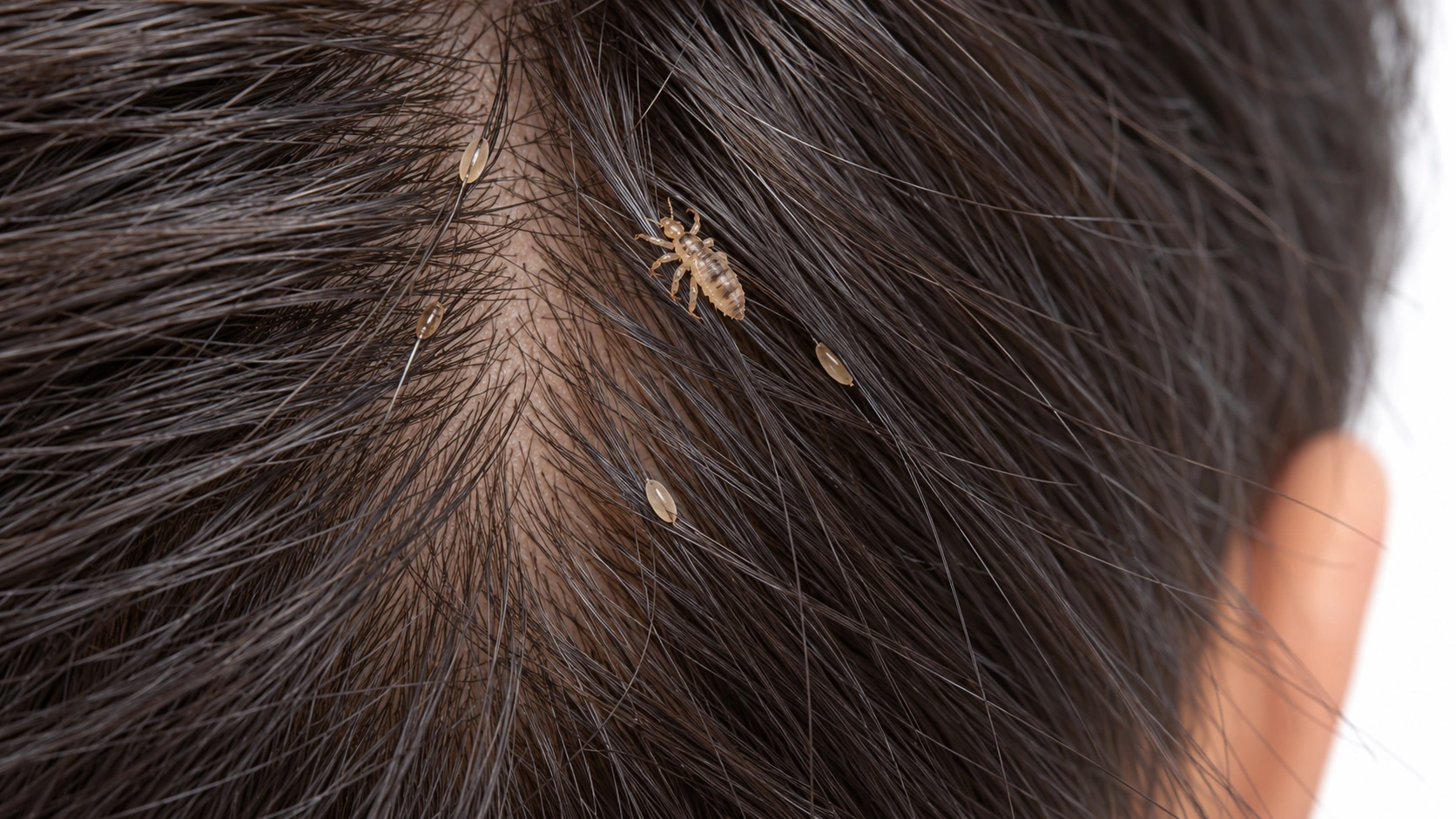
Pubic lice feed on blood at the skin surface and attach their eggs to hair shafts. The skin's reaction to feeding can cause itching and irritation.
Scabies mites burrow into the outermost skin and lay eggs there. The immune reaction to mites and their products causes an itchy rash; the itch does not mean the mites are burrowing deep into the body.
Pubic Lice. Usually follows close contact; unexplained infestation in a child needs professional assessment.
Scabies. Can affect people of any age after close contact with an affected person.
Lice feed on blood and attach eggs to hair shafts.
Scabies is caused by a tiny mite that burrows into the top layer of skin. The intense itch is the body's allergic reaction to the mites and their eggs.
Evidence labels come from each condition’s own treatment list.
Use an appropriate labelled formulation and address recent contacts; do not apply to eyes.

Worth trying in the daytime, though scabies itch is only partly driven by histamine, so the effect is usually modest. They will not shorten the infestation or replace treatment. If the itch is stopping you sleeping, a sedating antihistamine at night is the more useful version of this.
Mild steroid cream helps the itch, but only after scabies has been diagnosed and treated. Used before that on an undiagnosed itchy rash it flattens the rash enough to make scabies much harder to recognize while the mites carry on spreading — sometimes called scabies incognito. If you have been using it, say so at your appointment.
A cool oatmeal soak settles the itch for a while during the weeks it takes the allergic reaction to fade. Keep the water cool rather than hot, because heat and hot showers reliably make scabies itch worse. It is comfort only, and it does nothing to the mites.

The home remedy asked about most often. It does kill mites in a dish, and small studies have looked at it, but there is no evidence it clears an infestation on a person. Applied neat to skin that is already scratched and inflamed it commonly stings and can cause a reaction of its own. Bleach and vinegar do not work either.
Permethrin 5% cream. The usual first treatment. It goes on the whole body from the neck down — every fold, between the fingers and toes, under the nails, around the navel and the genitals — and is left on for 8 to 14 hours, usually overnight. Put it back on your hands after any hand washing. It is repeated a week later to catch eggs that hatch after the first dose, and everyone in the household is treated on the same day whether they itch or not.
An older treatment, used where permethrin is unavailable or has not worked. It is applied the same way, over the whole body, and usually repeated. It stings on broken or scratched skin and can irritate, which is why it is rarely the first choice where permethrin can be had.
Precipitated sulfur in petrolatum, applied for three nights in a row. It is the option most often chosen for very young babies and is one your doctor may consider if you are pregnant or breastfeeding — ask them, since that decision is theirs to make with you. It smells strongly, stains clothing and bedding, and is greasy, which is the main reason people struggle to finish the course.
A steroid cream used after the mites have been killed, to settle the itch and the firm lumps left behind. It does nothing to the mites, and used on an undiagnosed itchy rash it blurs the picture while the infestation carries on spreading. So it is a second step, never a first one.
Marketed as both a scabies treatment and an anti-itch cream. It clears the mites in fewer people than permethrin does, so it is not a good first choice on its own. It is sometimes used for the itch after treatment, where it is mild and safe but not particularly effective.
An antibiotic ointment for scratched areas that have become infected — golden-yellow crust, oozing, soreness rather than itch. It has no effect on the mites at all. If the infection covers more than a small patch, or the skin around it is spreading red and swollen, antibiotic tablets are needed instead.
Oral ivermectin. Tablets taken as two doses about a week apart, weighted by body weight. They are the practical answer when a whole household or a care home has to be treated at once, when cream cannot be applied properly, or when cream has already failed. For crusted scabies they are given together with cream, often repeatedly. Ask the prescribing doctor whether they suit you, since they are not used in very small children and are avoided in pregnancy.

A short course of antibiotic tablets when scratched skin has become properly infected — spreading redness, swelling, pain or fever. They treat the bacteria only, so the scabies treatment still has to be done alongside them. This is a common reason a scabies visit ends with two prescriptions rather than one.

An older antihistamine taken at bedtime, for the weeks when the itch is keeping you awake. Most of the benefit is that it makes you drowsy rather than that it blocks the itch, which in scabies is only partly driven by histamine. It is useful, it is short-term, and it can leave you groggy the next morning.
Correct treatment and management of close contacts can clear the infestation. Itching may take longer to settle; persistent live lice suggest reinfestation or the need to review treatment.
Itching can continue for several weeks after successful treatment, so itch alone does not prove that mites remain. New burrows or continuing new spots need reassessment; treating close contacts together helps prevent reinfestation.
Other sexually transmitted infections can coexist and testing may be appropriate.
Skin infection from scratching
Scratching breaks the skin and lets bacteria in, so scabies commonly turns into impetigo or, less often, cellulitis. The signs are pain rather than itch, golden-yellow crust, oozing, or spreading redness and swelling with fever. It needs antibiotics alongside the scabies treatment. In parts of the world where scabies is very common, these skin infections are also a route to kidney and heart problems later, which is one reason outbreaks are taken seriously.
Lumps that linger after treatment
Firm, itchy, red-brown lumps can stay on the genitals, groin and armpits for weeks to months after the mites are dead. They are a stubborn allergic reaction, not live infestation, and re-treating with scabies cream does nothing for them. A steroid cream from your doctor, and sometimes an injection into the lumps, is what settles them.
Weeks of broken sleep
The itch is at its worst at night, and by the time most people are diagnosed they have had several weeks of it. Broken sleep is the part that wears people down, and it usually carries on for another two to four weeks after treatment while the allergic reaction settles. It is worth treating in its own right — a sedating antihistamine at night, a cool bedroom and moisturizer before bed all help.
Seek care for eyelash involvement, pregnancy, treatment failure or infestation in a child.
Arrange treatment for suspected scabies and close contacts. Crusted widespread rash or infection needs prompt assessment.
An infestation of coarse body hair by crab lice, usually spread through close contact.
Follow the labelled treatment, address recent contacts and wash clothing and bedding. Do not apply ordinary lice products to eyelashes.
Seek care for eyelash involvement, pregnancy, treatment failure or infestation in a child.
Because the itch is an allergic reaction to the mites, not the mites themselves, and it takes two to four weeks to settle after they are gone. Moisturizer, antihistamines at night, and a steroid cream if your doctor prescribes one. Re-treating now irritates the skin. An itch worsening after four weeks does need review.
Cleanliness has nothing to do with it. The mite spreads through prolonged skin-to-skin contact - sharing a bed, holding a child, caring for a relative, sexual contact - and cannot be washed off once burrowed. Outbreaks happen in immaculate homes and hospitals.
Yes, on the same day, itch or not. Contacts can carry mites for four to six weeks before itching, so treating only the person with the rash almost guarantees it comes back. This is the most common reason scabies drags on.
You were contagious before you had symptoms, which is why it spreads so quietly. After a correctly applied treatment, most people are no longer contagious after about 24 hours. Many workplaces and schools use that as the point of return; follow local advice.
Not for ordinary scabies. Wash bedding, towels and clothing from the last three days on a hot wash and dry them hot, or bag them for about three days. The mite does not survive long off skin. Crusted scabies needs much more thorough cleaning.
Not the human form. Animals have their own mite varieties, which can cause a brief itchy rash on people but cannot reproduce on human skin and clear once the animal is treated by a vet.
Sources