Contact Dermatitis vs Scabies

Contact dermatitis is a rash caused by something that touched the skin. It comes in two forms - irritation from a substance that would bother anyone given enough exposure, and an allergic reaction to something only some people react to. Both clear once the cause is found and removed. Scabies is an intensely itchy rash caused by a tiny mite that burrows into the top layer of skin. It spreads through prolonged skin-to-skin contact, it has nothing to do with cleanliness, and it clears with prescription treatment when everyone in the household is treated at the same time.

Reviewed by Dr. Schwarz, Board-Certified Dermatologist · Research updated 2026-10-23
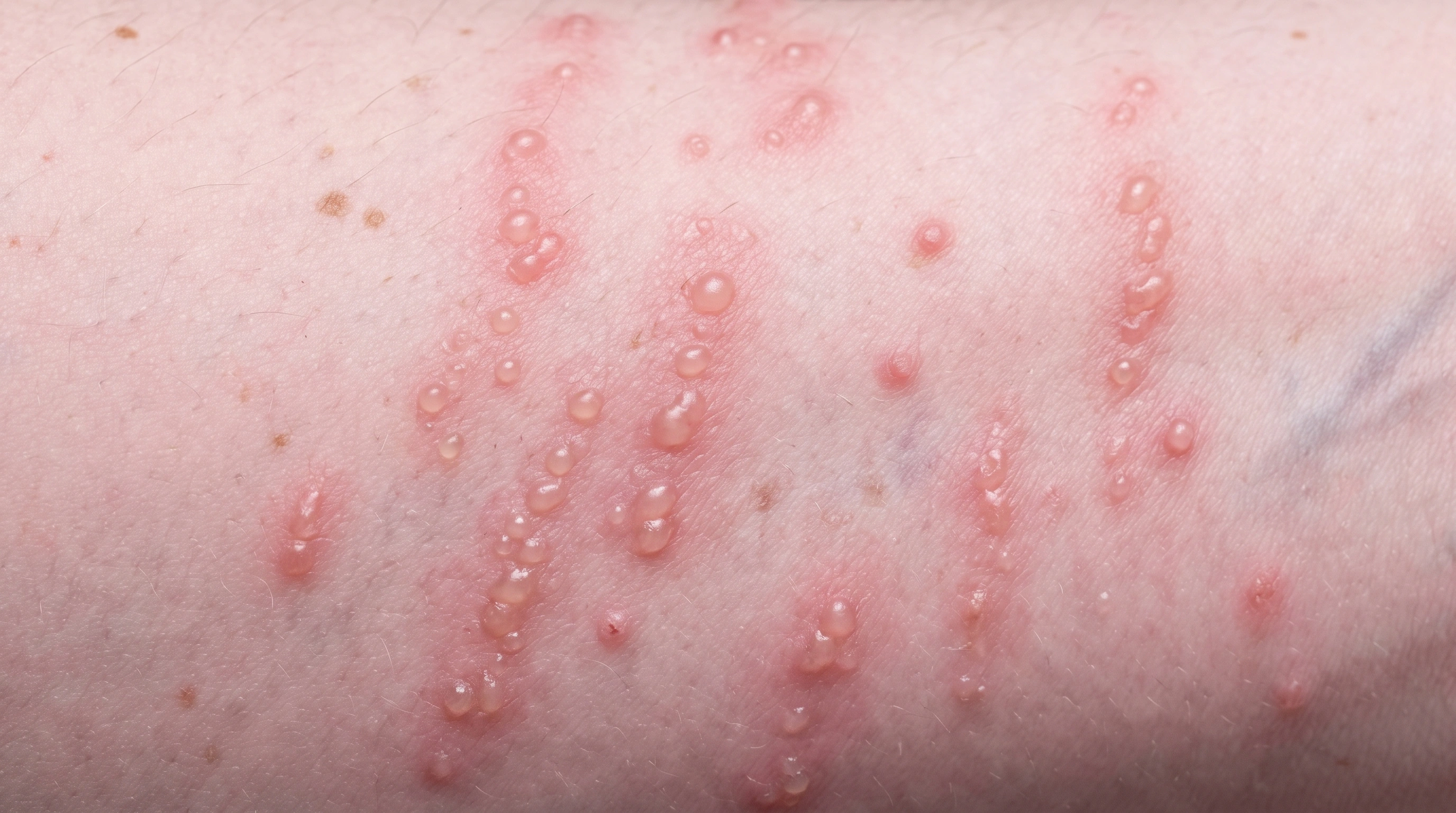
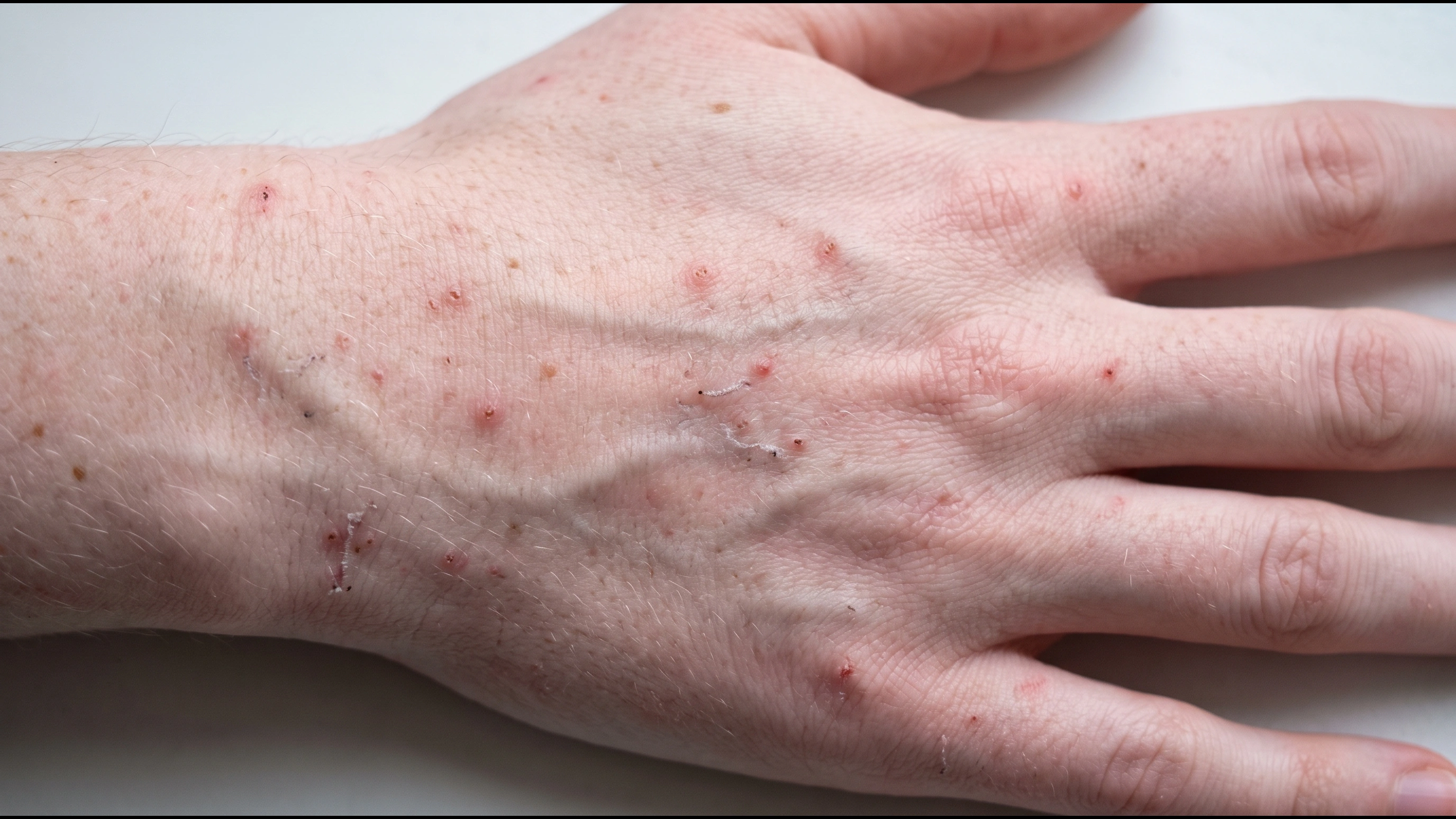
The back of one hand and the wrist on pale skin. A bright pink, slightly swollen patch with tiny blisters covers the back of the hand and stops at a straight line across the wrist.The finger webs and wrist on fair light skin, with small red bumps, several thin gray burrow lines a few millimetres long, and scratch marks across the area.

Key differences

The same eight facts on every condition comparison.

Usual age
Any age
Any age
Where
Where something touched
Finger webs, wrists, waist, groin
Main sign
Red, itchy or burning rash
Tiny burrows and itchy bumps
Itch or pain
Itchy or burning
Severe itch, worse at night
Contagious
No
Yes, skin contact
Long term
Clears once the cause stops
Clears with treatment
Scars
No
No
Who gets it
Anyone; wet-work jobs
Households, care homes, close contacts

What is it?

Contact Dermatitis
Scabies
What is it?

It is eczema from contact.
A substance touching the skin provokes the rash.

There are two types.
Irritant dermatitis damages the barrier directly; allergic dermatitis is a delayed immune reaction.

Patch testing finds allergies.
It differs from skin-prick testing.

The exposure is part of treatment.
Identifying what touched the skin guides care.

It is caused by a mite.
The human scabies mite lives in superficial skin and triggers an immune reaction.

Symptoms can be delayed.
A first infestation can go unnoticed for weeks while it can still spread.

It is not about hygiene.
Scabies can occur in any household or care setting.

Crusted scabies is different.
It carries a very large mite burden and needs a specialist regimen.

What it looks like

Contact Dermatitis

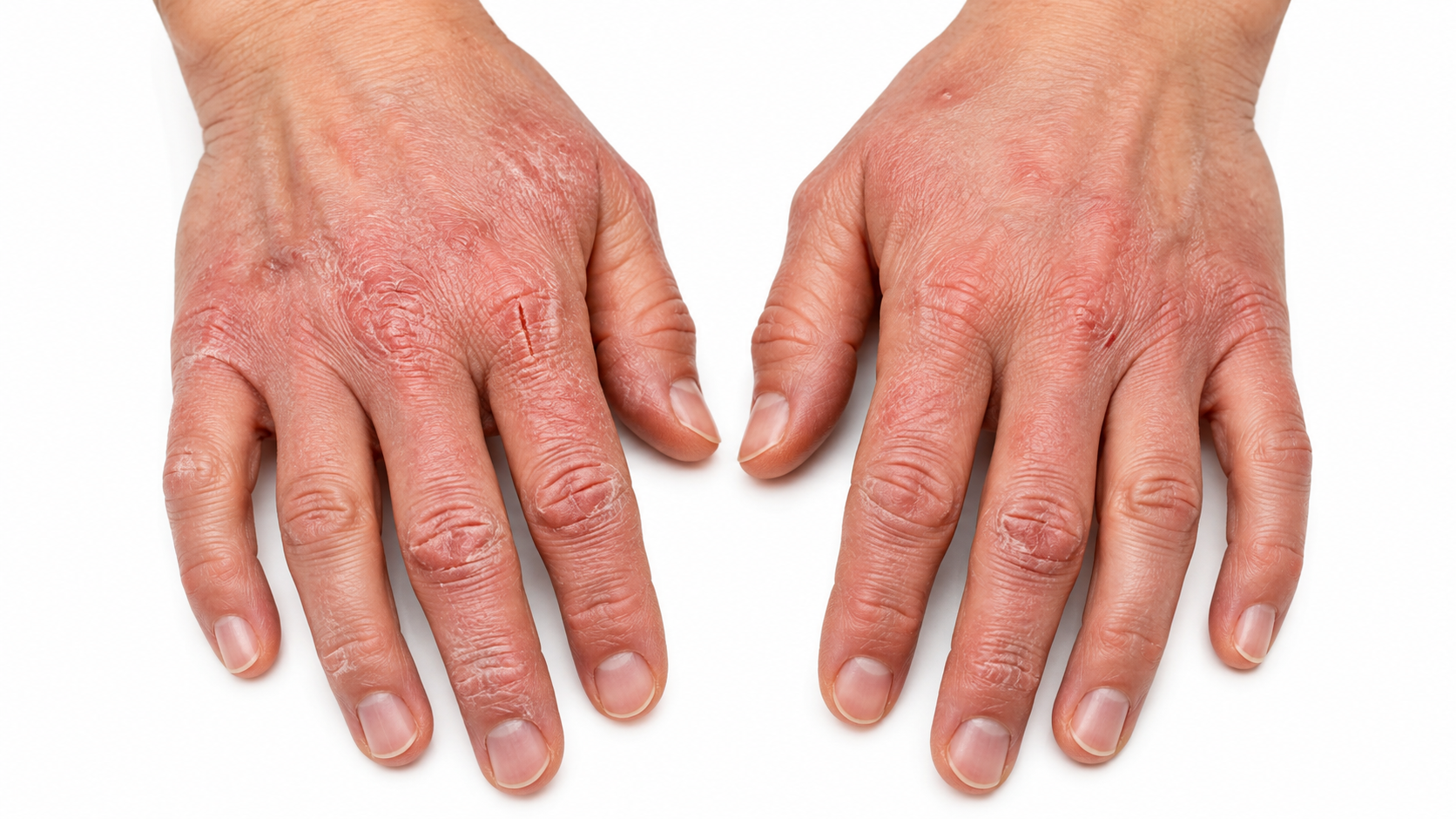
Contact Dermatitis: Dry, cracked hands; Irritant.

Irritant contact dermatitis Damage from soaps, solvents or water; most common.

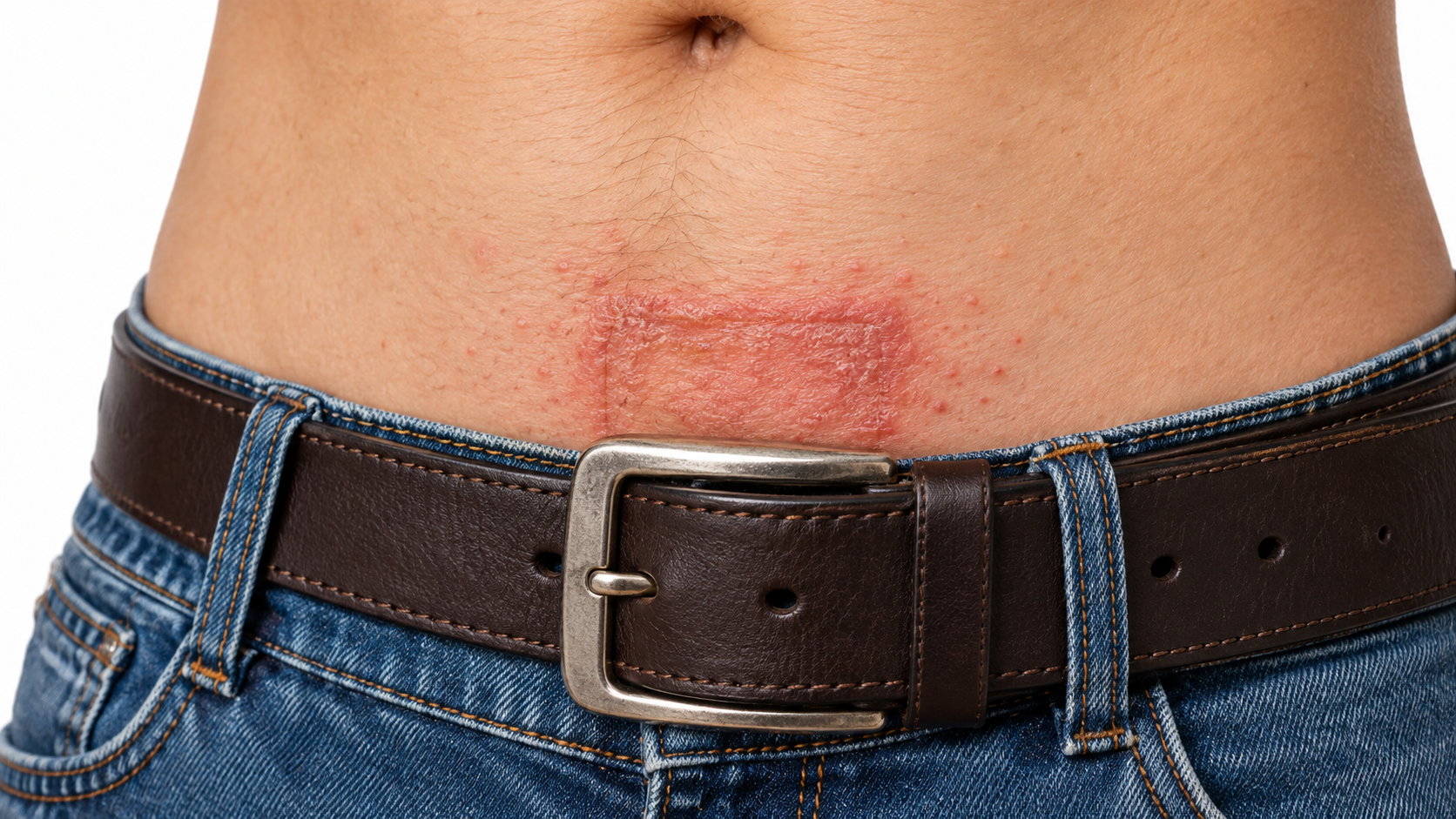
Contact Dermatitis: Allergic.

Allergic contact dermatitis Immune reaction to nickel, fragrance, plants and more.

Scabies

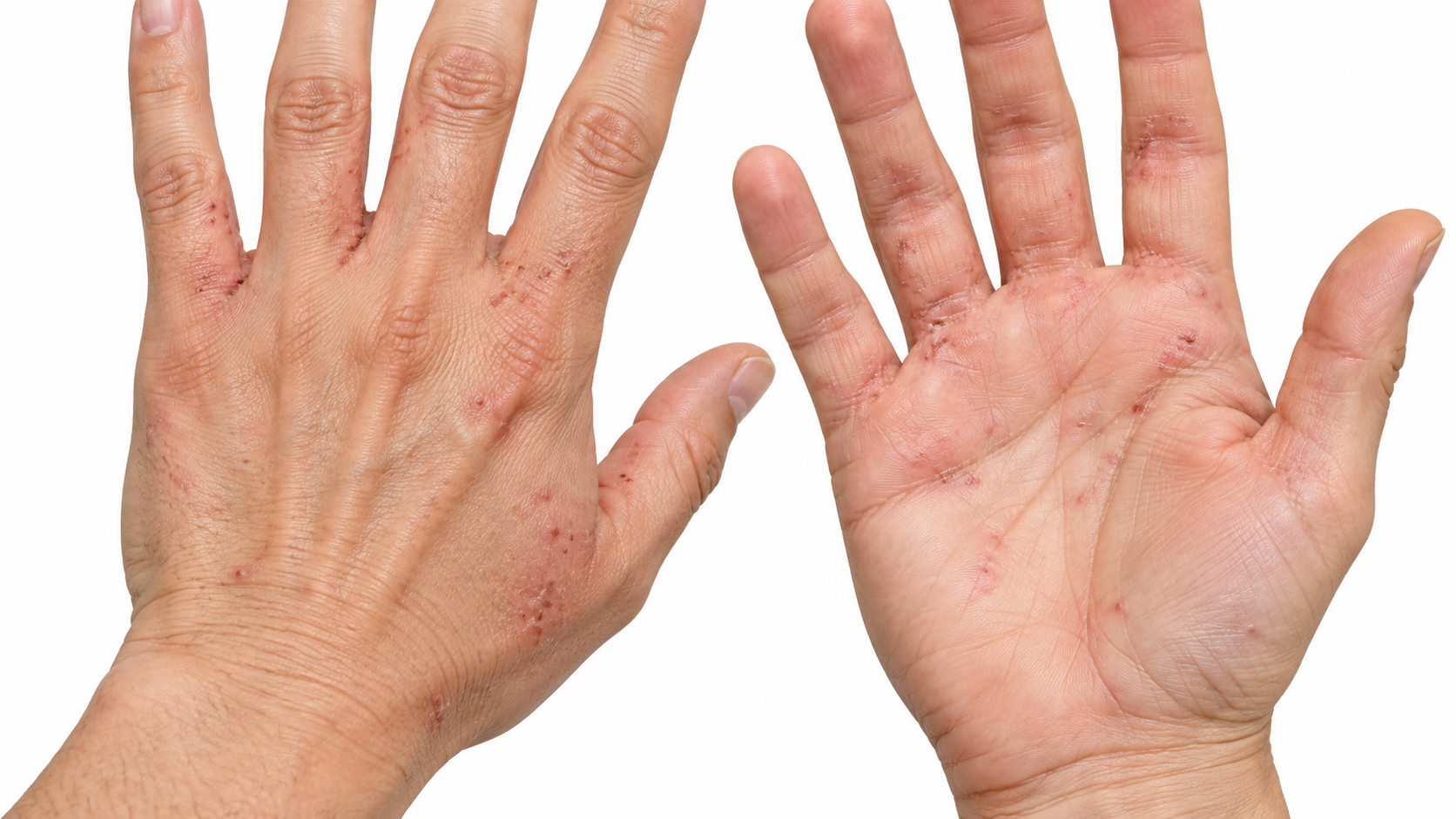
Scabies: Classic.

Classic scabies Itchy bumps and burrows with few mites.

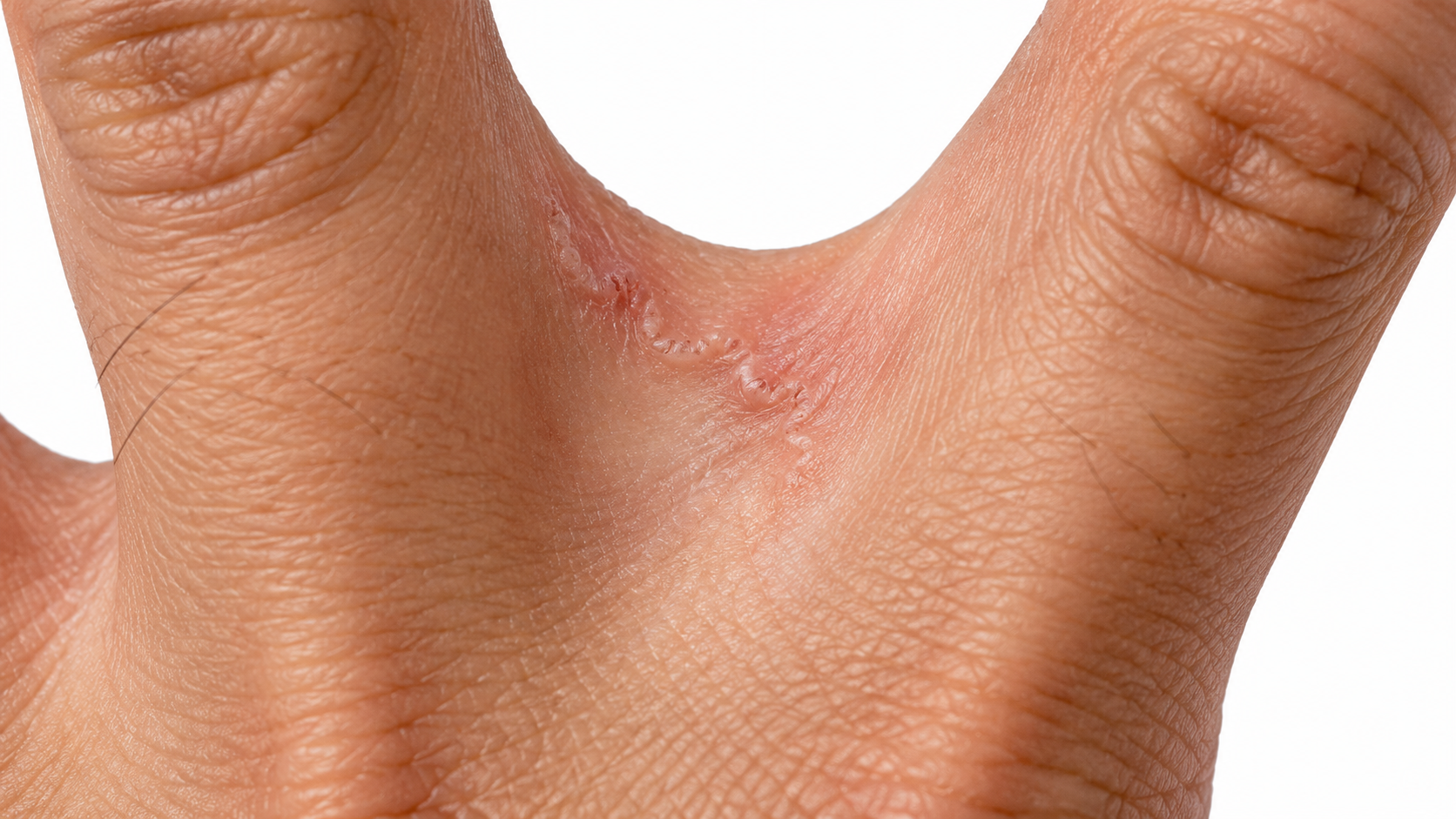
A thin, winding track is visible in the finger web.

Burrows between fingers A thin, winding track is visible in the finger web.

Scabies: Crusted.

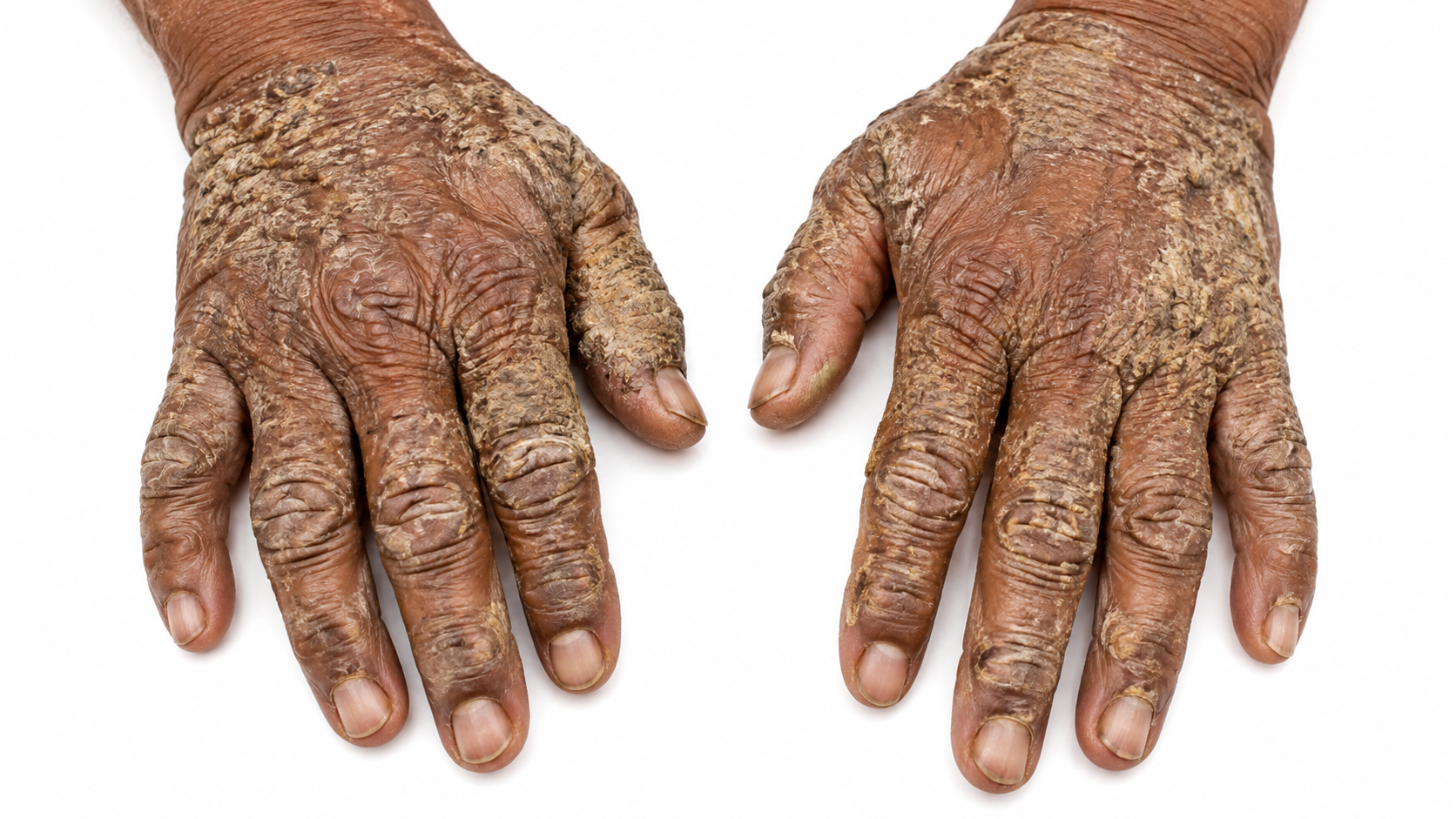
Crusted scabies Thick gray crusts with huge numbers of mites.

Firm itchy lumps that can last for months.

Nodular scabies Firm itchy lumps that can last for months.

Skin tones
The back of one hand and the wrist on pale skin. A bright pink, slightly swollen patch with tiny blisters covers the back of the hand and stops at a straight line across the wrist.
The back of one hand and the wrist on medium olive skin. A dusky pink-brown, slightly swollen and scaly patch covers the back of the hand and stops at a straight line across the wrist.
The back of one hand and the wrist on mid-brown skin. A violet-brown, swollen, slightly scaly patch covers the back of the hand and stops at a straight line across the wrist, with no red color in it.
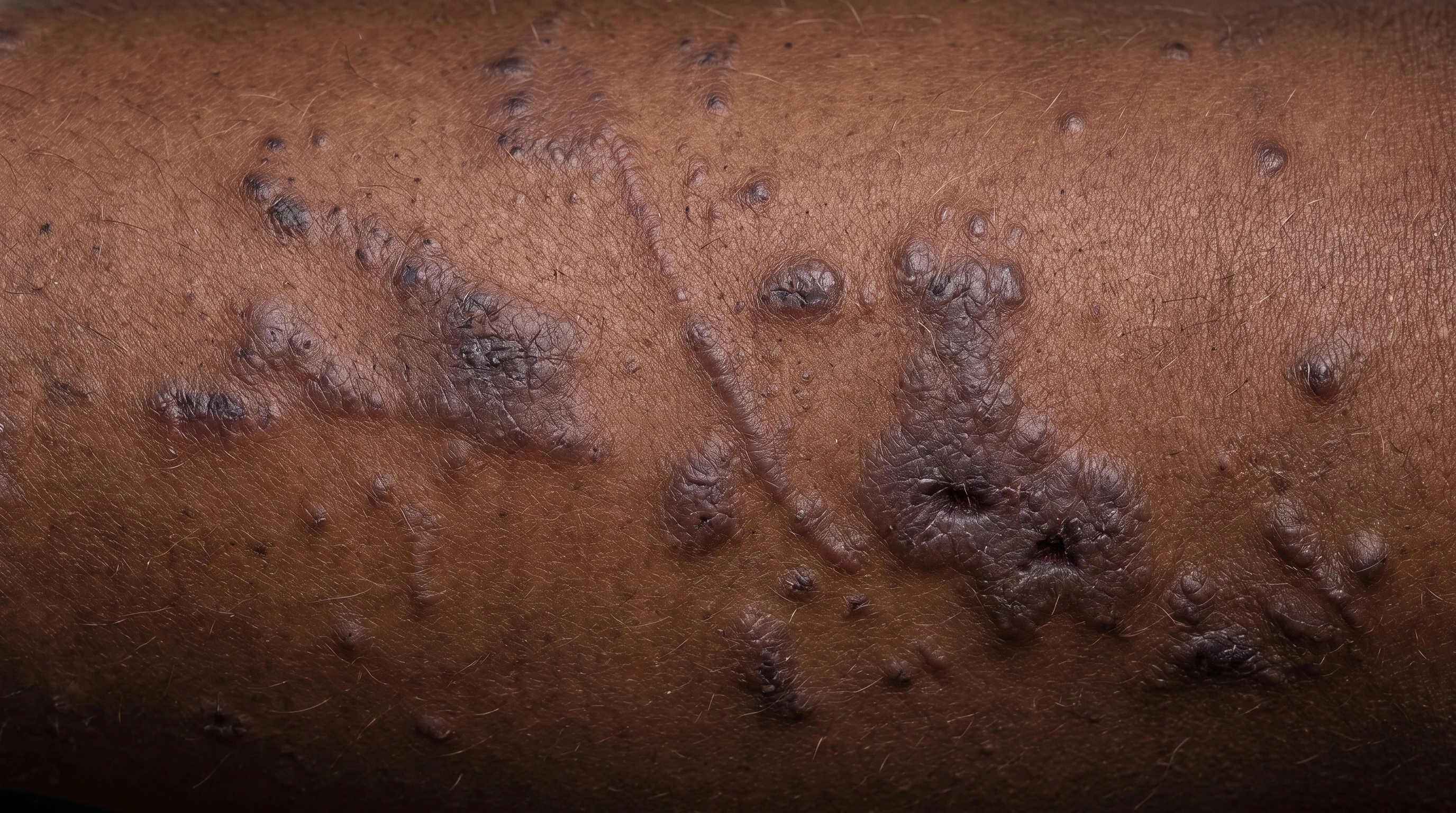
The back of one hand and the wrist on deep brown skin. A dark violet-brown, swollen, scaly patch covers the back of the hand and stops at a straight line across the wrist, with no red color anywhere in it.
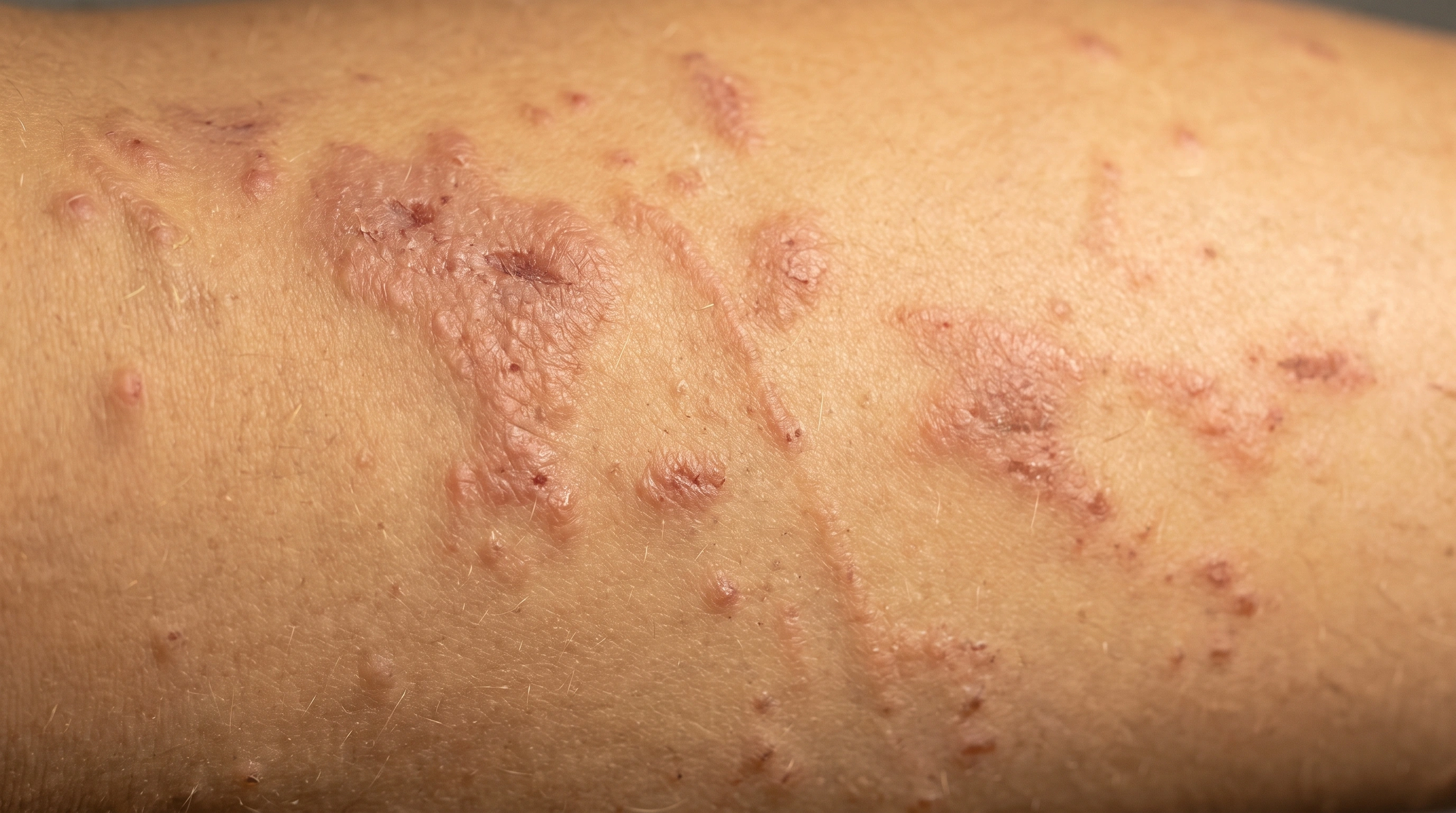
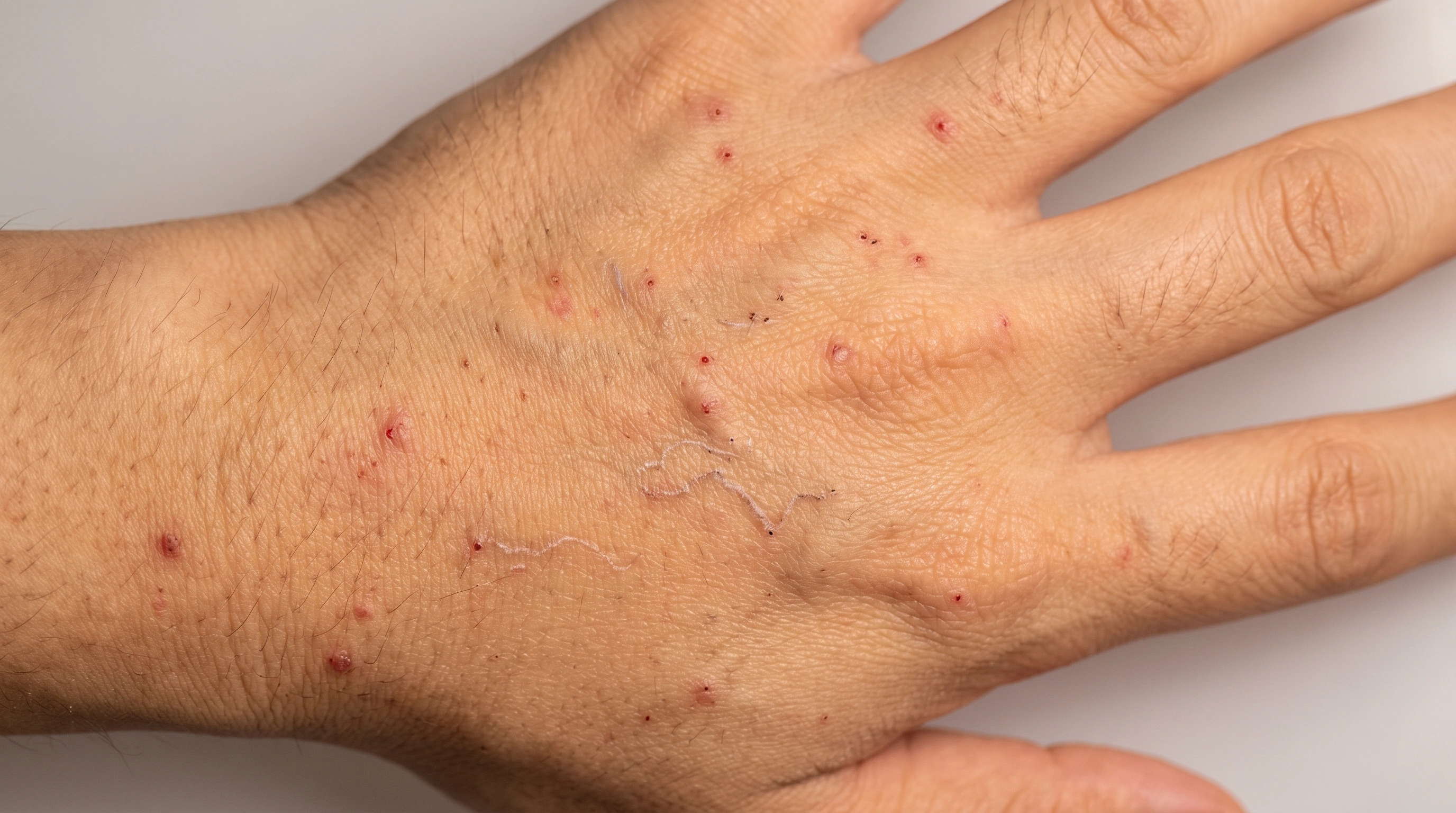
The finger webs and wrist on fair light skin, with small red bumps, several thin gray burrow lines a few millimetres long, and scratch marks across the area.
The finger webs and wrist on medium olive-tan skin, with small pink-brown raised bumps, faint burrow lines and several scratch marks.
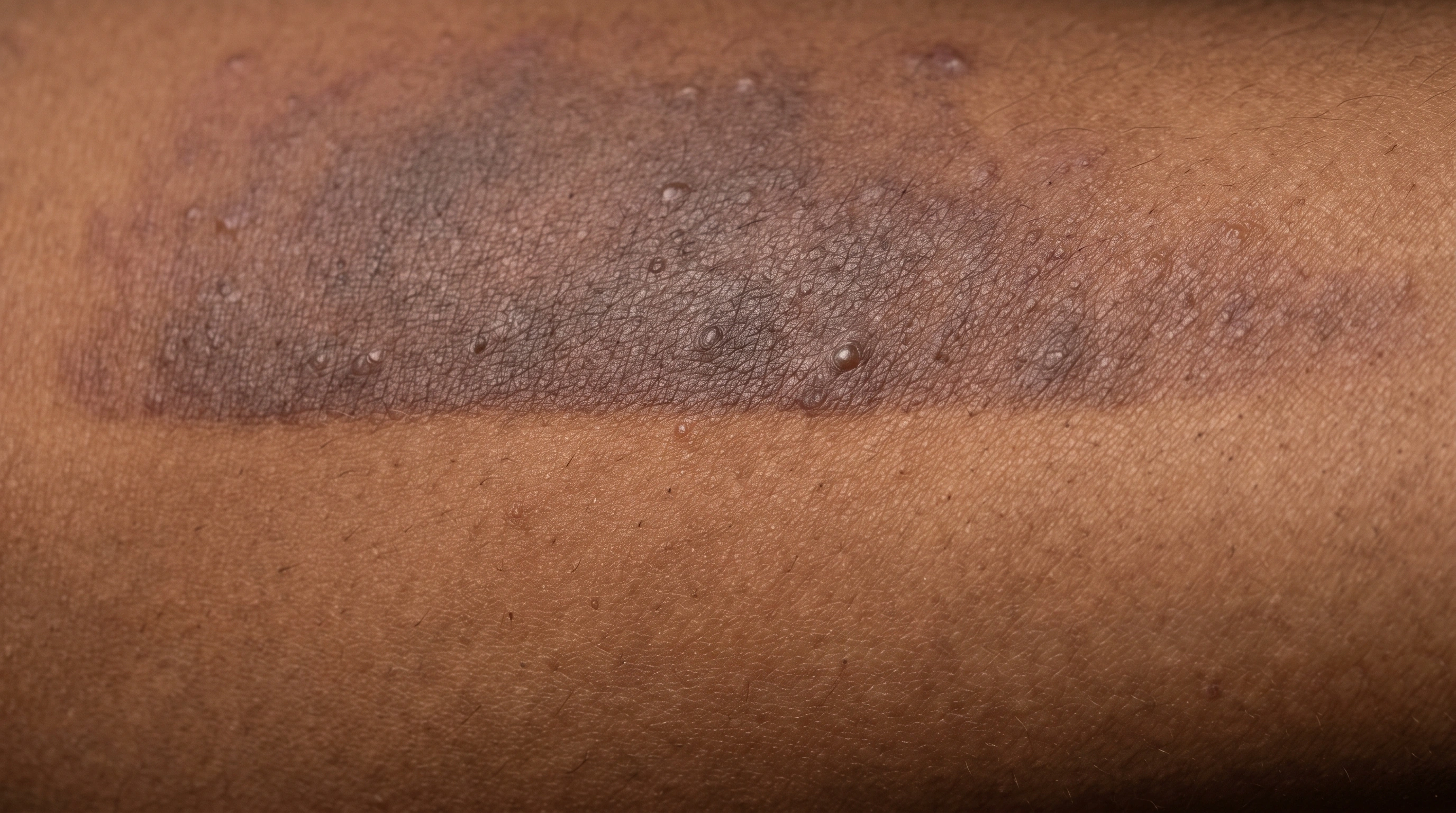
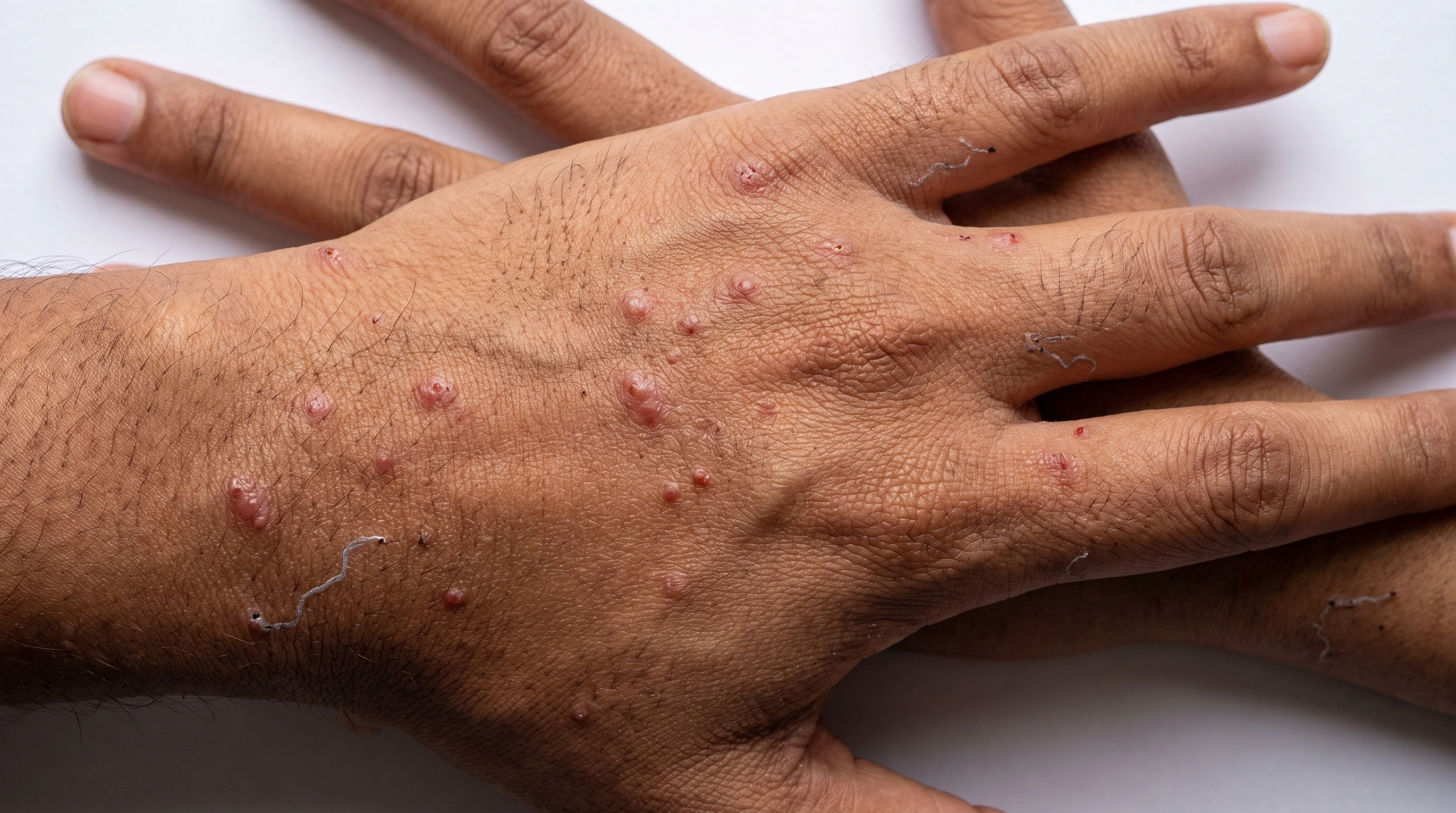
The finger webs and wrist on brown skin, with small raised brown-gray bumps and several scratch marks. There is no redness in the rash.
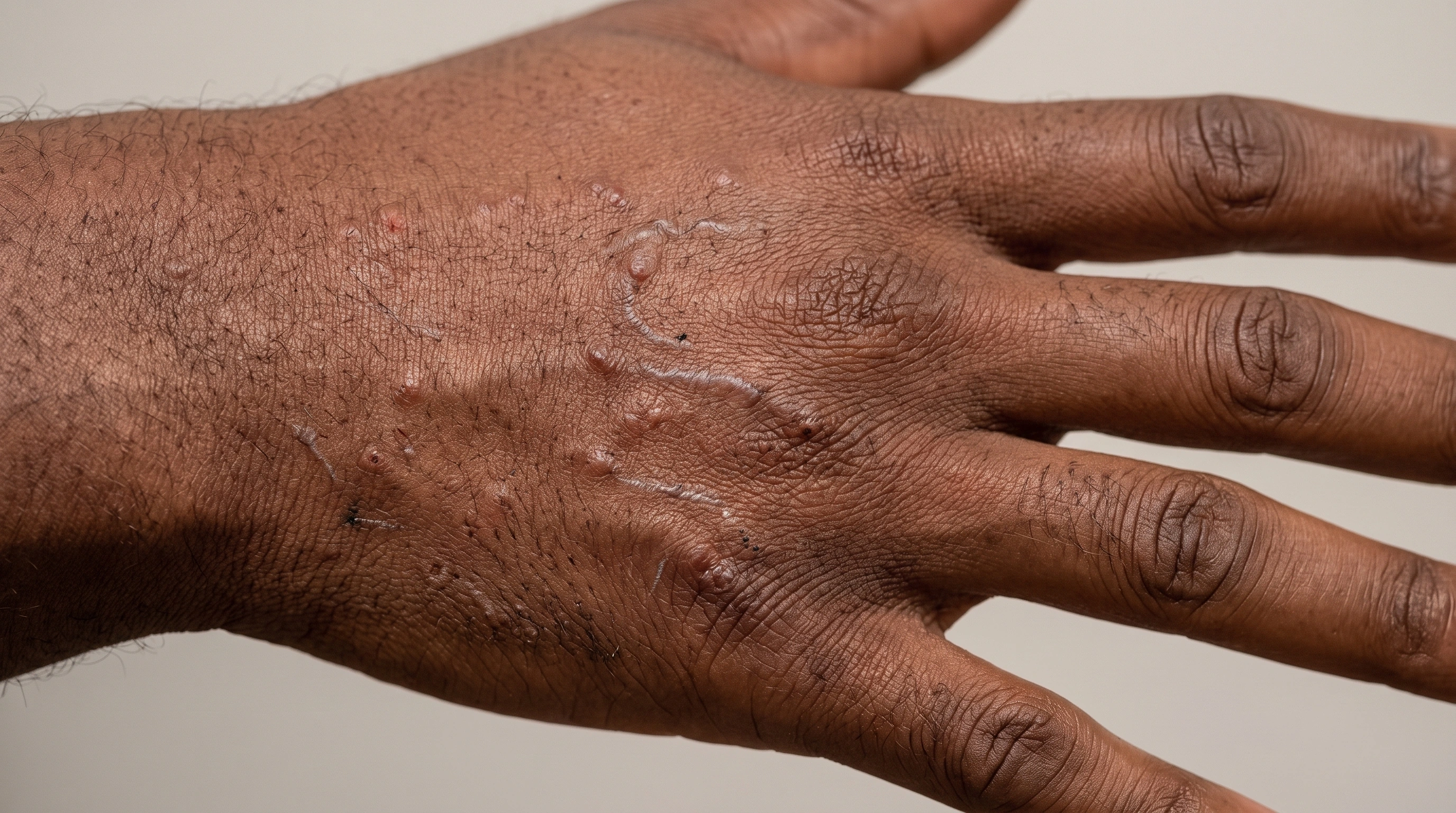
The finger webs and wrist on deep dark brown skin, with small raised bumps only slightly darker than the surrounding skin, no visible burrows, and short linear scratch marks.
Diagram
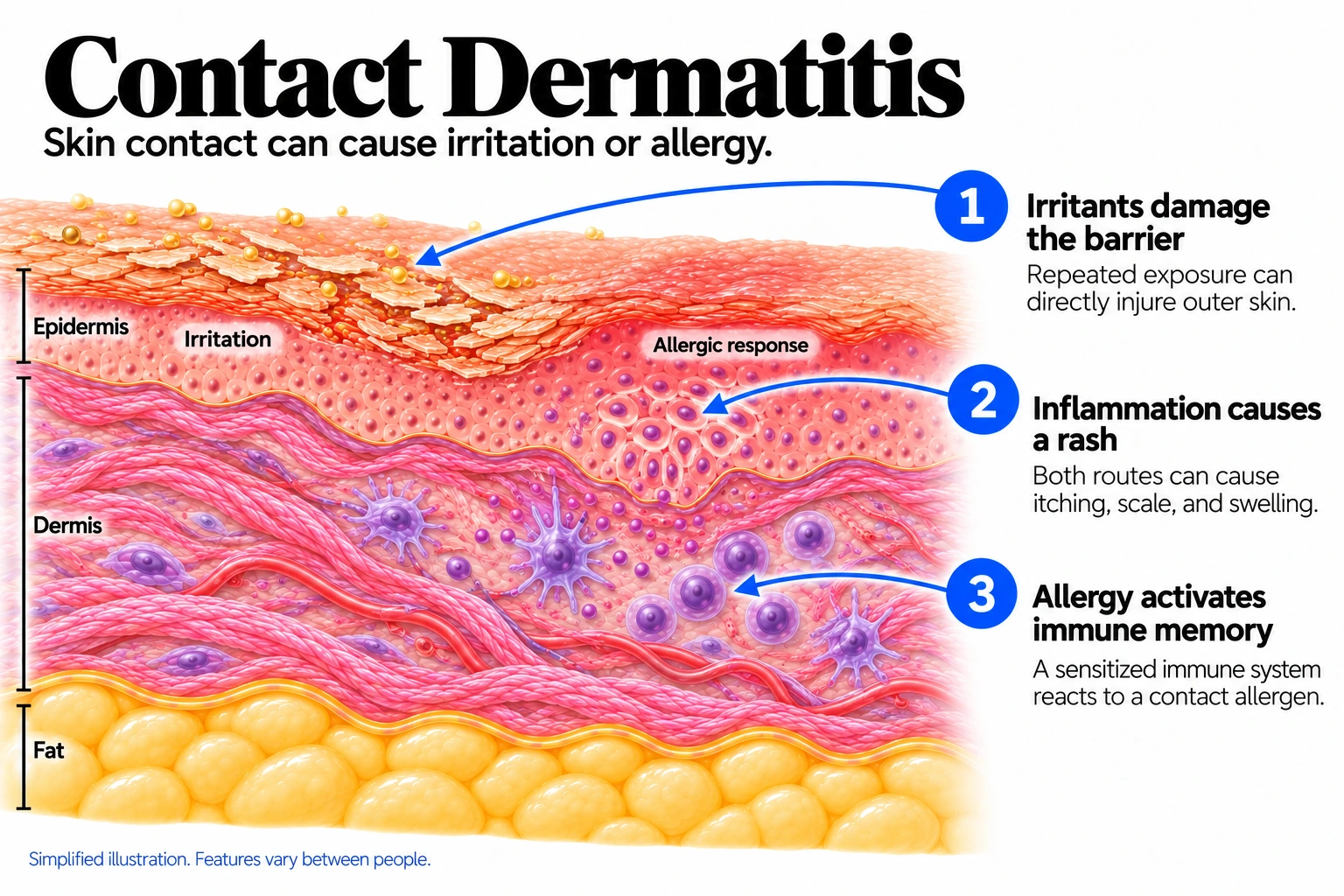
Contact Dermatitis mechanism diagram. Irritants damage the barrier: Repeated exposure can directly injure outer skin. Inflammation causes a rash: Both routes can cause itching, scale, and swelling. Allergy activates immune memory: A sensitized immune system reacts to a contact allergen.
Scabies mechanism diagram. A mite enters the outer layer: Close contact can pass mites between people. Eggs remain in the burrow: The female lays eggs within the outer skin. The immune response causes itch: Sensitivity to mites and their products drives symptoms.
In the skin

Skin contact can cause inflammation through direct irritation or a delayed allergic reaction. These are different routes to a rash that may itch, swell, blister or scale.

Scabies mites burrow into the outermost skin and lay eggs there. The immune reaction to mites and their products causes an itchy rash; the itch does not mean the mites are burrowing deep into the body.

Where it shows up

Where the skin meets a trigger
Hands, wrists, waist and skin folds

When it usually starts

010203040506070+

Contact Dermatitis. Can begin at any age after irritation or sensitization to a contacting substance.

Scabies. Can affect people of any age after close contact with an affected person.

Causes and triggers

Causes

Contact dermatitis happens when something touching the skin either damages it directly or sets off an allergic reaction. The rash shows up where the contact happened.

Scabies is caused by a tiny mite that burrows into the top layer of skin. The intense itch is the body's allergic reaction to the mites and their eggs.

Family tendency

People with eczema or a family history of allergies react more easily.

Risk factors
Eczema, Wet work, Healthcare, cleaning and hairdressing jobs, Frequent handwashing
Crowded living, Nursing homes and care settings, Young children, Weakened immunity
How it spreads
  • Long skin-to-skin contact — Well established
  • Sexual contact — Well established
  • Shared bedding and clothing — Possible
Trigger
● Contact Dermatitis
● Scabies
Nickel
Well established
Not listed
Fragrance
Well established
Not listed
Poison ivy
Well established
Not listed
Hair dye
Strong link
Not listed
Harsh soaps and solvents
Well established
Not listed
Preservatives in skincare
Strong link
Not listed

Daily Care

Contact Dermatitis
Scabies
Daily care

Habits that help

  • Find the cause and stop it
    Photograph it and list what touches it.
  • Learn the ingredient names
    One molecule hides in dozens of products.
  • Switch to fragrance-free products
    A meaningful label, unlike unscented.
  • A thick, plain moisturizer, applied often
    Barrier repair is half the treatment.
  • The right gloves, worn the right way
    Vinyl or nitrile, cotton liner, off when done.
  • Lukewarm water and a non-foaming wash
    Dry gently, moisturize straight after.
  • Barrier protection for nickel
    Clear polish short term, titanium or steel long term.
  • Cool compresses
    Gently apply a cool, damp cloth to soothe weeping or irritated skin.
  • Patch testing
    The only way to name an allergen.

Avoid

  • Avoid: Carrying on using the product
    Why most rashes last months.
  • Avoid: Frequent handwashing and hand sanitizer
    Water, detergent and alcohol strip broken skin.
  • Avoid: Occlusive gloves worn for hours
    Trapped sweat swells skin.
  • Avoid: Hot water and scrubbing
    Both strip barrier fats.
  • Avoid: Scratching
    Lets more trigger in and thickens the skin.
  • Avoid: Adding more products to soothe it
    Fragrance and botanicals cause a second reaction.
  • Avoid: Numbing and anti-itch creams
    Names ending in -caine often cause allergy.
  • Avoid: Wet wipes and moist toilet tissue
    The preservatives are known allergens.
  • Avoid: Sweat under metal
    Nickel releases faster in sweat - buckles and jewelry flare.
  • Avoid: Sunlight, for some substances
    Some ingredients only react after sunlight changes them.
  • Avoid: An allergen hiding in another product
    Nail polish on eyelids, hair dye on the neck.
  • Avoid: Stopping treatment when it looks better
    Allergic reactions take two to four weeks.
  • Avoid: Anti-itch creams ending in -caine
    Numbing ingredients such as benzocaine are another frequent cause of allergic contact dermatitis. The relief is brief, and a rash that gets worse the more cream you use is a classic story. If an anti-itch product seems to be making things worse, stop it and mention it to your doctor.

Habits that help

  • Washing what needs washing
    Bedding and clothes from the last three days — hot wash or bagged.
  • Keeping nails short
    Limits the damage from scratching.
  • Moisturizing
    Use a fragrance-free moisturizer for dry, itchy skin; it does not kill mites.
  • Treating everyone at once
    Household and close contacts, same day, itch or not.
  • Reapply scabies treatment to washed hands when the treatment instructions require it
    Hands are affected — the cream goes back on.

Avoid

  • Avoid: Hot showers and overheating at night
    Both intensify the itch.
  • Avoid: Harsh soaps and dry skin
    Irritated skin itches more.
  • Avoid: Scratching
    Breaks the skin and lets bacteria in.
  • Avoid: Treating only the person with the rash
    Contacts have mites, no itch, and reinfest everyone.
  • Avoid: Treating contacts at different times
    The mite moves back and forth.
  • Avoid: Delay in diagnosis
    More mites, more contacts.
  • Avoid: Missing areas when applying the cream
    Mites survive between fingers and toes, under nails.
  • Avoid: Not leaving it on long enough
    Permethrin needs 8 to 14 hours, usually overnight.
  • Avoid: Skipping the second application
    The first dose misses eggs that hatch later.

Treatment differences

Evidence labels come from each condition’s own treatment list.

Treatment
● Contact Dermatitis
● Scabies
Filter by type
All types
Scabies type

Select one or more.

Over-the-counter
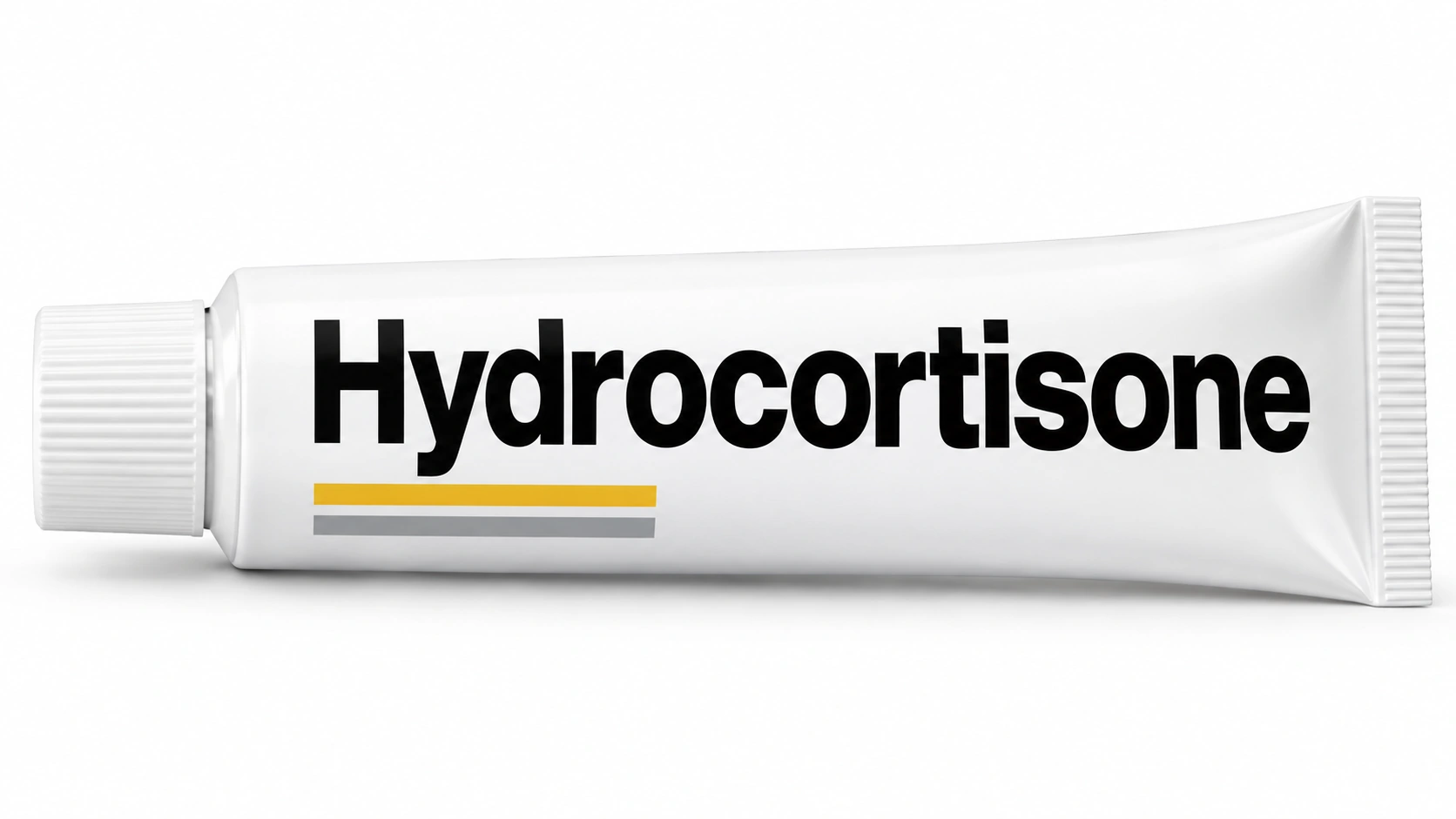
A plain white ointment tube lying on its side, labeled Hydrocortisone with a blue swoosh.

Hydrocortisone 1%

Limited evidence

The mildest topical steroid, and enough for a small patch on the body once the contact has stopped. Use it twice a day for one to two weeks rather than dabbing it on now and then. It is often too weak for the hands or feet, and on the face or eyelids it should be short-term and worth asking about first.

Illustration: Generic oral tablet bottle and tablets.

Antihistamine tablets

Limited evidence

Contact dermatitis is not driven by histamine, so antihistamines do very little for the rash itself. A sedating one at night can help you sleep through the itching instead of scratching, which is worth something. The non-drowsy daytime ones sold for hay fever will not make much difference here.

Illustration: Generic ointment jar and translucent ointment.

OTC antibiotic ointments

Avoid

Worth naming because they are so often reached for. Neomycin and bacitracin are among the most common contact allergens there are, so an ointment used on an itchy rash can become the reason the rash will not go. Unless the skin is genuinely infected, plain petroleum jelly does the same job with none of the risk.

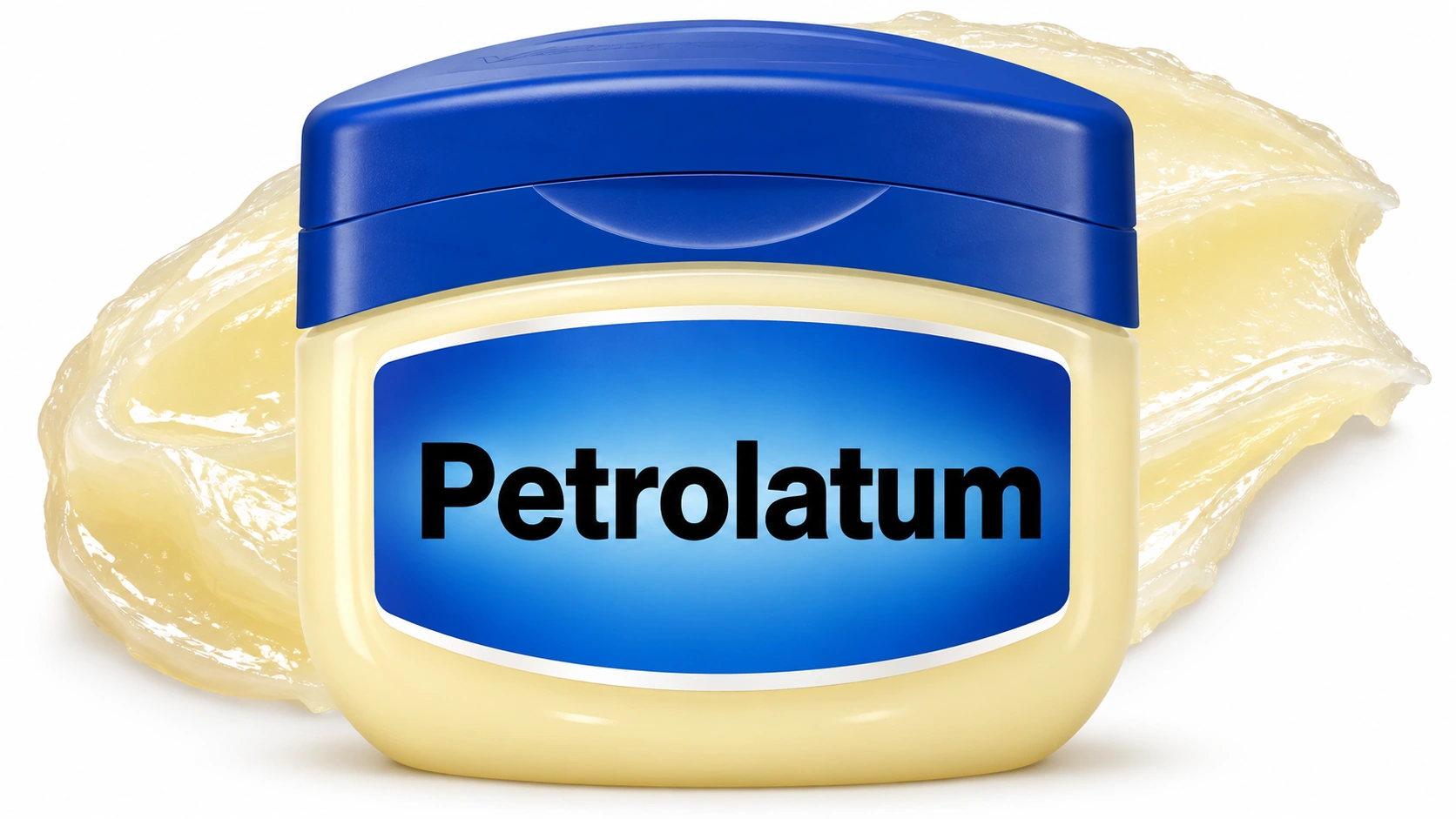
Four ointments on white: CeraVe Healing Ointment, a Vaseline jar, a petroleum jelly tube and Aquaphor

Petrolatum

Moderate evidence

Plain petroleum jelly, or any thick fragrance-free ointment, rebuilds the barrier that irritation broke. Barrier repair is genuinely half the treatment in irritant hand dermatitis, and it works because it has no fragrance, preservative or botanical in it to start a second reaction. Apply after every hand wash, not once a day.

Five colloidal oatmeal eczema products lined up on white: tubes, a jar and a pump lotion

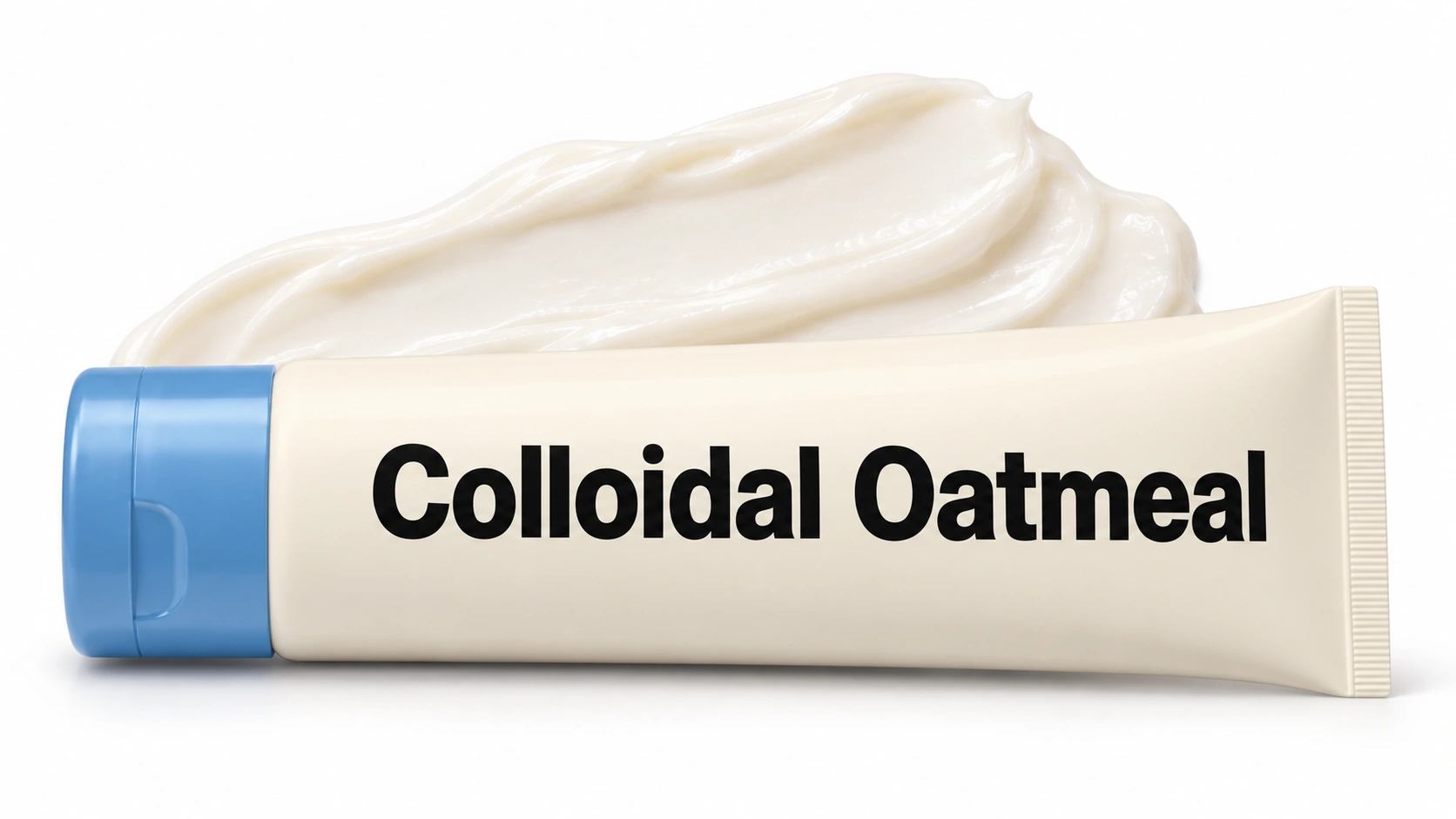
Colloidal Oatmeal

Limited evidence

An oatmeal bath can take the edge off the itch of a widespread reaction, in cool rather than hot water. It is comfort only. Pick a plain one, because an itch product with fragrance or botanicals in it is a common way people acquire a second allergy on top of the first.

A plain white ointment tube lying on its side, labeled Hydrocortisone with a blue swoosh.

Hydrocortisone 1%

Limited evidence

Mild steroid cream helps the itch, but only after scabies has been diagnosed and treated. Used before that on an undiagnosed itchy rash it flattens the rash enough to make scabies much harder to recognize while the mites carry on spreading — sometimes called scabies incognito. If you have been using it, say so at your appointment.

Five colloidal oatmeal eczema products lined up on white: tubes, a jar and a pump lotion

Colloidal Oatmeal

Limited evidence

A cool oatmeal soak settles the itch for a while during the weeks it takes the allergic reaction to fade. Keep the water cool rather than hot, because heat and hot showers reliably make scabies itch worse. It is comfort only, and it does nothing to the mites.

Illustration: Generic oral tablet bottle and tablets.

Non-drowsy antihistamines

Limited evidence

Worth trying in the daytime, though scabies itch is only partly driven by histamine, so the effect is usually modest. They will not shorten the infestation or replace treatment. If the itch is stopping you sleeping, a sedating antihistamine at night is the more useful version of this.

Five dark glass tea tree essential oil bottles with glass droppers and one green box on white

Tea Tree Oil

Avoid

The home remedy asked about most often. It does kill mites in a dish, and small studies have looked at it, but there is no evidence it clears an infestation on a person. Applied neat to skin that is already scratched and inflamed it commonly stings and can cause a reaction of its own. Bleach and vinegar do not work either.

Prescription topicals
Representative medication packaging labelled Triamcinolone, lying sideways on a white background.

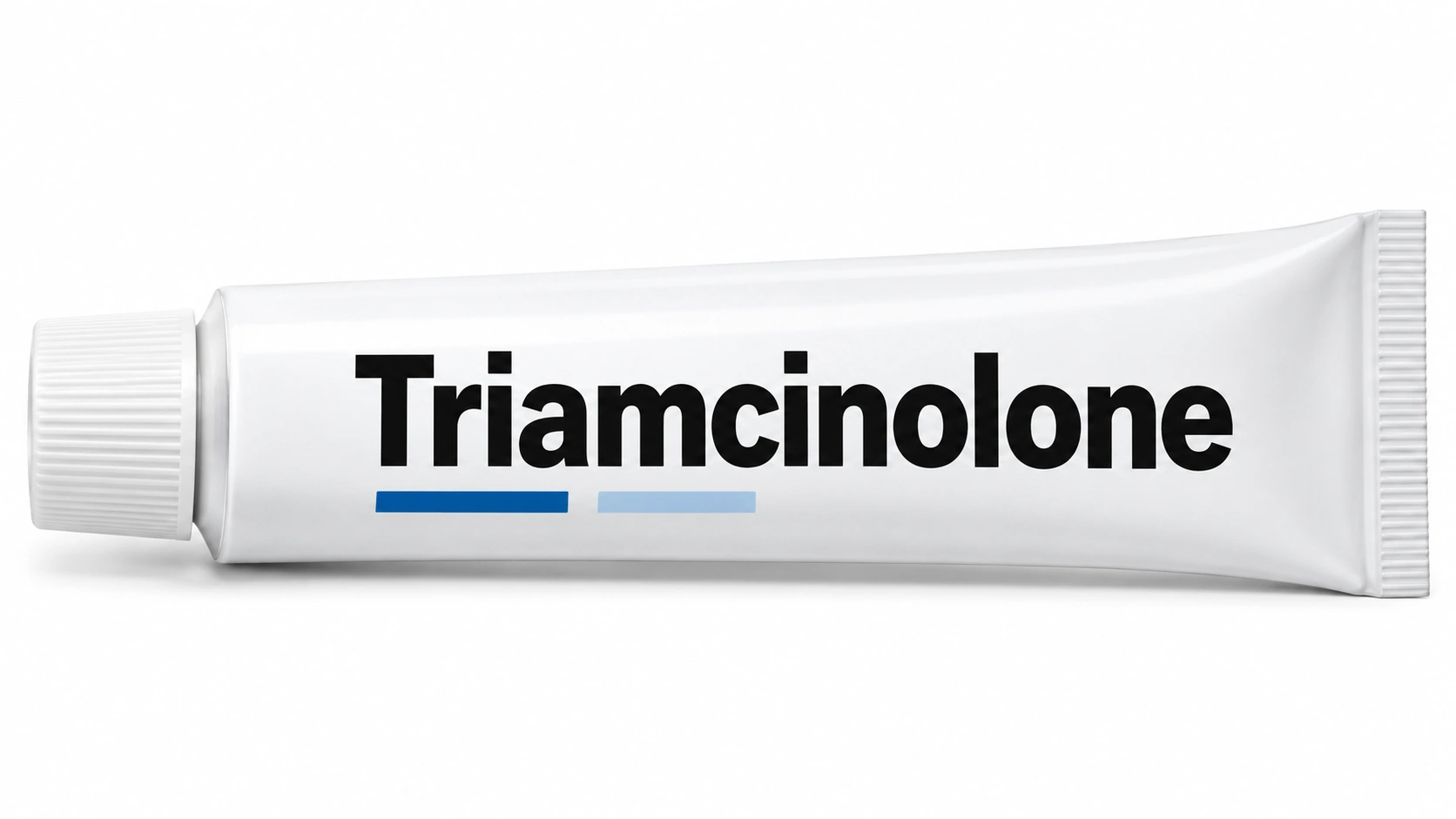
Triamcinolone Acetonide

Moderate evidence

A mid-strength steroid cream or ointment, the usual prescription for contact dermatitis on the body, arms or legs. Two weeks of it will clear most reactions once the contact has stopped. It is too strong for the eyelids and the folds, and it is a treatment for the inflammation, not for the cause.

Clobetasol — Header Image

Clobetasol

Moderate evidence

Clobetasol Propionate. A potent steroid ointment for hands and feet, where the skin is thick enough that milder creams barely register. It is used in short bursts of two to three weeks with breaks in between, not continuously. Nothing above the neck, and remember that hand dermatitis takes six weeks or more to settle even when the steroid is doing its job.

Protopic — Header Image

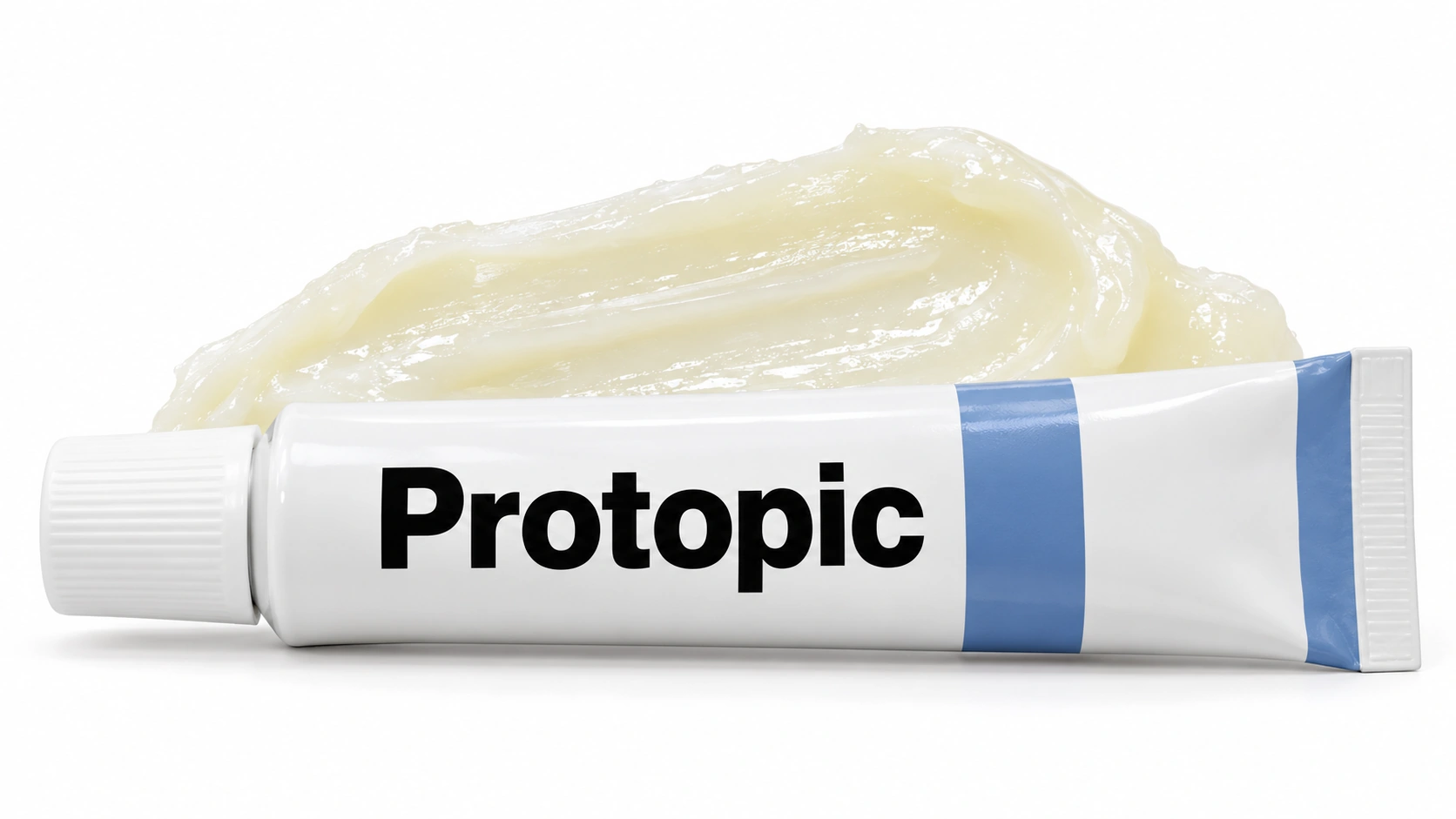
Protopic

Moderate evidence

A non-steroid ointment for the eyelids, face and skin folds, where repeated steroid use thins the skin. It calms the same immune reaction without that risk, which makes it useful for eyelid dermatitis that keeps returning while the trigger is being tracked down. It stings for the first few days, and that usually passes.

16:9 hero for Desonide. Never cropped: the tone strip and the corner logo depend on the full frame.

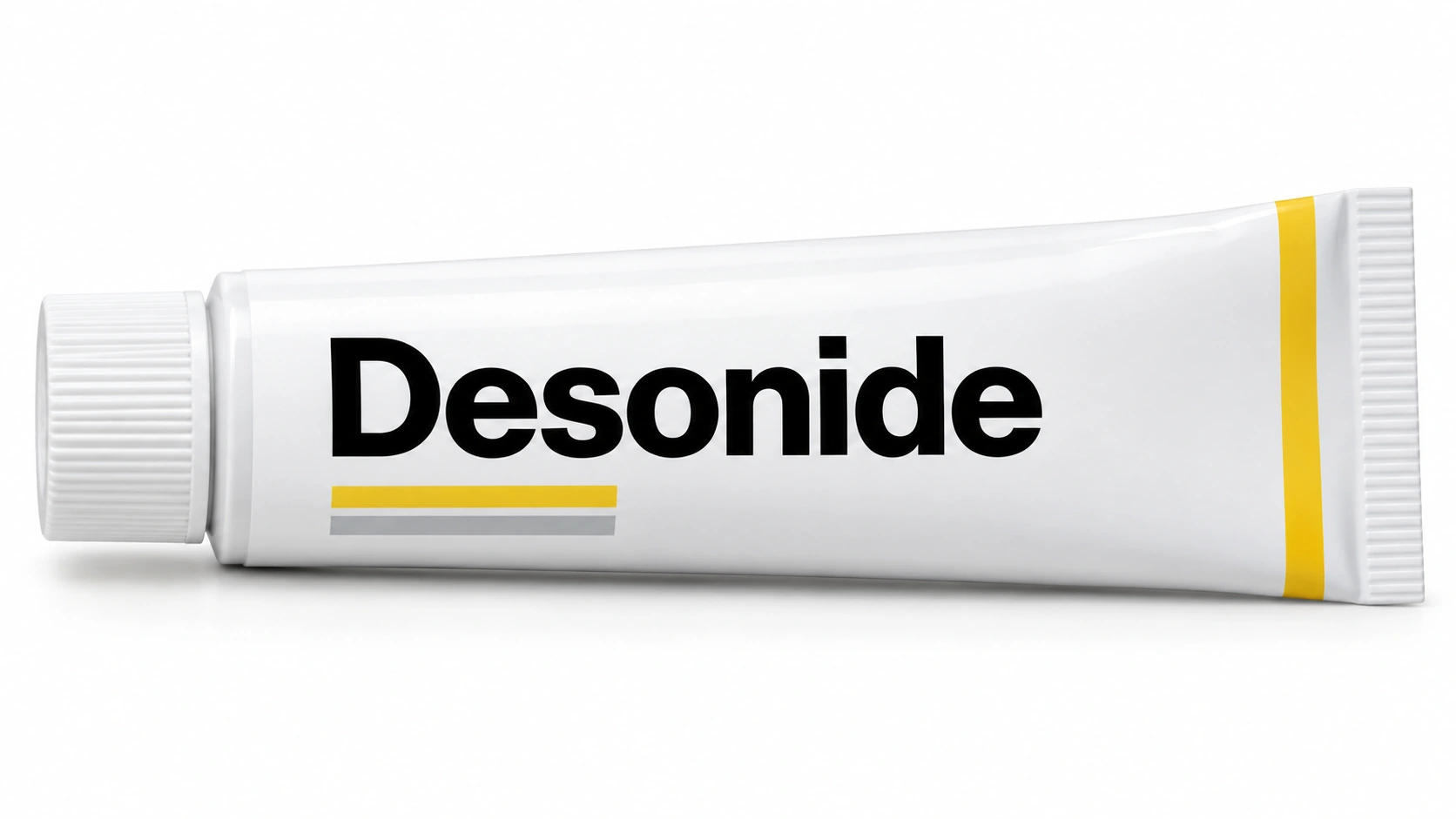
Desonide

Limited evidence

A mild steroid stronger than over-the-counter hydrocortisone but gentle enough for the face and eyelids in short courses. It is the usual first prescription when a reaction has landed above the neck. Use it for the days it is prescribed for, not as something kept in the drawer.

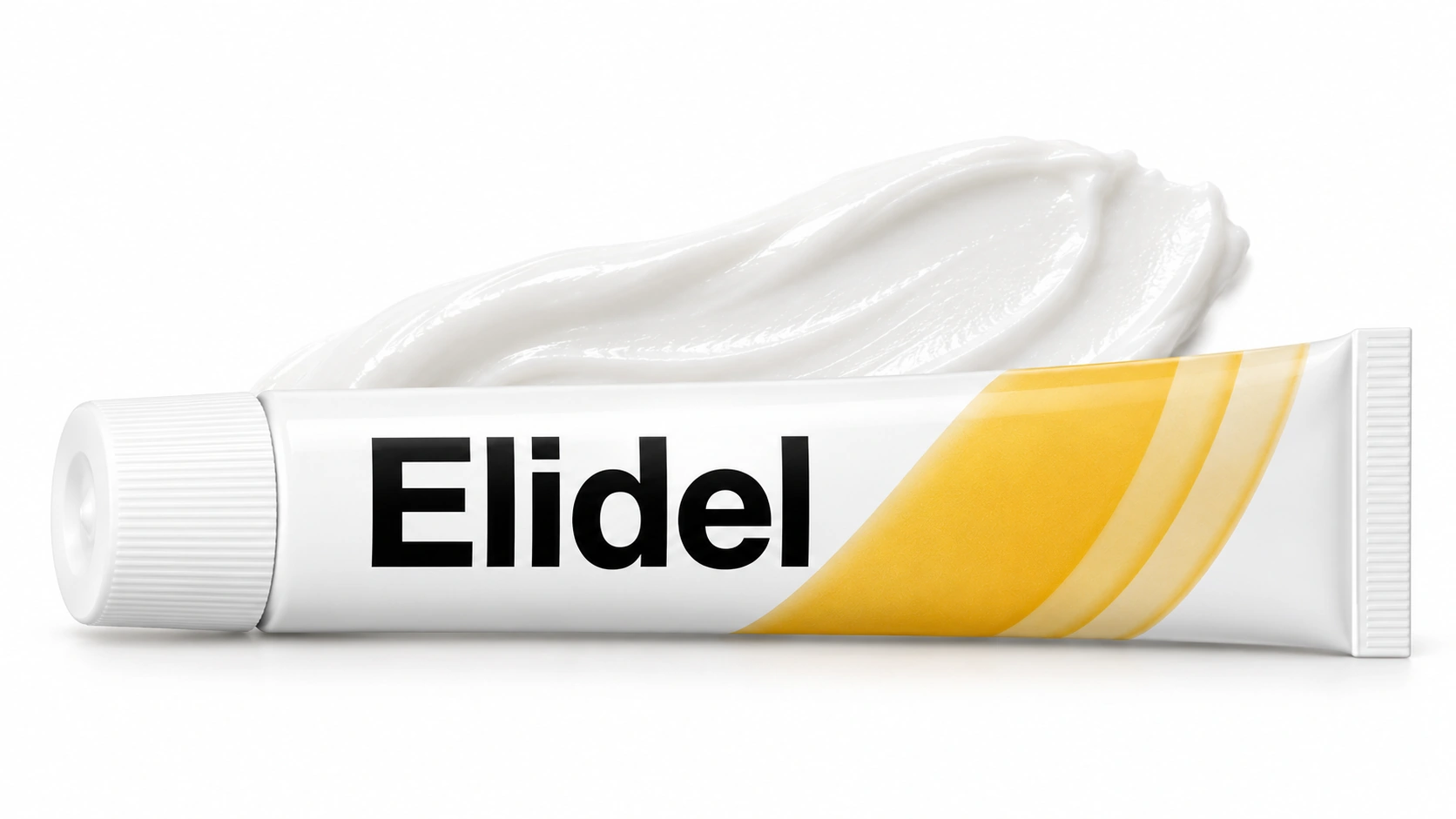
16:9 hero for Elidel. Never cropped: the tone strip and the corner logo depend on the full frame.

Elidel

Limited evidence

A gentler alternative to tacrolimus for the face and eyelids, and easier to tolerate for people who cannot get past the initial burning. It is not strong enough for hand dermatitis. Like tacrolimus, it buys comfort while the actual trigger is being identified.

Representative medication packaging labelled Triamcinolone, lying sideways on a white background.

Triamcinolone Acetonide

Limited evidence

A steroid cream used after the mites have been killed, to settle the itch and the firm lumps left behind. It does nothing to the mites, and used on an undiagnosed itchy rash it blurs the picture while the infestation carries on spreading. So it is a second step, never a first one.

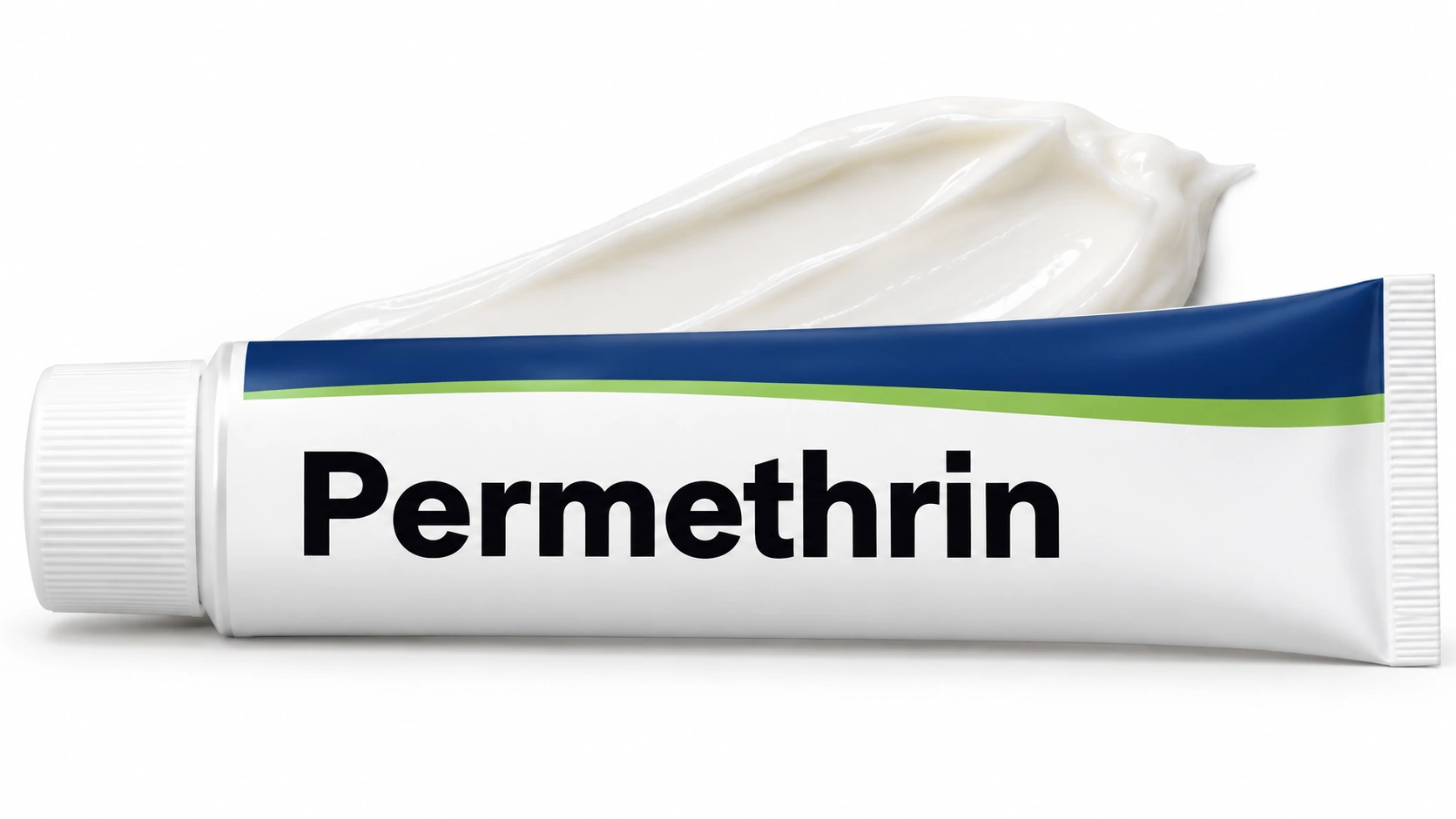
Permethrin — Header Image

Permethrin

Strong evidence

Permethrin 5% cream. The usual first treatment. It goes on the whole body from the neck down — every fold, between the fingers and toes, under the nails, around the navel and the genitals — and is left on for 8 to 14 hours, usually overnight. Put it back on your hands after any hand washing. It is repeated a week later to catch eggs that hatch after the first dose, and everyone in the household is treated on the same day whether they itch or not.

Illustration: Generic lotion bottle and lotion.

Benzyl benzoate lotion

Moderate evidence

An older treatment, used where permethrin is unavailable or has not worked. It is applied the same way, over the whole body, and usually repeated. It stings on broken or scratched skin and can irritate, which is why it is rarely the first choice where permethrin can be had.

Illustration: Generic ointment jar and translucent ointment.

Sulfur ointment

Limited evidence

Precipitated sulfur in petrolatum, applied for three nights in a row. It is the option most often chosen for very young babies and is one your doctor may consider if you are pregnant or breastfeeding — ask them, since that decision is theirs to make with you. It smells strongly, stains clothing and bedding, and is greasy, which is the main reason people struggle to finish the course.

Representative selection of topical treatment forms, not exact product packaging.

Crotamiton

Limited evidence

Marketed as both a scabies treatment and an anti-itch cream. It clears the mites in fewer people than permethrin does, so it is not a good first choice on its own. It is sometimes used for the itch after treatment, where it is mild and safe but not particularly effective.

Mupirocin — Header Image

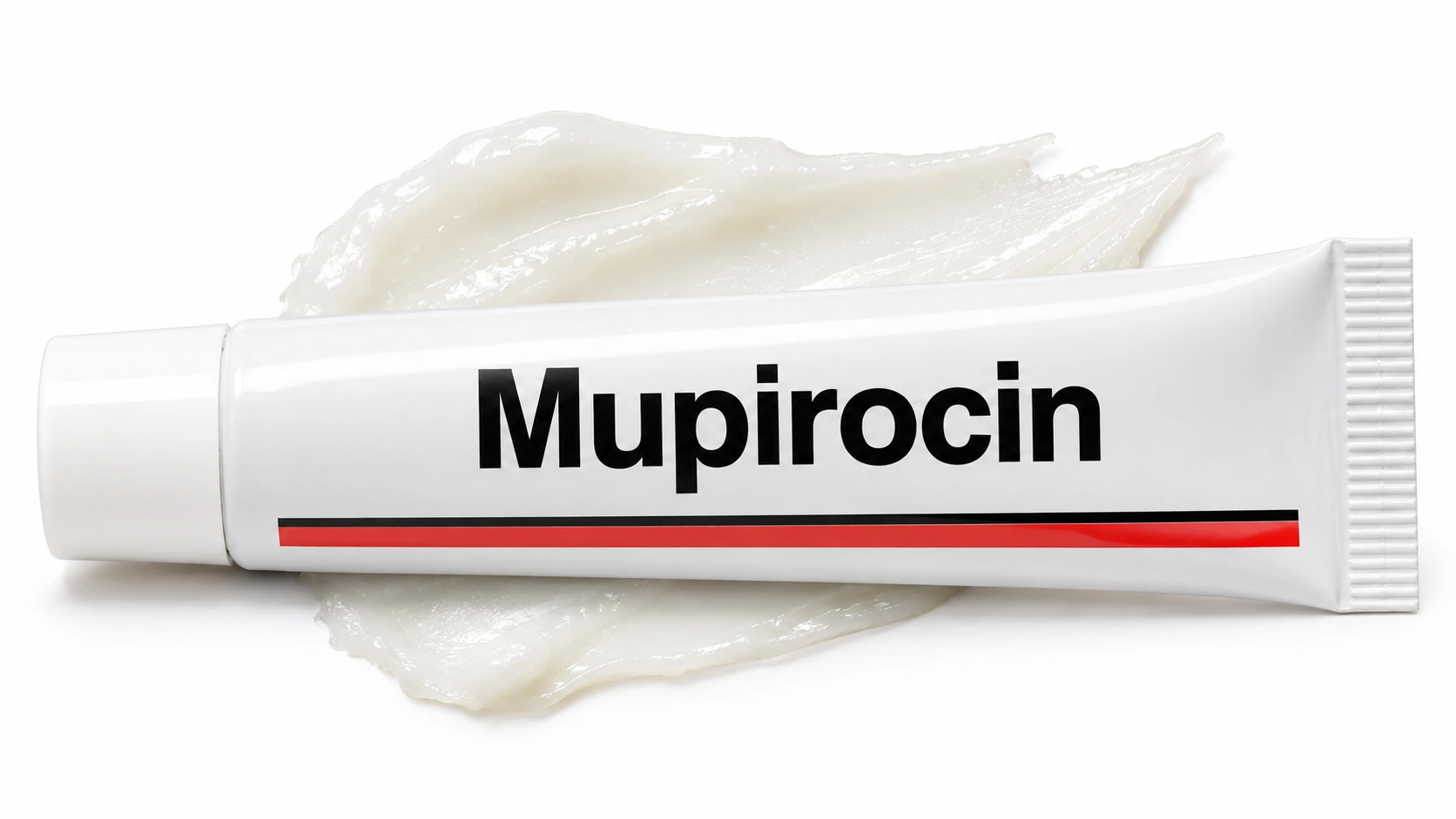
Mupirocin

Limited evidence

An antibiotic ointment for scratched areas that have become infected — golden-yellow crust, oozing, soreness rather than itch. It has no effect on the mites at all. If the infection covers more than a small patch, or the skin around it is spreading red and swollen, antibiotic tablets are needed instead.

Prescription pills
Prednisone — Header Image

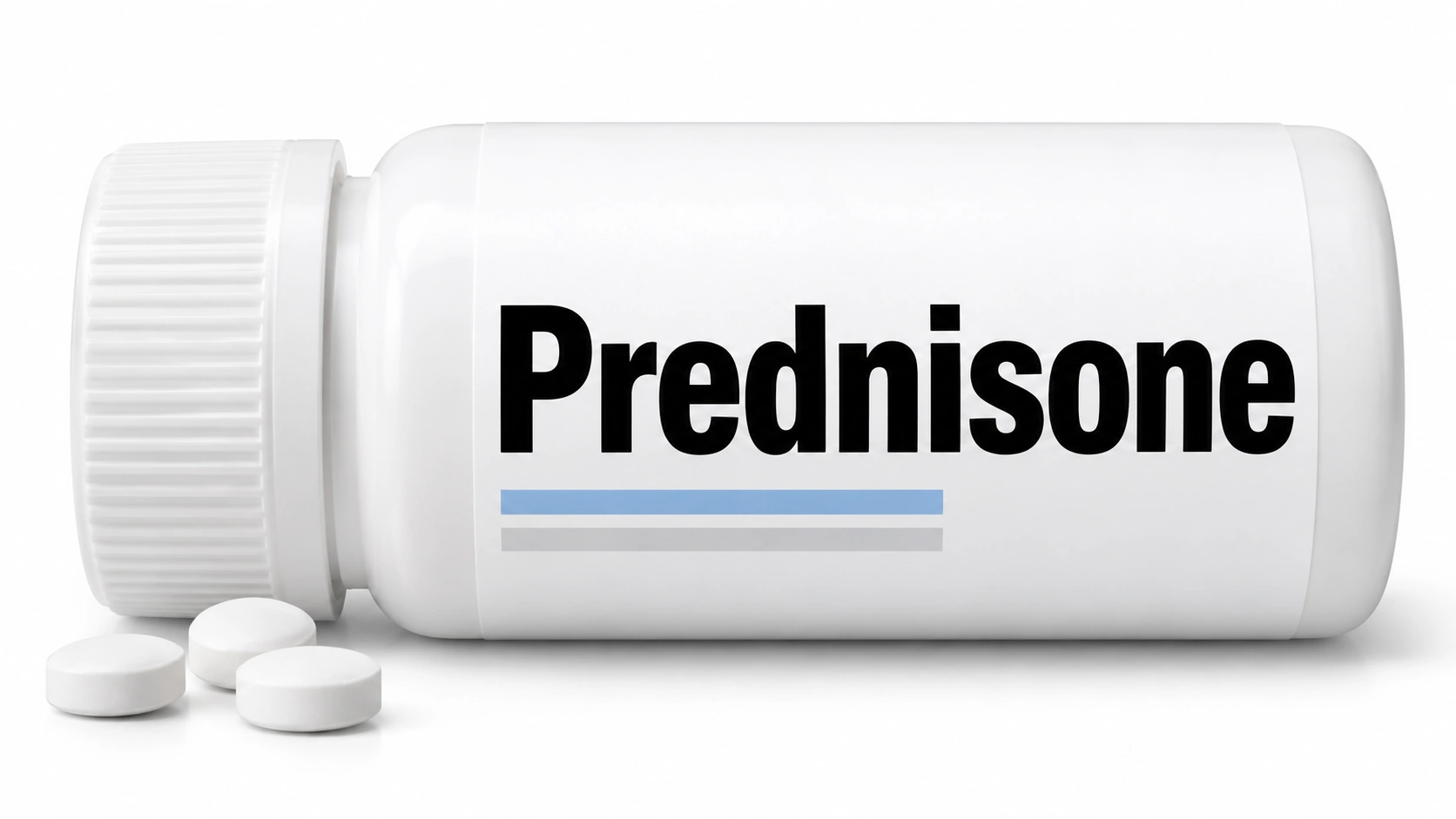
Prednisone

Moderate evidence

Steroid tablets for a widespread, blistering reaction, most often poison ivy covering large areas or a rash on the face that is closing an eye. The course has to run two to three weeks with a taper; the short packs are the usual reason the rash rebounds a few days after finishing. It is for the big reactions only, not for a patch on one arm.

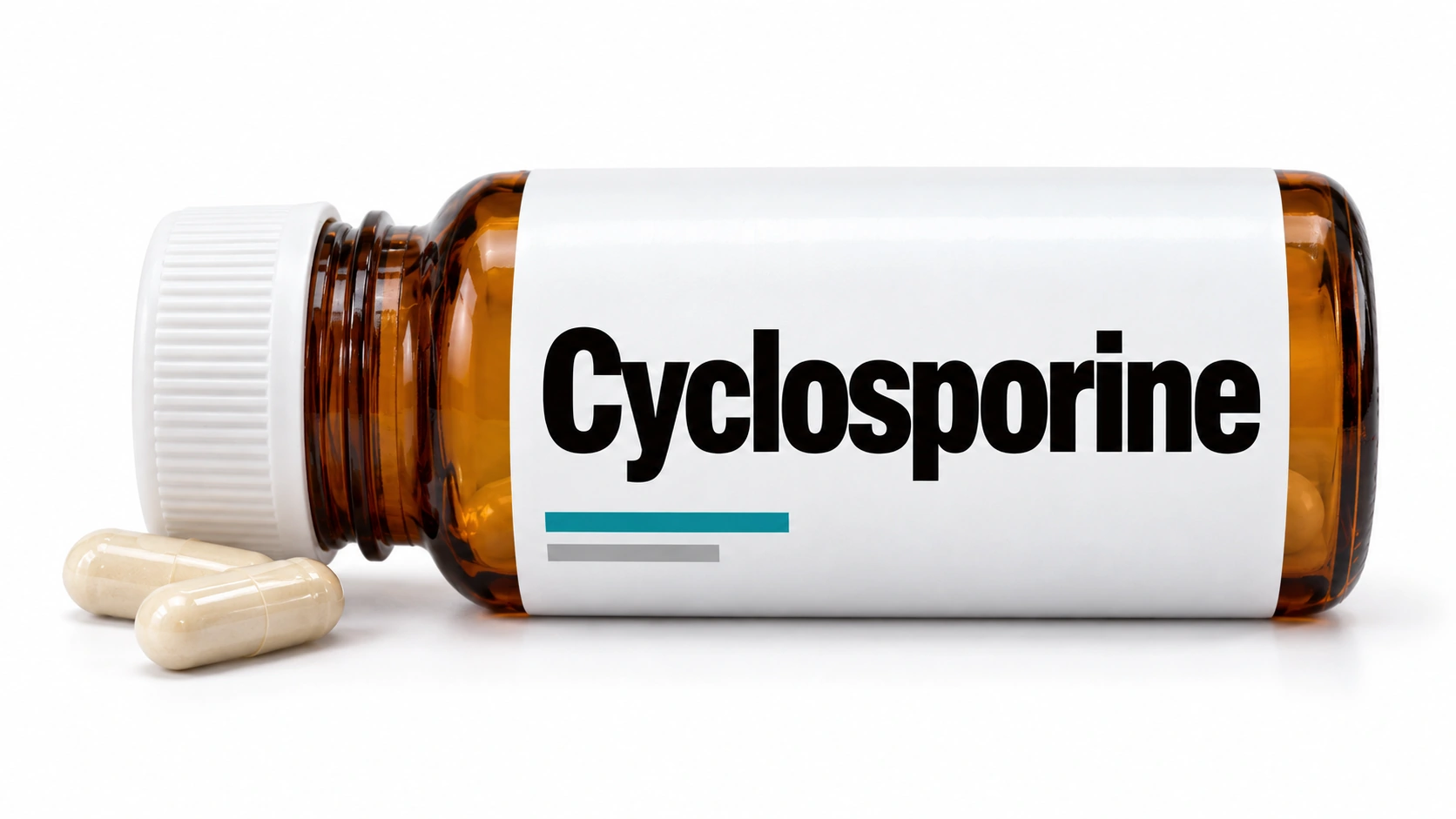
An amber pill bottle labeled Cyclosporine tipped over with white tablets spilling out

Cyclosporine

Limited evidence

A short specialist course for severe hand dermatitis that has not responded to strong steroids and proper avoidance. It works quickly and reliably, which is exactly why it is used for a few months rather than long term — blood pressure and kidney function have to be watched throughout. It is a bridge, not an answer.

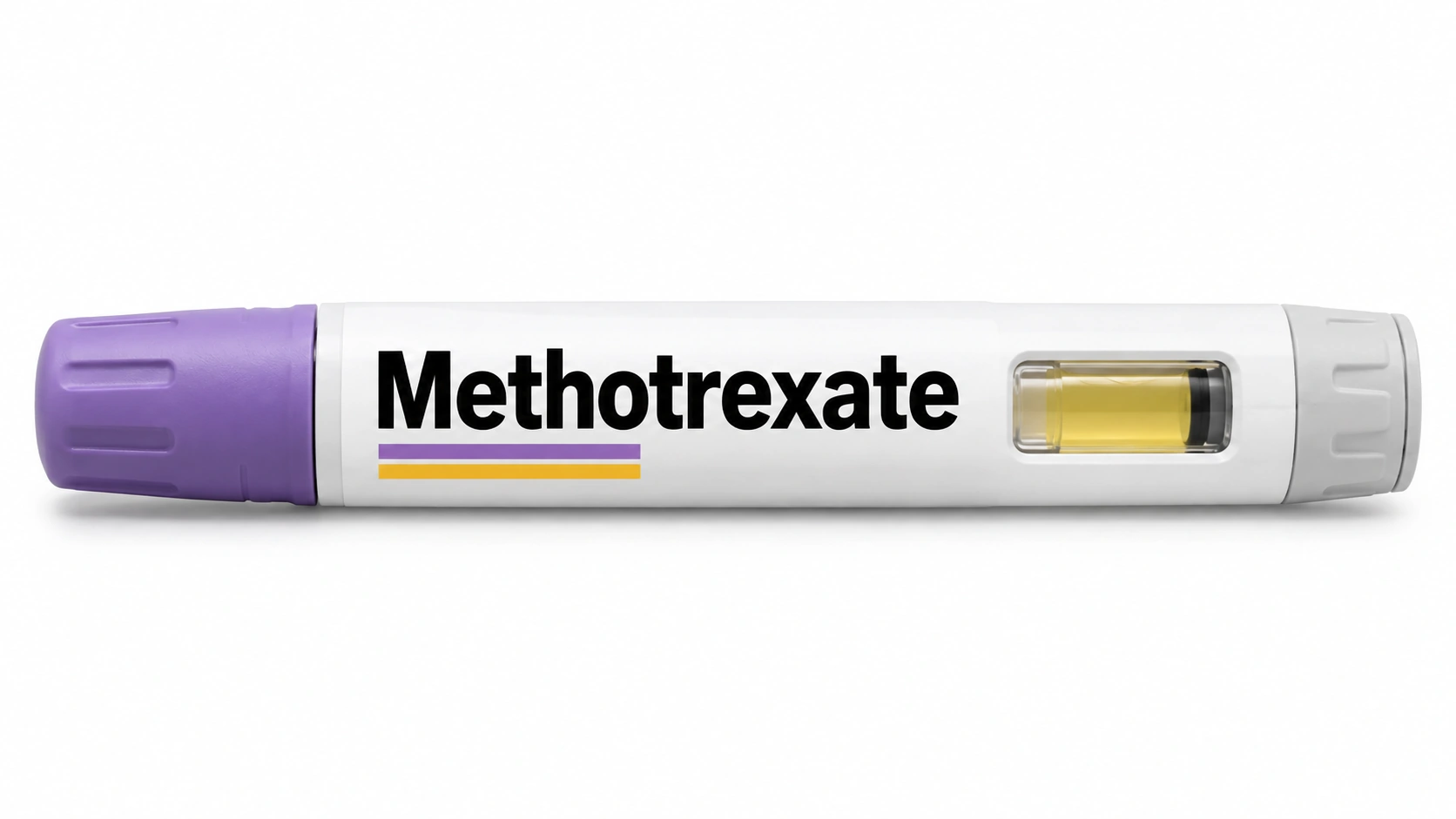
16:9 hero for Methotrexate. Never cropped: the tone strip and the corner logo depend on the full frame.

Methotrexate

Limited evidence

A weekly tablet sometimes used for chronic hand dermatitis when avoidance and creams have genuinely failed. The evidence in contact dermatitis specifically is thin, mostly borrowed from eczema. It needs regular blood tests, and it is a specialist decision rather than a next step.

Antibiotic tablets for infection

Antibiotic tablets for infection

Listed

Used only when bacteria have moved into the broken skin — spreading warmth and pain, pus, or fever. They treat the infection sitting on top and do nothing to the dermatitis underneath, so the steroid and the avoidance carry on alongside them.

Illustration: Generic oral tablet bottle and tablets.

Oral Ivermectin

Strong evidence

Oral ivermectin. Tablets taken as two doses about a week apart, weighted by body weight. They are the practical answer when a whole household or a care home has to be treated at once, when cream cannot be applied properly, or when cream has already failed. For crusted scabies they are given together with cream, often repeatedly. Ask the prescribing doctor whether they suit you, since they are not used in very small children and are avoided in pregnancy.

Antibiotics for infected skin

Antibiotics for infected skin

Listed

A short course of antibiotic tablets when scratched skin has become properly infected — spreading redness, swelling, pain or fever. They treat the bacteria only, so the scabies treatment still has to be done alongside them. This is a common reason a scabies visit ends with two prescriptions rather than one.

Sedating antihistamine at night

Sedating antihistamine at night

Listed

An older antihistamine taken at bedtime, for the weeks when the itch is keeping you awake. Most of the benefit is that it makes you drowsy rather than that it blocks the itch, which in scabies is only partly driven by histamine. It is useful, it is short-term, and it can leave you groggy the next morning.

Injections
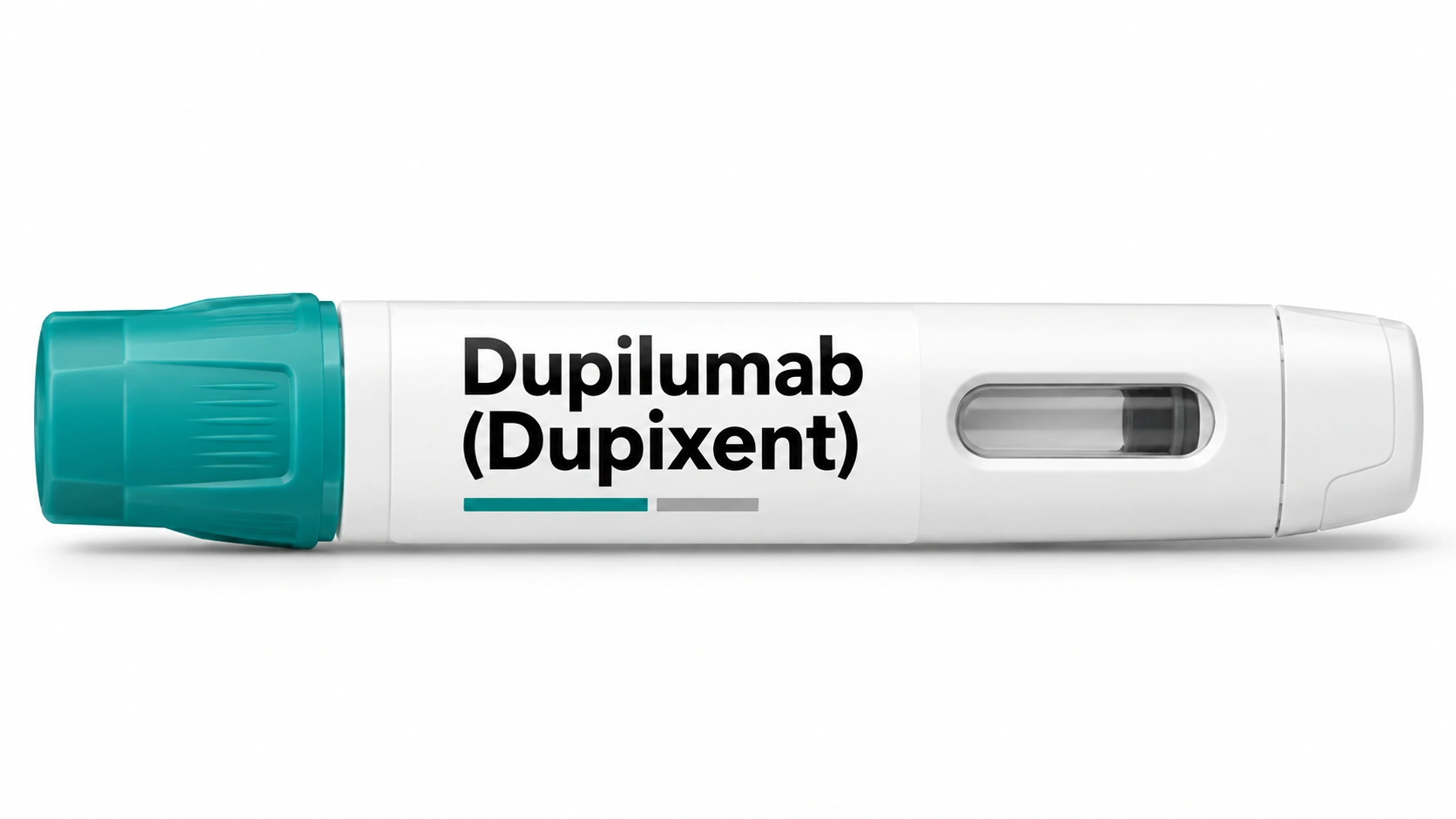
A white and green autoinjector pen labeled Dupixent lying on a plain pale background

Dupixent

Limited evidence

An injected biologic increasingly asked about for chronic hand dermatitis. Reports are encouraging for the eczema-like cases, but it is not approved for allergic contact dermatitis and some allergens appear not to respond to it. It does not replace finding and removing the trigger, and it is a specialist conversation.

None listed

Outlook

Long term

Timing is the best clue to which form you have. The rash is temporary; the allergy is not - sensitization is generally lifelong, so avoidance is permanent. Once the substance is named and avoided, most people stay clear.

Itching can continue for several weeks after successful treatment, so itch alone does not prove that mites remain. New burrows or continuing new spots need reassessment; treating close contacts together helps prevent reinfestation.

Complications

Possible complications
  • Infection in the broken skin
  • Chronic hand dermatitis
  • Time off work
More details

Infection in the broken skin
Weeping, cracked or scratched skin gives bacteria an opening, most often on the hands. The signs are honey-colored crusts, pus, increasing pain, or redness and warmth spreading outward. It is common and it is treatable, but it needs antibiotics rather than more steroid cream, so it is worth being seen rather than waiting it out.

Chronic hand dermatitis
When the exposure carries on, hand dermatitis stops settling between flares. The skin thickens, the normal lines deepen, and painful cracks open across the fingertips and knuckles that catch on everything and are slow to close. It is the reason contact dermatitis is a leading work-related skin problem, and it is largely preventable by naming the cause early instead of treating the rash for months.

Time off work
Hand dermatitis is one of the leading work-related health problems, and for people in wet or chemical work it can mean weeks of light duties, a change of role, or leaving a trade. It is also the part most often left out of the conversation. Naming the cause early, and getting the right gloves and routine in place, is what keeps the job.

  • Skin infection from scratching
  • Lumps that linger after treatment
  • Weeks of broken sleep
More details

Skin infection from scratching
Scratching breaks the skin and lets bacteria in, so scabies commonly turns into impetigo or, less often, cellulitis. The signs are pain rather than itch, golden-yellow crust, oozing, or spreading redness and swelling with fever. It needs antibiotics alongside the scabies treatment. In parts of the world where scabies is very common, these skin infections are also a route to kidney and heart problems later, which is one reason outbreaks are taken seriously.

Lumps that linger after treatment
Firm, itchy, red-brown lumps can stay on the genitals, groin and armpits for weeks to months after the mites are dead. They are a stubborn allergic reaction, not live infestation, and re-treating with scabies cream does nothing for them. A steroid cream from your doctor, and sometimes an injection into the lumps, is what settles them.

Weeks of broken sleep
The itch is at its worst at night, and by the time most people are diagnosed they have had several weeks of it. Broken sleep is the part that wears people down, and it usually carries on for another two to four weeks after treatment while the allergic reaction settles. It is worth treating in its own right — a sedating antihistamine at night, a cool bedroom and moisturizer before bed all help.

When to get help

When to get help

Seek help for persistent or recurrent rash; patch testing may identify contact allergy. Pain, spreading warmth, pus or fever require prompt assessment.

Arrange treatment for suspected scabies and close contacts. Crusted widespread rash or infection needs prompt assessment.

Common questions

Contact Dermatitis:How do I figure out what caused it?

Start with location and shape, not a list of products. Photograph the rash, note where its edges are, and look for an object or habit that matches that outline. An allergic reaction shows up one to three days after contact, so look at what happened two days before, not that morning. Include things you have used for years - those are the likeliest candidates, not the least. If a few weeks of attention does not settle it, patch testing ends the guessing.

Contact Dermatitis:How long does it take to clear up?

An irritant reaction improves within days of contact stopping. An allergic reaction takes two to four weeks to settle even with treatment, because the immune cells doing the damage take that long to stand down. Hands are slowest, often six weeks or more, because the skin there is used and washed constantly. Judging it at day three tells you very little.

Contact Dermatitis:Is it contagious?

No. This is your own skin reacting to a substance, not an infection. You cannot pass it on by touch. If two people in a household get the same rash, they were both exposed to the same thing.

Contact Dermatitis:Will the allergy ever go away?

Generally no. Once your immune system has learned a substance, that memory is permanent, and tiny amounts can trigger a reaction years later. In practice it is less grim than it sounds - people who know their allergen and avoid it stay clear indefinitely, and the avoidance is usually narrower than they feared.

Contact Dermatitis:Why did this appear on my eyelids when I never put anything there?

Eyelid skin is the thinnest on your body, so it reacts to amounts the rest of your skin ignores. Nail polish, hair products, face creams and airborne particles reach the eyelids from your hands or from your scalp. When a rash is on the eyelids alone, the cause is usually somewhere else.

Contact Dermatitis:Can I just use hydrocortisone from the pharmacy?

For a small, mild patch on the body, often yes, alongside stopping the contact. Over-the-counter hydrocortisone is a mild strength and rarely clears thicker skin on hands or feet. On the face and eyelids keep it short-term, and ask first. It treats the inflammation, not the cause - if the rash returns each time you stop, find the trigger.

Scabies:Why do I still itch weeks after treatment?

Because the itch is an allergic reaction to the mites, not the mites themselves, and it takes two to four weeks to settle after they are gone. Moisturizer, antihistamines at night, and a steroid cream if your doctor prescribes one. Re-treating now irritates the skin. An itch worsening after four weeks does need review.

Scabies:How did I get it if I keep myself clean?

Cleanliness has nothing to do with it. The mite spreads through prolonged skin-to-skin contact - sharing a bed, holding a child, caring for a relative, sexual contact - and cannot be washed off once burrowed. Outbreaks happen in immaculate homes and hospitals.

Scabies:Does everyone in the house really need treating?

Yes, on the same day, itch or not. Contacts can carry mites for four to six weeks before itching, so treating only the person with the rash almost guarantees it comes back. This is the most common reason scabies drags on.

Scabies:How long am I contagious?

You were contagious before you had symptoms, which is why it spreads so quietly. After a correctly applied treatment, most people are no longer contagious after about 24 hours. Many workplaces and schools use that as the point of return; follow local advice.

Scabies:Do I need to clean the whole house?

Not for ordinary scabies. Wash bedding, towels and clothing from the last three days on a hot wash and dry them hot, or bag them for about three days. The mite does not survive long off skin. Crusted scabies needs much more thorough cleaning.

Scabies:Can I get it from my pet, or give it to them?

Not the human form. Animals have their own mite varieties, which can cause a brief itchy rash on people but cannot reproduce on human skin and clear once the animal is treated by a vet.
Sources

Sources and further reading

  1. DermNet
  2. DermNet
Dermapedia on YouTube