Nail Fungus vs Nail Trauma

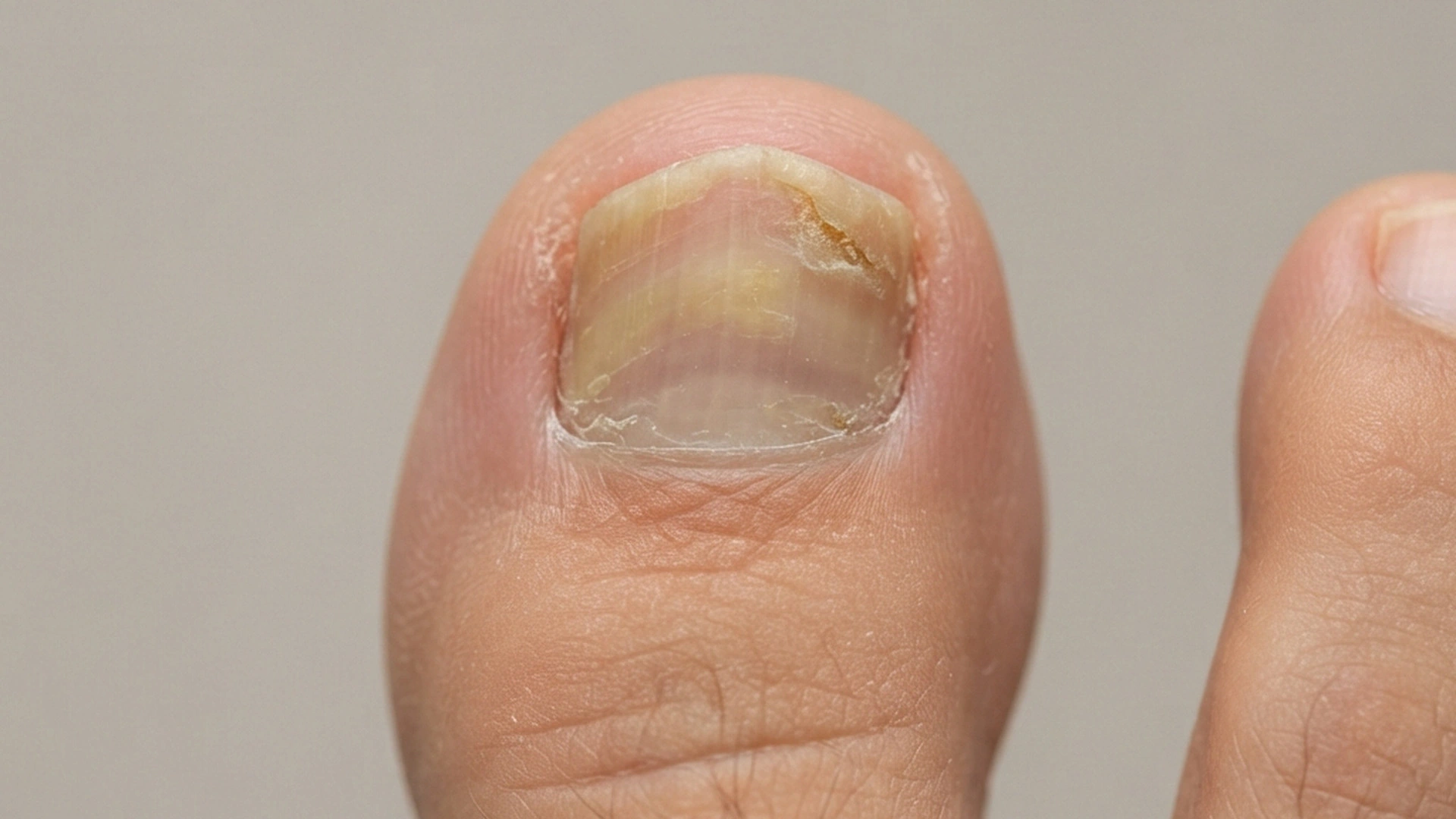
Nail fungus is a slow infection of the nail itself, usually a toenail. It makes the nail thick, yellow-brown, crumbly and lifted away from the skin underneath. It is treatable, but treatment is measured in months, because the damaged nail has to grow out before anything looks better. Damage to the nail plate, bed or surrounding tissue from injury.

Research updated 2026-10-23
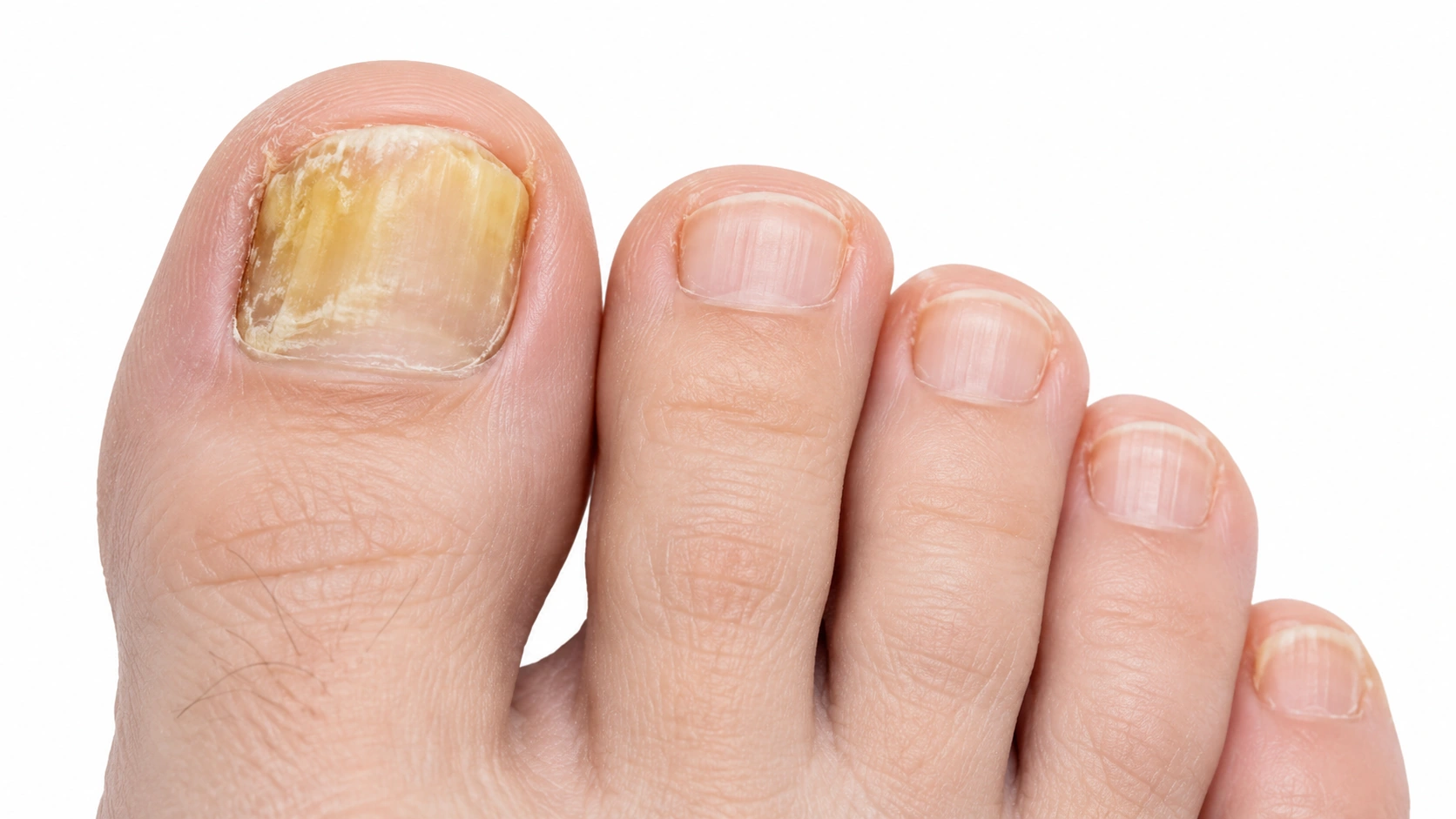
Thickened yellow great toenail on a light-skinned foot.Nail Trauma

Key differences

The same eight facts on every condition comparison.

Usual age
Adults; more with age
Any age
Where
Toenails more than fingernails
Fingernails or toenails
Main sign
Thick, yellow, crumbly nail
Bruised, split or lifted nail
Itch or pain
Usually painless
Painful at first
Contagious
Yes, mildly
No
Long term
Slow to clear; can return
Grows out over months
Scars
No
Nail may stay misshapen
Who gets it
Older adults, athlete's foot, diabetes
Injury, sports, tight shoes

What is it?

Nail Fungus
Nail Trauma
What is it?
  • Several organisms can cause it.
    Dermatophytes, yeasts or molds can invade nail keratin.
  • It is not always trivial.
    Thickened nails can be painful in shoes and affect mobility.
  • Testing confirms it.
    Nail clippings help distinguish infection from trauma, psoriasis and other nail disease.
  • Some changes are not fungus.
    A new dark band, bleeding or destructive change should be examined, not assumed fungal.
  • What it is
    Damage to the nail plate, bed or surrounding tissue from injury.

What it looks like

Nail Fungus

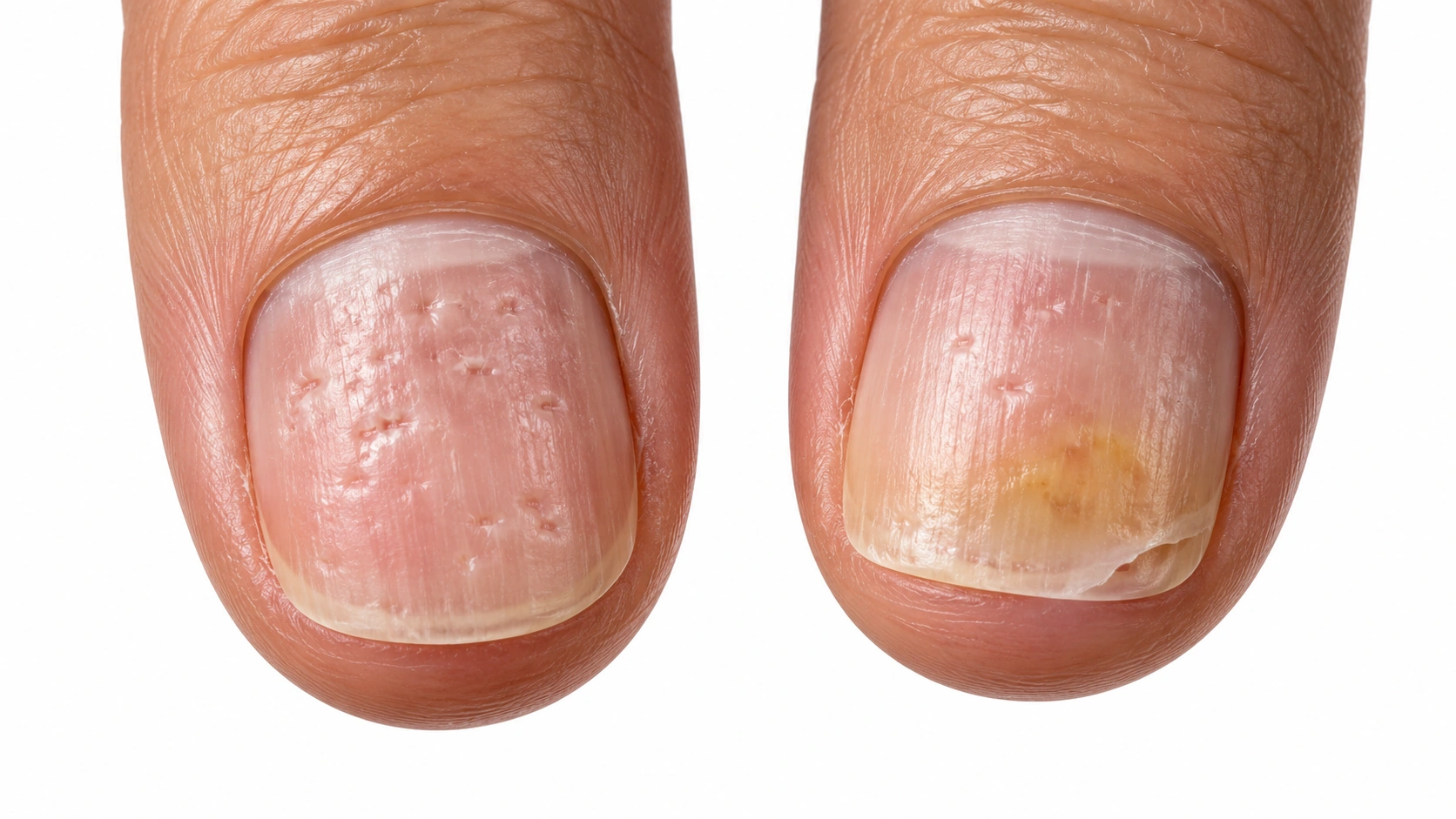
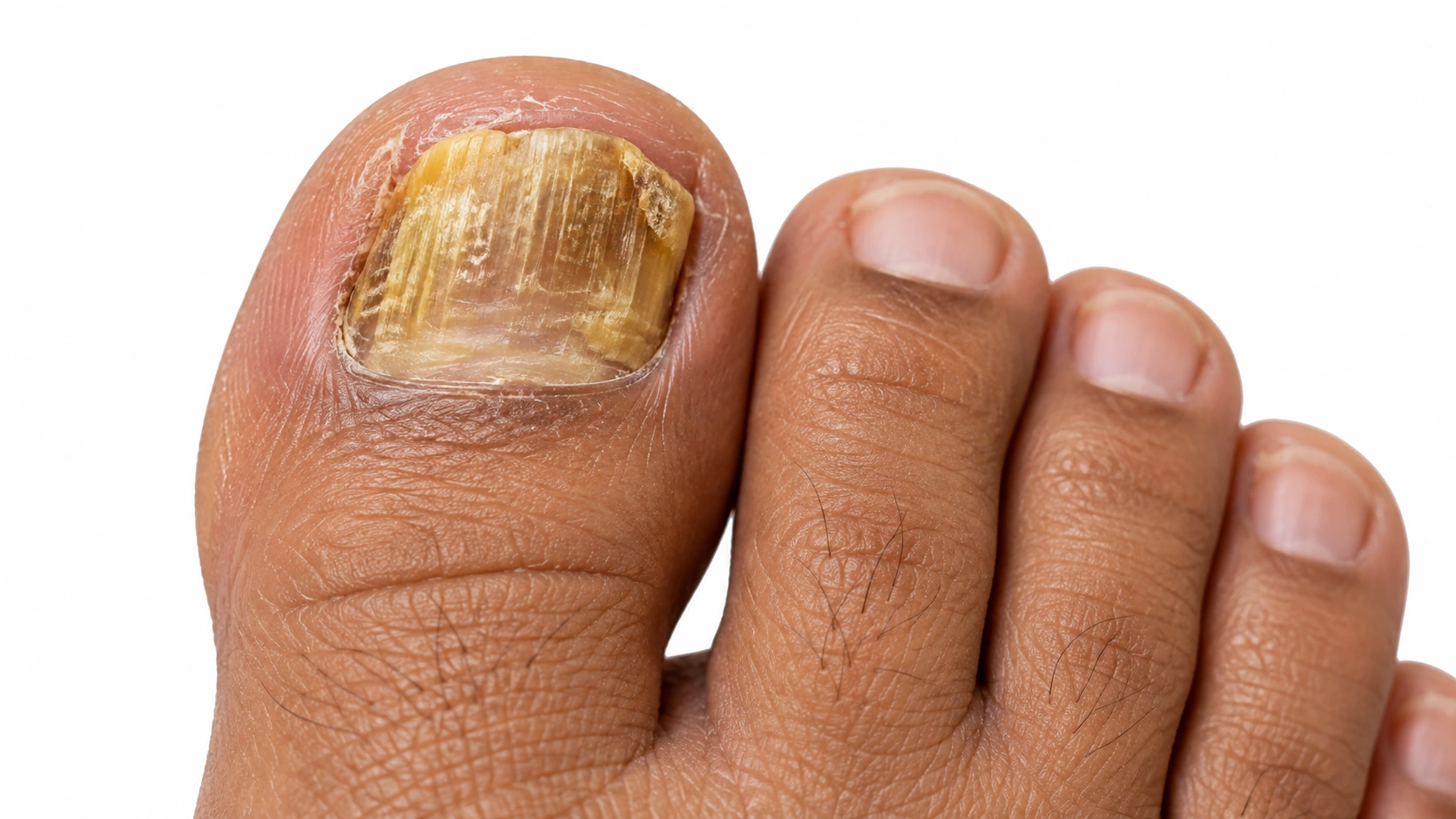
Nail Fungus: Yellow discoloration; Distal subungual.

Distal subungual onychomycosis The most common type, starting at the tip.

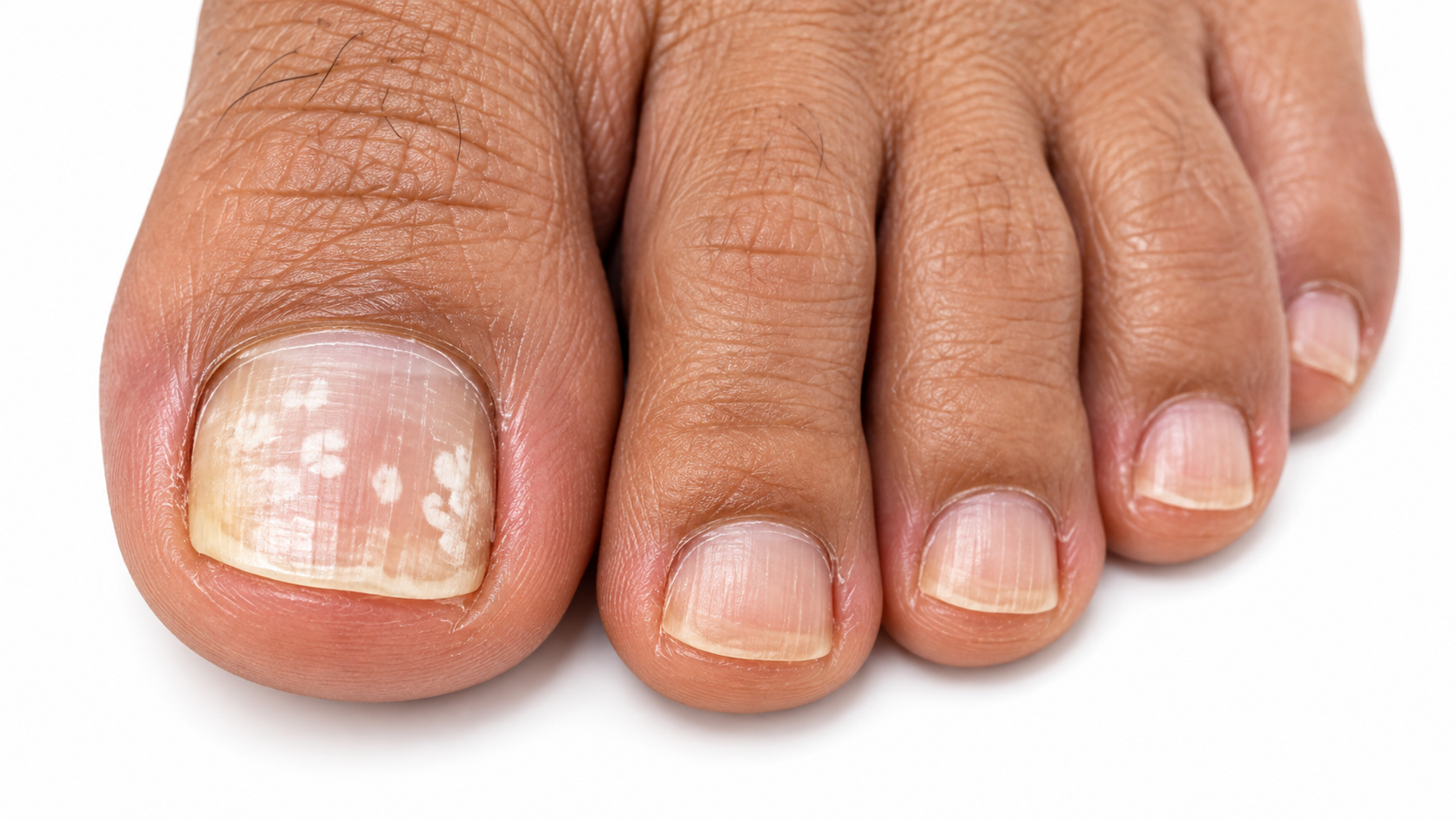
Nail Fungus: White superficial.

White superficial onychomycosis Chalky white patches on the nail surface.

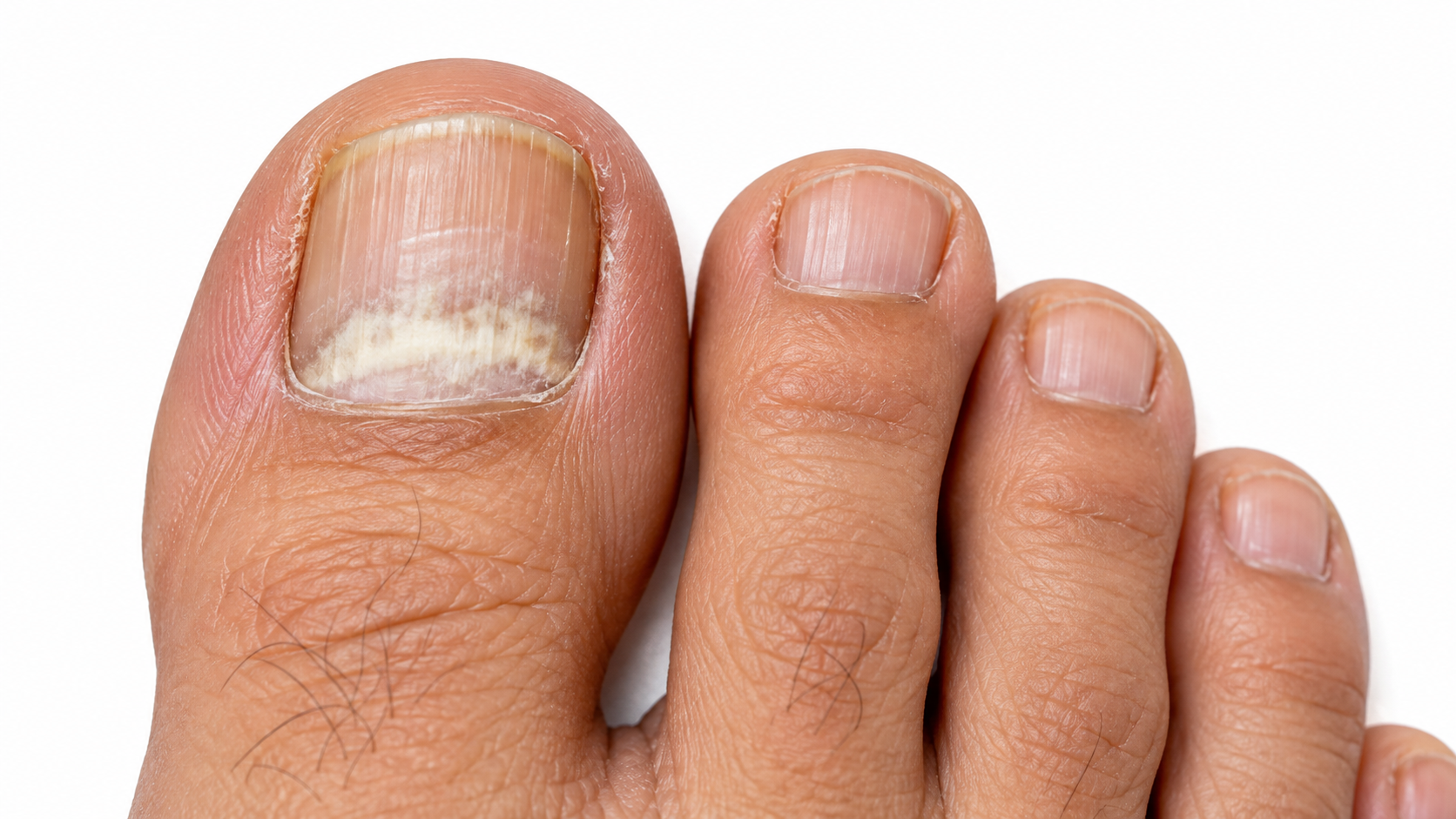
Nail Fungus: Proximal subungual.

Proximal subungual onychomycosis Starts near the cuticle; rarer.

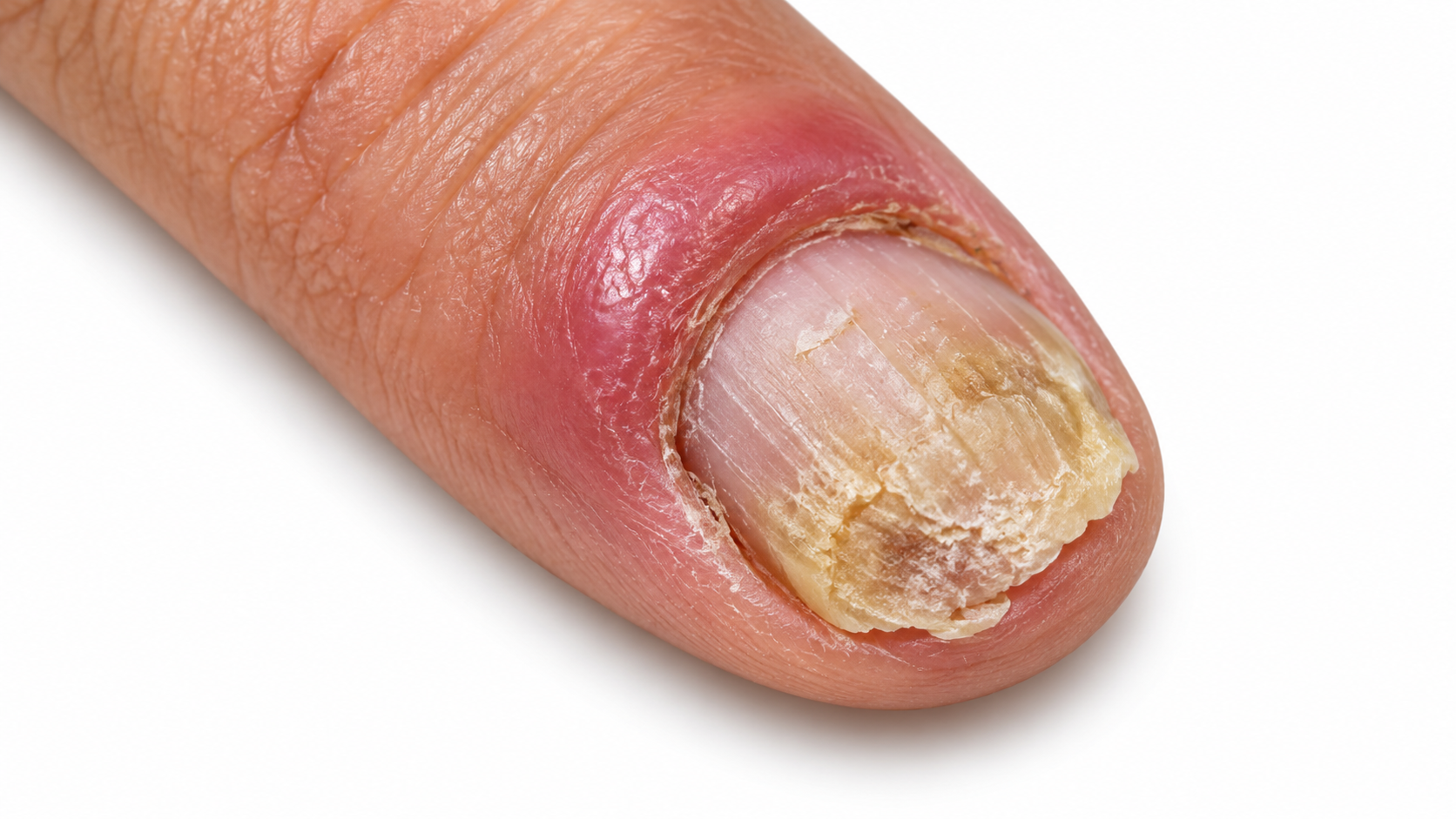
Nail Fungus: Candidal.

Candidal nail infection Caused by yeast, usually on fingernails.

Nail Trauma

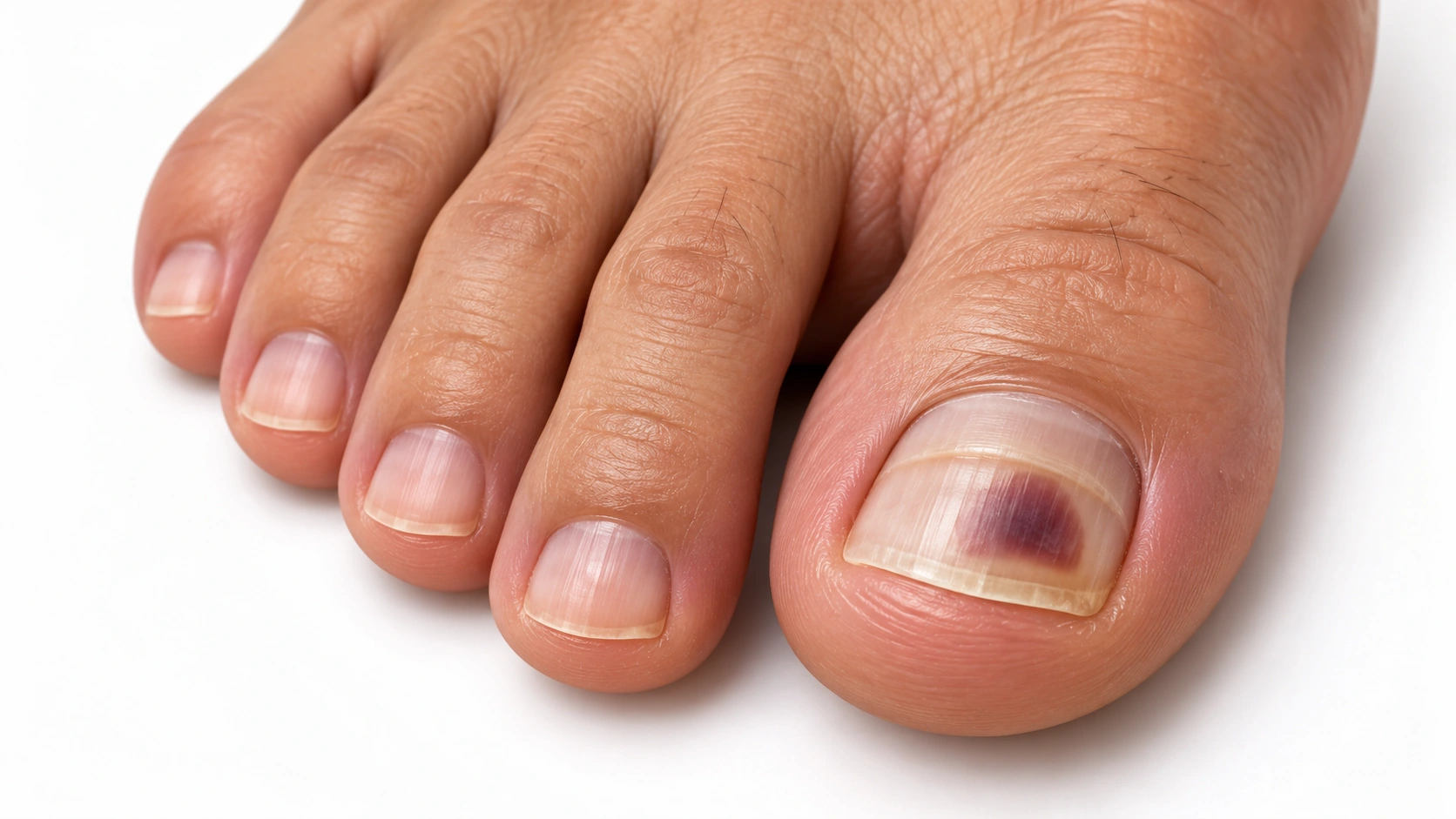
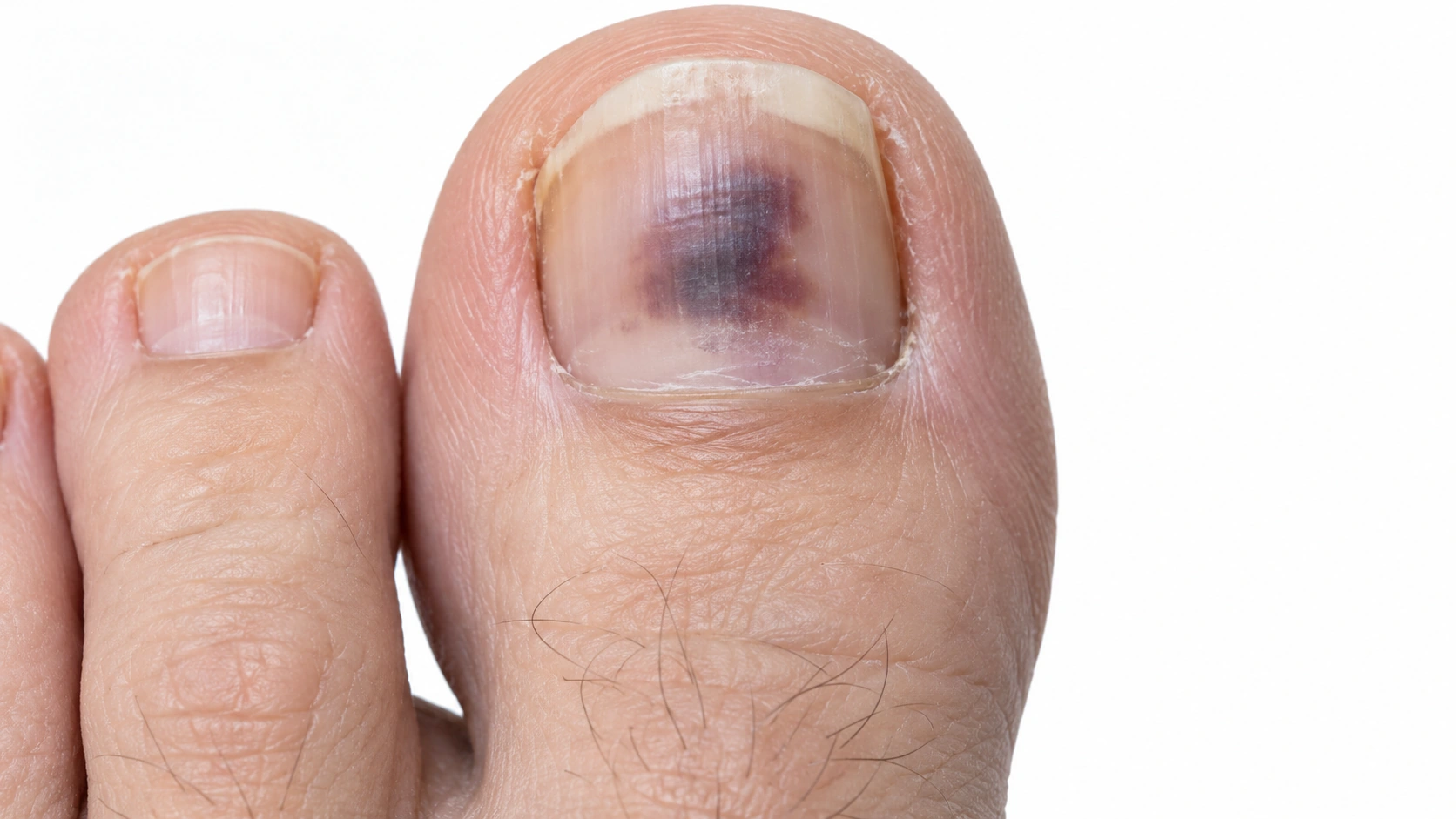
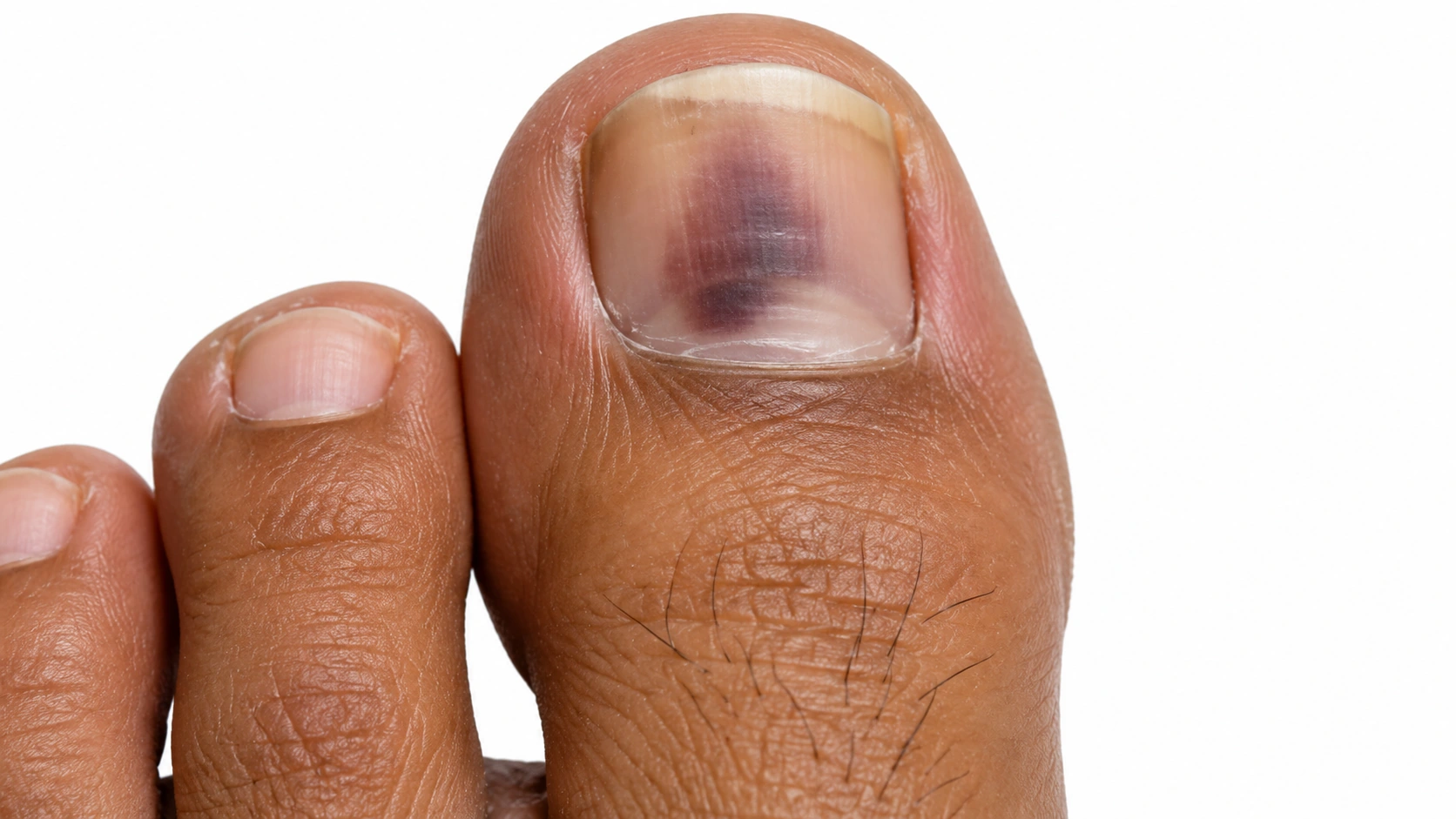
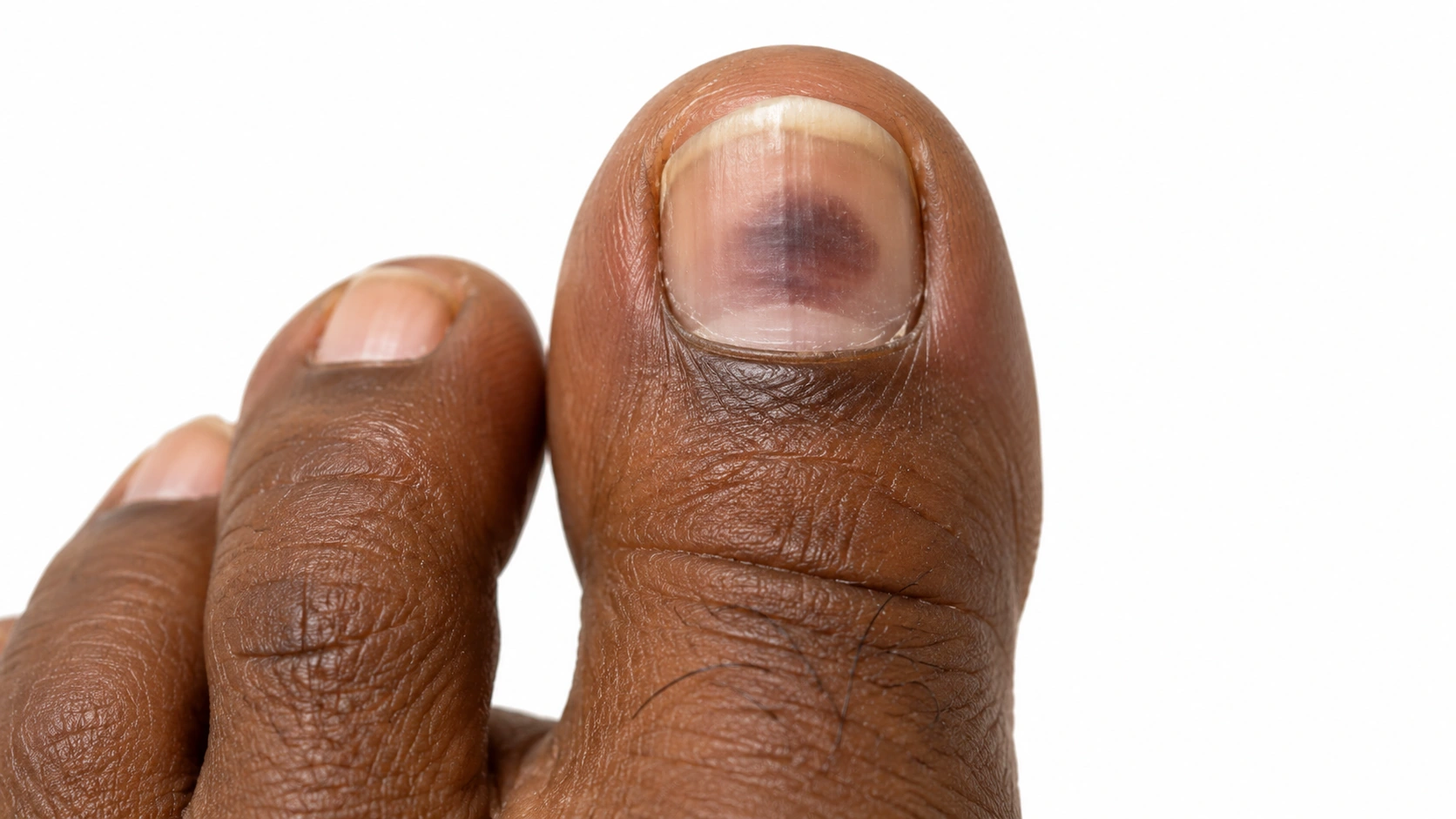
A foot with a purple-brown bruise beneath the big toenail.

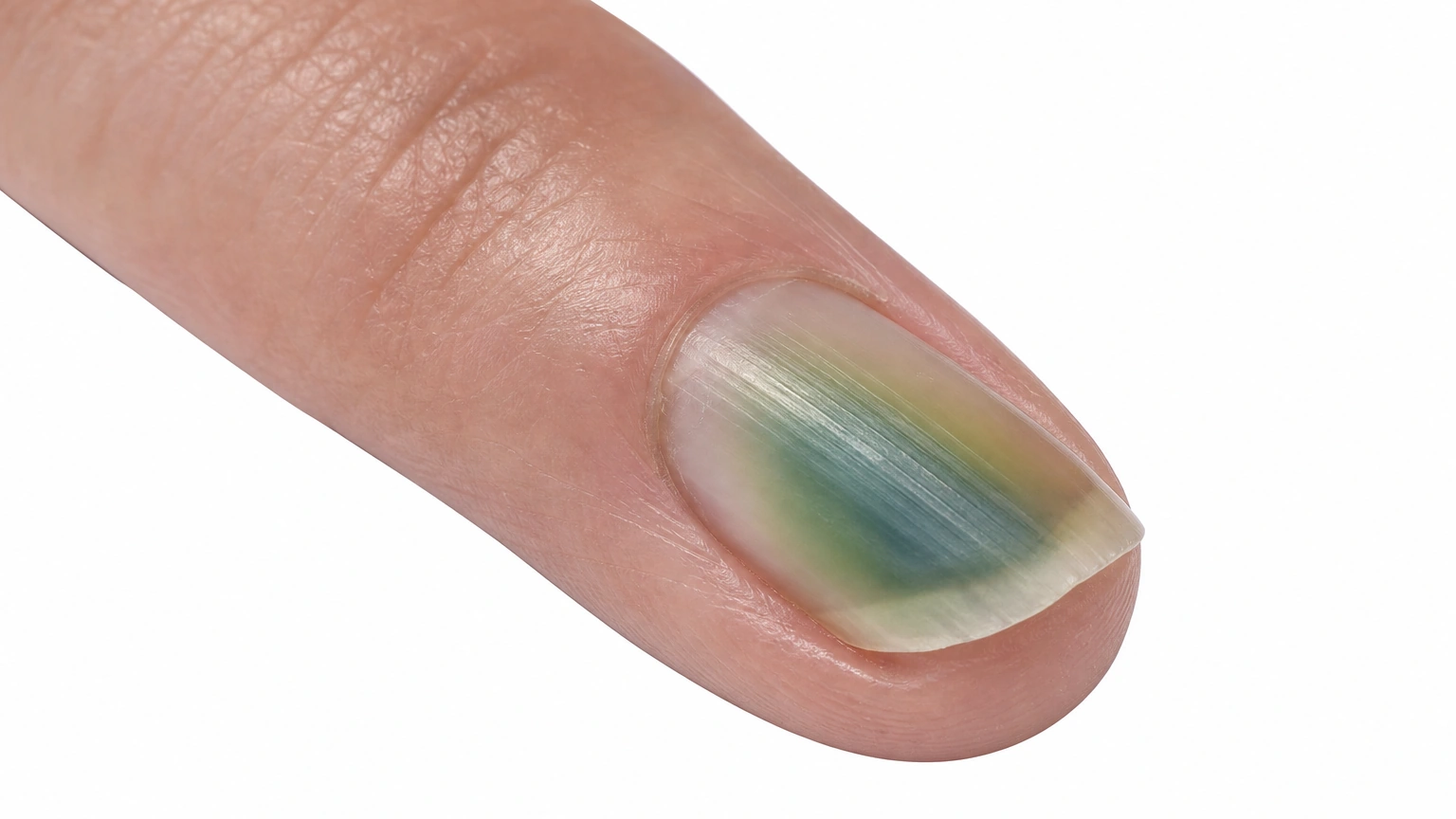
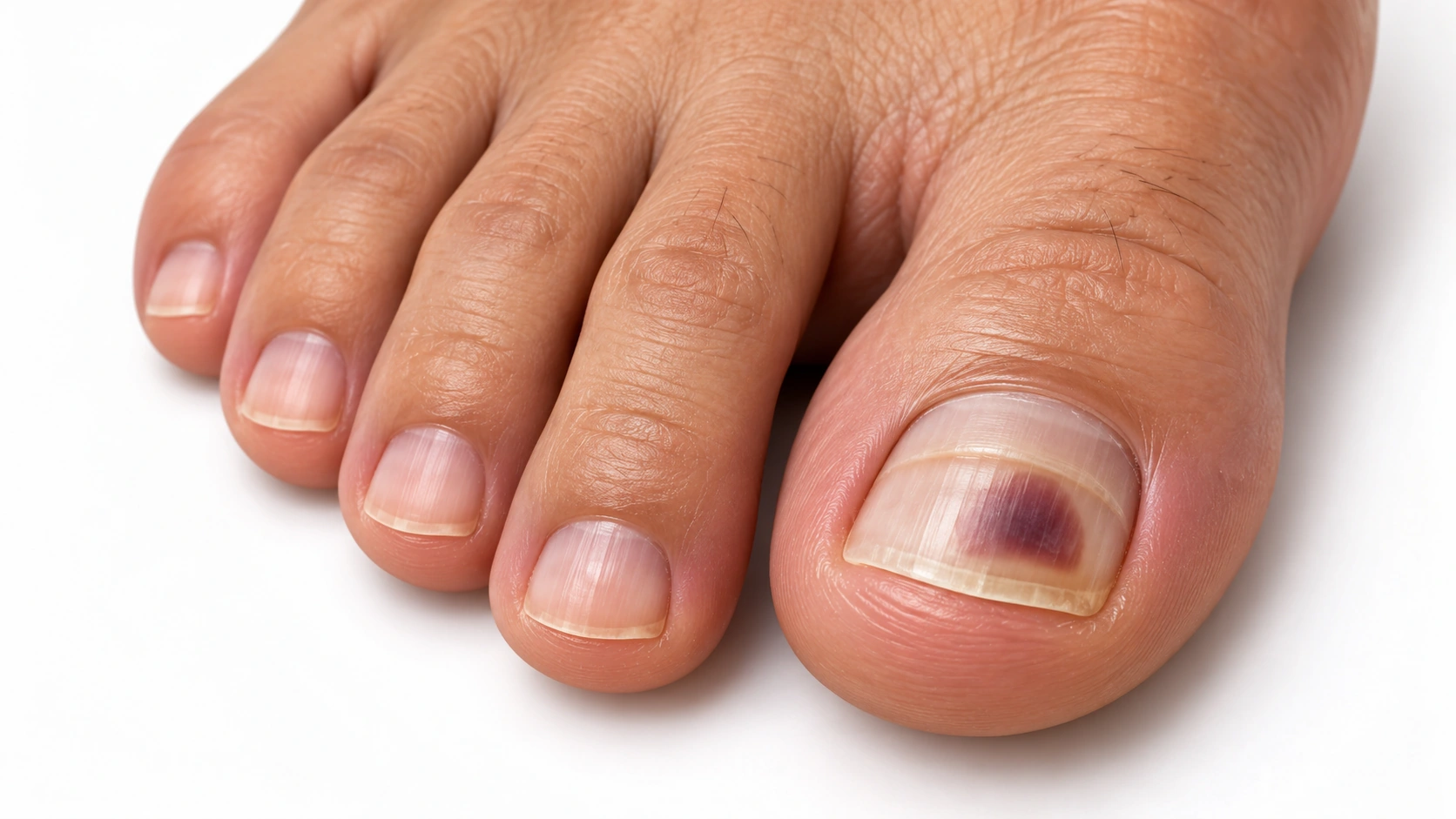
Nail Trauma The nail has a central dark patch with lighter discoloration near the edge.

Skin tones
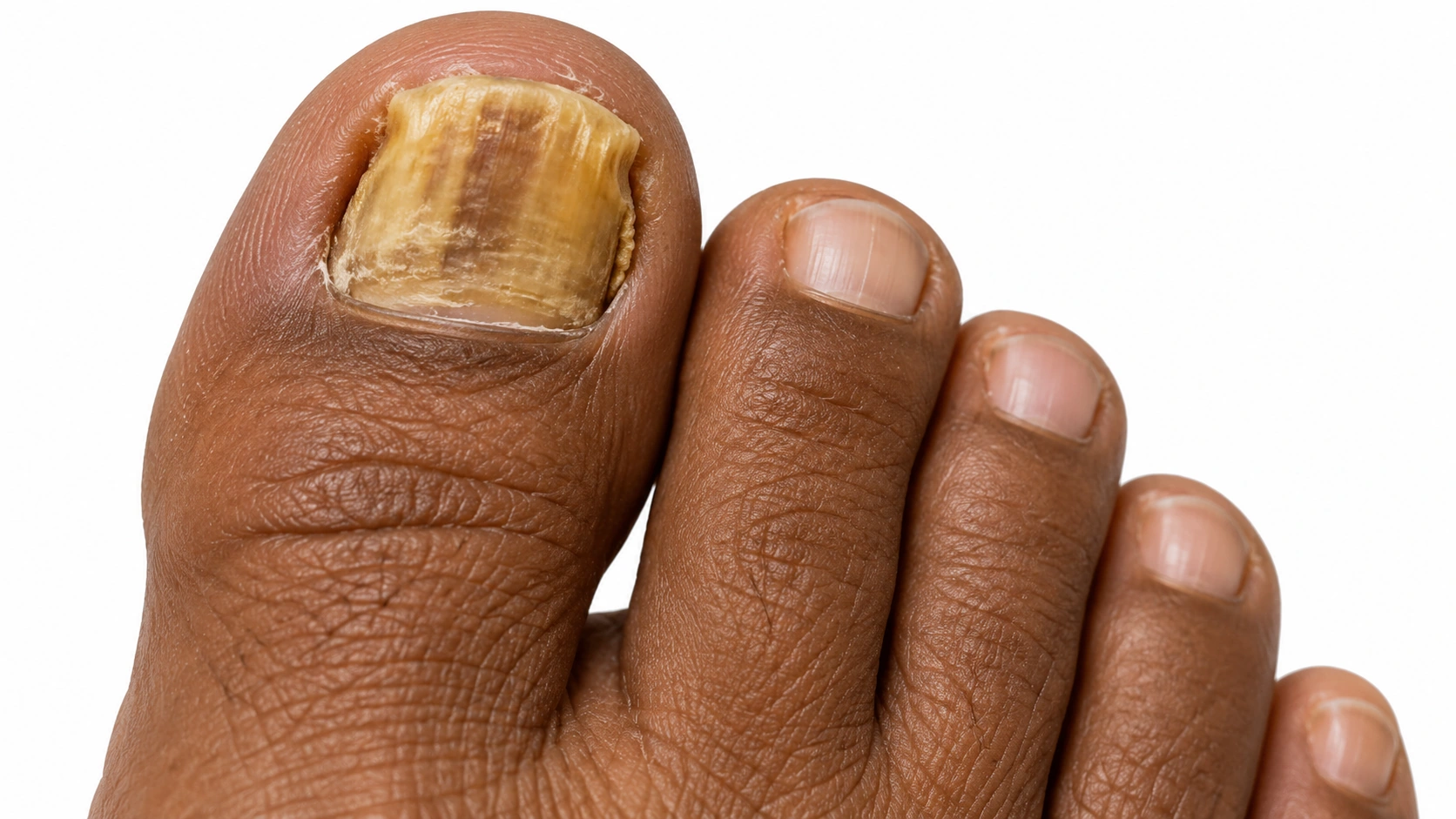
Thickened yellow great toenail on a light-skinned foot.
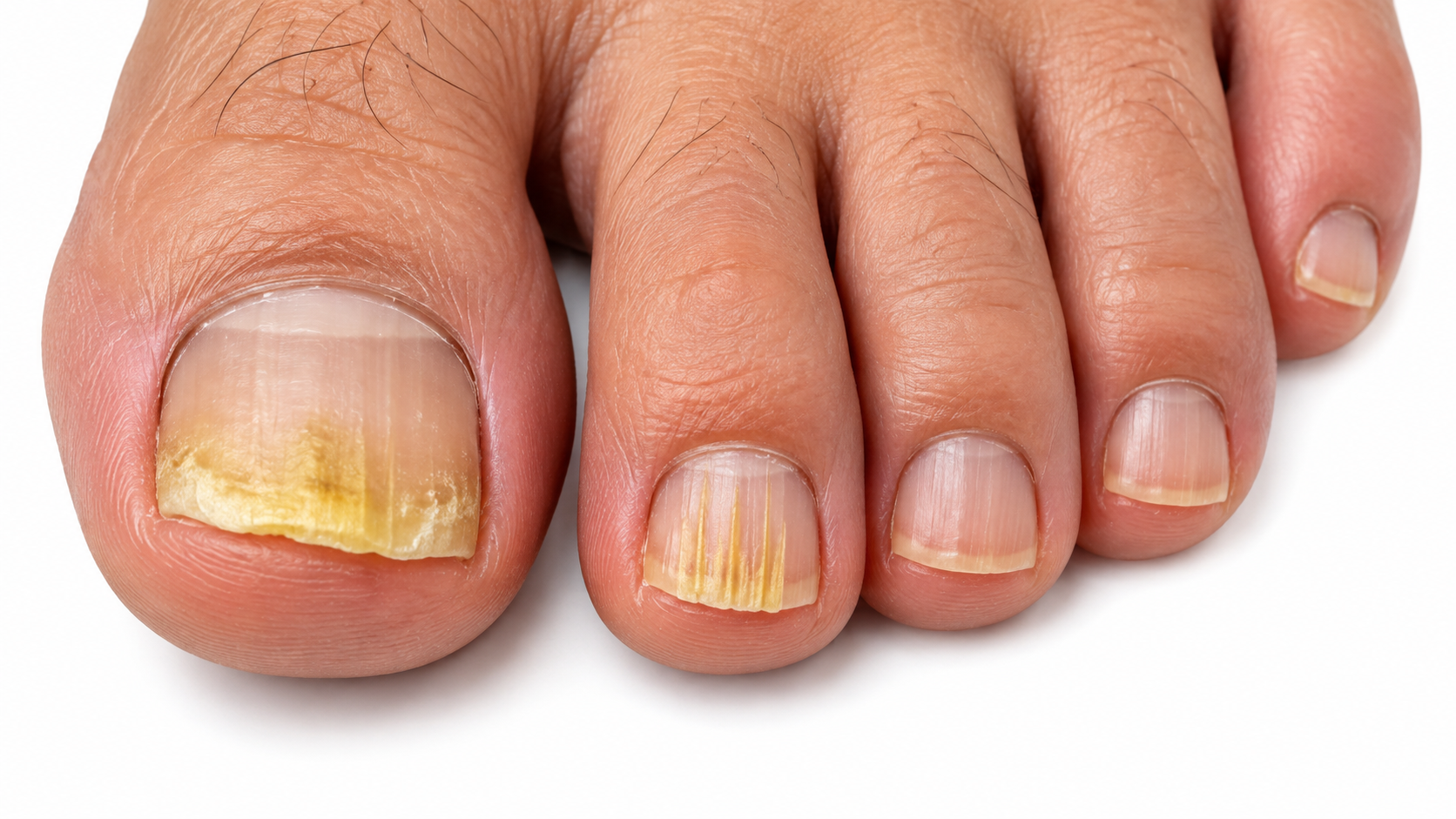
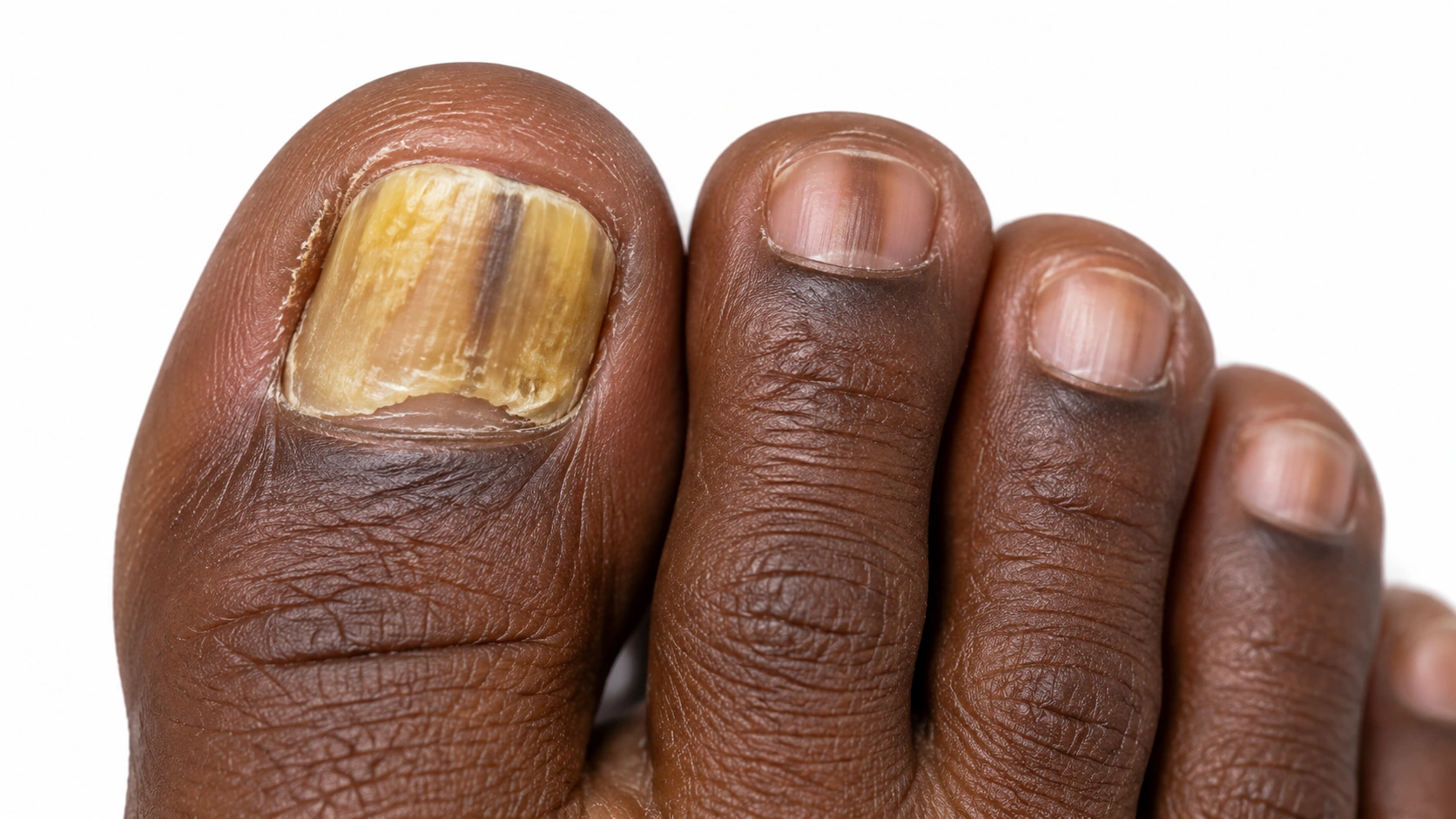
Thickened yellow-brown great toenail on a medium-toned foot.
a thickened yellow-brown great toenail on brown skin, representing nail fungus.
a thick yellow-brown great toenail on deep brown skin, representing fungal nail changes.
Nail Trauma, representative educational image.
Nail Trauma on medium skin.
Nail Trauma, representative educational image.
Diagram
Nail Fungus mechanism diagram. Fungi enter the nail: Infection often begins near an edge. Keratin becomes damaged: Fungal growth disrupts the nail structure. The nail thickens or lifts: Debris can collect beneath a discolored nail.
In the skin

Fungi invade the keratin that makes up the nail, often entering near an edge or a small break. Damage and debris can make the nail discolored, thickened or separated from its bed.

Impact, pressure or repeated injury damages the nail plate, nail bed or growth area. The visible change depends on which part of the nail unit is injured.

When it usually starts

010203040506070+

Nail Fungus. Can occur at any age but becomes more common in older adults.

Nail Trauma. Can occur at any age after injury.

Causes and triggers

Causes

Nail fungus is caused by fungi, usually the same ones behind athlete's foot. They get into the nail through small cracks or the skin around it, then grow slowly.

Impact, pressure or repetitive injury damages the nail unit.

Family tendency

Some families are more prone to fungal nail infections, likely because of inherited differences in skin immunity.

Risk factors
Age over 60, Diabetes, Athlete's foot, Poor circulation, Weakened immunity
Crush injury, Tight footwear, Repeated sports pressure
How it spreads
  • Untreated athlete's foot — Well established
  • Damp shoes and socks — Strong link
  • Barefoot in shared showers and pools — Strong link
  • Nail injury — Strong link
Trigger
● Nail Fungus
● Nail Trauma
Trauma
Not listed
Can contribute
Repeated shoe pressure
Not listed
Can contribute

Daily Care

Nail Fungus
Nail Trauma
Daily care

Habits that help

  • Keep feet dry and rotate shoes
    Dry between the toes, let each pair dry.
  • Shoes in communal wet areas
    Where people acquire it.
  • Cut nails straight across
    Less trauma, fewer splits.
  • Judge by the new nail at the base
    Look for a clear band growing from the nail base.
  • Oral itraconazole
    The alternative, but it interacts with many medicines.
  • Prescription topical treatments
    Months of painting, low cure rates.
  • Treat the athlete's foot too
    This is what stops reinfection.

Avoid

  • Avoid: Wearing the same shoes every day
    They stay damp longer than you think.
  • Avoid: Damp socks and sweaty feet
    Synthetic socks, wet trainers, feet never dried.
  • Avoid: Nail trauma
    Knocks and short shoes lift the nail.
  • Avoid: Cutting or filing corners aggressively
    Digging the sides creates splits.
  • Avoid: Covering it with nail polish
    Traps moisture, hides the new nail.
  • Avoid: Sharing clippers and files
    Fungus transfers on tools easily.
  • Avoid: Walking barefoot in communal wet areas
    Where most people pick it up.
  • Avoid: Leaving athlete's foot untreated
    The skin between your toes reseeds it.
  • Avoid: Stopping because nothing has changed
    Tablets work before the nail looks better.
  • Avoid: Very thick nails left unthinned
    Medicine cannot get through.

Habits that help

  • Protect the nail from further knocks and pressure
    Use roomy footwear for an injured toenail and avoid activities that keep striking it.
  • Keep broken skin gently clean and covered
    Follow any dressing instructions after nail-bed repair or drainage.
  • Raise the injured hand or foot if swollen
    A wrapped cool pack may help after a recent injury; avoid direct ice on skin.
  • Allow the nail to grow out without pulling it off
    Trim only a loose free edge if it catches, and leave attached nail in place.
  • Arrange review for unexplained or persistent nail pigment
    Do not assume every dark nail is a bruise, especially without a clear injury.
  • Protection and pain relief
    Protect the nail and use suitable labelled pain relief if needed.
  • Discuss nail-bed and pressure assessment
    Severe pressure pain, a crush injury or an open wound may need drainage, repair or imaging by a clinician.

Avoid

  • Avoid: Drilling, burning or piercing the nail yourself
    Severe pressure pain or a significant crush injury may need prompt professional care.

Treatment differences

Evidence labels come from each condition’s own treatment list.

Treatment
● Nail Fungus
● Nail Trauma
Filter by type
Nail fungus type

Select one or more.

All types
Treatment approach
—

Protect the injured nail. Significant pain, an open wound or a crush injury may need assessment for nail-bed damage or fracture; unexplained nail pigment needs diagnosis rather than injury treatment.

Over-the-counter
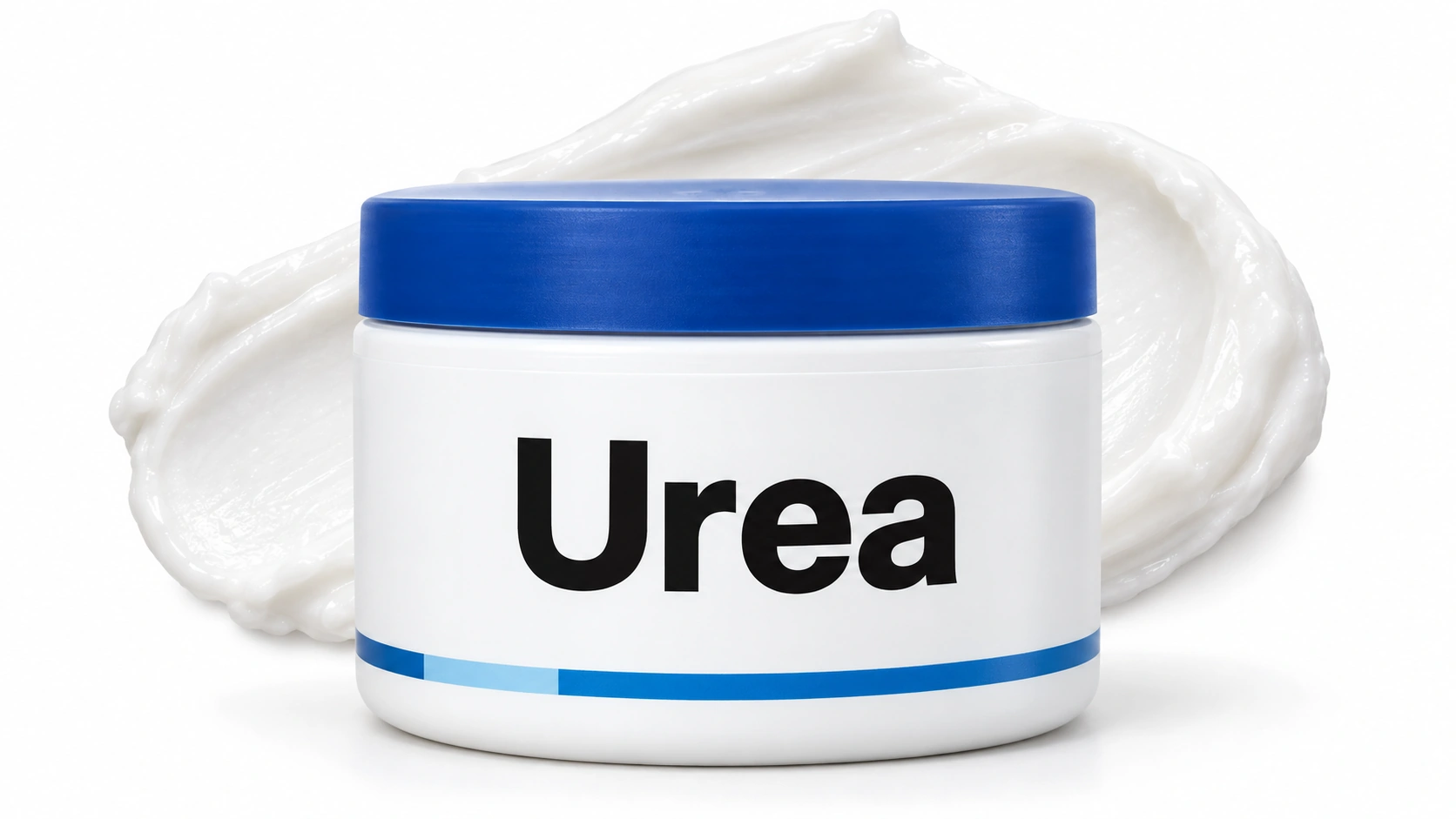
PurOrganica Urea 40% Foot Cream product.

Urea 40% nail softener

Limited evidence

A strong urea cream or patch softens a thick nail so more of it can be filed or cut away. It kills nothing on its own. Its job here is to reduce the amount of dense nail sitting between a painted-on treatment and the fungus, and to make an uncuttable nail manageable.
Illustration: Generic topical cream tube and white cream.

Terbinafine cream for the feet

Listed

This will not cure the nail, but it clears the athlete's foot on the skin that keeps reseeding it. Use it on the whole sole and between the toes, not just the itchy bit, and carry on for a week or two after the skin looks normal. Treating the skin is the single cheapest thing you can do to stop the nail coming back after a course of tablets.

Five dark glass tea tree essential oil bottles with glass droppers and one green box on white

Tea Tree Oil

Limited evidence

It does have antifungal activity in the laboratory, and the small studies in nails have shown some improvement in appearance. None have shown reliable cure of an established nail infection. It also cannot get through a thick nail, and it can irritate the skin around it.

None listed
Prescription topicals
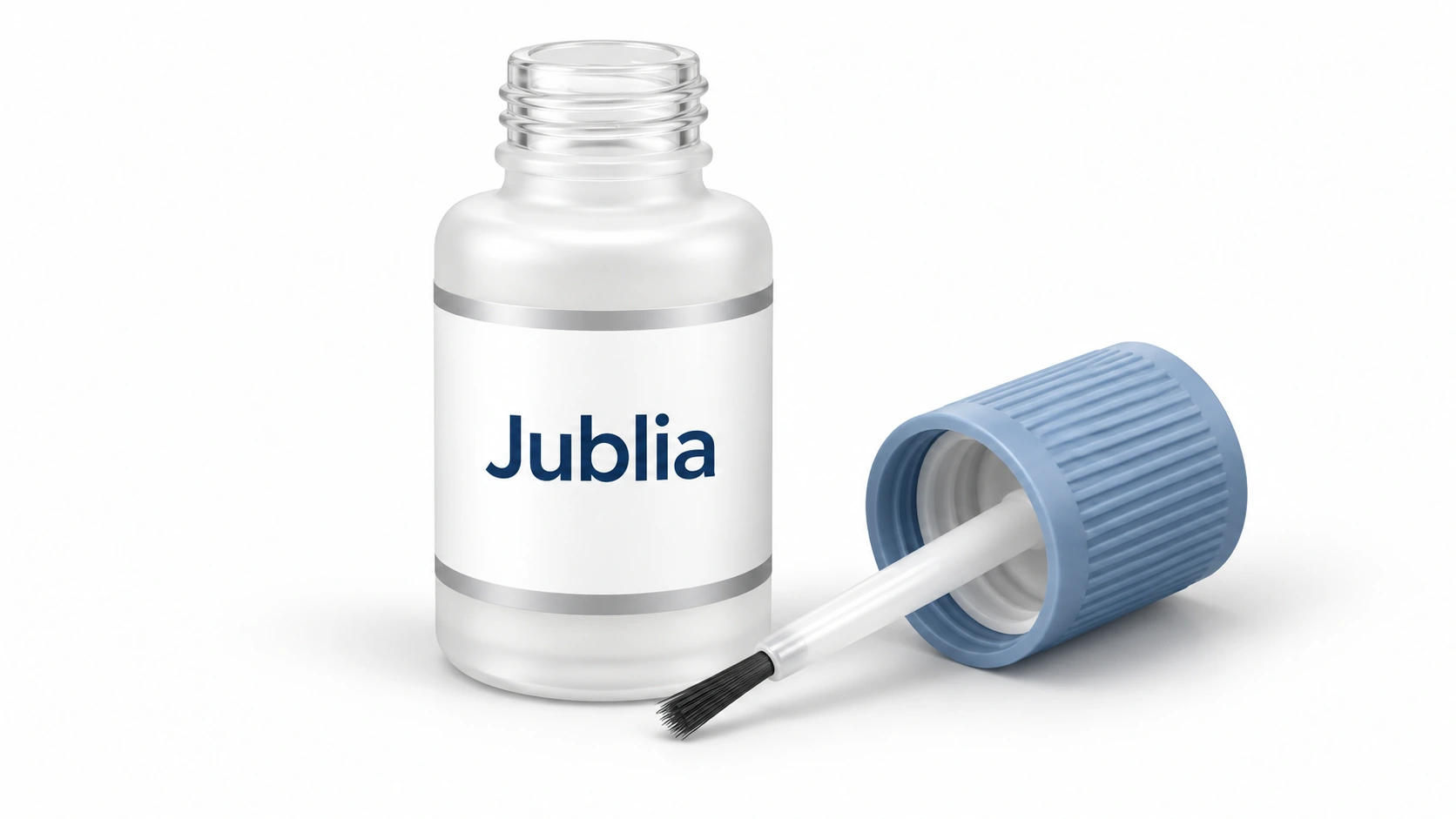
An illustrative Jublia nail-solution bottle with brush applicator.

Jublia

Moderate evidence

Jublia. A solution painted on the nail once a day for about a year. It penetrates nail better than the older lacquers, and it suits mild infection, one or two nails, or people who cannot take tablets. Complete cure rates are still well below tablets, so it is a reasonable choice rather than the strongest one.

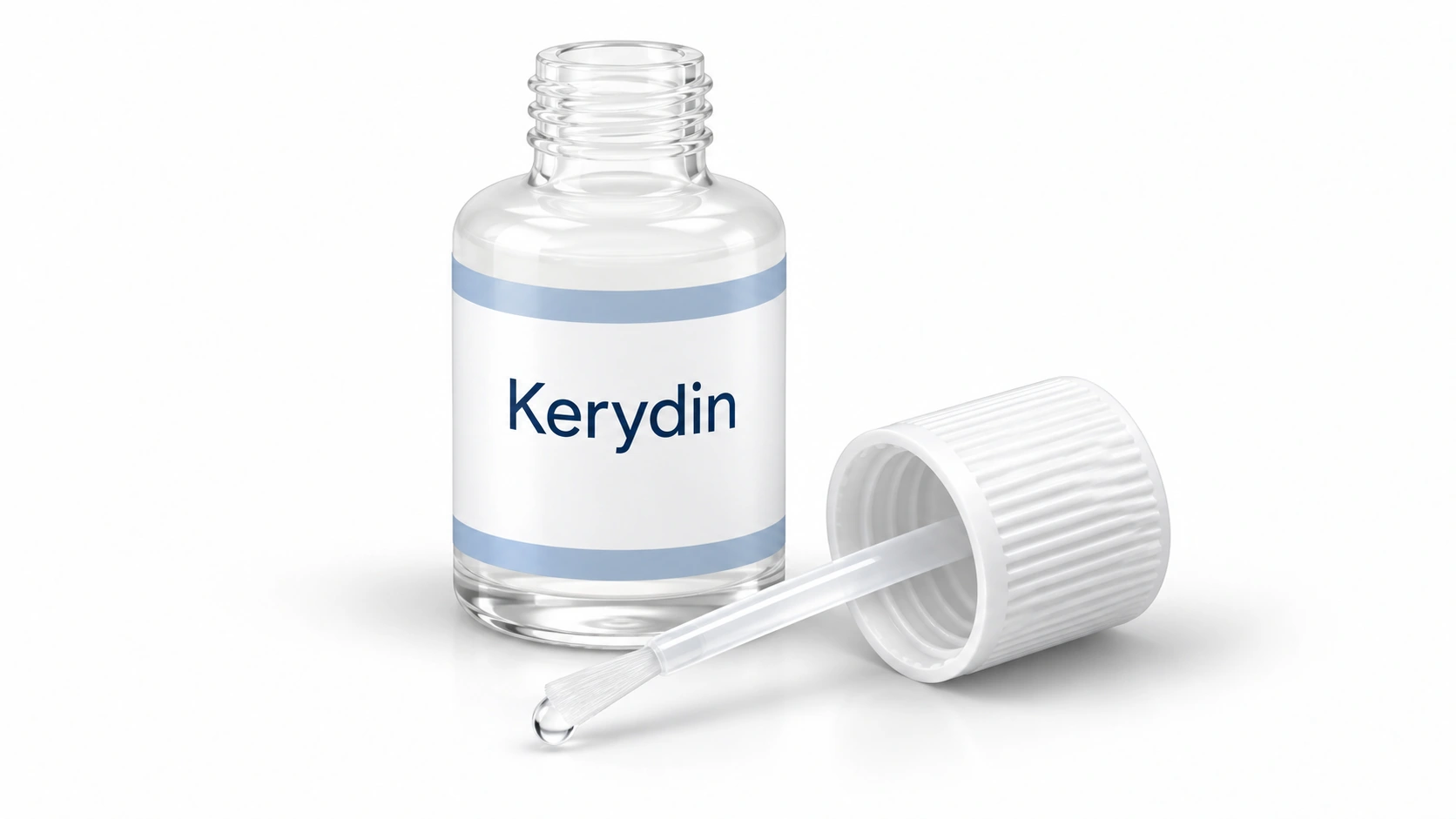
An illustrative Kerydin nail-solution bottle and dropper; packaging is conceptual.

Kerydin

Moderate evidence

Kerydin. Another daily paint-on solution used for about a year, with a small molecule that gets through the nail plate. Results are similar to the other topicals: many nails look better, far fewer clear completely. It works best on thin nails with the infection limited to the tip.

Ciclopirox

Moderate evidence

Penlac. The oldest of the prescription nail paints, applied daily with the built-up layers removed weekly with alcohol. Complete cure rates are low, in single figures in the original studies. It is cheap and safe, and it is mostly used when tablets are not an option.

None listed
Prescription pills
Terbinafine — Header Image

Terbinafine

Strong evidence

The first choice for dermatophyte nail infection and the option with the best cure rate: usually 12 weeks for toenails and 6 for fingernails. It binds into the nail and keeps working there for months after the last tablet. A liver blood test is standard, taste changes are a known side effect, and nothing will look different while you are taking it.

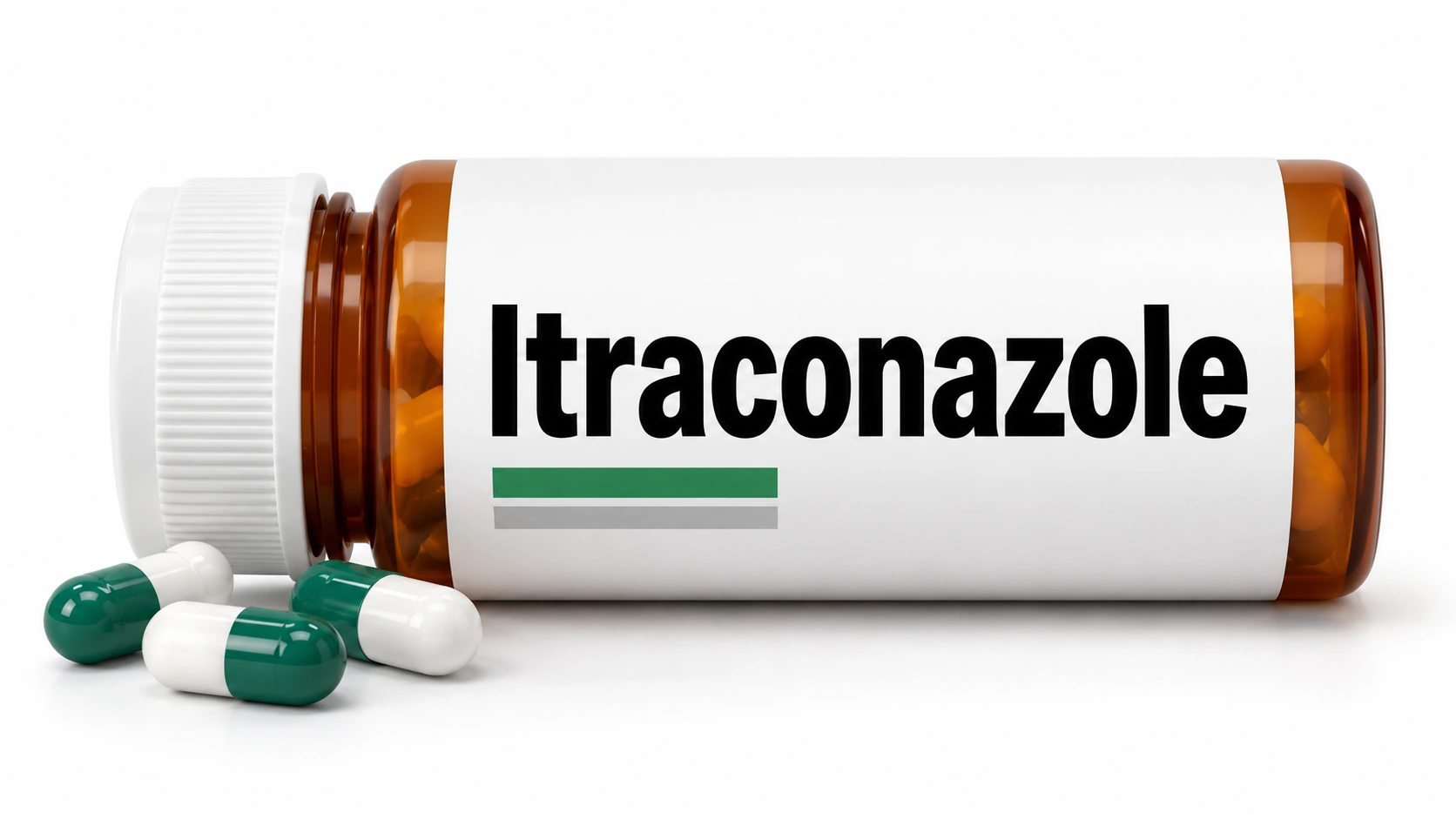
Representative medication packaging labelled Itraconazole, lying sideways on a white background.

Itraconazole

Strong evidence

The main alternative, and the better option when a yeast or a mould is grown rather than a dermatophyte. It is often given as pulses, a week on and three weeks off. It interacts with a long list of common medicines and is avoided in some heart conditions, so your doctor needs everything you take, including anything bought over the counter.

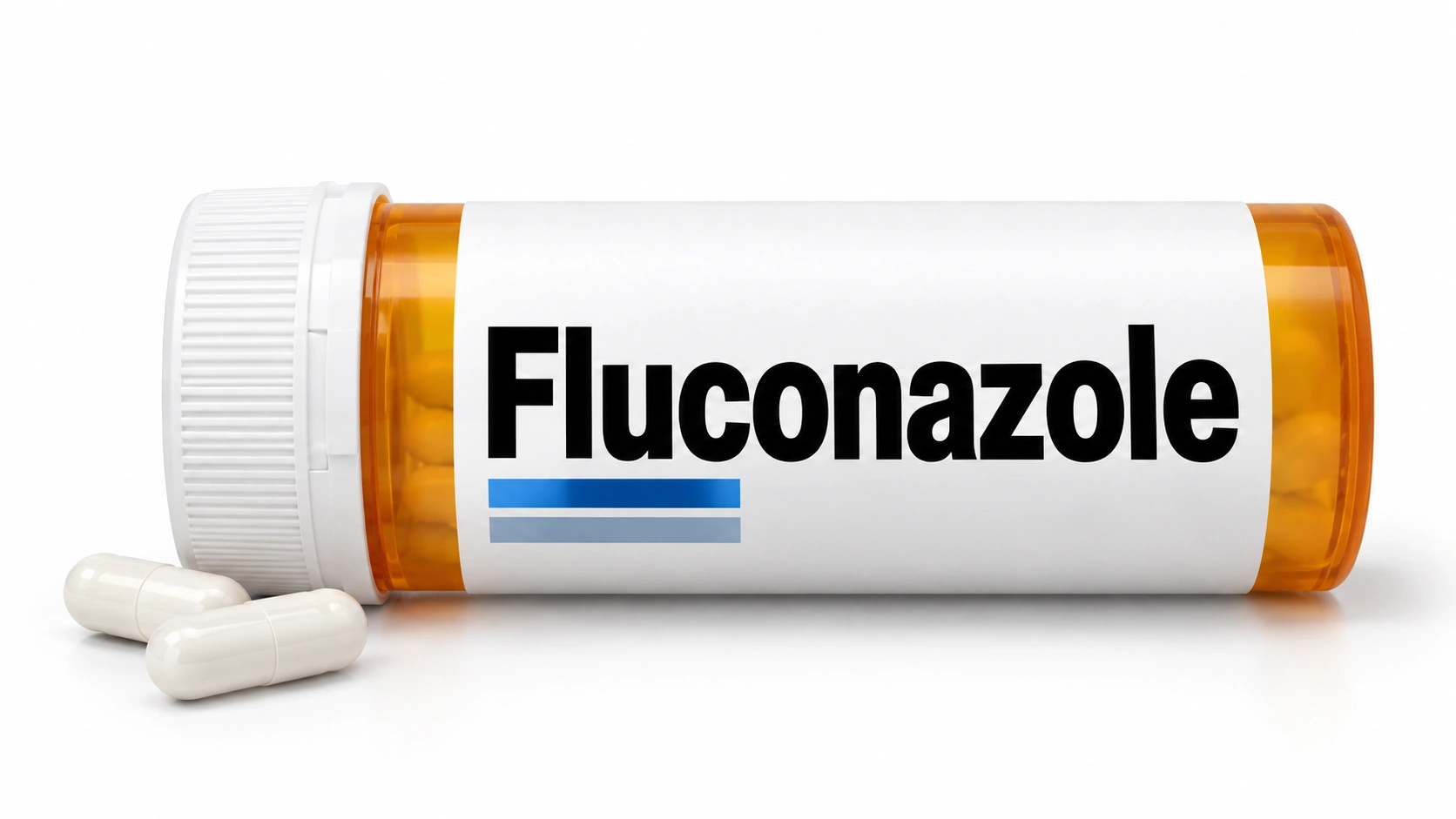
16:9 hero for Fluconazole. Never cropped: the tone strip and the corner logo depend on the full frame.

Fluconazole

Moderate evidence

Taken once a week rather than daily, which suits people who struggle with a long daily course. Cure rates sit below terbinafine and it usually has to be continued until the nail has grown out, which can be a year. It also interacts with a number of other medicines.

Illustration: Generic oral tablet bottle and tablets.

Griseofulvin

Limited evidence

The old antifungal tablet, now largely replaced for nails. It needs 12 to 18 months of daily treatment, it clears fewer nails than terbinafine, and relapse afterwards is common. It is still occasionally used in children or when the newer drugs cannot be taken.

None listed
Procedures

Nail Debridement

Limited evidence

Thinning and clipping the nail. Cutting the nail back and filing or drilling down the thickened part, usually by a podiatrist. It is painless and it does two things: it takes pressure off a sore toe, and it removes dense nail and any packed clump of fungus that medicine cannot get through. Done alongside tablets or a nail paint, it makes them work better; done alone, it does not treat the infection.

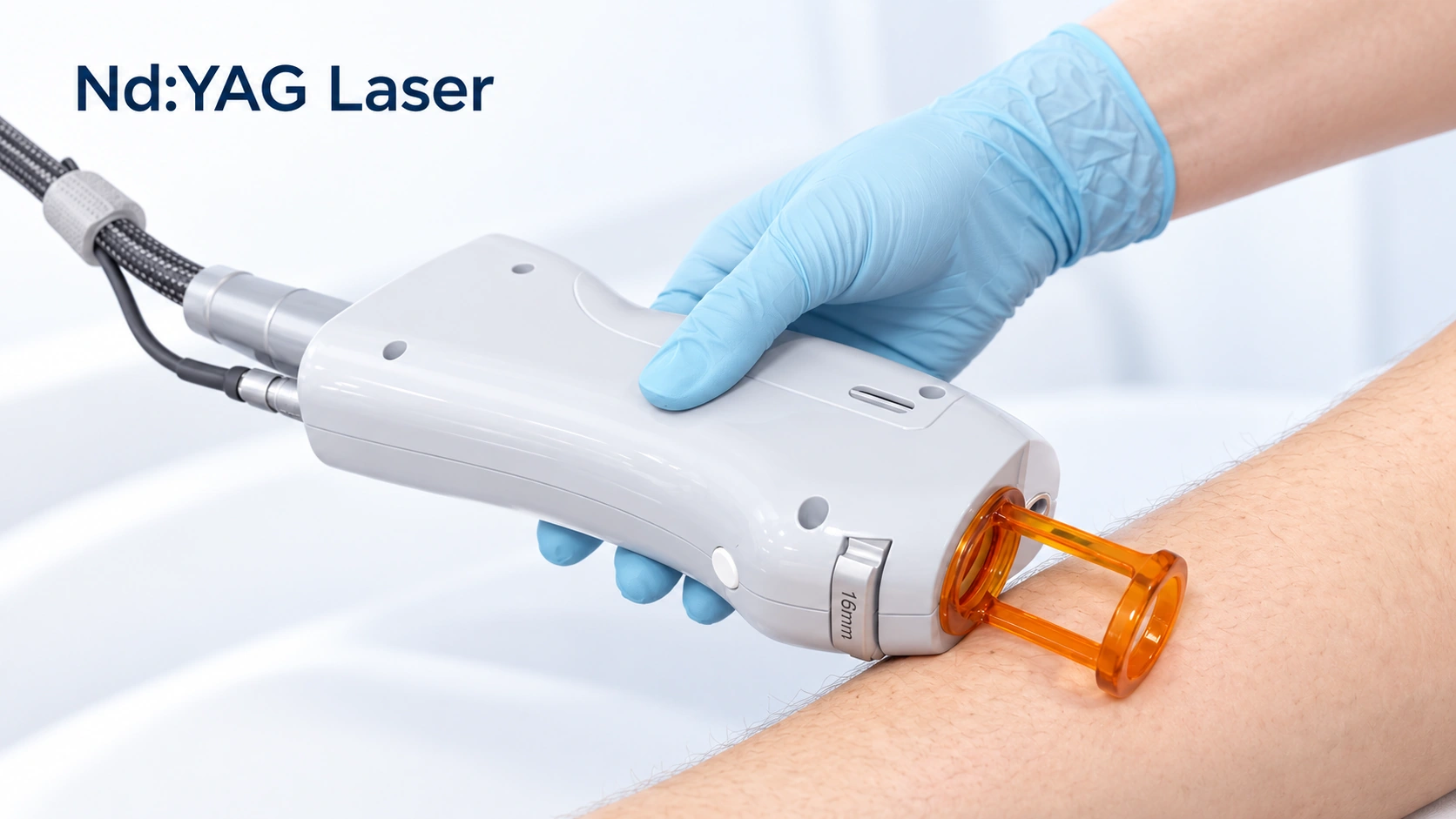
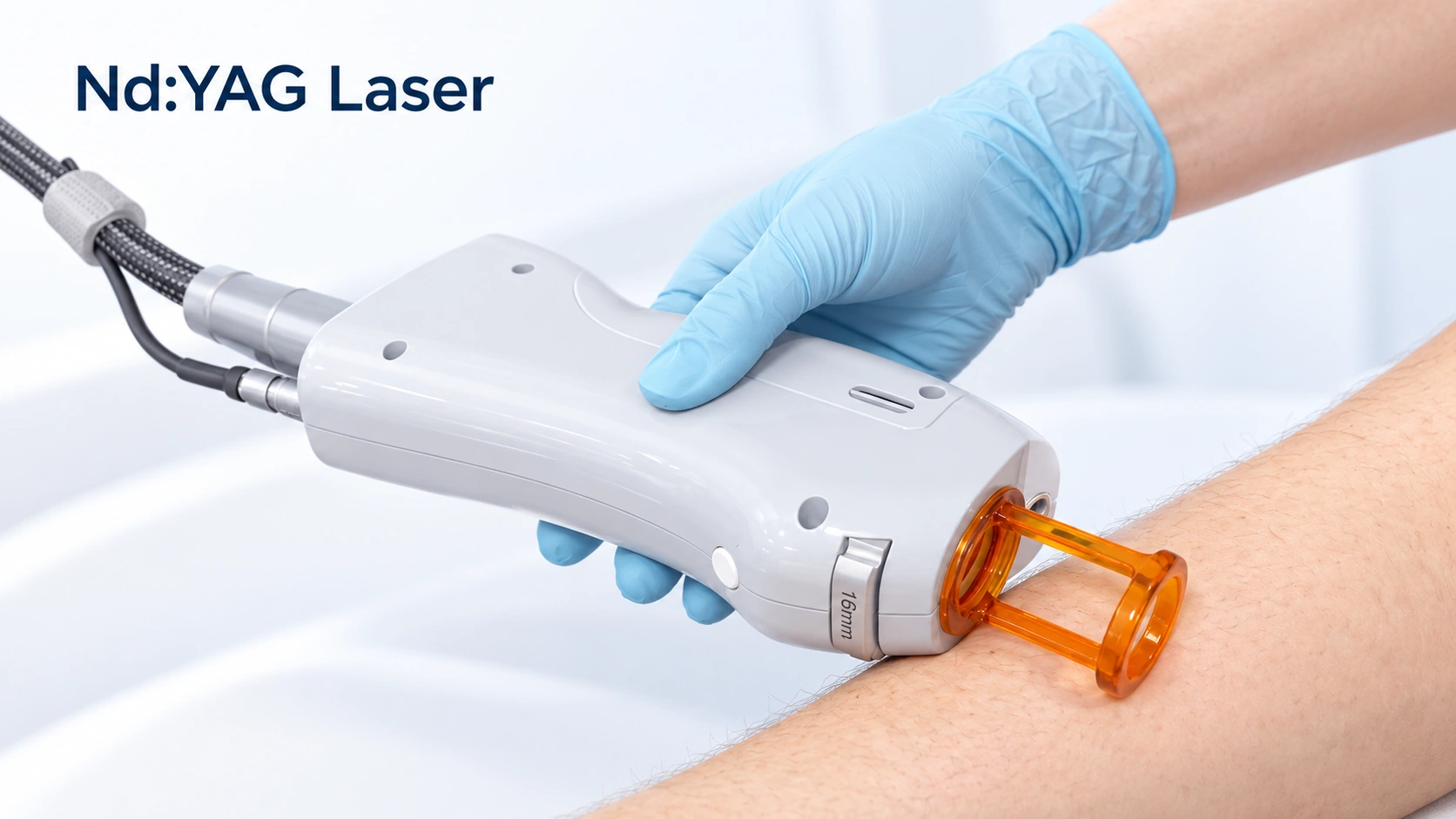
Editorial illustration for Nd:YAG Laser, based on the entry’s treatment or equipment reference.

Nd:YAG Laser

Limited evidence

Laser devices are cleared to temporarily increase the amount of clear nail, which is not the same thing as curing the infection. Studies are small, short and mostly measure appearance rather than clearance, and the fungus commonly returns. It is usually several sessions, paid for out of pocket, and it is a reasonable thing to consider only when tablets are genuinely not an option.

Nail Removal

Limited evidence

Removing the nail. Taking off part or all of the nail, either surgically or with a strong urea paste. It is not a cure on its own, because the fungus is also in the nail bed and the new nail grows back into it. It is kept for a nail that is painful, hopelessly thick, or holding a dense clump of fungus, and it is done alongside tablets rather than instead of them.

None listed

Outlook

Long term

Nail fungus does not clear on its own. Left alone it takes over more of the nail and, over years, more nails. Once treatment starts, nail growth sets the timeline, so watch the base.

Recovery follows nail growth, so visible damage can take months to move out. Injury to the nail-producing area can leave lasting changes; significant pain, an open injury or persistent unexplained pigment needs review.

Complications

Possible complications
  • Cellulitis
  • Spread to other nails and the skin
  • Permanent nail damage
More details

Cellulitis
A thickened, cracked nail and the split skin around it give bacteria a way into the leg. The result is a spreading area of hot, swollen, tender skin, usually with feeling unwell and a fever, and it needs antibiotics quickly. It matters most for people with diabetes, poor circulation in the legs or a weakened immune system, which is why fungal nails are treated more actively in those situations.

Spread to other nails and the skin
Left alone, one infected nail slowly seeds the others, and the same fungus keeps the skin of the sole and the gaps between the toes scaly and itchy. This is athlete's foot and nail fungus feeding each other. Treating the nail while ignoring the skin is the usual reason people end up doing the whole course twice.

Permanent nail damage
If the infection has been there for years, the tissue that makes the nail can be scarred by the time it clears. The nail then grows back ridged, short or misshapen even though the fungus is gone. It is not common, and it is a reason to treat sooner rather than later rather than a reason to expect it.

A significant injury may include a fracture or nail-bed wound.

When to get help

When to get help

Confirm the diagnosis before long treatment courses. Seek care sooner for diabetes, poor circulation, painful swelling or infection around the nail.

Get care for severe pain, a crush injury, an open wound or unexplained pigment that does not move with nail growth.

Common questions

Nail Fungus:How long before my nail looks normal?

Longer than almost anyone expects. The medicine protects new nail as it forms, and a toenail takes roughly 12 to 18 months to replace itself, a fingernail about 4 to 6. Progress is a widening band of clear nail at the cuticle, not the tip.

Nail Fungus:Do I really need tablets, or can I use something on the nail?

It depends how much nail is involved. Prescription topicals suit mild infection, one or two nails, or when tablets are not suitable, and they avoid blood tests. Cure rates are distinctly lower and they need daily use for close to a year. For thick nails, several nails, or infection at the cuticle, tablets are what work.

Nail Fungus:Are the tablets dangerous?

Most healthy adults tolerate them well and serious problems are uncommon. Terbinafine can affect the liver, so a blood test before or during the course is standard, and taste changes are common. Itraconazole interacts with a long list of medicines and is avoided in some heart conditions. Your doctor needs a full list of what else you take.

Nail Fungus:Can I still paint my nails?

While you are being tested, no - polish makes sampling harder and hides what is happening. During treatment it is not forbidden, but it hides the new nail you are meant to be watching, and gel removal damages the plate. Going bare is more useful.

Nail Fungus:Will it come back?

It can, and in a meaningful number of people it does. The strongest protection is not another course of tablets - it is treating the athlete's foot, keeping feet dry, rotating shoes, and wearing something in communal wet areas.

Nail Fungus:Can I give it to my family?

It spreads within a household more than between strangers - shared floors, towels, bath mats and clippers. Use your own clippers and file, keep a separate foot towel, and treat any athlete's foot in the house. Ordinary contact is very unlikely.

Nail Trauma:What is Nail Trauma?

Damage to the nail plate, bed or surrounding tissue from injury.

Nail Trauma:What can I do day to day?

Protect the nail, use roomy footwear and do not drill or burn a hole in it yourself.

Nail Trauma:When should I get medical advice?

Get care for severe pain, a crush injury, an open wound or unexplained pigment that does not move with nail growth.

Sources

Sources and further reading

  1. DermNet
  2. NHS
Dermapedia on YouTube