Jock Itch vs Intertrigo

Jock itch is a fungal infection of the skin in the groin. It causes an itchy, scaly rash that spreads out from the crease onto the inner thigh. It is usually the same fungus that causes athlete's foot, it clears with antifungal creams from a pharmacy, and it tends to come back if the feet are not treated too. Inflammation where opposing skin surfaces rub in a warm moist fold.

Research updated 2026-10-23
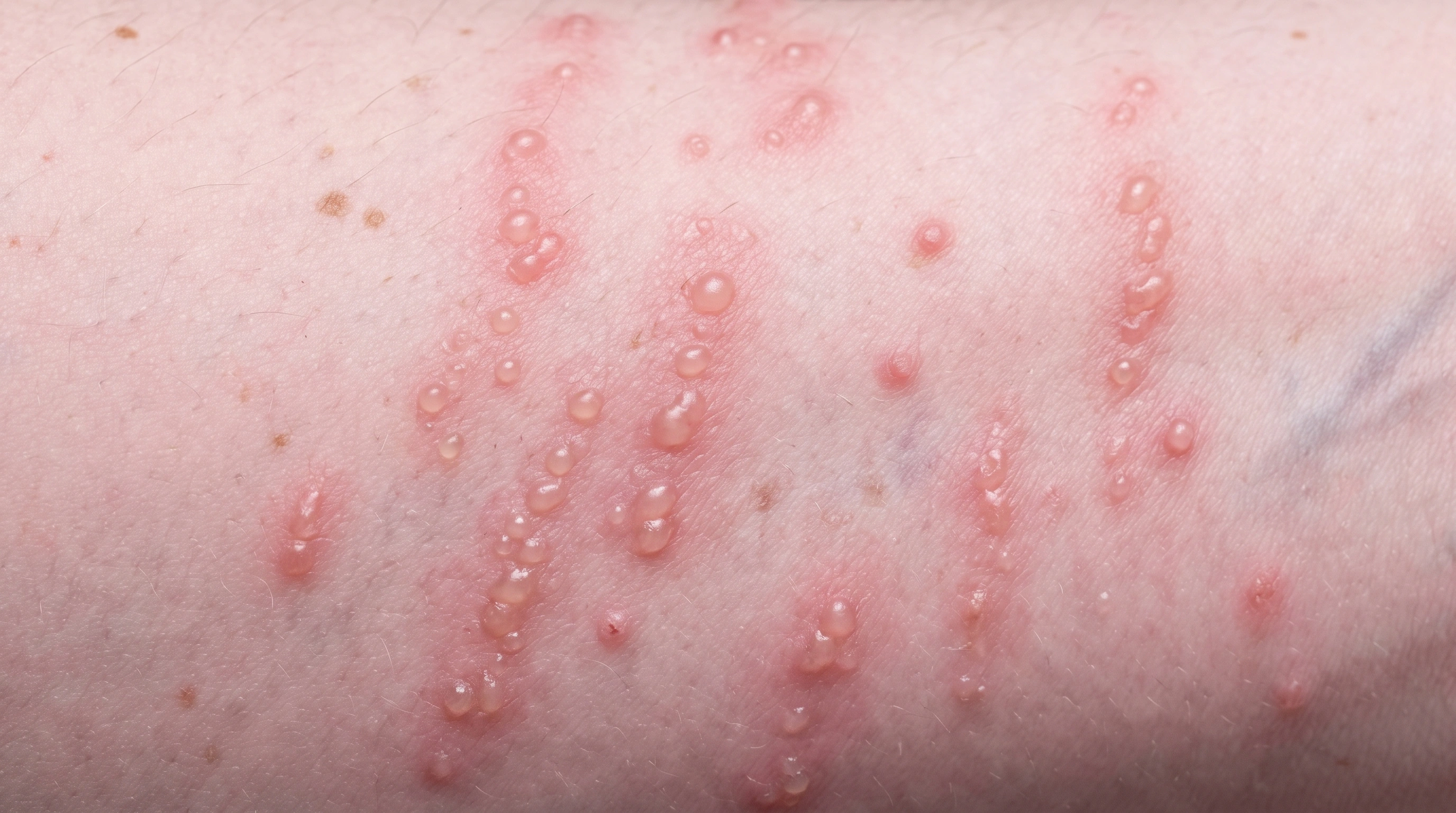
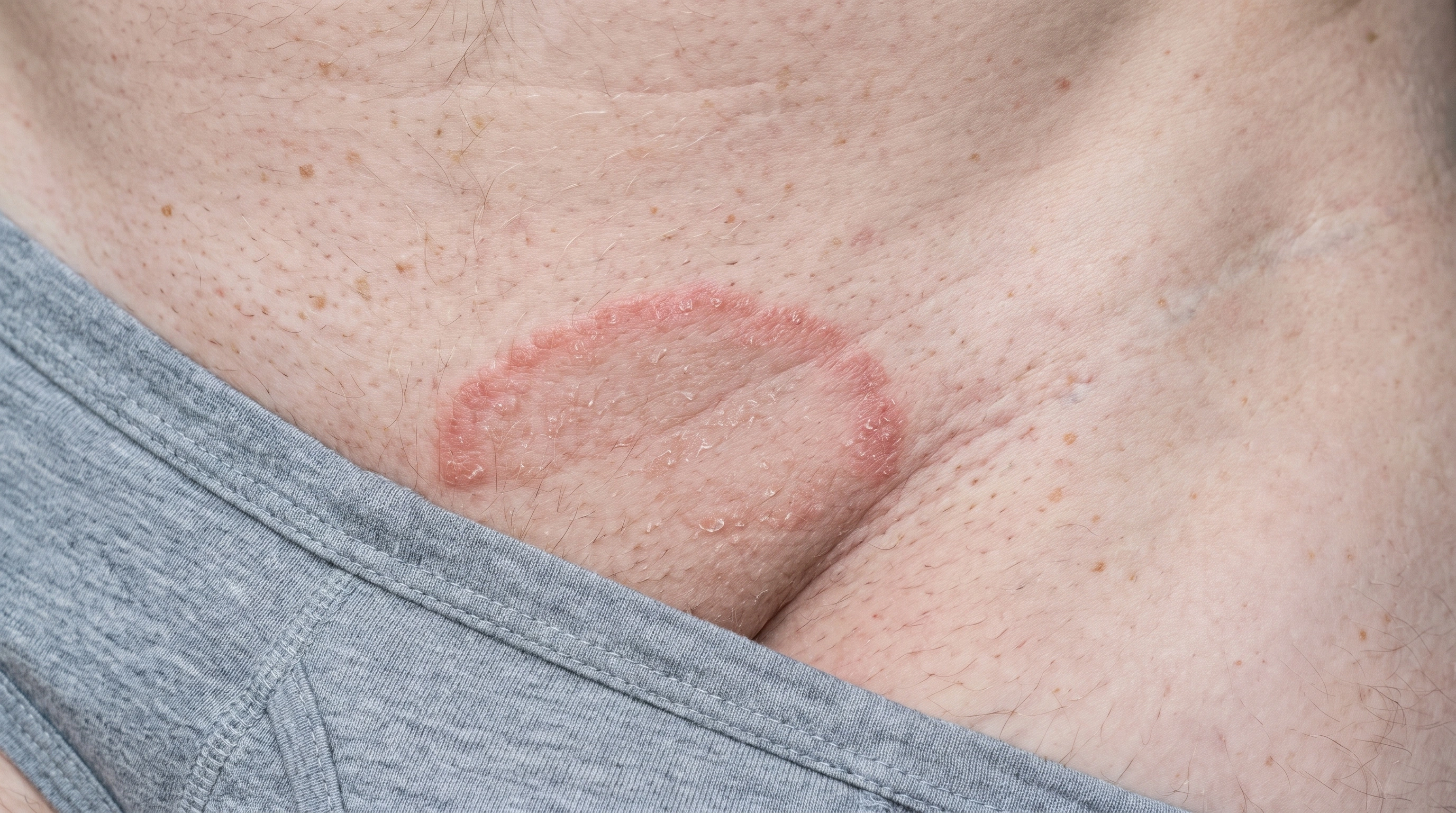
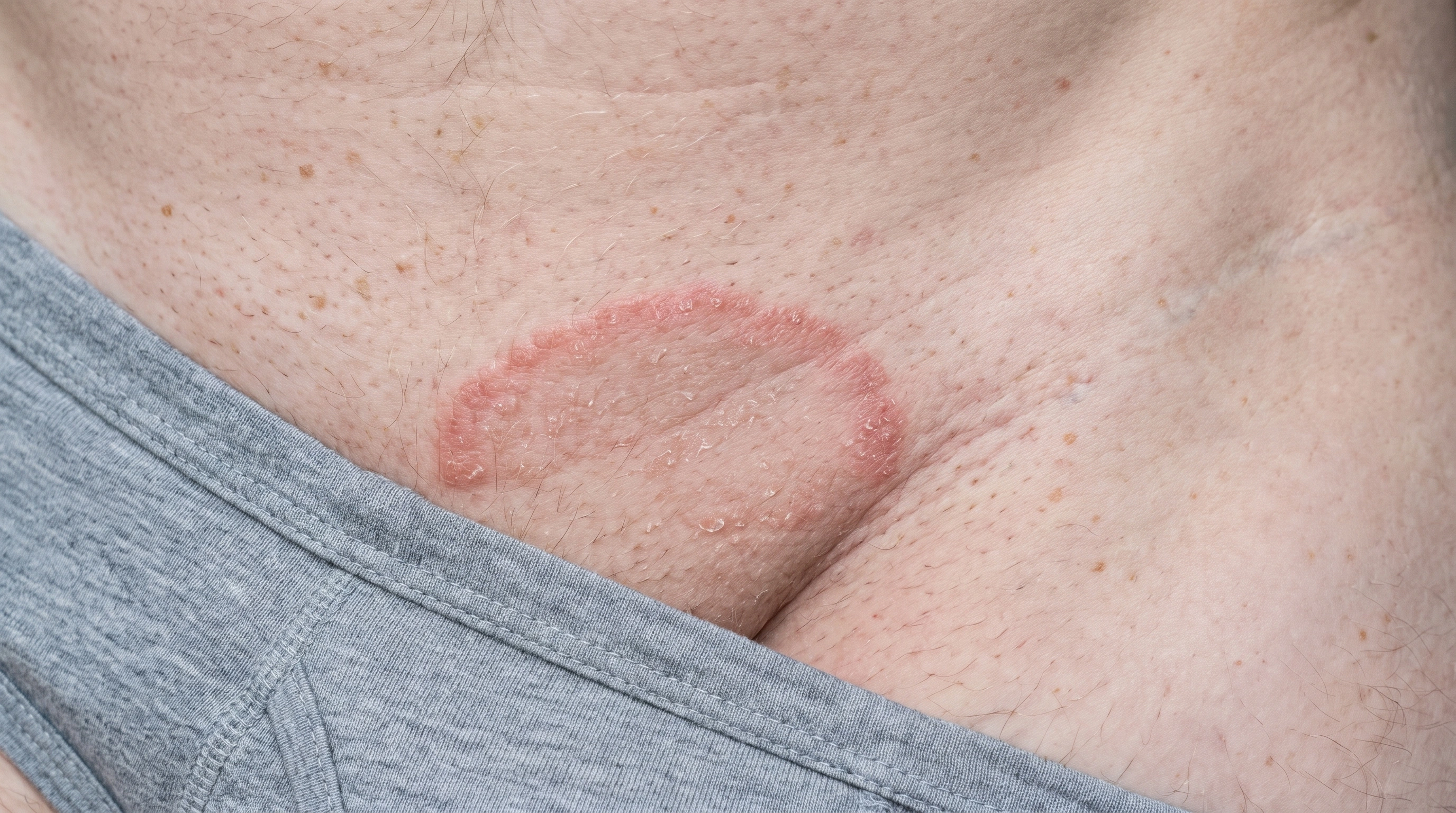
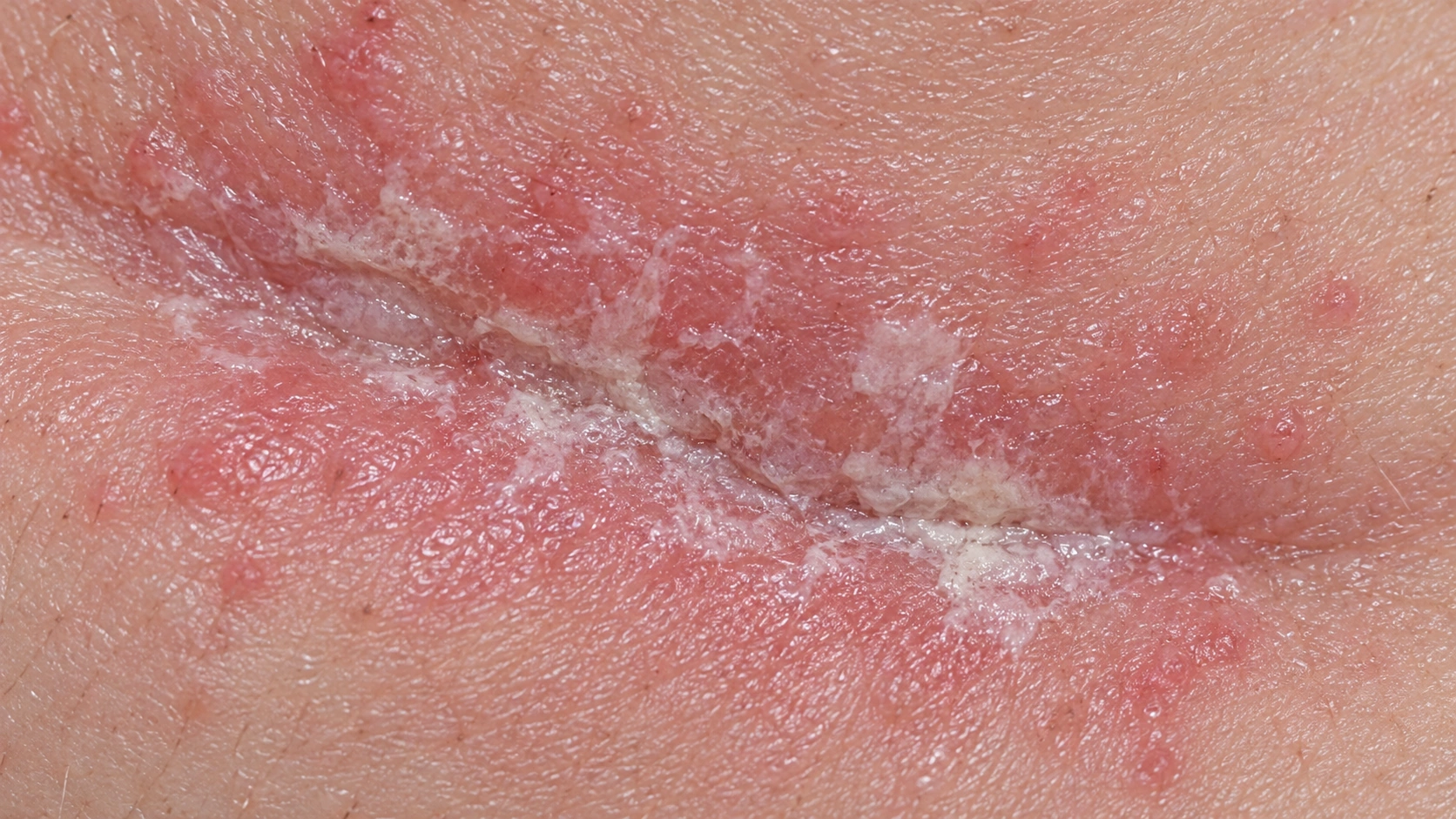
A rash spreading from a groin crease onto the inner thigh on light skin. The advancing edge is raised, scaly and clearly red, and the center is flatter and paler.intertrigo on light skin.

Key differences

The same eight facts on every condition comparison.

Usual age
After puberty
Any age
Where
Groin and inner thighs
Armpits, groin, under breasts, belly folds
Main sign
Itchy, scaly rash with a raised edge
Raw, red, moist fold rash
Itch or pain
Itchy
Sore, itchy
Contagious
Yes, mildly
No
Long term
Clears with cream; can return
Returns if folds stay damp
Scars
No
No
Who gets it
Men, athletes, athlete's foot
Heat, sweating, larger body size

What is it?

Jock Itch
Intertrigo
What is it?
  • It is a groin fungal infection.
    Tinea cruris begins in a fold and spreads with a scaly edge.
  • The scrotum is usually spared.
    Appearance alone is not reliable enough to self-diagnose.
  • It can spread from the feet.
    Infected feet, nails, towels and clothing can cause reinfection.
  • Not every fold rash is fungal.
    Candida, erythrasma, psoriasis and dermatitis need different care.
  • What it is
    Inflammation where opposing skin surfaces rub in a warm moist fold.

What it looks like

Jock Itch

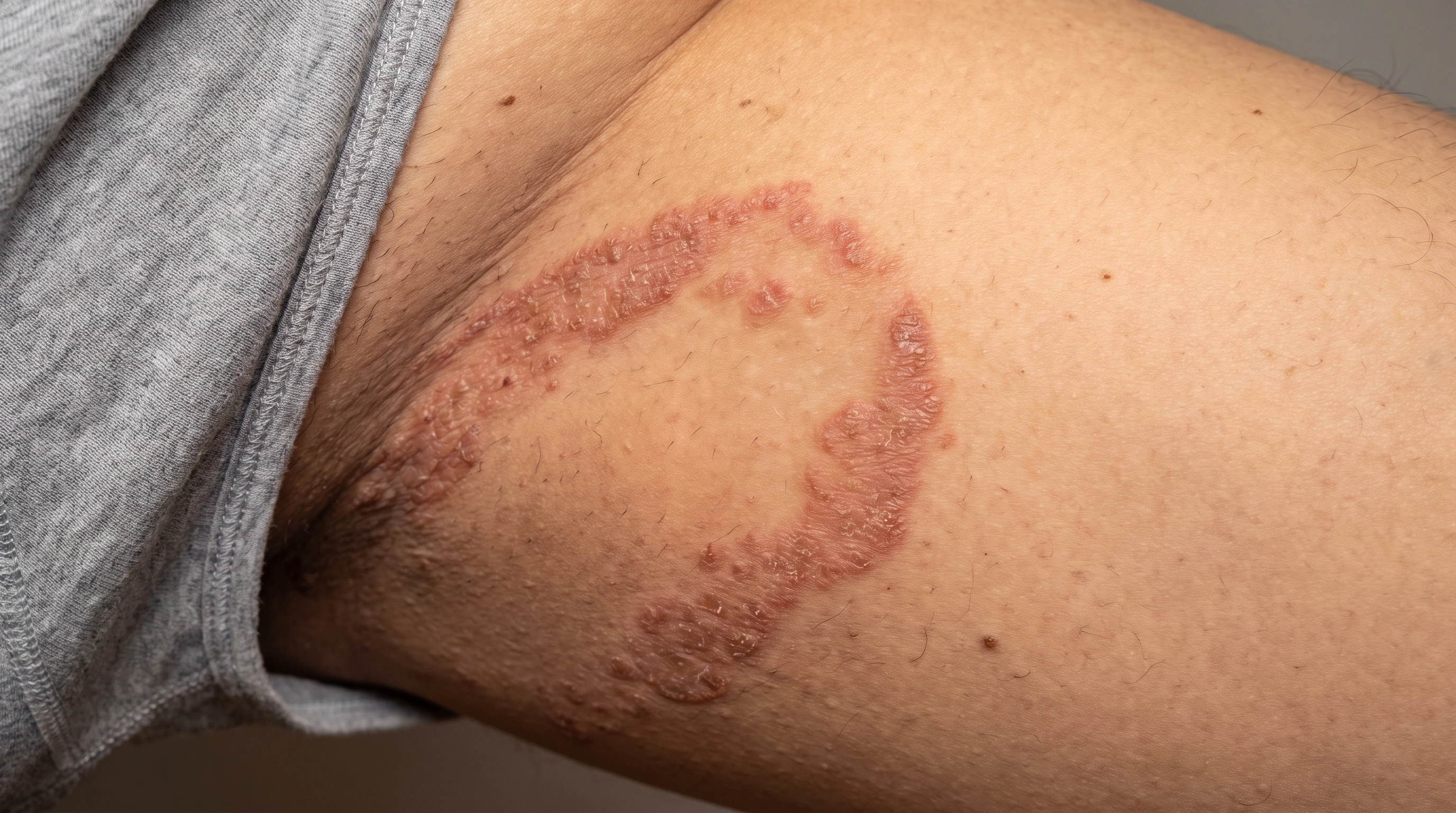
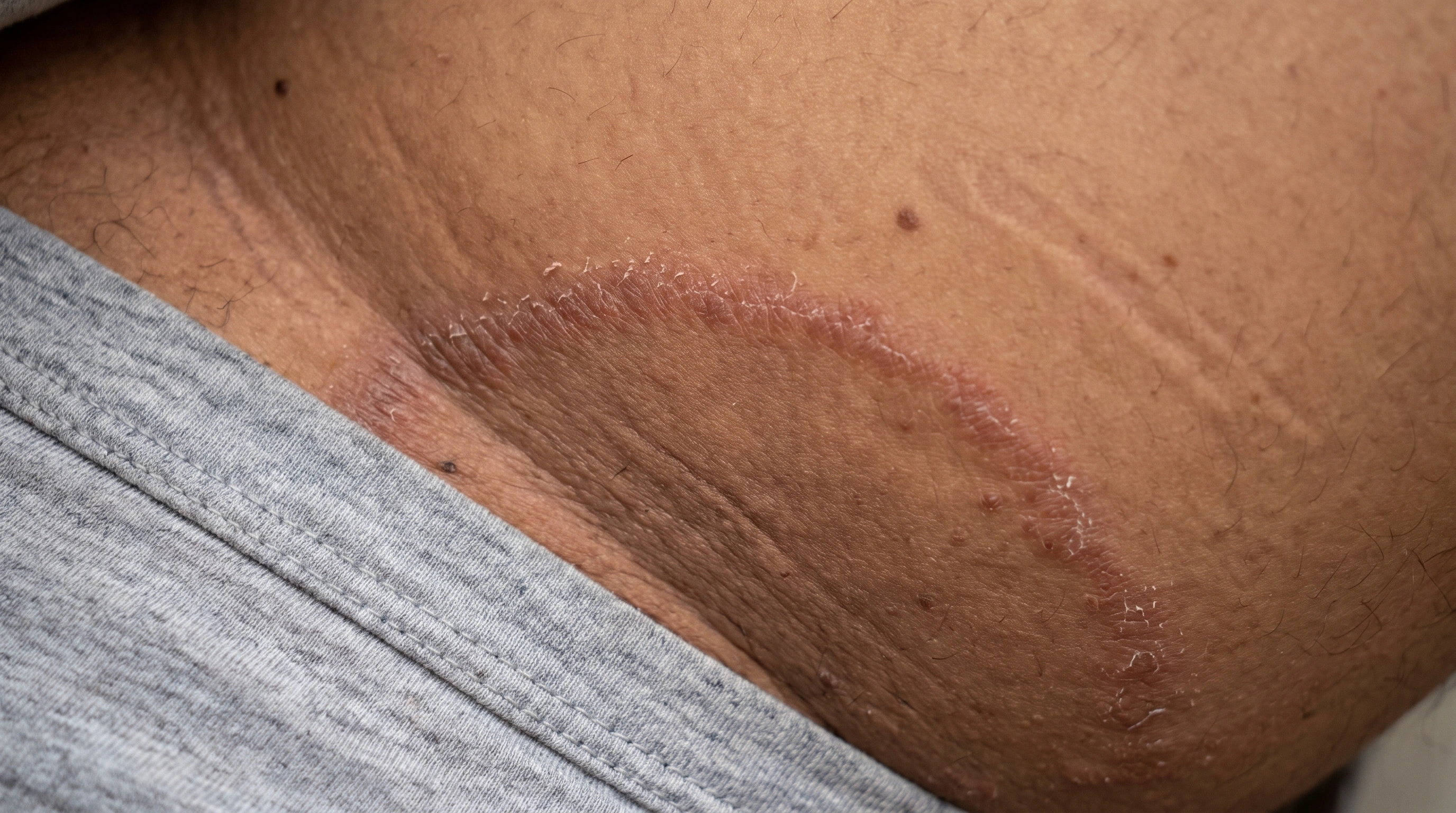
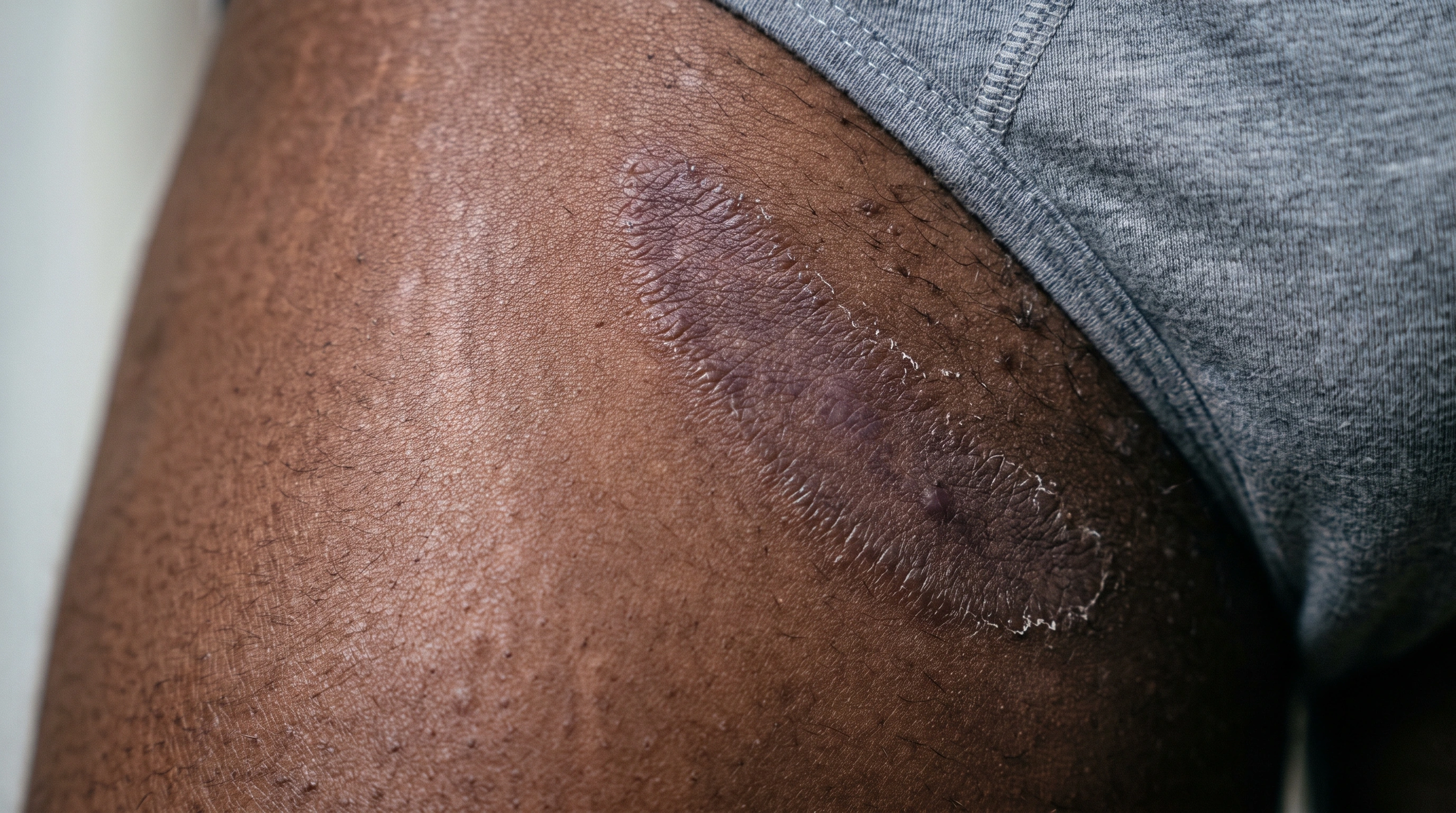
A spreading inner-thigh rash has a raised, scaly edge and a relatively clear center.

Raised scaly border A spreading inner-thigh rash has a raised, scaly edge and a relatively clear center.

Intertrigo

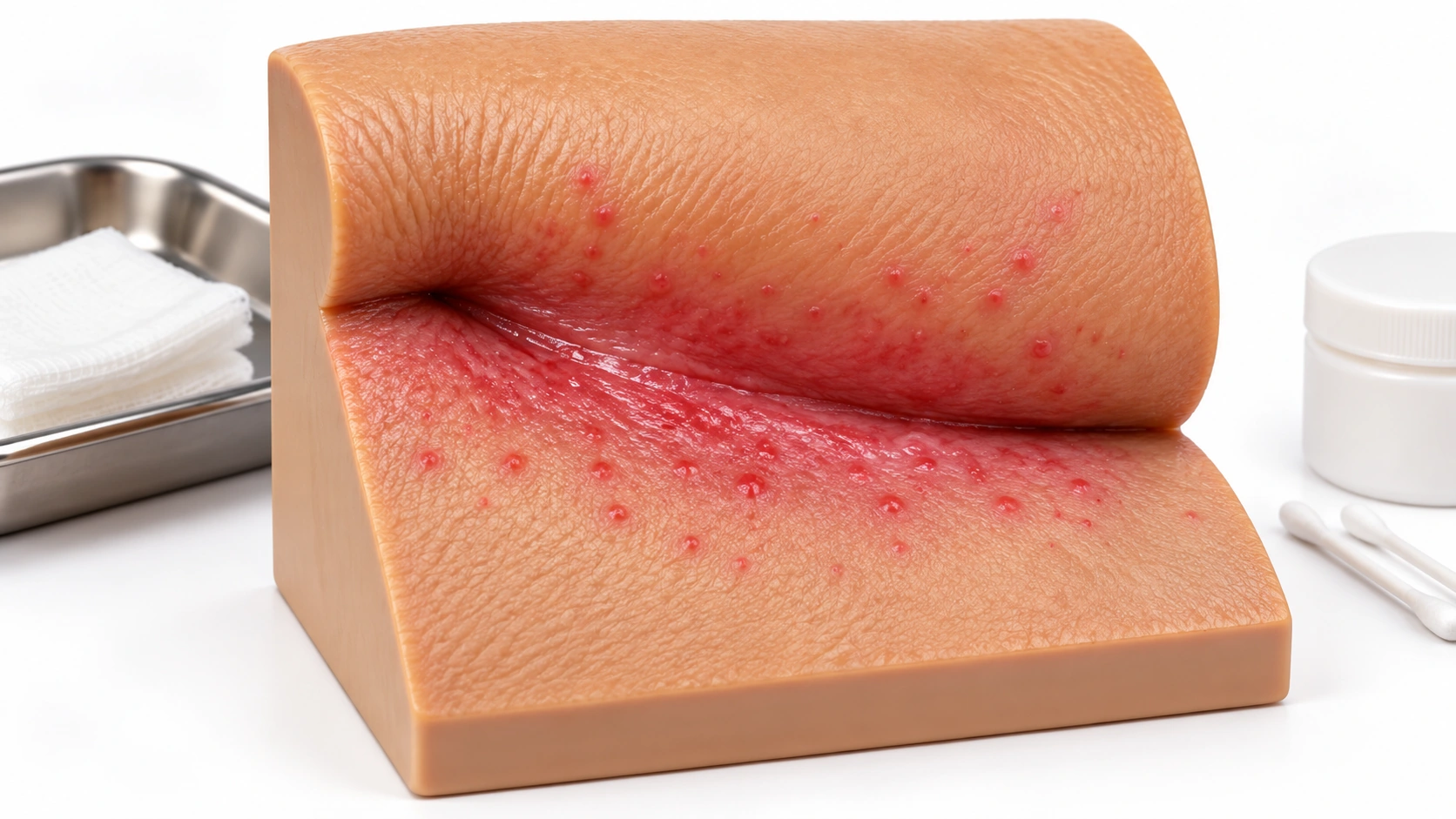
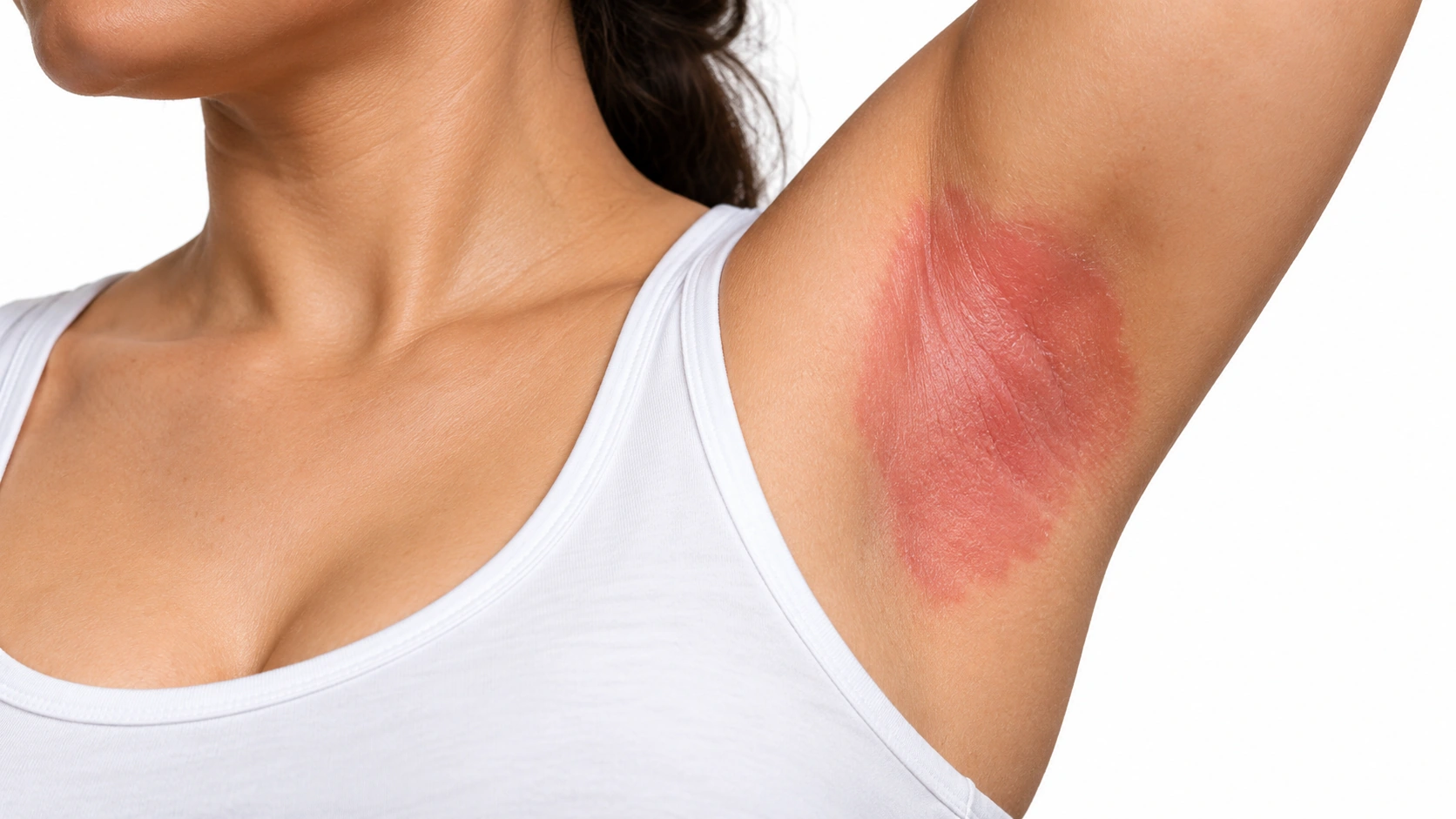
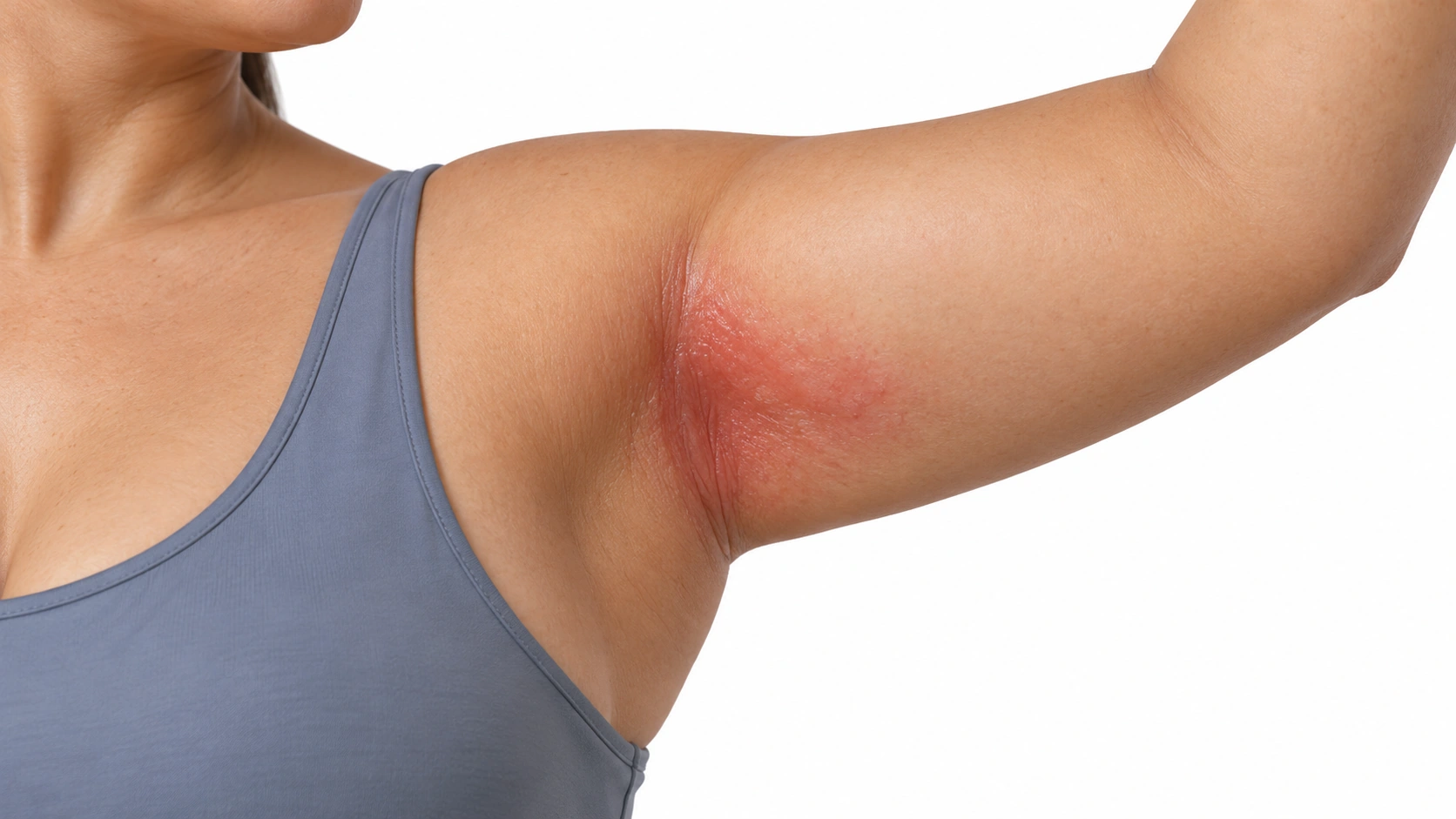
A raised arm revealing a red patch within the underarm fold.

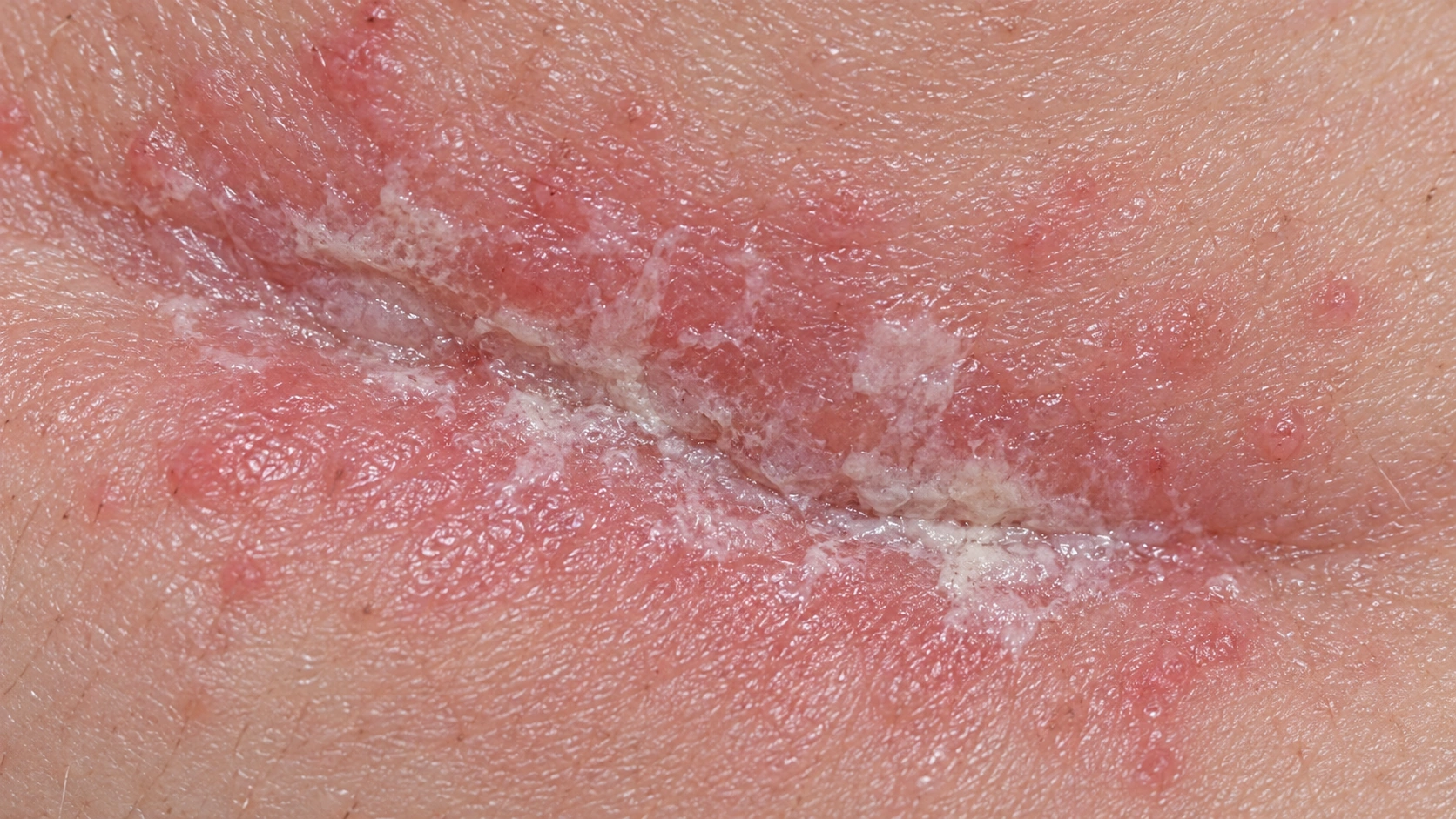
Intertrigo The irritated area follows the crease where skin surfaces meet.

Skin tones
A rash spreading from a groin crease onto the inner thigh on light skin. The advancing edge is raised, scaly and clearly red, and the center is flatter and paler.
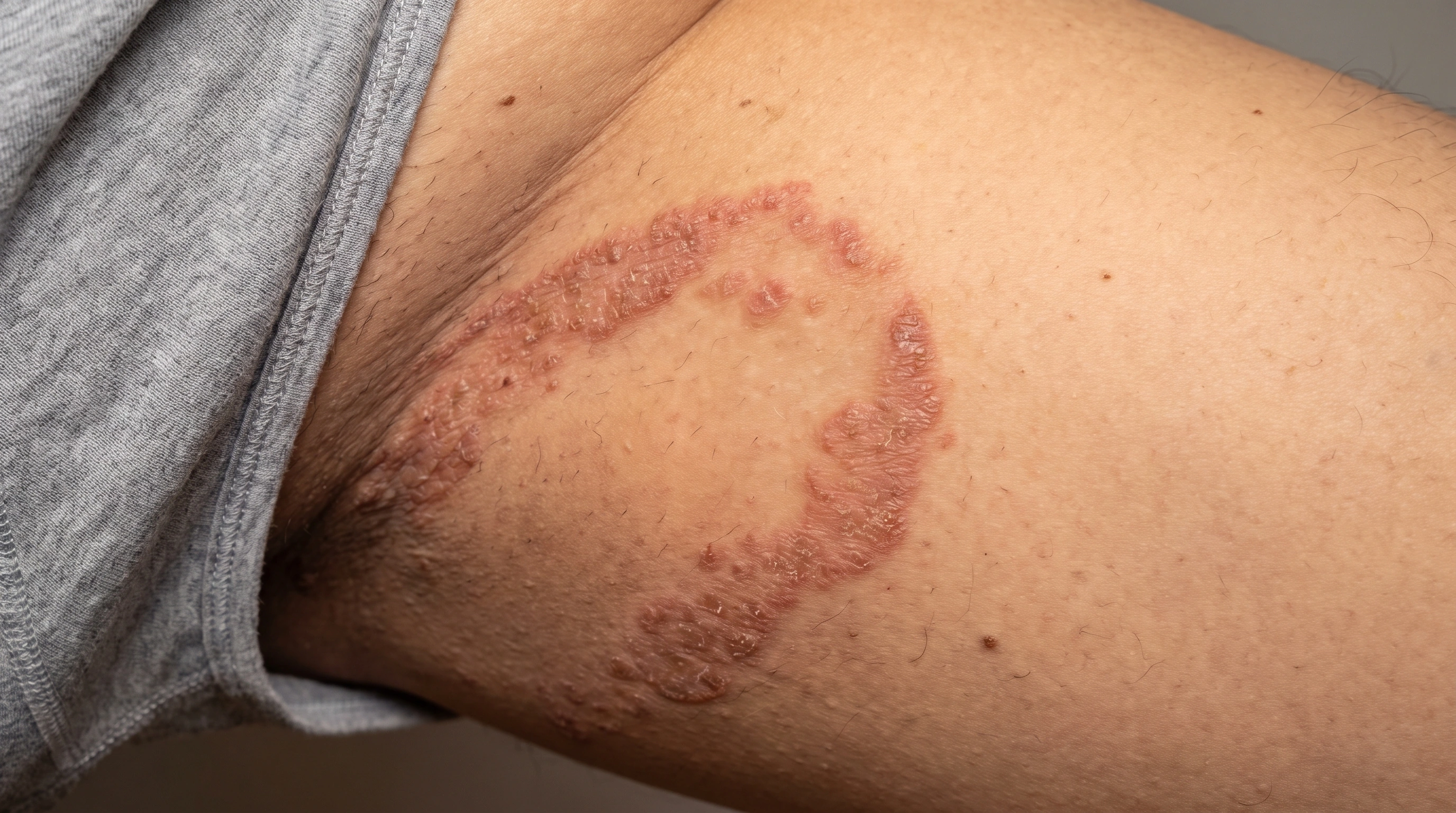
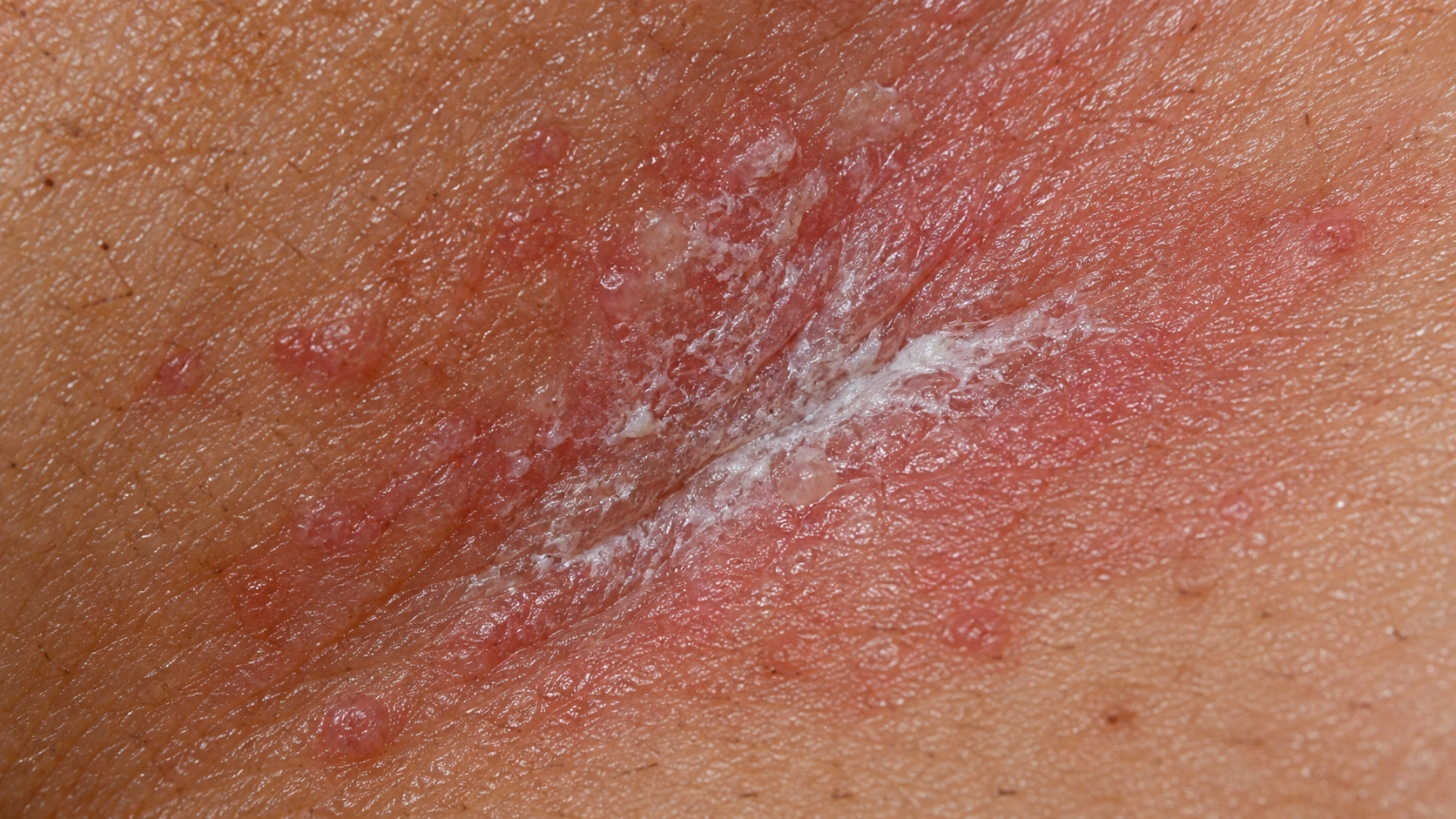
A rash spreading from a groin crease onto the inner thigh on medium olive-toned skin. The advancing edge is raised and scaly and reads dusky pink to tan, with a flatter center.
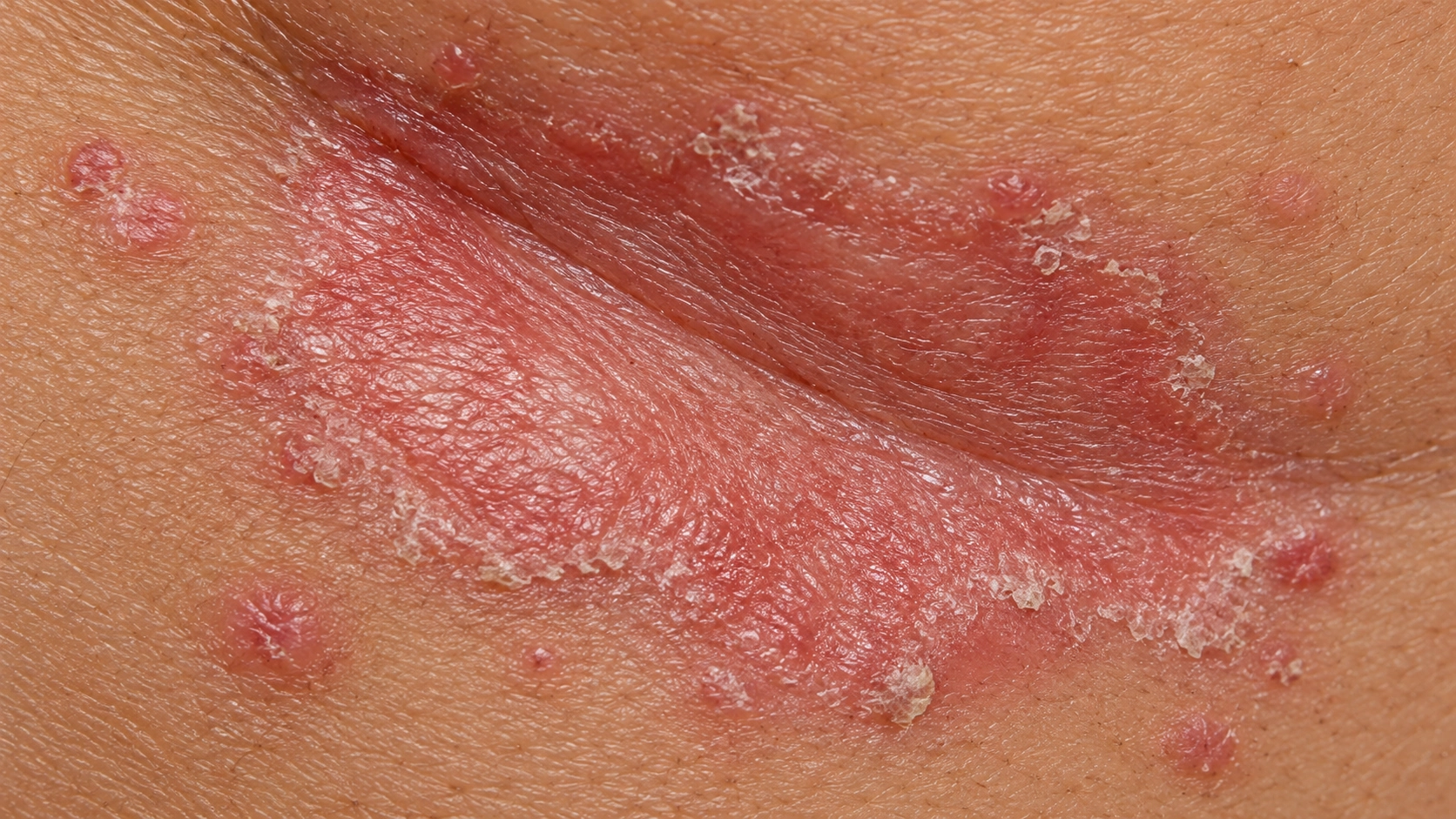
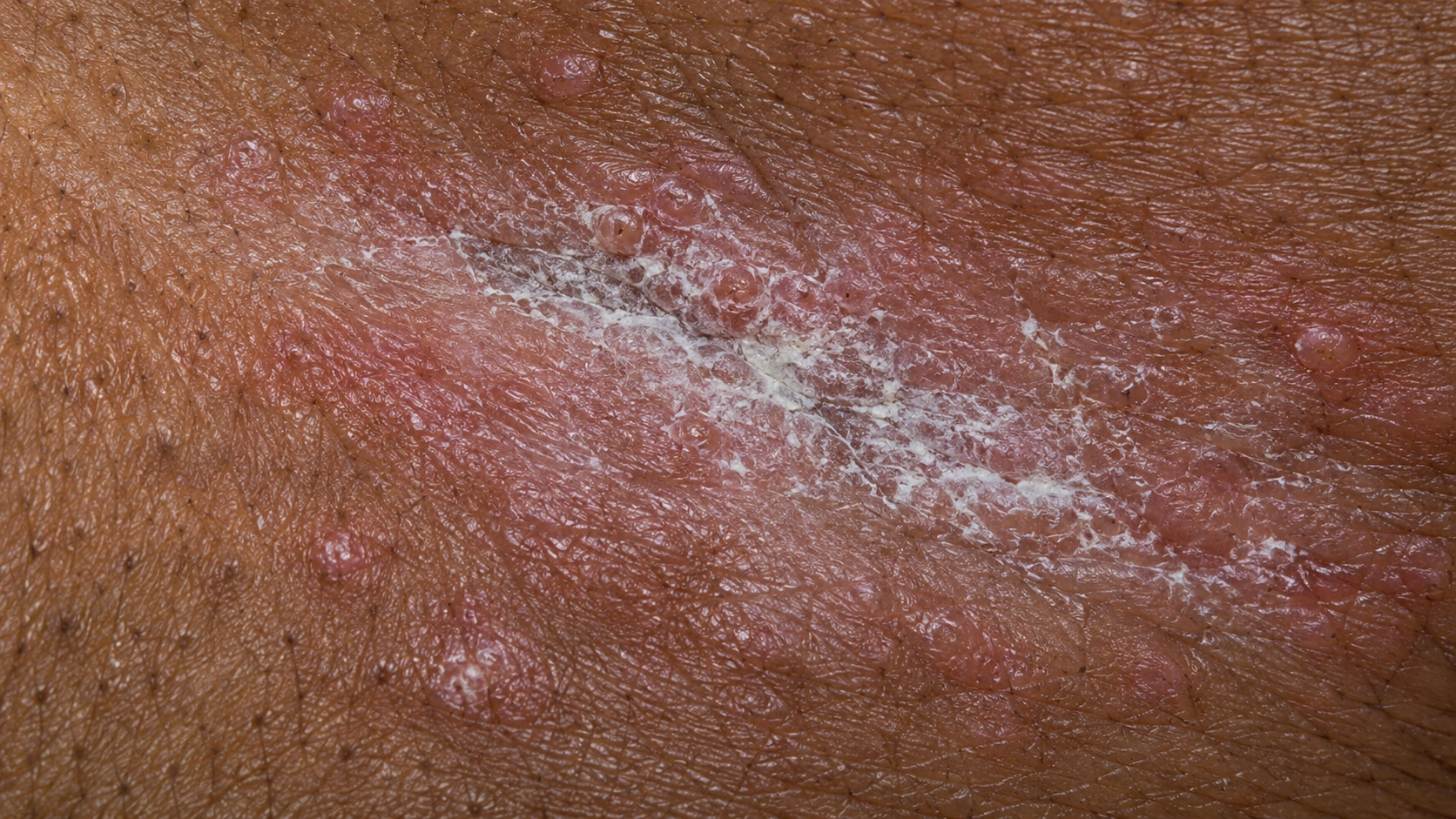
A rash spreading from a groin crease onto the inner thigh on brown skin. The advancing edge is raised, scaly and violet-brown rather than red, and the center is flatter and darker than the surrounding skin.
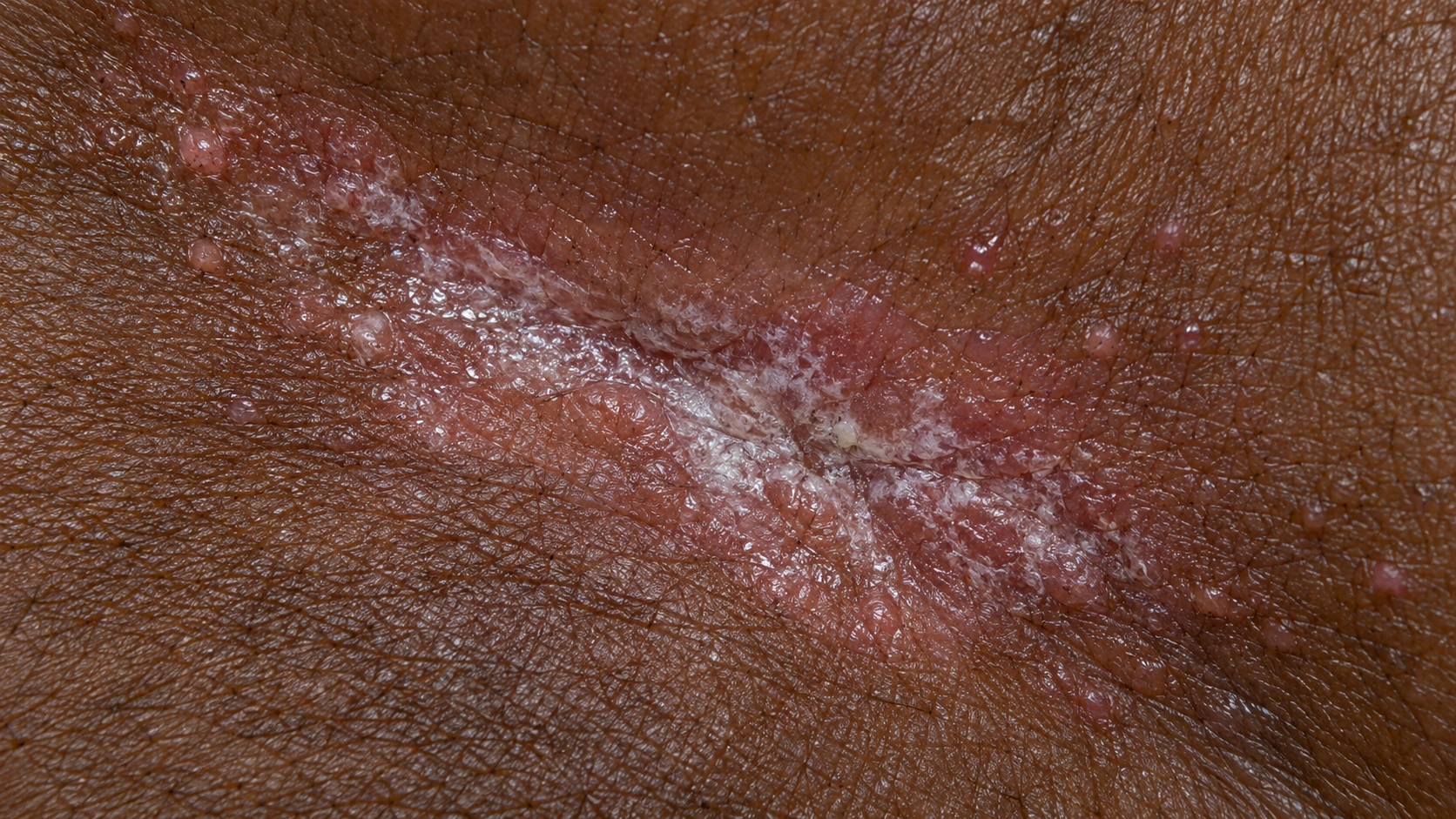
A rash spreading from a groin crease onto the inner thigh on deep brown skin. The advancing edge is raised and scaly and barely differs in color from the skin beside it, with a flat darker patch inside the ring where the rash has settled.
intertrigo on light skin.
intertrigo on medium skin.
intertrigo on brown skin.
Intertrigo.
Diagram
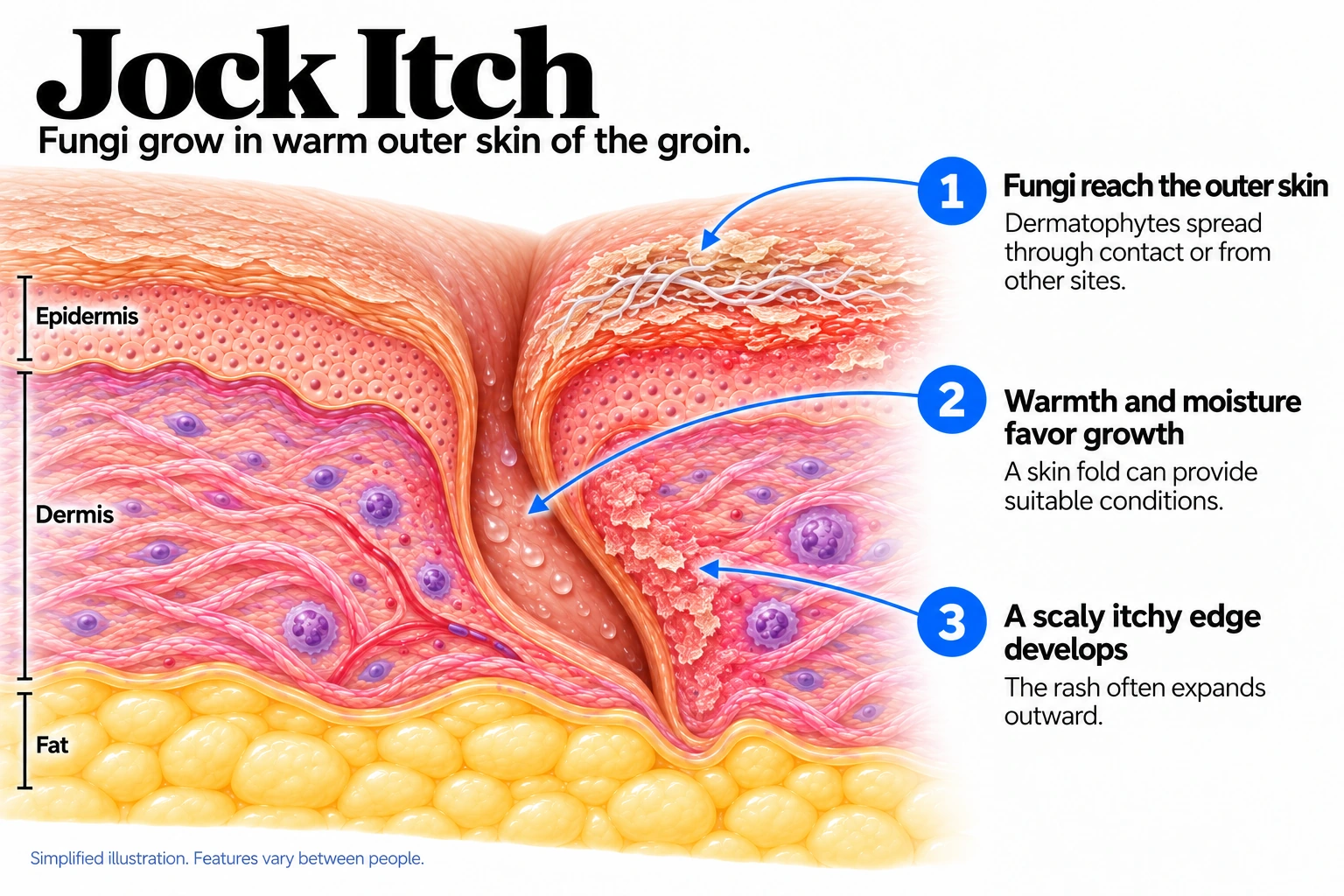
Jock Itch mechanism diagram. Fungi reach the outer skin: Dermatophytes spread through contact or from other sites. Warmth and moisture favor growth: A skin fold can provide suitable conditions. A scaly itchy edge develops: The rash often expands outward.
In the skin

Dermatophyte fungi grow in the keratin of the outer groin skin. Warmth and moisture favor growth, and an itchy, scaly border may spread outward.

Trapped moisture and friction weaken the barrier where skin surfaces rub together. The damaged fold becomes inflamed, and infection may sometimes develop alongside it.

When it usually starts

010203040506070+

Jock Itch. Usually occurs after puberty and is more common in adults with sweating or a fungal foot infection.

Intertrigo. Can occur whenever skin remains damp and occluded.

Causes and triggers

Causes

Jock itch is a fungal infection of the groin, usually from the same fungi that cause athlete's foot.

Moisture and friction damage the skin barrier in a warm enclosed area.

Risk factors
Male sex, Heavy sweating, Obesity, Athlete's foot
Moisture, Friction, Occlusion
How it spreads
  • Athlete's foot — Well established
  • Tight, damp clothing — Strong link
  • Shared towels — Strong link
Trigger
● Jock Itch
● Intertrigo
Sweating
Not listed
Can contribute
Friction
Not listed
Can contribute
Prolonged dampness
Not listed
Can contribute

Daily Care

Jock Itch
Intertrigo
Daily care

Habits that help

  • Socks before underwear
    No dragging over infected feet.
  • Dry the fold properly, before the feet
    Pat, do not rub, let it air.
  • Loose cotton underwear, changed daily
    And again after exercise.
  • Get out of damp kit and wet swimwear
    Shower, dry, change.
  • A plain, unfragranced drying powder
    Keeps it dry, clears nothing.
  • Wash towels, underwear and bedding hot
    Less fungus at home.
  • Treat beyond the visible edge
    About an inch - the fungus extends past it.
  • Treat your feet at the same time
    Otherwise the source is still there.
  • Reduce prolonged heat and dampness when possible
    Cases cluster in summer and humid climates.
  • Treat athlete's foot at the same time
    Most jock itch is the person's own foot fungus relocated, so treating the groin alone means the feet resupply it every time you get dressed. Use the same antifungal cream between the toes and over the soles for the full course, put socks on before underwear, and use a separate towel on your feet. If the toenails are thick and discolored, that is a longer job worth raising with a doctor.

Avoid

  • Avoid: Staying in damp kit after exercise
    A warm, wet fold for hours.
  • Avoid: Tight, non-breathable underwear
    Holds heat and sweat against skin.
  • Avoid: Scratching
    Breaks the skin and spreads the fungus.
  • Avoid: Harsh soaps, sprays and scrubbing
    They irritate inflamed skin.
  • Avoid: Putting underwear on before socks
    It drags fungus from feet to groin.
  • Avoid: Ignoring your feet
    Athlete's foot and toenails are the usual source.
  • Avoid: Sharing towels
    Or one towel for feet and groin.
  • Avoid: Wet swimwear left on for hours
    Same as damp kit, a summer classic.
  • Avoid: Stopping the cream when the itch stops
    The itch goes long before the fungus.
  • Avoid: Deep folds and skin rubbing on skin
    More heat, moisture, friction.
  • Avoid: Hydrocortisone
    On its own it is the wrong treatment. It takes the itch away in a day and suppresses the response that was holding the fungus in check, so the rash spreads and loses the clear edge that makes it recognizable. The same goes for combination steroid-antifungal creams. If the itch is genuinely unbearable, ask a doctor, who may add a mild steroid for a few days alongside a real antifungal as a deliberate short-term decision.
  • Avoid: Combination steroid-antifungal cream
    Widely prescribed for groin rashes and a common reason a straightforward one becomes stubborn. The steroid relieves the itch within a day and lets the fungus spread underneath, so the rash widens, fades and loses its edge. Used for weeks on thin groin skin it can also leave permanent stretch marks. A plain antifungal is the better choice here.

Habits that help

  • Clean skin folds gently and dry them completely
    Pat dry; a cool hairdryer held safely away can help with difficult-to-reach folds.
  • Change damp clothing and underwear promptly
    Choose loose, breathable fabrics to reduce heat and moisture.
  • Reduce rubbing between skin surfaces
    A soft, clean absorbent layer may help; replace it when damp.
  • Keep the area cool during activity
    Wash or rinse after heavy sweating and dry well afterwards.
  • Discuss cause-specific assessment
    Persistent disease may need treatment for yeast, bacteria or another fold disorder.

Avoid

  • Avoid: Vigorous scrubbing and fragranced products
    Irritation makes an already sore fold harder to heal.
  • Avoid: Treating every fold rash with a steroid alone
    Yeast or bacterial infection may need specific treatment and persistent rash needs assessment.

Treatment differences

Evidence labels come from each condition’s own treatment list.

Treatment
● Jock Itch
● Intertrigo
Treatment approach
—

Reduce moisture and friction while identifying any infection or other fold disorder. Antifungal, antibacterial or anti-inflammatory treatment should match the diagnosis; a steroid alone may be unsuitable.

Over-the-counter
Existing educational treatment illustration: Spinosad

Terbinafine cream

Strong evidence

Usually the fastest option here, about one to two weeks twice a day, because it kills the fungus rather than only stopping it growing. Take it an inch beyond the edge you can see, since the fungus reaches further than the rash does. Keep going for a week after it looks clear — stopping at the point it looks better is the single most common reason it comes straight back.


Clotrimazole or miconazole cream.

Clotrimazole or miconazole cream

Strong evidence

The azole creams, and the ones most pharmacies stock. They work as reliably as terbinafine for jock itch but usually need two to four weeks rather than one to two. Same rules: twice a day, an inch past the edge, and carry on for one to two weeks after it looks clear.

Existing Dermapedia illustration of antifungal powder.

Antifungal powder

Limited evidence

A plain unfragranced drying powder keeps the fold less hospitable and is genuinely useful for preventing the next episode, particularly in hot weather or heavy training. It is not a treatment for a rash that is already there, and using it instead of a cream is how a small patch becomes a large one.

Five dark glass tea tree essential oil bottles with glass droppers and one green box on white

Tea Tree Oil

Limited evidence

It has some antifungal activity in the laboratory, and it is often suggested for this. It has not been shown to clear tinea in the groin, it takes far longer than a proper antifungal even where it helps, and undiluted it irritates thin fold skin. Since a cream that works costs very little, this is not the place to experiment.

None listed
Prescription topicals
Ketoconazole — Header Image

Ketoconazole

Strong evidence

The prescription-strength azole cream, used once or twice a day for two to four weeks. It is the usual next step when a pharmacy cream has not cleared it, or when the rash is wide. It carries the same rule as the others: treat past the visible edge, and keep going after the skin looks normal.

Ciclopirox

Strong evidence

Ciclopirox cream. A different class of antifungal, useful when azole creams have irritated the skin or have not worked. It covers yeast as well as dermatophytes, which helps when it is not certain which of the two is in the fold. It usually needs a full four weeks.

None listed
Prescription pills
Terbinafine — Header Image

Terbinafine

Moderate evidence

Terbinafine tablets. Tablets for one to two weeks, used when the rash is extensive, has failed creams, or keeps returning within weeks of clearing. They reach fungus in areas a cream cannot cover reliably, including the feet and nails supplying it. Liver blood tests are sometimes checked first, and it interacts with a number of other medicines, so the full list matters. Ask your doctor if you are pregnant or breastfeeding.

Representative medication packaging labelled Itraconazole, lying sideways on a white background.

Itraconazole

Moderate evidence

A one to two week course, and the usual alternative when terbinafine does not suit. It works equally well for jock itch. It interacts with many common medicines, including some heart and cholesterol drugs, so your doctor will go through everything you take. Ask your doctor if you are pregnant or breastfeeding.

16:9 hero for Fluconazole. Never cropped: the tone strip and the corner logo depend on the full frame.

Fluconazole

Moderate evidence

A once-weekly tablet for two to four weeks, sometimes chosen because the schedule is easy to keep to. It works for jock itch but is generally a little less effective against these fungi than terbinafine or itraconazole. It is the more useful option when yeast is also in the picture. Ask your doctor if you are pregnant or breastfeeding.

None listed

Outlook

Long term

Jock itch generally improves with appropriate antifungal treatment, but it can persist or spread without treatment. Recurrence is possible when moisture or another fungal source remains. Persistent or uncertain rashes need reassessment rather than repeated steroid treatment.

Fold irritation can improve when moisture and friction are reduced and any infection is treated. It often returns if the same conditions persist, so prevention remains part of care.

Complications

Possible complications
  • A rash changed by steroid cream
  • Stretch marks and thinned skin
  • Infection from scratching
More details

A rash changed by steroid cream
A steroid cream, or a combination steroid-and-antifungal cream, takes the itch away in a day and lets the fungus spread underneath. The rash gets wider, loses its clear edge and becomes faint and hard to recognize, a state called tinea incognito. Rashes that have been through this take longer to sort out and often need a scraping to work out what is underneath. It is the single most common way a simple groin rash becomes a complicated one.

Stretch marks and thinned skin
Groin skin is thin, and weeks of a strong steroid cream on it can leave permanent stretch marks, thinning and visible small blood vessels. This is why a strong steroid, or a combination steroid-antifungal cream, is not the right treatment for a fungal rash in a fold. Unlike the rash, these changes do not go away once the cream stops.

Infection from scratching
Scratching a groin rash breaks the skin and lets bacteria in, so the area can become weepy, crusted, hot and much more painful than an ordinary fungal rash. It needs an antibiotic as well as the antifungal, and if redness is spreading outward with a fever it should be seen the same day. Keeping the nails short and treating the itch properly is what prevents it.

Damaged skin can develop secondary yeast or bacterial infection.

When to get help

When to get help

Seek care for an uncertain, painful, widespread or recurrent groin rash, or lack of response to antifungal treatment. Steroid cream alone may worsen ringworm.

Seek care for spreading pain, broken or weeping skin, fever or failure to improve.

Common questions

Jock Itch:Is jock itch a sexually transmitted infection?

No. It is a skin fungus, the same one that causes athlete's foot and ringworm, and usually it came from the person's own feet. It has nothing to do with sexual activity.

Jock Itch:Can I give it to my partner?

Possible but not common. It spreads through prolonged skin contact and shared towels, clothing and bedding. Your own towel, hot washes and proper treatment reduce that to very little. No need to avoid your partner during treatment.

Jock Itch:Why does it keep coming back?

Three usual reasons. You stopped the cream when the rash looked clear instead of one to two weeks later. Your feet keep resupplying it, particularly if the toenails are involved. Or the fold spends the day warm and damp. Working through those three beats switching antifungals.

Jock Itch:Can I use hydrocortisone on it?

On its own, no. Steroids relieve the itch and let the fungus spread, and groin skin is thin enough that weeks of a strong steroid can leave permanent stretch marks. The same goes for combination steroid-antifungal creams, a common reason a simple rash becomes a complicated one. If the itch is unbearable, ask a doctor - they may add a mild steroid for a few days alongside the antifungal, as a short-term measure.

Jock Itch:Should I shave the area?

It makes no difference to the infection, and shaving inflamed skin adds cuts, irritation and a risk of bacterial infection. If you normally shave, leave it until the rash has settled.

Jock Itch:Why is the skin still darker after the rash cleared?

Inflammation in a skin fold commonly leaves a flat darker mark, especially on deeper skin tones, and it can take many months to fade. With no scaling and no itching, the infection is gone and what remains is a mark. Antifungal cream will not lift it, and skin-lightening creams sold for the groin often contain strong steroids that harm thin skin.

Intertrigo:What is Intertrigo?

Inflammation where opposing skin surfaces rub in a warm moist fold.

Intertrigo:What can I do day to day?

Clean gently, pat dry and reduce moisture and rubbing.

Intertrigo:When should I get medical advice?

Seek care for spreading pain, broken or weeping skin, fever or failure to improve.

Sources

Sources and further reading

  1. DermNet
  2. Intertrigo
Dermapedia on YouTube