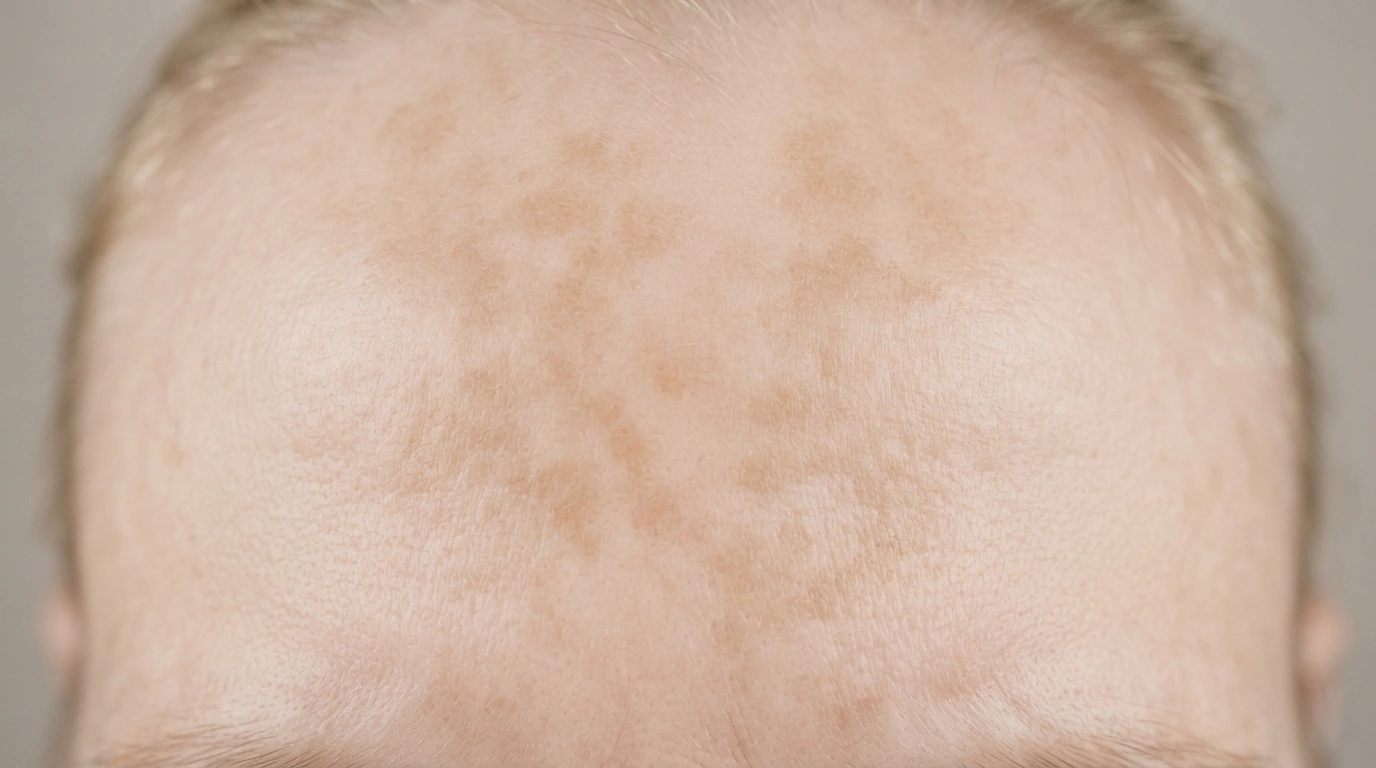
Melasma
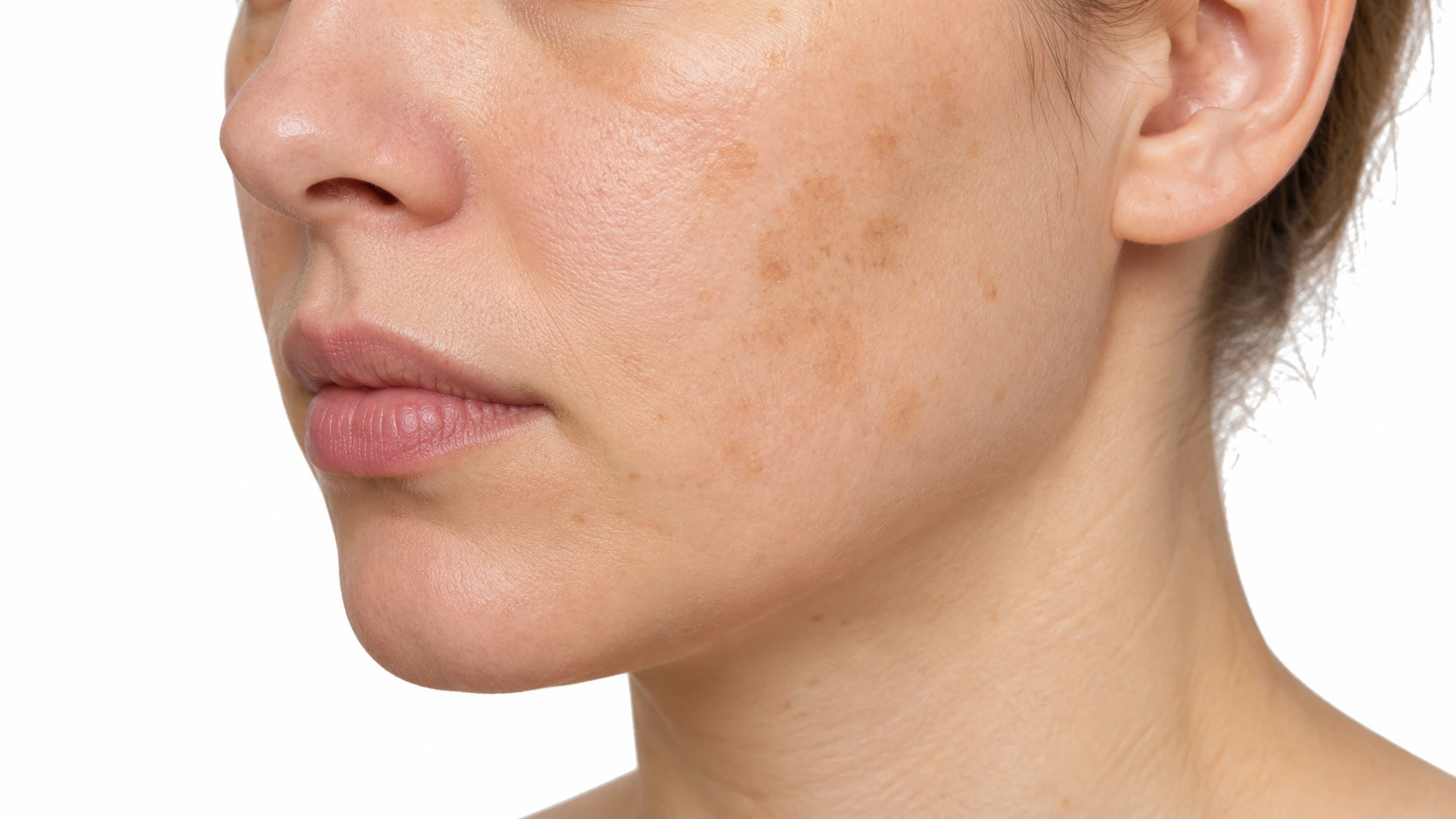
A first-line treatment for patches.
Hydroquinone 4%: The prescription strength of the best-studied pigment cream. It works, but it is used in courses of a few months with breaks in between, because the problems come from long unbroken use rather than from the strength. Tretinoin: A prescription vitamin A cream or gel for acne. It works underneath the skin, on the plug that forms weeks before a pimple appears.
Choose for melasma or stubborn dark marks as a time-limited course of the best-studied pigment cream — with daily sunscreen.
Choose for acne or sun-aged skin as the classic, well-studied prescription retinoid — cheap as a generic.
Can you take them together?
A classic pairing for melasma, also sold in one triple cream. Tretinoin helps hydroquinone work, but together they can irritate. Use daily sunscreen and limit hydroquinone to the course your doctor sets.
Compare uses by strength of evidence. Evidence level describes confidence in a benefit, not its size.



Inhibits tyrosinase: Interferes with an enzyme used to make melanin. Reduces new pigment: Melanocytes produce less new melanin. Lets dark patches fade: Existing pigment clears as skin renews.
Hydroquinone inhibits tyrosine oxidation and other melanocyte metabolic processes. The diagram summarizes reduced pigment production and gradual clearance, not destruction of pigment cells or a permanent cure.

Unclogs pores: Reduces dead-cell buildup inside follicles. Helps fade dark marks: Helps clear pigment-containing cells as skin renews. Builds collagen: Helps fibroblasts produce new collagen. Reduces collagen breakdown: Reduces signals that increase collagen-cutting enzymes.
Conceptual illustration of the main skin effects, not every molecular pathway. Pigment clearance with epidermal renewal is a simplified mechanism; the exact pigment effects are not fully settled. Collagenase pathway evidence includes UV-challenge studies. Changes develop gradually with continued use.
When to Apply: At night, on clean dry skin, a thin layer on the dark patches only, not the whole face. Sunscreen every morning is part of the treatment; a tinted mineral sunscreen also covers visible light, which matters in melasma.
How to Start: Every other night for the first week or two, then nightly if tolerated. Treat three to four months, break two to three months, and hold the result with something gentler such as azelaic acid, a retinoid, niacinamide or tranexamic acid, before another course if needed.
If It Irritates: Mild redness, stinging and dryness early on are common. Buffer with moisturizer underneath, or drop to every third night. Stop and ask if you get a spreading itchy rash, which can be an allergy, or if the area becomes inflamed, since inflammation darkens skin prone to pigment.
If It’s Not Working: Three months of steady use with daily sunscreen is a fair test. A stronger cream is not the answer. Check the sunscreen, then ask about tranexamic acid tablets or procedures. Melasma driven by heat, hormones and light often needs more than a cream.
When to Apply: At night only, on clean dry skin. Wash, dry fully, then spread a pea-sized amount over the whole face — not just the spots. Moisturizer before or after, either way.
How to Start: Every other night for two to four weeks. Go nightly once you have had two weeks with no stinging or flaking.
If It Irritates: Drop to every second or third night, or put moisturizer on first and the tretinoin on top. Either works.
If It’s Not Working: Give it twelve weeks before judging. If acne has stalled, ask your doctor about a higher strength or a second treatment.
No blood tests. Monitoring here means looking at the skin.
The check that matters comes at three to four months, at the end of a course: has the pigment lightened, and is there any new discoloration.
The thing being watched for is exogenous ochronosis, a blue-black, gray or sooty darkening in the treated area, sometimes with tiny gritty bumps. It is uncommon, reported most often after long unbroken use, at higher strengths, and in deeper skin tones. Any darkening during treatment should be shown to a doctor, not treated with more cream.
With a triple combination cream, the steroid is the other reason for an end date. Steroids thin facial skin over time and can leave redness and small visible blood vessels.
No blood tests and no routine labs. Monitoring is a visit at about twelve weeks — is it working, should the strength change?
People stay on this for years, and nothing builds up. Skin usually becomes less irritated over time, not more, so a strength that was impossible at the start may be comfortable a year in. Once you are stable, a yearly review is enough.
Approximate windows, not promises.
First few minutesApplying it: A thin layer on the dark patches only, at night. Mild stinging is common at first.
First few minutesApplying it: A pea-sized amount on dry skin at night. Stinging is common early.
Weeks 1 to 2Adjusting: Mild redness, stinging and dryness. No lightening yet.
Weeks 4 to 8Working: The patches lighten, usually unevenly and at the edges first. Brown marks from spots or injury clear fastest.
Weeks 4 to 8Sun spots: Sooner than most expect. Dark patches lighten within a month or two and keep fading; in one ten-month trial, 83 percent had lighter spots by the end.
Weeks 12 to 16Judge it here: The fair point to assess a course, and your sunscreen habit as much as the cream. Melasma lightens, but it returns without sun protection.
After the courseHolding: Two to three months off with a gentler agent holding the result, then decide about another course.
Weeks 1 to 3Adjusting: Dryness, flaking and stinging peak around week three. This is retinization, and the acne looks much the same.
Weeks 3 to 12Settling: Irritation settles and the first real results show.
Weeks 8 to 12Judge it here for acne: Blackheads and whiteheads go first; red inflamed spots take longer. If nothing has changed after twelve weeks, change the strength or the plan.
Months 3 to 6Fine lines: They soften gradually with nightly use.
Sorted by what to do about them.
Generic 4% hydroquinone cream is usually inexpensive. Triple combination creams cost more, and compounded formulas are the most expensive and are rarely covered, since compounded products usually sit outside insurance formularies.
Because pigment treatment is often classed as cosmetic, coverage is inconsistent even for the plain cream and varies a lot between plans.
The cost is ongoing rather than one-off. Daily sunscreen and the gentler cream used between courses are part of the plan.
Generic tretinoin cream and gel are widely available and usually the cheapest prescription retinoid. What costs money is the newer vehicles — branded lotions, microsphere gels and combination creams often need prior authorization and can cost many times a plain generic tube.
Adapalene is a related retinoid sold without a prescription and a reasonable substitute if cost is the barrier. It is gentler, it is stable alongside benzoyl peroxide by design, and the guidelines grade the two in the same band.
There is no over-the-counter version in the United States any more. Until 2020, 2% could be sold without one. Four percent is the usual prescription strength, and Dermapedia covers hydroquinone as an ingredient separately.
Courses of three to four months, with a break of two to three months between. Continuous use over years causes the problems, more than the strength.
A blue-black, gray or sooty darkening of the treated skin, sometimes with tiny gritty bumps, from long-term use. Uncommon, hard to treat, and reported most after long unbroken courses at higher strengths. It is why courses have end dates.
Melasma usually does, because hydroquinone suppresses pigment production rather than removing the cells that make it. Marks left by acne often stay faded. Sun protection and a gentler maintenance cream hold the result.
Yes. Ultraviolet and visible light drive the pigment the cream is suppressing. Tinted mineral sunscreen also blocks some visible light, which matters in melasma.
It is used on all skin tones, and much of the melasma evidence comes from people with deeper skin tones. Two cautions: ochronosis is reported more often in deeper skin tones, and irritation can leave a new dark mark. Short courses and a doctor watching the skin handle that.
No, and it is the most repeated claim about the drug. A review hunting for trial data on retinoid-induced flares found none — acne improved even in the first couple of weeks. What does happen is irritation — dryness, flaking and redness peaking around week three and settling by week twelve. That can make your face look angrier without new spots. Lesions genuinely worse at week six are information, not a phase to endure.
No. It prevents the next spot rather than treating today's, so it goes on the whole area that breaks out.
No. Plenty of people stop peeling by week four and keep clearing. Chasing peeling is how people end up on a strength they cannot stay on.
The opposite, over time. It briefly thins the dead surface layer, which is why skin feels smoother and burns more easily early on. Underneath it thickens the living layer and increases collagen — measured on biopsy.
Your skin is more sun-sensitive on it, and daylight destroys the drug. After eight hours of UVA a conventional gel lost about 72% of its tretinoin and a micronized one lost about 9%.
Usually yes. The warning comes from a lab test, not from patients — tested properly, the two in one routine worked as well as spacing them apart, and there is now an approved single cream containing both. With a plain older gel, use one in the morning and the other at night.
It is not recommended in pregnancy, and it is not oral isotretinoin — the two get confused constantly. Published data on topical tretinoin do not show more birth defects, and the newest FDA labels say no drug-associated risk has been established. There is real reassurance if you used it before you knew. Stop once you know, and speak to the doctor managing your pregnancy.