Hidradenitis Suppurativa vs Folliculitis

Hidradenitis suppurativa is a long-term inflammatory condition that causes painful lumps, abscesses and tunnels in the armpits, groin and under the breasts. It is not an infection and it is not caused by poor hygiene, and treating it early is what prevents the scarring.

Reviewed by Dr. Schwarz, Board-Certified Dermatologist · Research updated 2026-10-23
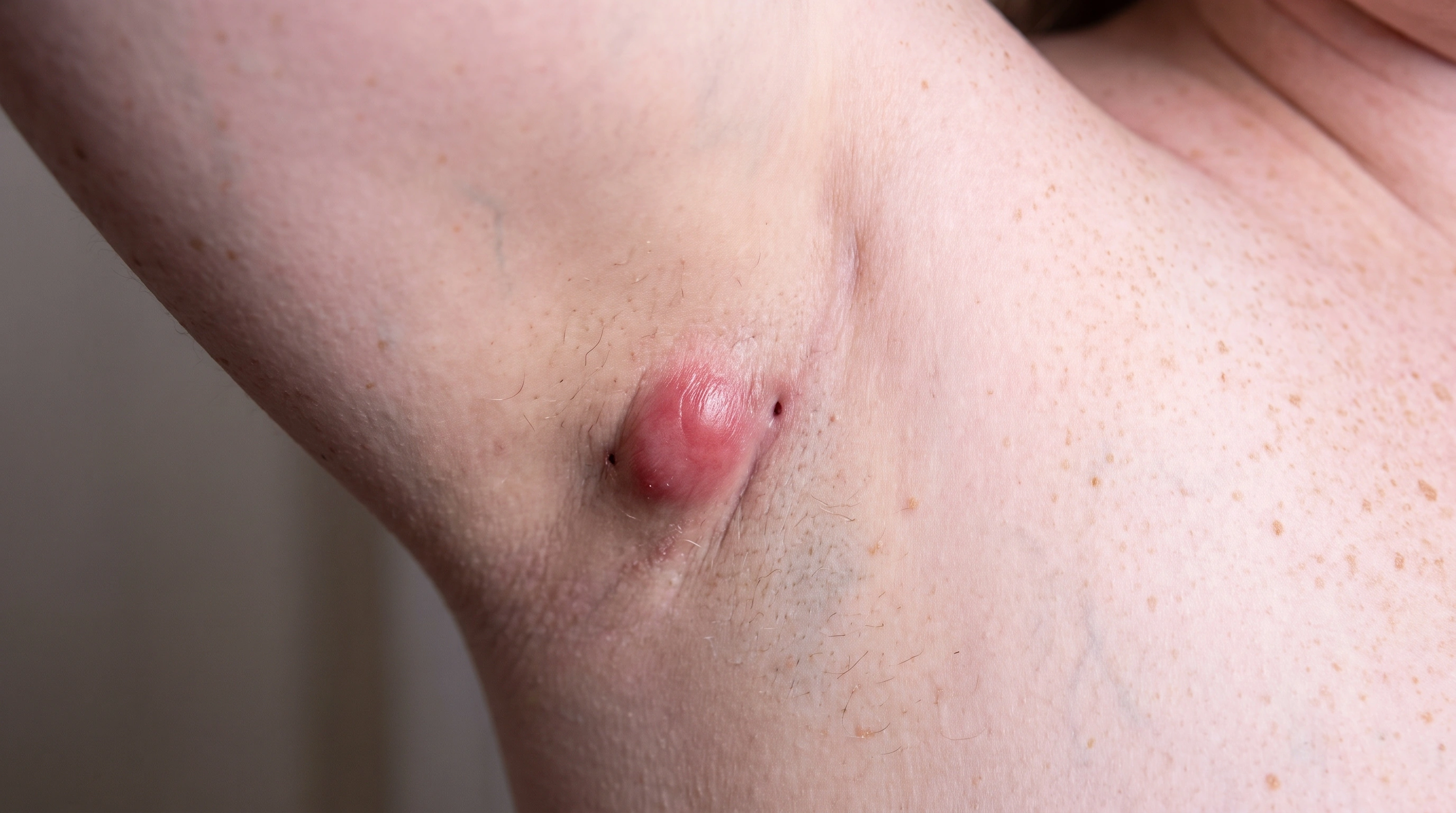
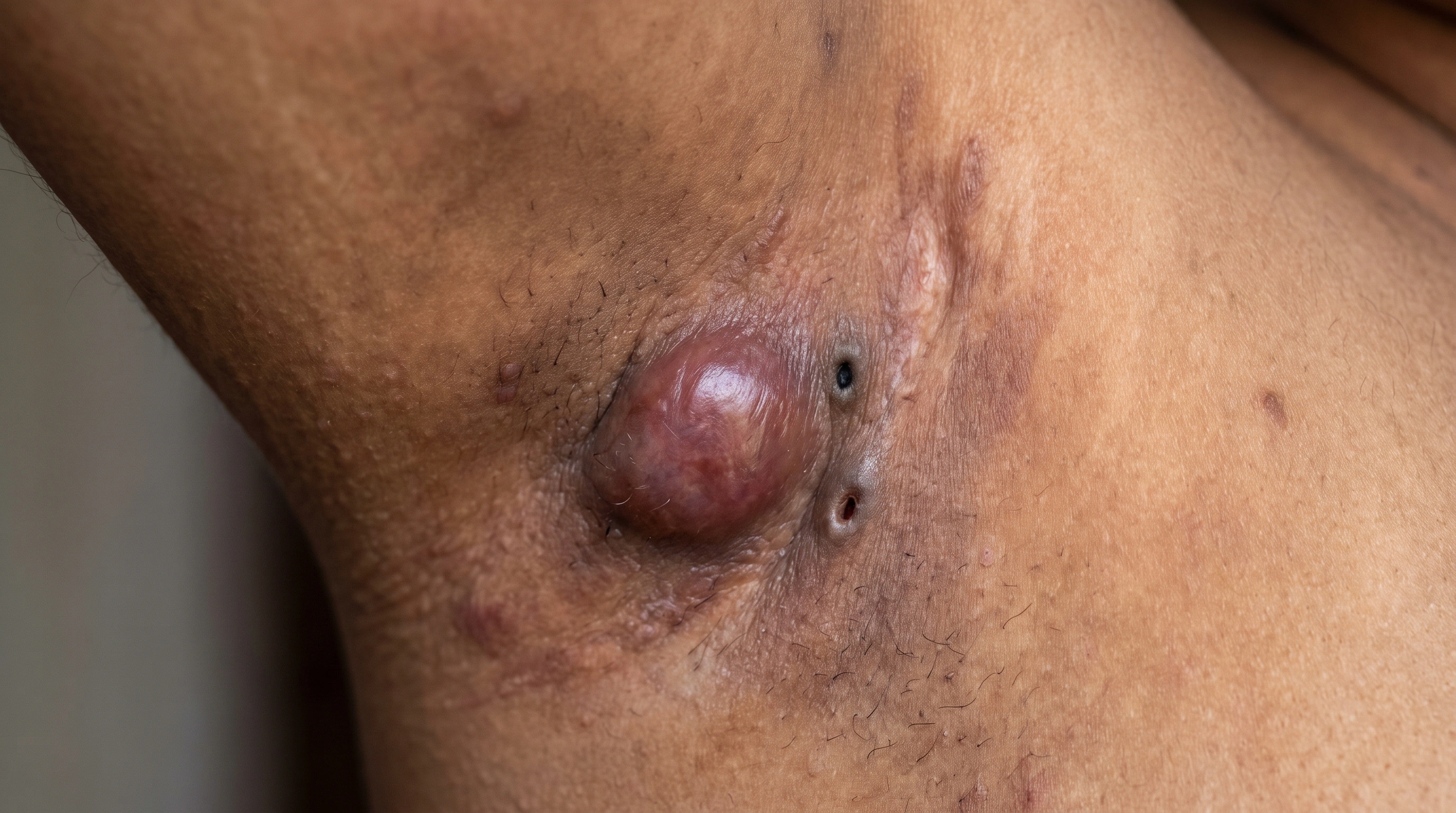
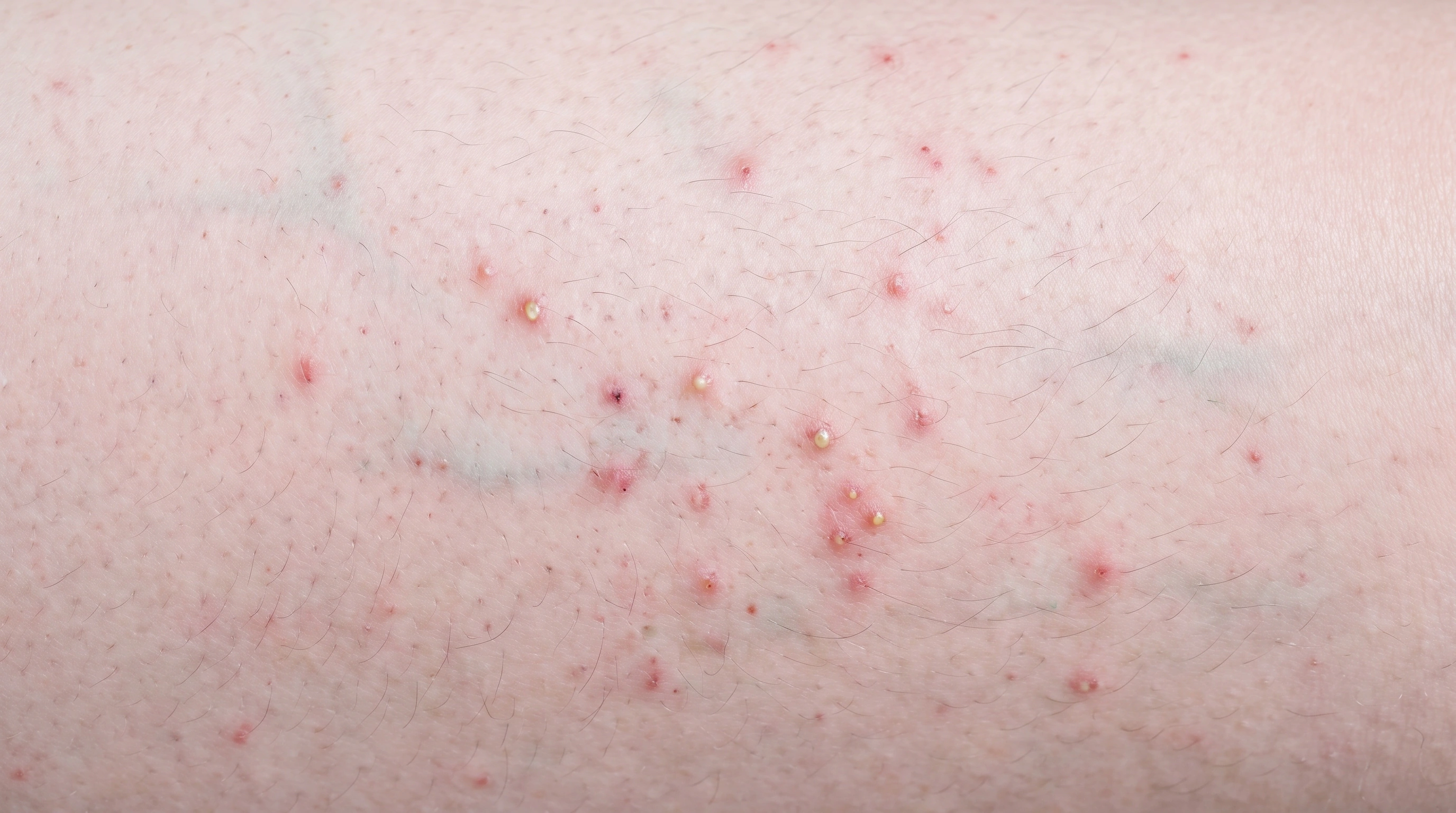
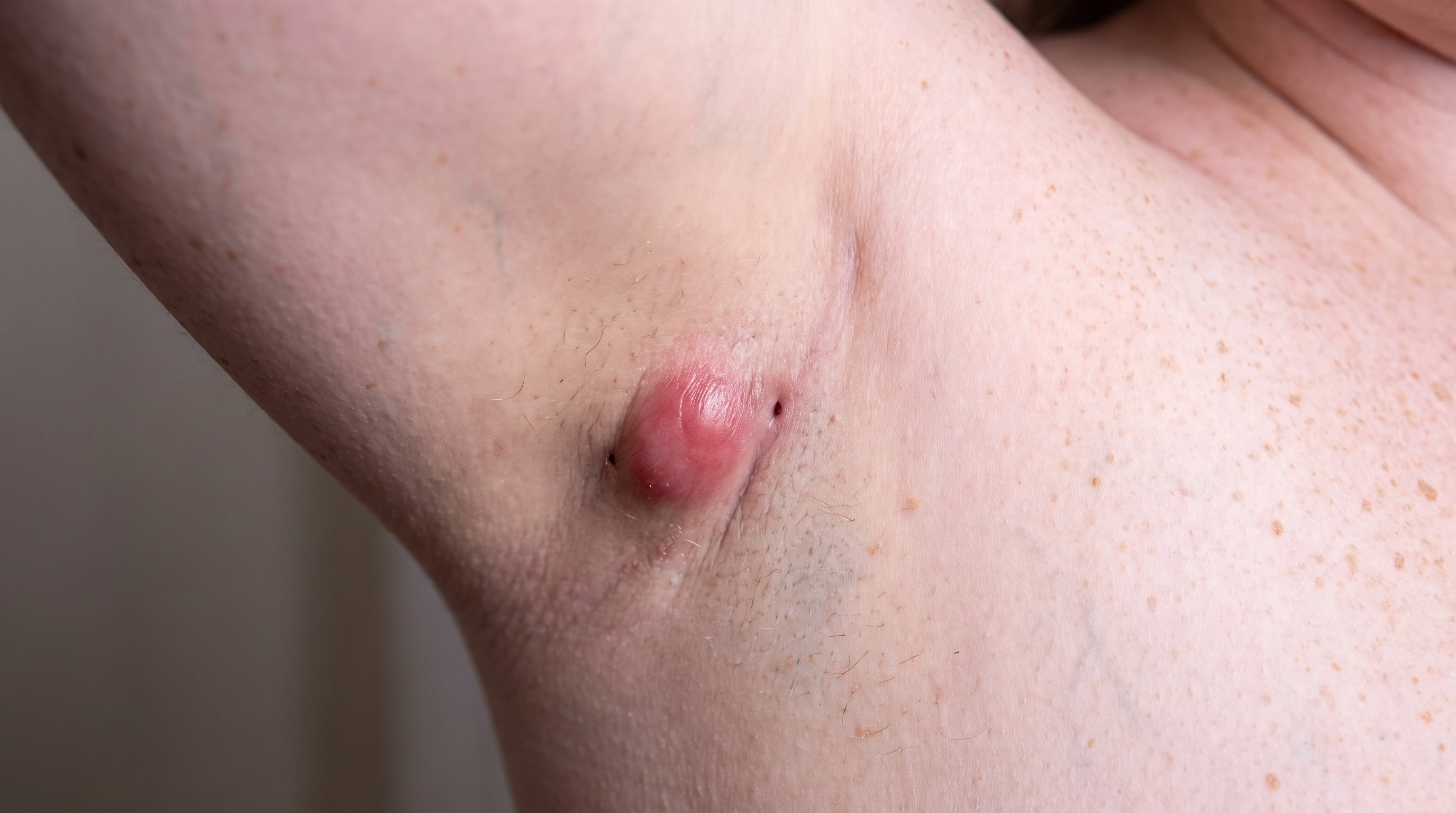
An inflamed lump in the armpit on fair skin. The skin over it is swollen, shiny and red, with a pair of small blackhead-like openings in the skin beside it.The back of the neck and upper back on fair skin, covered in small red bumps of even size, each one at a hair opening, several with a pinpoint of yellow-white pus.

Key differences

The same eight facts on every condition comparison.

Usual age
Teens to 40
Any age
Where
Armpits, groin, under breasts, buttocks
Hair-bearing skin
Main sign
Painful lumps that drain and tunnel
Small pus spots, each at a hair
Itch or pain
Painful
Itchy or tender
Contagious
No
Usually not
Long term
Long-term; flares
Settles once the cause stops
Scars
Often scars
Rarely; dark marks possible
Who gets it
Women, smokers, family history
Shaving, friction, hot tubs

What is it?

Hidradenitis Suppurativa
Folliculitis
What is it?

It is a chronic inflammatory disease.
It causes recurrent painful nodules, draining tunnels and scars, usually in skin folds.

It is not contagious.
It is not caused by poor hygiene.

Early recognition matters.
Prompt diagnosis can reduce treatment delays and limit tissue damage.

The whole picture guides care.
Pain, drainage, activity limits and mood all shape the treatment plan.

It is inflammation of hair follicles.
It can be superficial or deeper.

It ranges in severity.
A small pustule can sit around a hair, while deeper infection can form a boil.

Not every case is infection.
Irritation after hair removal or reactions to products can look similar.

Scalp scarring needs attention.
Some follicle disorders can permanently damage hair.

Overview
Inflammation around hair follicles can produce itchy or sore bumps and pustules. Bacteria, yeast, irritation and occlusion are among the causes. This broad category includes Malassezia folliculitis; the cause determines treatment. Inflammation around hair follicles can produce itchy or sore bumps and pustules. Bacteria, yeast, irritation and occlusion are among the causes. This broad category includes Malassezia folliculitis; the cause determines treatment.

What it looks like

Hidradenitis Suppurativa

Single inflamed hidradenitis suppurativa lump in the armpit.

Hurley stage I Single lumps, no tunnels or scars.

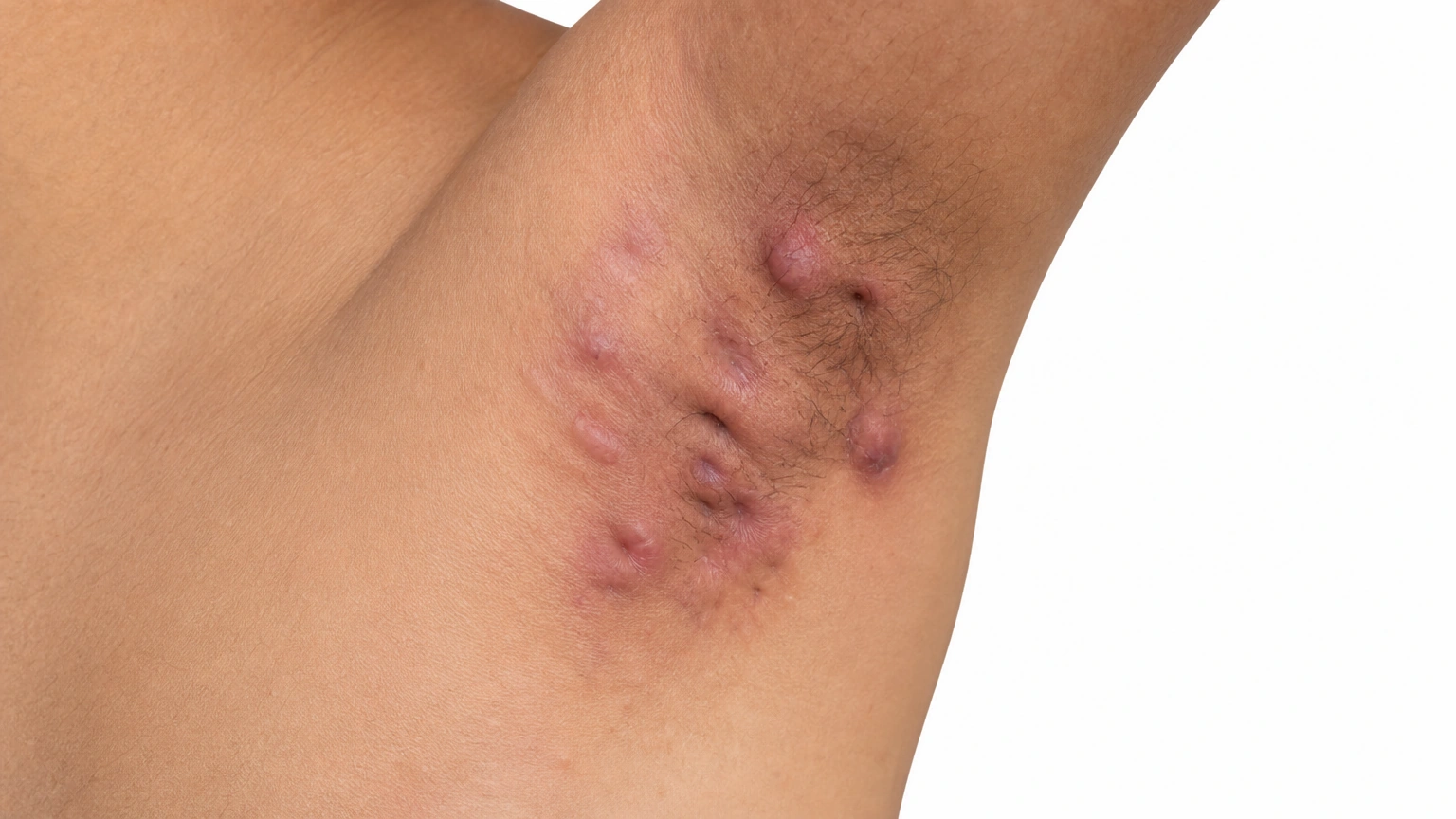
Armpit nodules, small tunnel openings and limited scar bands, representing stage II hidradenitis suppurativa.

Hurley stage II Recurring lumps with tunnels and scars.

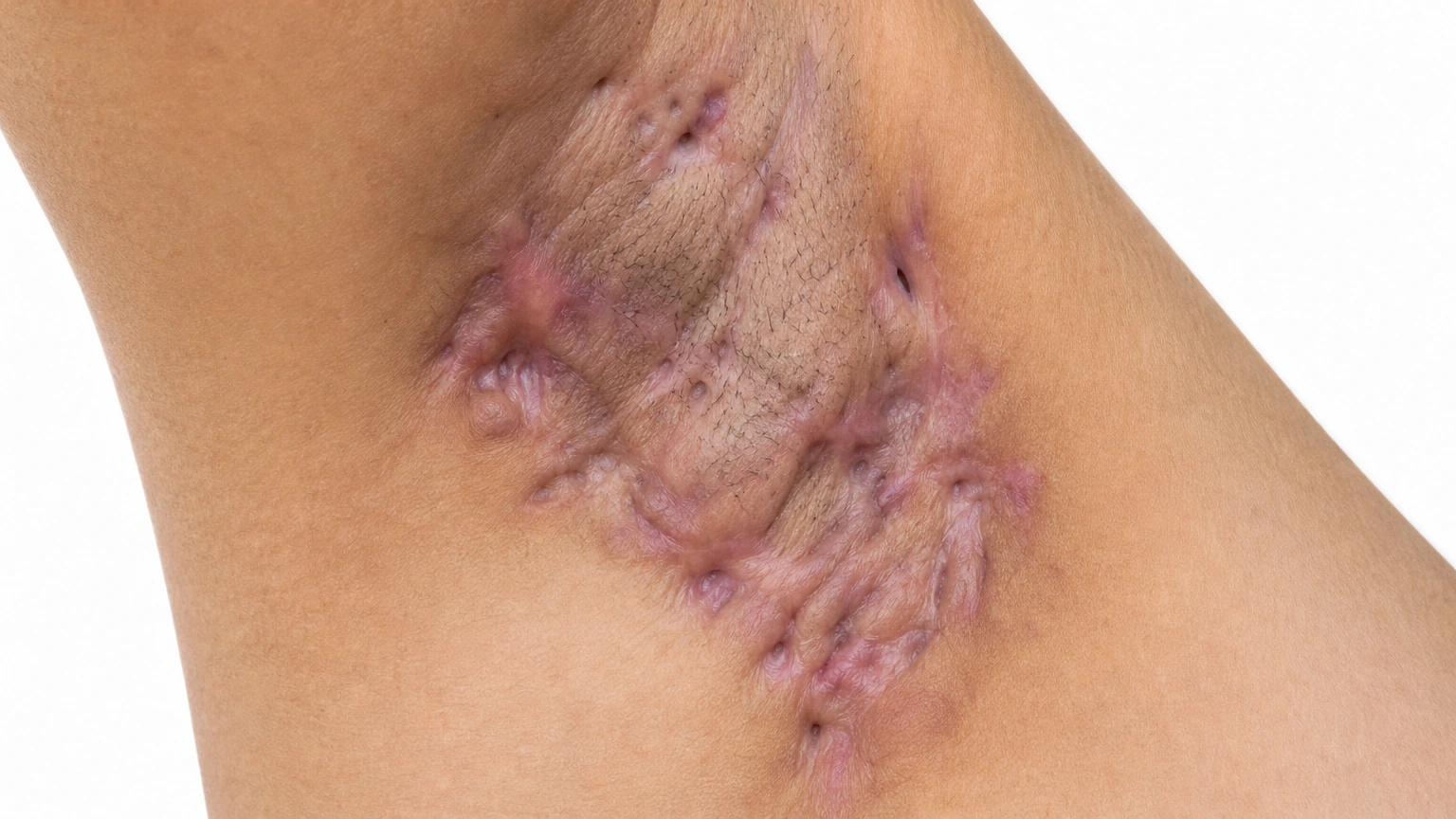
Connected raised scar bands, nodules and tunnel openings across the armpit, representing stage III hidradenitis suppurativa.

Hurley stage III Widespread tunnels and scarring.

Folliculitis

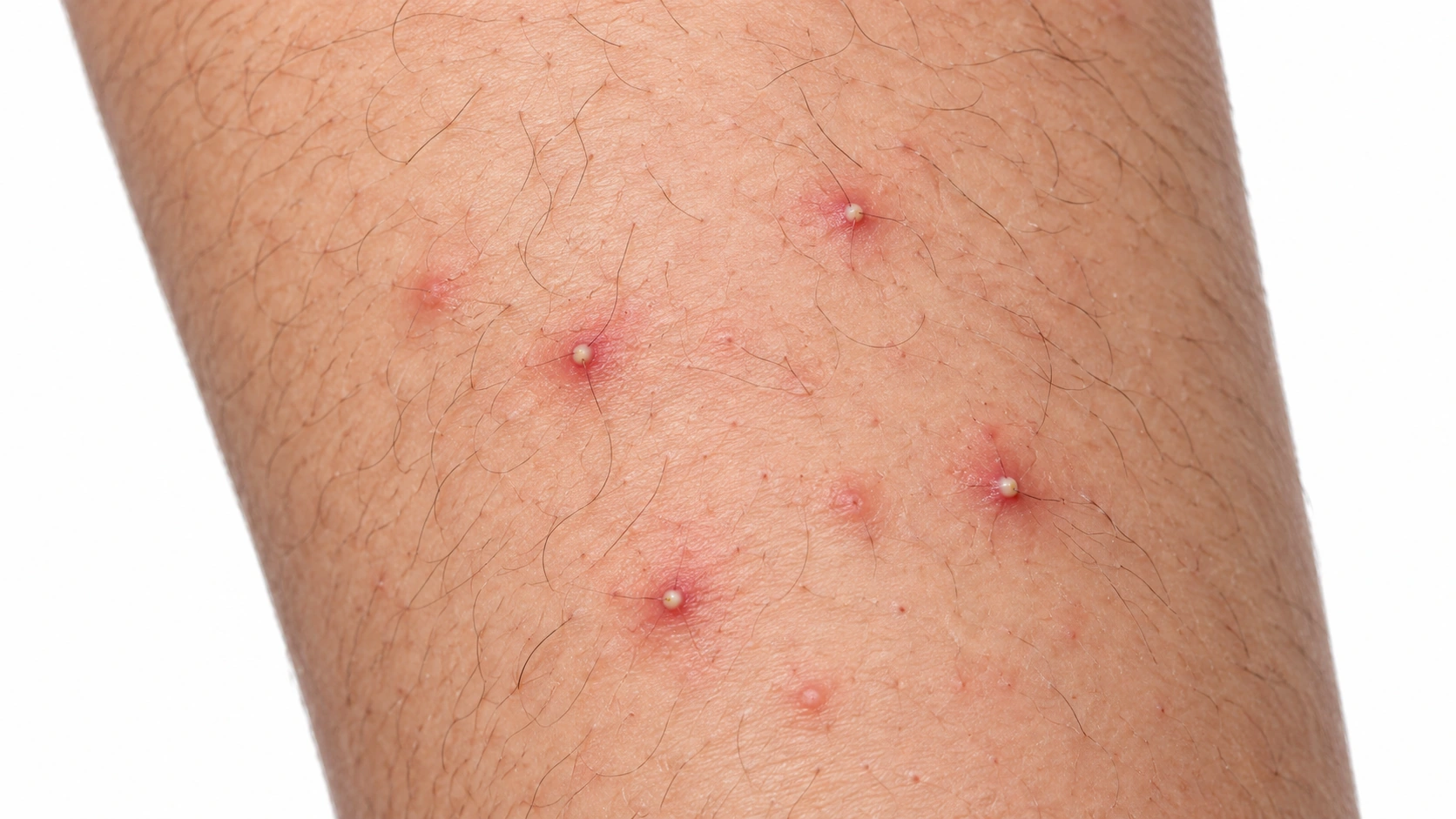
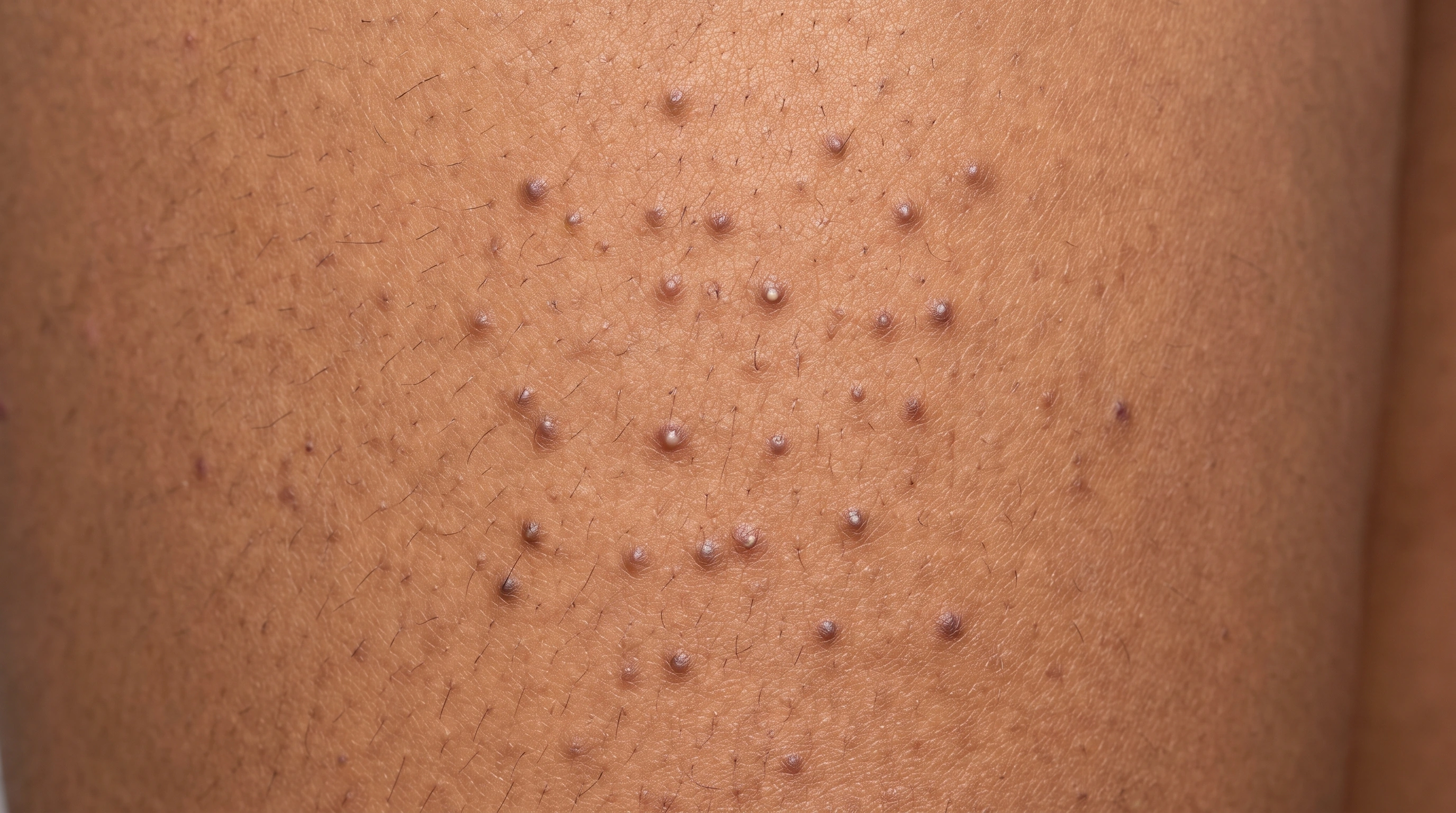
mild folliculitis on an adult thigh, close-up small field of skin with fine leg hair and a few discrete small red papules and tiny white pustules centered exactly on hair follicles. No large abscesses, no boils.

Bacterial folliculitis Staph infection, the most common.

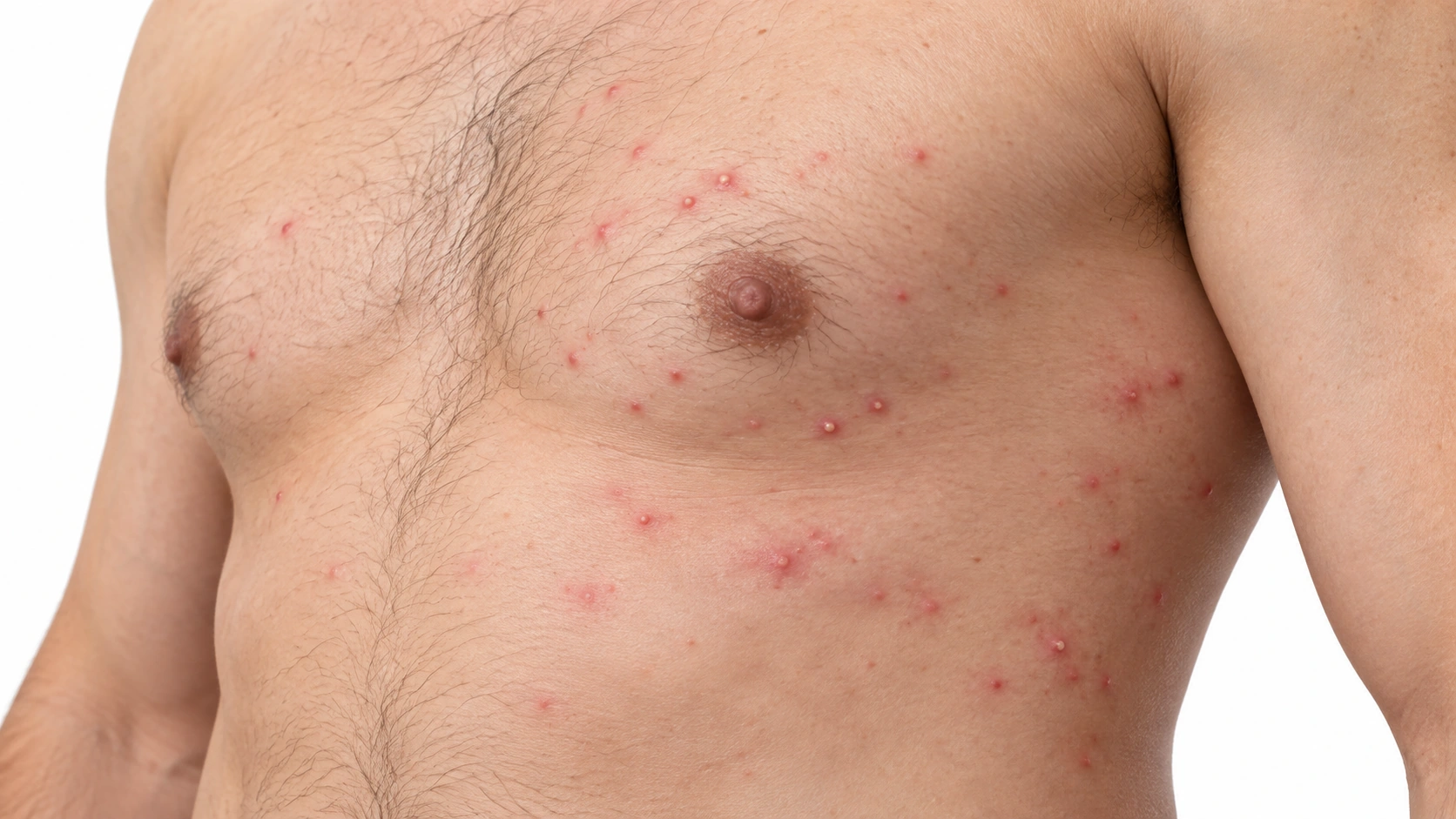
hot-tub folliculitis on an adult upper torso, a small field of discrete red follicle-centered papules and a few tiny pustules, scattered across chest and flank, mild realistic findings. No swimwear, no hot tub scene, no exaggerated infection.

Hot-tub folliculitis From bacteria in poorly treated water.

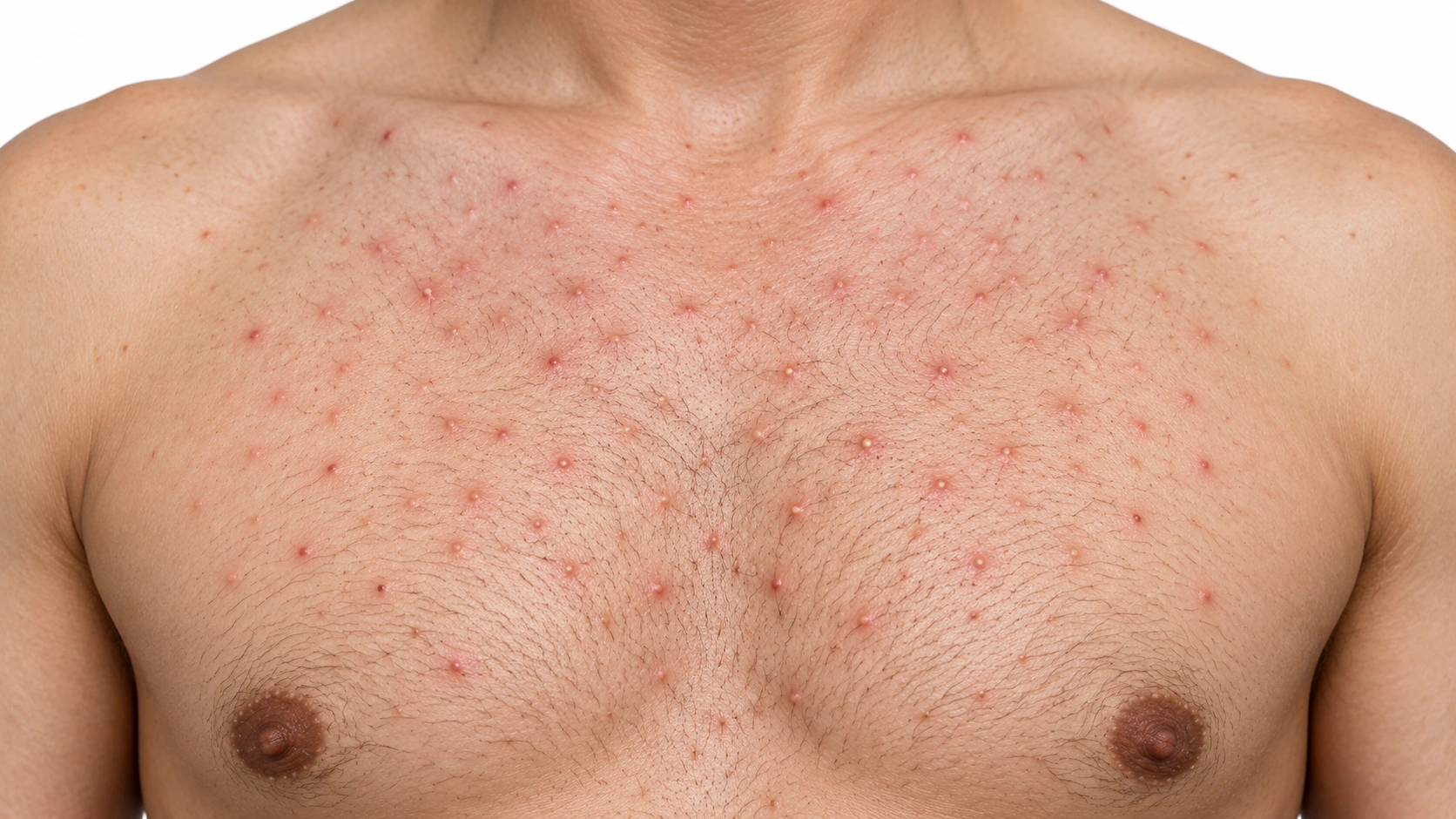
Malassezia (yeast) folliculitis on an adult chest, showing numerous small monomorphic follicle-centered red papules and a few tiny pustules, all similar size. No comedones, no nodules, no confluent rash.

Yeast folliculitis Uniform itchy bumps on chest and back.

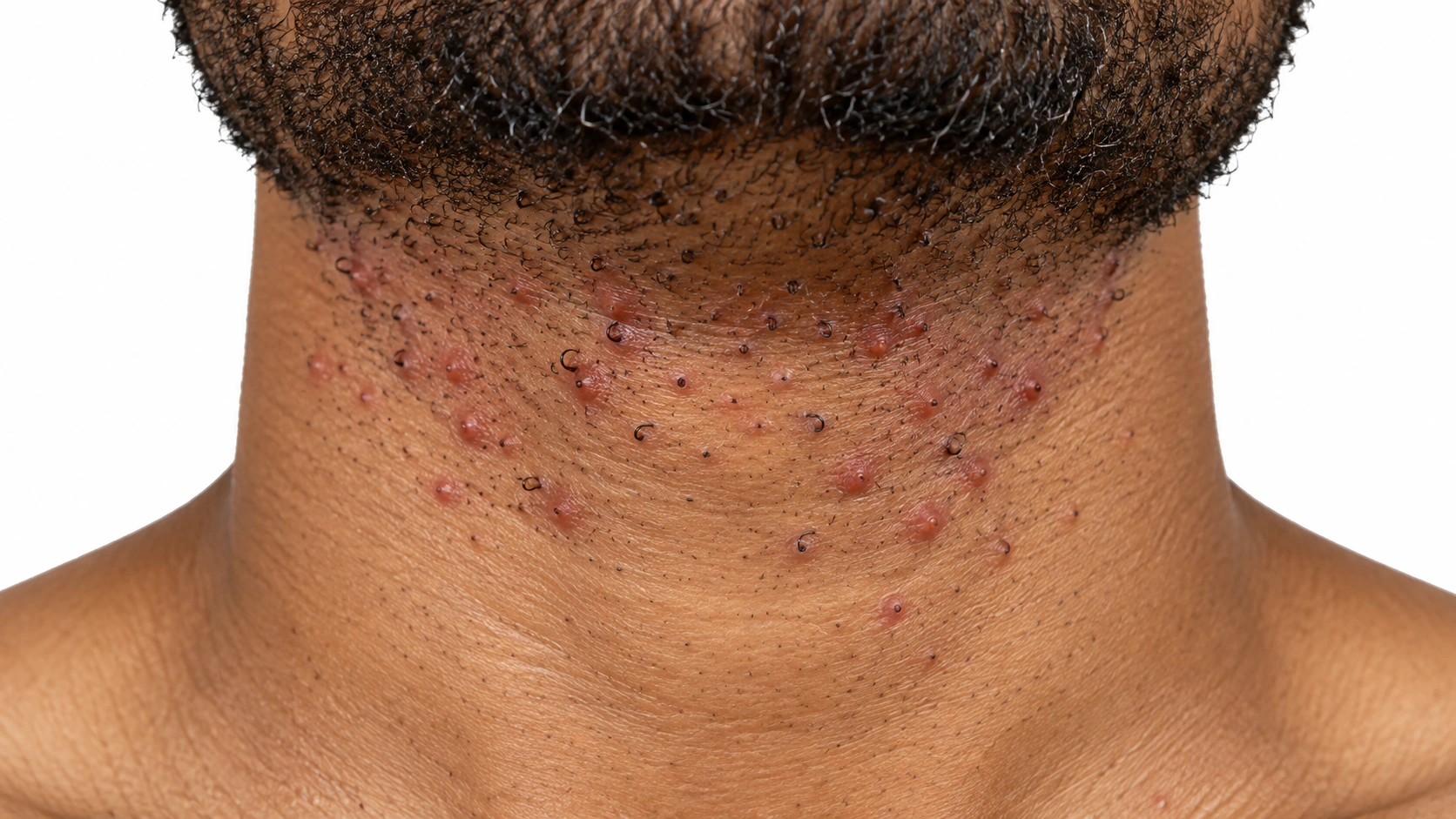
pseudofolliculitis barbae, razor bumps on the anterior neck below an adult beard, showing scattered small inflamed follicular bumps with short tightly curled dark stubble and a few visible curved ingrown hairs; medium-brown skin. No pus-filled abscesses.

Razor bumps (pseudofolliculitis) From hairs curling into skin.

Skin tones
An inflamed lump in the armpit on fair skin. The skin over it is swollen, shiny and red, with a pair of small blackhead-like openings in the skin beside it.
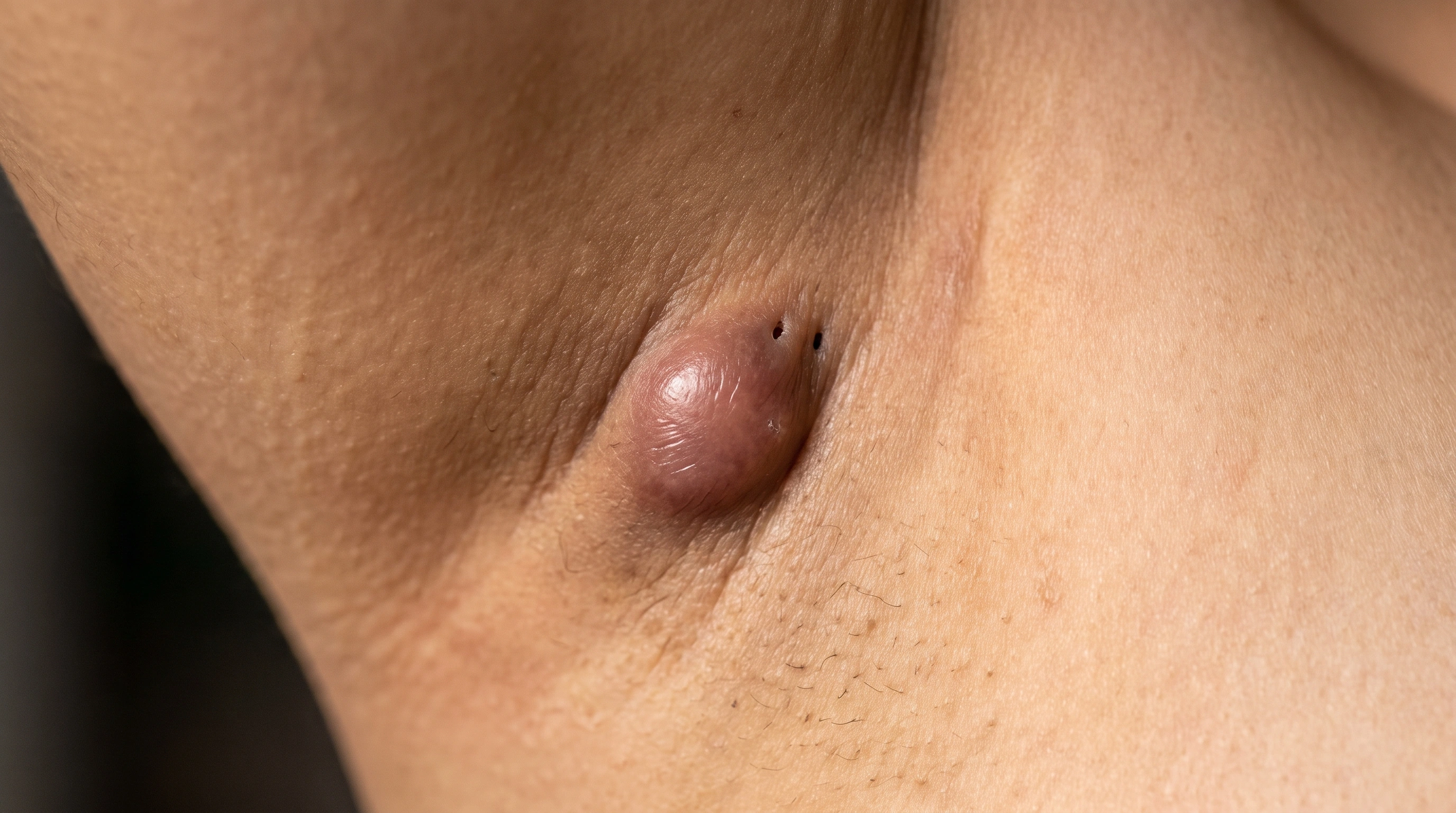
An inflamed lump in the armpit on medium olive skin. The skin over it is swollen and shiny and reads dull pink-brown, with a pair of small blackhead-like openings beside it.
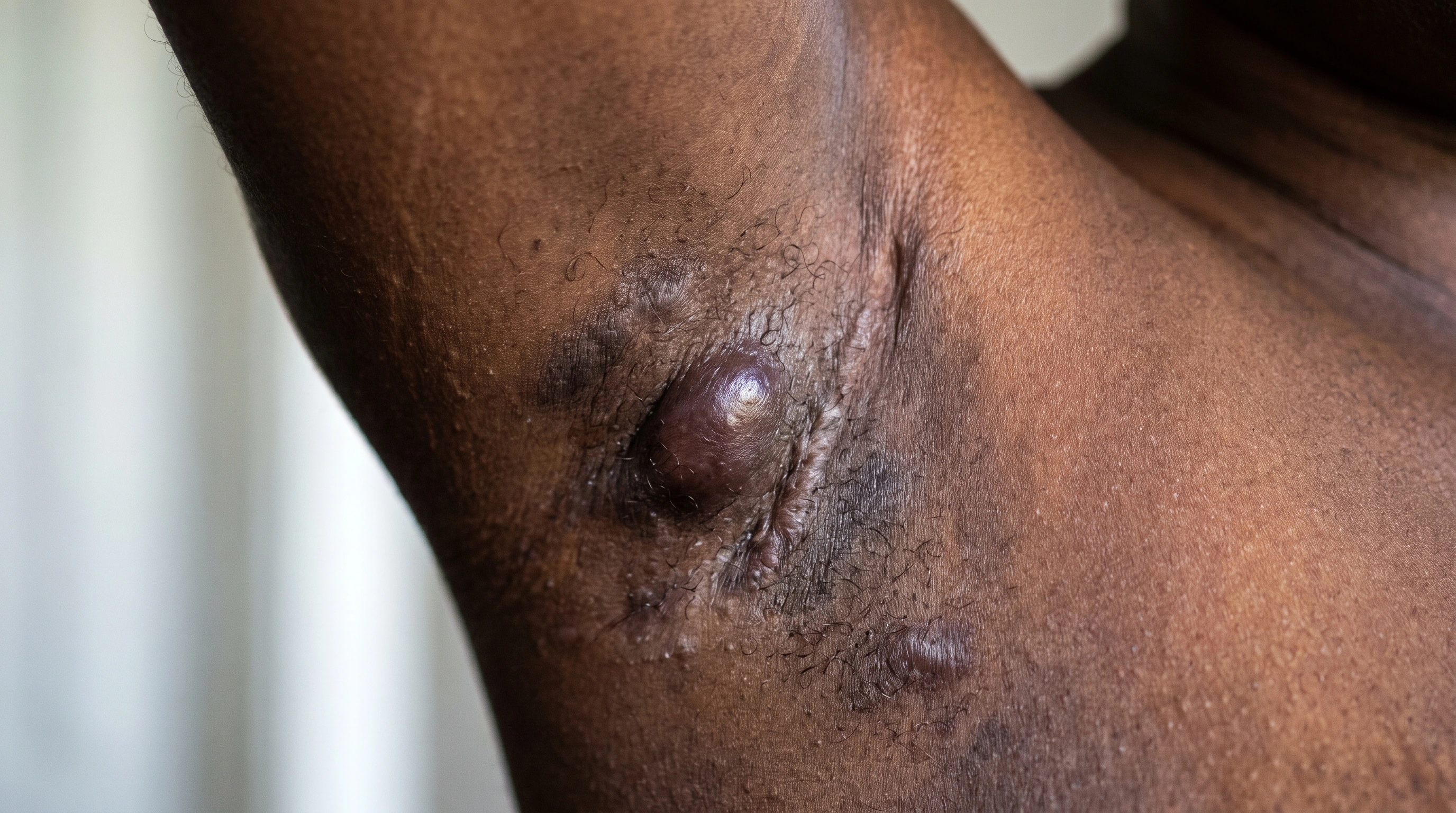
An inflamed lump in the armpit on brown skin. The skin over it is swollen and shiny and reads brown and violet rather than red, with a pair of small blackhead-like openings beside it.
An inflamed lump in the armpit on deep brown skin. The skin over it is swollen and shiny and reads dark brown and violet, with flat dark marks and one thick raised scar from older lumps beside it.
The back of the neck and upper back on fair skin, covered in small red bumps of even size, each one at a hair opening, several with a pinpoint of yellow-white pus.
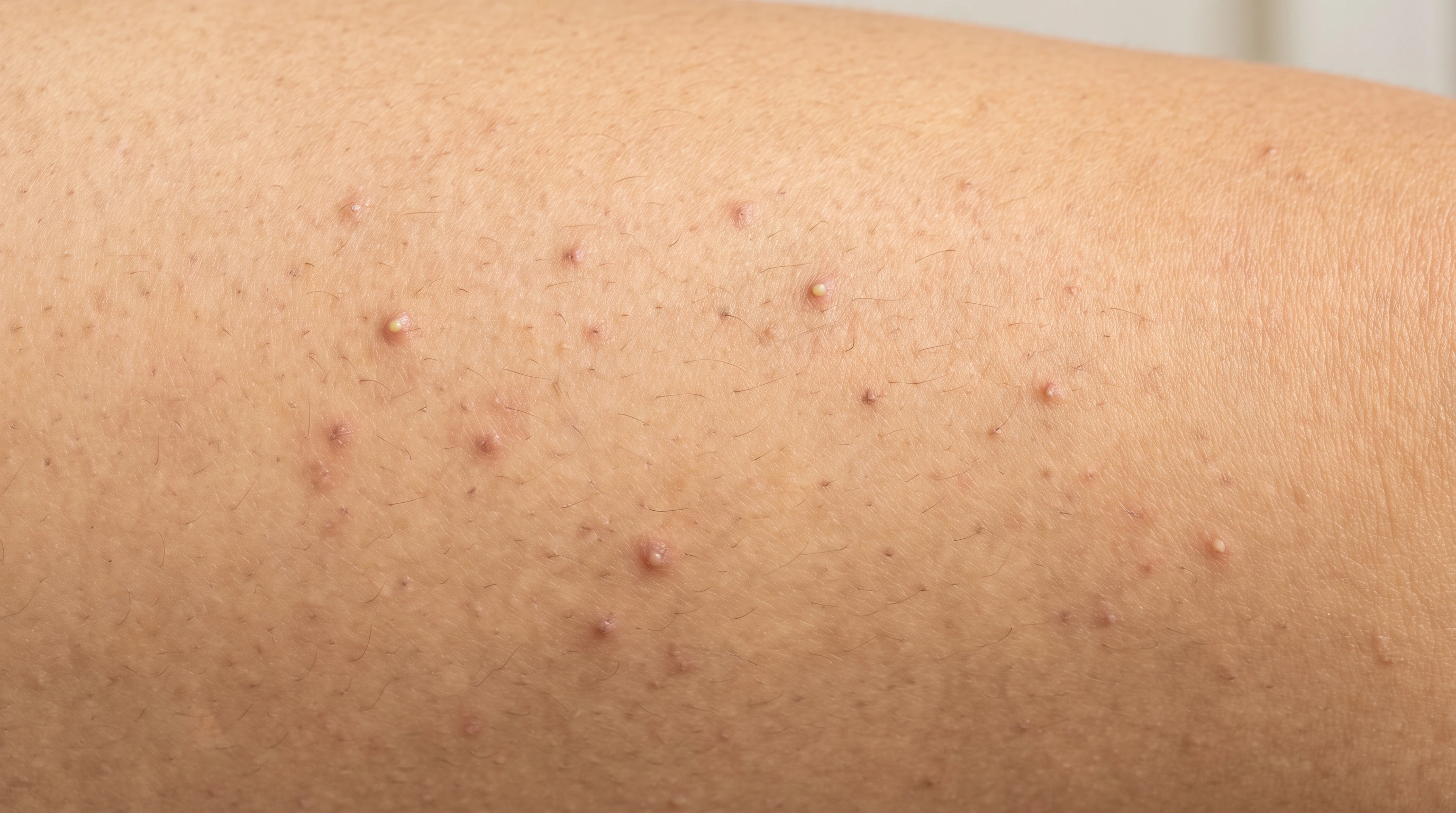
The back of the neck and upper back on medium olive skin, with small dull pink-brown bumps of even size, each one at a hair opening, a few with a pale point of pus.
The back of the neck and upper back on brown skin, with small bumps of even size that read brown and violet rather than red, each one sitting at a hair opening.
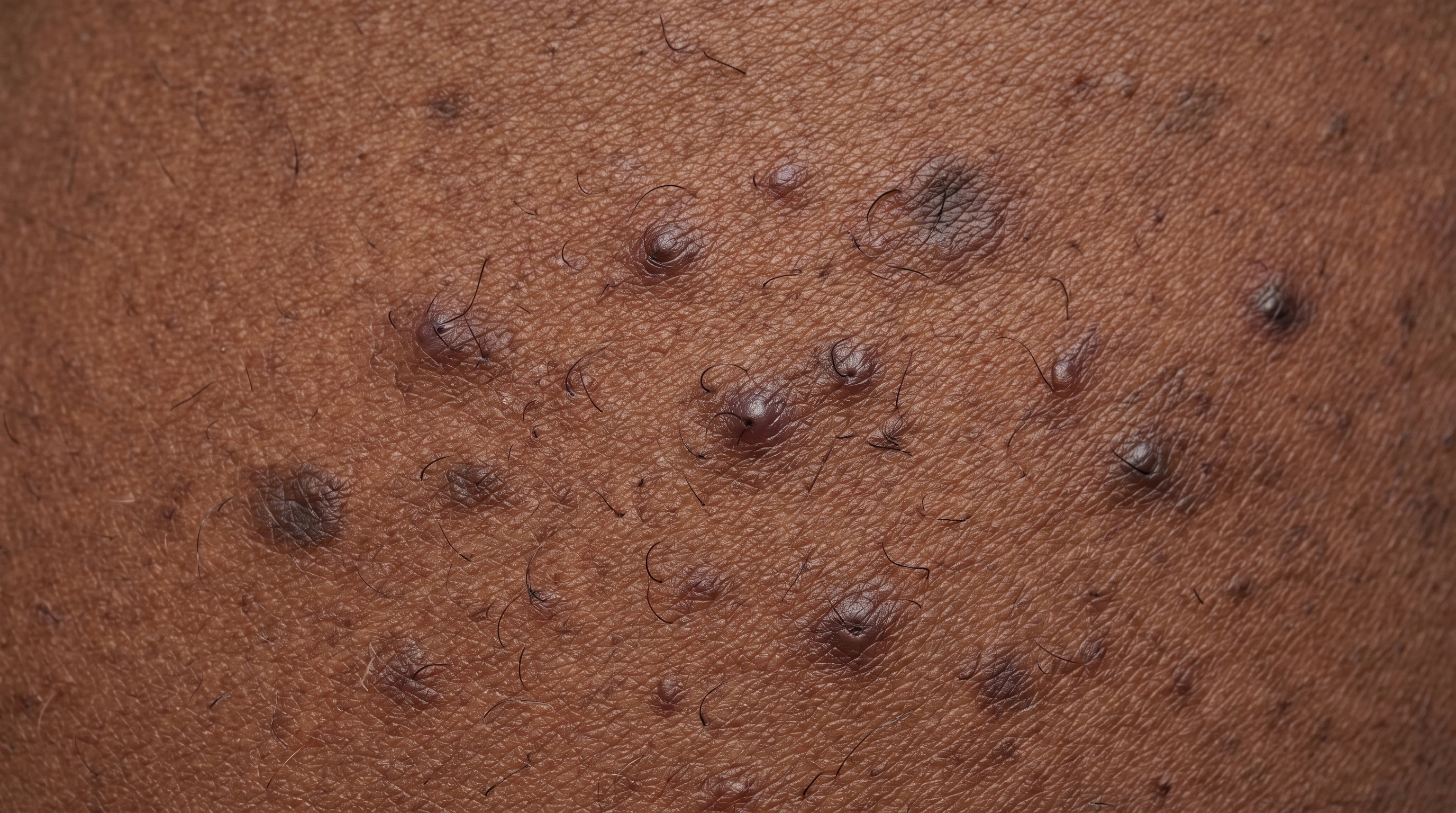
The back of the neck and upper back on deep brown skin, with bumps of even size at the hair openings that read dark brown, and a few flat darker marks beside them where earlier bumps have healed.
Diagram
Hidradenitis Suppurativa mechanism diagram. A follicle becomes blocked: The opening widens as material builds up. Rupture drives inflammation: Released contents trigger painful inflammation. Tunnels can develop: Repeated inflammation may leave channels and scars.
Folliculitis mechanism diagram. A follicle becomes irritated: Microbes or physical irritation can start inflammation. Immune cells gather: The response surrounds the affected follicle. A small pustule may form: A tender bump appears around the opening.
In the skin

Blocked hair follicles can widen and rupture, releasing contents into nearby tissue and triggering painful inflammation. Repeated episodes may lead to tunnels beneath the skin and scarring.

Infection, irritation or blockage can cause inflammation around a hair follicle. The response may produce a small tender bump or pustule around the follicular opening.

Where it shows up

Armpits and other skin folds
Hair-bearing skin

When it usually starts

010203040506070+

Hidradenitis Suppurativa. Usually begins after puberty, often in the teens or younger adult years.

Folliculitis. Folliculitis Any age There is no single typical starting-age range. Bumps can follow shaving, friction, sweating or hot-tub exposure. Recurrent or unexplained episodes deserve an assessment of the cause.

Causes and triggers

Causes

Hidradenitis suppurativa starts with blocked hair follicles in skin folds. The immune system then overreacts, causing deep, painful lumps.

Folliculitis is inflammation of hair follicles, usually from bacteria, yeast or irritation.

Folliculitis describes a pattern of inflammation rather than one organism. Damaged or occluded follicles may become infected; shaving-related irritation can produce similar bumps without infection.

Family tendency

About 1 in 3 people with it have a relative with it.

Most everyday folliculitis is not considered an inherited disorder. Skin conditions and individual susceptibility can influence risk.

Risk factors
Obesity, Smoking, Female sex, Family history
Shaving, Diabetes, Obesity, Weakened immunity, Shaving or waxing, Sweat and occlusion, Reduced immunity
Trigger
● Hidradenitis Suppurativa
● Folliculitis
Friction and tight clothing
Strong link
Common trigger
Heat and sweat
Strong link
Not listed
Hormone changes
Strong link
Not listed
Smoking
Well established
Not listed
Shaving and waxing
Not listed
Well established
Hot tubs
Not listed
Well established
Tight clothing and sweat
Not listed
Strong link
Antibiotics or steroid creams
Not listed
Possible
Stress
Not listed
Not a typical trigger
Hormonal changes
Not listed
Not a typical trigger
Pore-clogging products
Not listed
Can contribute
Sun exposure
Not listed
Not a typical trigger
Heat and sweating
Not listed
Common trigger
Alcohol
Not listed
Not a typical trigger
Spicy foods
Not listed
Not a typical trigger
Harsh skin care
Not listed
Can contribute
Shaving or waxing
Not listed
Common trigger
Poorly maintained hot tubs
Not listed
Can contribute
Prolonged antibiotic use
Not listed
Can contribute

Daily Care

Hidradenitis Suppurativa
Folliculitis
Daily care

Habits that help

  • Stopping smoking
    The highest-value change available.
  • Warm compresses
    Ease pain and help a lump come to a head.
  • Loose breathable clothing
    Cotton, no waistband over a fold, damp clothes changed promptly.
  • Weight loss where it applies
    Less friction, less background inflammation.
  • Absorbent dressings
    Not treatment, but the right dressing changes daily life.
  • Topical clindamycin
    An antibiotic lotion for mild disease, with benzoyl peroxide.
  • Clindamycin with rifampicin
    Two antibiotics together for moderate disease.
  • Hormonal treatment
    Spironolactone or a combined pill, where flares track the cycle.
  • Metformin
    Added where there is insulin resistance or polycystic ovary syndrome.
  • Track flares around your menstrual cycle
    Many people flare reliably the week before a period.
  • Discuss sustainable weight goals where relevant; avoid blame or crash dieting
    More friction, more affected folds, more background inflammation.

Avoid

  • Avoid: Smoking
    The clearest avoidable factor, and it acts on the disease itself.
  • Avoid: Squeezing or lancing at home
    Pushes the contents sideways and helps a tunnel form.
  • Avoid: Friction and tight clothing
    Waistbands, seams, tight jeans and underwire set flares off.
  • Avoid: Shaving and waxing the area
    Both irritate the follicle and cause ingrowns.
  • Avoid: Heat and trapped sweat
    Hot weather, and damp gym gear left on.
  • Avoid: Deodorants and antiperspirants
    Fragrance or alcohol on inflamed skin irritates.
  • Avoid: Stress and poor sleep
    Both raise background inflammation.
  • Avoid: Waiting it out
    Every untreated year is more chance of tunnels.
  • Avoid: Stopping treatment when it works
    Control is maintenance. Flares return within weeks to months.

Habits that help

  • Change how you shave
    Fresh single blade, with the grain, with gel, days off when sore.
  • Shower and change after sweating
    The most effective habit for trunk, buttocks and thighs.
  • Warm compresses on a tender lump
    Help a boil come to a head and drain.
  • A gentle cleanser and moisturizer
    An intact barrier means fewer inflamed follicles.
  • Loose clothing over the area
    Remove the occlusion and mild folliculitis often settles.
  • An antifungal shampoo as a body wash
    The standard approach for Malassezia yeast.
  • Prescription treatment when needed
    The wrong class is a common reason for failure.

Avoid

  • Avoid: Close shaving with a dull razor
    Cutting below the surface damages the follicle.
  • Avoid: Shaving against the grain
    Stretching the skin does the same.
  • Avoid: Dry shaving
    More drag, more nicks, more inflamed follicles.
  • Avoid: Staying in damp workout clothes
    A reliable way to bring on a crop.
  • Avoid: Tight, non-breathable fabrics
    Trap heat and sweat over the follicles.
  • Avoid: Squeezing and picking
    Pushes infection deeper, turning a spot into a boil.
  • Avoid: Scrubbing and exfoliating
    Damages the follicle openings and the barrier.
  • Avoid: Heavy oils and pomades
    Especially under clothing or a hat.
  • Avoid: Poorly maintained hot tubs and pools
    Weak disinfection lets Pseudomonas survive.
  • Avoid: Sharing razors and towels
    Moves Staphylococcus aureus around.

Treatment differences

Evidence labels come from each condition’s own treatment list.

Treatment
● Hidradenitis Suppurativa
● Folliculitis
Filter by type
Hidradenitis stage

Select one or more.

Folliculitis type

Select one or more.

Over-the-counter
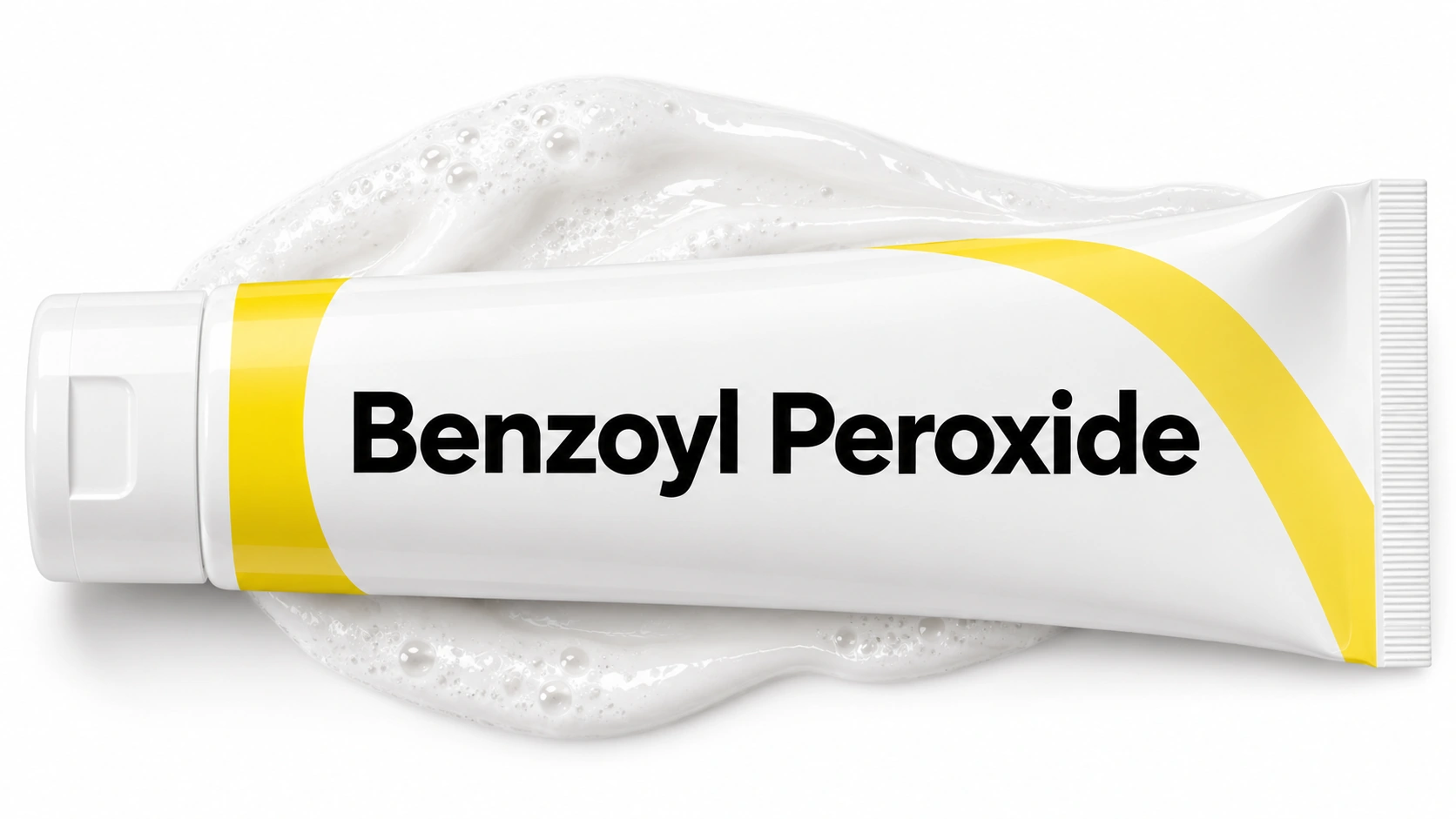
Three acne wash tubes on white: Differin Deep Cleanser, CeraVe Acne Foaming Cream Cleanser and PanOxyl.

Benzoyl Peroxide wash

Limited evidence

An antiseptic wash used two or three times a week on the affected folds, lathered and rinsed rather than left on. It lowers the bacteria on the skin and is often paired with clindamycin lotion to stop resistance building. It will not stop lumps forming on its own, and it bleaches towels and dark clothing.

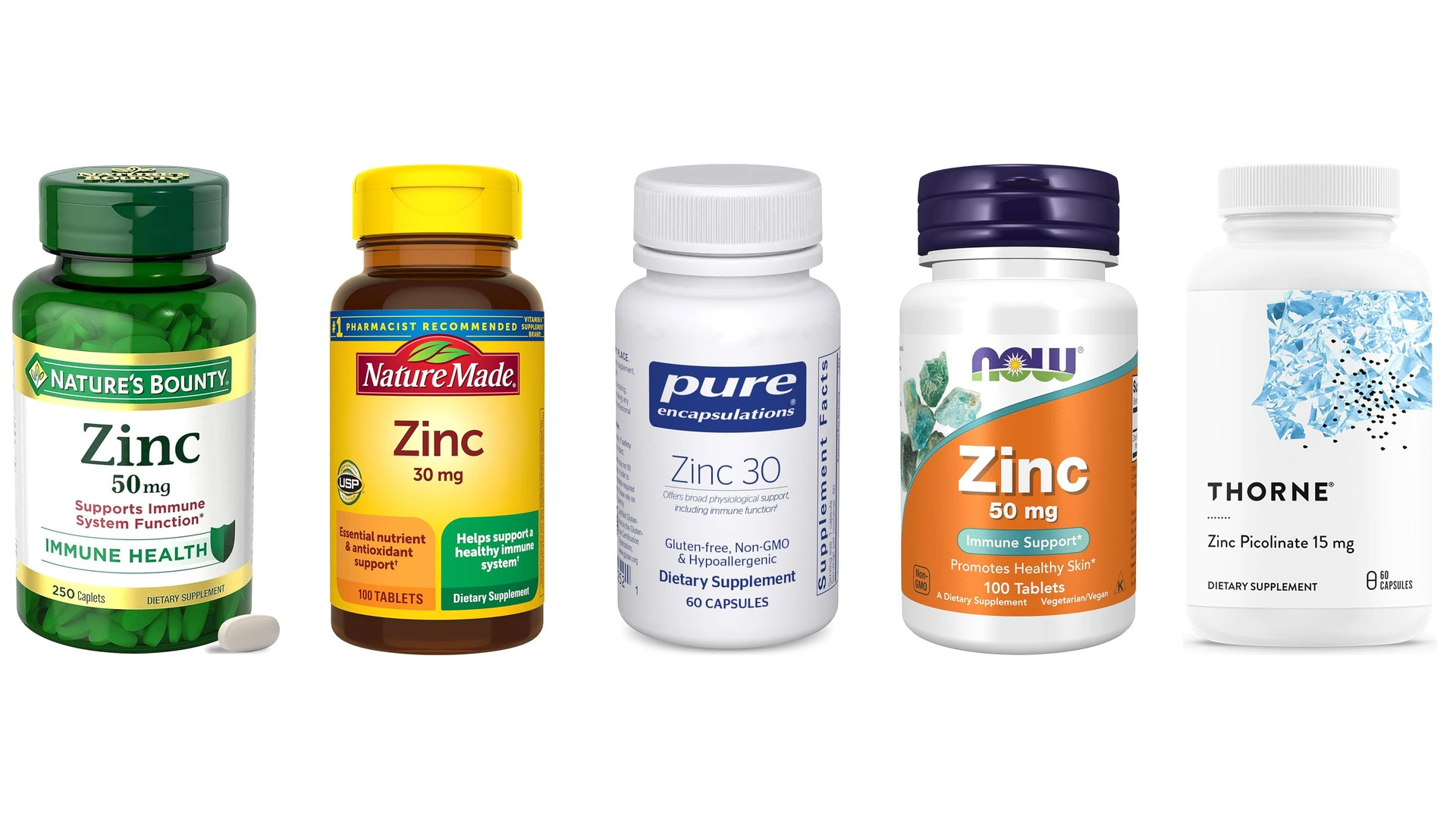
Existing Dermapedia illustration of zinc supplements.

Ibuprofen and acetaminophen

Limited evidence

For flare pain, which is at its worst in the day or two before a lump bursts or is drained. Taken regularly through a flare they work better than taken only at the peak. If they are not touching the pain, that is a reason to be seen rather than to take more, because a steroid injection settles a single lump far faster.

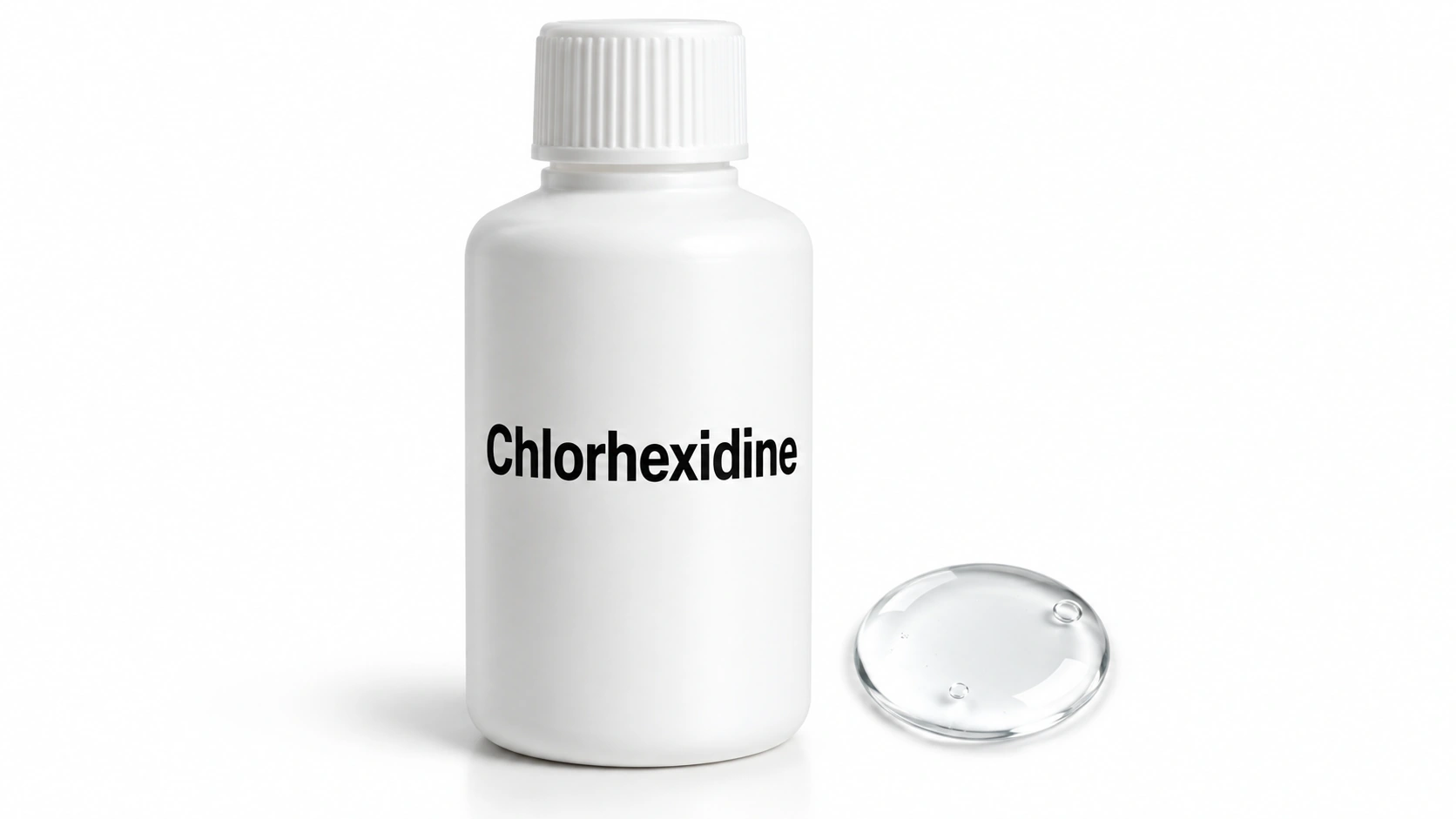
Existing Dermapedia illustration of chlorhexidine wash.

Chlorhexidine wash

Limited evidence

An alternative antiseptic wash for the folds if benzoyl peroxide is too drying or bleaches too much. Same use: lather, rinse, a few times a week. It reduces the odor some people find hardest to live with. It does nothing about the inflammation underneath, so it is a support rather than a treatment.

Existing Dermapedia illustration of zinc supplements.

Zinc supplements

Limited evidence

Oral zinc is often suggested online for this condition. The studies behind it are small and uncontrolled, and it has not been shown to change flares in any reliable way. High doses upset the stomach and interfere with copper absorption over time. Worth mentioning to your doctor rather than starting alone.

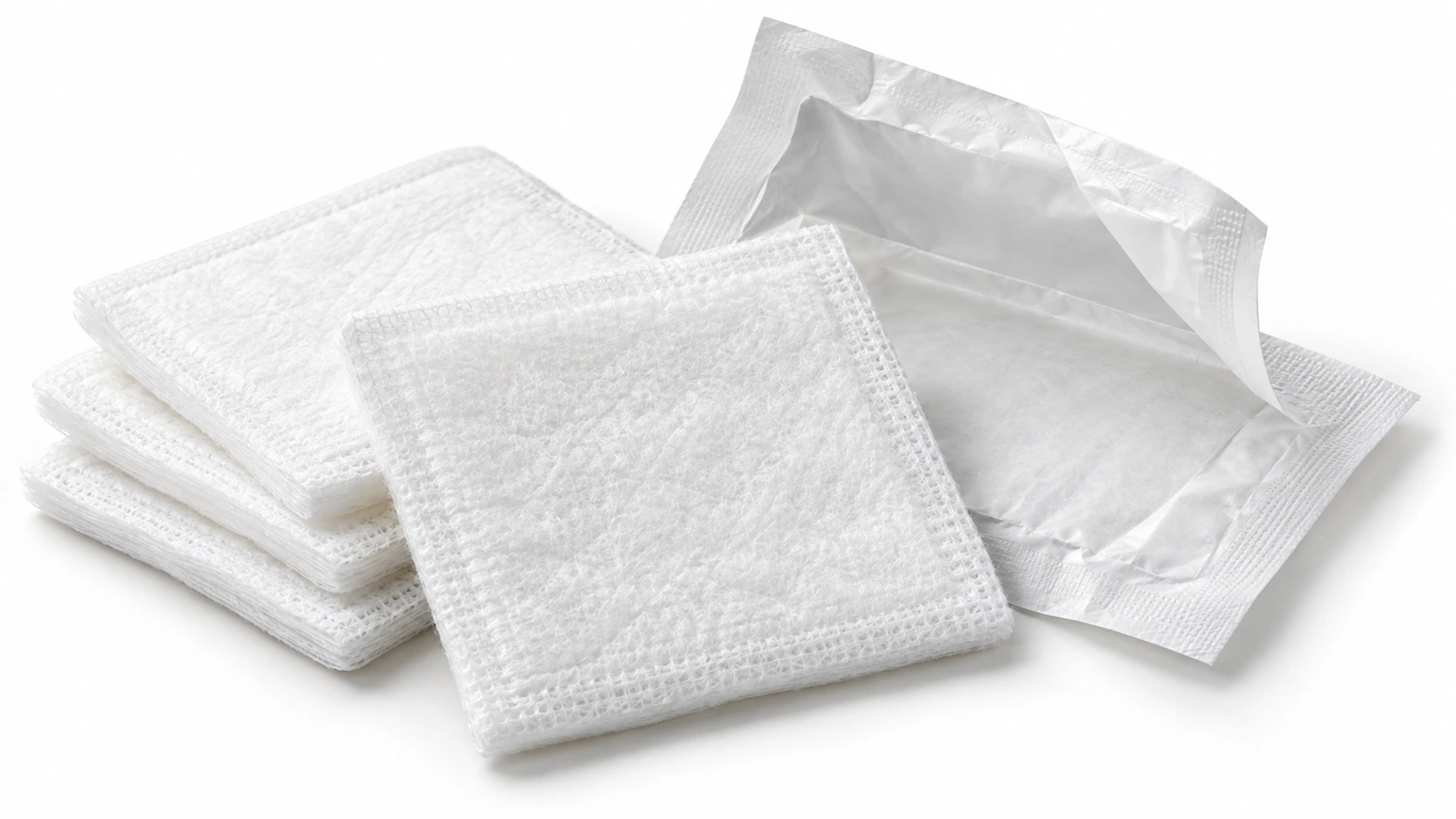
Existing illustration of Absorbent dressings.

Absorbent dressings

Listed

Not a treatment, but the thing that changes daily life most for anyone with a draining lesion. A soft absorbent pad held with tubular netting or a stretchy vest handles the fluid without an adhesive that tears sore skin. A dermatology nurse can advise which dressing suits which site, and many are available on prescription.

Three acne wash tubes on white: Differin Deep Cleanser, CeraVe Acne Foaming Cream Cleanser and PanOxyl.

Benzoyl Peroxide wash

Limited evidence

A 4 to 10 percent wash lathered on in the shower and left for a minute before rinsing, for the bacterial kind on the thighs, buttocks, chest and back. It lowers the bacteria on the skin without an antibiotic, which is why it also works as a maintenance measure for people who keep getting crops. It bleaches towels, sheets and colored clothing, so use white ones.

Existing Dermapedia illustration of chlorhexidine wash.

Chlorhexidine wash

Limited evidence

An antiseptic wash used two or three times a week over the affected area, and a good option for someone whose bumps keep coming back in the same place. It lowers the bacterial load on the skin rather than treating an established infection. Keep it away from the eyes and ears, and stop if it stings or dries the skin, since damaged skin is the problem you started with.

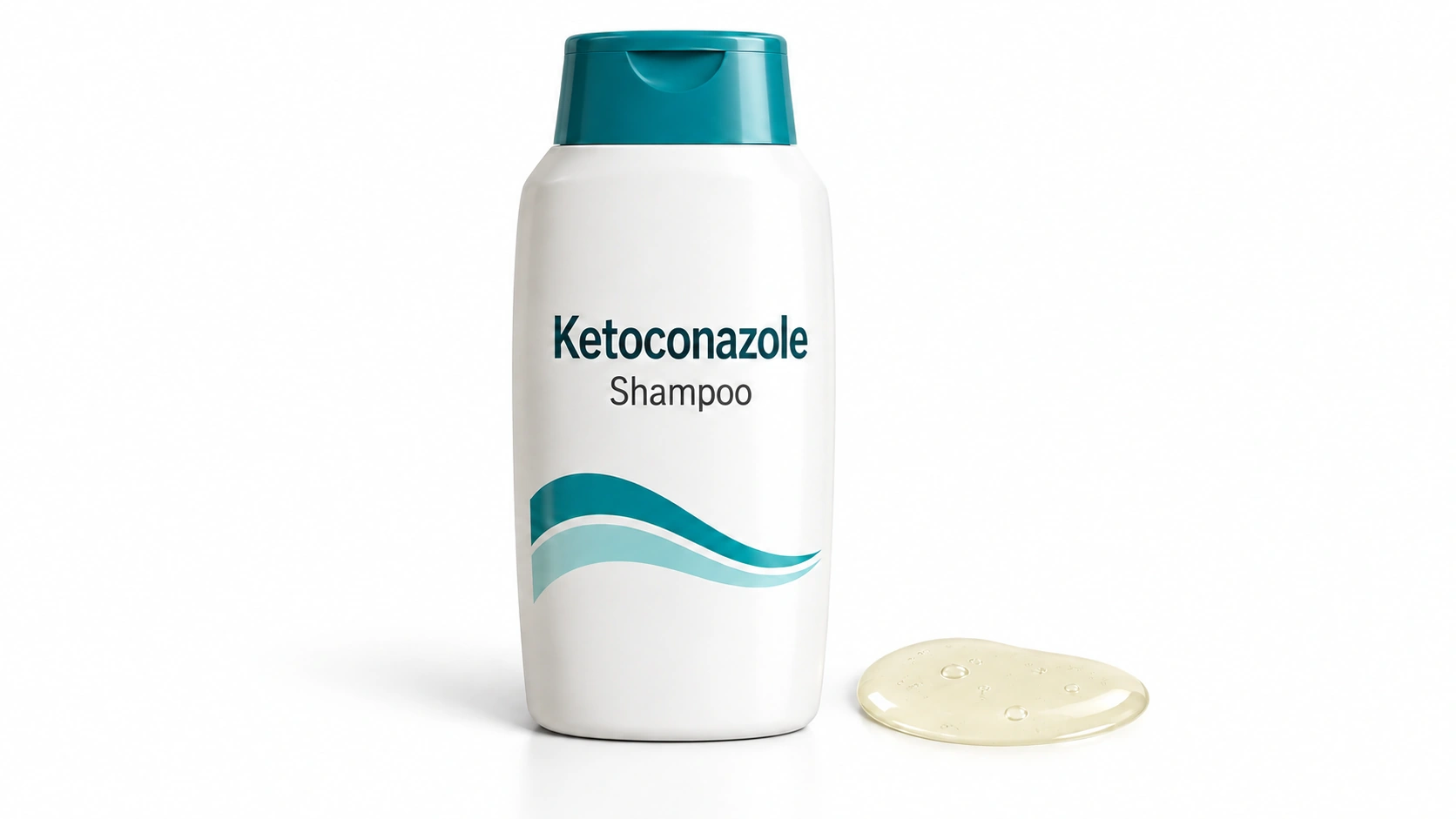
Existing Dermapedia image for Ketoconazole shampoo as a wash.

Ketoconazole shampoo as a wash

Limited evidence

The standard first move for the yeast kind: itchy, uniform bumps on the chest, back and shoulders, often worse after a course of antibiotics. Use the shampoo as a body wash a few times a week and leave it on for several minutes before rinsing. It does nothing for bacterial folliculitis or razor bumps, and yeast folliculitis tends to come back, so many people keep using it once a week.

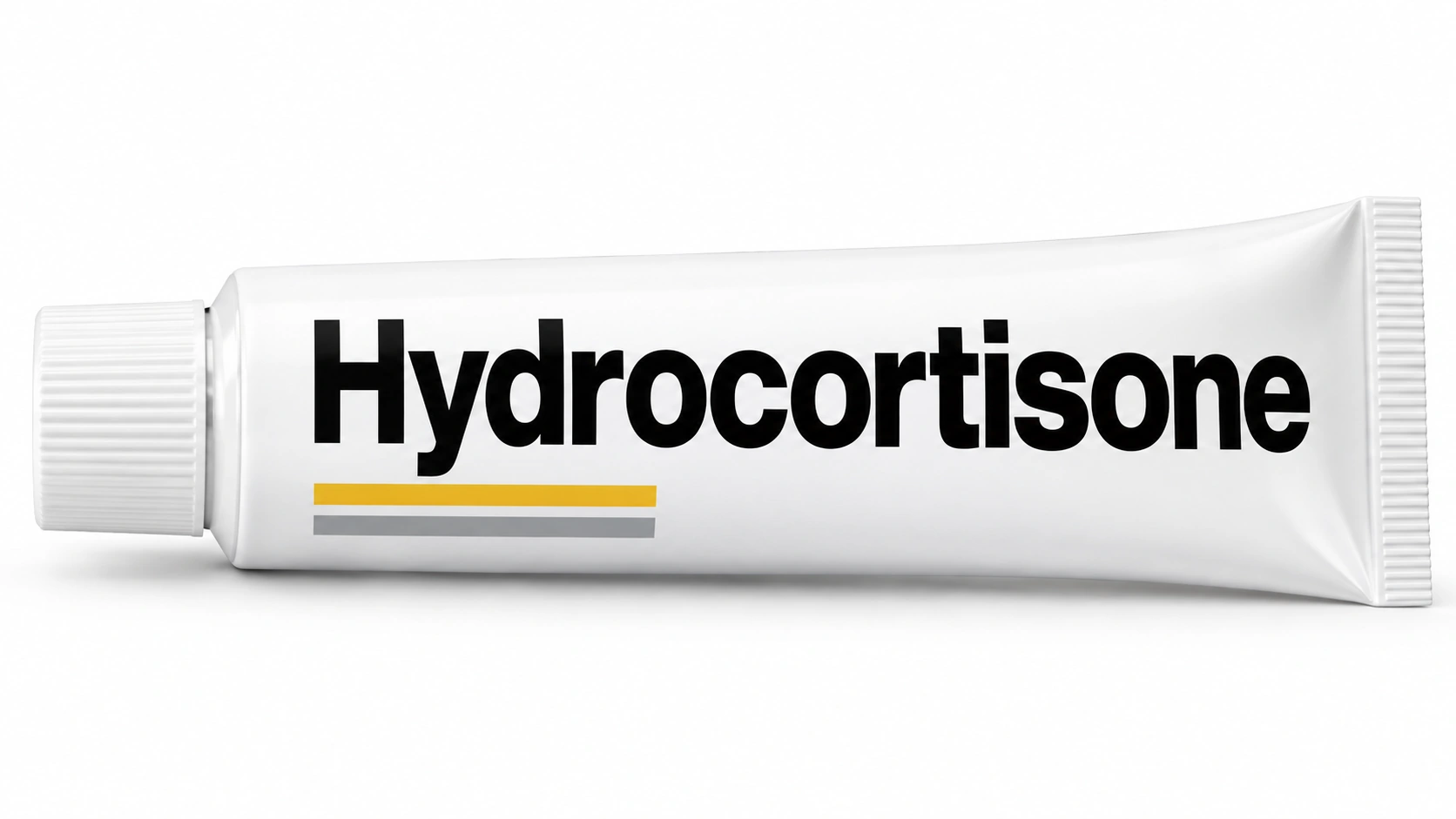
A plain white ointment tube lying on its side, labeled Hydrocortisone with a blue swoosh

Hydrocortisone

Limited evidence

It is the obvious thing to reach for because the bumps itch, and it is usually the wrong one. Steroid cream quietens the itch for a few days while the infection in the follicles carries on underneath, and the rash that comes back is often more widespread. It also changes how things look, which makes the diagnosis harder afterward. Cool compresses and a medicated wash are the safer starting point.

Paula's Choice 2% BHA exfoliant, La Roche-Posay Effaclar cleanser and a CeraVe psoriasis cream pump

Salicylic Acid

Limited evidence

A leave-on 2 percent lotion or pad on the beard, neck or bikini line, where the problem is hairs curling back into the skin rather than an infection. It keeps the follicle opening clear so fewer hairs get trapped, and it is used between shaves rather than on raw skin. It will not touch a bacterial or yeast folliculitis, and on already inflamed skin it stings and can make things worse.

Five dark glass tea tree essential oil bottles with glass droppers and one green box on white

Tea Tree Oil

Limited evidence

It does have some activity against bacteria and yeast in the laboratory, which is why it appears in so many folliculitis remedies. There are almost no proper trials of it in folliculitis, and undiluted tea tree oil is a common cause of allergic contact dermatitis, which produces an itchy rash on top of the one you were treating. A benzoyl peroxide or antifungal wash is the better use of the same shower.

Prescription topicals
A white metal tube lying at an angle on a white background, white ribbed cap to the left, labeled Clindamycin in black lettering with a teal swoosh curving beneath the word.

Clindamycin

Moderate evidence

A twice-daily antibiotic lotion for mild disease, the one topical here with real trial evidence behind it. It reduces the number of lumps and abscesses, and in early disease works about as well as tetracycline tablets. It is nearly always paired with a benzoyl peroxide wash, because clindamycin used alone breeds resistant bacteria.

Resorcinol

Limited evidence

Resorcinol 15% cream. A peeling cream dabbed on a building lump to help it open and settle faster, made up by a compounding pharmacy. Some people find it shortens a flare noticeably. It stings, it can leave a temporary dark stain on deeper skin tones, and it only goes on the lump itself, not across the whole fold.

A white metal tube lying at an angle on a white background, white ribbed cap to the left, labeled Clindamycin in black lettering with a teal swoosh curving beneath the word.

Clindamycin

Limited evidence

A lotion or solution for bacterial folliculitis spread over a wider area than an ointment can cover, such as the beard or the back. It is usually paired with a benzoyl peroxide wash, which both improves it and reduces resistance. It is not the answer if the same patch keeps returning, because that is a shaving, friction or occlusion problem rather than an antibiotic one.

Mupirocin — Header Image

Mupirocin

Moderate evidence

Clearing Staph from the nose. Some people carry Staphylococcus aureus in the nostrils or skin folds, which is one reason boils keep returning to the same person. A course of antibiotic ointment inside the nostrils, together with antiseptic washes and hot washing of towels and bedding, can reduce that. It is used for repeated boils rather than for a single episode, and it does not always hold, so household measures matter alongside it.

Prescription pills
An amber prescription bottle lying on its side on a white background with a plain white label reading Doxycycline, and six small round white tablets spilled out in front of it.

Doxycycline

Moderate evidence

A tetracycline antibiotic taken for two to three months, used here for its anti-inflammatory effect rather than to kill an infection. That is why the course is months rather than a week. It reduces flares for many people with mild to moderate disease, and it generally stops working once it is stopped. Take it with water and stay upright afterwards, and expect to burn more easily in the sun.

Two separate illustrative capsule bottles labeled Clindamycin and Rifampicin.

Clindamycin with rifampicin

Moderate evidence

Two antibiotics taken together for a set ten to twelve week course in moderate disease, usually when tetracyclines have not held. The combination works better than either alone. Rifampicin turns urine and tears orange, stains soft contact lenses, and interferes with several medicines including the contraceptive pill, so the doctor needs your full medicine list.

Spironolactone — Header Image

Spironolactone

Limited evidence

A hormonal tablet that suits people whose flares track the menstrual cycle. The evidence is from clinics rather than large trials, but the response in the right person can be very good. It takes three to six months to judge, it raises potassium so blood tests are needed, and it must not be used in pregnancy.

An illustrative blister pack and white sleeve labeled Birth Control Pills.

Birth Control Pills

Limited evidence

A combined pill can reduce flares that cluster before periods, and it is often used alongside spironolactone rather than instead of it. Progesterone-only methods sometimes make the condition worse. Smoking matters here in two ways: it worsens the disease and it also rules out the combined pill for many people over 35.

An illustrative bottle labeled Metformin beside plain tablets.

Metformin

Limited evidence

A diabetes tablet sometimes added where there is insulin resistance, polycystic ovary syndrome or metabolic syndrome alongside the skin disease. Small studies show fewer flares in that group. It is an add-on, not a main treatment, and it commonly upsets the stomach for the first few weeks.

Prednisone — Header Image

Prednisone

Limited evidence

A short course of steroid tablets to break a severe flare while a longer-term treatment is being arranged. It works quickly. It is not a way to manage this condition, because flares return as the dose comes down and repeated courses cause weight gain, bone loss and blood sugar problems.

A white blister pack photographed flat on a white background, holding eight white oblong capsules in two rows of four under clear domes. ACCUTANE is printed in blue capitals on the empty left half of the foil.

Accutane

Limited evidence

Isotretinoin transforms severe acne, so it is a fair question here. It works much less well for this condition, which starts in the follicle but is not driven by oil, and many people are no better on it. Acitretin, a related tablet, has slightly better results. Neither can be used in pregnancy.

An amber prescription bottle lying on its side on a white background with a plain white label reading Doxycycline, and six small round white tablets spilled out in front of it.

Doxycycline

Limited evidence

A longer course is sometimes used for stubborn or recurring folliculitis, partly for the bacteria and partly because it calms inflammation. It is a second choice rather than a first one, since it can allow yeast folliculitis to take hold. It also causes sunburn easily, so it needs daily sunscreen on anything the sun reaches.

Cephalexin

Cephalexin

Moderate evidence

The usual first antibiotic tablet for bacterial folliculitis that is deep, spreading or too widespread for a cream, and for boils with surrounding redness. A course is normally about seven days. It has no effect on yeast folliculitis or razor bumps, and if the same area keeps flaring after each course, the cause is still there rather than the antibiotic being wrong.

Trimethoprim-sulfamethoxazole

Trimethoprim-sulfamethoxazole

Moderate evidence

Used when resistant Staphylococcus aureus is likely or has been grown on a swab, which is the situation in which the first antibiotic did not work. This is the main reason for swabbing a spot before starting treatment. It is avoided in pregnancy and with some other medicines, so tell the prescriber everything you take.

16:9 hero for Fluconazole. Never cropped: the tone strip and the corner logo depend on the full frame.

Fluconazole

Limited evidence

An antifungal tablet, usually a short weekly course, for yeast folliculitis that is widespread or has not cleared with washes alone. It works faster and more completely than topical treatment on the chest and back. The yeast lives on everyone and comes back, so it is normally followed by an antifungal wash once a week to hold it.

Injections
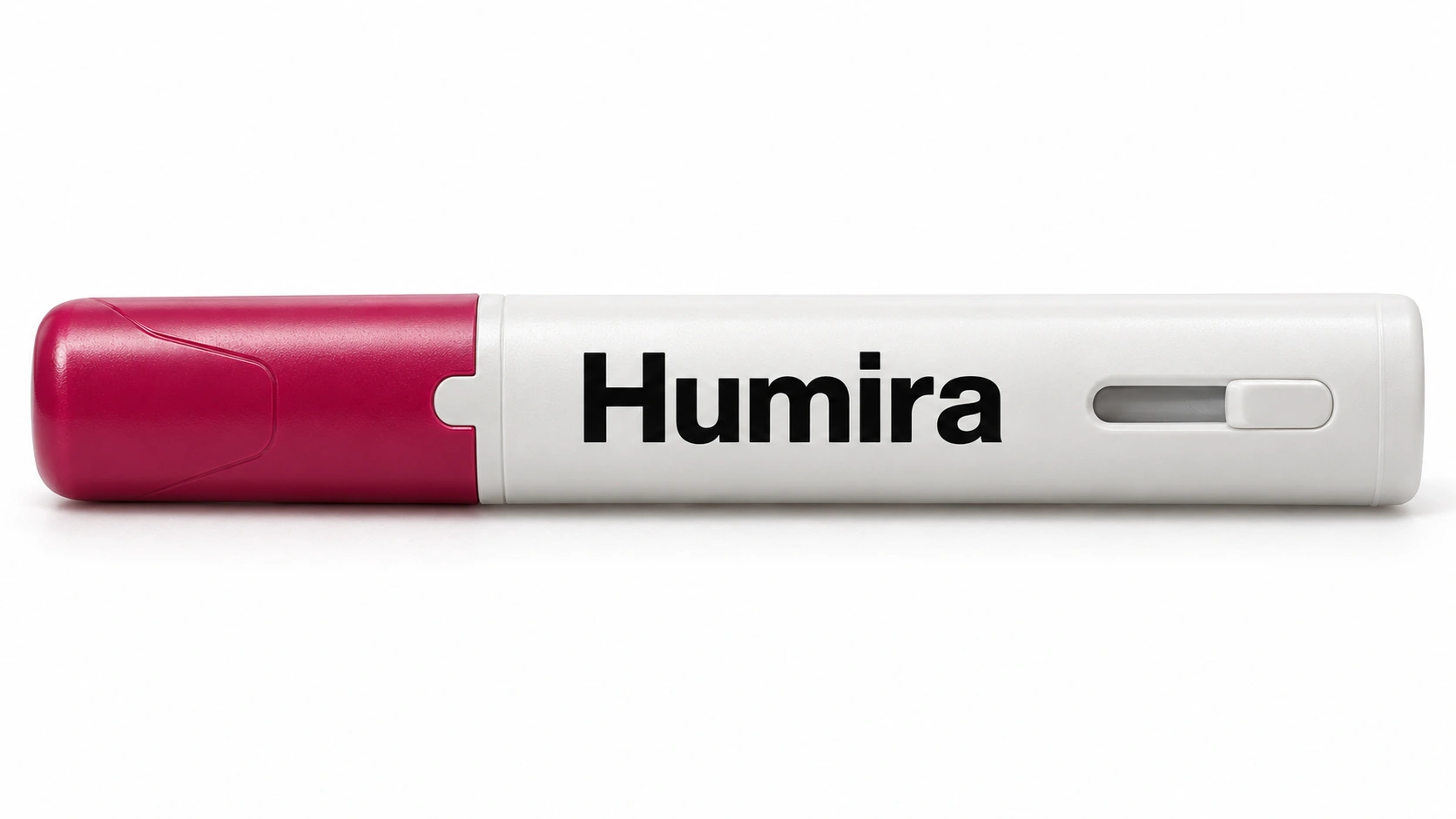
A silver and dark pink autoinjector pen labeled Humira lying on a white background

Humira

Strong evidence

The first biologic licensed for this condition, given as a self-injection under the skin every week or two. It blocks one of the immune signals driving the disease and reduces lumps and abscesses in moderate to severe cases. It does not close existing tunnels. You are screened for tuberculosis and hepatitis first, and infections need reporting while you are on it.

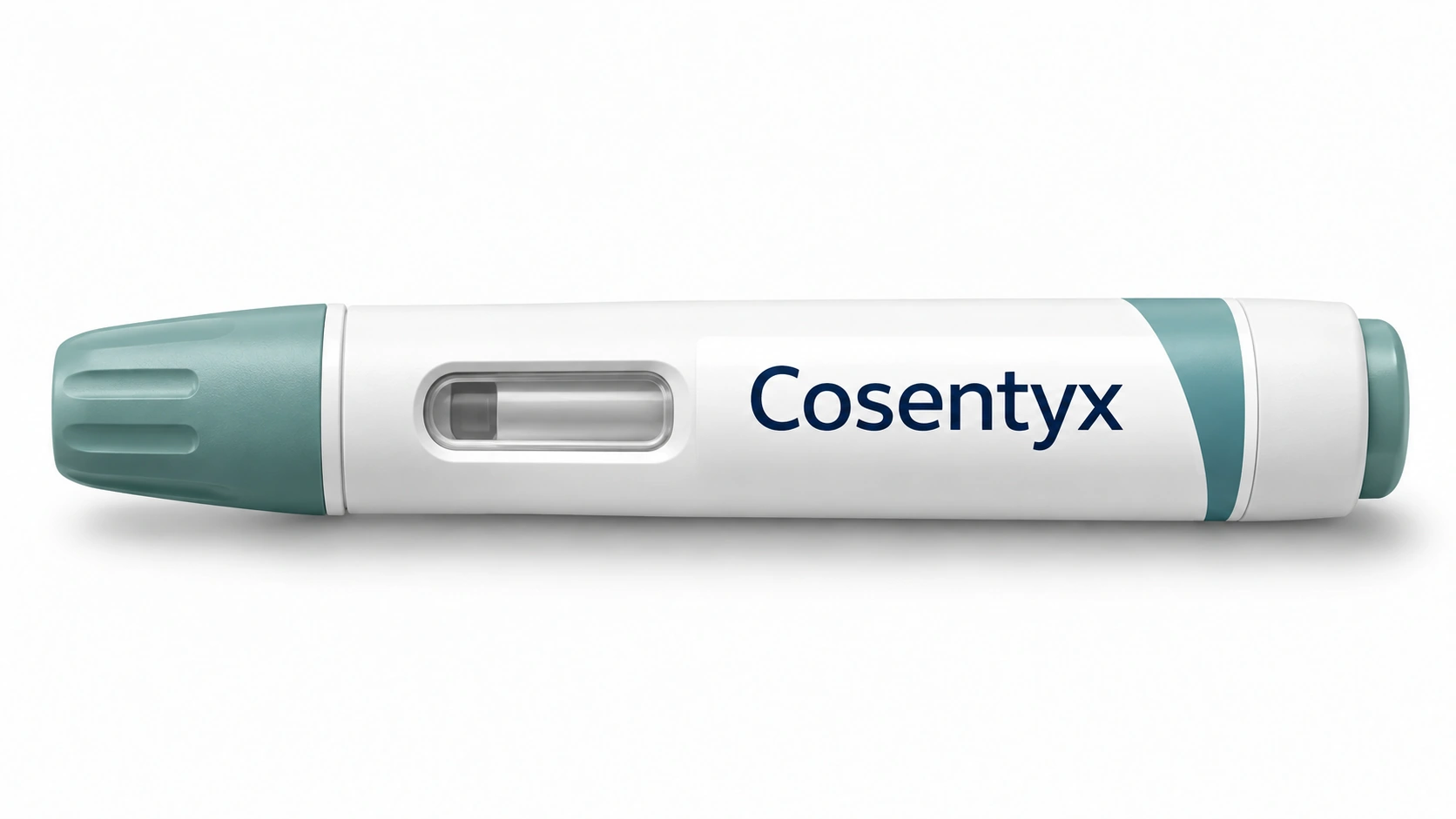
An illustrative capped injection pen labeled Cosentyx; packaging is conceptual.

Cosentyx

Strong evidence

A newer biologic injection that blocks a different immune signal, licensed for this condition after trials in moderate to severe disease. It is the usual next step when adalimumab has not worked or has stopped working. Like adalimumab, it treats the inflammation rather than the tunnels, so it is often combined with surgery.

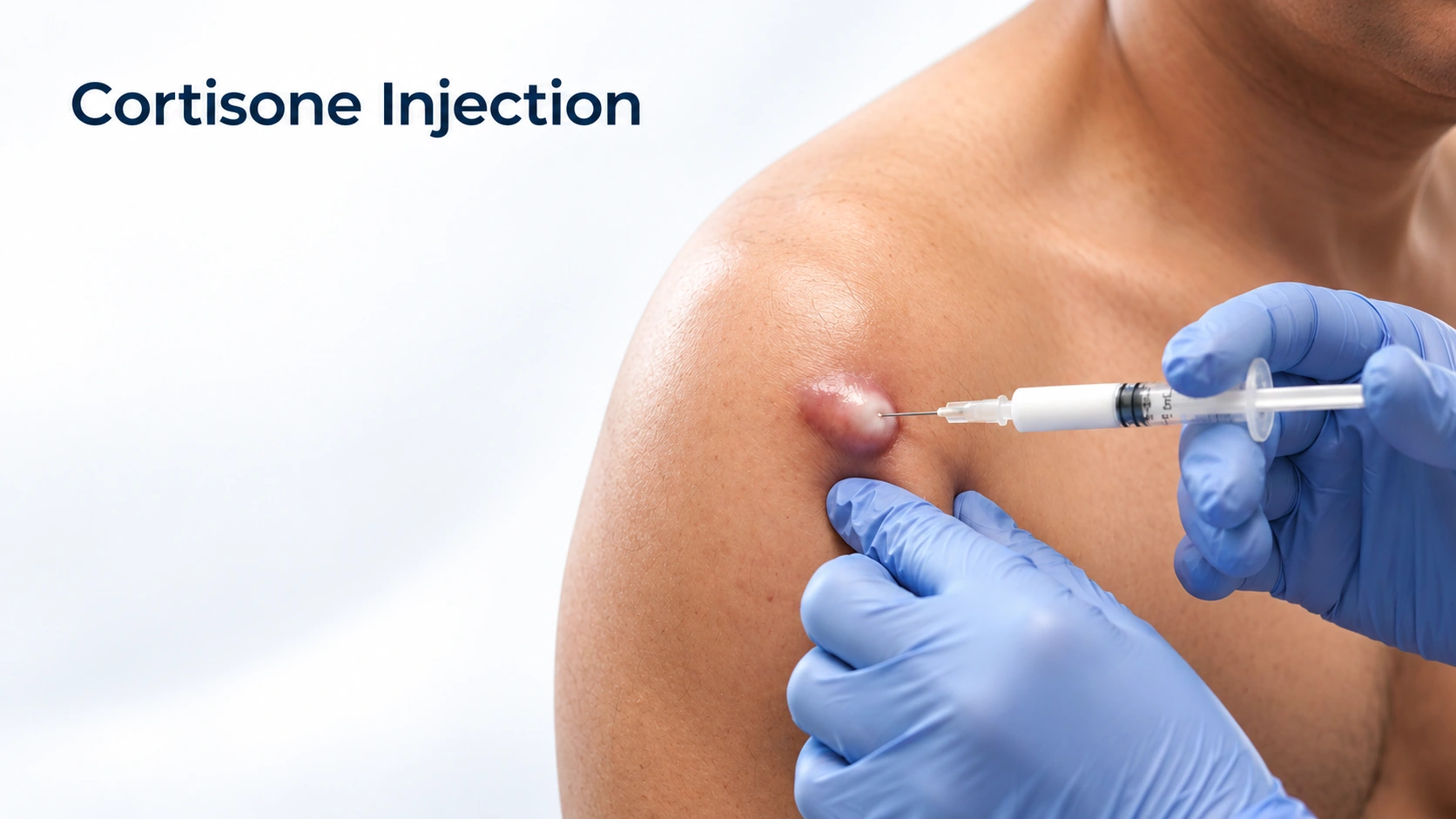
Editorial illustration for Cortisone Injection, based on the entry’s treatment or equipment reference.

Cortisone Injection

Limited evidence

A small amount of steroid injected straight into a single painful lump, which usually settles it within a day or two. It is the fastest thing available for one bad flare and it avoids cutting. It treats that one lump only, and repeated injections in the same spot can thin the skin, so it is not a plan on its own.

None listed
Procedures
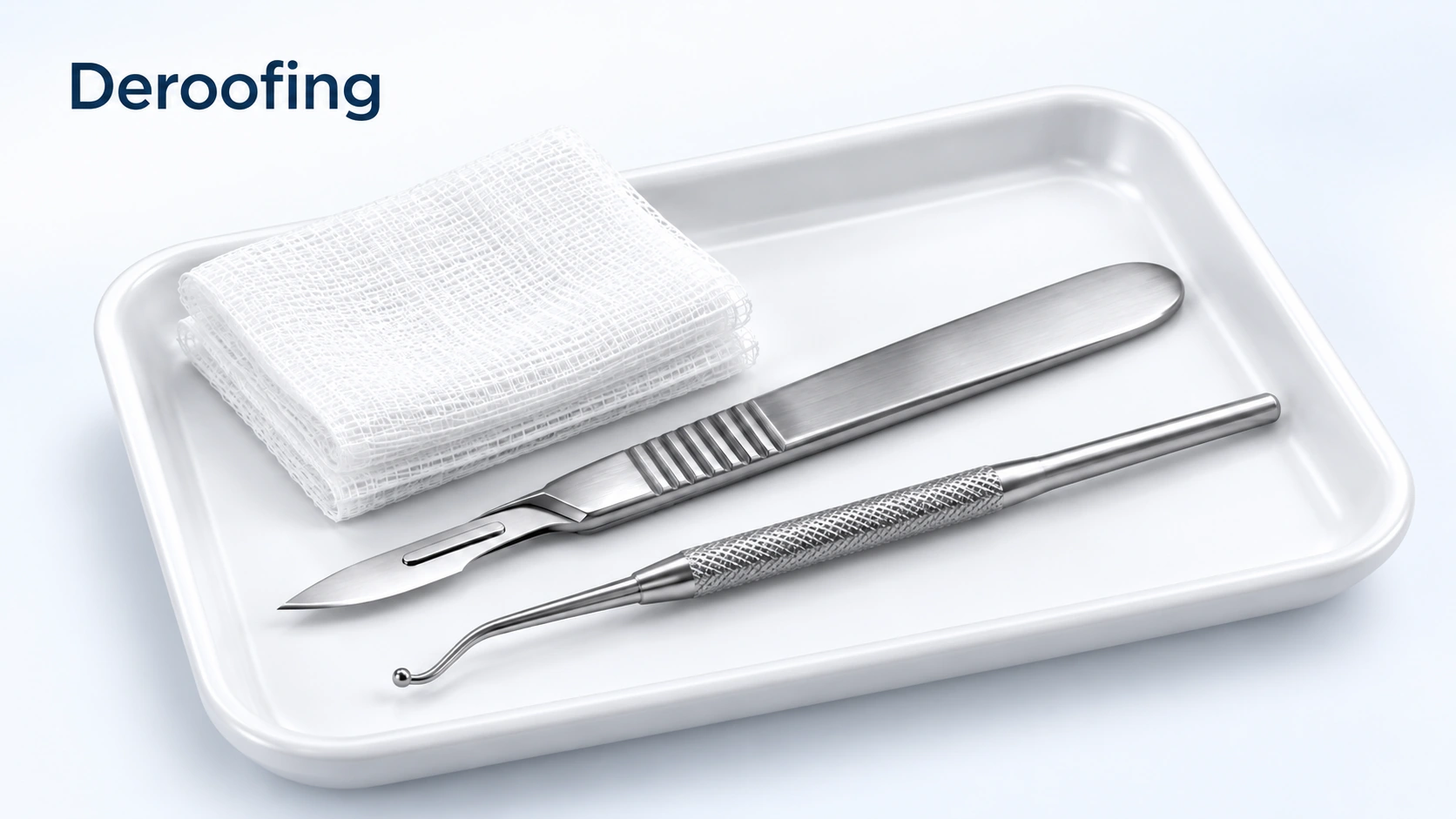
Editorial illustration for Deroofing, based on the entry’s treatment or equipment reference.

Deroofing

Moderate evidence

The roof of a tunnel is removed under local anesthetic and the floor is left to heal open. The tunnel does not come back in that spot. It is small, done in clinic, and leaves a flatter result than cutting a wide block of skin out, which matters more on deeper skin tones. It treats the tunnels you have, not the disease, so medication usually continues.

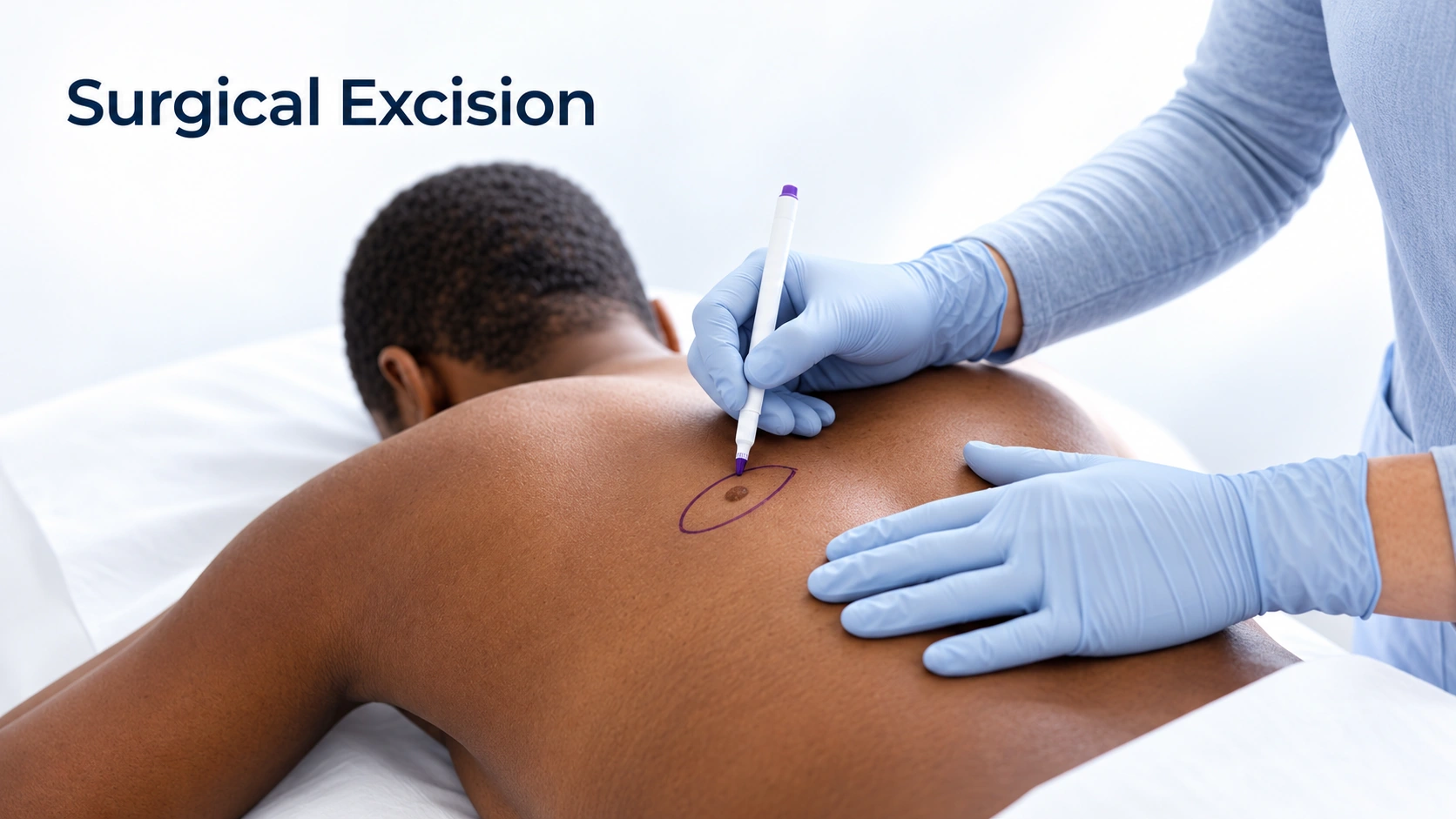
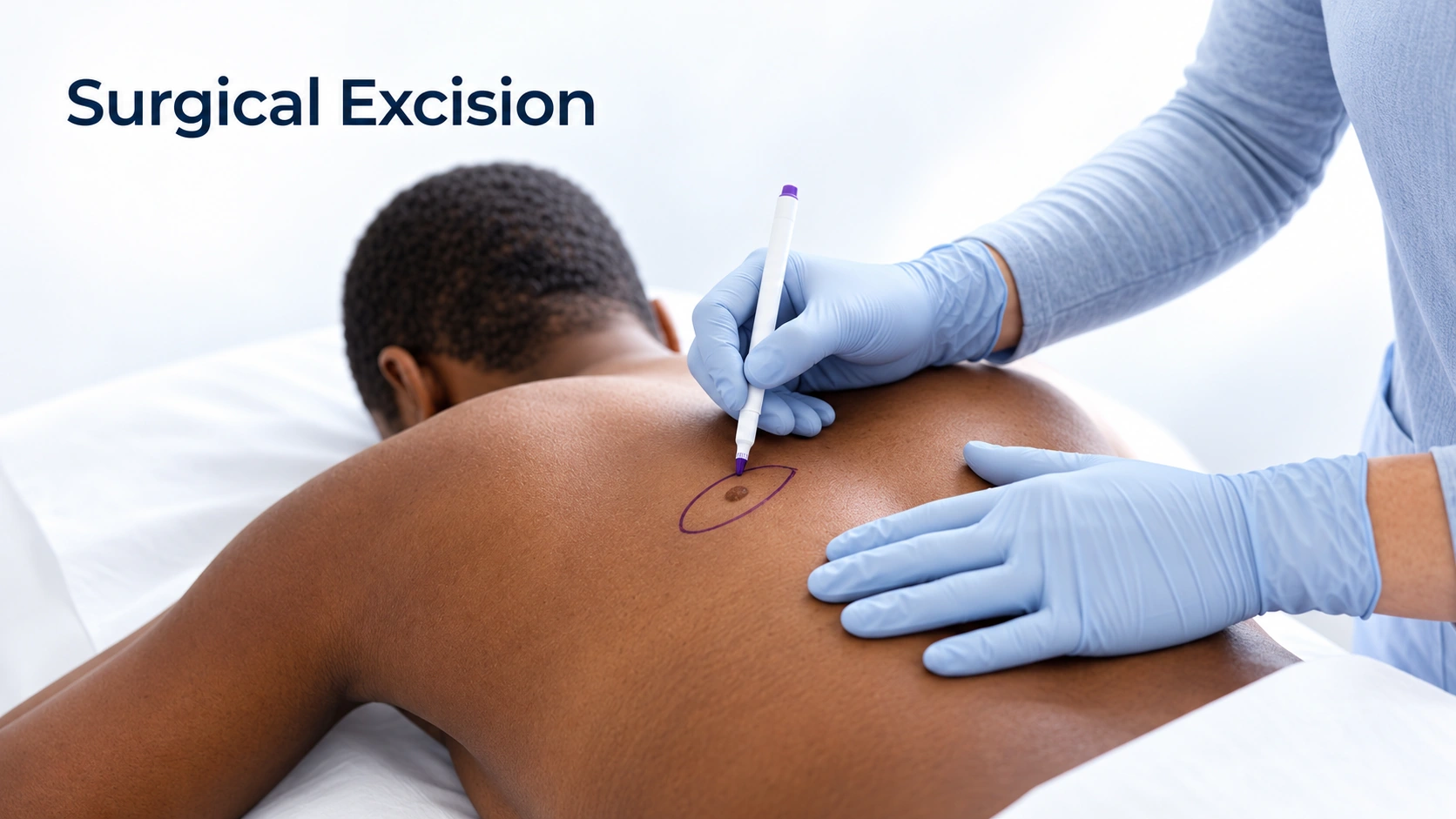
Editorial illustration for Surgical Excision, based on the entry’s treatment or equipment reference.

Surgical Excision

Moderate evidence

Wide excision. A whole affected area is removed surgically, for advanced disease where tunnels run right across an armpit or groin. Disease does not return in the removed area, though it can appear at the edges or in another fold. It is done in an operating theatre, healing takes weeks, and the area may need a skin graft or flap.

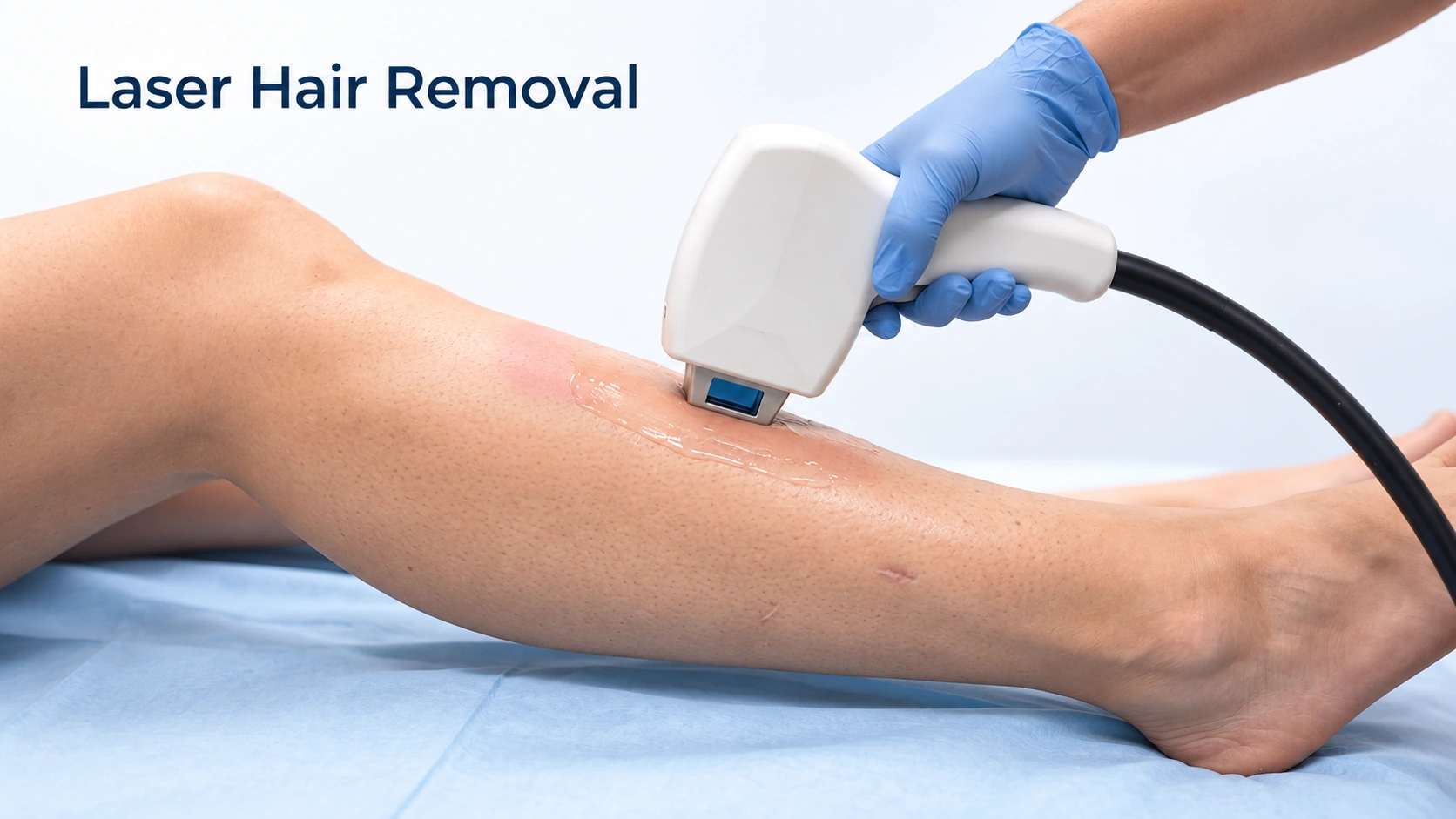
Editorial illustration for Laser Hair Removal, based on the entry’s treatment or equipment reference.

Laser Hair Removal

Moderate evidence

Removing the hair removes the follicle that plugs, and several courses of treatment reduce flares in early disease. It works best on Hurley stage one and two, before tunnels form. On deeper skin tones the device matters: the long-pulsed Nd:YAG is the usual choice, and the wrong laser causes burns and pigment change. Ask which one the clinic will use.

Editorial illustration for Incision and Drainage, based on the entry’s treatment or equipment reference.

Incision and Drainage

Limited evidence

Incision and drainage. Cutting a swollen abscess open relieves severe pressure and pain quickly, which is why it is done in emergency departments. It does not change the course of the condition and the lump usually refills in the same place within weeks. Repeated draining of the same spot encourages a tunnel to form, so it is a rescue measure rather than treatment.

Editorial illustration for Laser Hair Removal, based on the entry’s treatment or equipment reference.

Laser Hair Removal

Limited evidence

For folliculitis and razor bumps driven entirely by shaving, particularly in the beard and neck, reducing the hair removes the cause instead of treating the result. It usually takes six or more sessions and works best with a device suited to your skin tone, since the wrong one can burn or leave marks on deeper skin. It is worth considering after months of the same bumps rather than after one crop.

Editorial illustration for Incision and Drainage, based on the entry’s treatment or equipment reference.

Incision and Drainage

Moderate evidence

Draining a boil. A boil that has come to a head is opened with a small blade under local anesthetic and the pus is let out, which relieves the pain almost immediately. It is often the whole treatment, with antibiotics only added if the redness is spreading. Done properly it heals with a much smaller mark than a squeezed boil, which is the argument for having it done rather than attempting it at home.

Outlook

Long term

It runs in flares and quiet periods, and follows a longer arc over years. Not everyone progresses. The toll is real — pain, drainage, dressings, clothes chosen around it, embarrassment about the smell — and rates of depression and anxiety are high, worth raising at an appointment.

Many superficial cases settle with appropriate care, but repeated episodes need assessment for an ongoing contributor such as shaving, friction or infection. The course depends on the type; deeper inflammation can take longer to heal and may scar.

Complications

Possible complications
  • Scarring and restricted movement
  • Depression and anxiety
  • Squamous Cell Carcinoma
More details

Scarring and restricted movement
Years of flares in the same fold leave thick, rope-like scars that pull the skin tight. In an armpit that can limit how far the arm lifts; in the groin it can make sitting or walking uncomfortable. Scars cannot be reversed with medication, so the way to avoid them is to get on proper treatment early. Surgery can release or remove a badly scarred area.

Depression and anxiety
Constant pain, drainage, dressings and the smell wear people down, and rates of depression and anxiety in this condition are high. It is a normal response to a hard illness, not a separate weakness. It is also rarely asked about, so it is worth raising yourself at an appointment. Getting the skin under control usually helps a great deal, and support for the mood side can be arranged at the same time.

Squamous Cell Carcinoma
A rare complication of very long-standing disease, usually after decades of tunnels and scarring on the buttocks or groin. A skin cancer can grow in the damaged skin. The warning sign is a lump, ulcer or growth that behaves differently from your usual flares and does not settle. Anything like that should be looked at and biopsied rather than treated as another flare.

  • Boils and carbuncles
  • Cellulitis
  • Keloid scars
More details

Boils and carbuncles
When the infection goes further down the follicle it becomes a boil: a tender, swollen lump that comes to a head over several days. Several joined together are called a carbuncle. Squeezing is what turns a surface bump into one of these, so warm compresses and leaving it alone are the right first move. Boils often need draining or oral antibiotics, and they can leave a scar.

Cellulitis
Sometimes the infection leaves the follicle and spreads into the surrounding skin. The signs are redness, swelling and warmth spreading outward from the spot rather than staying in it, sometimes red streaks running away from it, and often a fever. That is a same-day problem needing oral antibiotics, and it is more likely in people with diabetes or a weakened immune system.

Keloid scars
Deep folliculitis on the chest, shoulders, jawline and the back of the neck can heal into raised, thickened scars, and that risk is higher on deeper skin tones. At the nape there is a specific pattern, acne keloidalis nuchae, where the bumps become firm and permanent and the hair in that patch is lost. It responds far better to early treatment than to waiting, so firm bumps building at the back of the neck are a reason to be seen rather than to keep treating at home.

When to get help

When to get help

Seek early assessment for recurring painful lumps, drainage or tunnels. Fever, spreading redness or severe pain needs prompt care.

Arrange assessment if the rash persists, keeps returning, is extensive or has not responded to treatment. A pustule swab may help distinguish bacteria and guide treatment.

Seek prompt medical care for fever, rapidly spreading redness or warmth, worsening pain, a large deep lump, or feeling unwell. Seek care earlier if your immune system is suppressed.

Bumps around the eye with eye pain, swelling, light sensitivity or vision change need prompt assessment. Do not apply body washes or skin medicines into the eye.

Common questions

Hidradenitis Suppurativa:Is this contagious?

No. It cannot be passed through skin contact, towels, swimming pools or sex. It starts in your own hair follicles and is driven by your own immune system.

Hidradenitis Suppurativa:Why do antibiotics stop working?

They were never killing an infection. Tetracyclines are given for months here because they calm inflammation, and the effect fades when they stop. If antibiotics are not holding, move up to hormonal treatment or a biologic.

Hidradenitis Suppurativa:Will I need surgery?

Only if tunnels have formed, and not everyone reaches that stage. Medication treats inflammation but cannot close a tunnel, so once one exists a small procedure called deroofing is often the cleanest answer. It is done under local anesthetic and the tunnel does not return.

Hidradenitis Suppurativa:Does losing weight fix it?

It helps, and it does not fix it. Losing weight reduces friction, reduces affected folds and lowers background inflammation, and many notice fewer flares. But people of every size get this, and treating it as a weight problem is one reason people are sent away without proper treatment.

Hidradenitis Suppurativa:Can I still shave or have laser hair removal?

Shaving and waxing tend to provoke flares, so clipping is better day to day. Laser hair removal often reduces flares by removing the follicle and is worth considering, particularly in early disease. On deeper skin tones the device matters — ask which laser will be used.

Hidradenitis Suppurativa:Will it affect having children?

The condition does not affect fertility, but several treatments are not suitable in pregnancy, including some antibiotics and hormonal treatments. Many find it flares in pregnancy and improves afterwards, or the reverse. Plan ahead with the doctor managing your pregnancy, and never start or stop a medicine on your own.

Folliculitis:How do I tell folliculitis from acne?

Look for blackheads and whiteheads. Acne has them, folliculitis does not. Folliculitis bumps are all the same size, each sits at a hair, they itch more than they hurt, and they appear where you shave, sweat or rub - thighs, buttocks, beard, chest, back. Acne sits on the face, chest and upper back, has spots of different sizes, and is not itchy.

Folliculitis:Is it contagious?

Mostly not in ordinary contact. The bacteria can pass through shared razors, towels, unwashed sports gear and close skin contact - avoid those while it is active. Yeast folliculitis and razor bumps are not caught.

Folliculitis:Why does it keep coming back in the same place?

Because the cause is still there - the shaving method, friction, damp clothes, or a yeast cause treated as bacterial. Some people also carry Staphylococcus aureus long term, which can be tested and treated.

Folliculitis:Can I still shave?

Yes, but change how. A fresh single-blade or safety razor, with the grain, with gel, and no stretching the skin. Take days off while the skin is inflamed. For persistent razor bumps, laser hair reduction is a longer-term option.

Folliculitis:Should I use hydrocortisone on the itch?

Not on undiagnosed bumps. Steroid creams calm the itch for days while the infection carries on underneath, and the rash comes back more widespread. If itch is the main problem, a medicated wash and cool compresses are safer.

Folliculitis:Will it scar?

Superficial folliculitis heals without scarring, though flat dark marks take months to fade on deeper skin tones. Deep folliculitis and boils can scar, and firm raised bumps at the back of the neck can scar permanently - reasons to be seen early rather than keep treating at home.
Sources

Sources and further reading

  1. DermNet
  2. DermNet: Folliculitis
  3. DermNet: Bacterial folliculitis
  4. American Academy of Dermatology: Acne-like breakouts could be folliculitis
Dermapedia on YouTube