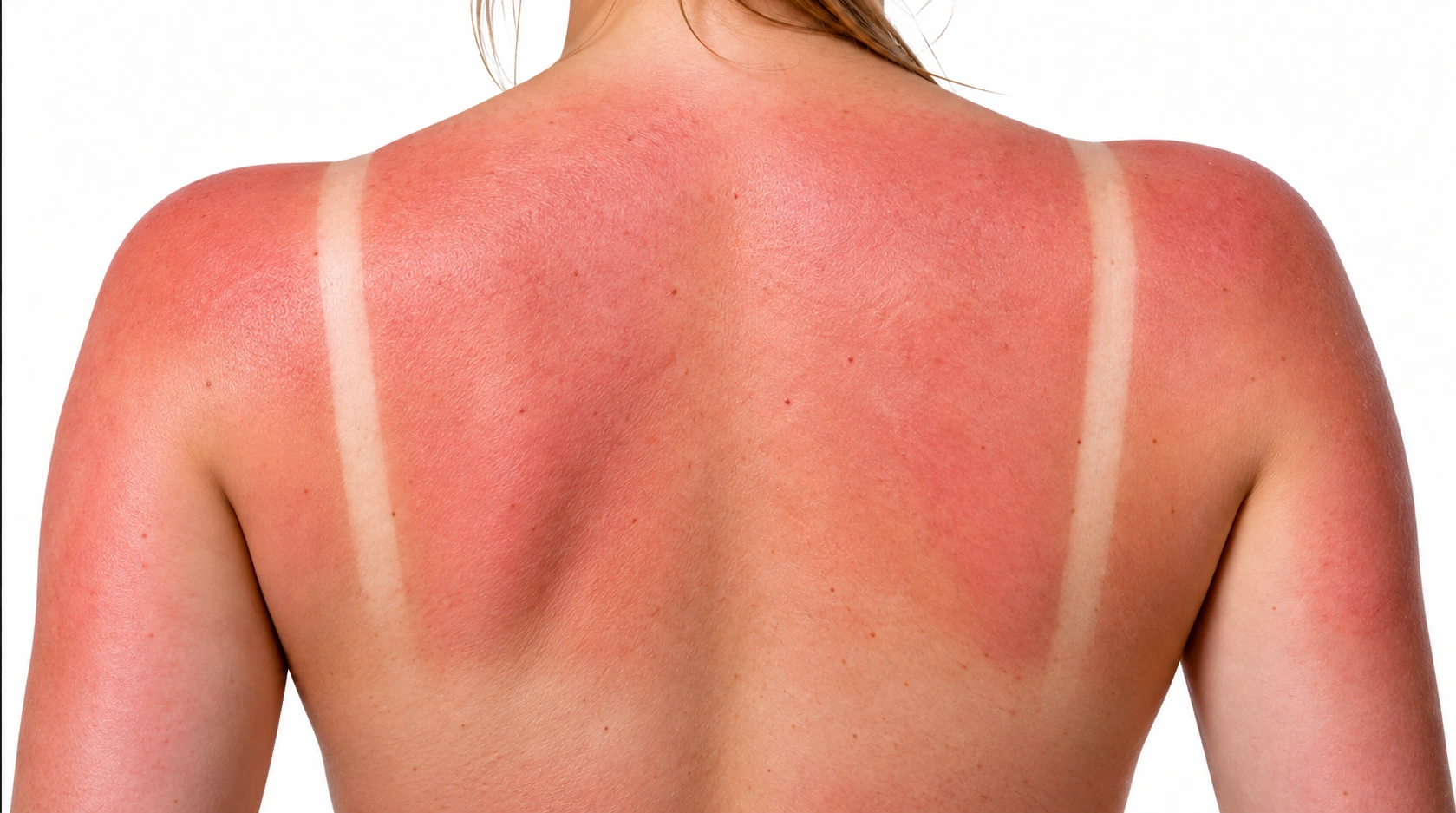
Sunburn
An antioxidant combination reduced UV-challenge damage; it is not sunscreen.
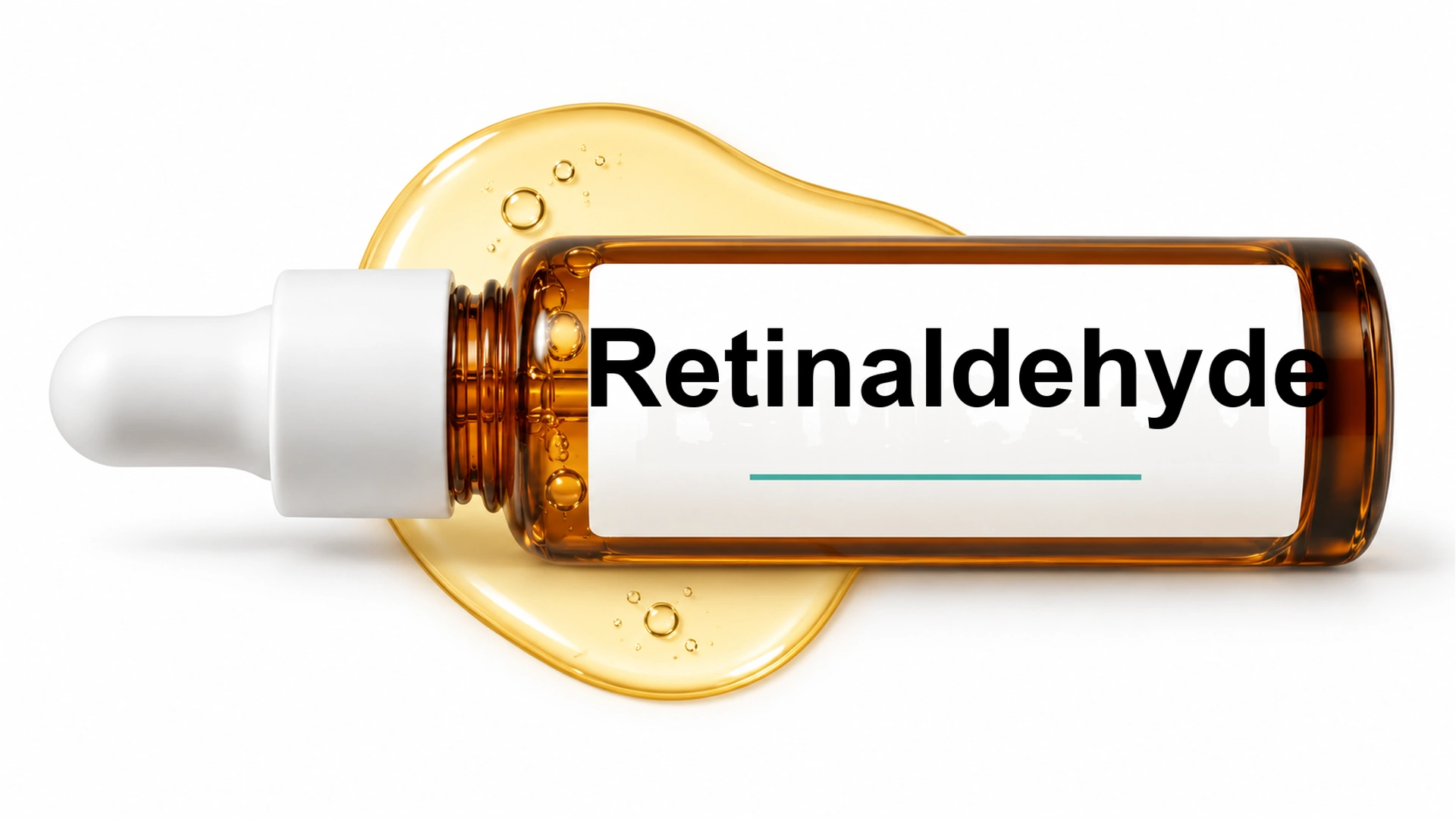
Ferulic Acid: Adds antioxidant support in formulas often combined with vitamins C and E. Retinaldehyde: Some formulas improve photoaged texture and pigmentation over months.
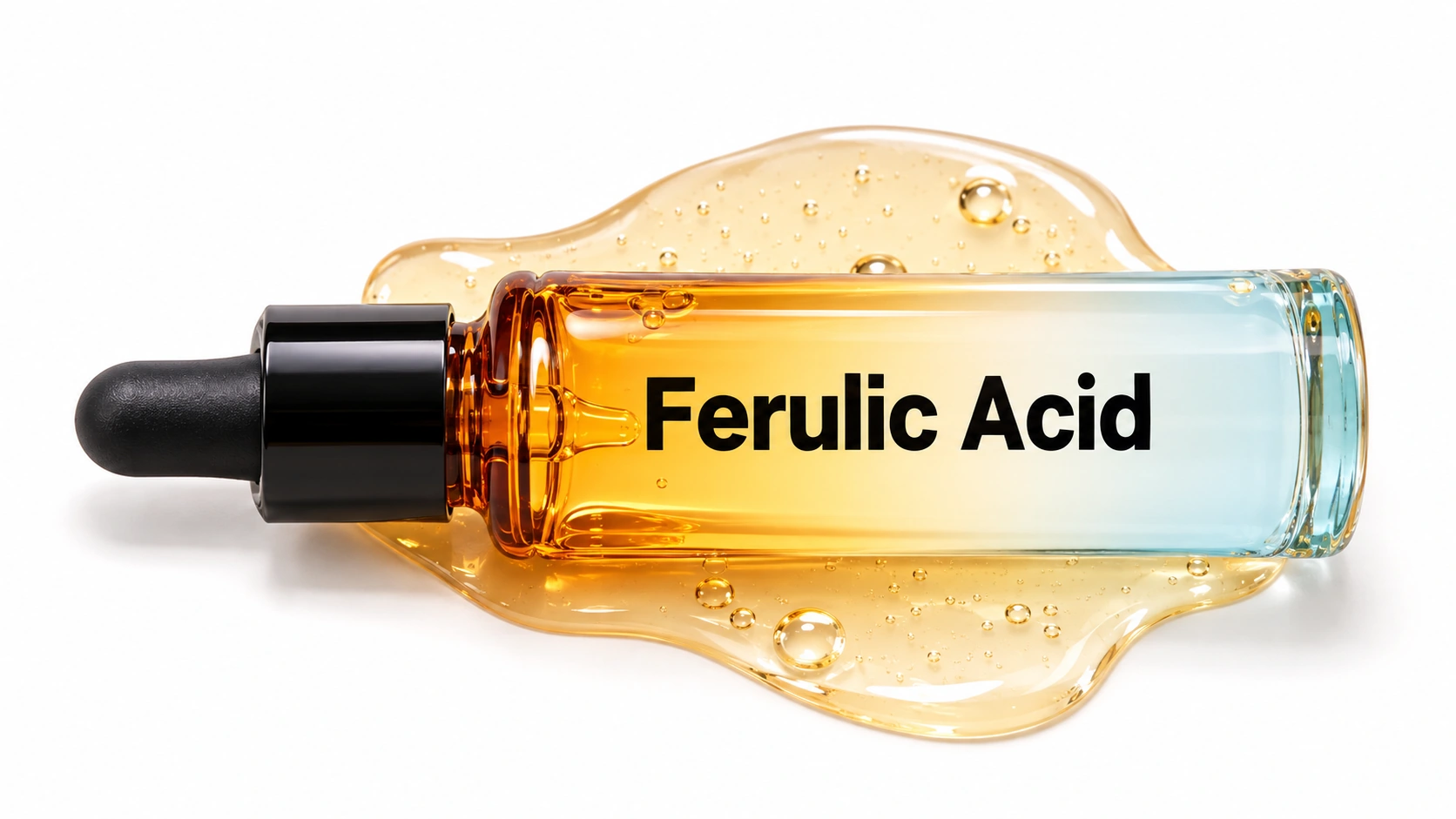
Consider as an optional antioxidant in a well-tested formula, alongside sunscreen.
Consider for photoaged texture; introduce slowly and judge the complete formula.
Can you use both?
A common anti-aging routine: ferulic antioxidant serum in the morning, retinaldehyde at night.
Compare uses by strength of evidence. Evidence level describes confidence in a benefit, not its size.





Helps limit oxidation: Ferulic acid can neutralize reactive molecules. Supports antioxidant blends: Studied with vitamins C and E in stable formulas.
Schematic illustration; not a measurement of skin penetration. Effects vary with ingredient identity and formulation.

Converts to retinoic acid: Skin enzymes can activate retinaldehyde. Changes cell activity: Retinoic acid acts through nuclear receptors.
Schematic illustration; not a measurement of skin penetration. Effects vary with ingredient identity and formulation.
Built from where each one usually sits in a routine. Introduce one at a time.
0.5% ferulic acid is a well-studied formulation example when combined with 15% L-ascorbic acid and 1% alpha-tocopherol. It is not a universal best concentration for ferulic acid alone.
0.5%
Studied antioxidant combination
Tested as part of a stabilized three-antioxidant formula for UV-related skin damage, rather than as a stand-alone treatment.
Choosing a strength: Look at evidence for the full antioxidant formula and how it is packaged, rather than buying by ferulic percentage alone.
Higher strengths: More ferulic acid has not been established as a better result in every serum.
Formula matters: Stability and the combination of antioxidants matter. Antioxidant skincare supplements sun protection; it does not replace sunscreen.
0.05% and 0.1% retinaldehyde creams have been compared in a controlled photoaging trial. These percentages cannot be directly compared with retinol or tretinoin.
0.05%
0.1%
Lower studied retinal strength
A cream studied for skin texture and hydration. The result applies to that finished formula.
Higher studied retinal strength
Also studied for photoaging; not better for every measured outcome. Tolerance still determines whether a product suits you.
Choosing a strength: Choose retinaldehyde for its own formula and instructions, not a retinol-to-retinal conversion chart.
Higher strengths: A higher percentage may be harder to tolerate. Stronger products sold commercially do not automatically have stronger comparative clinical evidence.
Formula matters: Encapsulation, stability and the cream or serum base affect delivery. A percentage alone is not a measure of how much reaches skin cells.
Approximate windows, not promises.
First few weeksAssess tolerance and texture; immediate softness can come from the base formula.
First few weeksAssess tolerance and texture; immediate softness can come from the base formula.
4–8 weeksSubtle changes may appear in some tested products; evidence varies.
4–8 weeksSubtle changes may appear in some tested products; evidence varies.
8–12 weeksCompare photographs in the same lighting and reassess benefit.
8–12 weeksCompare photographs in the same lighting and reassess benefit.
3–6 monthsPhotoaging trials often need several months; expect modest rather than dramatic change.
3–6 monthsPhotoaging trials often need several months; expect modest rather than dramatic change.
6–12 monthsLong-term evidence is limited for many cosmetic actives; continue only if useful.
6–12 monthsLong-term evidence is limited for many cosmetic actives; continue only if useful.
An acidic or fragranced formula may sting; discontinue for a persistent rash.
Dryness, stinging and peeling can occur; avoid irritated areas.
Stop for persistent burning, swelling, blistering or a new rash. Seek urgent care for breathing difficulty or a severe allergic reaction.
Stop for persistent burning, swelling, blistering or a new rash. Seek urgent care for breathing difficulty or a severe allergic reaction.
Choose a simple formula and test a small area first. Individual tolerance matters more than an ingredient’s reputation for being gentle.
Choose a simple formula and test a small area first. Avoid actively inflamed or broken skin unless the product is specifically directed for it.
Do not use a cosmetic product as a substitute for diagnosis of an unexplained, changing or persistent skin problem.
Do not use a cosmetic product as a substitute for diagnosis of an unexplained, changing or persistent skin problem.
Data are limited; topical antioxidants are generally considered low risk, but ask the clinician managing your pregnancy.
Retinoids are conventionally stopped in pregnancy and while trying to conceive. Ask the doctor managing your pregnancy. Azelaic acid is the usual alternative.
On the skin. The finished product delivers ferulic acid in a particular vehicle.
Entering skin. Below the 500 Da guideline; delivery still depends on the formula, solubility, stability and skin condition. Size does not prove effectiveness or penetration depth.
Conversion. No activation step is established as necessary for its intended topical role.
Skin response. Helps stabilize an antioxidant combination and limit laboratory measures of UV-induced oxidative damage.
Additional effects. Proposed pathways do not establish a measured depth of delivery or clinical benefit beyond the studies cited.
On the skin. The finished product delivers retinaldehyde in a particular vehicle.
Entering skin. Below the 500 Da guideline; delivery still depends on the formula, solubility, stability and skin condition. Size does not prove effectiveness or penetration depth.
Conversion. Skin can convert retinaldehyde into retinoic acid.
Skin response. Skin can convert retinaldehyde into retinoic acid, which influences cell activity through retinoid receptors.
Additional effects. Proposed pathways do not establish a measured depth of delivery or clinical benefit beyond the studies cited.
Consider as an optional antioxidant in a well-tested formula, alongside sunscreen.
A small human UV-challenge study tested a three-ingredient combination, not ferulic acid alone. It did not establish prevention of clinical skin cancer, melasma clearance or long-term wrinkle reduction.
Consider for photoaged texture; introduce slowly and judge the complete formula.
A 40-woman trial compared two active strengths without a retinoid-free vehicle group. It supports cautious formula-specific claims, not guaranteed superiority to retinol or acne medicines.
Sources