Adapalene
Strong evidenceThe strongest thing you can buy without a prescription, and the best first move for most acne. It unclogs pores before they inflame, which is why it prevents spots rather than treating them.
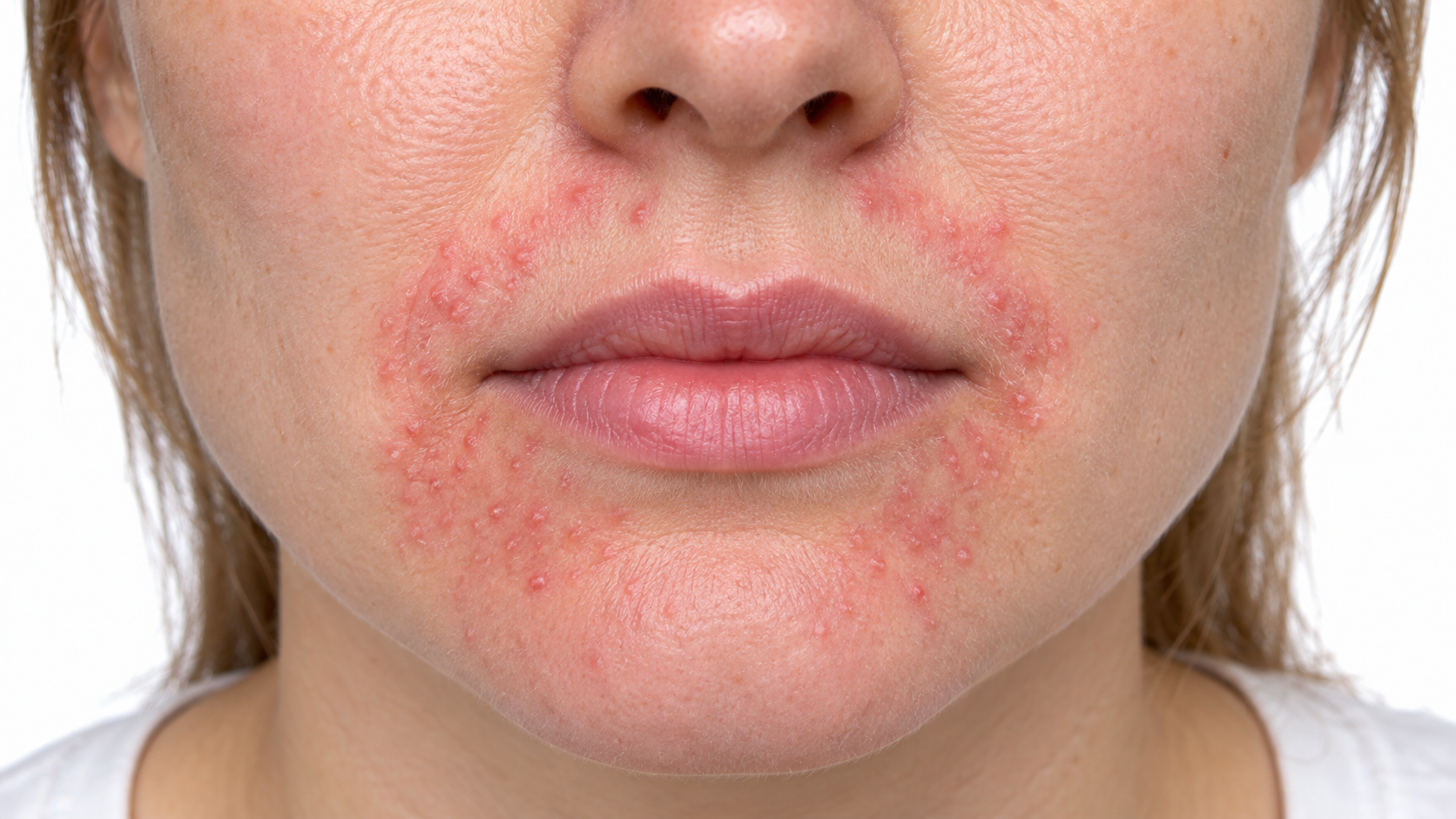
Perioral dermatitis is a rash of small bumps and fine flaking around the mouth, and sometimes around the nose and eyes. Steroid creams are the most common trigger, and they are also what makes it worse in the long run. It clears with the right treatment, but slowly.

The same eight facts on every condition comparison.
It starts in the follicle.
Acne affects the hair follicle and its oil gland.
Spots take several forms.
Plugs form blackheads or whiteheads; inflammation forms pimples and deeper lumps.
It is not about dirt.
Bacteria are only one part of the process.
Tests are rarely needed.
An unusual pattern or hormonal symptoms may call for assessment.
Overview
Oil and dead skin cells block hair follicles. This can cause blackheads, whiteheads, pimples, or deeper painful lumps.
It is a facial eruption.
Small inflamed bumps form around the mouth, nose or eyes.
The skin often feels uncomfortable.
It may feel dry, tight, burning or scaly.
The lip border is often spared.
A narrow clear zone beside the lip is common.
Simpler routines help.
Harsh actives, heavy products and steroid self-treatment can worsen it.
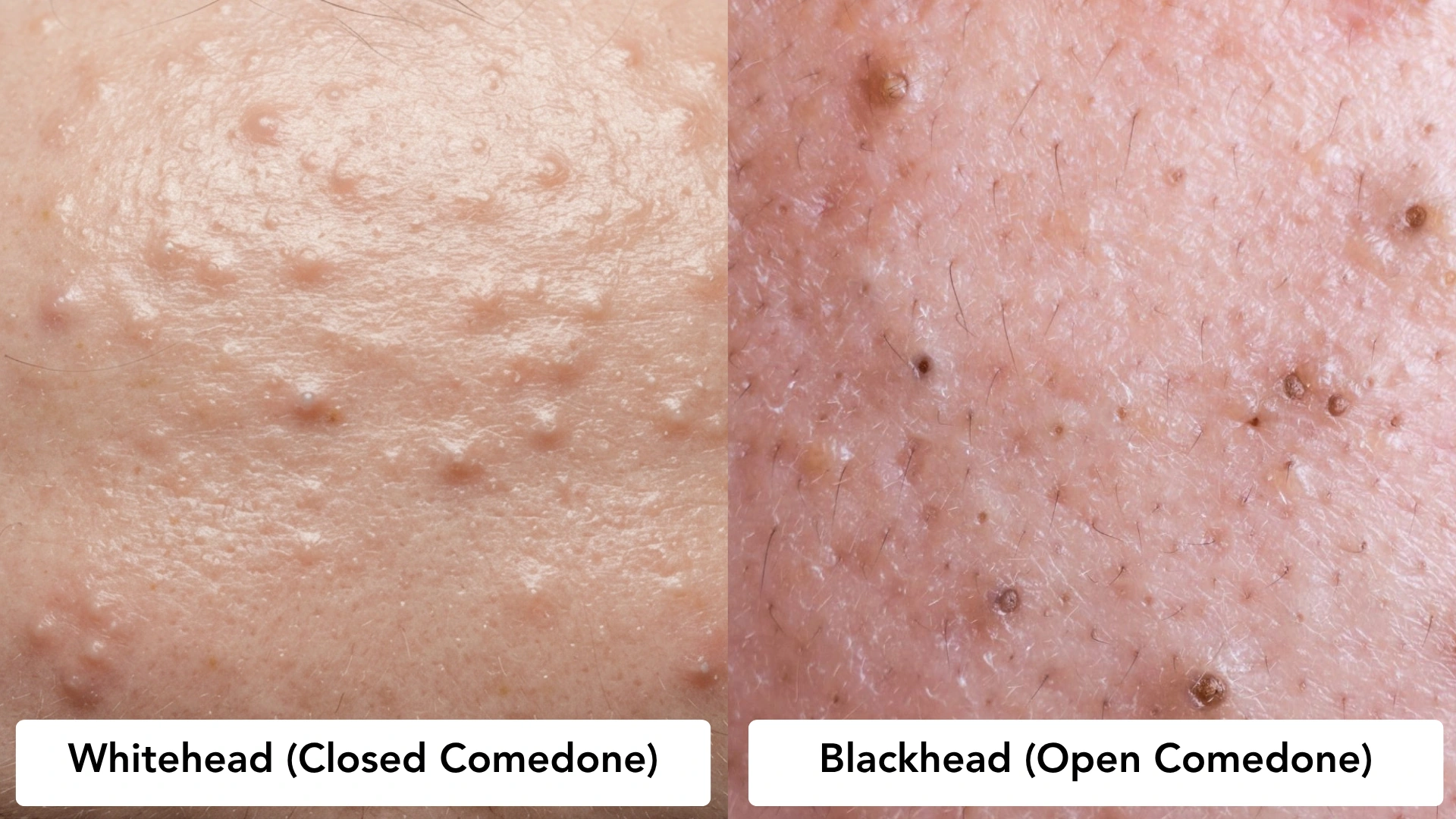
Comedonal acne Mostly blackheads and whiteheads.
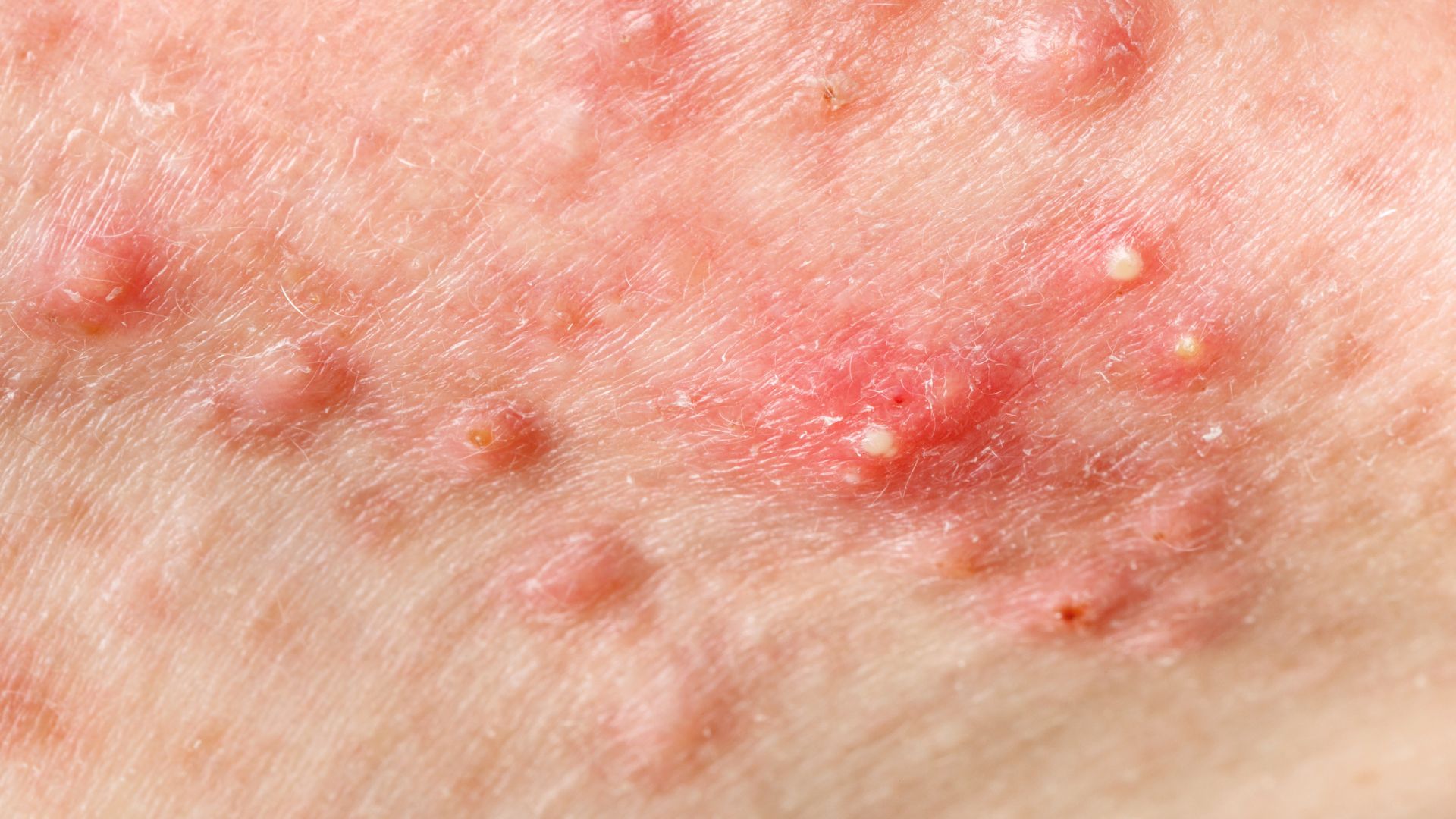
Inflammatory acne Red papules and pustules.
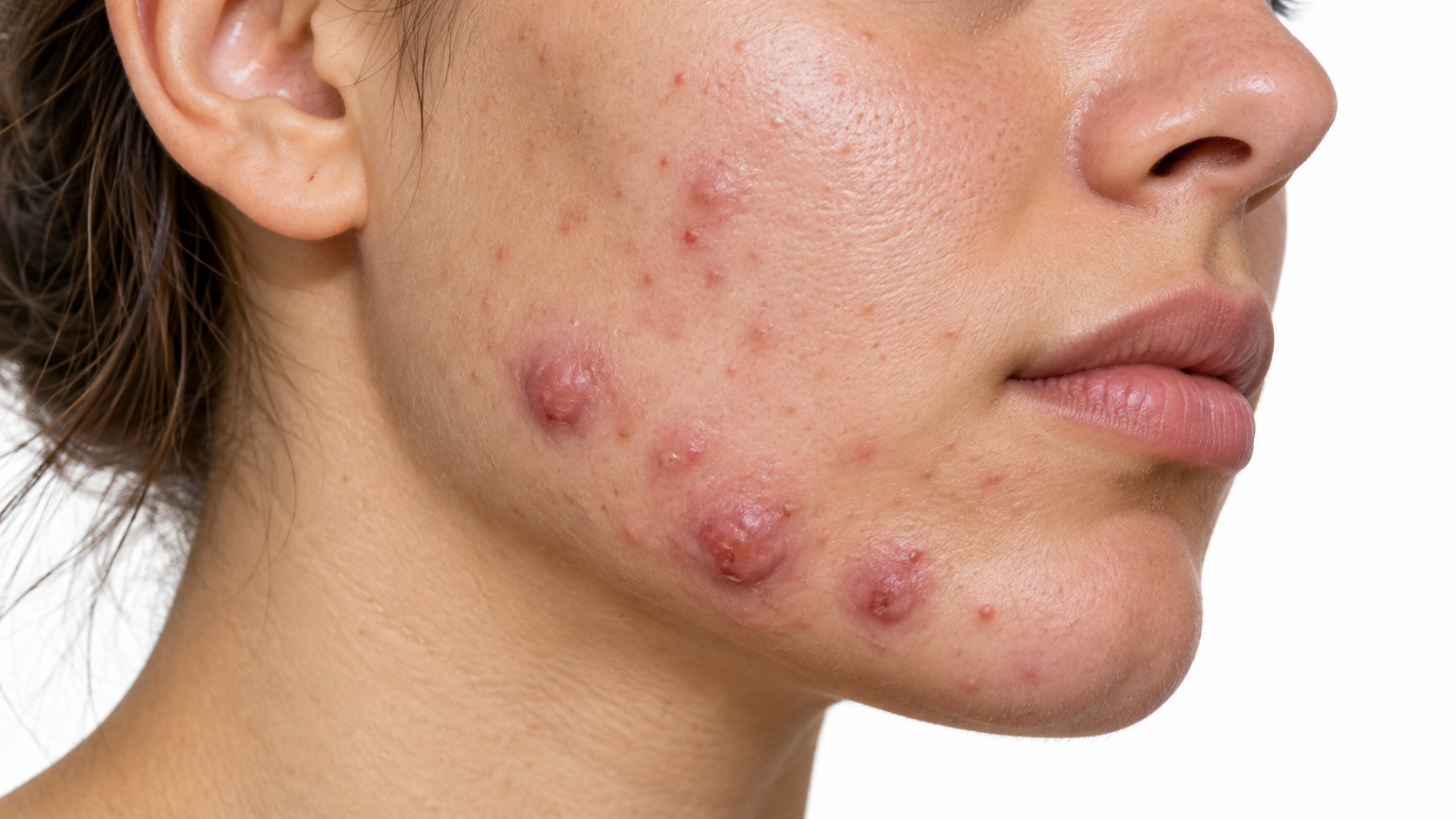
Nodulocystic acne Deep painful lumps that can scar.
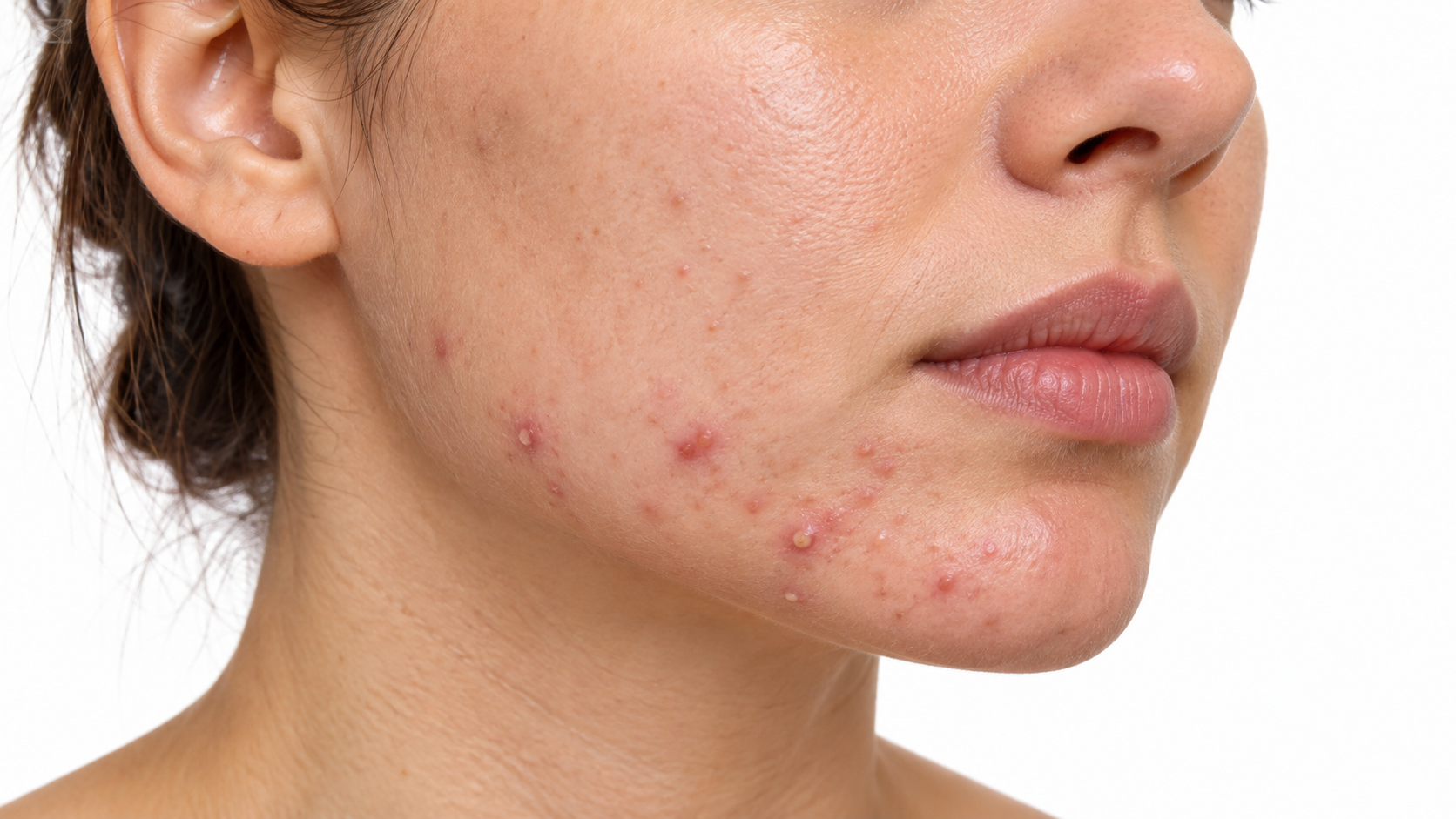
Hormonal acne Breakouts along the jaw and chin.
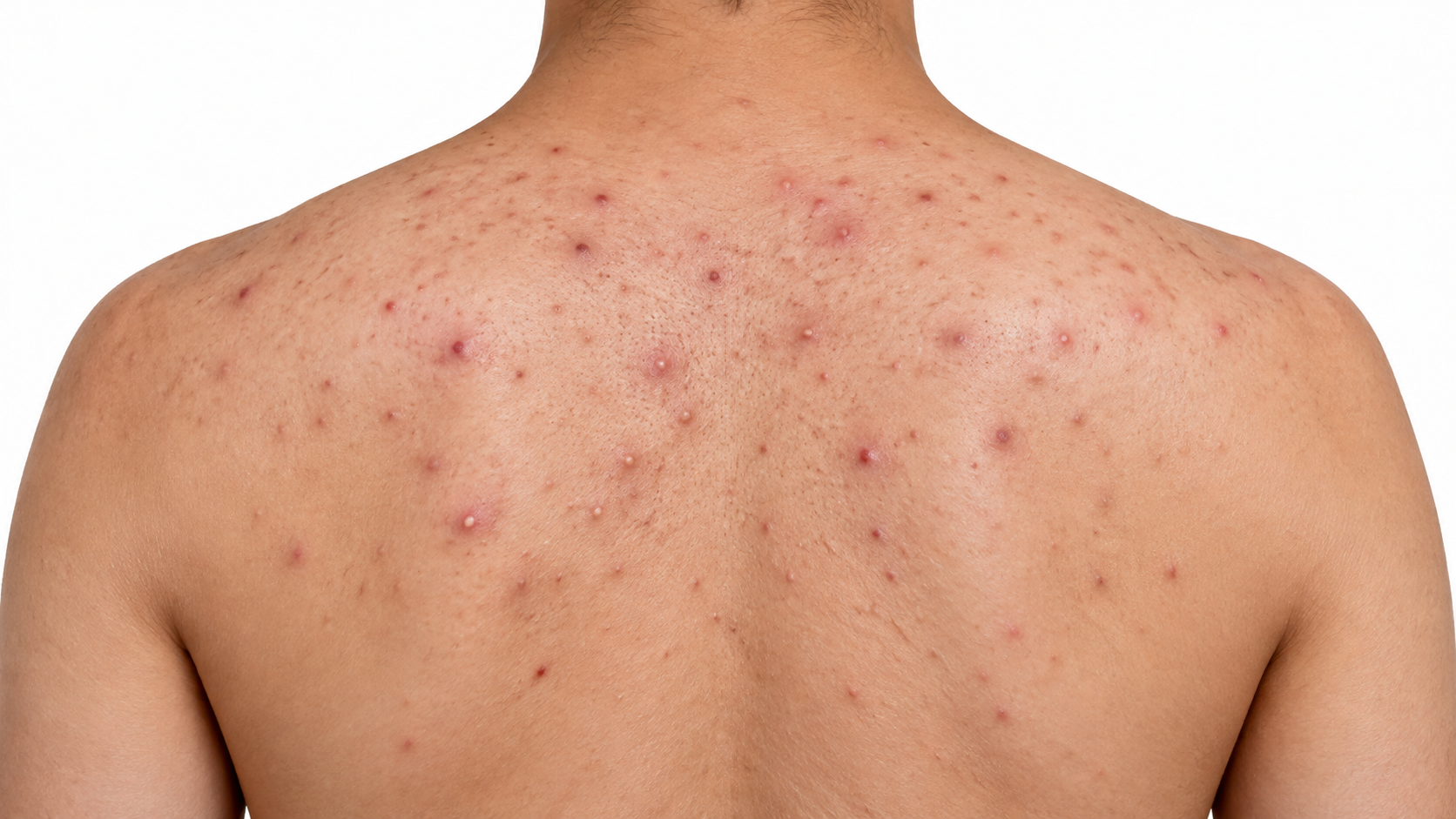
Body acne On the chest, back and shoulders.
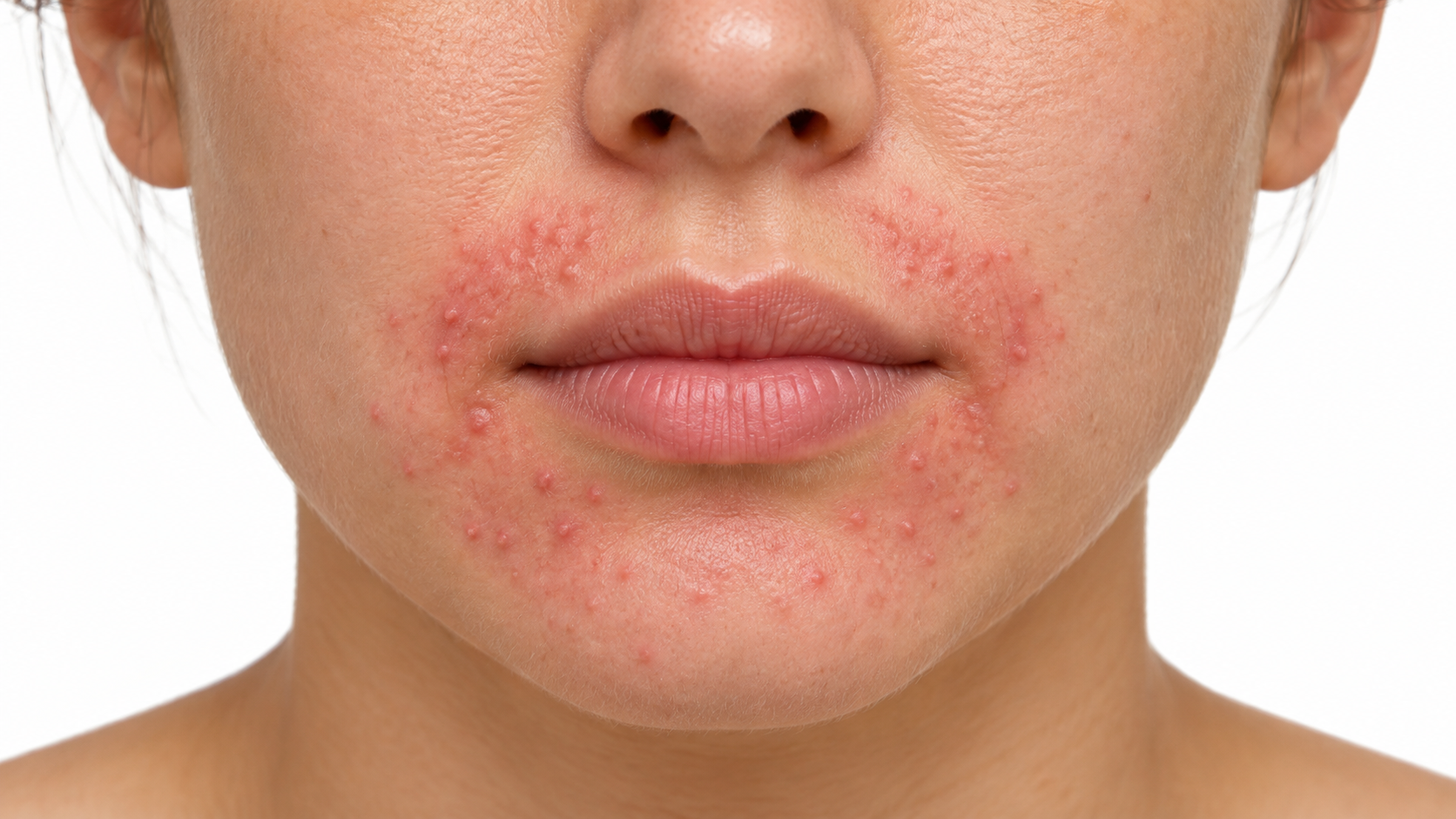
Perioral dermatitis Around the mouth.
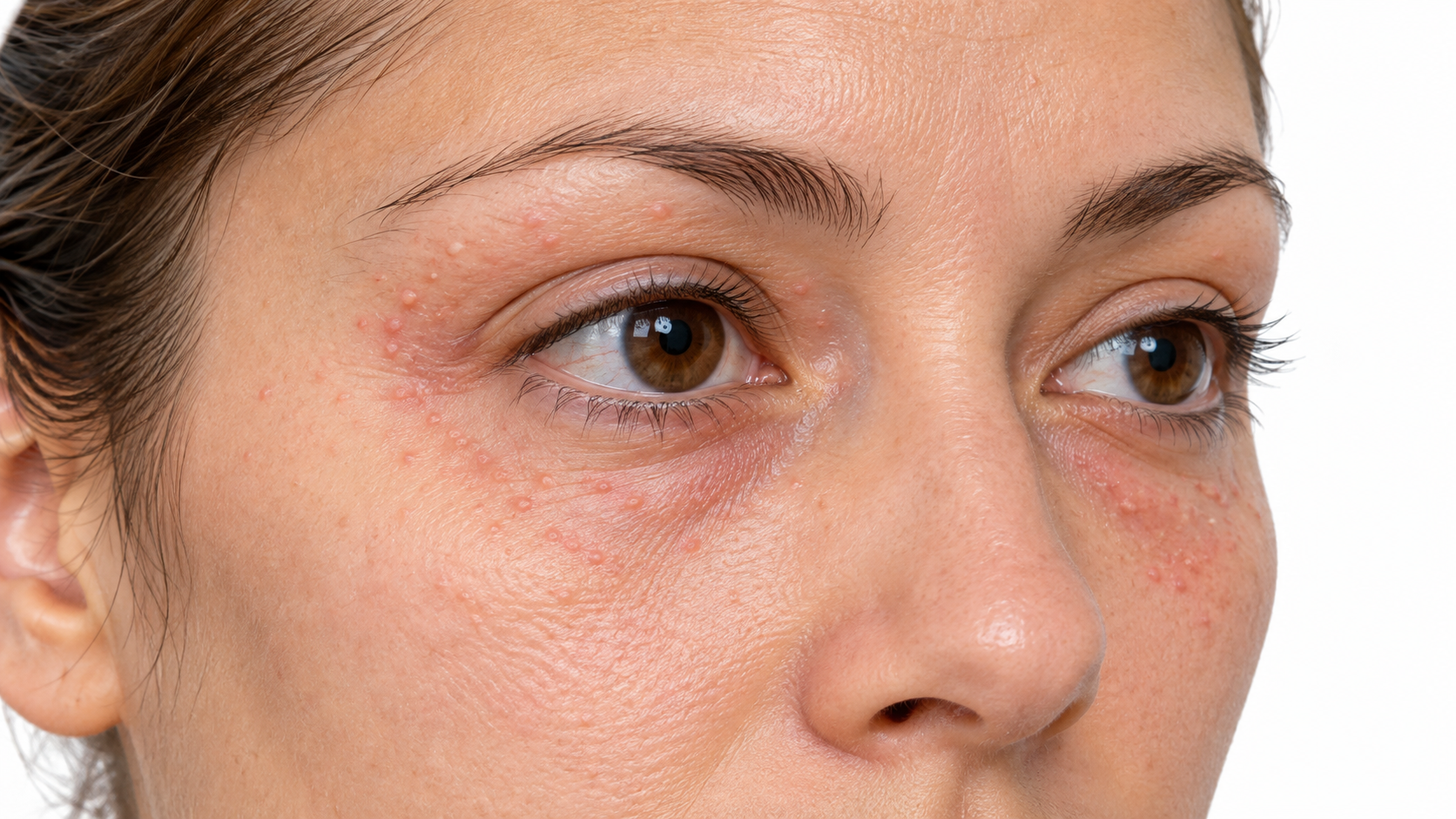
Periorbital dermatitis Around the eyes.
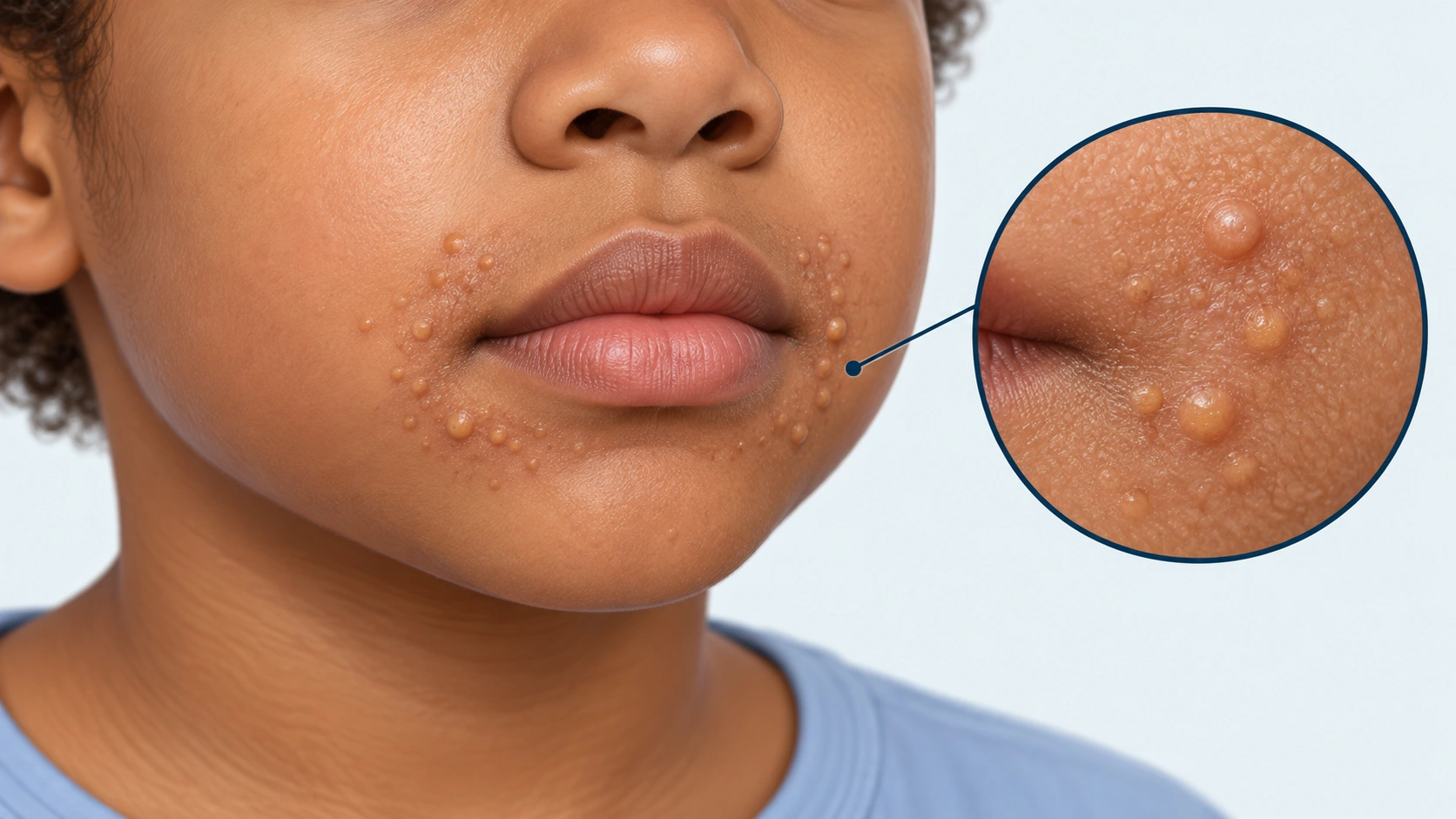
Granulomatous periorificial dermatitis Skin-colored or yellow bumps, often in children.
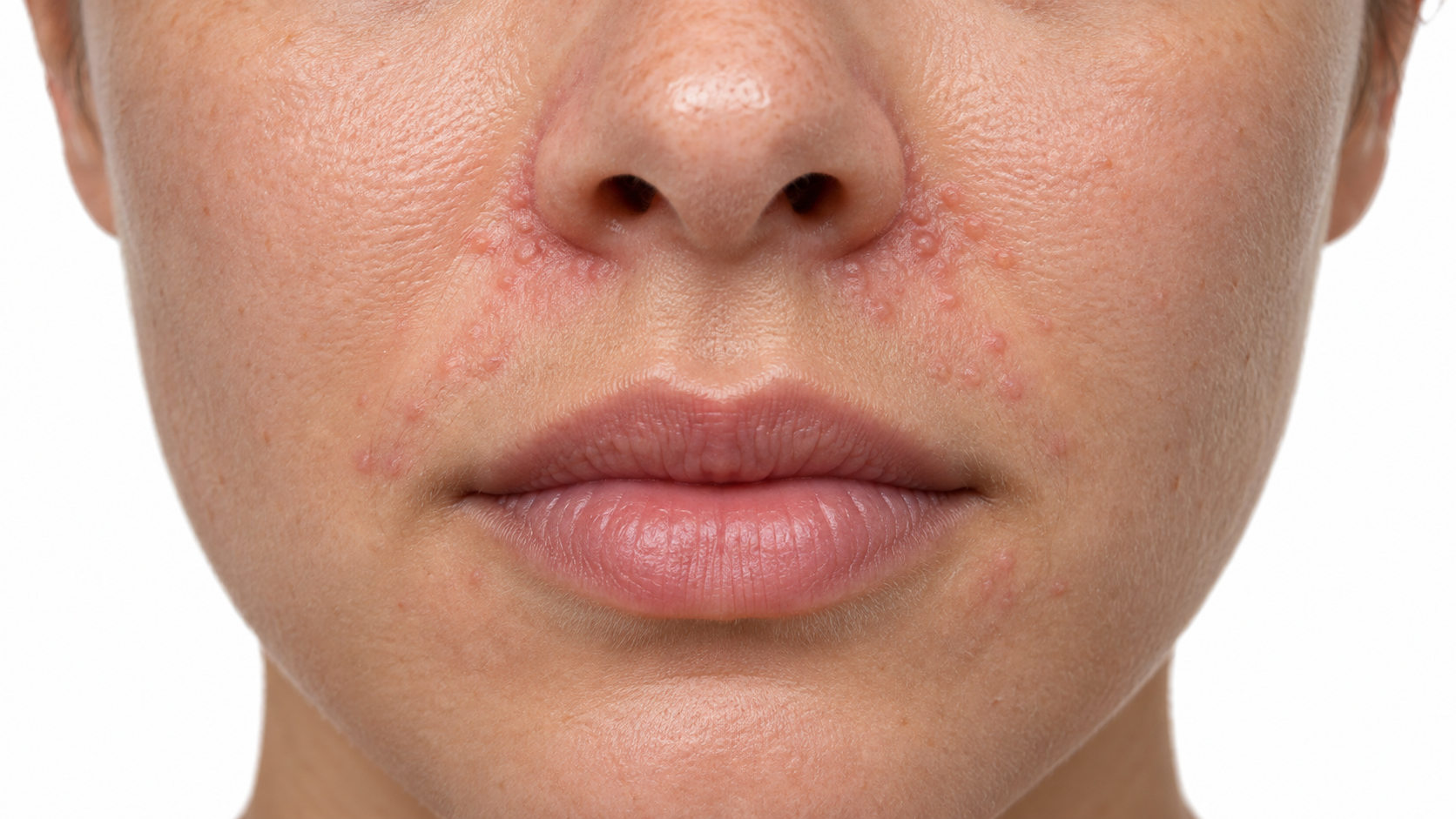
Perinasal dermatitis Can spread to the nose folds.
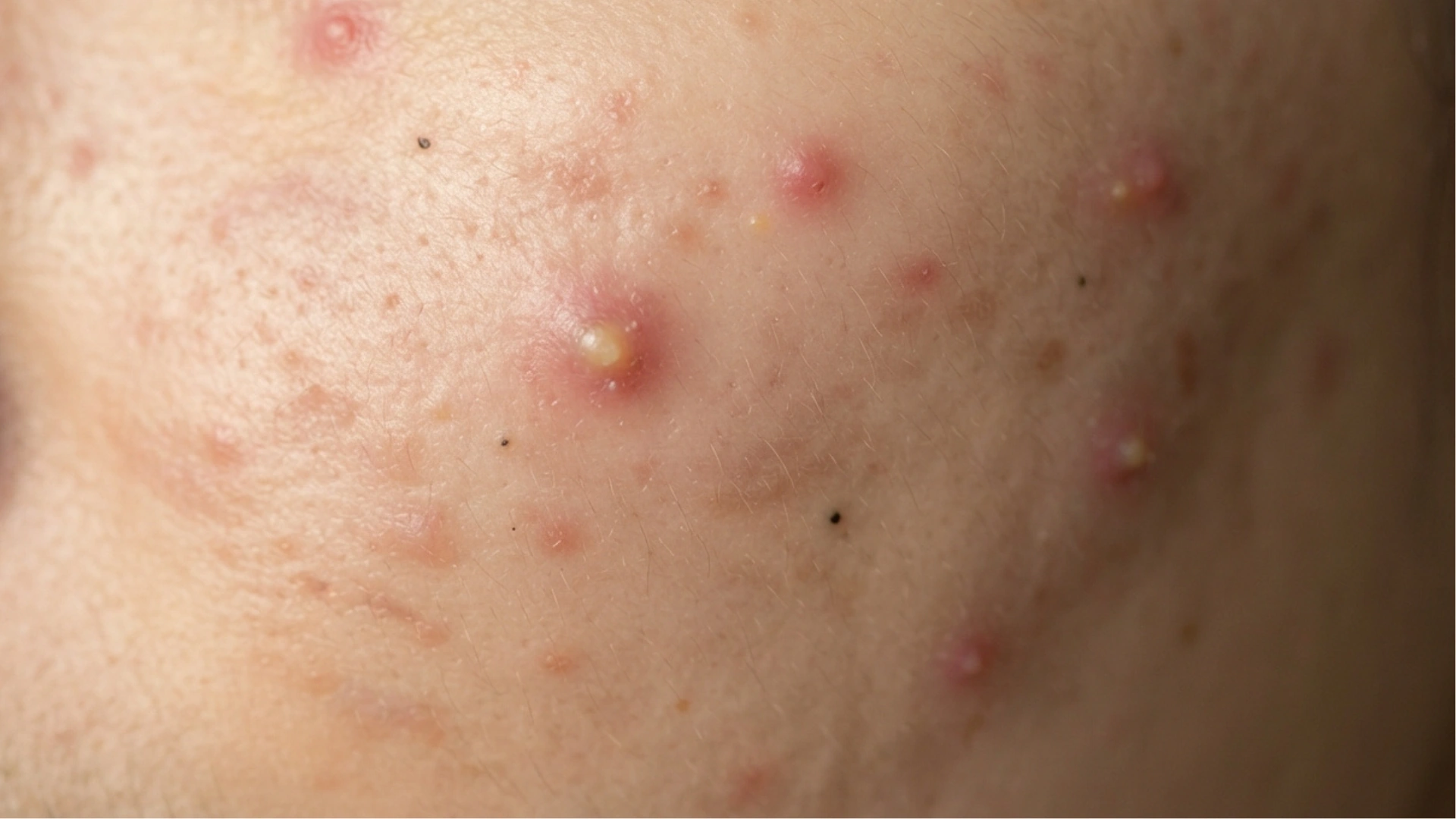
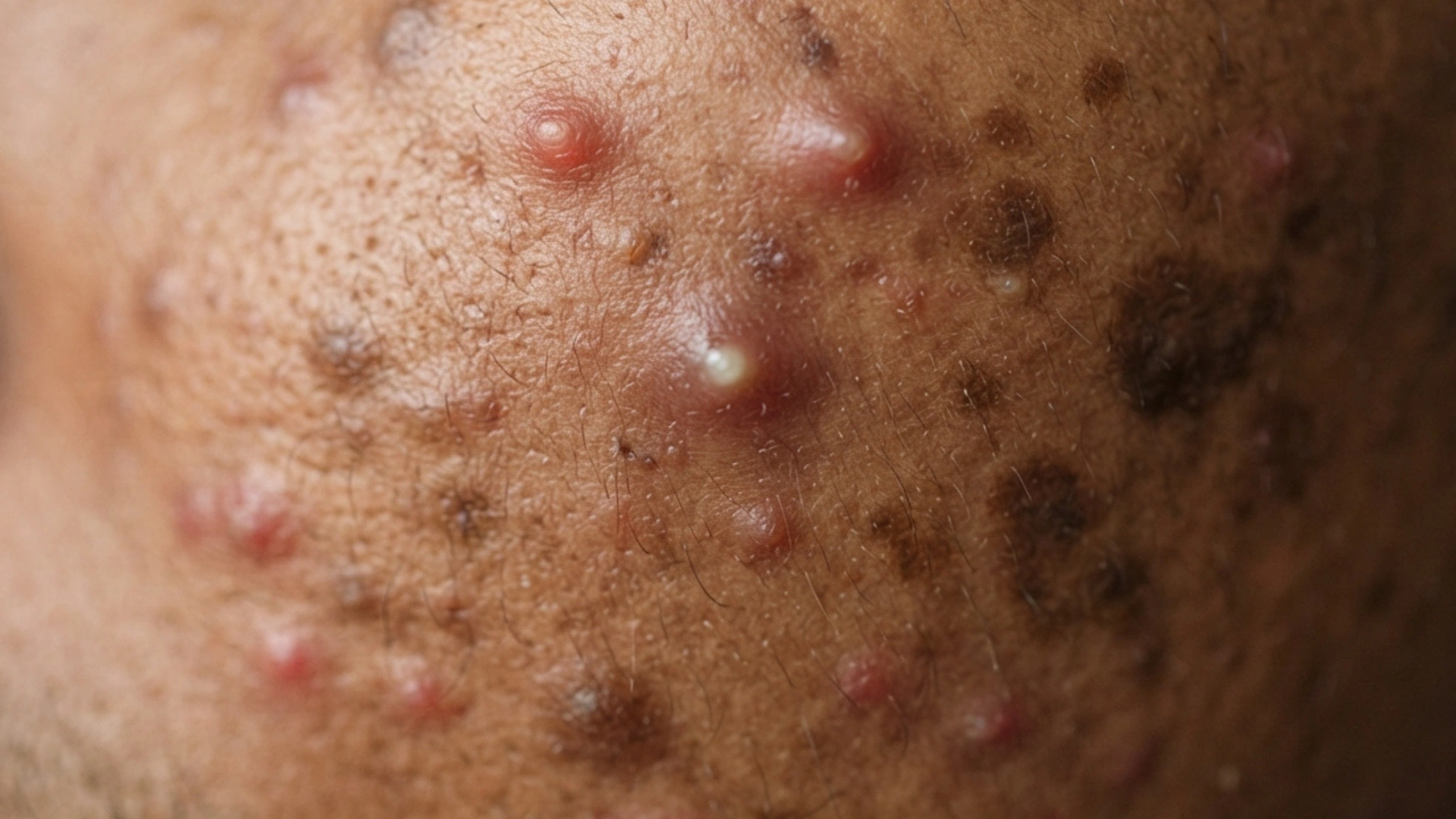
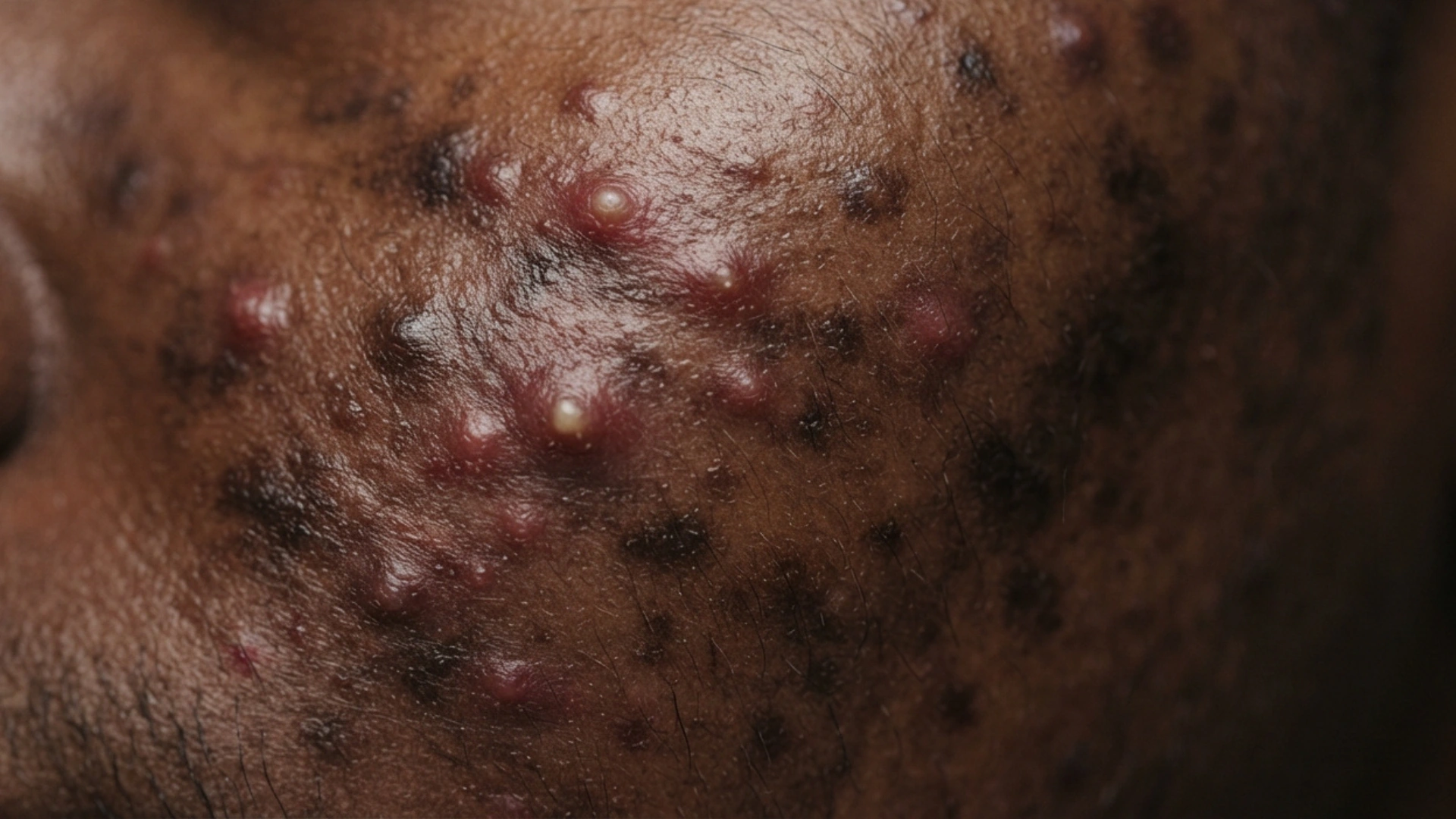
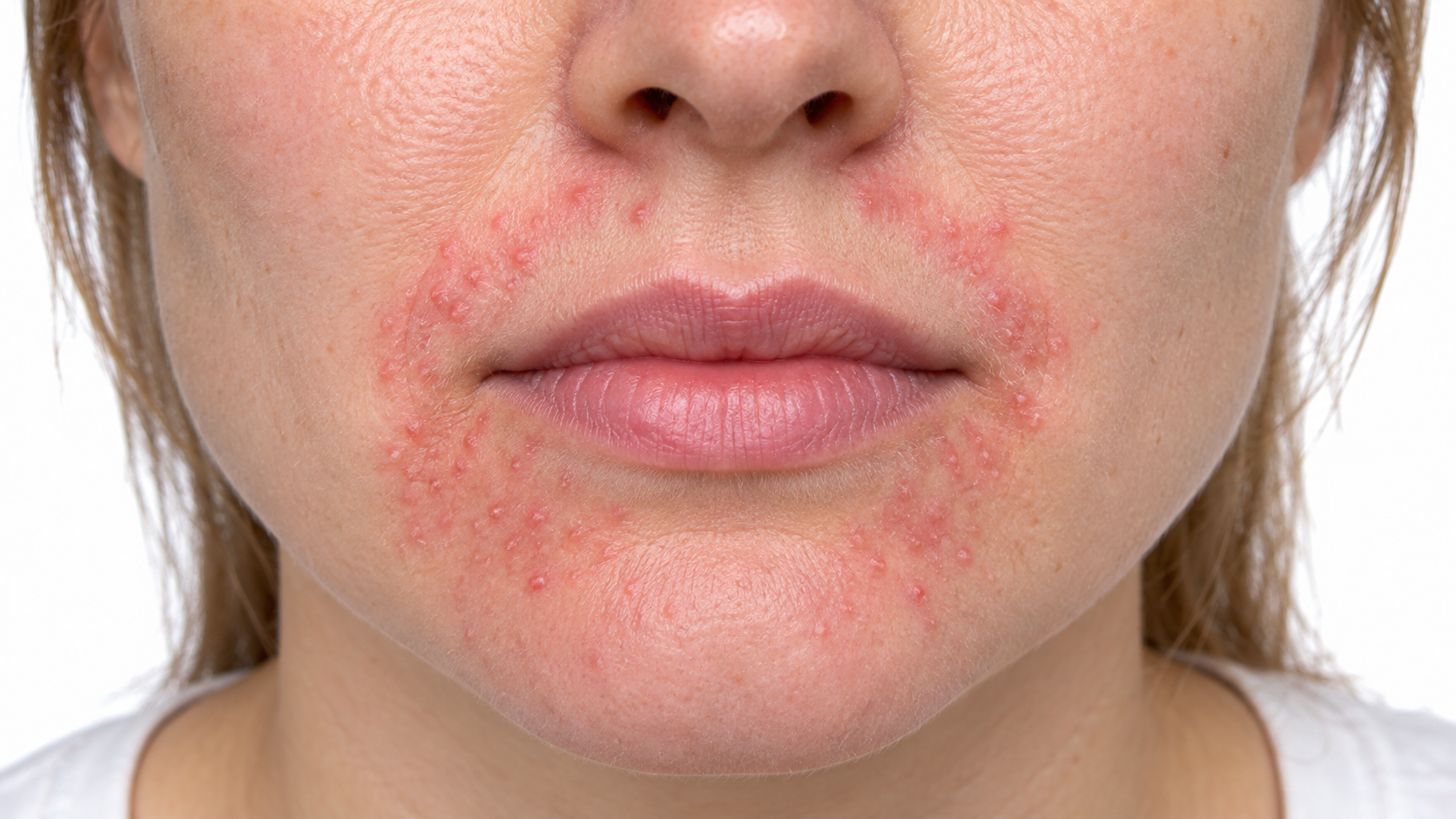
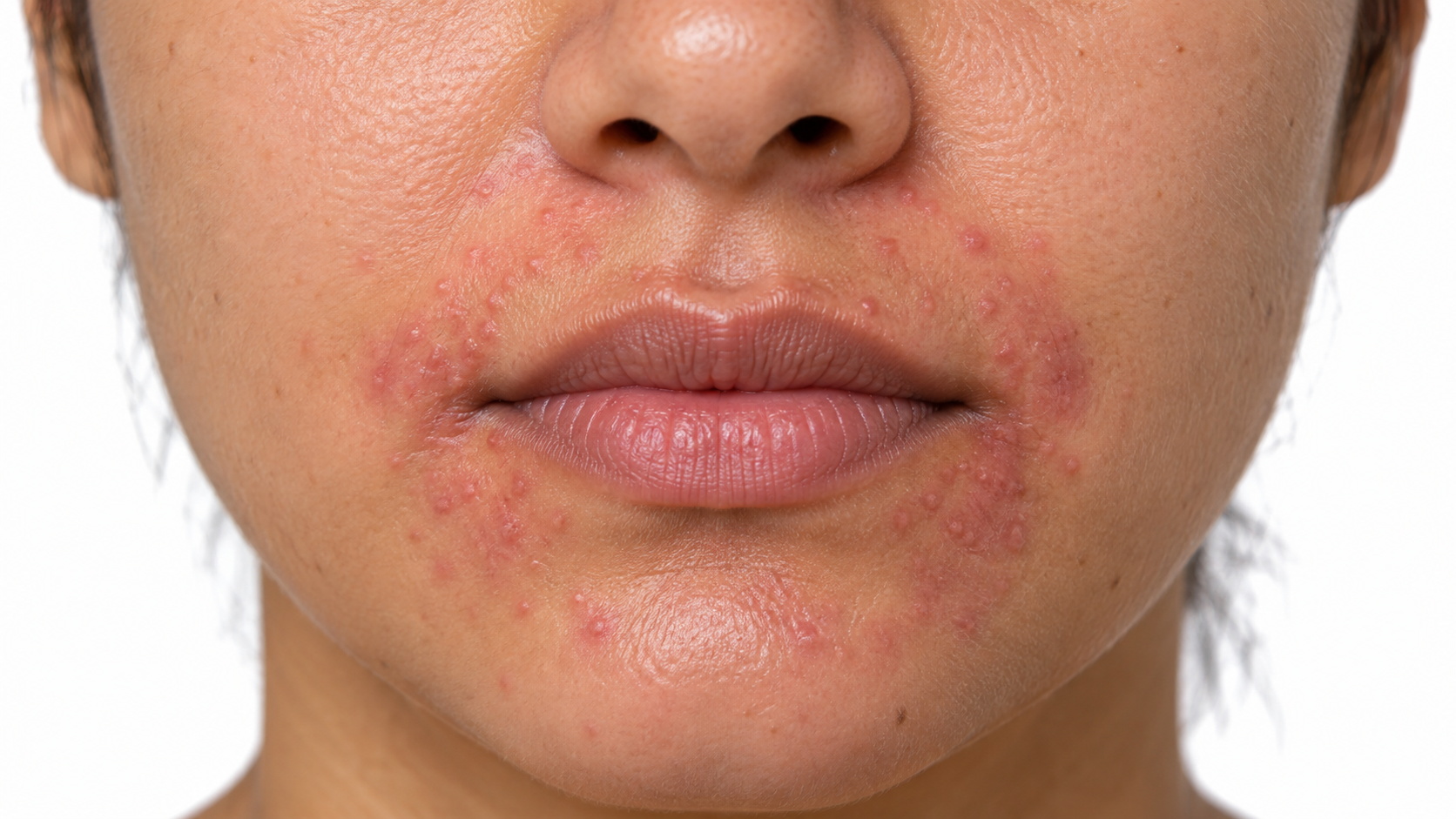
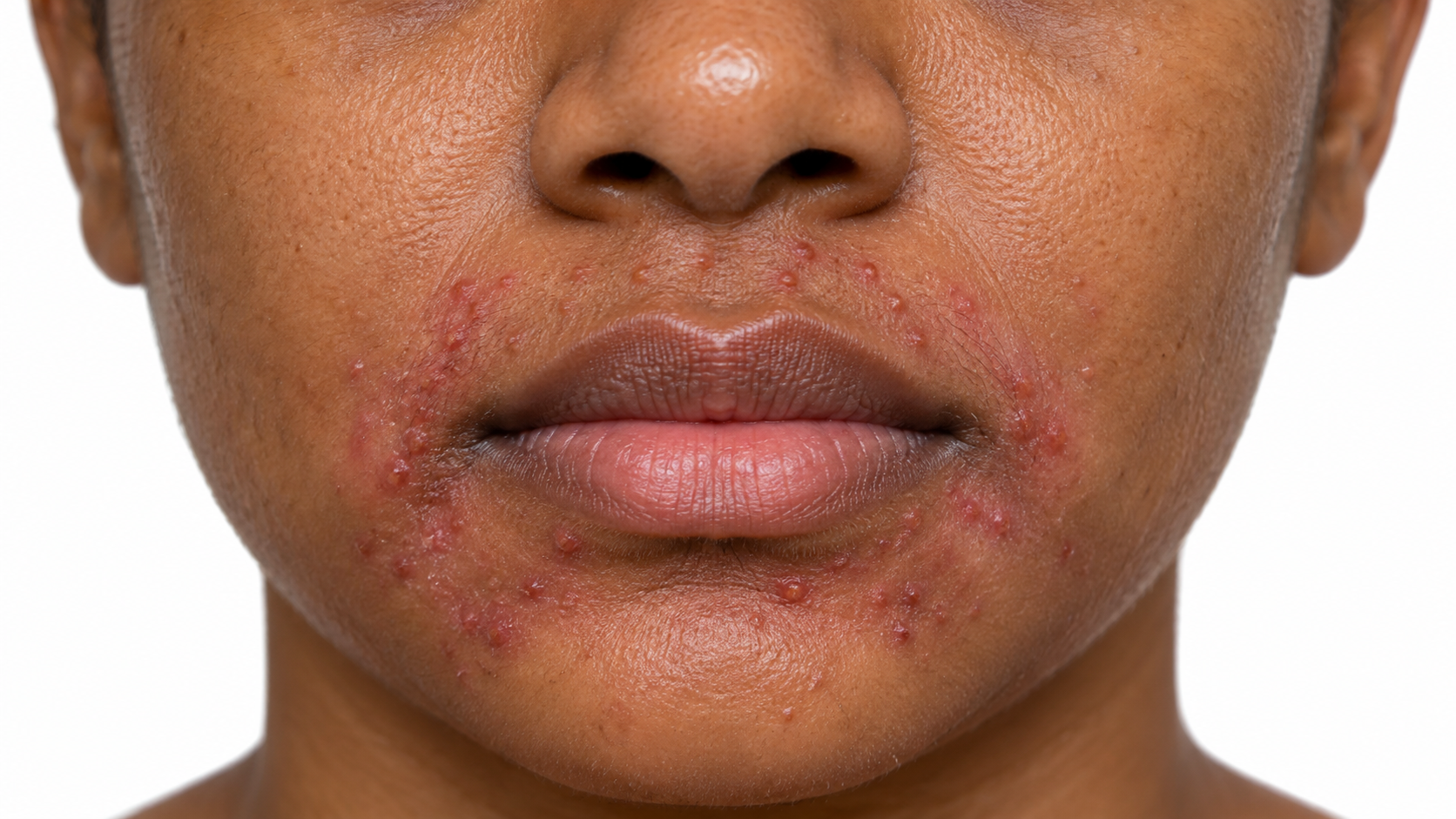
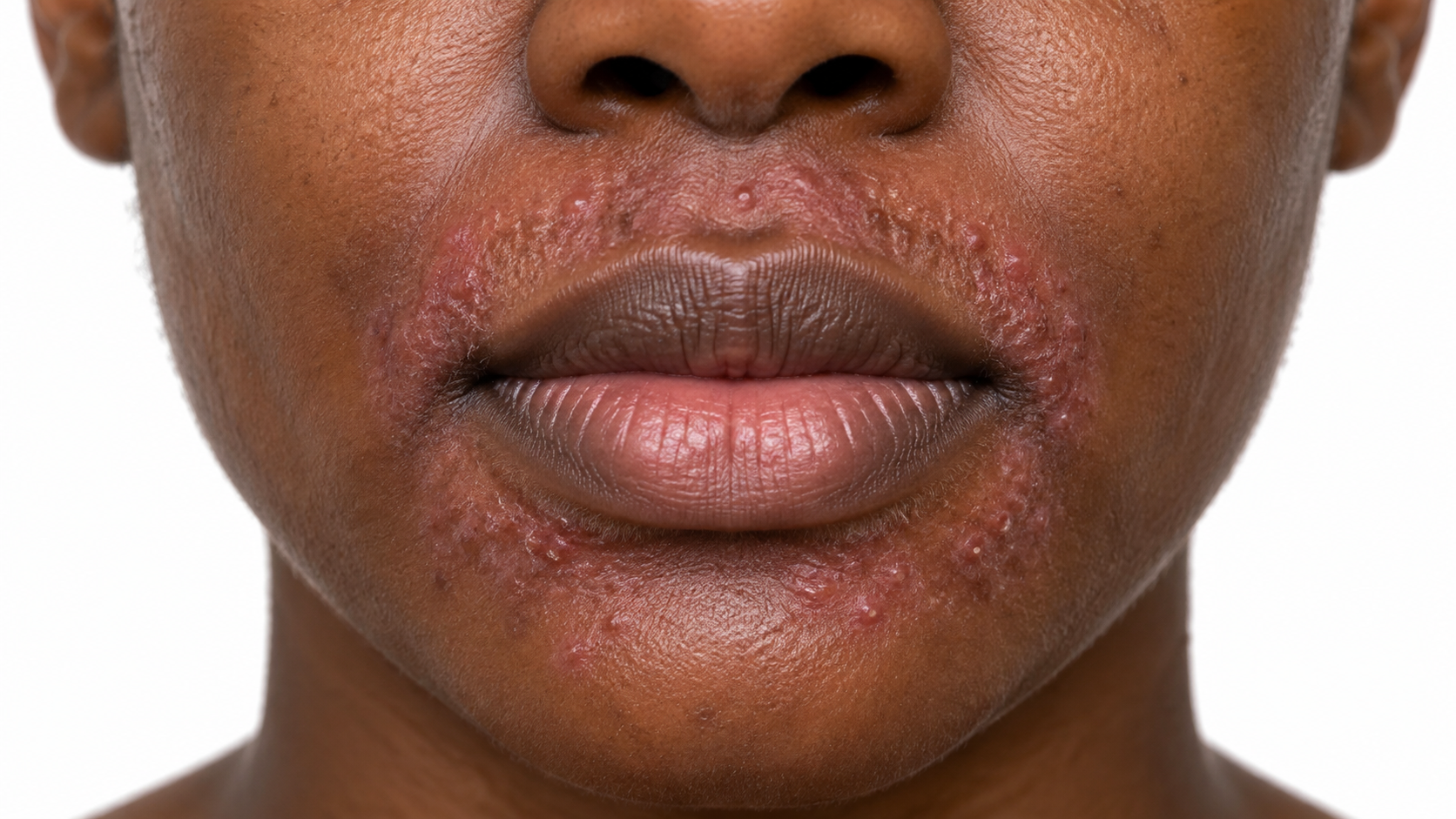

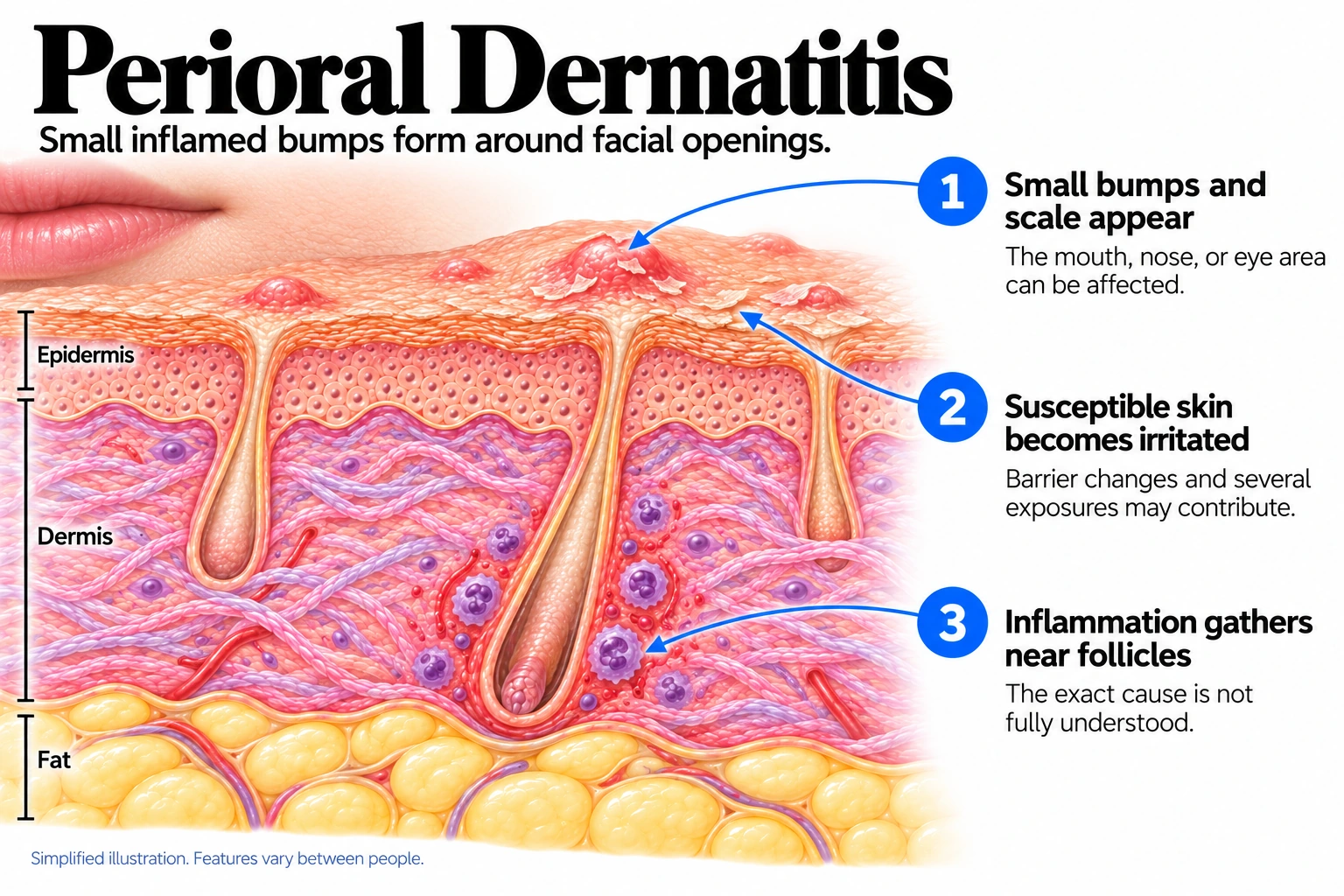
Oil and shed skin cells can block a hair follicle, changing the environment inside the pore. Bacterial activity and the immune response contribute to inflammation, swelling and tender spots.
Inflammation near small facial follicles produces bumps and scale around the mouth, nose or eyes. Barrier changes and several exposures may contribute, but the exact cause is not fully understood.
Acne. Acne Often in teens Often begins in the teen years; acne can continue or first appear in adulthood.
Perioral Dermatitis. Common in younger adult women but can also affect children and other adults.
Acne forms when oil and dead skin cells clog pores, acne bacteria grow inside them, and inflammation follows. Hormones that increase oil play a central role.
Oil and dead skin cells block hair follicles. Bacteria within the follicles and inflammation contribute to pimples and deeper spots. Hormonal changes can increase oil production.
Perioral dermatitis is an inflammatory rash around the mouth. The exact cause isn't known, but it is strongly linked to steroid creams and heavy products on the face.
Acne often runs in families. A parent with severe acne raises the chance of severe acne.
Acne can run in families. A close relative with deep, painful acne increases the chance of developing that pattern.
Evidence labels come from each condition’s own treatment list.
The strongest thing you can buy without a prescription, and the best first move for most acne. It unclogs pores before they inflame, which is why it prevents spots rather than treating them.
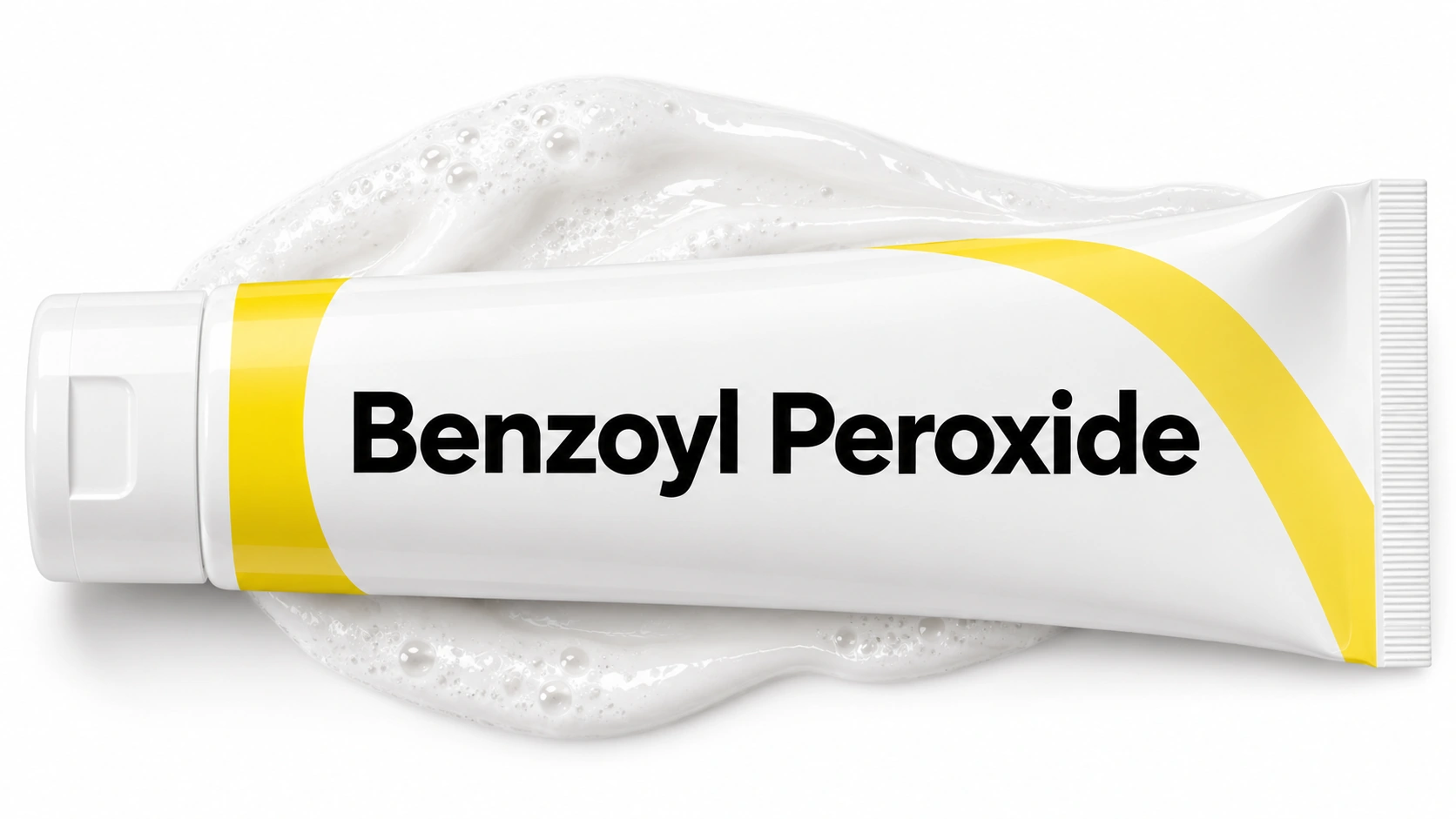
Kills the bacteria involved in inflamed spots, and is the one thing that stops acne bacteria becoming resistant to antibiotics. Lower strengths work about as well as higher ones and sting less. It bleaches towels and pillowcases.
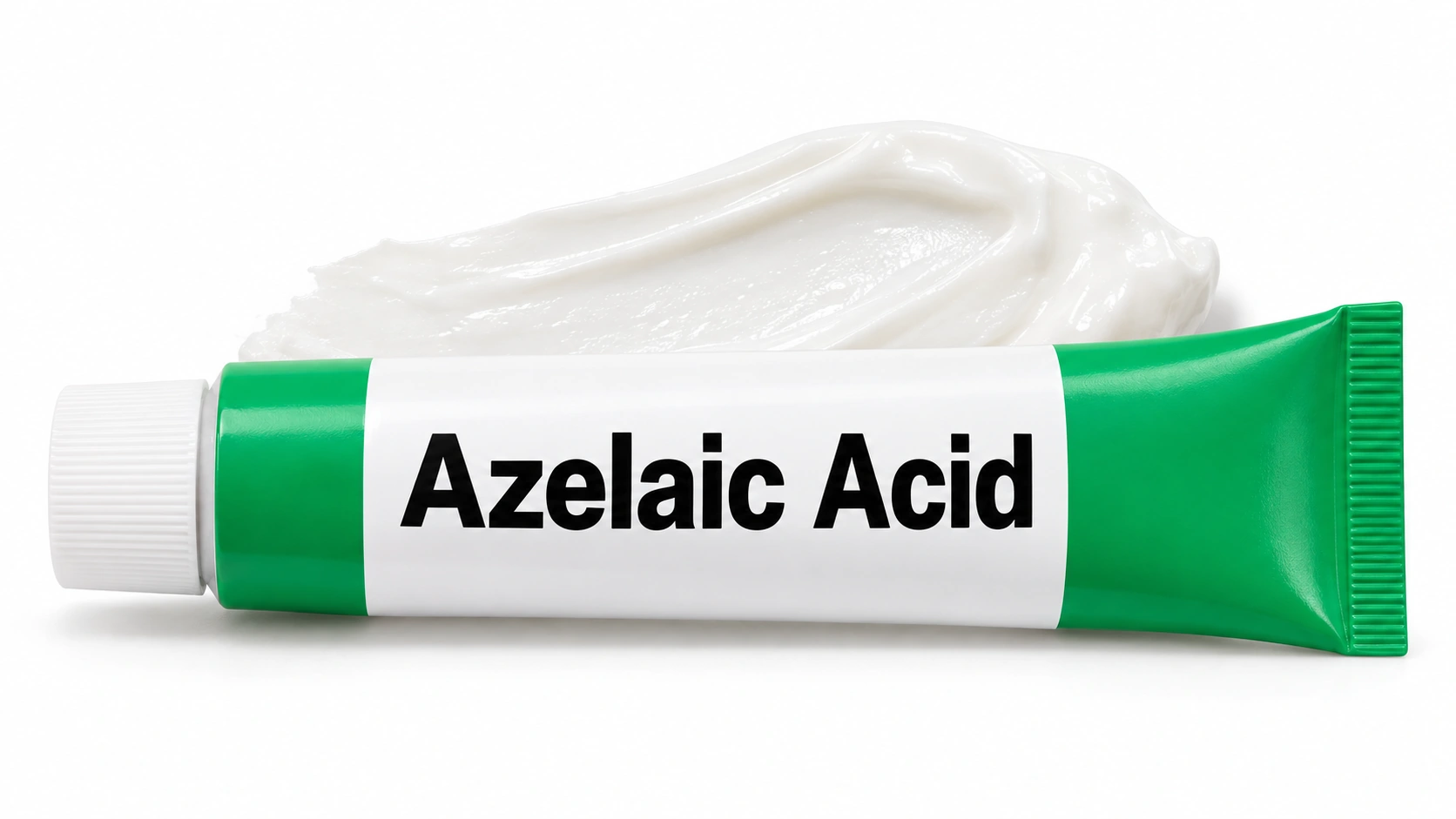
Works on the spot and the mark it leaves at the same time, which makes it useful on deeper skin tones. It is also one of the few acne treatments considered safe in pregnancy.
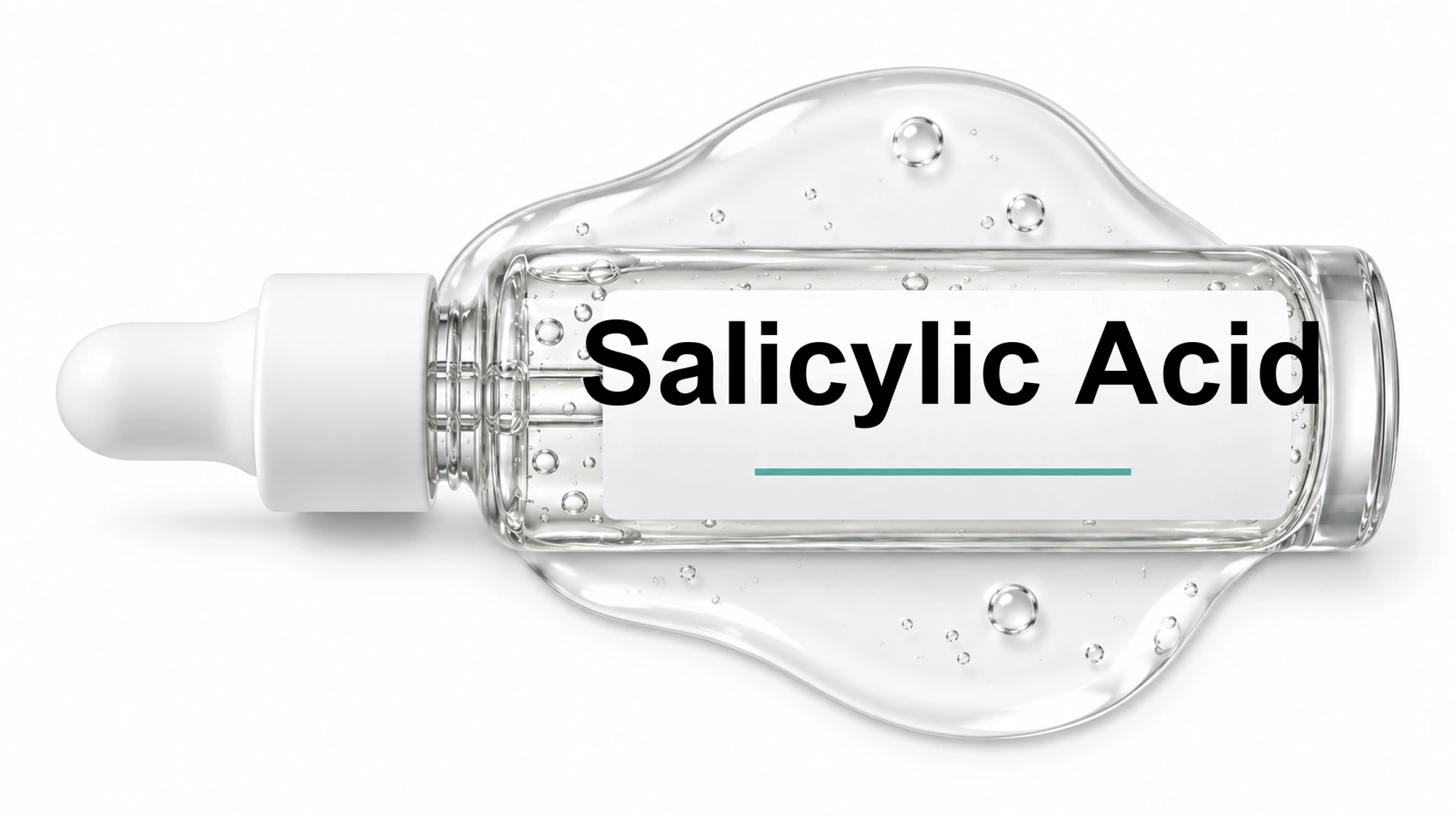
Gets inside the pore and loosens the plug, so it suits blackheads and whiteheads more than deep spots. Gentler than a retinoid, and weaker than one.

Sold heavily for acne, and the evidence for clearing spots is thin. It is genuinely useful for the marks left behind and for tolerating stronger actives - just not as the treatment itself.
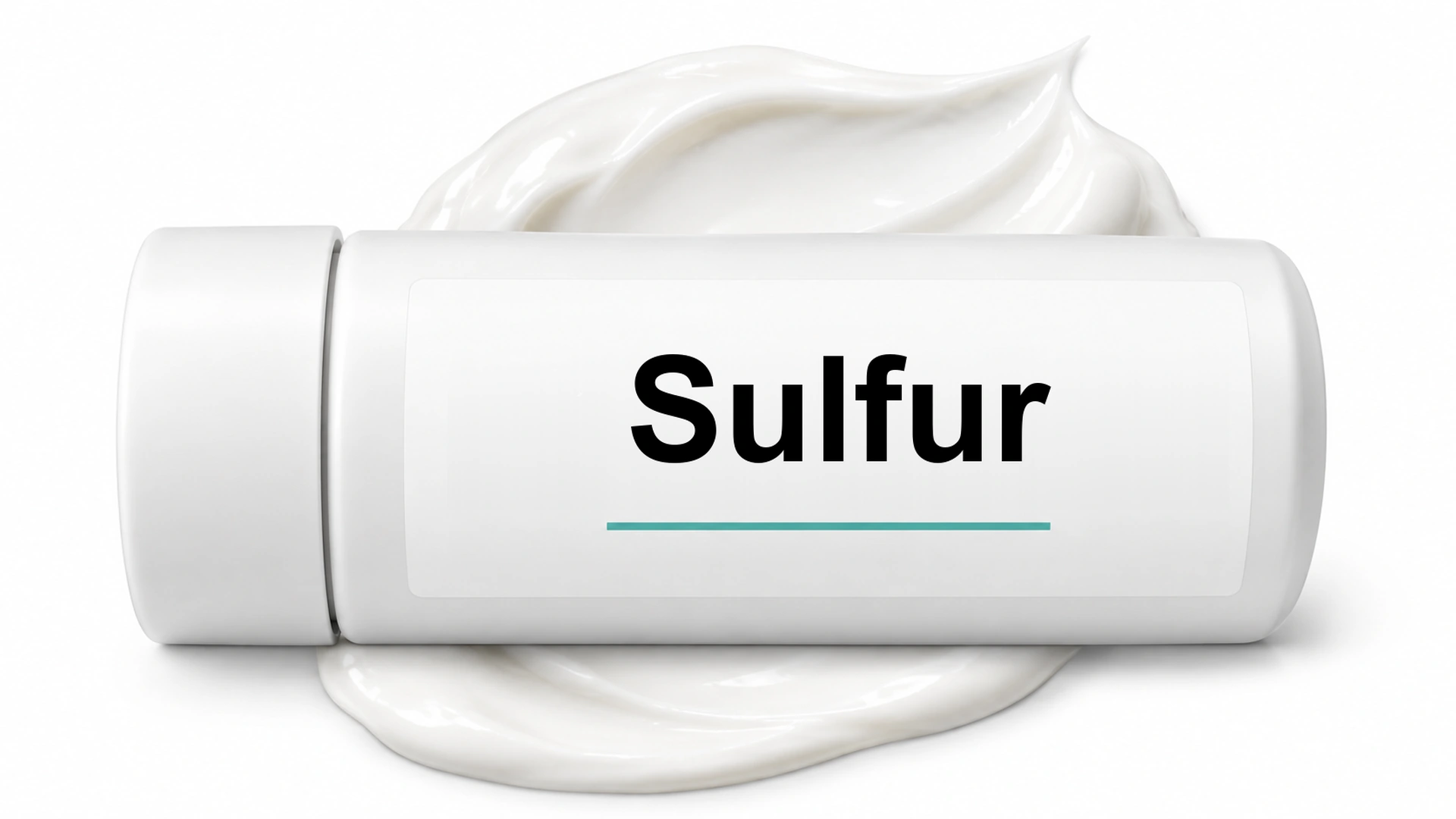
An old treatment, usually a mask or a spot dab, that dries the surface of a spot and mildly loosens plugs. It is gentle enough for skin that cannot tolerate benzoyl peroxide or a retinoid. It smells, and it is weaker than everything above it on this list.
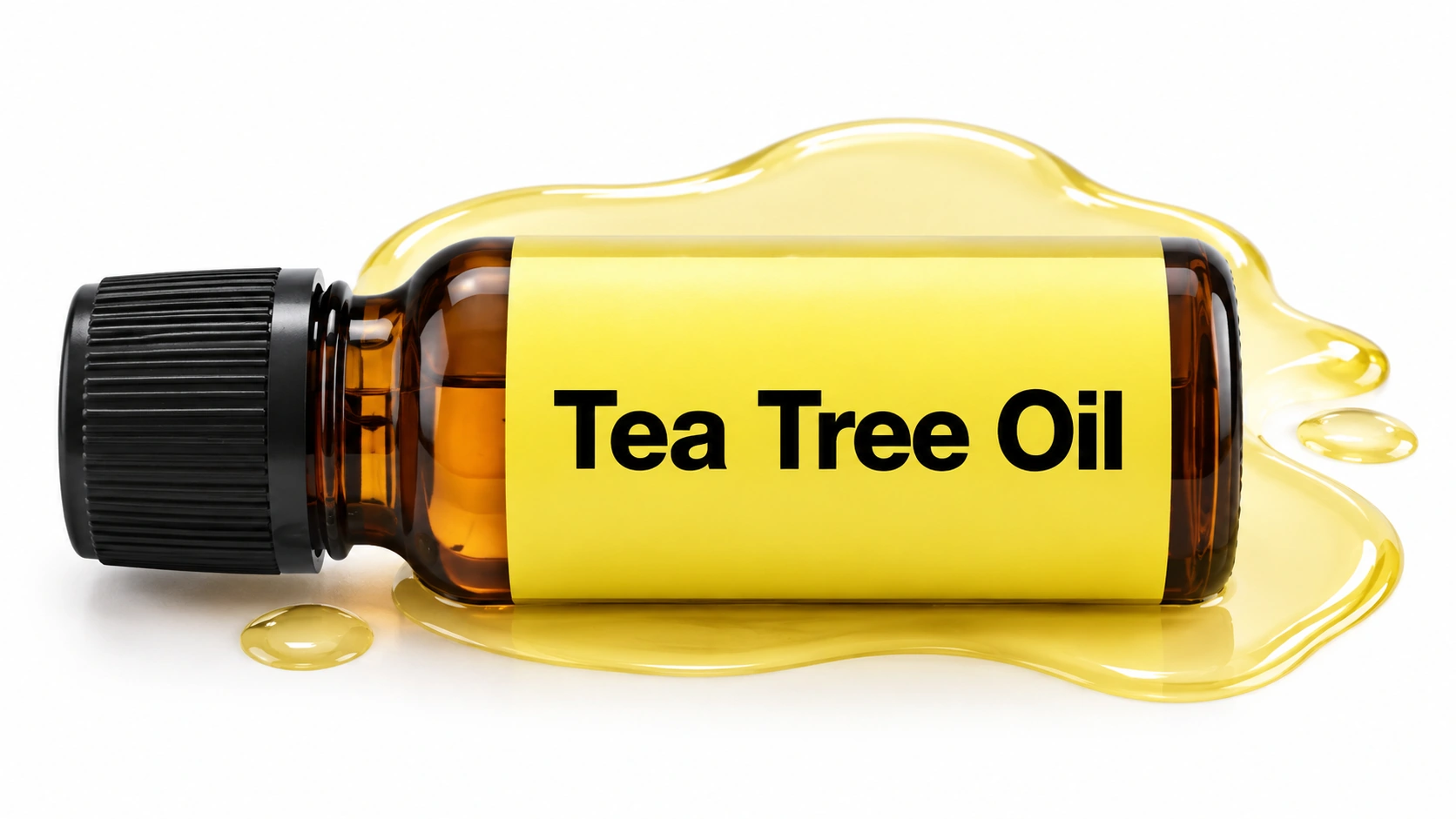
A 5 percent gel reduces inflamed spots in small studies, more slowly than benzoyl peroxide does. Neat oil straight from the bottle is a common cause of an itchy rash, so buy it already diluted. It is a reasonable extra rather than something to build a routine on.
The one over-the-counter active worth using here. At 10 percent it calms the bumps and, unusually, also helps the dark marks the rash leaves behind. It is slower than the prescription version and it can sting on skin that is already burning, so start every other night.
A sulfur wash or lotion is a gentler option for mild cases, and it is often chosen when someone cannot use the usual prescriptions. The evidence for it in this condition is thin, and the smell puts people off. It is worth a few weeks, not a few months.
Benzoyl peroxide, strong exfoliating acids and scrubs are what most people reach for, because this looks like acne. They damage the barrier further and usually make the rash angrier. If a product is stinging more than it was on day one, that is a reason to stop it, not to push through.
The most studied topical in acne. Stronger than adapalene and more irritating with it, so it is usually the step up rather than the starting point. Not used in pregnancy.
A newer retinoid, and the one specifically tested on chest and back acne rather than just the face. Useful when the trunk is the main problem. Expensive without coverage.
Calms inflamed spots, but should never be used on its own. Guidelines are explicit about this - alone it stops working within months as bacteria adapt, so it is always paired with benzoyl peroxide or a retinoid.
The strongest of the prescription retinoids, and the step to take when tretinoin has stopped making a difference. It is particularly good on stubborn blackheads and whiteheads. It is also the most irritating of them, so it is usually started two or three nights a week. Not used in pregnancy.
Blocks the hormone signal that drives oil production, but only where you put it. It is the first hormonal option that works topically, and the only one that can be used by men as well as women.
Mild on the skin and tends to suit adult women with inflamed spots who cannot tolerate a retinoid. Applied at the same time as benzoyl peroxide it can temporarily stain skin orange, so space them apart.
An antibiotic lotion or gel kept for cases that do not settle on the first choice, sometimes paired with it. It calms the bumps rather than the flaking. It is not used on its own for long stretches, to limit resistance.
The long-standing first choice for perioral dermatitis, used once or twice a day for weeks. It is well tolerated on skin that is already sore, which matters here. Expect little in the first fortnight, clear improvement by weeks three to six, and keep going for two to four weeks after the skin looks clear.
A non-steroid anti-inflammatory cream sometimes used to get through the rebound after a steroid is stopped, and around the eyes where other options are awkward. It calms the skin without the rebound a steroid causes. Results in this condition are mixed, and it can burn for the first few days.
As effective as metronidazole here, and the better pick if the rash has left dark marks, because it works on both. It stings for the first week or two on inflamed skin. Applied twice a day, it is a reasonable alternative rather than a step up.
Used when Demodex mites around the hair follicles are thought to be part of the picture, which is more likely in a stubborn case with a lot of small pus-filled heads. Most of its evidence comes from rosacea rather than this condition. It is a second or third choice, not a starting point.
Brings widespread inflamed acne down quickly, and is meant to be used for three to four months, not indefinitely. Always alongside a topical, which is what carries on once the tablets stop.
The only acne treatment that often produces lasting clearance after the course ends. What it costs you is months of dry lips and skin, blood tests, and strict pregnancy prevention. For acne that scars, that trade is usually worth making early rather than late.
For the pattern rather than the individual spot - deep jawline acne in adult women that flares with the cycle. It works slowly, over three to six months, and can be continued long term. Not used in pregnancy.

Lowers the hormone signal driving oil production across the whole body, so it suits acne on the chest and back as well as the face. Takes about three months to show, and carries a small clot risk that needs weighing up.
Another tetracycline antibiotic for widespread inflamed acne, used the same way as doxycycline: three to four months, always alongside a topical. It is usually kept as the second choice, because it carries rarer but more serious side effects, including a blue-gray skin discoloration with long use.
A narrow-spectrum antibiotic designed specifically for acne, so it disturbs gut bacteria less than doxycycline. One tablet a day, still meant for three to four months and still alongside a topical. It works about as well rather than better, and it is considerably more expensive.
Erythromycin for children. When a child needs tablets, a macrolide is chosen instead of a tetracycline, which is avoided under about eight because of the effect on developing teeth. It clears the widespread childhood form well. Stomach upset is the usual reason people stop it.
A tetracycline tablet taken for six to twelve weeks, used when the rash is widespread, stubborn or around the eyes. It works here as an anti-inflammatory rather than by killing an infection, so a low dose is often enough. It makes the skin burn more easily in the sun, and it is not used in young children or in pregnancy.
Accutane (isotretinoin). A low dose is occasionally used for the granulomatous form or for a case that has failed everything else, and it is rare for this condition to need it. The evidence is a handful of small reports rather than trials. It requires close monitoring and strict pregnancy prevention, and it can dry the face enough to irritate the rash at first.
An alternative tetracycline when doxycycline does not suit. It works about as well for this rash. It is used more cautiously because it can cause dizziness and, rarely with long use, a blue-gray discoloration of the skin.
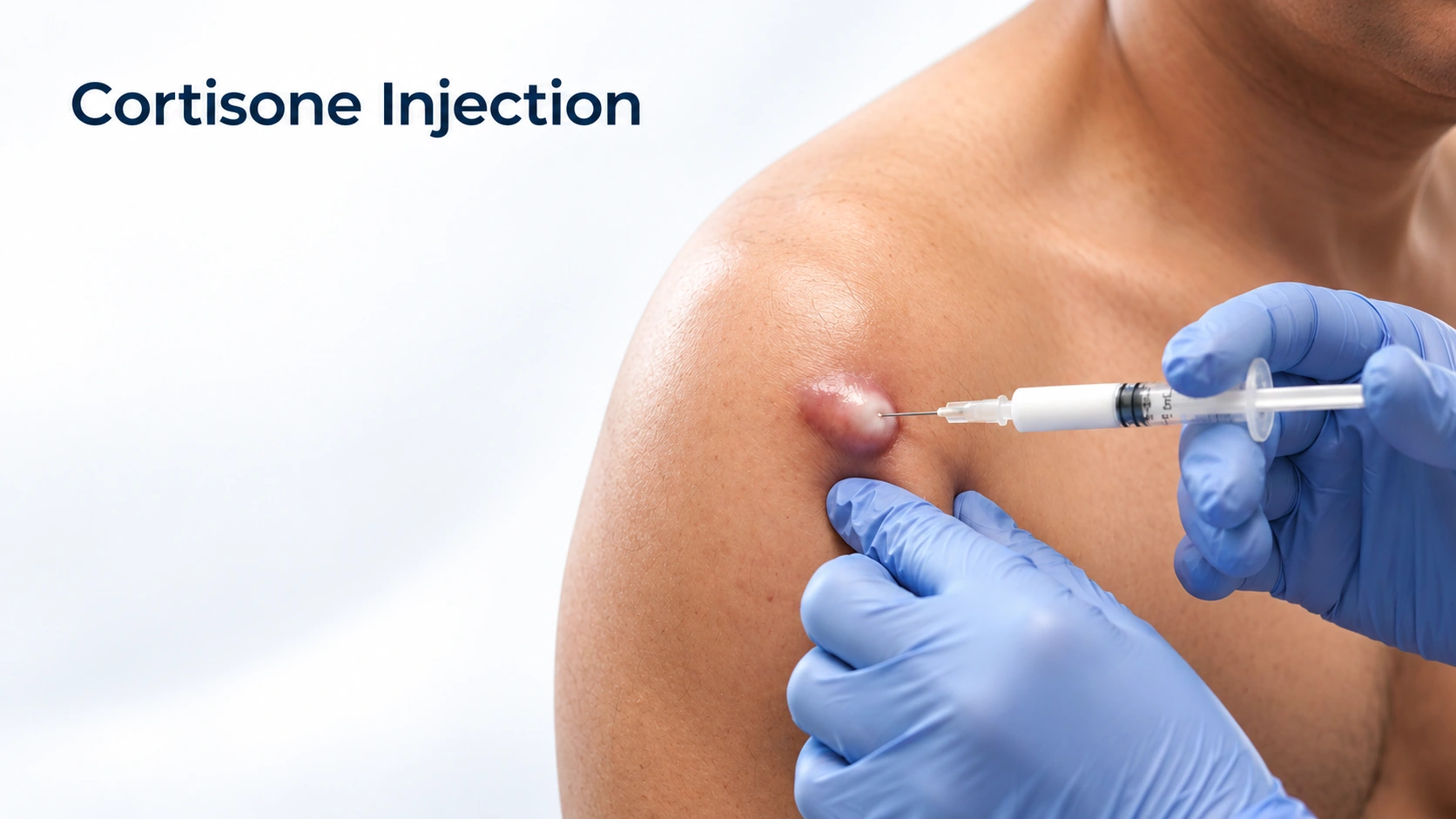
Deals with one stubborn painful lump, not the condition. It settles in a day or two and is the safe alternative to squeezing it. It does nothing to prevent the next one.
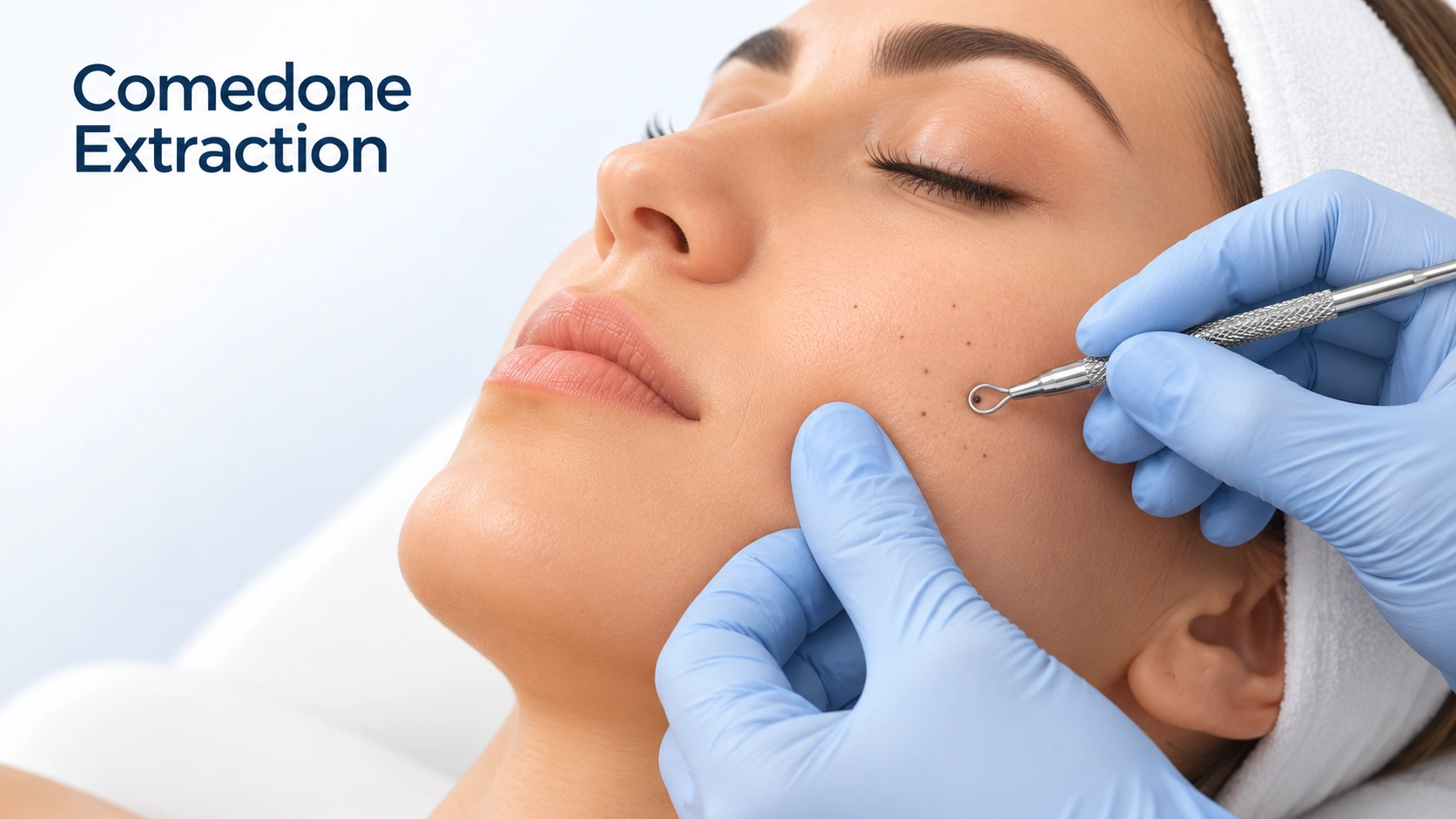
Clears blackheads that are already there, quickly and visibly. It does not stop new ones forming, so it is an add-on to a retinoid rather than a substitute for one.
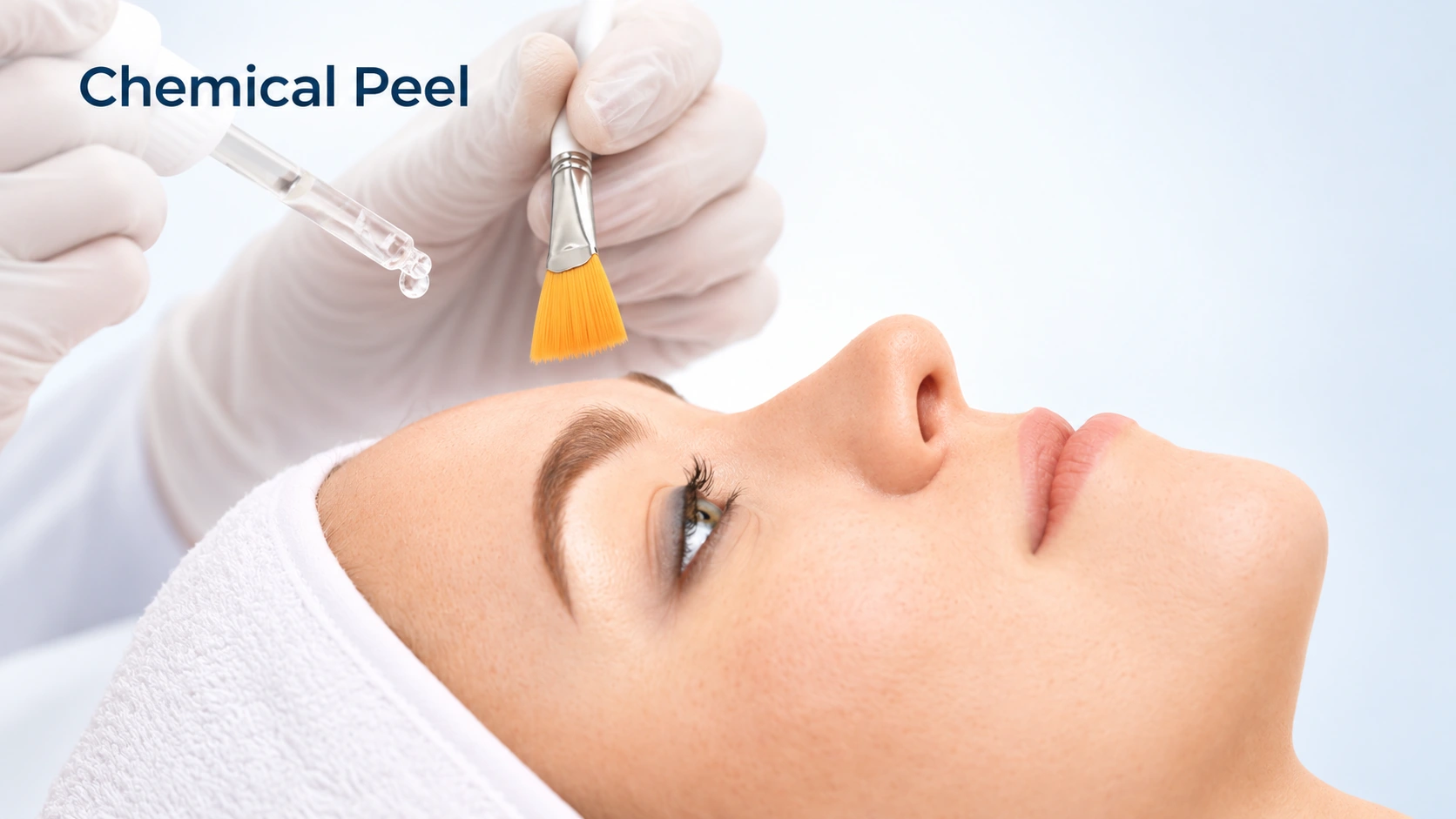
Modest benefit for clogged pores and a better one for the dark marks left behind. Needs repeat sessions, and the benefit fades if the daily treatment stops.
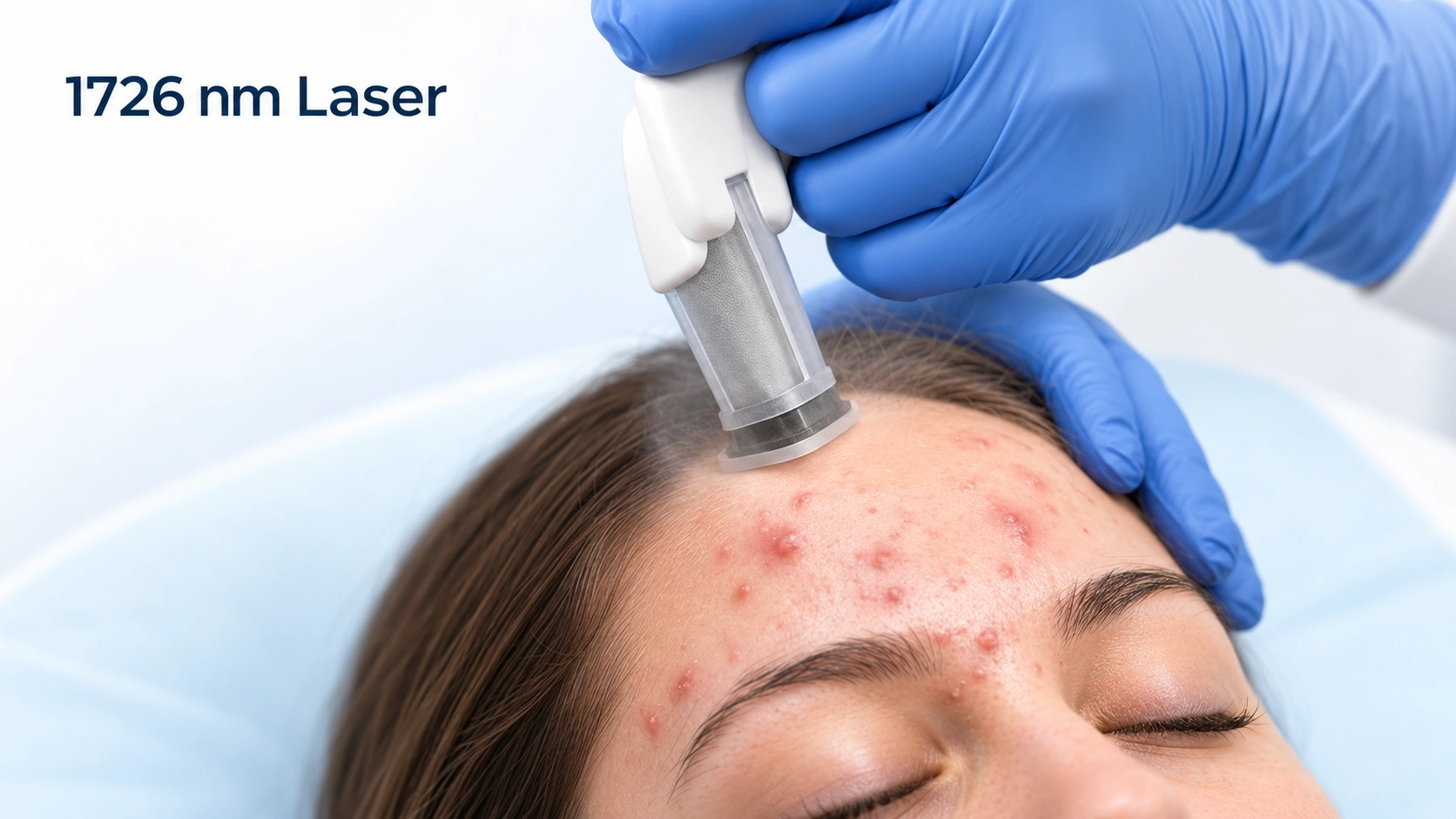
Heats the oil glands themselves, which is a genuinely different approach from everything else on this page. Trial results out to about six months are good, it works across skin tones, and it is expensive and rarely covered. Long-term data is still limited.
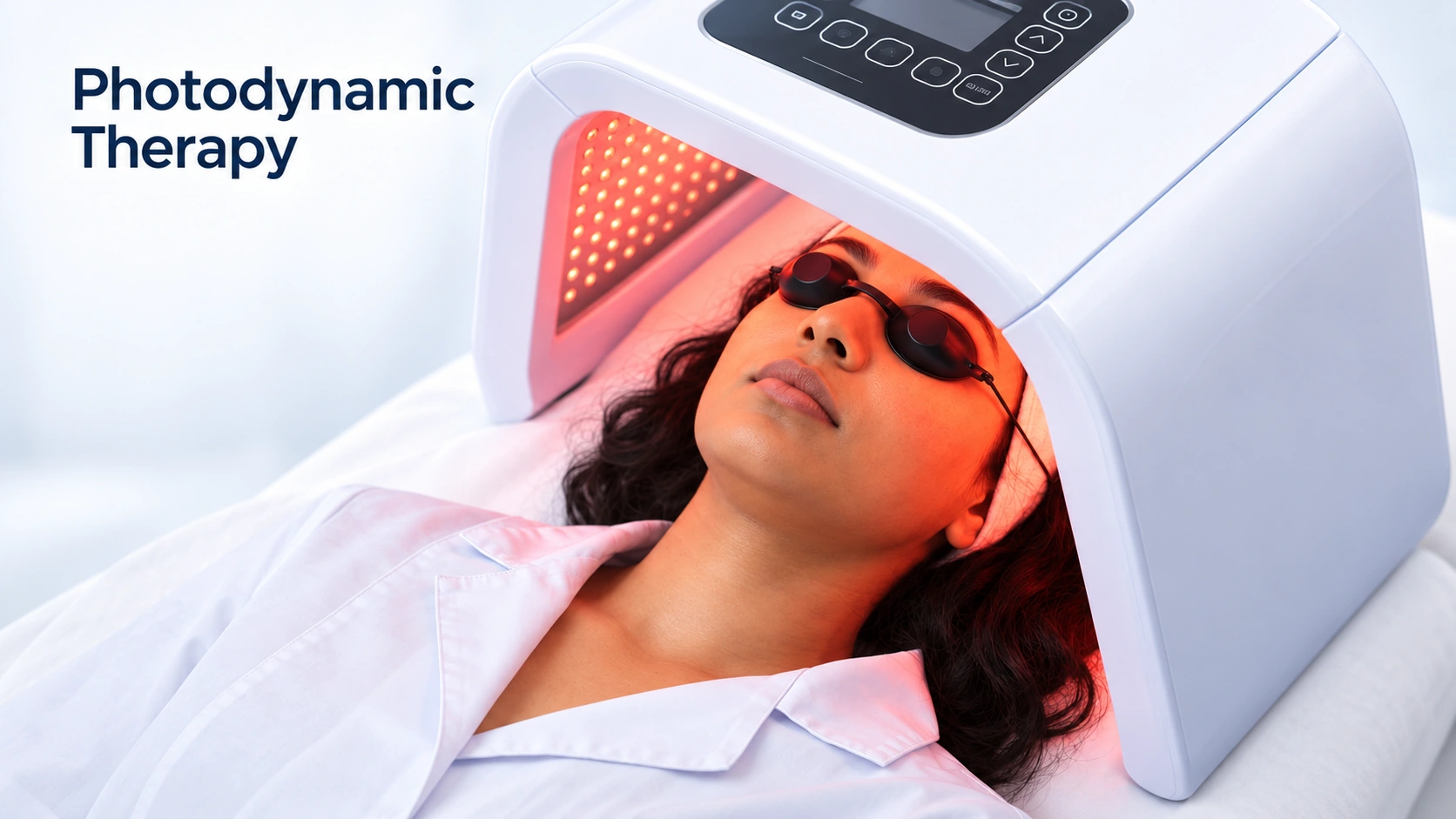
Can help stubborn inflamed acne, but the protocols vary widely between clinics, the downtime is real, and the evidence is not strong enough to put it ahead of the options above.
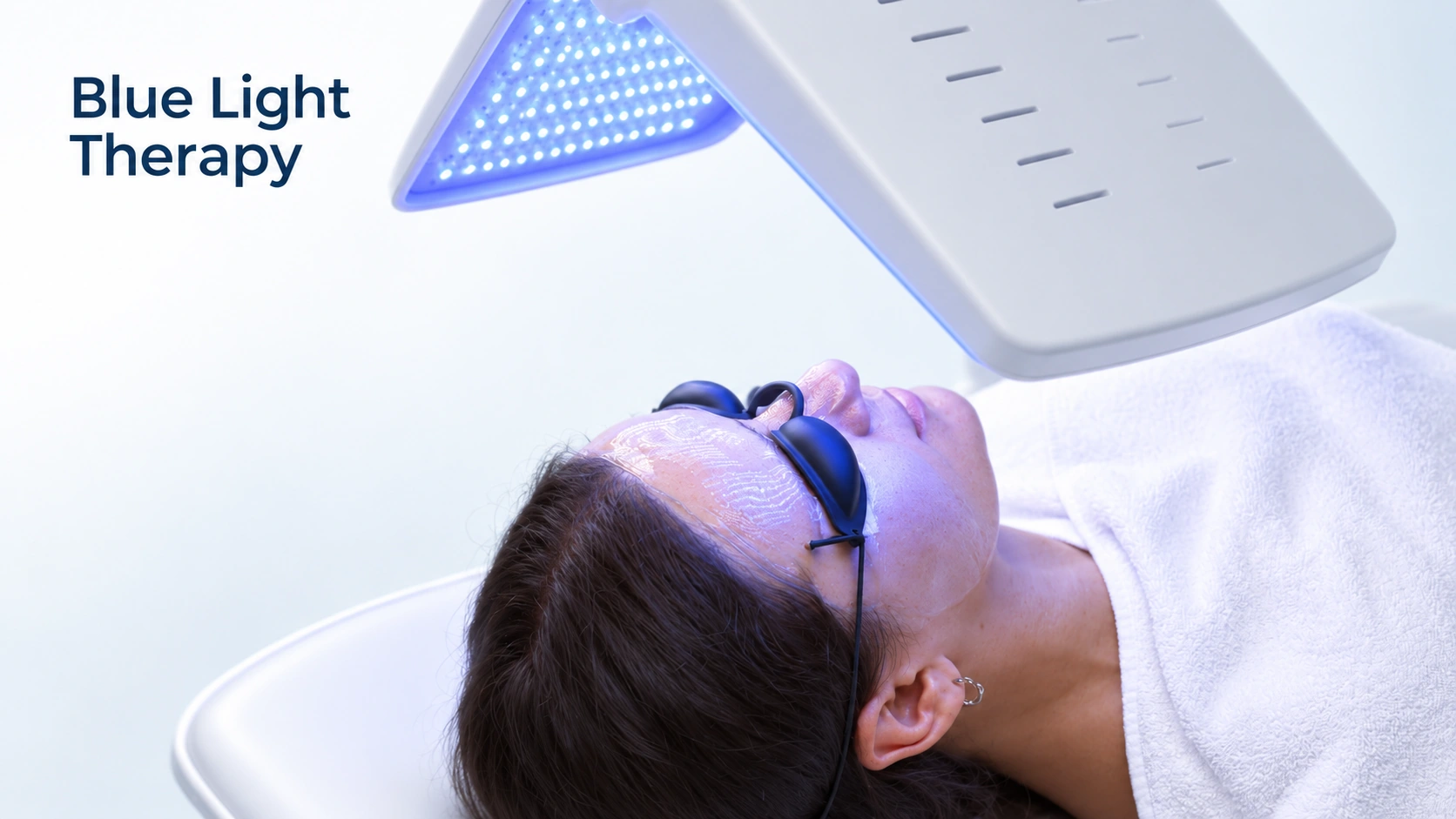
Blue light kills acne bacteria at the surface, so a course can quiet mild inflamed spots for a while. The effect fades within weeks of stopping, and it does nothing for blackheads or deep lumps. In-clinic courses cost far more than a topical that would do more.
Acne is usually controlled rather than permanently cured. Treatment reduces new breakouts, but improvement takes time and maintenance may be needed. Deep or scarring acne deserves early assessment because existing scars may remain after the active spots settle.
Perioral dermatitis does not usually settle by itself. The steroid cycle defines its course - a cream calms the rash within a day or two, then it returns worse once the cream stops. Once treatment starts the arc is predictable, and the first part is worse before better.
Dark marks
Flat brown or violet patches left where a spot was. They are not scars and they do fade, but it commonly takes 6 - 12 months, and sun exposure makes them last longer. These WILL FADE with time.
Redness
Flat pink or red marks left where a spot was, most often on lighter skin. Also not scars. They usually settle on their own, though it can take several months. These WILL FADE with time.
Scars
Permanent dents, pits or raised bumps left where inflammation broke down the skin's structure. Once formed, they can only be improved by procedures. These WILL NOT FADE with time.
Depression and anxiety
Acne can affect self-esteem, confidence and mental health. The link is consistent, and it does not track with how severe the acne looks to anyone else - which is itself a reason to treat it.
Family conflict
This is very common. Acne visits involving a teenager and a parent can sometimes be challenging, particularly when there is ongoing conflict about acne care.
Social impact
People may avoid photos, dating, social situations or activities because of their skin.
The steroid rebound cycle
A steroid cream calms the rash within a day or two, then it returns worse when the cream stops. Each round tends to need more steroid for less benefit, and the condition gets harder to treat. It is the most common complication of perioral dermatitis and the main reason cases drag on for months. Stopping the steroid, and expecting one to two bad weeks, is what breaks it.
Spread around the eyes
The same rash can move up onto the eyelids and the skin around the eyes. It is uncomfortable there, it takes longer to settle, and treatment has to be chosen carefully because of how close it is to the eye. If the eyes themselves become red, gritty or sore, or your vision changes, that needs looking at on its own and soon.
Months of a visible facial rash
This rash sits in the middle of the face, it burns through the day, and it commonly takes two to three months to clear even when treatment is right. People cover it with heavier makeup, which feeds the problem, and many stop seeing friends or go to work uncomfortable. It is worth saying out loud at the appointment, because it changes nothing about the diagnosis and quite a lot about how the plan is set up.
Seek help for painful deep spots, scarring, persistent breakouts, or an uncertain diagnosis. Earlier treatment can reduce the chance of more scars.
Do not assume eye symptoms are part of acne. They need their own assessment.
Seek assessment for persistent facial bumps, especially after steroid cream use. Discuss a safe plan for stopping facial steroids rather than repeatedly restarting them.
For most people it settles by the mid-twenties. About one in six women still has it into her 30s and 40s, and it can return after pregnancy, after stopping the pill, or with any hormone shift. Controlled rather than cured.
Less than the internet suggests. The evidence points at high-glycemic diets - sugar and refined carbohydrate - and, less consistently, at skim milk. Chocolate and greasy food never held up, and no diet replaces treating the skin.
That is purging. Retinoids speed up clogs already forming under the surface, so weeks of spots arrive at once. It peaks around weeks two to six and settles by week eight. Still worsening past 10 to 12 weeks is irritation, not purging.
No. Squeezing pushes the contents sideways into surrounding skin, turning a spot that would have gone in days into a mark that lasts months, or a scar that lasts forever. A large, painful lump can be injected in clinic instead, and settles in a day or two.
Sometimes, but never alone and never for long. They go alongside benzoyl peroxide or a retinoid, usually for three to four months, then stop while the topical carries on. Alone or indefinitely, they stop working and drive resistance.
Almost all acne is hormonal - hormones drive oil production. The label only matters if it changes treatment: deep spots along the jawline and lower face in an adult woman, flaring before periods, usually respond better to hormonal treatment than to antibiotics.
Steroids suppress inflammation quickly, so the rash fades within a day or two. They do nothing about what drives it, and when the cream stops the inflammation returns stronger, needing more steroid for less benefit. That is why the first step is always to stop.
Longer than most people expect. The first one to two weeks off a steroid are usually worse, improvement becomes clear around weeks three to six, and full clearing commonly takes two to three months. Judging at two weeks means judging it at its worst.
No, though it is often treated as acne first. Acne produces blackheads and whiteheads, across the face, chest and back. Perioral dermatitis produces uniform grouped bumps around the mouth, nose or eyes, with a clear rim next to the lips, and it burns rather than itches.
For a few weeks, mostly yes. Heavy occlusive products are a main trigger, and layered actives keep the barrier damaged. A gentle cleanser, a light moisturizer if needed, and sunscreen is the whole routine while it clears. Products go back one at a time afterward.
Most people clear and stay clear. When it returns there is usually an identifiable reason - a steroid cream for something else, a new heavy moisturizer, or a long routine again. Knowing your trigger is most of the prevention.
No. Never stop a prescribed inhaler on your own. Rinsing your mouth and washing the skin around it after every dose cuts the residue reaching your face, and your dermatologist can talk to whoever manages your asthma if the inhaler is the driver.
Sources