Pyrithione Zinc vs Sulfur

Pyrithione Zinc: Helps control dandruff and scalp flaking associated with seborrheic dermatitis. Sulfur: Used in some acne products and prescribed or compounded scabies regimens.
Research updated 2026-10-25
Four dandruff shampoo bottles: DHS Zinc, Head and Shoulders Classic Clean, CeraVe Anti-Dandruff and Head and Shoulders BareFour sulfur acne products: Kate Somerville EradiKate, De La Cruz 10% sulfur ointment, The Ordinary and Thayers

Which one is right for you?

Choose Pyrithione Zinc if…

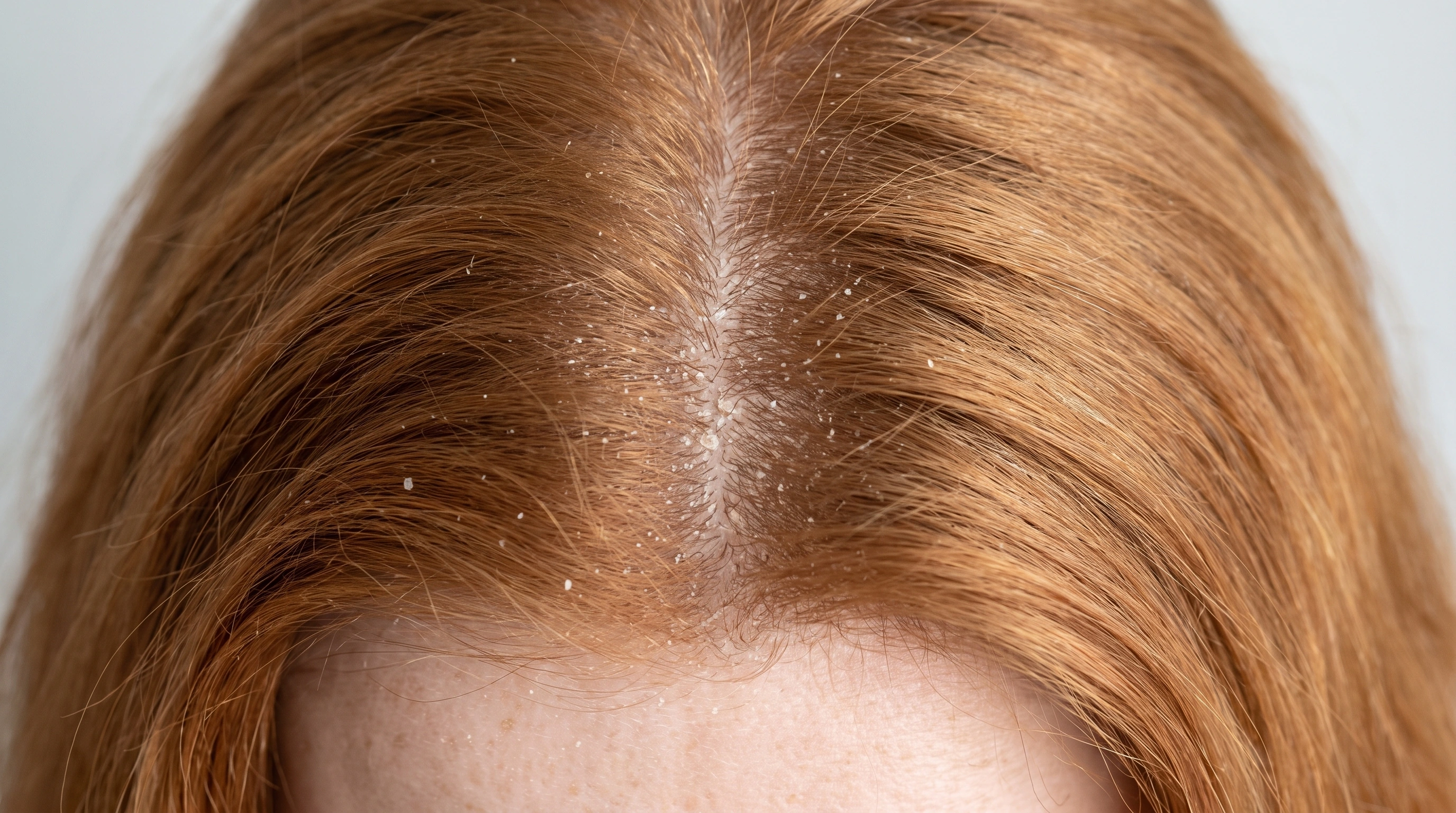
Choose for dandruff and scalp flaking; use a labelled medicated shampoo.

  • Dandruff or scalp flaking
  • Seborrheic dermatitis
  • You want an over-the-counter shampoo

Choose Sulfur if…

Consider for an appropriate acne product; suspected scabies needs diagnosis and a complete plan.

  • Mild acne or a spot treatment
  • Sensitive skin that dislikes benzoyl peroxide
  • Smell is acceptable
Alternatives, not combined

Can you use both?

Both treat dandruff. Use one at a time or rotate.

At a glance

● Pyrithione Zinc
● Sulfur
Type
Anti-dandruff active
Keratolytic and antimicrobial medicine
What it does
Helps control dandruff and scalp flaking associated with seborrheic dermatitis.
Used in some acne products and prescribed or compounded scabies regimens.
Best for
Dandruff; Seborrheic Dermatitis
Acne; Scabies
Studied concentrations
1% shampoo in a large comparative trial.
Acne products commonly use 3–10%; scabies ointments use separate 5–10% regimens.
When to use
On the schedule and contact time on the medicated product label.
Morning or night, as directed by the finished product.
Time to results
Often assessed within 2–4 weeks
Often 8–12 weeks in small cosmetic studies; results may be subtle
Irritation
May sting or dry the scalp; rinse well and avoid the eyes.
Odour, dryness and irritation can limit use; avoid strong products on inflamed eczema.
Sensitive skin
Choose a simple formula and test a small area first. Individual tolerance matters more than an ingredient’s reputation for being gentle.
Available
Prescription or cosmetic status depends on the active, formula and country; check the label.

What it helps

Compare uses by strength of evidence. Evidence level describes confidence in a benefit, not its size.
Evidence level
Pyrithione Zinc
Sulfur
Moderate evidenceSome supportive research
A part line in straight light hair, seen from above, on pale skin. White-gray flakes sit along the part and the scalp beneath them looks pink.

Dandruff

A 1% shampoo improved dandruff in a large comparative trial.
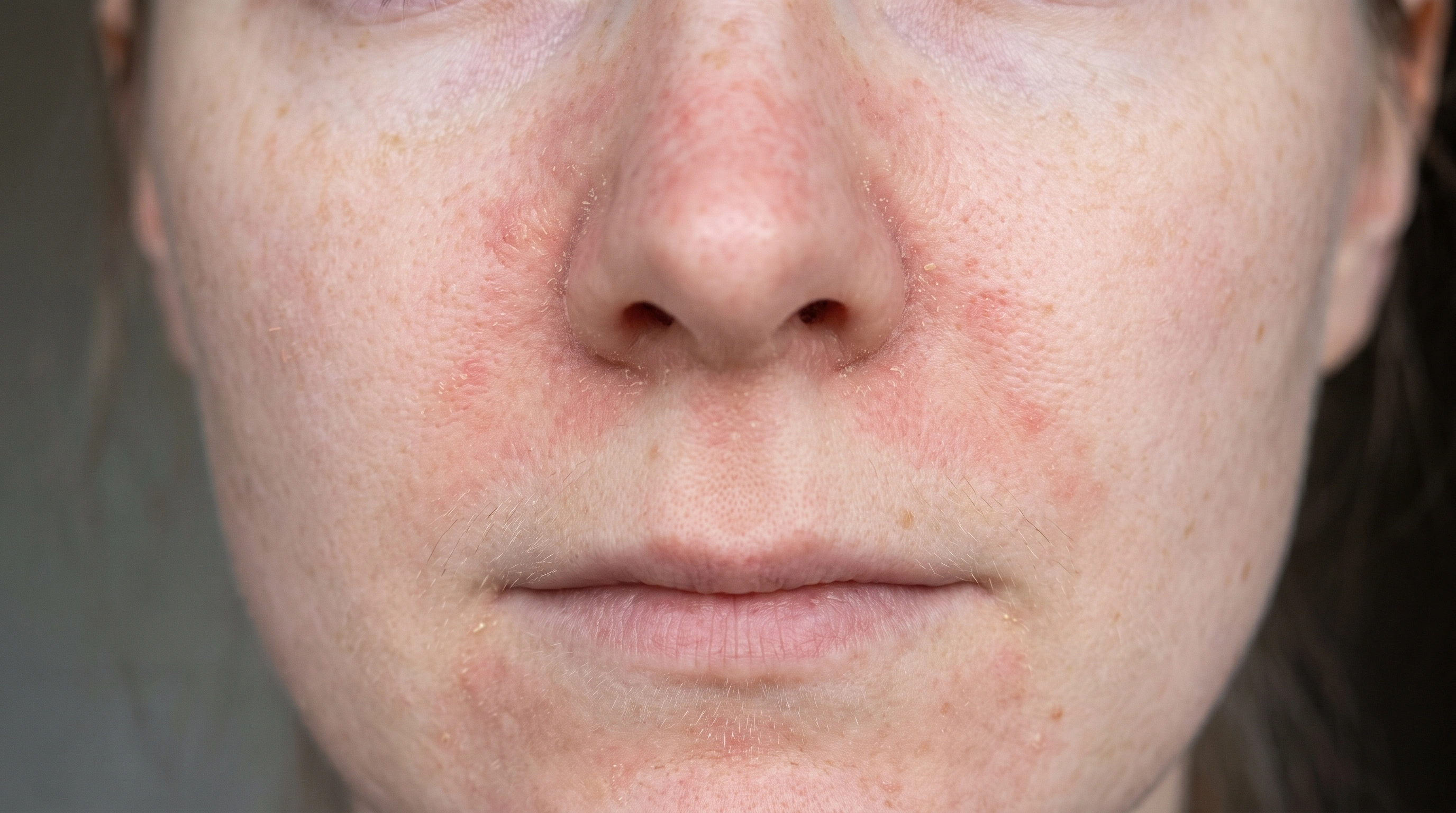
Salmon-pink patches with fine greasy yellowish scale in the crease beside the nose and through the eyebrow on fair skin, with soft edges that fade into normal skin.

Seborrheic Dermatitis

Can reduce scalp flaking; persistent inflammation may need other treatment.
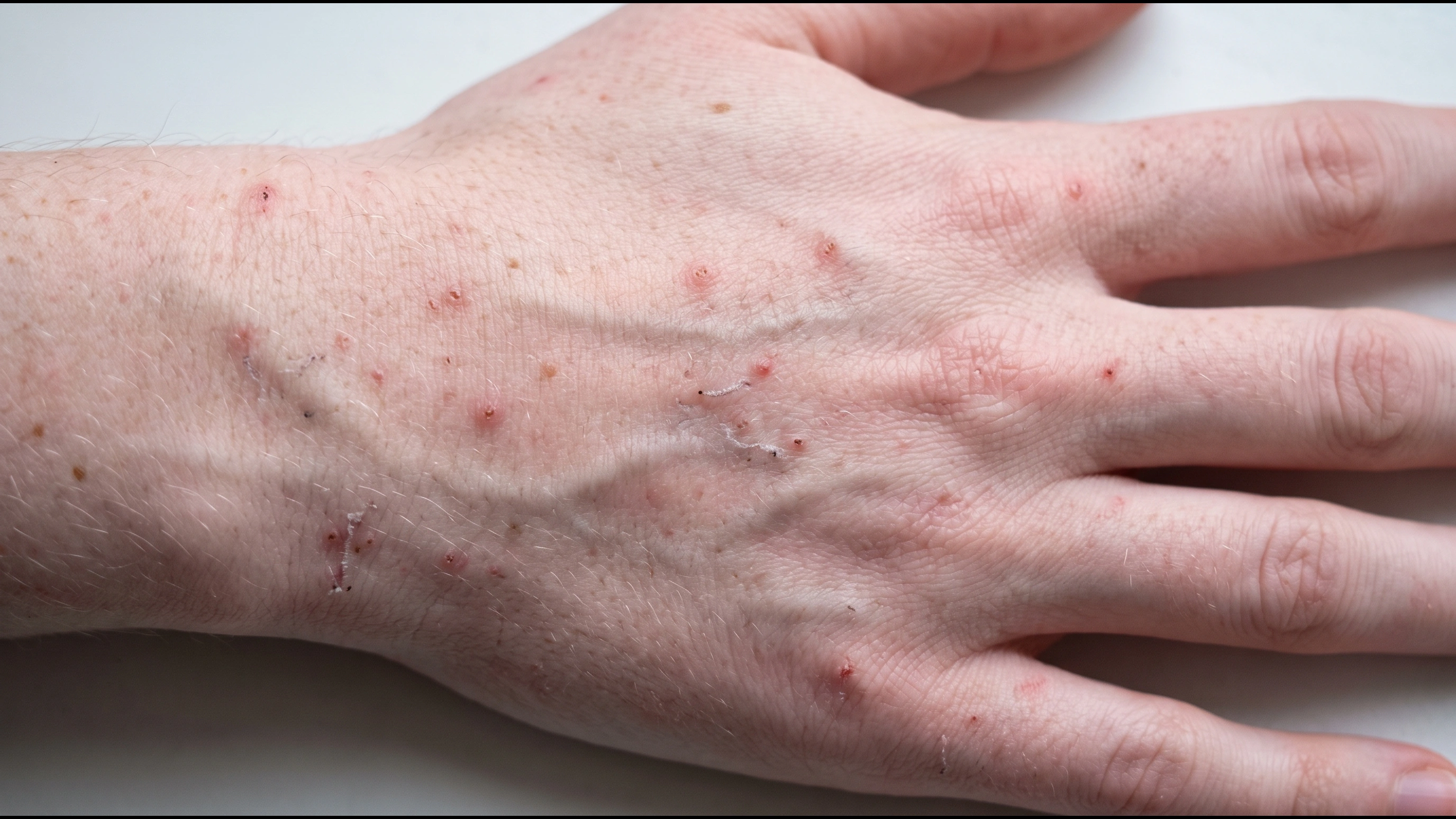
The finger webs and wrist on fair light skin, with small red bumps, several thin gray burrow lines a few millimetres long, and scratch marks across the area.

Scabies

CDC lists compounded 5–10% sulfur ointment as an alternative treatment.
Limited evidenceEarly or small studies
—
Inflamed acne on light skin. The spots sit in a patch of pink, and the ring of redness around each one is easy to see. A few have a yellow-white head, and the skin between them is dry and flaking.

Acne

Used in acne products, with less robust modern evidence than standard acne medicines.
Insufficient evidence
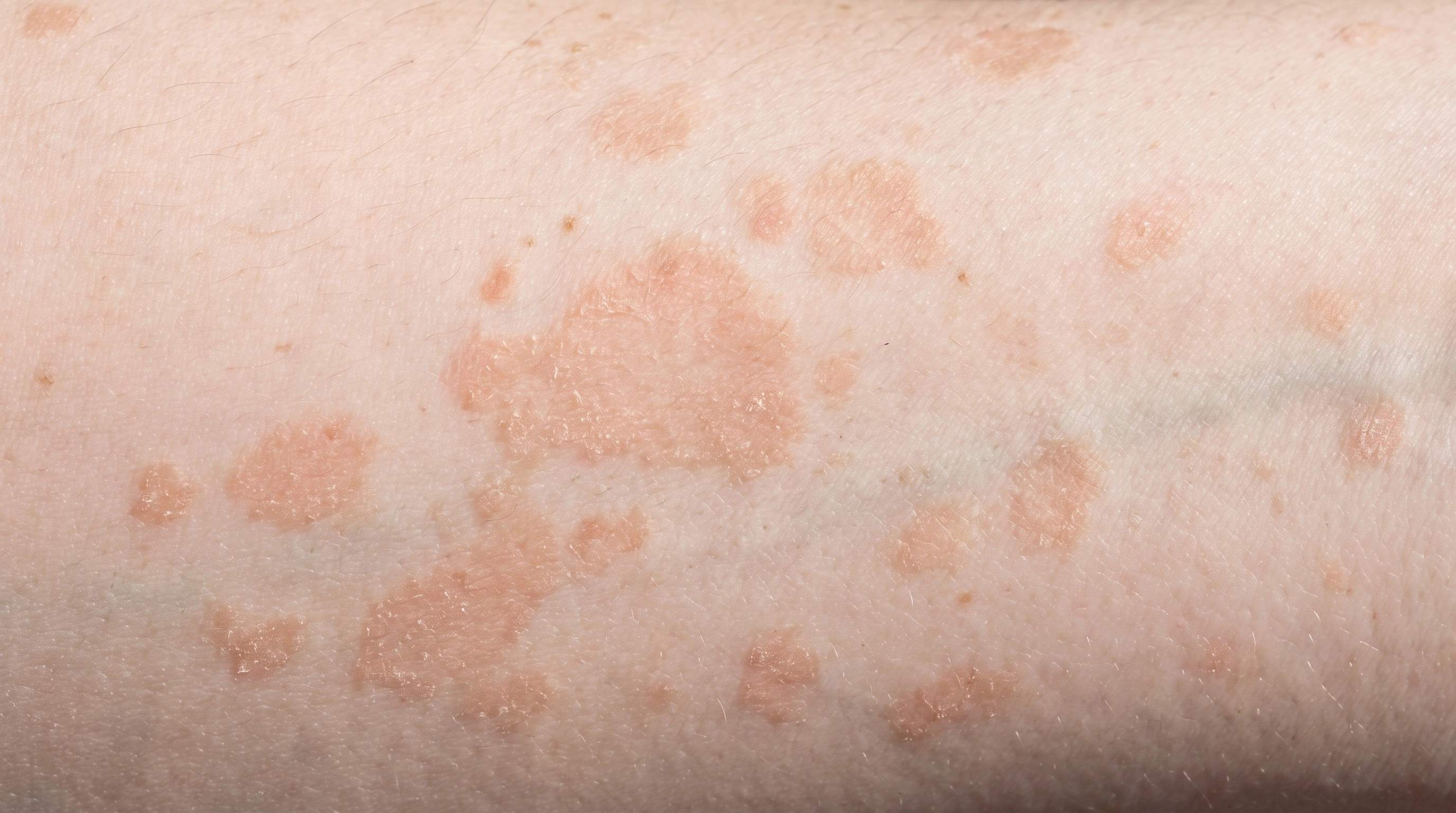
Flat oval patches in pink and light tan scattered across an upper chest and shoulder on light skin, several joined into larger areas, with a fine dusty scale on the surface.

Tinea Versicolor

The reviewed sources do not establish this ingredient as a treatment for this concern.
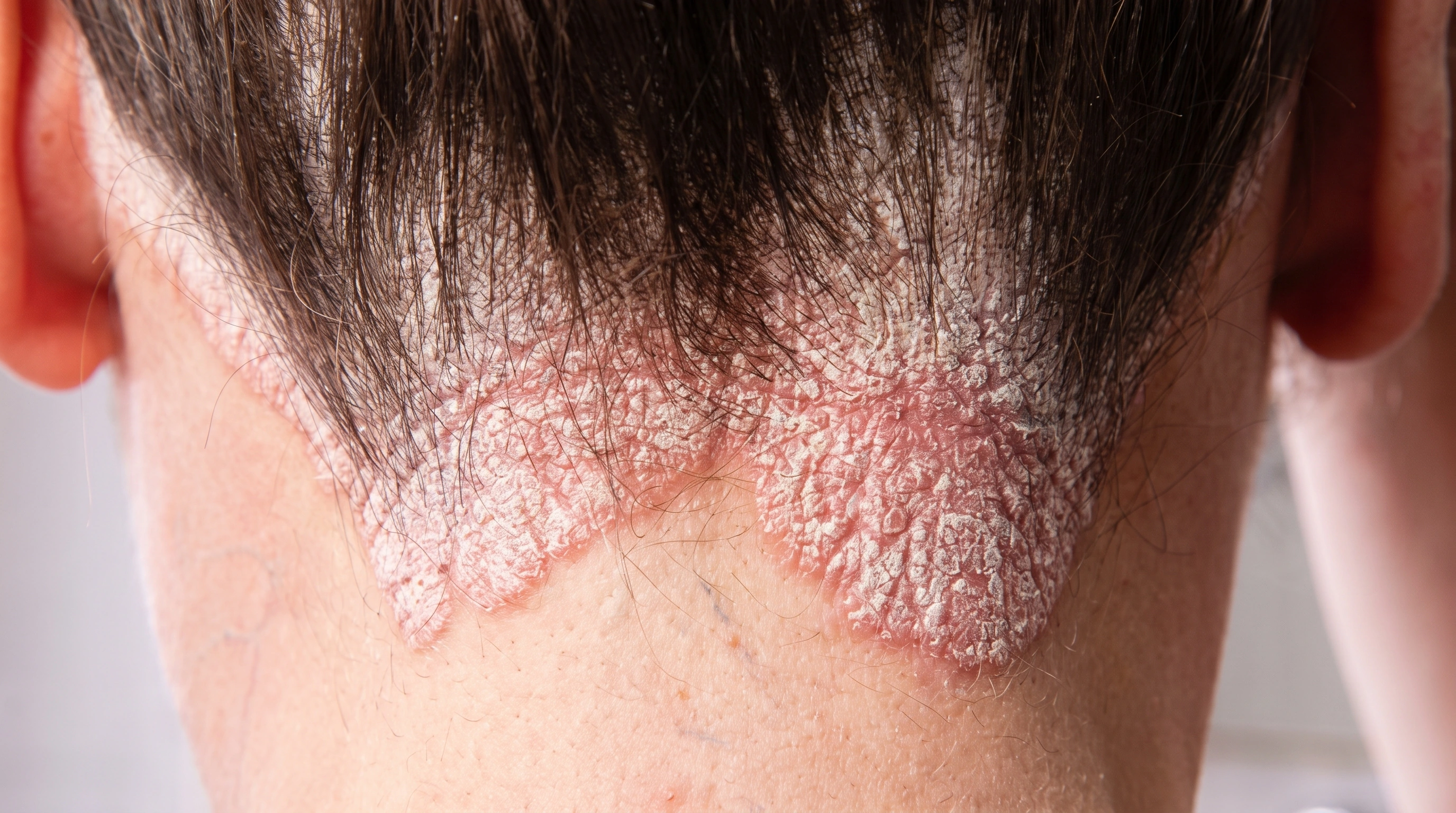
Parted hair on fair scalp skin showing a raised salmon-pink plaque topped with dry silvery-white scale, with a sharply drawn border against normal skin.

Scalp Psoriasis

The reviewed sources do not establish this ingredient as a treatment for this concern.
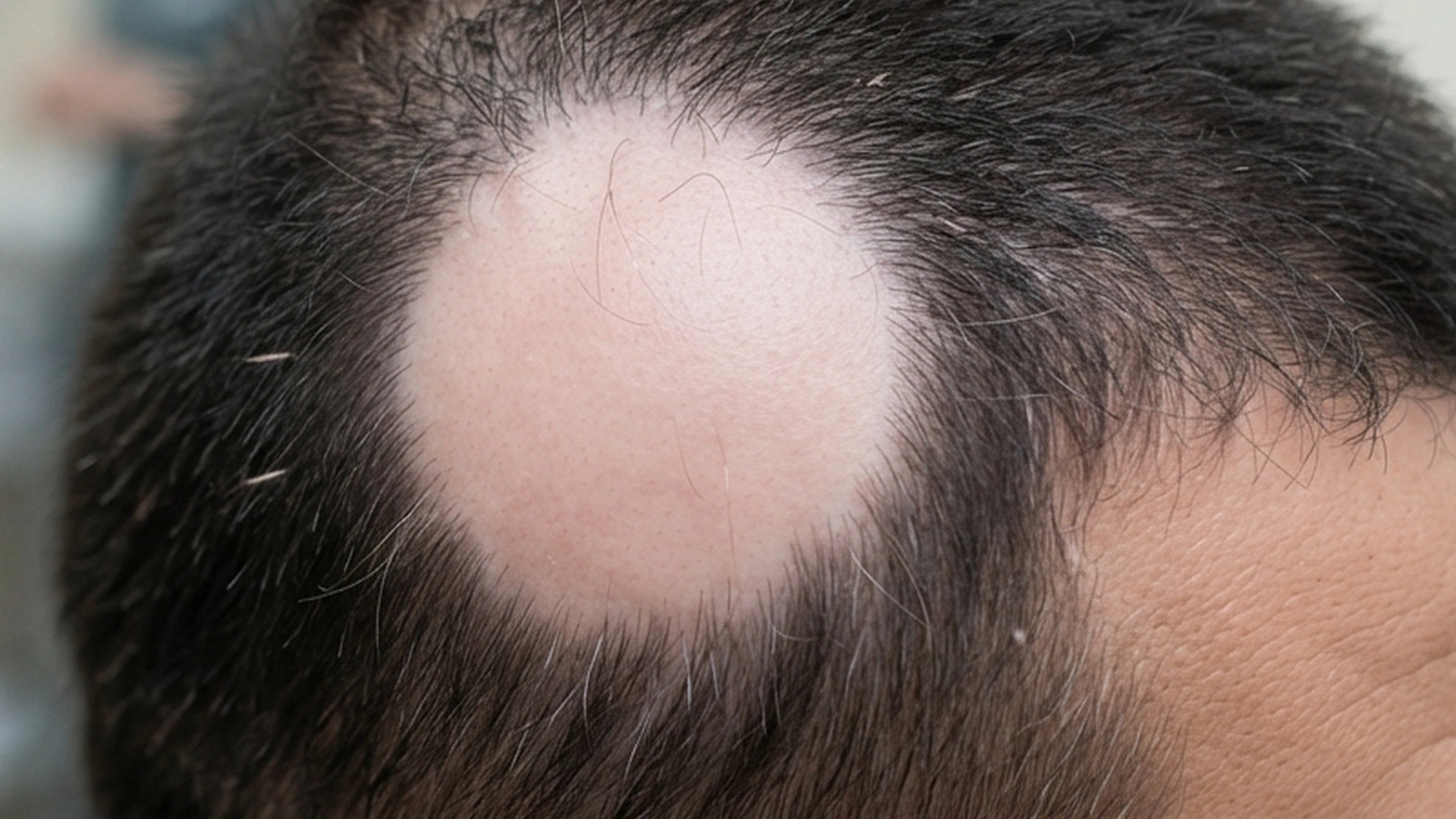
A round smooth bald patch on the scalp.

Alopecia Areata

The reviewed sources do not establish this ingredient as a treatment for this concern.
Salmon-pink patches with fine greasy yellowish scale in the crease beside the nose and through the eyebrow on fair skin, with soft edges that fade into normal skin.

Seborrheic Dermatitis

The reviewed sources do not establish this ingredient as a treatment for this concern.
Redness and fine superficial vessels across a light-skinned cheek and nose.

Rosacea

Combination sulfacetamide/sulfur products do not establish sulfur alone as treatment.
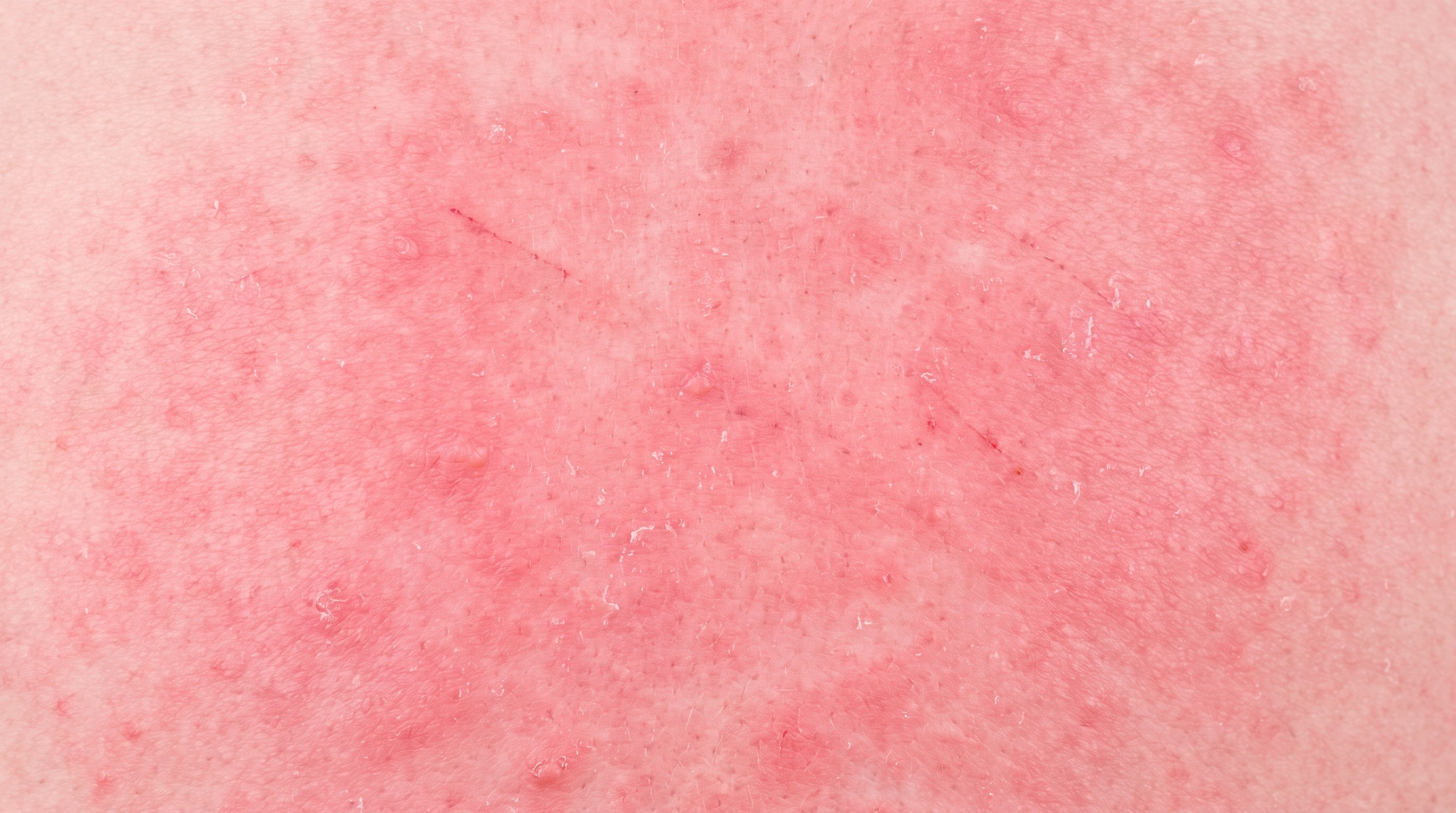
Extreme close-up of light skin in an active eczema flare, too close to tell which part of the body it is. Blotchy pink-red inflammation covers the whole frame with no clear edge, with small raised bumps, fine dry scale and a few fresh scratch marks.

Eczema

The reviewed sources do not establish this ingredient as a treatment for this concern.
Acne scarring on light skin. Small sharply cut pits and broad shallow dips across a cheek, several sitting inside faint flat pink marks, with no active spots.

Acne Scarring

The reviewed sources do not establish this ingredient as a treatment for this concern.
How it works

Pyrithione Zinc

Pyrithione Zinc mechanism diagram. Reaches the scalp surface: The shampoo deposits its active ingredient on the scalp. Acts against yeast: Helps control Malassezia associated with dandruff.
Open full-size diagram
Diagram explanation and sources

Reaches the scalp surface: The shampoo deposits its active ingredient on the scalp. Acts against yeast: Helps control Malassezia associated with dandruff.

Schematic illustration; not a measurement of skin penetration. Effects vary with ingredient identity and formulation.
Source 1 · Source 2

Sulfur

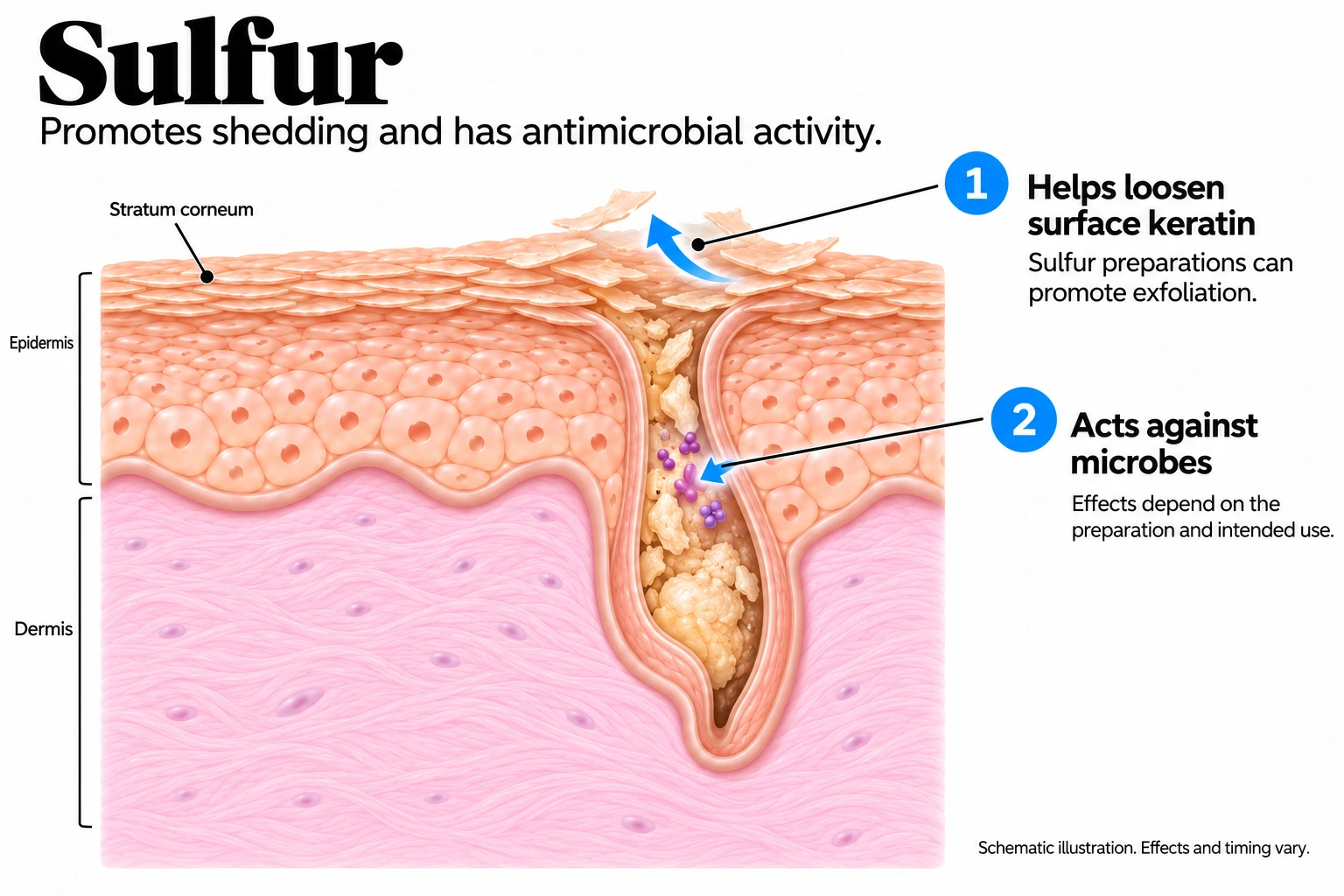
Sulfur mechanism diagram. Helps loosen surface keratin: Sulfur preparations can promote exfoliation. Acts against microbes: Effects depend on the preparation and intended use.
Open full-size diagram
Diagram explanation and sources

Helps loosen surface keratin: Sulfur preparations can promote exfoliation. Acts against microbes: Effects depend on the preparation and intended use.

Schematic illustration; not a measurement of skin penetration. Effects vary with ingredient identity and formulation.

Source 1 · Source 2 · Source 3

Using both in one routine

Built from where each one usually sits in a routine. Introduce one at a time.

Morning
Step 1
Cleanser
Step 2
Moisturizer
Step 3
Sunscreen
Step 4
Pyrithione ZincAs directed
Night
Step 1
Cleanser
Step 2
SulfurNight
Step 3
Moisturizer
Step 4
Pyrithione ZincAs directed

Strengths and forms

Concentrations

Zinc pyrithione has different labeled rinse-off and leave-on ranges in the U.S. It is prohibited in EU cosmetics, so availability and permitted uses depend on location.

0.1–0.25%

0.3–2%

U.S. leave-on range

A monograph range for specified leave-on dandruff or seborrheic-dermatitis products; follow the actual label.

U.S. rinse-off dandruff range

A shampoo range for brief contact followed by rinsing. The seborrheic-dermatitis rinse-off category has different conditions.

Choosing a strength: Choose a product labeled for your scalp condition and country. Do not use a rinse-off shampoo as a leave-on serum.

Higher strengths: A higher percentage does not compensate for unsuitable contact time or a wrong diagnosis.

Formula matters: Particle delivery, the shampoo base and use directions matter alongside concentration. Check the active ingredient, not just the anti-dandruff branding.

Sulfur strength depends on the condition: U.S. OTC acne products use 3–10%, while compounded scabies ointments use a separate 5–10% range.

3–10%

5–10%

OTC acne range

For qualifying acne products. A wash, mask and leave-on product have different contact instructions.

Compounded scabies ointment

A clinician-directed alternative discussed by CDC. It is a separate treatment, not ordinary facial skincare.

Choosing a strength: Choose for the diagnosis and complete product. Sulfur-only acne products and prescription sulfacetamide/sulfur combinations are not the same.

Higher strengths: More sulfur is not automatically more useful, and dryness or irritation may limit use.

Formula matters: Wash-off versus leave-on use matters. Scabies treatment requires a whole treatment plan rather than choosing a percentage alone.

Forms
Shampoo · Bar soap · Cream
Mask · Spot treatment · Wash

When you’ll see results

Approximate windows, not promises.

● Pyrithione Zinc
● Sulfur
First few weeks

First few weeksDandruff may begin to improve during the first few weeks.

First few weeksAssess tolerance and texture; immediate softness can come from the base formula.

4–8 weeks

4–8 weeksReassess control; persistent or worsening scale needs diagnosis.

4–8 weeksSubtle changes may appear in some tested products; evidence varies.

8–12 weeks

8–12 weeksSome conditions need maintenance as directed on the label.

8–12 weeksCompare photographs in the same lighting and reassess benefit.

3–6 months

3–6 monthsRecurrence does not mean every scalp rash is yeast-related.

3–6 monthsPhotoaging trials often need several months; expect modest rather than dramatic change.

6–12 months

6–12 monthsLong-term plans depend on the diagnosis and the specific product.

6–12 monthsLong-term evidence is limited for many cosmetic actives; continue only if useful.

Safety and sensitive skin

Common reactions

May sting or dry the scalp; rinse well and avoid the eyes.

Odour, dryness and irritation can limit use; avoid strong products on inflamed eczema.

When to stop

Stop for persistent burning, swelling, blistering or a new rash. Seek urgent care for breathing difficulty or a severe allergic reaction.

Stop for persistent burning, swelling, blistering or a new rash. Seek urgent care for breathing difficulty or a severe allergic reaction.

Sensitive or inflamed skin

Choose a simple formula and test a small area first. Individual tolerance matters more than an ingredient’s reputation for being gentle.

Choose a simple formula and test a small area first. Individual tolerance matters more than an ingredient’s reputation for being gentle.

Important limits

Do not use a cosmetic product as a substitute for diagnosis of an unexplained, changing or persistent skin problem.

Do not use a cosmetic product as a substitute for diagnosis of an unexplained, changing or persistent skin problem.

Pregnancy

Very little is absorbed from a rinse-off shampoo, but ask the doctor managing your pregnancy, since they know your full picture.

Topical sulfur is generally considered acceptable in pregnancy; ask the clinician managing your pregnancy.

How it works

In the skin

On the skin. The finished product delivers pyrithione zinc in a particular vehicle.

Entering skin. This number describes the zinc-pyrithione complex, not shampoo particle size. Scalp deposition and the finished formula matter more than a simple Dalton threshold.

Conversion. No activation step is established as necessary for its intended topical role.

Skin response. Acts against scalp yeasts involved in dandruff; the shampoo and its contact time affect results.

Additional effects. Proposed pathways do not establish a measured depth of delivery or clinical benefit beyond the studies cited.

On the skin. The finished product delivers sulfur in a particular vehicle.

Entering skin. Below 500 Da in this molecular form. Its useful surface action does not require deep delivery; the formula and skin condition matter.

Conversion. No activation step is established as necessary for its intended topical role.

Skin response. Promotes surface shedding and has antimicrobial activity; effects and instructions depend on the preparation.

Additional effects. Proposed pathways do not establish a measured depth of delivery or clinical benefit beyond the studies cited.

Getting in
This number describes the zinc-pyrithione complex, not shampoo particle size. Scalp deposition and the finished formula matter more than a simple Dalton threshold.
Below 500 Da in this molecular form. Its useful surface action does not require deep delivery; the formula and skin condition matter.
Molecule size
Pyrithione Zinc · 318 Da
Sulfur · 256 Da
Smaller than 500 Da passes the outer skin more easily. Size isn’t an effectiveness score.
500 Da guideline

Product examples

Pyrithione Zinc
  • Dove Damage Therapy Soothing Moisture Anti-Dandruff Conditioner
  • Dove Damage Therapy Dryness & Itch Relief Anti-Dandruff Shampoo
Sulfur
  • Murad Rapid Relief Acne Sulfur Mask
  • The Ordinary Sulfur 10% Powder-To-Cream Concentrate
  • Naturium The Revealer Sulfur Body Wash

Common questions

Pyrithione Zinc:What should I choose pyrithione zinc for?

Choose for dandruff and scalp flaking; use a labelled medicated shampoo.

Pyrithione Zinc:How strong is the evidence?

A 331-person trial compared two active shampoos for four weeks. Zinc pyrithione improved dandruff, but ketoconazole performed better; this does not establish treatment of other scalp disorders.

Sulfur:What should I choose sulfur for?

Consider for an appropriate acne product; suspected scabies needs diagnosis and a complete plan.

Sulfur:How strong is the evidence?

Modern isolated-sulfur acne evidence is limited; studies of sulfacetamide/sulfur cannot isolate sulfur. CDC describes sulfur ointment as a scabies option, but an acne wash is not a substitute for that regimen.

Sources
Sources and further reading

  1. A multicenter randomized trial of ketoconazole 2% and zinc pyrithione 1% shampoos in severe dandruff and seborrheic dermatitis. (2002)
  2. Dandruff has an altered stratum corneum ultrastructure that is improved with zinc pyrithione shampoo. (2001)
  3. AAD acne guideline (2024)
  4. CDC scabies clinical care
  5. FDA topical acne monograph: sulfur concentrations
  6. FDA dandruff, seborrheic dermatitis and psoriasis monograph M032
  7. EU Regulation 2021/1902: zinc pyrithione prohibition in cosmetics
  8. FDA acne monograph M006
  9. CDC clinical care of scabies
Dermapedia on YouTube