Male Pattern Hair Loss vs Telogen Effluvium

Male pattern hair loss is a slow thinning at the temples and crown, caused by normal hormones acting on follicles that inherited a sensitivity to them. It is common and it is not dangerous. Treatment holds on to the hair you still have far better than it brings back hair that is already gone. Telogen effluvium is a heavy, all-over shed that begins two to three months after something stressed the body - an illness, an operation, childbirth, a crash diet or a new medicine. The follicles are not damaged, so in most people the hair grows back on its own.

Reviewed by Dr. Schwarz, Board-Certified Dermatologist · Research updated 2026-10-23
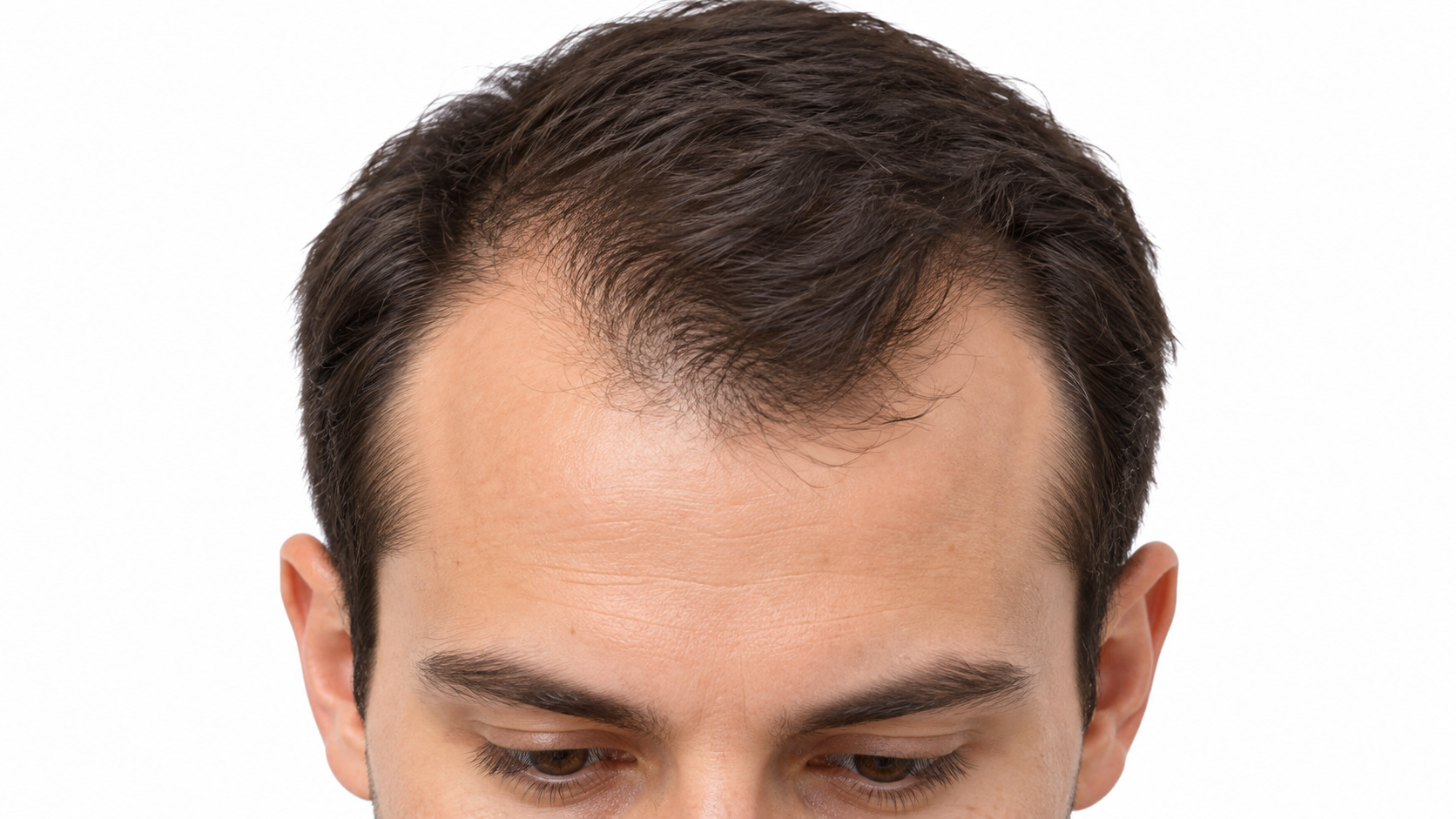
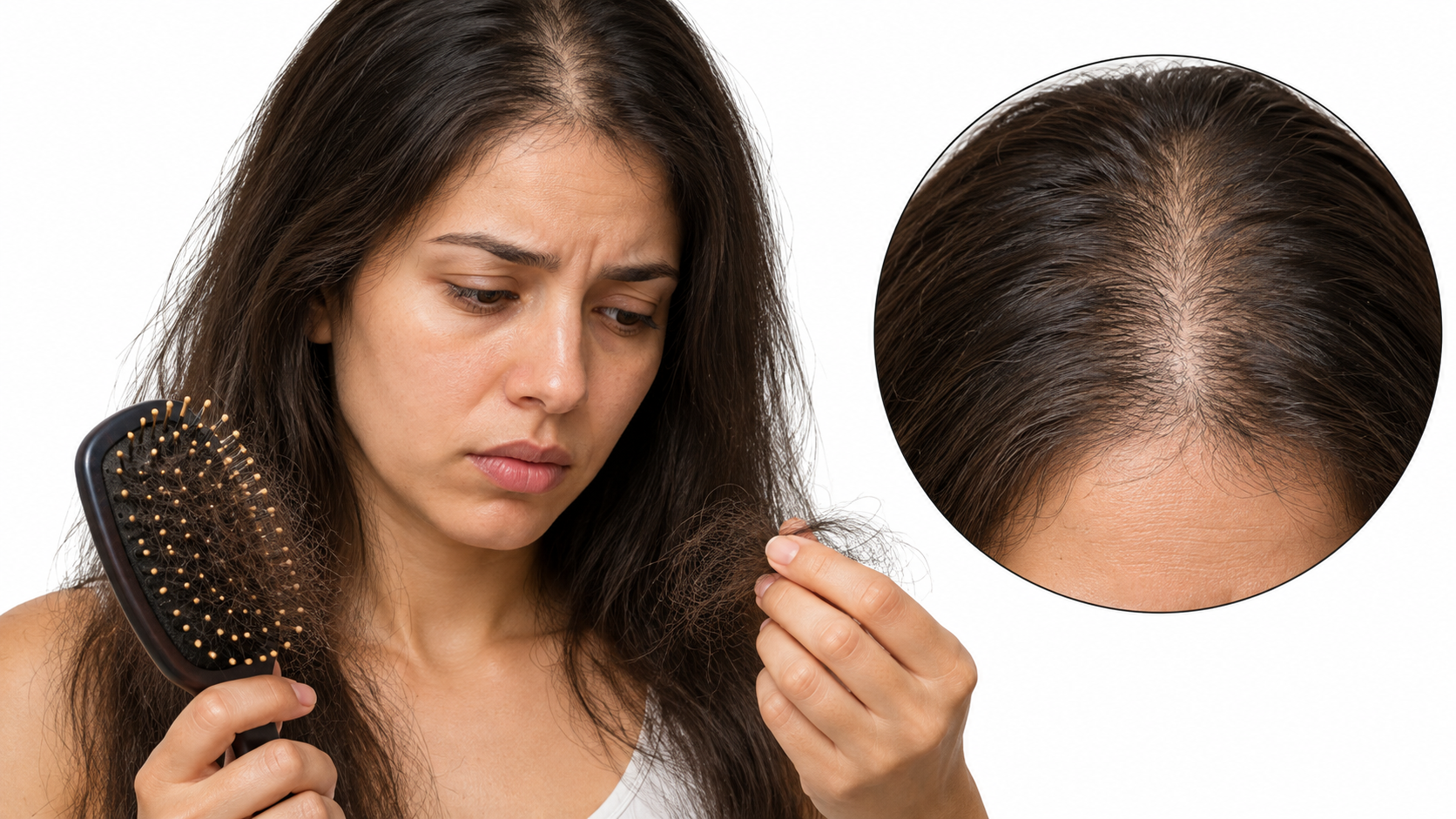
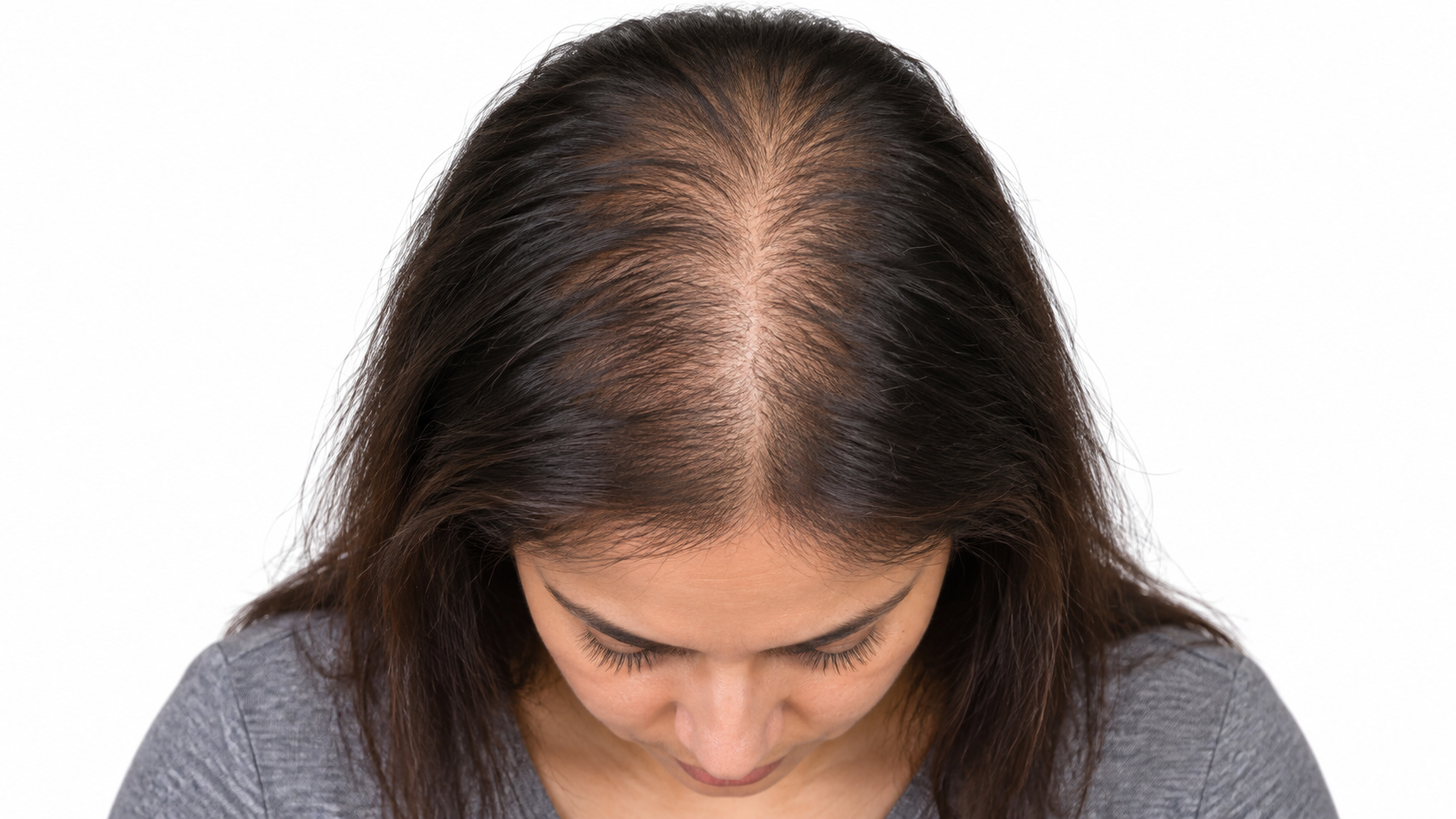
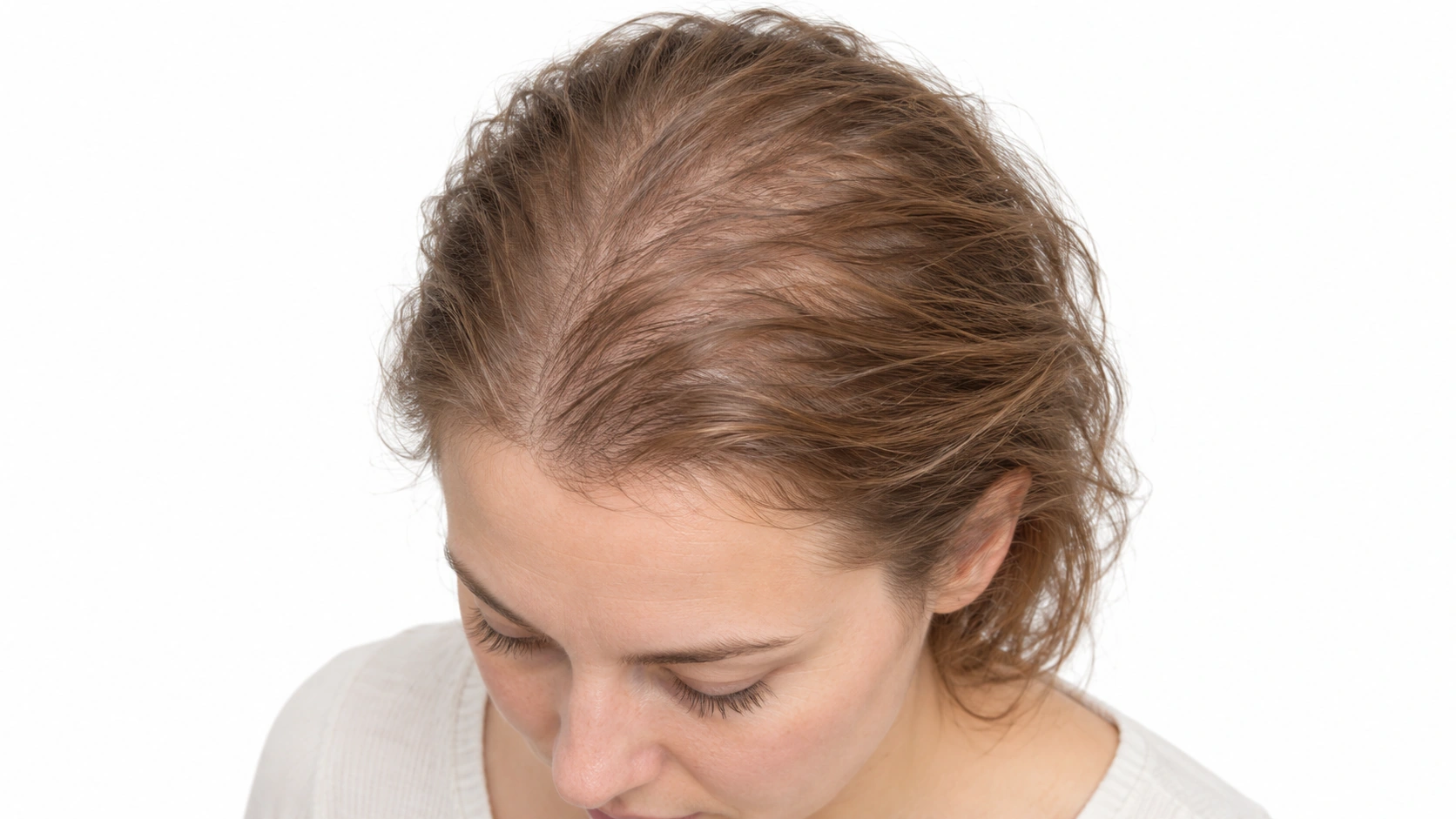
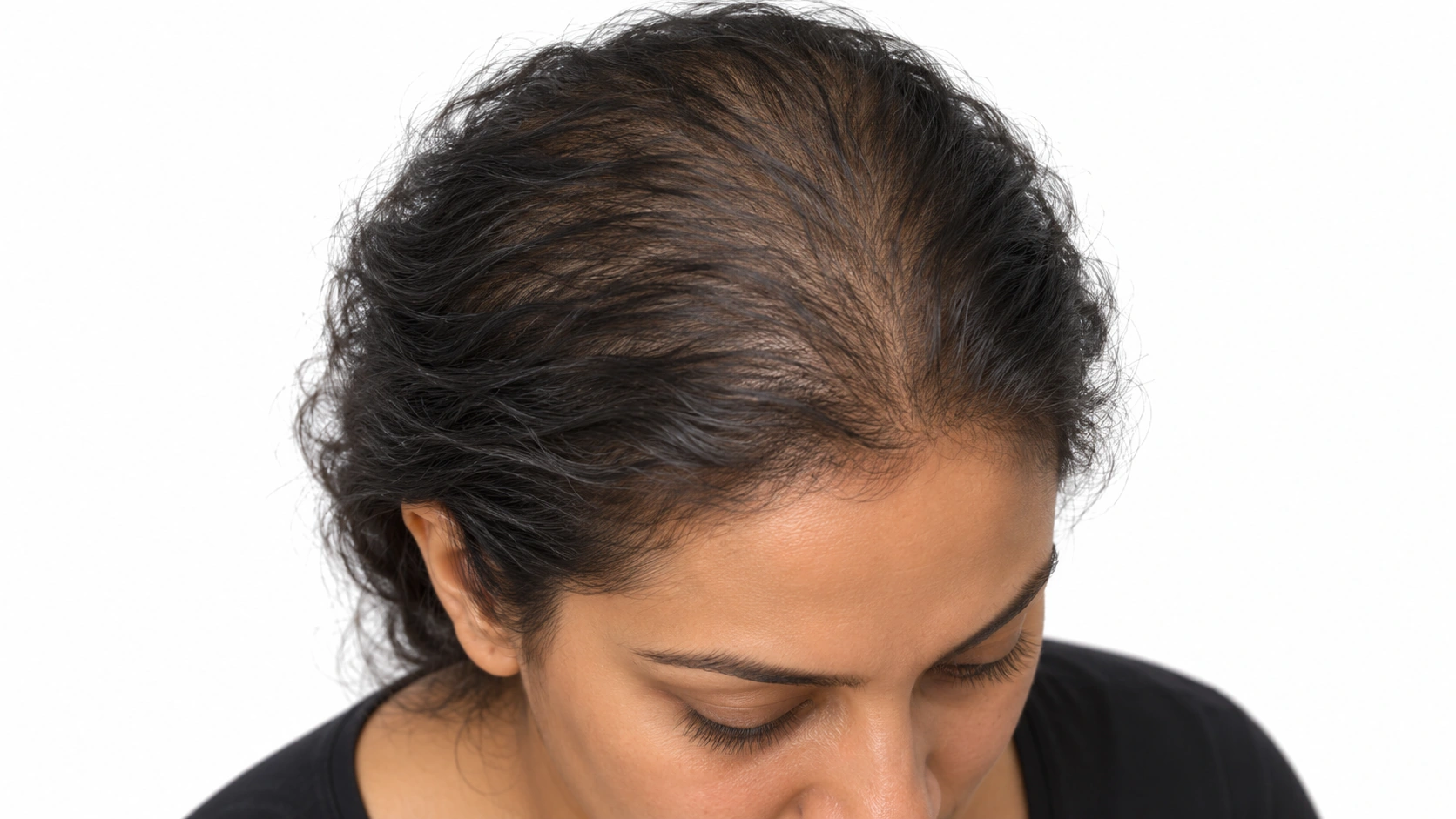
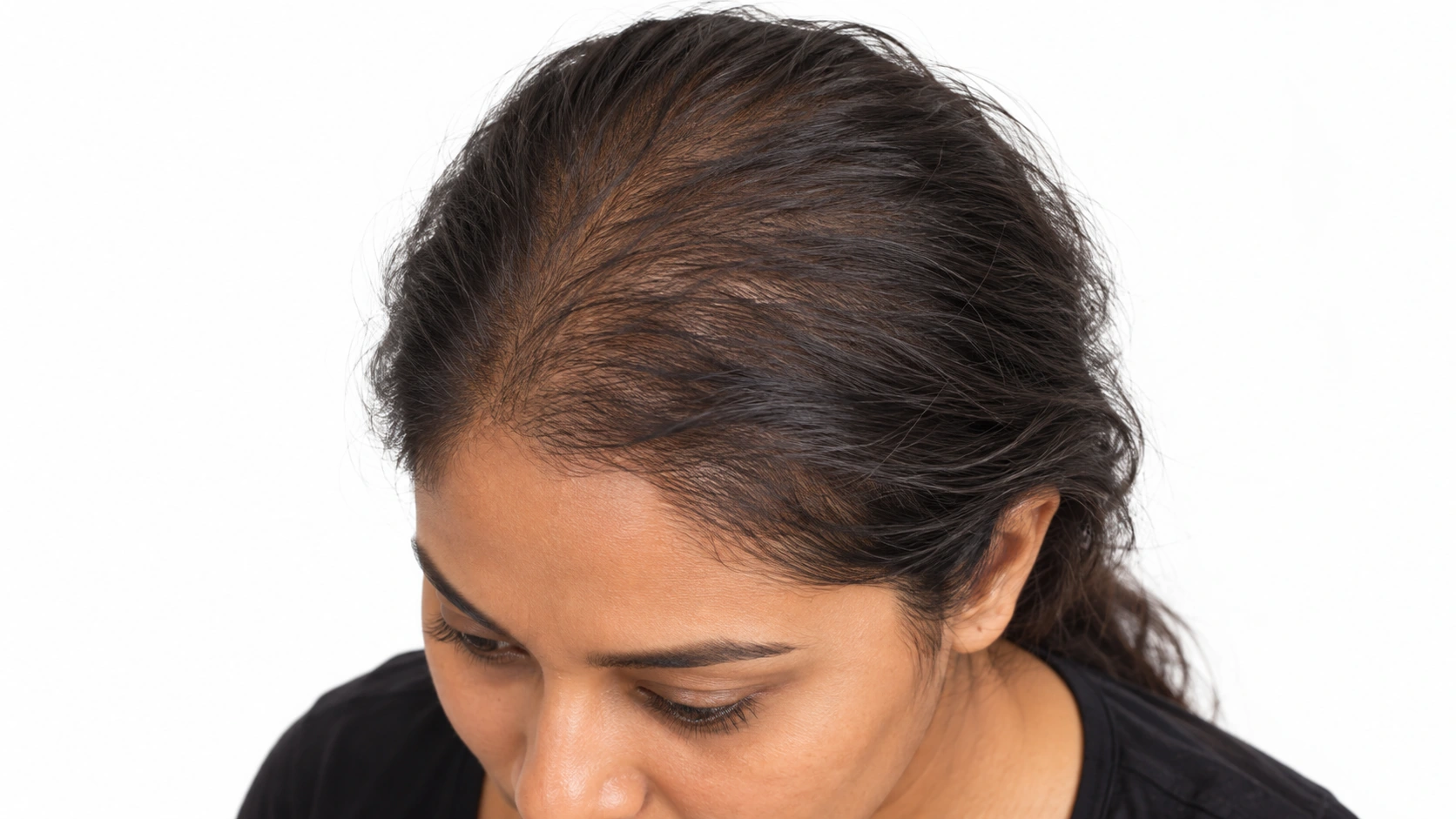
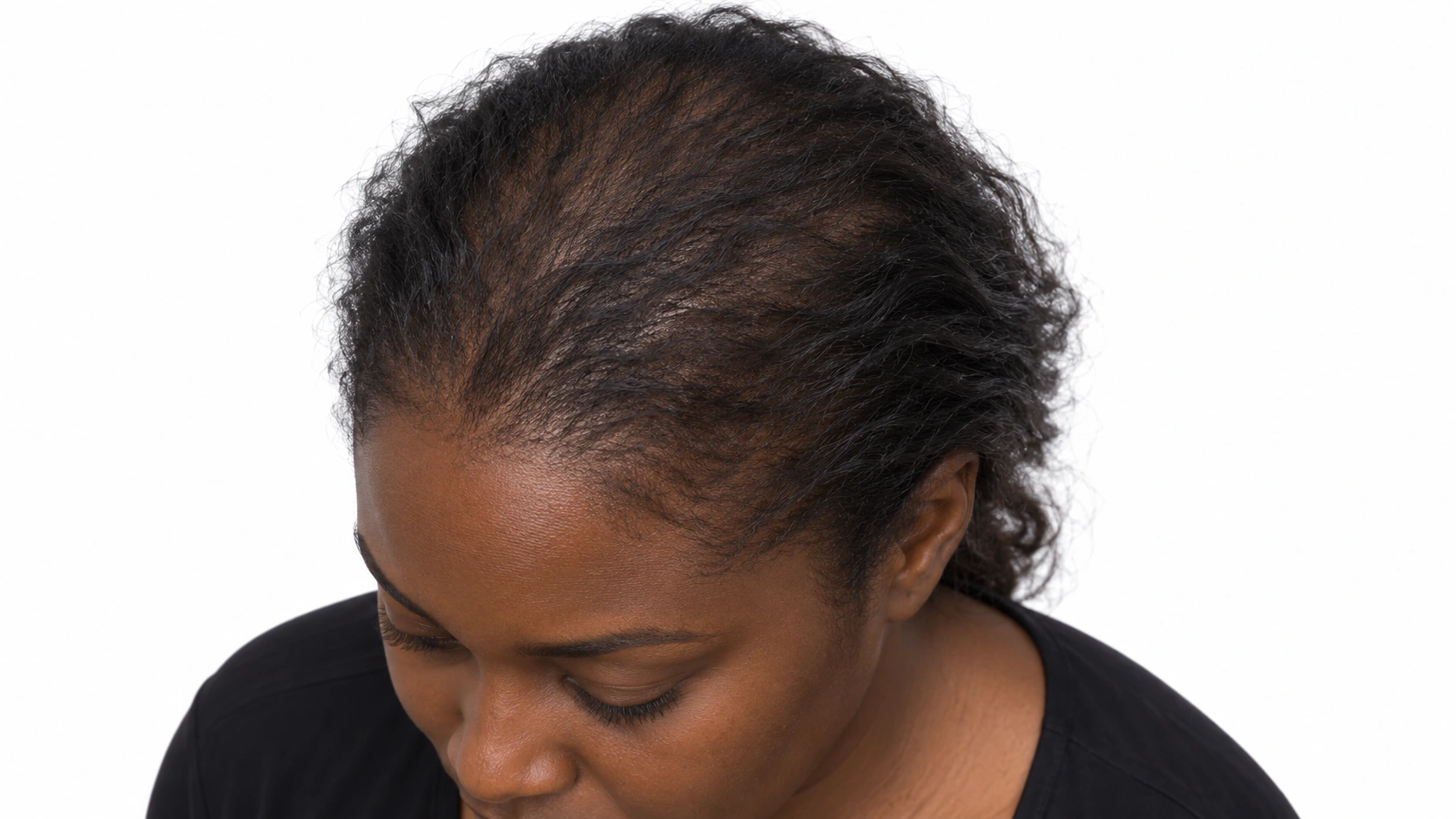
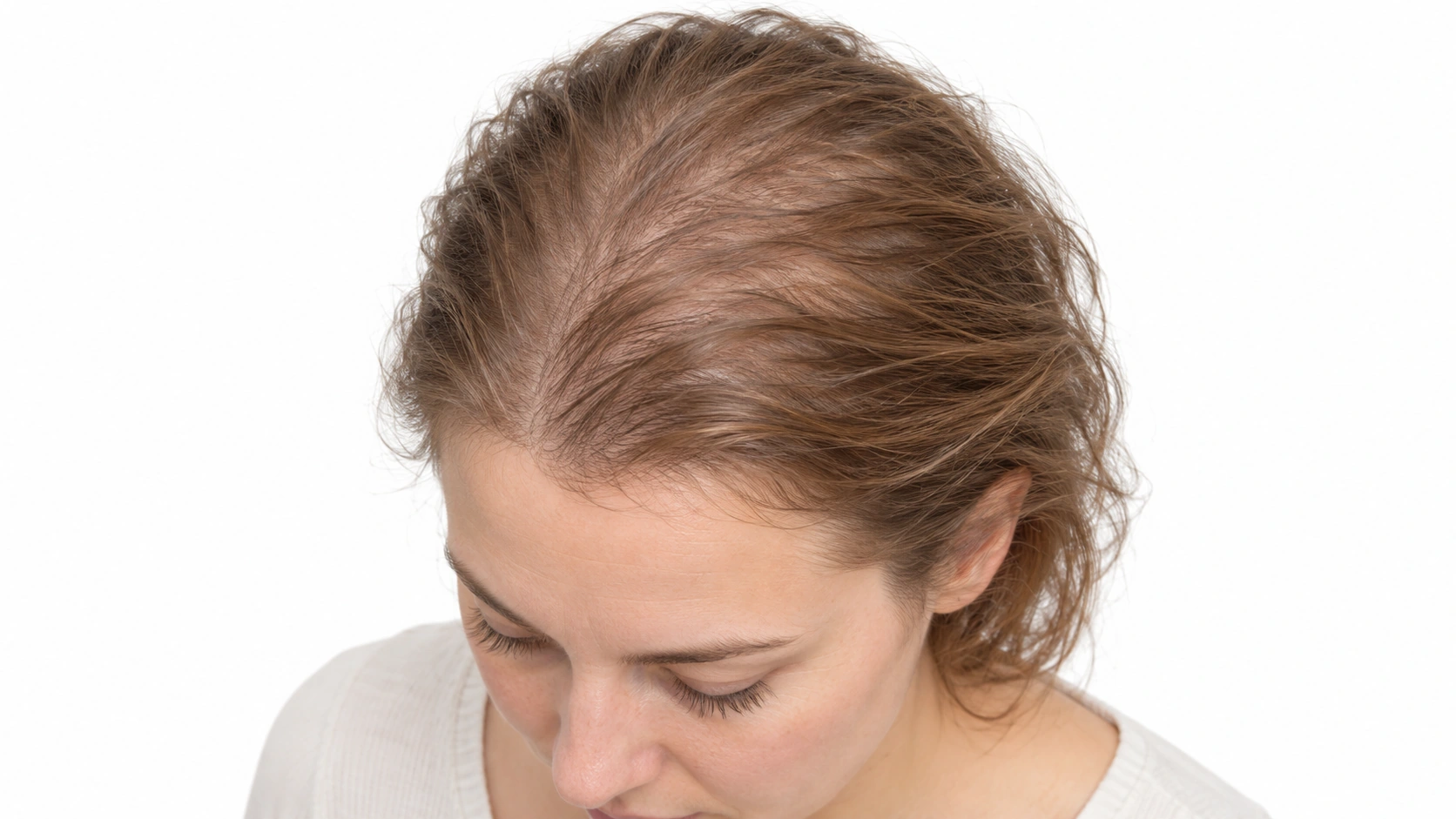
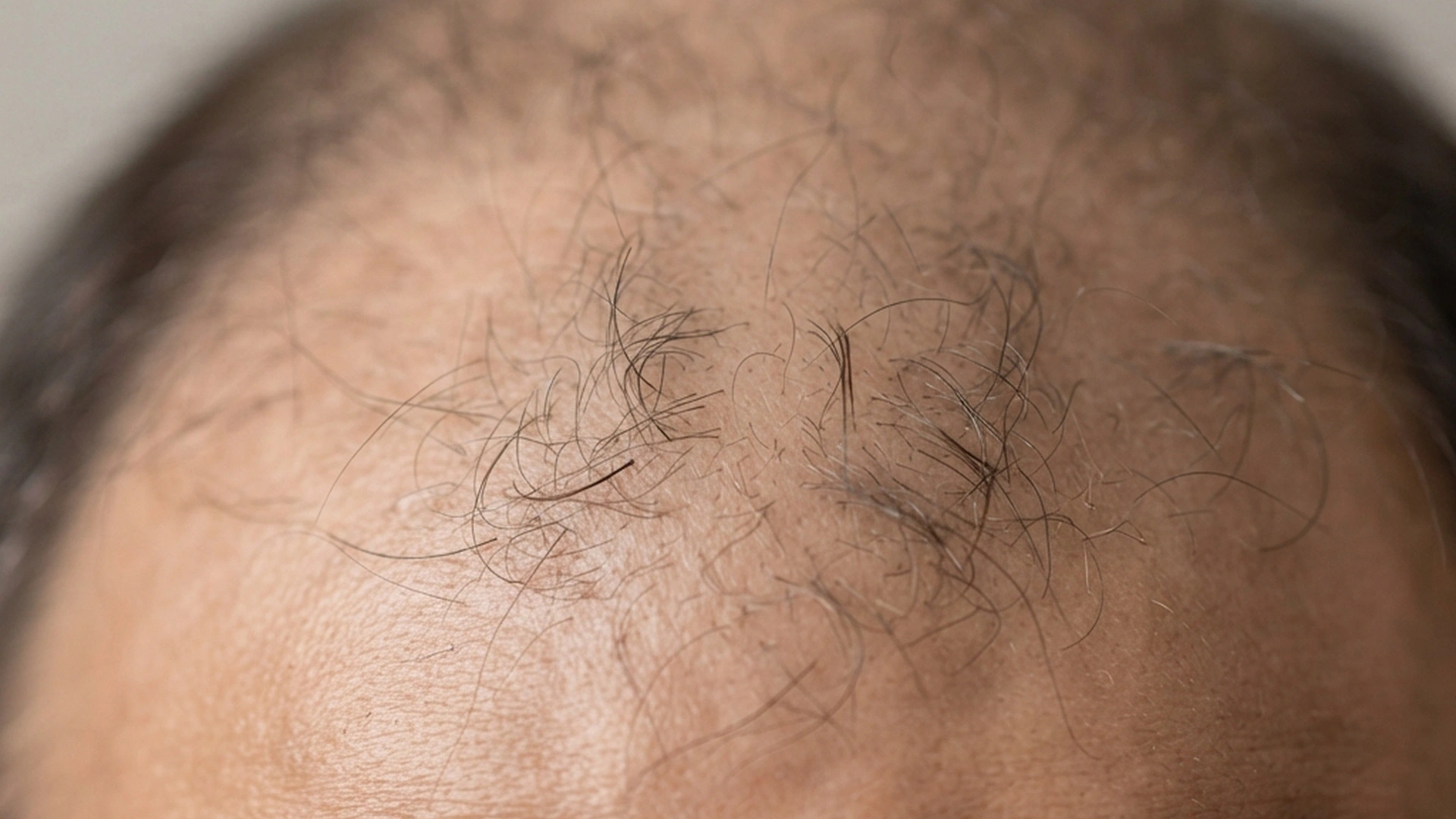
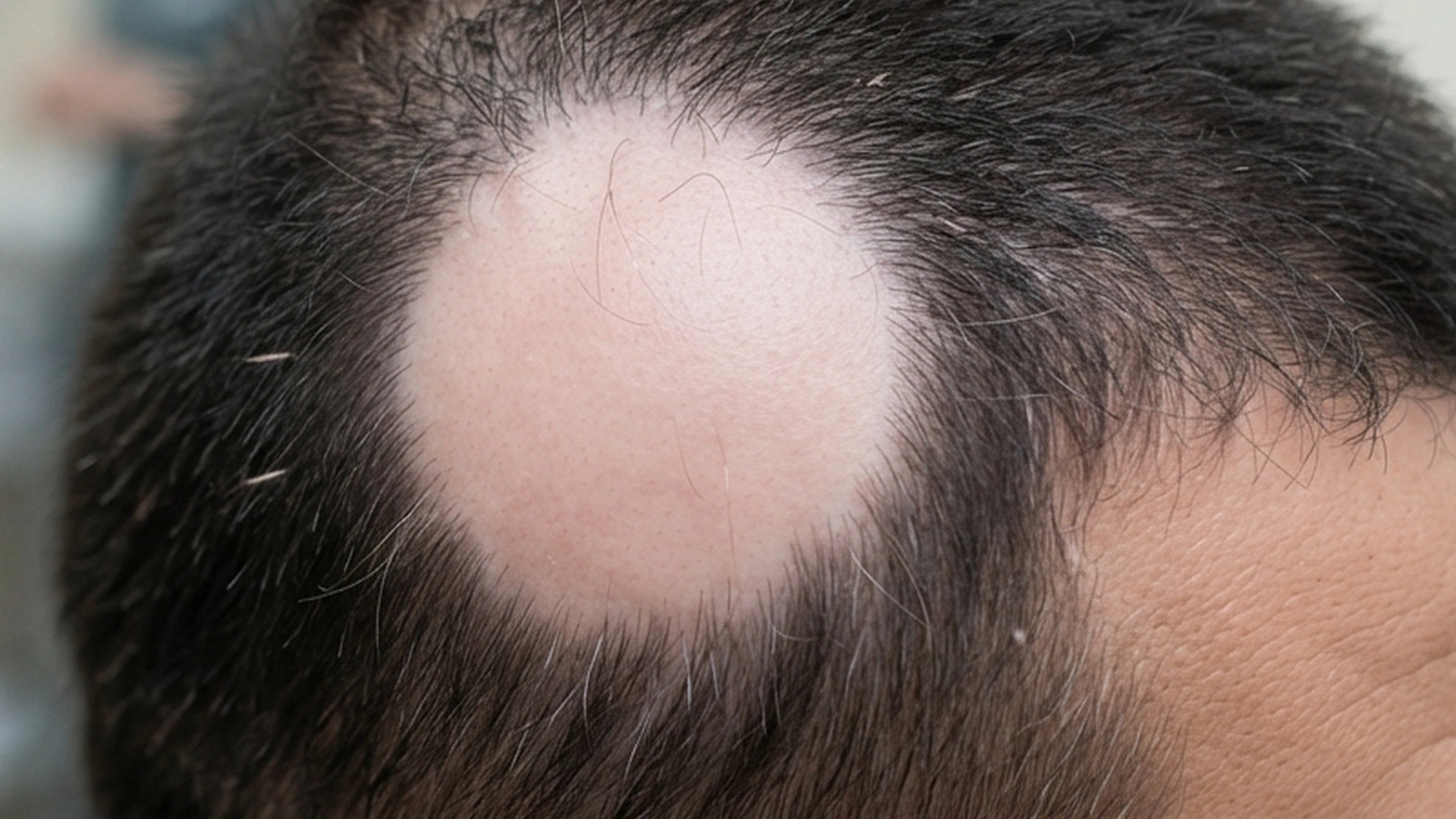
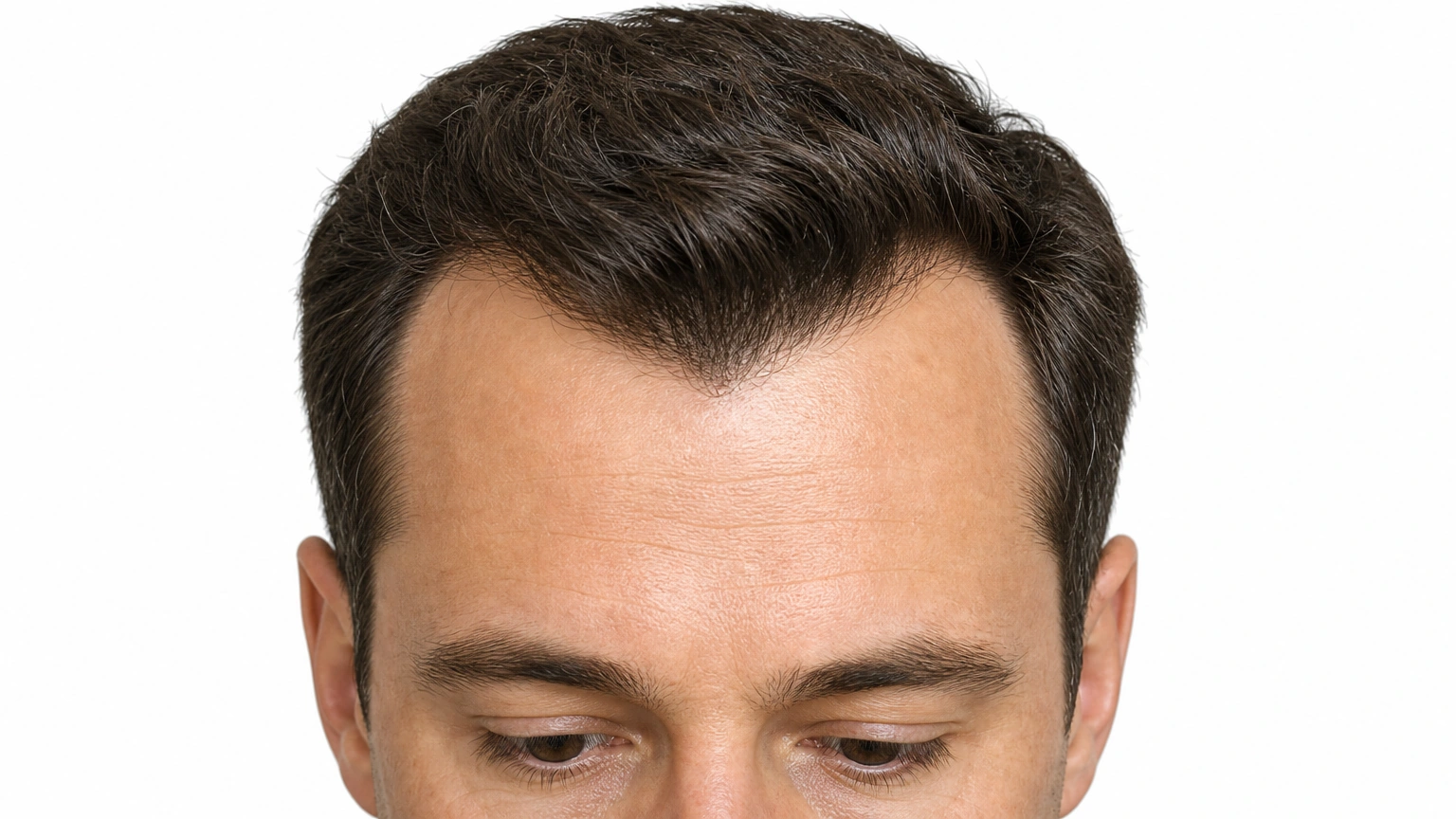
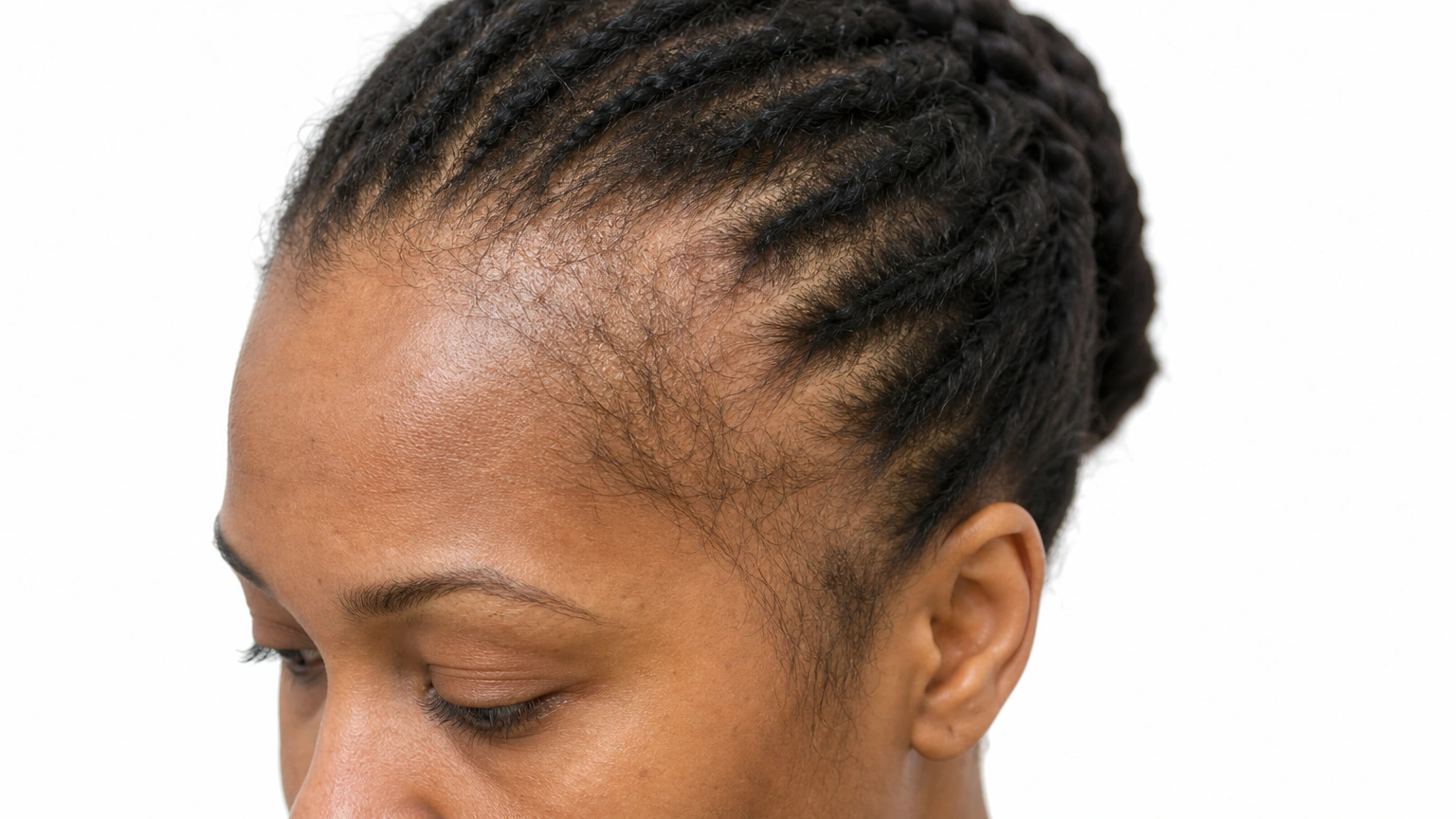
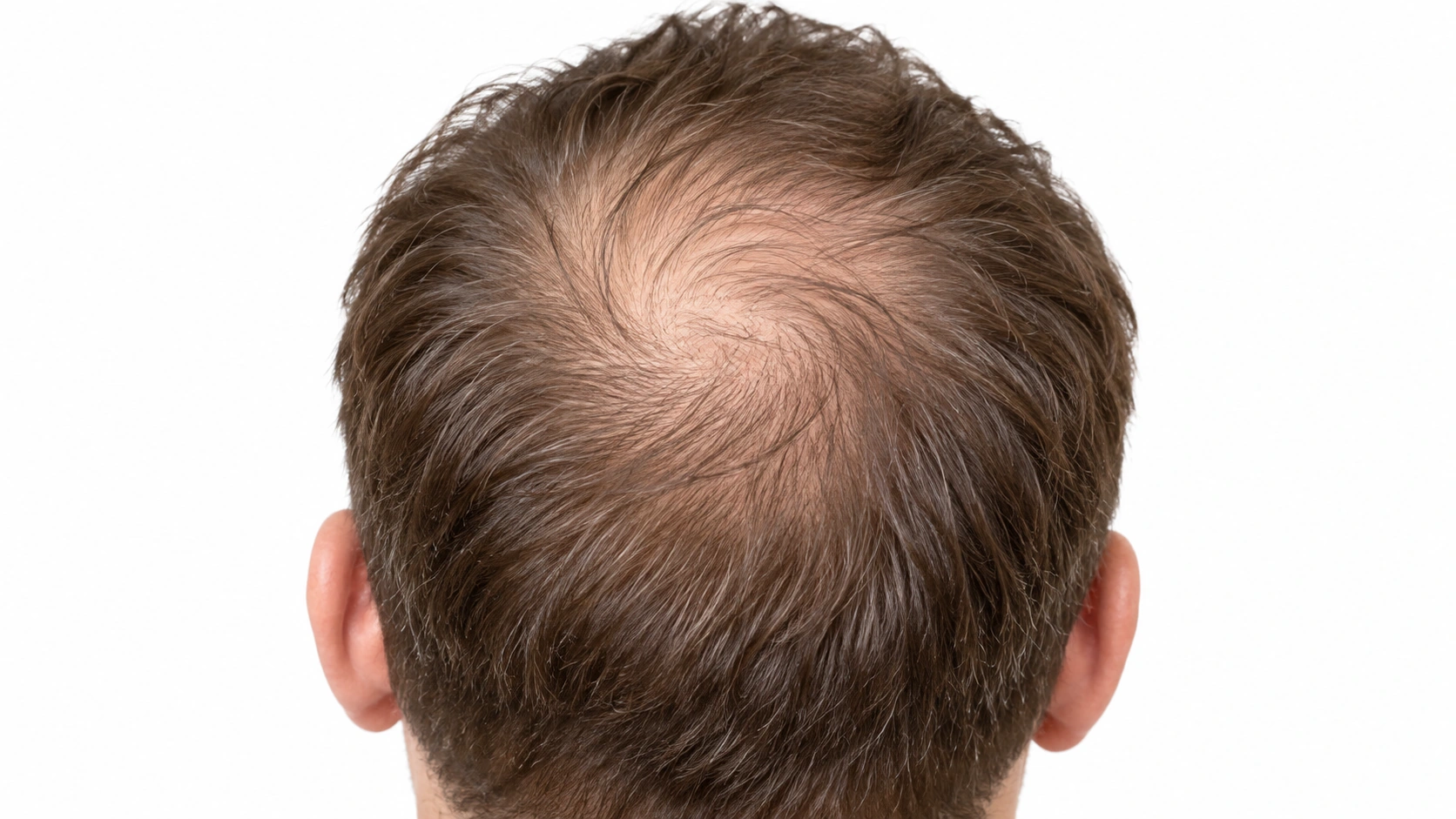
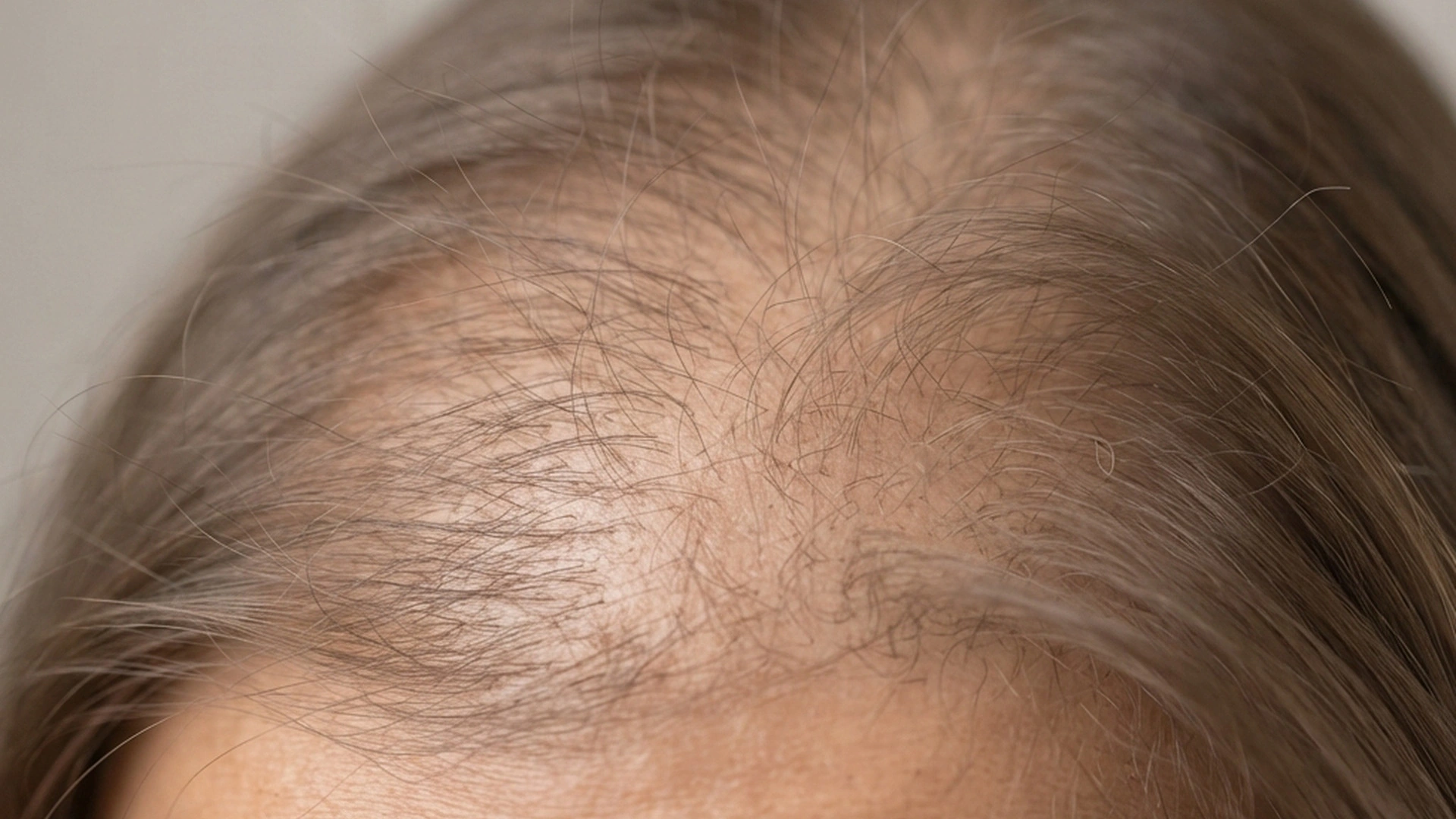
Crown hair thinning with hair retained around the sides on a light scalp.Diffuse thinning across the scalp.

Key differences

The same eight facts on every condition comparison.

Usual age
After puberty; more with age
Any age
Where
Temples and crown
Whole scalp
Main sign
Receding hairline, thinning crown
Heavy all-over shedding
Itch or pain
No
Neither
Contagious
No
No
Long term
Gradual; treatment slows it
Regrows in 6 to 12 months
Scars
No
No
Who gets it
Men with family history
After illness, birth, surgery, dieting

What is it?

Male Pattern Hair Loss
Telogen Effluvium
What is it?

It is progressive follicle shrinkage.
Also called androgenetic alopecia, it follows a recognizable pattern.

Hairs become finer.
The growing phase shortens and coverage decreases.

It is not about hygiene.
It does not reflect poor scalp care.

Other patterns need review.
Sudden shedding, smooth patches, scale or pain may suggest another cause.

It is a hair-cycle shift.
More follicles enter the resting phase, and those hairs later shed.

The trigger came earlier.
Shedding can begin months after an illness or life event.

The follicle stays intact.
A club-shaped root on a shed hair does not mean the follicle has been pulled out.

Other signs need a closer look.
Pain, inflammation, discrete patches or scarring suggest a different process.

What it looks like

Male Pattern Hair Loss

Male Pattern Hair Loss: Receding temples; Early (Norwood 2–3).

Early pattern: Norwood II–III Recession at the temples.

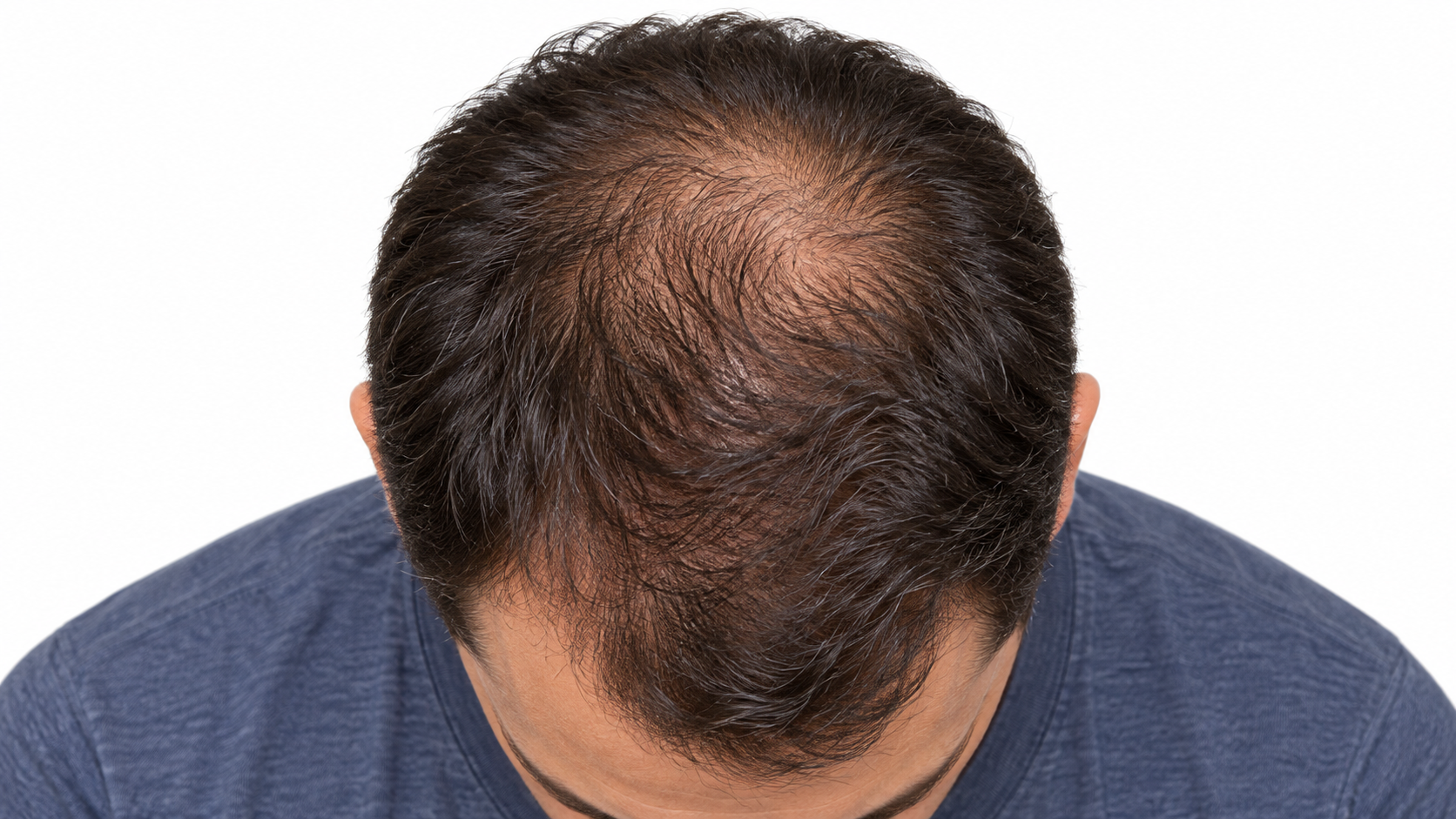
Male Pattern Hair Loss: Crown thinning.

Middle pattern: Norwood IV–V Crown and front thinning.

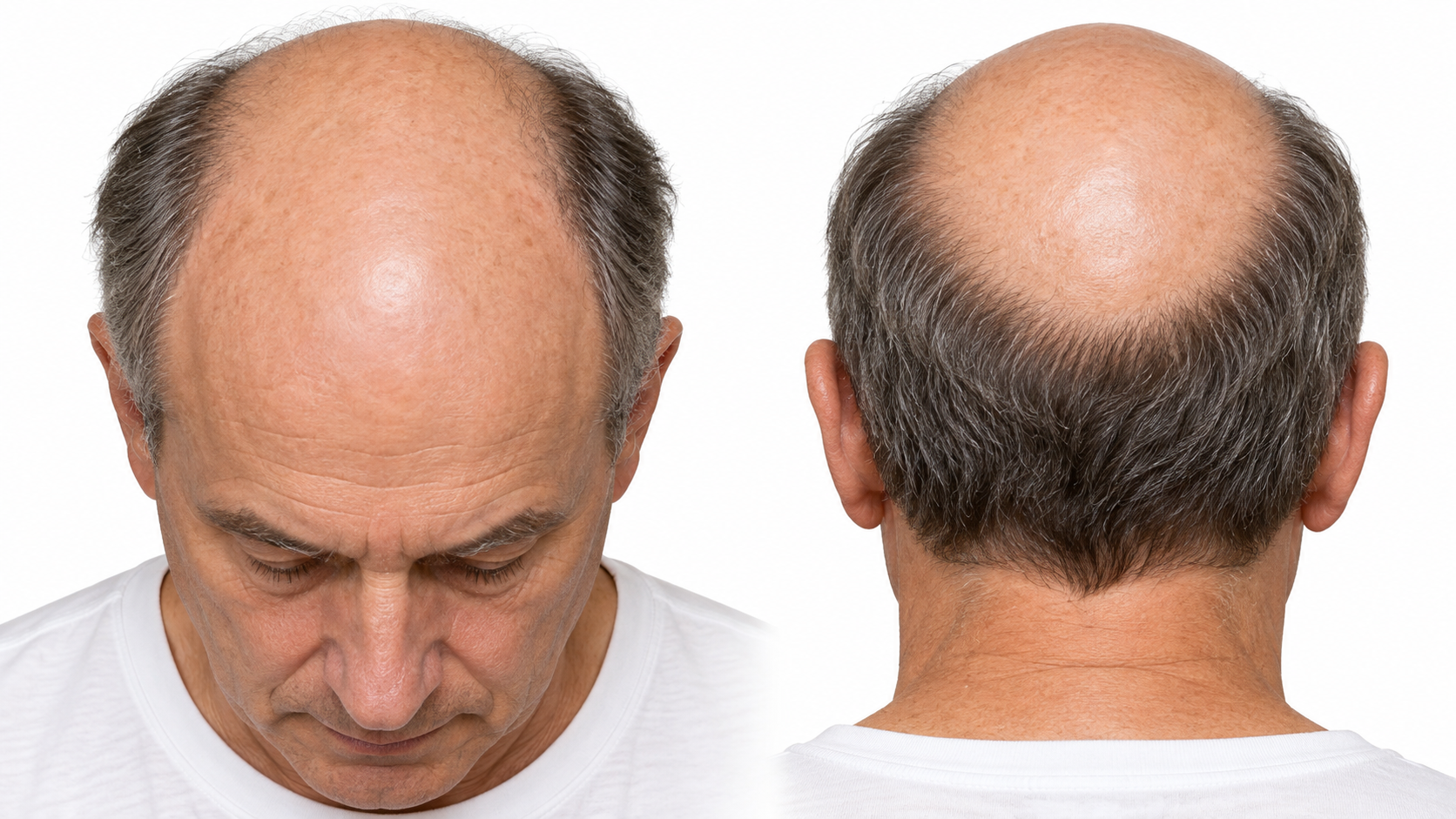
Male Pattern Hair Loss: Advanced; Advanced (Norwood 6–7).

Advanced pattern: Norwood VI–VII Horseshoe pattern.

Telogen Effluvium

Telogen Effluvium: Acute.

Acute telogen effluvium Shedding for less than six months.

Telogen Effluvium: Diffuse thinning; Chronic.

Chronic telogen effluvium Shedding that lasts more than six months.

Skin tones
Crown hair thinning with hair retained around the sides on a light scalp.
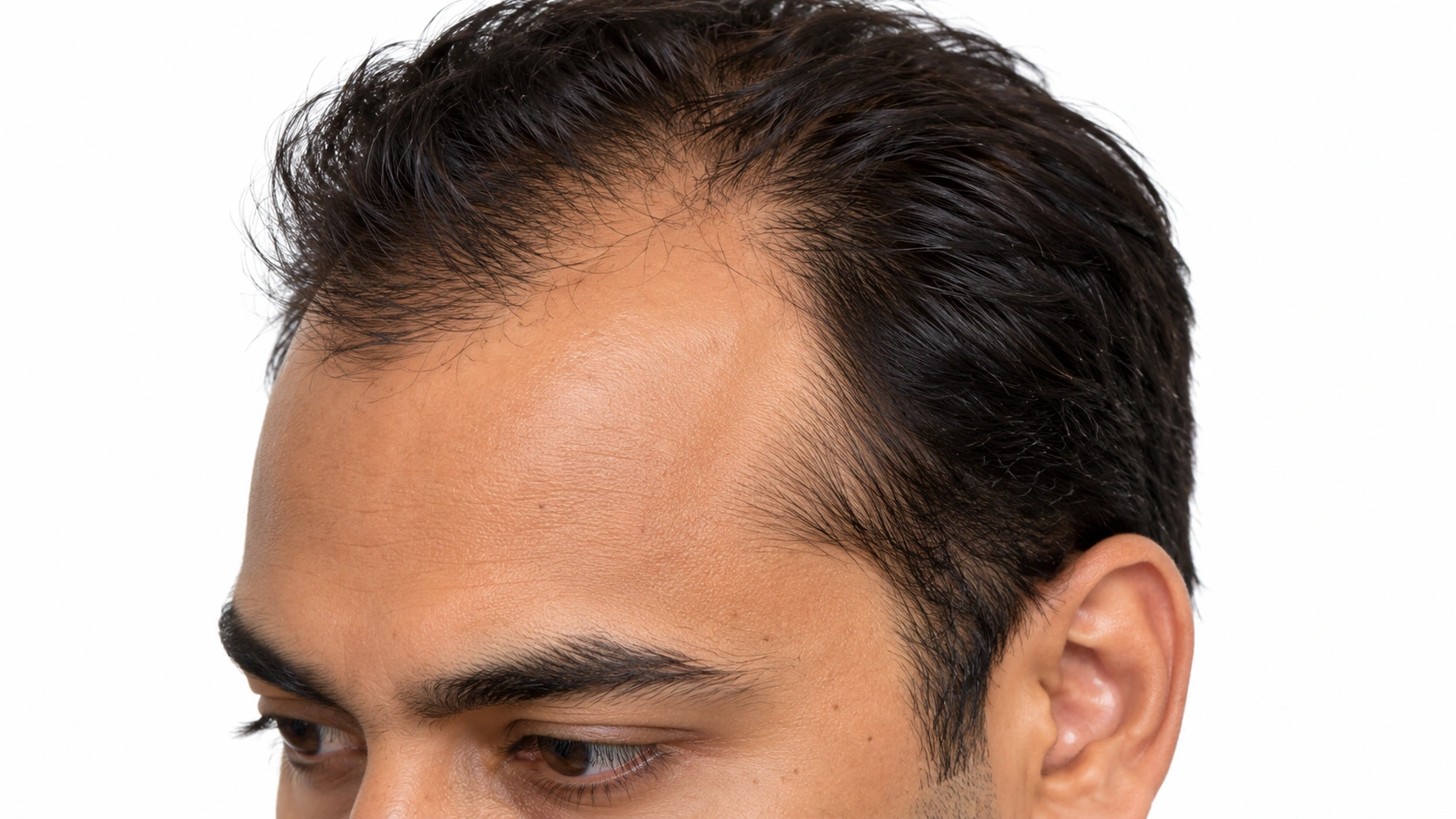
Receding hairline on medium skin.
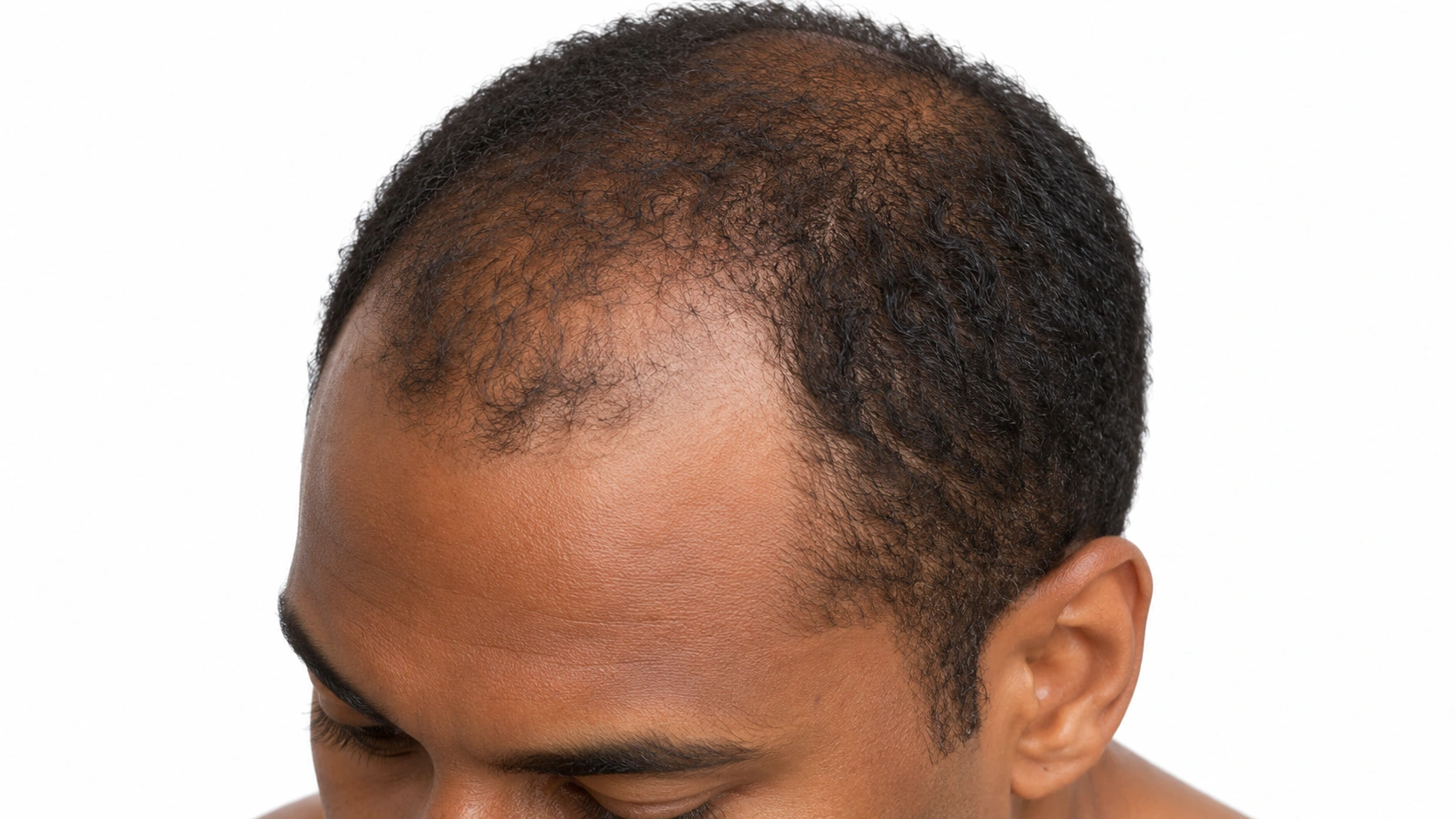
a receding frontal hairline and thinning crown on brown skin.
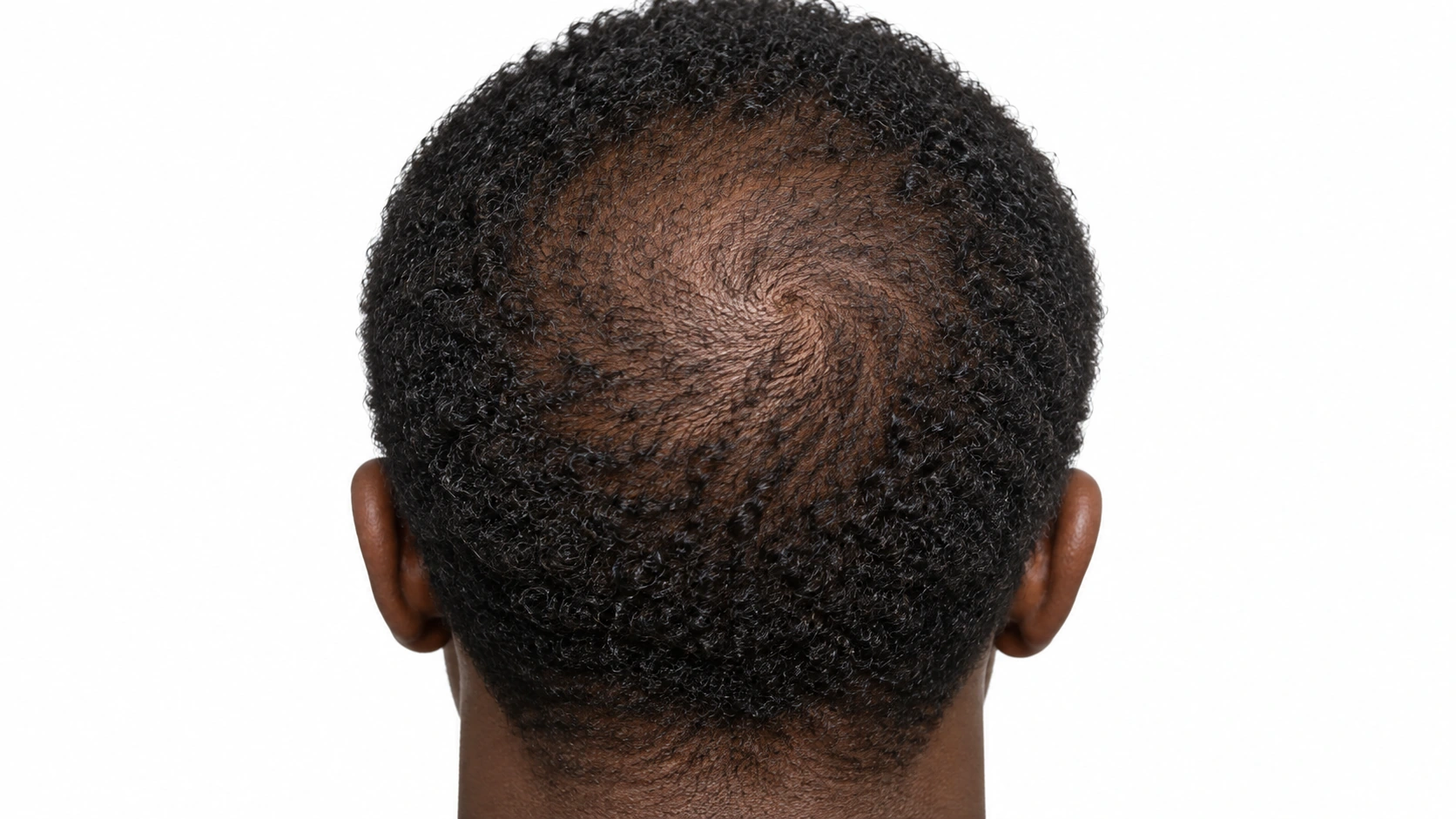
crown hair thinning with the surrounding hair retained on deep brown skin.
diffuse reduced hair density across the scalp with the frontal hairline retained on light skin.
diffuse reduced hair density across a medium scalp with the frontal hairline retained.
diffuse reduced hair density across the scalp with the frontal hairline retained on brown skin.
diffuse reduced hair density across a deep brown scalp with the frontal hairline retained.
Diagram
Male Pattern Hair Loss mechanism diagram. Follicles become smaller: Successive hairs can grow finer and shorter. Growth phases become shorter: Affected hairs spend less time growing. Follicles respond to androgens: DHT acts on genetically susceptible scalp follicles.
Telogen Effluvium mechanism diagram. A trigger shifts the hair cycle: Illness or stress can move more hairs into rest. Shedding appears later: Extra resting hairs are released months afterward. Follicles remain intact: New growth can follow as the cycle recovers.
In the skin

In genetically susceptible scalp follicles, the hormone DHT contributes to gradual miniaturization. Shorter growth phases produce finer, shorter hairs and reduce visible scalp coverage.

A physical or emotional trigger can shift more hair follicles into their resting phase at once. Extra shedding appears later, while the follicles remain capable of producing new hairs.

Where it shows up

Receding temples and crown
Diffuse scalp shedding

When it usually starts

010203040506070+

Male Pattern Hair Loss. May begin after puberty and becomes more common with age.

Telogen Effluvium. Can follow a major body stress at any age, often with shedding beginning several months afterward.

Causes and triggers

Causes

Male pattern hair loss happens when DHT, a hormone made from testosterone, shrinks sensitive hair follicles over years.

Telogen effluvium happens when a shock to the body pushes many hairs into the resting phase at once. They shed about 2 to 3 months later.

Family tendency

Genes from both parents matter. The androgen receptor gene on the X chromosome, inherited from the mother, plays a key role.

Risk factors
Age, Family history, Smoking
Women aged 30 to 60, Recent major illness, Low iron, Thyroid problems
Trigger
● Male Pattern Hair Loss
● Telogen Effluvium
Anabolic steroids and testosterone
Strong link
Not listed
Severe illness or stress
Possible
Not listed
High fever or illness
Not listed
Well established
Childbirth
Not listed
Well established
Surgery
Not listed
Well established
Crash diets
Not listed
Strong link
Severe emotional stress
Not listed
Strong link
Starting or stopping some medicines
Not listed
Strong link

Daily Care

Male Pattern Hair Loss
Telogen Effluvium
Daily care

Habits that help

  • Photographs and patience
    Same light, same angle, every six months.
  • Sun protection on a thinning scalp
    It burns easily and is a common site for skin cancer.
  • Hair transplant surgery
    The only way to put hair where the follicle has closed.
  • Treating anything else going on
    Correcting low iron or thyroid gives back that density.
  • Seek assessment for progressive hair thinning rather than waiting indefinitely
    Every untreated year closes more follicles.

Avoid

  • Avoid: Crash dieting
    Fast weight loss triggers a shed months later.
  • Avoid: Smoking
    Linked to earlier and more severe pattern loss.
  • Avoid: Tight hairstyles
    Cause traction alopecia, which eventually scars.
  • Avoid: Cycling through products
    Nothing here shows its hand in under six months.
  • Avoid: Stopping treatment once it works
    The gains fade over six to twelve months.
  • Avoid: Untreated iron or thyroid problems
    Neither causes pattern loss, but either adds a heavy shed.

Habits that help

  • Eat enough, and eat enough protein
    Normal calories and protein at each meal remove the signal.
  • Handle the hair gently while it recovers
    New hairs are short, fine and easy to snap.
  • Look for the short hairs
    A fringe of new growth along the hairline means the follicles are working.
  • Discuss targeted blood tests for ongoing shedding
    A clinician may check iron, thyroid function or other causes according to symptoms and history; not every test is needed for everyone.
  • Correct iron deficiency if you have it
    Iron helps when ferritin is low and harms when it is not, so test first.
  • Treat a thyroid problem
    Shedding settles once levels are back in range.
  • Correct iron deficiency only when tests and clinical advice support it
    Easy to test for, and it prolongs shedding until corrected.
  • Follow treatment for a confirmed thyroid problem
    Underactive and overactive both keep the shedding going.
  • Report repeated illness or ongoing shedding
    Each new fever, infection or operation can start another wave.

Avoid

  • Avoid: Crash dieting
    A very common trigger, and a common reason a shed keeps going.
  • Avoid: Prolonged emotional stress
    Months of it keep the process going.
  • Avoid: Switching products every few weeks
    It does nothing to the cycle, and means more washing and heat.
  • Avoid: Counting hairs every day
    Daily counts mostly measure your wash schedule.
  • Avoid: Not enough protein
    Hair is mostly protein, and the body treats it as optional.
  • Avoid: Changing prescribed medicines without discussing them with the prescriber
    Both directions can trigger a shed, including hormonal contraceptives.

Treatment differences

Evidence labels come from each condition’s own treatment list.

Treatment
● Male Pattern Hair Loss
● Telogen Effluvium
Filter by type
Hair loss stage

Select one or more.

Telogen effluvium duration

Select one or more.

Over-the-counter
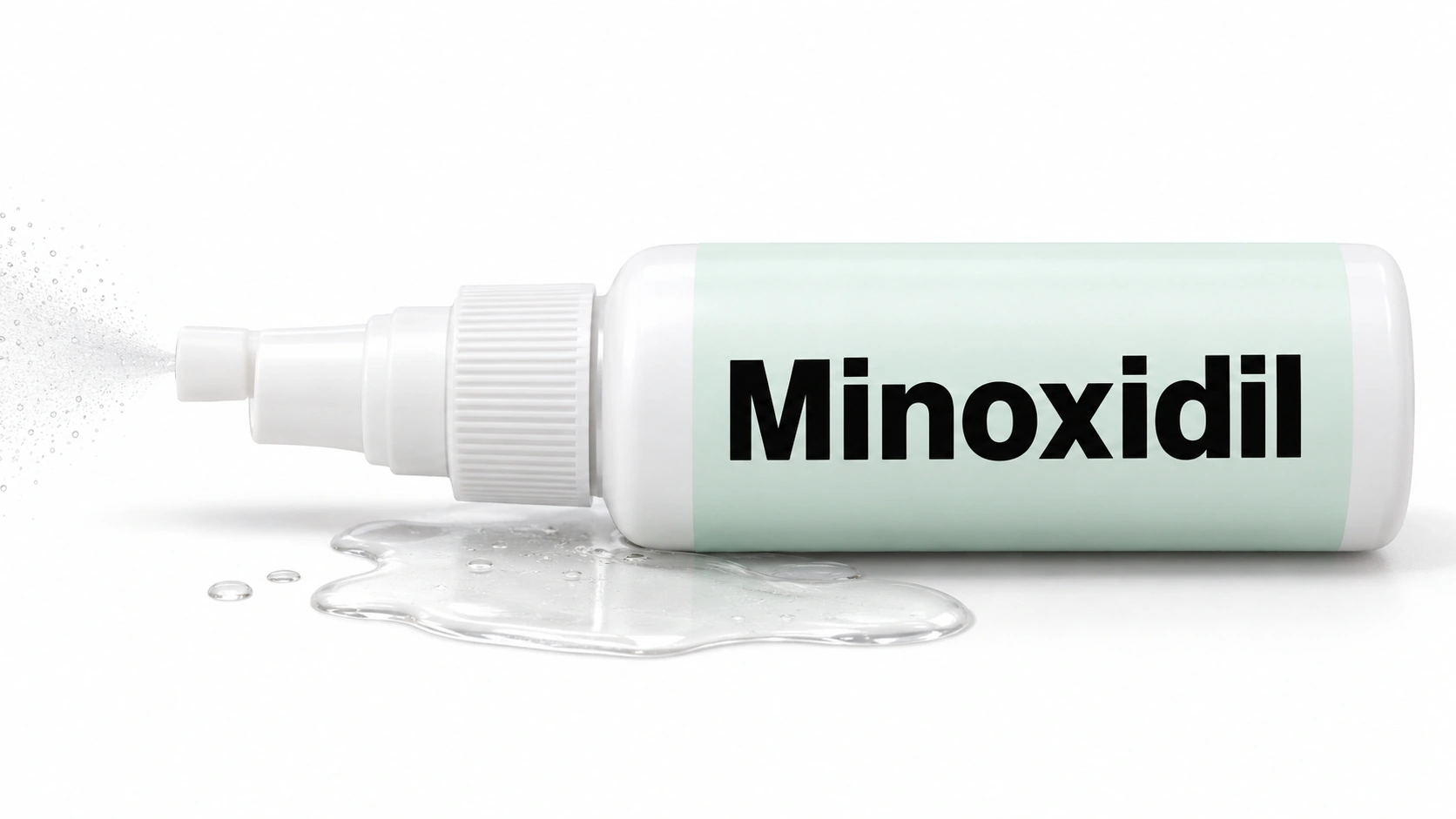
Topical Minoxidil — Header Image

Topical Minoxidil

Strong evidence

The one over-the-counter treatment that genuinely works for pattern hair loss. Applied to the scalp once or twice a day, it lengthens the growing phase and thickens hairs that have already gone fine, so it does most for a crown that is thinning and least where the scalp has been bare for years. Expect more shedding in the first month or two, and expect to keep using it — stopping gives the ground back within six to twelve months.

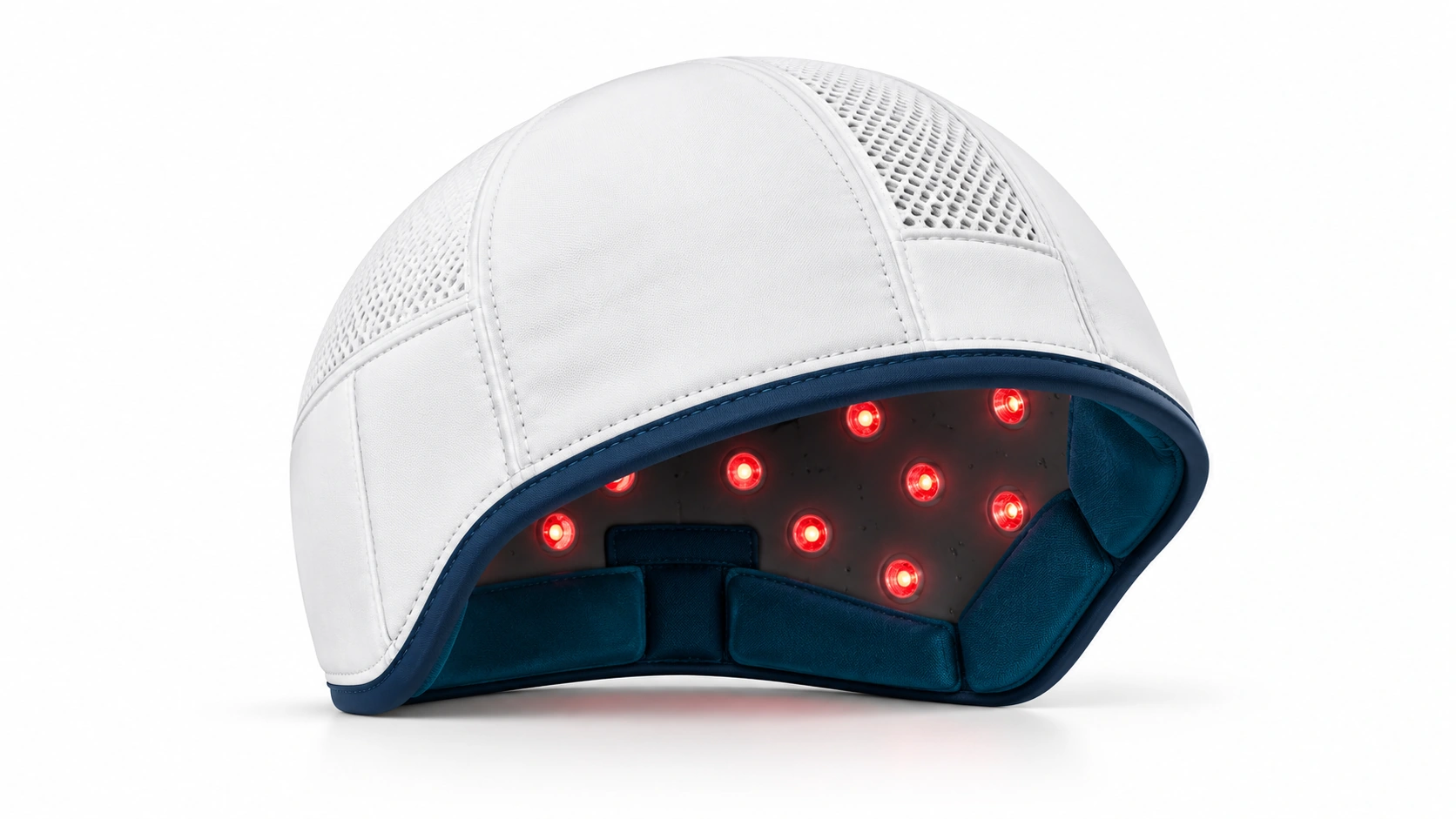
Educational still life: hair laser cap.

Low-level laser caps and combs

Moderate evidence

Home laser devices have trials behind them showing a modest increase in hair count, and they are safe. The devices are expensive, the sessions have to be kept up several times a week for years, and the effect is smaller than minoxidil or finasteride. Reasonable as an addition to those, weak as a plan on its own.

Ketoconazole shampoo.

Ketoconazole shampoo

Limited evidence

An antifungal shampoo, used two or three times a week, with some small-study evidence for slightly better hair density in pattern loss alongside its usual job on flaking. It is a helper rather than a treatment. Worth having in the routine if your scalp flakes anyway, and not worth relying on by itself while the loss carries on.

Rosemary oil.

Rosemary oil

Limited evidence

One small trial found rosemary oil performed similarly to 2 percent minoxidil over six months, and that single study is doing a great deal of work in how it gets talked about online. It is cheap and low-risk, and it can irritate the scalp if it is not diluted. If you are choosing between this and minoxidil for a hairline you want to keep, minoxidil has far more behind it.

Biotin and hair supplements.

Biotin and hair supplements

Limited evidence

Biotin only helps hair if you are genuinely deficient in it, which is rare. In pattern hair loss it does nothing measurable. High doses can also throw off thyroid and heart blood tests, which occasionally causes real trouble in an emergency room. If you think something else is going on as well, ask for iron and thyroid tests rather than a supplement.

Topical Minoxidil — Header Image

Topical Minoxidil

Limited evidence

Sometimes used to support regrowth, mainly when a shed has dragged on past six months or has uncovered pattern thinning underneath. The evidence in telogen effluvium itself is thin, because the hair was going to regrow anyway. It also causes a short burst of extra shedding in the first few weeks, which is hard to sit through in the middle of a shed.

Biotin and hair supplements.

Biotin and hair supplements

Limited evidence

These do nothing for a shed unless you were low in the exact thing they contain, and most people are not. Biotin also interferes with thyroid and heart blood tests, which can send the search for the real trigger off in the wrong direction. If you are going to spend money on this, the blood tests are the better place to put it.

Iron, only if a test shows you are low

Iron, only if a test shows you are low

Limited evidence

Low iron stores are one of the few genuinely correctable triggers, and they are common without full anemia, so they are worth measuring rather than guessing at. When ferritin is low, correcting it settles the shedding over the following months. Iron taken without a deficiency does nothing for hair and is harmful, which makes this a test-first treatment.

Prescription topicals
Educational still life: topical solution.

Topical finasteride

Moderate evidence

A solution or spray put on the scalp instead of swallowing a tablet. Trials show it works close to as well as the tablet with lower drug levels in the blood, which is why it appeals to men worried about side effects. Some of it is still absorbed, so the same conversation applies. It is usually made up by a compounding pharmacy, and consistency between them varies.

None listed
Prescription pills
Finasteride — Header Image

Finasteride

Strong evidence

The most effective single treatment for male pattern hair loss. One tablet a day blocks the enzyme that makes DHT, and in trials it holds the line in the large majority of men and thickens some of the hair that has gone fine. Judge it at a year, not at three months. The commonly reported side effects are sexual, affect a small percentage of men, and are worth weighing with a doctor rather than with a forum.

An amber pill bottle labeled Dutasteride tipped over with white tablets spilling out

Dutasteride

Moderate evidence

A stronger relative of finasteride that blocks both forms of the enzyme, and head-to-head studies favor it on hair count. In most countries it is not licensed for hair loss and is prescribed off-label, usually when finasteride has not held the line. It stays in the body far longer than finasteride, which matters if you might want to stop.

Oral Minoxidil — Header Image

Oral Minoxidil

Moderate evidence

Low-dose minoxidil tablets, prescribed off-label when the topical is impractical, irritating or not doing enough. It suits men who will not keep up a twice-daily liquid on the scalp. Because it works throughout the body it can cause unwanted hair on the face and body, ankle swelling and, less often, a fast heartbeat, so it needs a doctor who is monitoring it.

Oral Minoxidil — Header Image

Oral Minoxidil

Limited evidence

A low dose of an old blood pressure tablet, used off-label by dermatologists and sometimes offered when shedding has run well past six months or pattern thinning has been found underneath. It is not a treatment for an ordinary shed, which recovers without it. It needs a prescription and monitoring, and it can cause unwanted hair on the face and body.

Treating a thyroid problem

Treating a thyroid problem

Listed

When an overactive or underactive thyroid is the trigger, the shedding settles over the months after the levels come back into range, and no separate hair treatment is needed. Both directions cause shedding and both are treatable. This is the clearest example of why the blood tests matter more than anything you can put on the scalp.

Reviewing a suspected medicine

Reviewing a suspected medicine

Listed

A number of common medicines can start a shed, and stopping one can do the same. Some can be swapped easily and others should not be touched, so the decision belongs with the doctor who prescribed it. Take the whole list to that appointment rather than stopping anything yourself to find out.

Procedures
Editorial illustration for Hair Transplant, based on the entry’s treatment or equipment reference.

Hair Transplant

Moderate evidence

The only treatment that puts hair back where the follicle has already closed. Follicles are moved from the permanent band at the back of the head to the front and crown, and they keep growing there because they never carried the sensitivity in the first place. It works best once the pattern has settled, and nearly everyone is advised to stay on medical treatment afterwards, because a transplant does nothing for the untreated hair around the grafts.

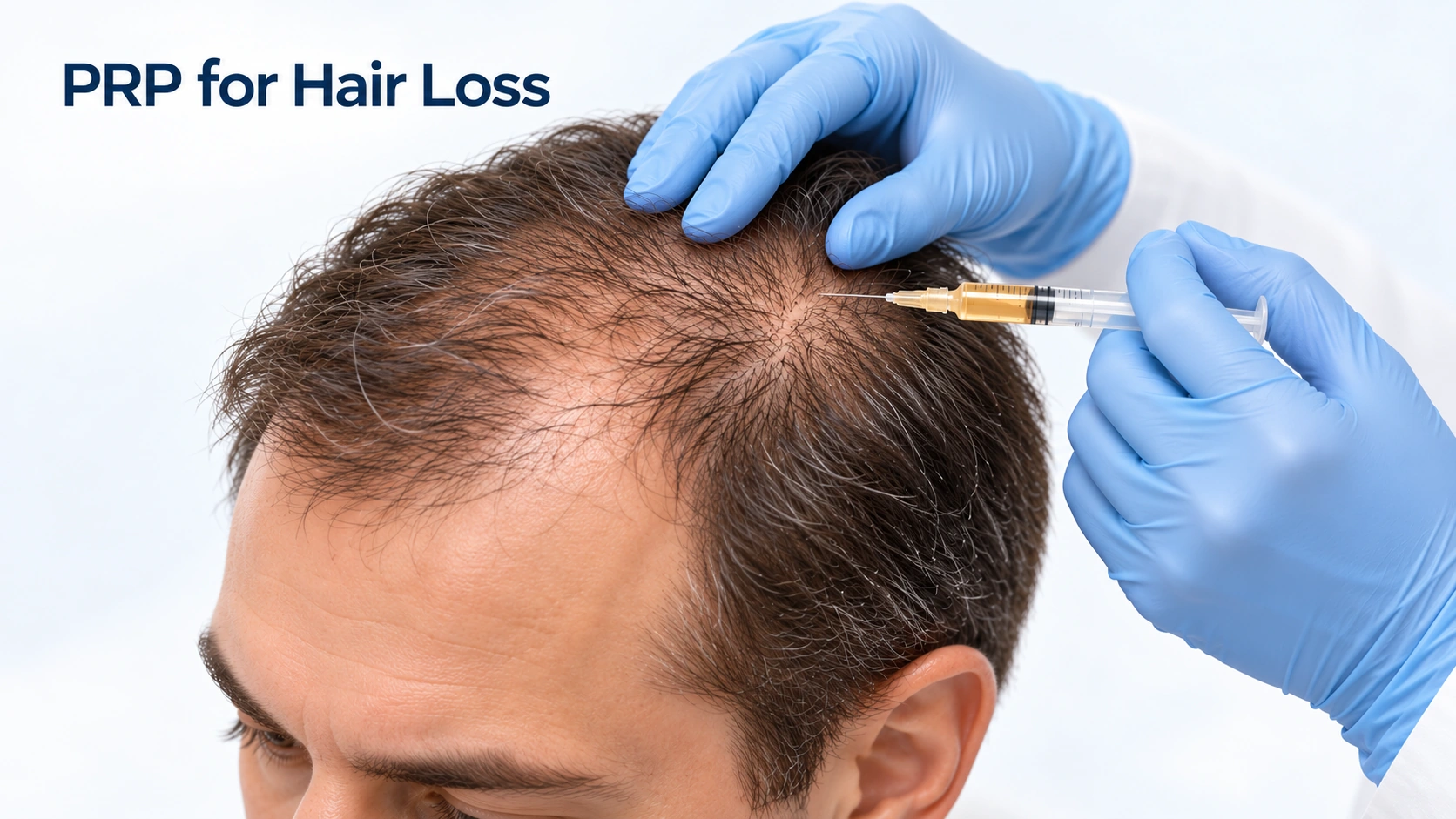
Editorial illustration for PRP for Hair Loss, based on the entry’s treatment or equipment reference.

PRP for Hair Loss

Moderate evidence

Your own platelets, concentrated and injected into the scalp, usually three or four sessions and then top-ups. Studies suggest a modest improvement in density, but they are small and use different protocols, so it is hard to say who benefits and by how much. It is an add-on to minoxidil and finasteride, priced like a main treatment.

Editorial illustration for Microneedling, based on the entry’s treatment or equipment reference.

Microneedling

Moderate evidence

Fine needles rolled or stamped into the scalp, used alongside minoxidil rather than instead of it. The small trials that exist favor the combination over minoxidil alone. Sessions are spaced weeks apart, and doing it too often or too deeply irritates the scalp without adding anything.

Editorial illustration for PRP for Hair Loss, based on the entry’s treatment or equipment reference.

PRP for Hair Loss

Limited evidence

Injections of your own concentrated platelets into the scalp, marketed for every kind of hair loss. It has been studied mainly in pattern hair loss rather than in this, and a straightforward shed regrows on its own within the same months a course would run. It is several expensive sessions, so it is worth being clear about what you are buying before you start.

Outlook

Long term

This is a decades-long process, not an event. It moves in steps rather than at a steady rate, so a quiet stretch is normal and does not mean it has finished.

The pattern is reassuring - a trigger, a long delay, a heavy shed, then recovery. Shedding past six months is chronic telogen effluvium, which should be reassessed, not waited out.

Complications

Possible complications
  • Sun damage on an exposed scalp
  • The effect on mood and confidence
More details

Sun damage on an exposed scalp
A scalp that has lost its cover burns easily, and years of that exposure make the top of the head a common place for rough scaly patches called actinic keratoses, and for skin cancer. It is the one complication of pattern hair loss that affects health rather than appearance. Sunscreen on the part line and the crown, or a hat, is the whole of the prevention, and it matters after a transplant too while the new hairline is still thin.

The effect on mood and confidence
For some men this is a cosmetic change they stop noticing within a year. For others it affects mood, confidence and how they behave around other people, and that is a real reason to treat rather than a vain one. It is worth saying at the appointment, because it changes what is worth offering and how soon. It is also the reason to judge treatment on photographs rather than on how you feel in the shower.

  • Pattern hair loss underneath
  • Shedding that will not settle
  • The distress it causes
More details

Pattern hair loss underneath
A heavy shed can thin the hair enough to uncover pattern hair loss that had been developing quietly for years. The shed itself recovers, and the pattern thinning does not, so density that has not returned about a year after the trigger is worth having looked at rather than waited out. The clue is shape. Pattern loss widens the part at the front while the back of the scalp stays as it was.

Shedding that will not settle
Shedding still going six months on is called chronic telogen effluvium, and it usually means the trigger is still there — low iron, an untreated thyroid problem, a medicine, or one illness after another. The follicles are still undamaged, so this is not the start of baldness. It does need reassessing and blood tests rather than more waiting.

The distress it causes
Watching hair come out in handfuls is frightening, and it changes how people wash, dress and go out long before anyone else notices a difference. That is a real part of this condition and not a small one. The outcome in a straightforward shed is good, but the waiting is hard, and it is fair to ask for help with the worry as well as with the hair.

When to get help

When to get help

Seek assessment if loss is sudden, patchy, painful or associated with scalp inflammation, or if you want help choosing an ongoing treatment.

Seek assessment for persistent shedding, visible thinning or an uncertain trigger; examination and targeted tests can identify treatable causes.

Common questions

Male Pattern Hair Loss:Will my hair grow back?

Some of it, in the right places. Thinning areas still have follicles that can thicken again with treatment. Areas bare for years have no working follicle to respond, and only a transplant puts hair there. That is the whole argument for starting early.

Male Pattern Hair Loss:How long before I know if a treatment is working?

Six months at a minimum, a year for a fair verdict. Hair grows about a centimeter a month and each follicle has to finish its current cycle before you see the new one, so anything judged at eight weeks tells you almost nothing. Expect a temporary increase in shedding in the first month or two of minoxidil.

Male Pattern Hair Loss:Do I have to take it forever?

For as long as you want the effect. These treatments suppress an ongoing process rather than cure it, so stopping lets it resume, and the hair you gained is usually lost within six to twelve months. That is a real cost, and a fair reason some men decide not to start.

Male Pattern Hair Loss:Are the side effects of finasteride as bad as I have read online?

The commonly reported ones are sexual, and in trials they affect a small percentage of men and generally settle when the drug is stopped. Whether a small number have symptoms that persist afterwards is genuinely debated among specialists and not settled. Weigh that with a doctor rather than a forum.

Male Pattern Hair Loss:Is my hair loss caused by stress?

Stress does not cause pattern hair loss. It can cause a separate heavy all-over shed called telogen effluvium, which shows up two to three months after the stressful period and recovers on its own. That shed often thins the hair enough to reveal pattern loss that had been building quietly for years, so stress takes the blame for both.

Male Pattern Hair Loss:Should I get a hair transplant?

It is reasonable for the right person — loss settled into a stable pattern, good donor hair at the back, and willingness to stay on medical treatment afterwards. Transplanting into a scalp that is still actively thinning looks worse a few years later, as the untreated hair around the grafts keeps going.

Telogen Effluvium:How much shedding is normal, and how much is too much?

Most people shed 50 to 100 hairs a day, varying with how recently you washed. Telogen effluvium is usually several hundred a day and, more tellingly, a clear change from your own normal. The change and how long it has lasted matter more than the number.

Telogen Effluvium:When will it stop?

Usually within three to six months of starting, provided the trigger has passed. Volume takes longer, six to twelve months, because hair grows about a centimeter a month and has to reach a useful length before it shows.

Telogen Effluvium:Will it all grow back?

In a straightforward telogen effluvium, yes - the follicles are undamaged. The exception is a shed that uncovers pattern hair loss underneath. The shed recovers and the pattern thinning does not, which is worth identifying rather than waiting out.

Telogen Effluvium:Should I take a hair supplement?

Only for something a blood test showed you are low in. Iron and thyroid are worth checking, and vitamin D is often added. Iron without a deficiency is actively harmful, and biotin does nothing unless you are deficient while interfering with thyroid and heart blood tests.

Telogen Effluvium:Could my medicine be causing this?

Possibly - many common medicines can trigger shedding, and so can stopping one. Do not stop anything to find out. Take the list to the prescriber, since some can be swapped easily and others should not be touched.

Telogen Effluvium:Is my hair shedding because I am stressed?

A single severe stress, such as a bereavement or serious illness, is a well-recognized trigger, on the same two to three month delay. Ordinary day-to-day stress is a much weaker explanation; if that is the only candidate, look harder for a physical trigger and get bloods done.
Sources

Sources and further reading

  1. DermNet
  2. DermNet
Dermapedia on YouTube