Benzoyl Peroxide vs Mandelic Acid

Benzoyl Peroxide: Reduces inflammatory acne and helps limit antibiotic resistance in acne regimens. Mandelic Acid: Exfoliates skin; clinical evidence is mainly from professional acne peels.
Research updated 2026-10-25
Three acne wash tubes on white: Differin Deep Cleanser, CeraVe Acne Foaming Cream Cleanser and PanOxylFive mandelic acid serums and their boxes lined up on white with clear gel swatches

Which one is right for you?

Choose Benzoyl Peroxide if…

Choose for inflamed acne; a lower strength is often a practical starting point.

  • Red, inflamed pimples
  • You want to prevent antibiotic resistance
  • You can protect towels and pillowcases from bleaching

Choose Mandelic Acid if…

Consider for exfoliation; evidence for acne comes mainly from supervised peels.

  • Acne-prone or darker skin wanting a gentler AHA
  • Mild texture concerns
  • Sensitive skin that stings with glycolic
Use care together

Can you use both?

Both can dry the skin. Use benzoyl peroxide as a wash and mandelic acid on other nights.

At a glance

● Benzoyl Peroxide
● Mandelic Acid
Type
Antimicrobial acne medicine
Alpha hydroxy acid (AHA)
What it does
Reduces inflammatory acne and helps limit antibiotic resistance in acne regimens.
Exfoliates skin; clinical evidence is mainly from professional acne peels.
Best for
Acne
Acne
Studied concentrations
2.5%, 5% and 10% in comparative trials; higher is not automatically better.
45% professional peels in the cited acne trial.
When to use
Morning or night, as directed by the finished product.
Start on a few evenings weekly; increase only if comfortable.
Time to results
Assess after about 8–12 weeks
Often 8–12 weeks in small cosmetic studies; results may be subtle
Irritation
Dryness, peeling and irritation are common; it can bleach hair and fabrics.
Can cause stinging, peeling or irritation; avoid active eczema and rosacea flares.
Sensitive skin
Choose a simple formula and test a small area first. Avoid actively inflamed or broken skin unless the product is specifically directed for it.
Available
Prescription or cosmetic status depends on the active, formula and country; check the label.
Cosmetic or OTC products; some high-strength procedures are separate treatments.

What it helps

Compare uses by strength of evidence. Evidence level describes confidence in a benefit, not its size.


Evidence level
Benzoyl Peroxide
Mandelic Acid
Strong evidenceMost established uses
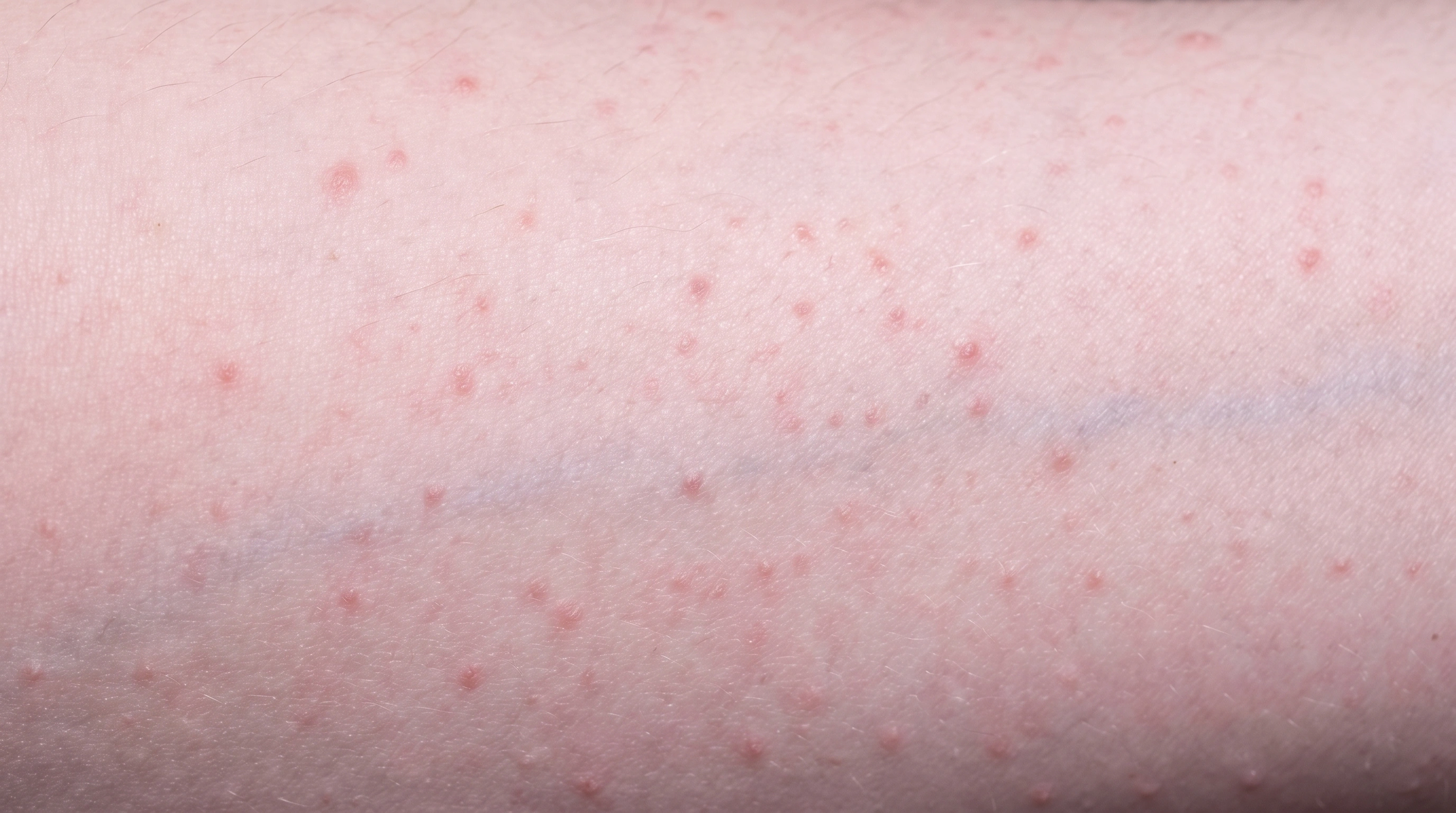
Inflamed acne on light skin. The spots sit in a patch of pink, and the ring of redness around each one is easy to see. A few have a yellow-white head, and the skin between them is dry and flaking.

Acne

Controlled trials and current acne guidelines support treatment of inflammatory acne.
—
Limited evidenceEarly or small studies
—
Inflamed acne on light skin. The spots sit in a patch of pink, and the ring of redness around each one is easy to see. A few have a yellow-white head, and the skin between them is dry and flaking.

Acne

Professional mandelic peels improved acne in a small comparative trial.
Insufficient evidence
The back of the neck and upper back on fair skin, covered in small red bumps of even size, each one at a hair opening, several with a pinpoint of yellow-white pus.

Folliculitis

The reviewed acne evidence does not establish treatment of every cause of folliculitis.
Redness and fine superficial vessels across a light-skinned cheek and nose.

Rosacea

Special prescription microencapsulated products are distinct from ordinary acne gels.
Shoulders and upper back on fair skin, covered in a sheet of many small pink-red bumps, all of them the same size and packed close together.

Fungal Acne

The reviewed sources do not establish this ingredient as a treatment for this concern.
Acne scarring on light skin. Small sharply cut pits and broad shallow dips across a cheek, several sitting inside faint flat pink marks, with no active spots.

Acne Scarring

The reviewed sources do not establish this ingredient as a treatment for this concern.
Redness and fine superficial vessels across a light-skinned cheek and nose.

Rosacea

The reviewed sources do not establish this ingredient as a treatment for this concern.
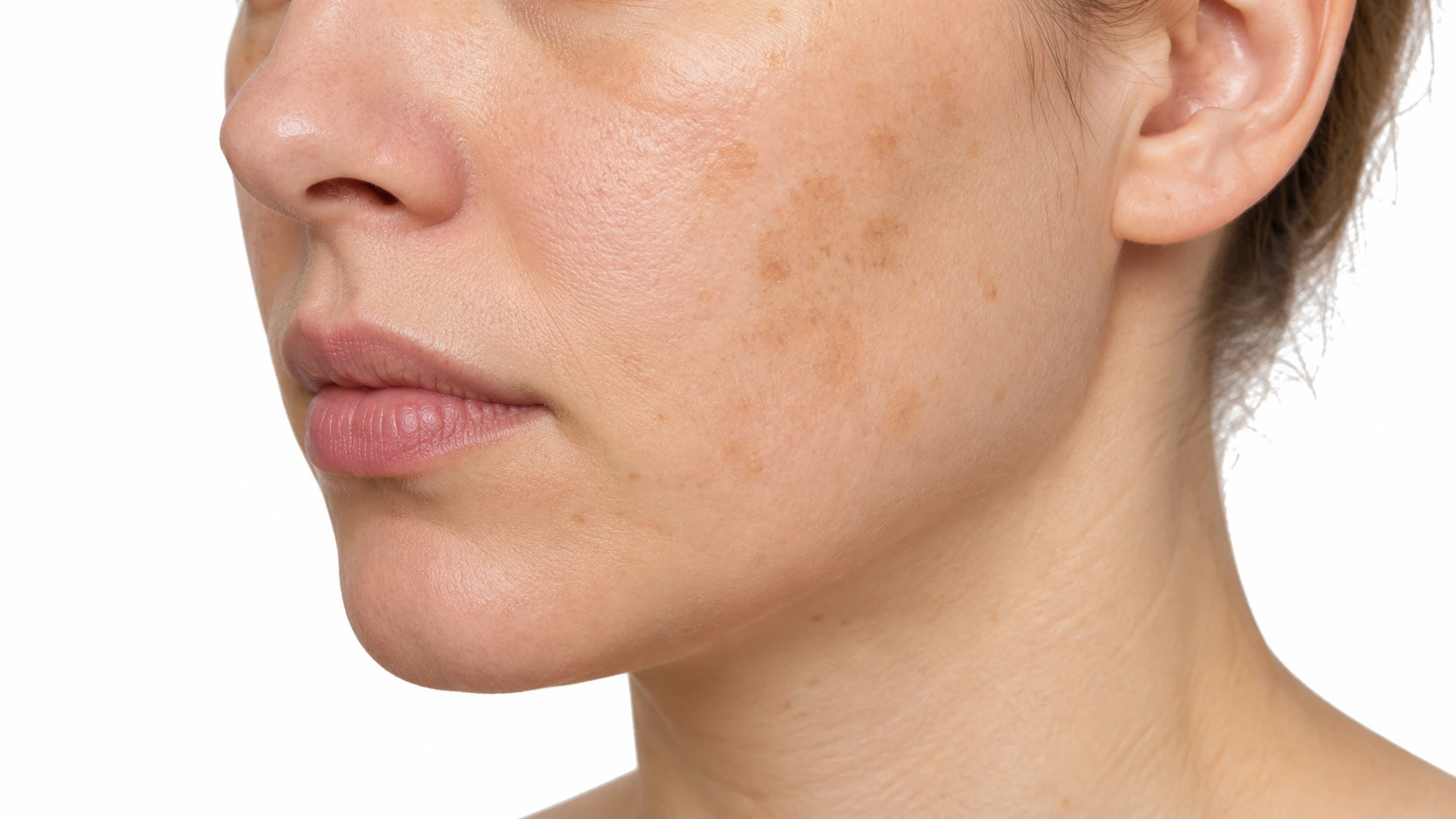
Flat light-brown residual marks on a fair cheek.

Post-Inflammatory Hyperpigmentation

The cited acne-peel trial does not establish reliable fading of post-acne marks.
Flat tan patches with soft irregular edges across the forehead and upper cheek of an adult with light skin, the surface completely smooth.

Melasma

The reviewed sources do not establish this ingredient as a treatment for this concern.
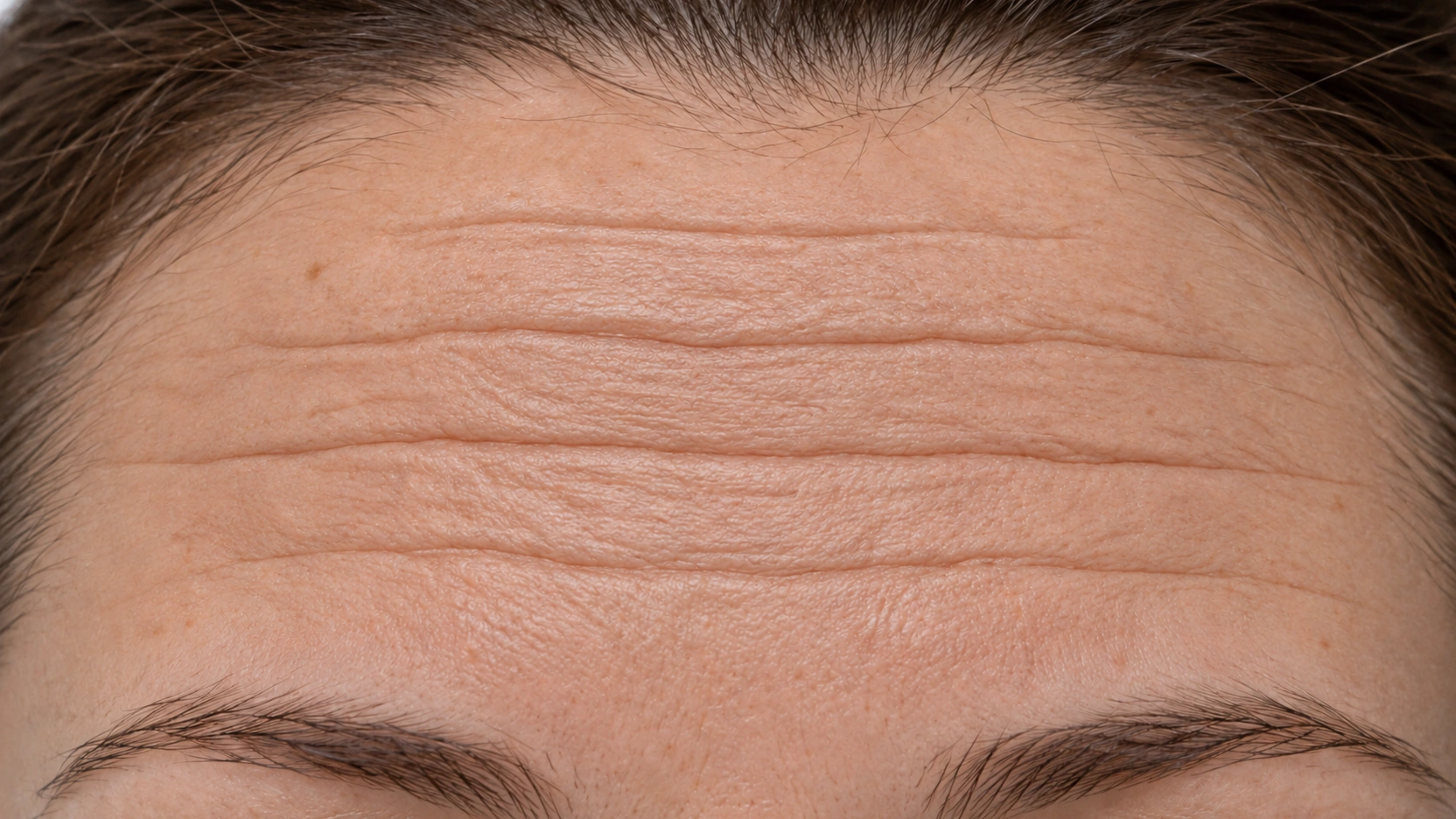
A relaxed forehead with pronounced deep horizontal furrows.

Deep Wrinkles

The reviewed sources do not establish this ingredient as a treatment for this concern.
How it works

Benzoyl Peroxide

Benzoyl Peroxide mechanism diagram. Releases reactive oxygen: The active ingredient forms antibacterial oxidizing species. Reduces acne-associated bacteria: Targets Cutibacterium acnes in follicles.
Open full-size diagram
Diagram explanation and sources

Releases reactive oxygen: The active ingredient forms antibacterial oxidizing species. Reduces acne-associated bacteria: Targets Cutibacterium acnes in follicles.

Schematic illustration; not a measurement of skin penetration. Effects vary with ingredient identity and formulation.
Source 1 · Source 2

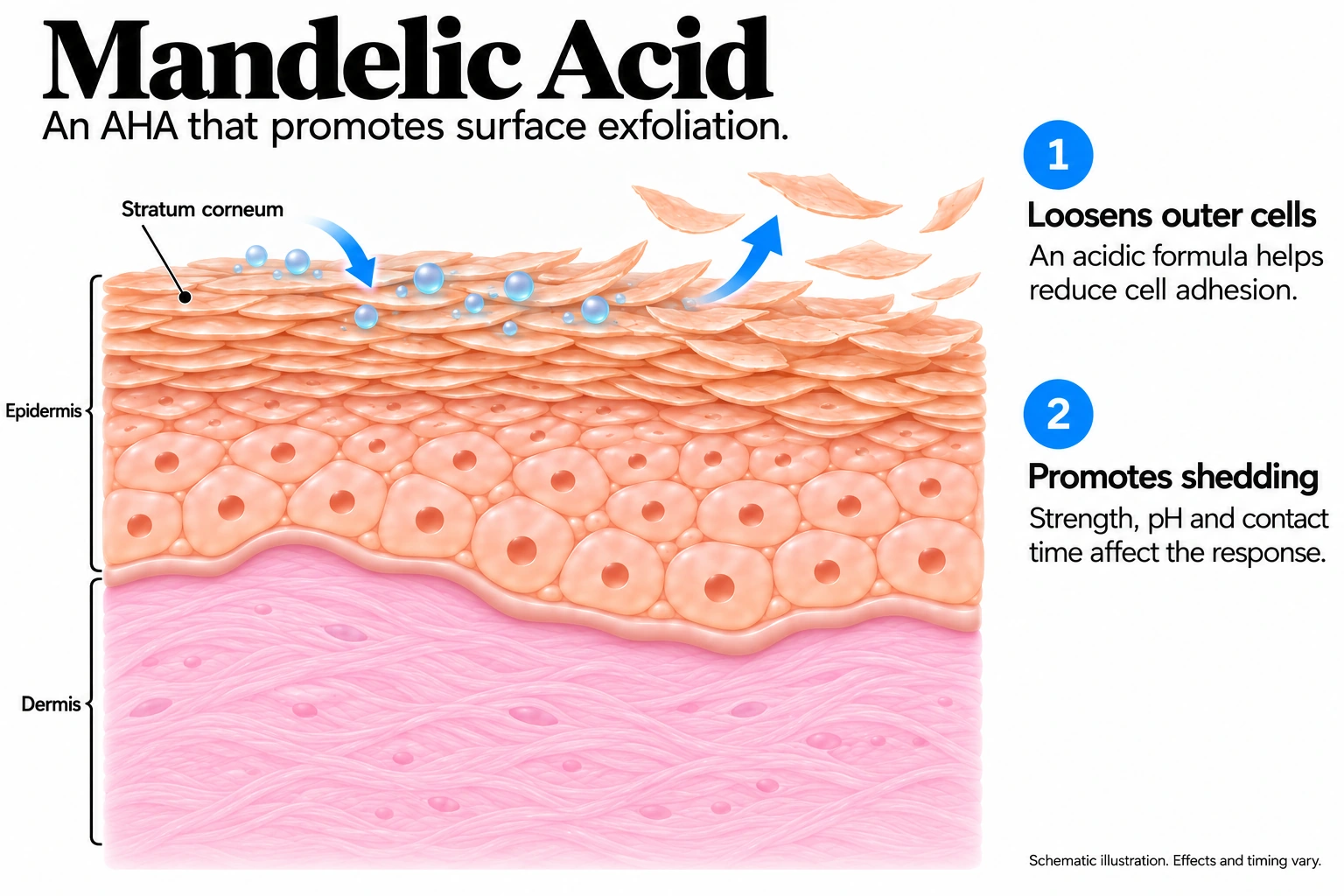
Mandelic Acid

Mandelic Acid mechanism diagram. Loosens outer cells: An acidic formula helps reduce cell adhesion. Promotes shedding: Strength, pH and contact time affect the response.
Open full-size diagram
Diagram explanation and sources

Loosens outer cells: An acidic formula helps reduce cell adhesion. Promotes shedding: Strength, pH and contact time affect the response.

Schematic illustration; not a measurement of skin penetration. Effects vary with ingredient identity and formulation.

Source 1 · Source 2

Using both in one routine

Built from where each one usually sits in a routine. Introduce one at a time.

Morning
Step 1
Benzoyl PeroxideMorning or night
Step 2
Moisturizer
Step 3
Sunscreen
Night
Step 1
Benzoyl PeroxideMorning or night
Step 2
Mandelic AcidNight
Step 3
Moisturizer

Strengths and forms

Concentrations

Acne products use 2.5–10% benzoyl peroxide. Trials do not support assuming that the highest percentage is always the best choice.

2.5%

5%

10%

Lower acne strength

A controlled comparison found benefit at this strength; it can be a useful option when irritation limits higher-strength products.

Middle acne strength

Used in washes and leave-on treatments. Contact time and the base formula affect the experience.

Higher acne strength

A labeled higher concentration, but not automatically more effective or more suitable for facial skin.

Choosing a strength: Choose a wash or leave-on product that fits the area and your tolerance. Follow its specific instructions.

Higher strengths: Dryness and irritation can increase with stronger products. Benzoyl peroxide may bleach hair and fabrics at any strength.

Formula matters: A wash and a leave-on gel are not identical doses. Combination acne medicines have their own directions.

Mandelic acid skincare and office peels are different products. Controlled acne studies have used professional peels around 40–45%; those strengths are not a target for facial home use.

40–45%

Studied professional peels

Clinician-applied peels studied for mild-to-moderate acne. This describes specific procedures, not a recommended home concentration.

Choosing a strength: For home skincare, use the finished product’s label and your tolerance. Do not assume that a marketed serum reproduces an office peel study.

Higher strengths: Mandelic acid can still burn or irritate skin. Being described as a gentler acid does not make concentrated peels suitable for unsupervised use.

Formula matters: Acidity, vehicle and exposure time influence the effect; percentage alone cannot rank safety or compare mandelic acid with other acids.

Forms
Wash · Gel · Body wash
Serum · Toner · Peel

When you’ll see results

Approximate windows, not promises.

● Benzoyl Peroxide
● Mandelic Acid
First few weeks

First few weeksDryness or irritation may occur; worsening is not required for benefit.

First few weeksAssess tolerance and texture; immediate softness can come from the base formula.

4–8 weeks

4–8 weeksFewer new lesions may become noticeable.

4–8 weeksSubtle changes may appear in some tested products; evidence varies.

8–12 weeks

8–12 weeksReassess acne control after a consistent course.

8–12 weeksCompare photographs in the same lighting and reassess benefit.

3–6 months

3–6 monthsMaintenance may help if the treatment works and remains comfortable.

3–6 monthsPhotoaging trials often need several months; expect modest rather than dramatic change.

6–12 months

6–12 monthsContinue only if appropriate; scarring or persistent acne warrants reassessment.

6–12 monthsLong-term evidence is limited for many cosmetic actives; continue only if useful.

Safety and sensitive skin

Common reactions

Dryness, peeling and irritation are common; it can bleach hair and fabrics.

Can cause stinging, peeling or irritation; avoid active eczema and rosacea flares.

When to stop

Stop for persistent burning, swelling, blistering or a new rash. Seek urgent care for breathing difficulty or a severe allergic reaction.

Stop for persistent burning, swelling, blistering or a new rash. Seek urgent care for breathing difficulty or a severe allergic reaction.

Sensitive or inflamed skin

Choose a simple formula and test a small area first. Avoid actively inflamed or broken skin unless the product is specifically directed for it.

Choose a simple formula and test a small area first. Avoid actively inflamed or broken skin unless the product is specifically directed for it.

Important limits

Seek urgent help for facial swelling, trouble breathing or a severe allergic reaction.

Do not use a cosmetic product as a substitute for diagnosis of an unexplained, changing or persistent skin problem.

Pregnancy

Little is absorbed through skin, and it is generally considered acceptable in pregnancy. Ask the clinician managing your pregnancy.

Low-strength leave-on acids are generally considered acceptable; avoid peels and ask the clinician managing your pregnancy.

How it works

In the skin

On the skin. The finished product delivers benzoyl peroxide in a particular vehicle.

Entering skin. Below the 500 Da guideline; delivery still depends on the formula, solubility, stability and skin condition. Size does not prove effectiveness or penetration depth.

Conversion. No activation step is established as necessary for its intended topical role.

Skin response. Releases reactive oxygen that reduces acne-associated bacteria and has mild comedolytic effects.

Additional effects. Proposed pathways do not establish a measured depth of delivery or clinical benefit beyond the studies cited.

On the skin. The finished product delivers mandelic acid in a particular vehicle.

Entering skin. Below the 500 Da guideline; delivery still depends on the formula, solubility, stability and skin condition. Size does not prove effectiveness or penetration depth.

Conversion. No activation step is established as necessary for its intended topical role.

Skin response. Promotes shedding of surface cells; formula acidity and contact time influence irritation and effect.

Additional effects. Proposed pathways do not establish a measured depth of delivery or clinical benefit beyond the studies cited.

Getting in
Below the 500 Da guideline; delivery still depends on the formula, solubility, stability and skin condition. Size does not prove effectiveness or penetration depth.
Molecule size
Benzoyl Peroxide · 242 Da
Mandelic Acid · 152 Da
Smaller than 500 Da passes the outer skin more easily. Size isn’t an effectiveness score.
500 Da guideline

Product examples

Benzoyl Peroxide
  • Neutrogena On-the-Spot Acne Treatment
  • Differin Acne Spot Treatment With 10% Benzoyl Peroxide
  • La Roche-Posay Effaclar BPO Multi-Target Acne Treatment
Mandelic Acid
  • The Ordinary Mandelic Acid 10% + HA
  • Naturium The Energizer Mandelic Acid Body Wash
  • Paula's Choice Skin Perfecting 6% Mandelic Acid + 2% Lactic Acid

Common questions

Benzoyl Peroxide:What should I choose benzoyl peroxide for?

Choose for inflamed acne; a lower strength is often a practical starting point.

Benzoyl Peroxide:How strong is the evidence?

Acne guideline support is strong. Older concentration trials found good results with 2.5%; this does not establish benefit for yeast folliculitis or for ordinary acne products used on rosacea.

Mandelic Acid:What should I choose mandelic acid for?

Consider for exfoliation; evidence for acne comes mainly from supervised peels.

Mandelic Acid:How strong is the evidence?

A 50-person, 12-week trial compared 45% mandelic with 30% salicylic peels. It had no vehicle arm and does not establish the benefit of 5–10% home serums.

Sources
Sources and further reading

  1. Comparing 2.5%, 5%, and 10% benzoyl peroxide on inflammatory acne vulgaris. (1986)
  2. Guidelines of care for the management of acne vulgaris. (2024)
  3. Comparative study of efficacy and safety of 45% mandelic acid versus 30% salicylic acid peels in mild-to-moderate acne vulgaris. (2020)
  4. FDA alpha-hydroxy acid sun-sensitivity guidance
  5. FDA acne monograph M006
  6. Randomized study of 40% mandelic acid versus 30% salicylic acid peels
  7. FDA: professional supervision for chemical peels
Dermapedia on YouTube