Alpha Arbutin vs Vitamin C

Alpha Arbutin: Targets melanin production; clinical data mainly involve combination creams. Vitamin C: Some topical formulas modestly improve photodamaged skin and uneven tone.
Research updated 2026-10-25
Four alpha arbutin products lined up on white: three dropper serums and a pink cream tubeSix vitamin C products on white, including La Roche-Posay, L'Oréal Revitalift, CeraVe, Vanicream, bliss and Olay

Which one is right for you?

Choose Alpha Arbutin if…

Consider for uneven tone; do not assume it matches prescription pigment treatments.

  • Mild uneven tone or dark marks
  • You want a gentler pigment option
  • You use daily sunscreen

Choose Vitamin C if…

Choose for an optional antioxidant and modest photoaging benefits; formula stability matters.

  • Fine lines and sun damage
  • An antioxidant step under sunscreen
  • You tolerate acidic serums
Often combined

Can you use both?

Both fade dark spots in different ways. Use vitamin C in the morning and arbutin at night, or layer them.

At a glance

● Alpha Arbutin
● Vitamin C
Type
Pigment-targeting ingredient
Antioxidant vitamin and derivative family
What it does
Targets melanin production; clinical data mainly involve combination creams.
Some topical formulas modestly improve photodamaged skin and uneven tone.
Best for
Melasma
Wrinkles and Fine Lines; Uneven Skin Tone
Studied concentrations
A trial used 5% alpha-arbutin plus 2% kojic acid; this is not a recommended home strength.
5% L-ascorbic acid cream and a 10% ascorbic-acid combination were studied.
When to use
On the schedule specified for the product or prescribed treatment.
Morning or night, as directed by the finished product.
Time to results
Usually assessed over 8–16 weeks
Often 8–12 weeks in small cosmetic studies; results may be subtle
Irritation
May cause irritation or a rash; choose a compliant commercial formula.
Acidic formulas may sting; stop for persistent redness or a rash.
Sensitive skin
Choose a simple formula and test a small area first. Avoid actively inflamed or broken skin unless the product is specifically directed for it.
Choose a simple formula and test a small area first. Individual tolerance matters more than an ingredient’s reputation for being gentle.
Available
Prescription or cosmetic status depends on the active, formula and country; check the label.
Cosmetic or OTC products; some high-strength procedures are separate treatments.

What it helps

Compare uses by strength of evidence. Evidence level describes confidence in a benefit, not its size.

Evidence level
Alpha Arbutin
Vitamin C
Moderate evidenceSome supportive research
—
A relaxed forehead with faint shallow horizontal fine lines.

Wrinkles and Fine Lines

Small controlled studies found improvement with specific vitamin C formulas.
Limited evidenceEarly or small studies
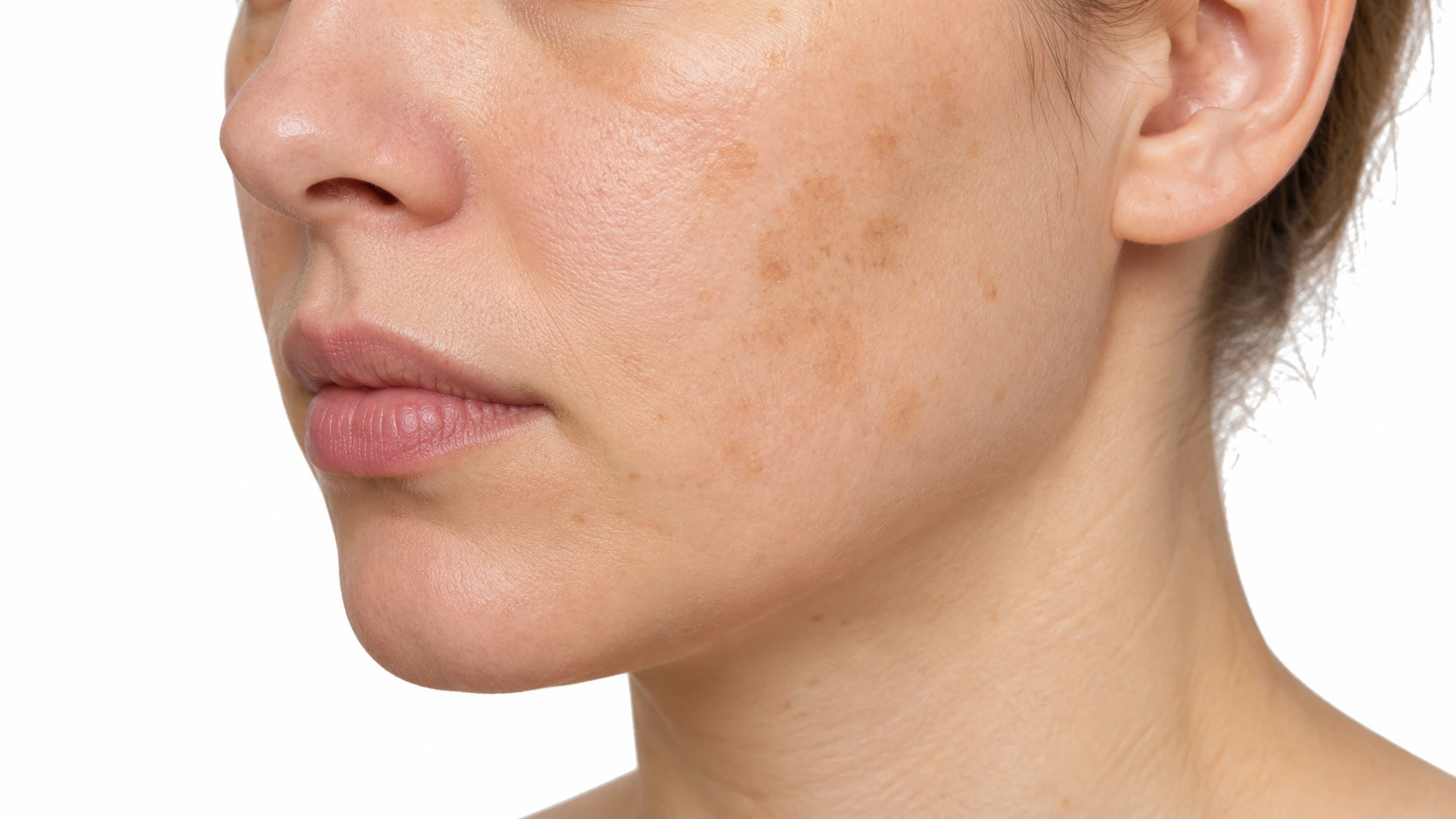
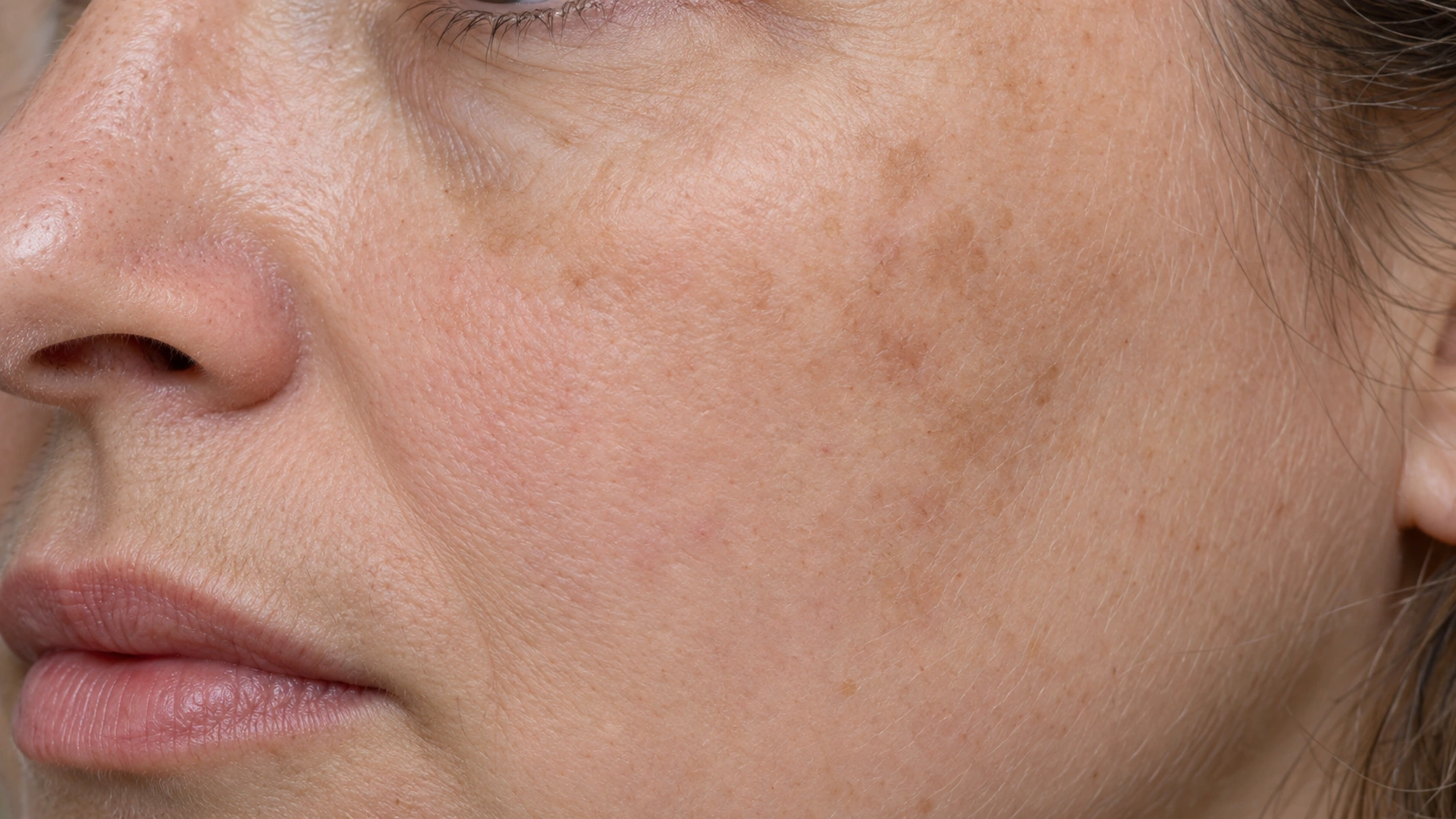
Flat tan patches with soft irregular edges across the forehead and upper cheek of an adult with light skin, the surface completely smooth.

Melasma

A small trial supports a combined alpha-arbutin and kojic acid cream.
Uneven Skin Tone.

Uneven Skin Tone

Some tested formulas improved photodamage; pigment-specific effects are less certain.
Insufficient evidence
Flat light-brown residual marks on a fair cheek.

Post-Inflammatory Hyperpigmentation

Independent benefit for post-acne marks is not established by these studies.
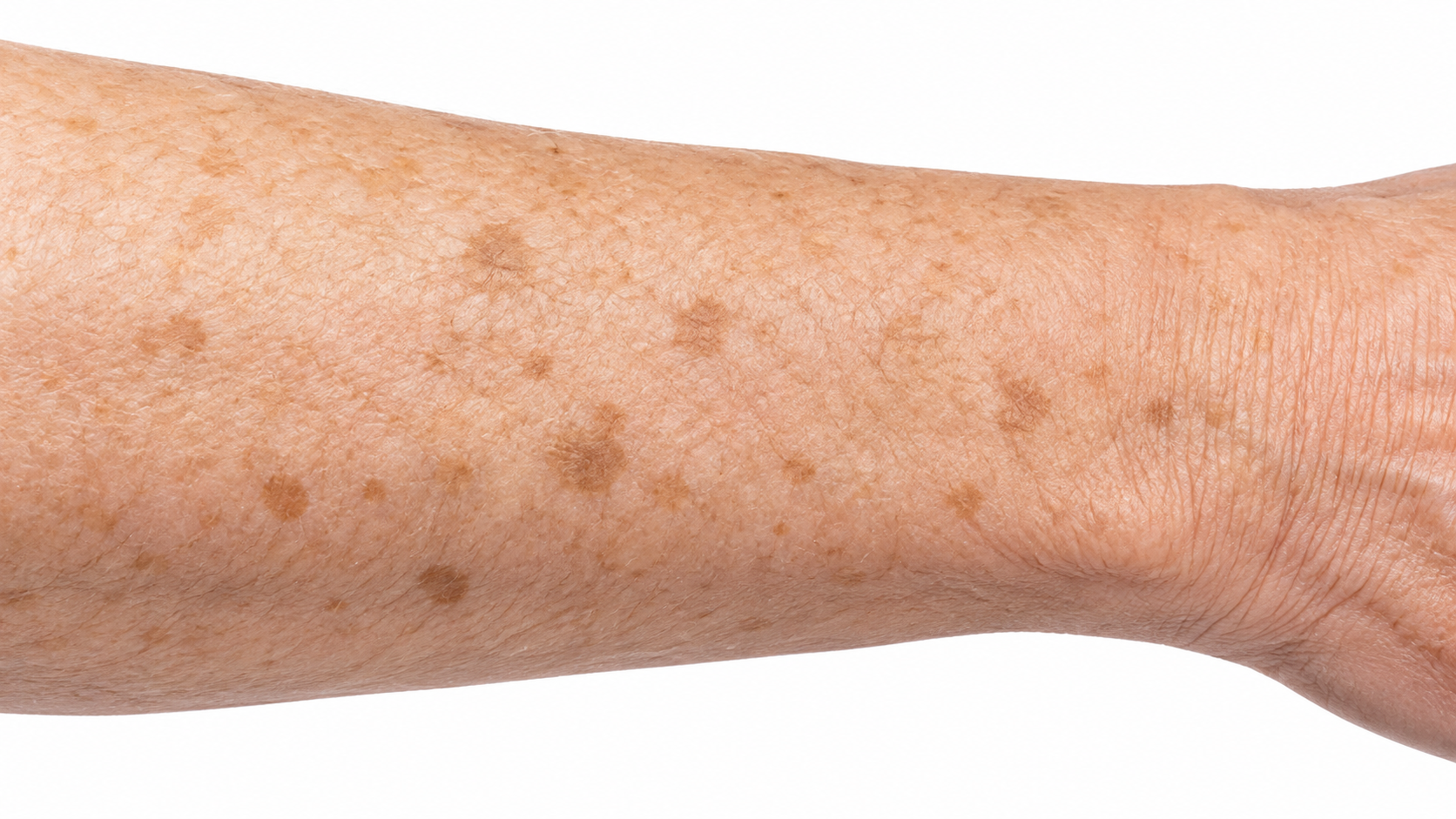
AI-generated educational illustration of Sun Spots: 1. Sun Spots Header — Light Skin; Lighter skin. Not a clinical photograph.

Sun Spots

The cited melasma and laboratory studies do not establish sun-spot clearance.
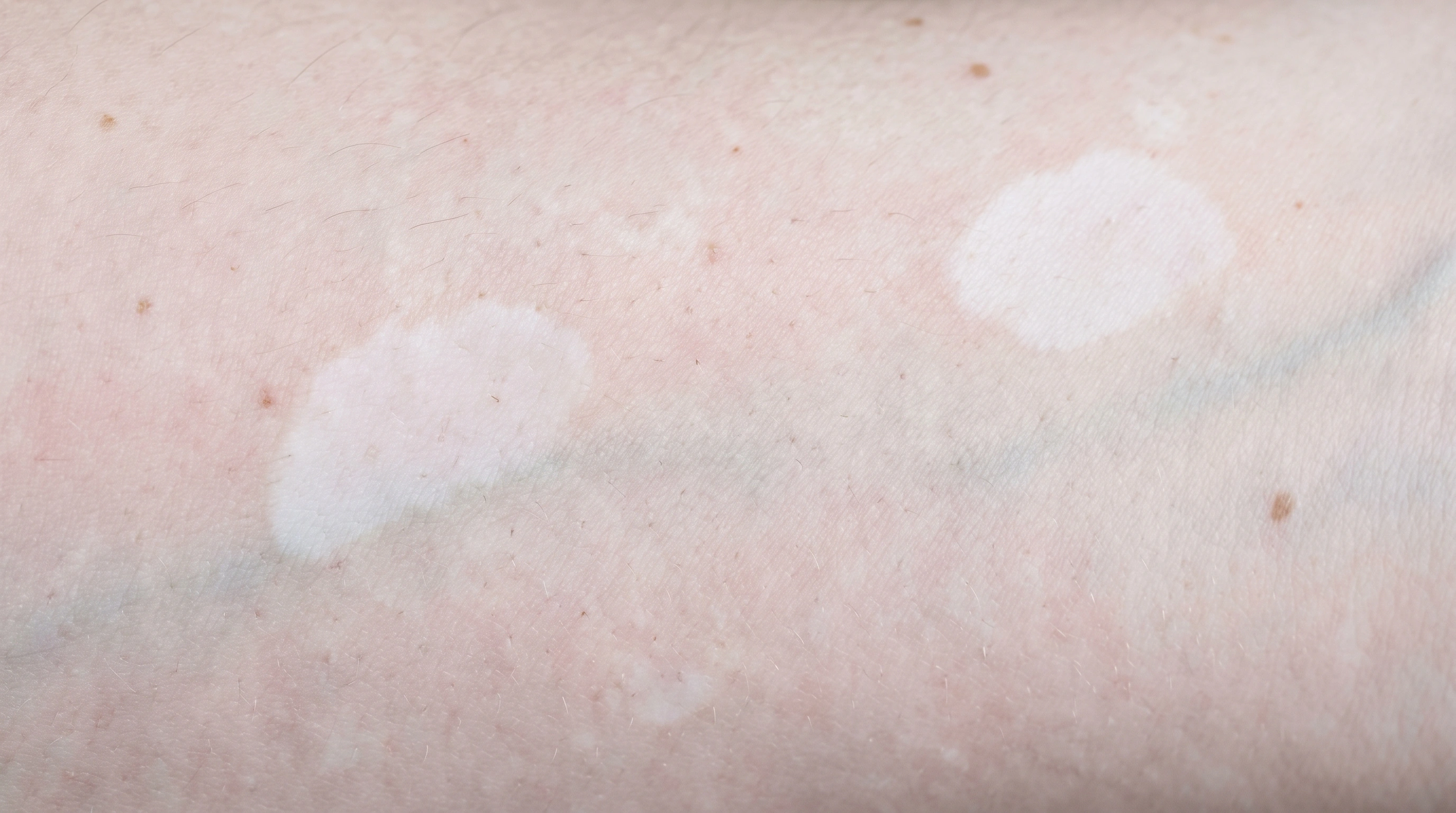
The front of a forearm on fair skin. Two pale patches with sharp edges sit against lightly tanned skin, and the difference between the patch and the skin around it is subtle.

Vitiligo

The reviewed sources do not establish this ingredient as a treatment for this concern.
Inflamed acne on light skin. The spots sit in a patch of pink, and the ring of redness around each one is easy to see. A few have a yellow-white head, and the skin between them is dry and flaking.

Acne

The reviewed sources do not establish this ingredient as a treatment for this concern.
AI-generated educational illustration of Sun Spots: 1. Sun Spots Header — Light Skin; Lighter skin. Not a clinical photograph.

Sun Spots

The cited trials do not establish clearance of individual sun spots.
Redness and fine superficial vessels across a light-skinned cheek and nose.

Rosacea

The reviewed sources do not establish this ingredient as a treatment for this concern.
Acne scarring on light skin. Small sharply cut pits and broad shallow dips across a cheek, several sitting inside faint flat pink marks, with no active spots.

Acne Scarring

The reviewed sources do not establish this ingredient as a treatment for this concern.
How it works

Alpha Arbutin

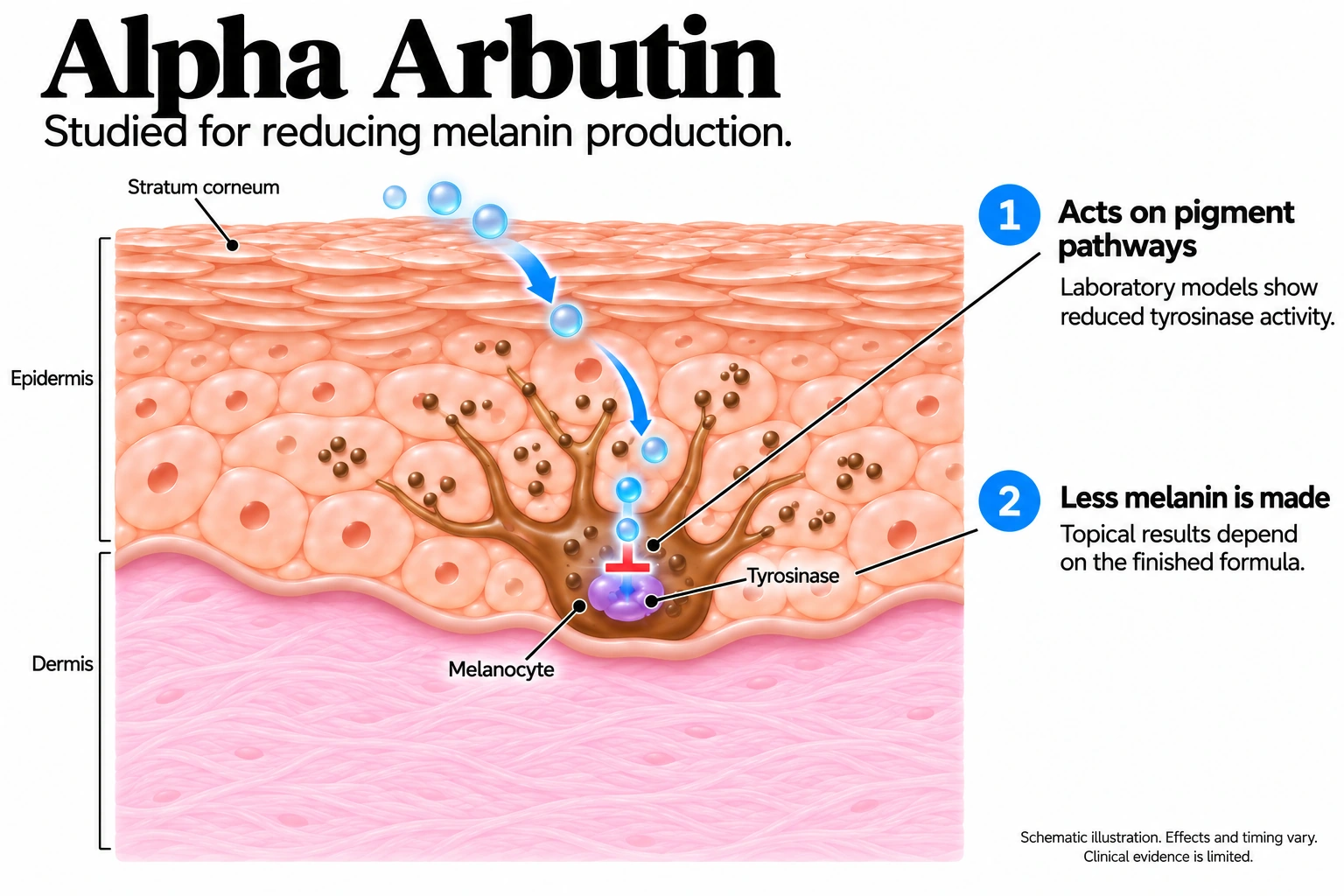
Alpha Arbutin mechanism diagram. Acts on pigment pathways: Laboratory models show reduced tyrosinase activity. Less melanin is made: Topical results depend on the finished formula.
Open full-size diagram
Diagram explanation and sources

Acts on pigment pathways: Laboratory models show reduced tyrosinase activity. Less melanin is made: Topical results depend on the finished formula.

Schematic illustration; not a measurement of skin penetration. Effects vary with ingredient identity and formulation.
Source 1 · Source 2

Vitamin C

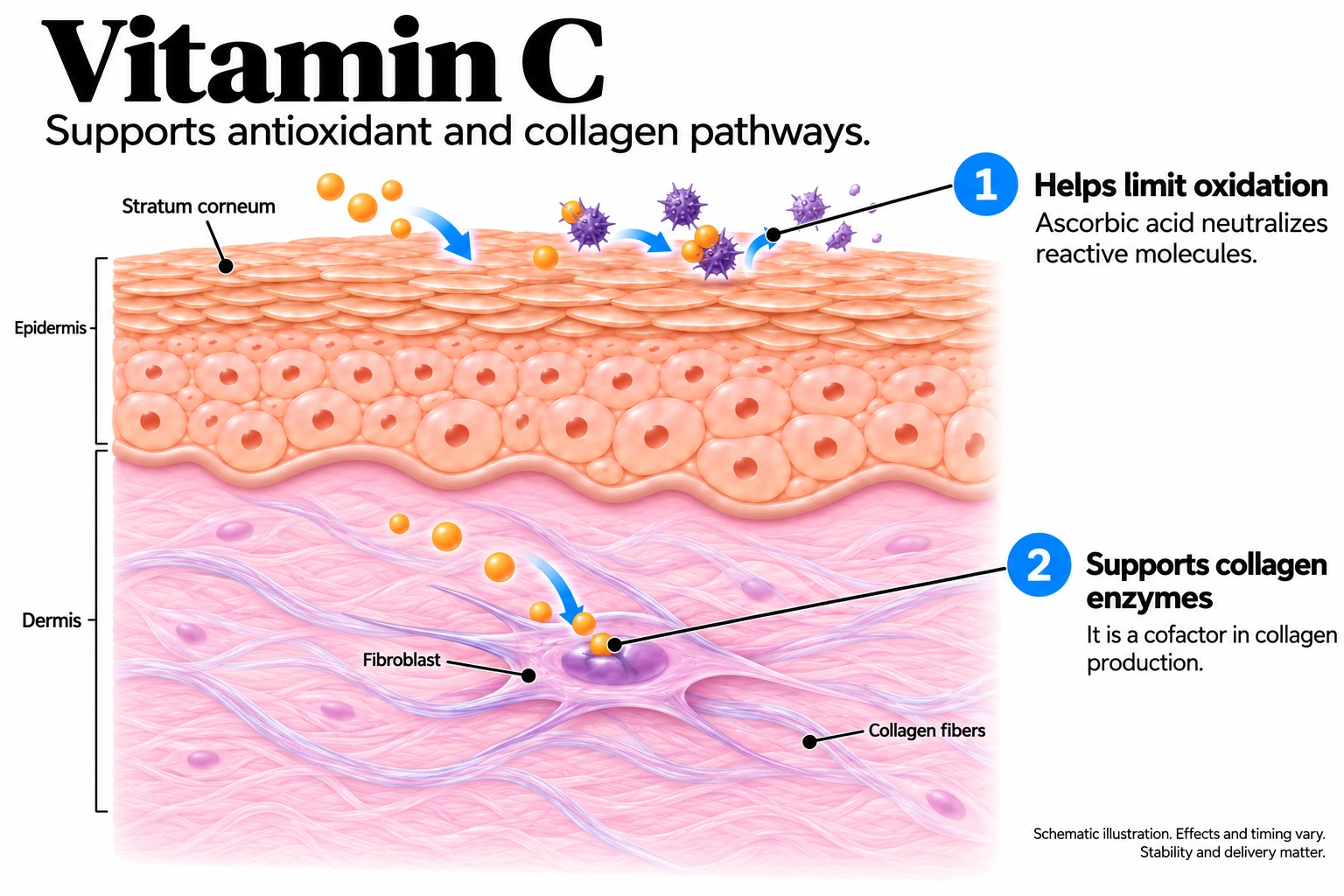
Vitamin C mechanism diagram. Helps limit oxidation: Ascorbic acid neutralizes reactive molecules. Supports collagen enzymes: It is a cofactor in collagen production.
Open full-size diagram
Diagram explanation and sources

Helps limit oxidation: Ascorbic acid neutralizes reactive molecules. Supports collagen enzymes: It is a cofactor in collagen production.

Schematic illustration; not a measurement of skin penetration. Effects vary with ingredient identity and formulation.

Source 1 · Source 2

Using both in one routine

Built from where each one usually sits in a routine. Introduce one at a time.

Morning
Step 1
Cleanser
Step 2
Alpha ArbutinMorning or night
Step 3
Vitamin CMorning
Step 4
Moisturizer
Step 5
Sunscreen
Night
Step 1
Cleanser
Step 2
Alpha ArbutinMorning or night
Step 3
Moisturizer

Strengths and forms

Concentrations

Alpha-arbutin percentages need a regional and product-type context. EU cosmetic limits are 2% in face creams and 0.5% in body lotions; these are safety limits, not proven optimal treatment doses.

0.5%

2%

EU body-lotion ceiling

A maximum for the specified EU product category, not a minimum effective concentration.

EU face-cream ceiling

A maximum for the specified EU product category. It does not establish that 2% will work better than every lower-strength formula.

Choosing a strength: Check that the ingredient is alpha-arbutin. Beta-arbutin has different specifications and should not share the same strength scale.

Higher strengths: A higher concentration in a clinical combination study does not override current cosmetic restrictions or establish safe home use.

Formula matters: The extract or ingredient identity, purity and the finished formula matter. Hydroquinone impurities must be controlled.

Vitamin C percentages only make sense when the form is named. Human studies include 5% L-ascorbic acid cream and a 15% L-ascorbic acid antioxidant combination; derivatives are different ingredients.

5%

15%

20%

Studied L-ascorbic acid cream

A lower-strength finished cream studied for photoaged skin. A modest percentage can still have clinical evidence.

Studied antioxidant combination

Studied with vitamin E and ferulic acid. The result supports that combination, not vitamin C in every formula.

Absorption-study benchmark

A pig-skin study found maximal delivery at this concentration under its test conditions. It is not proof of the best clinical dose.

Choosing a strength: Check whether the product contains L-ascorbic acid or a derivative. Percentages of different forms are not interchangeable.

Higher strengths: A higher number is not automatically better and may be less comfortable. A laboratory delivery result is not a recommendation to maximize strength.

Formula matters: Acidity, stability, packaging and the other ingredients affect performance. A derivative serum cannot be ranked against L-ascorbic acid by percentage alone.

Forms
Serum · Cream
Serum · Powder · Derivatives

When you’ll see results

Approximate windows, not promises.

● Alpha Arbutin
● Vitamin C
First few weeks

First few weeksAssess tolerance first; pigment change is usually slower.

First few weeksAssess tolerance and texture; immediate softness can come from the base formula.

4–8 weeks

4–8 weeksSome studied regimens begin showing pigment improvement.

4–8 weeksSubtle changes may appear in some tested products; evidence varies.

8–12 weeks

8–12 weeksA useful review point for benefit and irritation.

8–12 weeksCompare photographs in the same lighting and reassess benefit.

3–6 months

3–6 monthsMany melasma trials assess results over three to four months; recurrence is common.

3–6 monthsPhotoaging trials often need several months; expect modest rather than dramatic change.

6–12 months

6–12 monthsLong-term use depends on the active; follow a monitored plan rather than extending treatment automatically.

6–12 monthsLong-term evidence is limited for many cosmetic actives; continue only if useful.

Safety and sensitive skin

Common reactions

May cause irritation or a rash; choose a compliant commercial formula.

Acidic formulas may sting; stop for persistent redness or a rash.

When to stop

Stop for persistent burning, swelling, blistering or a new rash. Seek urgent care for breathing difficulty or a severe allergic reaction.

Stop for persistent burning, swelling, blistering or a new rash. Seek urgent care for breathing difficulty or a severe allergic reaction.

Sensitive or inflamed skin

Choose a simple formula and test a small area first. Avoid actively inflamed or broken skin unless the product is specifically directed for it.

Choose a simple formula and test a small area first. Individual tolerance matters more than an ingredient’s reputation for being gentle.

Important limits

Do not use a cosmetic product as a substitute for diagnosis of an unexplained, changing or persistent skin problem.

Do not use a cosmetic product as a substitute for diagnosis of an unexplained, changing or persistent skin problem.

Pregnancy

Because it releases small amounts of hydroquinone, ask rather than assume; pregnancy-specific data are limited. Ask the doctor managing your pregnancy. Azelaic acid and strict sun protection are the usual suggestions meanwhile.

Topical vitamin C is generally considered acceptable in pregnancy; check the complete formula with your clinician.

How it works

In the skin

On the skin. The finished product delivers alpha arbutin in a particular vehicle.

Entering skin. Below the 500 Da guideline; delivery still depends on the formula, solubility, stability and skin condition. Size does not prove effectiveness or penetration depth.

Conversion. No activation step is established as necessary for its intended topical role.

Skin response. Laboratory models show reduced tyrosinase activity and melanin production; clinical delivery and formula matter.

Additional effects. Proposed pathways do not establish a measured depth of delivery or clinical benefit beyond the studies cited.

On the skin. The finished product delivers vitamin c in a particular vehicle.

Entering skin. Below the 500 Da guideline; delivery still depends on the formula, solubility, stability and skin condition. Size does not prove effectiveness or penetration depth.

Conversion. No activation step is established as necessary for its intended topical role.

Skin response. Ascorbic acid participates in antioxidant and collagen pathways; stability and delivery limit topical performance.

Additional effects. Proposed pathways do not establish a measured depth of delivery or clinical benefit beyond the studies cited.

Getting in
Below the 500 Da guideline; delivery still depends on the formula, solubility, stability and skin condition. Size does not prove effectiveness or penetration depth.
Molecule size
Alpha Arbutin · 272 Da
Vitamin C · 176 Da
Smaller than 500 Da passes the outer skin more easily. Size isn’t an effectiveness score.
500 Da guideline

Product examples

Alpha Arbutin
  • The Ordinary Alpha Arbutin 2% + HA
  • Naturium Alpha Arbutin Serum 2%
  • COSRX The Alpha-Arbutin 2 Discoloration Care Serum
Vitamin C
  • The Ordinary Ascorbyl Tetraisopalmitate Solution 20% in Vitamin F — 20% THD ascorbate in an oil base, about $20. The Ordinary is refreshingly honest that this is the gentle option.
  • Vibriance Super C Serum — A $47 vitamin C derivative sold through direct-response advertising aimed at older women. Ordinary formula, aggressive marketing.

Common questions

Alpha Arbutin:What should I choose alpha arbutin for?

Consider for uneven tone; do not assume it matches prescription pigment treatments.

Alpha Arbutin:How strong is the evidence?

A 30-person split-face trial tested alpha-arbutin together with kojic acid. Laboratory results cannot establish clinical efficacy alone, and nonsignificant differences do not prove equivalence.

Vitamin C:What should I choose vitamin c for?

Choose for an optional antioxidant and modest photoaging benefits; formula stability matters.

Vitamin C:How strong is the evidence?

Small controlled trials support specific formulas over three to six months. Derivatives have different masses and evidence; they cannot be assumed interchangeable with L-ascorbic acid.

Sources
Sources and further reading

  1. The Efficacy of Topical Cosmetic Containing Alpha-Arbutin 5% and Kojic Acid 2% Compared With Triple Combination Cream for the Treatment of Melasma: A Split-Face, Evaluator-Blinded Randomized Pilot Study. (2025)
  2. Inhibitory effects of alpha-arbutin on melanin synthesis in cultured human melanoma cells and a three-dimensional human skin model. (2004)
  3. Topical ascorbic acid on photoaged skin. Clinical, topographical and ultrastructural evaluation: double-blind study vs. placebo. (2003)
  4. Double-blind, half-face study comparing topical vitamin C and vehicle for rejuvenation of photodamage. (2002)
  5. EU Regulation 2024/996: cosmetic concentration restrictions
  6. SCCS opinion on alpha- and beta-arbutin
  7. Human trial of a 15% vitamin C antioxidant combination
  8. L-ascorbic acid formulation and absorption study
  9. Review of vitamin C derivatives and formulation differences
Dermapedia on YouTube