Alopecia Areata vs Telogen Effluvium

Alopecia areata is an autoimmune condition that makes hair fall out in smooth, round patches. The immune system switches the follicle off rather than destroying it, so hair can come back - but it is unpredictable, and no one can tell in advance who will regrow and who will not. Telogen effluvium is a heavy, all-over shed that begins two to three months after something stressed the body - an illness, an operation, childbirth, a crash diet or a new medicine. The follicles are not damaged, so in most people the hair grows back on its own.

Reviewed by Dr. Schwarz, Board-Certified Dermatologist · Research updated 2026-10-23
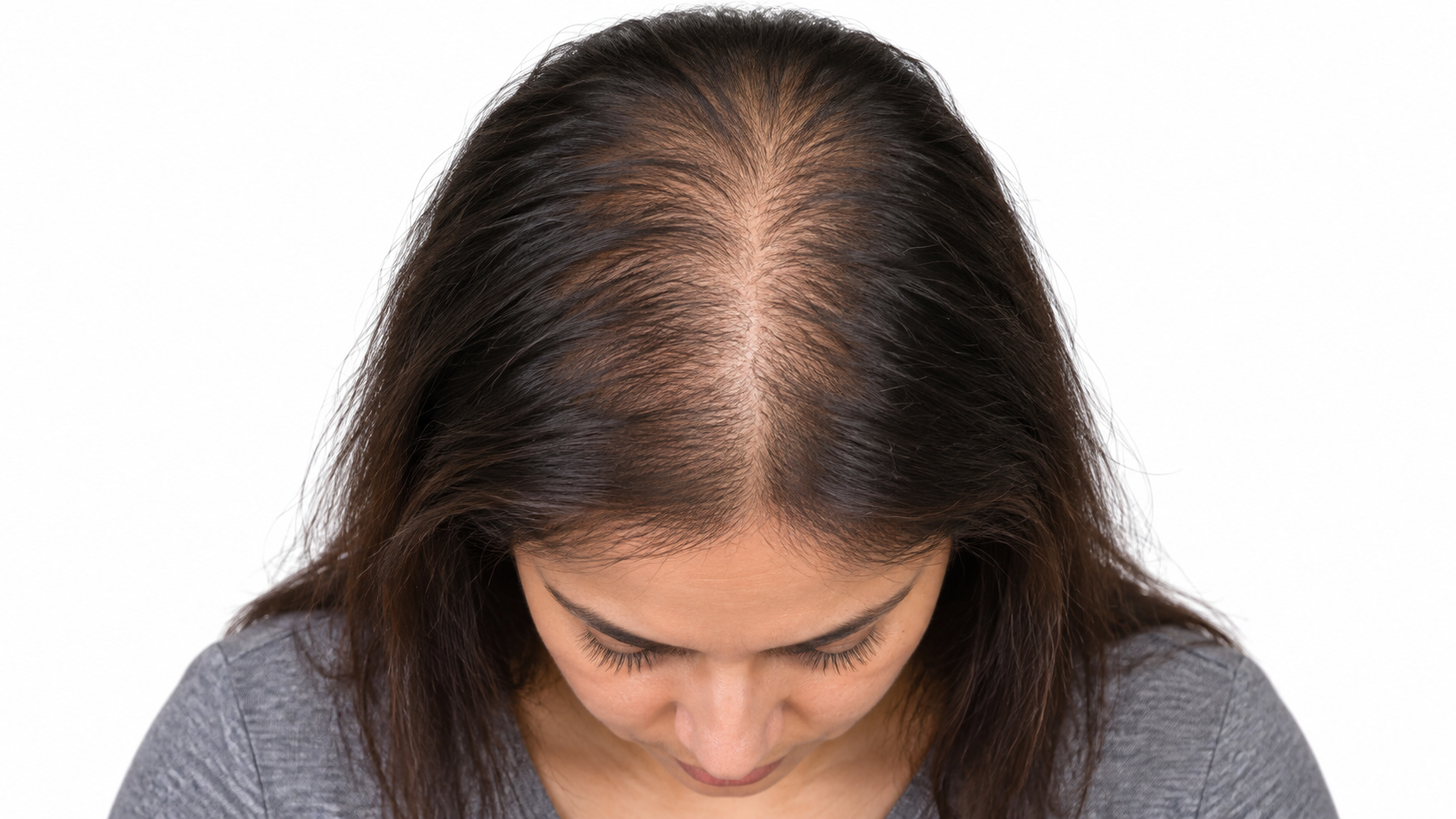
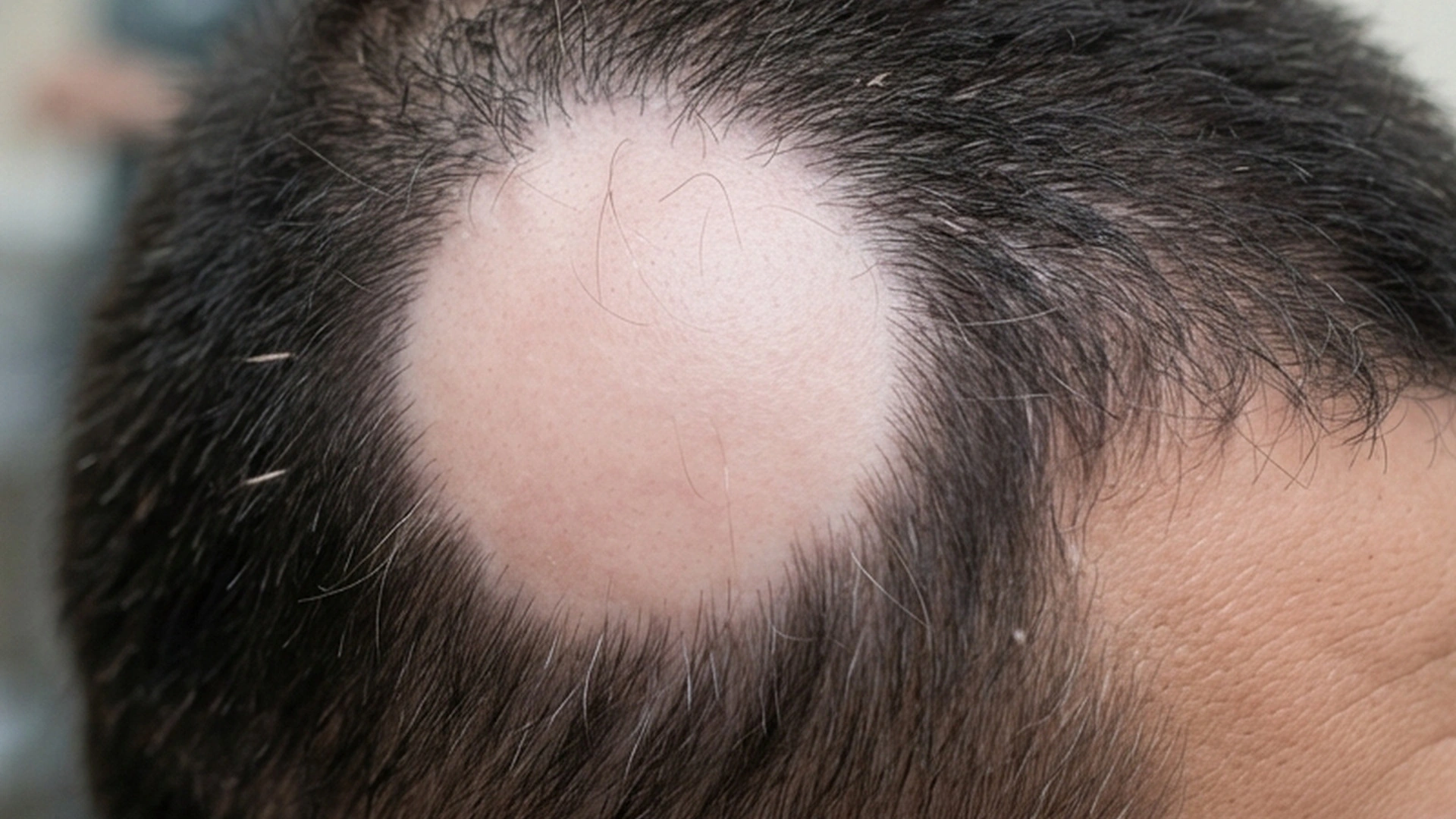
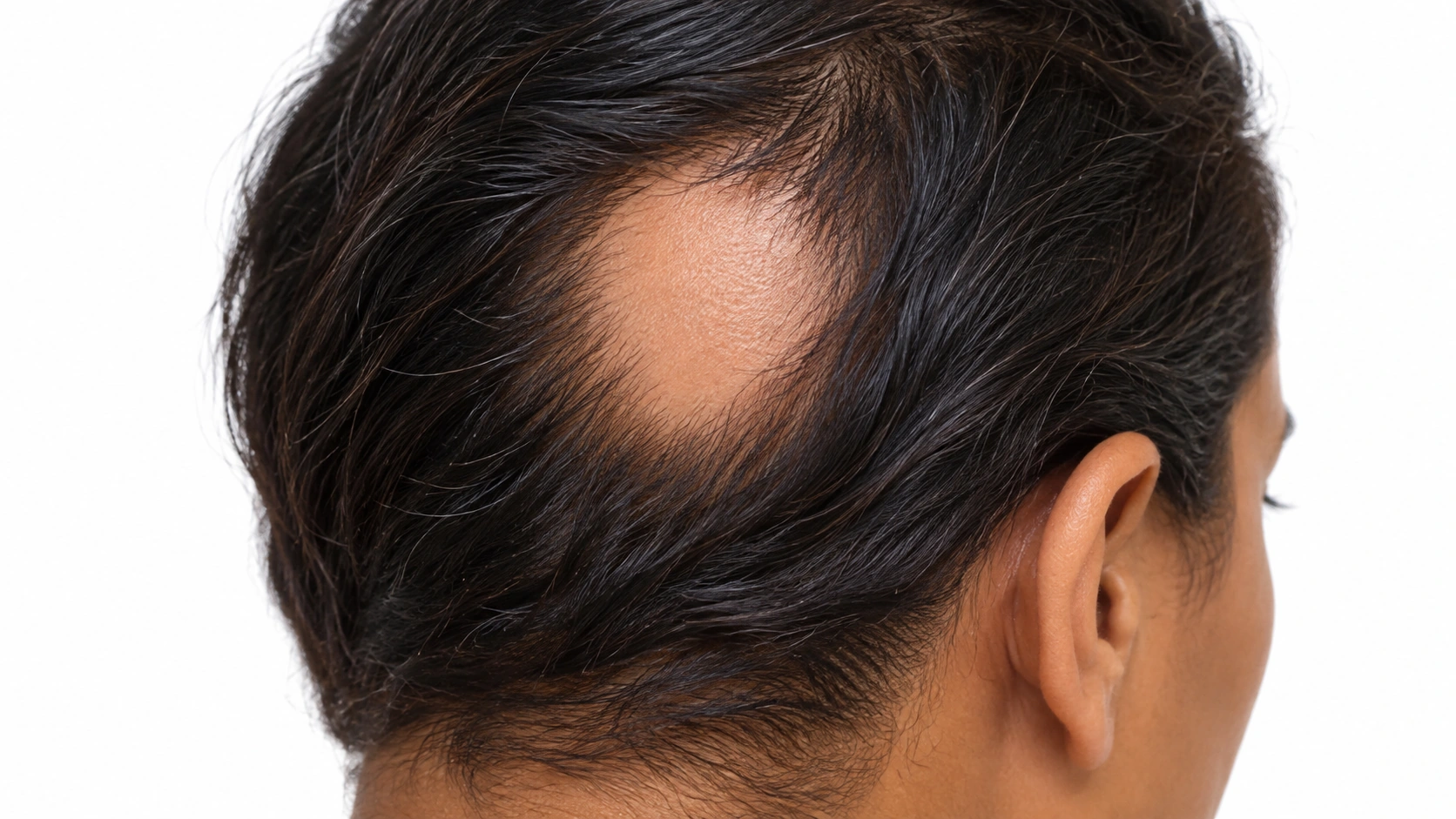
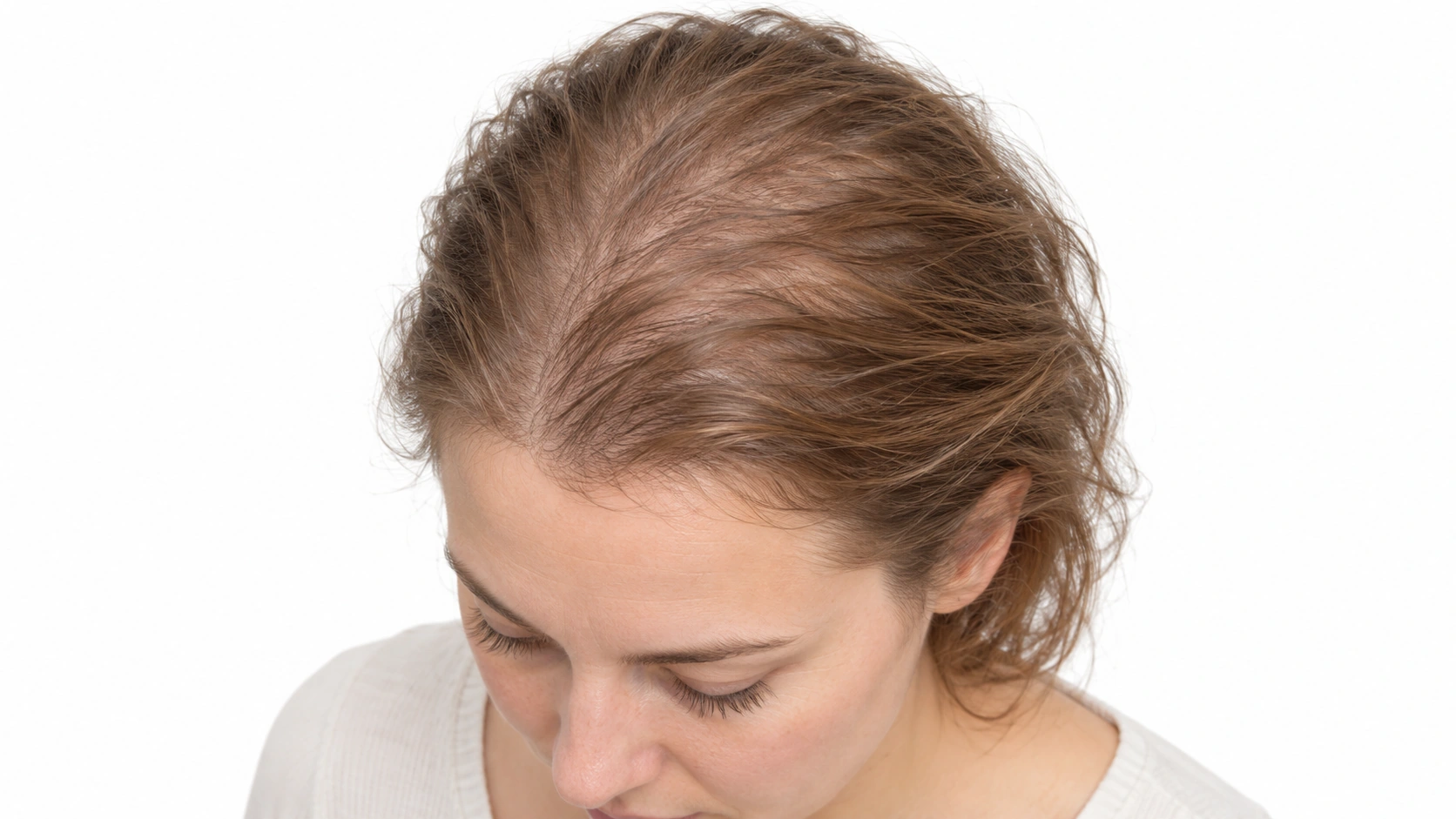
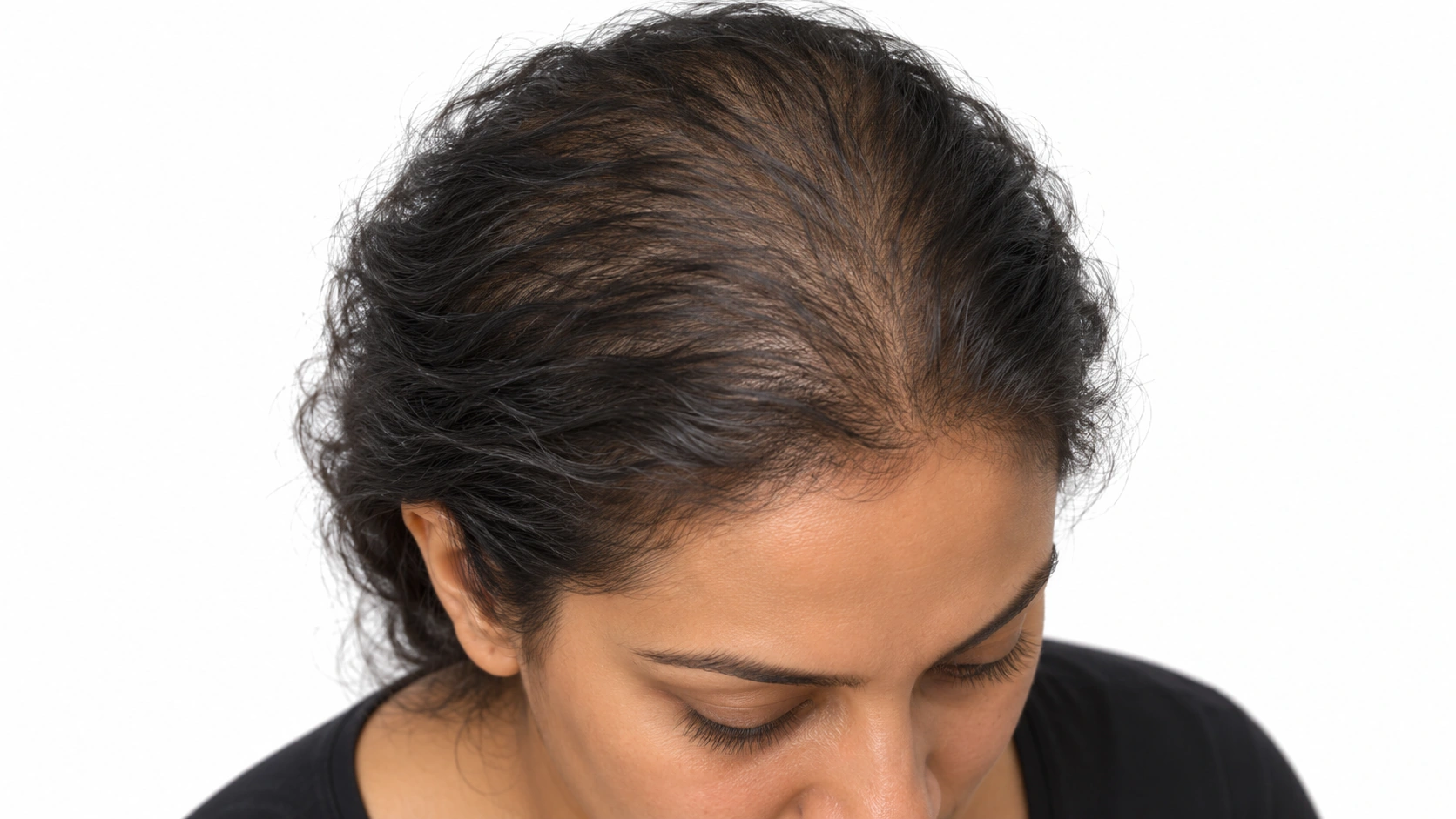
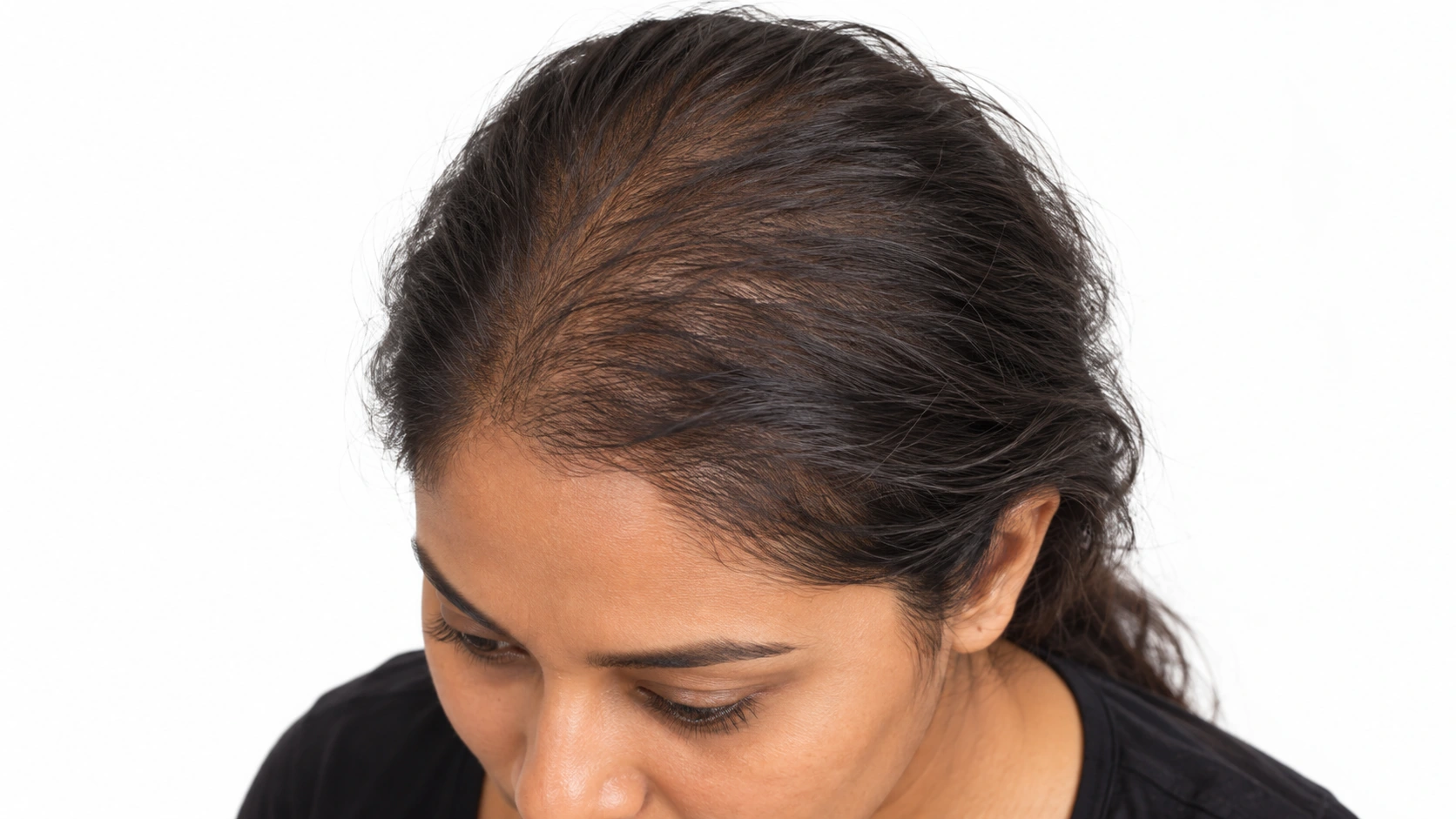
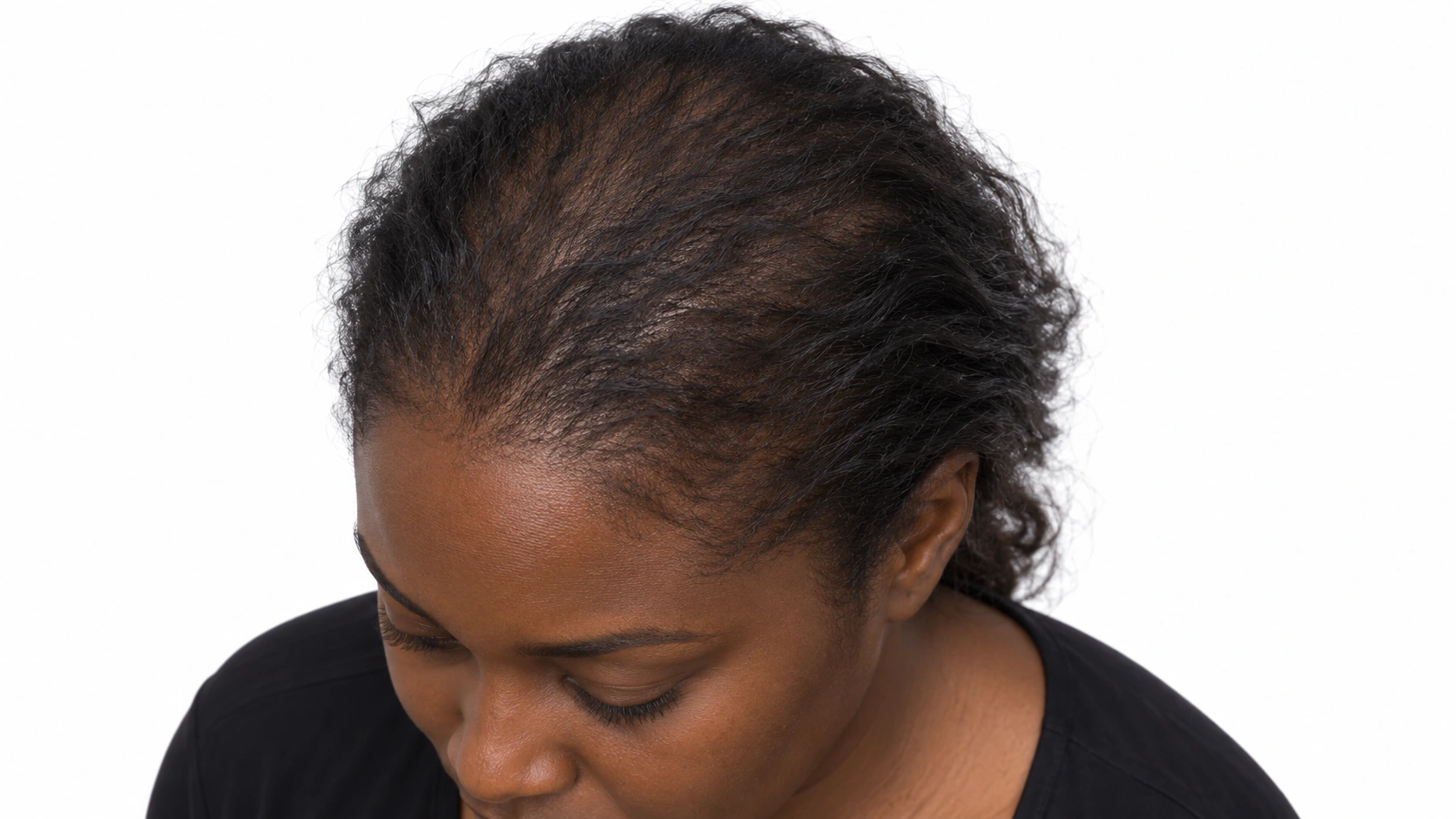
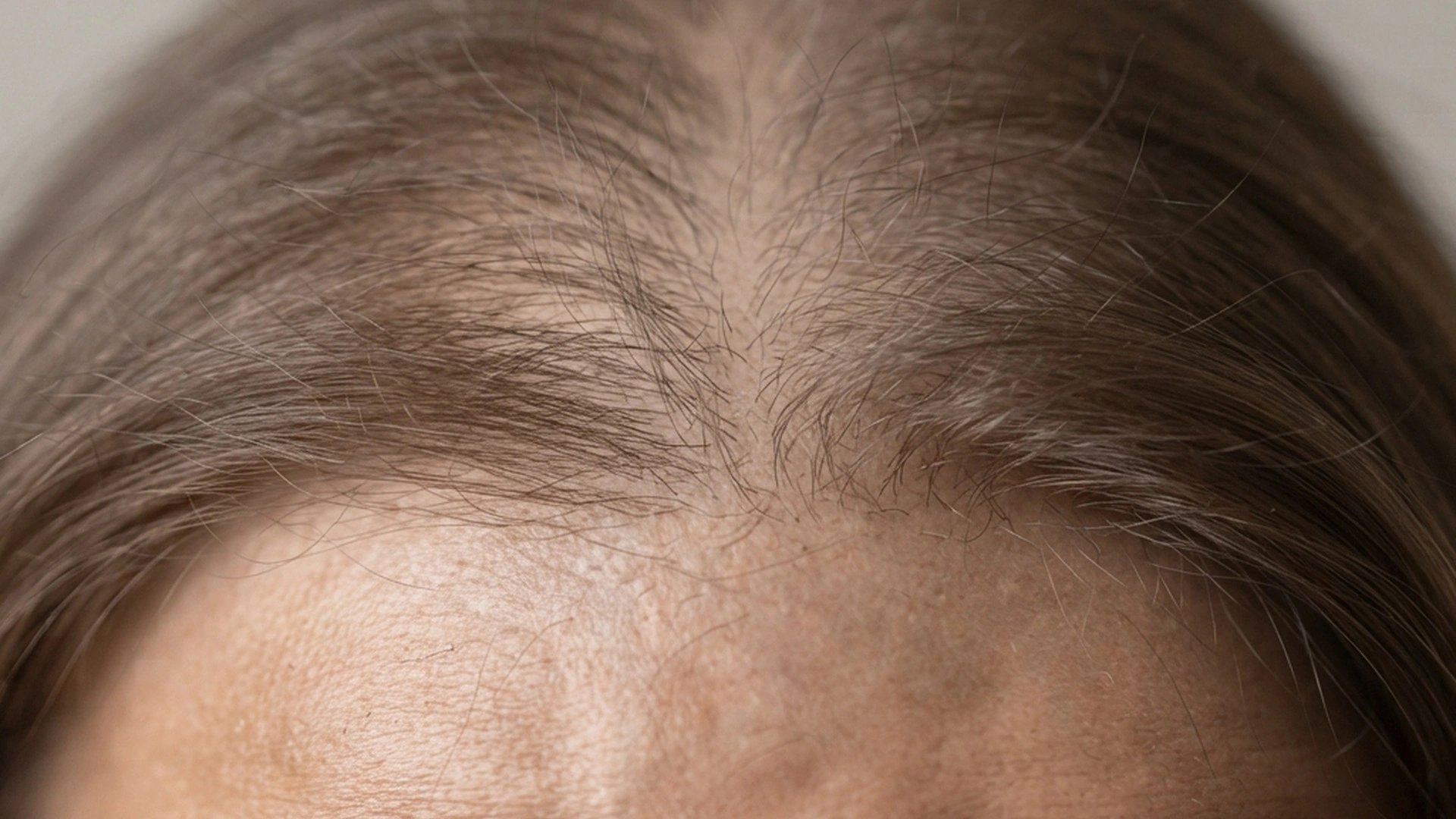
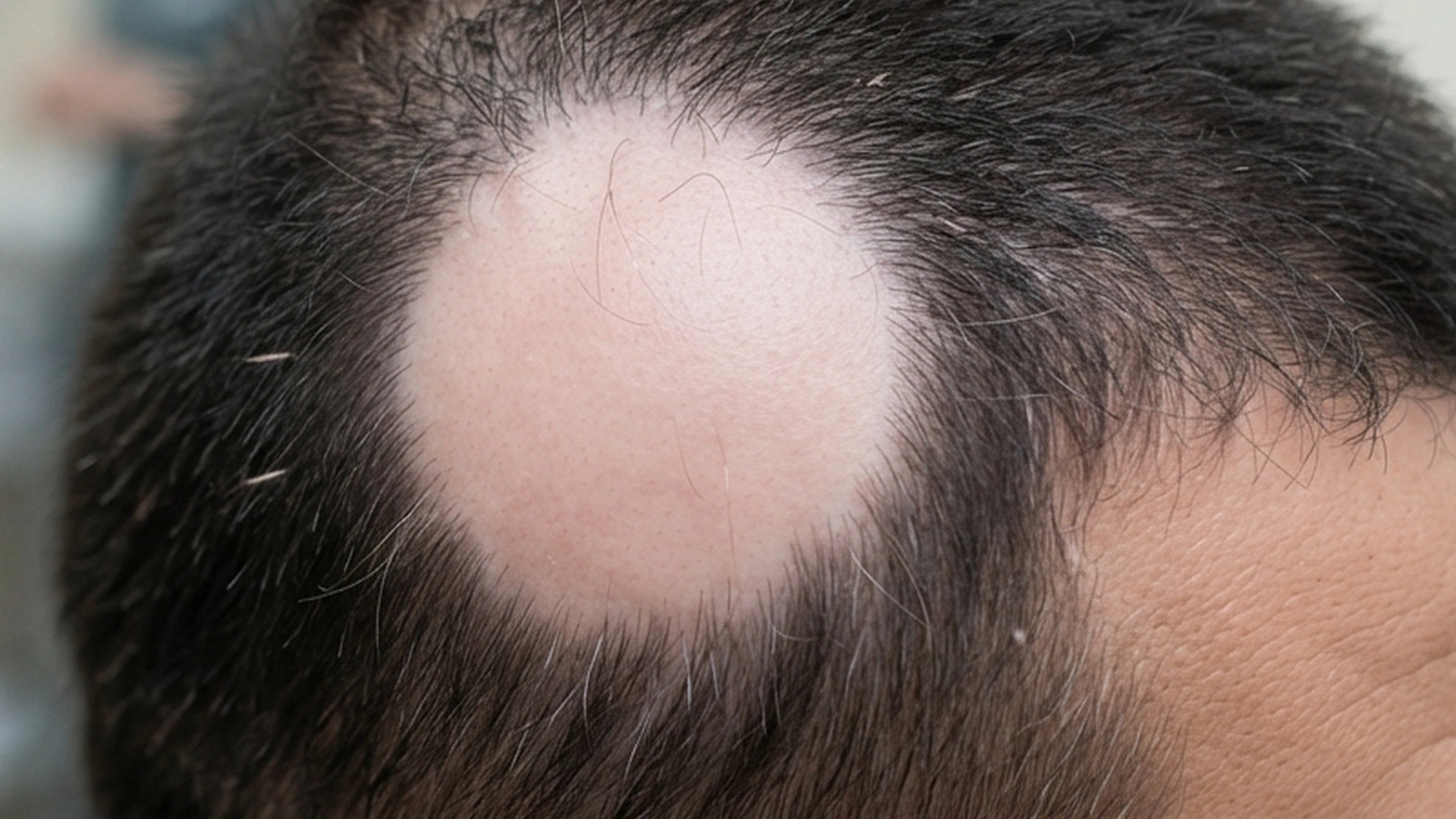
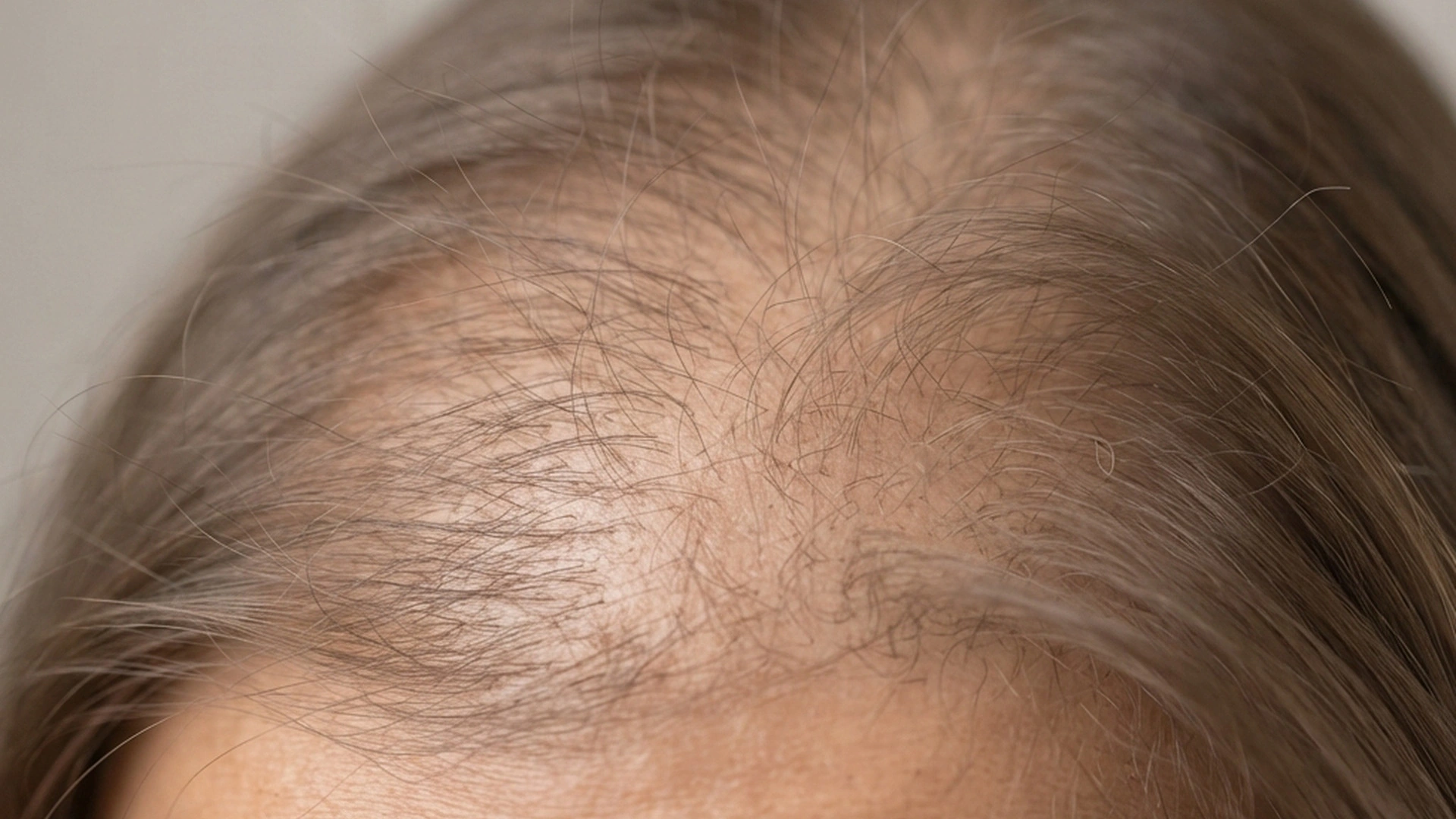
A round smooth bald patch on the scalp.Diffuse thinning across the scalp.

Key differences

The same eight facts on every condition comparison.

Usual age
Any age; often young
Any age
Where
Scalp, beard, brows
Whole scalp
Main sign
Smooth, round bald patches
Heavy all-over shedding
Itch or pain
Usually none
Neither
Contagious
No
No
Long term
Unpredictable; hair can regrow
Regrows in 6 to 12 months
Scars
No
No
Who gets it
Anyone; runs in families
After illness, birth, surgery, dieting

What is it?

Alopecia Areata
Telogen Effluvium
What is it?

It is immune-driven hair loss.
The immune response disrupts active hair follicles.

It does not usually scar.
It differs from infection, pattern thinning and scarring alopecia.

It can start suddenly.
A smooth patch can appear quickly.

Regrowth may look different.
Early regrowth is often fine or pale at first.

It is a hair-cycle shift.
More follicles enter the resting phase, and those hairs later shed.

The trigger came earlier.
Shedding can begin months after an illness or life event.

The follicle stays intact.
A club-shaped root on a shed hair does not mean the follicle has been pulled out.

Other signs need a closer look.
Pain, inflammation, discrete patches or scarring suggest a different process.

What it looks like

Alopecia Areata

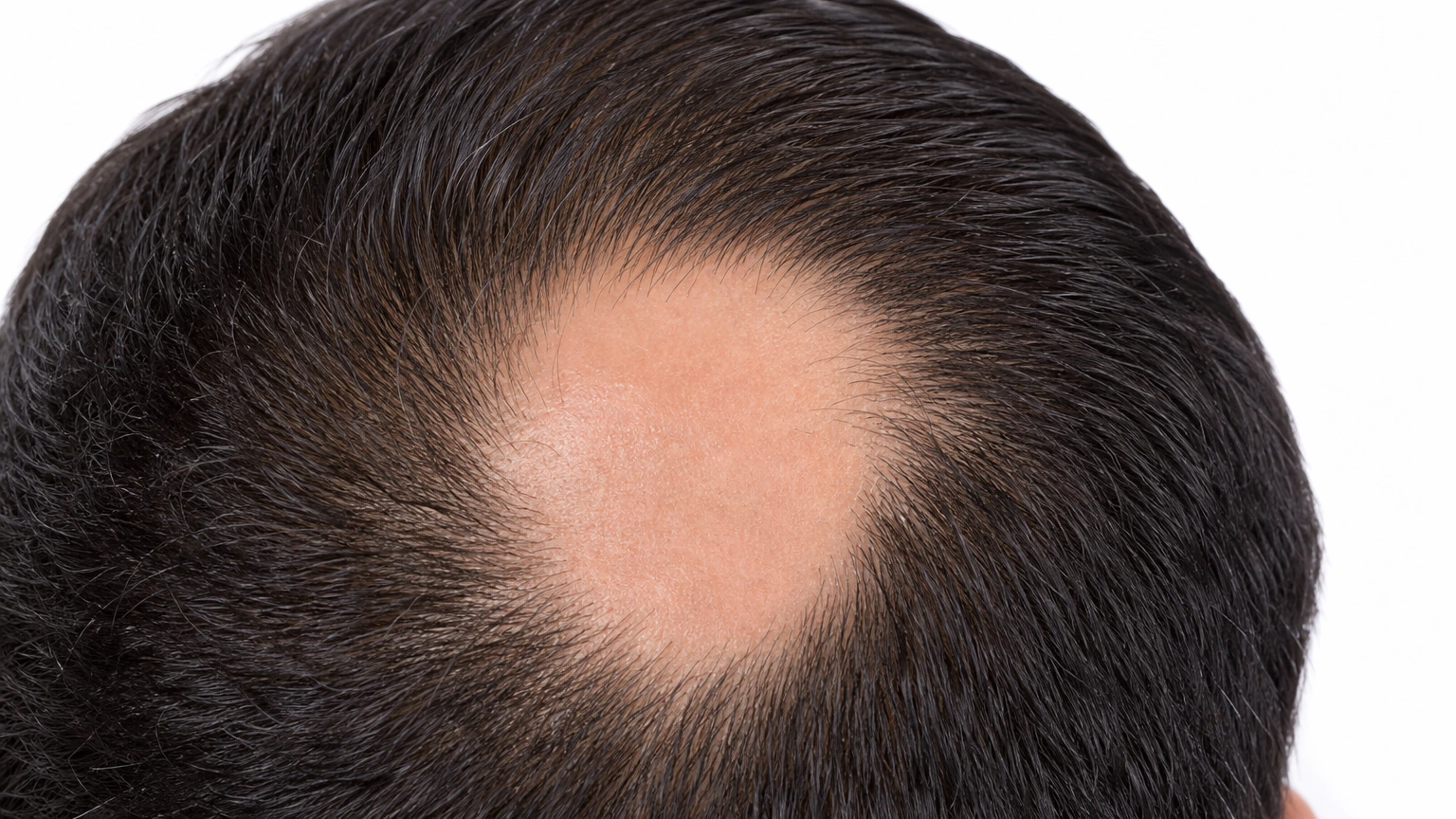
A smooth round bald patch on the scalp, representing alopecia areata.

Patchy alopecia areata One or more round patches; most common.

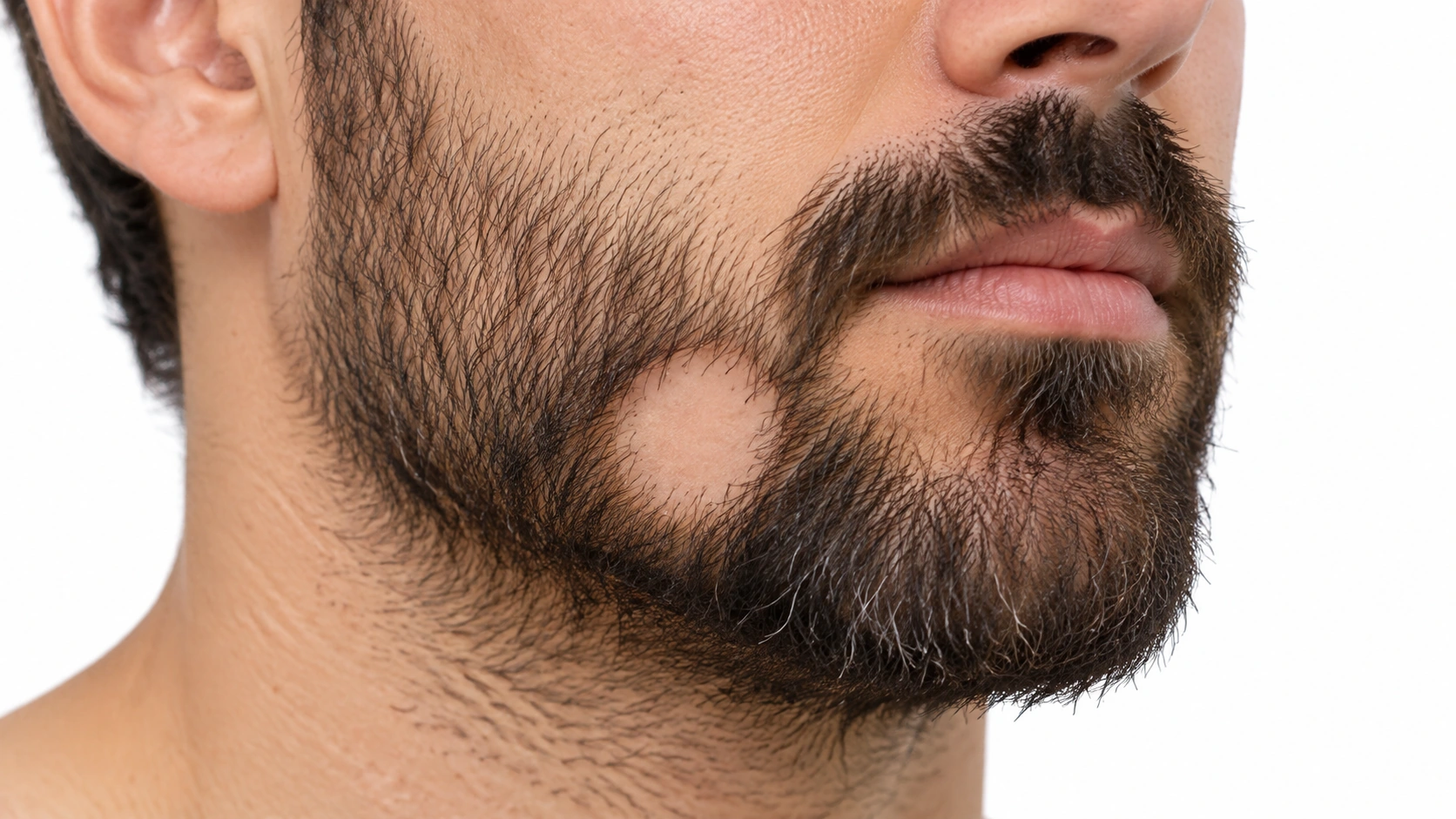
A smooth hairless patch interrupts the beard.

Beard involvement A smooth hairless patch interrupts the beard.

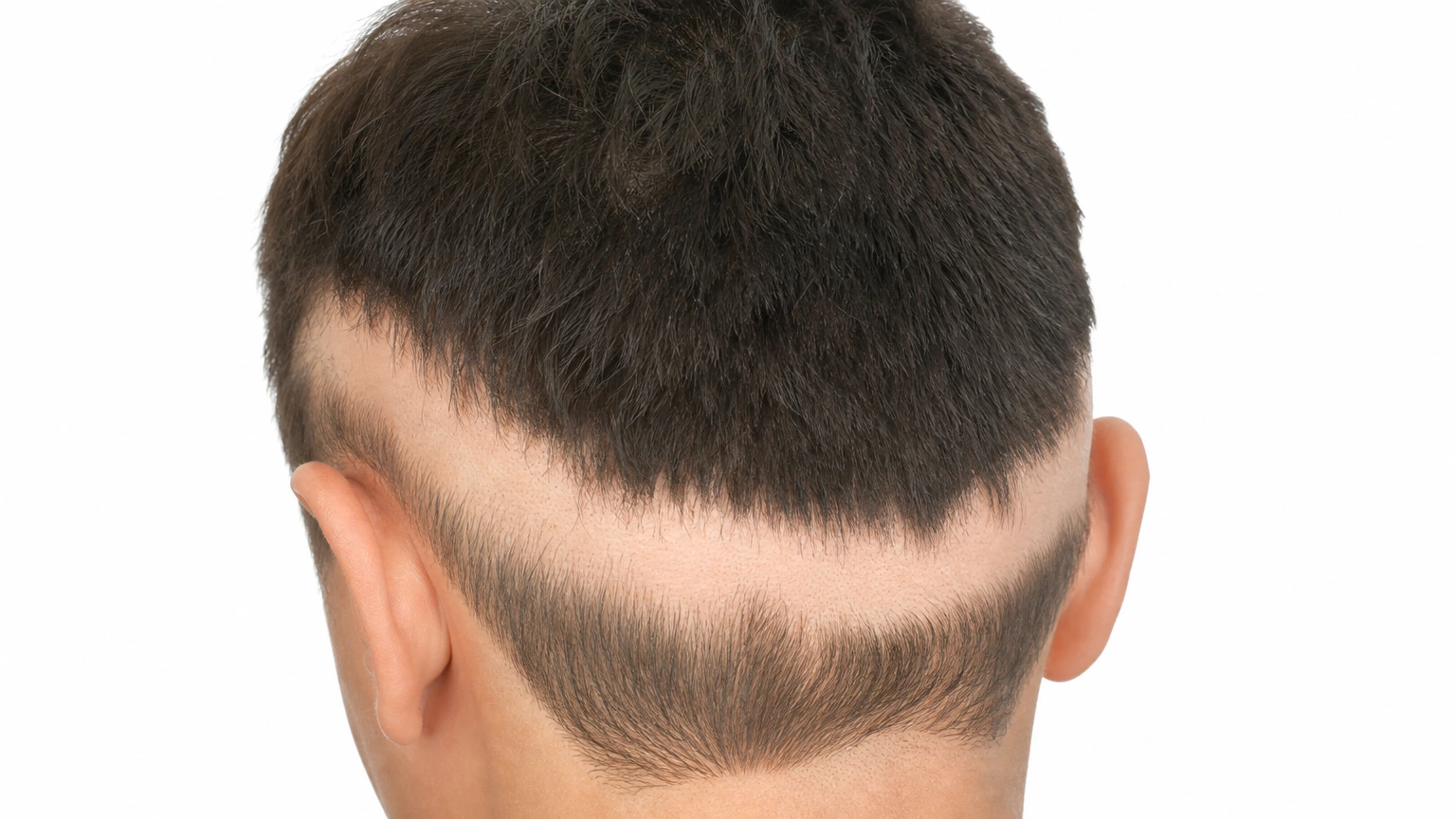
A broad smooth band of hair loss along the back and sides of the scalp, representing ophiasis-pattern alopecia areata.

Ophiasis pattern A band along the sides and back.

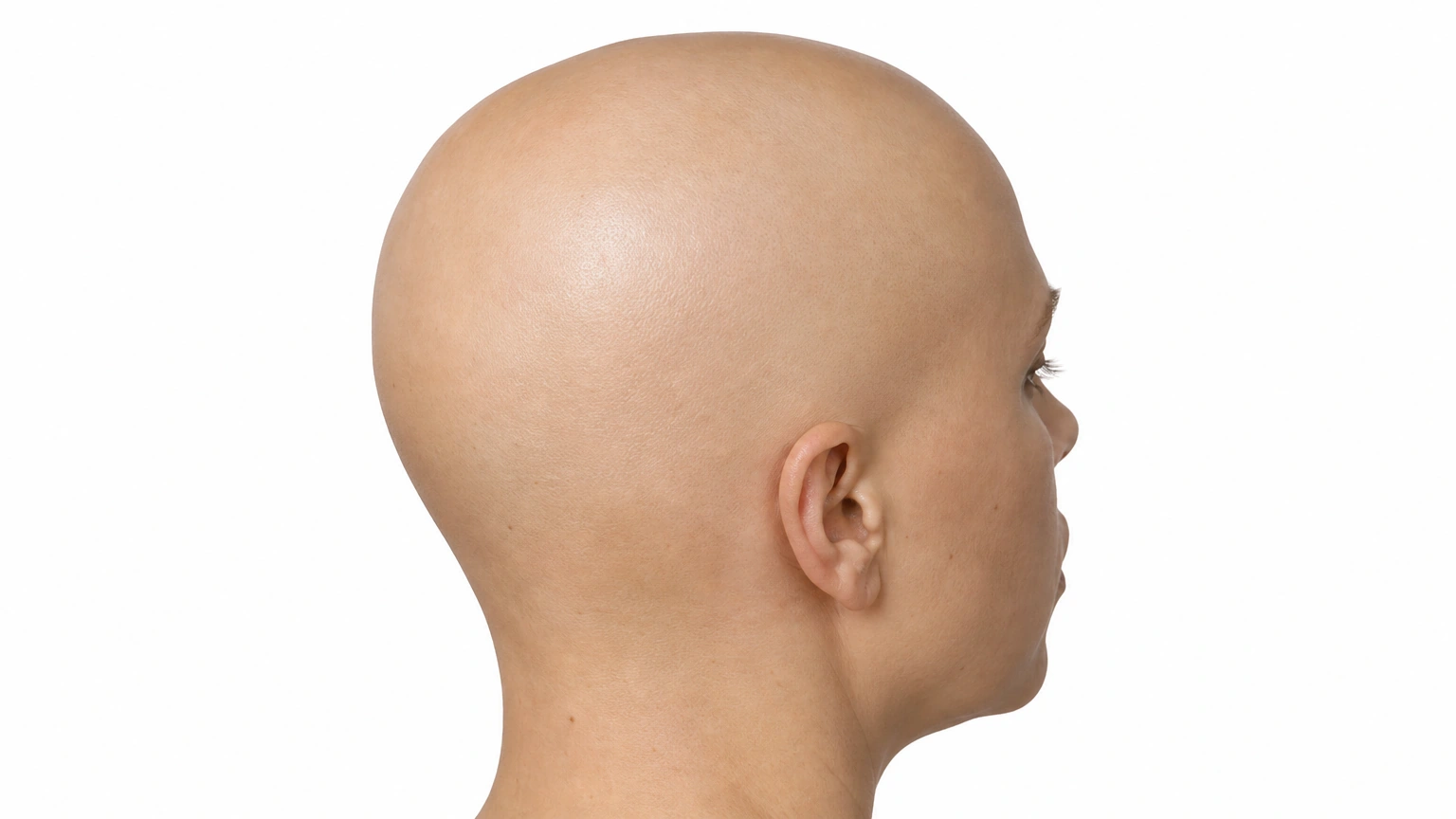
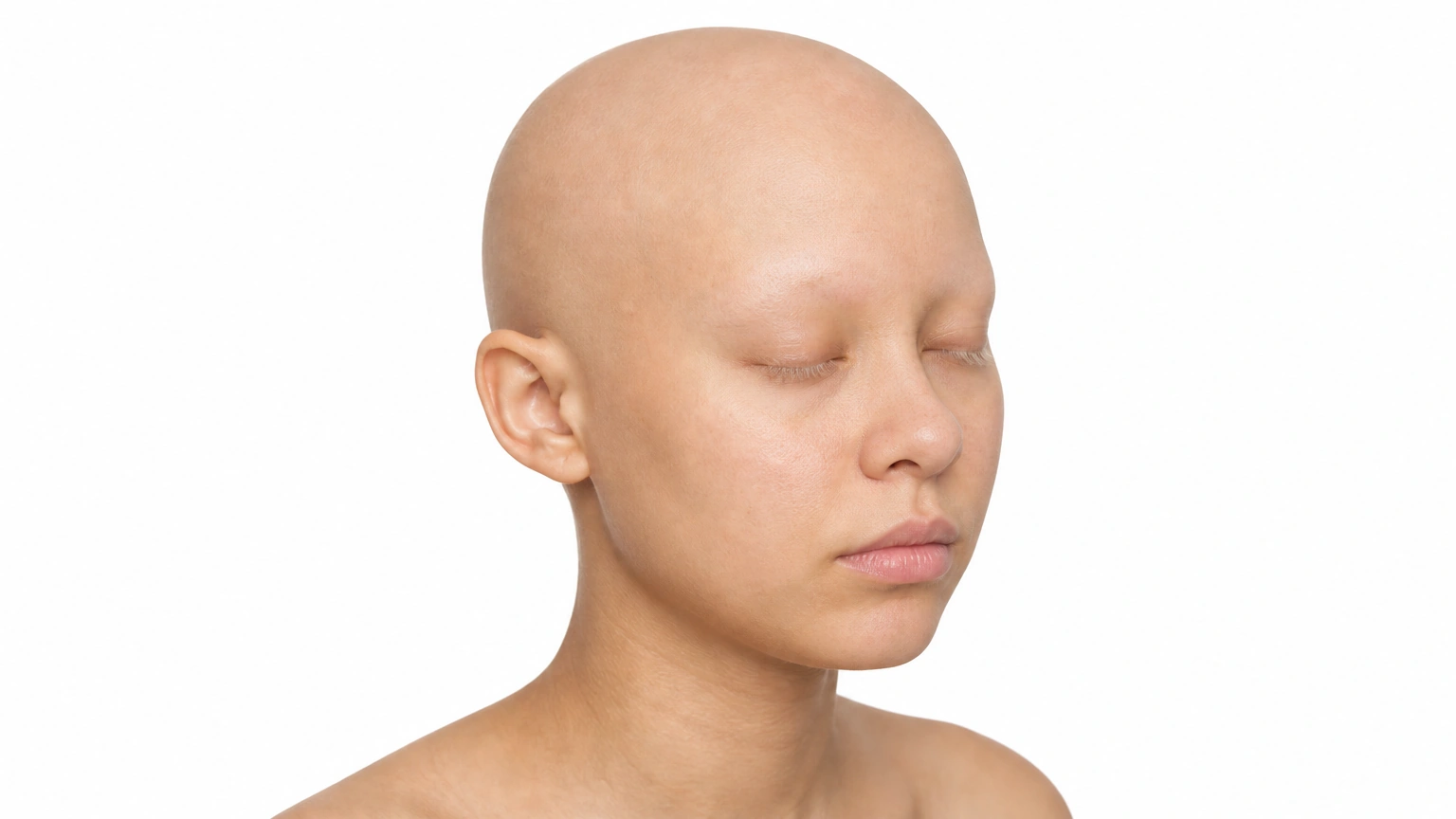
Complete smooth scalp hair loss with eyelashes retained, representing alopecia totalis.

Alopecia totalis Loss of all scalp hair.

Complete scalp, eyebrow and eyelash hair loss, representing alopecia universalis.

Alopecia universalis Loss of all body hair.

Telogen Effluvium

Telogen Effluvium: Acute.

Acute telogen effluvium Shedding for less than six months.

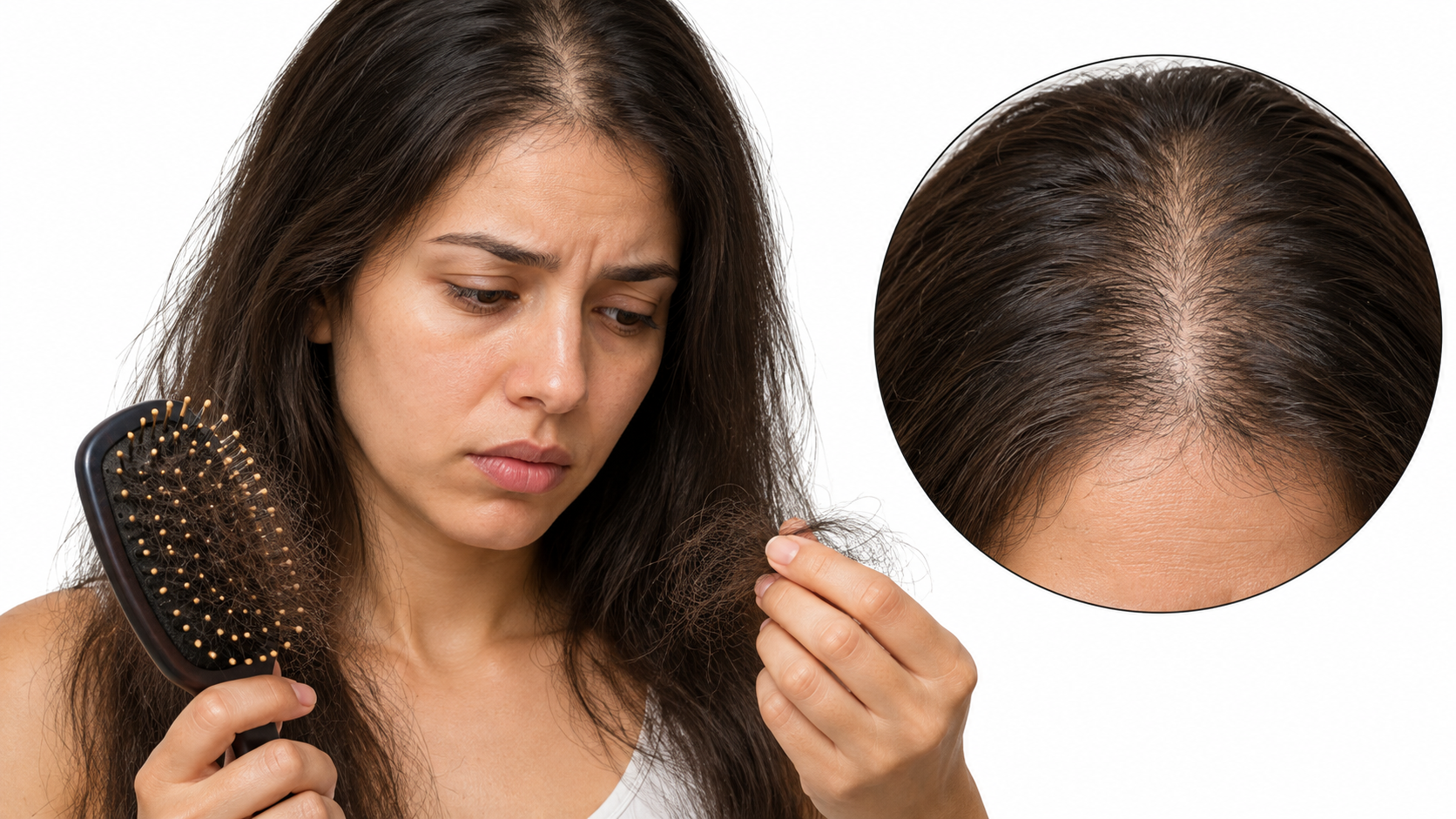
Telogen Effluvium: Diffuse thinning; Chronic.

Chronic telogen effluvium Shedding that lasts more than six months.

Skin tones
A round smooth bald patch on the scalp.
Smooth round bald patch on a medium-toned scalp.
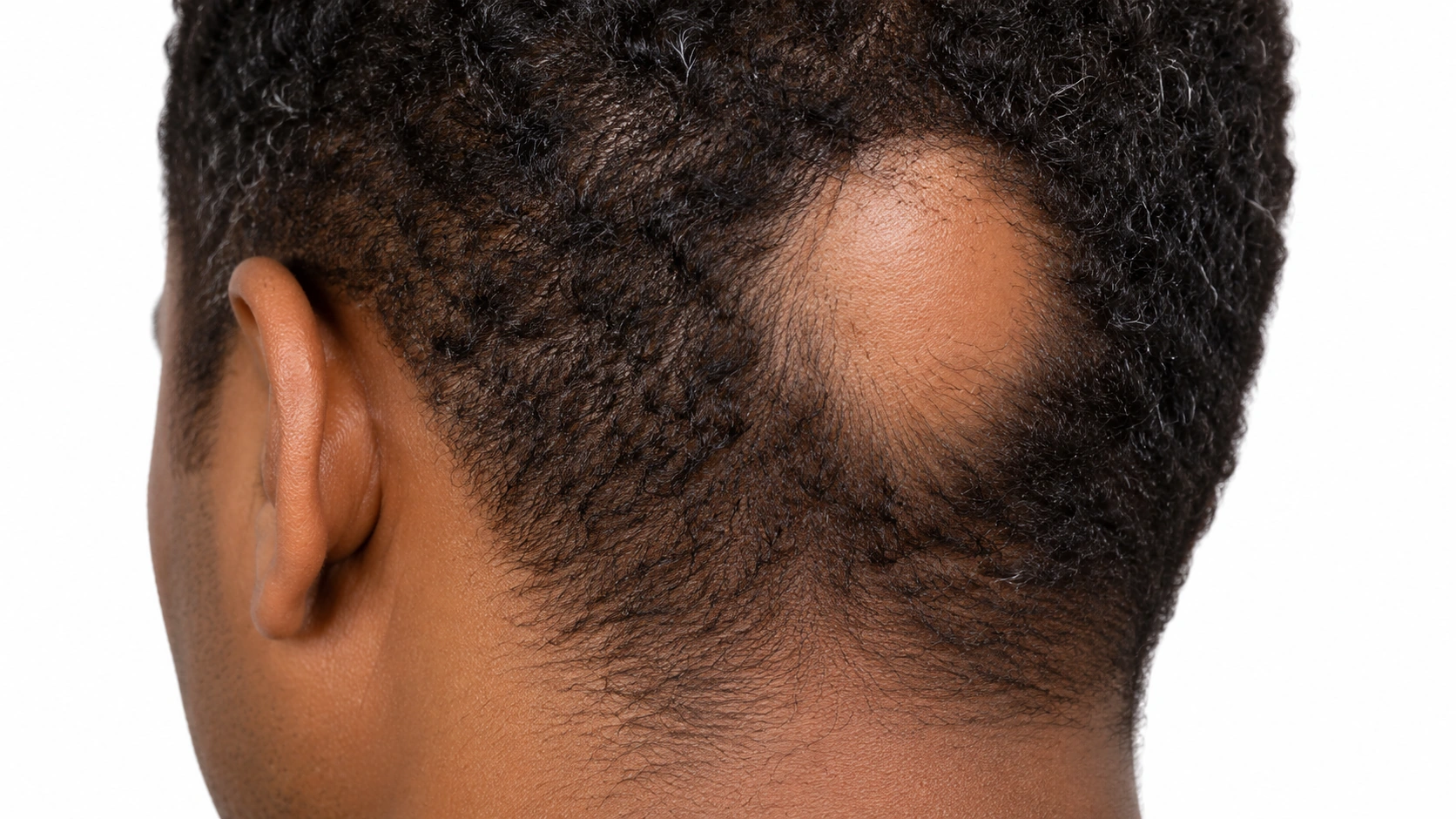
a smooth, round bald patch at the back of a scalp with brown skin.
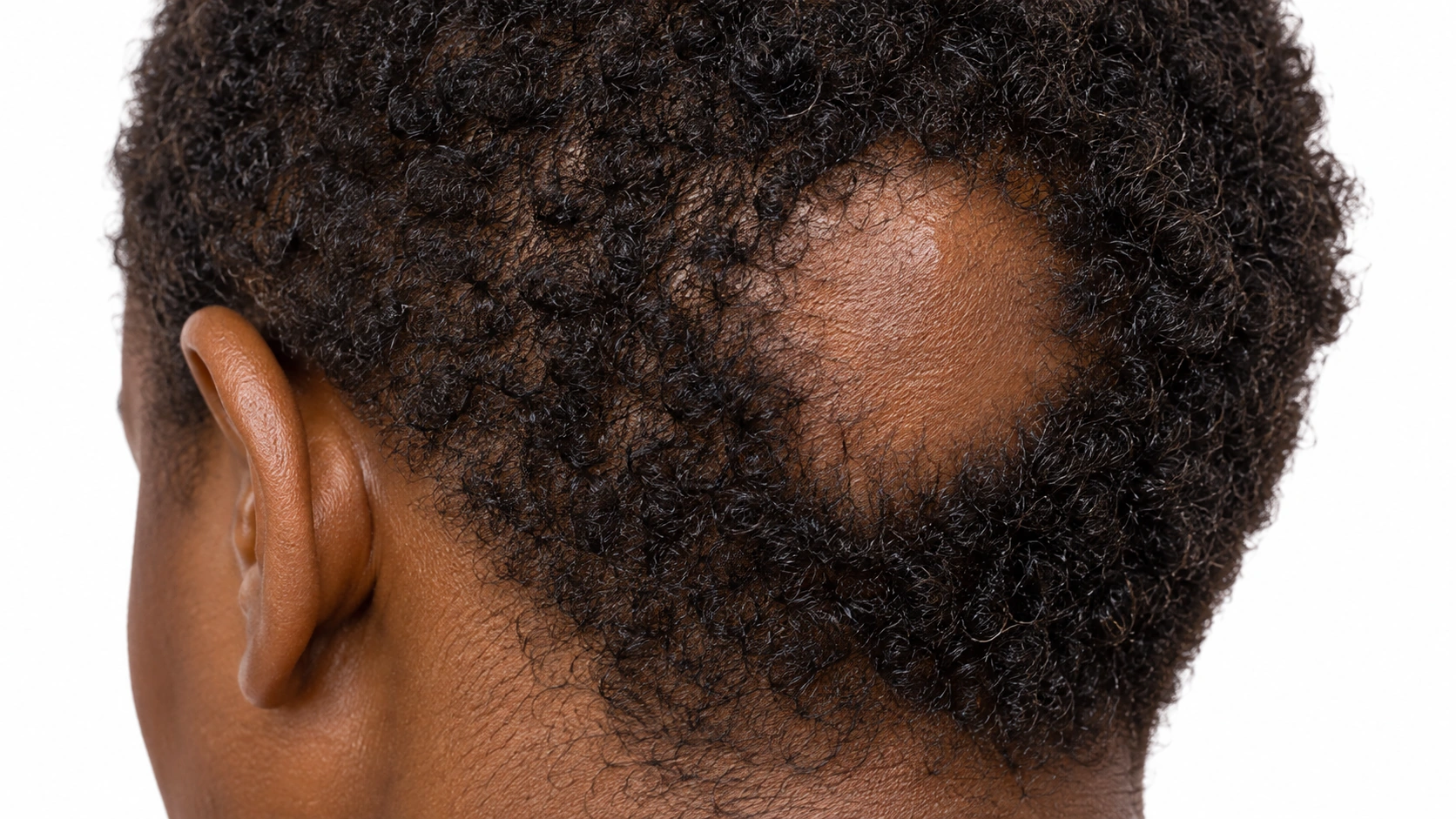
a smooth round bald patch in tightly coiled hair on deep brown skin.
diffuse reduced hair density across the scalp with the frontal hairline retained on light skin.
diffuse reduced hair density across a medium scalp with the frontal hairline retained.
diffuse reduced hair density across the scalp with the frontal hairline retained on brown skin.
diffuse reduced hair density across a deep brown scalp with the frontal hairline retained.
Diagram
Alopecia Areata mechanism diagram. Immune cells target the follicle: The response gathers around growing hair roots. Hair growth is disrupted: Affected hairs can become weak or shed. The follicle usually remains: Regrowth is possible, but the course varies.
Telogen Effluvium mechanism diagram. A trigger shifts the hair cycle: Illness or stress can move more hairs into rest. Shedding appears later: Extra resting hairs are released months afterward. Follicles remain intact: New growth can follow as the cycle recovers.
In the skin

Immune activity around growing hair follicles disrupts hair production and can cause affected hairs to shed. The follicles usually remain present, so regrowth is possible, although the course varies.

A physical or emotional trigger can shift more hair follicles into their resting phase at once. Extra shedding appears later, while the follicles remain capable of producing new hairs.

Where it shows up

Variable patches on the scalp or body
Diffuse scalp shedding

When it usually starts

010203040506070+

Alopecia Areata. Can start at any age, often in childhood or younger adult life.

Telogen Effluvium. Can follow a major body stress at any age, often with shedding beginning several months afterward.

Causes and triggers

Causes

Alopecia areata is an autoimmune condition. The immune system attacks hair follicles, causing round patches of hair loss.

Telogen effluvium happens when a shock to the body pushes many hairs into the resting phase at once. They shed about 2 to 3 months later.

Family tendency

About 1 in 5 people with it have a relative with it.

Risk factors
Family history, Eczema or asthma, Thyroid disease, Other autoimmune conditions
Women aged 30 to 60, Recent major illness, Low iron, Thyroid problems
Trigger
● Alopecia Areata
● Telogen Effluvium
Severe stress
Possible
Not listed
Illness
Possible
Not listed
High fever or illness
Not listed
Well established
Childbirth
Not listed
Well established
Surgery
Not listed
Well established
Crash diets
Not listed
Strong link
Severe emotional stress
Not listed
Strong link
Starting or stopping some medicines
Not listed
Strong link

Daily Care

Alopecia Areata
Telogen Effluvium
Daily care

Habits that help

  • Sun protection on bare scalp
    Sunscreen, a hat or a scarf.
  • Wigs, toppers, brows and lashes
    Use cosmetic options if they help you feel comfortable with visible hair loss.
  • Talking to someone about it
    Anxiety and low mood are well documented, and support groups exist.
  • Oral JAK inhibitors
    Can regrow hair in very extensive loss, with monitoring and real risks.
  • Follow treatment for a confirmed thyroid problem
    Treating it does not regrow hair, but it is worth finding.

Avoid

  • Avoid: Assuming a patch will sort itself out
    Waiting costs most when loss is spreading.
  • Avoid: Chasing unproven cures
    Months lost while a spreading case goes untreated.
  • Avoid: Severe or prolonged stress
    Often reported before flares, hard to prove.
  • Avoid: Sunburn on bare scalp
    Skin never exposed burns fast and marks for months.
  • Avoid: Stopping treatment at first regrowth
    Regrowth means the attack is suppressed, not over.

Habits that help

  • Eat enough, and eat enough protein
    Normal calories and protein at each meal remove the signal.
  • Handle the hair gently while it recovers
    New hairs are short, fine and easy to snap.
  • Look for the short hairs
    A fringe of new growth along the hairline means the follicles are working.
  • Discuss targeted blood tests for ongoing shedding
    A clinician may check iron, thyroid function or other causes according to symptoms and history; not every test is needed for everyone.
  • Correct iron deficiency if you have it
    Iron helps when ferritin is low and harms when it is not, so test first.
  • Treat a thyroid problem
    Shedding settles once levels are back in range.
  • Correct iron deficiency only when tests and clinical advice support it
    Easy to test for, and it prolongs shedding until corrected.
  • Follow treatment for a confirmed thyroid problem
    Underactive and overactive both keep the shedding going.
  • Report repeated illness or ongoing shedding
    Each new fever, infection or operation can start another wave.

Avoid

  • Avoid: Crash dieting
    A very common trigger, and a common reason a shed keeps going.
  • Avoid: Prolonged emotional stress
    Months of it keep the process going.
  • Avoid: Switching products every few weeks
    It does nothing to the cycle, and means more washing and heat.
  • Avoid: Counting hairs every day
    Daily counts mostly measure your wash schedule.
  • Avoid: Not enough protein
    Hair is mostly protein, and the body treats it as optional.
  • Avoid: Changing prescribed medicines without discussing them with the prescriber
    Both directions can trigger a shed, including hormonal contraceptives.

Treatment differences

Evidence labels come from each condition’s own treatment list.

Treatment
● Alopecia Areata
● Telogen Effluvium
Filter by type
Alopecia areata pattern

Select one or more.

Telogen effluvium duration

Select one or more.

Over-the-counter
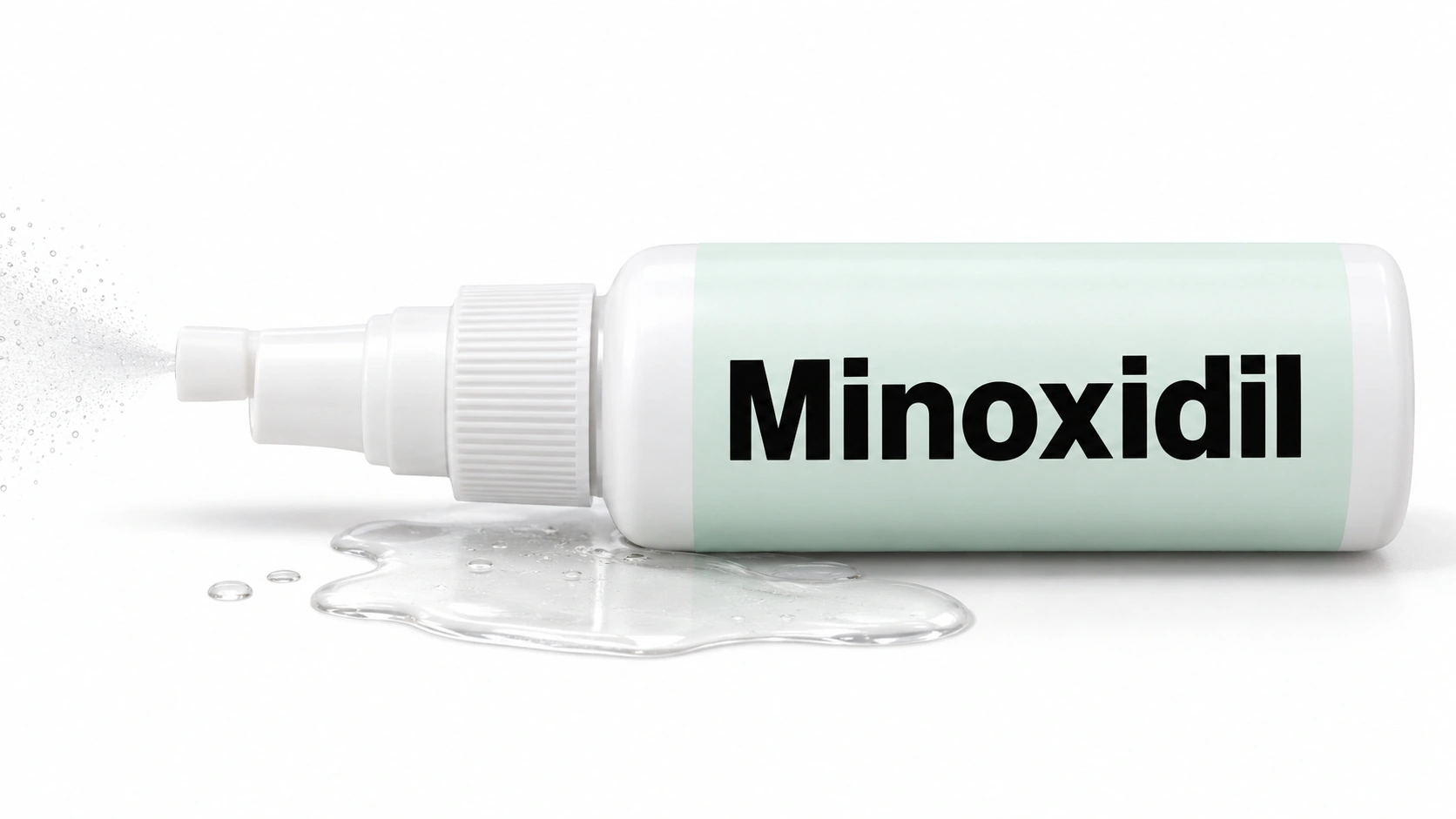
Topical Minoxidil — Header Image

Topical Minoxidil

Limited evidence

Minoxidil does not switch off the immune attack, so it will not clear a patch on its own here. What it does is support hair that is already coming back, which is why it is usually added to injections or a steroid rather than used by itself. It has to be kept up to keep any benefit.

Biotin and hair supplements.

Biotin and hair supplements

Limited evidence

Biotin, collagen and hair-and-nail supplements are the first thing most people try. They do nothing for alopecia areata, because the problem is an immune attack rather than a shortage of a nutrient. Iron, vitamin D or thyroid problems are worth checking and correcting if a blood test shows one, but supplements taken on spec are not a treatment.

Serum dropper bottle lying on its side, labelled Rosemary Oil, with a product-texture swatch behind it on a white background.

Rosemary oil and onion juice

Limited evidence

These circulate constantly online, and neither has evidence worth acting on in alopecia areata. Because many single patches fill in on their own within a year, whatever someone was using at the time gets the credit. They are mostly harmless in themselves — the real cost is the months that pass while a spreading case goes untreated.

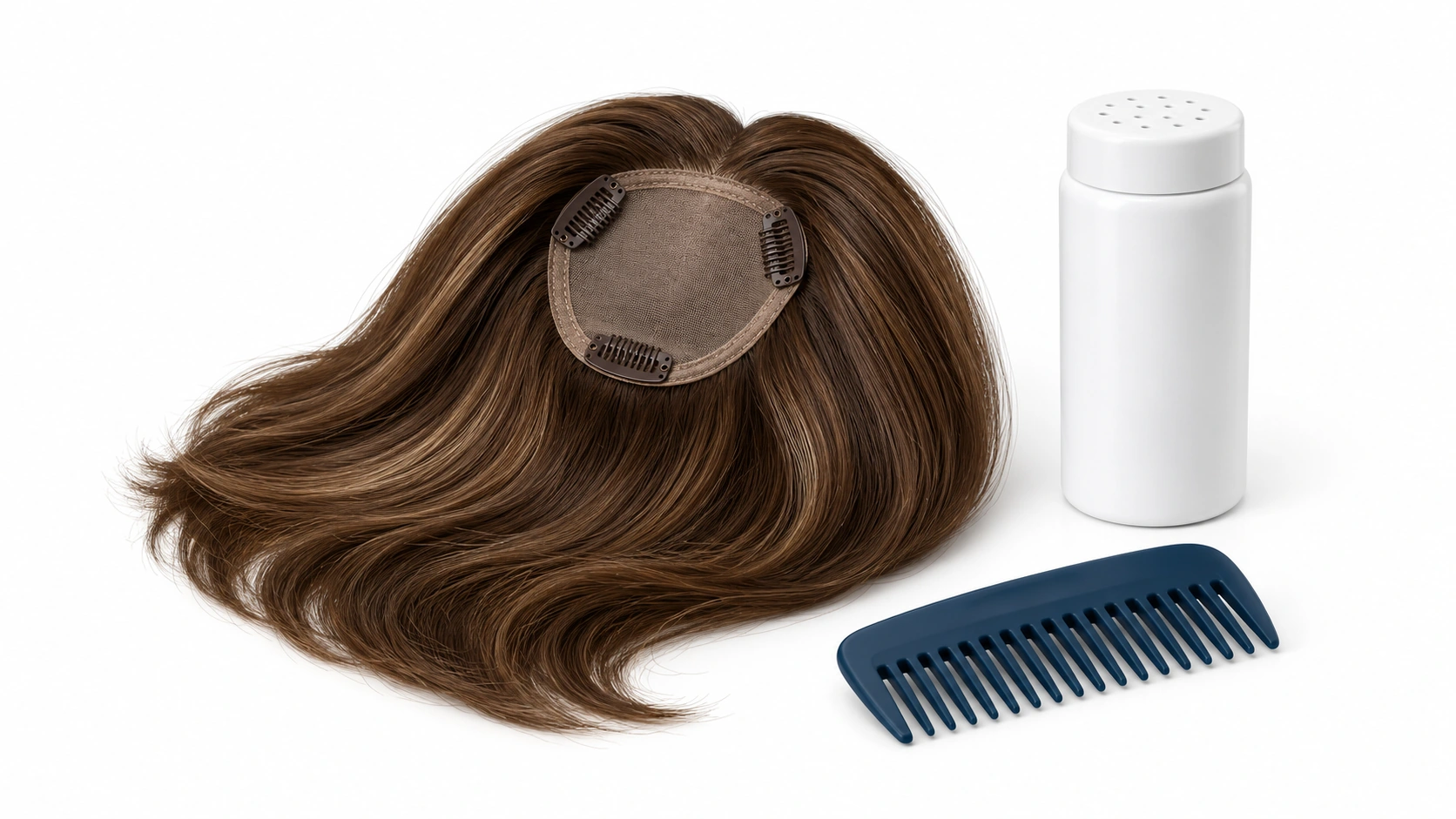
Existing illustration of Hair fibers and root powders.

Wigs, toppers, brows and lashes

Listed

Not a lesser option, and not giving up. Wigs, toppers, scalp micropigmentation, brow pencils and false lashes let people carry on while treatment is tried, and many people use them for years alongside everything else. In the US many insurers cover a wig with a prescription, so it is worth asking your dermatologist to write one.

Topical Minoxidil — Header Image

Topical Minoxidil

Limited evidence

Sometimes used to support regrowth, mainly when a shed has dragged on past six months or has uncovered pattern thinning underneath. The evidence in telogen effluvium itself is thin, because the hair was going to regrow anyway. It also causes a short burst of extra shedding in the first few weeks, which is hard to sit through in the middle of a shed.

Biotin and hair supplements.

Biotin and hair supplements

Limited evidence

These do nothing for a shed unless you were low in the exact thing they contain, and most people are not. Biotin also interferes with thyroid and heart blood tests, which can send the search for the real trigger off in the wrong direction. If you are going to spend money on this, the blood tests are the better place to put it.

Iron, only if a test shows you are low

Iron, only if a test shows you are low

Limited evidence

Low iron stores are one of the few genuinely correctable triggers, and they are common without full anemia, so they are worth measuring rather than guessing at. When ferritin is low, correcting it settles the shedding over the following months. Iron taken without a deficiency does nothing for hair and is harmful, which makes this a test-first treatment.

Prescription topicals
Clobetasol — Header Image

Clobetasol

Limited evidence

Clobetasol Propionate. A strong topical steroid used on the patch, often under a cover overnight to push it in. It is slower and less reliable than injections, and it is the usual choice for children and for anyone who does not want needles. Used for months on the same area it can thin the skin, so it is worked in cycles with breaks rather than applied indefinitely.

Anthralin

Limited evidence

Anthralin cream. An old treatment applied for a short time each day and then washed off, deliberately causing a mild irritation that seems to distract the immune system from the follicle. It is used mainly in children and when steroids have not worked. It stains skin, hair and towels a brown-orange, and it needs patience over months.

None listed
Prescription pills

Olumiant

Strong evidence

A JAK inhibitor tablet, approved for severe alopecia areata in adults, that blocks the immune signals attacking the follicle. In trials a substantial share of people with extensive loss regrew most of their scalp hair over several months to a year. It is not a cure — the loss usually returns after stopping — and it needs blood tests before and during treatment, with real risks around infection, blood clots and cholesterol to weigh up first.

Litfulo

Strong evidence

A second JAK inhibitor tablet for severe alopecia areata, approved from age 12, which makes it the option for teenagers as well as adults. The results, the monitoring and the trade-offs are broadly similar to baricitinib, and which one is chosen often comes down to age, other health conditions and what your insurance covers. A third, deuruxolitinib, is also available for adults.

Prednisone — Header Image

Prednisone

Limited evidence

A short course of steroid tablets is sometimes used to slow loss that is spreading quickly. It can work while it is being taken, and hair frequently falls out again once it stops. Because the side effects of long-term steroids are serious, it is a bridge to another treatment rather than a plan on its own.

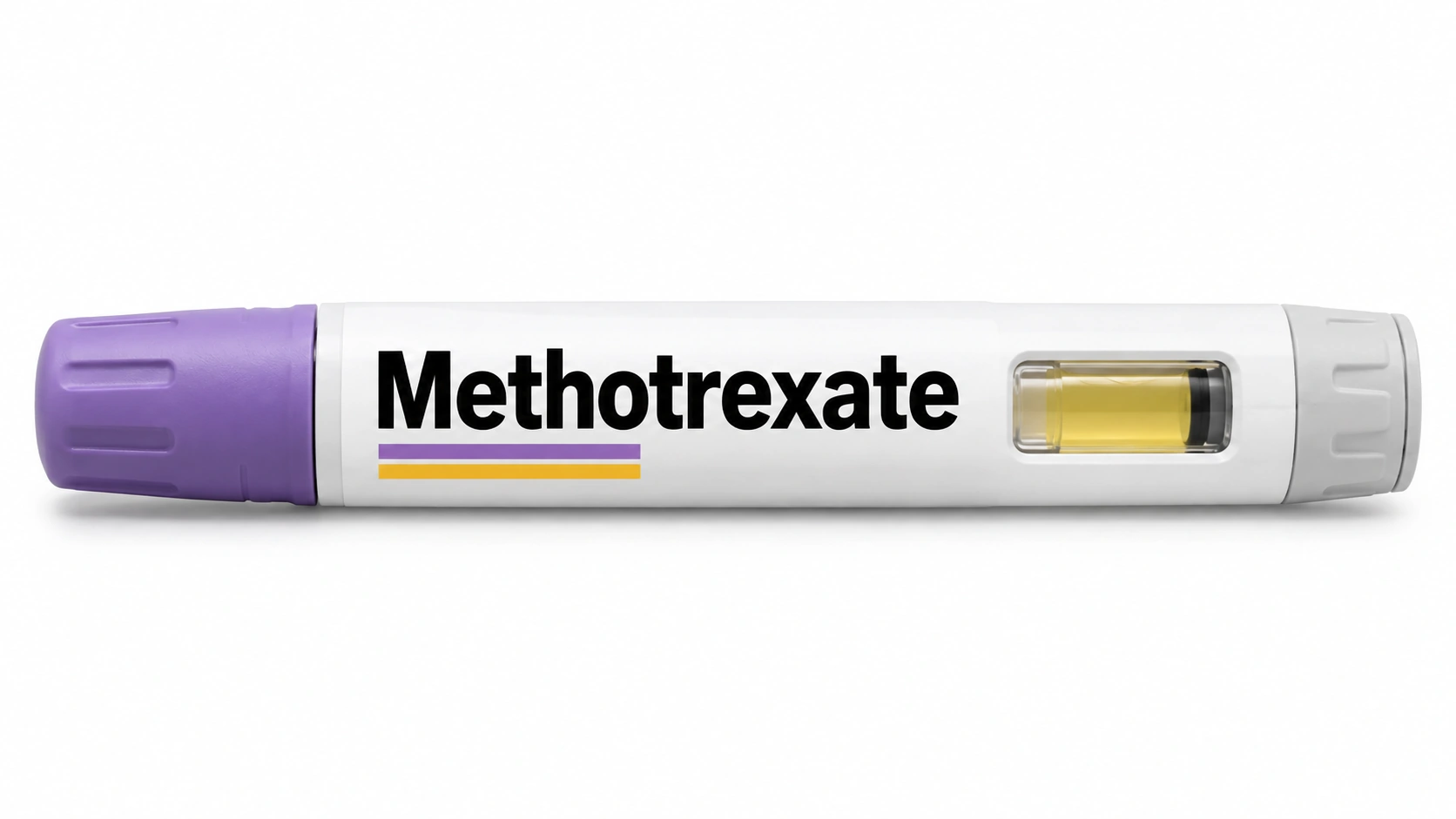
16:9 hero for Methotrexate. Never cropped: the tone strip and the corner logo depend on the full frame.

Methotrexate

Limited evidence

An older immune-suppressing tablet used for extensive alopecia areata, sometimes with a low dose of steroid alongside. It has been overtaken by the JAK inhibitors for most people, and it stays useful where those are not available, not affordable or not suitable. It takes months to judge, needs regular blood tests, and must not be taken in pregnancy.

Oral Minoxidil — Header Image

Oral Minoxidil

Limited evidence

A low dose of an old blood pressure tablet, used off-label by dermatologists and sometimes offered when shedding has run well past six months or pattern thinning has been found underneath. It is not a treatment for an ordinary shed, which recovers without it. It needs a prescription and monitoring, and it can cause unwanted hair on the face and body.

Treating a thyroid problem

Treating a thyroid problem

Listed

When an overactive or underactive thyroid is the trigger, the shedding settles over the months after the levels come back into range, and no separate hair treatment is needed. Both directions cause shedding and both are treatable. This is the clearest example of why the blood tests matter more than anything you can put on the scalp.

Reviewing a suspected medicine

Reviewing a suspected medicine

Listed

A number of common medicines can start a shed, and stopping one can do the same. Some can be swapped easily and others should not be touched, so the decision belongs with the doctor who prescribed it. Take the whole list to that appointment rather than stopping anything yourself to find out.

Injections
Editorial illustration for Cortisone Injection, based on the entry’s treatment or equipment reference.

Cortisone Injection

Moderate evidence

Steroid Injections. The fastest reliable option for a limited number of patches, and the usual first treatment in adults. Several small injections are placed across a patch, repeated every four to six weeks, with regrowth often visible in one to two months. They sting for a few seconds each, and numbing cream beforehand is fine to ask for. They can leave a lighter patch of skin or a small dent where the fat has thinned, which usually recovers over months and shows more on deeper skin tones. They treat the patches injected, not the tendency.

None listed
Procedures
Editorial illustration for Contact Immunotherapy, based on the entry’s treatment or equipment reference.

Contact Immunotherapy

Moderate evidence

A chemical is painted on the scalp to set off a deliberate mild allergic reaction, which appears to pull the immune system's attention away from the follicles. It is one of the better options for widespread loss where injections are not practical, and it is done in specialist centers. It means a mildly itchy, red, flaky scalp every week for months, and results take that long to appear.

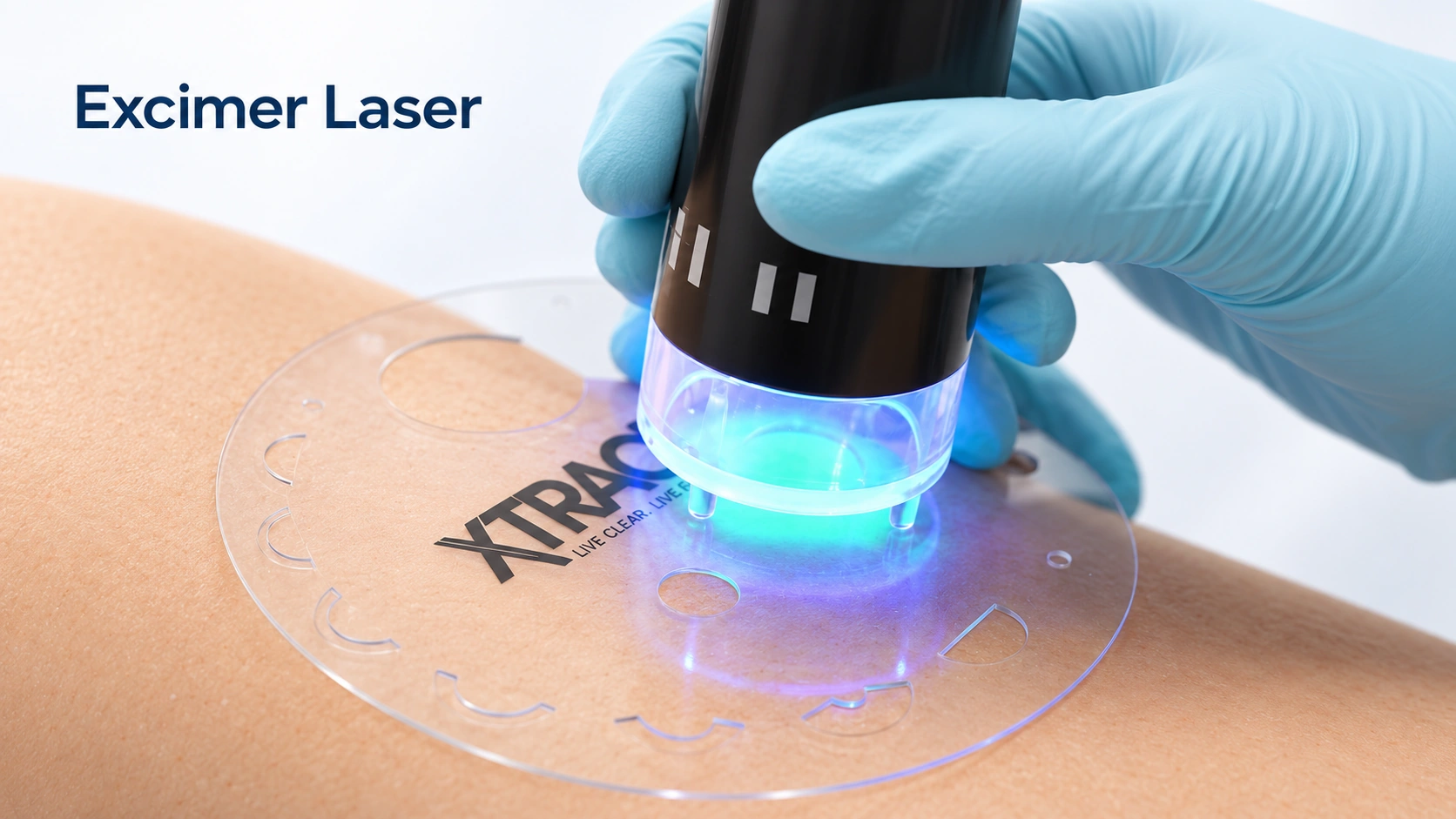
Editorial illustration for Excimer Laser, based on the entry’s treatment or equipment reference.

Excimer Laser

Limited evidence

Targeted ultraviolet light delivered to individual patches, usually twice a week for a few months. It is painless and can be useful for a small number of stubborn patches, including in children who cannot manage injections. The evidence is thin, regrowth often fades after treatment stops, and it asks for a lot of clinic visits.

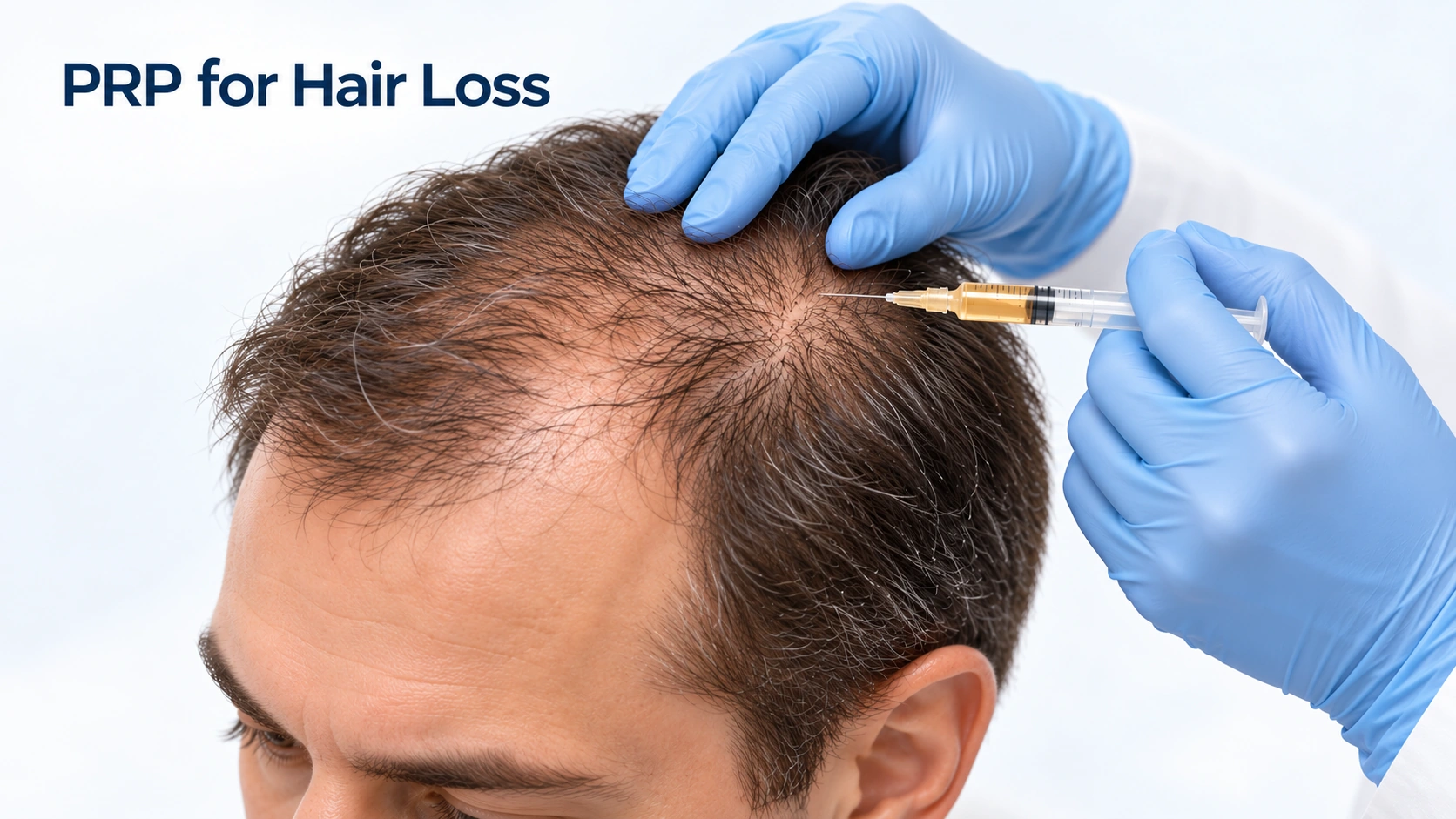
Editorial illustration for PRP for Hair Loss, based on the entry’s treatment or equipment reference.

PRP for Hair Loss

Limited evidence

Your own blood is spun down and the platelet-rich part injected into the patch. Small studies in alopecia areata have shown some regrowth, but they are few and short, and there is no agreed recipe or schedule. It is not covered by insurance and courses are expensive, so it is a reasonable thing to try after the better-tested options rather than instead of them.

Editorial illustration for Hair Transplant, based on the entry’s treatment or equipment reference.

Hair Transplant

Avoid

This is the wrong operation for alopecia areata, and it is worth knowing why before anyone offers it. The follicles here are alive and switched off rather than gone, so there is nothing to replace, and moved hairs land in skin where the same immune attack is still running and can be lost too. Transplants are for scarring hair loss and for pattern hair loss, where the follicle really has been destroyed.

Editorial illustration for PRP for Hair Loss, based on the entry’s treatment or equipment reference.

PRP for Hair Loss

Limited evidence

Injections of your own concentrated platelets into the scalp, marketed for every kind of hair loss. It has been studied mainly in pattern hair loss rather than in this, and a straightforward shed regrows on its own within the same months a course would run. It is several expensive sessions, so it is worth being clear about what you are buying before you start.

Outlook

Long term

Alopecia areata is unpredictable. The follicle survives throughout, however long the hair has been gone, which is why treatment stays worth trying after a long gap.

The pattern is reassuring - a trigger, a long delay, a heavy shed, then recovery. Shedding past six months is chronic telogen effluvium, which should be reassessed, not waited out.

Complications

Possible complications
  • Sunburn on an unprotected scalp
  • Losing Eyebrows and Eyelashes
  • Anxiety and low mood
More details

Sunburn on an unprotected scalp
Scalp skin that has been covered by hair all its life has no tan and no toughening, so it burns very fast — sometimes within twenty minutes. A burn there is painful, it can blister, and on deeper skin tones it often leaves a dark mark that outlasts the burn by months. Sunscreen, a hat or a scarf on any bare area prevents it entirely, and it is the easiest thing on this page to avoid.

Losing Eyebrows and Eyelashes
In some people the immune attack takes the brows and lashes as well as the scalp. Lashes keep dust, sweat and grit out of the eye, so losing them can leave the eyes gritty, watery and easily irritated, and wind and bright light feel worse. Sunglasses help day to day. This is also the loss people find hardest to cover, and it is a reasonable thing to bring up at the appointment rather than manage alone.

Anxiety and low mood
The weight of this is not a side issue. People field questions from strangers, cover up in photographs, and wake up not knowing what they will find on the pillow, and anxiety and low mood are well documented in alopecia areata. It is worth saying out loud at the appointment if it is affecting your sleep, your work or your mood. Support groups exist, and many insurers in the US cover a wig with a prescription.

  • Pattern hair loss underneath
  • Shedding that will not settle
  • The distress it causes
More details

Pattern hair loss underneath
A heavy shed can thin the hair enough to uncover pattern hair loss that had been developing quietly for years. The shed itself recovers, and the pattern thinning does not, so density that has not returned about a year after the trigger is worth having looked at rather than waited out. The clue is shape. Pattern loss widens the part at the front while the back of the scalp stays as it was.

Shedding that will not settle
Shedding still going six months on is called chronic telogen effluvium, and it usually means the trigger is still there — low iron, an untreated thyroid problem, a medicine, or one illness after another. The follicles are still undamaged, so this is not the start of baldness. It does need reassessing and blood tests rather than more waiting.

The distress it causes
Watching hair come out in handfuls is frightening, and it changes how people wash, dress and go out long before anyone else notices a difference. That is a real part of this condition and not a small one. The outcome in a straightforward shed is good, but the waiting is hard, and it is fair to ask for help with the worry as well as with the hair.

When to get help

When to get help

Arrange assessment for new patchy hair loss, eyebrow or eyelash loss, or rapid progression. Scalp scale or pain may indicate a different cause.

Seek assessment for persistent shedding, visible thinning or an uncertain trigger; examination and targeted tests can identify treatable causes.

Common questions

Alopecia Areata:Will my hair grow back?

Often, but nobody can promise it. A single small patch fills in within a year in a large share of people, with or without treatment. Widespread loss is much less predictable. There is always a chance, because the follicle is switched off rather than destroyed, even after years.

Alopecia Areata:Is this caused by stress?

Stress may trigger it in someone already predisposed. It is not the underlying cause, and calming your life down is not a treatment. Manage stress for its own sake, and do not blame yourself for the hair.

Alopecia Areata:Is it contagious? Can my children catch it?

No. It cannot be passed by contact of any kind. There is an inherited tendency, so your children have a somewhat higher chance of developing it, but that is genetics rather than transmission.

Alopecia Areata:Does this mean I will get other autoimmune diseases?

Not necessarily. Thyroid disease, vitiligo and a few others are more common, which is why thyroid function is checked once. Most people never develop another.

Alopecia Areata:Do the steroid injections hurt, and how often do I need them?

They sting for a few seconds each, and there are usually several across a patch, so the appointment is uncomfortable rather than painful. They are typically repeated every four to six weeks while there is reason to continue. Numbing cream helps, and it is fine to ask for it.

Alopecia Areata:Why did my hair come back white?

That is normal here. The pigment cells take longer to restart than the hair-making cells, so new growth comes through fine and pale before it thickens and regains color over the following months. It is a sign of recovery, not failure.

Telogen Effluvium:How much shedding is normal, and how much is too much?

Most people shed 50 to 100 hairs a day, varying with how recently you washed. Telogen effluvium is usually several hundred a day and, more tellingly, a clear change from your own normal. The change and how long it has lasted matter more than the number.

Telogen Effluvium:When will it stop?

Usually within three to six months of starting, provided the trigger has passed. Volume takes longer, six to twelve months, because hair grows about a centimeter a month and has to reach a useful length before it shows.

Telogen Effluvium:Will it all grow back?

In a straightforward telogen effluvium, yes - the follicles are undamaged. The exception is a shed that uncovers pattern hair loss underneath. The shed recovers and the pattern thinning does not, which is worth identifying rather than waiting out.

Telogen Effluvium:Should I take a hair supplement?

Only for something a blood test showed you are low in. Iron and thyroid are worth checking, and vitamin D is often added. Iron without a deficiency is actively harmful, and biotin does nothing unless you are deficient while interfering with thyroid and heart blood tests.

Telogen Effluvium:Could my medicine be causing this?

Possibly - many common medicines can trigger shedding, and so can stopping one. Do not stop anything to find out. Take the list to the prescriber, since some can be swapped easily and others should not be touched.

Telogen Effluvium:Is my hair shedding because I am stressed?

A single severe stress, such as a bereavement or serious illness, is a well-recognized trigger, on the same two to three month delay. Ordinary day-to-day stress is a much weaker explanation; if that is the only candidate, look harder for a physical trigger and get bloods done.
Sources

Sources and further reading

  1. DermNet
  2. DermNet
Dermapedia on YouTube