Acne
Reduces inflamed breakouts in large trials.
Aczone: An anti-inflammatory gel for red, tender acne. It is not a retinoid and not a standard antibiotic, so it suits skin that cannot tolerate either. Birth Control Pills: Birth control pills containing estrogen and a progestin. Four are FDA-approved for acne, and they work by lowering the amount of active testosterone in the blood.
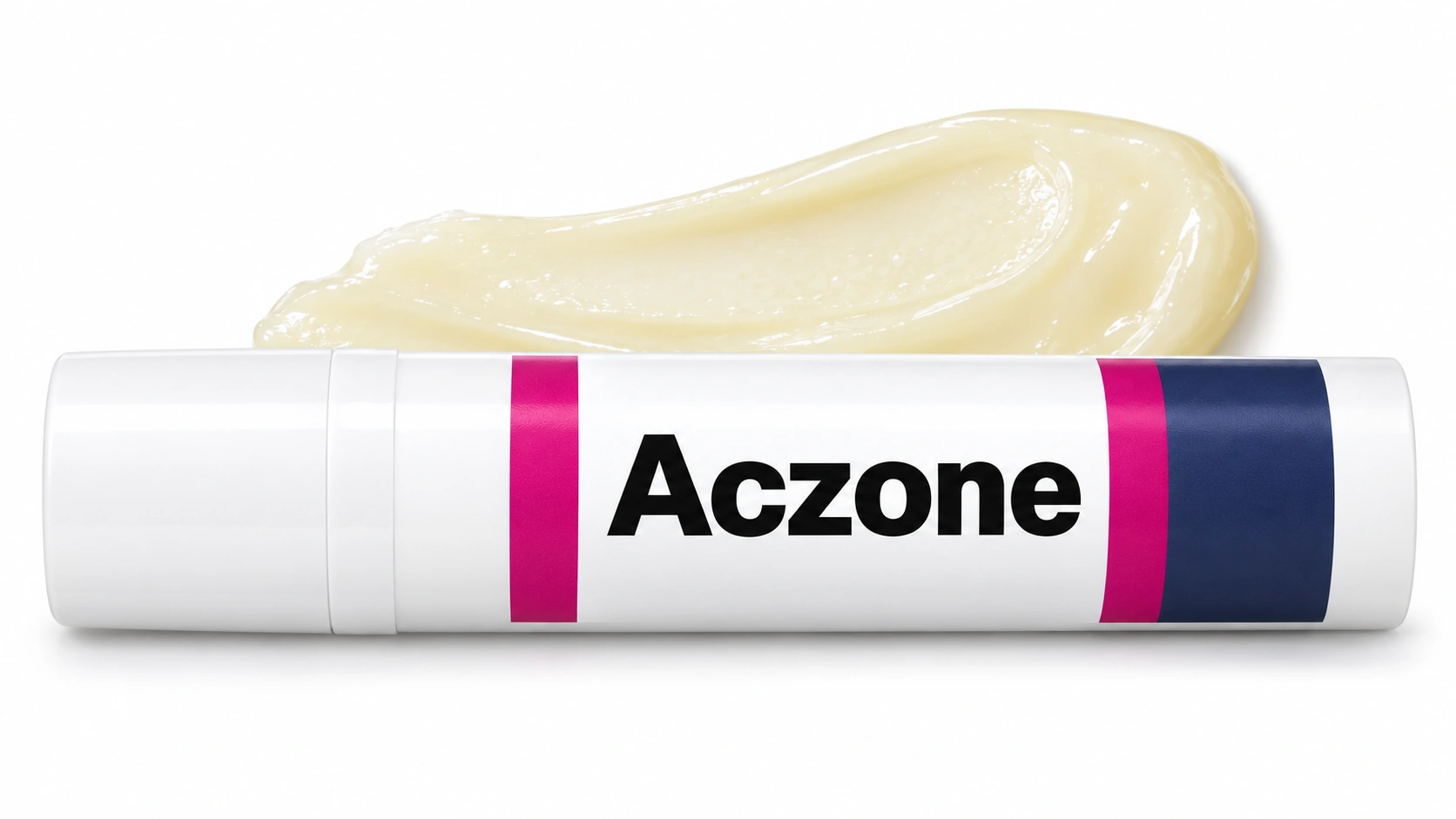

Choose for red, tender acne when skin can't tolerate a retinoid or you want to avoid a standard antibiotic.
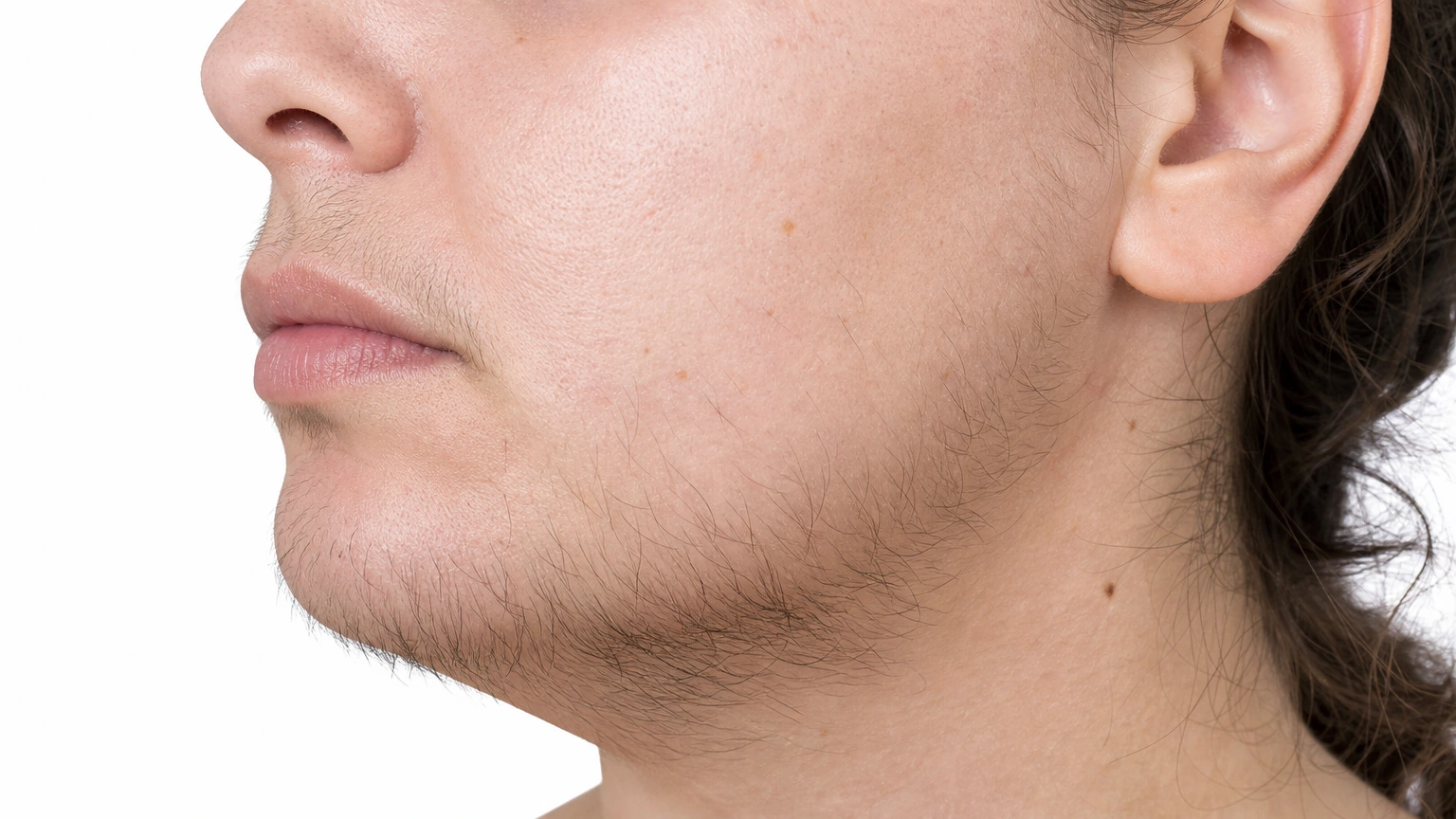
Choose for hormonal acne along the jaw and chin when you also want contraception and have no clot risk factors.
Can you take them together?
These work on different causes: the pill lowers hormone-driven oil while Aczone calms inflamed spots. They are often used together for hormonal acne.
Compare uses by strength of evidence. Evidence level describes confidence in a benefit, not its size.



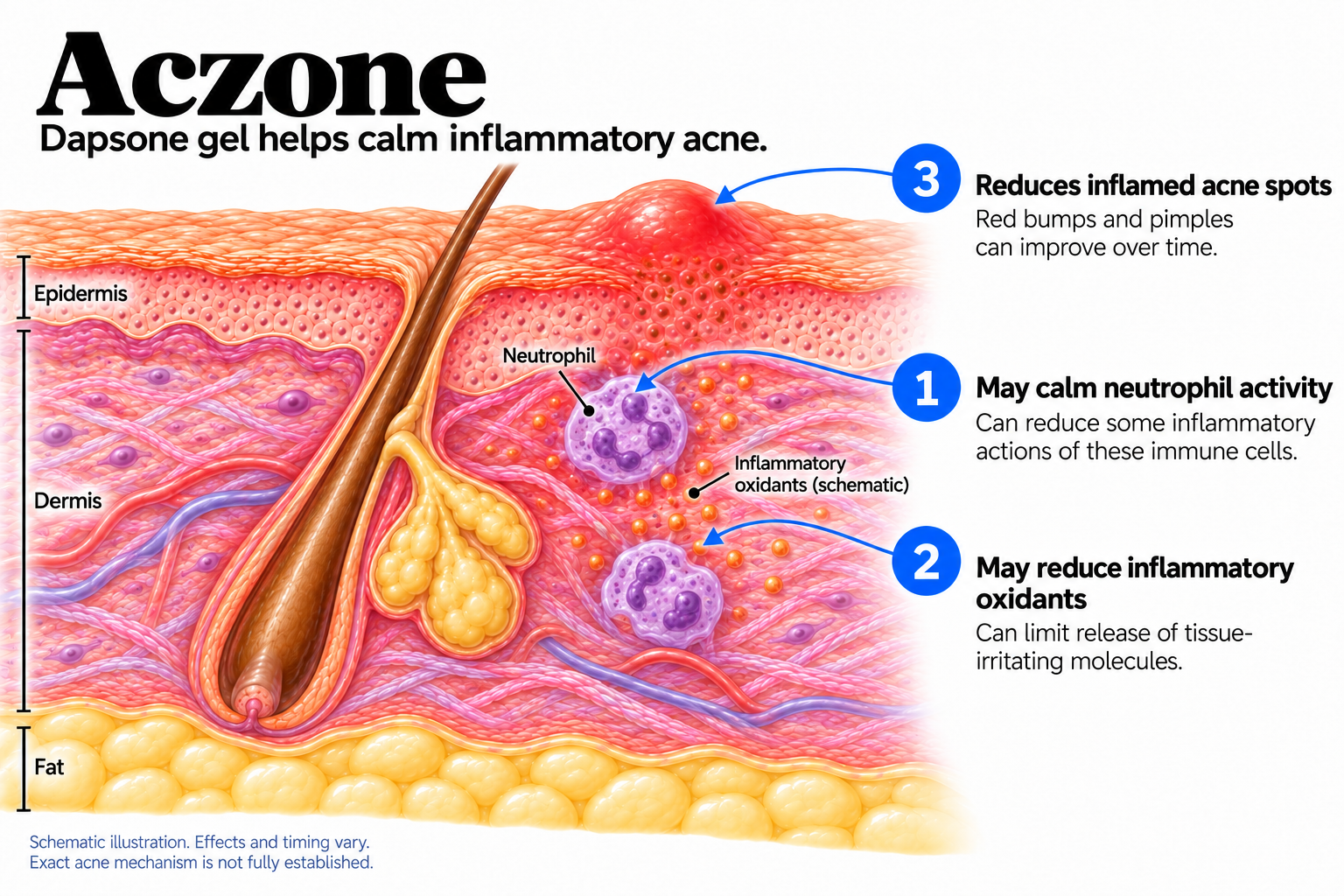
May calm neutrophil activity: Can reduce some inflammatory actions of these immune cells. May reduce inflammatory oxidants: Can limit release of tissue-irritating molecules. Reduces inflamed acne spots: Red bumps and pimples can improve over time.
The acne mechanism is unknown. Neutrophil and oxidant explanations are proposed based on experimental studies, not established as the cause of topical clinical benefit.

Reduces ovarian androgens: Combined hormones lower androgen production by the ovaries. Binds more testosterone: Estrogen raises SHBG, leaving less testosterone free to act. Turns down oil stimulation: Less available androgen means less oil-gland stimulation. Reduces acne over time: Hormone-driven breakouts can gradually improve.
This refers to combined estrogen-progestin pills, not progestin-only contraception. Estrogen effects include suppression of ovarian androgen production and increased SHBG, reducing free testosterone. Specific formulations and clinical responses differ.
When to Apply: Clean dry skin, whole affected area. The 7.5% gel once a day, the 5% gel twice, usually in the morning so the night is free for a retinoid.
How to Start: Full strength from day one. It dries clear and sits well under makeup and sunscreen.
If It Irritates: Uncommon — usually mild dryness a moisturizer settles. With benzoyl peroxide at the same moment it can turn skin temporarily orange-brown, which is harmless and avoided by using the two at different times of day.
If It’s Not Working: Give it twelve weeks. There is no step up in strength, so the next move is adding or changing a drug.
The pack is the dose.
Starting dose: One active tablet daily, begun where in the cycle your prescriber says.
Going up: No increase. If acne has not responded by six months, change the formulation or add another drug.
Usual dose: One tablet daily at about the same time.
Total course: As long as contraception and acne control are both wanted.
No routine blood tests for the gel. Unlike dapsone tablets, you do not need G6PD testing first, because so little is absorbed.
You can stay on this for years, and nothing accumulates. Review is clinical, at about twelve weeks and then yearly.
Blood pressure and a careful history come before the first prescription: migraines, past clots, smoking, family history. Blood tests are not routinely needed.
People stay on this for years, and what drifts is risk, not the drug. Clot risk is highest in the first year and after restarting, and rises with age, weight, smoking and immobility. Blood pressure is rechecked periodically, and the decision is revisited around age 35.
One tablet daily at the same time, with food if it causes nausea. Backup contraception covers the first week unless you start at a set point.
Take it as soon as you remember, even if that means two in a day. For more than one, follow the pack instructions and use backup contraception. Missed pills affect pregnancy protection far more than acne.
Approximate windows, not promises.
Weeks 1 to 4Red, tender spots calm down. Blackheads and whiteheads look unchanged.
Weeks 1 to 4Nausea, breast tenderness and spotting between periods. Acne may briefly worsen.
Weeks 4 to 8Fewer new inflamed spots.
After 12 weeksIf inflamed acne has not improved, move on. Judge it on red spots only — it was never going to fix clogs.
After 12 weeksThe fair judgment point, though improvement often runs to six months. Nothing changed by then means a different formulation or drug.
Weeks 4 to 12Oiliness drops and inflamed spots become less frequent.
Sorted by what to do about them.
Generic dapsone gel comes in both strengths and costs far less than it used to, though still more than generic clindamycin or benzoyl peroxide. Some plans want prior authorization, usually after a retinoid.
Most combined pills are generic and cheap, and many plans cover contraception with no copay. The branded acne-approved versions cost more with no advantage. Availability without a prescription varies by state.
Benzoyl peroxide and dapsone applied together can leave a temporary orange-brown tint on skin and light-colored facial hair. It washes off and is harmless. Use them hours apart.
Not for the gel. That belongs to dapsone tablets, where far more of the drug reaches the bloodstream.
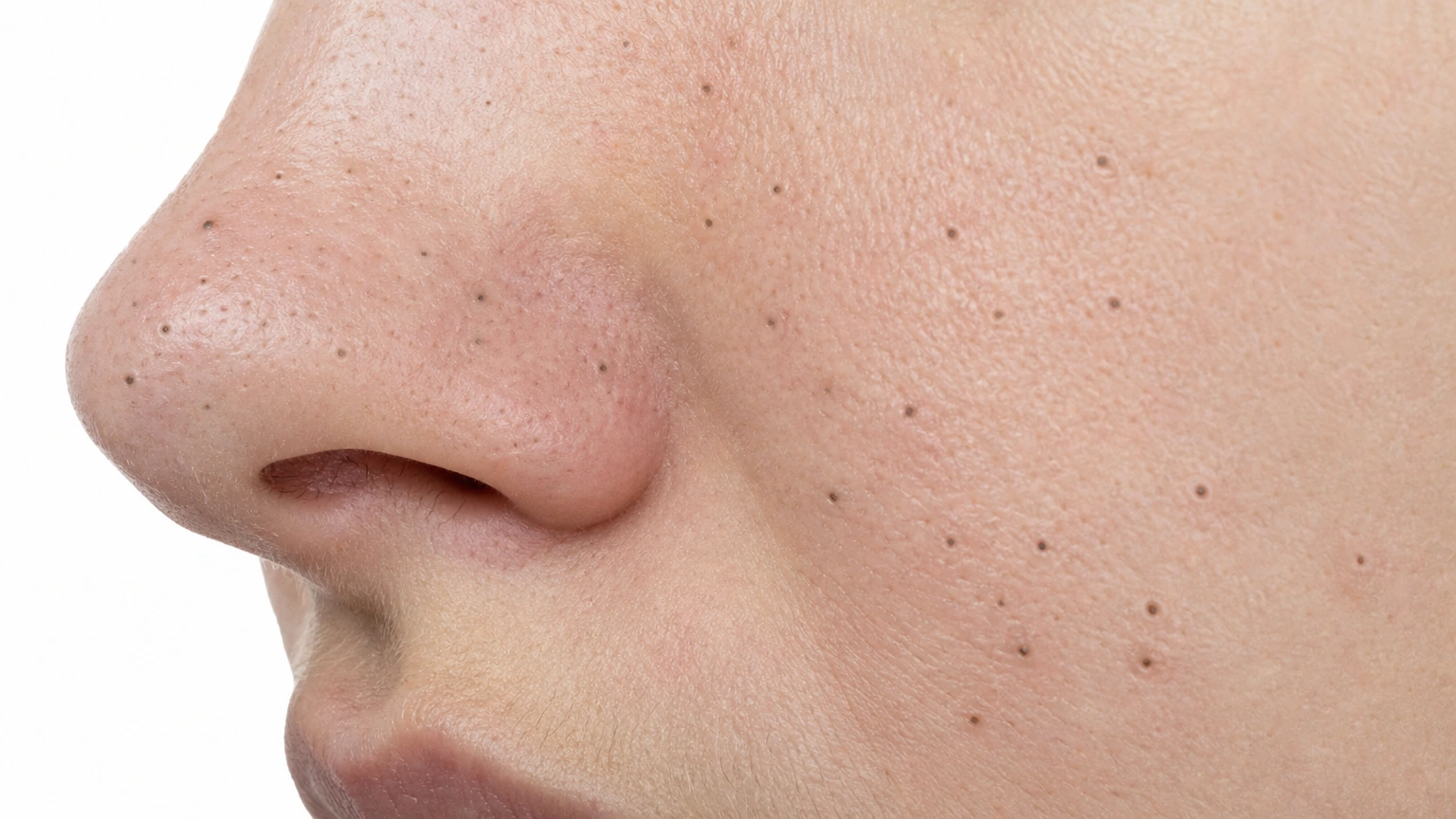
No. It works on inflammation. Blackheads need a retinoid.
No. It is a sulfone with anti-inflammatory action, which is why resistance is not the same concern.
Combined pills, which contain estrogen. Four are FDA-approved for acne; many others work similarly. The mini-pill, implant and hormonal coil can make acne worse.
Sometimes, in the first month or two. It settles.
Rifampin does. Doxycycline and the other acne antibiotics do not.
The increase is real, but absolute risk stays low in healthy non-smokers, and pregnancy itself carries a higher clot risk. It rises sharply with smoking after 35, a family history of clots, and migraine with aura.
Acne commonly flares for a few months. Plan the next step before you stop.