Warts vs Seborrheic Keratosis

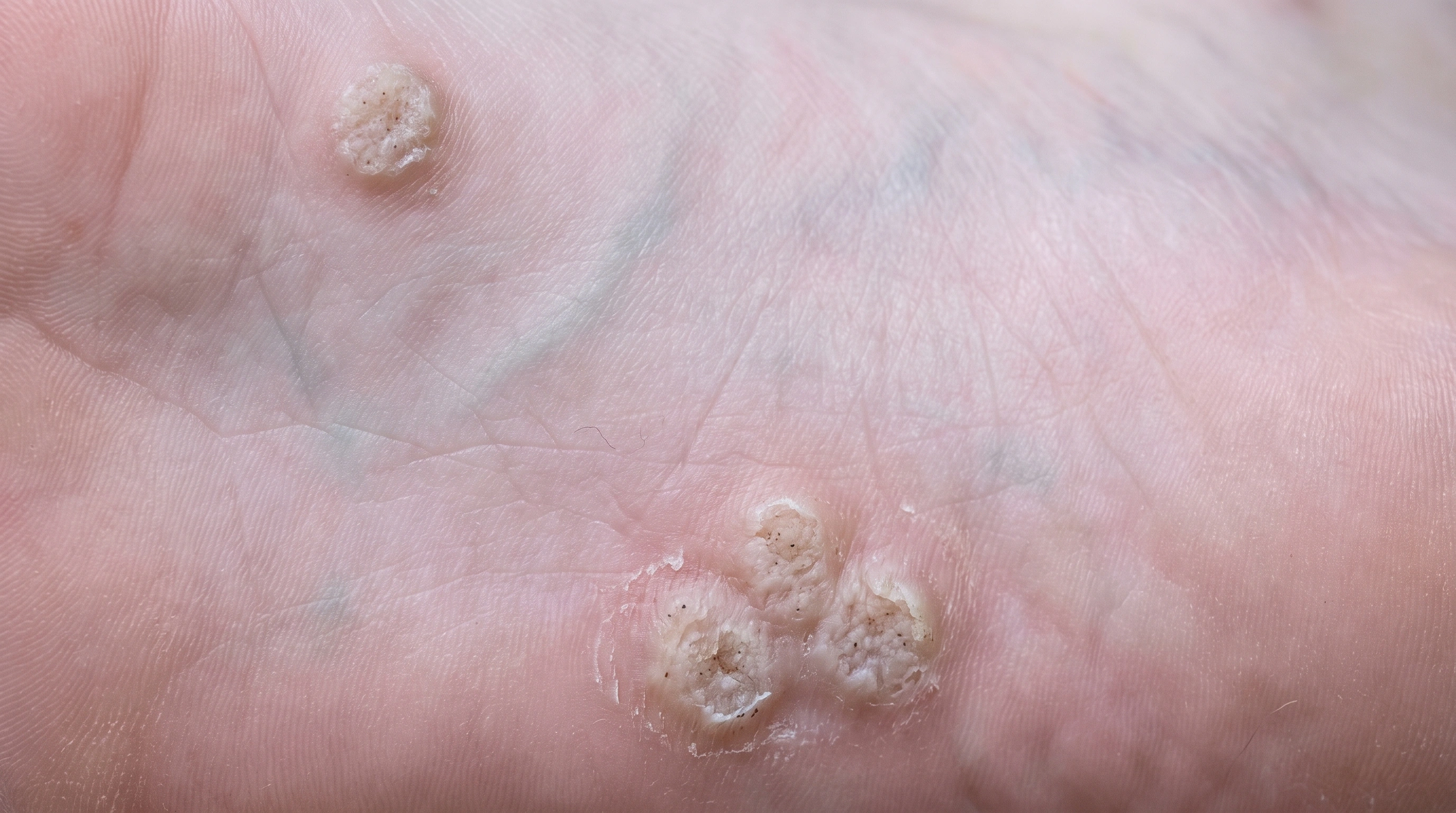
Warts are firm, rough growths caused by a common virus that infects the top layer of skin. They are harmless and most of them clear on their own, but they spread easily and they are slow to treat. A seborrheic keratosis is a common, harmless growth that looks stuck onto the skin, like a piece of wax or a small barnacle. They are not cancer and they do not become cancer. The reason to see a doctor is to be sure that is what you are looking at.

Reviewed by Dr. Schwarz, Board-Certified Dermatologist · Research updated 2026-10-23
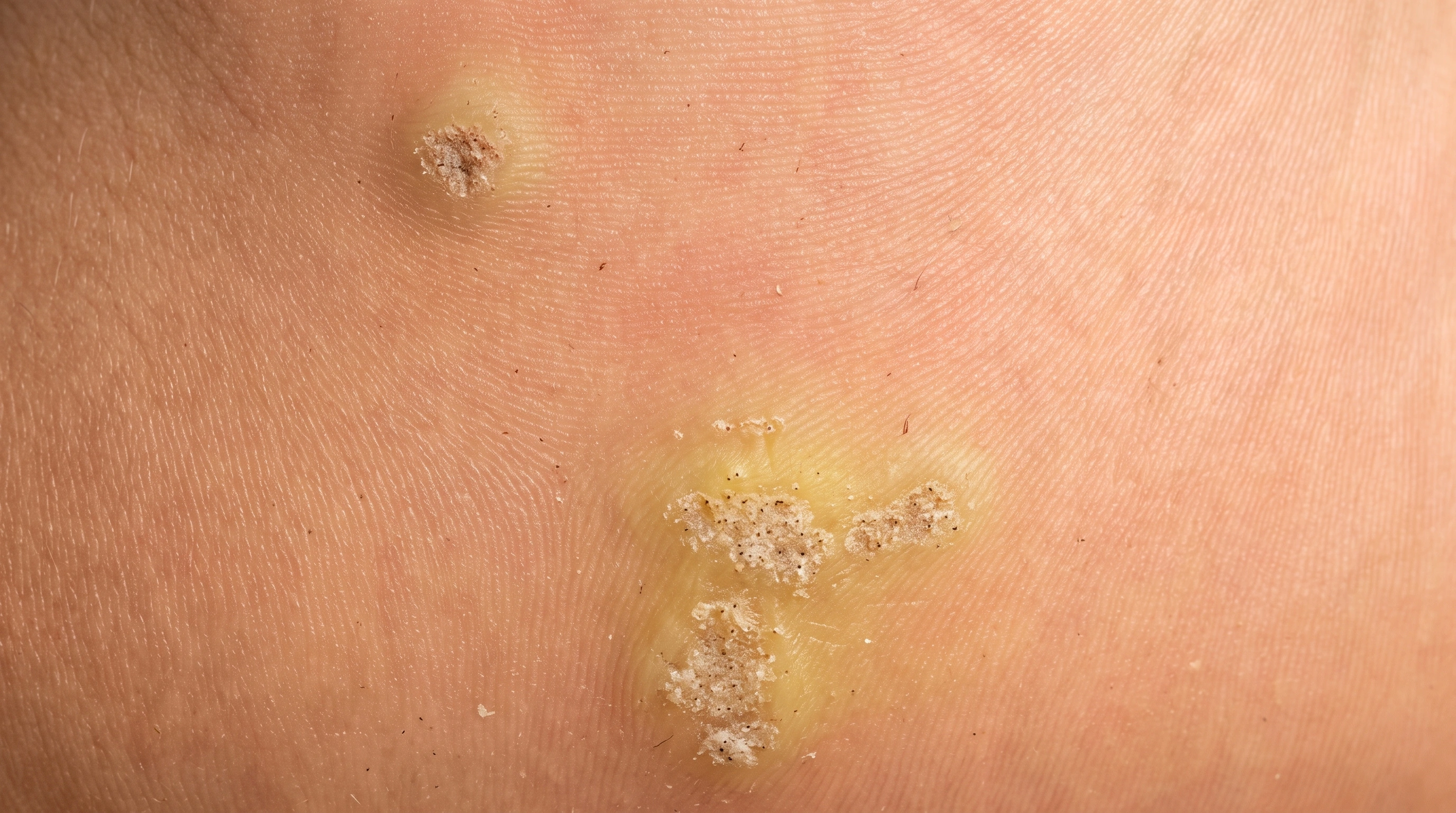
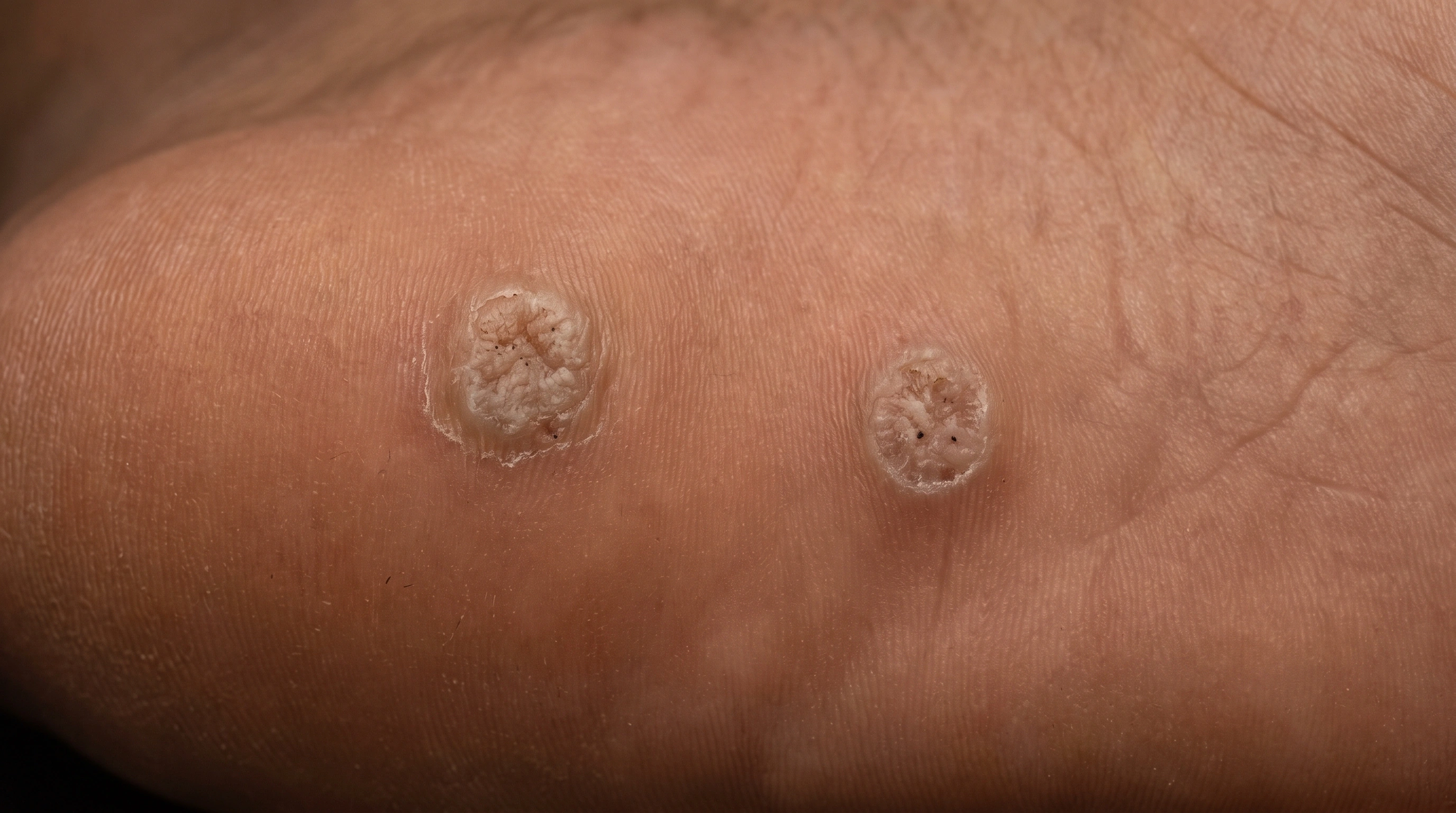
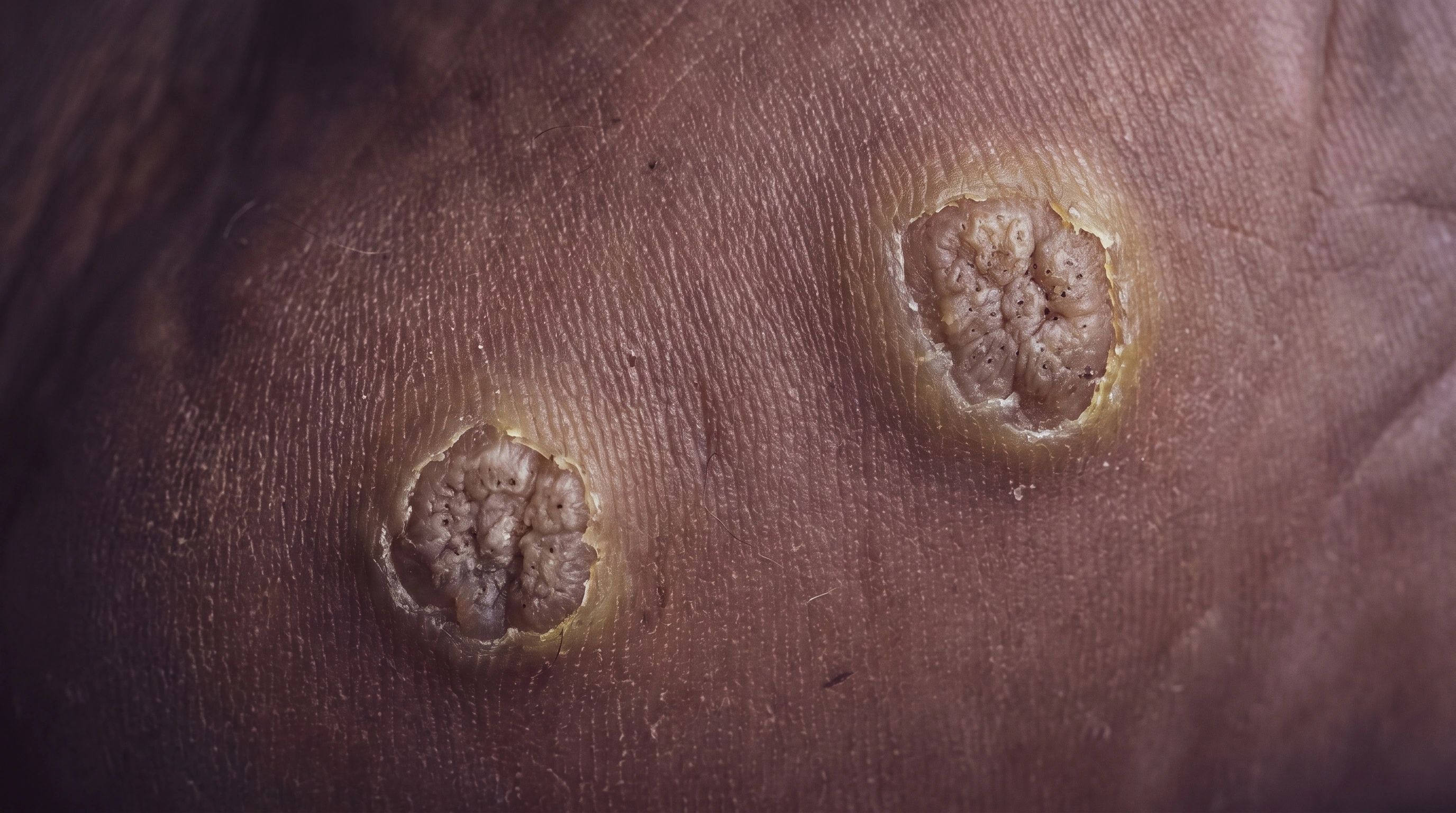
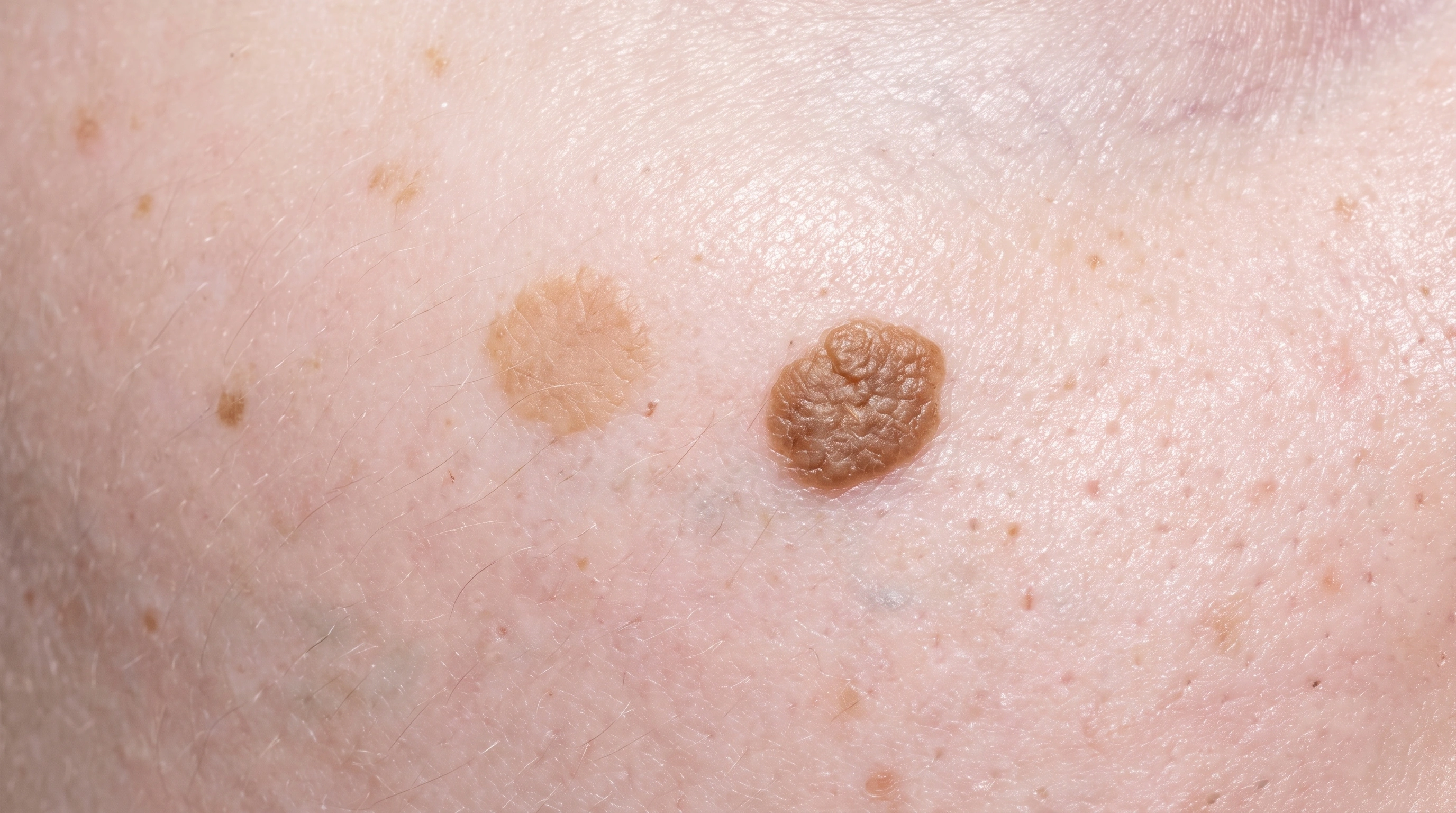
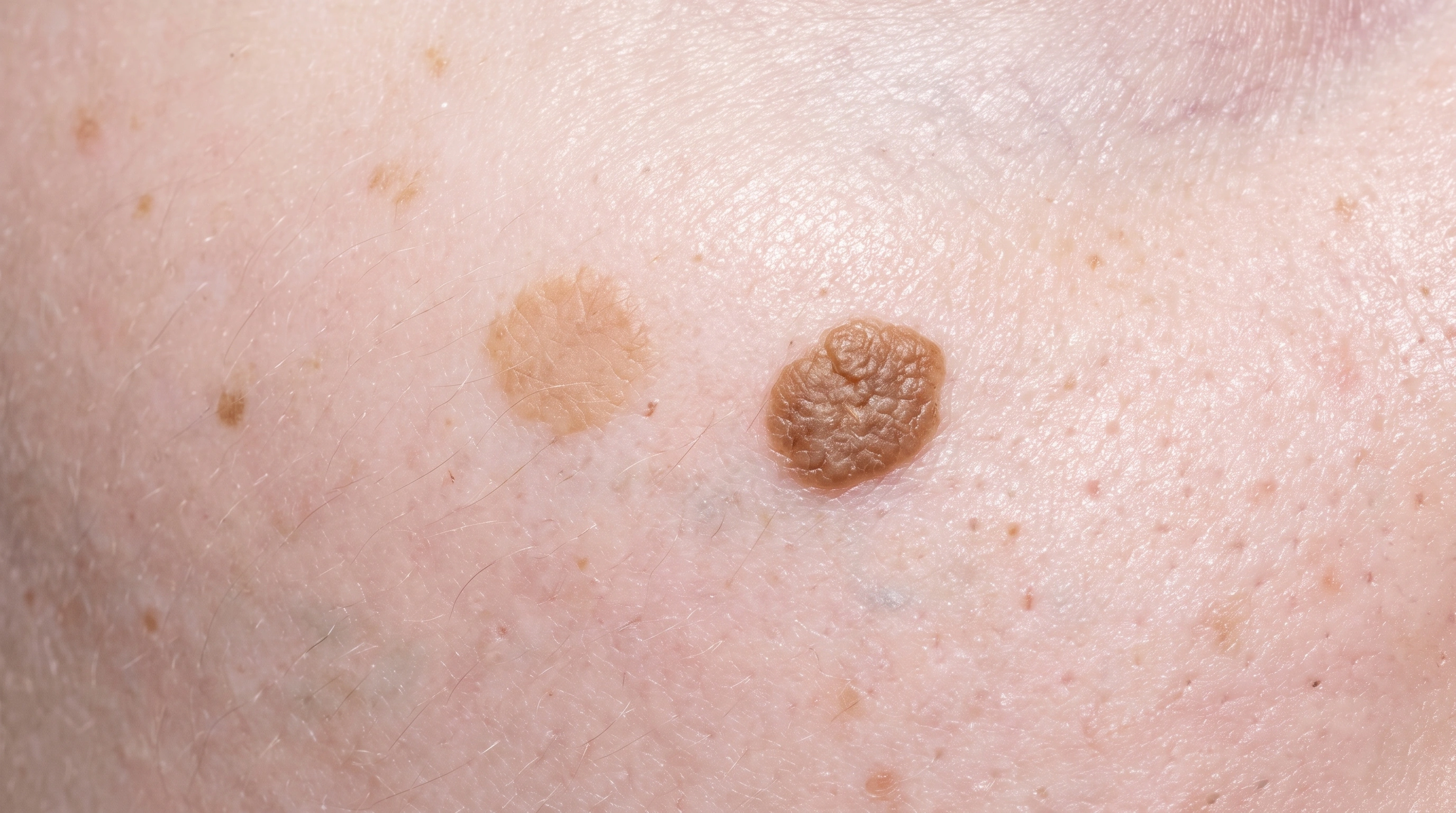
A rough, dome-shaped wart on the side of a finger on fair skin. The bump is pinkish with a thin red ring at its base, and several tiny black dots are clearly visible in the thickened surface.Two growths on the upper back on fair skin. One is a flat light tan patch and the other is a raised mid-brown growth with a rough waxy surface and a sharply defined edge.

Key differences

The same eight facts on every condition comparison.

Usual age
5 to 20
40 and over
Where
Hands, fingers, feet
Back, chest, face
Main sign
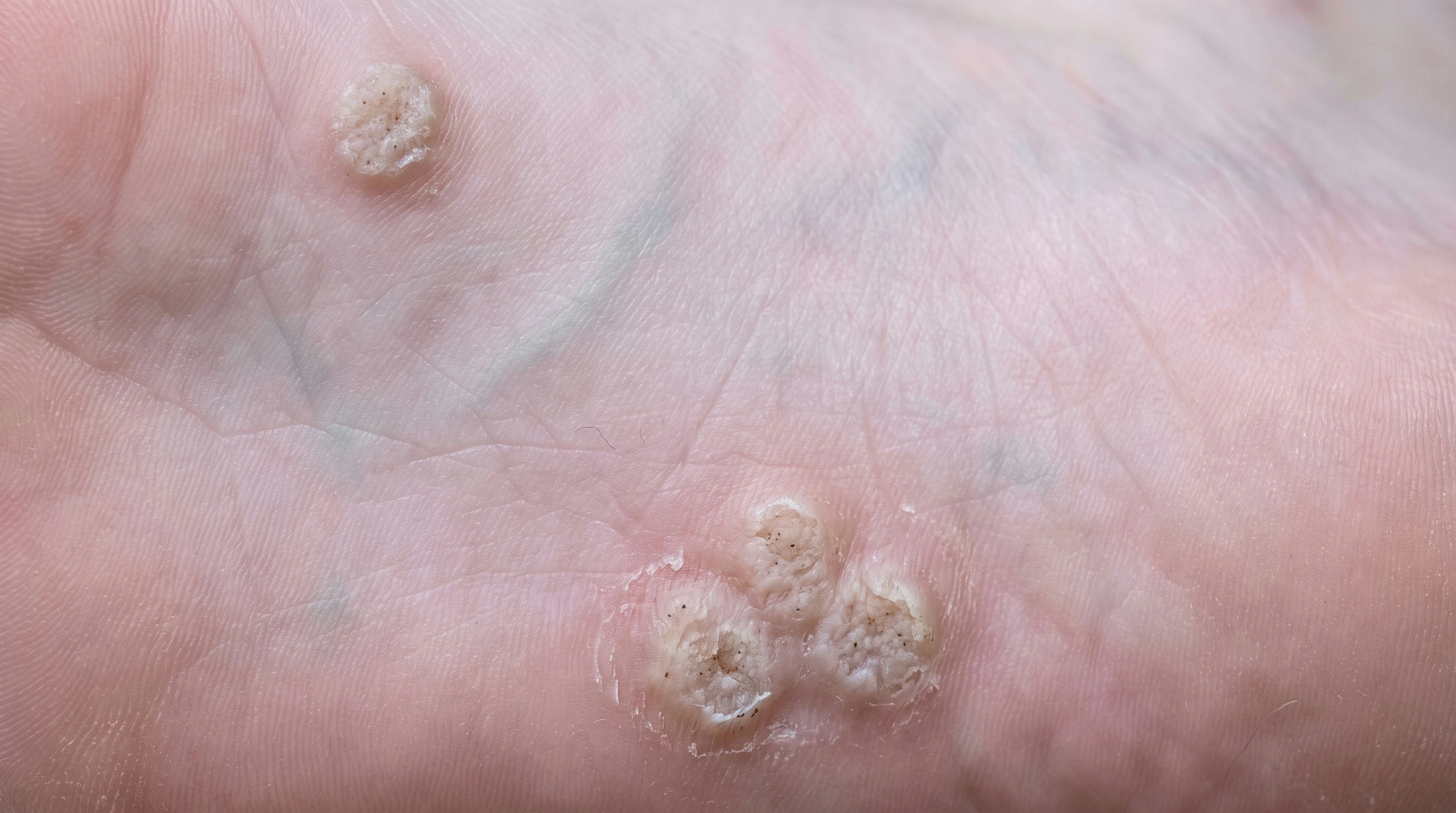
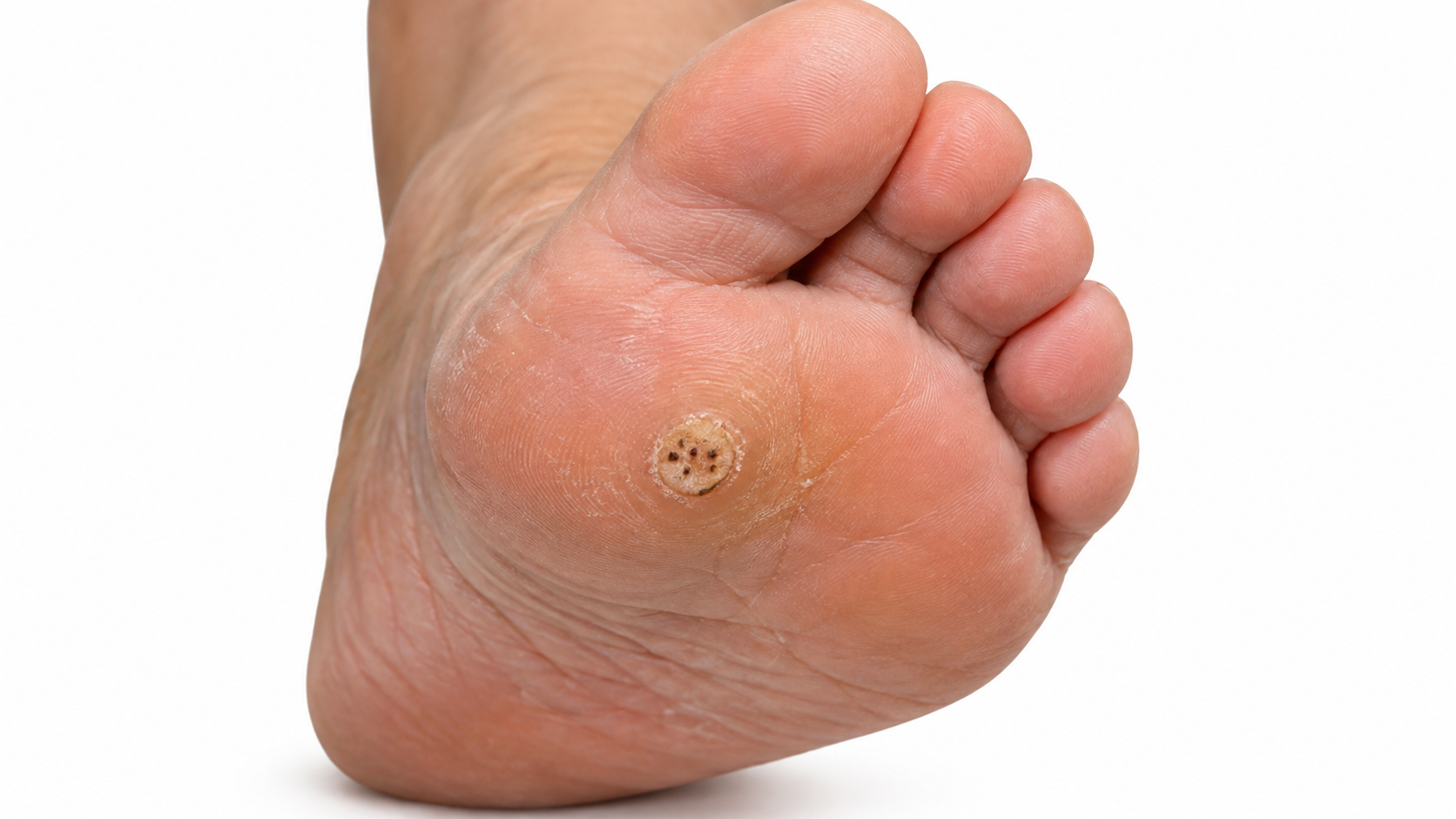
Rough firm bump with black dots
Waxy stuck-on growth
Itch or pain
Usually painless
Sometimes itchy
Contagious
Yes, mildly
No
Long term
Most clear in 1 to 2 years
Stays; more appear
Scars
No
No
Who gets it
Children and teens
Most people over 50

What is it?

Warts
Seborrheic Keratosis
What is it?

They are caused by HPV.
Cutaneous warts are benign growths caused by certain types of human papillomavirus.

They spread by contact.
Warts can pass through direct contact or from one area of skin to another.

Many clear on their own.
Many resolve naturally, especially in children.

Diagnosis is usually visual.
Clinicians look for the rough surface and small capillary dots; uncertain growths may be biopsied.

It is a benign growth.
Surface skin cells form a waxy, warty or stuck-on growth.

Color varies.
It can be tan, brown, gray or almost black.

It is not a precancer.
These growths become more common with age.

Uncertain lesions are tested.
Tissue is examined before any destructive treatment if the appearance is unclear.

What it looks like

Warts

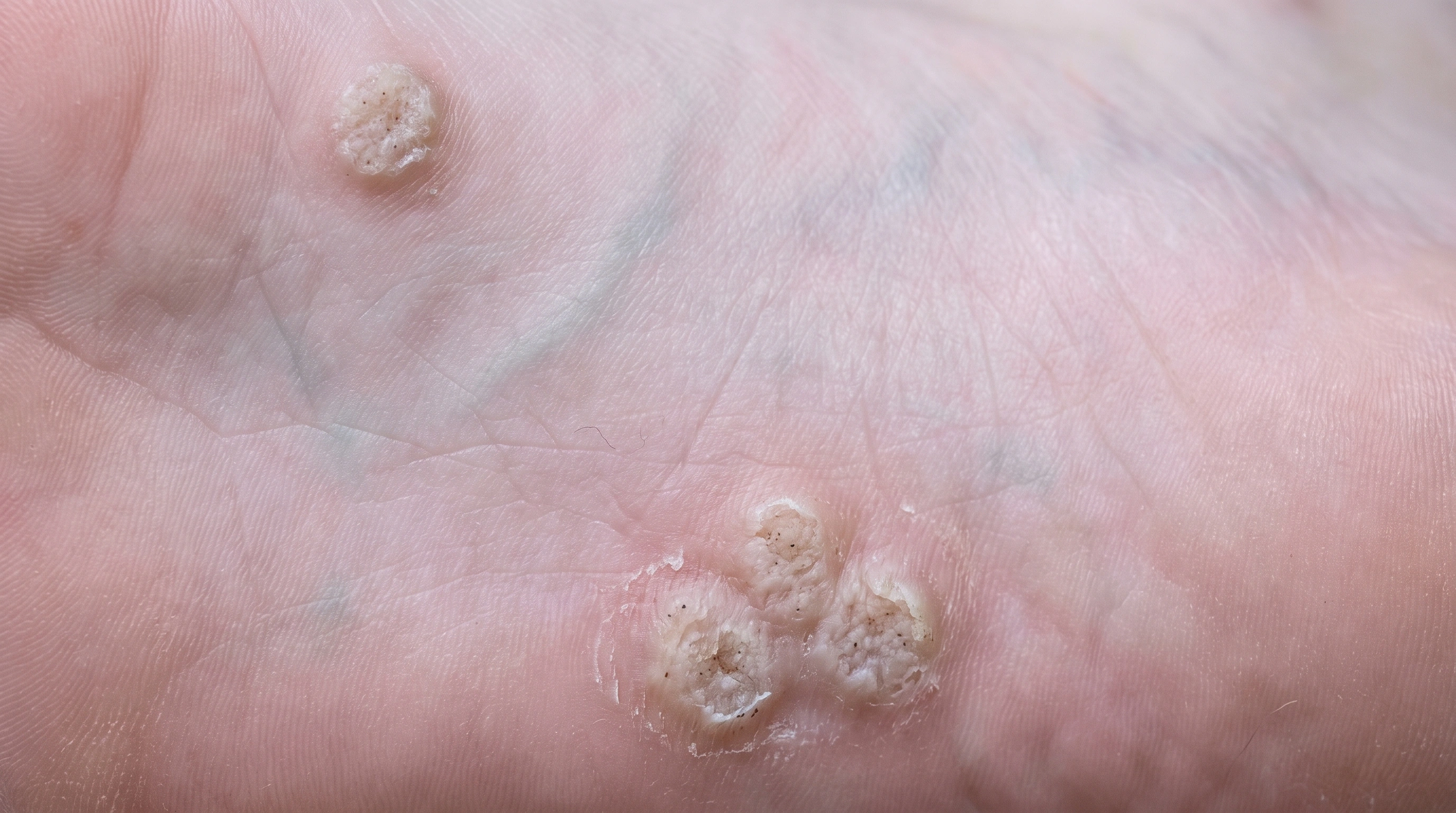
Warts: Black dots.

Common warts Rough bumps on hands and fingers.

Warts: Plantar.

Plantar warts Flat, painful warts on the soles.

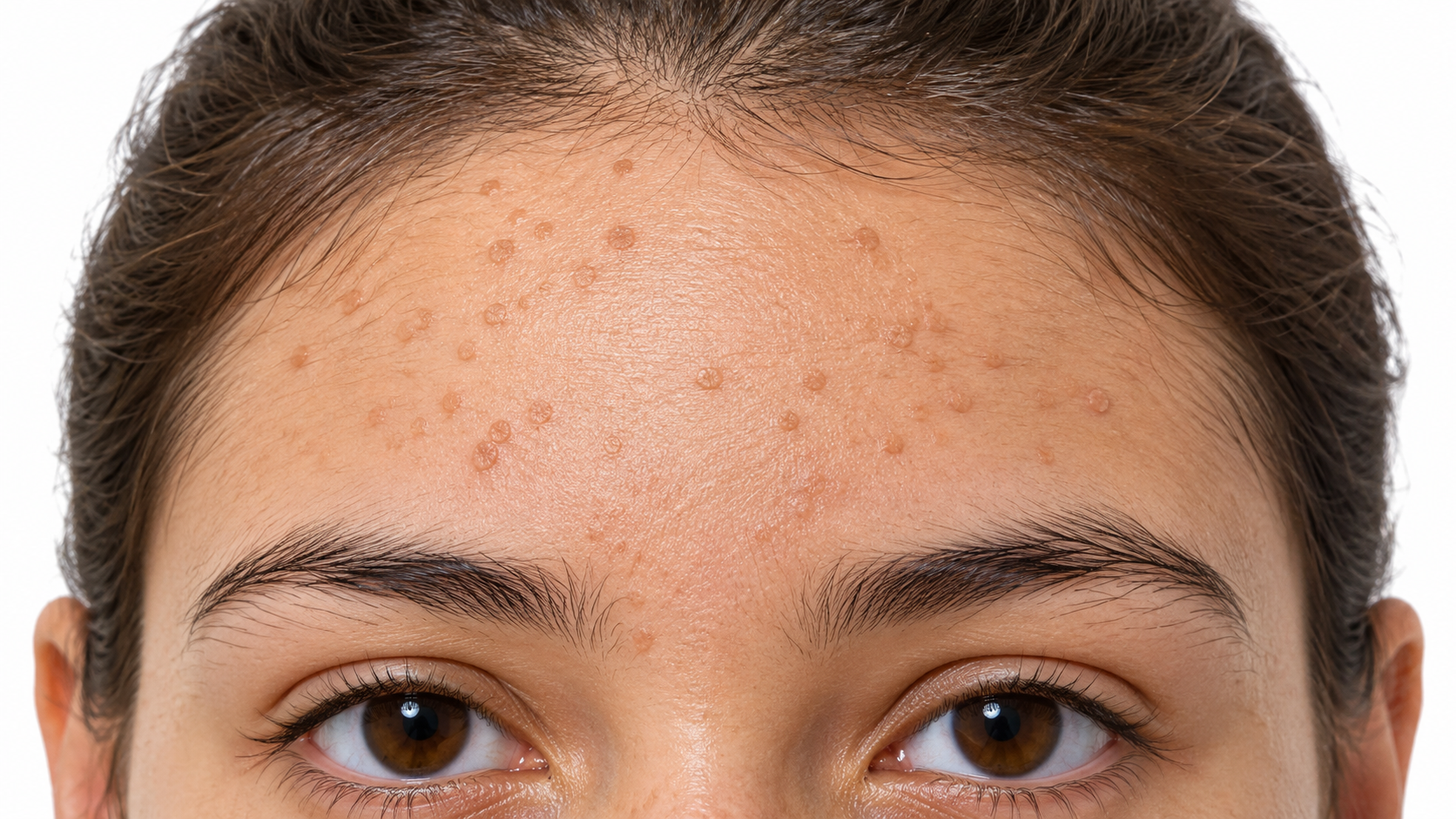
Warts: Flat.

Flat warts Small, smooth, flat-topped bumps.

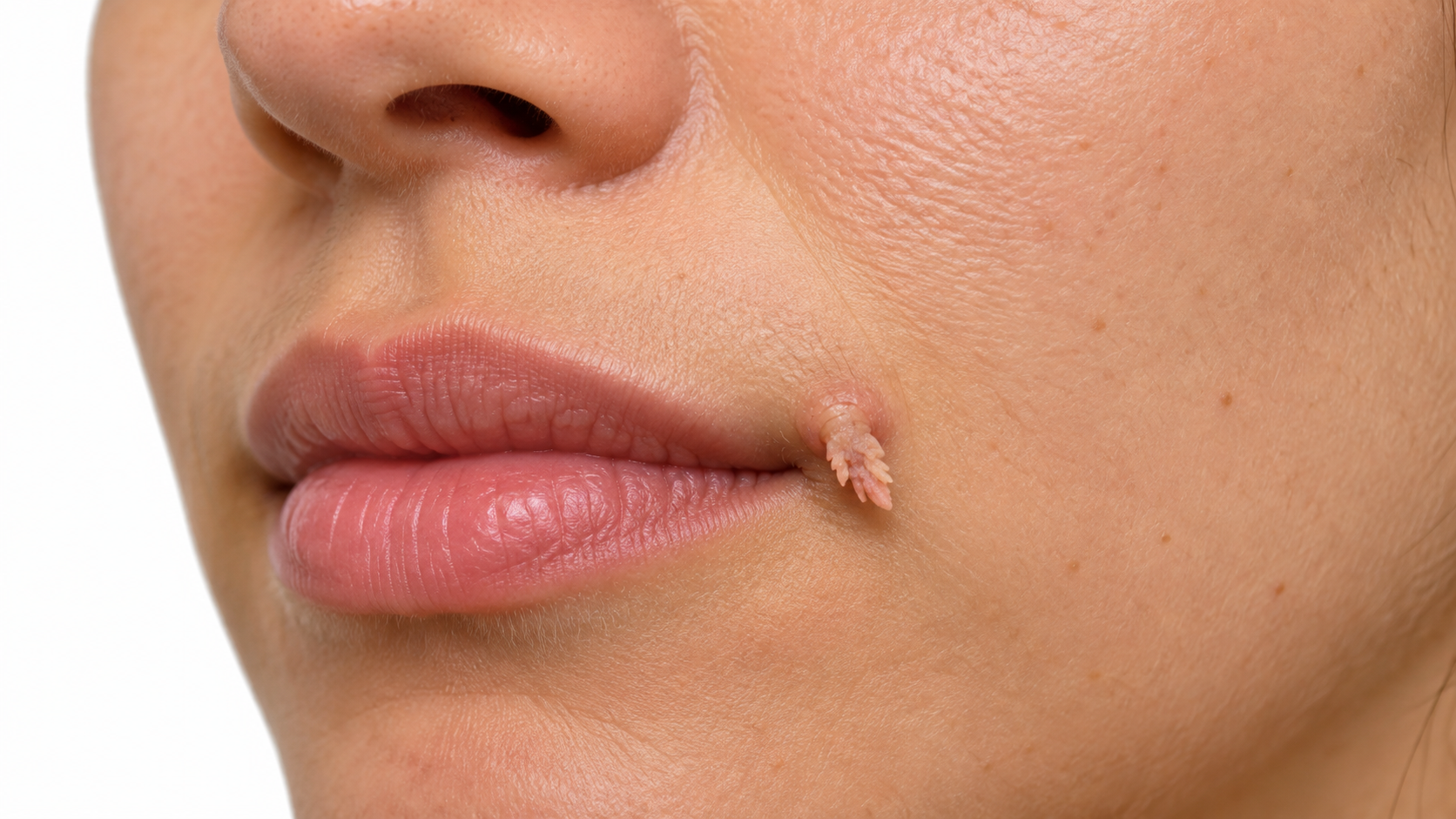
Warts: Filiform.

Filiform warts Long, thread-like growths on the face.

Seborrheic Keratosis

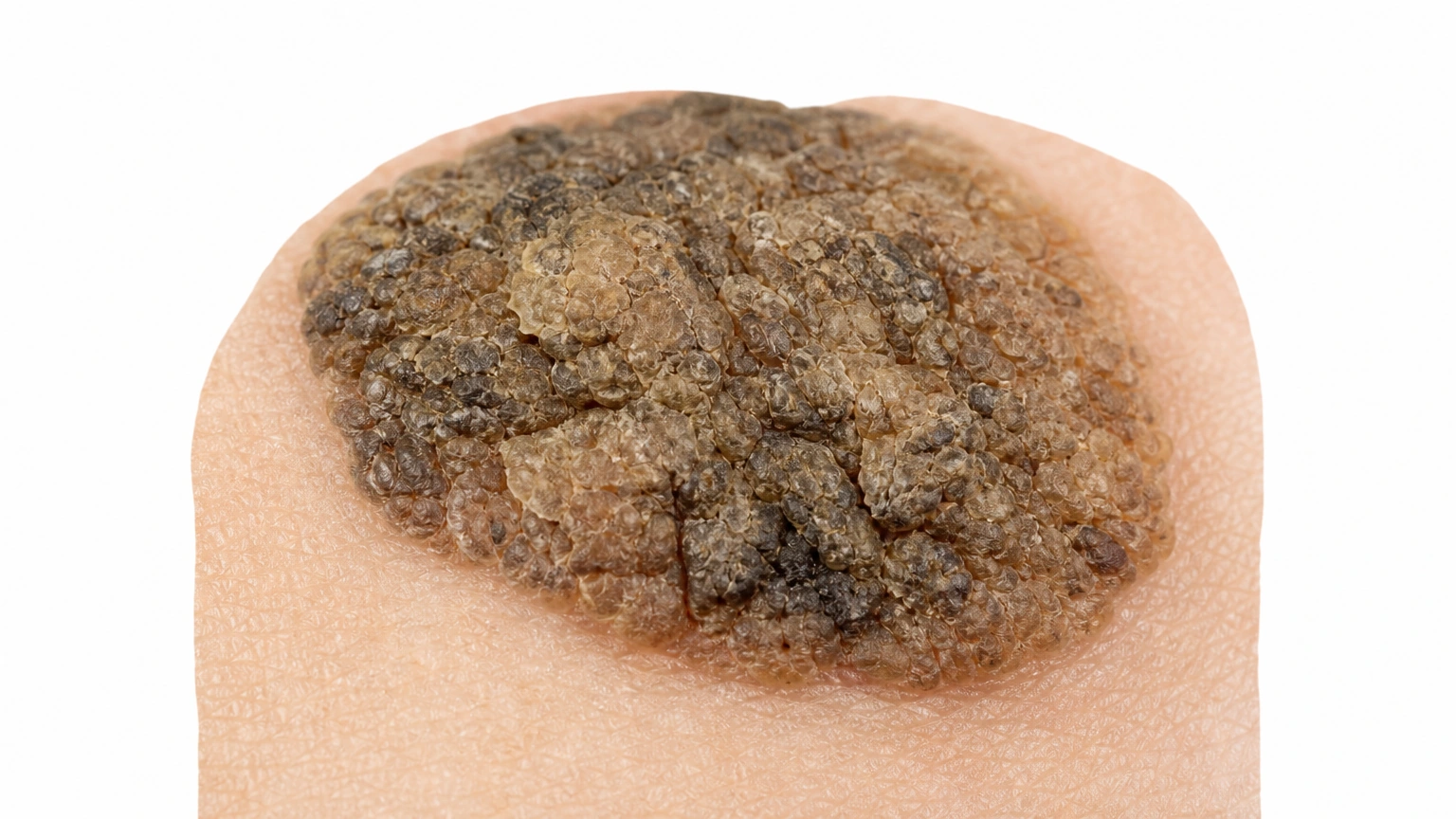
Close view of a rough hyperkeratotic brown stuck-on lesion, representing seborrheic keratosis.

Classic seborrheic keratosis Raised, waxy, stuck-on growth.

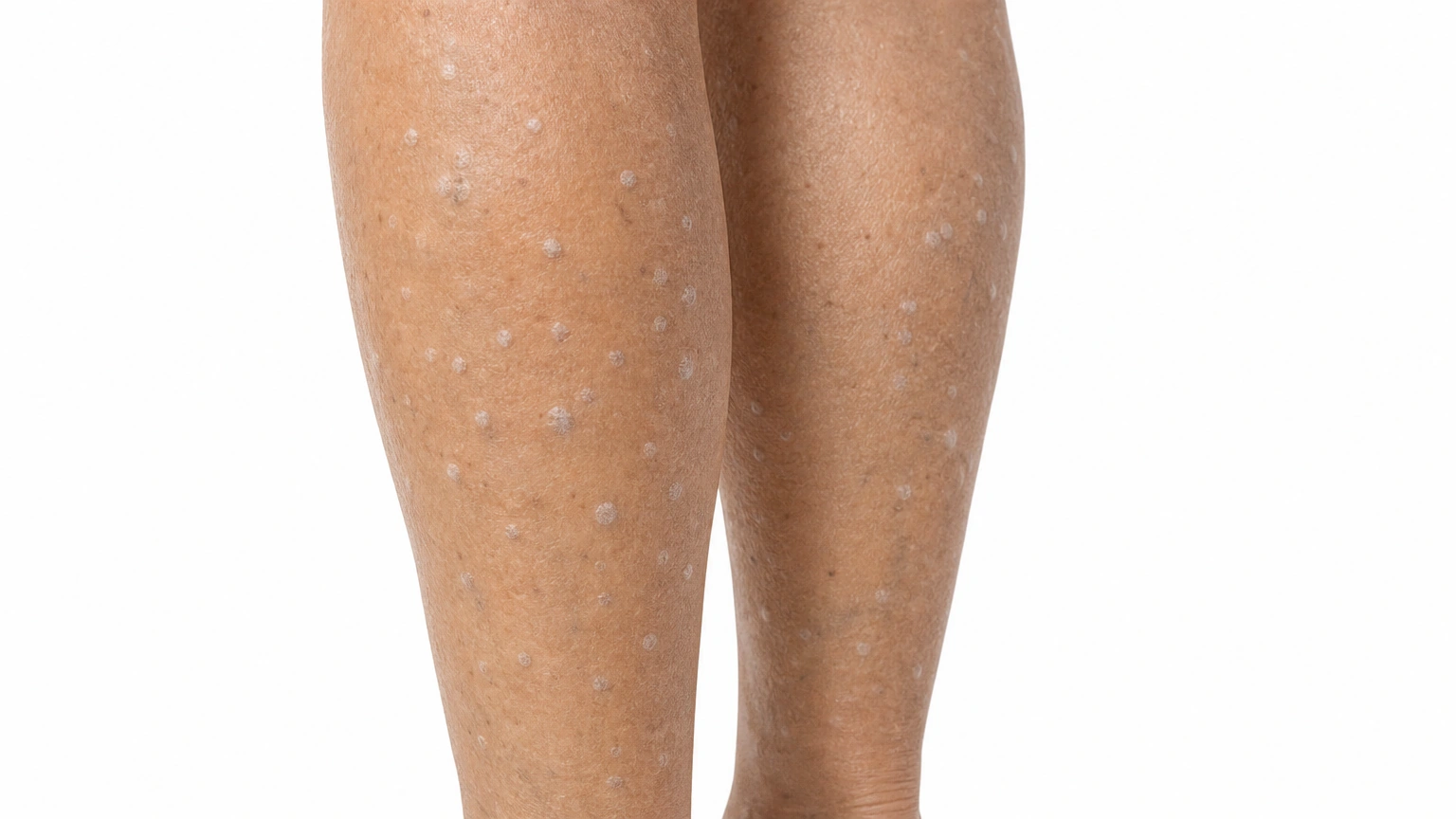
Multiple small gray-white raised bumps on the lower legs, representing stucco keratoses.

Stucco keratosis Small white-gray bumps on the legs.

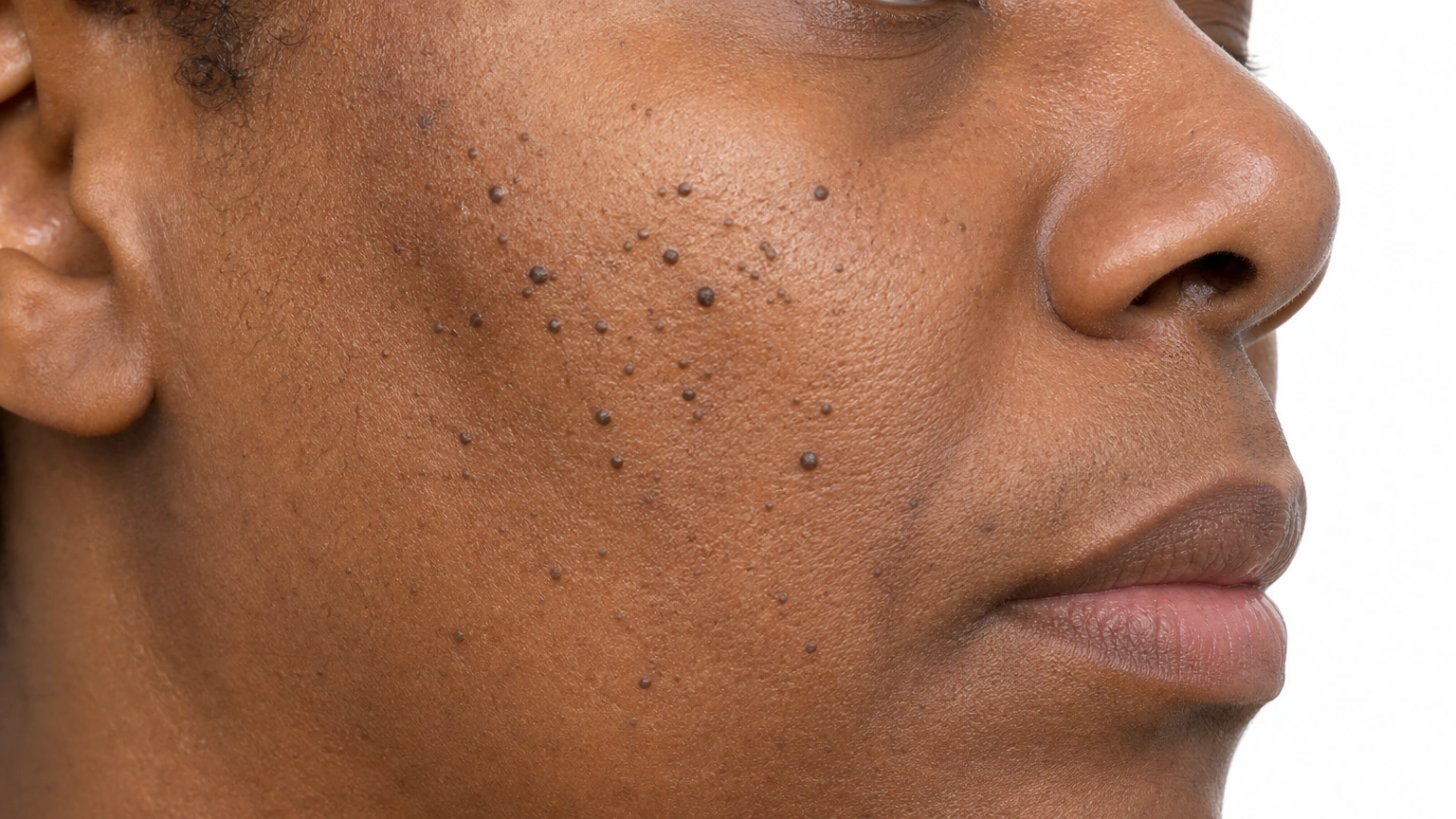
Small dark raised papules on brown cheek skin, representing dermatosis papulosa nigra.

Dermatosis papulosa nigra Small dark bumps on the face.

Skin tones
A rough, dome-shaped wart on the side of a finger on fair skin. The bump is pinkish with a thin red ring at its base, and several tiny black dots are clearly visible in the thickened surface.
A rough, thickened wart on the back of a hand on medium olive skin. It is much the same color as the skin around it, with only a faint pink rim, and the fine skin lines stop at its border.
A firm, rough, gray-brown wart on the side of a finger on brown skin. There is no visible red ring around it, and the fine lines of the skin stop at the border of the bump.
Two rough, thickened warts on the back of a hand on deep brown skin. They are the same brown as the skin around them with no red rim, and they are visible mainly by their raised, uneven surface.
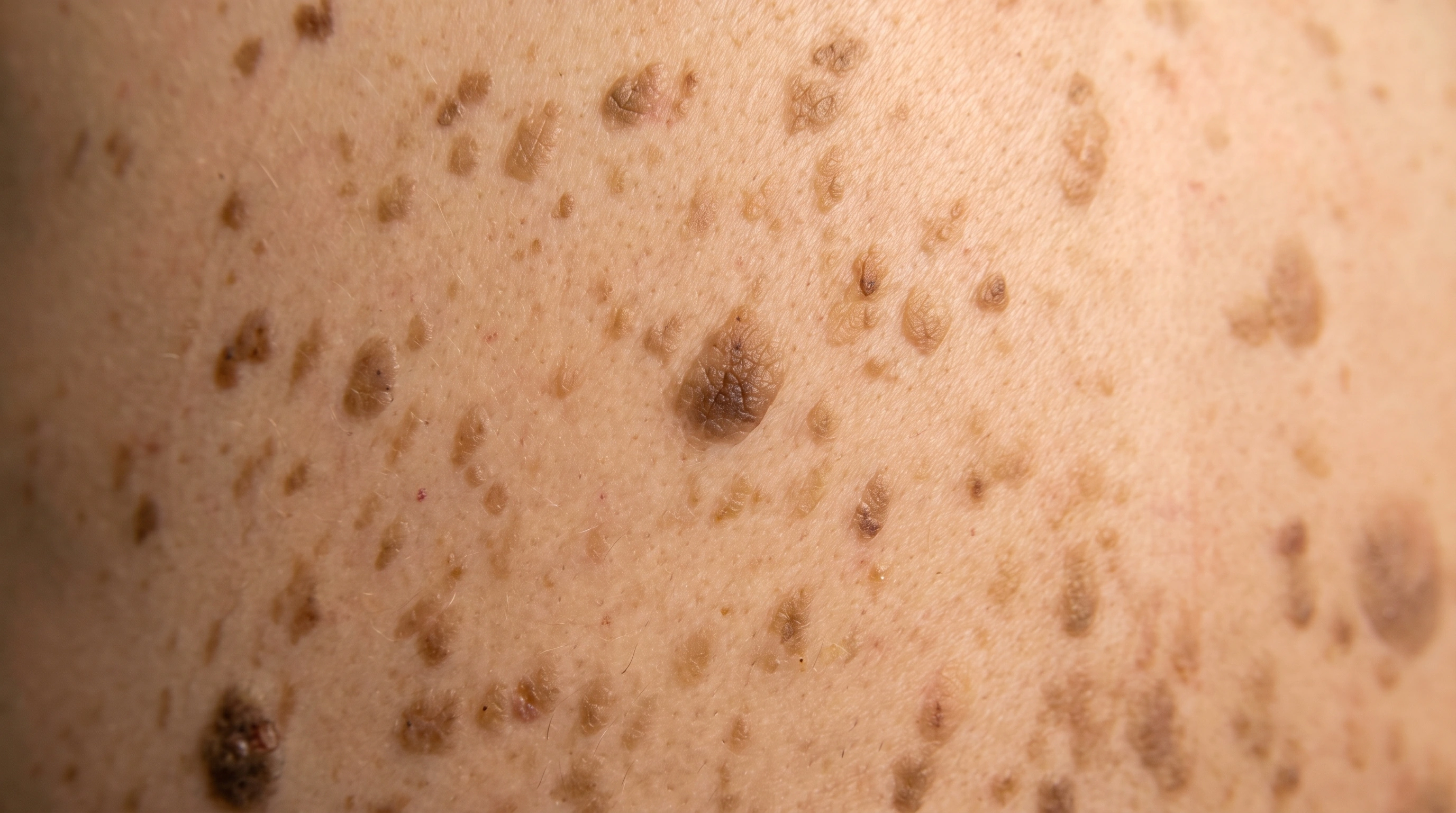
Two growths on the upper back on fair skin. One is a flat light tan patch and the other is a raised mid-brown growth with a rough waxy surface and a sharply defined edge.
A raised brown growth on the chest on medium olive skin. Its color is only slightly deeper than the surrounding skin, but the rough waxy surface and the sharply drawn edge are clearly visible.
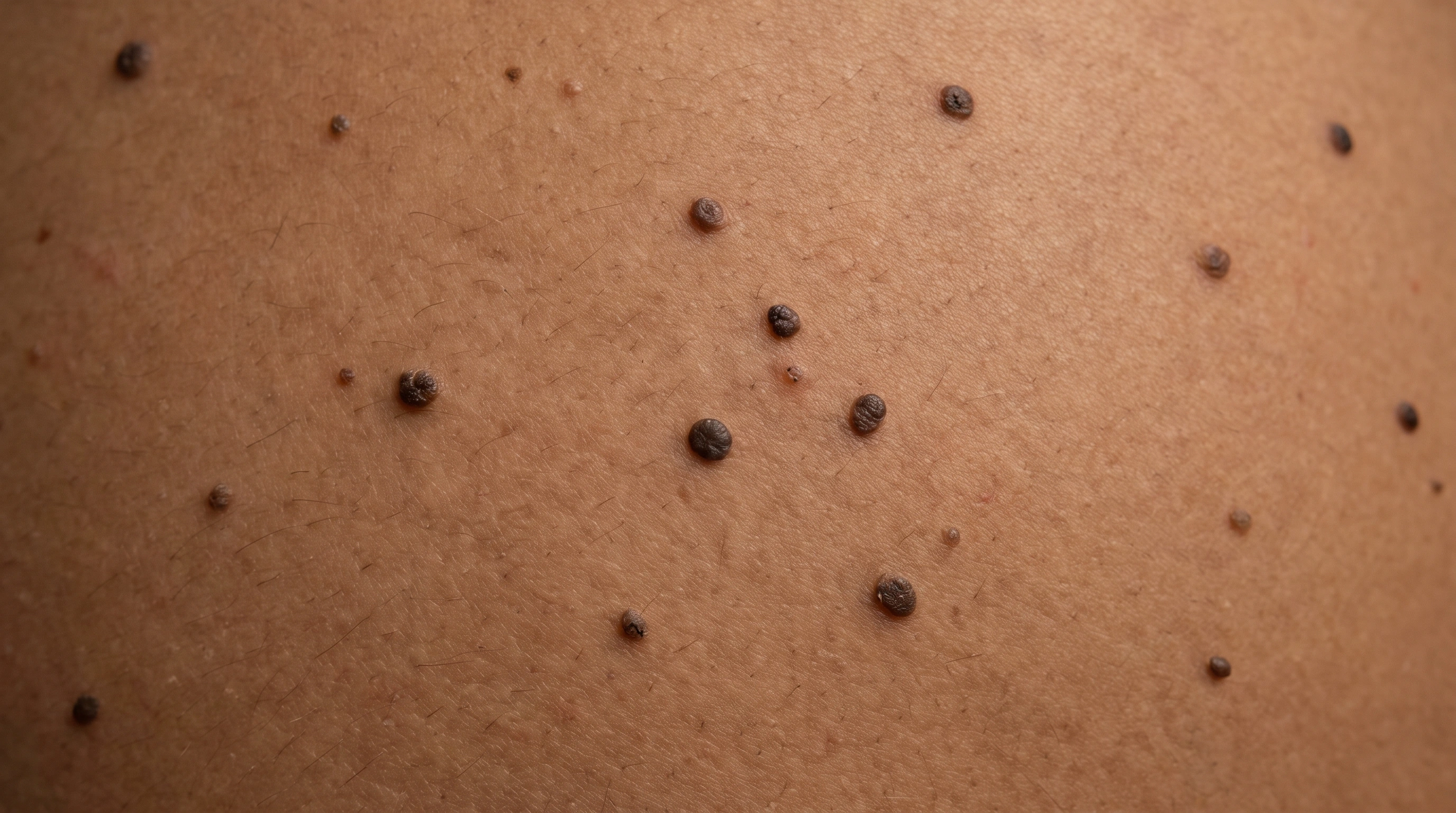
Several small, dark brown to black raised growths scattered over the cheek and temple on brown skin, ranging from one to three millimetres across, on otherwise even-toned skin.
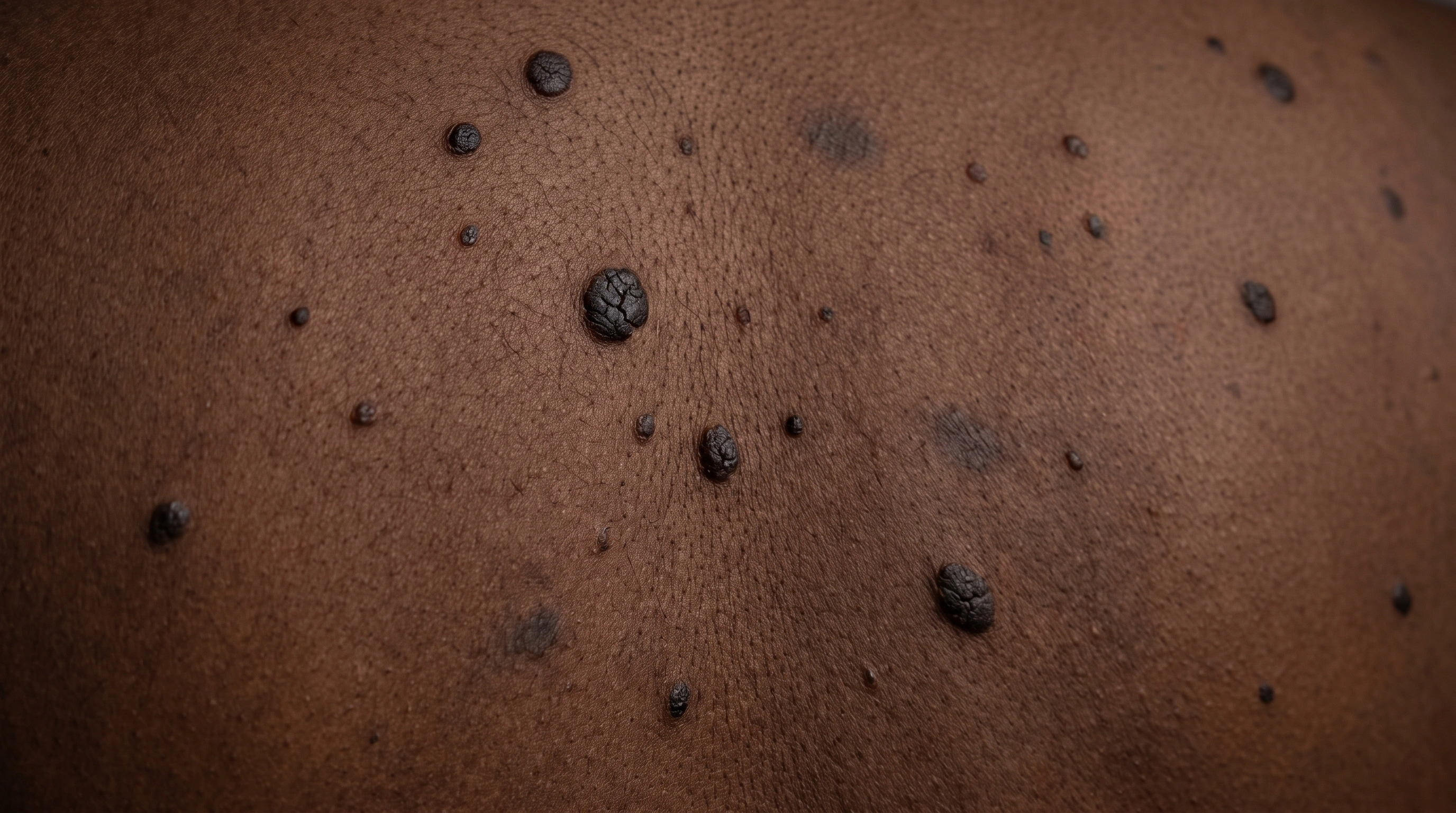
A cluster of black raised growths along the side of the neck on deep brown skin, each with a sharply defined edge, with two flat darker marks nearby where earlier growths were treated.
Diagram
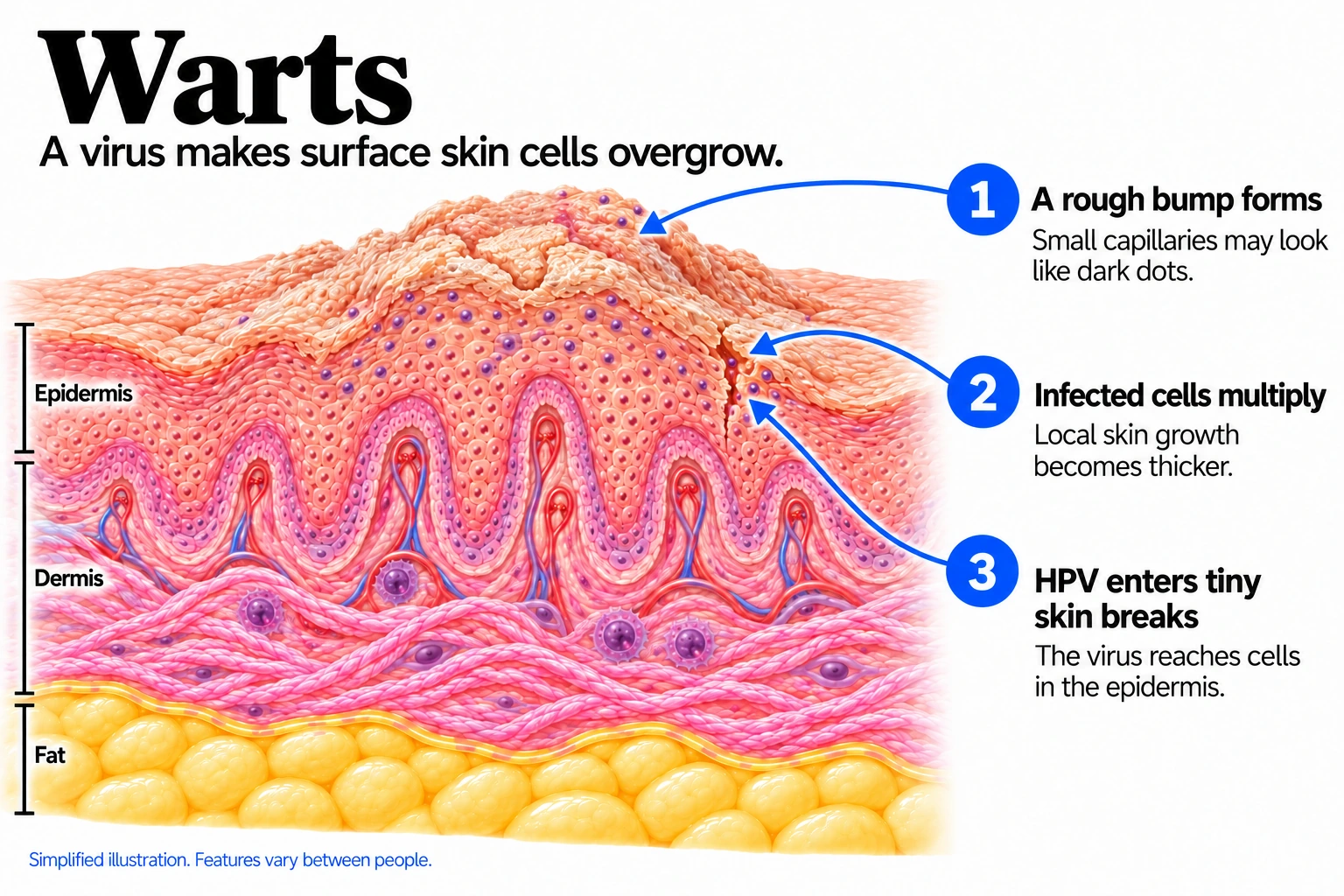
Warts mechanism diagram. HPV enters tiny skin breaks: The virus reaches cells in the epidermis. Infected cells multiply: Local skin growth becomes thicker. A rough bump forms: Small capillaries may look like dark dots.
Seborrheic Keratosis mechanism diagram. A stuck-on plaque appears: The surface can look waxy or rough. Keratin collects in the growth: Tiny keratin-filled spaces may form. Surface cells grow locally: A benign epidermal growth develops.
In the skin

Human papillomavirus enters through small skin breaks and stimulates local surface-cell growth. The thickened tissue forms a rough bump that may contain visible dark capillary dots.

A benign overgrowth of surface skin cells creates a localized plaque. Keratin and sometimes pigment collect in the growth, giving it a waxy, rough or stuck-on appearance.

Where it shows up

Hands and feet
Variable sites, often trunk or face

When it usually starts

010203040506070+

Warts. Common in children and teenagers; adults can also develop them.

Seborrheic Keratosis. Usually appears in adult life and becomes increasingly common with age.

Causes and triggers

Causes

Warts are caused by the human papillomavirus infecting the top layer of skin. The virus makes skin cells grow faster, forming a rough bump.

Seborrheic keratoses are harmless growths of skin cells that become more common with age.

Family tendency

They often run in families.

Risk factors
Children and teens, Weakened immunity, Nail biting
Age over 50, Family history, Sun exposure
How it spreads
  • Skin-to-skin contact — Well established
  • Cuts, scrapes and hangnails — Strong link
  • Picking or biting warts — Strong link
  • Shared towels or razors — Possible
Trigger
● Warts
● Seborrheic Keratosis
Aging
Not listed
Well established
Sun exposure
Not listed
Possible

Daily Care

Warts
Seborrheic Keratosis
Daily care

Habits that help

  • Covering the wart
    Keeps virus off other spots and holds treatment against the skin.
  • Keeping hands and feet dry
    Change socks during the day, dry between the toes, air your shoes.
  • Your own kit
    Flip-flops in shared showers, own towel, own clippers.
  • Follow safe filing instructions for wart treatment; avoid injured or high-risk feet
    Use only gentle removal of dead surface skin when advised; never cut or file to pain or bleeding. High-risk feet need professional advice.
  • Cantharidin, applied in clinic
    A blistering agent, painless going on, so it suits children.
  • Immune-based treatments
    Imiquimod cream or candida antigen injections for warts that keep returning.
  • Treating dry skin and eczema properly
    Intact, moisturized skin is much harder to enter.
  • Allow the treatment-specific course and review if it is not helping
    The required course varies by treatment and site. Review persistent, painful or uncertain lesions rather than repeatedly damaging the skin.
  • Review immune-suppressing medicines with the prescriber; do not stop them yourself
    Immune suppression can affect infection persistence. Tell the treating clinician and do not stop a prescribed medicine on your own.
  • Follow safe wart preparation advice; do not file to pain or bleeding
    Use only gentle removal of dead surface skin when the product recommends it. Never file to live, painful or bleeding skin. Do not share files; get advice for diabetes, poor circulation or reduced sensation.

Avoid

  • Avoid: Picking, biting and pulling at warts
    Carries virus to fingers and lips, and leaves broken skin for it.
  • Avoid: Shaving over a wart
    Seeds virus along the whole shaving path.
  • Avoid: Walking barefoot in shared showers
    Warm wet floors are where the virus survives longest.
  • Avoid: Skin that stays wet for hours
    The outer layer softens and stops being a seal.
  • Avoid: Nail biting and picking at hangnails
    The most reliable way to get warts around the nails.
  • Avoid: Sharing personal tools
    Towels, razors, nail clippers, pumice stones and files move the virus.
  • Avoid: Reusing one file on several warts
    It spreads them between your own sites.
  • Avoid: Stopping treatment too early
    Virus stays at the edges a week or two after the surface looks normal.
  • Avoid: Eczema, dry skin and cracked heels
    Broken skin is an open door.

Habits that help

  • Watch for change, not for existence
    Growing, darkening, bleeding or newly itchy.
  • Then leave it alone
    Avoid picking or rubbing a growth confirmed as benign.
  • Curettage or shave removal
    Precise, and it yields tissue to examine.
  • Daily sunscreen on treated areas
    Keeps the mark from deepening.
  • Discuss how age affects monitoring and recovery
    The biggest driver of how many you get.
  • Tell the clinician about your family history
    Why one person has one growth and another fifty.

Avoid

  • Avoid: Sun exposure
    Adds to the count, and darkens marks after removal.
  • Avoid: Assuming a dark growth is benign
    Melanoma is mistaken for one.
  • Avoid: Picking or peeling one off
    They bleed, inflame, and mark.
  • Avoid: Friction from clothing
    Straps, waistbands and belts irritate growths.
  • Avoid: Shaving over them
    The usual cause of sudden bleeding.
  • Avoid: Home freezing kits and acid pens
    They scar something nobody examined.
  • Avoid: A sudden crop of many new ones
    Many at once should be assessed.
  • Avoid: Removal without a diagnosis
    Destroyed tissue cannot be analyzed.
  • Avoid: Home freezing and acid kits
    Do not freeze or burn unexamined growths at home; tissue may need examination.

Treatment differences

Evidence labels come from each condition’s own treatment list.

Treatment
● Warts
● Seborrheic Keratosis
Filter by type
Wart type

Select one or more.

All types
Over-the-counter
Existing illustration of Home cautery pens and freeze-off kits.

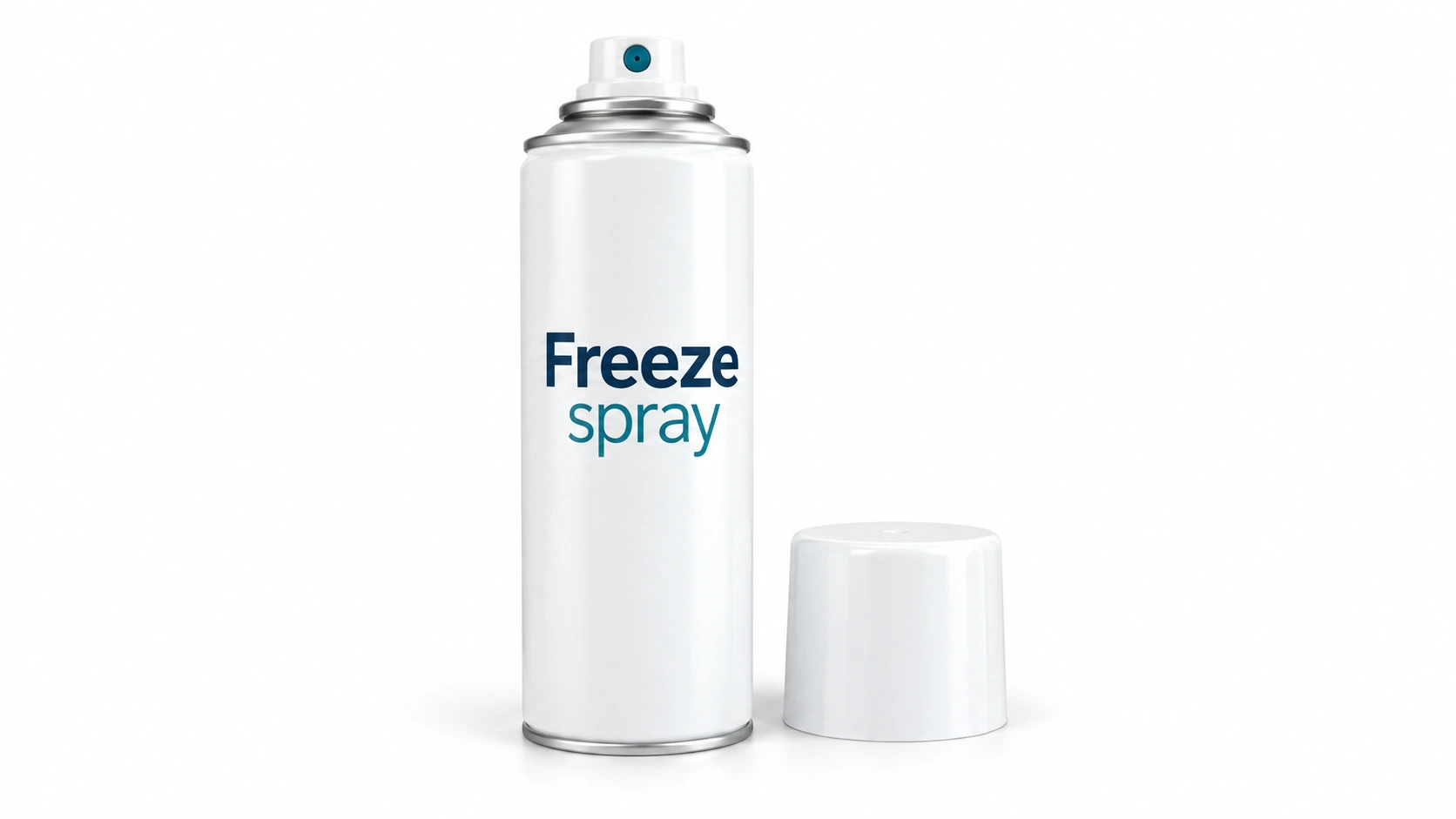
Home freeze kits

Limited evidence

The pharmacy sprays get nowhere near as cold as clinic liquid nitrogen, so they work best on small, new, thin warts on the hands and poorly on thick foot warts. They sting and can blister. On deeper skin tones they carry the same risk of leaving a pale or dark mark as clinic freezing does.

Existing Dermapedia illustration of duct tape.

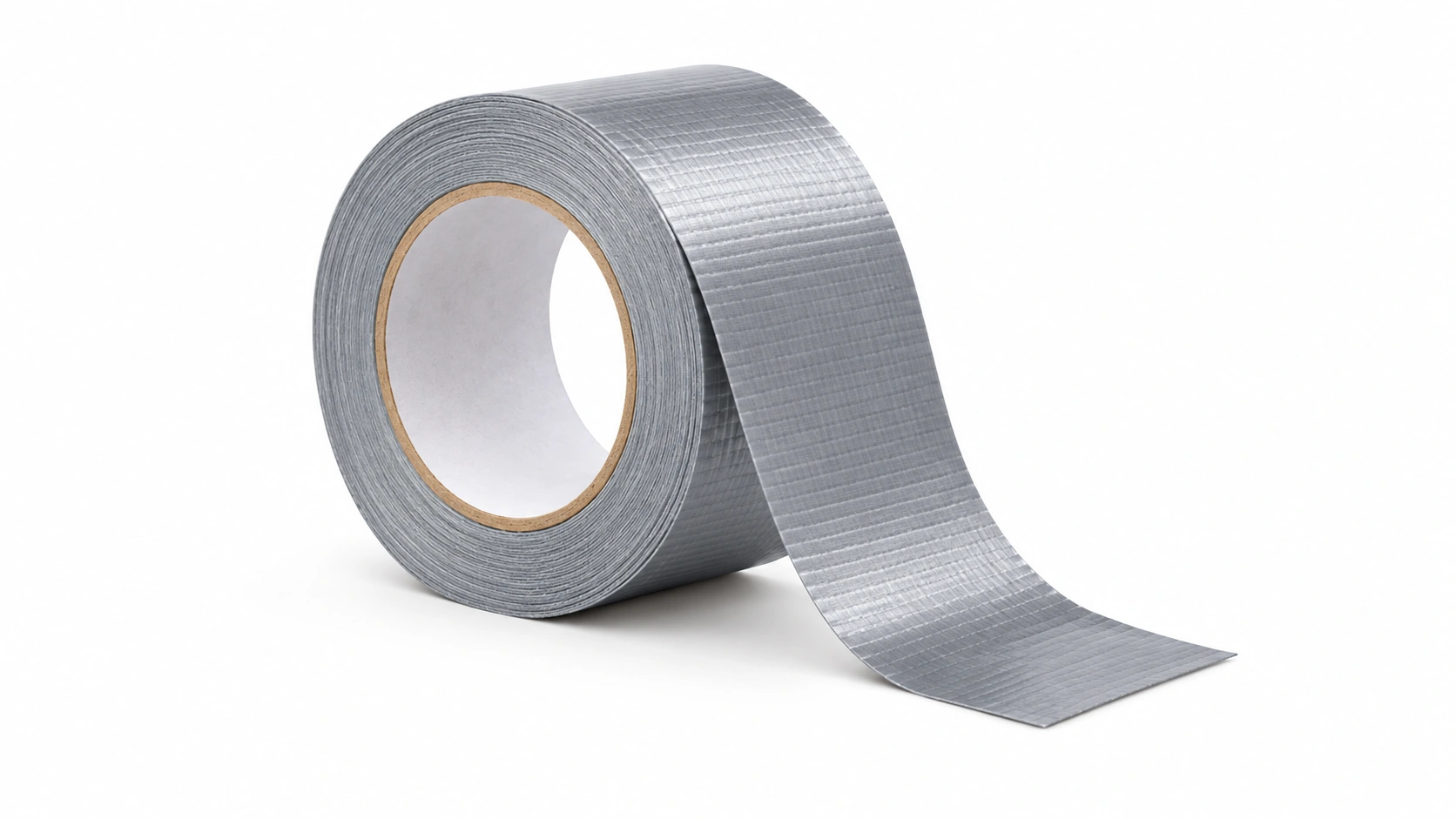
Duct tape

Limited evidence

Covering a wart with tape for a few days at a time, then filing it, is cheap and harmless, and the trials are genuinely mixed on whether the tape itself adds anything. Any benefit is probably from the covering and the filing. It is reasonable alongside salicylic acid and a poor substitute for it.

Paula's Choice 2% BHA exfoliant, La Roche-Posay Effaclar cleanser and a CeraVe psoriasis cream pump

Salicylic Acid

Strong evidence

The first treatment for almost every ordinary hand or foot wart, and the one with the best evidence outside the clinic. It dissolves the infected thickened skin a layer at a time, so it only works if it goes on every single day. Soak the wart for five minutes, file the dead surface off, apply, and cover it. Twelve weeks is a fair trial; ten days is not.

Paula's Choice 2% BHA exfoliant, La Roche-Posay Effaclar cleanser and a CeraVe psoriasis cream pump

Salicylic Acid

Limited evidence

Wart treatments are often tried on these because the surface looks similar. Salicylic acid can thin the rough top layer, but it does not clear the growth, and it irritates the normal skin around it. The bigger problem is that it is usually being used on something nobody has examined.

Five white jars of 40% urea cream lined up, several also listing 2% salicylic acid

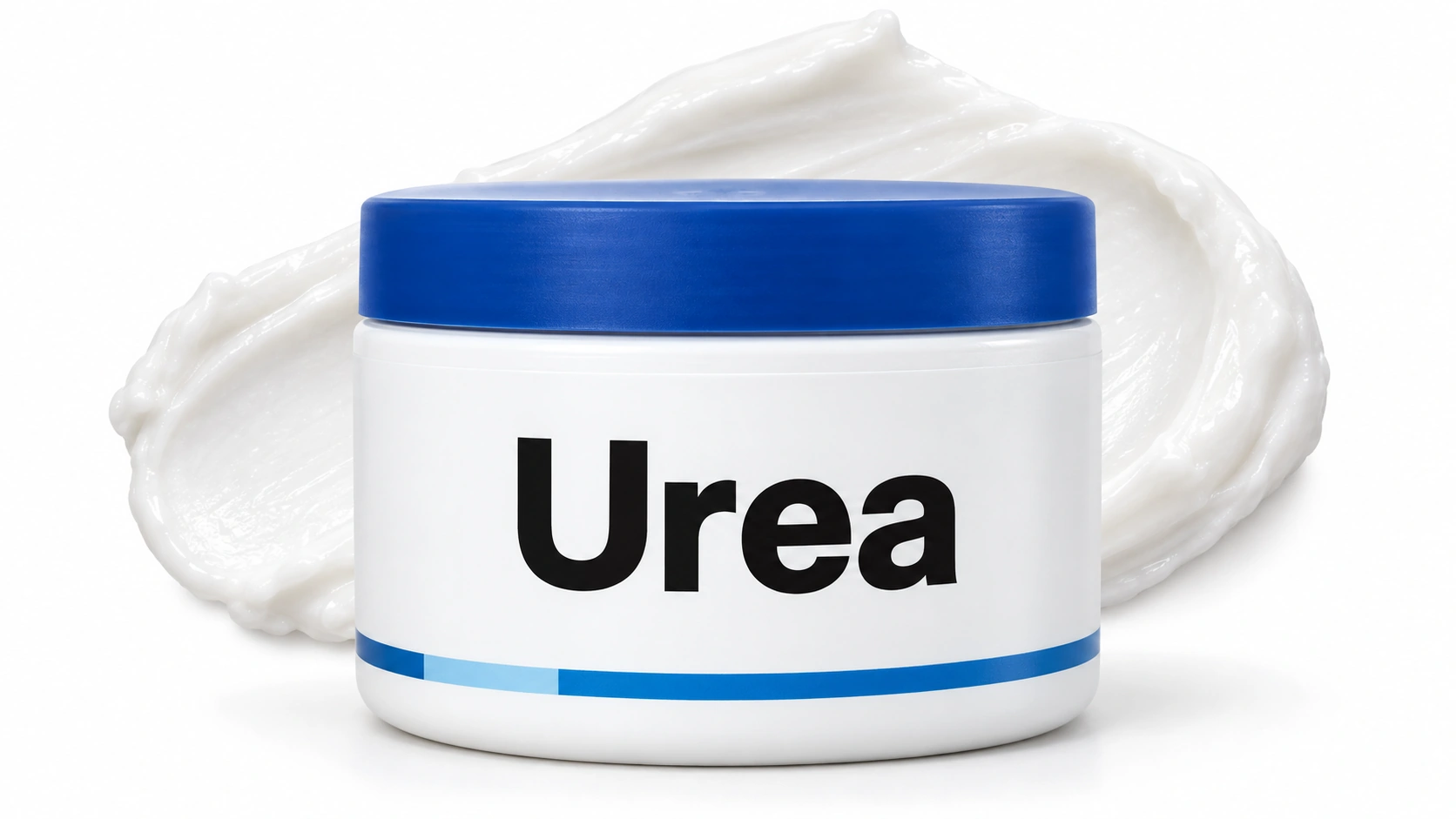
Urea

Limited evidence

A strong urea cream can soften and flatten the rough white growths that scatter over the lower legs, called stucco keratoses, if the roughness is what bothers you. It smooths the surface rather than removing the growth, and it has to be used continuously. It does nothing for thick, dark, stuck-on growths elsewhere.

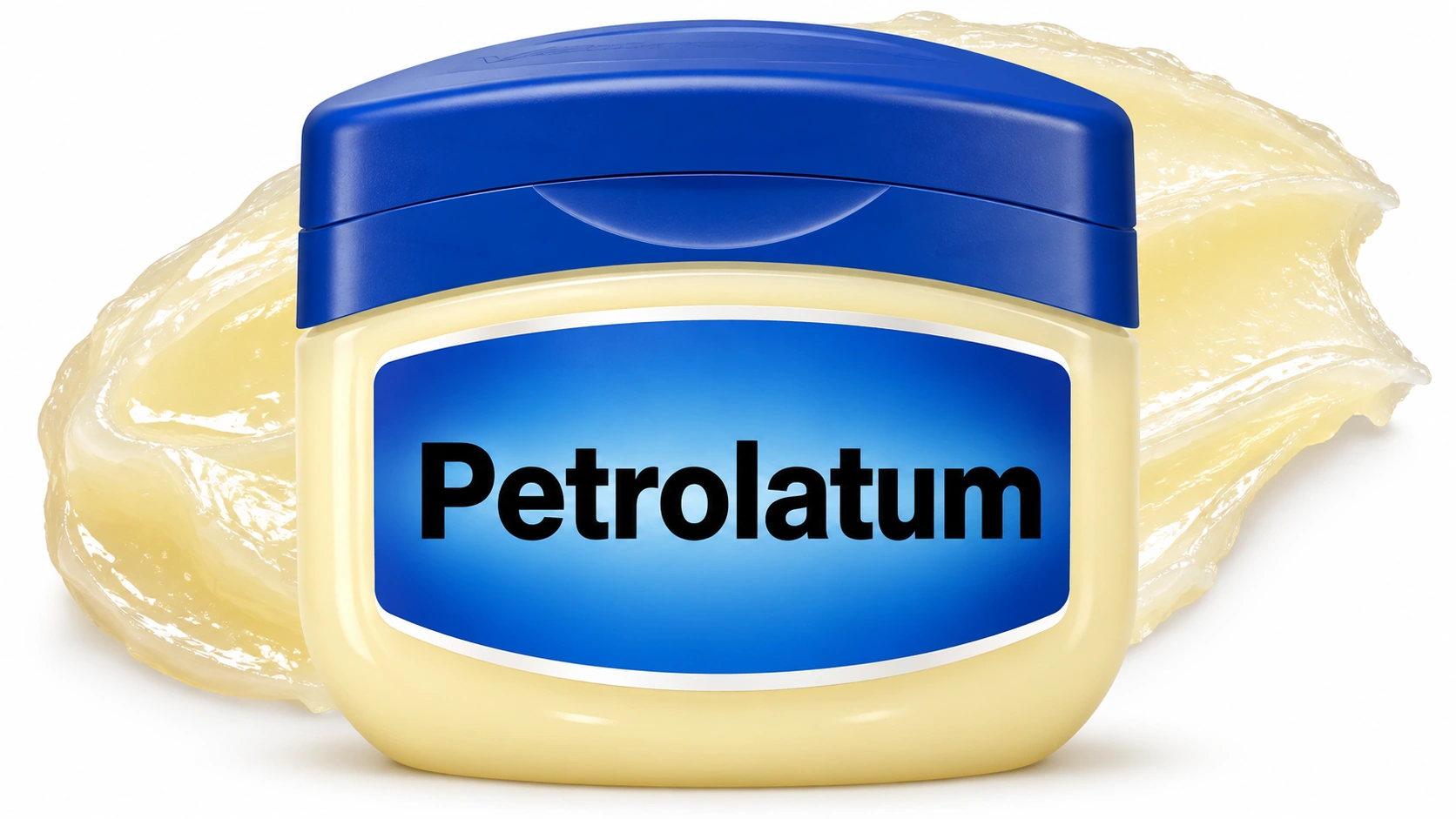
Four ointments on white: CeraVe Healing Ointment, a Vaseline jar, a petroleum jelly tube and Aquaphor

Petrolatum

Listed

This is aftercare, not treatment. A thin layer of plain petroleum jelly over a treated spot keeps the scab soft and gives the neatest healing, under a small dressing rather than an adhesive strip. It does nothing to a growth that is still there.

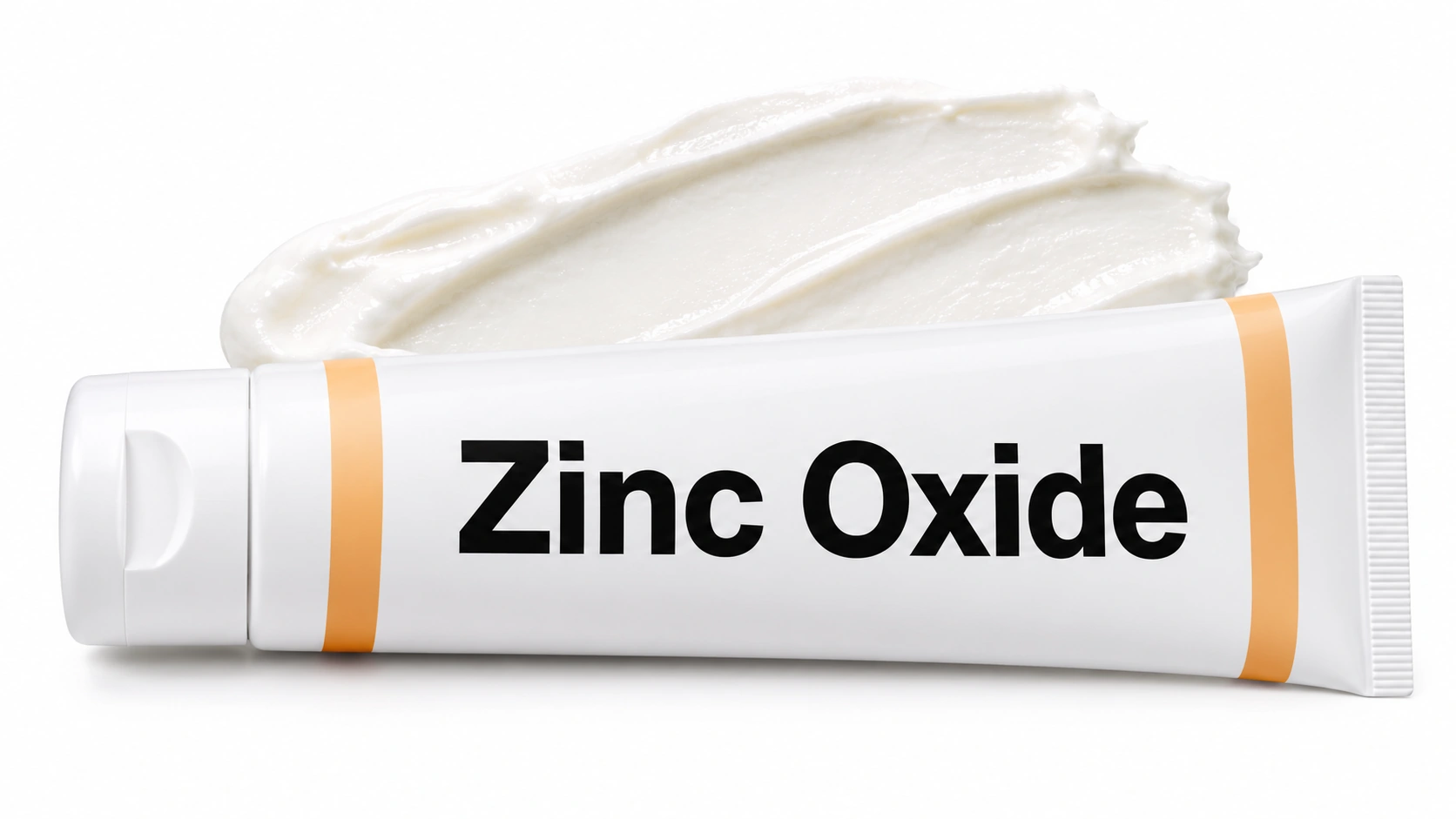
Four mineral sunscreens on white: Native SPF 30, Thinksport SPF 50, Colorescience Flex and EltaMD UV Clear

Zinc Oxide

Listed

Daily mineral sunscreen over a spot that has just been treated stops the temporary mark from darkening and helps it fade faster, which matters most on the face, chest and hands. It will not remove a growth or stop new ones forming. Sun is only one of several things that drive these, and age and family history matter more.

Prescription topicals
Illustration: Generic topical cream tube and white cream.

Imiquimod

Limited evidence

Imiquimod cream. A cream that works on the last step of the problem: it makes the local immune system pay attention to the virus. It is used mainly for flat warts on the face and for warts that keep coming back, applied a few nights a week for weeks. It reddens and irritates the skin while it works, and it does poorly on thick foot warts.

Tretinoin — Header Image

Tretinoin

Limited evidence

A retinoid cream used for the flat warts that appear in groups of dozens on the face and the backs of the hands, where acid and freezing would be too harsh over so wide an area. It speeds up the turnover of the infected surface cells. It takes months, and it makes the skin dry and sun-sensitive while it runs.

Fluorouracil

Limited evidence

5-fluorouracil cream. A chemotherapy cream at a low strength, applied to the wart itself, often under tape. It is used for flat warts and for warts that have not shifted with acid, and it is a common choice in children because it does not hurt going on. It reddens and can crust the treated skin, and it is not used in pregnancy.

Eskata

Moderate evidence

A high-strength peroxide solution applied in clinic was approved for raised growths on the face and body. It cleared some growths, often needed repeat visits, and commonly caused stinging, crusting and pigment change. It was withdrawn from sale in the United States, so in practice removal is done by hand rather than with a liquid.

Prescription pills
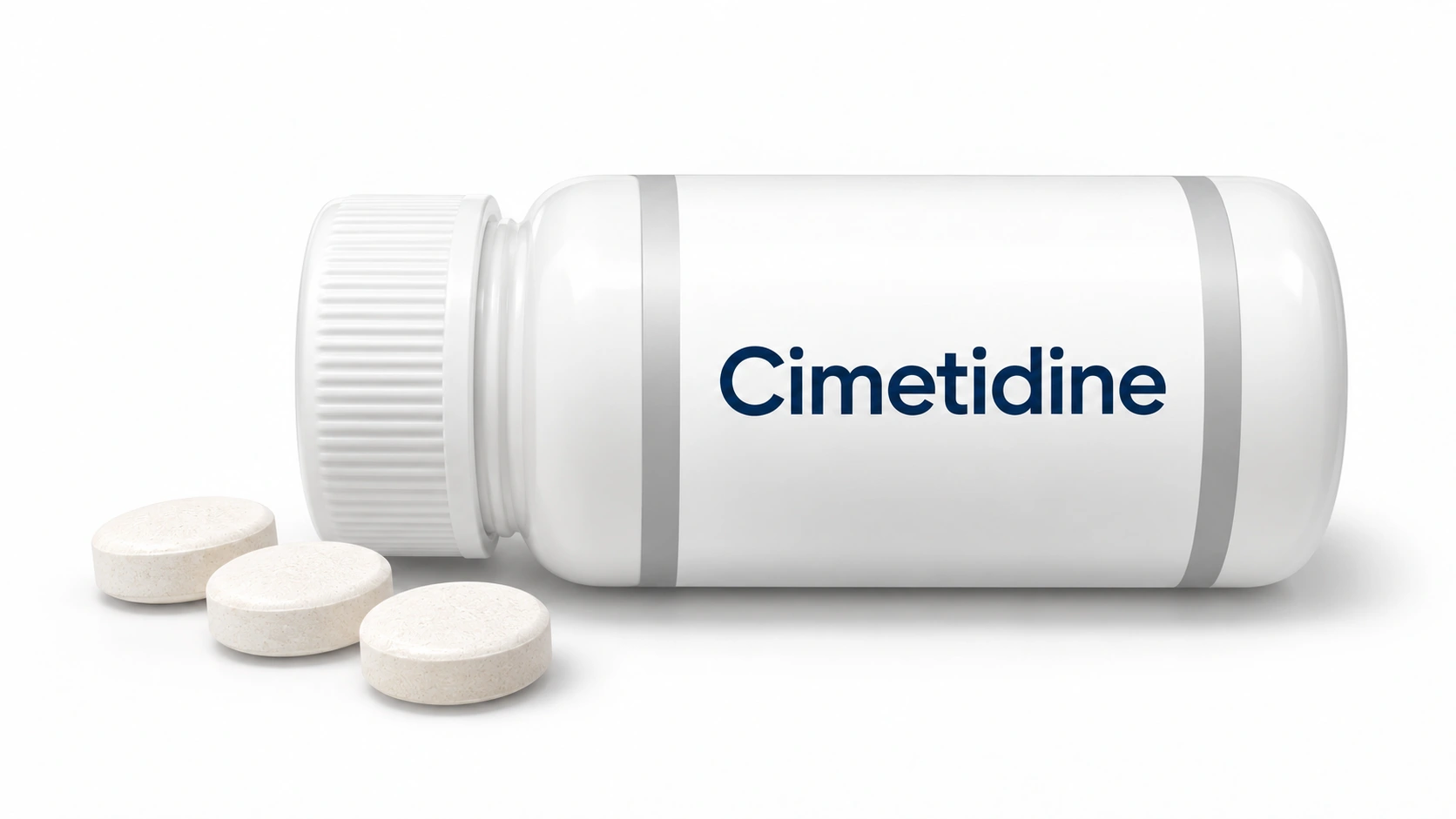
An illustrative bottle labeled Cimetidine beside plain tablets.

Cimetidine

Limited evidence

An old stomach-acid tablet that people ask about for multiple stubborn warts, on the idea that it nudges the immune system. The better-controlled trials found it no more effective than a dummy tablet in adults. It is safe and cheap, so it is occasionally still tried in children, but it should not replace treatment that is known to work.

None listed
Injections
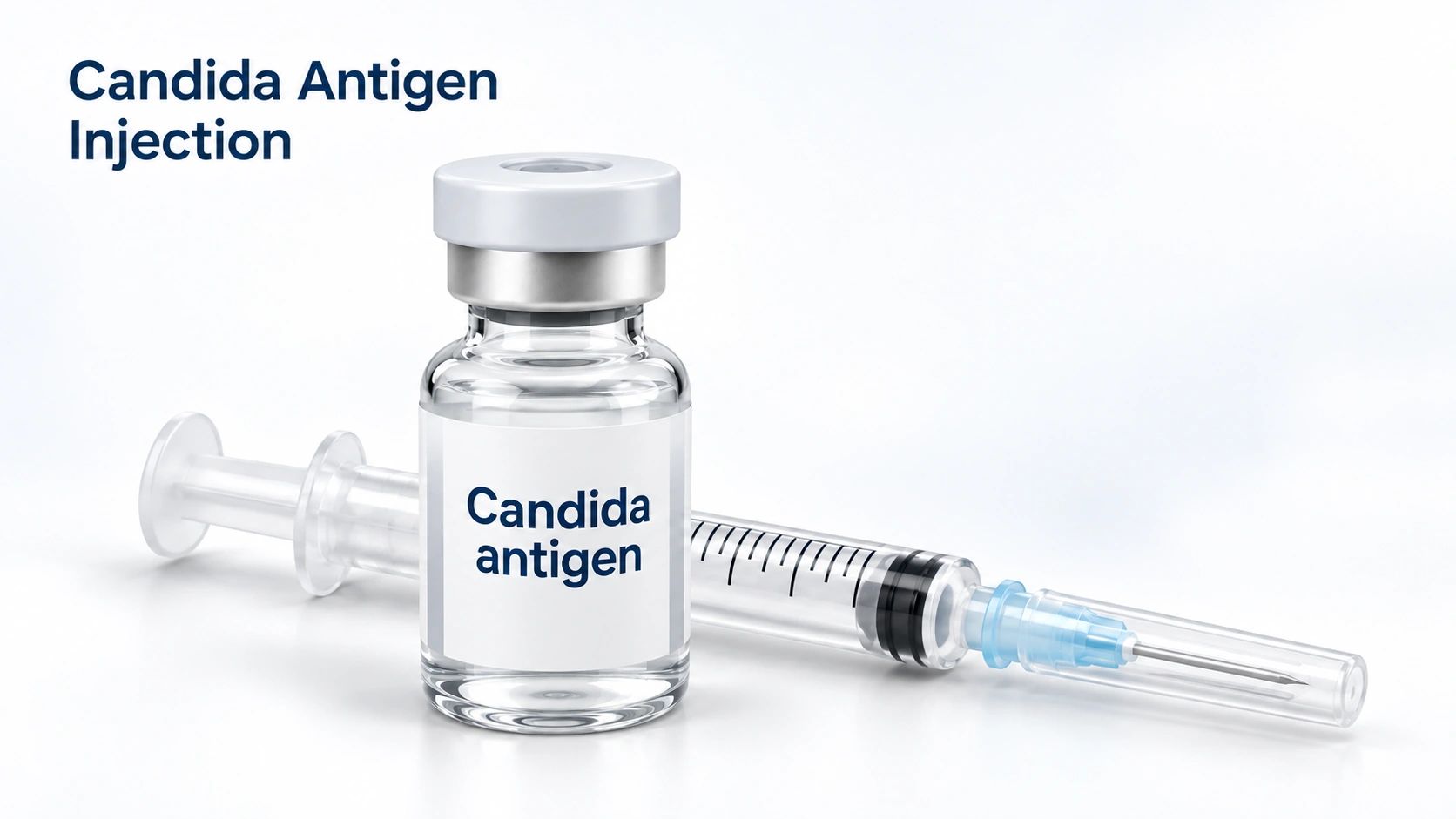
Editorial illustration for Candida Antigen Injection, based on the entry’s treatment or equipment reference.

Candida Antigen Injection

Limited evidence

Candida antigen injection. A tiny amount of yeast protein injected into one wart, to wake the immune system up in that spot. What makes it useful here is that untreated warts elsewhere on the body often clear at the same time, so it suits someone with many warts rather than one. It is repeated every few weeks, and it can cause a day or two of aching or flu-like feeling.

Bleomycin Injection

Bleomycin Injection

Limited evidence

Bleomycin injection. Injected directly into warts that have resisted everything else, particularly thick ones on the soles and around the nails. Clearance rates are good. It is painful enough that the area is numbed first, it can leave a permanent nail change if used at the nail fold, and it is not used in pregnancy, so it sits late in the order for a reason.

None listed
Procedures
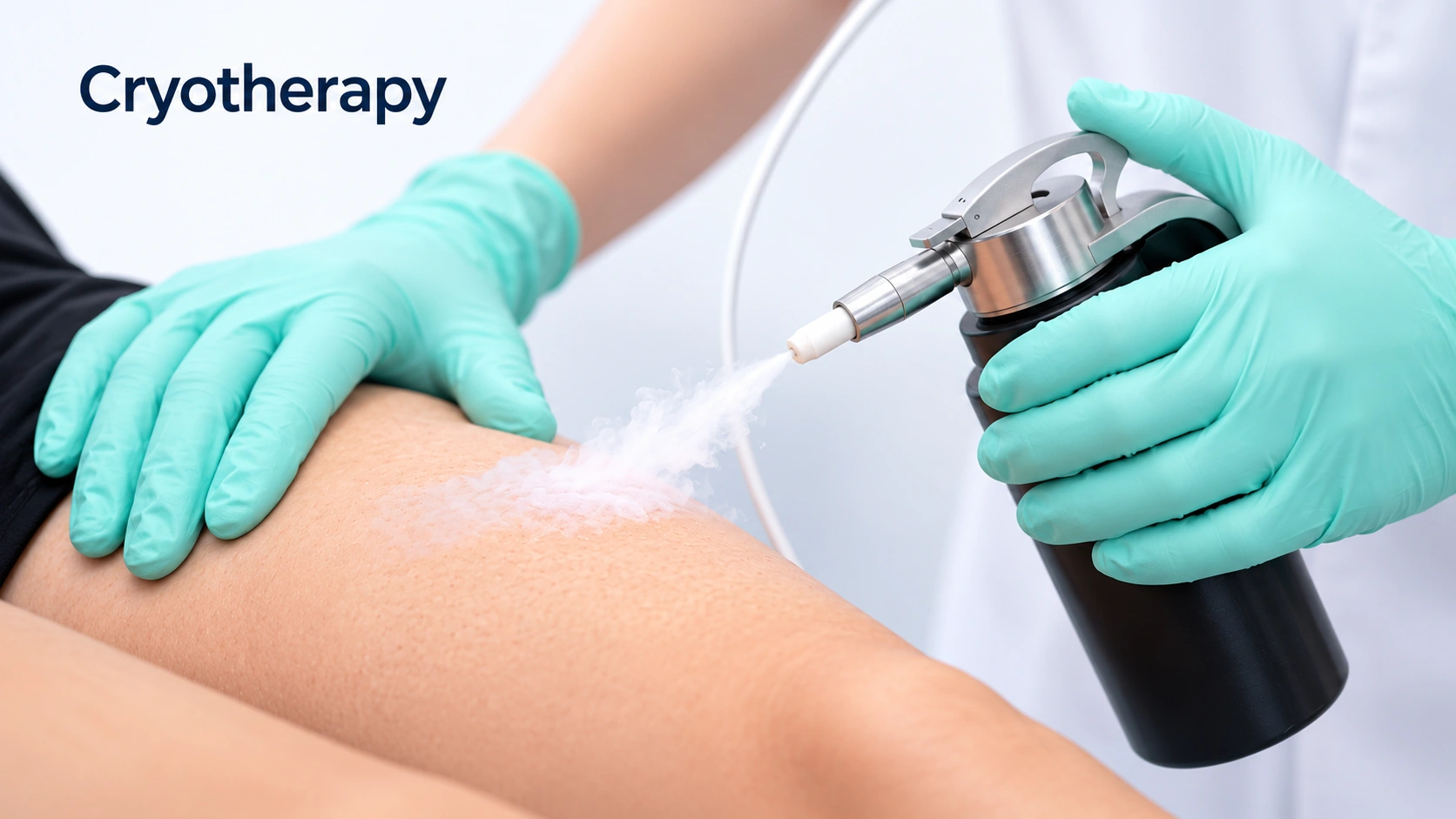
Editorial illustration for Cryotherapy, based on the entry’s treatment or equipment reference.

Cryotherapy

Moderate evidence

Liquid nitrogen freezes the infected skin and the injury also draws immune attention to the spot. It needs repeating every two to four weeks, usually three or four times, and a wart regrowing from the edge between sessions is normal rather than failure. Over several months its results are broadly similar to salicylic acid used properly. It stings, it blisters, and on deeper skin tones it can leave a lasting pale or dark mark.

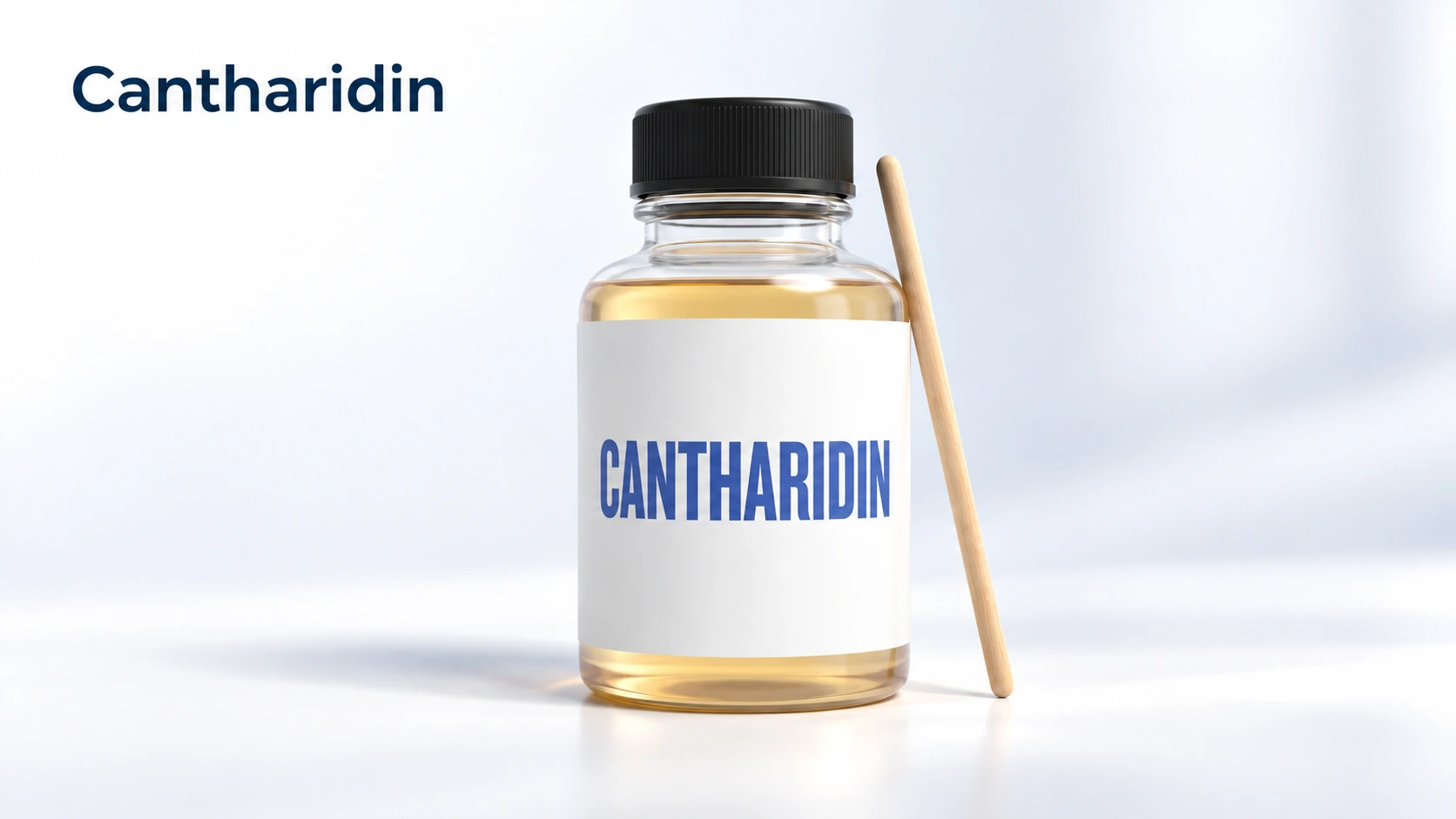
Editorial illustration for Cantharidin, based on the entry’s treatment or equipment reference.

Cantharidin

Limited evidence

A blistering liquid painted on in clinic and washed off a few hours later. It is painless going on, which is why it is a common first choice for children and for warts on the face. The blister that follows lifts the infected skin away over the next few days and can be sore. It usually takes more than one visit.

Paring

Limited evidence

Paring in clinic. The top dead layer is shaved off with a blade. It does not hurt, because that layer has no nerve supply, and it does two jobs at once: it confirms the diagnosis by exposing the tiny clotted vessels a callus does not have, and it lets acid or liquid nitrogen reach live infected skin. It is done alongside another treatment, never as the whole treatment.

Editorial illustration for Electrodesiccation and Curettage, based on the entry’s treatment or equipment reference.

Electrodesiccation and Curettage

Limited evidence

The wart is numbed, burned with an electric current and scraped away in one visit. It is kept for a single stubborn wart that has failed everything gentler, because it leaves a scar, and a scar on the sole of a foot can hurt more than the wart did. Warts can still regrow at the edge of the scar.

V-Beam

Limited evidence

The laser targets the small blood vessels feeding the wart rather than the virus itself. It is an option for stubborn warts on the hands and around the nails when freezing has not worked, and it spares the skin around it, which matters on the face. Several sessions are needed, results are inconsistent, and it is not usually covered by insurance.

Editorial illustration for Cryotherapy, based on the entry’s treatment or equipment reference.

Cryotherapy

Moderate evidence

A few seconds of liquid nitrogen makes flatter growths blister and lift off over a week or two, and it is the quickest way to treat several at once. It destroys the growth, so nothing can be examined afterward, which is why it is not used on anything with a question attached. It is used cautiously on the face and on deeper skin tones, because the pigment cells are sensitive to cold and it can leave a pale spot.

Editorial illustration for Electrodesiccation and Curettage, based on the entry’s treatment or equipment reference.

Electrodesiccation and Curettage

Moderate evidence

The growth is scraped off with a small curette and the base sealed with a fine electric tip. It is controlled and shallow, which is why it is often preferred for small facial growths and for the dark facial growths common on deeper skin tones. Scraping first still gives tissue that can be examined if there is doubt.

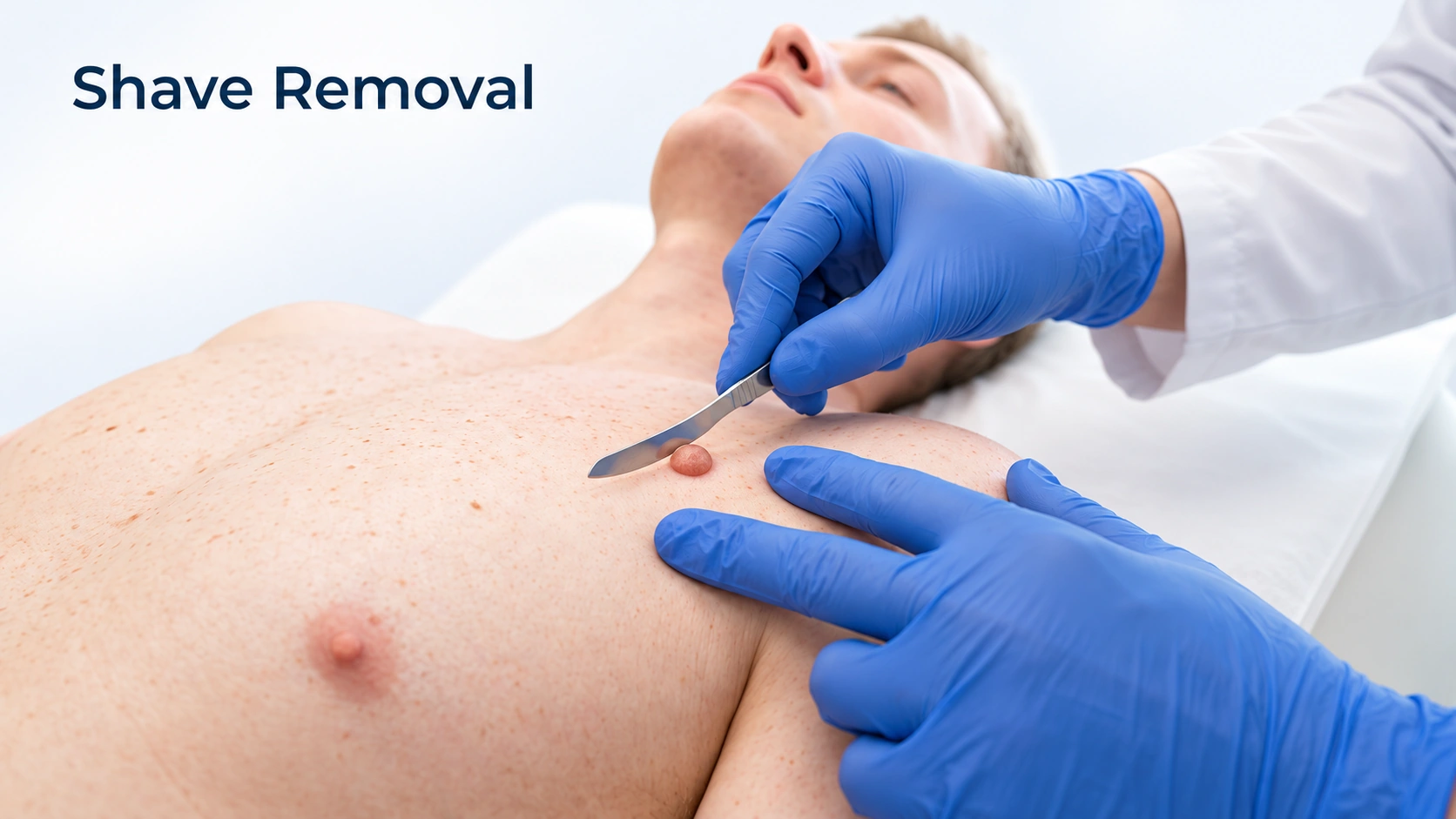
Editorial illustration for Shave Removal, based on the entry’s treatment or equipment reference.

Shave Removal

Moderate evidence

The growth is numbed and shaved off level with the skin in a few seconds. It is the method of choice when there is any question about what a growth is, because it produces tissue that can be sent to the laboratory. It leaves a flat mark that fades over months, and it does not stop new growths appearing elsewhere.

Editorial illustration for Fractional CO2 Laser, based on the entry’s treatment or equipment reference.

Fractional CO2 Laser

Limited evidence

An ablative laser can vaporise a growth precisely and is sometimes used when several need treating on the face. Like freezing, it destroys the tissue, so it is only for growths already confirmed as harmless. It is the most expensive of the options and it is not better than a curette for a single growth.

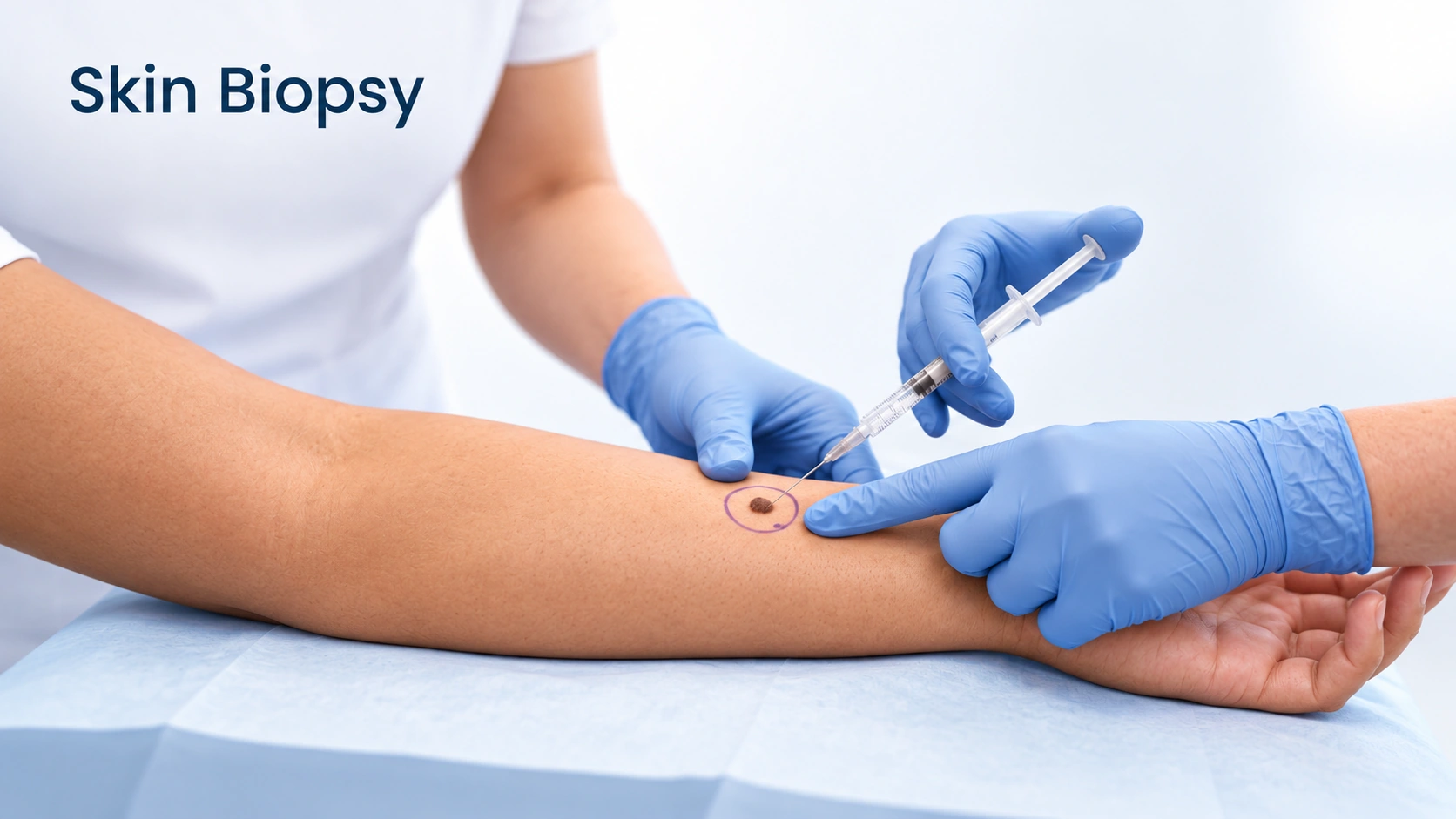
Editorial illustration for Skin Biopsy, based on the entry’s treatment or equipment reference.

Skin Biopsy

Listed

When a growth is changing, bleeding on its own, or simply looks unlike your others, part or all of it is taken after numbing and examined under a microscope. It is the only way to be certain, and the threshold for doing it is deliberately low, because the cost of a small biopsy is trivial next to missing a melanoma. An irritated growth is one of the commonest reasons a benign growth ends up being sampled.

Outlook

Long term

Warts are self-limiting — they end on their own eventually. In children, roughly two thirds clear within two years without treatment. Adults are slower, and warts present for several years are least likely to go quietly.

Seborrheic keratoses appear slowly, change slowly, then stay. Two departures deserve attention: one growth that starts changing - growing, darkening, bleeding on its own, or itching persistently - and a sudden crop of many new ones over weeks to months.

Complications

Possible complications
  • Spreading to new spots
  • Color change after treatment
  • Warts around and under the nails
More details

Spreading to new spots
An untreated wart seeds others nearby, so one bump becomes a ring of small ones around it, or a line of them along a scratch or a shaving path. Picking, biting and filing several warts with the same file are the usual ways it happens. Covering the wart, keeping your own file and treating early keep the number down.

Color change after treatment
Freezing, and any treatment that blisters or burns, works by injuring the skin, and injured skin can heal a different color. A pale ring around the treated spot can last a year or more and is sometimes permanent, and a dark mark can outlast the wart by months. Both are far more likely on deeper skin tones, which is why gentler treatment and a small test spot are often the better trade.

Warts around and under the nails
Warts that set up in the nail folds are the most stubborn of the group, because the nail shields the virus from creams and from freezing. Left long enough, a wart growing under the nail can lift it or leave a permanent ridge or split in the nail plate. Nail biting and picking at hangnails are how most of them start, and they are the ones most worth taking to a dermatologist early.

  • Catching on clothing makes it flare
More details

Catching on clothing makes it flare
A growth caught by clothing, a strap or a waistband can turn red, swollen, itchy, crusted or sore, and can bleed. That is an irritated seborrheic keratosis. It settles, but it looks alarming and often prompts removal or a sample.

When to get help

When to get help

Seek assessment for an uncertain, painful, bleeding or changing growth, or persistent warts with weakened immunity. Genital lesions need separate assessment.

Have a new, changing, bleeding or uncertain growth assessed; skin cancer can sometimes resemble a harmless stuck-on growth.

Common questions

Warts:How did I catch this?

Almost nobody can say. The virus lives on warm wet surfaces and passes by skin contact and shared objects, and there is usually a gap of one to six months between catching it and seeing the wart. It is not a sign of poor hygiene.

Warts:Will it go away if I just ignore it?

Probably, eventually. About two thirds of warts in children clear within two years without treatment, and adults are slower. Treating is worth it because warts spread to other spots and other people meanwhile, and older ones are harder to clear.

Warts:Why is my wart coming back after freezing?

Freezing removes infected skin but does not reach every infected cell, and it does not teach the immune system to recognize the virus. That is why it takes several sessions two to four weeks apart, and why a wart can regrow from the edge. Regrowth is normal, not treatment failure.

Warts:Are warts contagious to my family?

Yes, though not dramatically. The virus passes on shared towels, bath mats, razors, nail clippers and files, and through contact with broken skin. Keeping the wart covered, keeping your own towel and clippers, and wearing something on your feet in shared bathrooms covers most of the risk.

Warts:Is a wart on my hand the same as a genital wart?

Related viruses, but not the same strains, and they do not usually move between those sites. Genital warts are assessed and treated differently, so do not manage them with hand-wart products.

Warts:Can I cut it off myself?

No. A wart has no root to remove, so cutting reaches live skin without reaching all the virus, and you are left with a scar plus a wart growing back around it. It also risks infection and, on the foot, a wound that heals slowly. Paring is done in clinic with a sterile blade.

Seborrheic Keratosis:Could this be melanoma?

It could be, which is why it should be looked at rather than diagnosed at home. Melanoma is sometimes mistaken for a seborrheic keratosis, and a dermatoscope resolves most of these in seconds. The concerning features are change in size, shape or color, bleeding without being knocked, an irregular edge, and a growth unlike your others. Book rather than watch.

Seborrheic Keratosis:Why am I suddenly getting so many?

Age and family history account for nearly all of it. They accumulate steadily from the forties onward, and someone whose parents had many will develop many. A genuinely sudden crop over weeks to months, especially with itching, is different and worth examining.

Seborrheic Keratosis:Does removing one stop more from appearing?

No. Removal deals with that growth, not the age and inherited tendency behind it, so new ones can keep appearing elsewhere. That is expected, not a failed removal.

Seborrheic Keratosis:Will removal leave a mark?

Often, at least for a while. A flat spot darker or paler than nearby skin is common, and dark marks usually fade over months. Pale marks can be permanent and are more noticeable on deeper skin tones, so ask about the method and do a test spot before treating a large area. Daily sunscreen on the treated spot makes a real difference.

Seborrheic Keratosis:Mine got red and itchy and started bleeding. What happened?

Most likely it caught on clothing, a strap or a razor and became an irritated seborrheic keratosis. They look far worse than they are and they settle. Still have it looked at - an irritated growth is one of the harder ones to be sure about by appearance, and a growth that bled with nothing catching it is a different question.

Seborrheic Keratosis:Can I have them all removed?

As many as you and your doctor think sensible, usually in sessions rather than all at once. It is normally considered cosmetic, so ask about cost first. On the face, and particularly on deeper skin tones, start with a small test area and see how it heals.
Sources

Sources and further reading

  1. DermNet
  2. DermNet
Dermapedia on YouTube