Selenium Sulfide vs Tea Tree Oil

Selenium Sulfide: Controls dandruff and is used in labelled treatments for tinea versicolor. Tea Tree Oil: A formulated 5% gel has limited evidence for mild acne.
Research updated 2026-10-25
Two Selsun Blue bottles, two Head and Shoulders Clinical Strength bottles and a Vichy Dercos bottle and boxFive dark glass tea tree essential oil bottles with glass droppers and one green box on white

Which one is right for you?

Choose Selenium Sulfide if…

Choose for dandruff or a diagnosed yeast-related condition; follow the specific label.

  • Dandruff or seborrheic dermatitis
  • Tinea versicolor patches
  • Zinc or ketoconazole shampoos haven’t helped

Choose Tea Tree Oil if…

Consider only a properly formulated acne product; standard acne medicines have broader evidence.

  • Mild acne
  • You prefer a botanical option
  • A properly diluted product
Alternatives, not combined

Can you use both?

Both are used for dandruff. Selenium sulfide has stronger evidence.

At a glance

● Selenium Sulfide
● Tea Tree Oil
Type
Antifungal anti-dandruff active
Essential oil mixture
What it does
Controls dandruff and is used in labelled treatments for tinea versicolor.
A formulated 5% gel has limited evidence for mild acne.
Best for
Dandruff; Seborrheic Dermatitis; Tinea Versicolor
Acne
Studied concentrations
2.5% shampoo or lotion in controlled trials.
5% formulated gels in acne trials; do not apply undiluted essential oil.
When to use
On the schedule and contact time on the medicated product label.
Morning or night, as directed by the finished product.
Time to results
Often assessed within 2–4 weeks
Often 8–12 weeks in small cosmetic studies; results may be subtle
Irritation
May irritate and can affect hair colour or jewellery; rinse thoroughly.
Can cause irritant or allergic dermatitis, especially when oxidized; never swallow it.
Sensitive skin
Choose a simple formula and test a small area first. Individual tolerance matters more than an ingredient’s reputation for being gentle.
Available
Prescription or cosmetic status depends on the active, formula and country; check the label.
Cosmetic or OTC products; some high-strength procedures are separate treatments.

What it helps

Compare uses by strength of evidence. Evidence level describes confidence in a benefit, not its size.
Evidence level
Selenium Sulfide
Tea Tree Oil
Strong evidenceMost established uses
A part line in straight light hair, seen from above, on pale skin. White-gray flakes sit along the part and the scalp beneath them looks pink.

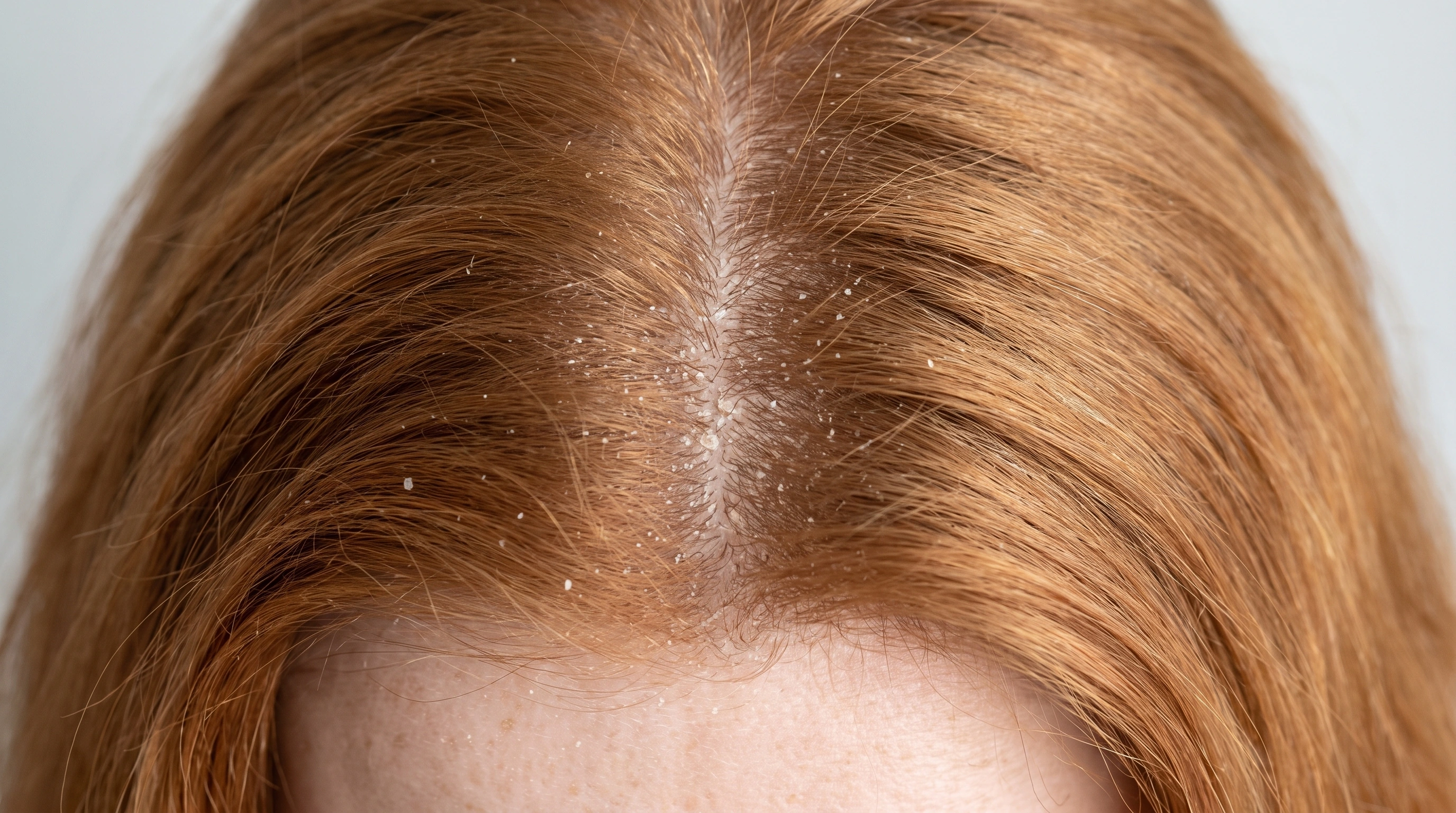
Dandruff

A placebo-controlled trial supports reduced dandruff and itch.
—
Moderate evidenceSome supportive research
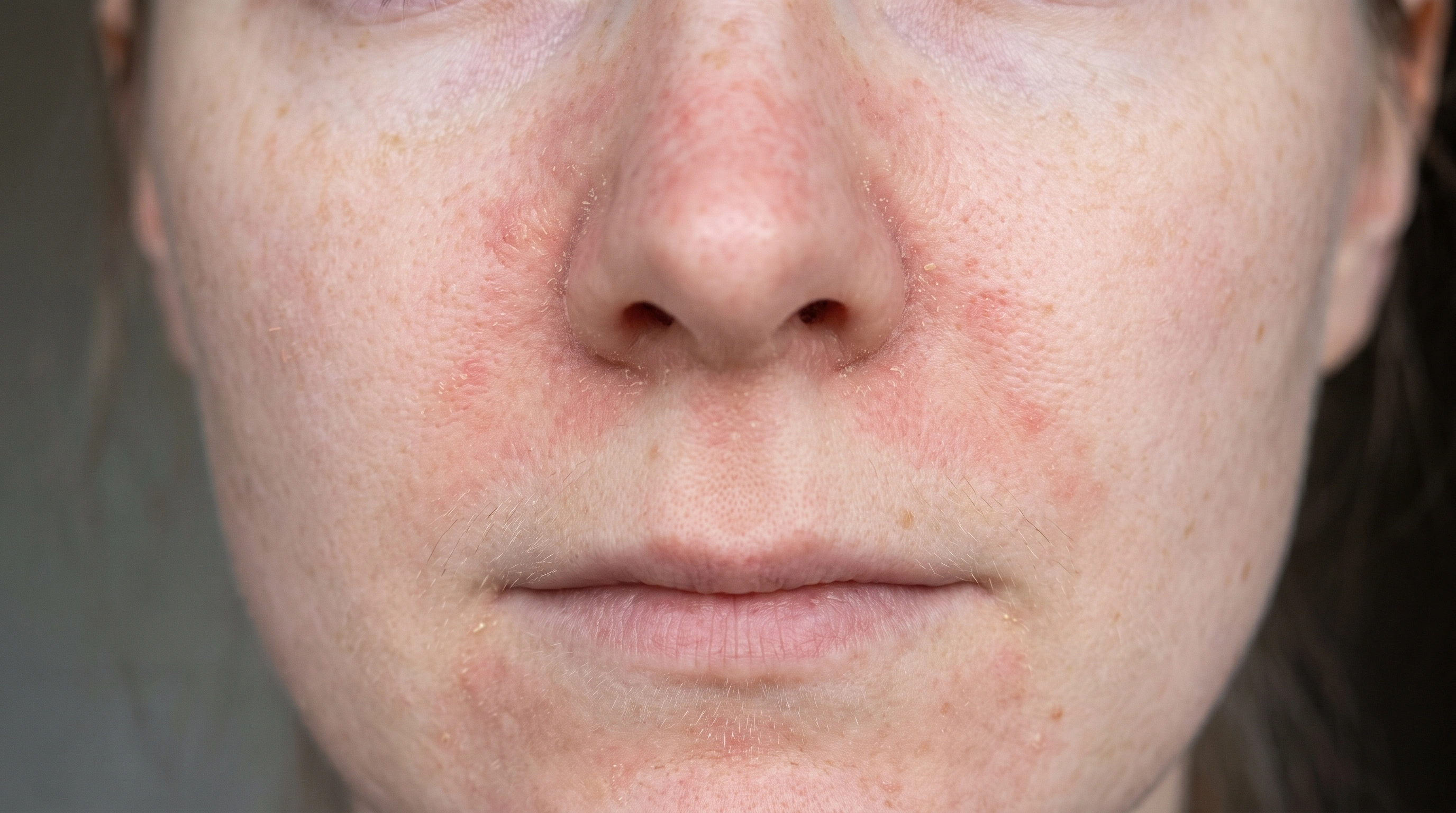
Salmon-pink patches with fine greasy yellowish scale in the crease beside the nose and through the eyebrow on fair skin, with soft edges that fade into normal skin.

Seborrheic Dermatitis

Useful for scalp scale associated with yeast; other treatment may be needed.
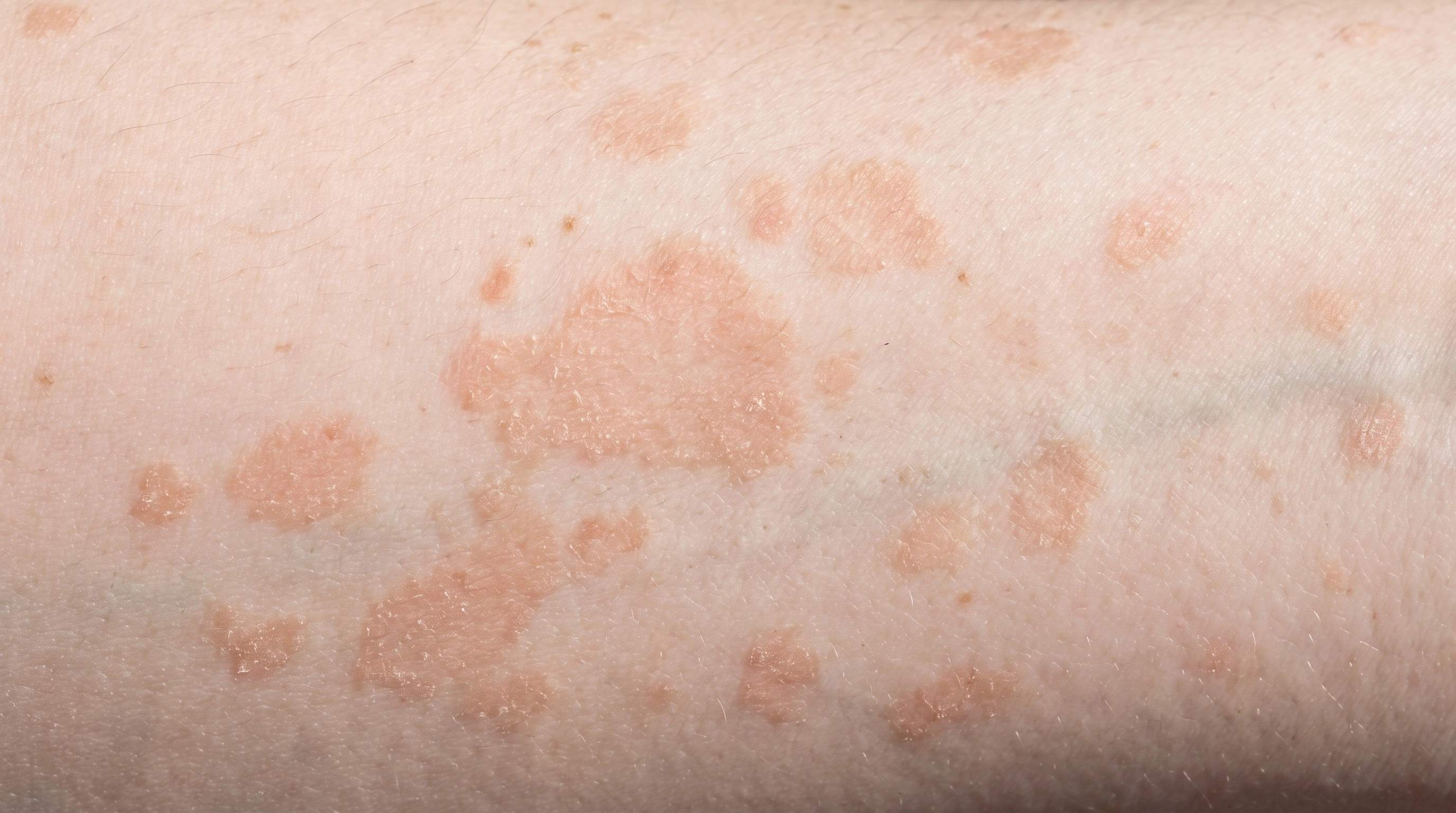
Flat oval patches in pink and light tan scattered across an upper chest and shoulder on light skin, several joined into larger areas, with a fine dusty scale on the surface.

Tinea Versicolor

A controlled trial supports a labelled short-contact regimen.
—
Limited evidenceEarly or small studies
—
Inflamed acne on light skin. The spots sit in a patch of pink, and the ring of redness around each one is easy to see. A few have a yellow-white head, and the skin between them is dry and flaking.

Acne

A small controlled trial found improvement with a formulated 5% gel.
Insufficient evidence
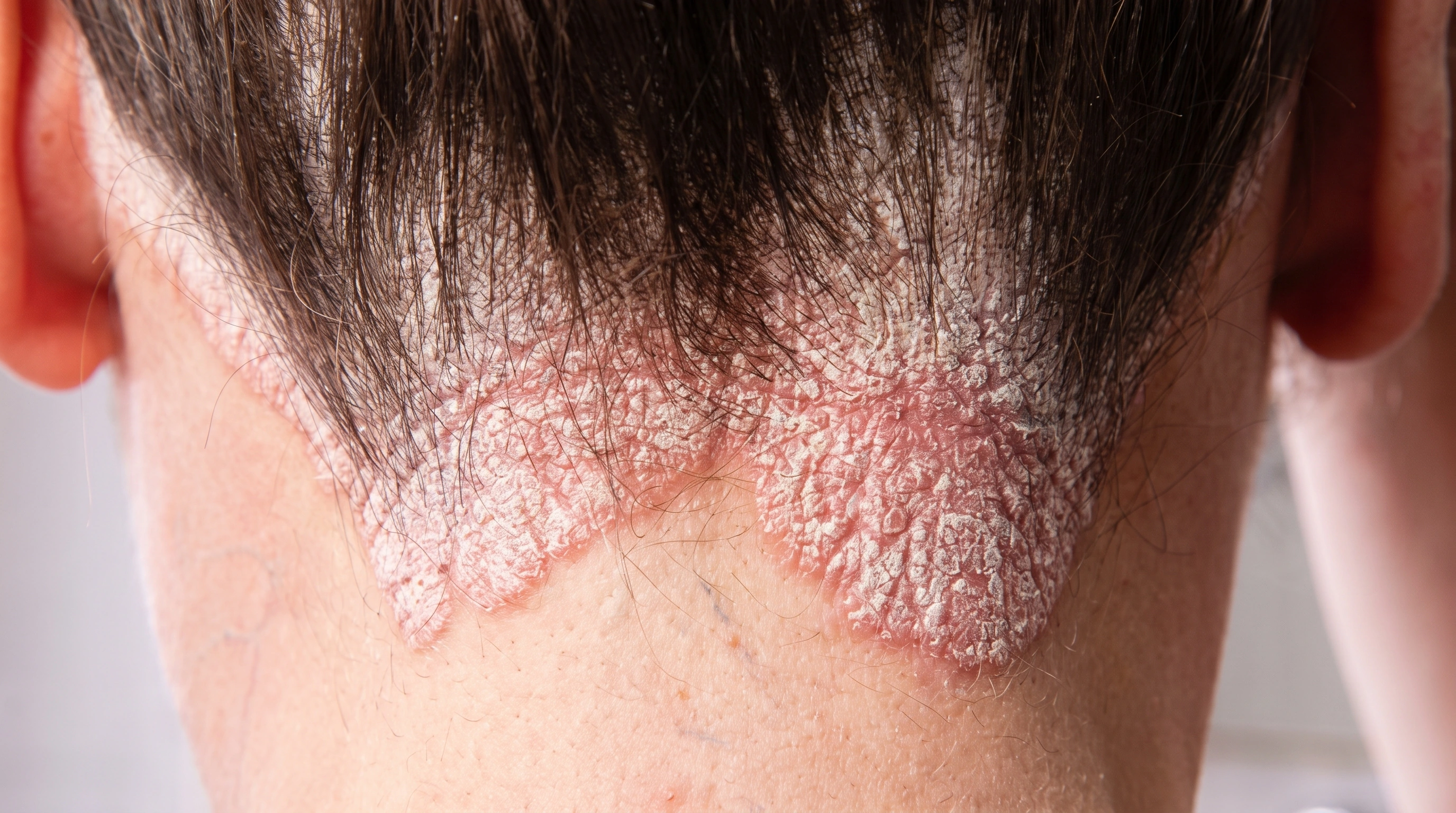
Parted hair on fair scalp skin showing a raised salmon-pink plaque topped with dry silvery-white scale, with a sharply drawn border against normal skin.

Scalp Psoriasis

The reviewed sources do not establish this ingredient as a treatment for this concern.
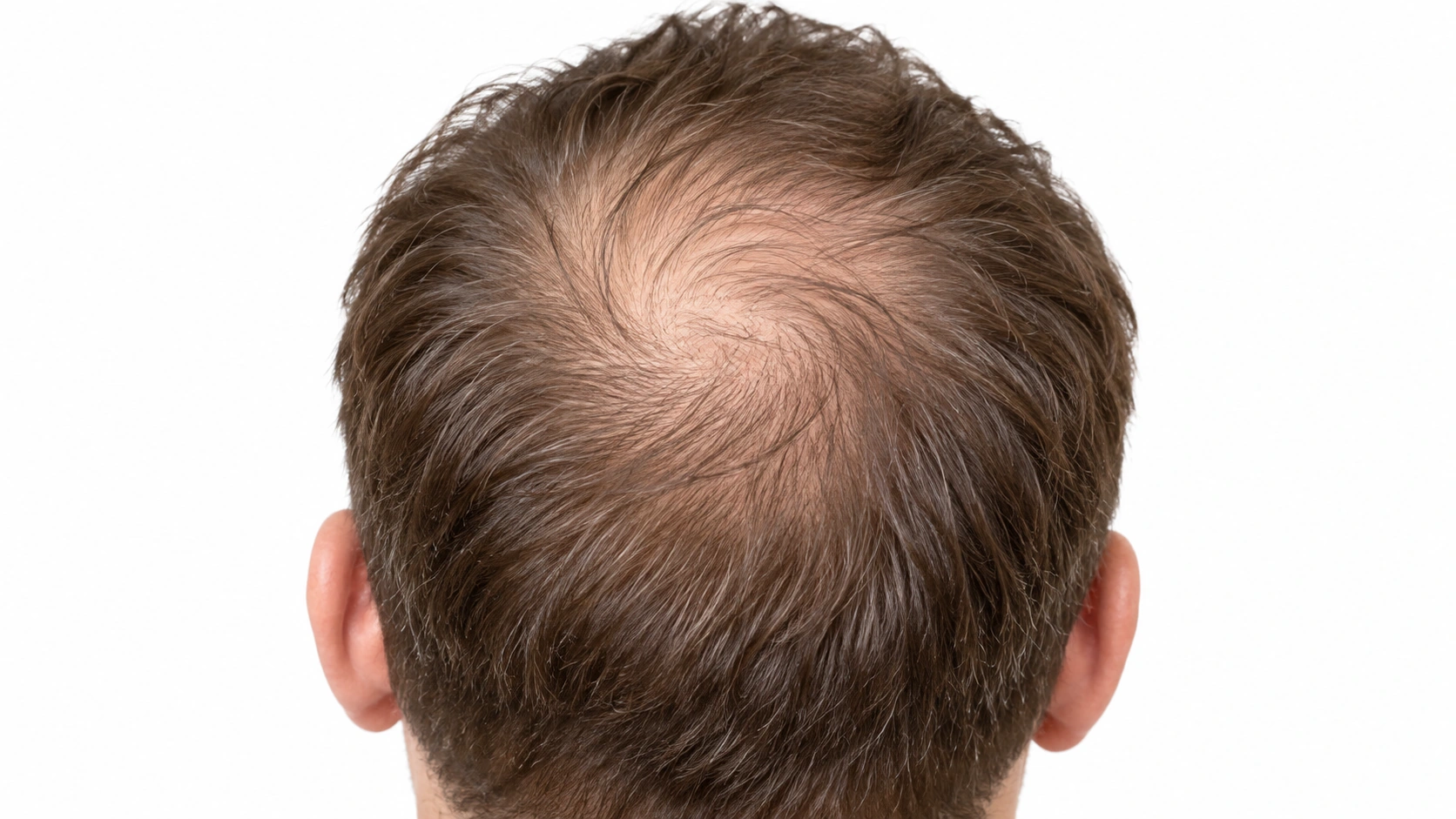
AI-generated educational illustration: Crown hair thinning with hair retained around the sides on a light scalp.

Male Pattern Hair Loss

The reviewed sources do not establish this ingredient as a treatment for this concern.
A part line in straight light hair, seen from above, on pale skin. White-gray flakes sit along the part and the scalp beneath them looks pink.

Dandruff

The reviewed sources do not establish this ingredient as a treatment for this concern.
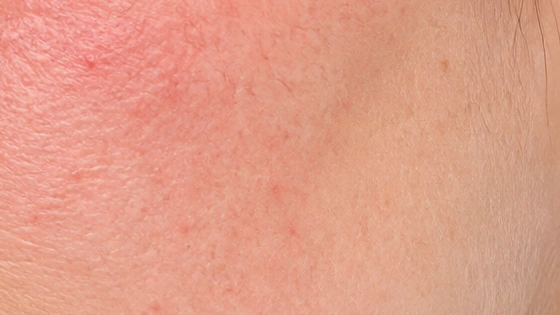
Sensitive Skin on light skin.

Sensitive Skin

Essential oil is not a treatment for sensitive skin and may cause allergy.
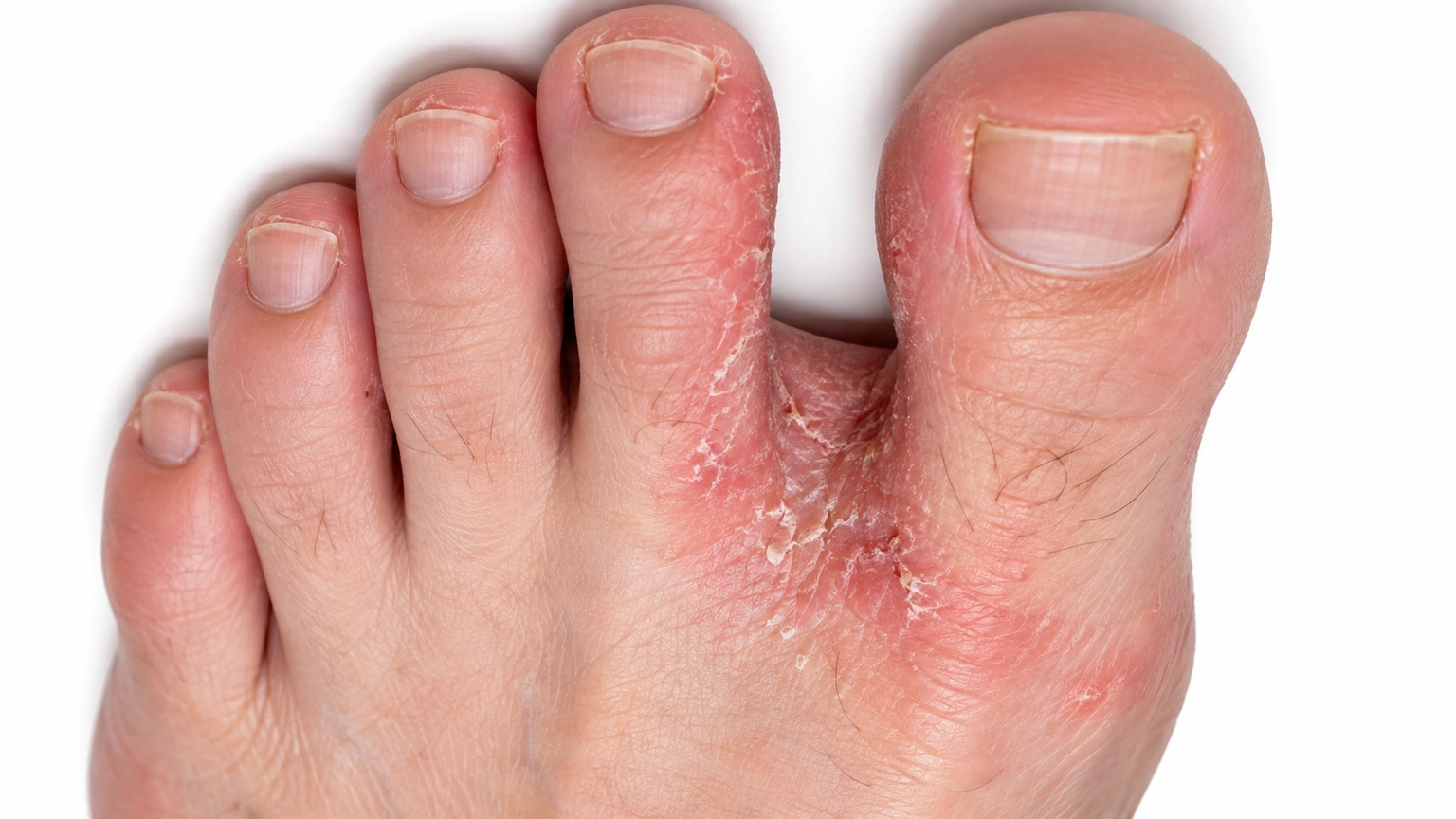
Athlete’s Foot: 1. Athlete’s Foot Header — Light Skin; Lighter skin.

Athlete’s Foot

The reviewed sources do not establish this ingredient as a treatment for this concern.
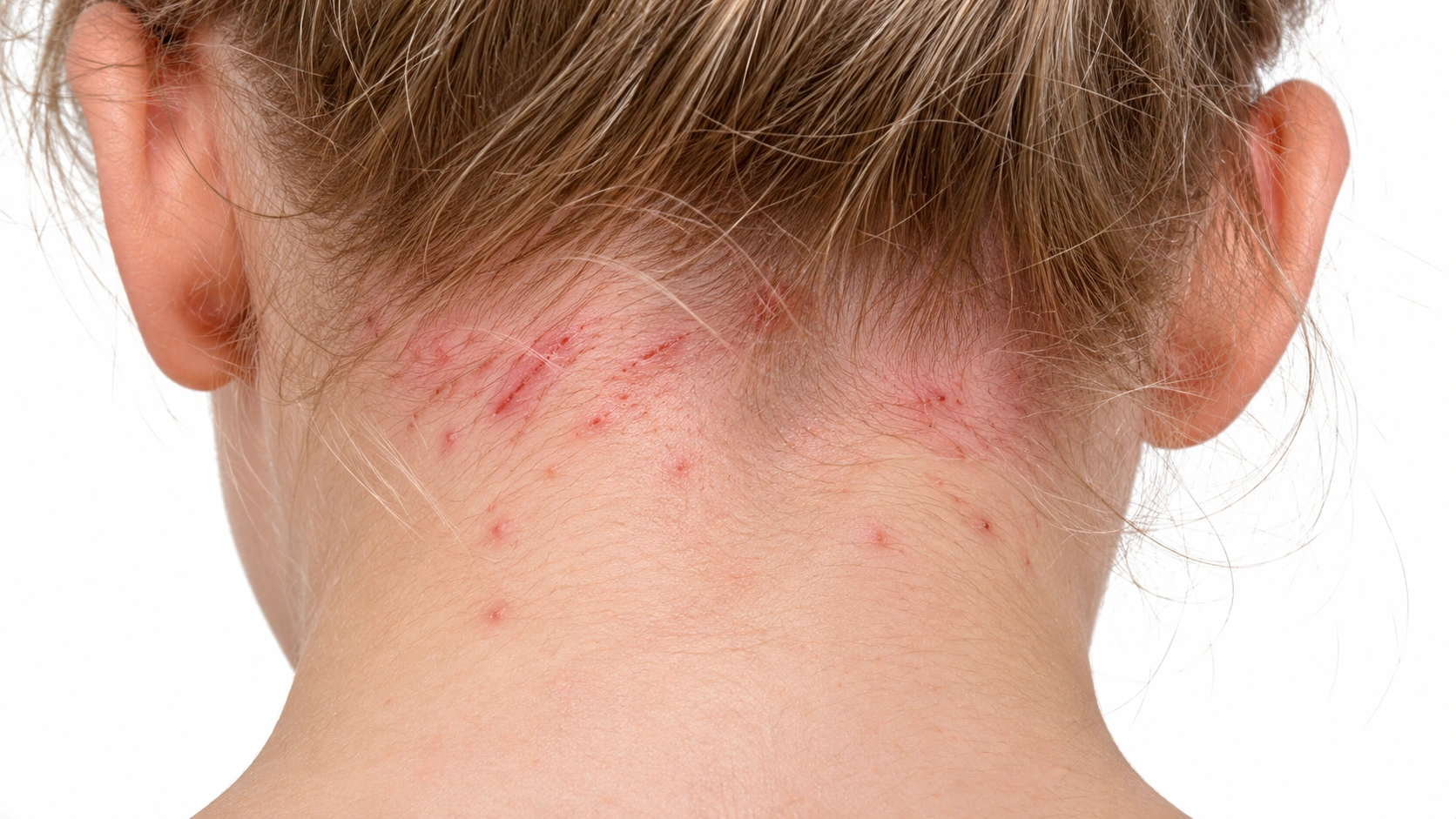
AI-generated educational illustration: Pink scratch marks and irritated bumps at the nape on light skin.

Head Lice

The reviewed sources do not establish this ingredient as a treatment for this concern.
How it works

Selenium Sulfide

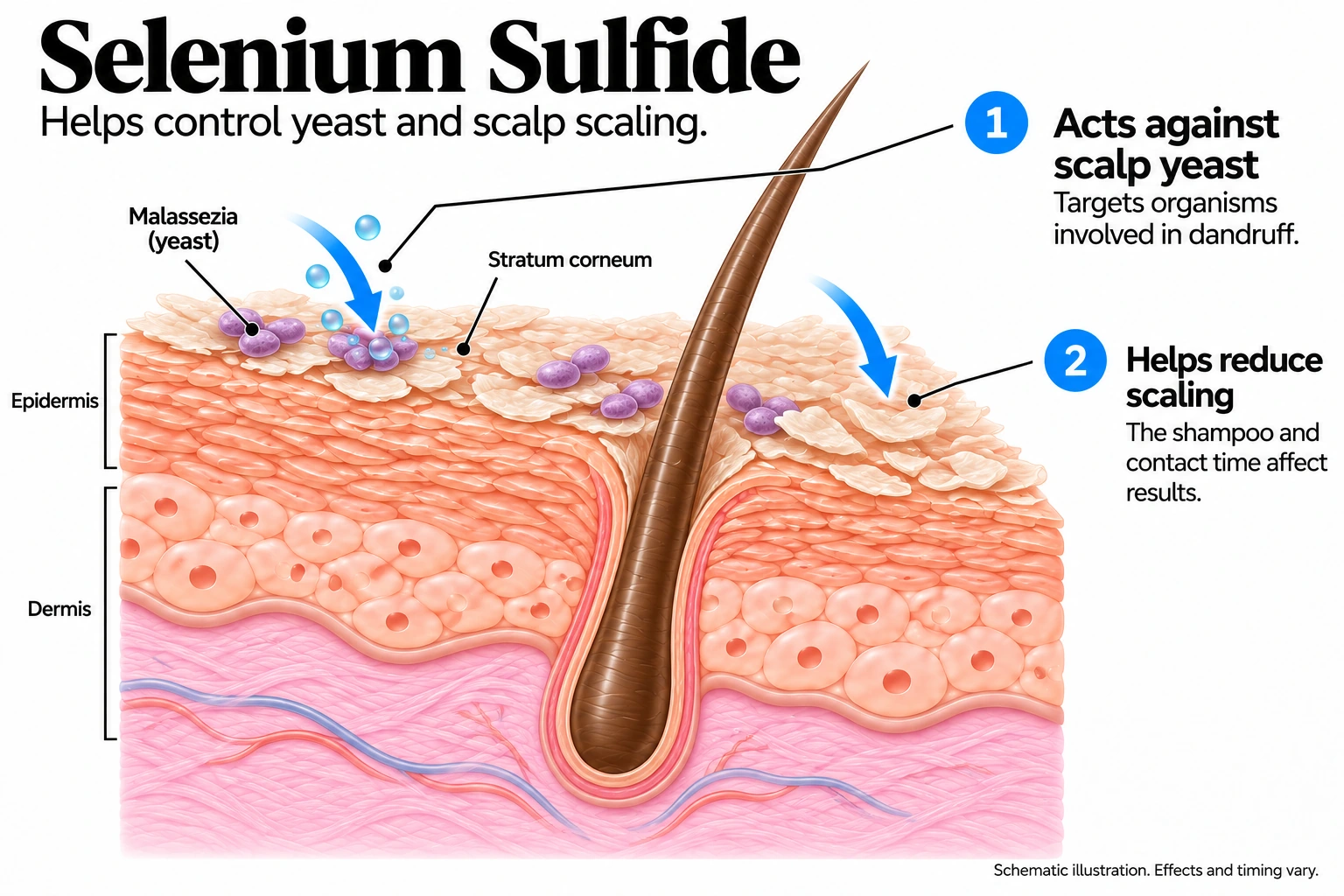
Selenium Sulfide mechanism diagram. Acts against scalp yeast: Targets organisms involved in dandruff. Helps reduce scaling: The shampoo and contact time affect results.
Open full-size diagram
Diagram explanation and sources

Acts against scalp yeast: Targets organisms involved in dandruff. Helps reduce scaling: The shampoo and contact time affect results.

Schematic illustration; not a measurement of skin penetration. Effects vary with ingredient identity and formulation.

Source 1 · Source 2

Tea Tree Oil

Tea Tree Oil mechanism diagram. Acts on microbes in lab tests: Terpenes can disrupt microbial membranes. Clinical effects depend on formula: Human acne evidence is limited.
Open full-size diagram
Diagram explanation and sources

Acts on microbes in lab tests: Terpenes can disrupt microbial membranes. Clinical effects depend on formula: Human acne evidence is limited.

Schematic illustration; not a measurement of skin penetration. Effects vary with ingredient identity and formulation.

Source 1 · Source 2

Using both in one routine

Built from where each one usually sits in a routine. Introduce one at a time.

Morning
Step 1
Cleanser
Step 2
Tea Tree OilMorning or night
Step 3
Moisturizer
Step 4
Sunscreen
Step 5
Selenium SulfideAs directed
Night
Step 1
Cleanser
Step 2
Tea Tree OilMorning or night
Step 3
Moisturizer
Step 4
Selenium SulfideAs directed

Strengths and forms

Concentrations

Selenium sulfide products include 1% dandruff shampoo and stronger medicated formulations such as 2.25% shampoo and 2.5% lotion or suspension. Their indications and contact instructions differ.

1%

2.25%

2.5%

OTC dandruff shampoo

A U.S. monograph concentration for dandruff shampoo. Use and rinse as the label directs.

Other medicated shampoo

A labeled medicated formulation with its own indication and instructions; not simply an interchangeable mid-strength option.

Prescription lotion or suspension

Used for conditions including scalp seborrheic dermatitis and tinea versicolor, according to the product’s label.

Choosing a strength: Match the formulation to the diagnosis and body area. Scalp dandruff and tinea versicolor require different instructions.

Higher strengths: Do not treat a higher percentage as permission for longer contact or use on irritated skin.

Formula matters: Suspension, lotion and shampoo bases differ. Thorough rinsing and the stated application schedule are part of the treatment.

Tea tree oil has limited clinical evidence for acne in formulated topical products. The studied concentration is not a reason to use undiluted essential oil.

5%

Acne gel studied

A small randomized placebo-controlled trial found improvement with a 5% tea tree oil gel over 45 days. This does not establish equivalence to standard acne medicines.

Choosing a strength: Choose a finished topical product with directions for use; stop if it causes irritation.

Higher strengths: Higher concentrations have not been established as more effective and may increase irritation or allergic reactions.

Formula matters: Tea tree oil must not be swallowed. Aged or oxidized oil can be more likely to cause an allergic reaction.

Forms
Shampoo · Lotion
Gel · Oil · Wash

When you’ll see results

Approximate windows, not promises.

● Selenium Sulfide
● Tea Tree Oil
First few weeks

First few weeksDandruff may begin to improve during the first few weeks.

First few weeksAssess tolerance and texture; immediate softness can come from the base formula.

4–8 weeks

4–8 weeksReassess control; persistent or worsening scale needs diagnosis.

4–8 weeksSubtle changes may appear in some tested products; evidence varies.

8–12 weeks

8–12 weeksSome conditions need maintenance as directed on the label.

8–12 weeksCompare photographs in the same lighting and reassess benefit.

3–6 months

3–6 monthsRecurrence does not mean every scalp rash is yeast-related.

3–6 monthsPhotoaging trials often need several months; expect modest rather than dramatic change.

6–12 months

6–12 monthsLong-term plans depend on the diagnosis and the specific product.

6–12 monthsLong-term evidence is limited for many cosmetic actives; continue only if useful.

Safety and sensitive skin

Common reactions

May irritate and can affect hair colour or jewellery; rinse thoroughly.

Can cause irritant or allergic dermatitis, especially when oxidized; never swallow it.

When to stop

Stop for persistent burning, swelling, blistering or a new rash. Seek urgent care for breathing difficulty or a severe allergic reaction.

Stop for persistent burning, swelling, blistering or a new rash. Seek urgent care for breathing difficulty or a severe allergic reaction.

Sensitive or inflamed skin

Choose a simple formula and test a small area first. Individual tolerance matters more than an ingredient’s reputation for being gentle.

Choose a simple formula and test a small area first. Individual tolerance matters more than an ingredient’s reputation for being gentle.

Important limits

Do not use a cosmetic product as a substitute for diagnosis of an unexplained, changing or persistent skin problem.

Do not use a cosmetic product as a substitute for diagnosis of an unexplained, changing or persistent skin problem.

Pregnancy

Data are limited; ask before using, especially over large areas of skin.

Data are limited; ask the clinician managing your pregnancy.

How it works

In the skin

On the skin. The finished product delivers selenium sulfide in a particular vehicle.

Entering skin. Variable composition; no single molecular mass. Its action in labelled washes does not require deep skin penetration.

Conversion. No activation step is established as necessary for its intended topical role.

Skin response. Reduces organisms involved in dandruff and tinea versicolor and affects scalp scaling.

Additional effects. Proposed pathways do not establish a measured depth of delivery or clinical benefit beyond the studies cited.

On the skin. The finished product delivers tea tree oil in a particular vehicle.

Entering skin. No single molecular mass. The 500 Da guideline cannot be applied to this whole ingredient family or mixture.

Conversion. No activation step is established as necessary for its intended topical role.

Skin response. Its mixture has antimicrobial effects in laboratory tests; clinical benefit and allergy depend on the formula.

Additional effects. Proposed pathways do not establish a measured depth of delivery or clinical benefit beyond the studies cited.

Getting in
Variable composition; no single molecular mass. Its action in labelled washes does not require deep skin penetration.
No single molecular mass. The 500 Da guideline cannot be applied to this whole ingredient family or mixture.

Product examples

Selenium Sulfide
  • Selsun Blue Medicated Anti-Dandruff Shampoo
  • Head & Shoulders Clinical Strength Dandruff Defense Advanced Oil
  • Selsun Blue 2-in-1 Antidandruff Shampoo & Conditioner
Tea Tree Oil
  • SKIN1004 Madagascar Centella Tea-Trica Spot Cream

Common questions

Selenium Sulfide:What should I choose selenium sulfide for?

Choose for dandruff or a diagnosed yeast-related condition; follow the specific label.

Selenium Sulfide:How strong is the evidence?

Controlled trials support 2.5% products for dandruff and tinea versicolor. They do not establish treatment of psoriasis or hair loss, and lighter or darker patches can persist after yeast control.

Tea Tree Oil:What should I choose tea tree oil for?

Consider only a properly formulated acne product; standard acne medicines have broader evidence.

Tea Tree Oil:How strong is the evidence?

A small placebo-controlled trial supports a 5% acne gel. Other trials compare active products; they do not establish benefit for every fungal infection, scalp condition or undiluted oil.

Sources
Sources and further reading

  1. A randomized, double-blind, placebo-controlled trial of ketoconazole 2% shampoo versus selenium sulfide 2.5% shampoo in the treatment of moderate to severe dandruff. (1993)
  2. Double-blind efficacy study of selenium sulfide in tinea versicolor. (1984)
  3. The efficacy of 5% topical tea tree oil gel in mild to moderate acne vulgaris: a randomized, double-blind placebo-controlled study. (2007)
  4. A comparative study of tea-tree oil versus benzoylperoxide in the treatment of acne. (1990)
  5. FDA dandruff, seborrheic dermatitis and psoriasis monograph M032
  6. DailyMed: selenium sulfide 2.25% shampoo
  7. DailyMed: selenium sulfide 2.5% lotion
  8. NCCIH: tea tree oil evidence and safety
Dermapedia on YouTube