Post-Inflammatory Hyperpigmentation vs Melasma

Post-inflammatory hyperpigmentation is the flat brown or gray mark left behind after a spot, rash or injury heals. It is not a scar, and given time and sun protection it fades. Melasma is a pigment condition that causes brown or gray-brown patches, usually across the cheeks, forehead and upper lip. It is driven by light, heat and hormones, which is why it is managed rather than cured.

Reviewed by Dr. Schwarz, Board-Certified Dermatologist · Research updated 2026-10-23
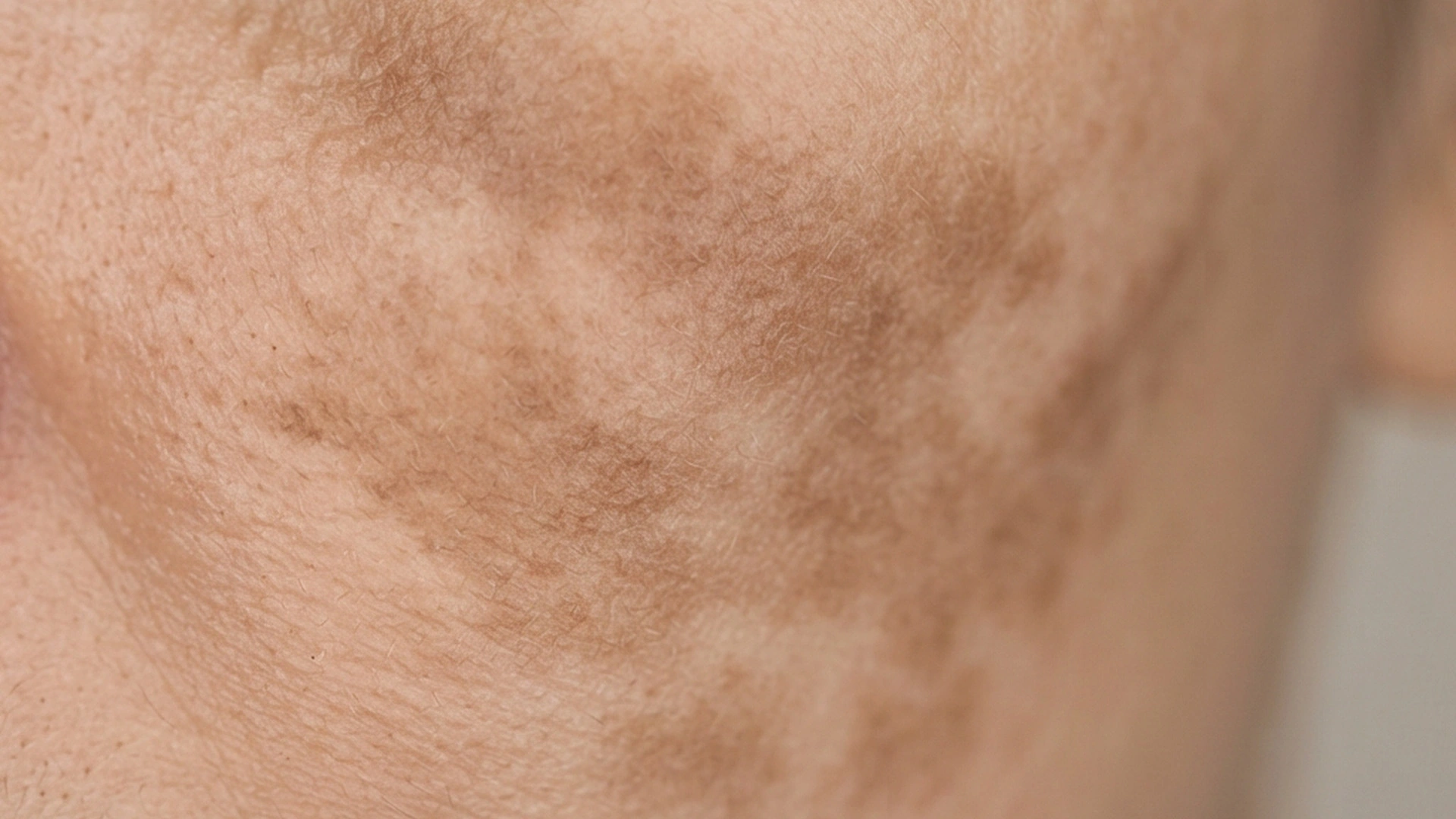
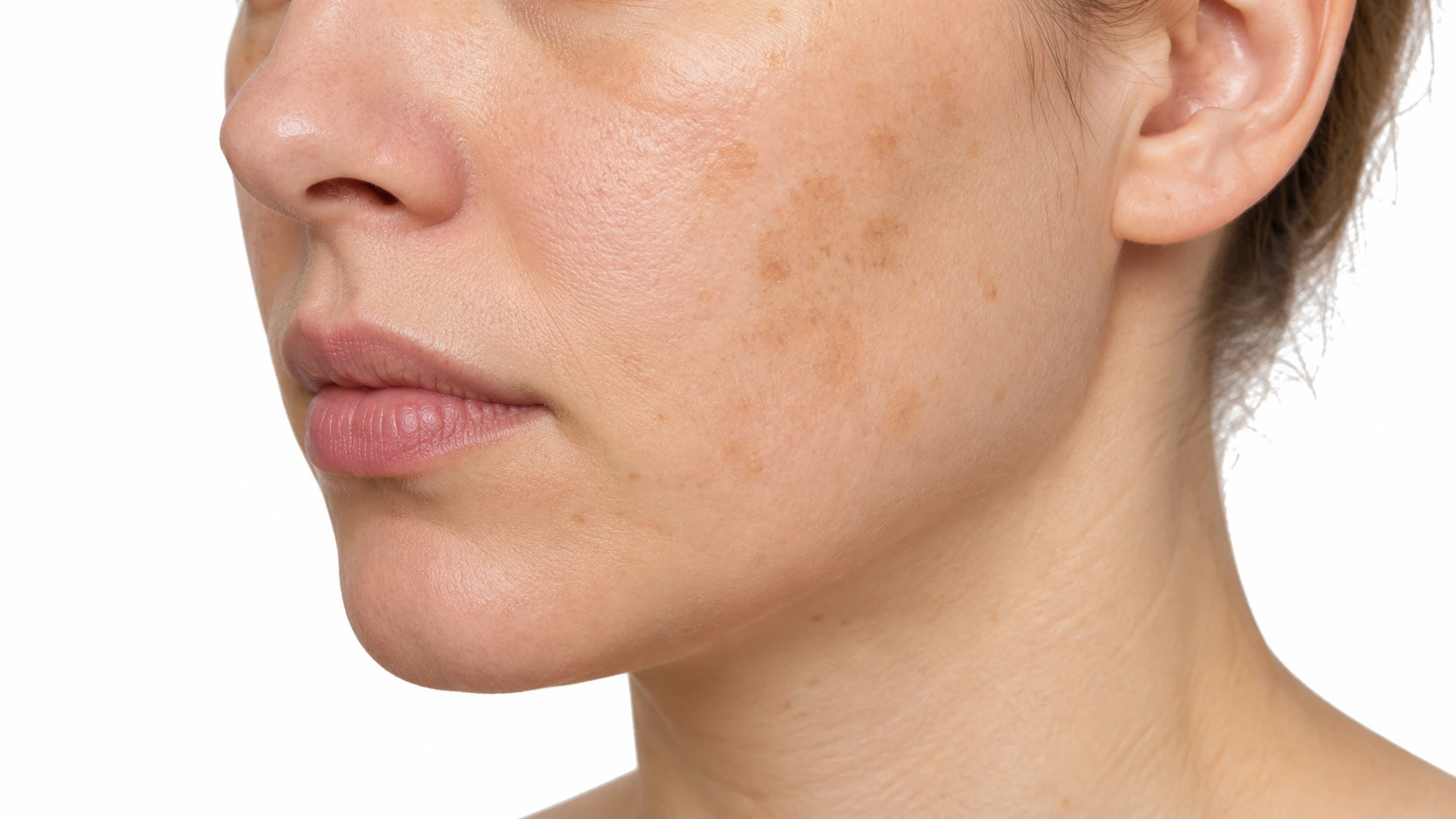
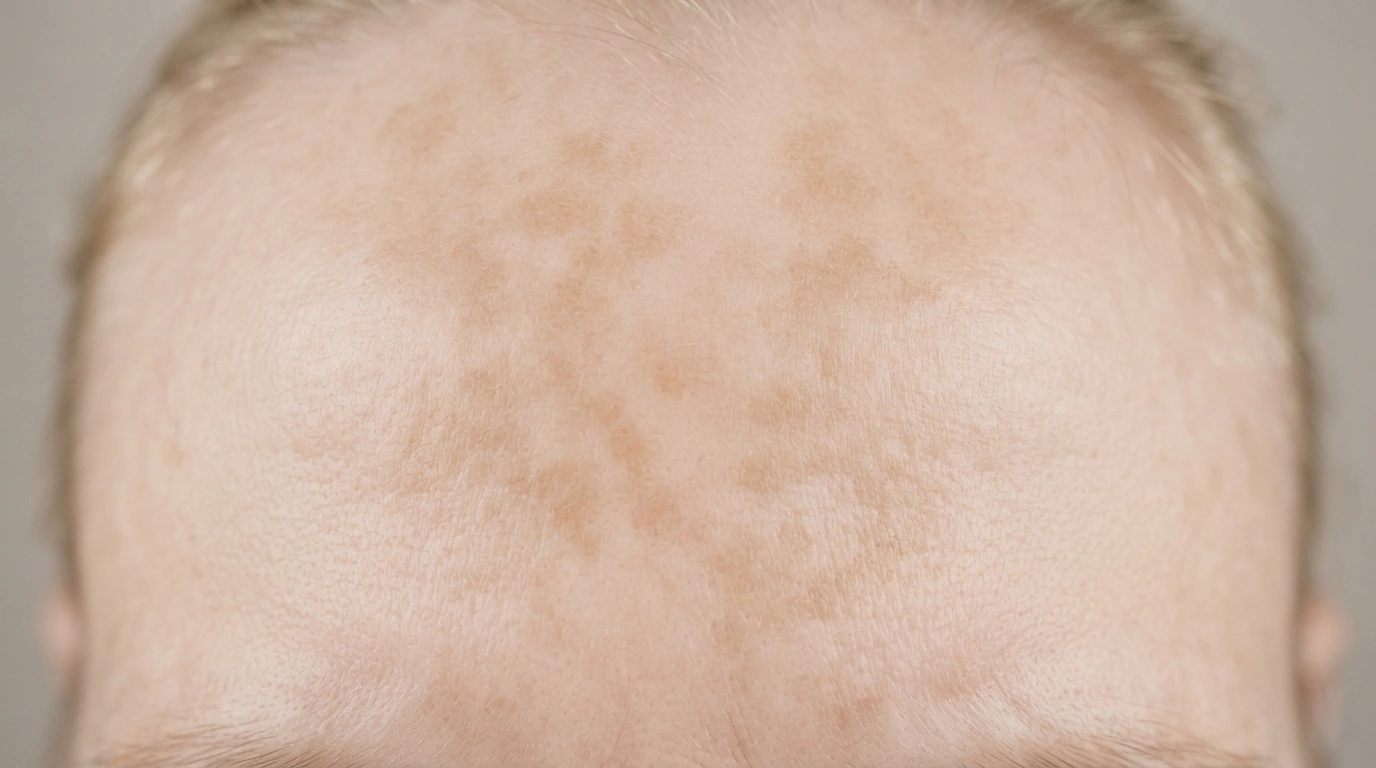
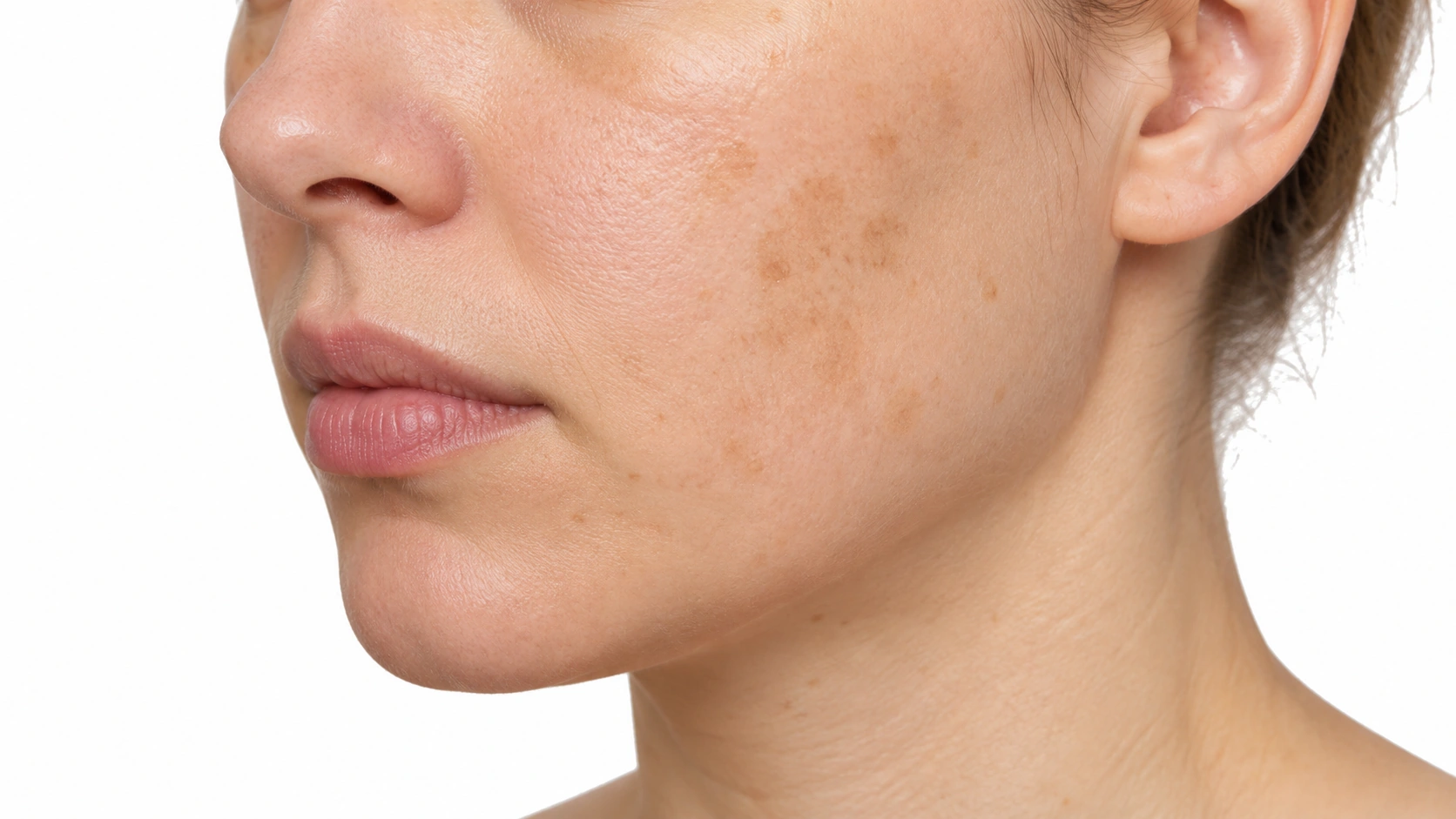
Flat light-brown residual marks on a fair cheek.Flat tan patches with soft irregular edges across the forehead and upper cheek of an adult with light skin, the surface completely smooth.

Key differences

The same eight facts on every condition comparison.

Usual age
Any age
20s to 40s
Where
Where skin was inflamed
Cheeks, forehead, upper lip
Main sign
Flat brown or grey mark
Symmetrical brown or gray-brown patches
Itch or pain
Neither
No
Contagious
No
No
Long term
Fades over months
Managed, not cured
Scars
No
No
Who gets it
Darker skin tones most
Women; deeper skin tones; pregnancy

What is it?

Post-Inflammatory Hyperpigmentation
Melasma
What is it?

It is pigment left after inflammation.
Inflammation increases or redistributes pigment in the skin.

It mirrors the original lesion.
Marks often follow the shape and location of the earlier spot.

Active disease may coexist.
Old pigment does not mean inflammation is controlled.

Pigment differs from scarring.
A flat dark mark is not the same as a raised or sunken scar.

It is acquired facial pigmentation.
It produces irregular brown or gray-brown patches, usually on both sides.

It affects all skin tones.
It is especially noticeable in more deeply pigmented skin.

It does not cause a rash.
The patches themselves usually do not scale or hurt.

It differs from other dark marks.
A single sun spot or post-rash marks need a different approach.

What it looks like

Post-Inflammatory Hyperpigmentation

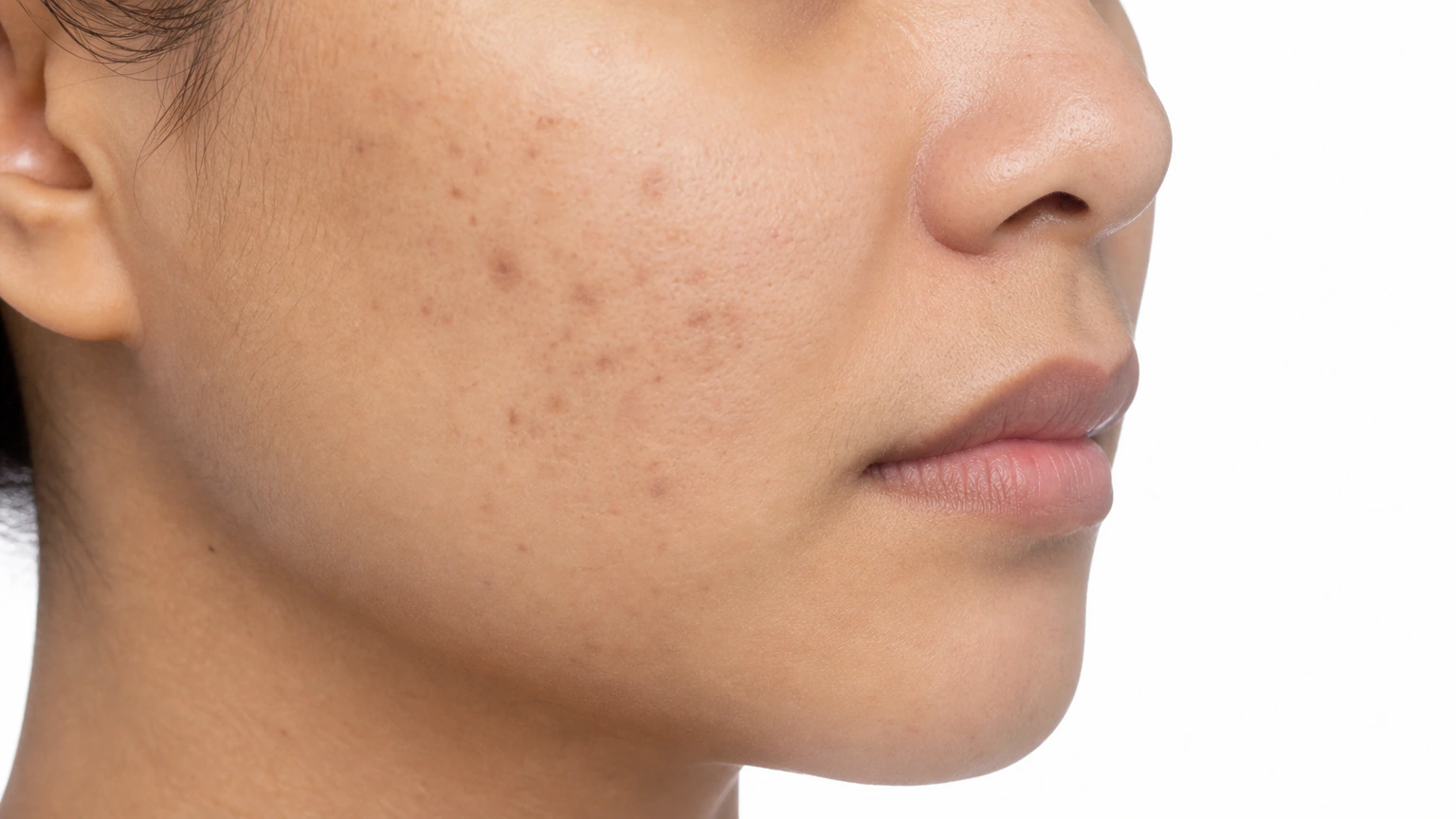
Flat brown residual marks after acne on the cheek, representing epidermal post-inflammatory pigmentation.

Epidermal hyperpigmentation Brown, in the surface; fades faster.

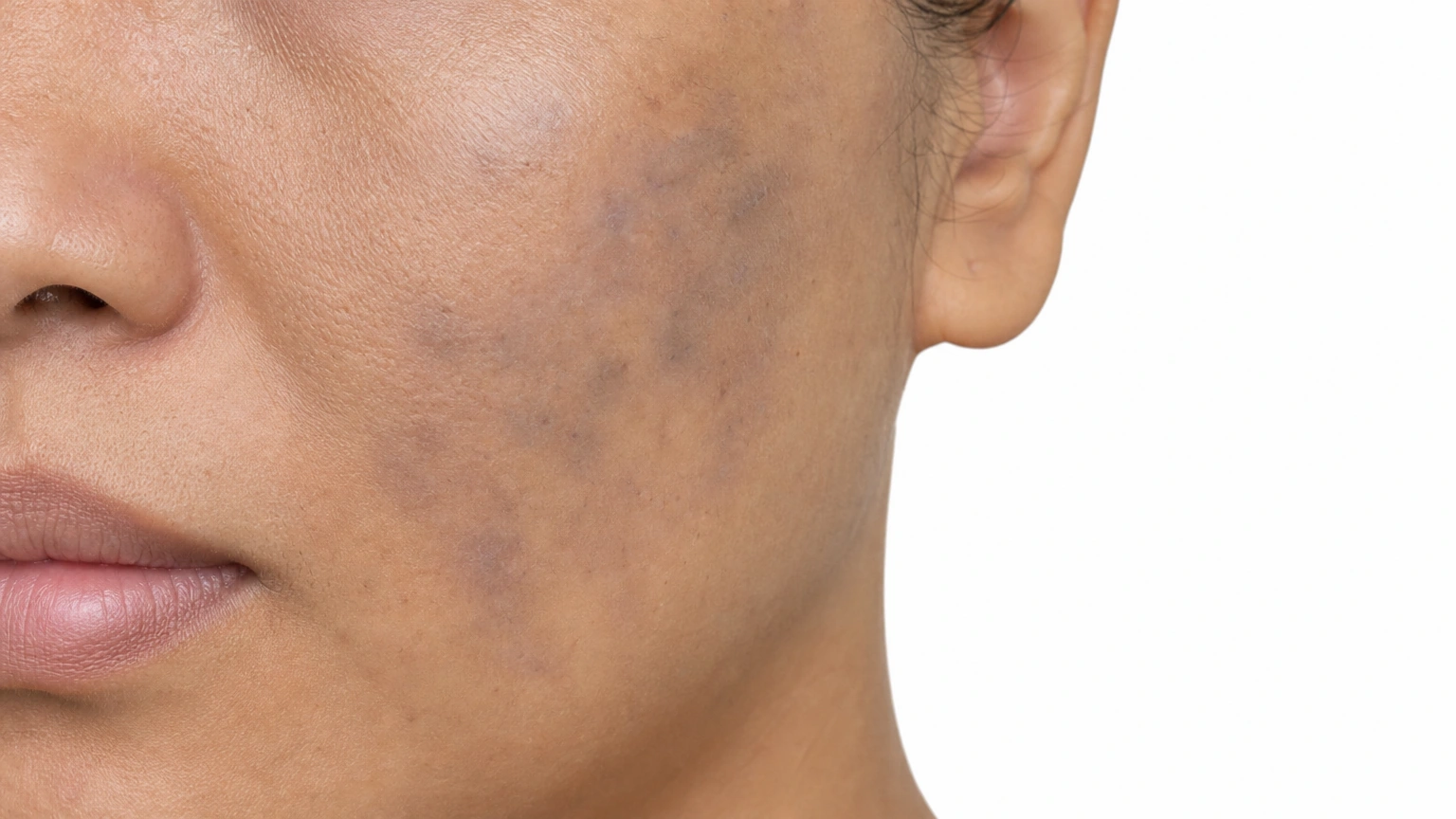
Flat blue-gray residual marks on the cheek, representing deeper post-inflammatory pigment.

Dermal hyperpigmentation Blue-gray, deeper; fades slowly.

Melasma

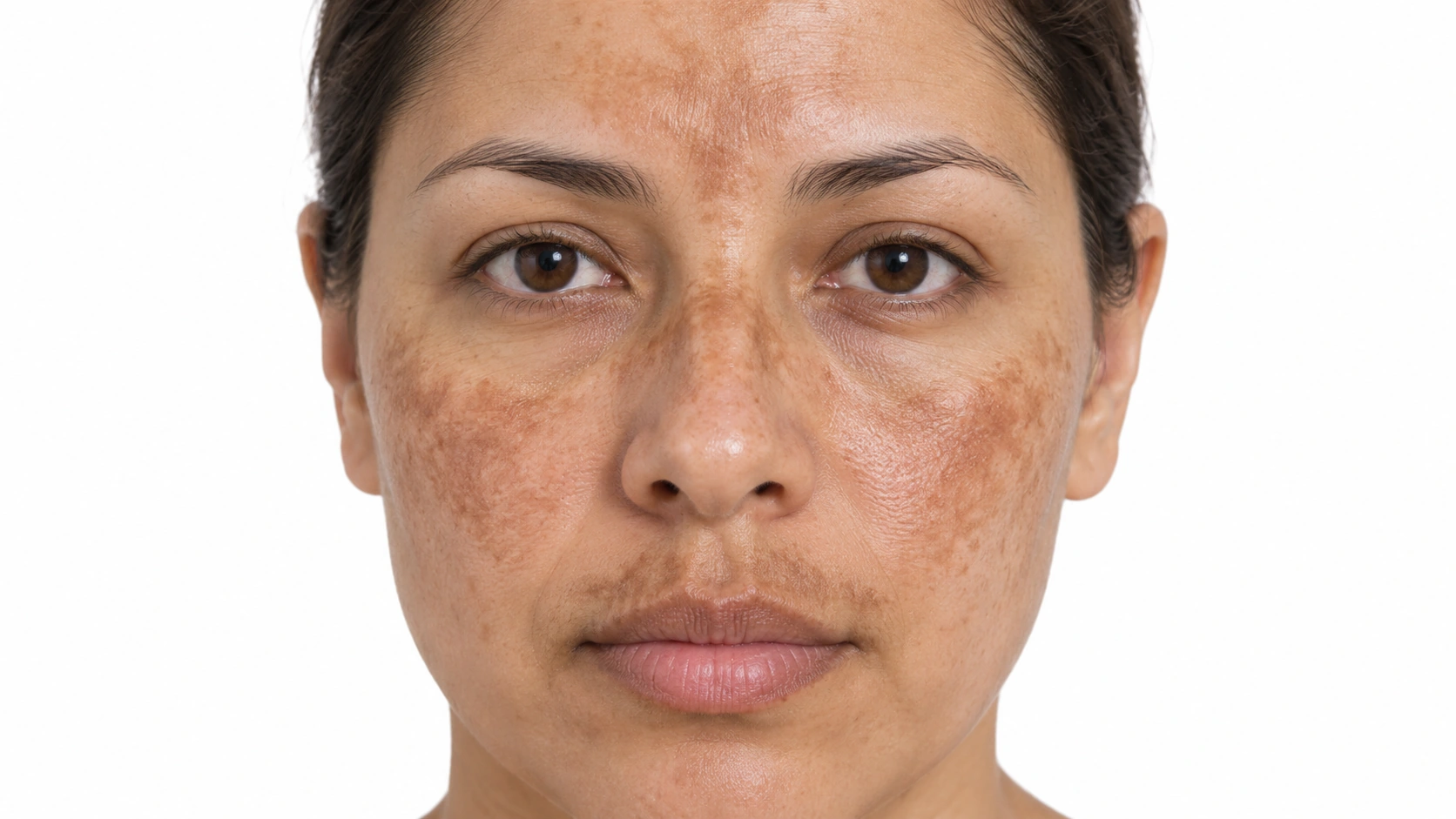
Melasma across the center of the face.

Centrofacial melasma Forehead, cheeks, nose and lip; most common.

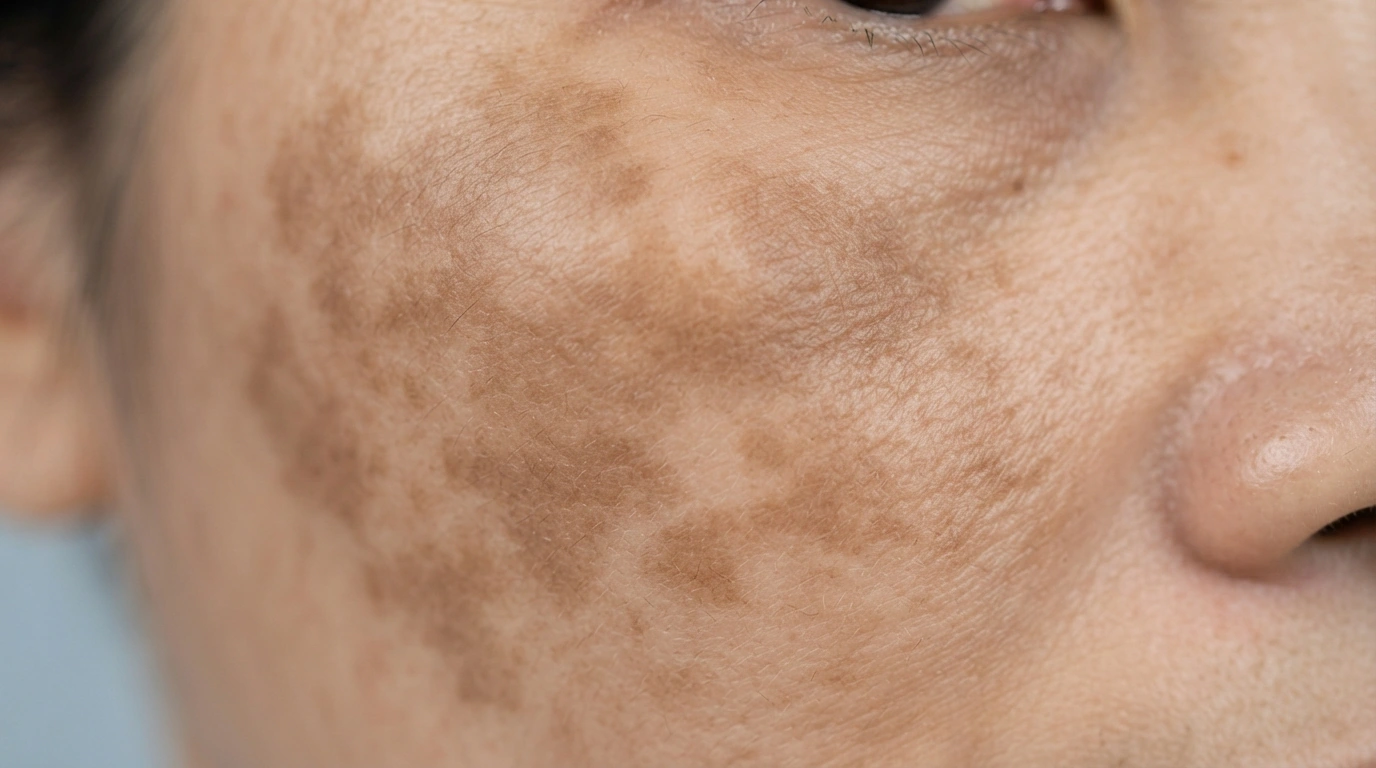
A flat light brown patch spread over one cheekbone, with edges that fade gradually into normal skin and no texture change.

Malar melasma Cheeks and nose.

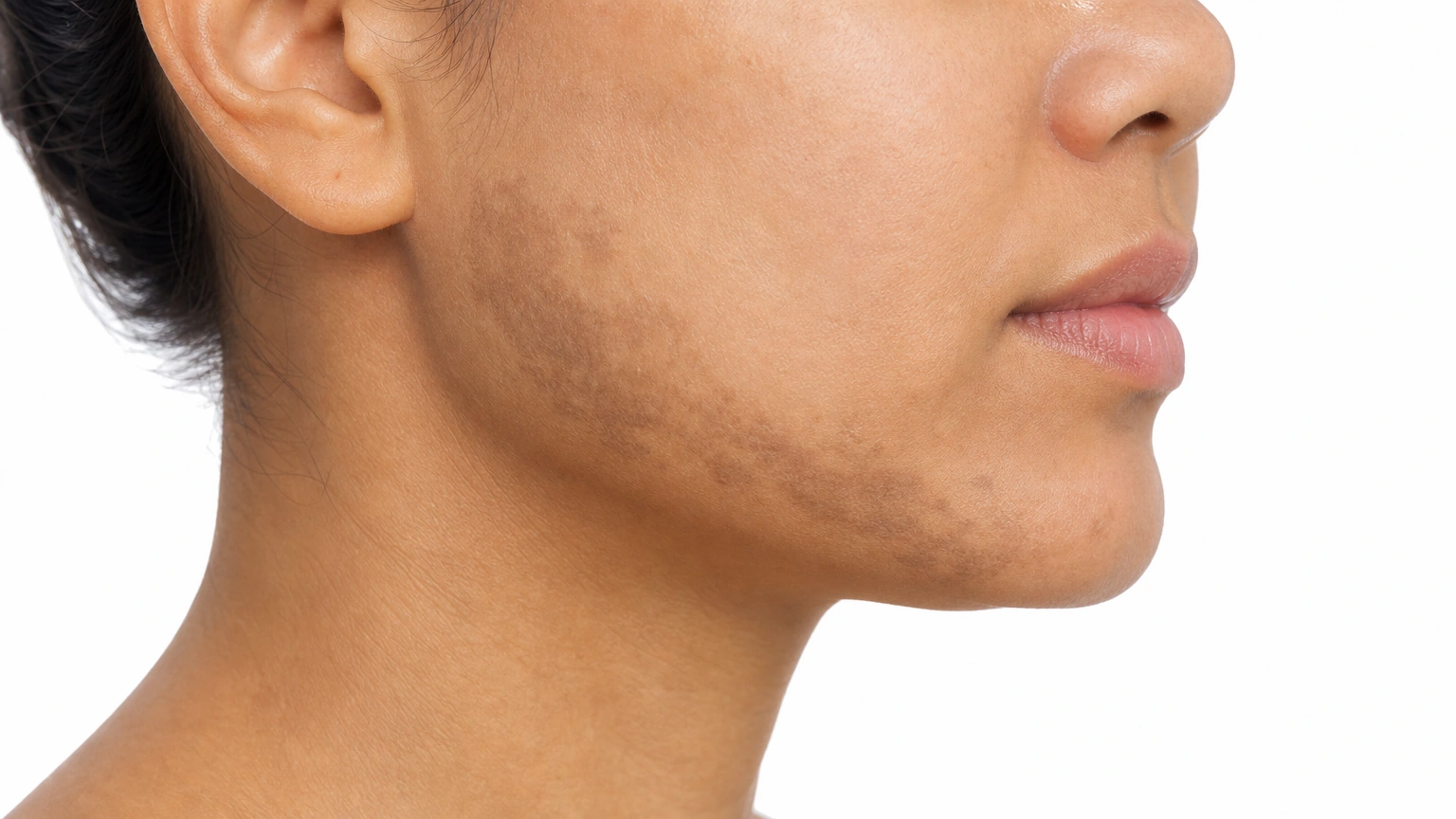
Flat irregular brown pigmentation along the jawline and lower cheek, representing mandibular melasma.

Mandibular melasma Along the jawline.

Skin tones
Flat light-brown residual marks on a fair cheek.
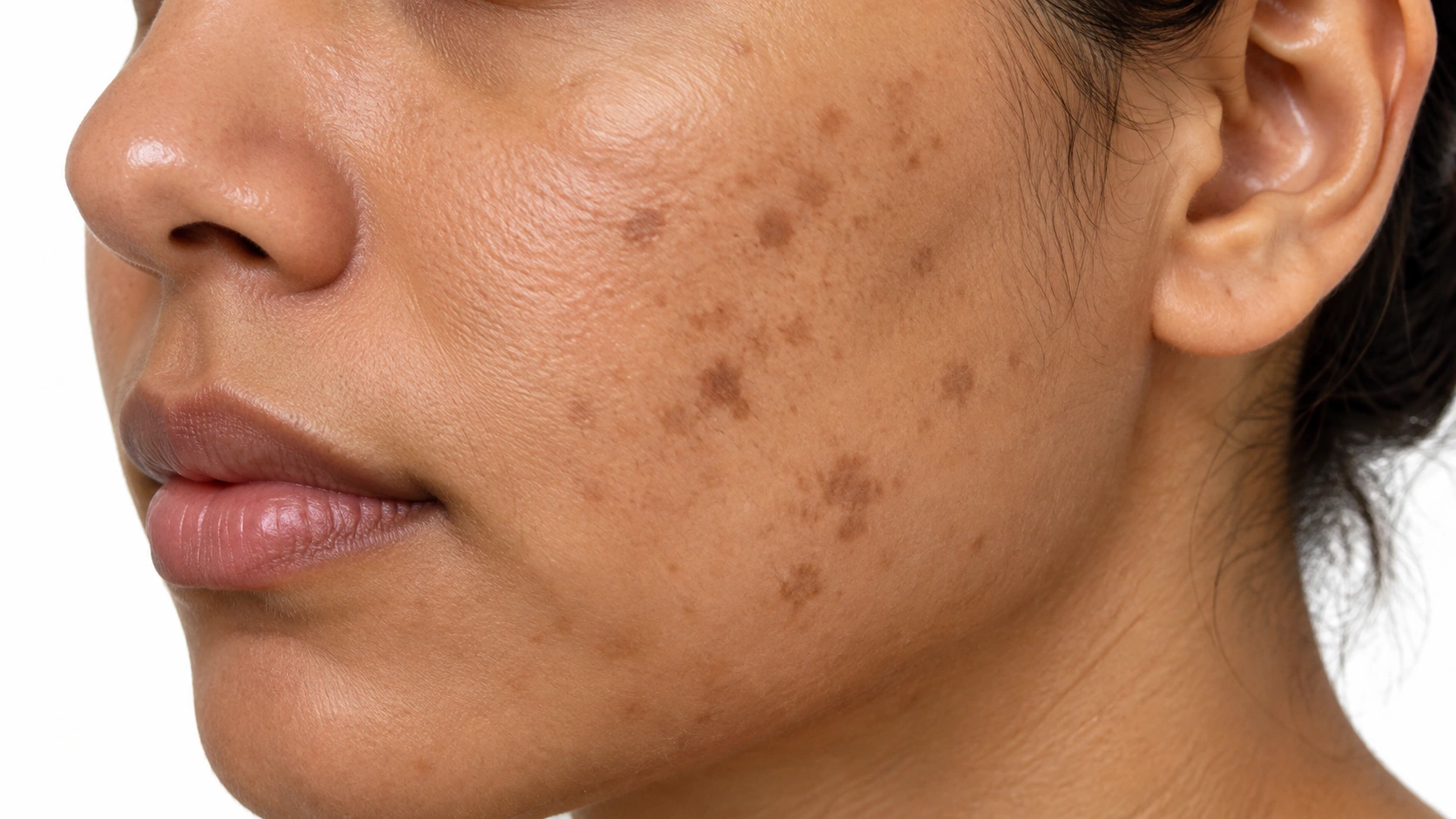
Flat residual brown marks on a medium-toned cheek.
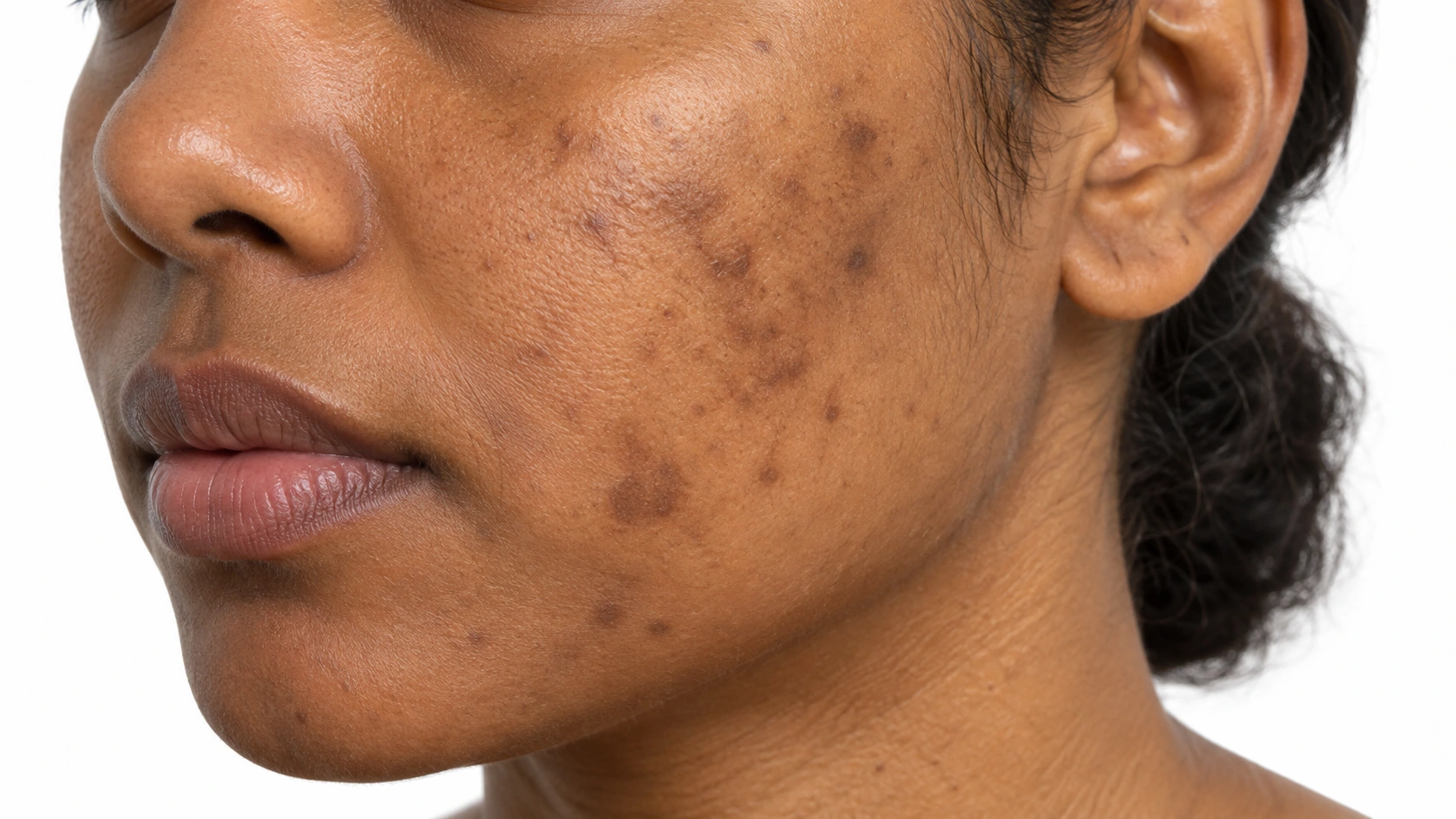
flat residual brown marks on a brown-skinned cheek, representing post-inflammatory hyperpigmentation.
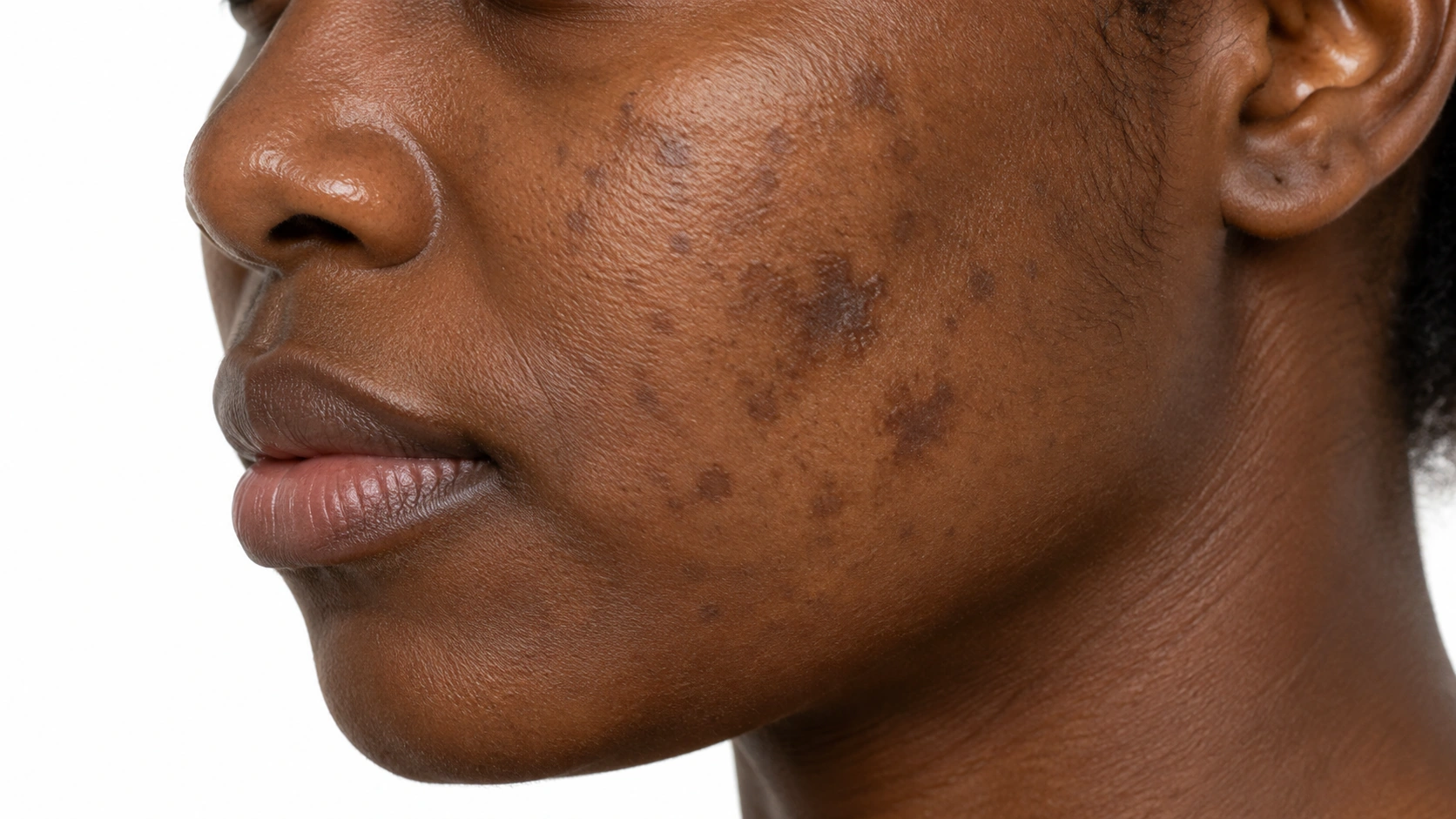
flat residual brown marks on deep brown cheek skin.
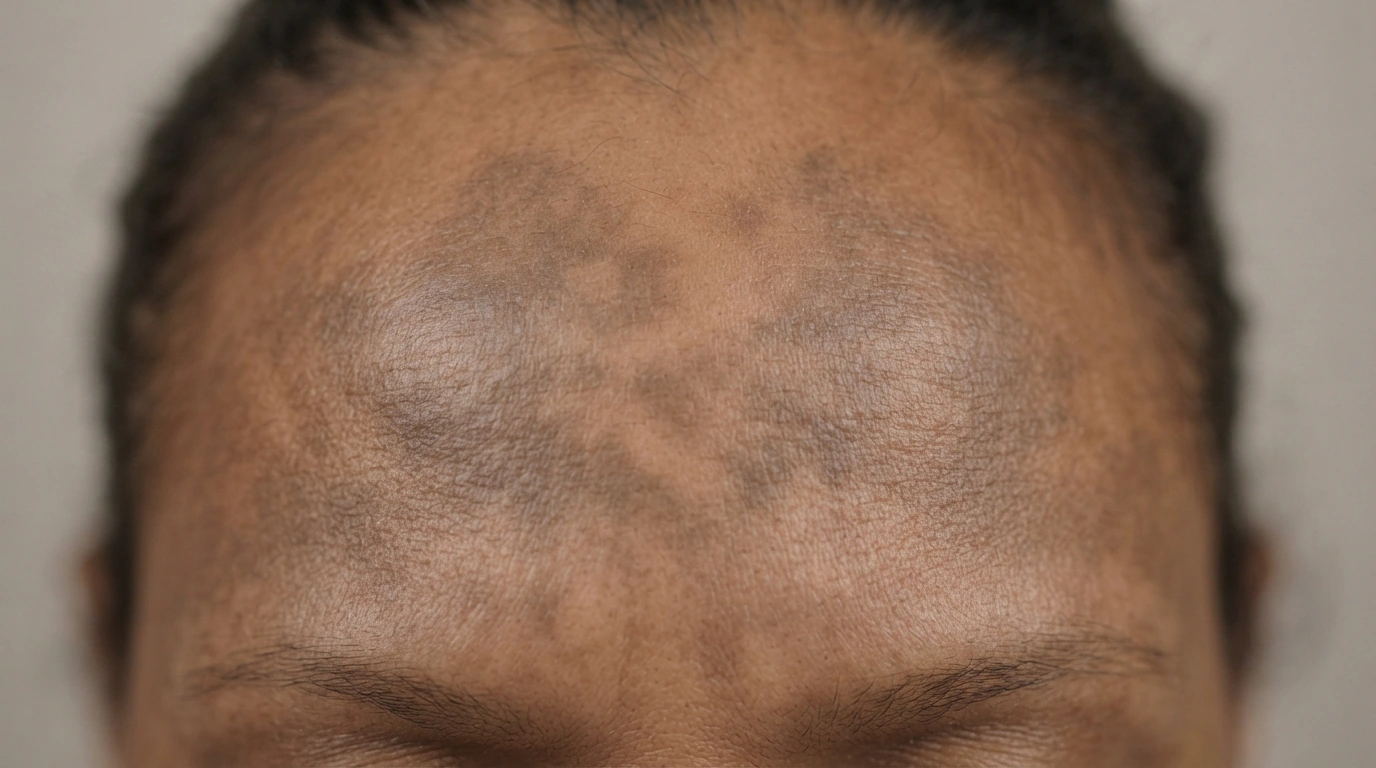
Flat tan patches with soft irregular edges across the forehead and upper cheek of an adult with light skin, the surface completely smooth.
Flat mid-brown patches with soft irregular edges across the forehead and upper cheek of an adult with medium tan skin, the surface completely smooth.
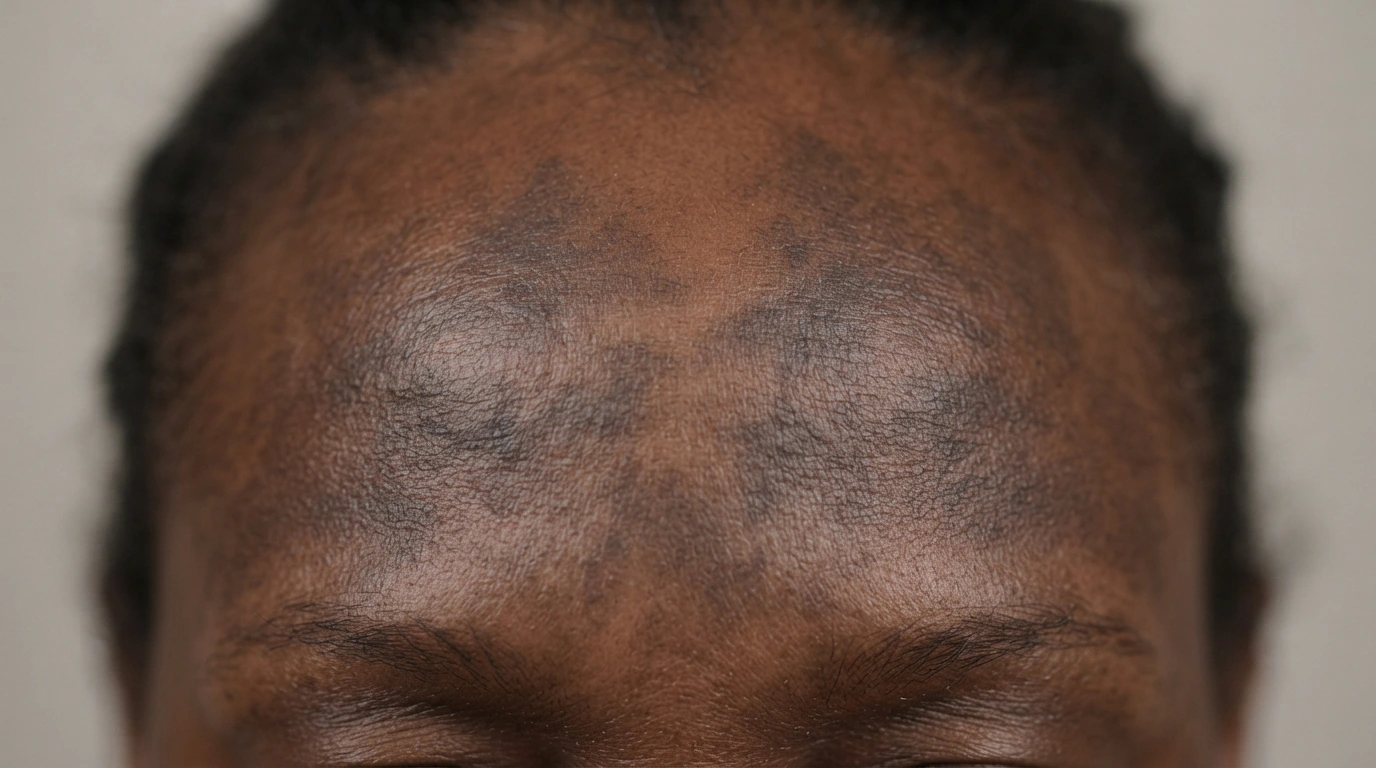
Flat gray-brown patches with soft irregular edges across the forehead and upper cheek of an adult with brown skin, the surface completely smooth.
Flat slate gray-brown patches with soft irregular edges across the forehead and upper cheek of an adult with deep brown skin, the surface completely smooth.
Diagram
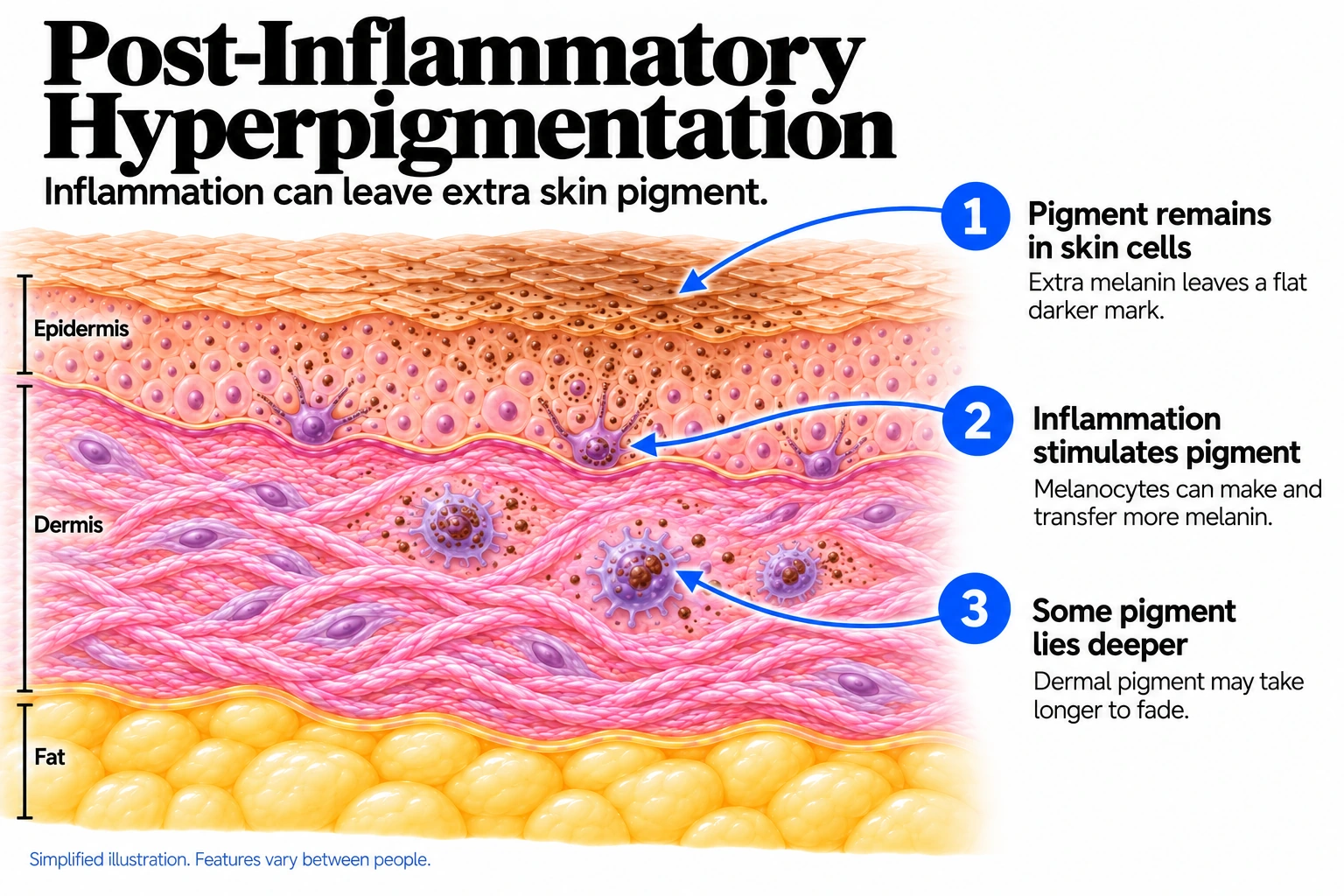
Post-Inflammatory Hyperpigmentation mechanism diagram. Pigment remains in skin cells: Extra melanin leaves a flat darker mark. Inflammation stimulates pigment: Melanocytes can make and transfer more melanin. Some pigment lies deeper: Dermal pigment may take longer to fade.
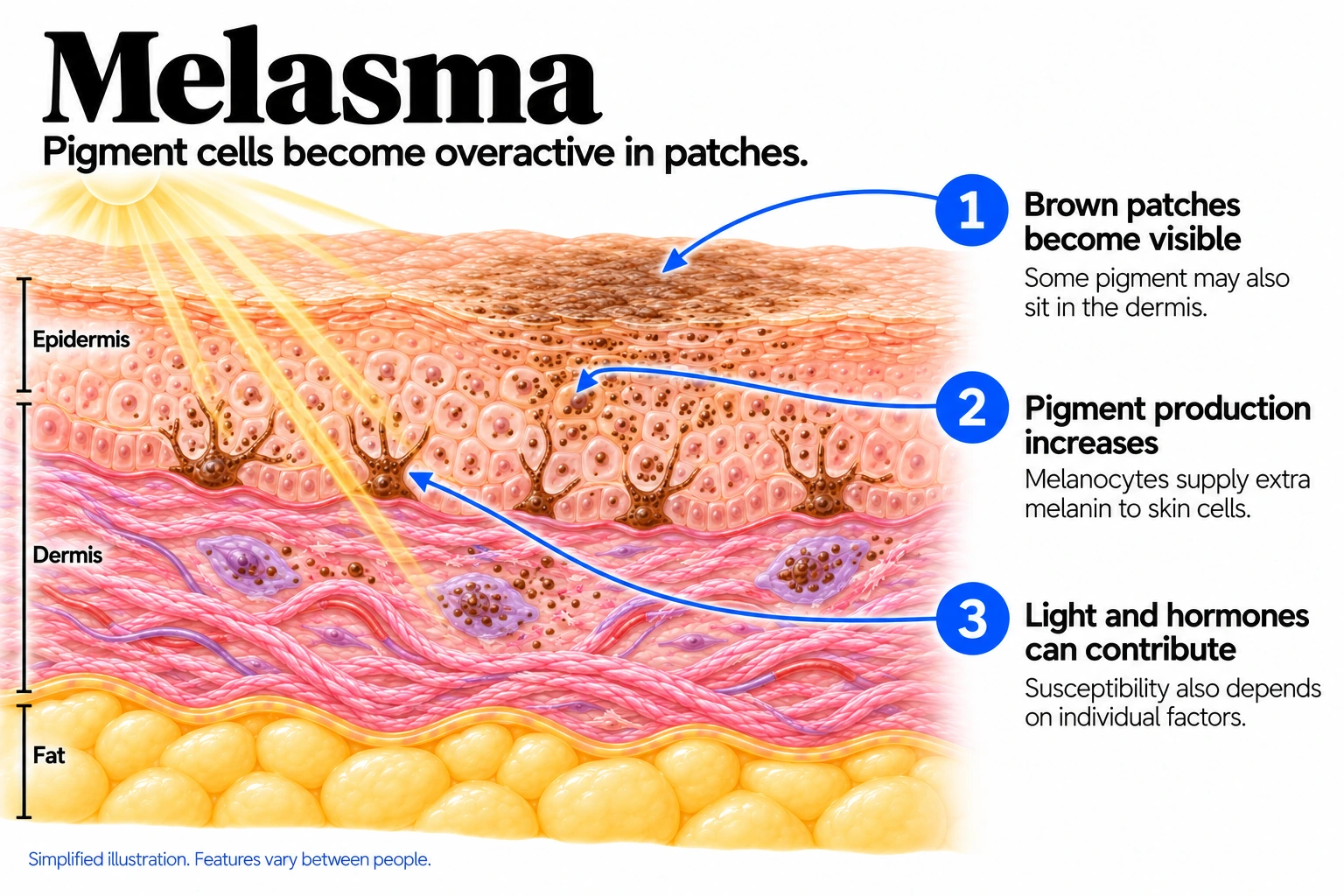
Melasma mechanism diagram. Brown patches become visible: Some pigment may also sit in the dermis. Pigment production increases: Melanocytes supply extra melanin to skin cells. Light and hormones can contribute: Susceptibility also depends on individual factors.
In the skin

Inflammation stimulates pigment cells to make and transfer extra melanin. Pigment left in surface cells or deeper tissue can create a flat dark mark after the original rash or injury heals.

Pigment cells become more active and supply extra melanin to patches of skin. Light, hormones and individual susceptibility contribute, and some pigment may also be present deeper in the skin.

Where it shows up

Sites of previous inflammation
Cheeks, forehead and upper lip

When it usually starts

010203040506070+

Post-Inflammatory Hyperpigmentation. Can follow inflammation at any age and is often more pronounced in darker skin.

Melasma. Usually appears in adult life and may begin during pregnancy or with hormonal changes.

Causes and triggers

Causes

Post-inflammatory hyperpigmentation happens when inflammation or injury tells pigment cells to make extra melanin, leaving a dark mark.

Melasma happens when pigment cells become overactive in response to light and hormones. Visible light and heat also play a part, not just ultraviolet light.

Family tendency

Medium and darker skin, which has more active pigment cells, is much more prone.

About half of people with melasma have a family member with it.

Risk factors
Medium to darker skin, Acne, Eczema
Female sex, Medium to darker skin, Family history
Trigger
● Post-Inflammatory Hyperpigmentation
● Melasma
Picking at spots
Well established
Not listed
Sun exposure
Well established
Not listed
Harsh treatments or peels
Strong link
Not listed
Burns and cuts
Strong link
Not listed
Sun and visible light
Not listed
Well established
Pregnancy
Not listed
Well established
Birth control pills
Not listed
Strong link
Heat
Not listed
Strong link
Some skincare that irritates
Not listed
Possible

Daily Care

Post-Inflammatory Hyperpigmentation
Melasma
Daily care

Habits that help

  • A tinted mineral sunscreen every day
    Iron oxides block visible light, which re-darkens marks.
  • Keep the barrier healthy
    Calm skin makes less pigment; irritated skin more.
  • Leave the spot alone while it heals
    Not picking beats most products here.
  • Give it months, and take photographs
    Same light every four weeks is the only reliable check.
  • Treat what caused it first
    The highest-value step, most often skipped.
  • Cysteamine
    An over-the-counter short contact treatment; cuts pigment production.

Avoid

  • Avoid: Picking and squeezing
    The largest avoidable cause. Pushes inflammation deeper.
  • Avoid: Sun without protection
    Re-activates pigment cells in a fading mark.
  • Avoid: Scrubbing and stacking strong actives
    Irritation is inflammation, which is step one.
  • Avoid: Hair removal over inflamed skin
    Adds inflammation where the marks are.
  • Avoid: Friction and pressure
    Tight straps and rubbing keep inflammation going.
  • Avoid: Unsupervised skin lightening creams
    Months of use cause lasting discoloration.
  • Avoid: Judging it week to week
    Switching products every few weeks ends up irritating.
  • Avoid: Leaving the underlying cause untreated
    Every new spot writes a mark.
  • Avoid: Stopping acne treatment when spots clear
    Marks are still fading, and the acne returns.

Habits that help

  • A tinted mineral sunscreen every day
    Broad spectrum, SPF 30 or higher, with iron oxides.
  • Shade, a wide-brimmed hat and sunglasses
    Does what no sunscreen can.
  • Keep the whole routine gentle
    Use a gentle cleanser, moisturizer and tinted sunscreen.
  • Cysteamine
    Over the counter, a short contact treatment.
  • A conversation about hormonal triggers
    Ask whether an alternative makes sense.
  • Discuss hormonal triggers; do not stop contraception on your own
    Shift the hormones that prime pigment cells — never stop one on your own.
  • Ask about sun precautions for photosensitizing medicines; do not stop them yourself
    Ask your prescriber rather than stopping anything.

Avoid

  • Avoid: Sun on unprotected skin
    The largest driver, and it adds up all season.
  • Avoid: Visible light
    Ordinary daylight drives melasma on deeper skin tones.
  • Avoid: Heat
    Stoves, saunas, hot yoga, steam and hot cars activate pigment cells.
  • Avoid: Waxing and threading the upper lip
    Repeated waxing over a patch darkens it.
  • Avoid: Irritating skincare
    If it stings on a patch, it is adding to the problem.
  • Avoid: Tanning beds
    All of the light, none of the upside.
  • Avoid: Stopping treatment when it looks better
    A faded patch is still primed.
  • Avoid: A steroid cream on its own
    Steroid creams do fade pigment for a while, which is why they turn up in unregulated lightening products, but they are not a melasma treatment. Used on the face for months they thin the skin, bring up broken vessels and can cause a rash around the mouth, and the pigment comes back when they stop. In melasma a steroid belongs only inside a supervised combination cream.

Treatment differences

Evidence labels come from each condition’s own treatment list.

Treatment
● Post-Inflammatory Hyperpigmentation
● Melasma
Over-the-counter
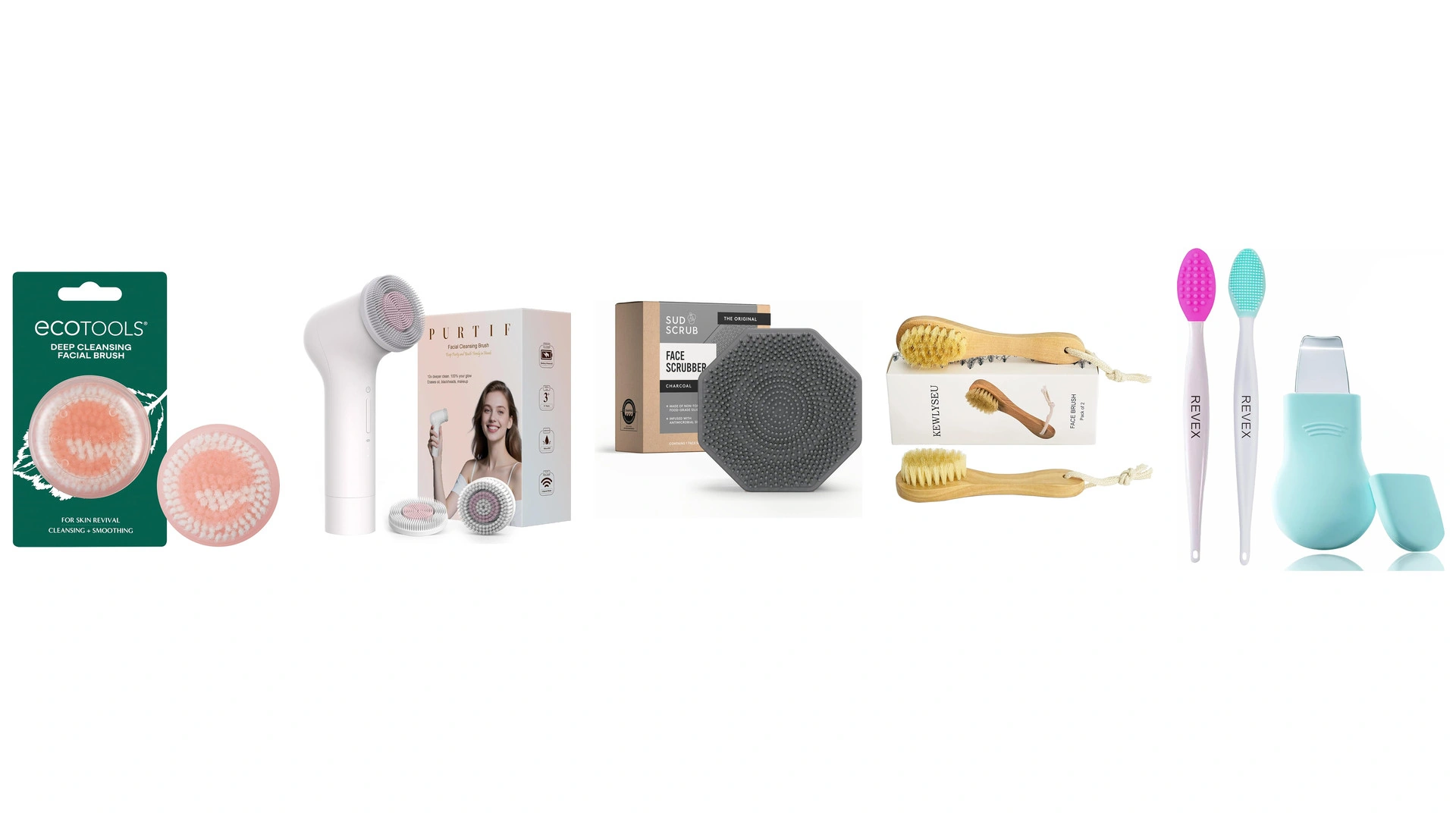
Existing Dermapedia illustration of scrubs and exfoliating pads.

Scrubs and exfoliating pads

Limited evidence

Surface pigment sits inside living skin cells rather than on top of the skin, and deep pigment sits below where any scrub can reach, so there is nothing to rub off. Scrubbing adds inflammation, and inflammation is step one of the whole process. This is one of the most common ways a mark is made worse while trying to fix it.

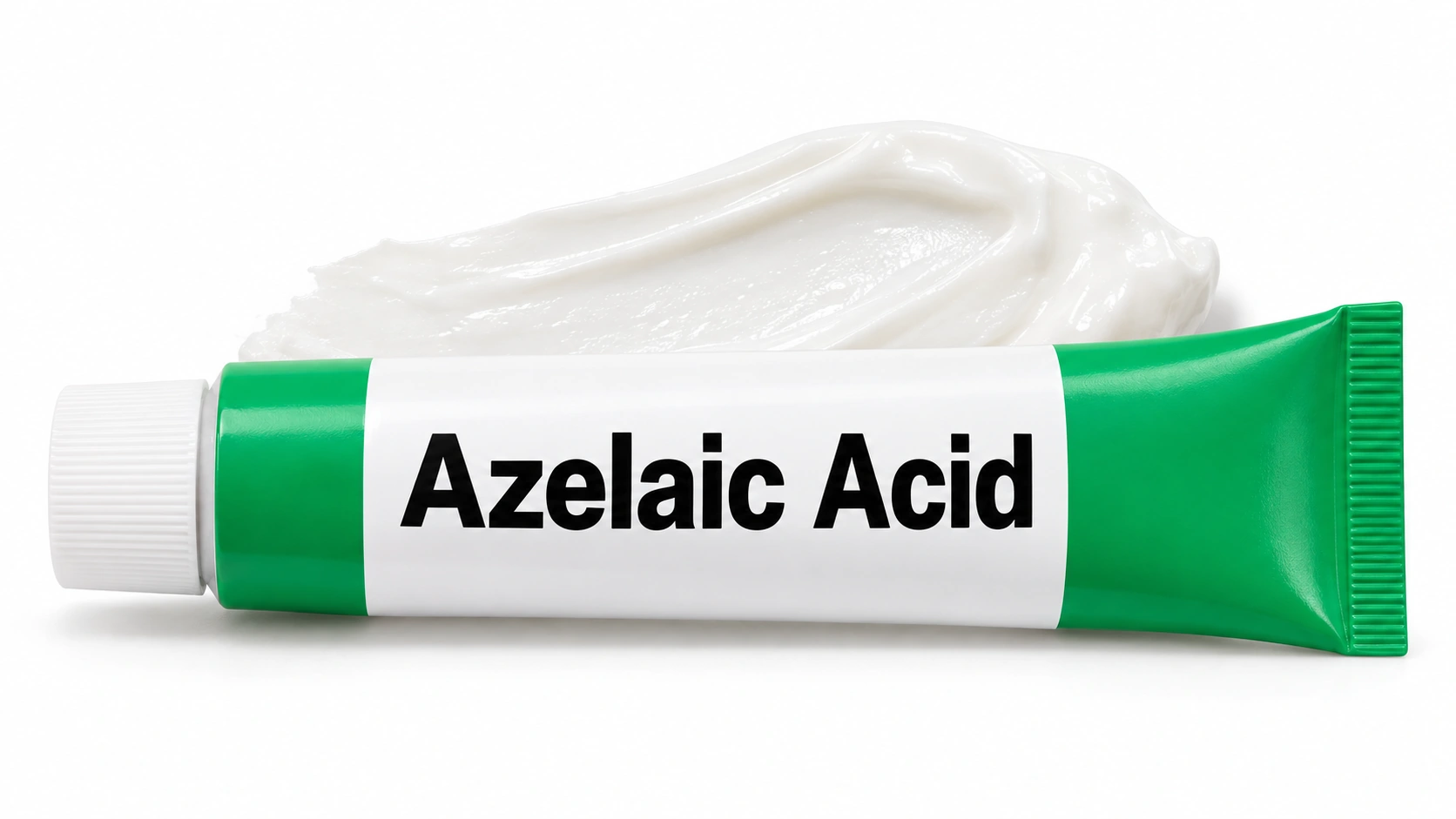
Five azelaic acid tubes and bottles on white, most marked 10 percent, from Peach Slices, Paula's Choice, Facetheory, The Ordinary and Naturium

Azelaic Acid

Moderate evidence

The best all-rounder here, because it calms inflammation and quietens overactive pigment cells at the same time, which means it treats the marks and the acne producing them. It is gentle enough to use for the many months this takes, and it suits deeper skin tones well. Expect slow, steady lightening rather than a quick change.

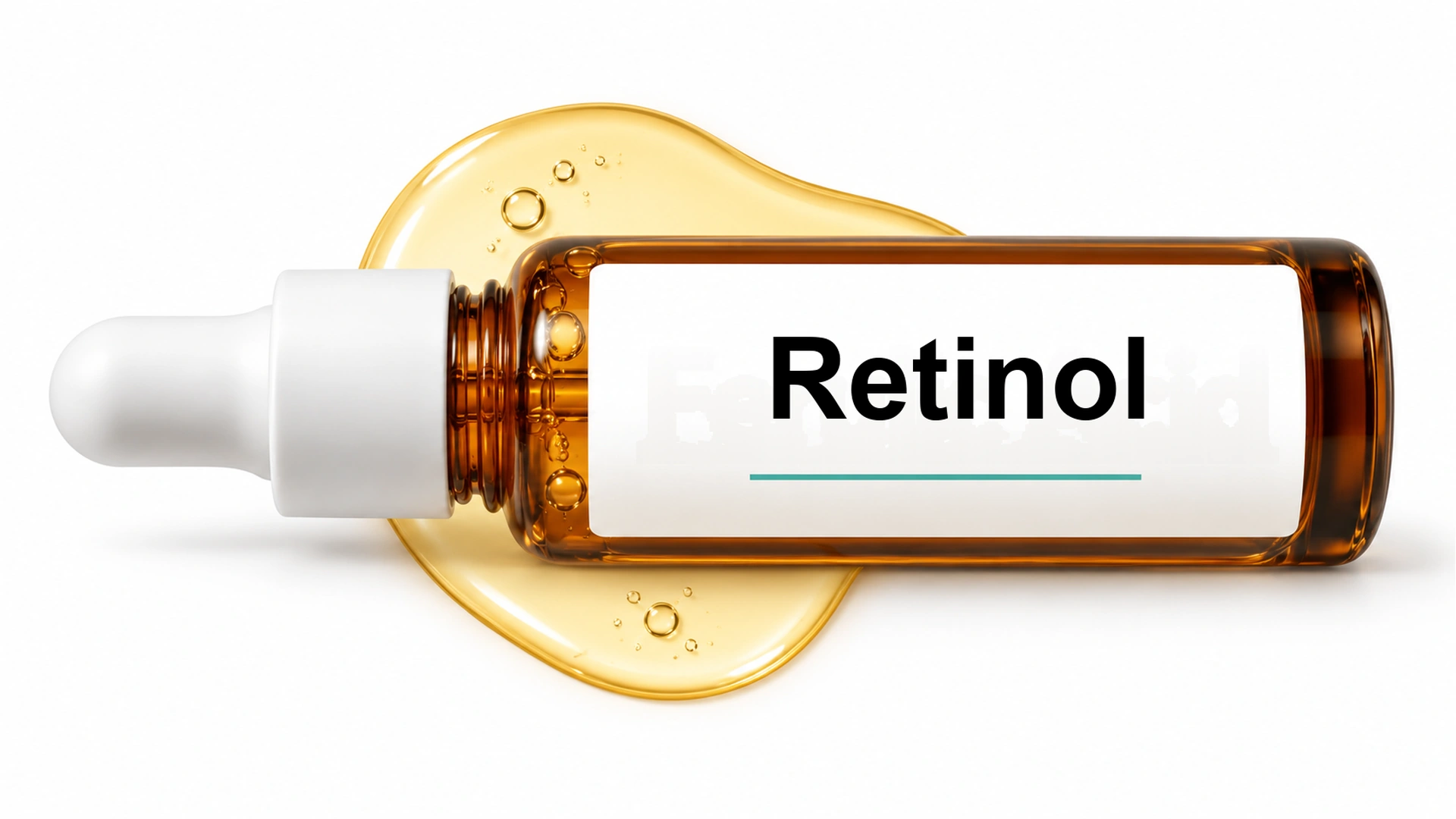
Six retinol products lined up, including SkinCeuticals Retinol 0.5, Murad, CeraVe, First Aid Beauty, RoC and Replenix

Retinol

Limited evidence

Speeds up how fast the top layer of skin turns over, which is the route surface pigment leaves by, and it treats acne while it does so. Start two nights a week and build up, because irritation is inflammation and inflammation is what made the mark. Use it at night and pair it with sunscreen in the morning.

Six niacinamide products on white, including The Ordinary 10% + Zinc 1%, Paula's Choice Booster and EltaMD UV Clear

Niacinamide

Limited evidence

Works one step later in the chain than most brightening ingredients: it reduces how much pigment gets passed from the pigment cells into the surrounding skin cells. It is mild, it rarely irritates, and it layers with almost anything. On its own it is a supporting player rather than the backbone of a plan.

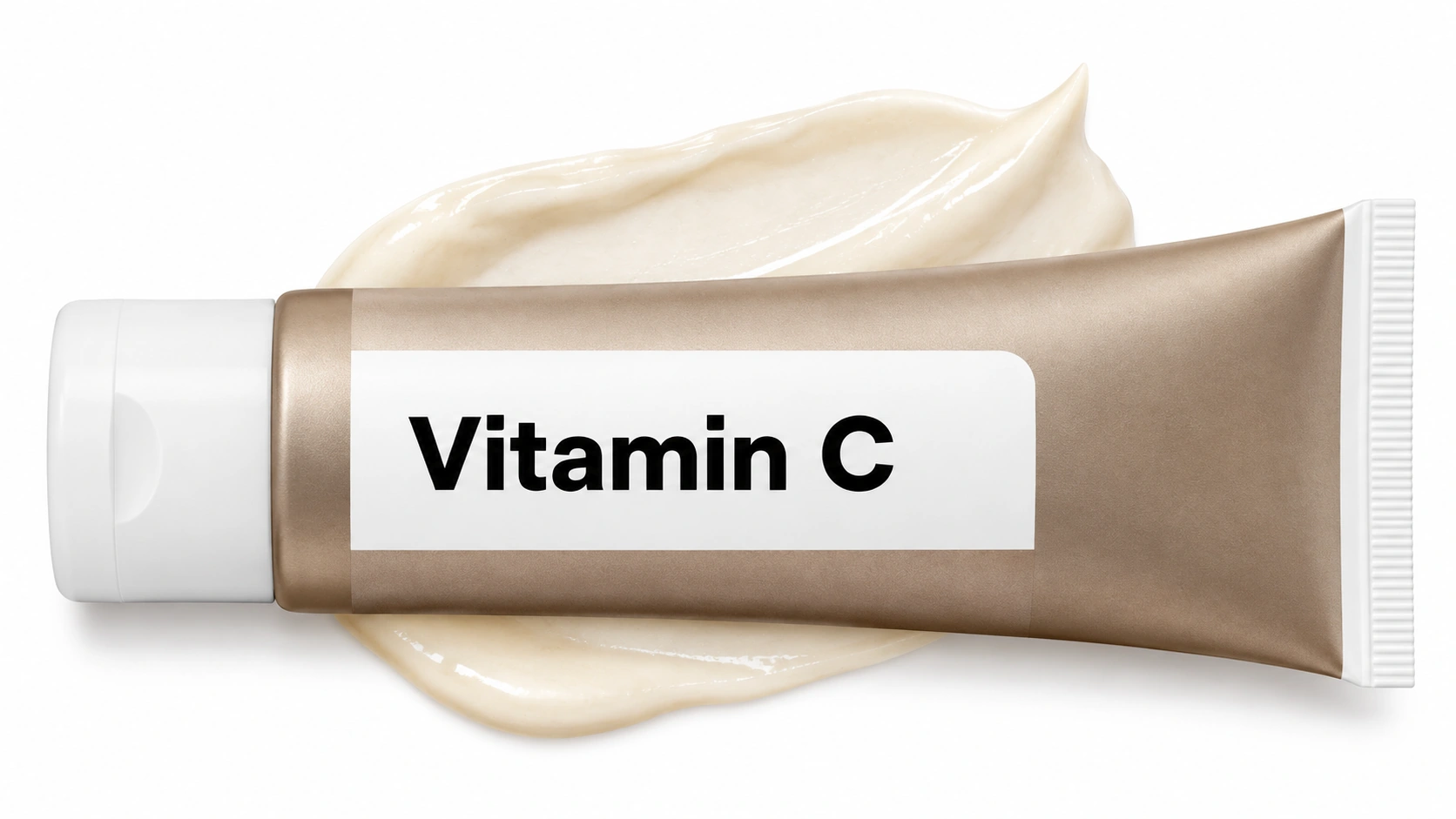
Vitamin C

Limited evidence

Slows one of the enzymes that makes pigment, and adds some protection against the light that re-darkens marks, which is why it is used in the morning under sunscreen. It is a useful addition rather than the main treatment. Higher strengths sting and can irritate, and irritated skin makes more pigment, so gentler is often better here.

Four cysteamine products: a Senté tube, an Omic+ cream and box, a 5% cysteamine serum dropper and a Cyspera bottle

Cysteamine

Limited evidence

An over-the-counter option for stubborn brown marks, applied for a short contact time and then washed off, so it is a step rather than a leave-on product. It is the closest thing available without a prescription to a strong pigment treatment. The smell is unpleasant and some people find it stings, which is the usual reason people stop.

Four glycolic acid toner and liquid bottles lined up on white, one with its box

Glycolic Acid

Limited evidence

Loosens the pigmented cells at the surface so they shed sooner, which helps brown marks more than gray ones. A low-strength product two or three nights a week is plenty. Stacking it with a retinoid on the same night is the classic way people end up red and peeling, which adds inflammation and slows everything down.

Five serums lined up on white, labeled tranexamic acid or niacinamide with TXA, including SkinCeuticals Discoloration Defense

Tranexamic Acid

Limited evidence

Interrupts the messages inflammation sends to pigment cells, and it is well studied in melasma with far less evidence in dark marks specifically. It is gentle and easy to add to a routine that is already working. Treat it as an extra rather than a replacement for sunscreen and azelaic acid.

Four alpha arbutin products lined up on white: three dropper serums and a pink cream tube

Alpha Arbutin

Limited evidence

A mild pigment blocker that is popular because it rarely irritates, which matters on skin that marks easily. The trade-off is that it works slowly and modestly, and most of the research is laboratory work rather than trials in dark marks. Reasonable to include, not something to build a plan around.

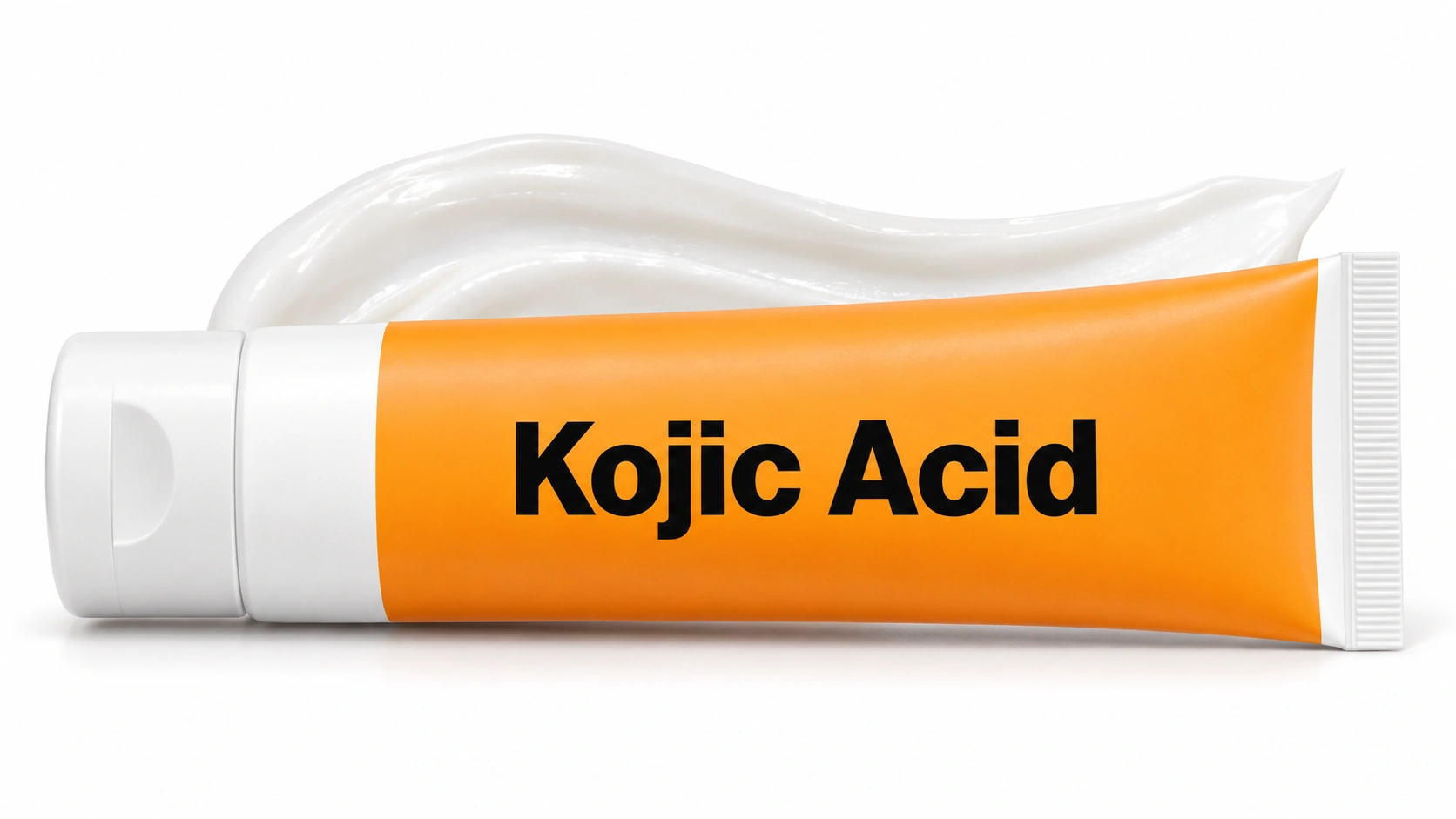
Five kojic acid products on white, including a turmeric serum, Medicube capsule cream, Admire My Skin and Seoul Ceuticals

Kojic Acid

Limited evidence

Another mild pigment blocker, usually found combined with other brightening ingredients rather than on its own. Evidence in dark marks is thin, and it causes contact allergy more often than the alternatives. If a product containing it makes the skin red or itchy, stop, because that irritation will darken the mark further.

Five azelaic acid tubes and bottles on white, most marked 10 percent, from Peach Slices, Paula's Choice, Facetheory, The Ordinary and Naturium

Azelaic Acid

Moderate evidence

Calms overactive pigment cells without bleaching the normal skin around them, which is why it can be used for months at a time instead of in short courses. That makes it one of the better options for holding a result after a course of hydroquinone. The over-the-counter strength works slowly, and the prescription strength works better.

Six niacinamide products on white, including The Ordinary 10% + Zinc 1%, Paula's Choice Booster and EltaMD UV Clear

Niacinamide

Limited evidence

Slows the handover of pigment from pigment cells to the skin cells around them. Modest on its own and not something that will clear a patch, but it is well tolerated and it does not sting, which counts for a lot in a condition where irritation makes things worse. It sits comfortably alongside the stronger treatments.

Vitamin C

Limited evidence

Lightens surface pigment a little and helps sunscreen do its job during the day. It is a reasonable thing to try in the three months before asking for a prescription, and a reasonable thing to keep for maintenance afterwards. On its own it rarely shifts an established patch, and it does not replace sun protection.

Four cysteamine products: a Senté tube, an Omic+ cream and box, a 5% cysteamine serum dropper and a Cyspera bottle

Cysteamine

Moderate evidence

Put on dry skin, left for about 15 minutes and then washed off rather than left on overnight. It is the over-the-counter option with the most real trial evidence in melasma, and it suits people who want to avoid hydroquinone or need something for the gaps between courses. The smell is the usual reason people give up on it.

Five serums lined up on white, labeled tranexamic acid or niacinamide with TXA, including SkinCeuticals Discoloration Defense

Tranexamic Acid

Moderate evidence

Works on a different part of melasma from the pigment-blocking creams. It quietens the signals coming from blood vessels and the skin underneath, which is the fourth step and the reason patches keep returning. That makes it a useful addition for stubborn melasma rather than a first treatment on its own. Twice a day, judged at three months.

Four alpha arbutin products lined up on white: three dropper serums and a pink cream tube

Alpha Arbutin

Limited evidence

A gentler relative of hydroquinone that releases a small amount of it slowly in the skin. It suits people who want a lightening step running between supervised courses of the prescription version. The effect is milder and slower, and the studies behind it in melasma are small.

Five kojic acid products on white, including a turmeric serum, Medicube capsule cream, Admire My Skin and Seoul Ceuticals

Kojic Acid

Limited evidence

Blocks the same pigment-making enzyme hydroquinone does, more weakly. It is nearly always sold combined with other lightening ingredients, and the studies showing it work are studies of those combinations rather than of kojic acid alone. It stings some people, and stinging on a melasma patch tends to darken it.

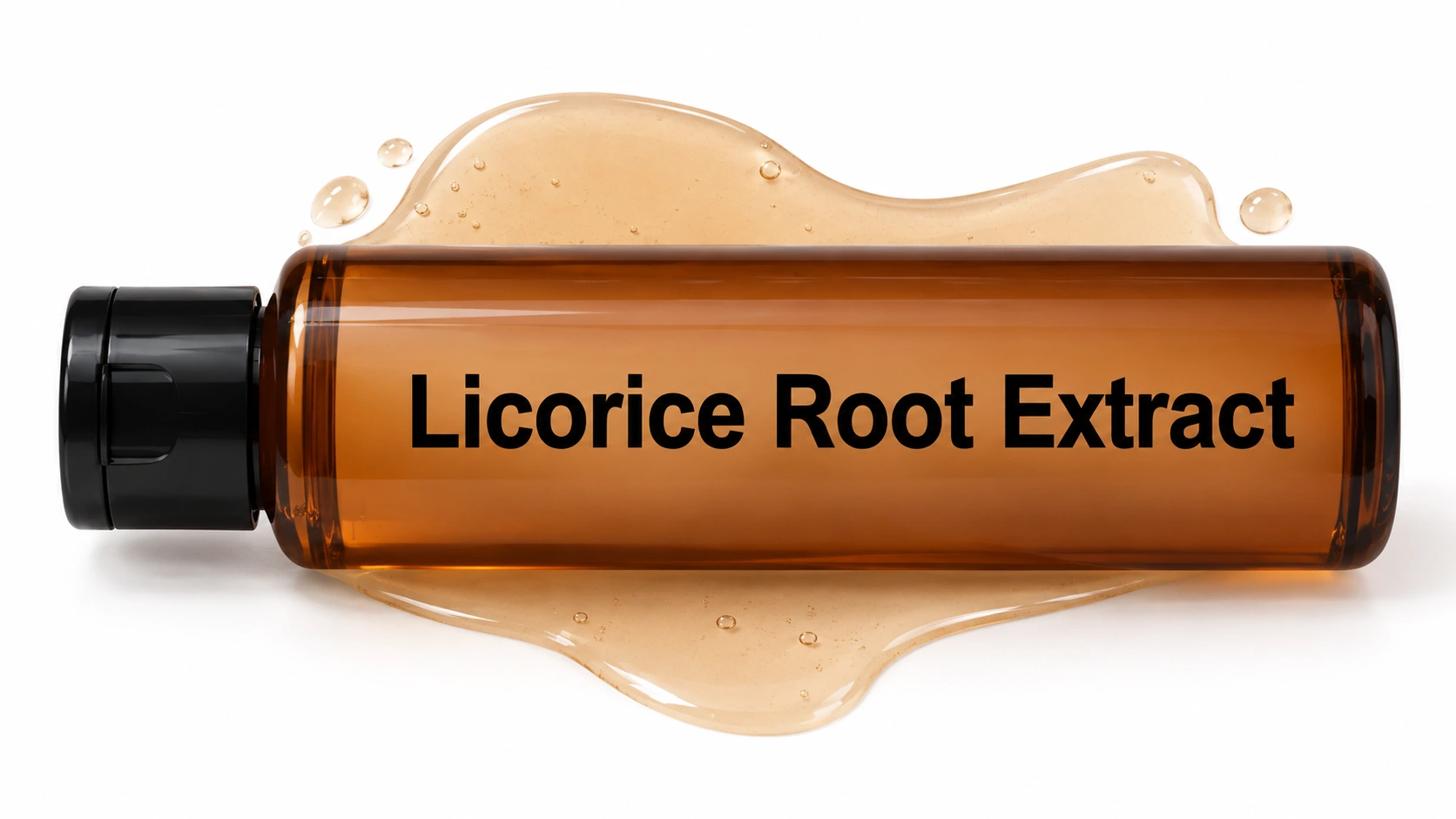
Five licorice root products on white, including two Acwell bottles, Éminence, Horbäach liquid extract and Versed

Licorice Root Extract

Limited evidence

A common ingredient in brightening products, resting mainly on laboratory work rather than trials in people with melasma. It is gentle and unlikely to cause trouble, and it is also unlikely to be the thing that clears a patch. If a routine only has room for one active, this is not the one to pick.

Prescription topicals
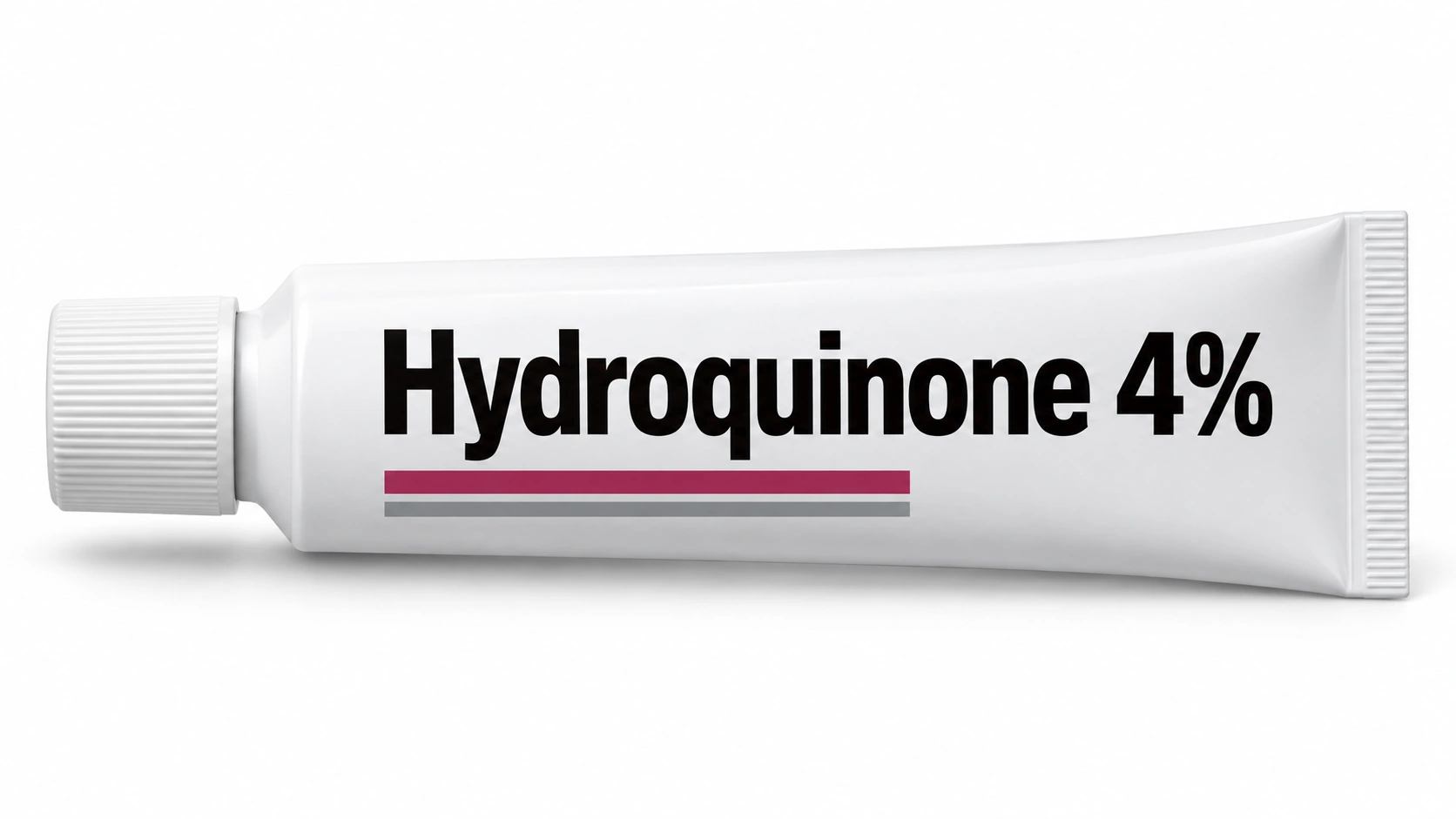
Hydroquinone 4% — Header Image

Hydroquinone 4%

Moderate evidence

The most powerful topical option for stubborn brown marks, used as a short course of around three months rather than continuously. It blocks the enzyme that makes pigment, so it lightens the mark without touching the cause. Long unsupervised use is what leads to ochronosis, which is why this is prescribed and reviewed rather than bought and forgotten.

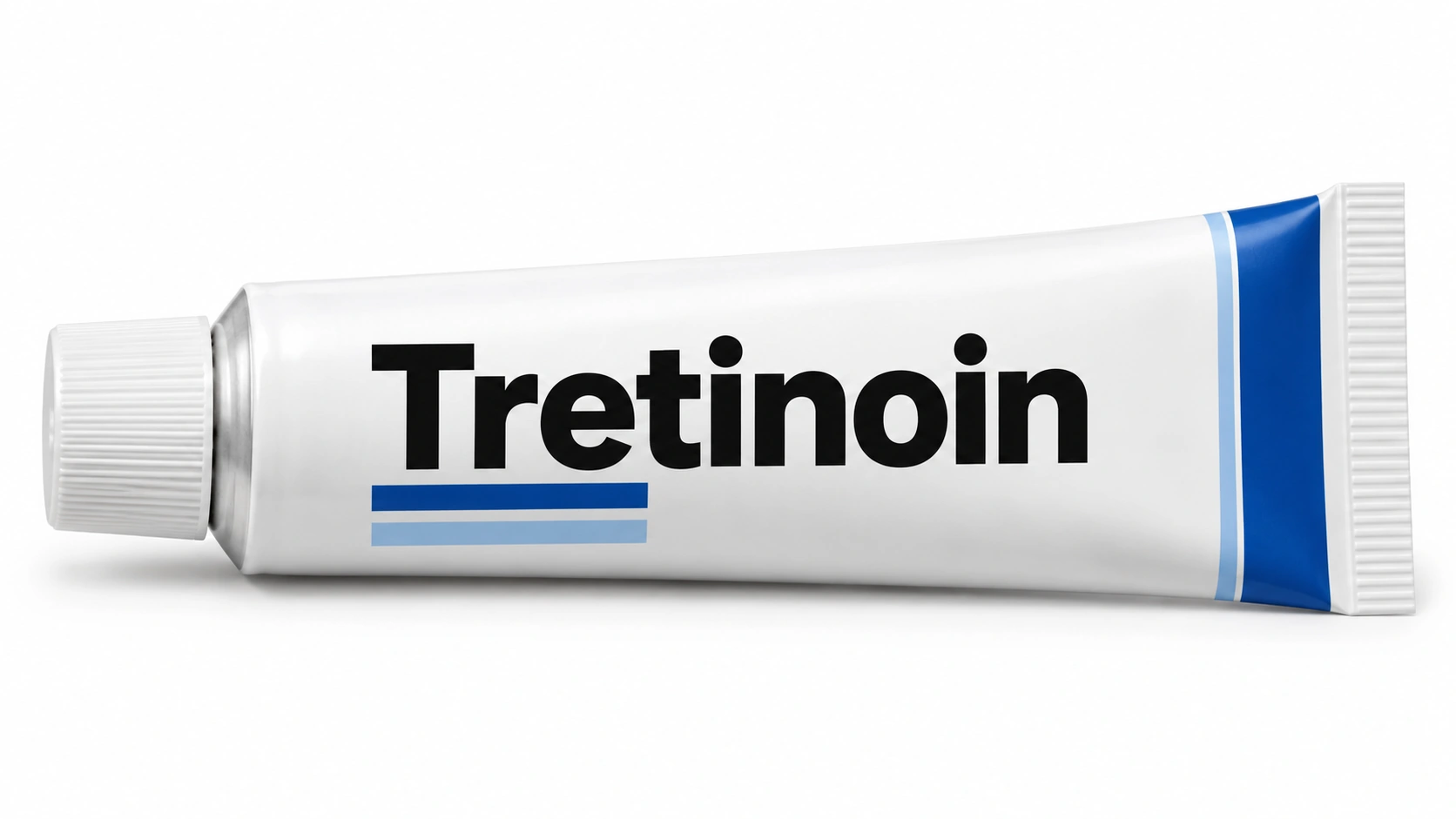
Tretinoin — Header Image

Tretinoin

Moderate evidence

Sheds pigmented surface cells faster and treats the acne writing new marks, which is why it does two jobs on this page. It is stronger than an over-the-counter retinol and correspondingly more irritating at first. Build up slowly, because the peeling, stinging phase is inflammation and can darken the marks before it lightens them.

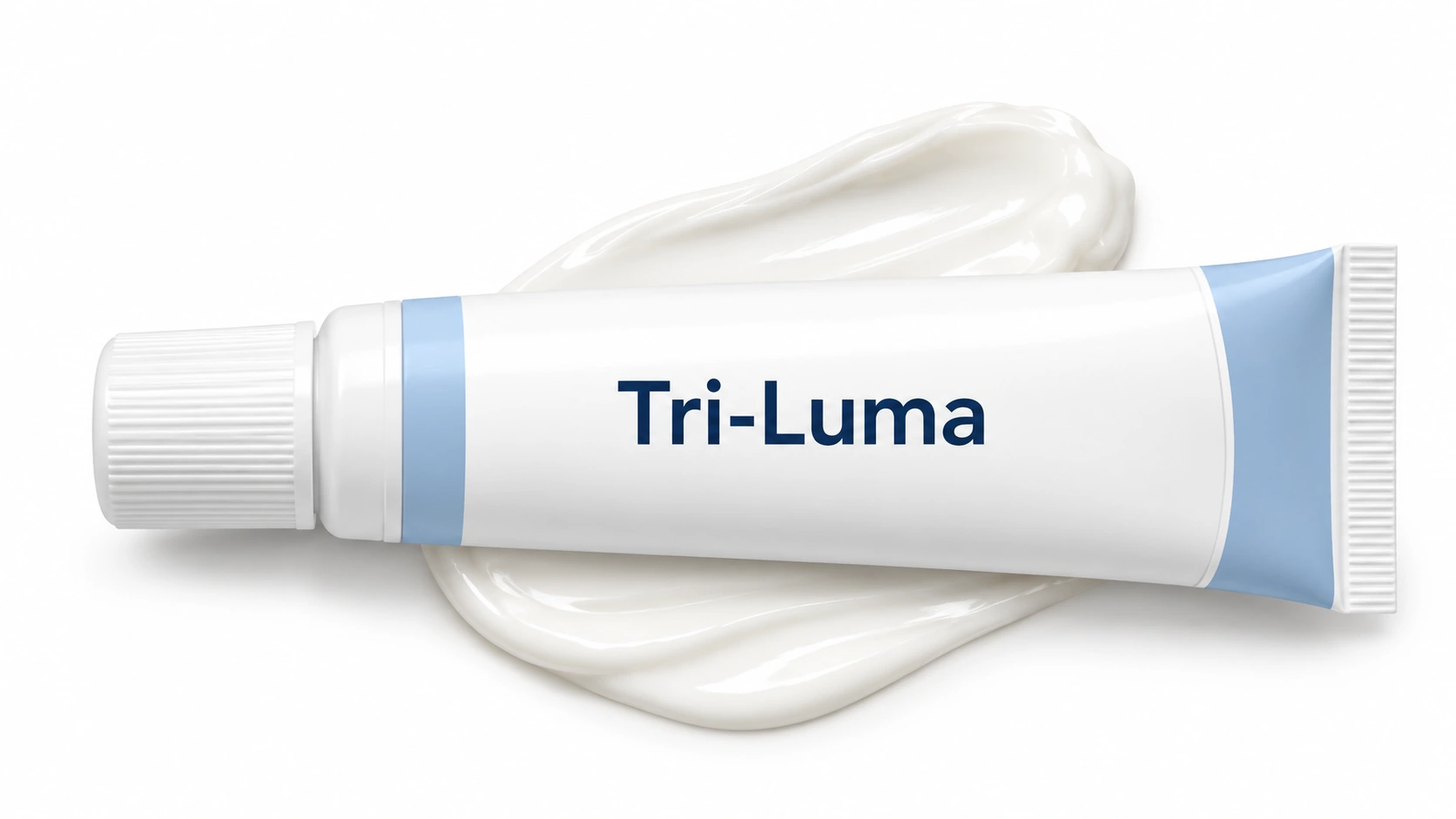
An illustrative cream tube labeled Tri-Luma beside a cream swatch; packaging is conceptual.

Triple combination cream

Moderate evidence

Hydroquinone, a retinoid and a mild steroid in one cream, used in short supervised courses for marks that have not moved on simpler treatment. The three parts block pigment, speed up shedding and calm the irritation the other two cause. It is not a long-term product: months of continuous use thins the skin and can cause its own discoloration.

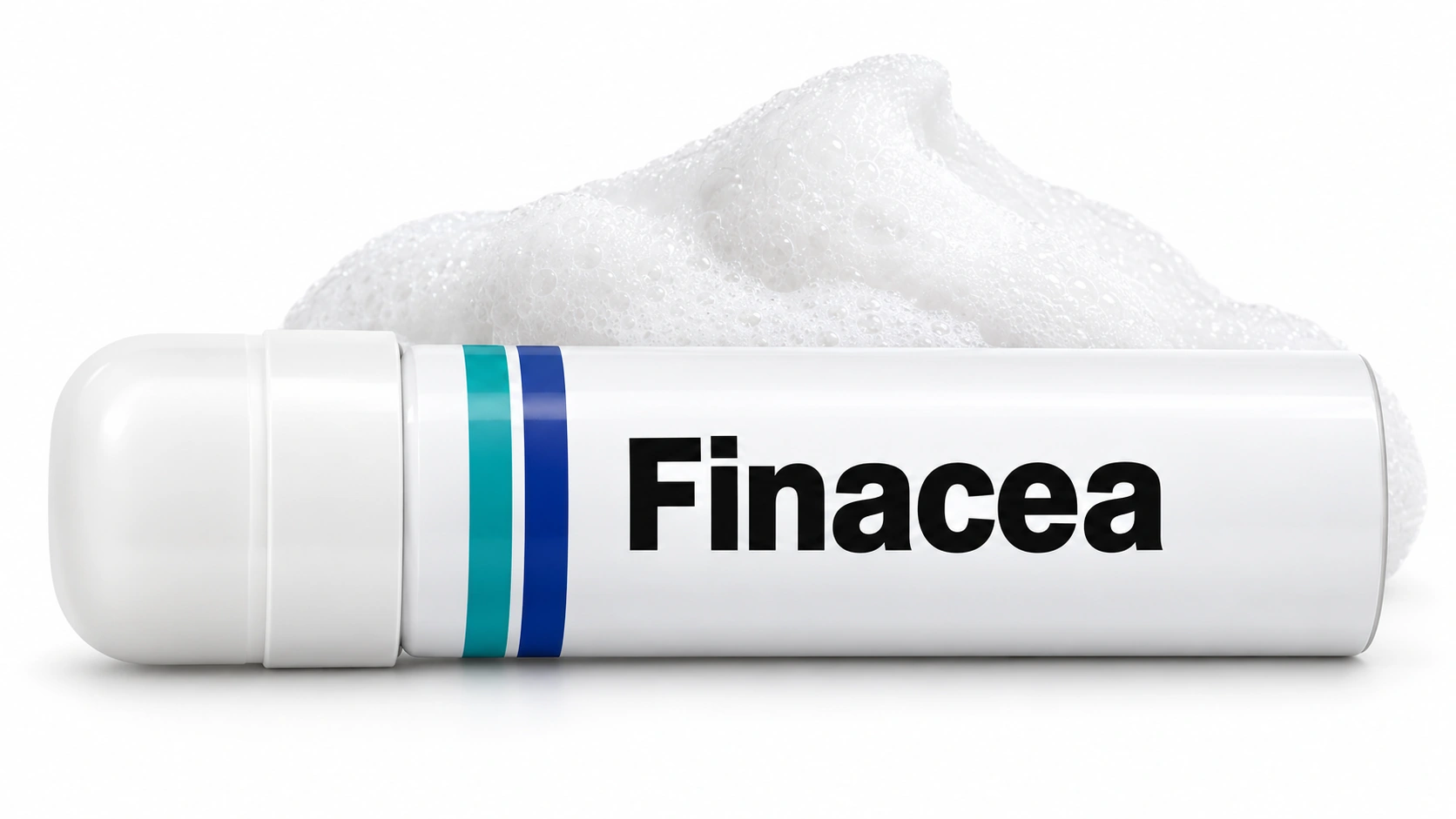
Finacea — Header Image

Finacea

Moderate evidence

The prescription strength of the same ingredient, worth asking about when the over-the-counter version has helped but not enough. It remains one of the few options that is both effective and gentle enough for continuous use on skin that marks easily. It is often the choice when hydroquinone is not wanted or the course has ended.

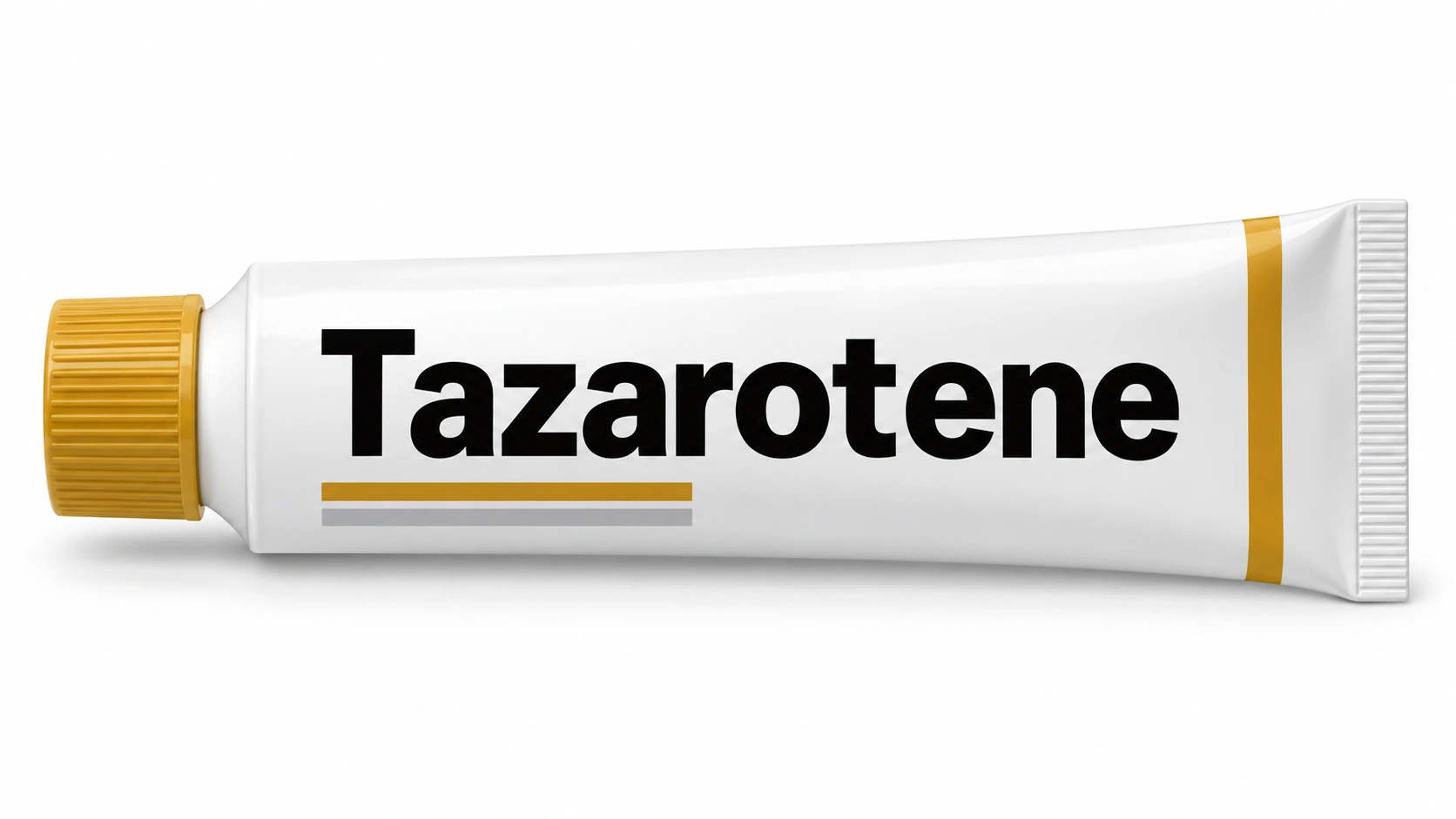
Tazarotene — Header Image

Tazarotene

Moderate evidence

The strongest of the topical retinoids, and it has been studied specifically in dark marks from acne on deeper skin tones. It works the same way as tretinoin but irritates more, so it is usually a second choice rather than a first. Ask your doctor before using any retinoid if you are pregnant or trying to be.

Hydroquinone 4% — Header Image

Hydroquinone 4%

Strong evidence

The most established single prescription cream for melasma, applied thinly at night to the patches only. It is used in courses of about three to four months with breaks in between, not continuously for years — unbroken long-term use at high strength is what causes the blue-black discoloration people have heard about. Expect the first month to look like nothing is happening.

Tretinoin — Header Image

Tretinoin

Moderate evidence

Speeds up how quickly pigmented skin cells are shed, and helps the other creams get in, which is why it is more often part of a combination than used alone. Used by itself it works slowly and it can irritate, and irritation darkens melasma, so it is started at a low strength a few nights a week. Ask your doctor about it if you are pregnant or trying to become pregnant.

An illustrative cream tube labeled Tri-Luma beside a cream swatch; packaging is conceptual.

Triple combination cream

Strong evidence

Hydroquinone, a retinoid and a mild steroid in one cream, used at night on the patches. It is the most effective topical treatment for melasma and the one with the best trial evidence, given as a course of a few months rather than indefinitely. It is also the one that most needs a doctor watching it, because the steroid thins skin with long use and the hydroquinone is meant to be stopped and restarted.

Prescription pills
None listed
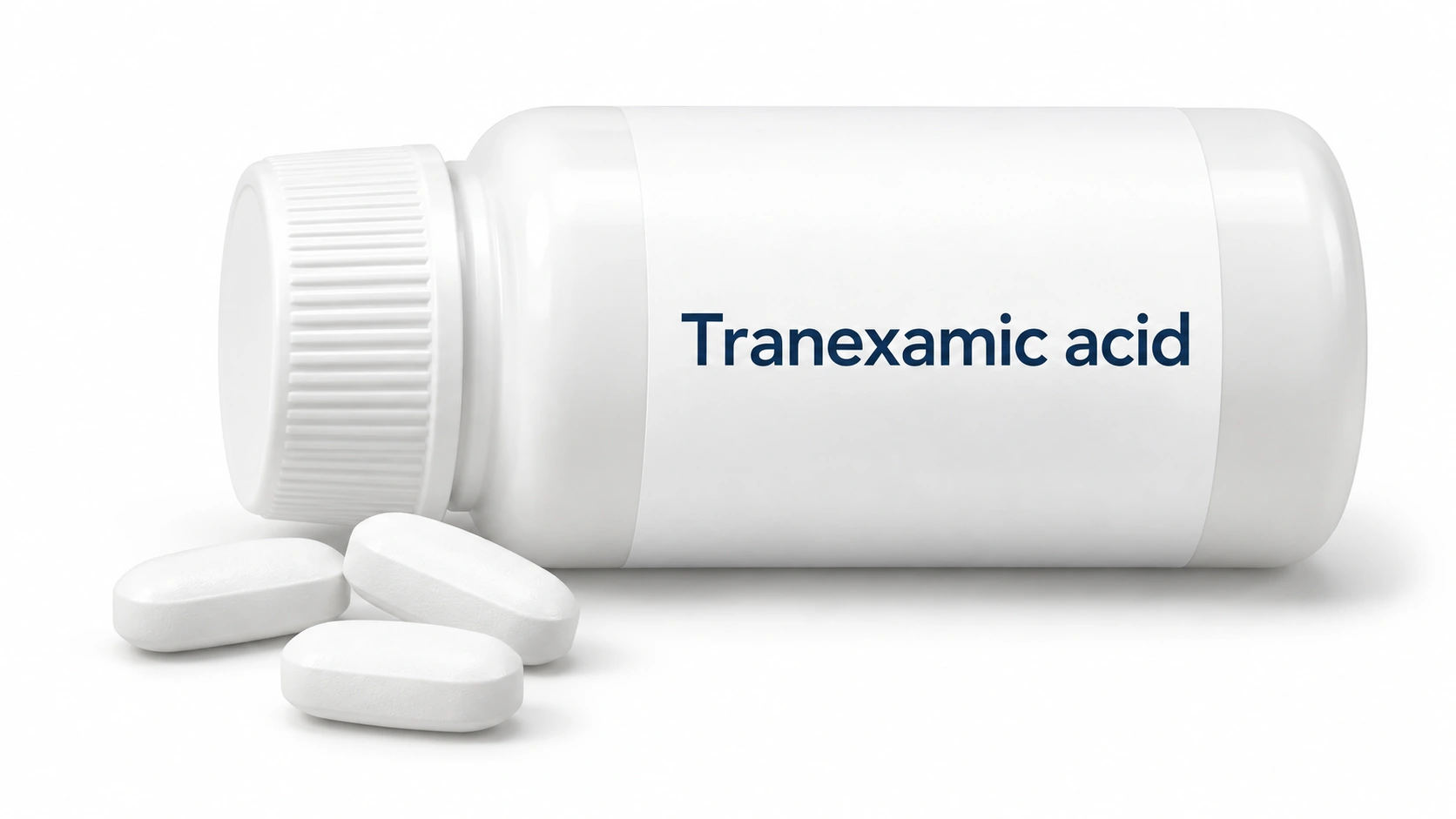
An illustrative oral tranexamic acid bottle beside plain tablets.

Oral tranexamic acid

Moderate evidence

A low-dose tablet, usually taken for a few months, for melasma that has not answered creams and daily sun protection. It works on the blood vessel and signalling side of the condition rather than by bleaching, and the trials behind it are reasonable. It is not for everyone: a history of blood clots or certain other risks rules it out, so it comes after a proper history. Melasma usually returns once it is stopped, so sun protection carries on.

A review of hormonal contraception

A review of hormonal contraception

Listed

The combined pill, the patch, the implant and menopausal hormone therapy can all set melasma off or keep it dark. Stopping sometimes helps and sometimes does not, and it can take many months to show. Never stop a prescribed hormone on your own. Ask the prescriber whether a different method makes sense, and weigh that against what the contraception is doing for you.

Procedures
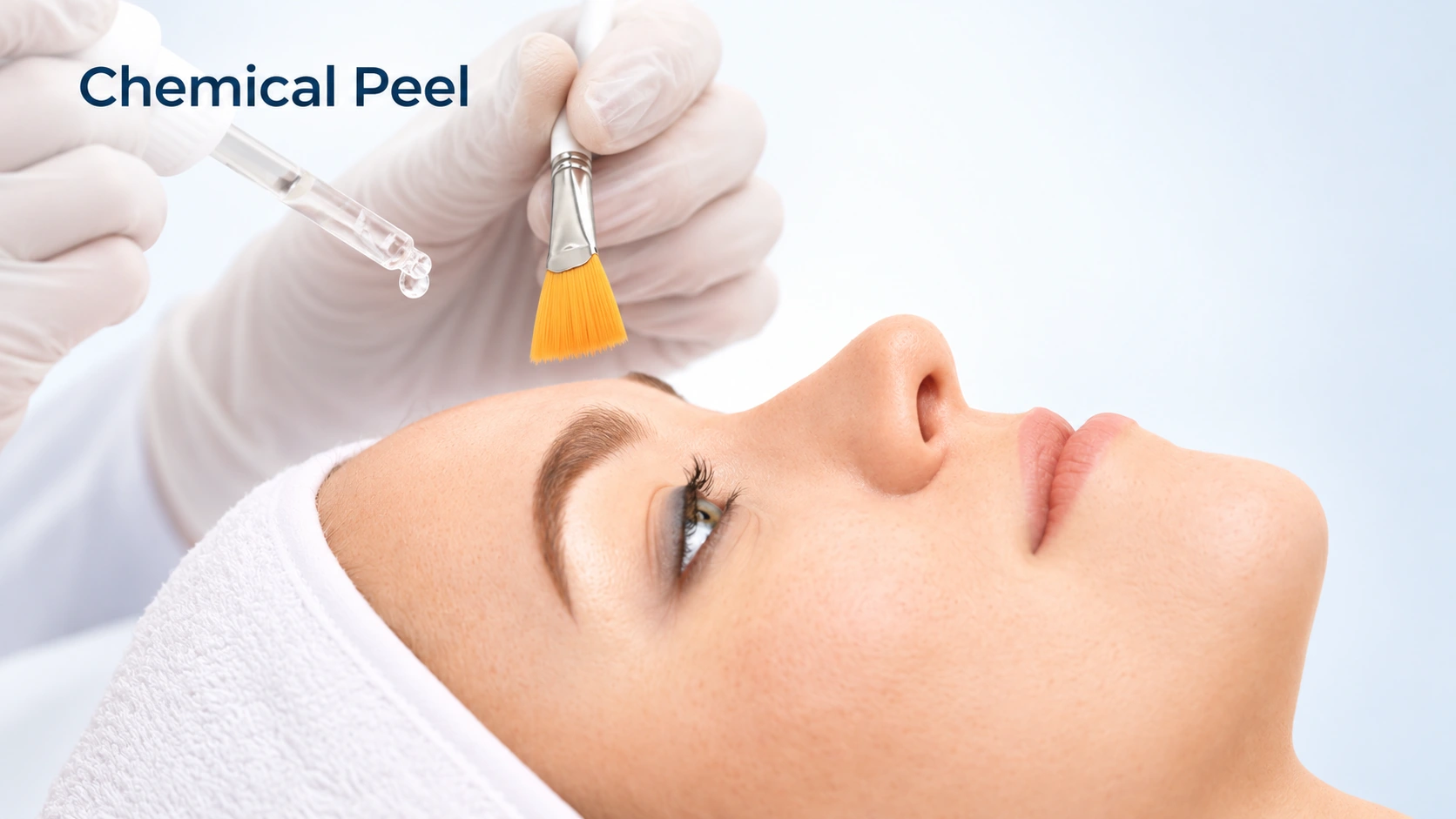
Editorial illustration for Chemical Peel, based on the entry’s treatment or equipment reference.

Chemical Peel

Moderate evidence

A series of light peels speeds up the shedding of surface pigment, so it helps brown marks far more than gray ones. Done gently and spaced out, it adds to a good home routine rather than replacing it. Done too strongly, especially on deeper skin tones, the peel itself inflames the skin and creates a fresh round of marks.

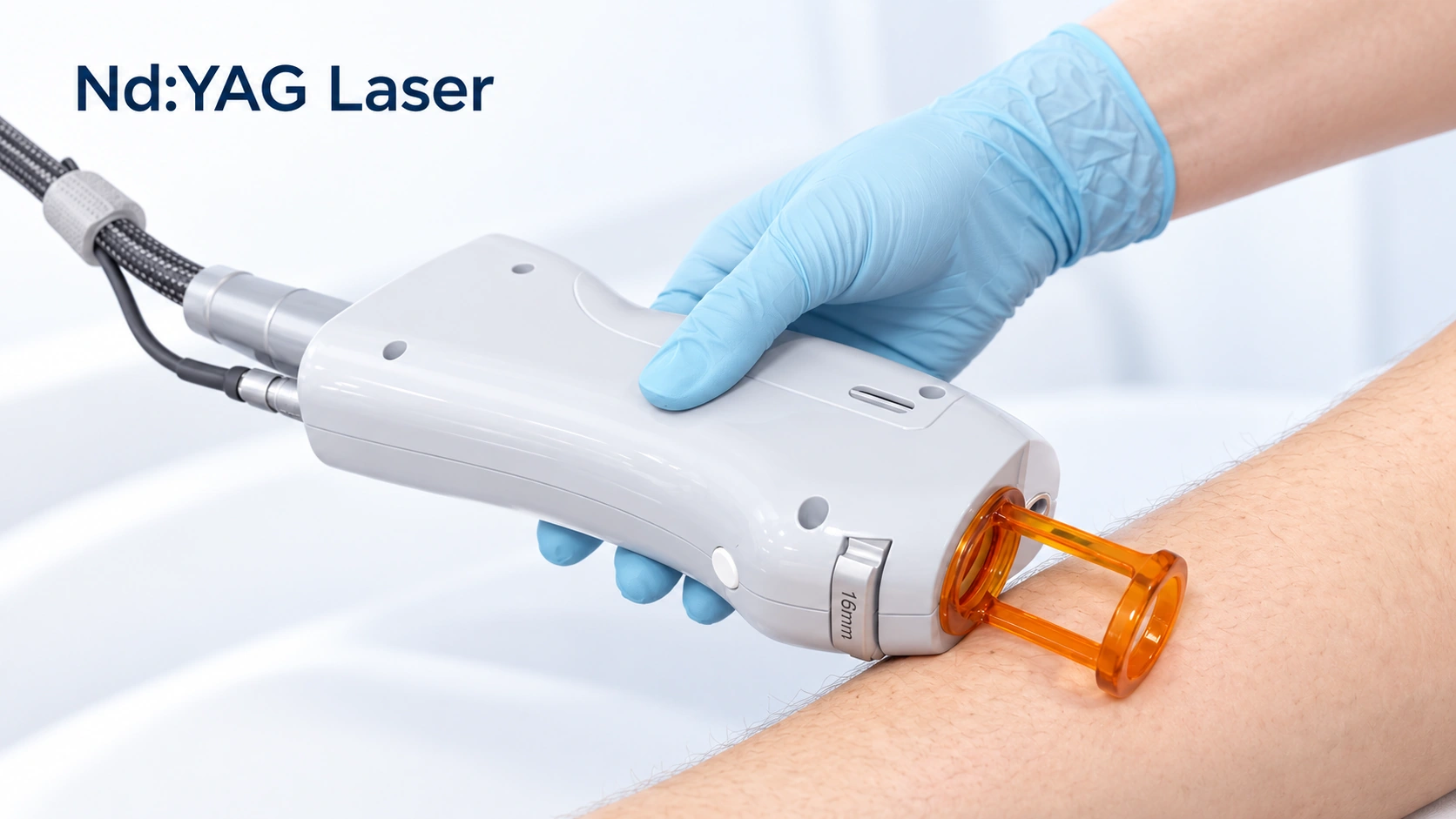
Editorial illustration for Nd:YAG Laser, based on the entry’s treatment or equipment reference.

Nd:YAG Laser

Limited evidence

Low-energy 1064 nm treatment is the laser most often chosen for pigment in deeper skin tones, because that wavelength passes through the surface and reaches the deeper, gray-toned pigment. Several sessions are needed and results are modest. Settings matter more than the machine, and this should be done by someone who treats your skin tone regularly.

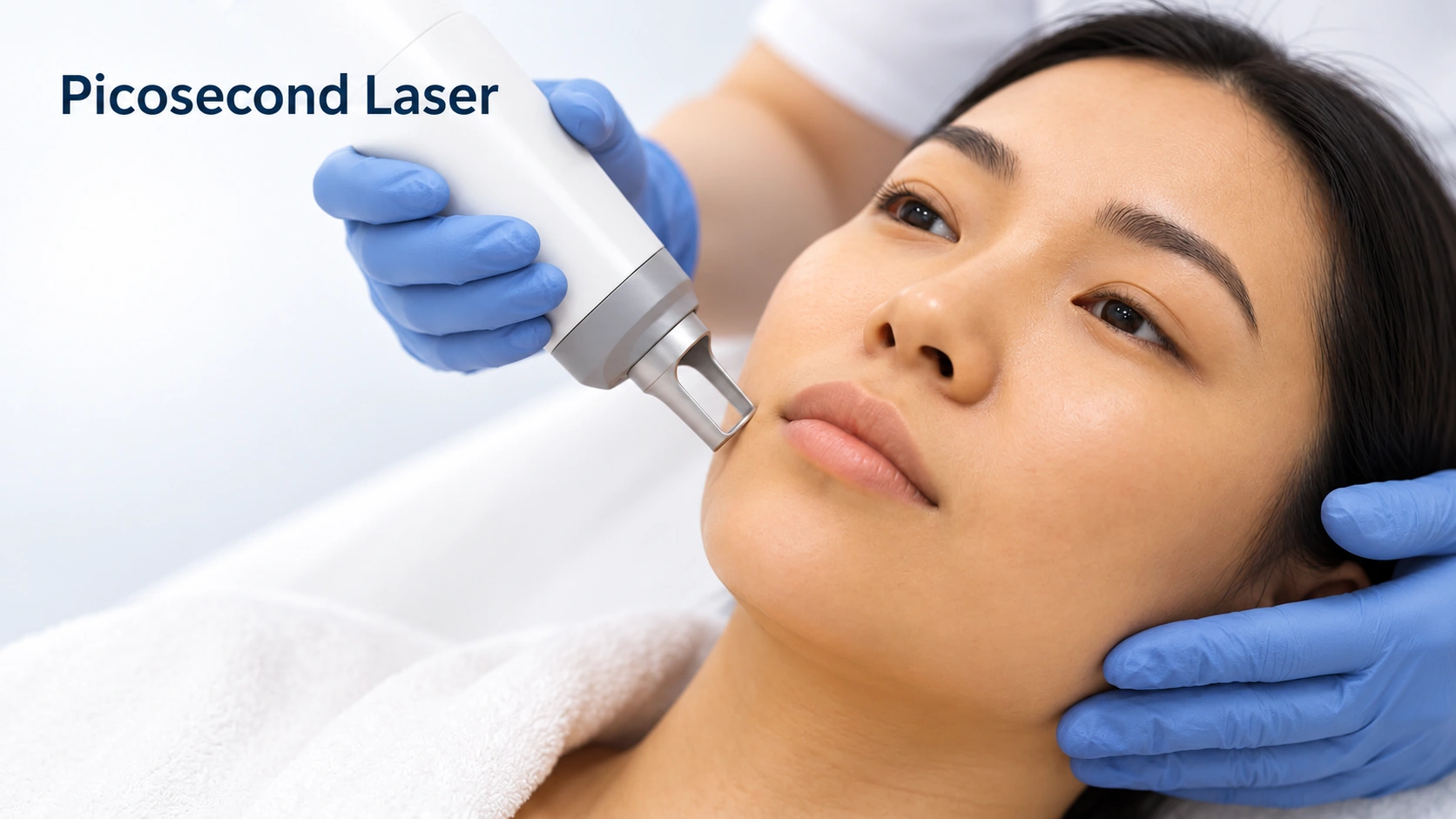
Editorial illustration for Picosecond Laser, based on the entry’s treatment or equipment reference.

Picosecond Laser

Limited evidence

Breaks pigment into fragments small enough for the body to carry away, using very short pulses that put less heat into the skin than older lasers. It is one of the safer device options for stubborn deep marks, but the evidence in dark marks after inflammation is still thin. Test patch first, and expect a course rather than one session.

Editorial illustration for Microneedling, based on the entry’s treatment or equipment reference.

Microneedling

Limited evidence

Fine needles make controlled channels that help topical treatments penetrate and encourage the skin to remodel. It is mainly a scarring treatment, and its effect on pigment alone is small. It is a reasonable choice when true scars and dark marks sit together, but it can inflame reactive skin, so conservative depths are used on deeper skin tones.

IPL

Limited evidence

IPL. Broad-spectrum light aimed at surface pigment, and it is a poor fit for these marks. It is absorbed strongly by pigment throughout the skin, so on medium and deep skin tones it can burn and leave a darker or patchier result than it started with. It is used far more for sun spots on fair skin than for anything on this page.

Editorial illustration for Microdermabrasion, based on the entry’s treatment or equipment reference.

Microdermabrasion

Limited evidence

Sands off the very top of the skin, which is above where the pigment actually sits, so it does little for brown marks and nothing for gray ones. Repeated sessions add friction and inflammation to skin that marks easily. Money spent here is better spent on daily sunscreen and a treatment that reaches the pigment cells.

Editorial illustration for Chemical Peel, based on the entry’s treatment or equipment reference.

Chemical Peel

Limited evidence

Light peels, spaced out, speed up the clearing of surface pigment when they are added to creams and sun protection. They are an addition and never a replacement. Depth is the whole issue: a peel strong enough to leave the skin red and peeling can inflame it and leave the patch darker than it started, which is one of the commonest ways melasma gets worse.

Editorial illustration for Nd:YAG Laser, based on the entry’s treatment or equipment reference.

Nd:YAG Laser

Limited evidence

Used at low energy over several sessions to break up pigment that creams reach poorly. It can lighten stubborn patches, and the improvement often fades over the following months if creams and daily sun protection are not carrying on behind it. Pushed too hard it causes patchy loss of color or rebound darkening, so settings stay low and a test patch first is sensible.

Editorial illustration for Picosecond Laser, based on the entry’s treatment or equipment reference.

Picosecond Laser

Limited evidence

A newer laser that delivers very short pulses at low energy, aimed at the deeper pigment creams struggle with. The melasma studies so far are small and cautiously encouraging. Like every device used here it is an addition to creams and sun protection rather than a shortcut past them, and results still fade without them.

Editorial illustration for Microneedling, based on the entry’s treatment or equipment reference.

Microneedling

Limited evidence

Fine needles make temporary channels that help tranexamic acid or other treatments reach deeper, and that combination is where the evidence sits — not needling on its own. It has to be done gently. Aggressive needling inflames the skin, and inflamed skin with active pigment cells makes more pigment, not less.

IPL

Limited evidence

IPL. Often offered for facial pigment, and often the wrong choice for melasma. It can lighten patches briefly and then bring them back darker within weeks, because the heat it delivers is itself a trigger for pigment cells. It works far better on sun spots, which is part of why telling the two apart matters before booking anything.

Editorial illustration for Fractional CO2 Laser, based on the entry’s treatment or equipment reference.

Fractional CO2 Laser

Limited evidence

An ablative resurfacing laser with a real risk of making melasma worse, particularly on medium and deep skin tones. Any benefit tends to be short-lived and the rebound darkening can last a long time. If a clinic is offering aggressive resurfacing as the answer to melasma, that is a reason to get a second opinion.

Outlook

Long term

Fading is not a straight line. Marks lighten over winter and stall over summer if sun protection slips, and a photograph in the same light shows progress a mirror does not. What decides the course is whether new inflammation keeps happening — while acne or a rash is active, marks accumulate faster than they clear.

Melasma follows the seasons. Patches darken through spring and summer and lighten through autumn and winter. A good winter can look like a cure, which is exactly when people stop their sunscreen and lose the ground they gained.

Complications

Possible complications

The underlying trigger may be acne, eczema, infection or injury. Dark marks can persist after that problem settles, especially on deeper skin tones; treating active inflammation helps prevent additional marks.

  • Post-Inflammatory Hyperpigmentation
  • Ochronosis from lightening creams
  • Living with it day to day
More details

Post-Inflammatory Hyperpigmentation
Melasma is the condition where pushing hard backfires most often. A strong peel, a high-energy laser or an irritating cream can inflame the skin and leave it more pigmented than it began, and that extra pigment can take many months to settle. It is the reason melasma is treated gently and slowly, and the reason a test patch is worth doing before any device is used across the whole face.

Ochronosis from lightening creams
Long, unbroken use of high-strength hydroquinone, usually from creams bought outside a doctor's care, can leave a blue-black speckled discoloration in the treated area. It is uncommon, and it is much harder to treat than the melasma was. It is avoided by using hydroquinone in supervised courses with breaks rather than continuously for years. Creams sold for lightening outside medical care may also contain strong steroids or mercury, which bring problems of their own.

Living with it day to day
Melasma does not hurt and is not dangerous, which is exactly why its effect gets underestimated. People describe avoiding photographs, spending time and money on makeup that only half covers it, and feeling worse every summer as it darkens. It is a reasonable thing to ask for treatment for, and saying it out loud in the appointment usually changes what gets offered.

When to get help

When to get help

Seek assessment of uncertain or changing pigmentation. Treat active inflammation first and review stronger fading treatments with a clinician, especially during pregnancy.

Seek assessment for an uncertain pigment change or before stronger fading treatments. Review pregnancy safety and avoid unsupervised bleaching products.

Common questions

Post-Inflammatory Hyperpigmentation:How long will these take to fade?

Brown, surface-level marks lighten noticeably over three to six months and are often gone within a year. Gray or slate marks sit deeper and take a year or longer. Sun protection stops those timelines stretching.

Post-Inflammatory Hyperpigmentation:Is this a scar?

Only if you can feel it. Scars are raised or indented and never resolve. Flat brown or gray marks are pigment, and they fade. Calling both scars sends people after the wrong treatment.

Post-Inflammatory Hyperpigmentation:What is the single most useful thing I can do?

Stop the next mark forming. Treat the acne, eczema or ingrown hairs properly, do not pick, and wear tinted sunscreen daily. Those three beat any brightening product.

Post-Inflammatory Hyperpigmentation:Why do my marks look red instead of brown?

That is post-inflammatory erythema — a blood vessel change, not pigment. Commoner on lighter skin tones, usually fades on its own, and pigment-lightening products do not help. Different problem, different plan.

Post-Inflammatory Hyperpigmentation:Will a laser or a peel clear them faster?

Sometimes, and sometimes they make it worse. Gentle, well-chosen treatments speed up surface pigment. Aggressive ones inflame the skin and cause fresh marks, a real risk on deeper skin tones. Keep any device treatment conservative, with someone who treats your skin tone regularly.

Post-Inflammatory Hyperpigmentation:Should I stop my acne treatment now that the spots are gone and only marks are left?

No. Stopping usually brings the acne back within months, and every new spot adds a mark. Most acne treatments also fade the marks, so continuing does both jobs.

Melasma:Will melasma ever go away completely?

For some people yes, especially when pregnancy set it off. For most, it can be made much lighter and kept there, but the tendency stays. Aim for faded and even, then hold it with maintenance.

Melasma:How long before I see anything?

Give it 12 weeks. Pigment clears slowly and the first weeks look like nothing. If nothing has changed by three months on a daily prescription treatment with proper sun protection, change the plan.

Melasma:Do I really have to wear sunscreen indoors?

Near a window, yes. Glass blocks most burning ultraviolet but lets through the longer wavelengths and all visible light, and both drive melasma. A tinted sunscreen at a desk by a window is not wasted.

Melasma:Is it safe to treat melasma while pregnant?

Some treatments are used in pregnancy and others avoided, and that decision belongs to the doctor managing your pregnancy. Sun protection, shade and a gentle routine are reasonable for everyone. Many people wait, since pregnancy melasma often fades in the year after delivery.

Melasma:Will a laser fix it in one session?

No. Pushing hard with lasers is what makes melasma worse. Devices are used cautiously, at low settings, added to creams and sun protection. Anyone promising one-session clearance is describing a different condition.

Melasma:Why did mine come back after it cleared?

The pigment cells stay primed and the skin underneath keeps signaling them. A strong summer, a new pregnancy, a hormone change or a few months without sunscreen is enough. Relapse is expected, which is why maintenance is part of the plan.
Sources

Sources and further reading

  1. DermNet
  2. DermNet
Dermapedia on YouTube