Psoriasis
Clears moderate to severe plaques.
Methotrexate: An old, inexpensive tablet or injection for severe psoriasis and psoriatic arthritis. It is taken once a week, not daily, and it needs regular blood tests. Opzelura: The first cream approved to bring color back to vitiligo, and a fast non-steroid option for eczema. It carries a boxed warning borrowed from the tablet versions of the same drug class, and a limit on how much skin you can treat.
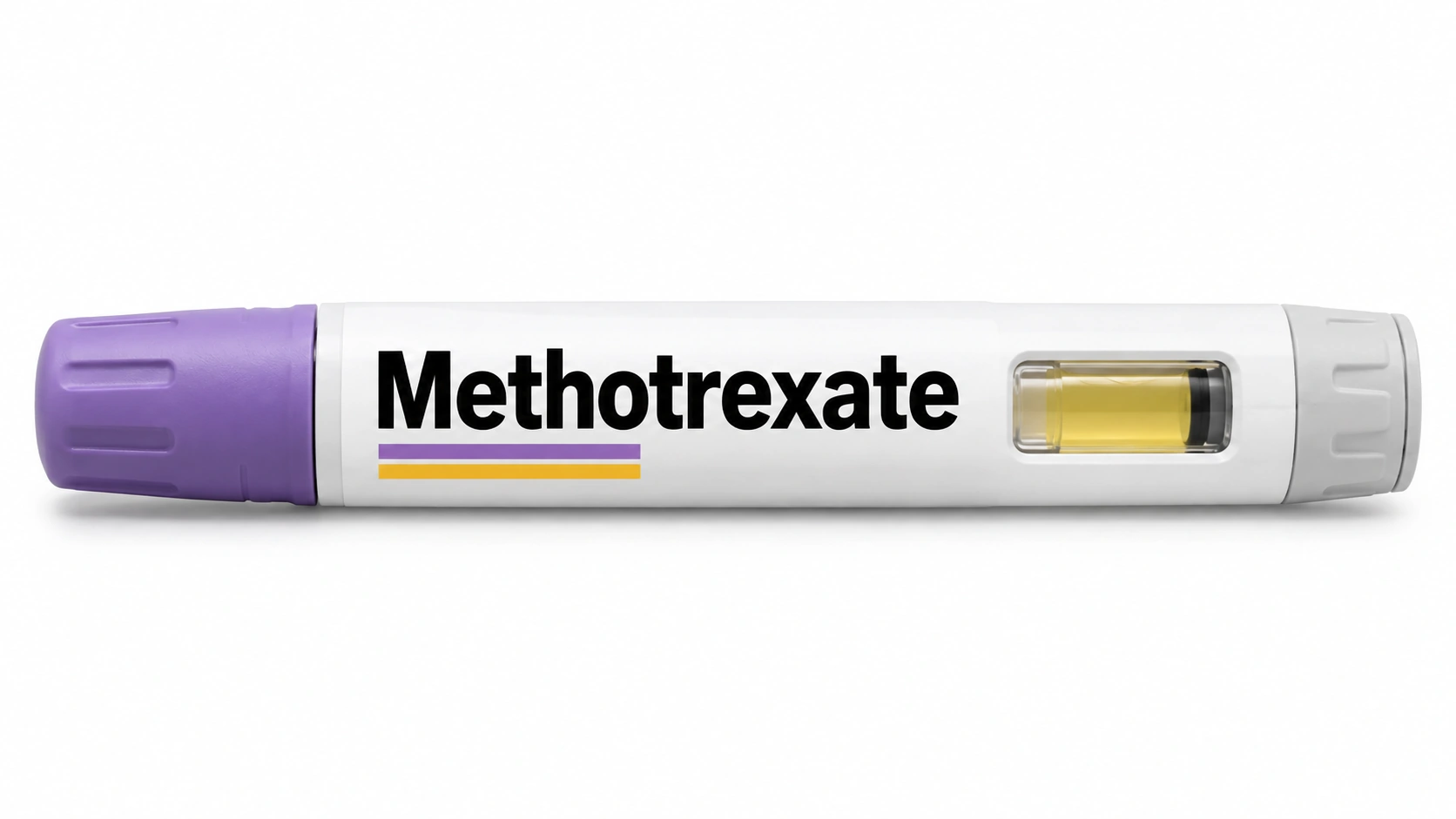
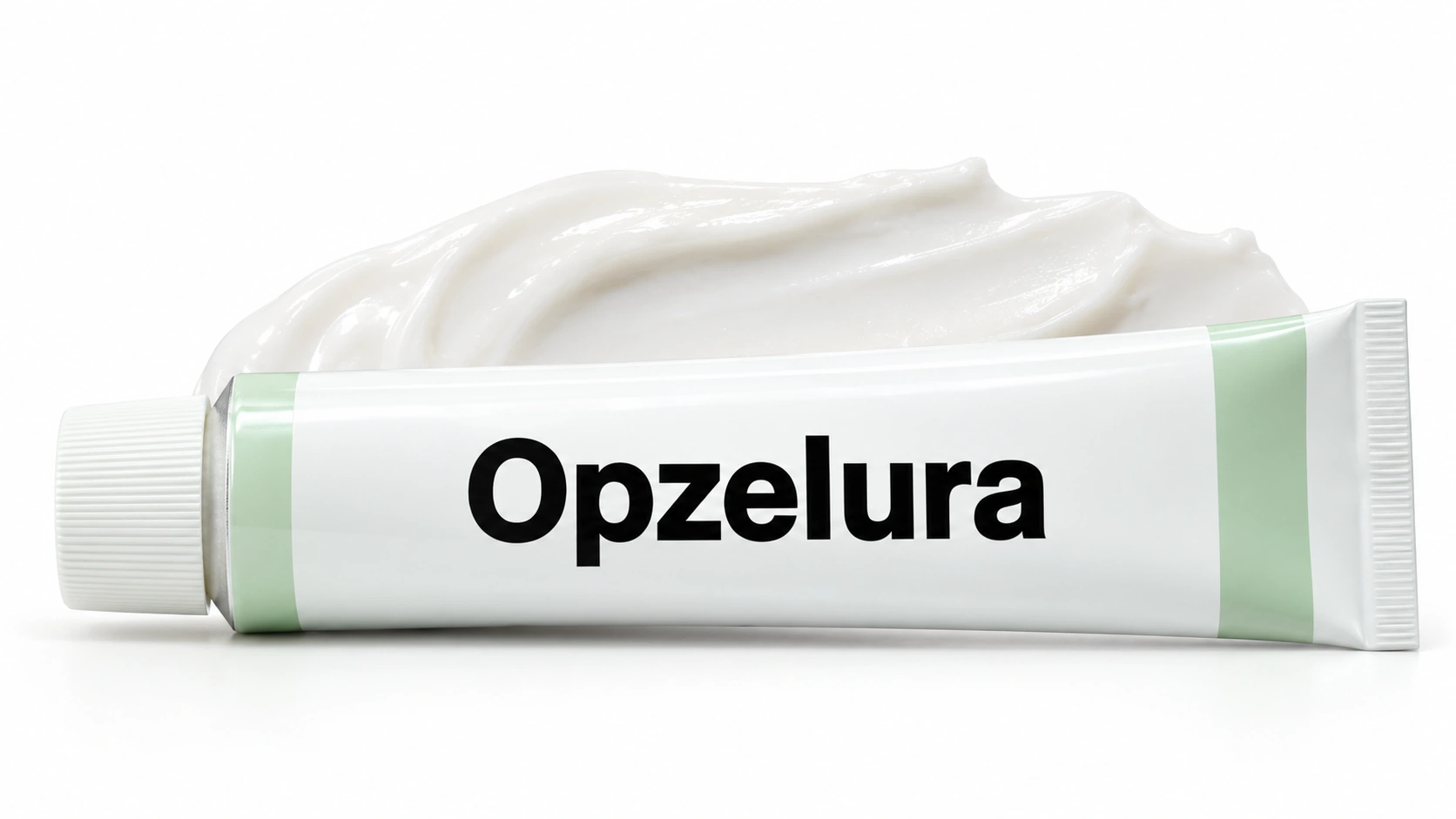
Choose for severe psoriasis, especially with joint pain, as an inexpensive weekly treatment with regular blood tests.
Choose to bring color back to vitiligo, especially on the face, or for a fast non-steroid eczema option — if cost can be managed.
Can you take them together?
Opzelura's label advises against combining it with strong immune-suppressing medicines. Check with your dermatologist before using it while on methotrexate.
Compare uses by strength of evidence. Evidence level describes confidence in a benefit, not its size.

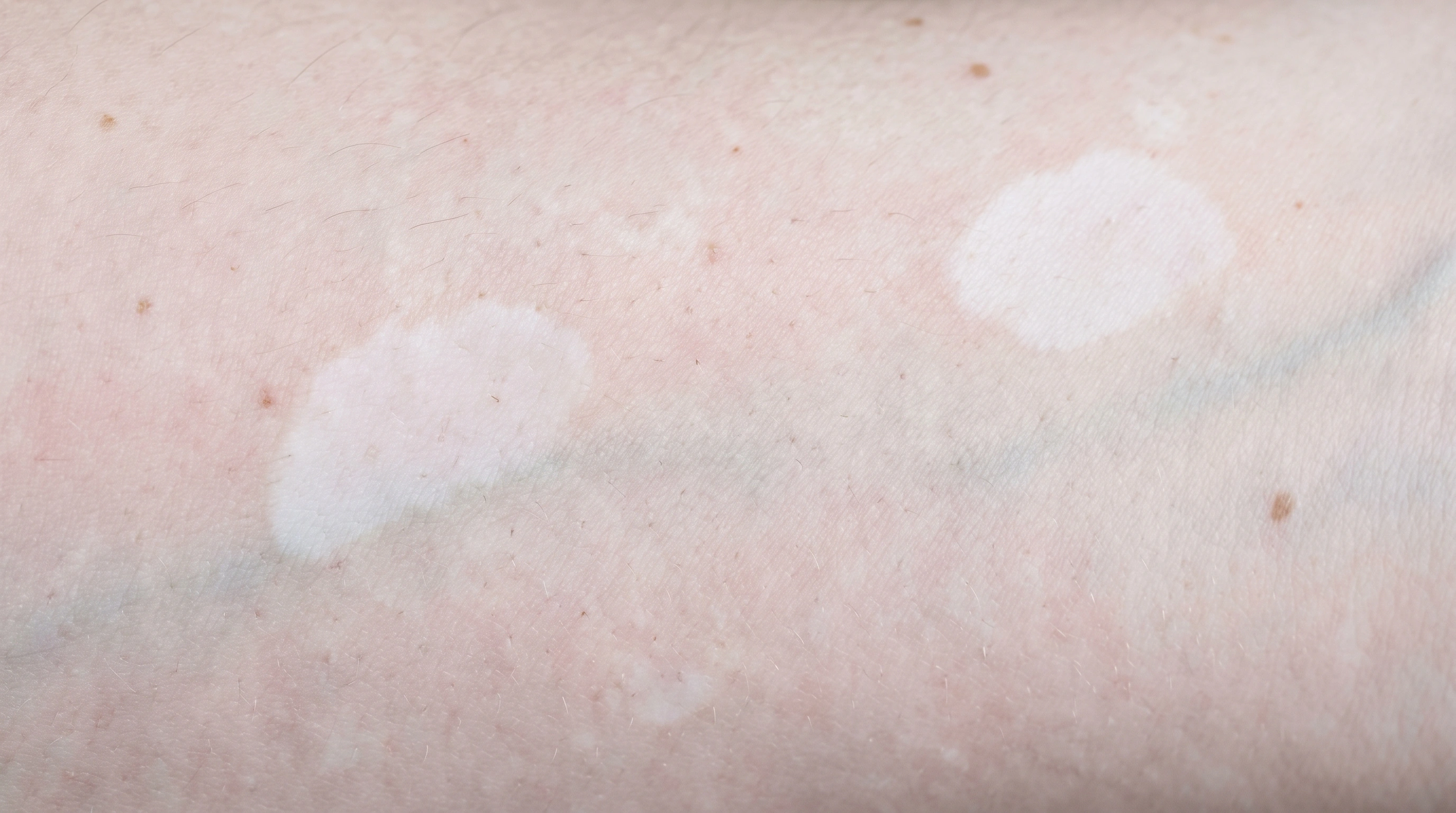


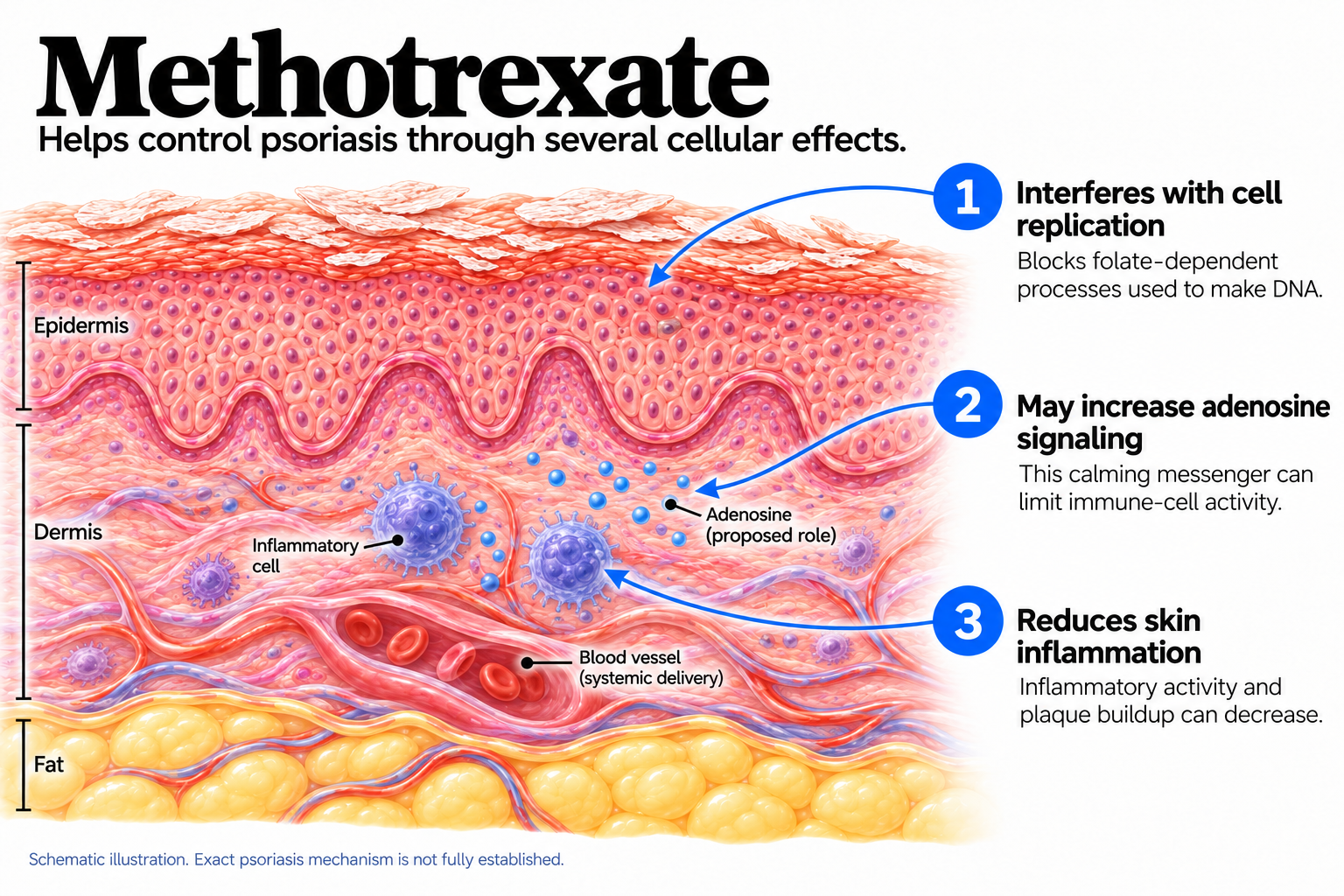
Interferes with cell replication: Blocks folate-dependent processes used to make DNA. May increase adenosine signaling: This calming messenger can limit immune-cell activity. Reduces skin inflammation: Inflammatory activity and plaque buildup can decrease.
The psoriasis mechanism is not fully established. Folate antagonism affects replication, while low-dose anti-inflammatory actions include proposed adenosine pathways supported by experimental work; their precise clinical contributions are unresolved.

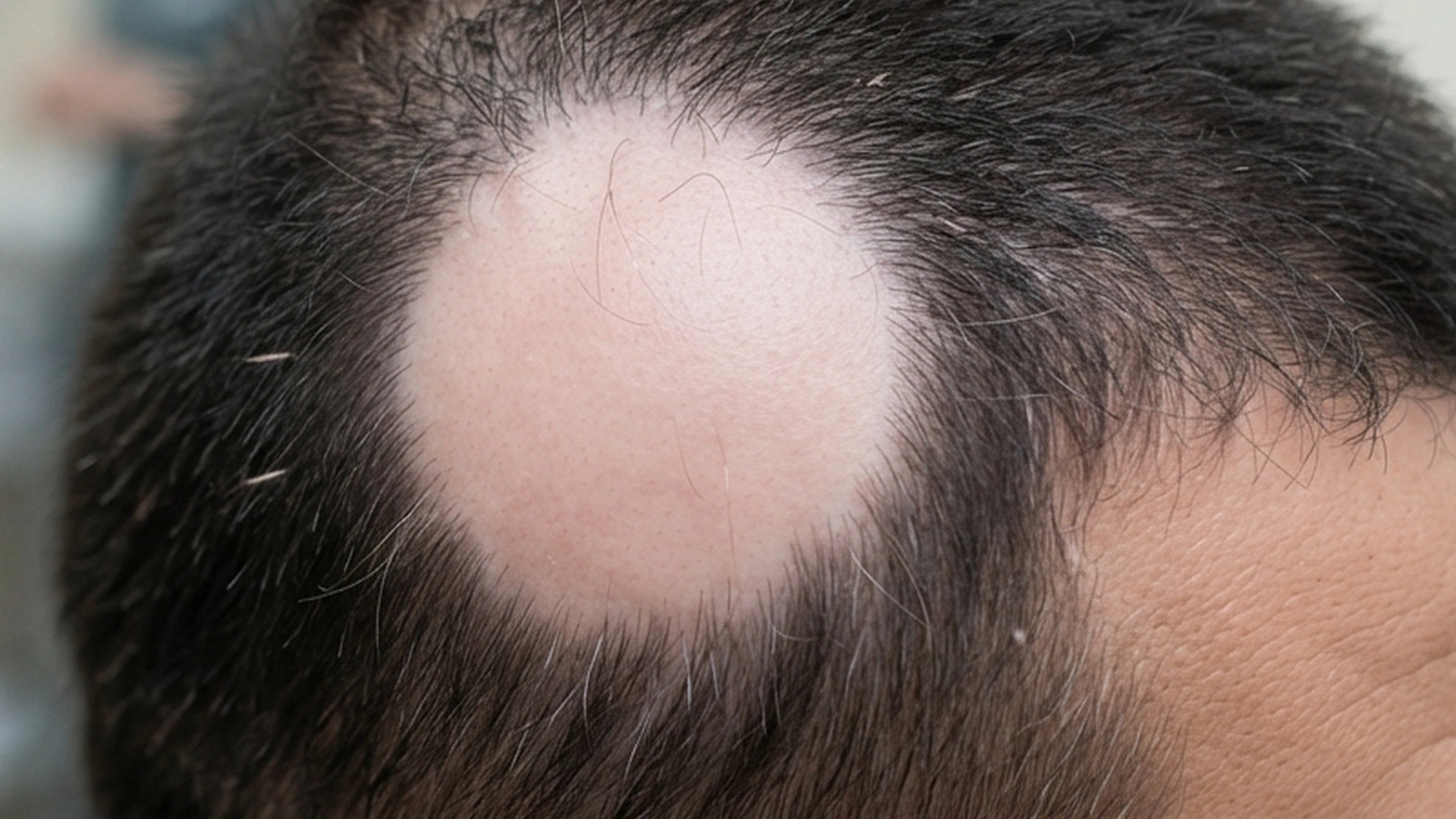
Blocks JAK1 and JAK2: Interrupts enzymes that relay inflammatory messages. Calms eczema and itch: Less inflammatory signaling helps irritated skin settle. Helps pigment return: In vitiligo, skin color can recover gradually.
JAK1/JAK2 inhibition is established; the relevance of individual JAK enzymes to therapeutic effectiveness is not fully known. Eczema improvement and vitiligo repigmentation are distinct outcomes, not guaranteed or immediate.
This drug is taken once a week. Taking it every day can cause fatal bone marrow failure. Pick one day of the week, write it down, and keep to it.
Test dose: A single small dose, often 2.5 mg to 5 mg, with blood counts checked about a week later before going further. A safety check, not the treatment dose.
Starting dose: Commonly 7.5 mg to 15 mg once weekly, adjusted for age, weight, kidney function and other illnesses. Lower in older people and in reduced kidney function.
Going up: Small steps, usually 2.5 mg to 5 mg every few weeks with blood tests in between, until the psoriasis responds or side effects set the ceiling.
Usual dose: Most people settle between 15 mg and 25 mg once weekly. Above about 15 mg tablet absorption gets unreliable, a common point to switch to the injection.
Folic acid alongside it: It reduces nausea, mouth ulcers and blood count problems. Usually a daily dose on the days you are not taking methotrexate, or one larger weekly dose on a different day. It does not stop the drug working.
Total course: No fixed course. It continues as long as it works and blood tests stay normal, which for some people is years.
When to Apply: A thin layer twice a day, roughly twelve hours apart, on affected skin only. Wash your hands afterwards unless your hands are being treated. Two limits are on the label, not suggestions: no more than 20% of your body surface at a time, and no more than 60 grams a week, or 100 grams over two weeks. One palm is about 1% of your body surface.
How to Start: Twice daily from day one. For eczema, keep going until the skin is clear, then stop — the label calls it short-term, on-and-off treatment. For vitiligo it is the opposite: use it steadily. Stopping early is the usual reason it appears not to work.
If It Irritates: Redness, itch or a mild sting where you apply it is the usual early complaint and it settles. Acne or small bumps at the site is the other common one, most often on the face in vitiligo treatment, and it is treatable rather than a reason to stop. Moisturizing afterwards helps both.
If It's Not Working: For eczema, reassess at 8 weeks; if the skin is not clear, the label says stop and reconsider. For vitiligo, do not judge before 24 weeks. Repigmentation is slow, it starts on the face, and hands and feet may show very little for a long time. No change by about six months is when your doctor will usually add narrowband UVB light treatment.
Once a week, on the same day every week. Choose a day you will remember and write it somewhere visible. Some people take the whole dose at once; some split it into two portions about twelve hours apart on the same day to reduce nausea. Do not spread it across different days unless you were told to.
Take tablets with water, and with food if they upset your stomach. An evening dose means the tiredness and mild nausea happen while you are asleep.
Folic acid goes on the other days, as prescribed. It is not a substitute for a missed methotrexate dose.
With the weekly injection, keep to the same day and rotate the site.
Take it as soon as you remember if it is within about two days of your usual day. If longer, skip it and take the next on your usual day. Never take two weekly doses close together to catch up, and never take a daily dose to make up for a missed week.
If you have taken more than one weekly dose, or taken it several days in a row, contact a doctor or a poison center straight away. Do not wait to see how you feel. This overdose is treatable caught early and dangerous when it is not.
Methotrexate is watched by blood test, and the schedule is not optional. The problems it causes are silent until they are advanced.
Before starting: Full blood count, liver tests, kidney function, and a pregnancy test where relevant. Hepatitis B, hepatitis C, HIV and tuberculosis screening is standard, because the drug damps the immune system. A chest x-ray if there is any history of lung disease.
Early on: Blood counts and liver tests within a week or two of starting, and again after each dose increase. This is when a sudden drop in blood counts would show.
Once stable: Full blood count, liver tests and kidney function every one to three months, depending on the dose and what else you take, for as long as you are on the drug.
The liver over the long term: Years of methotrexate can scar the liver, and the risk rises with total lifetime dose, heavy alcohol use, obesity, diabetes and fatty liver disease. Biopsy used to be the check; most clinics now use a blood marker of scarring and a scan of liver stiffness.
The lungs: A rare but serious lung inflammation can occur. A new dry cough, breathlessness or fever means being seen, not waiting for the next appointment.
What to report between tests: Mouth ulcers, unexplained bruising or bleeding, sore throat or fever, dark urine, yellowing of the eyes or skin, severe nausea, any new cough or breathlessness.
For most healthy people using it within the label limits, no routine blood tests are needed. Blood levels from the cream are very low, and the trials did not find the blood count or cholesterol changes the tablet causes.
Your doctor monitors the label's safety concerns by asking rather than testing. Expect questions about blood clots, heart attack or stroke, smoking, cancer, tuberculosis exposure, hepatitis, and whether anything else you take suppresses your immune system. This cream is not meant to be combined with other JAK inhibitors, biologics or strong immunosuppressants.
They will check the response on schedule — 8 weeks for eczema, 24 weeks and then longer for vitiligo — and ask about infections, unexplained fever, night sweats, weight loss, chest pain, breathlessness and leg swelling. Some doctors check blood counts and cholesterol at baseline in people with other risk factors.
Skin checks matter for a different reason — unpigmented skin burns easily, so an annual look at the skin is sensible regardless.
Approximate windows, not promises.
First doseTaking it: Once a week, not daily, with folic acid on the other days. Nausea, tiredness or mouth soreness in the day or two after each dose is common early on; folic acid usually blunts it.
Weeks 1 to 2Settling in: Nothing visible in the skin yet.
Weeks 4 to 8Working: Plaques thin and spread less, thickness and scale first. Joint pain from psoriatic arthritis often improves in the same window, one reason it is chosen over a skin-only treatment.
Weeks 4 to 8Judge it here, eczema: Week 8 is the fair point. If the skin is not clear, the label says stop and reconsider.
About 3 monthsJudge it here: Substantial improvement is the realistic target.
Beyond 3 monthsLong term: Where it suits, the result holds while the dose continues, with regular blood tests. Some stay on it for years.
Many monthsNails: Nail psoriasis can improve, but slowly. Nails always lag behind the skin.
First few minutesApplying it: A thin layer twice a day. Mild stinging or redness where you apply it is the usual side effect.
Days 1 to 7Adjusting: For eczema, itch often improves within the first few days, sometimes the first day — among the quickest of any topical. For vitiligo, nothing visible yet.
Weeks 2 to 4Working, eczema: Redness fades and the rash flattens. Most of the eczema improvement happens here.
Weeks 8 to 24Working, vitiligo: The first sign is small pigmented dots inside a patch, often around hairs, which spread and join up. The face and neck move first, and around a third of people reach 75 percent repigmentation of the face by about six months.
Months 6 to 12 and beyondContinuing, vitiligo: By about a year roughly half reach that 75 percent mark on the face. The trunk and limbs are slower, and skin with hair does better, because surviving pigment cells live in hair follicles. Where vitiligo is still spreading, the cream helps hold the line.
ThroughoutWatch for: Acne or small bumps at the site. Report any fever, unusual infection, chest pain, breathlessness or swollen painful leg.
Sorted by what to do about them.
Generic methotrexate tablets are among the least expensive systemic treatments in dermatology. Folic acid is cheap too.
The weekly auto-injector pens cost considerably more, and coverage usually requires showing that tablets caused nausea or did not work well enough. Plain injectable vials are cheaper than the pens.
The real cost is the monitoring, repeated blood tests and periodically a liver scan or blood marker. Usually covered, but they are appointments and not optional.
Insurers frequently require a trial of methotrexate before approving a biologic, one reason it is still so often the first systemic drug tried.
Cost is the honest sticking point. Ruxolitinib cream is brand only with no generic, and a 60-gram tube lists at a few thousand dollars. Since a tube is one week's maximum, sustained use is expensive at list price.
Almost nobody pays that, but almost everybody has to work for coverage. A prior authorization is standard. For eczema, plans typically want a topical steroid and often a calcineurin inhibitor tried first. For vitiligo, coverage has been harder because some plans treat it as cosmetic — a letter from your dermatologist explaining that vitiligo is an autoimmune disease with real medical and psychological effects is usually what turns that around. Denials are frequently overturned on appeal.
The manufacturer runs a copay program that can cut the cost a lot with commercial insurance, plus patient assistance for people who qualify. Terms change often. People on government insurance are usually not eligible for copay cards, which is a real gap.
One practical point: the drug is priced by the tube, so treating only the areas that need it is a cost decision as well as a safety rule.
Once a week, on the same day. Never daily. Daily dosing by mistake is the most dangerous error with this drug and it has been fatal. Get medical help the same day if it happens.
Methotrexate blocks folate, and the mouth ulcers, nausea and low blood counts come from that. Folic acid on the other days restores enough folate to reduce them without stopping the treatment working.
Yes. Liver damage and falling blood counts cause no symptoms until they are advanced. The tests are the only early warning.
The concern is regular drinking, not a single glass, because alcohol and methotrexate both stress the liver. Agree an actual limit with your doctor.
No. It must be stopped well before trying to conceive, and the advice covers both partners. It causes miscarriage and serious birth defects. Ask your own doctor how far in advance.
Give it about three months. First changes often show at four to eight weeks, but three months on a tolerated dose is the fair point to judge.
It is chemotherapy at much higher doses. At psoriasis doses it acts as an immune-calming drug, and the experience is not comparable.
Most people see the first small pigmented dots between two and six months, usually on the face and often around hairs. Twenty-four weeks is the earliest fair point to judge, and results keep improving past a year.
Regulators applied it to the whole drug class after a large safety study of a JAK tablet in older people with rheumatoid arthritis and heart risk factors found more heart events, clots, infections and cancers. The cream's own trials did not show those events, and blood levels from a cream within the limits are a small fraction of a tablet dose.
That limit and the 60 grams a week cap keep the amount reaching your bloodstream low. It is why the safety picture for the cream differs from the tablet.
Pigment that has returned usually stays, but the immune attack can restart and patches can begin losing color again. Most people continue treatment or reduce it gradually rather than stopping outright.
Acne at the application site is a recognized side effect, most often on the face during vitiligo treatment. It is treatable and not a reason to stop.
Less well, and more slowly. Areas with few hair follicles have fewer surviving pigment cells to repopulate the skin. The face is where this cream does its best work.
A common combination, often more effective than either alone, but plan it with your dermatologist rather than starting on your own.