Female Pattern Hair Loss vs Traction Alopecia

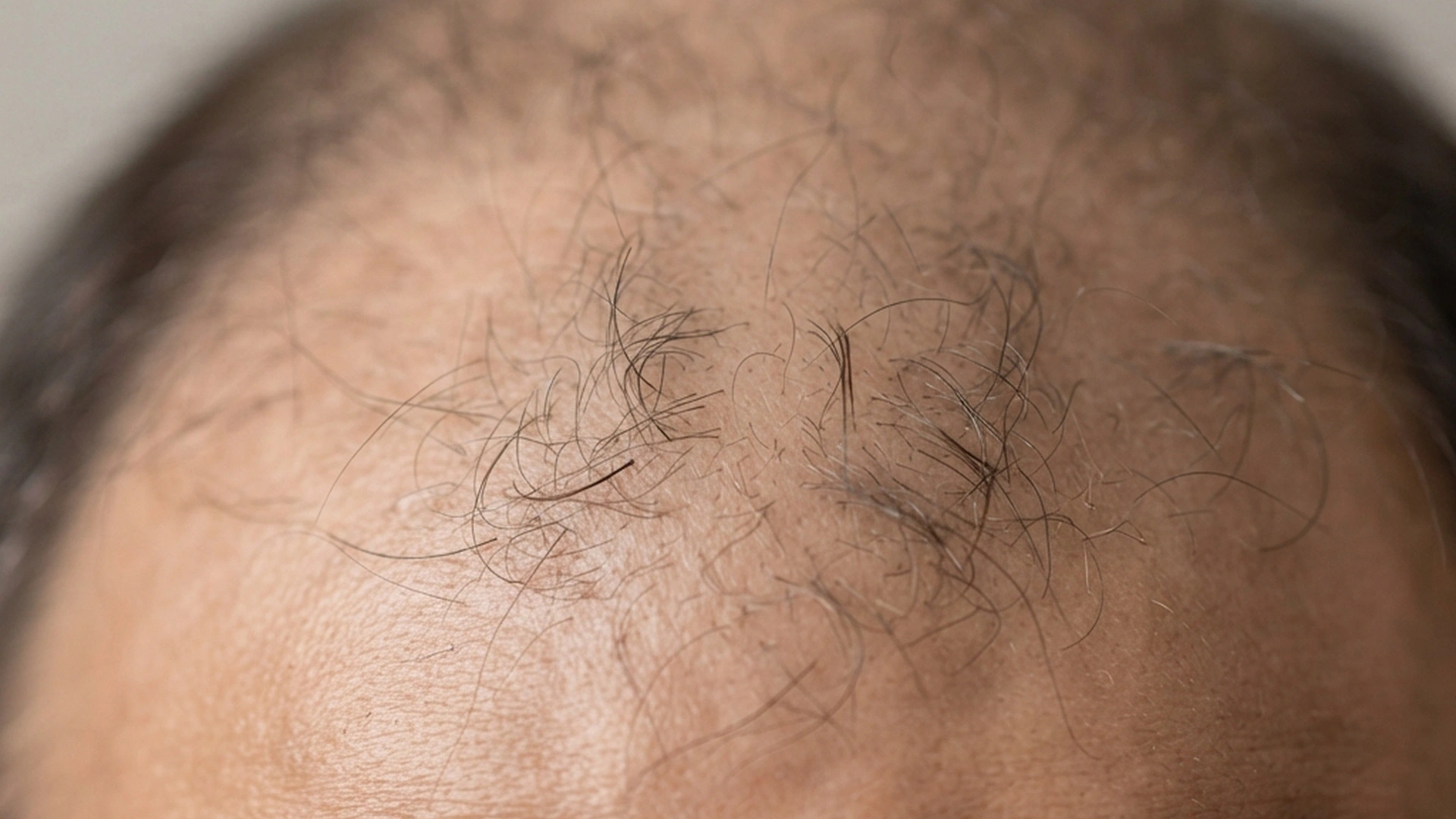
Female pattern hair loss is a gradual thinning across the top of the scalp, where the part widens and the hair itself becomes finer. It is the most common cause of hair loss in women, it is treatable, and the earlier treatment starts the more hair there is to keep. Hair loss caused by repeated tension on hair follicles.

Research updated 2026-10-23
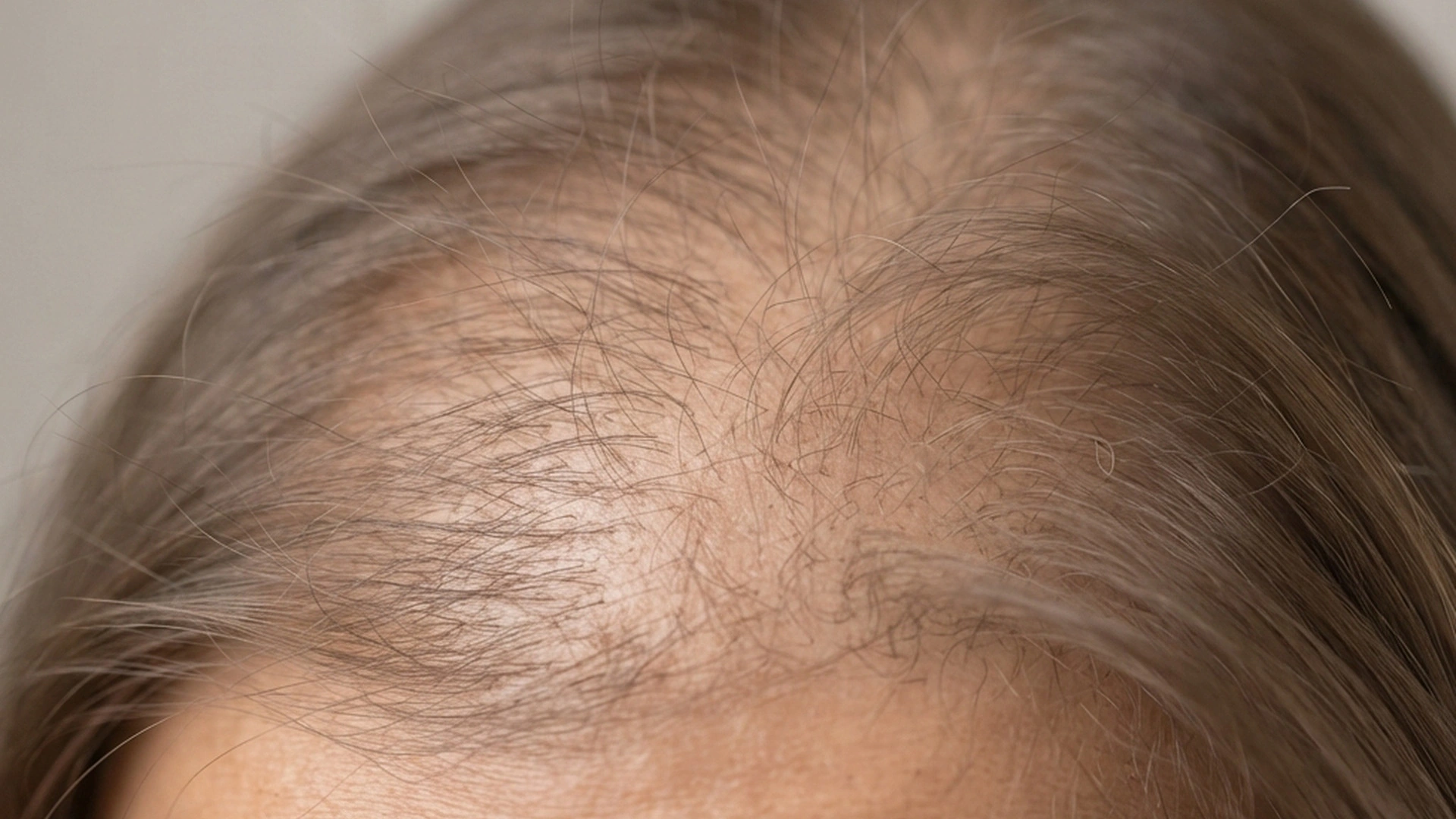
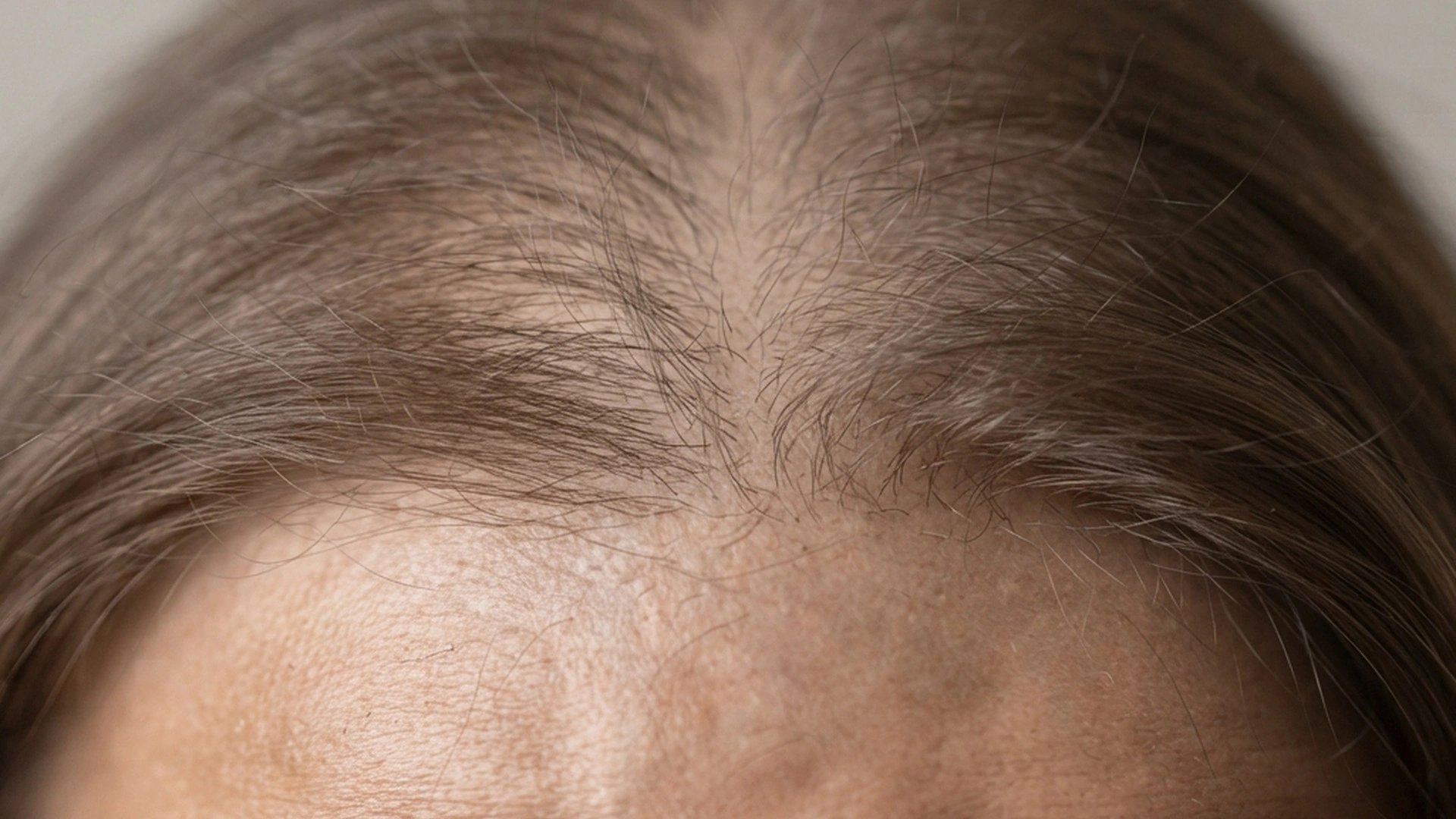
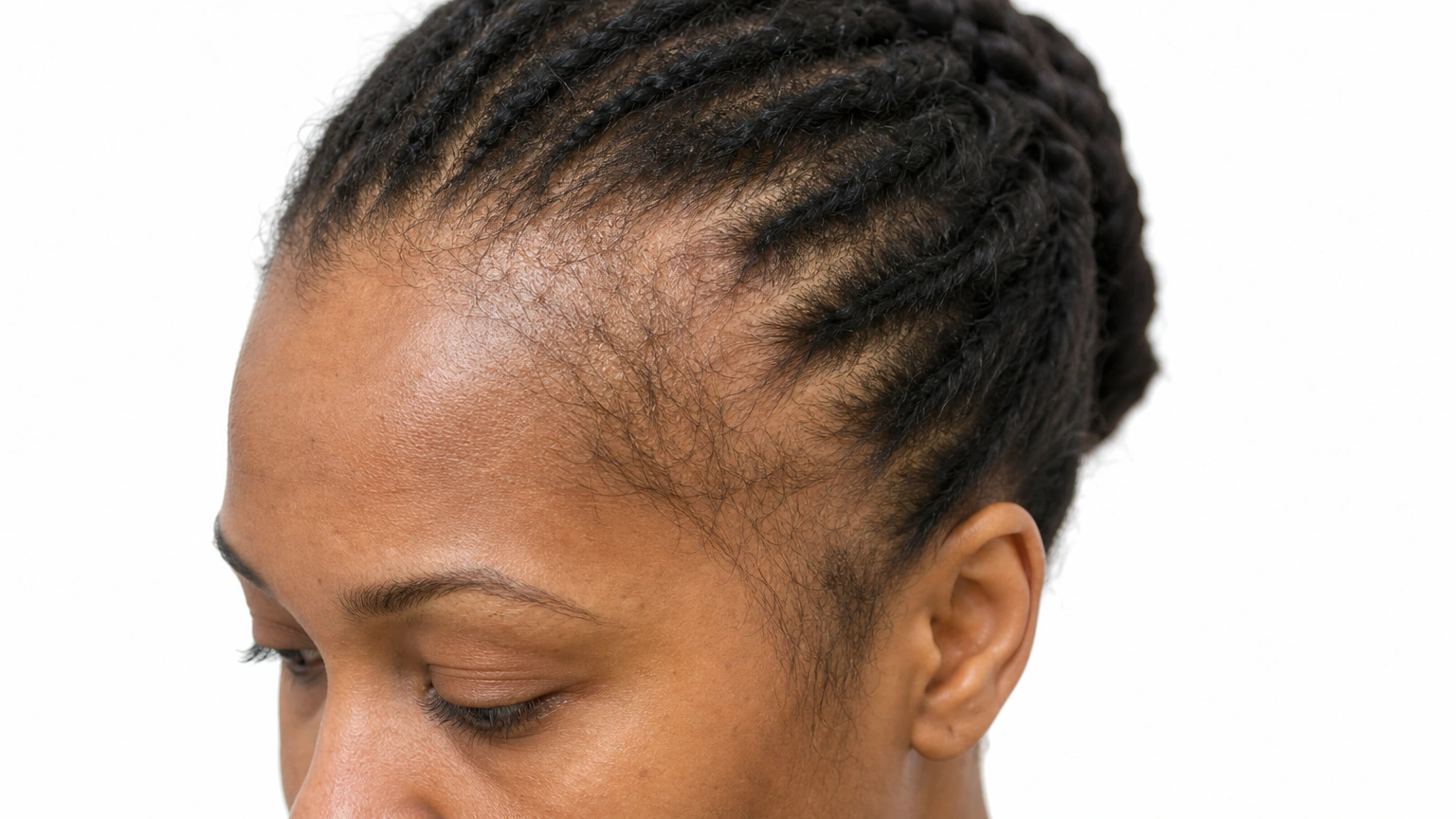
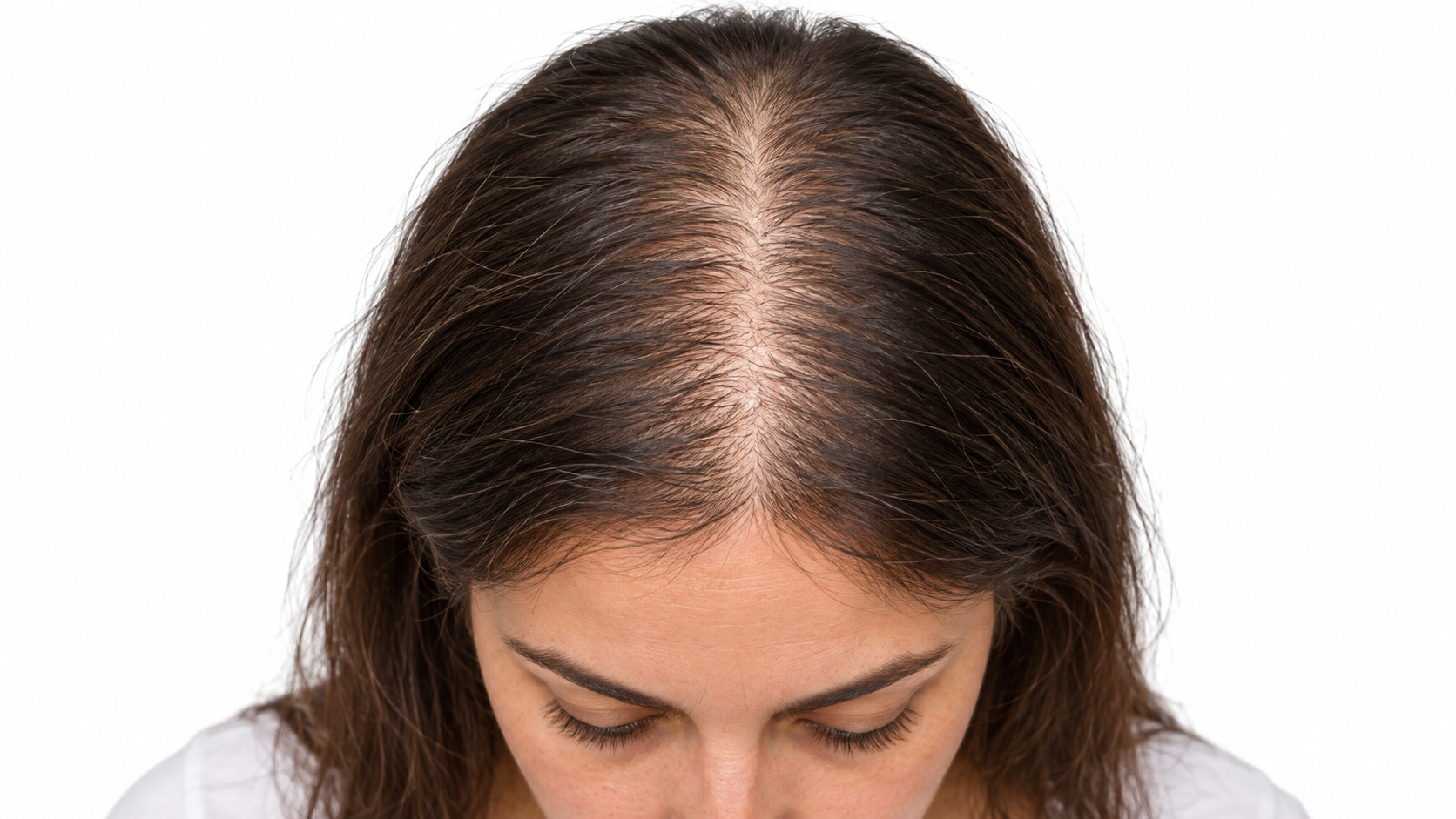
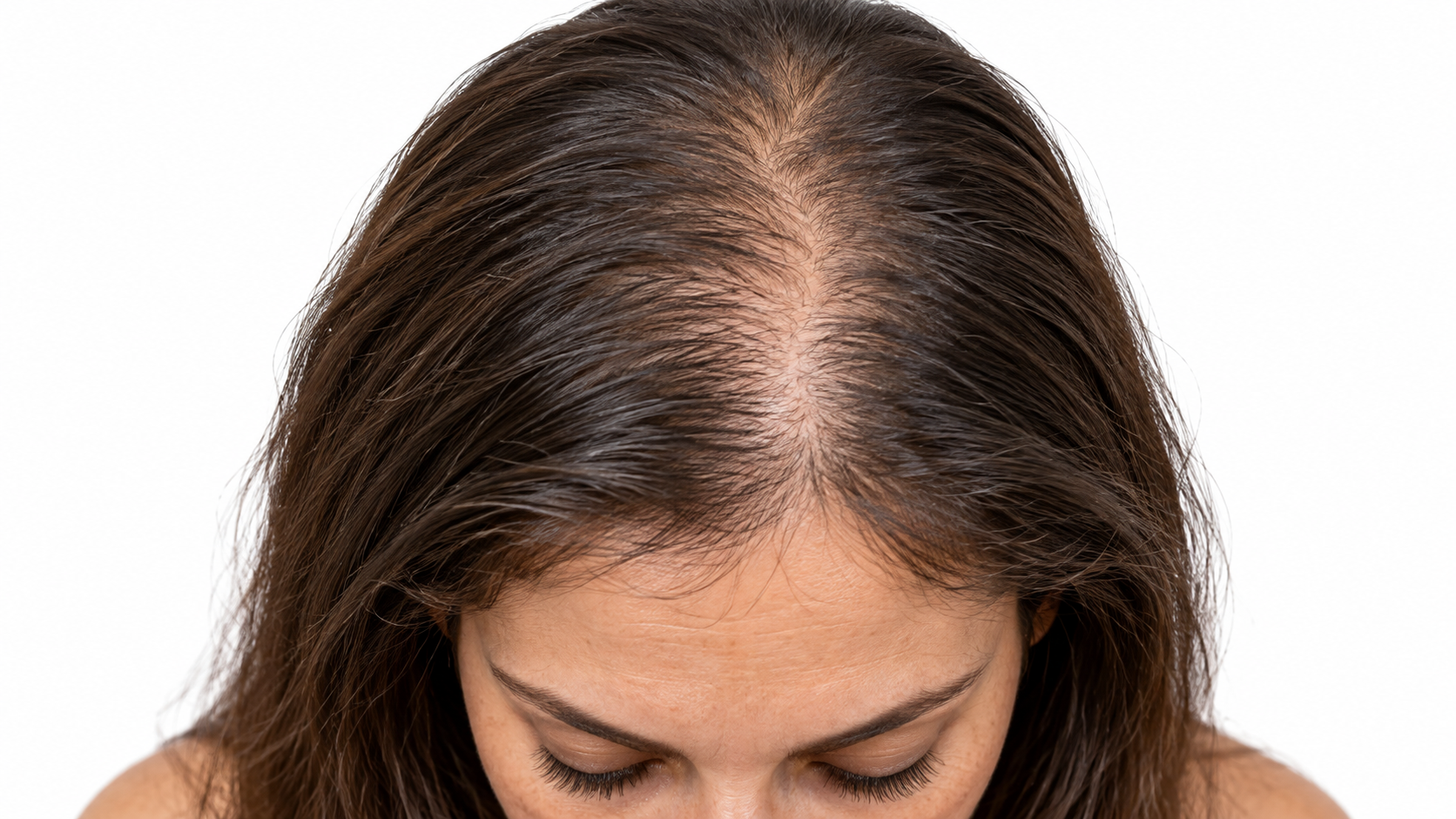
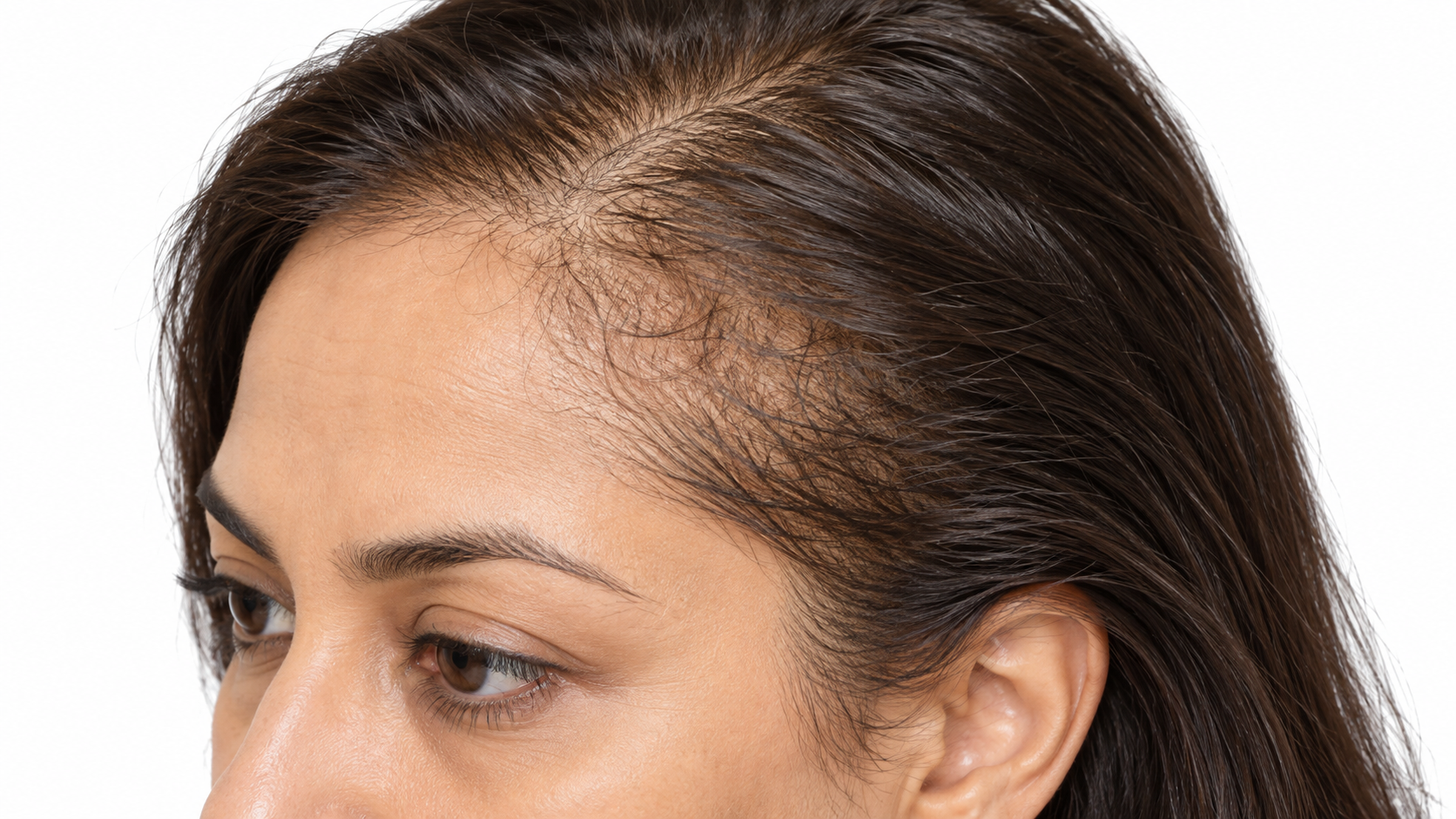
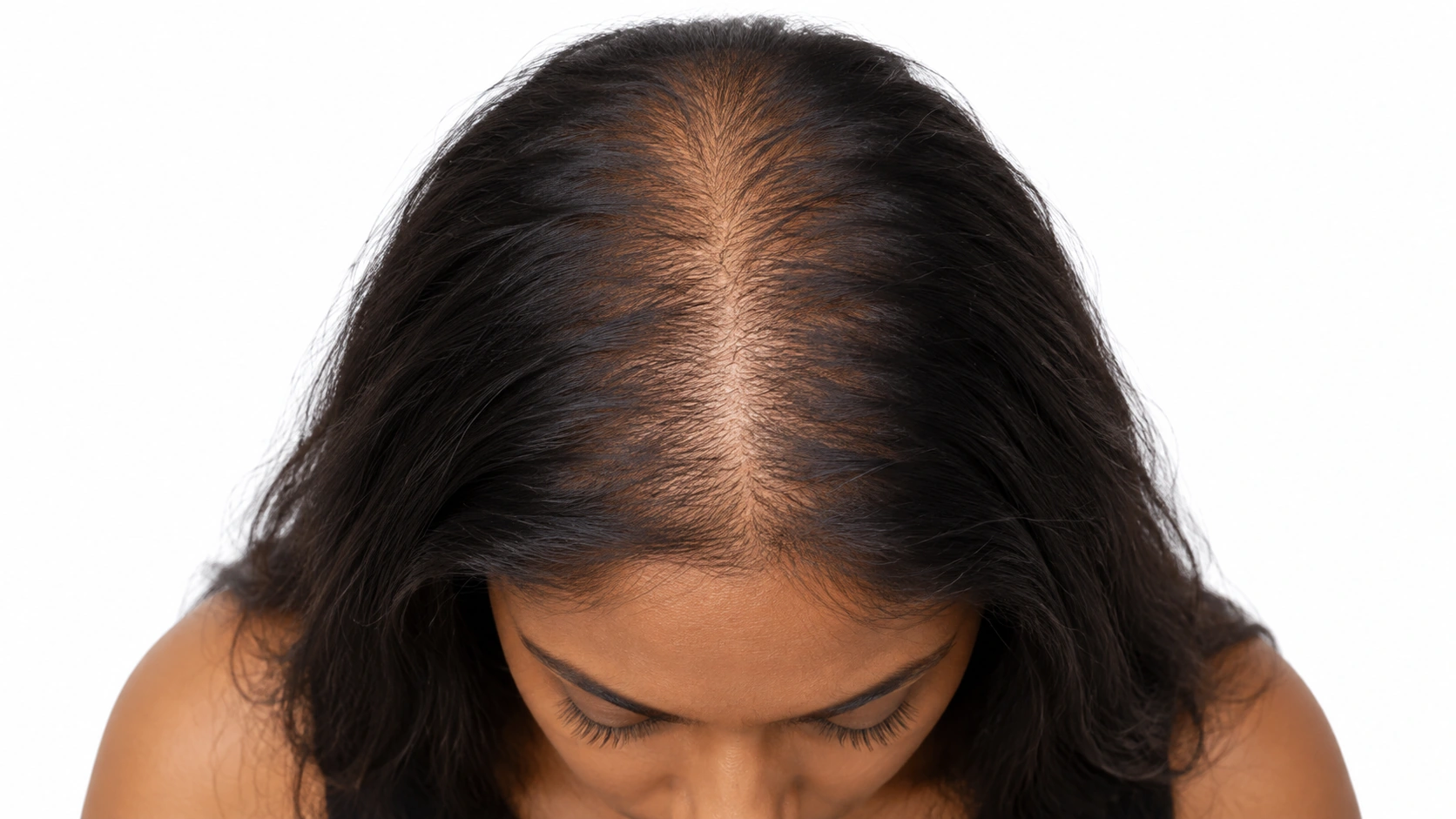
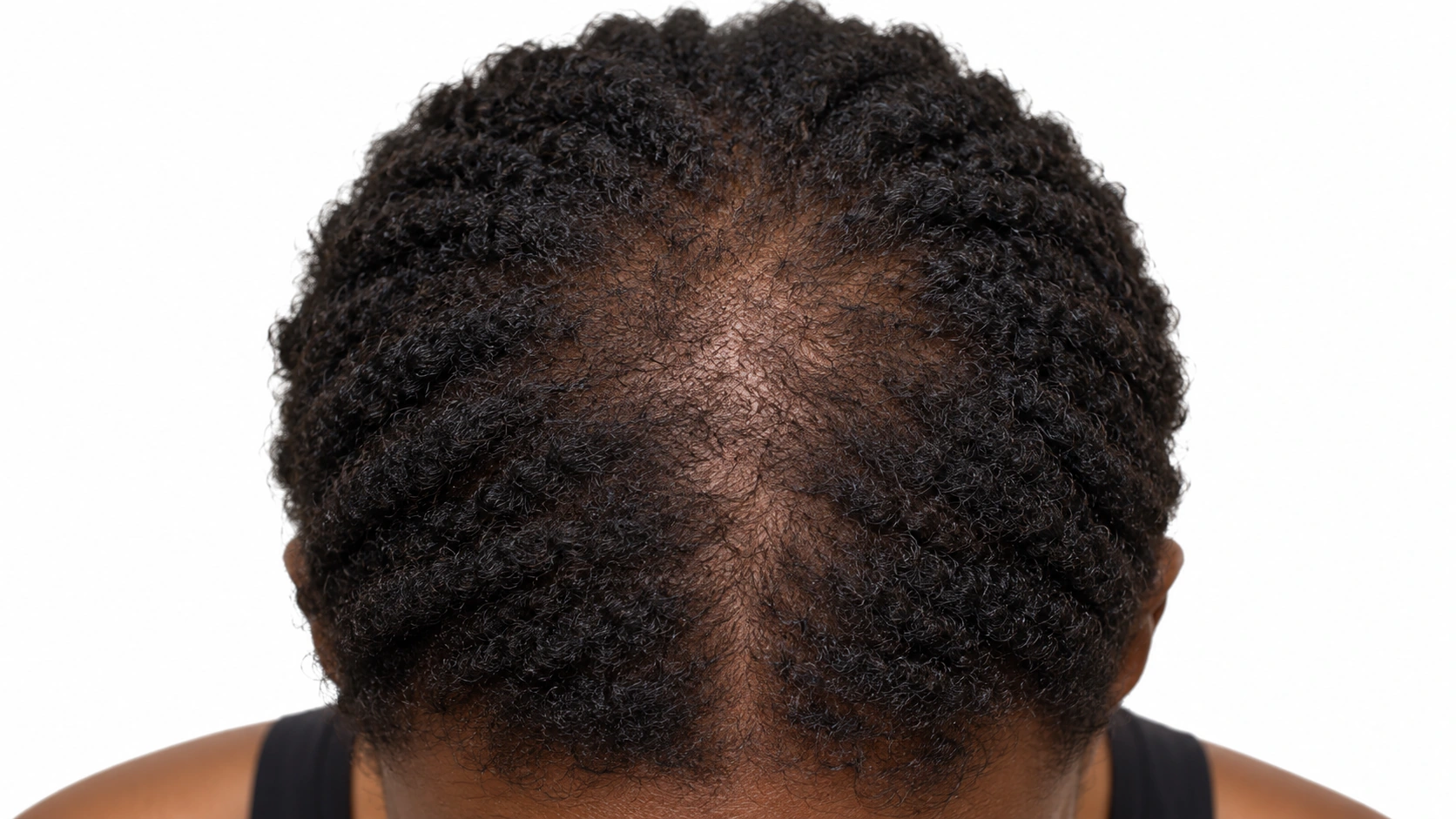
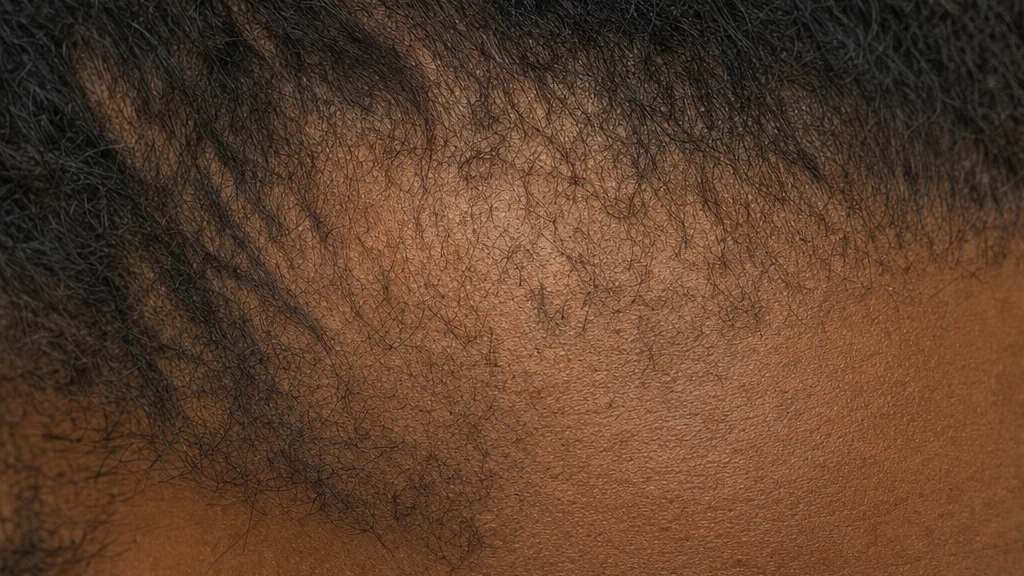
A widened center part with thinning hair on the scalp.AI-generated educational illustration: Hair thinning and broken hairs along the frontotemporal margins next to tight braids, representing traction alopecia.

Key differences

The same eight facts on every condition comparison.

Usual age
Adults; more after menopause
Any age
Where
Top and crown of the scalp
Hairline, temples
Main sign
Widening part, finer hair
Thinning where hair is pulled
Itch or pain
No
Tender when styled tight
Contagious
No
No
Long term
Gradual; treatment slows it
Reversible early, permanent late
Scars
No
Late stage
Who gets it
Family history; hormones
Tight braids, ponytails, extensions

What is it?

Female Pattern Hair Loss
Traction Alopecia
What is it?
  • It is a pattern of reduced density.
    It describes a characteristic distribution of thinning, not every type of shedding.
  • Follicles shrink over time.
    Over successive cycles, susceptible follicles produce finer hairs.
  • It shows as thinning, not bald patches.
    People notice a wider part, smaller ponytail or more visible scalp.
  • Tests follow the history.
    Blood tests such as iron, thyroid or androgen checks are chosen from the individual history.
  • What it is
    Hair loss caused by repeated tension on hair follicles.

What it looks like

Female Pattern Hair Loss

Female Pattern Hair Loss: Widening part.

Ludwig pattern Diffuse thinning on top, hairline kept.

Female Pattern Hair Loss: Christmas tree.

Christmas-tree pattern Thinning widest at the front of the part.

Female Pattern Hair Loss: Frontal.

Frontal pattern Thinning at the temples, more like male pattern.

Traction Alopecia

Braided hair with thinning at the temple and front hairline.

Traction Alopecia The temples show reduced hair density beside tightly pulled braids.

Skin tones
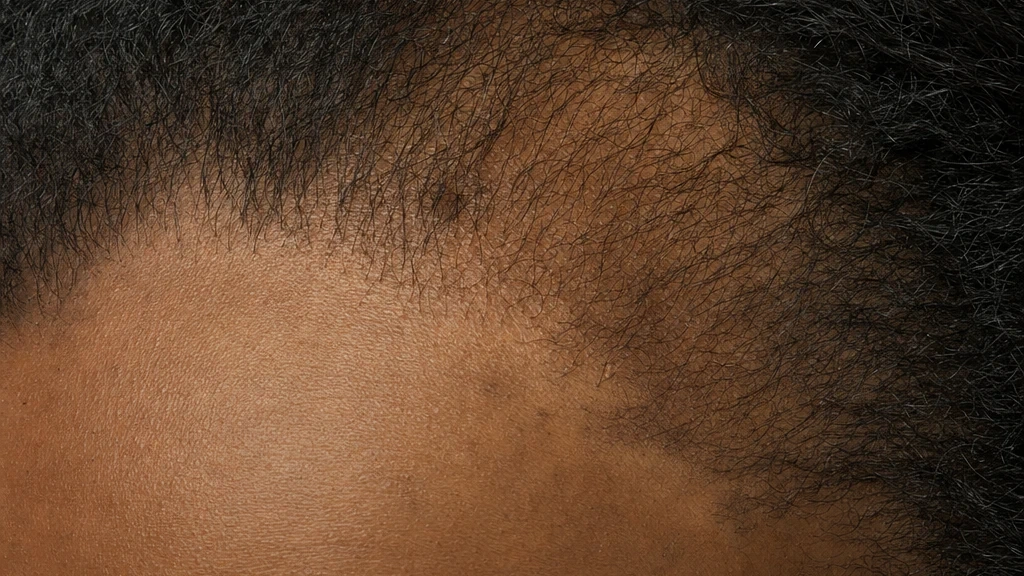
A widened center part with thinning hair on the scalp.
Widening central scalp part on medium skin.
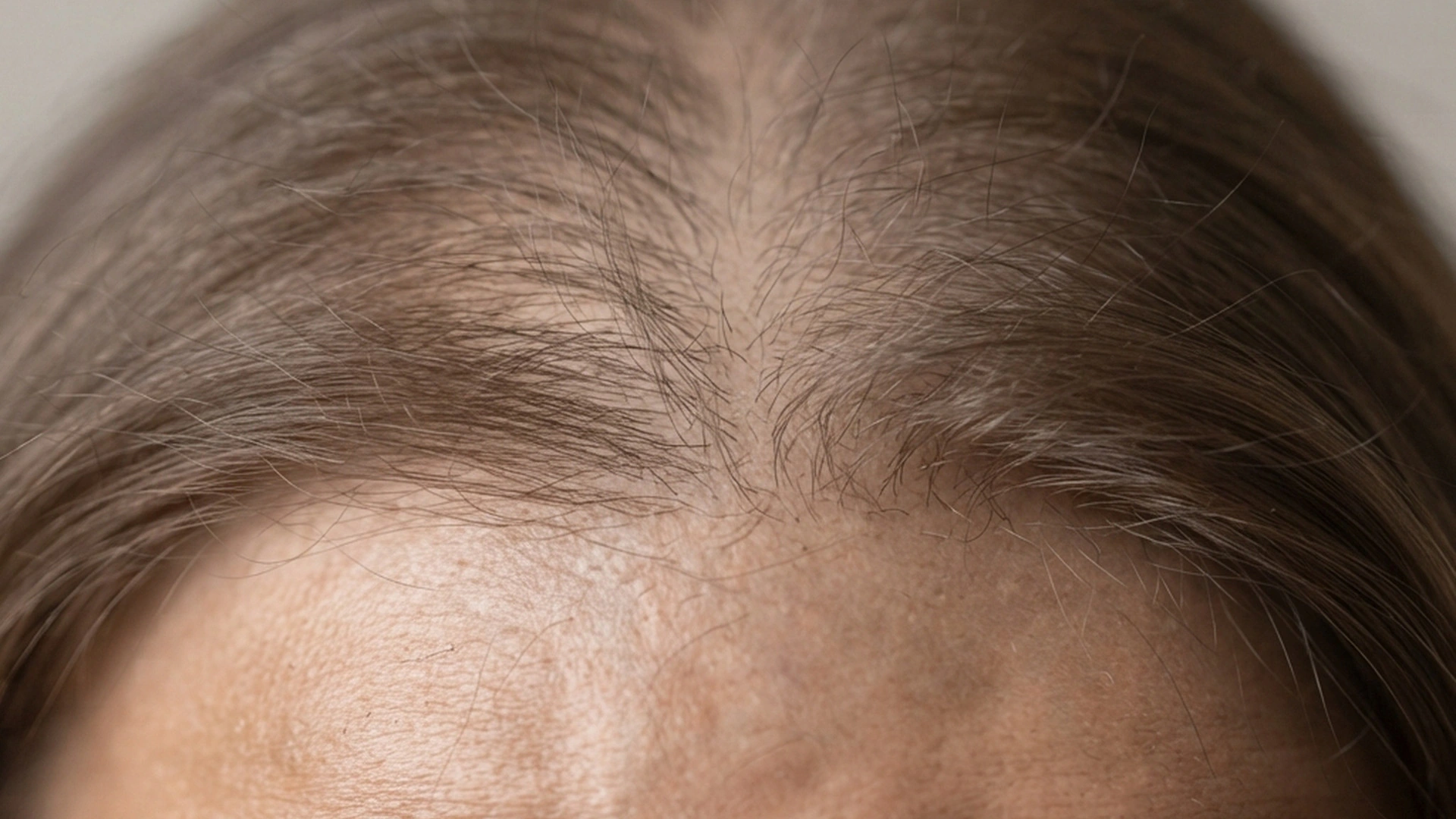
widened central scalp part and thinning hair on brown skin.
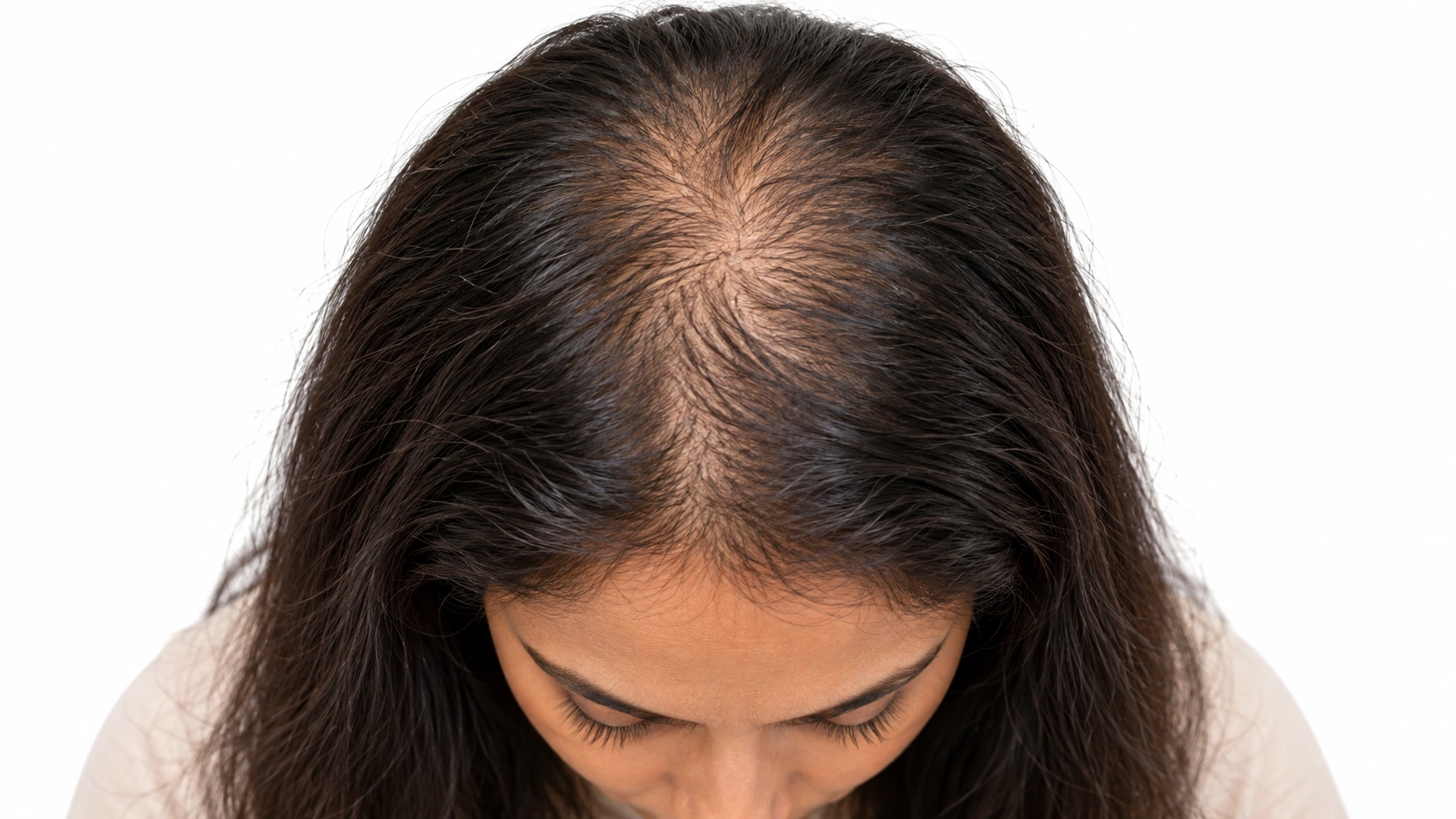
thinning crown hair with visible scalp among coiled hair on deep brown skin.
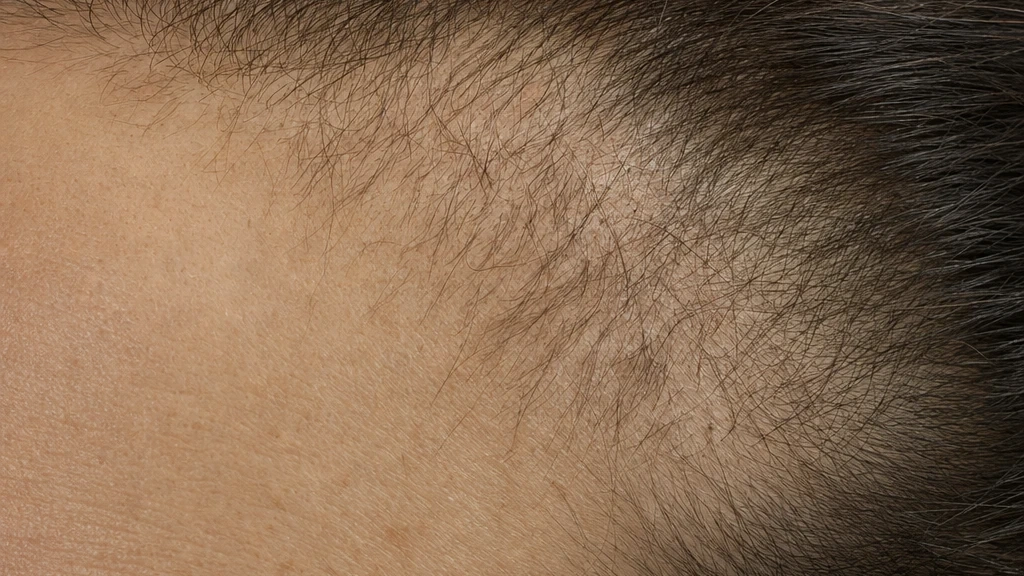
traction alopecia on light skin.
traction alopecia on medium skin.
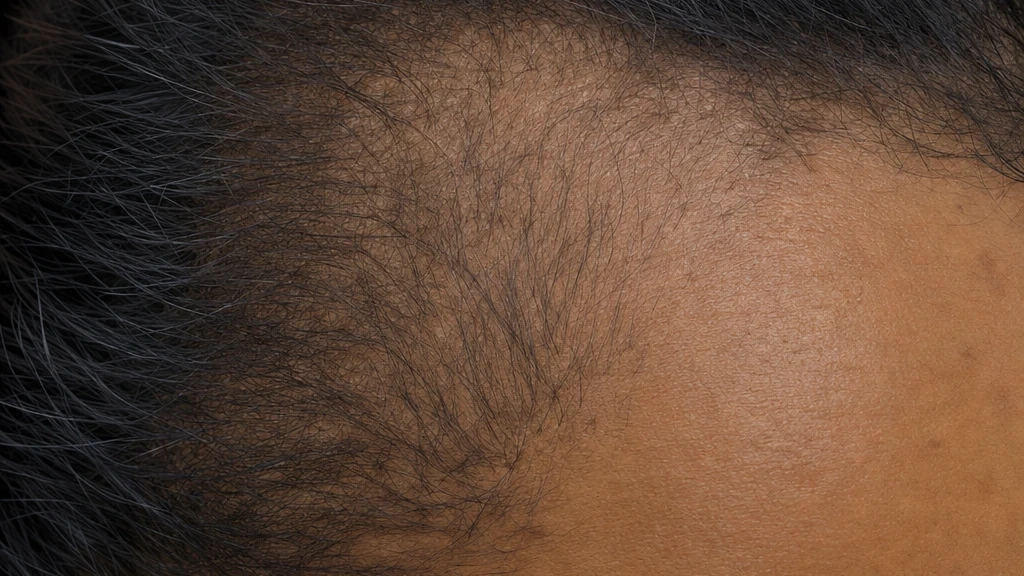
traction alopecia on brown skin.
traction alopecia on deep skin.
Diagram
Female Pattern Hair Loss mechanism diagram. Growth phases become shorter: Affected follicles spend less time growing. Hairs become finer: Miniaturized follicles produce thinner shafts. Scalp coverage decreases: A wider part can become more noticeable.
In the skin

Some scalp follicles gradually produce finer hairs and spend less time in the growing phase. This reduces scalp coverage and can make the central part appear wider.

Repeated pulling places stress on hair follicles and can disrupt hair growth. Early injury may recover, but longstanding traction can destroy follicles and leave scarring.

When it usually starts

010203040506070+

Female Pattern Hair Loss. Usually develops in adult life and becomes more common after menopause.

Traction Alopecia. Can start at any age with repeated tension.

Causes and triggers

Causes

Female pattern hair loss happens when hair follicles gradually shrink and produce finer, shorter hairs. Genes and hormones both play a part.

Chronic traction injures follicles; early damage can be reversible but longstanding damage can scar.

Family tendency

It often runs in families, on either side.

Risk factors
Age, especially after menopause, Family history, Polycystic ovary syndrome, High androgen levels
Tight braids or ponytails, Heavy extensions
Trigger
● Female Pattern Hair Loss
● Traction Alopecia
Menopause
Strong link
Not listed
Stopping birth control pills
Possible
Not listed
Low iron
Possible
Not listed
Repeated hairstyle tension
Not listed
Can contribute

Daily Care

Female Pattern Hair Loss
Traction Alopecia
Daily care

Habits that help

  • Photographs and a year of patience
    Hair changes too slowly for memory.
  • Sunscreen or a hat on the part
    Exposed scalp burns easily.
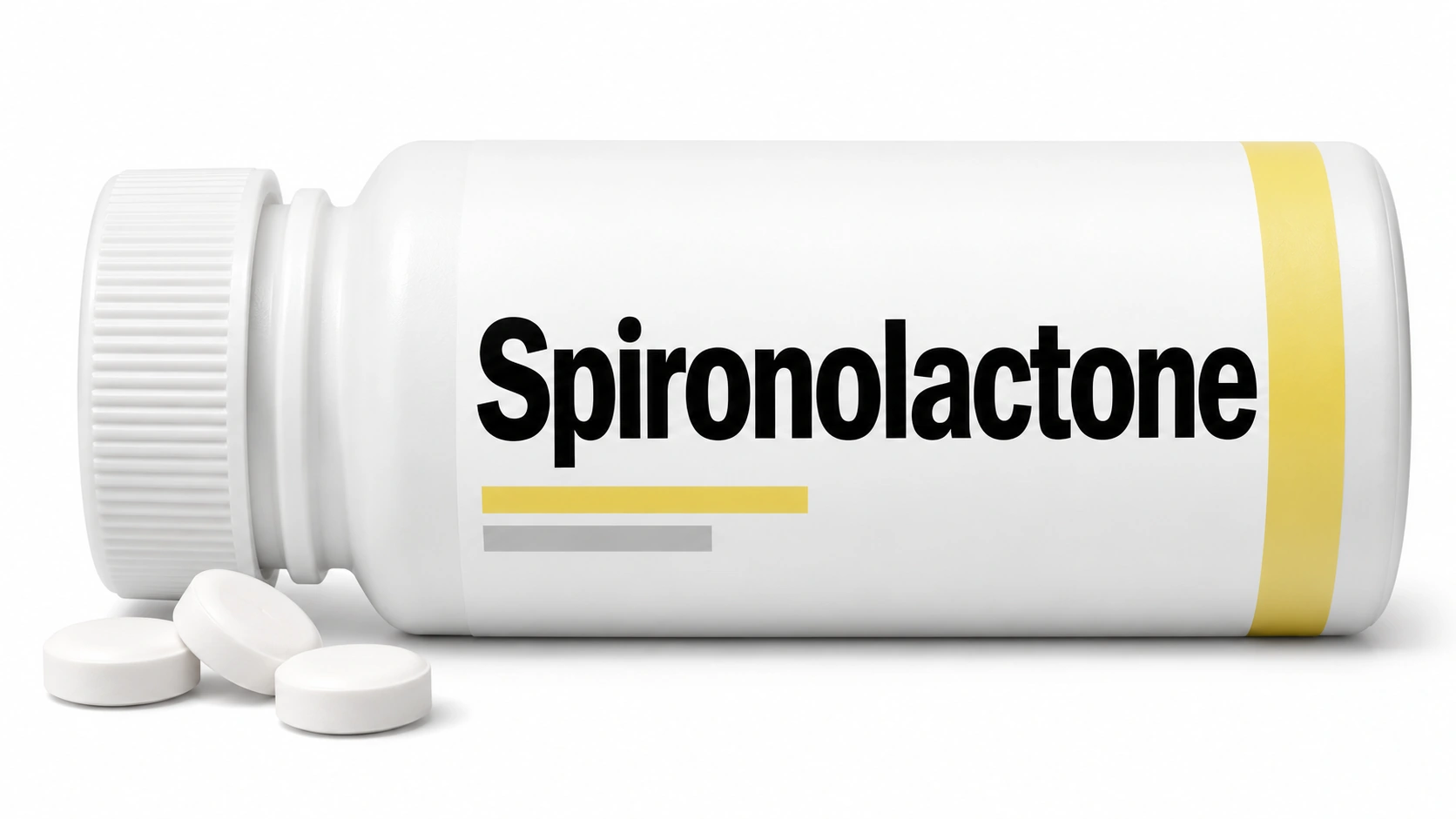
  • Spironolactone
    Blocks androgen signals. Ask your doctor if you could become pregnant.
  • Correcting iron deficiency
    Only if blood tests show low stores.
  • Treating a thyroid problem
    Removes a second cause.
  • Hair transplant surgery
    Moves follicles from the back of the scalp to thin areas.
  • Seek assessment for progressive hair thinning
    Every untreated year moves follicles into dormancy.
  • Discuss iron testing before taking supplements
    Shedding on top of the pattern.
  • Follow treatment for a confirmed thyroid problem
    Under- or overactive, both thin hair.
  • Discuss symptoms of excess androgens with your clinician
    Polycystic ovary syndrome drives it harder.
  • Review possible medicine triggers with the prescriber; do not stop medicines yourself
    Ask the prescriber; do not stop on your own.

Avoid

  • Avoid: Tight styles and heavy extensions
    Traction alopecia at the hairline and temples.
  • Avoid: Heat styling, relaxers and bleaching
    Breakage makes thinning look worse.
  • Avoid: Stopping treatment once it works
    The gain fades over six to twelve months.
  • Avoid: Anything that triggers heavy shedding
    Childbirth, illness, surgery, crash diets, stress.

Habits that help

  • Loosen any hairstyle that pulls or hurts
    Stop tension early; persistent pulling can permanently damage follicles.
  • Choose loose styles and lighter extensions
    Give affected edges and part lines a break from repeated tension.
  • Handle thinning areas gently when washing and detangling
    Use a gentle routine rather than vigorous brushing or scalp massage.
  • Protect exposed scalp from the sun
    Use a comfortable hat that does not pull the hair or sunscreen on exposed skin.
  • Discuss hair-loss assessment
    Active inflammation or uncertain diagnosis needs a dermatologist’s plan before adding medicines.

Avoid

  • Avoid: Tight braids, ponytails or heavy extensions
    Pain, bumps and tenderness mean a style is too tight.
  • Avoid: Repeated heat or chemical processing on fragile hair
    Seek assessment for ongoing loss, scalp inflammation or smooth scarred areas.

Treatment differences

Evidence labels come from each condition’s own treatment list.

Treatment
● Female Pattern Hair Loss
● Traction Alopecia
Treatment approach
—

Remove the pulling force by changing tight or heavy hairstyles. Early assessment can identify inflammation or permanent follicle damage and guide any additional treatment.

Over-the-counter
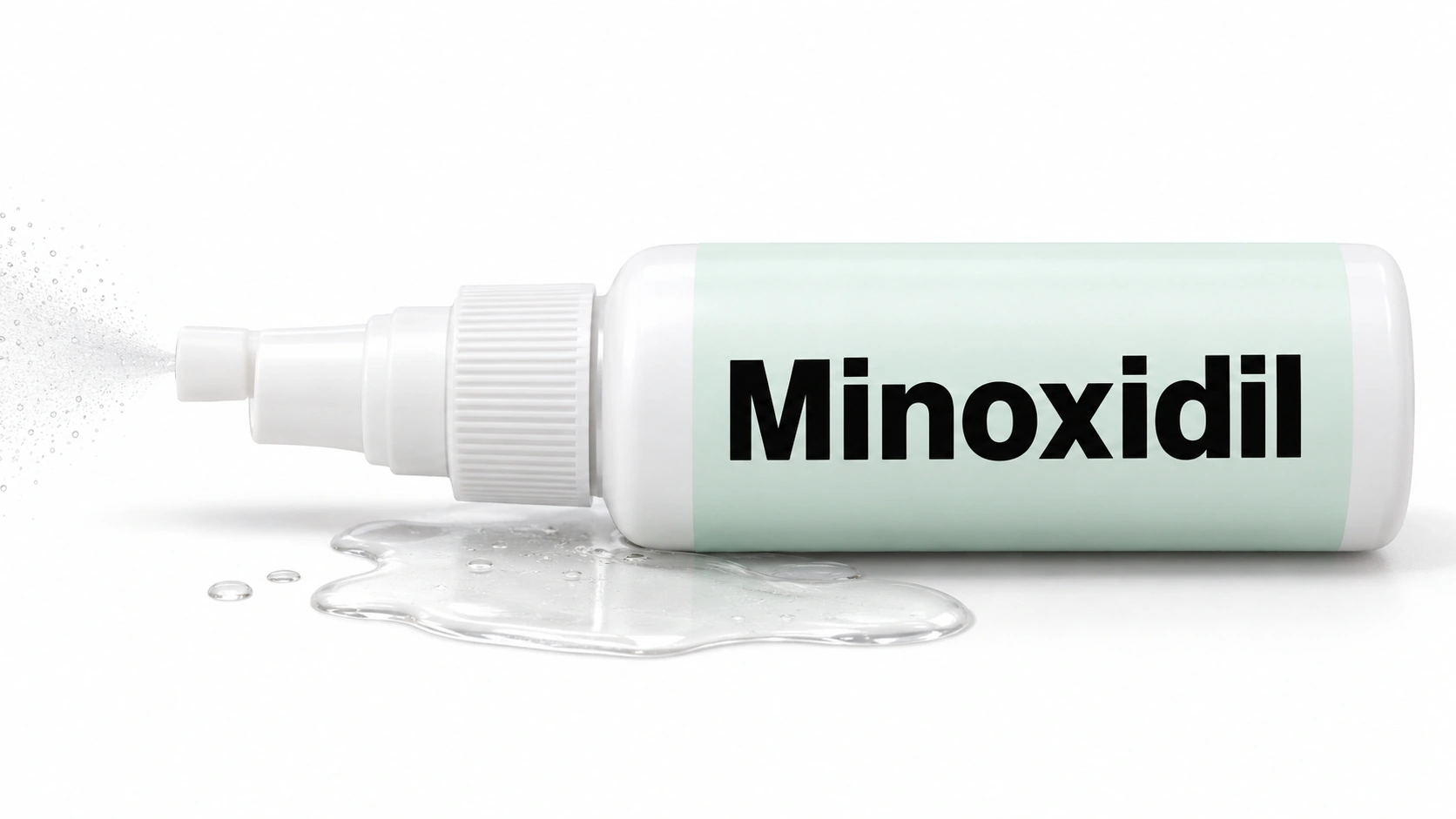
Topical Minoxidil — Header Image

Topical Minoxidil

Strong evidence

The first treatment for female pattern hair loss and the only one you can buy without a prescription. Five percent foam once a day, applied to the scalp along the part rather than to the hair, lengthens the growing phase and thickens hairs that are still cycling. Expect extra shedding in the first four to eight weeks, judge it at six to twelve months, and know that stopping gives the gain back over about the same period.


Iron, only if you are low

Iron, only if you are low

Limited evidence

Low iron stores do not cause pattern hair loss, but they cause shedding on top of it and make it look far worse than it is. Correcting a proven deficiency often settles that extra shed within a few months. Take it only if a blood test shows low ferritin, because iron you do not need does nothing for hair and is not harmless.

Ketoconazole shampoo.

Ketoconazole shampoo

Limited evidence

An antifungal shampoo used two or three times a week, sometimes suggested as an add-on to minoxidil. The evidence in pattern hair loss is thin and the effect, if any, is small. It earns its place mainly when there is dandruff or seborrheic dermatitis alongside, since a calmer scalp is easier to treat and easier to judge.

Rosemary oil.

Rosemary oil

Limited evidence

One small trial found diluted rosemary oil performed similarly to a weaker 2% minoxidil over six months, which is why it is everywhere online. That is a single study against the weaker version of the standard treatment. It is unlikely to do harm if diluted, but it is not a substitute for 5% minoxidil, and it can irritate the scalp.

Biotin and hair supplements.

Biotin and hair supplements

Limited evidence

Biotin only helps hair in people who are genuinely deficient, which is uncommon on a normal diet, and collagen and gummy supplements have not been shown to treat pattern hair loss. High-dose biotin also interferes with thyroid and cardiac blood tests, which can cause real confusion. Money is better spent on minoxidil and an appointment.

None listed
Prescription topicals
Educational still life: topical solution.

Topical finasteride

Limited evidence

A compounded solution, often mixed with minoxidil, meant to block the androgen signal at the follicle with less of the drug reaching the rest of the body. Most of the evidence is in men, and it is not standard treatment for women. It is still absorbed, so it carries the same pregnancy warning as the tablets — ask your doctor if you could become pregnant.

None listed
Prescription pills
Oral Minoxidil — Header Image

Oral Minoxidil

Moderate evidence

A low-dose tablet, usually a small fraction of the old blood pressure dose, for women who cannot get on with the topical or need more than it delivers. It is far easier to keep up than a daily scalp application, which is much of why it works. Extra hair on the face and body is the common side effect, and blood pressure and ankle swelling are checked.

Spironolactone — Header Image

Spironolactone

Limited evidence

A tablet that blocks androgen signals at the follicle, often added to minoxidil rather than used instead of it, and particularly useful when thinning comes with adult acne or polycystic ovary syndrome. It works on the hormone step, so it mostly holds ground rather than regrowing a lot. Potassium is checked, and it must not be used in pregnancy — ask your doctor if you could become pregnant.

Finasteride — Header Image

Finasteride

Limited evidence

Reduces the conversion of testosterone to its more potent form, so less of the signal reaches the follicle. It is used off-label in women, with the better results after menopause and at higher doses than men take. It must not be used in pregnancy because of harm to a male fetus — ask your doctor if you could become pregnant.

An amber pill bottle labeled Dutasteride tipped over with white tablets spilling out

Dutasteride

Limited evidence

Works the same way as finasteride but blocks more of the conversion, and is sometimes tried when finasteride has not been enough. The evidence in women is smaller still. It stays in the body for months after stopping, so the pregnancy caution matters even more — ask your doctor if you could become pregnant.

An illustrative blister pack and white sleeve labeled Birth Control Pills.

Birth Control Pills

Limited evidence

A combined pill can lower androgen levels, which helps when high androgens or polycystic ovary syndrome are driving the thinning. It is a supporting measure rather than a hair treatment, and it is chosen carefully, since some progestogens are more androgenic than others. Stopping one can trigger months of shedding, which is worth knowing before you start.

None listed
Procedures
Low-level laser devices

Low-level laser devices

Moderate evidence

Combs, caps and helmets that shine red light on the scalp for a few minutes several times a week. Trials show a modest but genuine increase in hair density, best when added to minoxidil rather than used on its own. They are expensive up front, they have to be used consistently for months, and they will not rescue a scalp that has already thinned a great deal.

Editorial illustration for Hair Transplant, based on the entry’s treatment or equipment reference.

Hair Transplant

Moderate evidence

Follicles are moved from the back of the scalp, which is not affected by the pattern, into the thin areas on top. It is the only option that puts hair where follicles have gone dormant. It suits women who still have good density at the back and a clearly defined thin area, and it does not stop the underlying process, so medical treatment carries on afterward.

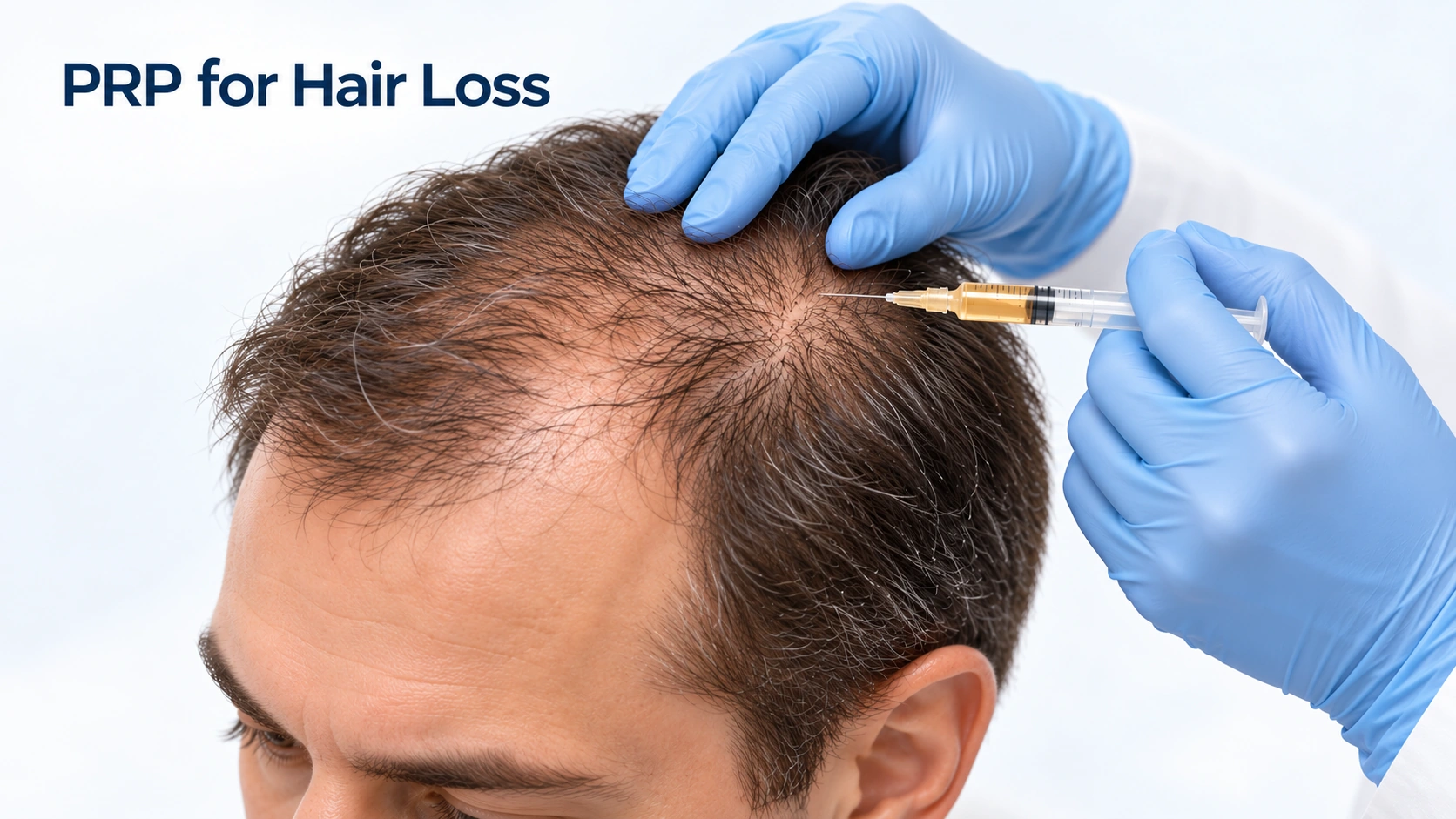
Editorial illustration for PRP for Hair Loss, based on the entry’s treatment or equipment reference.

PRP for Hair Loss

Limited evidence

Your own blood is spun down and the platelet-rich portion injected into the thinning scalp, usually three or four sessions and then top-ups. Studies are small and the protocols vary widely, so the honest position is promising rather than proven. It is expensive, it needs repeating indefinitely, and it is an addition to minoxidil rather than a replacement for it.

None listed

Outlook

Long term

Female pattern hair loss usually progresses gradually, sometimes with bursts of shedding after illness, hormonal changes or stress. Treatment aims to preserve density and may improve growth, but ongoing treatment is generally needed and recovery varies.

Early traction-related loss may regrow after pulling stops. Long-standing tension can destroy follicles and leave permanent loss, so continuing thinning or scalp inflammation deserves early assessment.

Complications

Possible complications
  • Loss that treatment cannot reverse
  • Sunburn on the widening part
  • The distress it causes
More details

Loss that treatment cannot reverse
Every untreated year moves more follicles from thinning into dormant, and a dormant follicle rarely restarts. Treatment holds and thickens what is still cycling, so the amount of hair on the day you begin largely sets the ceiling on the result. It is the main reason to start earlier than feels necessary rather than waiting to see how far it goes.

Sunburn on the widening part
A wide part exposes a strip of scalp that has been shaded for a lifetime, and it burns quickly. Repeated burning there adds up to sun damage and, over years, to rough scaly patches and skin cancers on the scalp. Sunscreen along the part on the days you are outside, or a hat, deals with it.

The distress it causes
Hair loss in women is routinely treated as a cosmetic matter, and it is not. It changes how people dress, style, photograph themselves and socialise, and low mood and anxiety are measurably more common. It is a legitimate reason to seek treatment, and worth saying out loud at an appointment rather than apologizing for.

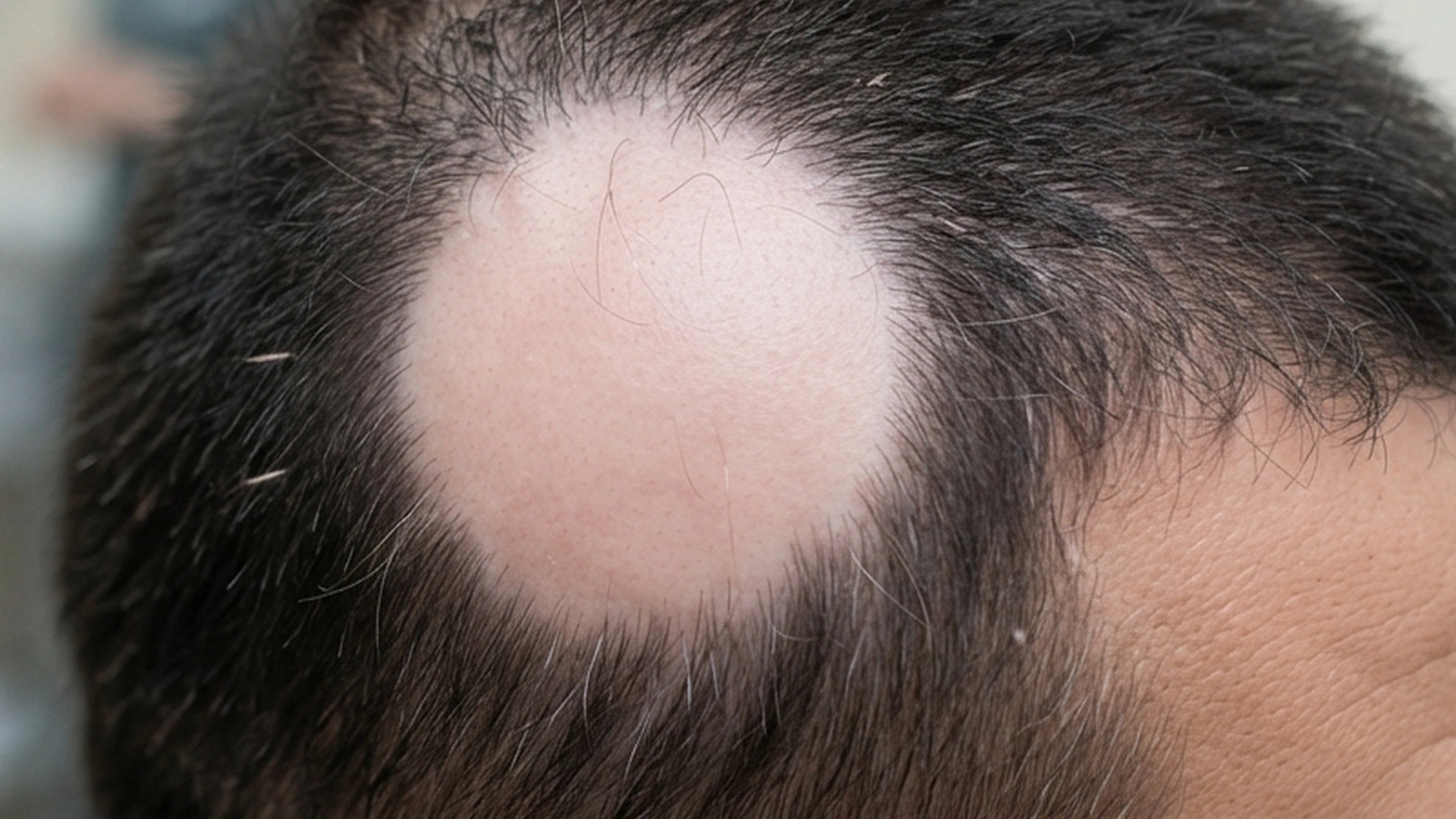
Permanent scarring can follow prolonged traction.

When to get help

When to get help

Arrange assessment for progressive thinning. Sudden loss, scalp pain or scale, or new excess facial hair and irregular periods need investigation.

Arrange assessment for persistent loss, patchiness, scalp pain, scaling or loss of follicular openings.

Common questions

Female Pattern Hair Loss:Will my hair grow back?

Some of it, usually. Treatment thickens hairs still cycling and stops the drift, so the loss halts and density improves modestly. Follicles dormant for years rarely come back - the honest reason to start early.

Female Pattern Hair Loss:Why is my hair falling out more since I started minoxidil?

That shed is expected. Minoxidil pushes resting follicles into a new cycle, and the old hair must be released for the new one. It starts in the first month, peaks around weeks four to eight, then settles. It is the most common reason people quit a treatment that was working.

Female Pattern Hair Loss:Do I have to use it forever?

To keep the benefit, yes. These treatments hold the process back rather than cure it, so stopping lets the pattern resume over roughly six to twelve months. Some people accept that - decide deliberately rather than drifting into it.

Female Pattern Hair Loss:Is this from stress?

Severe stress causes a different hair loss - a heavy shed two or three months after the event, usually recovering on its own. It can unmask pattern hair loss or make it look worse, but it does not create the pattern, which is inherited.

Female Pattern Hair Loss:Do I need hormone tests?

Not always. Most women with pattern hair loss have normal hormone levels. The useful tests are iron stores, a blood count and thyroid function. Test androgens when thinning comes with irregular periods, adult acne or new facial hair.

Female Pattern Hair Loss:Should I take a hair supplement?

Only if a blood test shows a deficiency. Biotin, collagen and hair gummies do nothing for pattern hair loss in people who are not deficient, and high-dose biotin interferes with thyroid and cardiac blood tests. Correcting real iron or vitamin D deficiency is different.

Traction Alopecia:What is Traction Alopecia?

Hair loss caused by repeated tension on hair follicles.

Traction Alopecia:What can I do day to day?

Remove the pulling force promptly; styles should not hurt or pull at the scalp.

Traction Alopecia:When should I get medical advice?

Arrange assessment for persistent loss, patchiness, scalp pain, scaling or loss of follicular openings.

Sources

Sources and further reading

  1. DermNet
  2. Traction alopecia
Dermapedia on YouTube