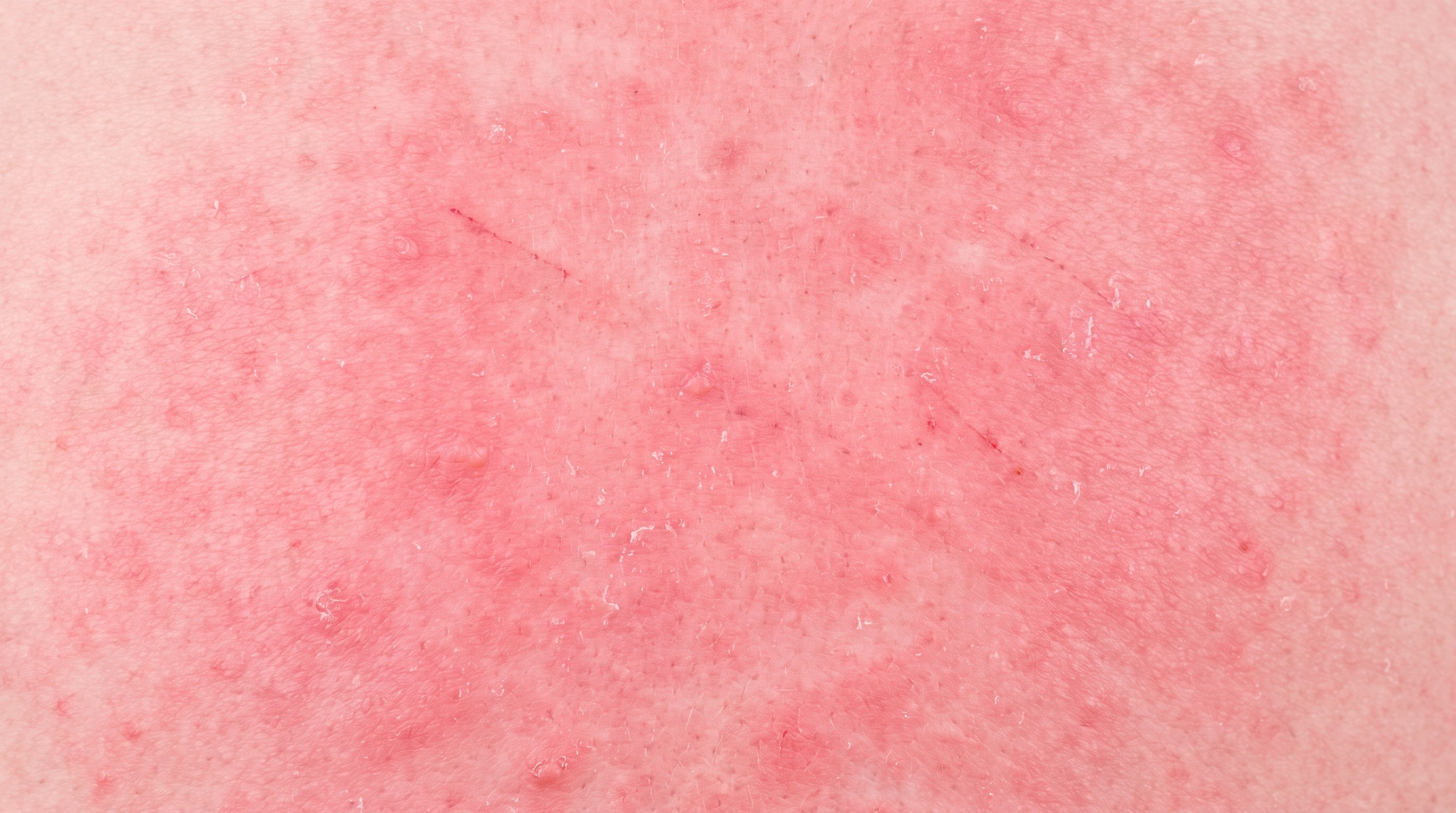
Eczema
Some ceramide-containing moisturizers help maintain control alongside eczema care.
Ceramides: Helps formulate moisturizers for dry and eczema-prone skin. Squalane: Softens dry skin and adds slip to moisturizers or facial oils.
Choose for dry or eczema-prone skin; judge the complete moisturizer.
Choose for lightweight-feeling emollience if it suits your skin.
Can you use both?
Often found together in barrier creams: ceramides repair and squalane softens.
Compare uses by strength of evidence. Evidence level describes confidence in a benefit, not its size.

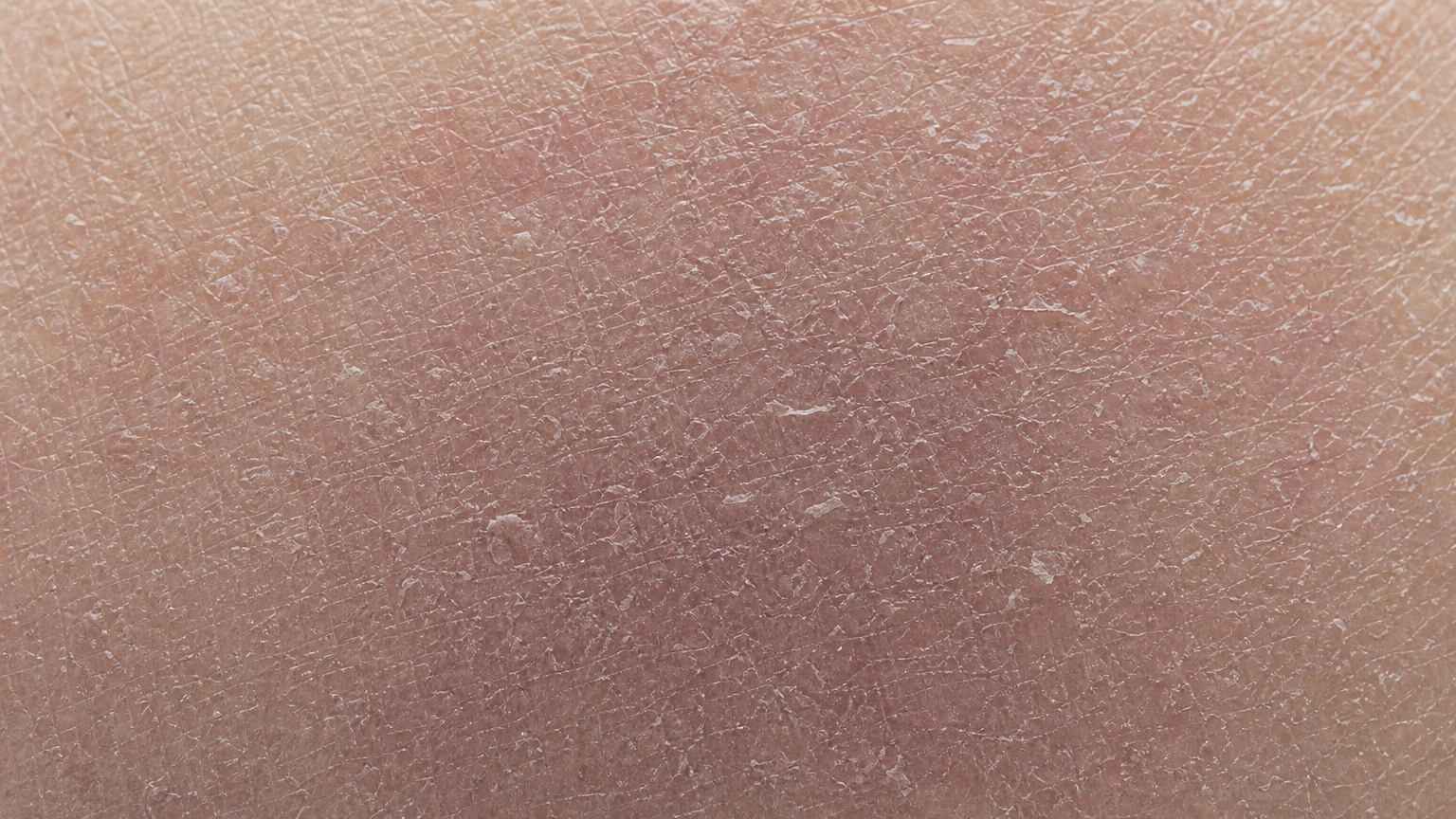
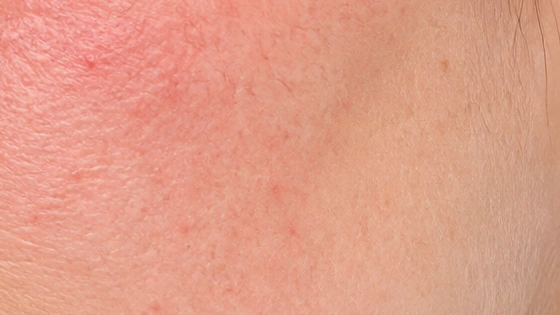





Replenishes barrier lipids: Ceramides help support the lipid matrix. Helps limit water loss: A well-formulated moisturizer supports barrier function.
Schematic illustration; not a measurement of skin penetration. Effects vary with ingredient identity and formulation.
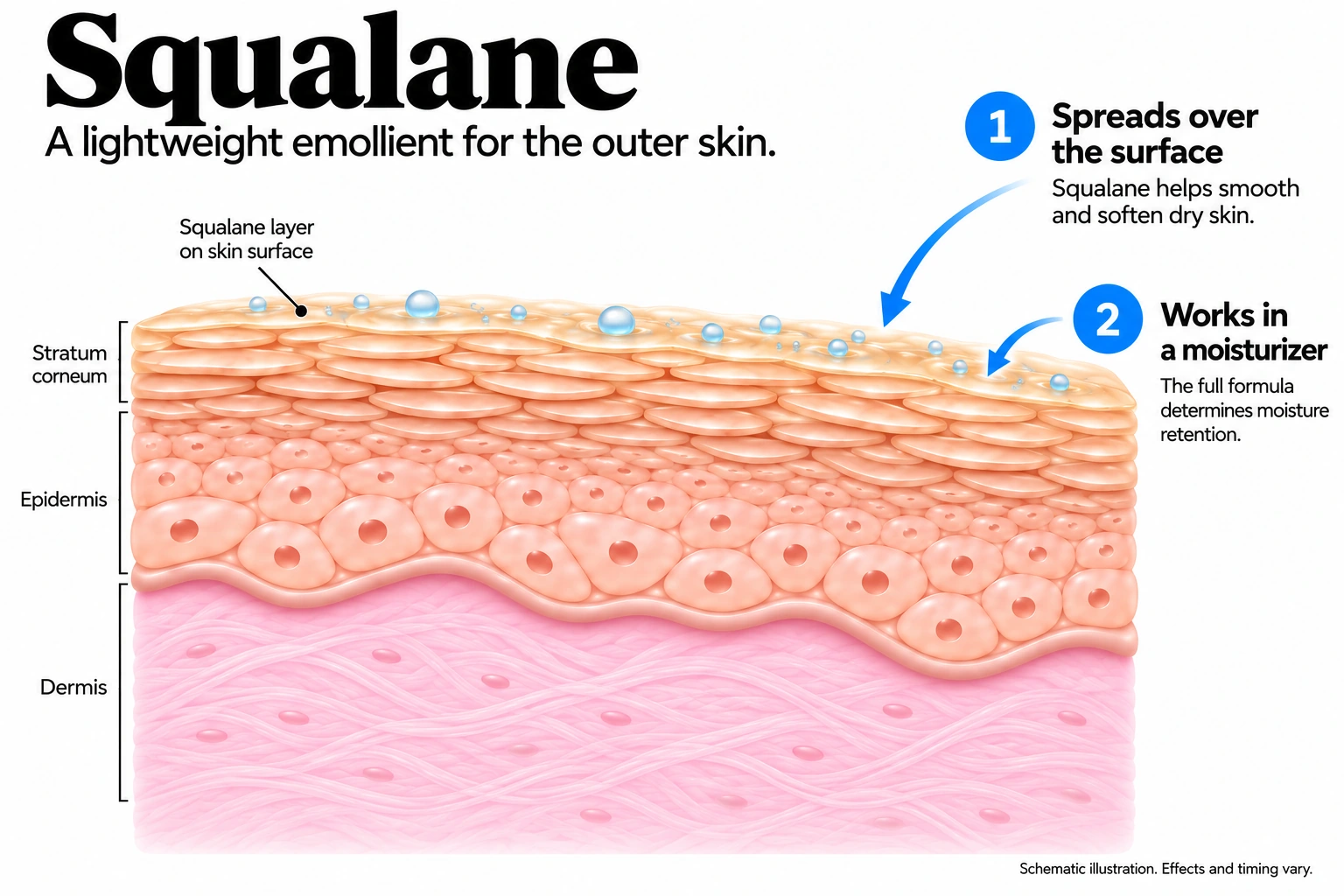
Spreads over the surface: Squalane helps smooth and soften dry skin. Works in a moisturizer: The full formula determines moisture retention.
Schematic illustration; not a measurement of skin penetration. Effects vary with ingredient identity and formulation.
Built from where each one usually sits in a routine. Introduce one at a time.
There is no single best ceramide percentage for moisturizers. The ceramide types, their combination with other lipids, and the finished cream matter more than a headline number.
Choosing a strength: Look for a comfortable moisturizer with evidence for the complete product. A stated ceramide-blend percentage may include ingredients other than pure ceramides.
Higher strengths: More ceramide is not automatically more barrier repair. A percentage cannot substitute for clinical performance or good tolerance.
Formula matters: Ceramides work within a lipid mixture, often with cholesterol and fatty acids. A study of one cream does not validate all ceramide creams.
Squalane is an emollient used in oils and creams; there is no established best percentage for skin repair or wrinkles. It should not be confused with squalene.
Choosing a strength: Choose the texture and complete formula for your skin. A squalane-containing cream and a plain oil offer different combinations of ingredients.
Higher strengths: A more concentrated oil is not established as a more effective anti-aging treatment.
Formula matters: Results from a combination containing squalane cannot be attributed to squalane alone. The other active ingredients and moisturizer base matter.
Approximate windows, not promises.
First few weeksSkin may feel softer soon after use; relief depends on the formula.
First few weeksSkin may feel softer soon after use; relief depends on the formula.
4–8 weeksJudge hydration, comfort and whether dryness is recurring.
4–8 weeksJudge hydration, comfort and whether dryness is recurring.
8–12 weeksPersistent cracking, itch or a rash needs reassessment.
8–12 weeksPersistent cracking, itch or a rash needs reassessment.
3–6 monthsContinue if comfortable; hydration usually requires ongoing use.
3–6 monthsContinue if comfortable; hydration usually requires ongoing use.
6–12 monthsMoisturizing does not establish reversal of structural ageing or scars.
6–12 monthsMoisturizing does not establish reversal of structural ageing or scars.
Usually well tolerated; fragrance, preservatives or other ingredients may irritate.
May feel oily or cause bumps in some formulas; stop for a rash.
Stop for persistent burning, swelling, blistering or a new rash. Seek urgent care for breathing difficulty or a severe allergic reaction.
Stop for persistent burning, swelling, blistering or a new rash. Seek urgent care for breathing difficulty or a severe allergic reaction.
Choose a simple formula and test a small area first. Individual tolerance matters more than an ingredient’s reputation for being gentle.
Choose a simple formula and test a small area first. Individual tolerance matters more than an ingredient’s reputation for being gentle.
Do not use a cosmetic product as a substitute for diagnosis of an unexplained, changing or persistent skin problem.
Do not use a cosmetic product as a substitute for diagnosis of an unexplained, changing or persistent skin problem.
Ceramide moisturizers are generally considered acceptable in pregnancy.
Squalane is generally considered acceptable in pregnancy.
On the skin. The finished product delivers ceramides in a particular vehicle.
Entering skin. No single molecular mass. The 500 Da guideline cannot be applied to this whole ingredient family or mixture.
Conversion. No activation step is established as necessary for its intended topical role.
Skin response. Ceramides are part of the lipid material between outer skin cells; a well-formulated moisturizer can support barrier function.
Additional effects. Proposed pathways do not establish a measured depth of delivery or clinical benefit beyond the studies cited.
On the skin. The finished product delivers squalane in a particular vehicle.
Entering skin. Below 500 Da in this molecular form. Its useful surface action does not require deep delivery; the formula and skin condition matter.
Conversion. No activation step is established as necessary for its intended topical role.
Skin response. Spreads over the outer skin as an emollient; softening does not require reaching deep tissue.
Additional effects. Proposed pathways do not establish a measured depth of delivery or clinical benefit beyond the studies cited.
Choose for dry or eczema-prone skin; judge the complete moisturizer.
A 64-child trial found fewer or later eczema flares with a ceramide-containing regimen versus body wash alone. Another small trial did not show superiority over a petrolatum-based moisturizer; ceramides are not automatically better.
Choose for lightweight-feeling emollience if it suits your skin.
A reviewed wrinkle study used squalane as the vehicle for fullerene. It cannot be cited as proof that squalane itself reverses wrinkles; standalone controlled evidence is limited.
Sources