PRODUCT REVIEW
Youth To The People 15% Vitamin C + Clean Caffeine Energy Serum
A $68 serum with no L-ascorbic acid in it — the "15%" is three derivatives blended. Gentle, well-made, priced far above its evidence.
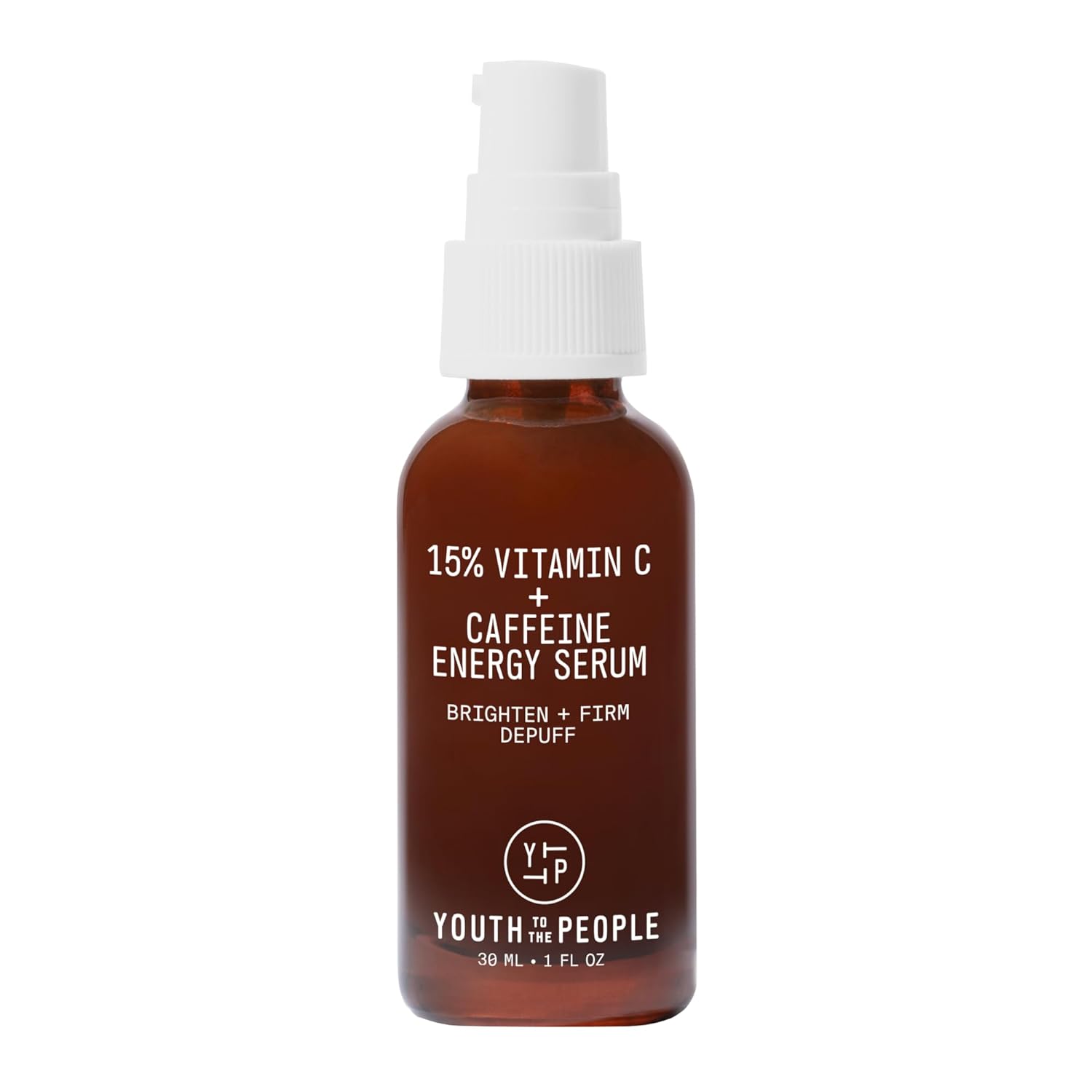
Key facts
Youth To The People 15% Vitamin C + Clean Caffeine Energy Serum at a glance.
Blend of 3-O-ethyl ascorbic acid, THD ascorbate, and MAP
Key active
Lightweight serum
Texture
Skin that cannot tolerate pure vitamin C
Best for
$64–$68
Approximate price
1.01 oz
Size
$55.00
Price
Serum
Type
What is it?
Top things to know about Youth To The People 15% Vitamin C + Clean Caffeine Energy Serum
- Youth To The People 15% Vitamin C + Clean Caffeine Energy Serum is a lightweight serum in a glass bottle, about $64 to $68, aimed at skin that flares with pure vitamin C. Despite the name, there is no L-ascorbic acid in it.
- The "15%" is three derivatives added together: 3-O-ethyl ascorbic acid, THD ascorbate and magnesium ascorbyl phosphate. A derivative is vitamin C with another molecule bolted on for stability, which skin has to strip off before the vitamin C can act. Caffeine, squalane and sodium hyaluronate, a humectant that pulls in water, fill out the rest. Nothing here needs a low pH, which is why it does not sting.
There is no vitamin C here in the researched sense. The 15% adds three derivatives together, and the blend has never been studied. What you get is a gentle serum that does not sting — a real reason to buy it if pure vitamin C flares your skin. Otherwise buy L-ascorbic acid.
— Dr. Schwarz
Skin fit
Is it right for your skin?
Sensitive Skin
Most of the sting from a vitamin C serum comes from acidity, not the vitamin. Pure L-ascorbic acid only crosses into skin at a low pH, so the formula has to be acidic. Every form in this serum works at the skin's own pH, so there is nothing to sting.
Rosacea
Flushed skin reacts to low-pH products and friction more than most. This one is comfortable and fast-absorbing with no acid burn, and caffeine has modest evidence for narrowing surface blood vessels.
Hyperpigmentation
Vitamin C slows tyrosinase, the enzyme that starts melanin production, and derivatives reach it once skin converts them. Expect this to be slower and weaker than a pure vitamin C serum. The blend has never been studied as a blend; the thin evidence behind each was collected separately.
Texture
What it feels like on skin.
Serum
A light, slightly milky serum that absorbs quickly and leaves no film. No sting at all, which is the whole practical argument for it, and it will not brown the way a pure vitamin C serum does. It layers under sunscreen and makeup without pilling. Faint scent from the ginger root oil.
Alternatives
If this isn’t the right product for you
The Ordinary Ascorbyl Tetraisopalmitate Solution 20% in Vitamin F
One of the three derivatives here, at 20% on its own, for about $20. Non-stinging, and honest about being the gentle option.
Vanicream Vitamin C Serum
A single, stated 5% THD ascorbate in an airless pump, with ceramides and no fragrance, for about $15.
Paula's Choice BOOST C15 Super Booster
15% L-ascorbic acid with vitamin E and ferulic acid — the form the research is built on — fragrance-free and cheaper.
Ingredients · Interactive
What’s in it, and where each ingredient works.
Full ingredient list · 34 ingredients, in label order. Click one.
The base the other ingredients are dissolved in. Most of it evaporates soon after the product goes on.
A small humectant. It moves into the outer layer of skin and holds water there.
A thickener that keeps the texture even.
A form of hyaluronic acid. Its molecule is large, so it stays on the surface and holds water there.
The preservative. It stops bacteria and mold from growing in the product.
How to use it
How to use it.
How to apply it
- How muchThree or four drops for the whole face.
- TipIf you already own a pure vitamin C serum, there is no reason to use both.
What to pair it with
- LayeringGive it a minute to dry before sunscreen, or either one rolls into little balls.
What to expect
- What to expectNo sting, no adjustment period. Any change in tone is slow and modest over eight to twelve weeks, and less than pure vitamin C would give. It is not sun protection.
Questions
Common questions.
Does Youth To The People 15% Vitamin C + Clean Caffeine Energy Serum contain pure vitamin C?
No. Three derivatives, no L-ascorbic acid.
Will Youth To The People 15% Vitamin C + Clean Caffeine Energy Serum sting?
No. That is the main selling point for reactive skin.
Is the vitamin C derivative blend in Youth To The People 15% Vitamin C + Clean Caffeine Energy Serum proven?
Not as a blend. Each has separate, limited evidence.
What does the caffeine in Youth To The People 15% Vitamin C + Clean Caffeine Energy Serum do?
Modest evidence for puffiness and redness.
Do I still need sunscreen with Youth To The People 15% Vitamin C + Clean Caffeine Energy Serum?
Yes. Vitamin C does not replace SPF.
References
Sources.
- 1. Topical Vitamin C and Its Derivatives in Cosmetic Science: Stability, Efficacy, and Formulation Strategies (https://brieflands.com/journals/jssc/articles/163798) — Backs the claim that the three derivatives (3-O-ethyl ascorbic acid, tetrahexyldecyl ascorbate, and magnesium ascorbyl phosphate) differ in stability, lipophilicity, and skin penetration and are more stable than L-ascorbic acid, so combining forms is a rational strategy. Link
- 2. The Roles of Vitamin C in Skin Health (https://www.mdpi.com/2072-6643/9/8/866) — Peer-reviewed review (Pullar et al., Nutrients 2017) supporting that L-ascorbic acid is a charged, water-soluble molecule poorly absorbed through skin, which is the rationale for using stabilized vitamin C derivatives in topical products. Link
- 3. Is Coffee Good for Your Skin? (https://health.clevelandclinic.org/benefits-of-caffeine-for-skin-care) — Reputable clinical source confirming topical caffeine is a vasoconstrictor that can temporarily and modestly reduce puffiness and redness, matching the page's characterization of caffeine as a modest supporting player. Link
- 4. Youth To The People 15% Vitamin C + Clean Caffeine Energy Serum ingredients (Explained) (https://incidecoder.com/products/youth-to-the-people-15-vitamin-c-clean-caffeine-energy-serum) — Full ingredient list confirming the product contains 3-O-ethyl ascorbic acid, tetrahexyldecyl ascorbate, magnesium ascorbyl phosphate, and caffeine, and contains no pure L-ascorbic acid, backing the claim that the '15%' is a blend of derivatives. Link