PRODUCT REVIEW
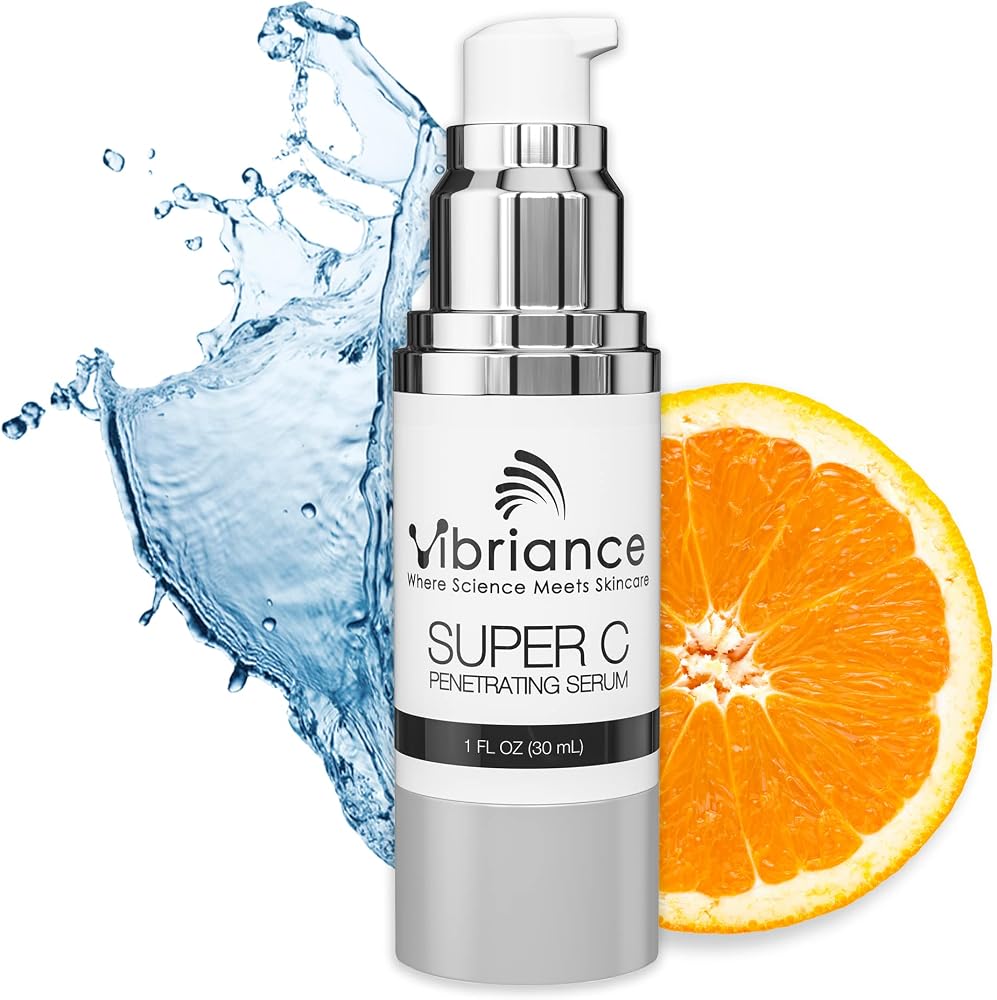
Vibriance Super C Serum
A $47 vitamin C derivative sold through direct-response advertising aimed at older women. Ordinary formula, aggressive marketing.
Key facts
Vibriance Super C Serum at a glance.
3-O-ethyl ascorbic acid (percentage not disclosed)
Key active
Brightening serum gel
Texture
$45–$50
Approximate price
1 oz
Size
$47.00
Price
Serum
Type
What is it?
Top things to know about Vibriance Super C Serum
- Vibriance Super C Serum is a light gel serum in a dropper bottle, sold direct online rather than in stores and advertised mostly to older women. It is a brightening serum — not a sunscreen and not a wrinkle treatment, whatever the advertising reaches for.
- The active is 3-O-ethyl ascorbic acid, a vitamin C derivative the skin has to convert before it can use it. Around it sit sodium hyaluronate, which pulls water in, hexylresorcinol, which slows the enzyme that builds pigment, and silicones for slip. Lemon fruit water leads the ingredient list, so it smells strongly of citrus.
Vibriance sells a reasonable derivative on claims it cannot support. 3-O-ethyl ascorbic acid is fine, but the concentration is never disclosed, the doctor endorsements are testimonials on the company's own site, and no topical vitamin C prevents sun damage. Buy a serum that prints its percentage.
— Dr. Schwarz
Skin fit
Is it right for your skin?
Hyperpigmentation
Dark spots persist because pigment cells keep switching on tyrosinase, the enzyme melanin is built with. Vitamin C slows that enzyme; hexylresorcinol slows it another way. Vibriance has both but discloses neither dose, so there is nothing to compare.
Sun Damage
Ultraviolet light creates free radicals inside skin cells, and those unstable molecules break down collagen. An antioxidant serum mops up some of them after they form. That is the honest job of a vitamin C serum. It cannot prevent sun damage, whatever the advertising says. Sunscreen does that.
Sensitive Skin
Pure vitamin C only stays stable in an acid formula, and that acidity stings. The derivative here works at a neutral pH, so it does not bite. The lemon water and orange peel oil are what bother reactive skin.
Texture
What it feels like on skin.
Serum
A light gel that spreads thin and sinks in within a minute, leaving a faint silicone slip. It smells strongly of citrus. Lemon fruit water is the first ingredient and orange peel oil sits lower down. It layers under moisturizer and makeup without pilling if you wait a minute. The dropper is the weak point — every squeeze pulls air in, and air turns vitamin C brown.
Alternatives
If this isn’t the right product for you
Vanicream Vitamin C Serum
A stated dose — 5% THD ascorbate — in an airless pump, no fragrance or essential oils, about $15.
Paula's Choice BOOST C15 Super Booster
15% L-ascorbic acid with vitamin E and ferulic acid, fragrance-free, concentration printed on the panel.
RoC 10% Vitamin C Face Serum
The same 3-O-ethyl ascorbic acid at a stated 10%, for less, in an opaque pump. It does contain fragrance.
Ingredients · Interactive
What’s in it, and where each ingredient works.
Full ingredient list · 30 ingredients, in label order. Click one.
A silicone that smooths the surface and adds to the protective film.
A form of hyaluronic acid. Its molecule is large, so it stays on the surface and holds water there.
The preservative. It stops bacteria and mold from growing in the product.
Helps the preservative work and softens the feel of the product.
Binds minerals in the water so the preservative works better and the formula stays stable.
How to use it
How to use it.
How to apply it
- How muchA few drops on clean skin, spread thin. More does not convert faster.
- CarefulThis is not sun protection. Wear sunscreen every morning whatever the advertising claims.
What to pair it with
- LayeringUnder moisturizer and under sunscreen, never over them. A treatment step, not a sealing step.
What to expect
- What to expectBrightening works on pigment already made, so nothing changes in the first month. Judge it at eight to twelve weeks. If the liquid turns brown or dark orange, it has oxidized — replace it.
Questions
Common questions.
Is there anything wrong with the Vibriance Super C Serum formula?
No. An ordinary but reasonable derivative serum.
Is Vibriance Super C Serum worth the price?
That is the problem. The same active costs about half elsewhere.
Can Vibriance Super C Serum "repair sun damage"?
No topical vitamin C can. Sunscreen prevents sun damage.
Is Vibriance Super C Serum fragrance-free?
No. It contains orange peel oil, which can sensitize.
How much vitamin C is in Vibriance Super C Serum?
Not disclosed.
References
Sources.
- 1. The Anti-Ageing and Whitening Potential of a Cosmetic Serum Containing 3-O-ethyl-l-ascorbic Acid (https://pubmed.ncbi.nlm.nih.gov/33946734/) — Supports that 3-O-ethyl-l-ascorbic acid is an effective, well-tolerated vitamin C derivative, showing a significant increase in collagen production and a decrease in melanin content in skin models. Link
- 2. 3-O-Ethyl Ascorbic Acid: A Stable, Vitamin C-Derived Agent for Skin Whitening (https://www.cosmeticsandtoiletries.com/cosmetic-ingredients/actives/article/21835980/3oethyl-ascorbic-acid-a-stable-vitamin-cderived-agent-for-skin-whitening) — Backs the claim that 3-O-ethyl ascorbic acid is a stable vitamin C derivative, more stable than L-ascorbic acid, used for skin brightening. Link
- 3. Evaluation of a hydroquinone-free skin brightening product using in vitro inhibition of melanogenesis and clinical reduction of ultraviolet-induced hyperpigmentation (https://pubmed.ncbi.nlm.nih.gov/23545928/) — Supports hexylresorcinol as a legitimate tyrosinase-inhibiting brightening ingredient that clinically reduces hyperpigmentation. Link
- 4. Reduction in the appearance of facial hyperpigmentation by topical N-acetyl glucosamine (https://pubmed.ncbi.nlm.nih.gov/17348991/) — Supports acetyl glucosamine (N-acetyl glucosamine) as a well-tolerated ingredient that measurably reduces facial hyperpigmentation. Link
- 5. MULTI CORREXION Revive + Glow Daily Serum - RoC Skincare (https://www.rocskincare.com/products/multi-correxion-revive-glow-daily-serum) — Confirms RoC's serum uses 3-O-Ethyl Ascorbic Acid and is priced around $28 (regular price $28.49), backing the price-comparison claim. Link