PRODUCT REVIEW
RoC 10% Vitamin C Face Serum
Sold as "10% Vitamin C," but the form is 3-O-ethyl ascorbic acid, a derivative. Gentler, and much less proven.
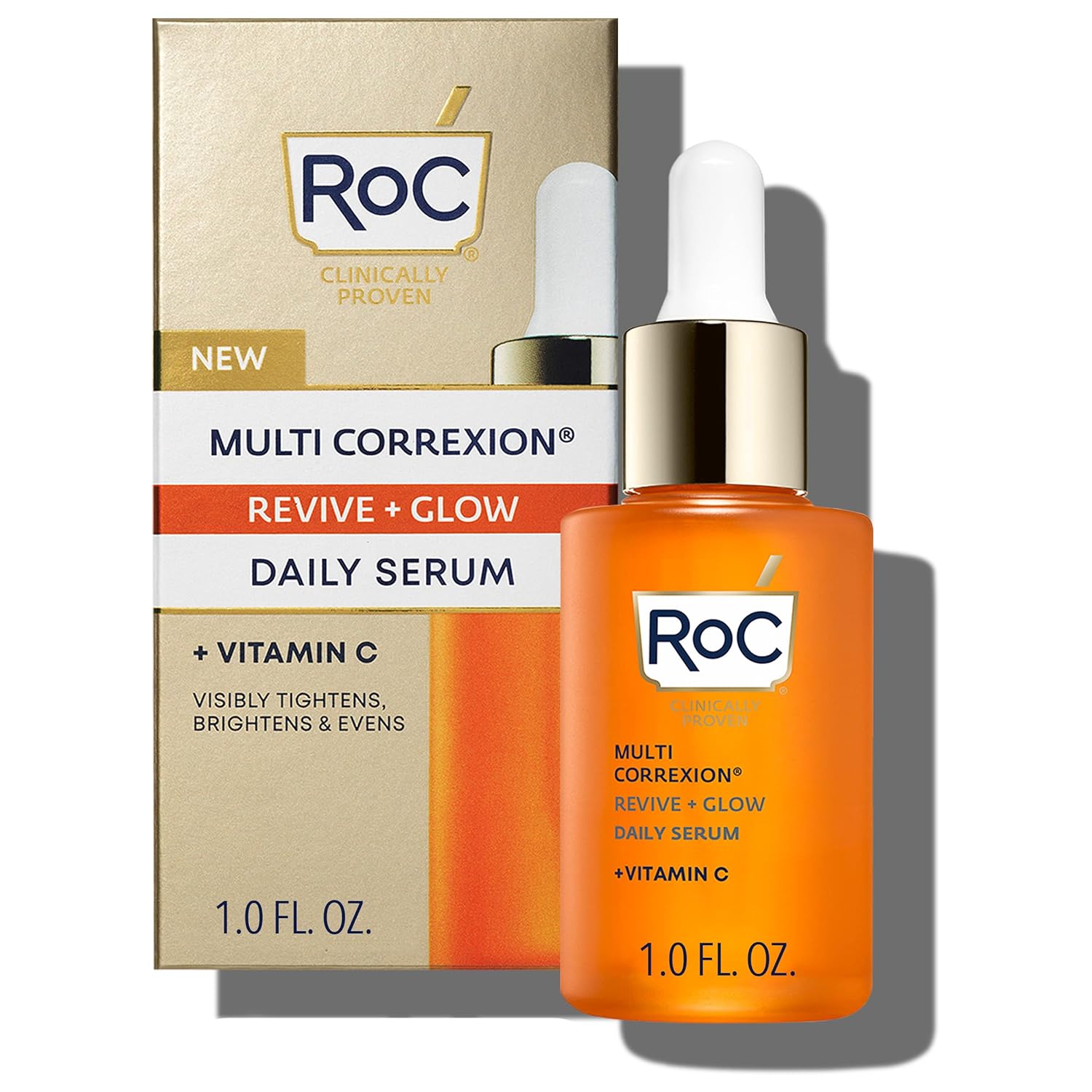
Key facts
RoC 10% Vitamin C Face Serum at a glance.
3-O-ethyl ascorbic acid 10%
Key active
Lightweight cream-gel
Texture
Sensitive skin that cannot tolerate pure vitamin C
Best for
$22–$28
Approximate price
1 oz
Size
$28.49
Price
Serum
Type
What is it?
Top things to know about RoC 10% Vitamin C Face Serum
- RoC 10% Vitamin C Face Serum is a lightweight cream-gel in an opaque pump, about $22 to $28 at drugstores. It is a tone and antioxidant serum, not an exfoliant, and not the pure vitamin C serum the box implies.
- The active is 3-O-ethyl ascorbic acid at 10 percent, a derivative skin has to convert into ascorbic acid before it works. Nonapeptide-1 is a second pigment ingredient, and glycerin and propanediol pull water in. There is also fragrance with limonene and linalool, two common sensitizers, plus a yellow dye.
Not 10% vitamin C, whatever the box implies. The active is 3-O-ethyl ascorbic acid, a derivative your skin has to convert first, and 10% of a derivative is not 10% L-ascorbic acid. Gentler, which is a real reason to pick it if pure vitamin C stings you. It contains fragrance, limonene and linalool.
— Dr. Schwarz
Skin fit
Is it right for your skin?
Hyperpigmentation
Vitamin C slows tyrosinase, the enzyme that starts pigment production, so dark patches even out slowly. RoC 10% Vitamin C Face Serum adds nonapeptide-1, which works on the same pathway. Expect months, not weeks, alongside daily sunscreen.
Sun Damage
Ultraviolet light creates free radicals that break down collagen; antioxidants neutralize them first. A morning vitamin C step backs up sunscreen. But the evidence is for L-ascorbic acid, and this is a derivative.
Sensitive Skin
Pure vitamin C stings because it only crosses into skin at a low, acidic pH. This derivative does not need that pH, so it does not sting — the real reason to pick it. The caveat is the fragrance, limonene and linalool: this suits skin that reacts to acids, not skin that reacts to scent.
Texture
What it feels like on skin.
Serum
A light cream-gel, thicker than a watery serum, absorbed in under a minute. It does not sting, and it will not turn brown, because the derivative does not oxidize the way L-ascorbic acid does. An added yellow dye tints the liquid; it does not carry onto skin. It is scented, with limonene and linalool. The opaque pump is right for a light-sensitive active.
Alternatives
If this isn’t the right product for you
Vanicream Vitamin C Serum
Another gentle derivative, 5% THD ascorbate, with no fragrance, no dyes and an airless pump, for less money.
Timeless Vitamin C
10% L-ascorbic acid, the form the research is built on, with vitamin E and ferulic acid. It can sting, so start every other day.
Vibriance Super C Serum
The same 3-O-ethyl ascorbic acid, but undisclosed concentration, around $47, and the dropper lets air in.
Ingredients · Interactive
What’s in it, and where each ingredient works.
Full ingredient list · 28 ingredients, in label order. Click one.
A small humectant. It moves into the outer layer of skin and holds water there.
How to use it
How to use it.
How to apply it
- How muchA pump or two on clean, dry skin, spread over the whole face rather than onto spots.
- CarefulIf fragrance is a problem for you, patch test along the jaw first. It contains fragrance plus limonene and linalool.
What to pair it with
- LayeringBefore moisturizer, sunscreen last. Not acidic, so it will not clash with niacinamide or a nighttime retinoid.
What to expect
- What to expectNothing for the first month. Tone changes take three to six months, because existing pigment has to shed. It should not sting or peel; if it does, blame the fragrance.
Questions
Common questions.
Is RoC 10% Vitamin C Face Serum pure vitamin C?
No. It is 3-O-ethyl ascorbic acid, a derivative.
Is RoC 10% Vitamin C Face Serum gentler than L-ascorbic acid?
Yes. It does not need a low, stinging pH.
Is RoC 10% Vitamin C Face Serum as proven?
No. Derivatives have far thinner evidence.
Is RoC 10% Vitamin C Face Serum fragrance-free?
No. It contains fragrance and common sensitizers.
Do I still need sunscreen with RoC 10% Vitamin C Face Serum?
Yes. Vitamin C does not replace SPF.
References
Sources.
- 1. Topical L-ascorbic acid: percutaneous absorption studies (https://pubmed.ncbi.nlm.nih.gov/11207686/) — Backs the claim that true L-ascorbic acid needs a low, stinging pH: the study found L-ascorbic acid must be formulated at pH below 3.5 to be absorbed into skin. Link
- 2. Topical Vitamin C and the Skin: Mechanisms of Action and Clinical Applications (https://jcadonline.com/topical-vitamin-c-and-the-skin-mechanisms-of-action-and-clinical-applications/) — Supports that L-ascorbic acid is unstable and needs pH under 3.5, and that ascorbic acid derivatives, though more stable, do not reliably raise skin L-ascorbic acid levels (the conversion problem that makes their evidence weaker). Link
- 3. What is 3-O Ethyl Ascorbic Acid? / Paula's Choice (https://www.paulaschoice-eu.com/3-o-ethyl-ascorbic-acid/ingredient-3-o-ethyl-ascorbic-acid.html) — Supports that 3-O-ethyl ascorbic acid is a stable vitamin C derivative that must be converted to ascorbic acid within skin to work, and is gentler because it tolerates a higher (less acidic) pH than pure vitamin C. Link
- 4. 3-O-Ethyl Ascorbic Acid: A Stable, Vitamin C-Derived Agent for Skin Whitening (https://www.cosmeticsandtoiletries.com/cosmetic-ingredients/actives/article/21835980/3oethyl-ascorbic-acid-a-stable-vitamin-cderived-agent-for-skin-whitening) — Supports that 3-O-ethyl ascorbic acid is more stable than other vitamin C forms (no browning), backing the claim that the derivative is more stable than L-ascorbic acid. Link
- 5. RoC Multi Correxion Revive And Glow Daily Serum ingredients (Explained) (https://incidecoder.com/products/roc-multi-correxion-revive-and-glow-daily-serum) — Confirms the product's formulation facts: a 10% active vitamin C blend whose active is 3-O-ethyl ascorbic acid, plus nonapeptide-1 in the ingredient list. Link