PRODUCT REVIEW
Peter Thomas Roth Max Mineral Tinted Sunscreen
A tinted mineral sunscreen in one universal shade. It works on light-to-medium skin and fails the deep-skin buyers it claims to serve.
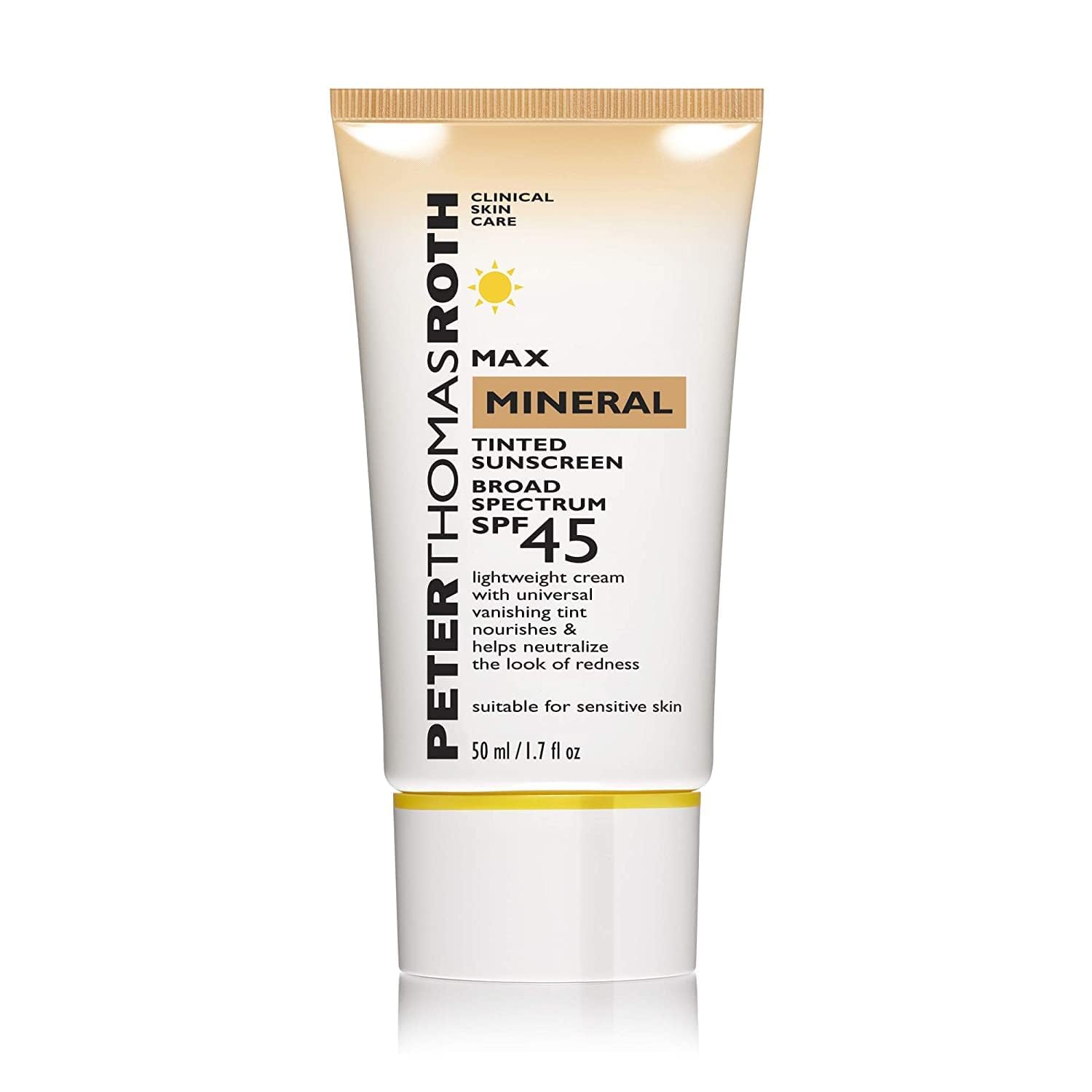
Key facts
Peter Thomas Roth Max Mineral Tinted Sunscreen at a glance.
Zinc oxide + titanium dioxide (SPF 45)
Key active
Lightweight, tinted lotion
Texture
Light to medium skin tones; redness-prone skin
Best for
$32–40
Approximate price
1.7 oz
Size
$38.00
Price
Sunscreen
Type
What is it?
Top things to know about Peter Thomas Roth Max Mineral Tinted Sunscreen
- Peter Thomas Roth Max Mineral Tinted Sunscreen is an SPF 45 face sunscreen in one universal tint, about $32 to $40. It is a tinted sunscreen, not a foundation. It evens redness; it will not cover a blemish.
- The filters are zinc oxide 19.24 percent and titanium dioxide 1.93 percent, minerals that sit on the surface instead of soaking in. Iron oxides give the color. Safflower oleosomes and light esters make up the base, so this much zinc still spreads like a lotion, not a paste.
A comfortable zinc sunscreen for light to medium, redness-prone skin, and its iron oxides block visible light as well as UV. The single tint is the problem: deeper skin reports it reading gray or too light. Check the label for fragrance. On deep skin, buy matched shades.
— Dr. Schwarz
Skin fit
Is it right for your skin?
Rosacea
Rosacea skin flushes easily and often burns with chemical filters. Mineral filters stay on the surface, so there is less for reactive skin to respond to, and the warm tint cancels red. Sun is a reliable rosacea trigger, so daily cover matters here.
Melasma
Melasma is driven by visible light as well as UV, so a clear sunscreen often is not enough. The iron oxides in this tint block visible light. That is why melasma usually calls for a tinted sunscreen.
Sensitive Skin
Zinc oxide and titanium dioxide work without being absorbed, which gives reactive skin less to react to. Peter Thomas Roth does not say this one is fragrance-free, so check the label if fragrance is your trigger.
Sun Damage
UVA reaches the collagen layer and breaks it down a little at a time over years. SPF 45 every morning, applied properly, is what stops more of it. This one is pleasant enough to wear daily, which matters more in practice than the number on the tube.
Texture
What it feels like on skin.
Lotion
A light tinted lotion, thinner than most mineral sunscreens carrying this much zinc. It settles to a soft, slightly matte finish and stays put. The tint evens redness rather than covering anything. One universal shade. On light-to-medium skin it disappears. On deeper skin it reads too light or leaves a gray cast, and some medium tones find it too yellow.
Alternatives
If this isn’t the right product for you
La Roche-Posay Anthelios Tinted Sunscreen SPF 50
The same idea in four shades, so a match is far more likely. Iron oxides block visible light too.
EltaMD UV Clear Tinted
Another single-shade tint, with 5% niacinamide in an oil-free base for acne-prone and rosacea-prone skin. EltaMD makes a Deep Tinted version too.
Vanicream Facial Moisturizer SPF 30
Untinted, fully mineral and fragrance-free at about $13 to $16. Cheaper, but 19.5% zinc leaves a visible cast.
Ingredients · Interactive
What’s in it, and where each ingredient works.
Full ingredient list · 37 ingredients, in label order. Click one.
Another fatty alcohol. It softens skin and gives the product body.
The preservative. It stops bacteria and mold from growing in the product.
A thickener that keeps the texture even.
How to use it
How to use it.
How to apply it
- How muchAbout a quarter teaspoon for the face, plus ears, neck and hairline. Most people apply about a third of that, which is how an SPF 45 performs like a much lower number.
- ReapplyEvery two hours outdoors, and after sweating or swimming. Over makeup, use a powder or a stick.
- CarefulOne universal tint. On deeper skin expect too light or gray, so try before committing.
What to expect
- What to expectA slight tint that evens redness immediately. Sunscreen prevents rather than fixes, so nothing visibly improves. The change shows up years later.
Questions
Common questions.
Is Peter Thomas Roth Max Mineral Tinted Sunscreen mineral or chemical?
Mineral.
Does the Peter Thomas Roth Max Mineral Tinted Sunscreen shade work on deep skin?
Often not. It reads too light or gray.
Will Peter Thomas Roth Max Mineral Tinted Sunscreen cover redness?
Yes, on light-to-medium skin.
Is Peter Thomas Roth Max Mineral Tinted Sunscreen water resistant?
Yes.
Is Peter Thomas Roth Max Mineral Tinted Sunscreen fragrance-free?
Not stated. Check the label.
What SPF is Peter Thomas Roth Max Mineral Tinted Sunscreen?
SPF 45.
References
Sources.
- 1. Photoprotection beyond ultraviolet radiation: A review of tinted sunscreens (https://pubmed.ncbi.nlm.nih.gov/32335182/) — Tinted sunscreens using iron oxides and pigmentary titanium dioxide provide protection against visible light, which plain mineral (nanoparticle zinc oxide/titanium dioxide) sunscreens do not, supporting the claim that the tint helps against redness and light-induced skin effects. Link
- 2. Sunscreens part 2: Regulation and safety (https://pubmed.ncbi.nlm.nih.gov/38777185/) — Reviews the distinction between inorganic (mineral: zinc oxide, titanium dioxide) and organic (chemical) UV filters and their safety, supporting the claim that a fully mineral filter is an appropriate choice for people who react to chemical filters. Link
- 3. Ferulic acid stabilizes a solution of vitamins C and E and doubles its photoprotection of skin (https://pubmed.ncbi.nlm.nih.gov/16185284/) — Demonstrates that a topical combination of vitamins C and E provides meaningful antioxidant photoprotection against oxidative stress in skin, supporting the claim that vitamin C and E antioxidants add supplementary protection against free radicals. Link
- 4. Attitudes on, Practices, and Recommendations for Visible Light Protection Amongst Dermatology Practitioners (https://jddonline.com/articles/attitudes-on-practices-recommendations-visible-light-protection-amongst-dermatology-practitioners-S1545961624P8159X) — States that iron oxides, antioxidants, and pigmentary titanium dioxide are sunscreen additive ingredients that enhance visible light protection and reduce associated hyperpigmentation, supporting both the tint-reduces-redness and antioxidant claims. Link