Microdermabrasion

Microdermabrasion sands the surface. A laser reaches past it. Microdermabrasion polishes off the outer dead layer of skin, which grows back within days, so it suits dullness and rough texture. A laser puts energy into the skin to injure one chosen target on purpose, so it can treat tattoos, brown spots, broken vessels, hair and deep scars. No trial has ever compared the two for a cosmetic result.
| The difference | Microdermabrasion | Laser |
|---|---|---|
| What it is best at | Surface texture, dullness and prep | Targets abrasion cannot reach |
| Cost | Cheap, and usually sold weekly | Much more, and fewer sessions |
Several machines grouped by one word Q-switched and picosecond lasers treat pigment and tattoos. Fractional lasers treat texture and scars. Ablative CO2 or erbium lasers resurface. Vascular lasers treat redness. Hair removal usually uses the long-pulsed 1064 nm Nd:YAG. Intense pulsed light is sold as "laser" but is not one.
Side by side
Microdermabrasion
A machine that sands the surface
Crystals are fired at the skin and vacuumed back. Or a diamond-grit wand is dragged across while suction pulls the skin against it. Both are dry, shallow and aimed at the dead outer layer only.
Laser
Several machines grouped by one word
Q-switched and picosecond lasers treat pigment and tattoos. Fractional lasers treat texture and scars. Ablative CO2 or erbium lasers resurface. Vascular lasers treat redness. Hair removal usually uses the long-pulsed 1064 nm Nd:YAG. Intense pulsed light is sold as "laser" but is not one.
Microdermabrasion
Physical removal, plus a healing signal
In 49 people given one treatment, the dead outer layer was no thinner afterwards. But the skin still switched on repair signals, and some people made more collagen by day 14. Any benefit comes from that signal.
Laser
Selective absorption, then injury
Each laser is picked so one target soaks up its wavelength: melanin, blood, tattoo ink or water. That energy becomes heat or a shockwave, the target is destroyed, and repair follows.
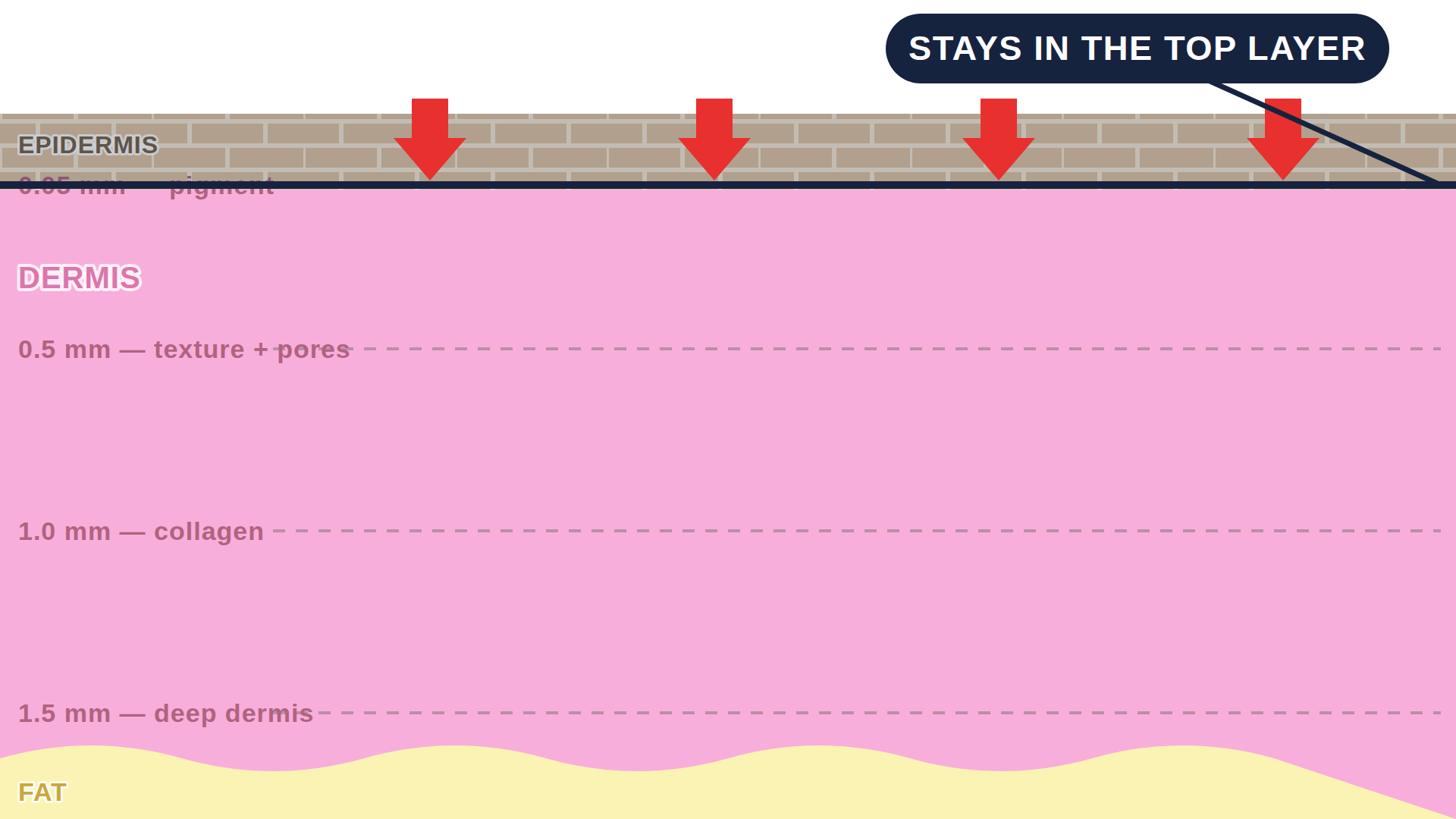
Microdermabrasion
The dead layer, and it grows back in days
Lab work found moderate settings take off the dead outer layer, with little damage below. More passes reach deeper. Redness settles by about day 1, and the skin barrier is normal again by day 2.
Laser
Surface to deep, depending on the device
A fully ablative CO2 laser vaporises the surface and heats the skin below. A fractional laser leaves the surface intact and injures columns underneath. Downtime runs from none to raw, weeping skin for weeks, and there is a real infection risk while the surface is open.
Microdermabrasion
Surface texture, dullness and prep
In 16 women treated weekly for six weeks, fine wrinkles, dullness, pigmentation and large pores improved by the third treatment. There was no untreated group. A review found it can smooth texture and help other medicines soak in, but does little for pigment or acne.
Laser
Targets abrasion cannot reach
Tattoo ink, birthmarks, broken vessels, unwanted hair and deep scars. Sanding the surface does not touch any of them. For age spots, a trial in 45 people found a Q-switched 532 nm laser beat an acid peel. For melasma it is worse: a fractional laser matched an acid peel, and the melasma came back by 12 weeks.
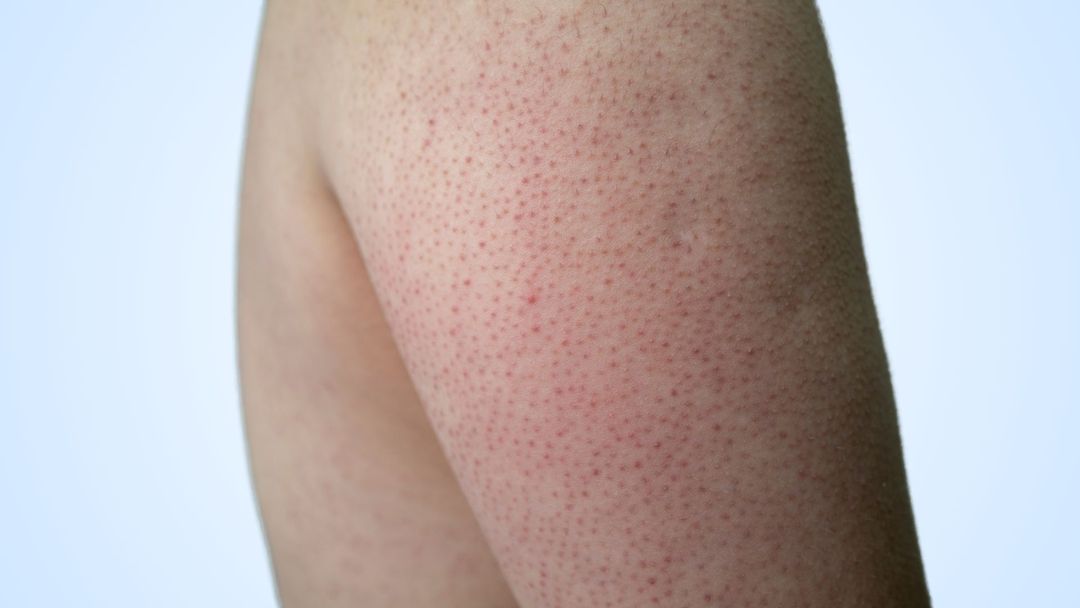
Sanding the surface has the same problem as a body scrub: the plug sits inside the follicle, below where it reaches. Any smoothness is short-lived, and it adds redness. On deeper skin tones the irritation can leave dark marks, so it is one to skip.

Sands off the very top of the skin, which is above where the pigment actually sits, so it does little for brown marks and nothing for gray ones. Repeated sessions add friction and inflammation to skin that marks easily. Money spent here is better spent on daily sunscreen and a treatment that reaches the pigment cells.

Polishes off the very top layer of skin, which makes it briefly smoother and brighter. The pigment in a sun spot is held in ridges below that layer, so it is not reached. It is often sold as a treatment for spots and it is not one, and repeated sessions can irritate skin enough to leave marks of their own.

It polishes the surface layer, and the tear that made the stretch mark is well below that. It is commonly sold as a stretch mark treatment and the published results are minimal. If a clinic is offering this as their answer, it is worth asking what else they do.

Sands off the outer dead layer, so skin feels smoother and looks brighter for a few days. It does not reach the dermis, which is where wrinkles are, so it does not change them. Pleasant, safe on most skin, and frequently sold as an anti-aging treatment when it is not one.

Polishes the very top layer of skin, which is nowhere near deep enough to reach the collagen that makes a scar. It can leave skin looking brighter for a few days. It is widely sold for acne scarring and it does not change acne scarring.
Microdermabrasion
Low risk, one real pigment signal
Burns and pigment loss are not microdermabrasion risks the way they are laser risks. It is not risk-free, though. In 11 women, aggressive crystal settings caused mild to marked darkening.
Laser
Burns and pigment change
A laser works because a pigmented target absorbs it. So more melanin means more heat where it was not wanted. That raises the risk of burns, darkening that lasts months, and lightening that can be permanent.

Moderate evidence. Aimed at indented scars and texture, which microdermabrasion does not touch. More downtime per session, more cost, and usually done once active acne is controlled.
Microdermabrasion
Cheap, and usually sold weekly
A consumer survey put the average at $177. A professional society last reported it separately in 2020, at $167.
Laser
Much more, and fewer sessions
A course might be one to six sessions, weeks apart. The last separate society figures, from 2020, were $2,509 for ablative resurfacing and $1,445 for non-ablative.
Microdermabrasion
Laser
Microdermabrasion
Microdermabrasion delivers no energy, so it carries none of that. It can still irritate skin enough to trigger pigment in people prone to it. And no microdermabrasion study with recorded skin types includes a Fitzpatrick VI patient. If your skin is deeply pigmented, it has not really been studied on you either.
Laser
Ask who will be operating the laser, and who supervises them. Most states only let a doctor, or someone a doctor oversees, treat below the surface. In Texas, an esthetician licence does not cover lasers.
Laser
Cosmetic lasers are Class II devices that do go through 510(k) review, under 21 CFR 878.4810, and carry named, reviewed indications. The Hollywood Spectra system, a prescription device, was cleared in February 2022 under K213569, naming tattoo removal, acne scars and wrinkles, melasma, inflammatory acne, pigmented lesions and minor vascular lesions.
A clearance is not proof that a device works. It is a judgment that the device is similar enough to an earlier one. It does tell you which words a regulator reviewed. Plenty of laser treatments are also used off-label, which is legal and common: the "Hollywood peel" is one, and carbon appears nowhere in that clearance.
Common questions
The two sit in opposite places with the FDA. No microdermabrasion device has cleared indications. Powered dermabrasion devices were exempted from premarket review in 1998 and manual ones in 1994. They are Class I, product code GFE, 21 CFR 878.4820, exempt subject to the limits in 21 CFR 878.9. General controls still apply, such as registration and a ban on false labelling, but the FDA has never reviewed an efficacy claim for these machines. So "FDA cleared" is not accurate for any of them.