Hydrafacial

A Hydrafacial cleans and exfoliates the skin. A suction tip delivers serum at the same time.
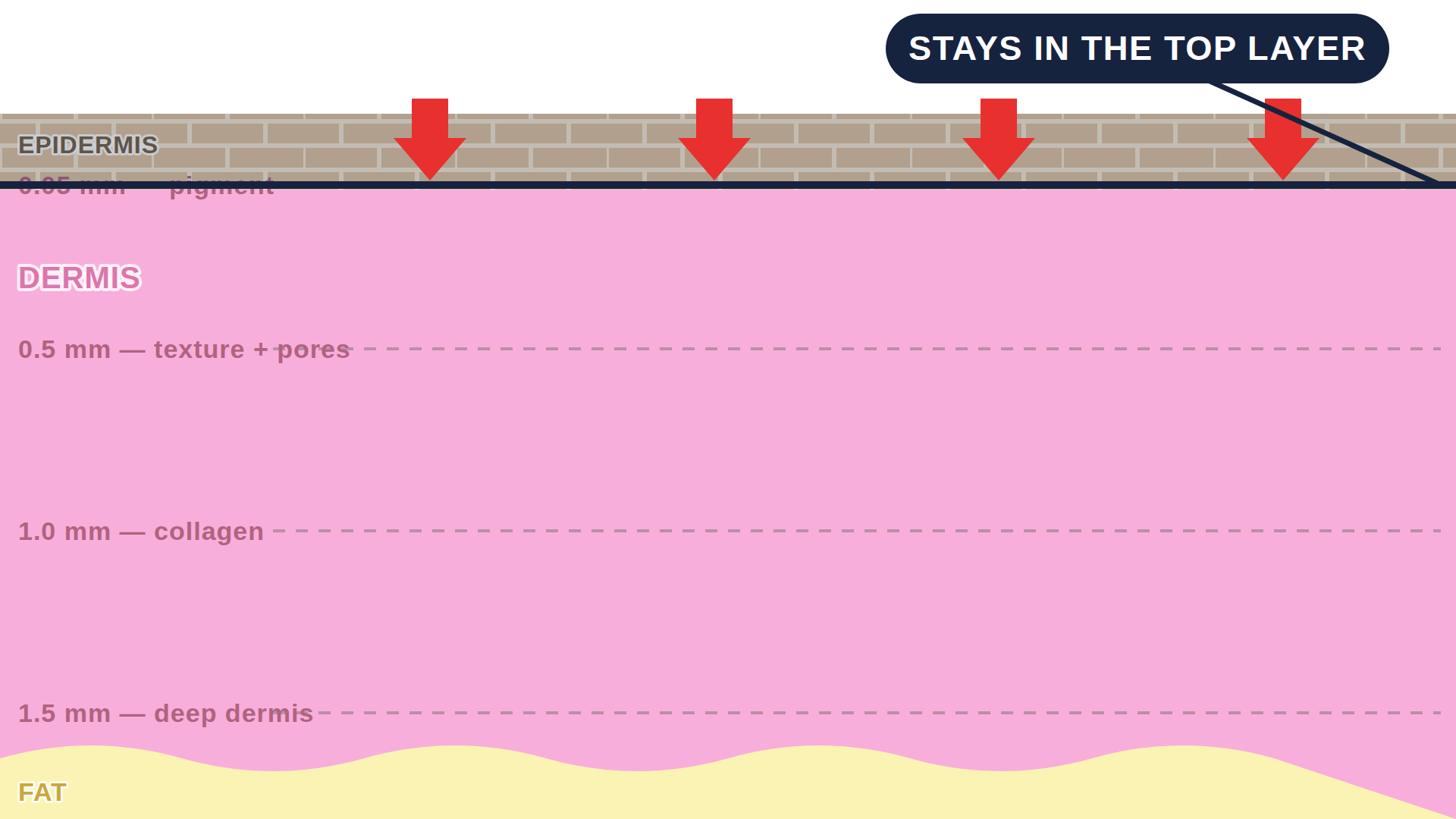
HydraFacial does the exfoliating inside a stream of fluid, and delivers a serum in the same pass. It is gentler, there is no dust, and skin looks hydrated straight afterwards. Microdermabrasion does the same job dry, with fine crystals or a diamond-grit tip and a vacuum. Both work on the same thin layer of dead cells, and no study has ever compared them head to head.
| The difference | Hydrafacial | Microdermabrasion |
|---|---|---|
| What it is | Exfoliation inside a film of fluid | Dry exfoliation, in two versions |
| What it is best at | Congestion, blackheads and a same-day glow | Surface smoothness and dullness |
| What it feels like | Scratchy, with tugging on the suction | Rougher, and pink for a few hours |
| How long the result lasts | About a week or two | About a week or two |
| Cost | The more expensive of the two | Usually the cheaper option |
A Hydrafacial cleans and exfoliates the skin. A suction tip delivers serum at the same time.

Microdermabrasion sands the top layer of skin with a wand and suction.
Side by side
Hydrafacial
Exfoliation inside a film of fluid
A spiral tip abrades the surface while fluid is pumped in and suction pulls the fluid, dead cells and pore contents into a waste jar.
Microdermabrasion
Dry exfoliation, in two versions
Crystal machines spray fine crystals at the skin and vacuum them back. Diamond-tip machines use a grit-covered wand and draw skin against it with suction.
Hydrafacial
Comfort, and a serum step built in
The fluid lubricates, so the pass feels gentler, and it carries mild acids or hydrating ingredients onto skin that has just been scuffed.
Microdermabrasion
Nothing is delivered during the pass
Whatever the clinic applies afterwards goes on separately, once the abrading is done.
Hydrafacial
The dead top layer, and only that
Imaging in a small study found the layer thinned from about nine microns to about seven straight after treatment, and measured slightly thicker than baseline two weeks later.
Microdermabrasion
The same layer, often with no change
In one study of people given a single treatment, no change in the thickness of that layer could be detected at all.
Hydrafacial
Congestion, blackheads and a same-day glow
The strongest supporting evidence is for the delivery idea: a mild acid applied with suction cleared whiteheads and blackheads better than the same acid applied alone.
Microdermabrasion
Surface smoothness and dullness
It has the far larger published record, and the findings there are modest: better contour and texture, limited effect on pigment and acne.
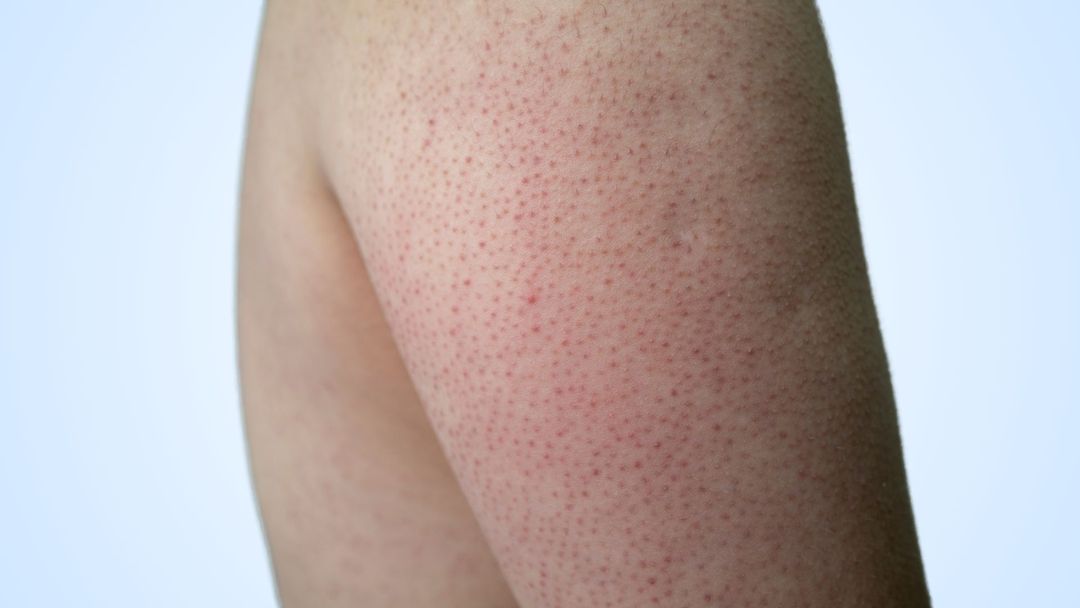
Sanding the surface has the same problem as a body scrub: the plug sits inside the follicle, below where it reaches. Any smoothness is short-lived, and it adds redness. On deeper skin tones the irritation can leave dark marks, so it is one to skip.

Sands off the very top of the skin, which is above where the pigment actually sits, so it does little for brown marks and nothing for gray ones. Repeated sessions add friction and inflammation to skin that marks easily. Money spent here is better spent on daily sunscreen and a treatment that reaches the pigment cells.

Polishes off the very top layer of skin, which makes it briefly smoother and brighter. The pigment in a sun spot is held in ridges below that layer, so it is not reached. It is often sold as a treatment for spots and it is not one, and repeated sessions can irritate skin enough to leave marks of their own.

It polishes the surface layer, and the tear that made the stretch mark is well below that. It is commonly sold as a stretch mark treatment and the published results are minimal. If a clinic is offering this as their answer, it is worth asking what else they do.

Sands off the outer dead layer, so skin feels smoother and looks brighter for a few days. It does not reach the dermis, which is where wrinkles are, so it does not change them. Pleasant, safe on most skin, and frequently sold as an anti-aging treatment when it is not one.

Polishes the very top layer of skin, which is nowhere near deep enough to reach the collagen that makes a scar. It can leave skin looking brighter for a few days. It is widely sold for acne scarring and it does not change acne scarring.
Hydrafacial
Scratchy, with tugging on the suction
Comfortable enough that most people book it before an event. Skin is a little pink afterwards.
Microdermabrasion
Rougher, and pink for a few hours
Crystal versions leave dust near the eyes, which is why eye shields are standard. Ask for the diamond tip if that bothers you.
Hydrafacial
About a week or two
It is a maintenance treatment, and clinics sell it on a monthly schedule.
Microdermabrasion
About a week or two
Same story, and published protocols usually ran weekly for six sessions.
Hydrafacial
The more expensive of the two
Branded platform, single-use tips and serums are all in the price.
Microdermabrasion
Usually the cheaper option
Quality varies enormously between machines, and the price does not tell you which one you are getting.
Hydrafacial
Suction wands, and they are much weaker
Home pore vacuums use a fraction of the suction and have no serum system. They are the same idea at a much lower setting.
Microdermabrasion
Yes, and it is a slower version
Home kits with fine crystals or a small grit tip do the same thing gently. Used too often they irritate more than they smooth.
Hydrafacial
Microdermabrasion
Limited evidence. The dry version of the same idea, sanding the surface instead of using liquid and suction. Slightly more abrasive, no serum step, generally cheaper.

Moderate evidence. Reaches the deeper layer and works on indented scars and texture. Real downtime and real discomfort, for a different order of result.
Moderate evidence. Aimed at indented scars and texture, which microdermabrasion does not touch. More downtime per session, more cost, and usually done once active acne is controlled.
Common questions
Essentially, yes. Both remove the outer layer of dead cells. HydraFacial does it inside a stream of fluid and delivers a serum in the same pass, while microdermabrasion does it dry.
HydraFacial has the better case. The suction and mild acid combination has been shown to clear whiteheads and blackheads better than the same acid applied on its own.
HydraFacial. The fluid lubricates the pass, so it feels less abrasive and there is no crystal dust near your eyes.
Clinics usually suggest monthly. Published studies mostly ran a course of six sessions, weekly or every two weeks, and no study has tested how often you should keep going.
There is no evidence that they do. The one imaging study that looked for a collagen change two weeks after treatment did not find one.
Microdermabrasion, usually. HydraFacial costs more because of the branded platform, the single-use tips and the serums.