Dermaplaning
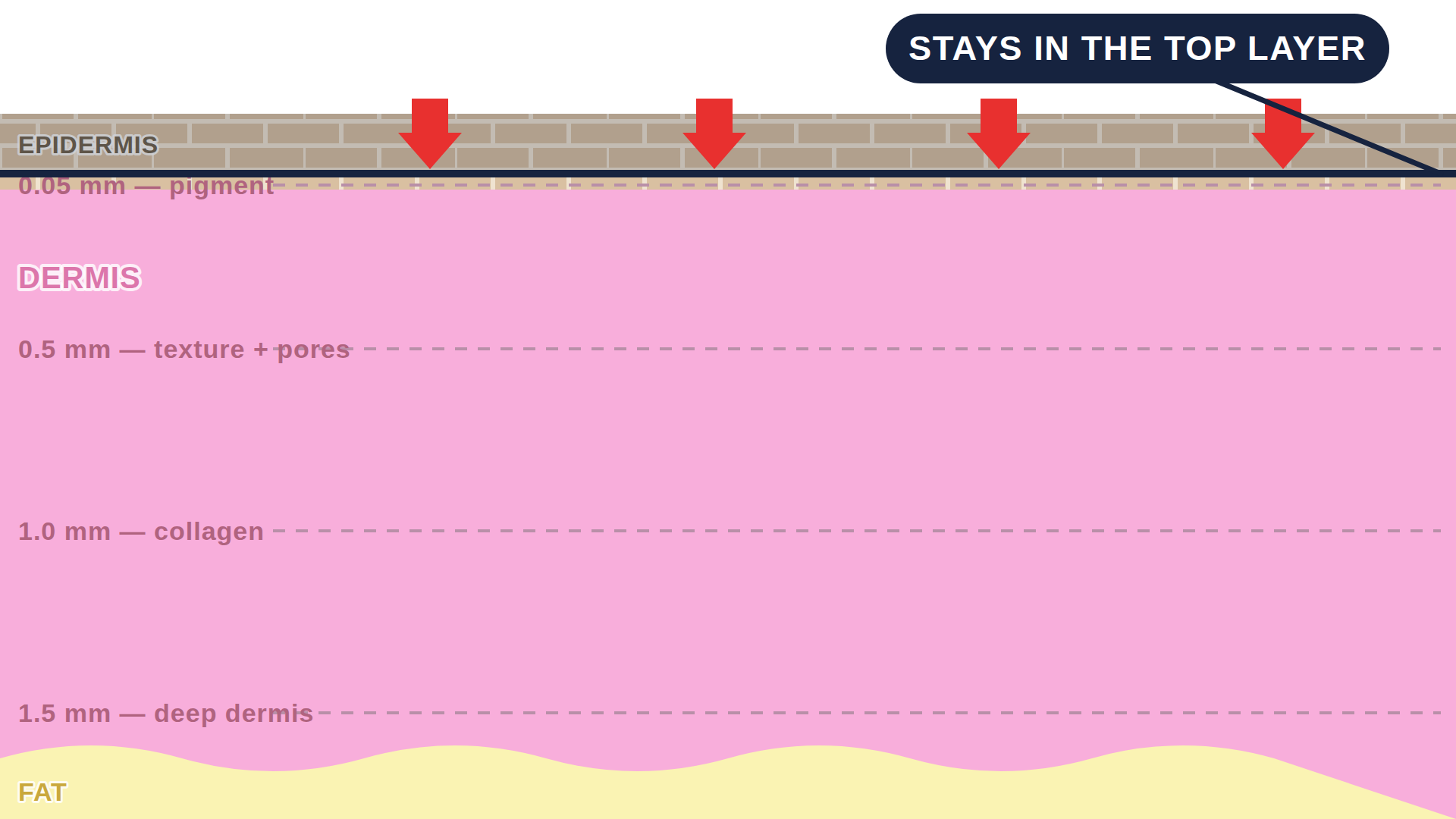
Dermaplaning is better if your main problem is dull skin and fine facial hair. A blade scrapes off the dead top layer, and the fuzz comes off with it. Microdermabrasion is better for congested pores and rough, bumpy texture. A machine sands and vacuums off dead skin only, and it works best as a course of visits. Both are surface treatments, and both wear off within about a month.
| The difference | Dermaplaning | Microdermabrasion |
|---|---|---|
| What it feels like | Scraping, not cutting | Sandpaper, with a firm tug |
| Cost | Priced per session, usually the cheaper one | Priced per session, often sold as a package |

Side by side
Dermaplaning
A blade, held flat against the skin
A sterile surgical blade is drawn across taut skin at a shallow angle. It shaves off dead cells and the fine vellus hair with them. It does not cut into living skin.
Microdermabrasion
A sanding wand, plus suction
A wand with a rough diamond tip, or a spray of fine crystals, buffs the dead top layer away. A vacuum pulls the loosened skin and grit off as it goes.
Dermaplaning
Smooth, bright, and no fuzz
The change is there when you sit up. Makeup sits flatter because there is no hair for it to catch on.
Microdermabrasion
Smoother texture, over a course
One session gives a mild glow. The texture change people actually want usually takes a series of sessions, a few weeks apart.
Dermaplaning
It will not clear a blocked pore
A blade skims the surface. It does not pull anything out from inside a pore.
Microdermabrasion
It will not remove facial hair
Microdermabrasion leaves vellus hair where it is.
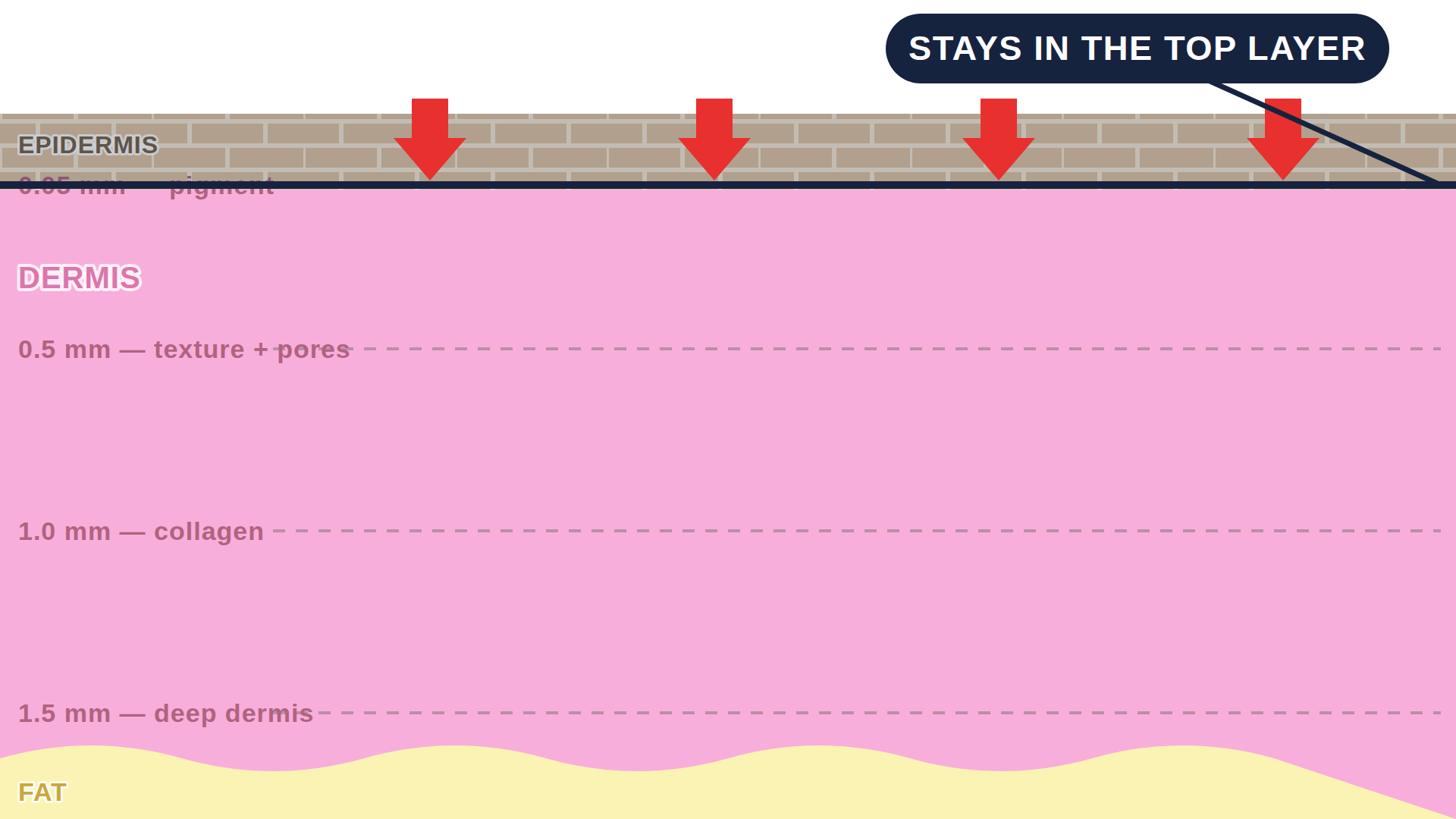

A blade scrapes off surface dead skin and fine hair, so makeup sits better and skin looks smoother for a week or two. There is no evidence it affects wrinkles, and it does not make hair grow back thicker. It is a finish, not a treatment.
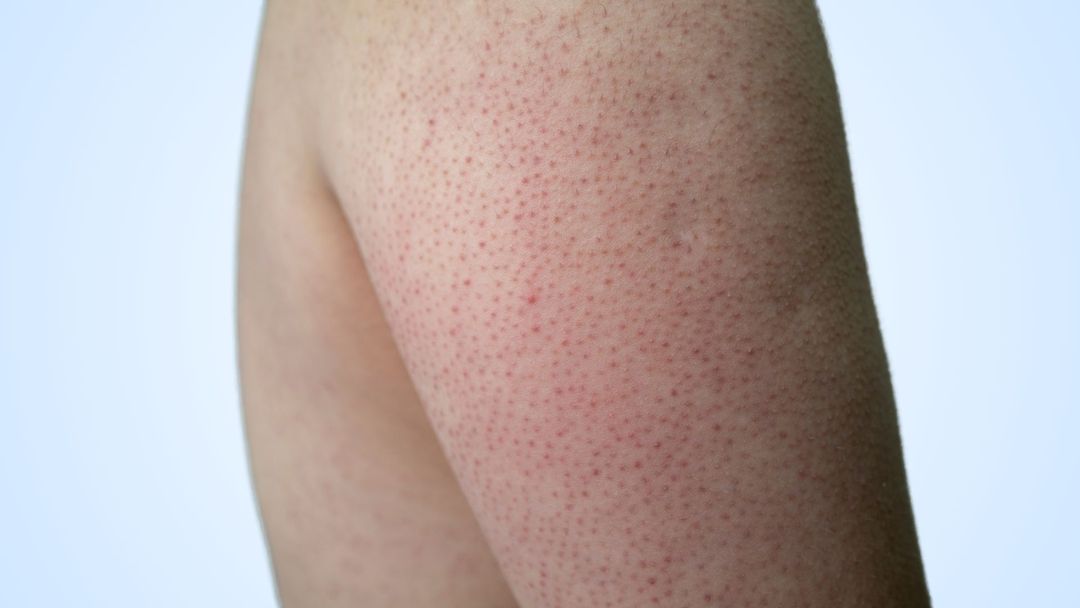
Sanding the surface has the same problem as a body scrub: the plug sits inside the follicle, below where it reaches. Any smoothness is short-lived, and it adds redness. On deeper skin tones the irritation can leave dark marks, so it is one to skip.

Sands off the very top of the skin, which is above where the pigment actually sits, so it does little for brown marks and nothing for gray ones. Repeated sessions add friction and inflammation to skin that marks easily. Money spent here is better spent on daily sunscreen and a treatment that reaches the pigment cells.

Polishes off the very top layer of skin, which makes it briefly smoother and brighter. The pigment in a sun spot is held in ridges below that layer, so it is not reached. It is often sold as a treatment for spots and it is not one, and repeated sessions can irritate skin enough to leave marks of their own.

It polishes the surface layer, and the tear that made the stretch mark is well below that. It is commonly sold as a stretch mark treatment and the published results are minimal. If a clinic is offering this as their answer, it is worth asking what else they do.
Sands off the outer dead layer, so skin feels smoother and looks brighter for a few days. It does not reach the dermis, which is where wrinkles are, so it does not change them. Pleasant, safe on most skin, and frequently sold as an anti-aging treatment when it is not one.

Polishes the very top layer of skin, which is nowhere near deep enough to reach the collagen that makes a scar. It can leave skin looking brighter for a few days. It is widely sold for acne scarring and it does not change acne scarring.

Strong evidence. The only option that reduces hair long term, and the sensible choice for coarse dark facial hair. It does very little for fine light fuzz, needs a course, and needs a device suited to your skin tone.
Limited evidence. Sands the dead layer rather than shaving it, with a similar short-lived polish and no hair removal.

Moderate evidence. Aimed at indented scars and texture, which microdermabrasion does not touch. More downtime per session, more cost, and usually done once active acne is controlled.
Dermaplaning
Three to four weeks
Dead skin builds back up, and the hair grows back to the length it was before.
Microdermabrasion
Three to four weeks per session
Any lasting change comes from repeating it, not from one visit.
Dermaplaning
Scraping, not cutting
Most people call it strange rather than painful. Nothing is needed to numb the skin.
Microdermabrasion
Sandpaper, with a firm tug
The suction is the part people notice. Mildly uncomfortable, not painful.
Dermaplaning
Nicks, and a poor fit for active acne
Small cuts happen if the angle or the pressure is wrong. Dragging a blade over inflamed spots can spread bacteria.
Microdermabrasion
Redness, dryness, a few spots after
Redness for a day or two is normal. Some people break out briefly afterwards.
Dermaplaning
Priced per session, usually the cheaper one
Often added to a facial for a small extra fee.
Microdermabrasion
Priced per session, often sold as a package
Ask what a full course costs, not just one visit.
Dermaplaning
A weaker version of the same thing
Face-shaving razors do the same job with a blunter blade. You get less exfoliation and more risk of nicks, but it is the same idea.
Microdermabrasion
A different thing wearing the same name
Home microderm kits are gritty scrubs, or a small suction wand. They sand far more lightly than a clinic machine, and the suction is much weaker.
Dermaplaning
Microdermabrasion
Dermaplaning
Dermaplaning cannot change your facial hair. The blade cuts the hair at the skin. It does not touch the follicle underneath, and the follicle is what decides how thick and how dark a hair is. That is set by your genes and your hormones.
Dermaplaning
Dermaplaning is the worse fit for oily, congested skin. It works on the flat surface between pores, so it does very little for blackheads. Some people also find that removing the fuzz makes their face feel oilier, because there is no hair to hold the oil off the skin.
Microdermabrasion
Microdermabrasion is the better fit of the two for oily, congested skin. It buffs down the plugs of dead skin sitting in the pore openings, and the suction lifts some of the loosened debris out. Skin often feels less greasy for a week or two afterwards.
Common questions