Hydrodermabrasion is microdermabrasion done wet. One handpiece sands the skin inside a film of fluid, lays down a serum, and suctions it back in the same pass. Microdermabrasion is the dry version, and it has been studied far more. No trial has ever compared the two.
At a glance
The difference
Hydrodermabrasion
Microdermabrasion
What it is best at
Comfort, and serum onto fresh skin
Surface texture and dullness, modestly
Cost
Usually the pricier of the two
Usually the cheaper of the two
A
Hydrodermabrasion
Wet abrasion inside a film of fluid A tip is passed over the skin while fluid is pumped to it and vacuum pulls the fluid back. The fluid does three jobs. It lubricates, so the abrasion is gentler. It carries an acid or a hydrating serum. And it wets the outer layer. The suction takes away what comes loose.
B
Microdermabrasion
Side by side
The differences that matter
8 comparison points
01
What you actually do
Hydrodermabrasion
Wet abrasion inside a film of fluid
A tip is passed over the skin while fluid is pumped to it and vacuum pulls the fluid back. The fluid does three jobs. It lubricates, so the abrasion is gentler. It carries an acid or a hydrating serum. And it wets the outer layer. The suction takes away what comes loose.
Microdermabrasion
Dry abrasion, crystals or a diamond tip
The older version fires tiny inert crystals at the skin and vacuums them back into a canister. The newer version drags a fixed diamond-grit wand across the skin and uses vacuum to pull the skin against it. No loose particles.
02
What it will not do
Hydrodermabrasion
It does not build collagen
The one independent imaging study looked for collagen change at two weeks and found none. It measured about 2.75 microns coming off a 9-micron layer, and that layer had more than grown back within two weeks.
Microdermabrasion
It is not a resurfacing treatment
In 49 people, a single treatment removed nothing that could be measured. The skin still switched on inflammatory and repair signals. A review found its role in pigment problems and acne is limited.
Related topic illustrations
Microdermabrasion
Microneedling
Moderate evidence. Aimed at indented scars and texture, which microdermabrasion does not touch. More downtime per session, more cost, and usually done once active acne is controlled.
03
What it is best at
Hydrodermabrasion
Comfort, and serum onto fresh skin
One small study split 20 women. Ten had six wet treatments with an antioxidant serum. Ten had the same serum rubbed in by hand. Biopsies showed thicker skin and more antioxidant in the device group, and no change in the hand group. In a separate study of 23 women, an acid solution with suction left fewer whiteheads and blackheads than the same solution alone.
Microdermabrasion
Surface texture and dullness, modestly
In 16 women treated weekly for six weeks, fine lines, dullness, pigment and large pores improved by the third session. But they were also on a skincare routine, and there was no untreated group. A review concluded it can smooth the surface and help deliver some medicines.
How it works, illustrated
Microdermabrasion
Conditions treated
Microdermabrasion
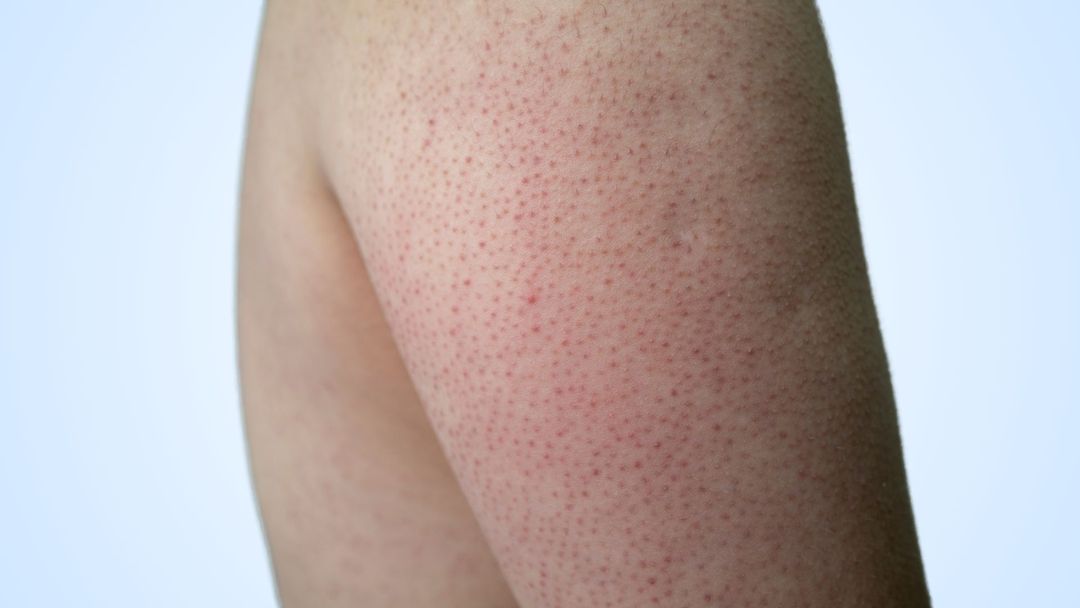
Keratosis Pilaris
Sanding the surface has the same problem as a body scrub: the plug sits inside the follicle, below where it reaches. Any smoothness is short-lived, and it adds redness. On deeper skin tones the irritation can leave dark marks, so it is one to skip.
←1 / 6→
Post-Inflammatory Hyperpigmentation
Sands off the very top of the skin, which is above where the pigment actually sits, so it does little for brown marks and nothing for gray ones. Repeated sessions add friction and inflammation to skin that marks easily. Money spent here is better spent on daily sunscreen and a treatment that reaches the pigment cells.
←2 / 6→
Sun Spots (Solar Lentigines)
Polishes off the very top layer of skin, which makes it briefly smoother and brighter. The pigment in a sun spot is held in ridges below that layer, so it is not reached. It is often sold as a treatment for spots and it is not one, and repeated sessions can irritate skin enough to leave marks of their own.
←3 / 6→
Stretch Marks
It polishes the surface layer, and the tear that made the stretch mark is well below that. It is commonly sold as a stretch mark treatment and the published results are minimal. If a clinic is offering this as their answer, it is worth asking what else they do.
←4 / 6→
Wrinkles and Fine Lines
Sands off the outer dead layer, so skin feels smoother and looks brighter for a few days. It does not reach the dermis, which is where wrinkles are, so it does not change them. Pleasant, safe on most skin, and frequently sold as an anti-aging treatment when it is not one.
←5 / 6→
Acne Scarring
Polishes the very top layer of skin, which is nowhere near deep enough to reach the collagen that makes a scar. It can leave skin looking brighter for a few days. It is widely sold for acne scarring and it does not change acne scarring.
←6 / 6→
04
The downside
Hydrodermabrasion
Little to none, and no loose dust
The disturbance to the skin barrier is short-lived. Everything happens inside fluid that is suctioned away, so there is no crystal dust. The specific hazard here is fluid in the eyes. One FDA injury report describes a patient whose eyes were not properly covered. Acidic treatment fluid reached both eyes and caused heavy tearing and itching.
Microdermabrasion
Redness for hours, and dust with crystals
In 28 people, diamond microdermabrasion raised water loss through the skin straight away and at 24 hours. It was back to normal by day 2, and redness settled by day 1. Loose aluminum oxide crystals are sprayed near the eyes and are breathed in by patient and operator, which is why eye protection is standard. No eye injury from the crystals has been published.
05
Cost
Hydrodermabrasion
Usually the pricier of the two
A consumer survey put the average at $209, with a range up to $320.
Microdermabrasion
Usually the cheaper of the two
A consumer survey put the average at $177, with a range up to $350.
06
The at-home or drugstore version
Hydrodermabrasion
No home version of the handpiece
The treatment needs a sealed tip abrading inside a film of fluid. Home wands and pore vacuums do not hold that seal, and they do not abrade. What you get is a brief flush, not the treatment.
Microdermabrasion
Scrubs are a slower, weaker version
This one does have a home version. A drugstore scrub or a home crystal kit takes a little off the very top of the skin, by hand. There is no vacuum and no control over how long it sits in one spot. Same target, less force, less precision.
07
Who tends to be happy with it
Hydrodermabrasion
Best for — Someone who wants the gentlest version of mechanical exfoliation, with a serum step built in and no dust.
Best for — Someone with dullness, congestion or oily skin who likes the look straight after. Good before an event.
The mindset — Buy the hour and the feel of it. The measured structural change at two weeks was nil.
Microdermabrasion
Best for — Someone who wants surface smoothing and brightening from the treatment with the much larger published record.
Best for — Someone using it as a prep step before a product. That is the use with the strongest data.
The mindset — Expect modest, short-lived surface change that builds a little with each visit, not resurfacing.
09
The fine print
More photographs
Microdermabrasion
Common questions
Questions Patients Ask
What is the actual difference between hydrodermabrasion and microdermabrasion?
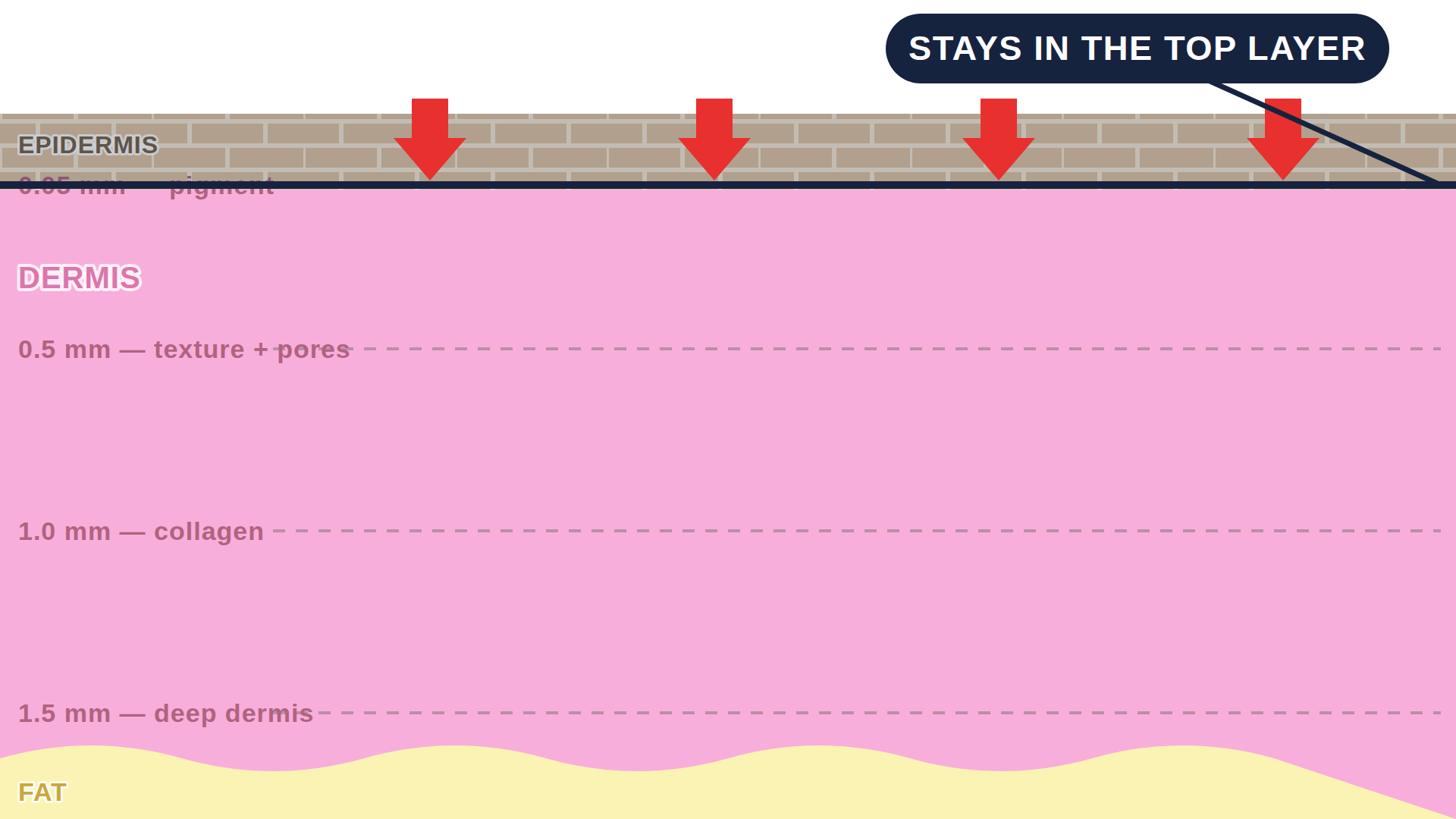
Water. Microdermabrasion abrades dry skin, either by spraying inert crystals at it or by dragging a diamond-grit tip across it, with a vacuum removing the debris. Hydrodermabrasion abrades inside a continuous film of fluid and delivers a serum and suctions it back in the same pass. Both work on the same outermost dead layer of skin, and neither goes deeper than that when used at normal settings.
Is a HydraFacial the same as hydrodermabrasion?
Yes. In the medical literature the procedure is called hydradermabrasion, and HydraFacial is the best known brand of machine that performs it. Generic machines from other manufacturers do the same class of thing, which is why clinics that do not own the branded device advertise a "hydrofacial" or "aqua facial" instead.
Which one is deeper?
Neither is deep, and the measured numbers are smaller than most people expect. The outer dead layer of facial skin is around 9.42 microns thick. One imaging study of hydrodermabrasion in 8 people measured it falling to 6.67 microns immediately after treatment and rising to 9.75 microns two weeks later. A study of 49 people given one microdermabrasion treatment detected no change in that layer's thickness at all.
Is either one FDA approved?
No, and neither is FDA cleared. Both are registered as Class I powered dermabrasion devices under 21 CFR 878.4820 and are exempt from FDA premarket review, so there is no K-number and no reviewed indication. That is not the same as unregulated: registration, device listing, manufacturing quality rules and a ban on false labeling all still apply. The only related clearances in this family are for HydraFacial's LED light modules and sterile tubing, not for the abrading device.
Which is better for blackheads and congestion?
No trial has compared them for anything, so this is reasoning rather than a result. The strongest relevant evidence is a randomized study of 23 women in which a mild acid solution applied with suction reduced whiteheads and blackheads more than the same solution alone. That supports the wet, suction-based approach for congestion, but it was not a study of either brand.
Which costs more?
Usually the wet treatment. Consumer survey figures put the average hydrodermabrasion treatment at $209 from 261 self-reported reviews, updated July 2023, and microdermabrasion at $177 from 90 reviews, updated June 2023. Both are small, self-selected, self-reported samples that are now a few years old. The most recent separate professional-society figure for microdermabrasion is $167, from 2020; the society stopped publishing fees for treatments like these after 2023.
Does either one build collagen?
There is no imaging evidence that hydrodermabrasion does. The one independent study that looked found no visible difference in the quality or quantity of dermal collagen fibers two weeks after treatment. Microdermabrasion does switch on collagen-related signaling: in 49 people, a single treatment triggered a remodeling cascade even though no tissue was measurably removed, and 2 of 11 subjects tested showed more type I procollagen at day 14. That is a biological signal, not a proven cosmetic result.
Safety to keep in mind
Neither machine is FDA-cleared, because the whole category is exempt from review. Powered dermabrasion devices are Class I, product code GFE, 21 CFR 878.4820, and are explicitly exempt from premarket notification. There is no K-number to quote for either, because there is no clearance. Manual dermabrasion devices were exempted in 1994 and powered ones in 1998.
Exempt is a regulatory category, not a warning label. General controls still apply: establishment registration, device listing, quality system rules, adverse event reporting, and a ban on false or misleading labeling. What exemption removes is the review step. So "FDA approved" or "FDA cleared" on a clinic page is not accurate for either technology — that is a claim from the clinic or the distributor, not from the regulator.
The one nearby exception is worth knowing. The company behind HydraFacial does hold clearances for its LED light modules and for sterile tubing. The abrading, vacuum and infusion engine itself was never the subject of a clearance.
"FDA registered" and "FDA listed" only mean the paperwork was filed. There are around 158 device listings under this product code, from large aesthetics companies down to a long tail of imported skin scrubbers, and their regulatory status is identical.