Hydrafacial

HydraFacial is better for clogged pores and blackheads. A wand scrubs the surface, rinses it with fluid, and uses suction to pull pore contents out. Dermaplaning is better for facial fuzz. A blade shaves off the hair and the dead surface layer with it. Most clinics sell the two as a pair rather than as a choice.
| The difference | Hydrafacial | Dermaplaning |
|---|---|---|
| Cost | The dearer of the two | Cheaper, on a much weaker figure |
Side by side
Hydrafacial
A machine facial, about 30 minutes
A wand tip scrubs the surface while fluid is fed in. Suction lifts away the loosened material and the pore contents.
Dermaplaning
A blade, 20 to 30 minutes
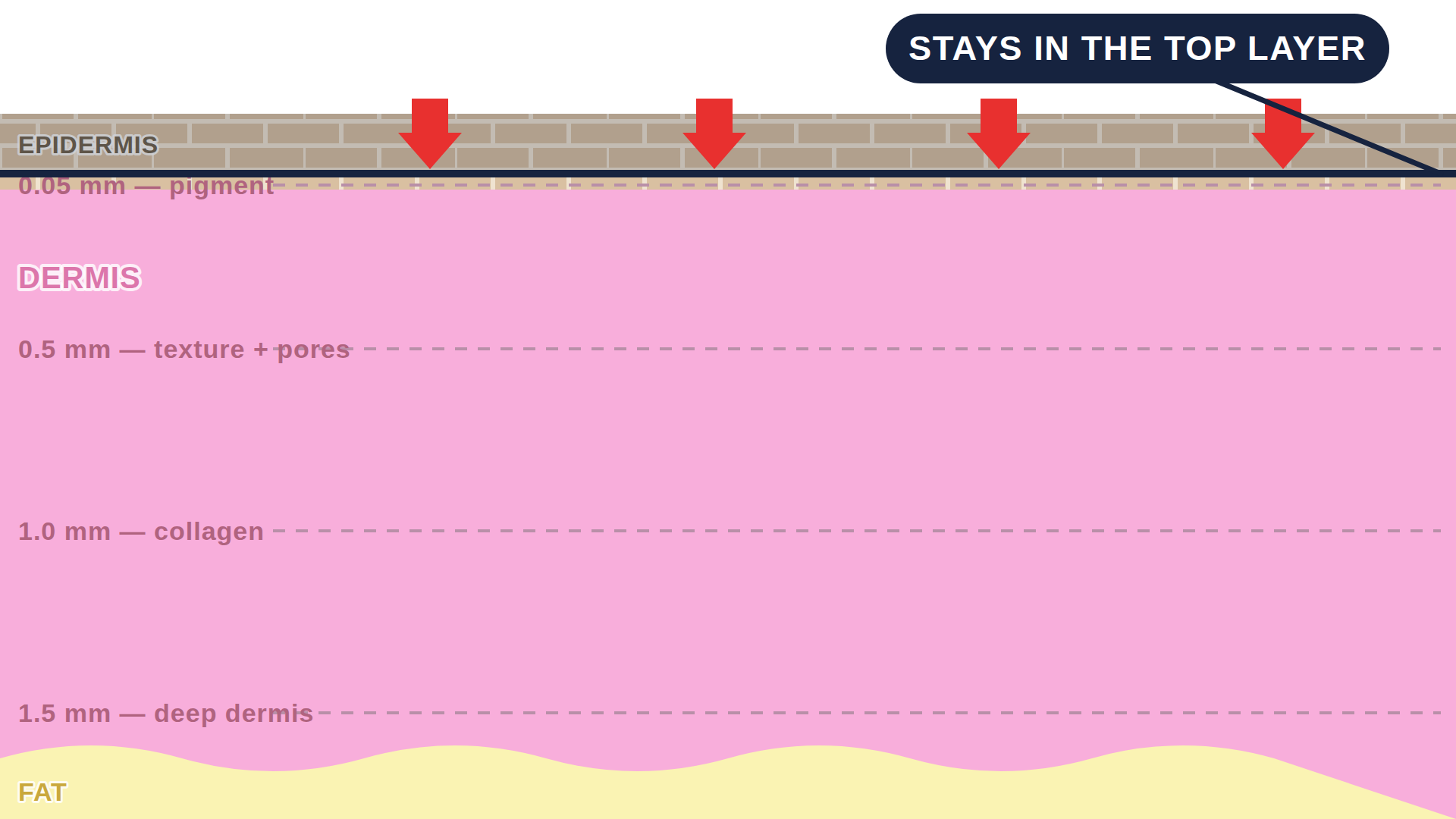
A single-use blade is held at a shallow angle. It is pulled across taut skin in short strokes.
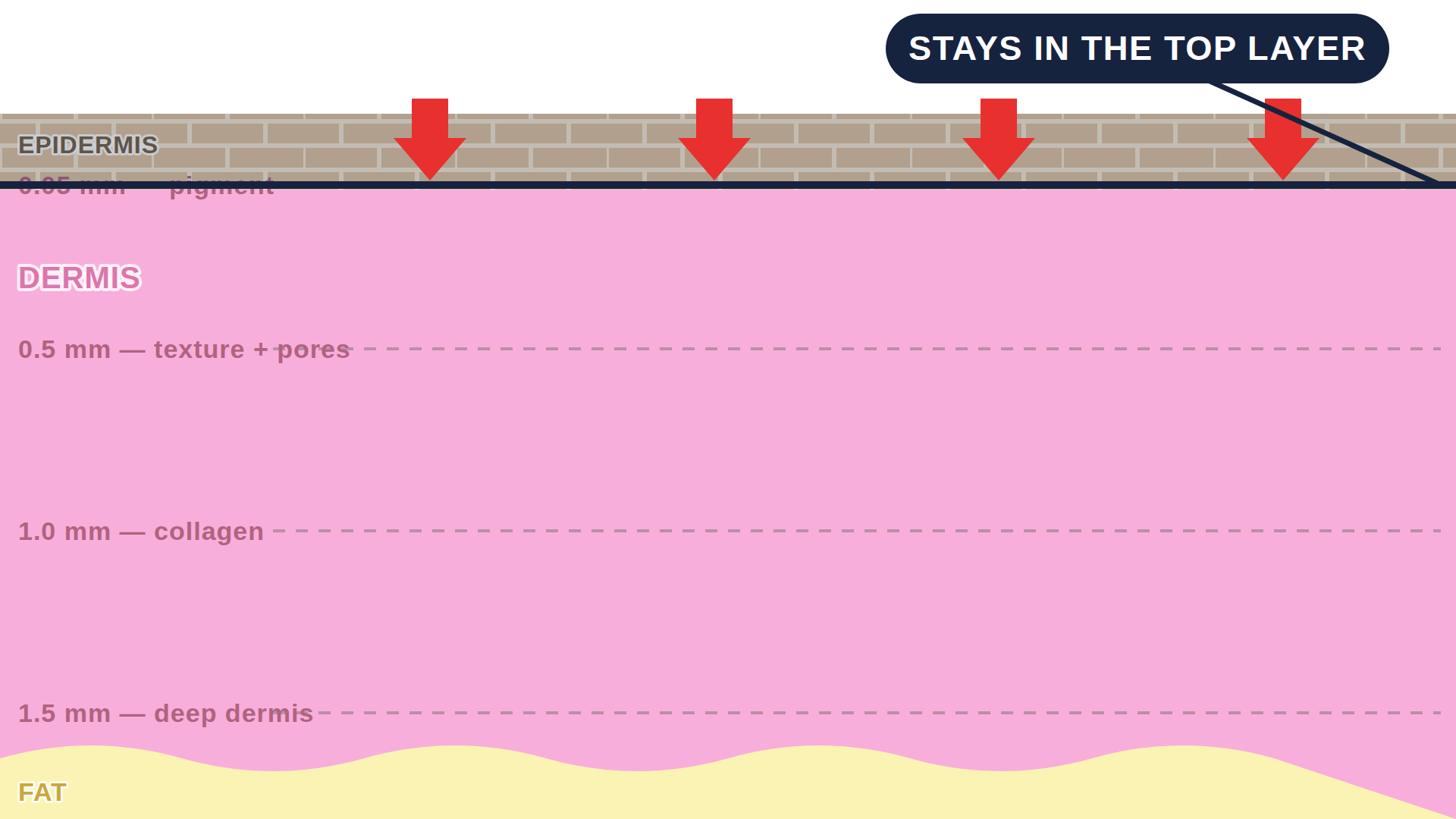

A blade scrapes off surface dead skin and fine hair, so makeup sits better and skin looks smoother for a week or two. There is no evidence it affects wrinkles, and it does not make hair grow back thicker. It is a finish, not a treatment.
Hydrafacial
No hair removal, no collagen
The one imaging study looked at the collagen under the skin two weeks later. It found no visible change. "Stimulates collagen" is not supported by the only measurement anyone has made.
Dermaplaning
No extraction, no measured benefit
There is no suction step, so nothing is pulled out of a pore. No study has measured whether dermaplaning changes how skin looks.

Limited evidence. The dry version of the same idea, sanding the surface instead of using liquid and suction. Slightly more abrasive, no serum step, generally cheaper.

Moderate evidence. Reaches the deeper layer and works on indented scars and texture. Real downtime and real discomfort, for a different order of result.

Strong evidence. The only option that reduces hair long term, and the sensible choice for coarse dark facial hair. It does very little for fine light fuzz, needs a course, and needs a device suited to your skin tone.
Limited evidence. Sands the dead layer rather than shaving it, with a similar short-lived polish and no hair removal.
Hydrafacial
Days, then a course to keep it up
The surface layer had grown back within two weeks. It is usually sold in courses of six treatments, one to two weeks apart.
Dermaplaning
Clinics repeat it every 3 to 4 weeks
That interval comes from the roughly 28-day skin turnover cycle. No study has tested it.
Hydrafacial
No downtime, but claims to watch
There is nothing to recover from. The claims to watch are "FDA-cleared" and "collagen boosting". Neither one holds.
Dermaplaning
No downtime, but a blade can nick
The risk is a blade, so nicks and cuts. No harm from cosmetic dermaplaning has ever been published.
Hydrafacial
The dearer of the two
RealSelf reports an average of $209, with a range up to $320.
Dermaplaning
Cheaper, on a much weaker figure
RealSelf reports an average of $133, from only 37 reviews.
Hydrafacial
Pore vacuums are a different thing
A handheld pore vacuum only pulls at the surface. It has no scrubbing tip and no fluid, so it cannot do all three jobs at once.
Dermaplaning
Facial razors are the real thing, milder
A drugstore facial razor does the same job with less skill behind it. The hair comes off. Much less of the dead surface layer does.
Hydrafacial
Dermaplaning
Hydrafacial
HydraFacial has two small studies. In the first, 20 women had six treatments with a serum, or the same serum applied by hand. The device group showed thicker skin on biopsy. The serum-alone group showed no change. In a 12-week acne study of 20 adults, the share with clear or near-clear skin rose from 20 to 65 percent. That study had no control group.
Dermaplaning
Dermaplaning has no efficacy trial of any kind. Nobody has compared the two treatments. The evidence for HydraFacial is thin, and part of it was paid for by the maker.
Hydrafacial
HydraFacial is not FDA-cleared. The machine is registered as a Class I device under product code GFE, "powered dermabrasion brush," 21 CFR 878.4820, and that category was exempted from premarket review in 1998. There is no K-number to quote because there is no clearance. General controls still apply, meaning registration, listing, manufacturing quality rules and a ban on false labeling. So "FDA-cleared HydraFacial" is a phrase that comes from clinics and distributors. It does not mean the device is unregulated or unsafe; it means FDA has never evaluated any claim about what it does. The manufacturer does hold clearances, but not for the facial: LED light modules, K061470 for blue and K072399 for red, and sterile tubing.
Dermaplaning
Dermaplaning has no product for a regulator to review. It is a technique rather than a device, so who may perform it is set state by state. California brought dermaplaning inside esthetician and cosmetologist scope effective 1 January 2022. No reliable nationwide table exists.
Common questions