Dermaplaning
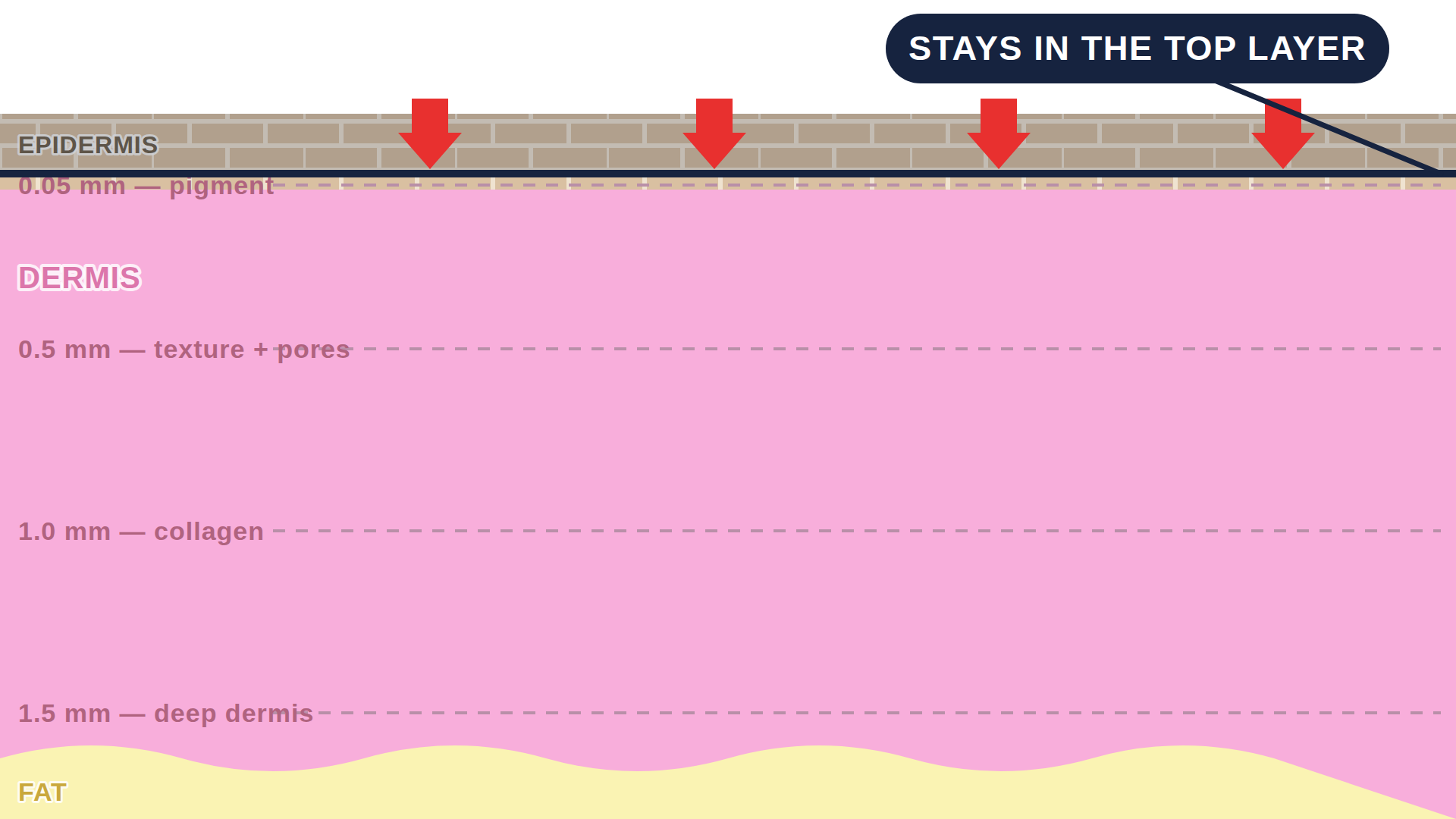
Dermaplaning shaves the surface of the skin with a sterile blade. It removes surface cells and the fine peach fuzz on the cheeks and jaw. A chemical peel dissolves skin cells with acid, as deep as the clinician chooses. The hair does not grow back thicker after a shave, and peels have far more evidence behind them.
| The difference | Dermaplaning | Chemical Peel |
|---|---|---|
| What it is | A shave of the skin surface, blade only | A chemical injury, to a chosen depth |
| What it is best at | Smoothness, and visible fuzz gone | Acne, pigment and texture |
| Downtime and cost | Effectively none, about $133 | Days to weeks, about $438 |

Side by side
Dermaplaning
A shave of the skin surface, blade only
A single-use blade is pulled across taut skin in short strokes. No device, no energy, no chemistry. Skin samples show it takes off the dead layer plus some living skin.
Chemical Peel
A chemical injury, to a chosen depth
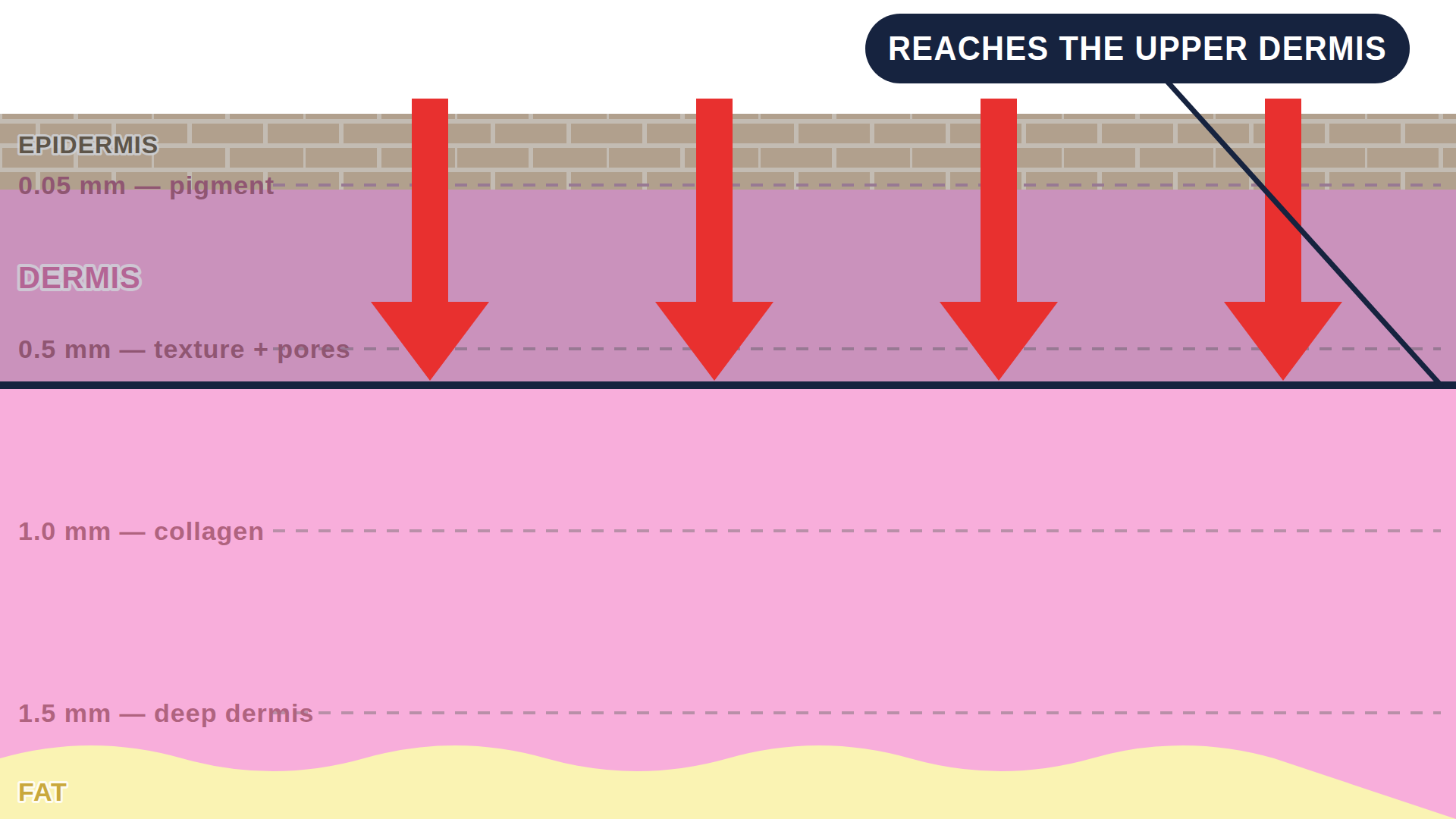
An acid solution goes on, then washes off. Light peels use glycolic, lactic, mandelic or salicylic acid and stay inside the epidermis. Medium peels use trichloroacetic acid (TCA) or Jessner's solution and reach the papillary dermis. Deep peels use phenol with croton oil and reach the mid-reticular dermis.
Dermaplaning
Smoothness, and visible fuzz gone
The hair removal is the part you can see. No study has measured whether dermaplaning improves how skin looks, so "brighter" is a clinic description, not a finding.
Chemical Peel
Acne, pigment and texture
In 26 people with moderate acne, 40% glycolic acid beat placebo at every check. Another trial treated 90 people with melasma. Glycolic acid and a salicylic-mandelic peel each cut the melasma score by about 60%.

A blade scrapes off surface dead skin and fine hair, so makeup sits better and skin looks smoother for a week or two. There is no evidence it affects wrinkles, and it does not make hair grow back thicker. It is a finish, not a treatment.

A peel works on the surface layers. Scars that dip below the skin are missing tissue further down than a peel reaches. The flat marks beside them do respond.

A series of light peels speeds up the shedding of surface pigment, so it helps brown marks far more than gray ones. Done gently and spaced out, it adds to a good home routine rather than replacing it. Done too strongly, especially on deeper skin tones, the peel itself inflames the skin and creates a fresh round of marks.

Light peels, spaced out, speed up the clearing of surface pigment when they are added to creams and sun protection. They are an addition and never a replacement. Depth is the whole issue: a peel strong enough to leave the skin red and peeling can inflame it and leave the patch darker than it started, which is one of the commonest ways melasma gets worse.
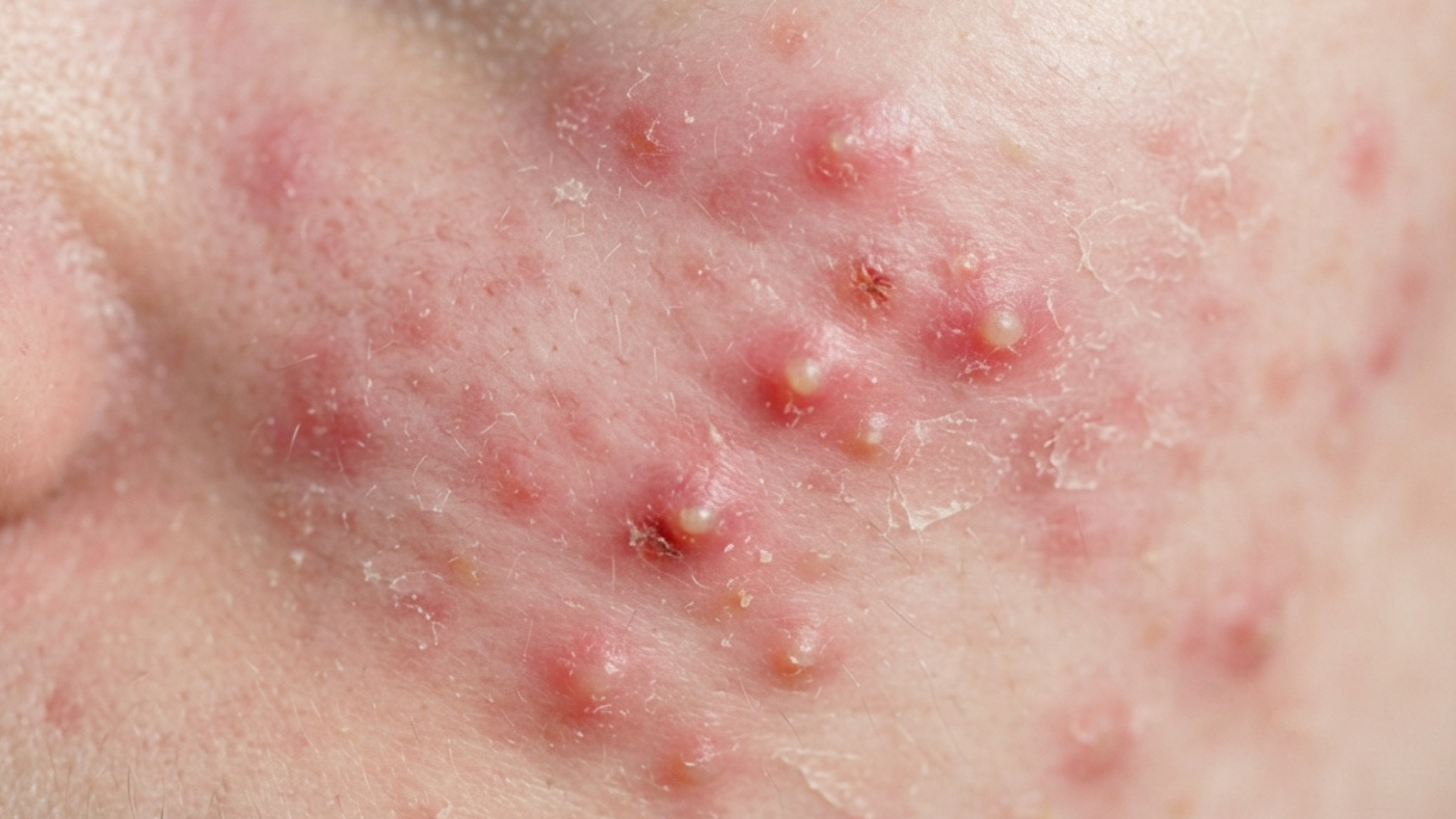
Modest benefit for clogged pores and a better one for the dark marks left behind. Needs repeat sessions, and the benefit fades if the daily treatment stops.

Light peels done around the eye can lift brown pigment over a course of treatments, and they are a reasonable next step when creams have stalled. Settings have to be gentle, spaced further apart and often preceded by weeks of a preparation cream, because over-treating eyelid skin leaves more pigment than it removed. On deeper skin tones, ask directly how many people with your skin tone the clinic treats.
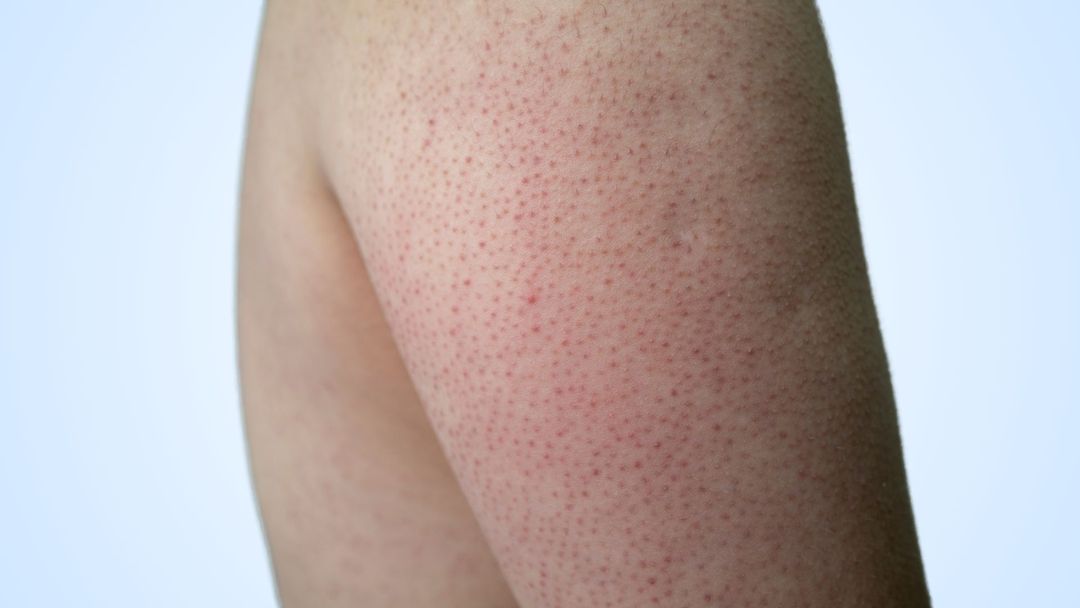
A stronger version of the acid creams, applied in a clinic to the arms or cheeks. It can smooth the texture for a while, and the effect fades in the same way, so the daily cream is still needed afterwards. It is an add-on for people who want a faster start, not a replacement for the routine.

Lightens spots across a whole area rather than one at a time, which suits the backs of the hands, the forearms and the chest where spots are scattered widely. Usually a course rather than a single treatment, and the result is a general evening out rather than each spot disappearing. Depth matters: a peel strong enough to leave the skin raw can leave a darker mark instead.
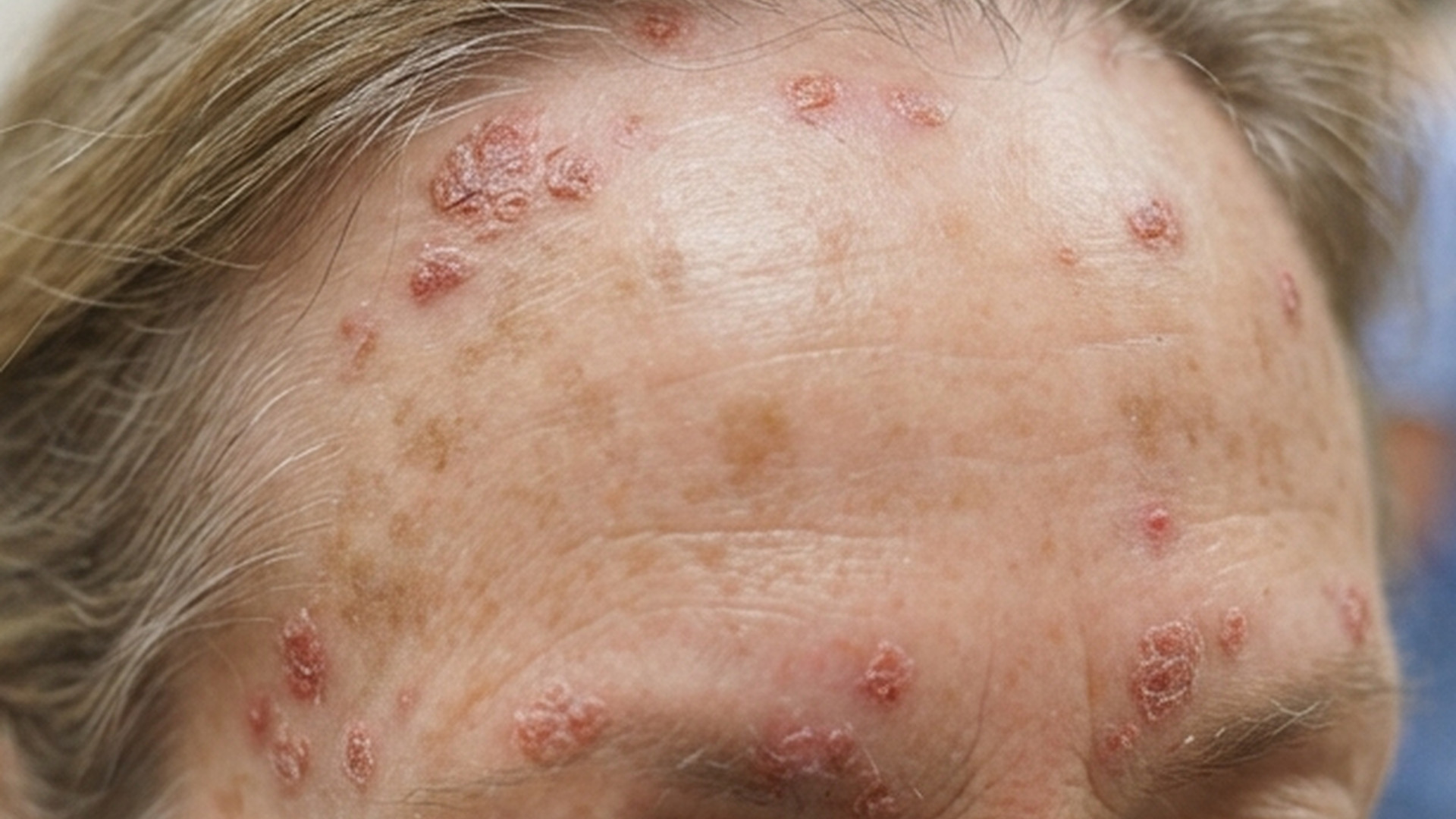
A medium-depth peel takes off the damaged top layer across a whole face or scalp at once, so it treats the field rather than single spots. It is an option when creams have not been tolerated. The skin is red and peeling for about a week, and results depend a lot on who is doing it and at what strength.

Medium-depth peels have some evidence for modest improvement in mature marks, mostly when used alongside another treatment rather than on their own. Because they work by controlled injury, the same pigment cautions apply on deeper skin tones, and a test patch is worth insisting on.
Repeated medium-depth peels smooth the edges of shallow scars and even out the tone around them. The effect on texture is modest next to laser or needling. On this page peels earn their place mostly for the flat marks sitting alongside the scars rather than for the scars themselves.
Dermaplaning
Effectively none, about $133
The risk is a blade, so nicks and cuts are what to expect. Sessions repeat every 3 to 4 weeks. The only citable price is RealSelf's $133, from 37 self-reported reviews.
Chemical Peel
Days to weeks, about $438
Redness runs 3 to 5 days after a superficial peel and 15 to 30 days after a medium peel. Protocols cluster at 3 to 6 sessions every 2 weeks. RealSelf reports $438.
Dermaplaning
At-home blades and razor tools
The drugstore version is a small razor, not a surgical blade in a trained hand. Nobody is watching the skin as it goes.
Chemical Peel
Weak acids at home, strong ones by post
Drugstore glycolic and salicylic products are far weaker than a clinic peel. Peels sold online are a different thing. FDA has warned about products at TCA 50 to 100 percent, lactic acid 90 percent, salicylic acid 80 percent and glycolic acid 70 percent.
Dermaplaning
Chemical Peel
Dermaplaning
For dermaplaning, there is no published report of harm at all. That is not the same as no harm. It is done mostly outside medical settings, where nobody has to report anything. California's regulator says the service should be withheld on open acne wounds, abrasions, sunburn or other irritation.

Strong evidence. The only option that reduces hair long term, and the sensible choice for coarse dark facial hair. It does very little for fine light fuzz, needs a course, and needs a device suited to your skin tone.

Limited evidence. Sands the dead layer rather than shaving it, with a similar short-lived polish and no hair removal.

Moderate evidence. Aimed at indented scars, which a superficial peel does not touch. More downtime per session, and usually done once the acne itself is under control.
Limited evidence. Sands the surface instead of dissolving it. No peeling and little lasting effect on acne, which is why it is often bundled rather than sold on its own.
Dermaplaning
Dermaplaning has no FDA review at all. It is a technique, not a product, so there is nothing to review. Who may perform it is set state by state and it changes: California placed dermaplaning inside the esthetician and cosmetologist scope of practice effective 1 January 2022.
Chemical Peel
No chemical peel product has FDA approval, and there is no 510(k) clearance for any peel. FDA stated on 30 July 2024 that "the agency has not approved any chemical peel products, and consumers should only consider using chemical peel products under the supervision of a dermatologist or licensed and trained practitioner." Its 2024 warning about high-concentration products sold online described the harms as "severe chemical burns, pain, swelling, infection, skin color changes, and disfiguring scars."
"Not approved" does not mean illegal. It means no US authority reviewed the formula before it went on sale. Ohio is unusual in capping estheticians at 30 percent concentration and a pH of at least 3. Most states set the limit as depth, not a figure.
Common questions