Ultherapy
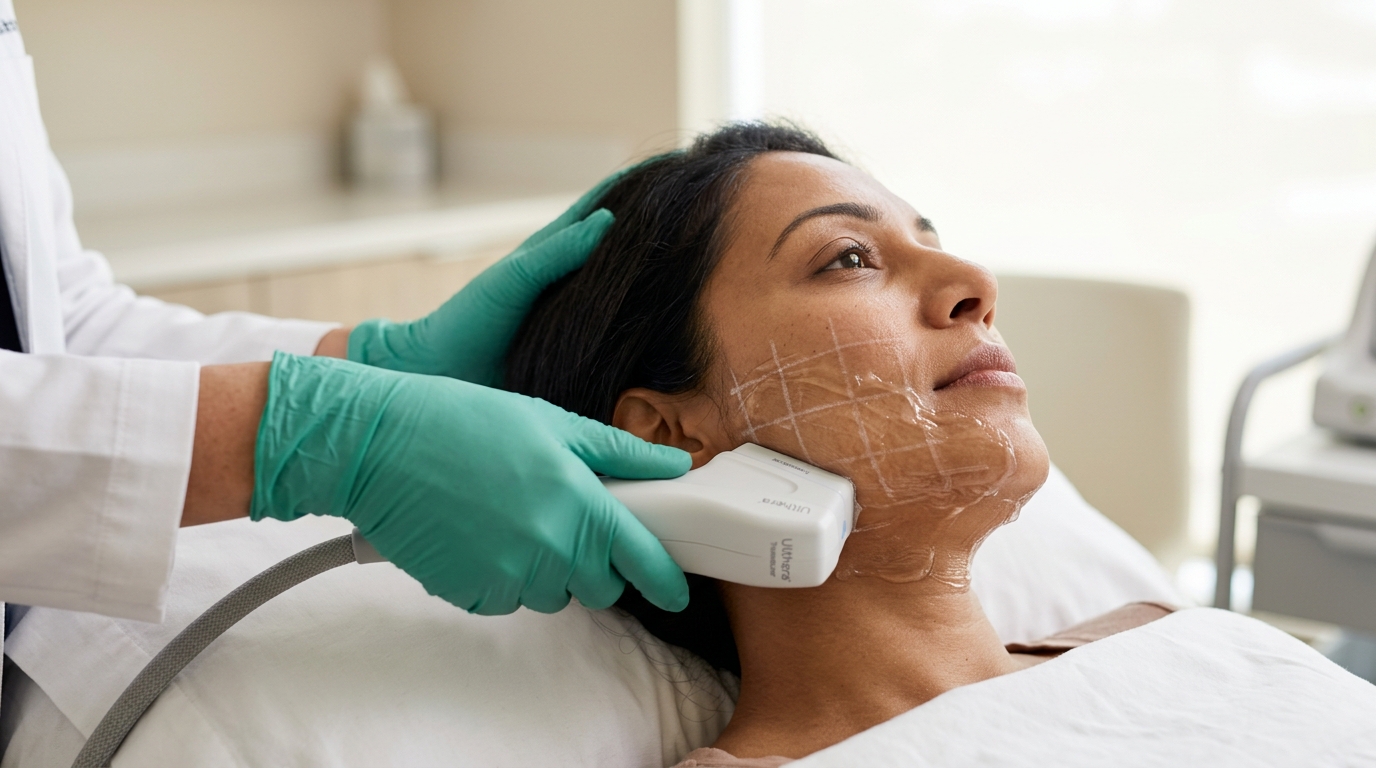
Ultherapy is guided by ultrasound. Gel is spread first so the applicator can image the layers underneath and place the energy at a set depth.
Ultherapy is the one for sagging. It sends focused ultrasound through unbroken skin, so there is no wound and no visible recovery — but it is the more painful of the two while you are in the chair. RF microneedling is the one for texture and acne scars. Needles carry the energy in through the skin, which is what lets it work on the surface, and why it costs you a few visible days.
| The difference | Ultherapy | RF Microneedling |
|---|---|---|
| What you actually do | One device, imaging as it goes | Needles, then heat from the tips |
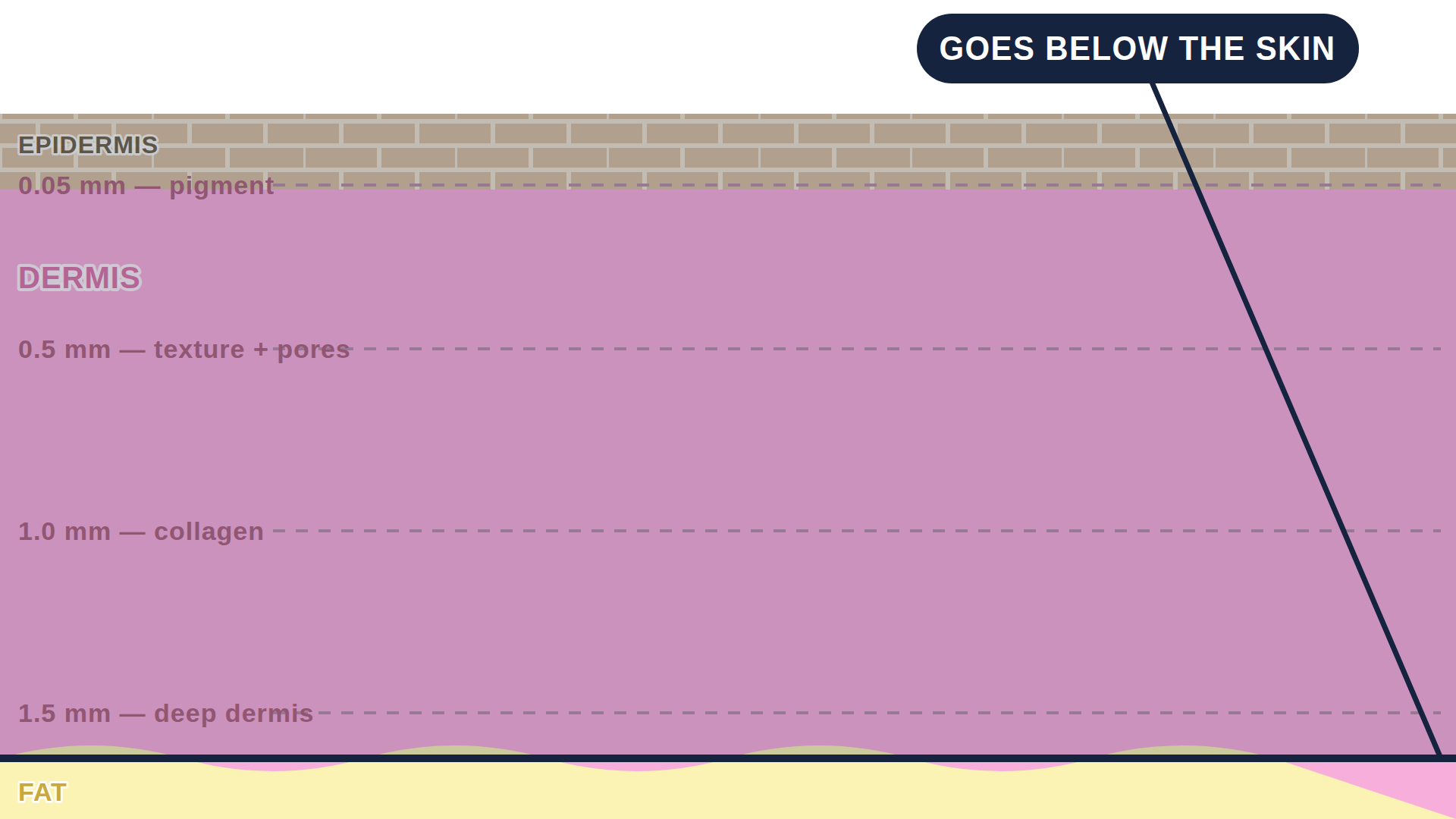
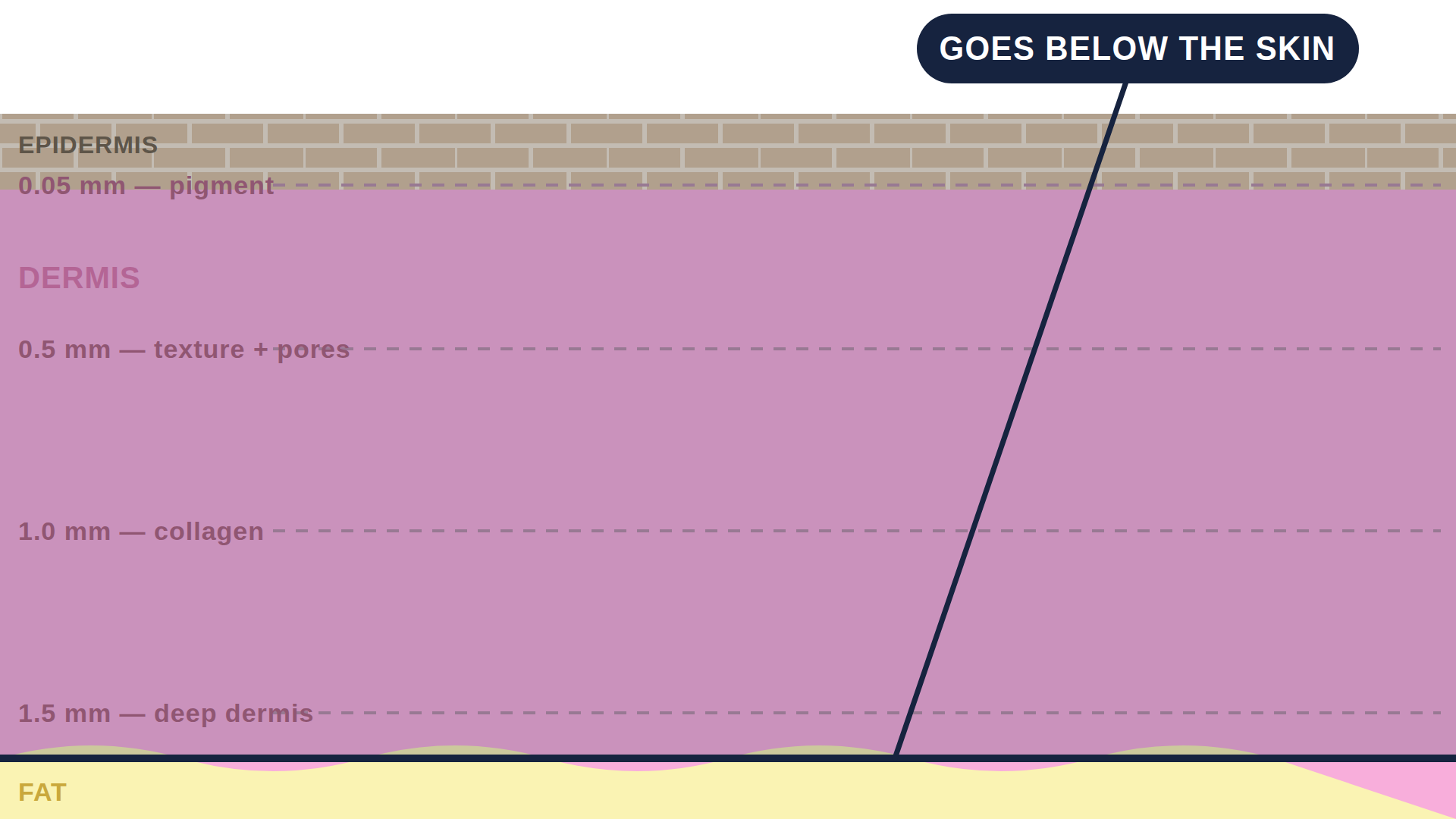
| How deep it goes | About 1.5, 3.0 and 4.5 mm | Set by needle length, 0.3 to 4 mm |
| What you can expect to see | Lift at the brow, chin and neck | Smoother texture, shallower scars |
| What it will not do | Not for texture, pores or scarring | Not a lift from the deep layer |
| How long before you see anything | Two to six months | Across about three sessions |
Ultherapy is guided by ultrasound. Gel is spread first so the applicator can image the layers underneath and place the energy at a set depth.

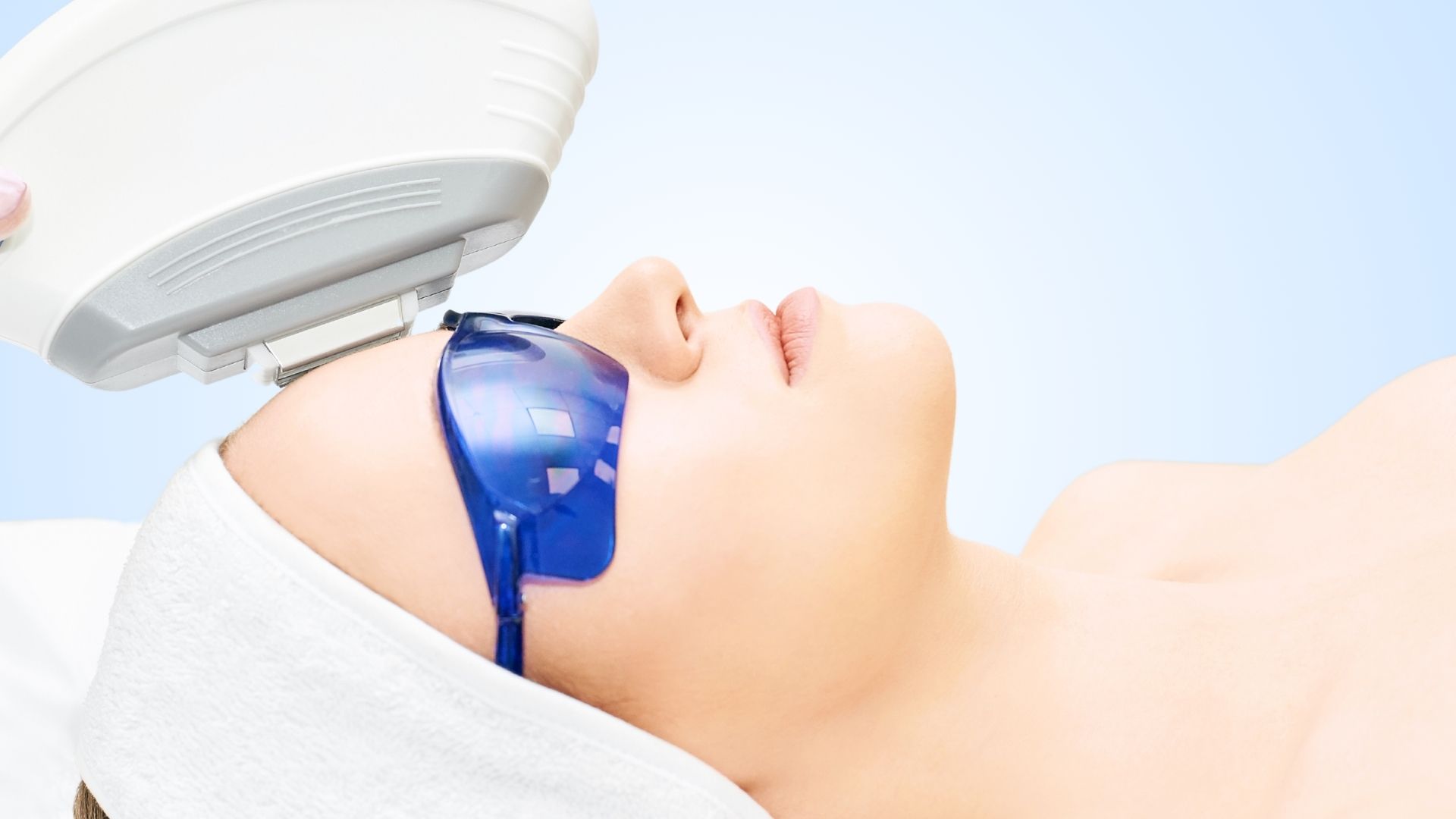
An RF microneedling handpiece on the cheekbone. The needles carry heat to a set depth, and that depth is chosen on the console before each pass.
Side by side
Ultherapy
One device, imaging as it goes
Ultrasound is focused to a point under the skin, like sunlight through a lens. At that point the tissue gets hot enough to form small columns of denatured collagen. Everything above it is spared. It is the only device here with imaging, so the operator can see the layer before firing.
RF Microneedling
Needles, then heat from the tips
Needles go through the skin. Radiofrequency then heats the tissue around the tips. The heating is electrical, so it does not depend on skin pigment. RF microneedling is a whole category, not one machine, and brands differ in needle count, depth and insulation.

Focused ultrasound heats a deep layer to tighten it, aimed at the jaw, neck and brow rather than at lines. The change is modest and takes three to six months to show, and it is nothing like a surgical lift. It can be uncomfortable, and results vary enough that it is worth seeing a provider's own before-and-after photographs.

Needles carry heat below the surface, so it builds more collagen than needling alone while doing less to the top layer. That lower surface injury is why it is often the first choice for boxcar and rolling scars on deeper skin tones. Usually three or four sessions about a month apart, with the result still building for a year.

Microneedling with radiofrequency heat delivered at the needle tips, which reaches deeper into the scarred layer. Reported results are modest improvements in texture and firmness over a course of sessions. Because the energy is not aimed at pigment, it is another option worth discussing on deeper skin tones.
Microneedling with radiofrequency heat delivered at the needle tips, aimed at the deeper dermis. It does more for early laxity along the jaw and lower face than plain microneedling does, over three or so sessions. The heat is not carried by pigment, so it is comparatively safe on deeper skin tones, and the result is well short of surgery.
Ultherapy
About 1.5, 3.0 and 4.5 mm
The 4.5 mm depth reaches the SMAS. That is the fibrous layer surgeons lift in a facelift.
RF Microneedling
Set by needle length, 0.3 to 4 mm
Depth is set by how far the needle goes in. Larger tips reach deeper still.
Ultherapy
Lift at the brow, chin and neck
It lifts lax tissue at the brow, under the chin and on the neck. It does not touch surface texture, pores or scarring.
RF Microneedling
Smoother texture, shallower scars
Acne scarring is its best-evidenced use. In a split-face trial, RF microneedling and fractional CO2 laser gave almost the same acne-scar scores. The RF side had less redness, less pain and fewer pigment changes.
Ultherapy
Not for texture, pores or scarring
Nothing in the treatment reaches the surface of the skin, so it cannot change it.
RF Microneedling
Not a lift from the deep layer
It works in the dermis and, with deeper tips, into the fat beneath. Tightening comes as a side effect, not the main event.
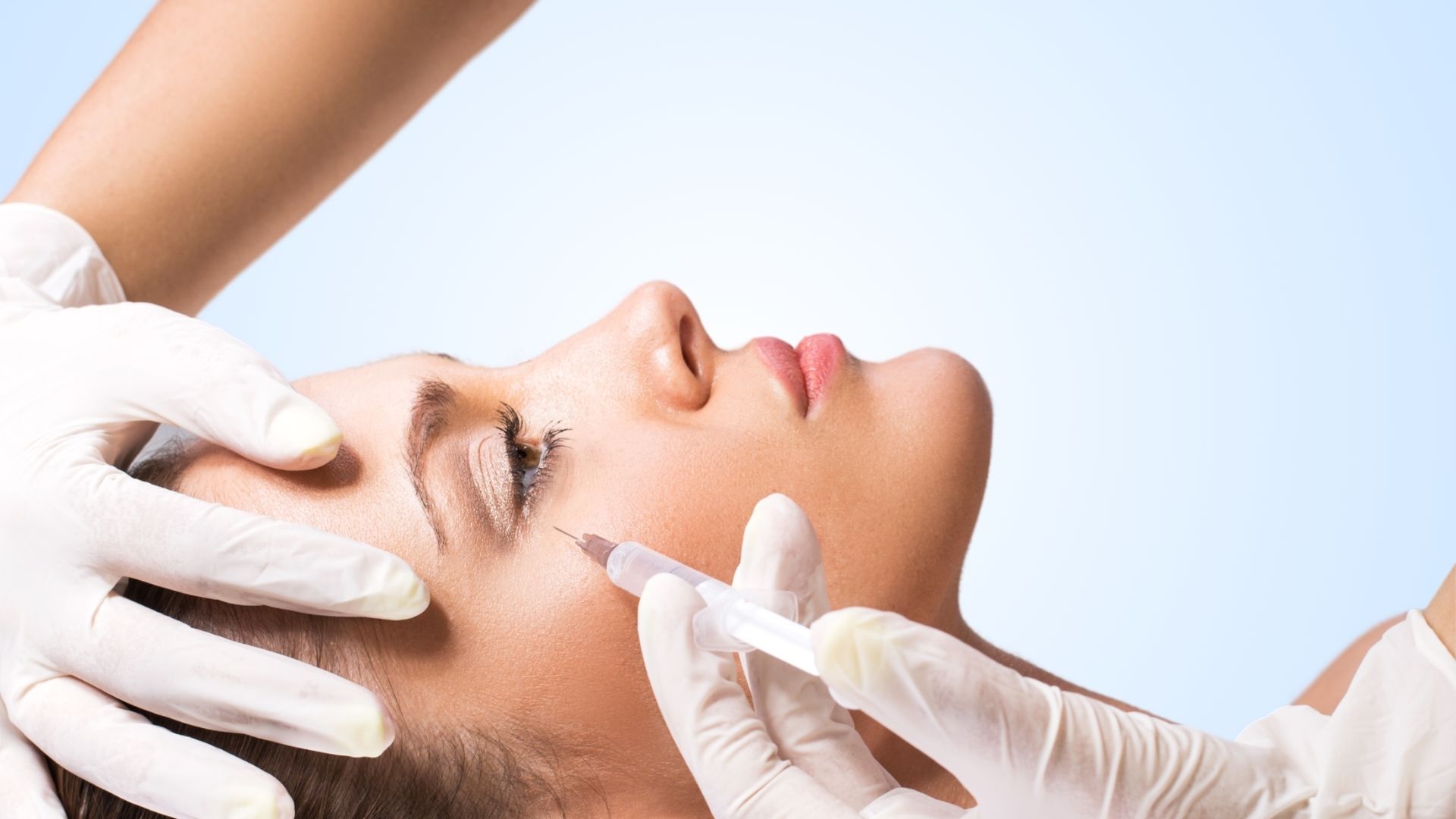
Strong evidence for lines caused by movement, and no effect on laxity. Frequently done alongside rather than instead.
Strong evidence, and still the most effective option for indented acne scars. Better results, a week of real downtime, higher cost, and a substantially higher risk of lasting pigment change on deeper skin tones.
Ultherapy
Two to six months
The tissue response builds slowly over that time.
RF Microneedling
Across about three sessions
Published protocols cluster at three sessions, three to eight weeks apart. The collagen rebuilding is slow, and was still improving at six months.
Ultherapy
No durability figure published
The response builds over roughly two to six months. No source here gives a figure for how long it holds.
RF Microneedling
Measured to six months
Six months after the final treatment is the longest properly measured follow-up. That is a statement about six months, not about years.
Ultherapy
Redness and tenderness, no wound
Temporary redness, swelling and tenderness, sometimes bruising or numbness. The main complaint is how much it hurts during the treatment itself. Rare but documented: temporary motor nerve injury and loss of fat under the skin.
RF Microneedling
Three to four visible days
Redness in essentially everyone, and swelling in about 30% in one study. The skin barrier is worst on days one to three and back to normal by day seven. Numbing cream is standard. In one study it was rated more painful than fractional CO2 laser. The needles make open channels, so infection is possible. Be treated only in a properly run clinic.
Ultherapy
No home version
Ultherapy heats a point millimetres down, hot enough to coagulate tissue there. A wand you can safely hold at home is far weaker. It never reaches that depth or that heat.
RF Microneedling
Rollers are a different thing
A home roller drags sideways instead of going straight in and out. So it tears more than it punctures, and its needles are short and blunt quickly. It also has no radiofrequency, which is the part that heats.
Ultherapy
RF Microneedling
Ultherapy
If what bothers you is sagging, Ultherapy is the one. A heavy jawline, a loose neck, a dropped brow. It reaches the layer surgeons lift, and lifting is what its cleared wording describes.
RF Microneedling
If what bothers you is the surface, RF microneedling is the one. Scarring, roughness, crepiness, large-looking pores. Ultherapy cannot do any of it.
RF Microneedling
If you get cold sores, say so when you book RF microneedling, not on the day. Antiviral medication is started in advance. No study has measured cold sores after RF microneedling. The precaution is borrowed from laser resurfacing.
Ultherapy
Ultherapy has real cosmetic wording behind it. It was authorised through a De Novo, DEN080006, granted 11 September 2009, which created its FDA device category. Its indications cover lifting the eyebrow, lifting lax submental (beneath the chin) and neck tissue, and improving lines and wrinkles of the decollete. A February 2025 clearance added skin laxity on the abdomen and the arms. The 1.5, 3.0 and 4.5 mm depths come from the standard naming of its transducers rather than from the text of the indication. A De Novo is a different route from a 510(k), but it is still not a verdict on how well something works.
RF Microneedling
Most RF microneedling clearances name no cosmetic use at all. They read "intended for use in dermatologic and general surgical procedures for electrocoagulation and hemostasis" — surgical language for sealing tissue and stopping bleeding. Morpheus8 (InMode) added "coagulation or contraction of soft tissue" in 2023, and its FDA paperwork lists tips up to 7.0 mm. A few devices are exceptions: Vivace and Virtue RF carry a facial wrinkle indication at 1 MHz, and Profound carries facial wrinkles plus improvement in the appearance of cellulite. Treating acne scars, texture or laxity with a generically cleared RF microneedling device is off-label. That is legal and normal.
RF Microneedling
RF microneedling can cause serious injury. The FDA has received reports of burns, scarring, loss of fat, nerve damage and disfigurement. Some injuries have needed surgery or other medical treatment. A few days of expected redness is not the full risk picture.
Common questions
Choose a licensed medical professional trained on the device. Discuss the risks and other treatment options before deciding. RF microneedling should not be done at home.