FaceTite

FaceTite works under the skin. A thin tube goes in through a small entry point, so you need anaesthetic and a real recovery. Ultherapy works through the skin. Nothing is inserted and there is no downtime, but the session itself is known for being painful. How invasive you are willing to go is the whole decision.
| The difference | FaceTite | Ultherapy |
|---|---|---|
| What it is | Minimally invasive, with an entry point | Non-invasive, nothing goes in |
| Downtime | Not documented | Described as essentially none |
Side by side
FaceTite
Minimally invasive, with an entry point
A thin tube called a cannula travels under the skin. An electrode rides on the surface above it. Published case reports describe it being done under local anaesthetic.
Ultherapy
Non-invasive, nothing goes in
A walk-in, walk-out appointment. Nothing breaks the skin at any point.
FaceTite
Heat passing under the skin
Current runs between the tube inside and the electrode on the surface. The heat seals the fibrous network under the skin. The system tracks temperature as it goes and adjusts the energy. The cut-off inside is 69 to 70 °C, and 38 to 40 °C at the surface.
Ultherapy
Ultrasound focused to a point
Sound waves are focused below the surface, the way a lens focuses sunlight. At that focus the tissue reaches about 60 to 70 °C. Small columns of changed collagen form there. The layers above are spared, and the body reworks those points over two to six months.
FaceTite
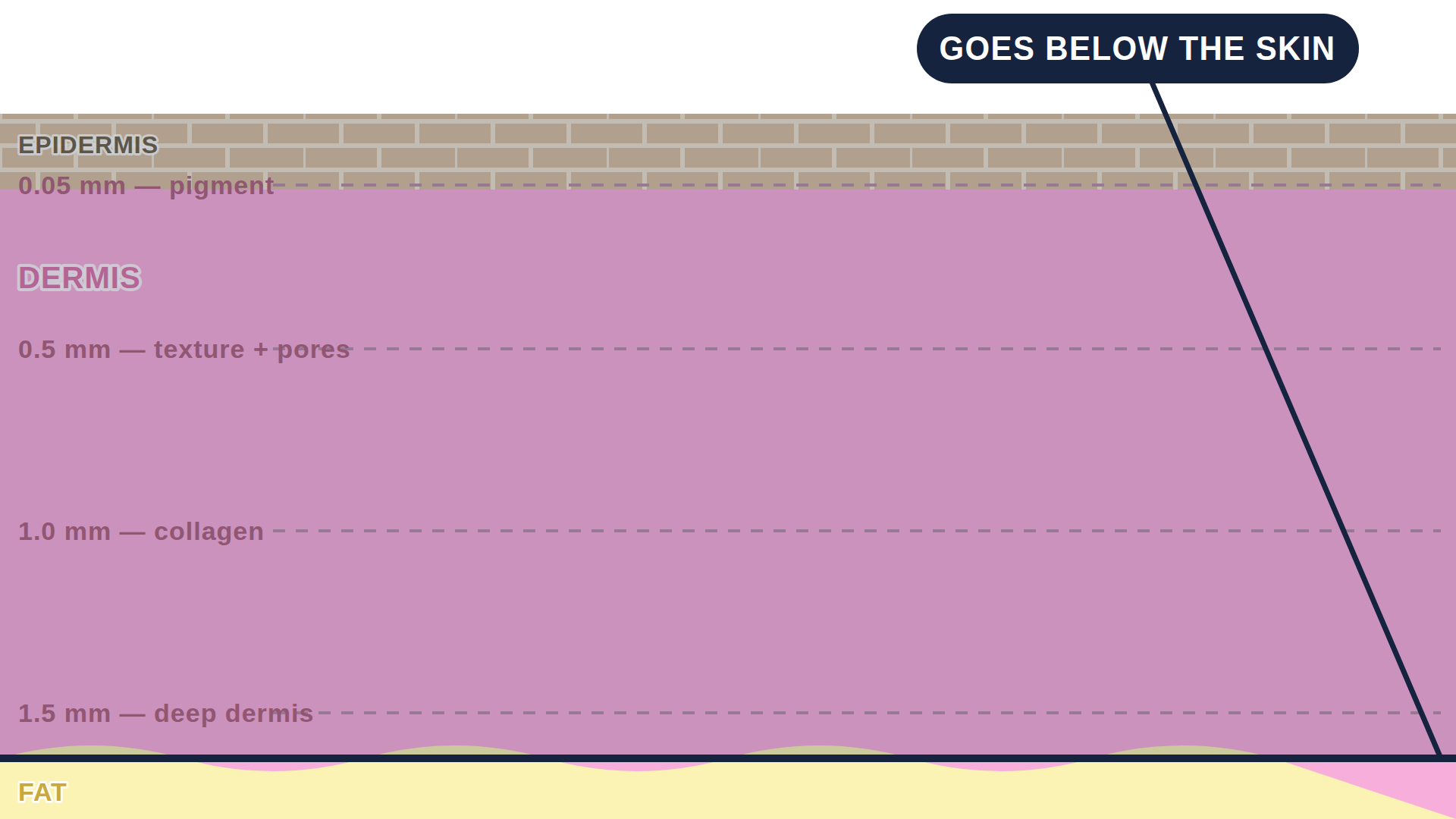
The fatty layer beneath the skin
That is the plane the cannula travels in. No cannula length or thickness is published, so none is quoted here.
Ultherapy
Set depths of 1.5, 3.0 and 4.5 mm
Those figures come from the names of the three handpieces, not from any official wording. At 4.5 mm the focus reaches the SMAS, the fibrous layer surgeons lift in a facelift. The machine can also see up to 8 mm down, so the operator can check the layer before firing.
FaceTite
Not documented
No published trial gives a recovery figure. What can be said is structural. There is an entry point, an anaesthetic and a procedure. That is a different order of event from a non-invasive treatment. Ask the clinic for their own numbers.
Ultherapy
Described as essentially none
Passing redness, swelling and tenderness. Sometimes bruising or brief numbness. That is the usual clinical description rather than a labelled claim.
FaceTite
Numbed with local anaesthetic
The anaesthetic is part of the procedure. That is how the published case reports describe it.
Ultherapy
Uncomfortable during the session
Pain while the treatment is happening is the main complaint, rather than anything afterwards.
FaceTite
There is no home version
Nothing sold for home use goes under the skin. Going under the skin is the whole method here, so a home wand cannot copy it.
Ultherapy
Home wands are a different thing
Home devices put a small fraction of the power into the surface. Ultherapy focuses energy to a point millimetres down. A home device never reaches that depth. It is not a weaker version of the same treatment.
FaceTite
Ultherapy
FaceTite
FaceTite's evidence is thin. There is no randomised trial. Most of what exists is case reports and technique papers, several written by paid consultants. One 2010 study treated 23 patients and reported no severe problems. But the surgeon who did the work also judged the result.
FaceTite
FaceTite's risks come from heat delivered under the skin. A 2020 case report documents deep skin burns after BodyTite, the body version of the same technology. A 2026 paper describes scarring and fat loss when a neck lift follows earlier non-surgical treatments. It also made the surgery harder. That matters if surgery is a possible later step.
Ultherapy
Ultherapy's risks come from heat delivered through the skin. Rare but documented events include short-term injury to the nerves serving the lower lip or the forehead. Loss of fat under the skin has also been reported.
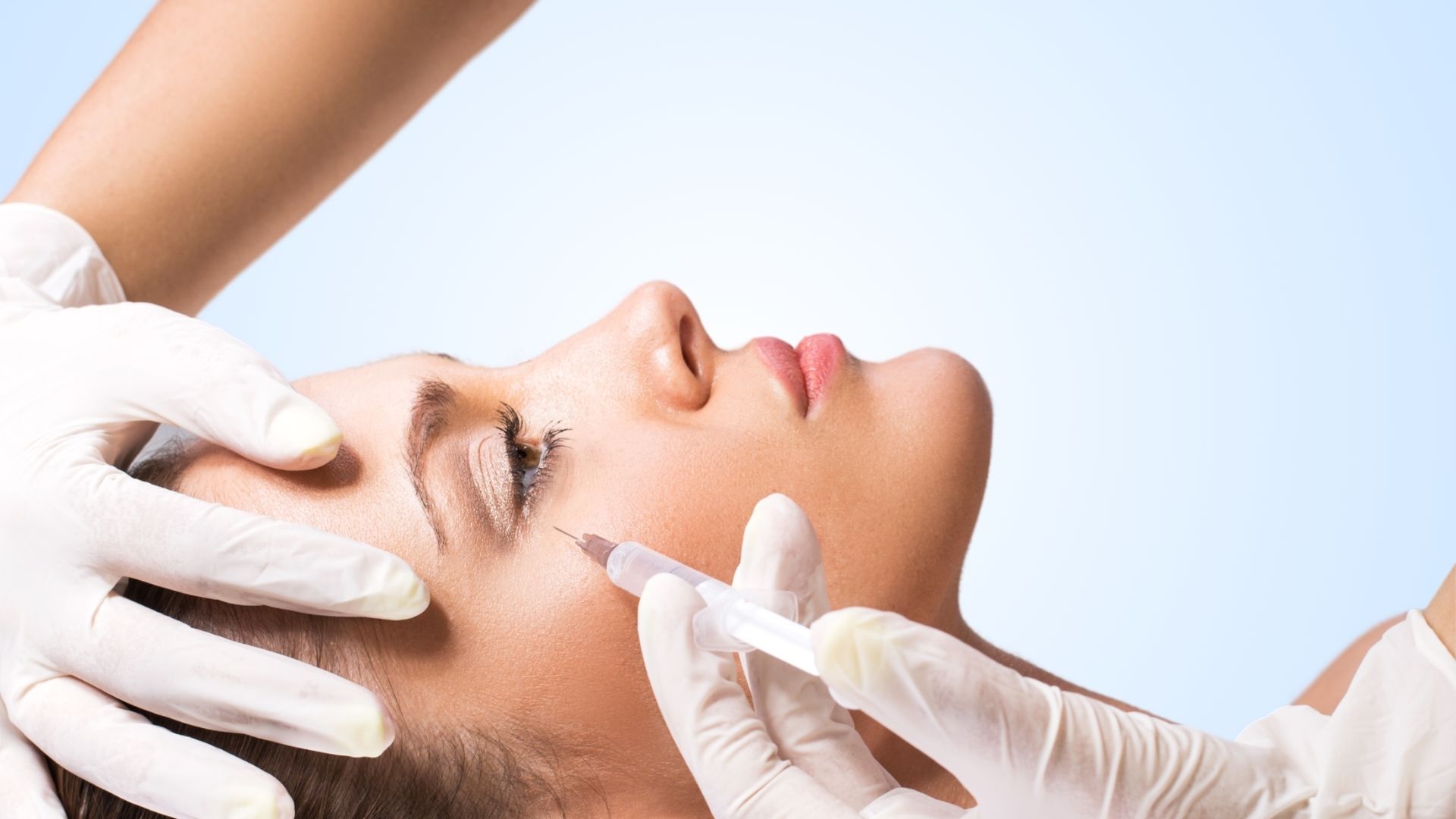
Strong evidence for lines caused by movement, and no effect on laxity. Frequently done alongside rather than instead.
FaceTite
Tell the clinic about a pacemaker, a heart defibrillator or metal implants near the area before FaceTite. Radiofrequency devices list these as do-not-treat conditions. The rule is a precaution, not a tested one. No published study has treated patients with heart implants. So the people to advise you are your heart team, not the clinic's front desk.
FaceTite
FaceTite is not the name on any FDA clearance. It is a handpiece sold under InMode's general RF System clearances, whose wording is electrocoagulation and hemostasis, meaning sealing tissue and stopping bleeding. Since a July 2024 clearance (K240780) the wording also covers procedures where coagulation or contraction of soft tissue is needed. Skin tightening, jowls and body contouring appear in none of them.
Ultherapy
Ultherapy's permitted uses name an effect and a body area. Merz's Ultherapy holds a De Novo authorisation, DEN080006, granted 11 September 2009. Its wording covers lifting the eyebrow, lifting lax tissue beneath the chin and on the neck, and improving lines and wrinkles of the décolleté (K180623, 2018). A February 2025 clearance (K243035) added the appearance of skin laxity on the abdomen and the front and back of the arms.
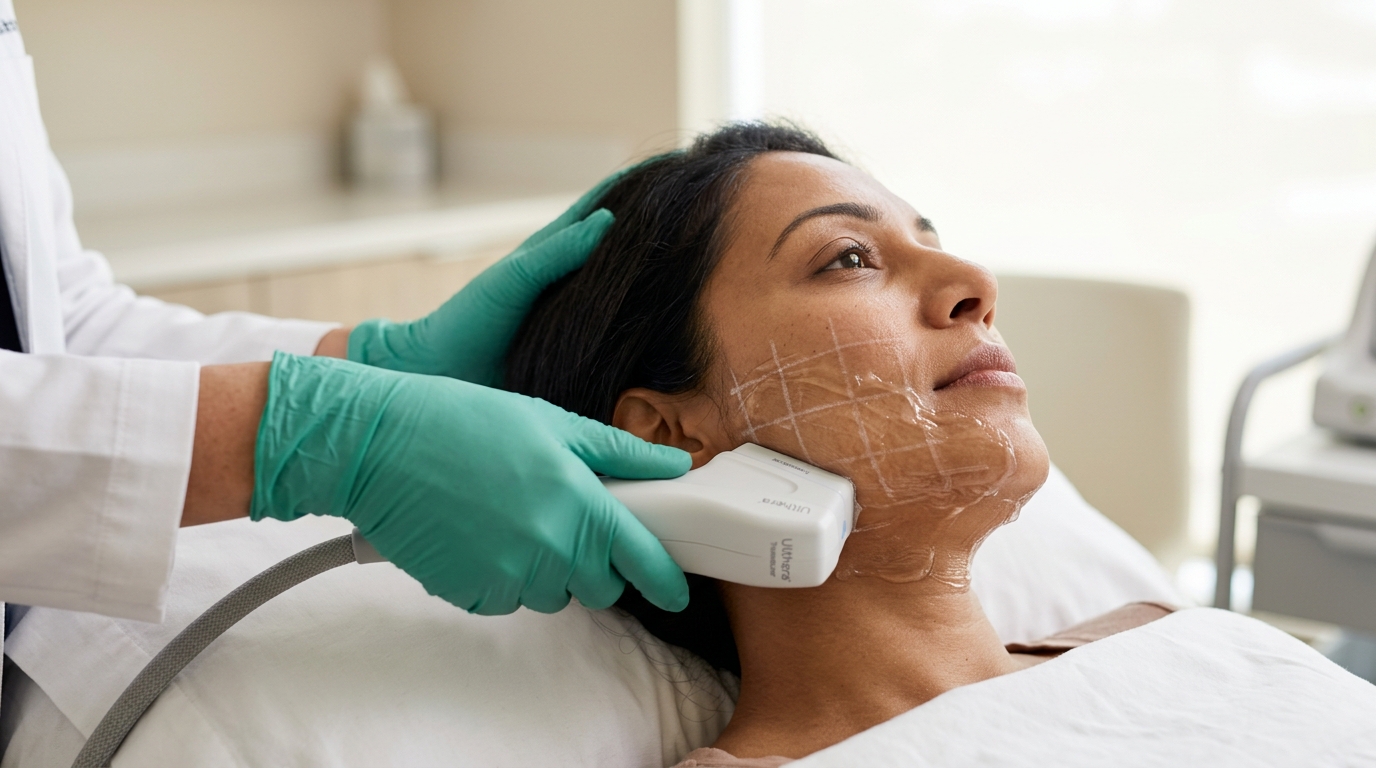
Ultherapy is guided by ultrasound. Gel is spread first so the applicator can image the layers underneath and place the energy at a set depth.

Focused ultrasound heats a deep layer to tighten it, aimed at the jaw, neck and brow rather than at lines. The change is modest and takes three to six months to show, and it is nothing like a surgical lift. It can be uncomfortable, and results vary enough that it is worth seeing a provider's own before-and-after photographs.
Common questions