Ultherapy
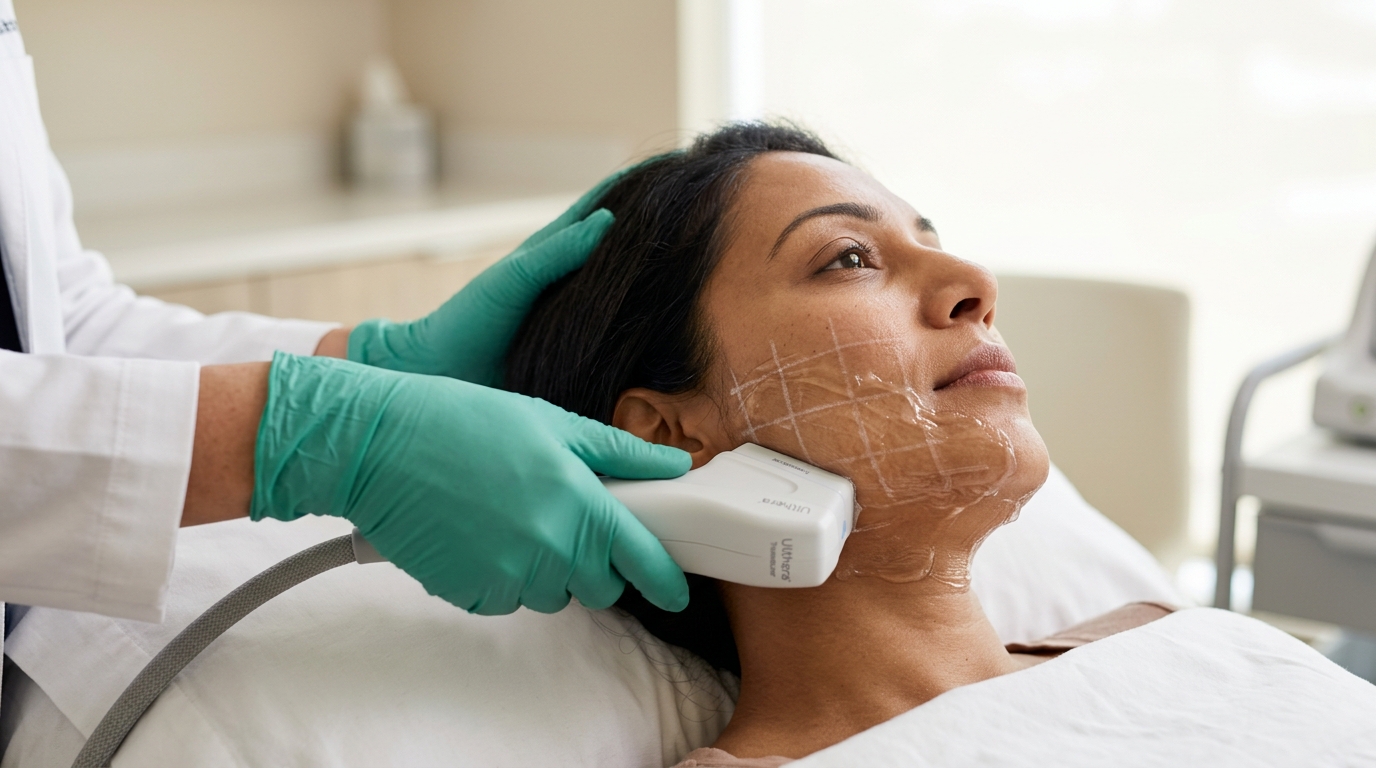
Ultherapy tightens skin modestly with no surgery and no recovery. It uses focused ultrasound to heat tissue under the skin so it firms over the following months. A facelift lifts and removes skin that has already dropped. It is surgery, with anaesthetic and a real recovery, and the change is far bigger. Ultherapy is not a smaller facelift, and it suits early, mild looseness rather than skin that has clearly descended.
| The difference | Ultherapy | Facelift |
|---|---|---|
| What it is | Focused ultrasound through the skin | An operation on the deeper layers |
| Downtime | None to speak of | Two weeks before you feel presentable |
| Cost | A moderate cost, repeated | One large one-off cost |
An operation on the deeper layers The surgeon lifts and repositions the tissue beneath the skin, then removes the skin that is now spare. Often paired with a neck lift.
Side by side
Ultherapy
Focused ultrasound through the skin
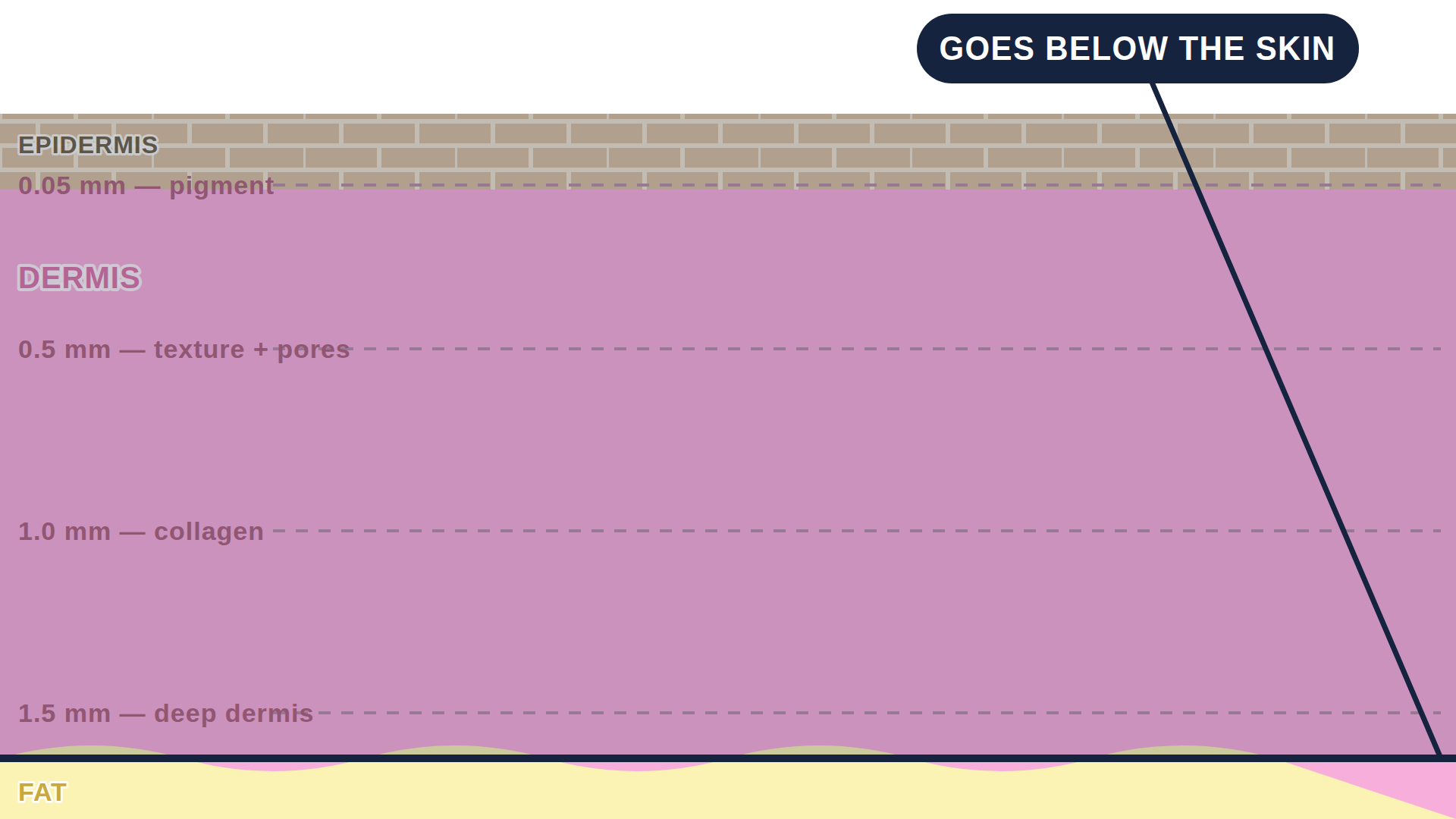
A handpiece delivers heat to set depths below the surface. The heat makes tissue contract and prompts new collagen over the following months.
Facelift
An operation on the deeper layers
The surgeon lifts and repositions the tissue beneath the skin, then removes the skin that is now spare. Often paired with a neck lift.
Ultherapy
About an hour, awake
You lie still while the handpiece passes over the face and neck. It is uncomfortable in short bursts. You leave and carry on with your day.
Facelift
A few hours, asleep
A surgical suite, general anaesthetic or heavy sedation, and someone to take you home afterwards.
Ultherapy
A modest firming
Skin looks tighter and the jawline a little cleaner. It is the kind of change you notice in photos rather than one other people comment on.
Facelift
A clear change in shape
Jowls, the jawline and the neck are visibly different. It is the largest change available for facial sagging.

Focused ultrasound heats a deep layer to tighten it, aimed at the jaw, neck and brow rather than at lines. The change is modest and takes three to six months to show, and it is nothing like a surgical lift. It can be uncomfortable, and results vary enough that it is worth seeing a provider's own before-and-after photographs.
Ultherapy
Two to three months
Little happens on the day. Collagen builds slowly, so you judge it at three months, not at three weeks.
Facelift
Weeks, then months to settle
The shape is there once the swelling drops. The final result lands around three months.
Ultherapy
One to two years
Many people repeat it every twelve to eighteen months to hold the effect.
Facelift
Around a decade
Roughly seven to fifteen years depending on the technique and your skin. It does not stop ageing, it sets you back.
Ultherapy
None to speak of
Some redness, tenderness and mild swelling for a day or two. You can go back to work straight away.
Facelift
Two weeks before you feel presentable
Bruising and swelling settle over the first fortnight. Most people take two to three weeks before they want to be seen.
Ultherapy
It cannot lift skin that has dropped
There is no spare skin removed and nothing repositioned. If you can lift your jowl with a finger and see the result you want, Ultherapy will not reproduce it.
Facelift
It does not improve skin quality
Surgery moves tissue. It does nothing for texture, pores, sun damage or fine lines, which are treated separately.
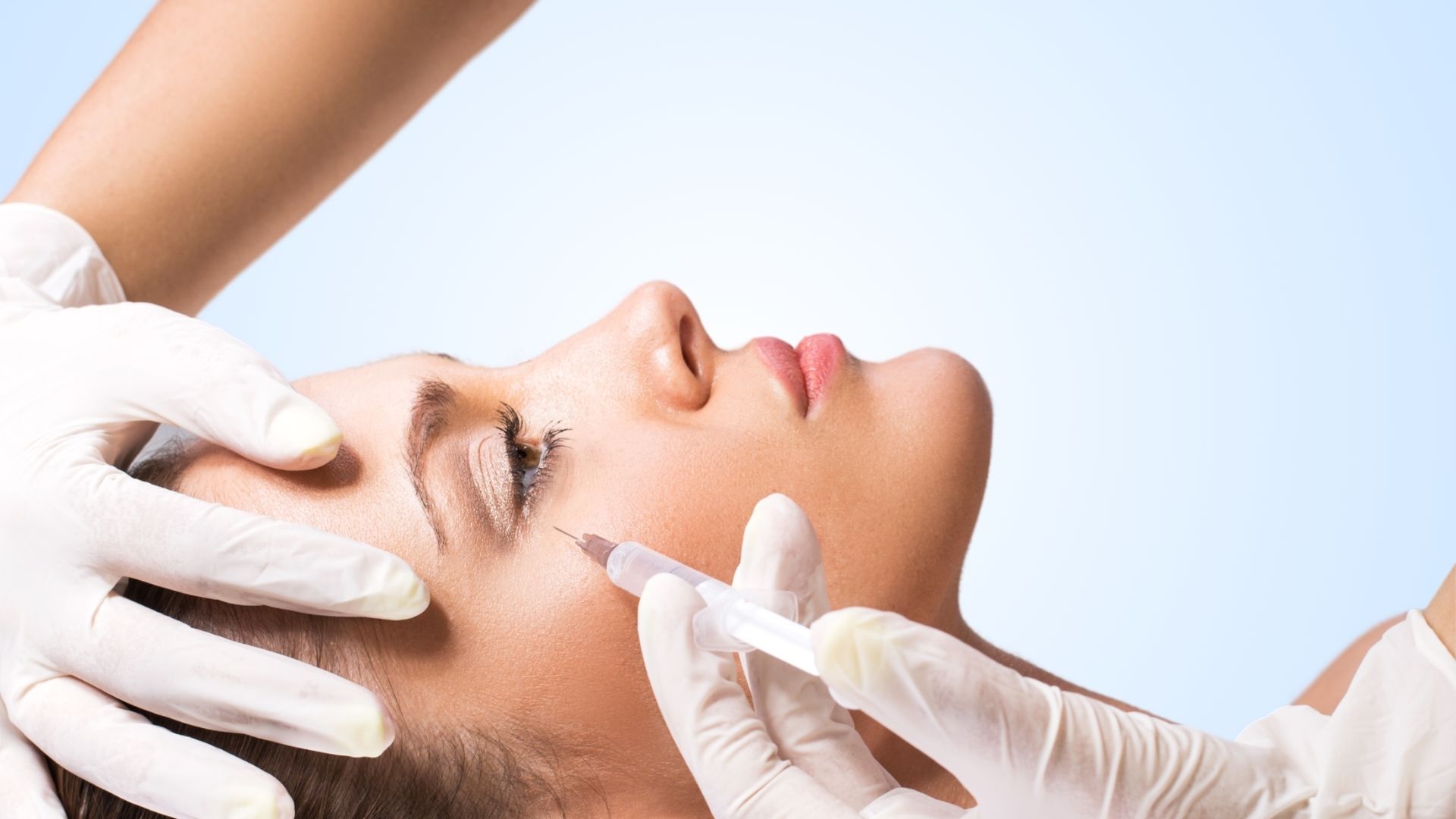
Strong evidence for lines caused by movement, and no effect on laxity. Frequently done alongside rather than instead.
Ultherapy
The result can be underwhelming
Some people see very little, especially where the looseness was more than mild. There are also reports of unwanted fat loss in the treated area.
Facelift
It is surgery
Scars, though they are placed in front of and behind the ear. A recovery. A risk profile you go through with a surgeon, and a result you cannot undo.
Ultherapy
A moderate cost, repeated
Priced per treatment, and usually per area. Because it is repeated every year or two, work out the cost over five years.
Facelift
One large one-off cost
Priced as surgery. Ask for a quote that includes the surgeon, the anaesthetist and the facility.
Ultherapy
Home HIFU wands, and they fall short
Devices sold online use the same words but a fraction of the energy, and they cannot focus it at the depth the clinic device reaches. They warm the surface. That is not the same treatment.
Facelift
None
Face tape, gua sha and facial exercises move nothing lastingly. Sagging is a structural change under the skin, and nothing done at the surface repositions it.
Ultherapy
Facelift
Ultherapy
Results also vary more with Ultherapy than with surgery. Two people can have the same treatment and get different amounts of firming, because it depends on how much collagen your body makes.
Ultherapy
Ultherapy does nothing for volume. If your face looks hollow rather than loose, tightening it can make the hollowness more obvious. That is a filler conversation.
Facelift
A facelift does nothing for skin quality. Texture, pigment and sun damage carry on as before, so most people pair surgery with skincare, a laser or a peel.
Common questions