SkinTyte
A series of warming sessions Infrared light passes through unbroken skin while the surface is cooled. No needles.
SkinTyte is the gentler option, and the one with almost no published research behind it. It uses infrared light to warm the deeper layers of skin, over a series of sessions. Ultherapy is the one with a formal lifting indication. It uses focused ultrasound that reaches deeper, usually in one uncomfortable session. Neither one breaks the skin.
| The difference | SkinTyte | Ultherapy |
|---|---|---|
| Cost | Paid per session, over a series | Paid once, for one treatment |
A series of warming sessions Infrared light passes through unbroken skin while the surface is cooled. No needles.
Side by side
SkinTyte
A series of warming sessions
Infrared light passes through unbroken skin while the surface is cooled. No needles.
Ultherapy
Usually one session, no needles
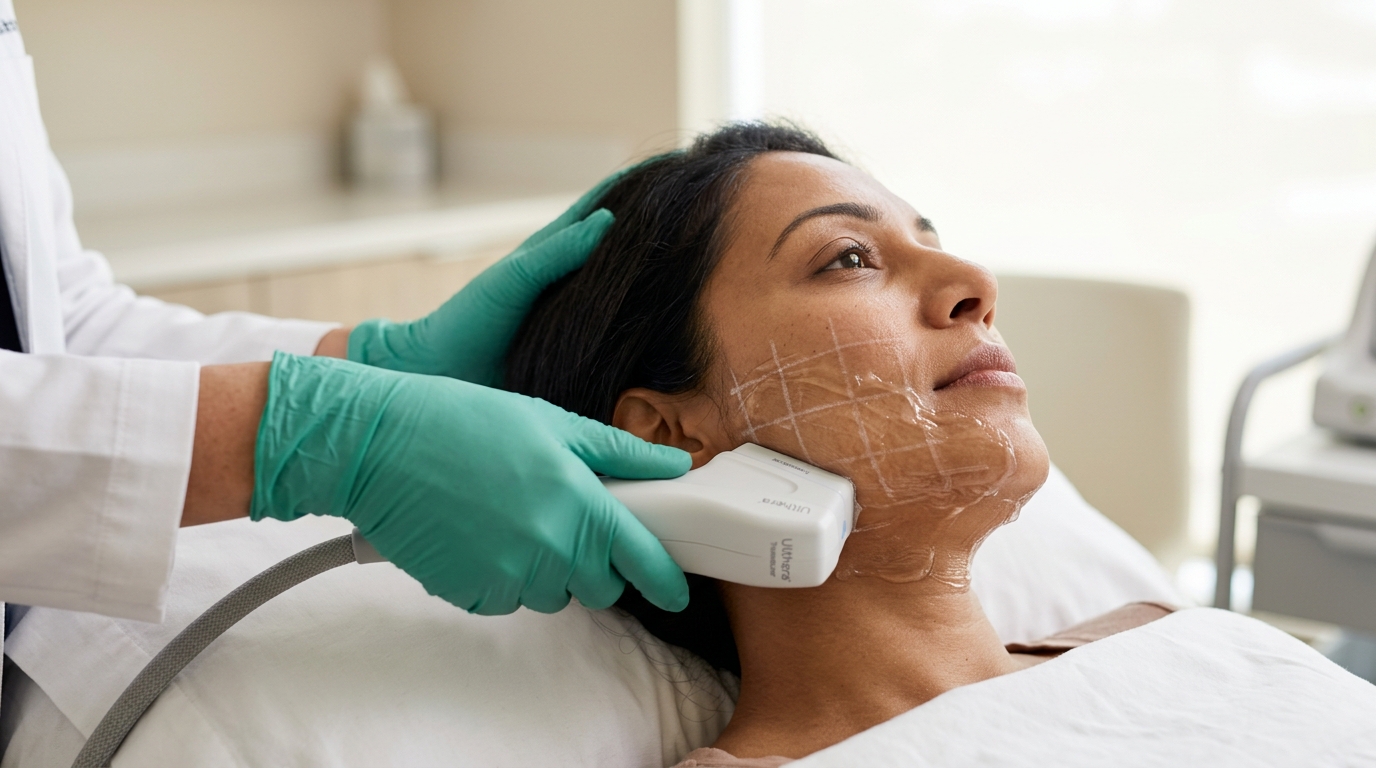
A handpiece is moved over the skin. Live ultrasound imaging lets the operator see the tissue layer before firing.

Focused ultrasound heats a deep layer to tighten it, aimed at the jaw, neck and brow rather than at lines. The change is modest and takes three to six months to show, and it is nothing like a surgical lift. It can be uncomfortable, and results vary enough that it is worth seeing a provider's own before-and-after photographs.
SkinTyte
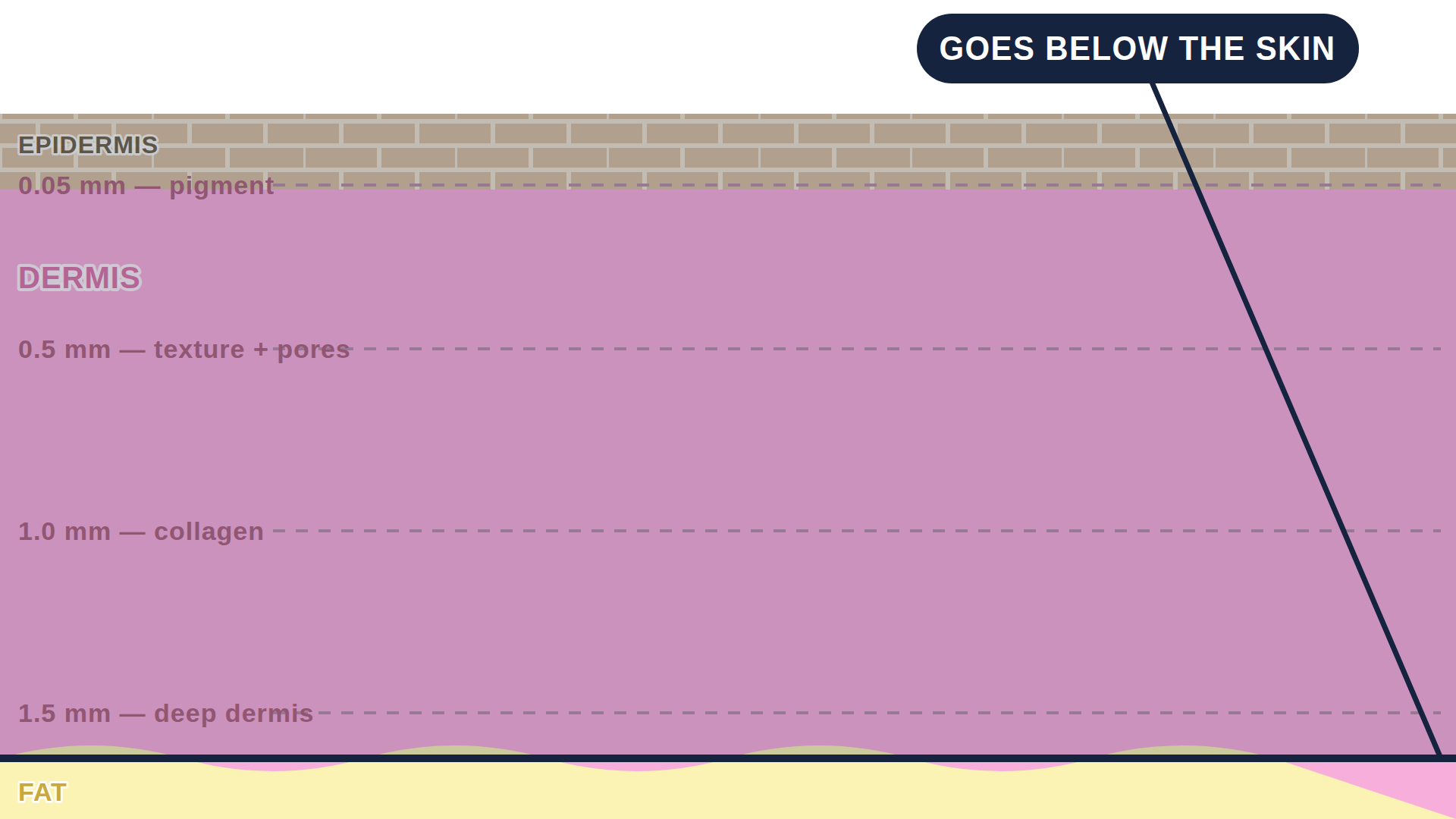
Infrared light becomes heat in the dermis
The dermis is the layer where collagen sits. The heat spreads through the tissue instead of concentrating at one point.
Ultherapy
Sound focused to a point under the skin
At that point the tissue gets hot enough to form small columns of damaged collagen. The tissue above the point is left alone. Healing pulls those points tighter over about two to six months.
SkinTyte
Gentle heating, repeated
It is sold as a low-commitment heat treatment with no recovery time. Very little published research measures the result.
Ultherapy
Some lift at the brow, chin and neck
It is meant to lift the eyebrow. It also lifts loose tissue under the chin and on the neck, and softens lines on the chest.
SkinTyte
Not sold as a lift
It suits someone who is not expecting a lift.
Ultherapy
Nothing for texture, scars or pores
It passes over the top layers of skin on purpose, so it does not change the surface.
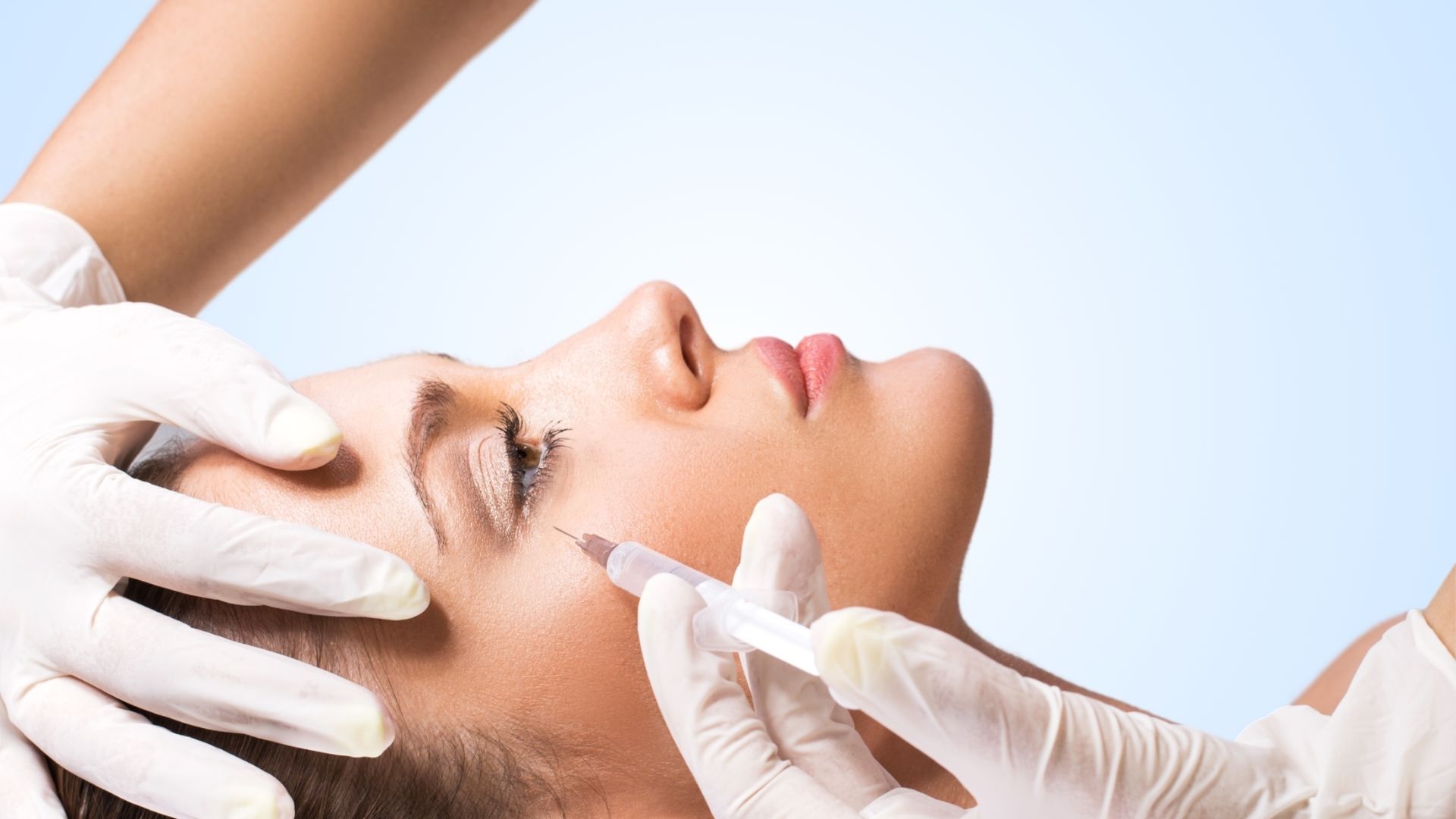
Strong evidence for lines caused by movement, and no effect on laxity. Frequently done alongside rather than instead.
SkinTyte
Across a series of treatments
It is usually sold as a course rather than a single visit.
Ultherapy
Over about two to six months
The change builds slowly after the one session.
SkinTyte
Warm, and generally tolerable
Usually described as a warm treatment with no downtime.
Ultherapy
Pain during the treatment
Pain during the session is the main complaint. Afterwards there can be short-lived redness, swelling and tenderness. Rarer problems include bruising, temporary numbness, a weak or uneven smile or brow from injury to a facial nerve branch, and loss of fat under the skin in a treated area.
SkinTyte
Paid per session, over a series
Budget for the whole course, not one visit.
Ultherapy
Paid once, for one treatment
Usually one session rather than a course, so one cost rather than several.
SkinTyte
Home infrared wands are much weaker
A home device puts a small fraction of the power into the surface of the skin. It never reaches the depth a clinic device works at.
Ultherapy
Home ultrasound cannot focus that deep
This treatment depends on energy focused to a single point millimetres down, with imaging to place it. A home wand does neither.
SkinTyte
Ultherapy
SkinTyte
Limited evidence does not mean SkinTyte does not work. It means there is very little to read. Few trials named it, measured it and followed patients over time.
If a clinic quotes a study or a depth for SkinTyte, ask where it comes from. This page does not quote one.
Ultherapy
With Ultherapy you can point to something specific. There is reviewed wording for what it is meant to do, and a described depth of action. With SkinTyte you are relying mostly on what the maker and the clinic tell you.
Ultherapy
Ultherapy heats a point deeper than needle treatments reach. The focus sits up to about 4.5 mm down, at the support layer under the face. That layer is called the SMAS. This is why it is described as a lifting device rather than a texture device.
Ultherapy cannot change the surface of the skin. It passes over the top layers without touching them. So it does nothing for texture, scarring or pore appearance.
SkinTyte
SkinTyte is a Sciton device. Its cleared wording is not quoted here, and no clearance number is quoted for it.
Ultherapy
Ultherapy was authorised through an FDA De Novo in September 2009. That authorisation, DEN080006, created the device category for focused ultrasound aesthetic devices. Its current face and neck wording says the system is intended to lift the eyebrow, lift lax submental (beneath the chin) and neck tissue, and improve lines and wrinkles of the decollete. A February 2025 clearance added skin laxity on the abdomen and the front and back of the arms.
Common questions
An FDA authorisation means an indication was reviewed. It is not a promise of how much lift any one person gets.
The millimetre depths come from device naming, not from labelling. Ultherapy's 1.5 mm, 3.0 mm and 4.5 mm figures follow the standard frequency-and-depth naming of the transducers, not wording in FDA labelling.
Downtime and session counts are clinical convention. Neither is a figure stated in FDA labelling, for either device.